
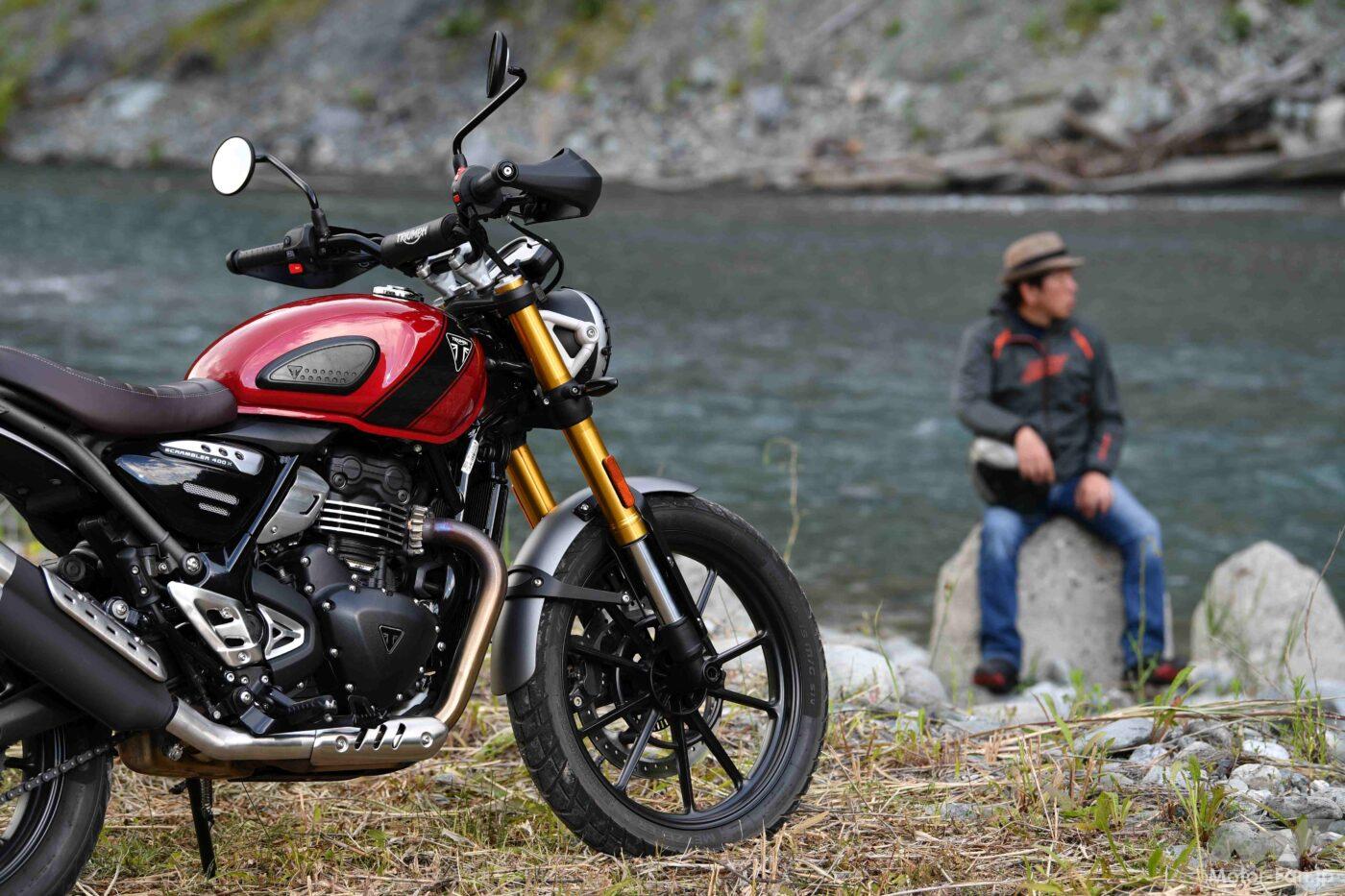
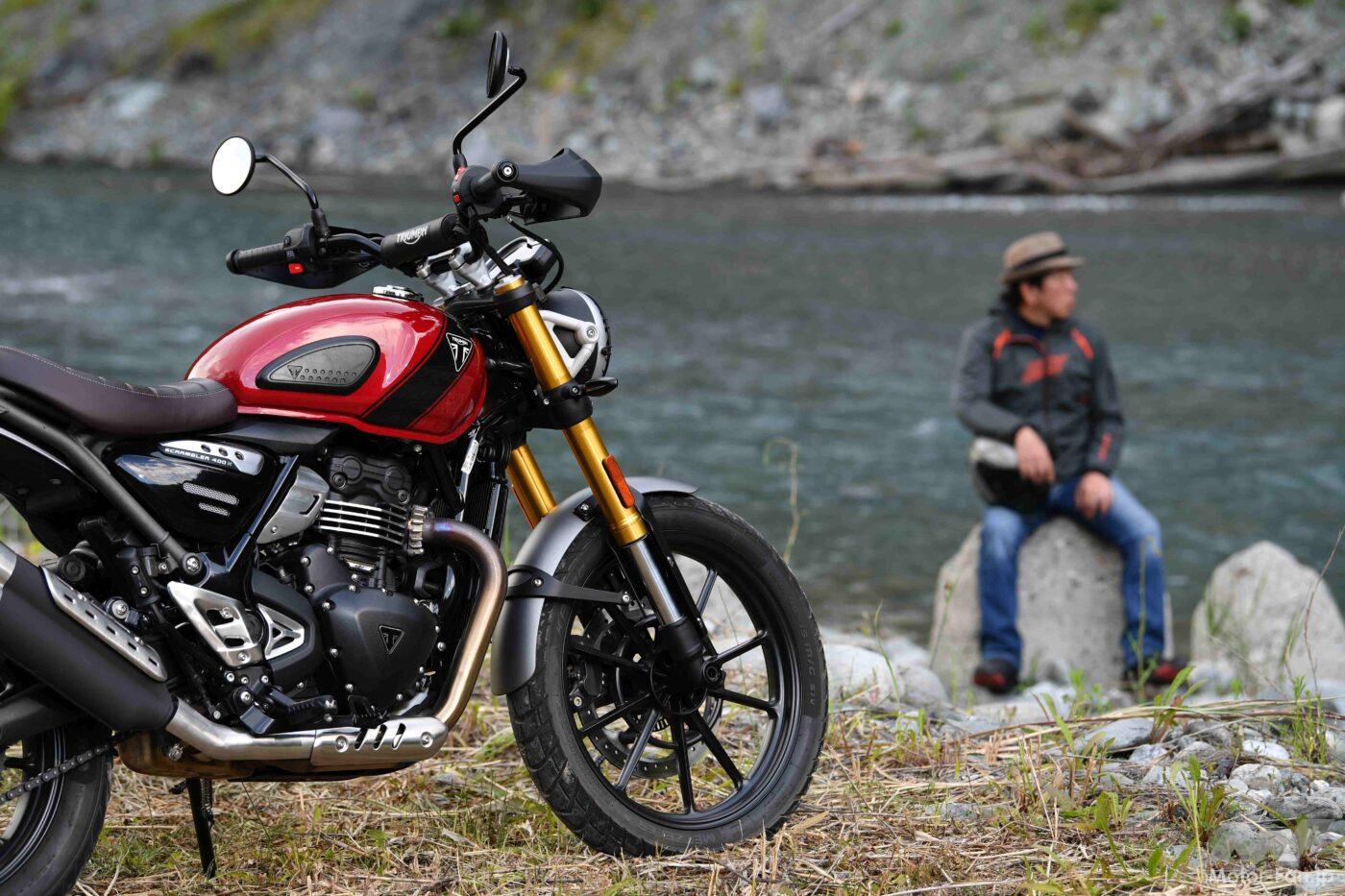
Triumph Scrambler 400X…819,000 yen
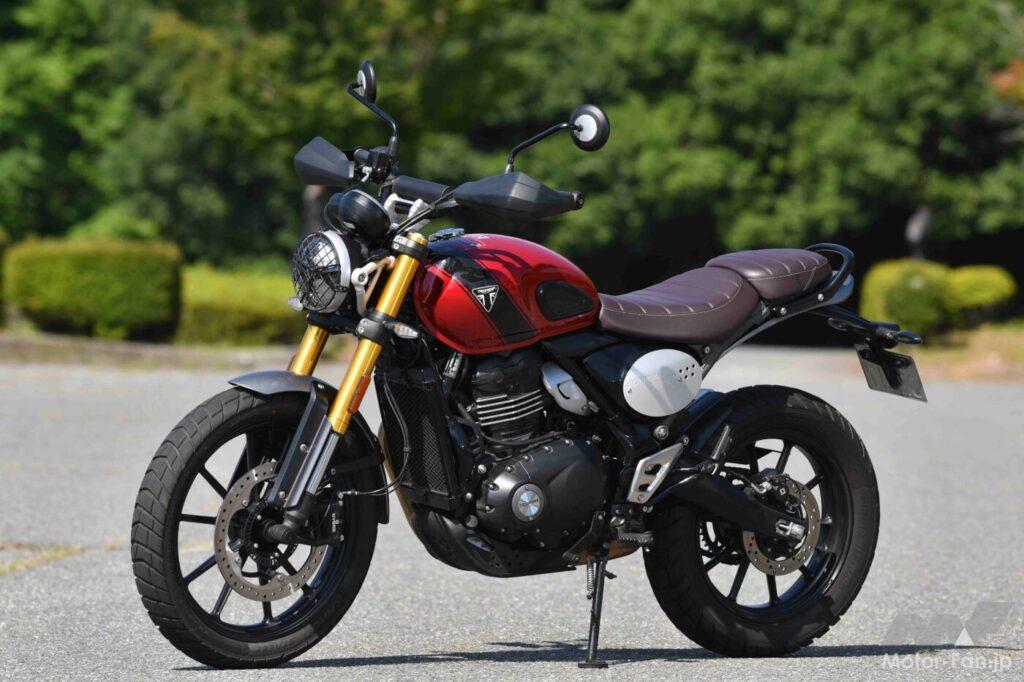
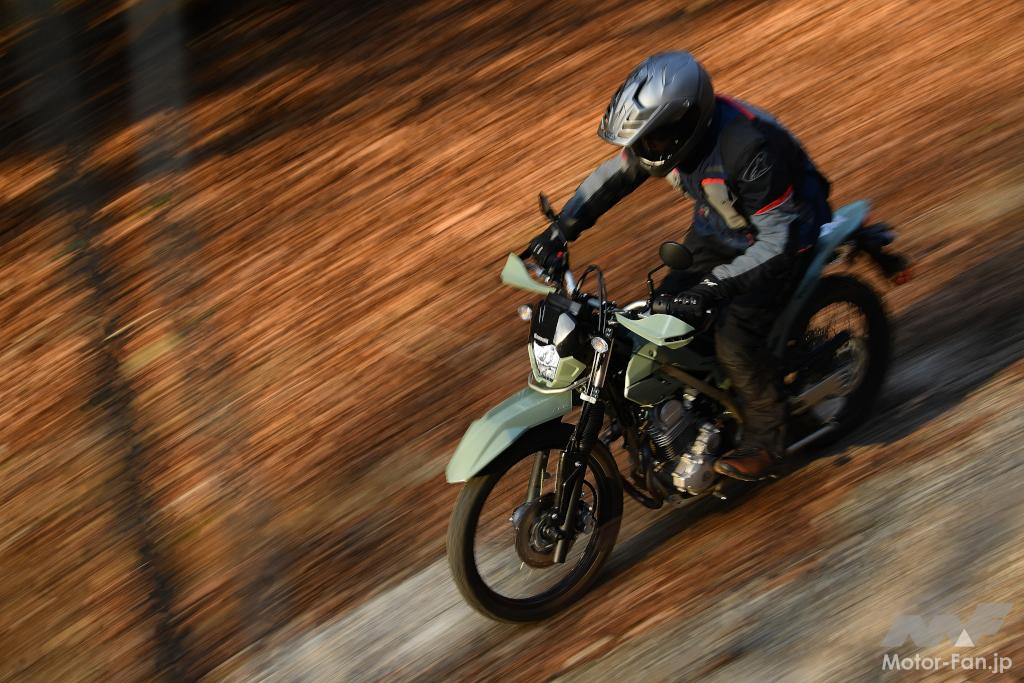
Although its weight and wheelbase are not much different from those of the Yamaha SR and Honda GB, the Scrambler 400X, with its long front and rear suspension stroke, high ride height and high seat, is a large vehicle by the standards of the existing 400cc class.
Riding position ★★★★★
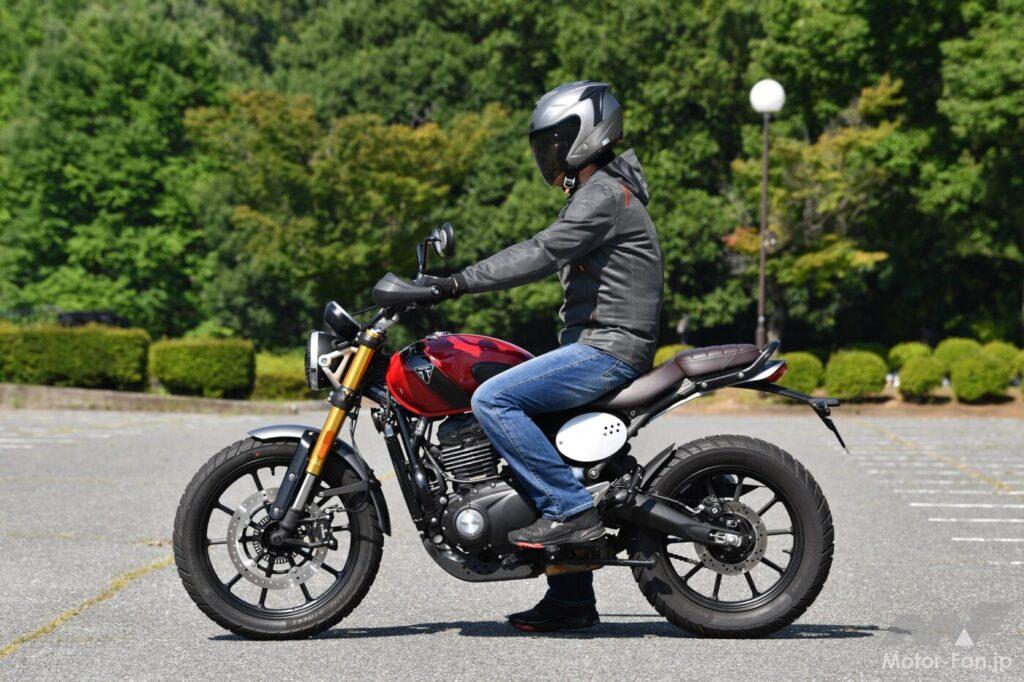
The riding position of other companies’ Scramblers that have appeared in recent years often gives the impression of being, for better or worse, like an on-road sport bike, but the riding position of the Scrambler 400X, which gives you ample room for your limbs and allows you to move your body easily back and forth and side to side, is more like that of a trail bike or adventure tourer. Compared to its sister model, the Speed 400, the seat is high, the handlebars are high and wide, and the footpegs are set forward and low.
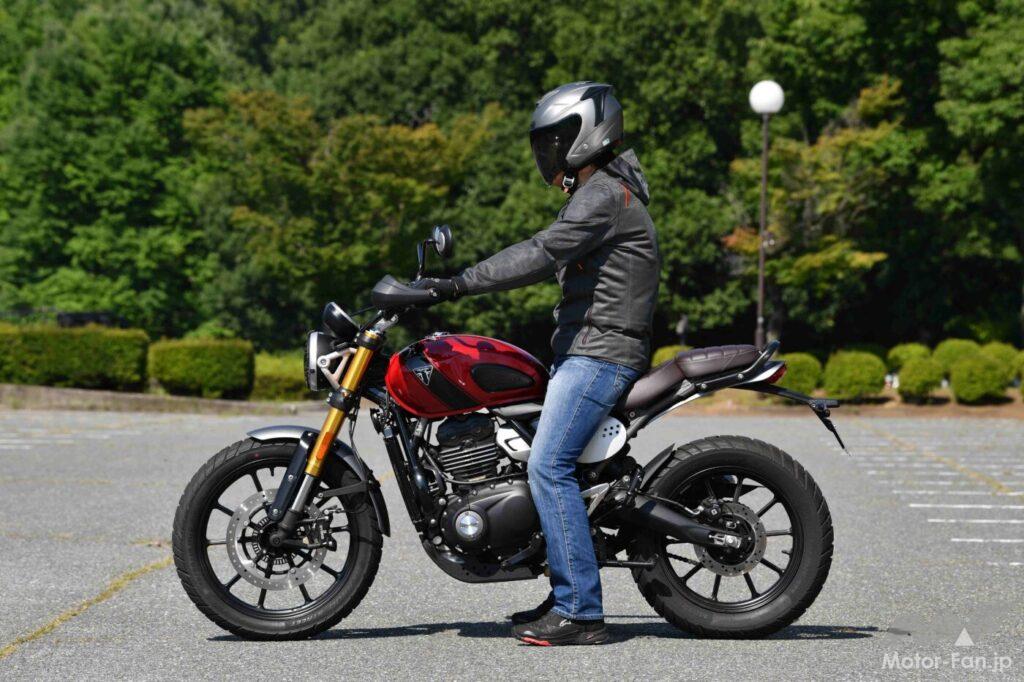
The seat height is 835mm, so it’s hard to say that it’s easy to reach the ground with your feet. I’m a big guy (height 182cm, weight 74kg) and it felt good, but riders under 160cm tall will probably find it uncomfortable. This problem can be solved with an aftermarket lowering kit/seat… but riders who are worried about being able to reach the ground with their feet might be better off choosing the Speed 400, which has a seat height of 790mm.
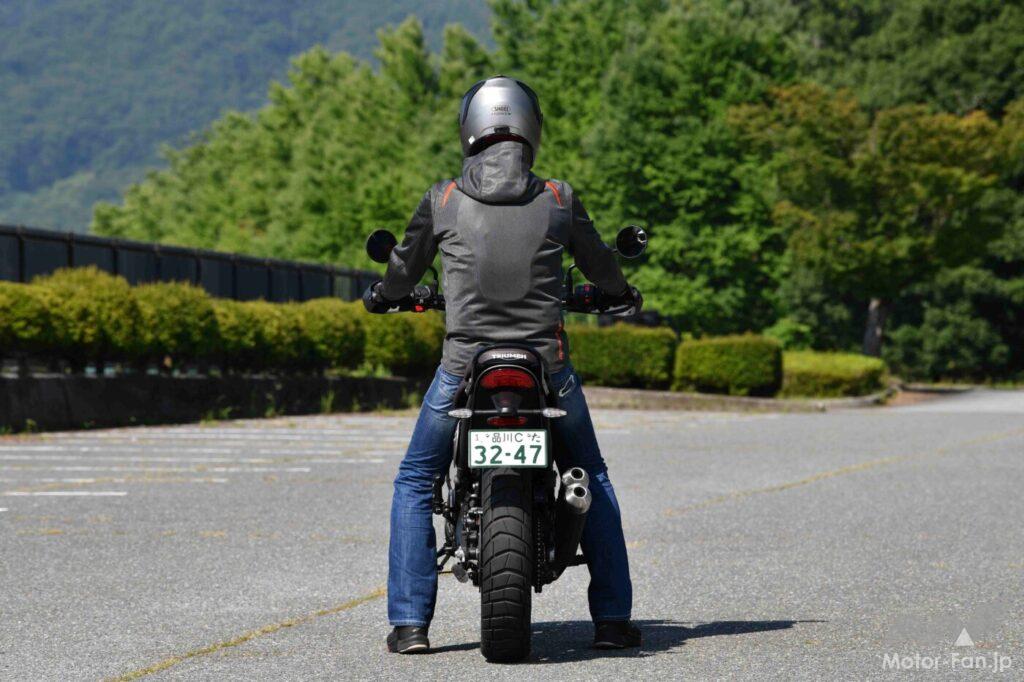
Tandem riding ★★★★☆
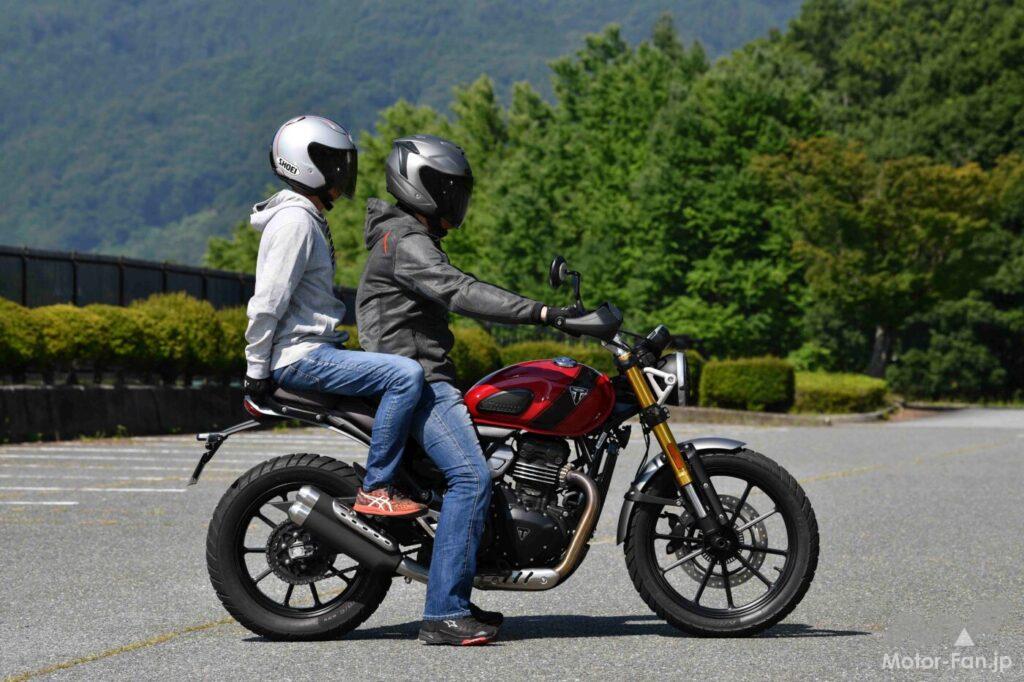
Riding tandem was quite comfortable. It felt almost the same as riding solo, and there were almost no instances where I felt the power was insufficient. Below are the impressions of photographer Togashi (height 172cm, weight 52kg), who was also riding tandem. “The basic impression was quite good. The seat is large enough and thick enough, and the footpegs are placed in a place that gives you good support when accelerating and decelerating. The only thing I was a little disappointed about was the shape of the grab bar; considering the comfort of the grip, I think it would be better if it was a little thicker.”
Handling ★★★☆☆
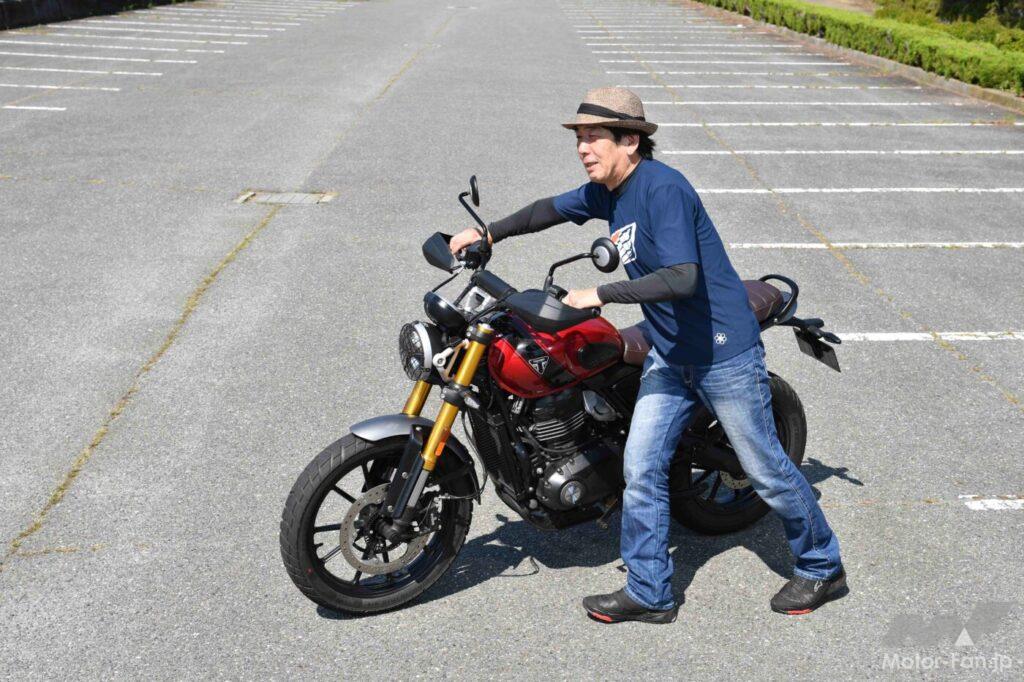
The recesses on the left and right sides of the front of the gas tank convey the intention to avoid interference with the front fork and ensure as much steering angle as possible, but because the bike is large for a 400cc (weight 179kg, wheelbase 1418mm), it doesn’t feel easy to handle. That said, compared to its big brother, the Scrambler (900: 224kg, 1445mm, 1200: 228kg, 1525mm), which is equipped with a water-cooled vertical twin, it is quite easy to handle.
Steering wheel/meter area ★★★★☆
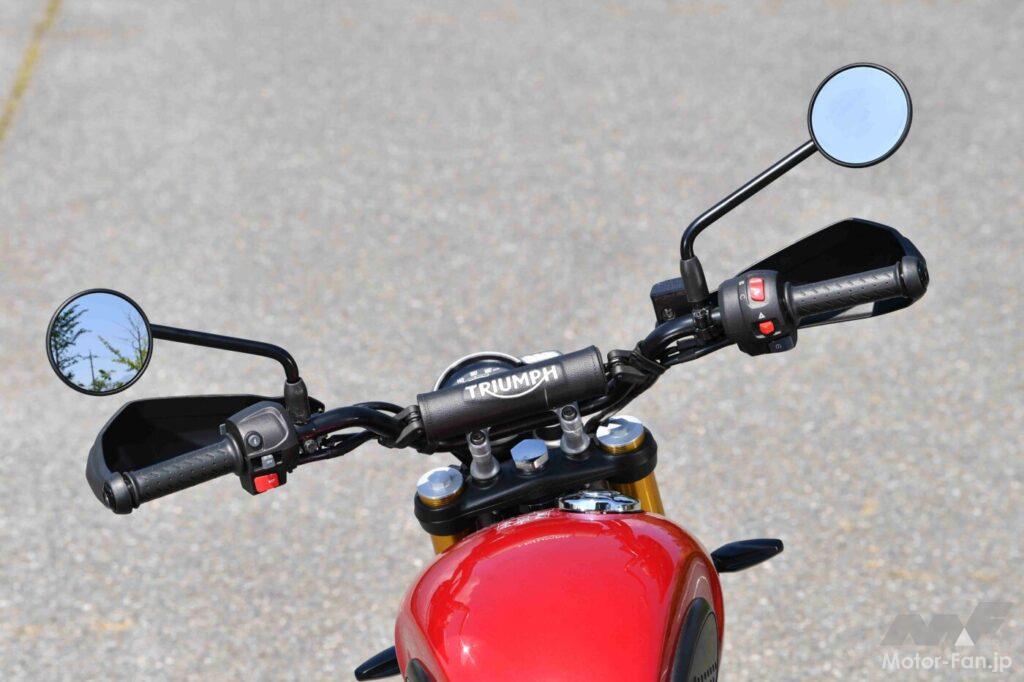
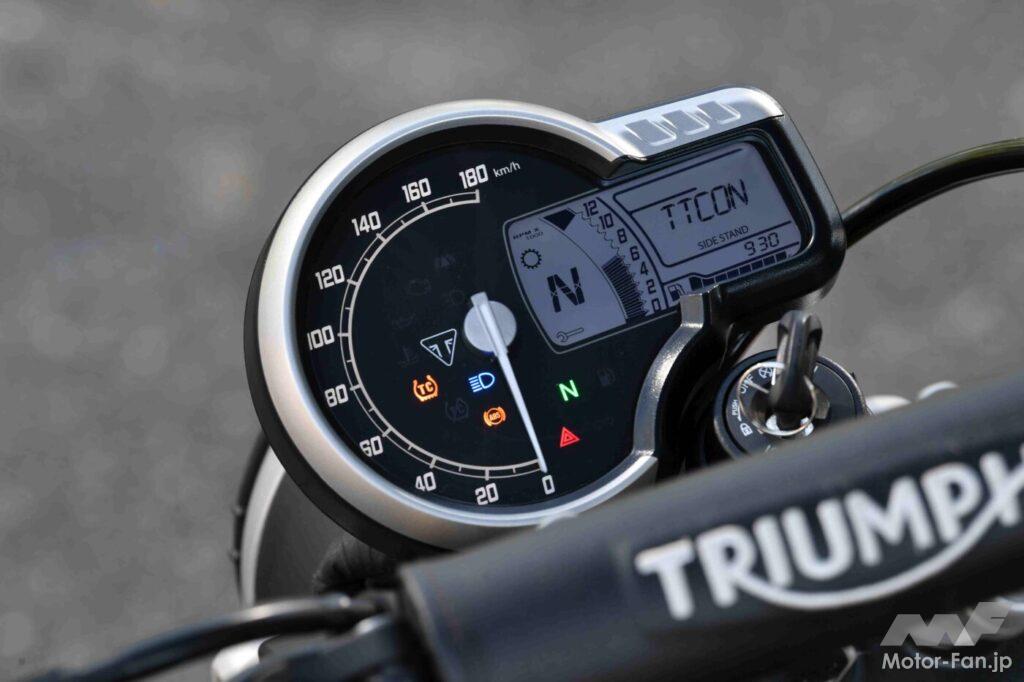
The standard bar pads and knuckle guards give the cockpit a wild look. The tapered handlebars are approximately 900mm wide (the Speed 400 is approximately 815mm), wider than their bigger brothers, the Scrambler 900 and 1200. The newly developed meter has a similar configuration to older in-line three-cylinder bikes, but the pointer display has been changed from engine rpm to speed, and the LCD screen has been made smaller. The bar graph tachometer, displayed to the right of the gear position, has very fine increments, making it difficult to read.
Left and right switch/lever ★★★☆☆
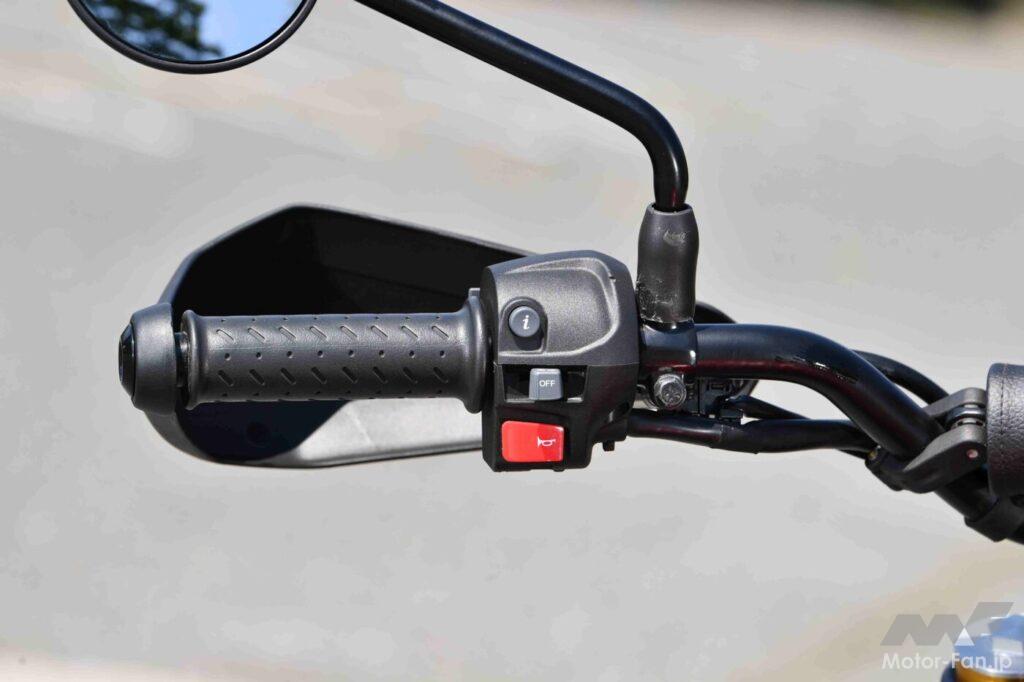
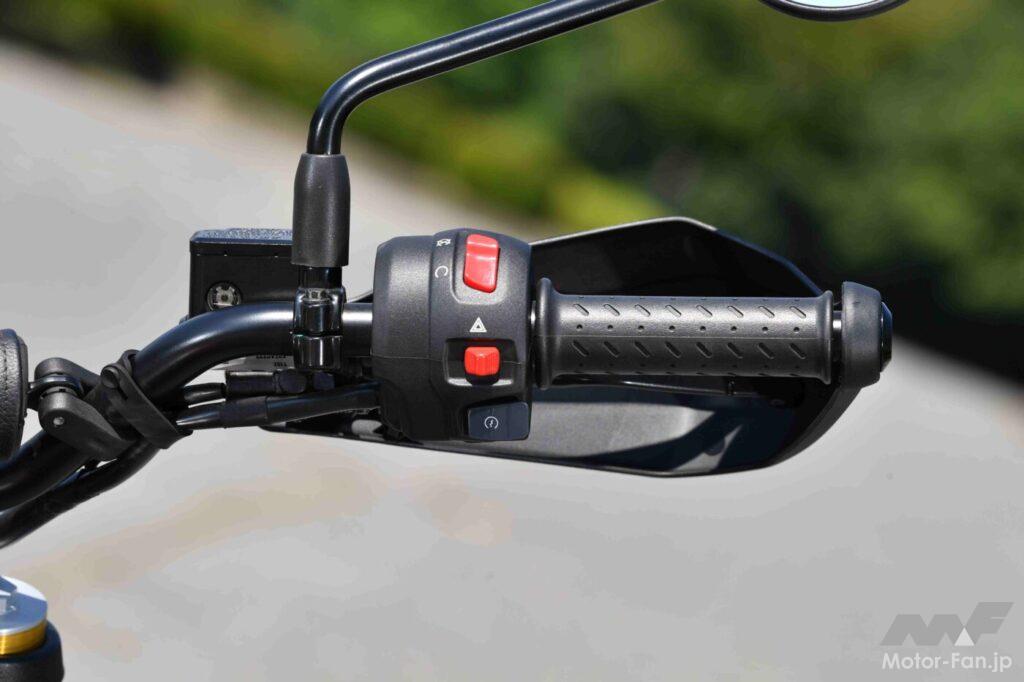
The simply designed left and right switch boxes are likely new developments for 400cc single-cylinder models. All settings displayed on the meter’s LCD screen, including traction control and ABS settings, can be changed using the i button on the left.
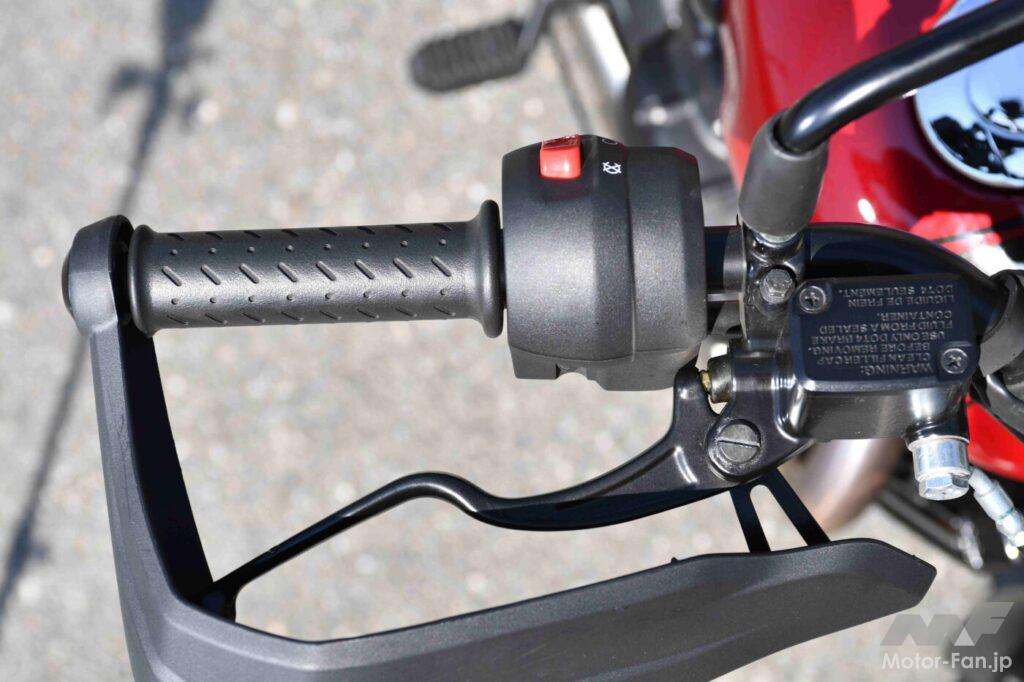

The brake and clutch levers have no position adjustment mechanism. The grip rubber is not an off-road type, but the company’s general-purpose type that is also used on other Triumphs. The throttle is electronically controlled, which is still rare in the 400cc class.
Fuel tank/seat/step area ★★★★☆
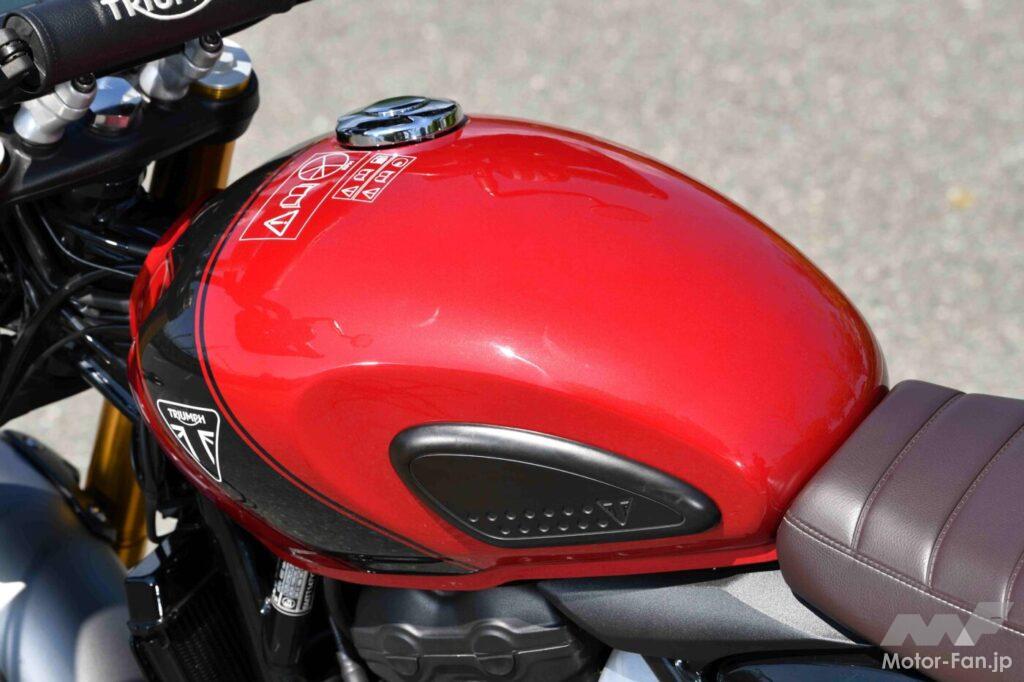
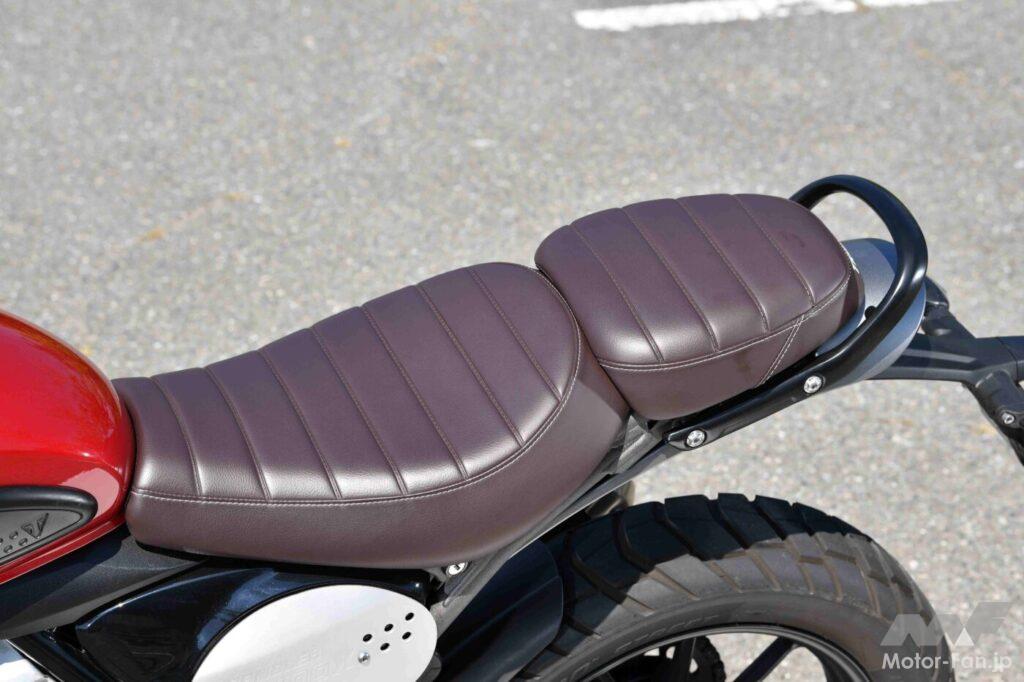
The fuel tank has a design that is common to all Triumph Modern Classic series models, and is equipped with knee grip rubber on the surface that comes into contact with the rider’s knees. The seat is split front and rear (the Speed 400 is a one-piece seat), but the electrical components are installed under the tandem seat, so it cannot be easily converted to a single seat. Although the rear end of the main seat is tilted, there is still ample freedom in the seating position.
Although the mounting bracket and heel plate are the same as those on the Speed 400, the footpegs have an off-road vehicle-like structure. The base of the bar is offset downward and forward, and when the rubber is removed, it becomes jagged for better grip.


Load capacity ★★★★☆
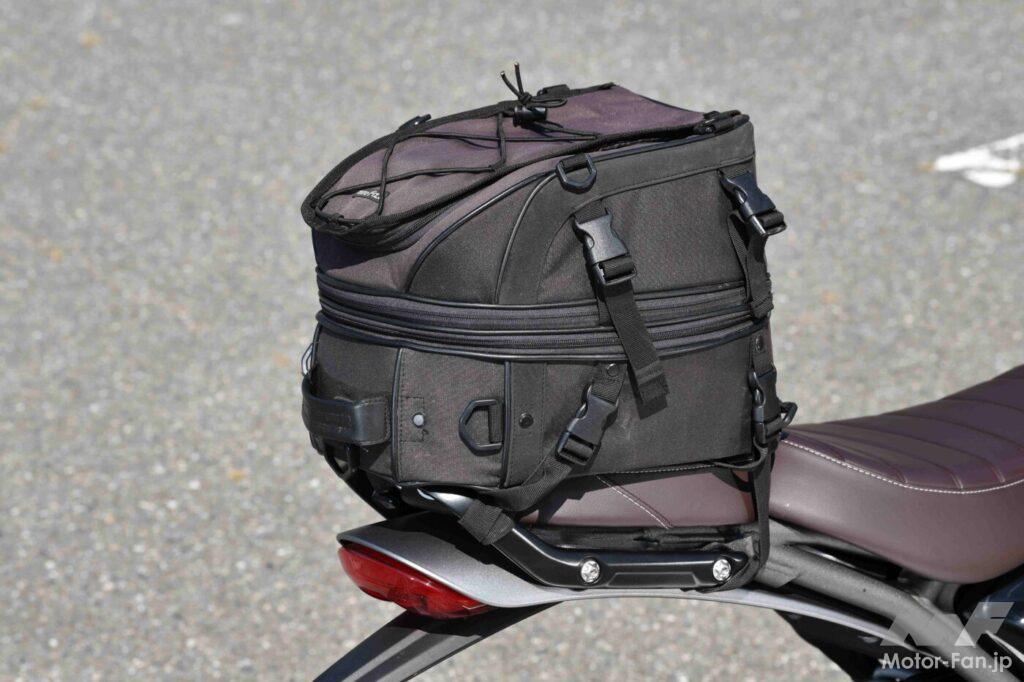
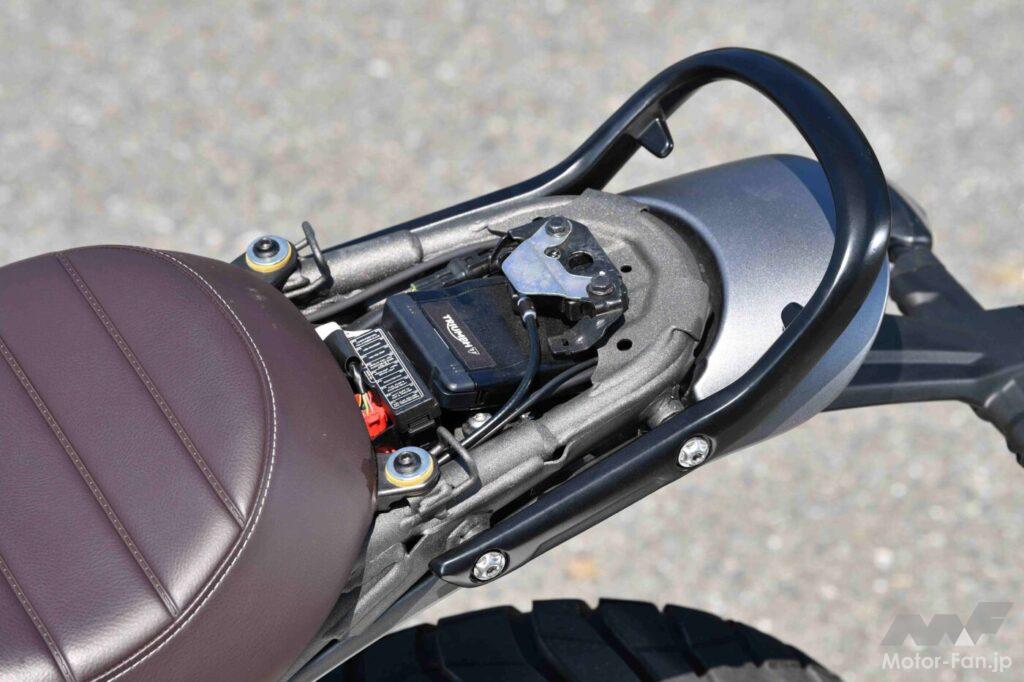
The grab bar does not have a hook, and the clearance between the grab bars on both sides under the passenger seat and the tail cowl is quite tight. However, the passenger seat has a wide and flat surface, so there was a good sense of stability when I attached my personal Tanax double deck seat bag. There is very little space under the passenger seat, but as you can see from the photo, the ETC unit can be stored just in time.
Brakes ★★★☆☆

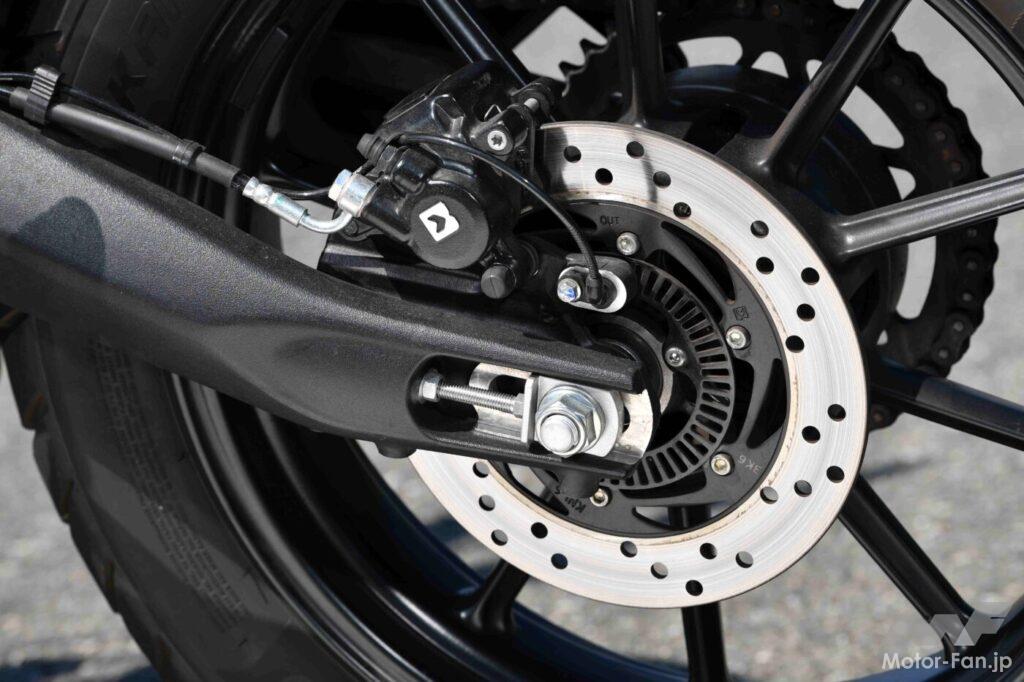
All brake-related parts are manufactured by Bybre, with the front equipped with a φ320mm disc and radially mounted opposed 4-piston caliper, and the rear equipped with a φ220mm disc and single-piston caliper. The front gave a mediocre impression, but the rear was easy to use both as a braking device and for stability control. The rear ABS and traction control can be disabled at will when driving off-road.
Suspension ★★★☆☆
ADVERTISEMENT
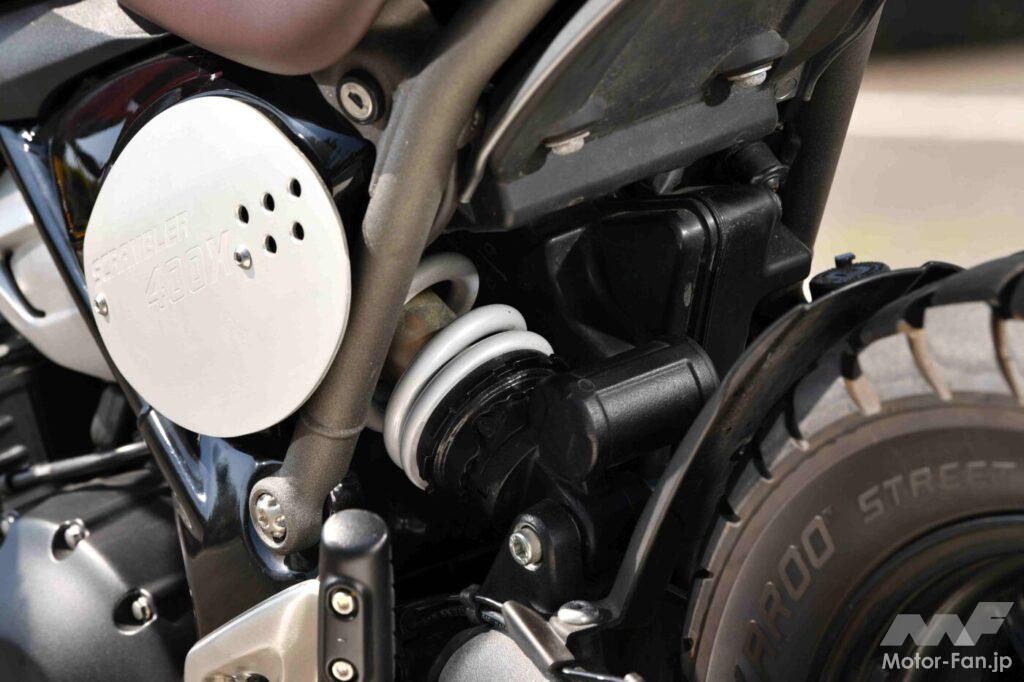
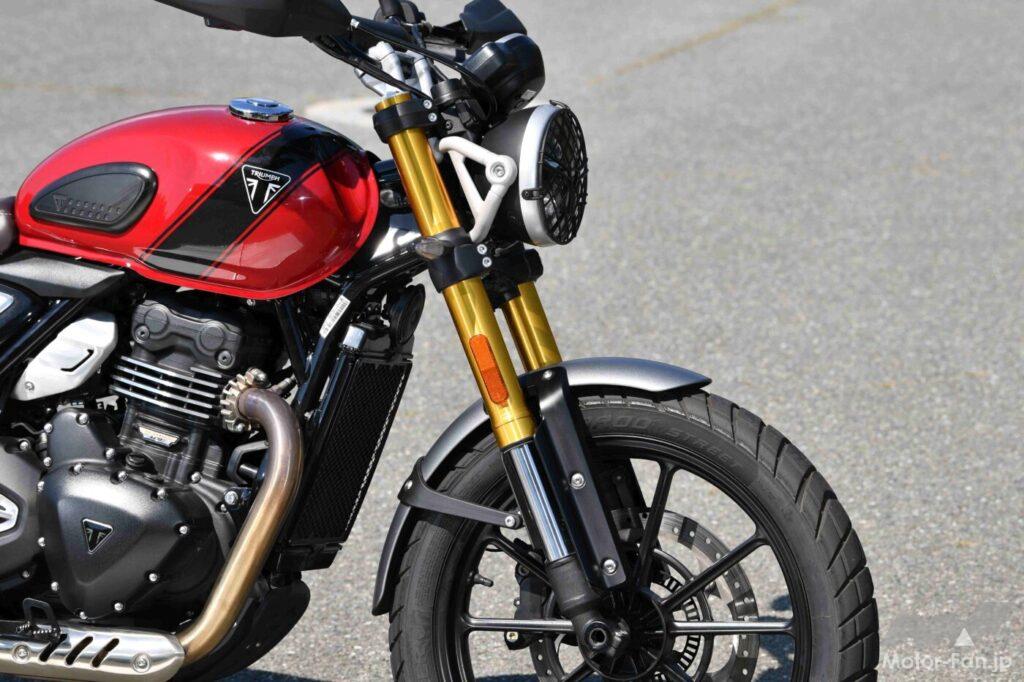
The front and rear shocks are made by Showa, the φ43mm inverted front forks are big piston type, and the rear shock is an RSU with a reservoir tank. With 150mm of wheel travel in the front and rear, the ride is better than that of a typical on-road bike, including the Speed 400. However, some fellow riders say the rear suspension is too soft, and in such cases, it seems that the problem can be solved by increasing the preload of the rear shock (the initial setting is the weakest).
In-vehicle tools ★★☆☆☆
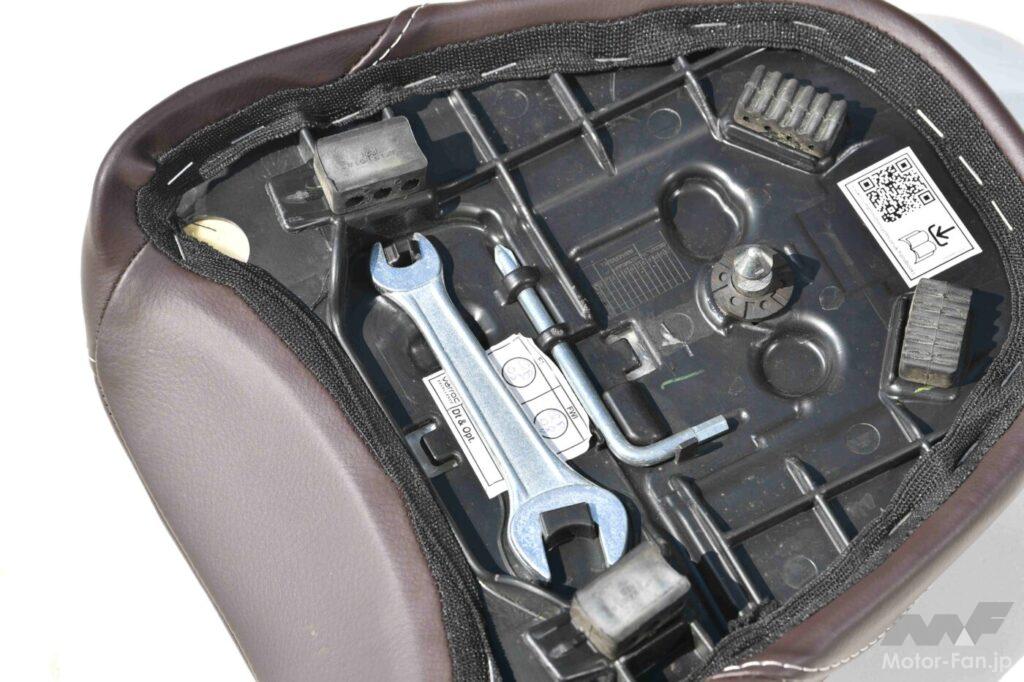
The only tools provided behind the passenger seat are a 10 x 17 mm open-end wrench, a 5 mm L-shaped hex wrench, and a Phillips head screwdriver. However, according to the instruction manual, a hook wrench for adjusting the rear shock preload is included when the vehicle is purchased.
Actual fuel consumption ★★★★☆
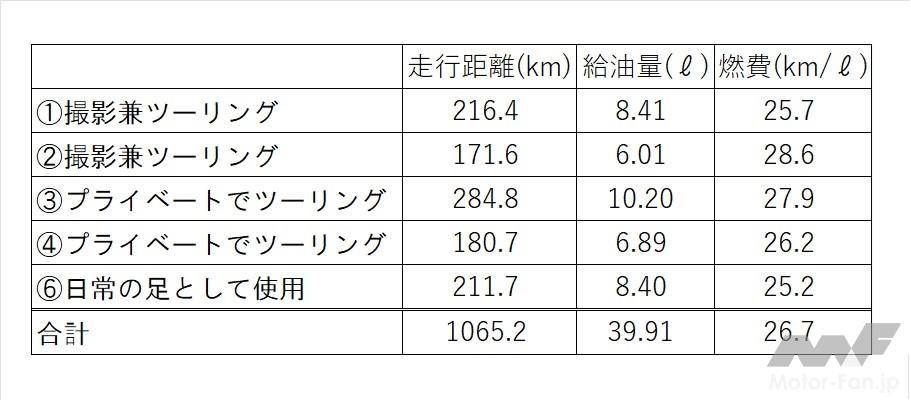

Comparing it to other manufacturers’ 350-400cc single-cylinder bikes posted online, the actual fuel economy of 26.7km/L is roughly on par with that of the KTM 390 Duke, and far behind the 35km/L of the Honda GB350 and Royal Enfield 350 Classic. However, given its high performance, this is perhaps to be expected. The gas tank capacity is 13 liters, so the range calculated from average fuel economy is 26.7 x 13 = 347.1km. The fuel warning light on the meter’s LCD screen starts flashing when the remaining fuel level reaches 3 liters.
ADVERTISEMENT
 SR + GB + Bullitt + Duke + Pyren ÷ 5 = Triumph Scrambler 400X? This bike combines the best of modern 350-400cc single-cylinder bikes. | 1000km Test Drive [1/3]
In recent years, the motorcycle market has seen a wide variety of neo-classic models. Among them, the Speed 400 and Scrambler 400X, which Triumph launched in 2024, are rare under-400cc models that combine the flavor of the good old days with modern maneuverability in just the right balance. REPORT: Nakamura Tomohiko PHOTO: Togashi Hideaki
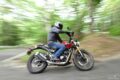 It’s a big single bike, but it’s easy to ride! The Triumph Scrambler 400X is a great bike for entry-level riders. | 1000km Test Drive [2/3]
Once you get your large motorcycle license, you’re not interested in the under 400cc class. I think there are quite a few riders like that in Japan, where there is a unique licensing system. However, once you experience the 400cc single-cylinder bikes that Triumph will begin selling from 2024, your attitude towards engine displacement will surely change dramatically. REPORT: Nakamura Tomohiko PHOTO: Togashi Hideaki
ADVERTISEMENT

What bothers me about the Scrambler 400X is the downward-sloping design when viewed from the side. The Speed 400 doesn’t look out of place, but this model has a high ride height, so it would be better to follow the old model’s rules and make the bottom of the gas tank and the seat line level with the ground…
Main specifications
Model name: Scrambler 400X
Length x width x height: 2115mm x 900mm x 1170mm
Wheelbase: 1418mm
Ground clearance: 195mm
Seat height: 835mm
Caster/trail: 23.2°/108mm
Engine type: Water-cooled 4-stroke single cylinder
Valve type: DOHC 4-valve
Total displacement: 398.15cc
Bore x stroke: 89.0mm x 64.0mm
Compression ratio: 12.0
Maximum power: 29.44kW (40ps) / 8000rpm
Maximum torque: 37.5N・m (3.8kgf・m) / 6500rpm
Starting method: Self-starter
Ignition method: Full transistor
Lubrication method: Wet sump
Fuel supply method: Fuel injection
Transmission type: Constant mesh 6-speed
return Clutch type: Wet multi-plate coil spring
Gear ratio
1st gear: 2.830
2nd gear: 1.930
3rd gear: 1.420
4th gear: 1.140
5th gear: 0.960
6th gear: 0.840
1st and 2nd reduction ratios: 2.839, 3.070
Frame type: Hybrid spine/perimeter
Front suspension: Telescopic inverted type φ43mm
Rear suspension: Direct push monoshock
Front tire size: 100/90-19
Rear tire size: 140/80R17
Front brake type: Hydraulic single disc
Rear brake type: Hydraulic single disc
Vehicle weight: 179kg
Fuel used: Unleaded high-octane gasoline
Fuel tank capacity: 13L
Seats: 2 people