
Leaving Hiratsuka Post Town
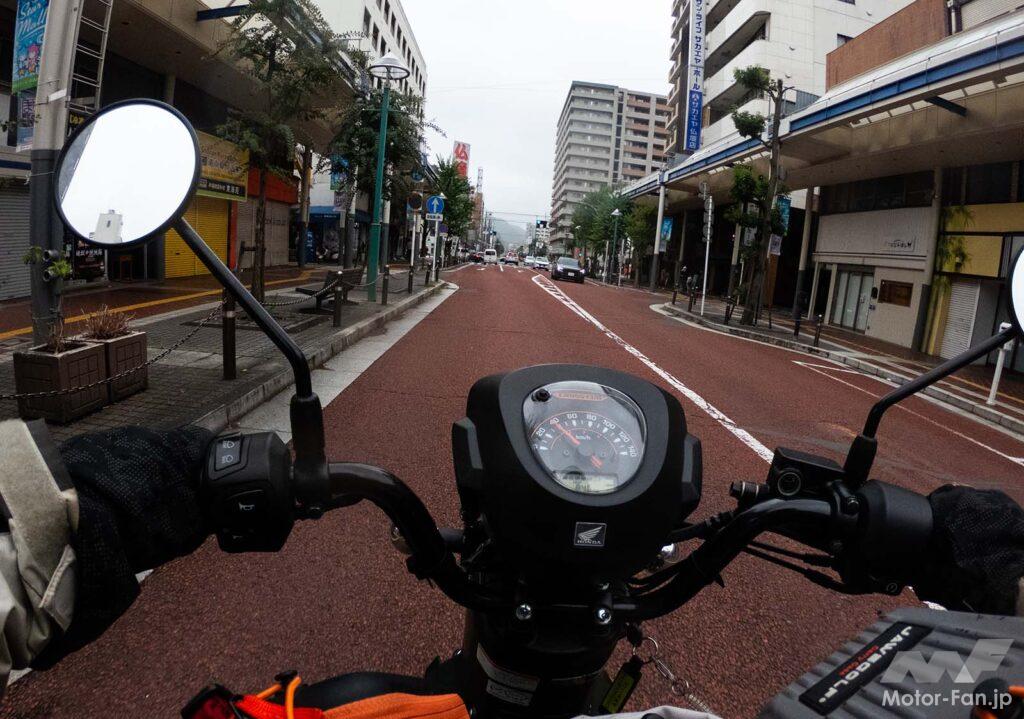
It’s unclear whether it will rain or not in Hiratsuka city. There is almost nothing left of the old post town atmosphere.
The sky had been overcast since morning. The humidity must have died down a bit overnight, as there were wet patches here and there on the road. However, although it looked like it was about to rain, it wasn’t actually raining yet. I didn’t bother putting on my raincoat, so I left the inn as it was, but as soon as I stepped out onto the road, it started to rain lightly.
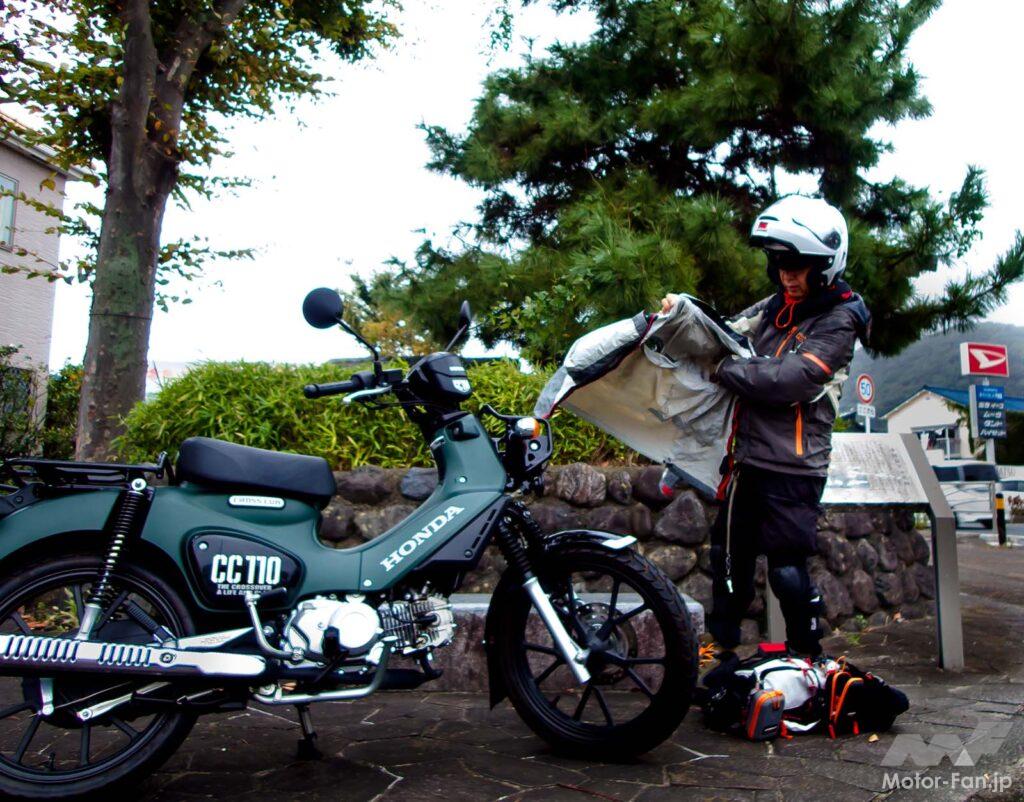
The remains of Mitsuke in Hiratsuka. I took off the backpack I had just put on, put on the rain cover, and put on my rain gear.
I clicked my tongue at the thought of just getting started, and reluctantly parked my Cross Cub on the outskirts of town. Up ahead was the Hakone mountain pass. It seemed the rain would never stop. Looking up while donning my rain gear, I was struck by the magnificent pine branches. Looking more closely, I saw a signpost that read, “Remains of Hiratsuka-juku Kyogatamitsuke no Ato (Remains of Hiratsuka-juku Kyogatamitsuke Remains).”
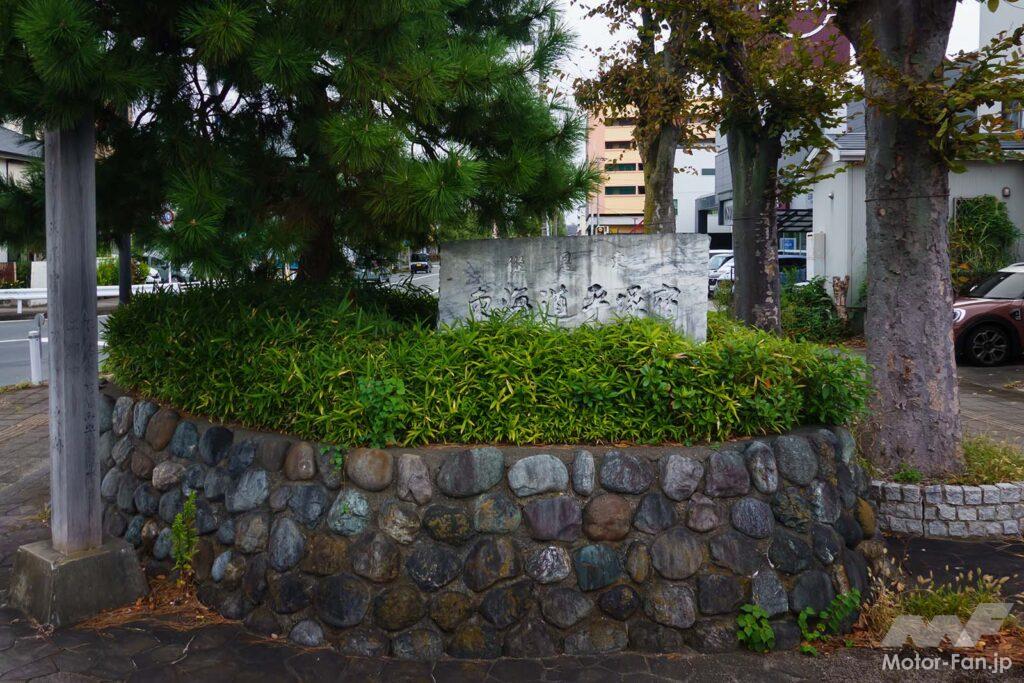
Mitsuke (み付/みっとえ) is a lookout post in the Edo period. It was found in castles and post towns, and guards were stationed there.
There were two Mitsuke mitsuke in post towns along the Tokaido, one on the Tokyo side and one on the Kyoto side, and they were used to watch over people entering and leaving the post towns. However, the one in Hiratsuka was burned down in an air raid during the war, and even its exact location is unknown. So after the war, this “replica mitsuke” was rebuilt based on an estimate of where it was located.
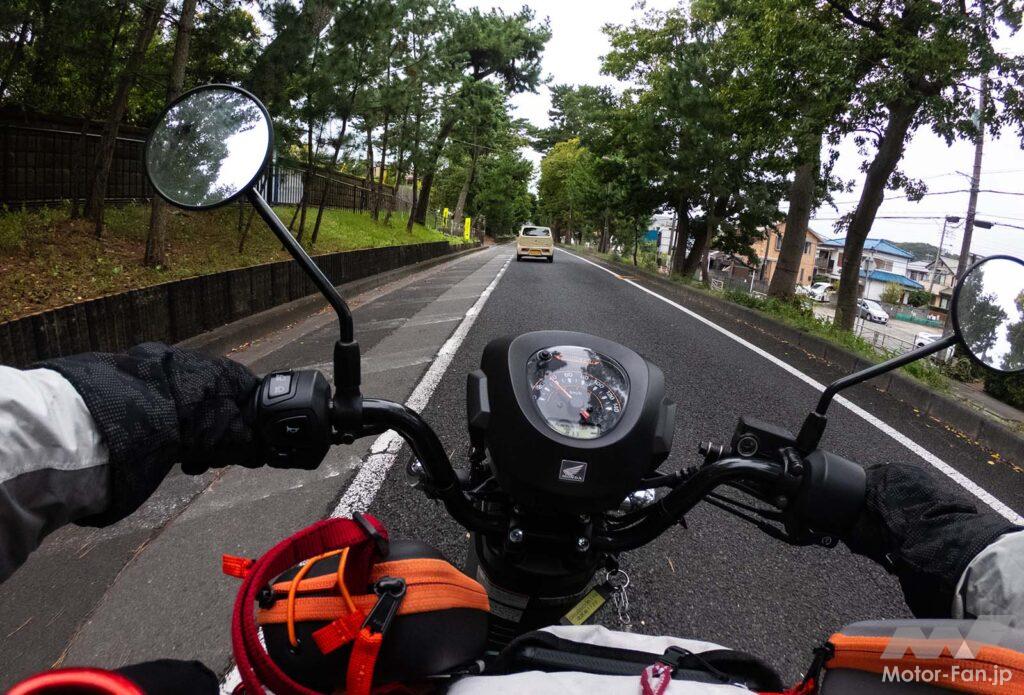
We pass through the pine tree-lined streets of Oiso.
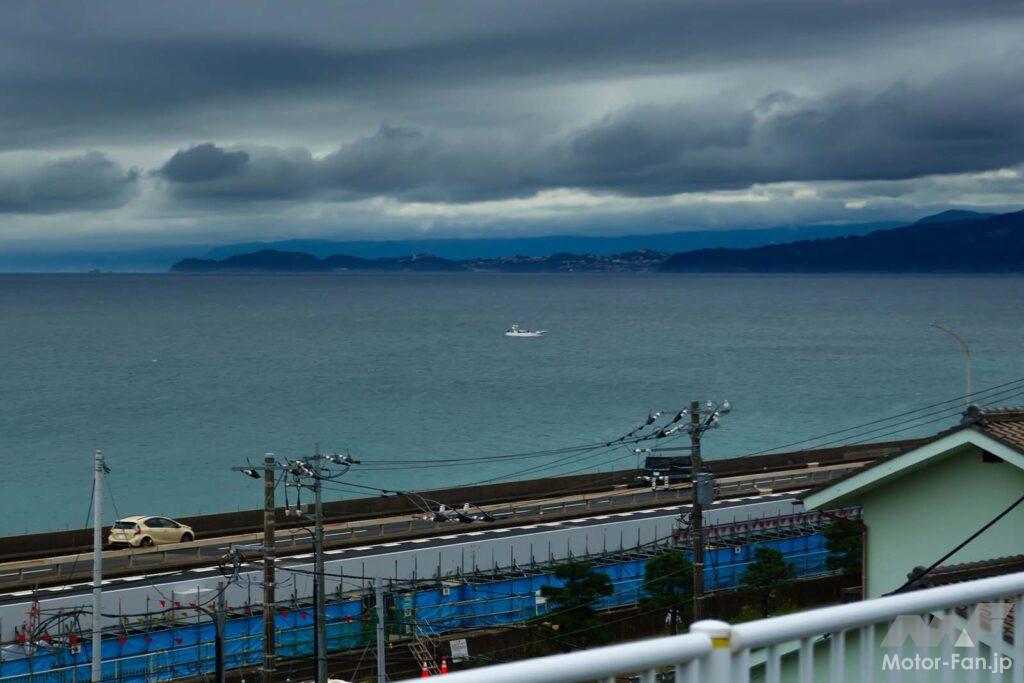
Across the Seisho Bypass, you can see the blue-gray ocean. You’ll soon be in Hakone.
Whiteout on the Hakone roads
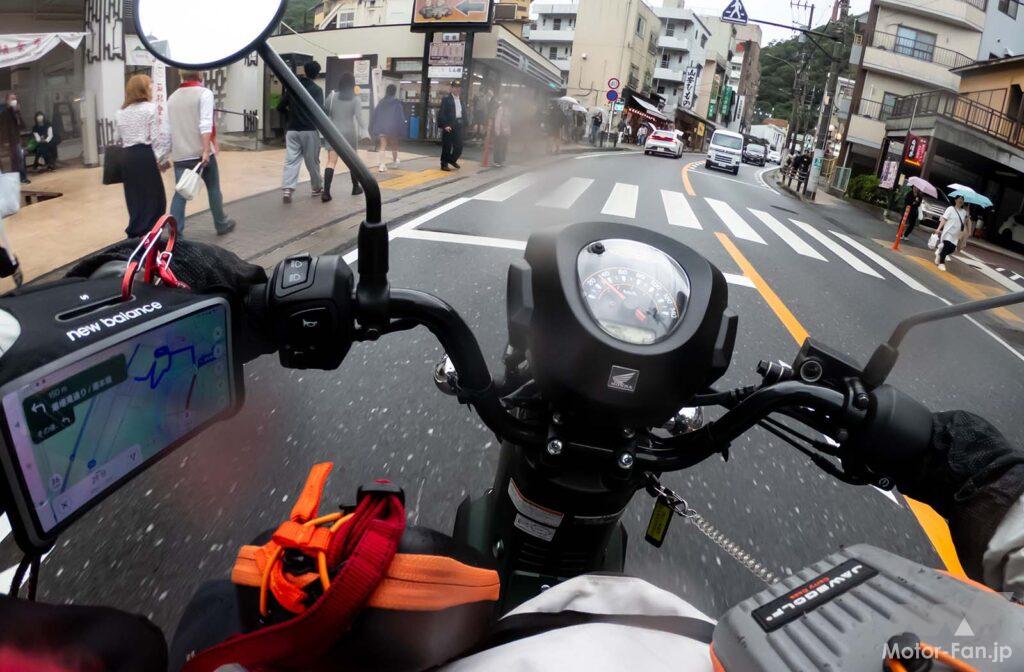
The town of Hakone Yumoto is bustling with people and cars.
We passed Odawara and approached Hakone-Yumoto. The sidewalks of Hakone’s downtown were overflowing with tourists who appeared to be foreigners, and the atmosphere was like a festival. Considering that it was a ghost town amid the COVID-19 pandemic, with the cuckoo-cuckoo chirping everywhere, it already feels like a different era, even though it was only a few years ago.
This is also a sacred place
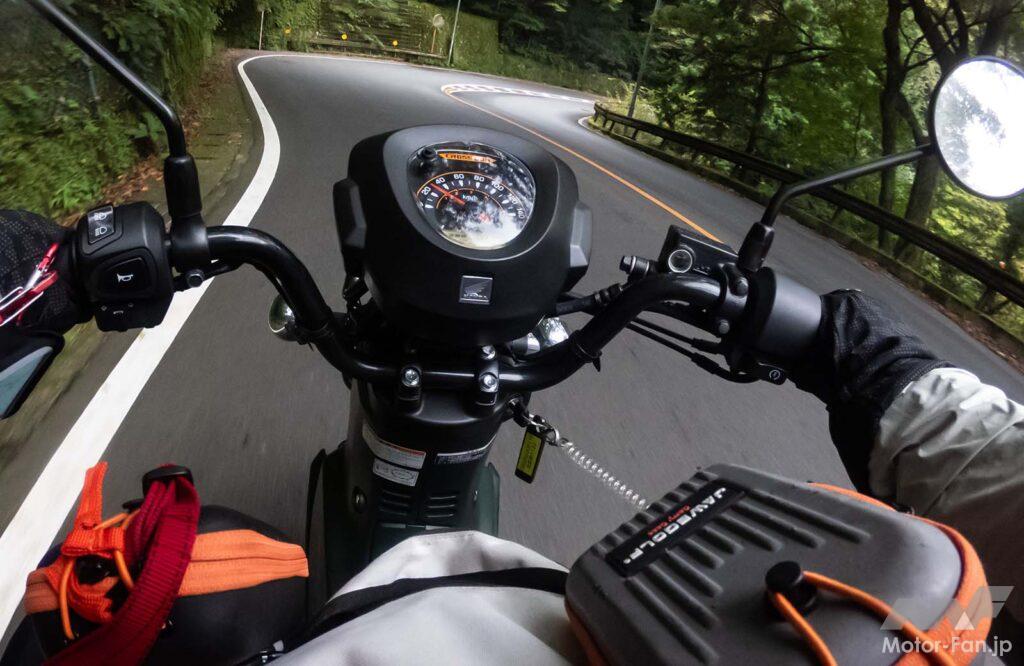
The first half of the Hakone Hill Climb was smooth with almost no rain.
When I tell my car-loving acquaintances that I often ride my motorcycle through Hakone, their eyes light up and they say, “Oh, Hakone, the mecca of racing!” These people, who ride around at night on flat cars fitted with extra-thick tires and mysteriously flared wings, are mostly fans of the mountain-driving car anime “Initial D.”
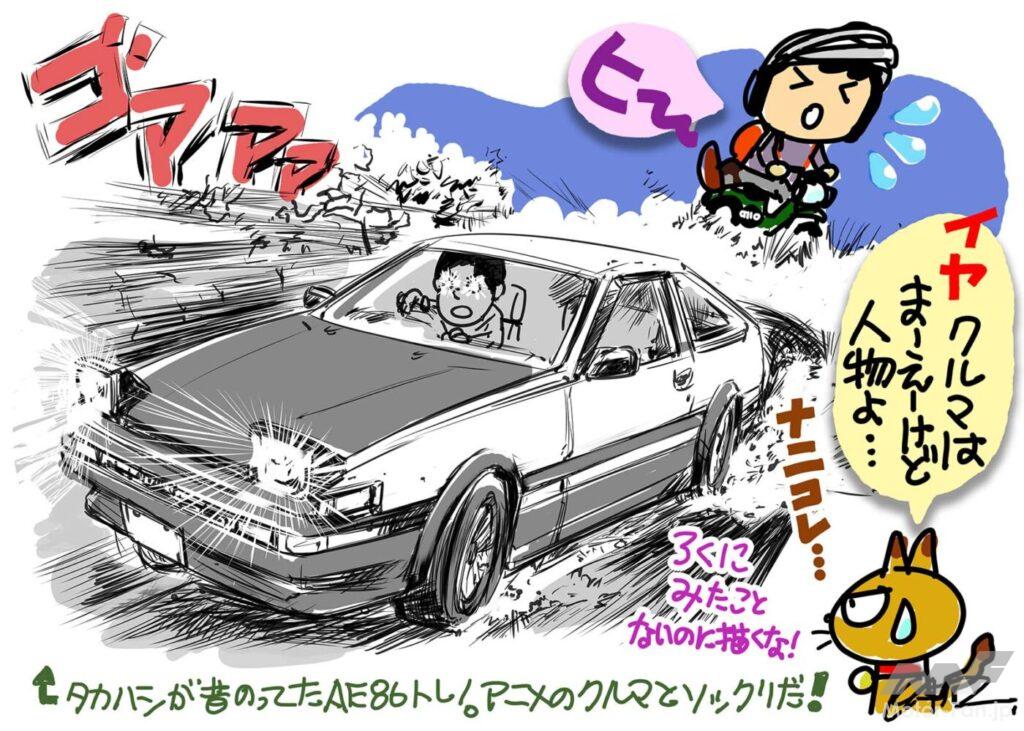
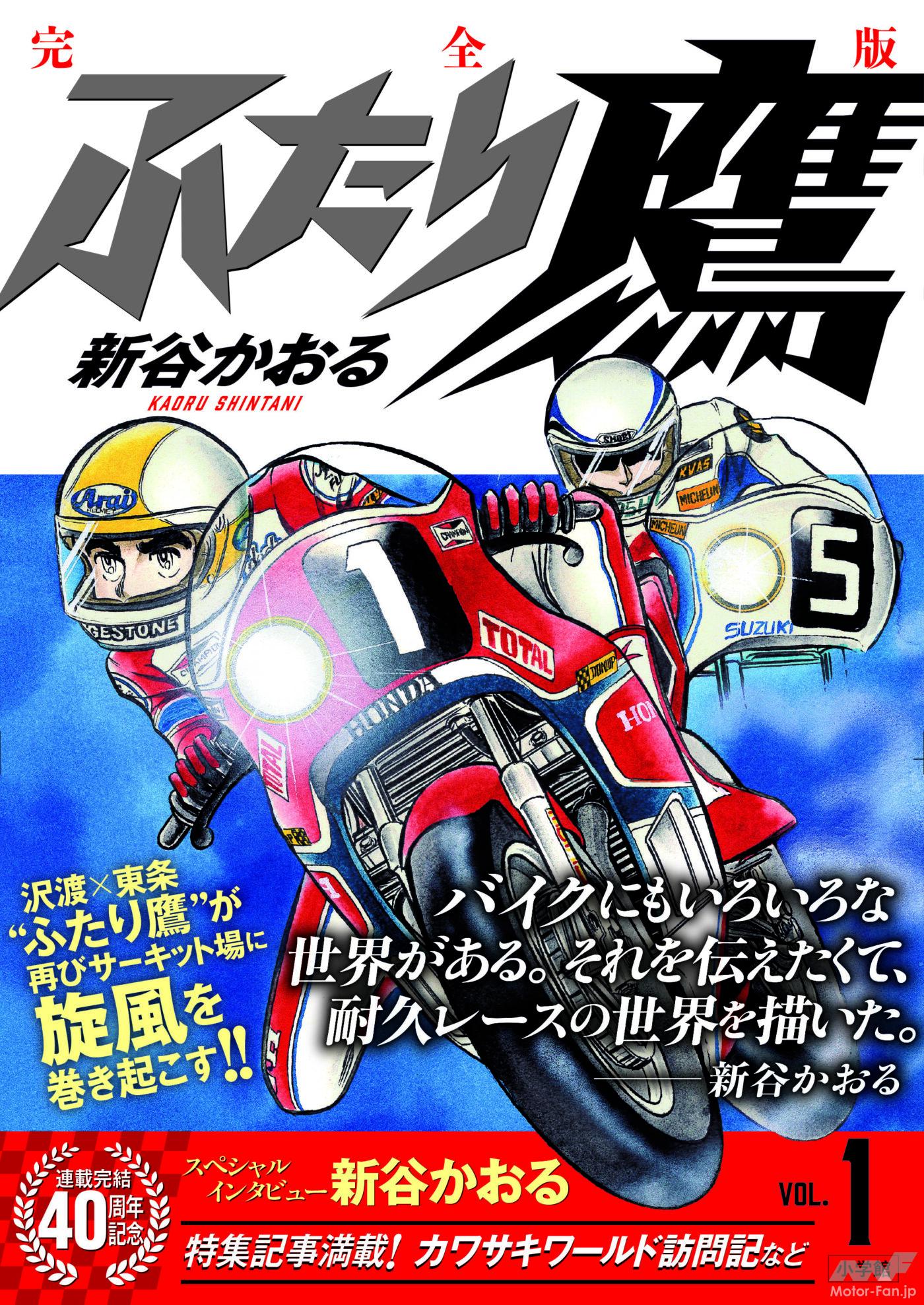
An illustration of “Initial D”. It’s basically a story about a few hot-blooded young men driving around on mountain roads, yelling “We’re not gonna lose, gan gan gan!” (I think) ♪
Even if readers of this article haven’t read “D,” they’ve surely read the legendary manga by the same artist, which led the motorcycle boom of the 1980s. There are surely many young riders of the past who, inspired by the manga, frequented mountain passes, sparking fire from empty cans on their laps and indulging in misbehaving narcissism. Now, with one foot in the realm of senior citizens, they can clearly picture themselves as elderly riders, sitting in a kotatsu, stroking their cats and looking forward to the impending retirement. In fact, the miserable figures of these frail riders are reflected clearly every day in the bathroom mirror of the Takahashi household, and it makes me sigh every time I see them.
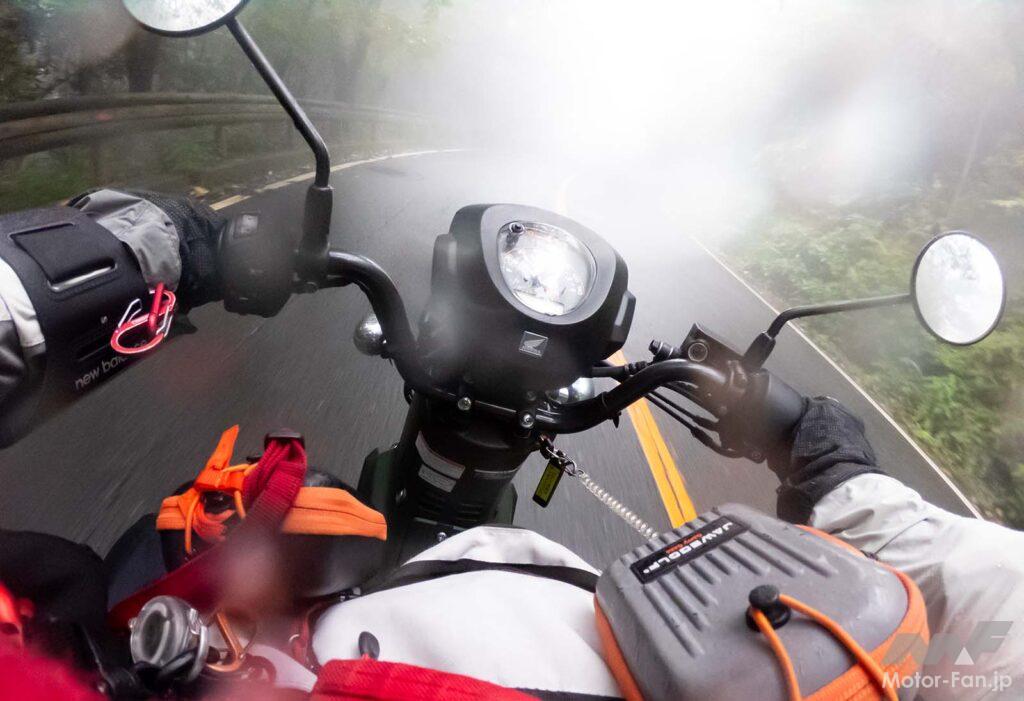
As the Hakone mountains deepen, so does the fog.
By the way, the Hakone depicted in “Initial D” is quite different from the National Route 1 where AFO riders plod along on their Cross Cubs. The Hakone area featured in that anime is a cool toll road, like the Turnpike.
If I write this, some cruel readers might say, “Why don’t you go and shoot on that road too? It’s so close, don’t slack off!” But it’s not that simple. It’s not widely known, but media photography on toll roads around Hakone requires a strict fee, and it’s quite expensive. For example, on the Turnpike, a simple photo can cost roughly 20,000-30,000 yen a day, and a video can cost 60,000-70,000 yen. A third-rate AFO photographer wouldn’t have the right to pay that kind of money to photograph the roads, so Takahashi is forced to just breeze along the national highway, where photography is free.
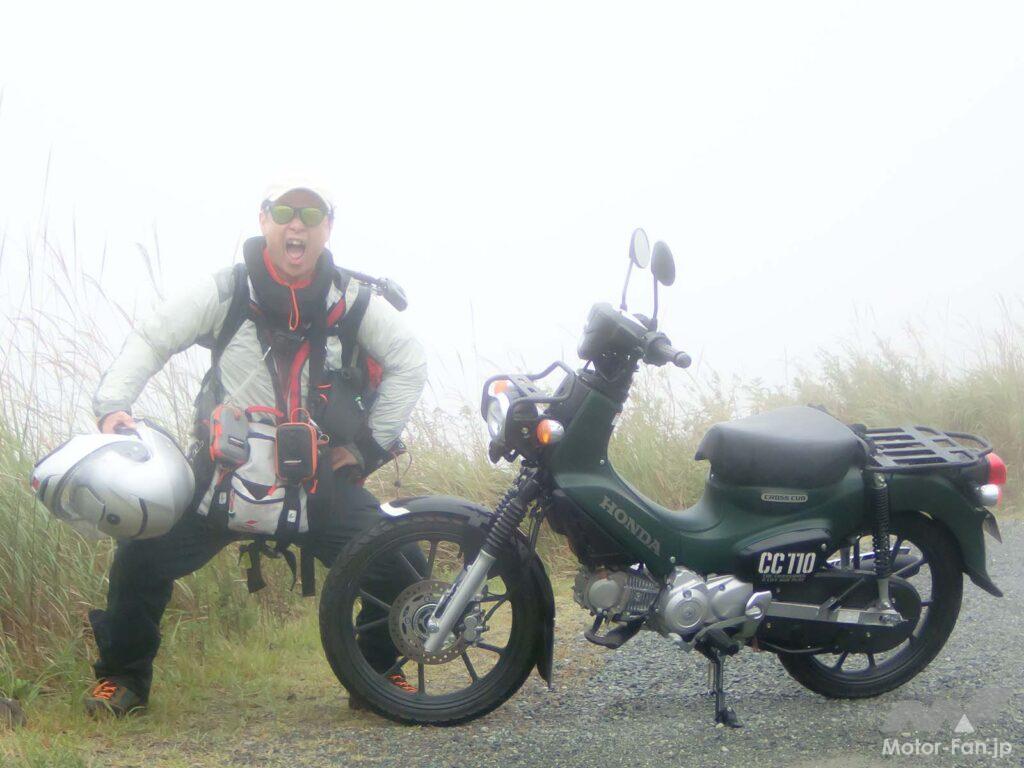
Around Motohakone Rock-Carved Buddha (Rokudo Jizo). However, the fog was so thick that no matter where I set up my camera, all I could take was a completely white photo.
Even when we reached Hakone, it didn’t rain as much as we had expected, which was a bit disappointing, but instead, a thick fog started to form. As we gained altitude, the world was consumed in a blanket of white, and visibility became increasingly limited. Visibility also changed depending on the thickness of the fog, which was blown around by the wind. At times, the fog became so thick that we couldn’t see more than 10 meters ahead.
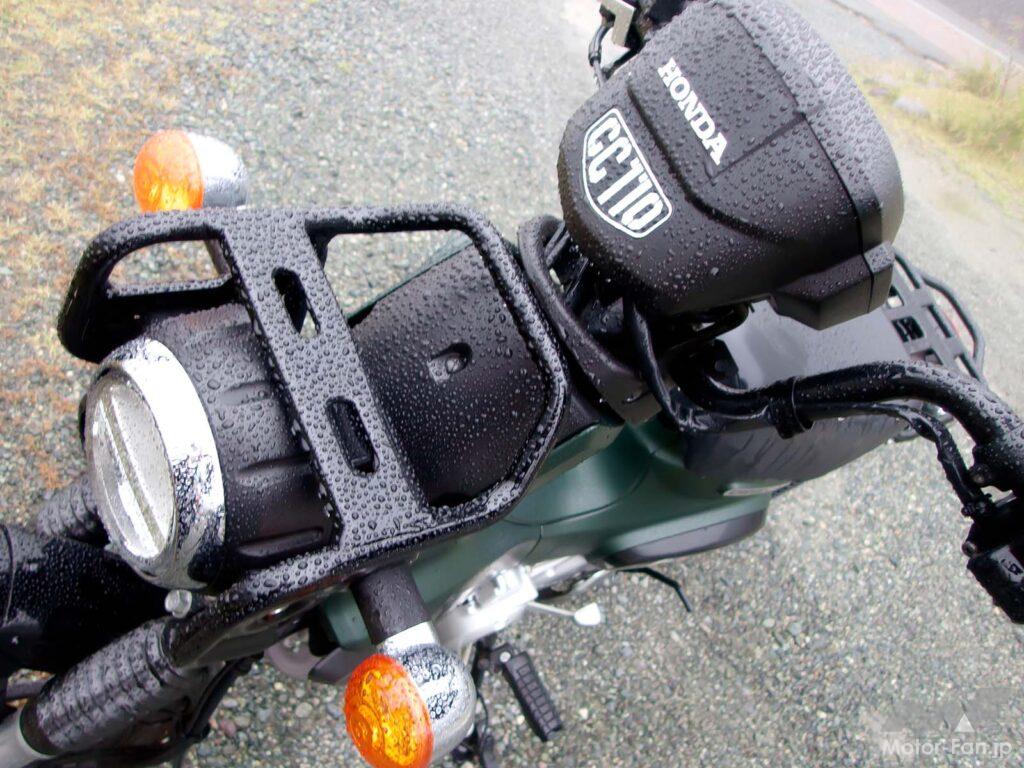
Even if it’s not a heavy rain, you can get really wet in the foggy mountains.
The Cross Cub runs effortlessly through the tight Hakone mountain pass. Despite its floppy engine that doesn’t have much power, it has an unbeatable stability that allows it to run smoothly and smoothly at the same pace anytime, anywhere, whether going up or down, at high or low speeds. It doesn’t look impressive at all, but that’s what makes the Cub engine so amazing.
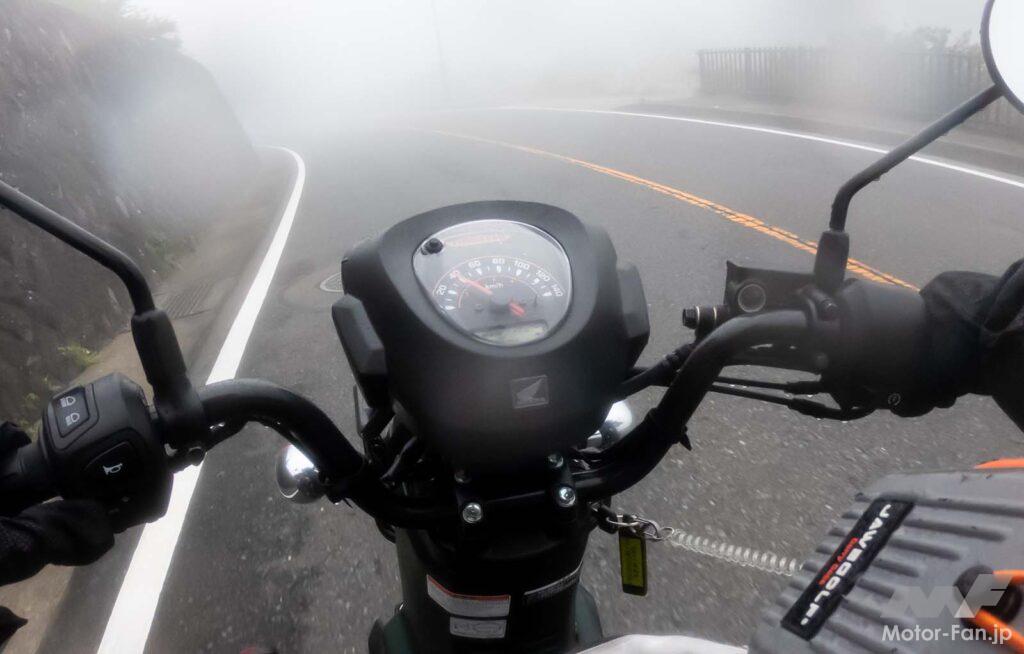
The foggy road continued all the way to Lake Ashi.
Bikes and people aren’t that different in that respect. Even in the bike media world where Takahashi crawls around every day looking for a little cash, the really dangerous old men you should never go against are usually always smiling and don’t give off a single hint of greatness. On the other hand, the ones who act all high and mighty and wear cheap sunglasses are usually empty-headed losers.
In particular, you can’t trust AFO writers who pose proudly in photos wearing green sunglasses and sticking out their tongues. If you read an article written by such a guy, you’ll become an AFO too, so if you come across one, close your browser immediately.
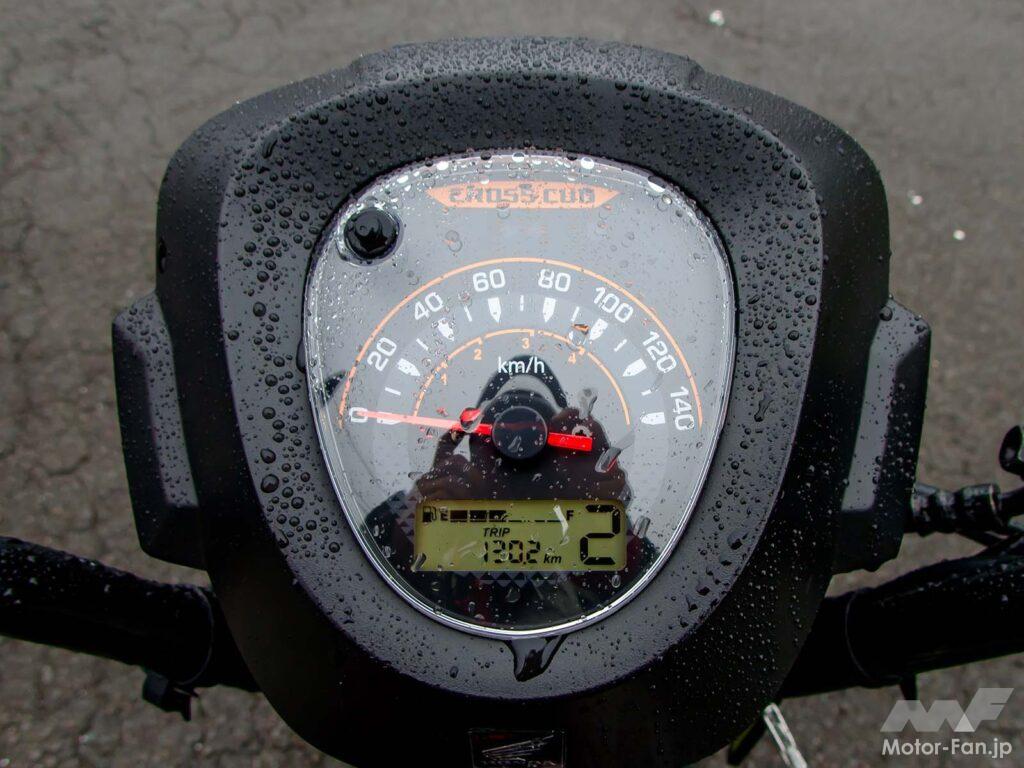
Soon we reached Lake Ashi, 130.2km into the trip, and the fuel meter started to move, showing 3 less and 3 remaining. At least according to the meter, the gas was half left.
To Mishima, and then to Kambara
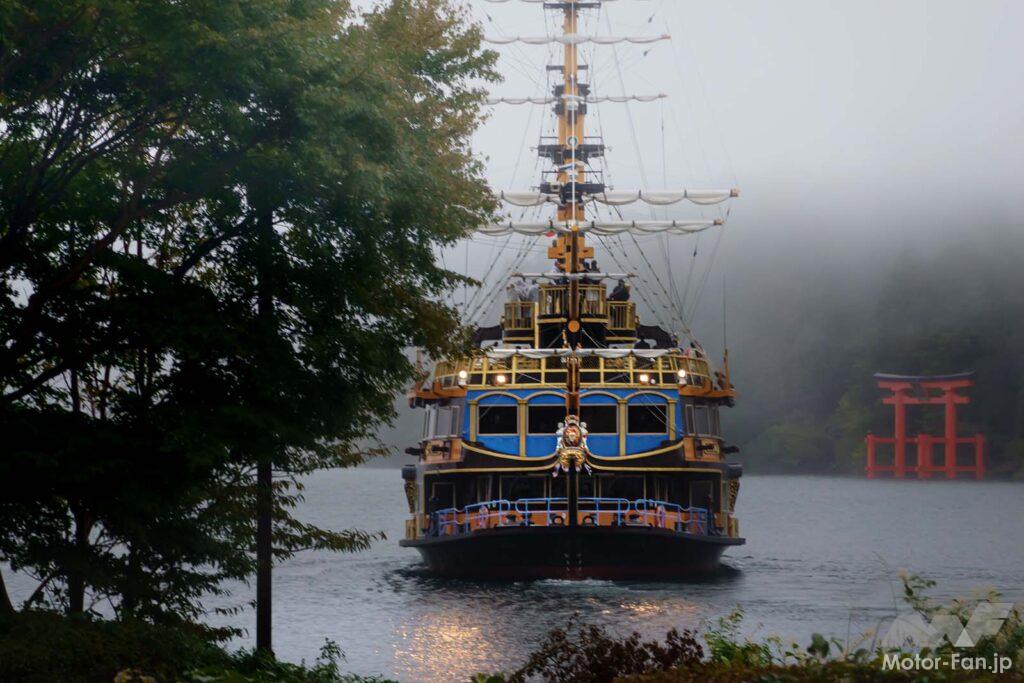
The ghost ship, a famous sight on Lake Ashi, is also shrouded in mist, adding to the eerie impact.
I stopped my bike at Lake Ashi to take a breather. To be more honest, I took a pee. But I don’t really have to be honest about that.
The mist on the lake’s surface was gradually thinning, but sprinkles of rain continued to fall, and the sky fluctuated between a heavy, dull leaden color and a faintly bright grayish color.
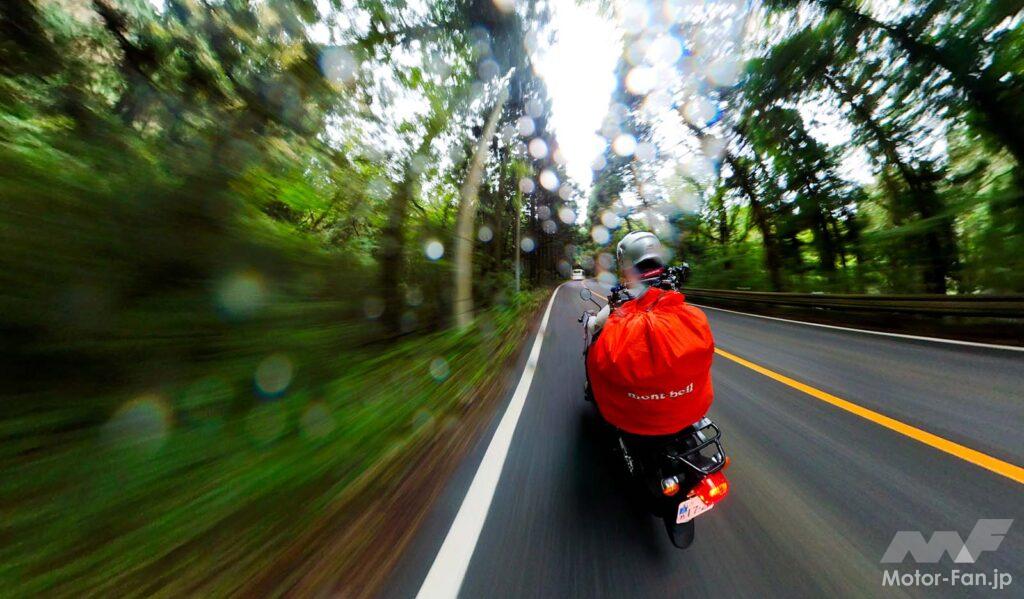
We pass through the cedar trees along Lake Ashi, a symbol of the Hakone Tokaido, and descend to Mishima City.
The downhill stretch from Hakone to Mishima is a spectacular road that could be called the highlight of the entire National Route 1. However, with the weather like this, it was hardly beautiful.
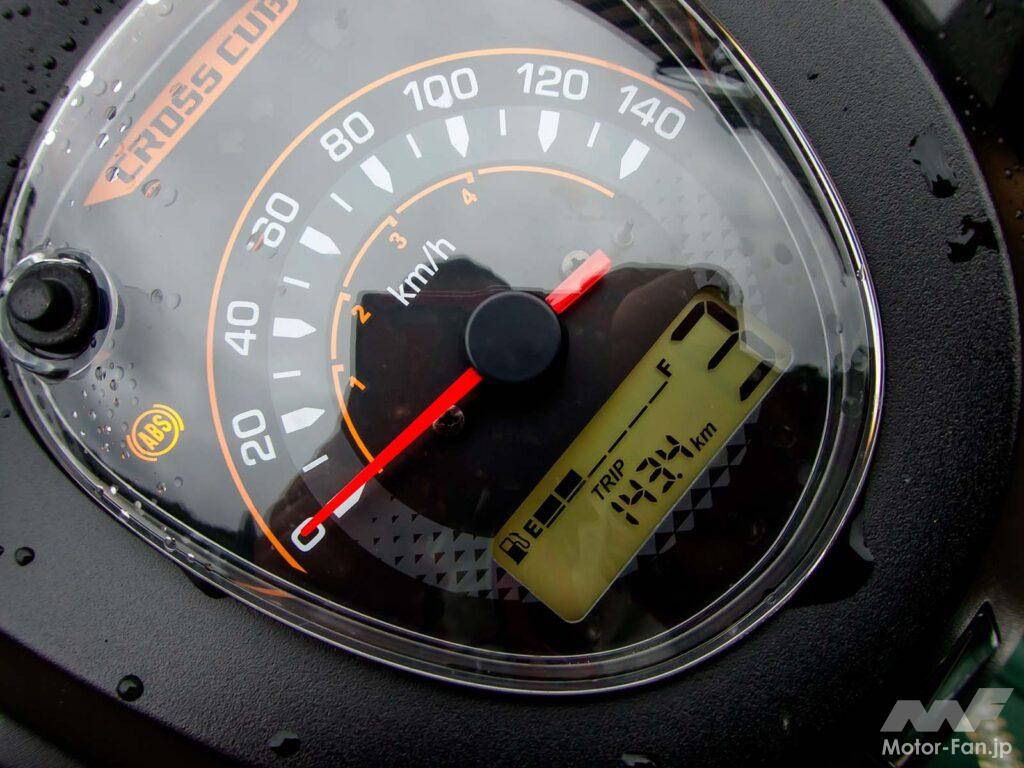
As I entered Mishima city, the fuel meter was down 4 and 2 remaining. The trip distance was 143.4km.
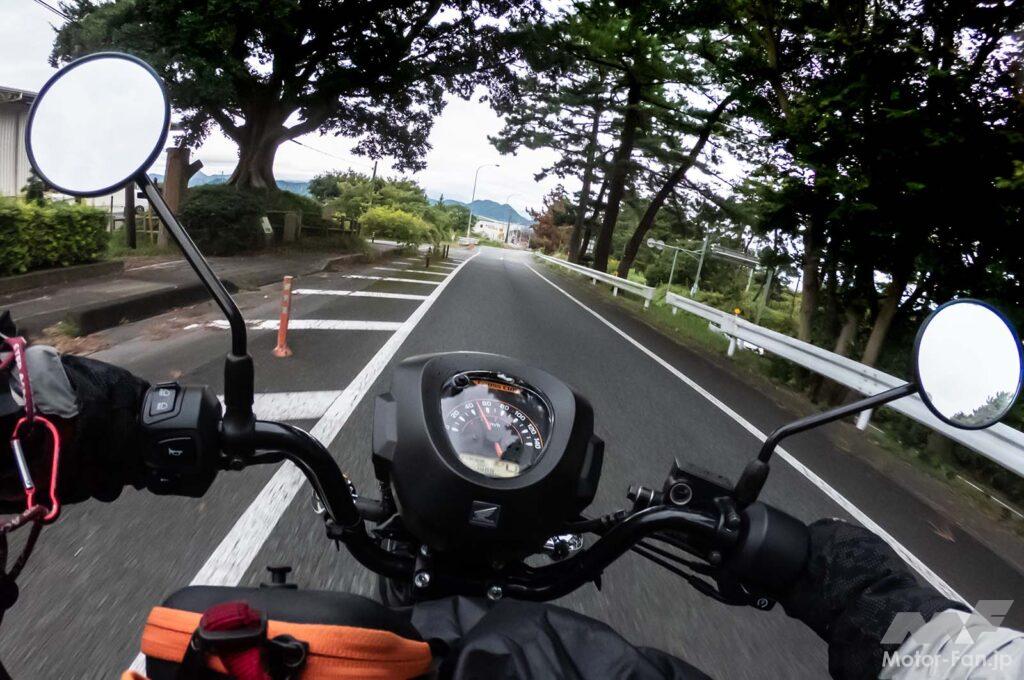
National Route 1 passes through the pine trees of Kawaragatani in Mishima City, passes Nishikida Ichirizuka and continues west.
National Route 1 connects the Numazu Bypass to the Fuji-Yui Bypass. As the rain got heavier toward night, I got off at Takahama Interchange and stopped at Kanbara-juku. The rain poured down relentlessly on the post town at twilight, blurring the view through the shield road.
When I parked my Cross Cub in front of the monument to Utagawa Hiroshige’s “Kambara: Night Snow” in a corner of the post town, I noticed that the fuel gauge was dropping and I was down to the last bit.
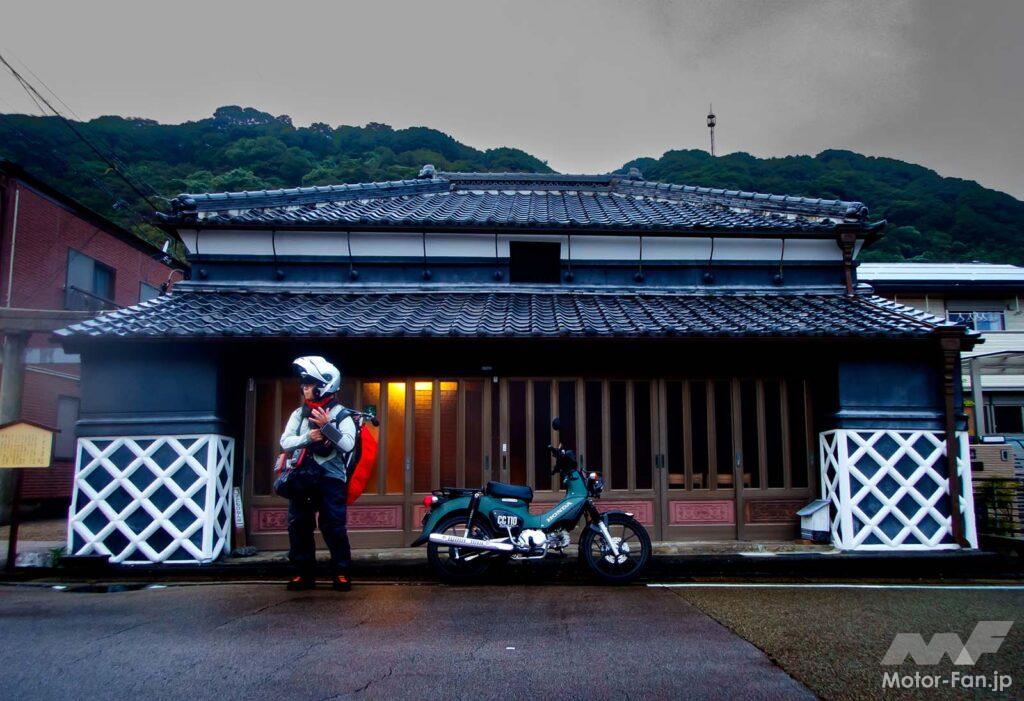
Sanoya, a merchant house that still remains in Kambara-juku, is a luxurious lacquered house that was highly fire-resistant for its time.
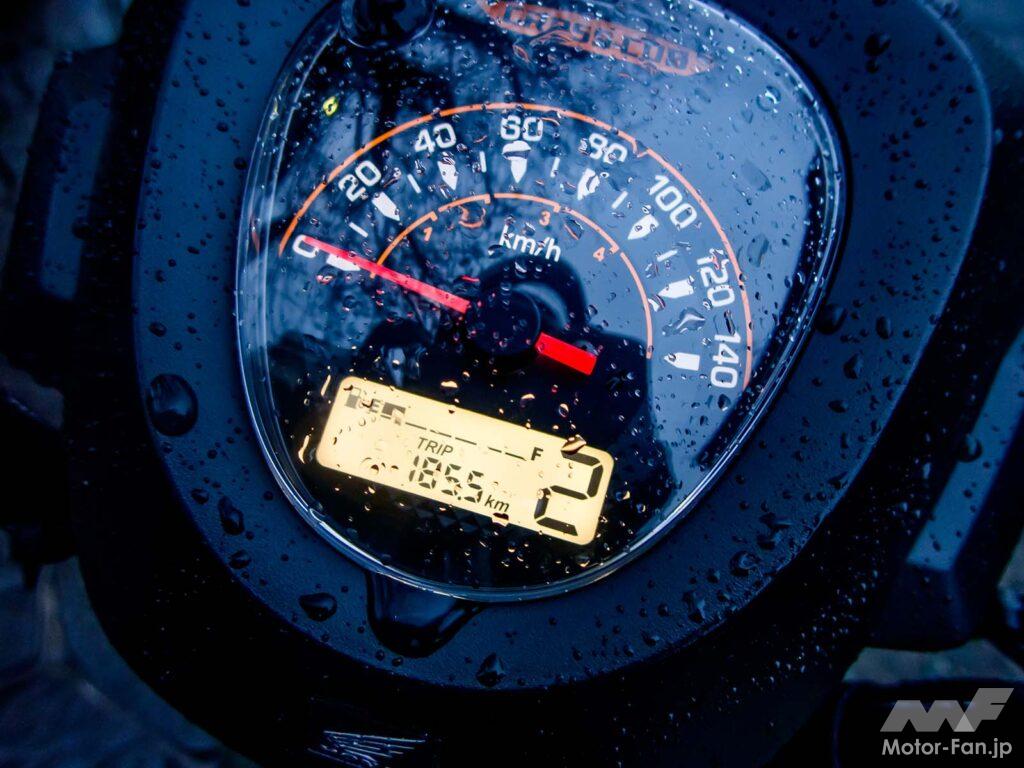
At Kambara-juku, the trip distance reached 185.5km and the fuel meter was down to the last mark.
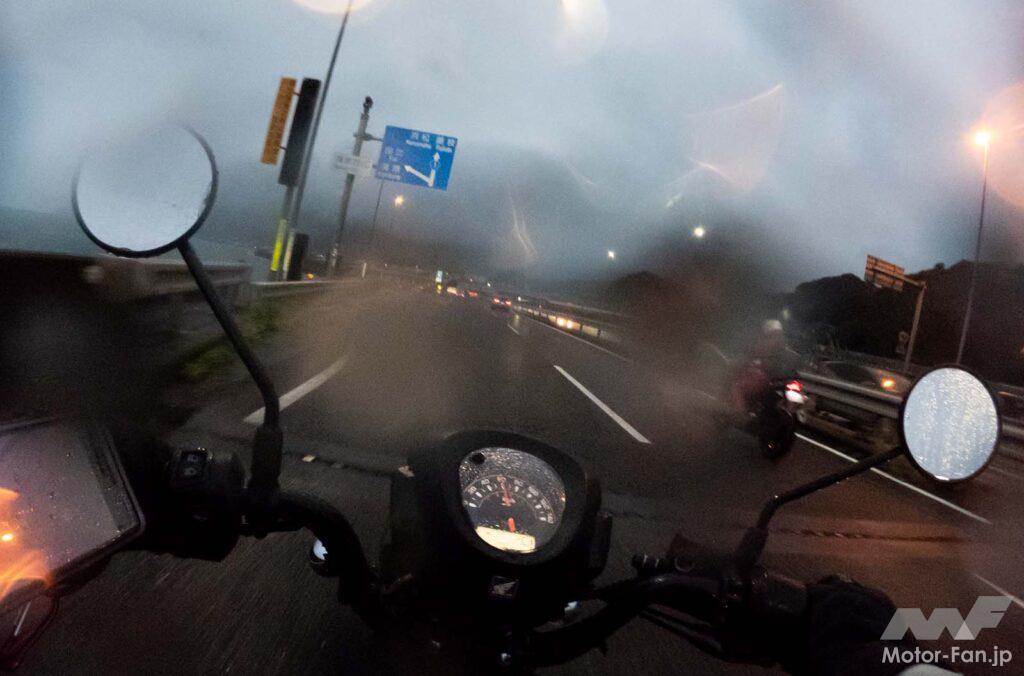
We head west again on the Fuji-Yui Bypass in the pouring rain.
We took the Fuji-Yui Bypass around Suruga Bay and headed for the center of Shizuoka City. By the time we reached the city, the sun had already set.
I rushed into my lodgings in Shimizu Ward, Shizuoka City, and unpacked my rain-soaked luggage. It was a bit too rough, and I honestly didn’t want to do it, and kids shouldn’t try it at home, but I didn’t want my wet camera to stop working the next day, so I turned the hair dryer provided on high, dried the camera as fast as I could, and then crawled right into bed.
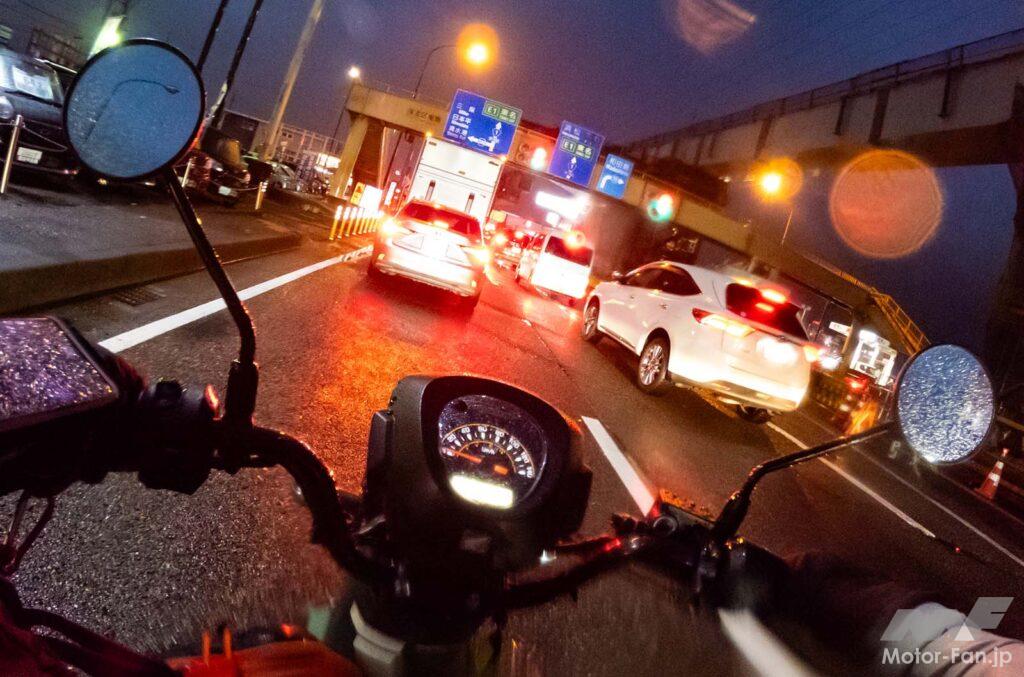
National Route 1, which runs through Shizuoka City, is always jammed with traffic. To alleviate this congestion, a bypass overpass is currently under construction.
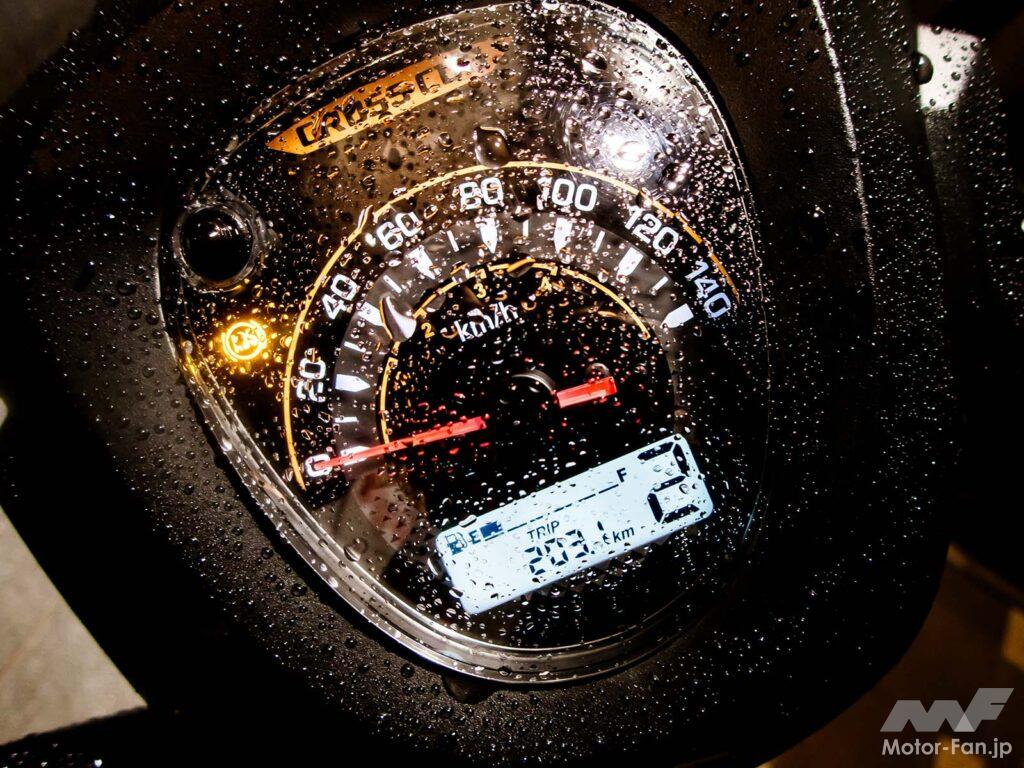
I stayed in Shimizu Ward, Shizuoka City. The trip was 203.1km, and today’s distance was 118.9km. As soon as I parked my bike in the hotel’s parking lot, the last mark on the fuel meter started blinking. This was the final warning that I was running out of gas.
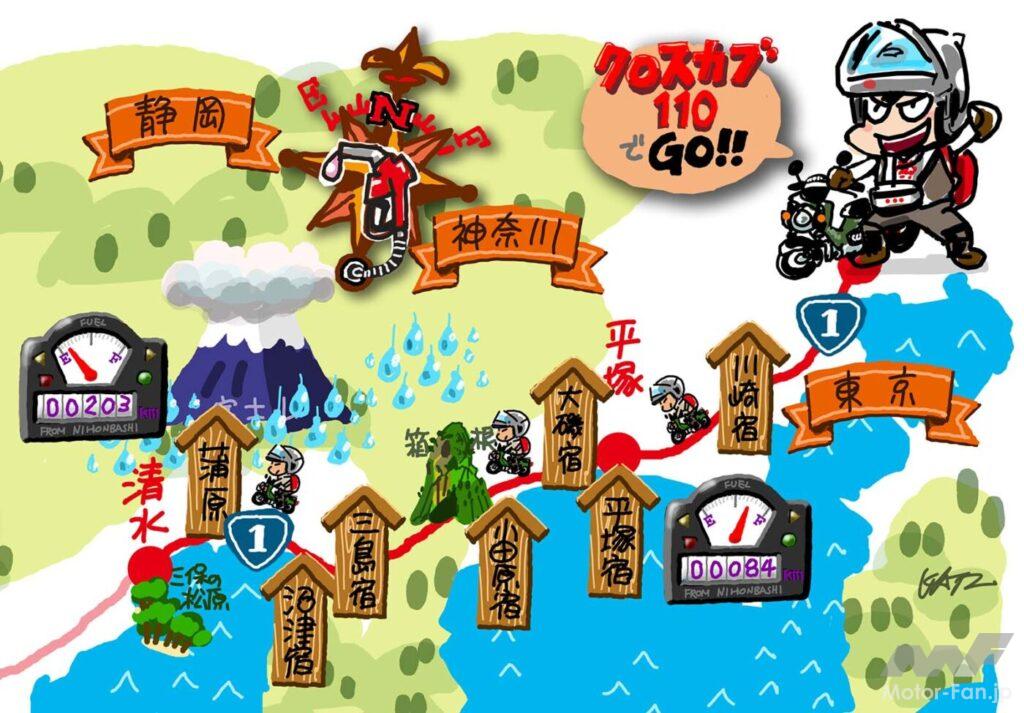
[MAP] Tokaido Gas Challenge #8 Honda Cross Cub 110 [Nihonbashi to Shimizu]
 How far can a Honda Cross Cub 110 go with a full tank of gas? Part 8 of the Tokaido Gas Challenge, from Nihonbashi, Tokyo to Kyoto! [Day 1]
Riding a Honda Cross Cub 110, we set off on a full-fueled one-way attack on the Tokaido Highway from Nihonbashi, Tokyo, to Kyoto, and a pilgrimage to sacred sites. First up is Shonan, a place dedicated to youthful basketball! REPORT ● AFO RIDER Takahashi (AFO RIDER Takahashi) PHOTO ● Takahashi Katsuya (KATSUYA Takahashi) ILLUSTRATION ● Takahashi Katsuya (KATSUYA Takahashi)