
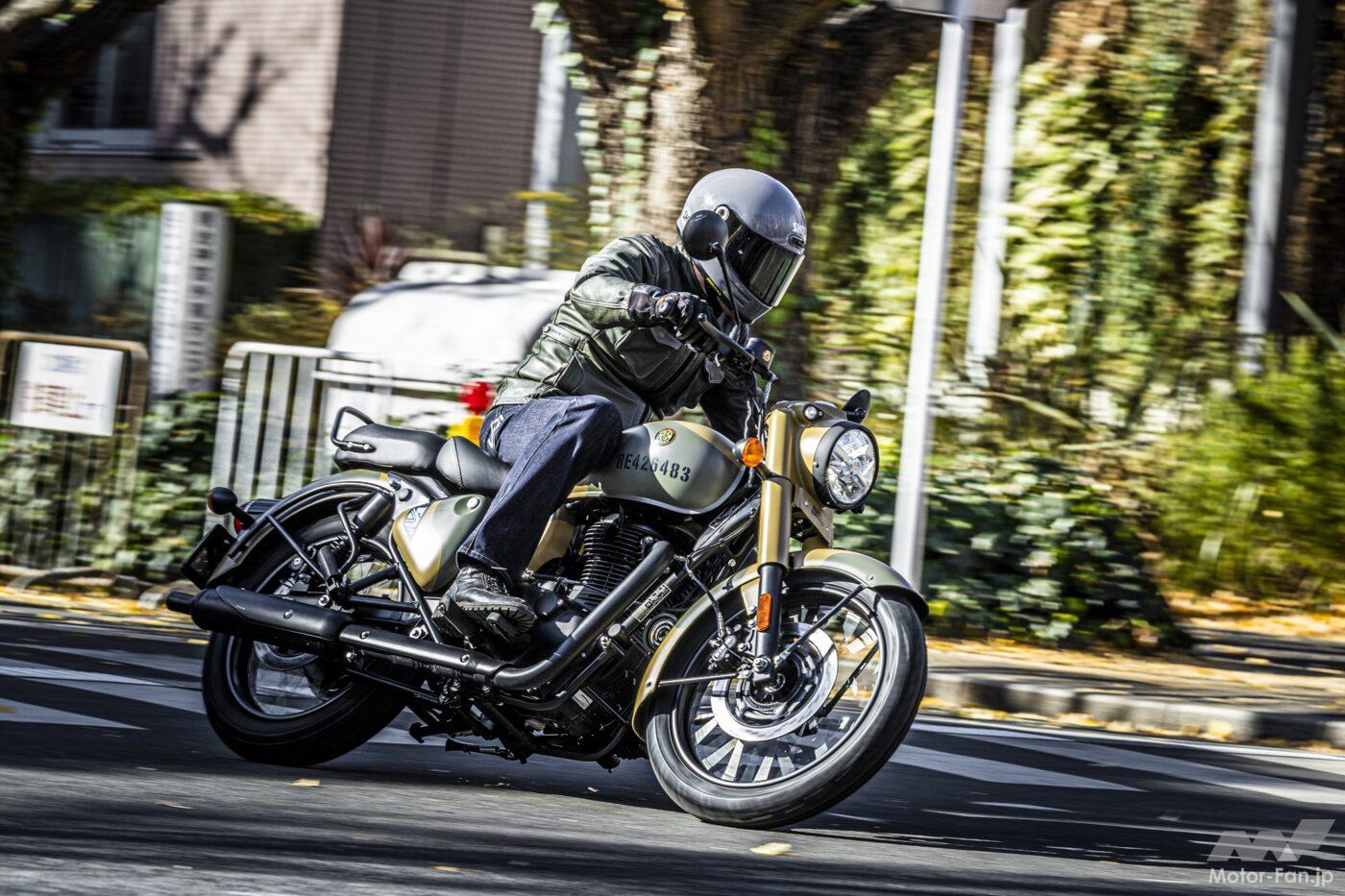
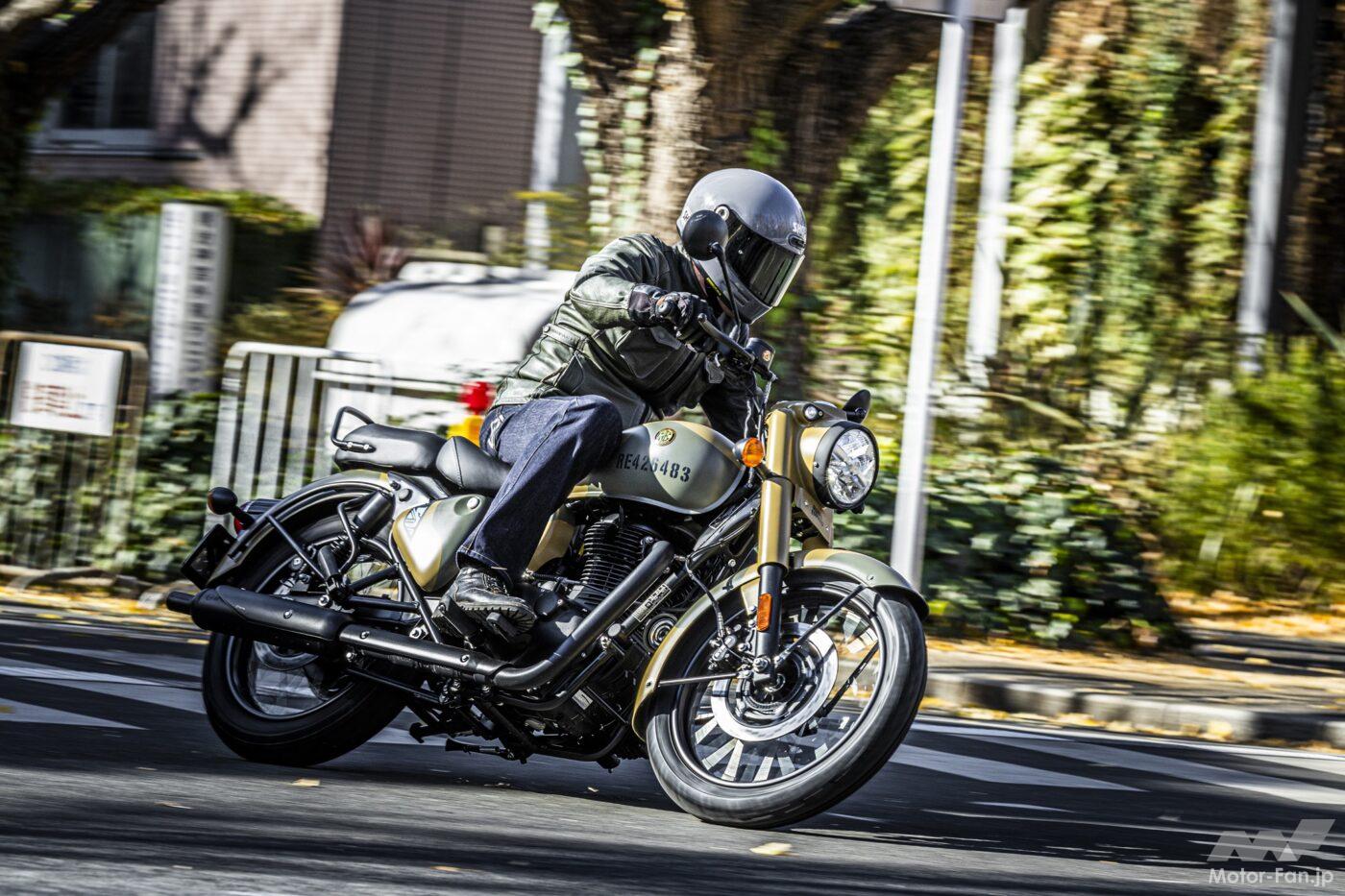
Royal Enfield Classic 350…691,400 yen to 728,200 yen
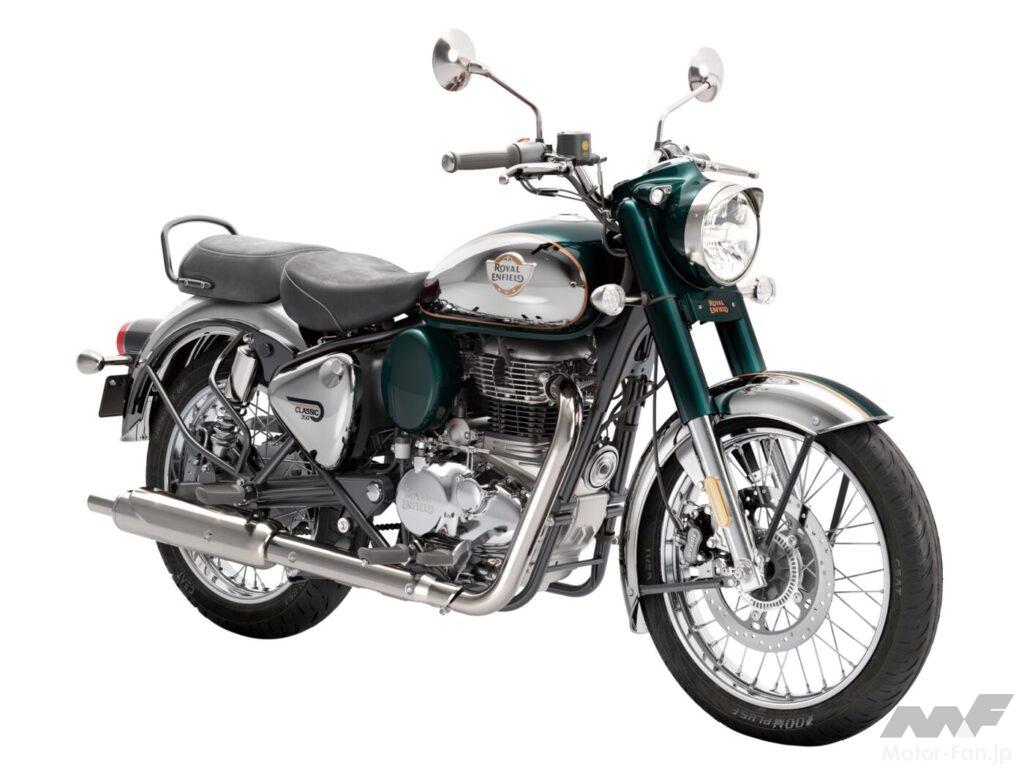
The price of the Classic 350 varies depending on the body color and equipment. This vehicle is the most expensive Chrome.
Isn’t it neo-classical?
The Classic 350 was added to the Royal Enfield lineup in 2009, and a 500cc version was also sold until 2019. Considering the model’s name and the year it was released, some might mistakenly think it’s a neo-classical model that has become popular worldwide in recent years, but this model is the latest version of the air/oil-cooled single-cylinder engine + steel frame model that has been the backbone of the company since ancient times.
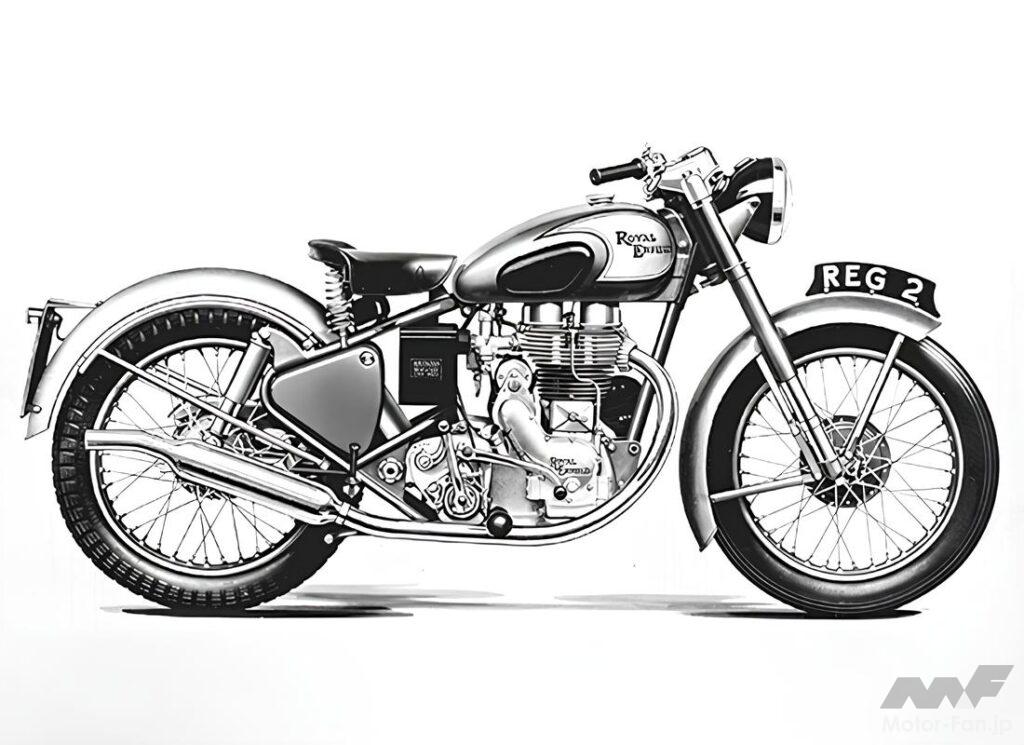
G2 circa 1950. Telescopic forks were already becoming popular at the time, but the rear swing arm and twin shocks were a groundbreaking feature.
Royal Enfield currently states that the origin of this Classic 350 is the 1950 G2, but it is sometimes listed as the 1948 model. In any case, this model has continued to mature for over 70 years with almost no changes to its appearance, and it could be said to be a long-selling vehicle with a history that exceeds that of the Honda Super Cub.
Completely redesigned for the 2021 model
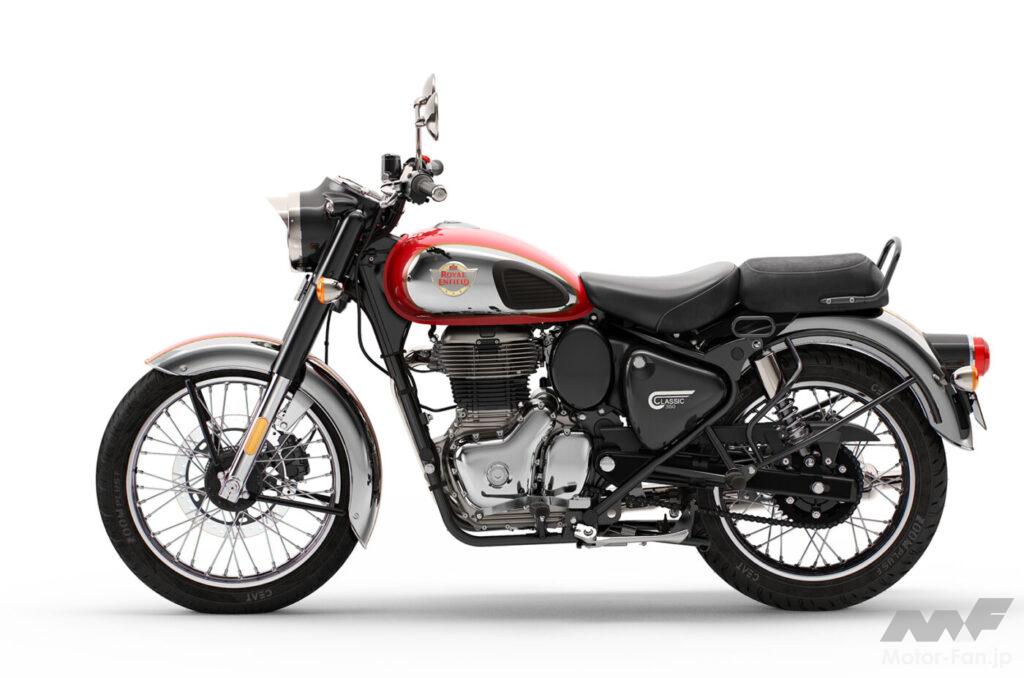
The 2024 Classic 350. It’s hard to tell the difference between this and the 2025 model in this photo.
As mentioned above, while its appearance has remained largely unchanged since ancient times, the Classic 350 has undergone a complete overhaul for the 2021 model. The most notable change is the addition of a single-axis balancer inside the crankcase to dampen vibrations. Regarding the engine, the valve train has been changed from an OHV 2-valve to an OHC 2-valve, the bore and stroke have been changed from 70mm x 90mm to 72mm x 85.8mm, and a mechanism that actively uses oil for cooling has been introduced. These are also essential elements when discussing the company’s modern 350cc single-cylinder engine. Additionally, while the frame retains the traditional diamond-type design, the 2021 model adds a bolt-on down tube to the lower section, which is likely to contribute to improved rigidity.
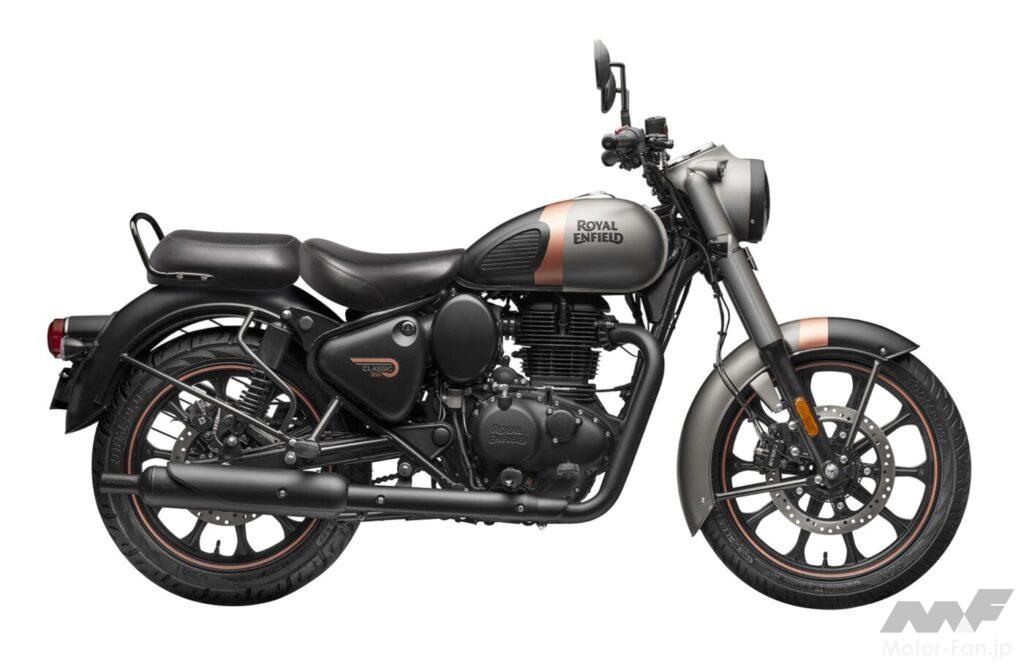
The DARK model, which uses cast wheels, comes in two colors: gun gray and stealth black.
The 2025 model we test drove this time follows the basics of the 2021 to 2024 models, but introduces new features such as LED headlights, taillights, position lamps, gear indicators, and USB Type-C power supply. In addition, the high-end Dark and Chrome models feature LED turn signals, brake and clutch levers with position adjustment dials, and a Tripper navigation system.
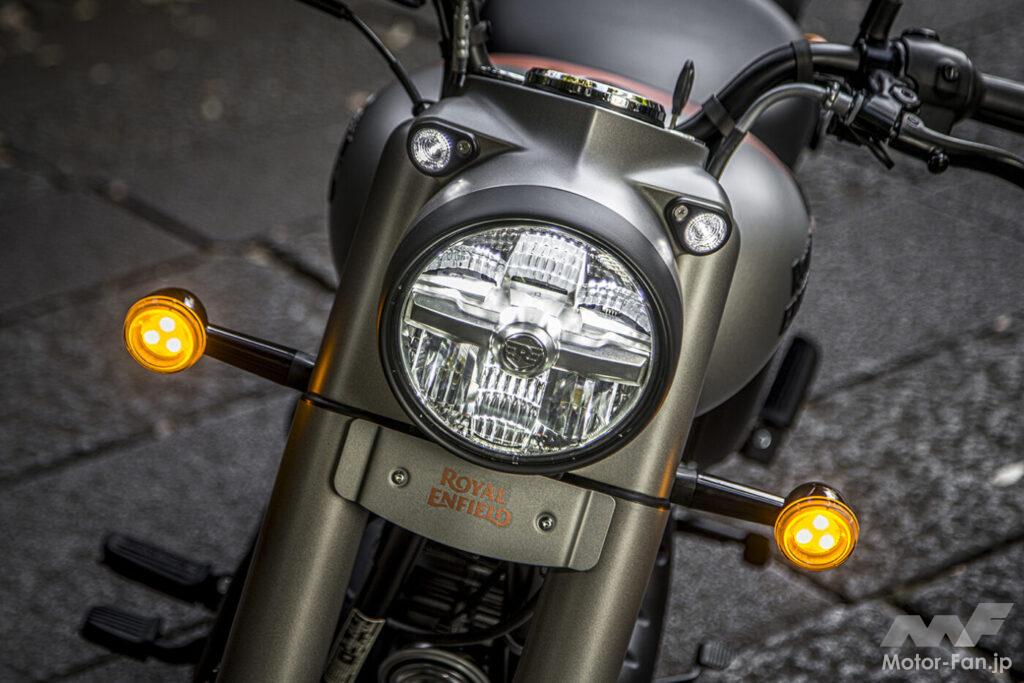
Only the dark and chrome models feature LED turn signals.
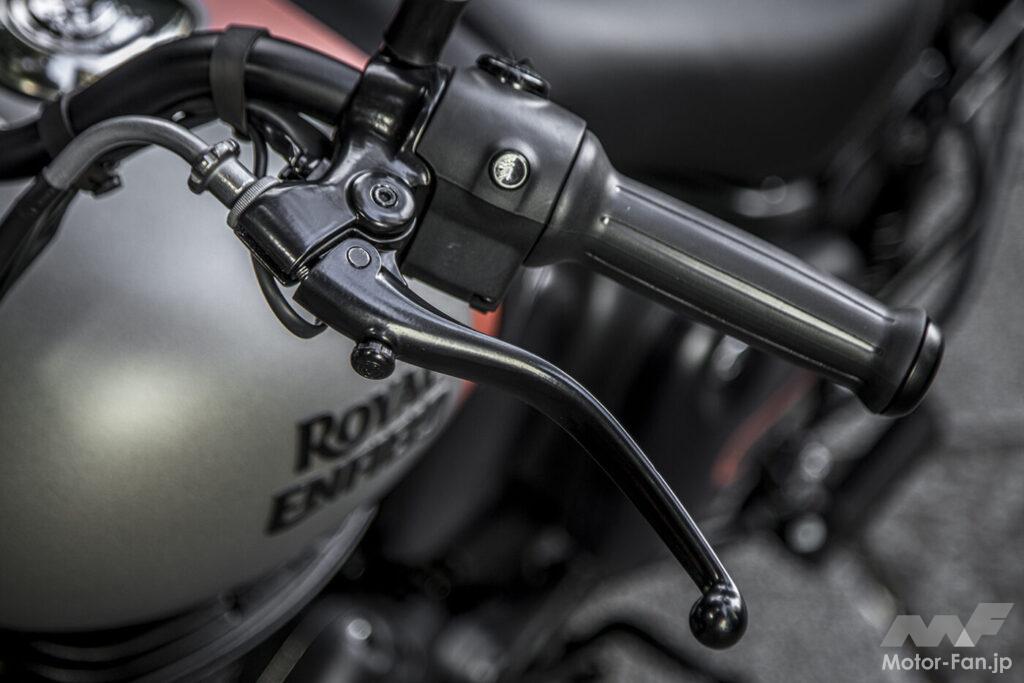
The dark and chrome brake/clutch levers are equipped with position adjustment mechanisms.
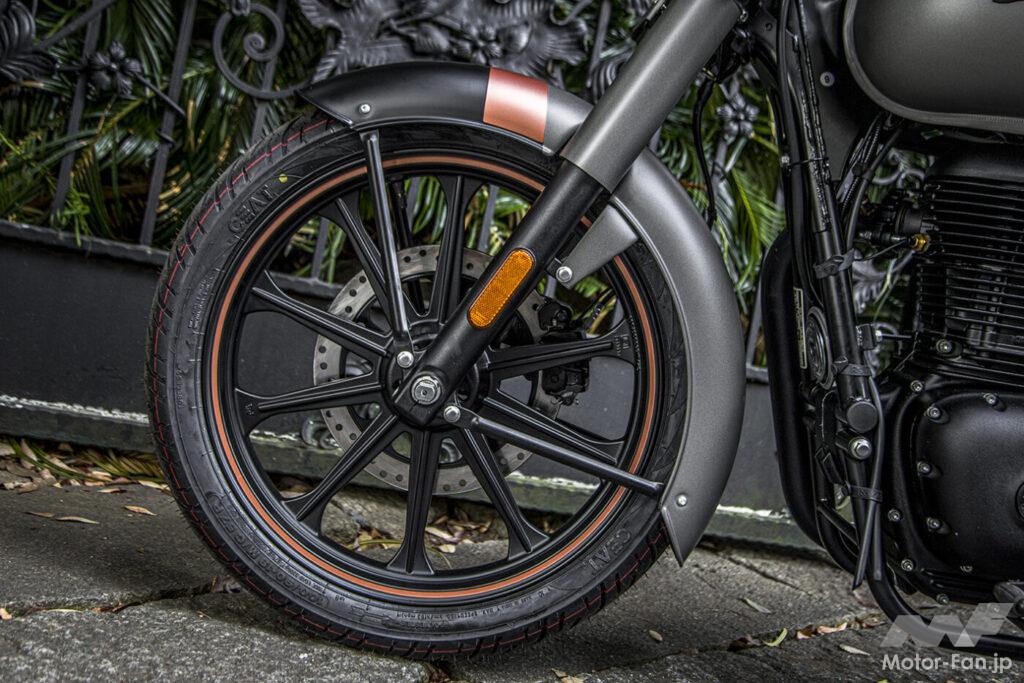
While other body color vehicles use spoke wheels and tube tires, the Dark model uses cast wheels and tubeless tires.
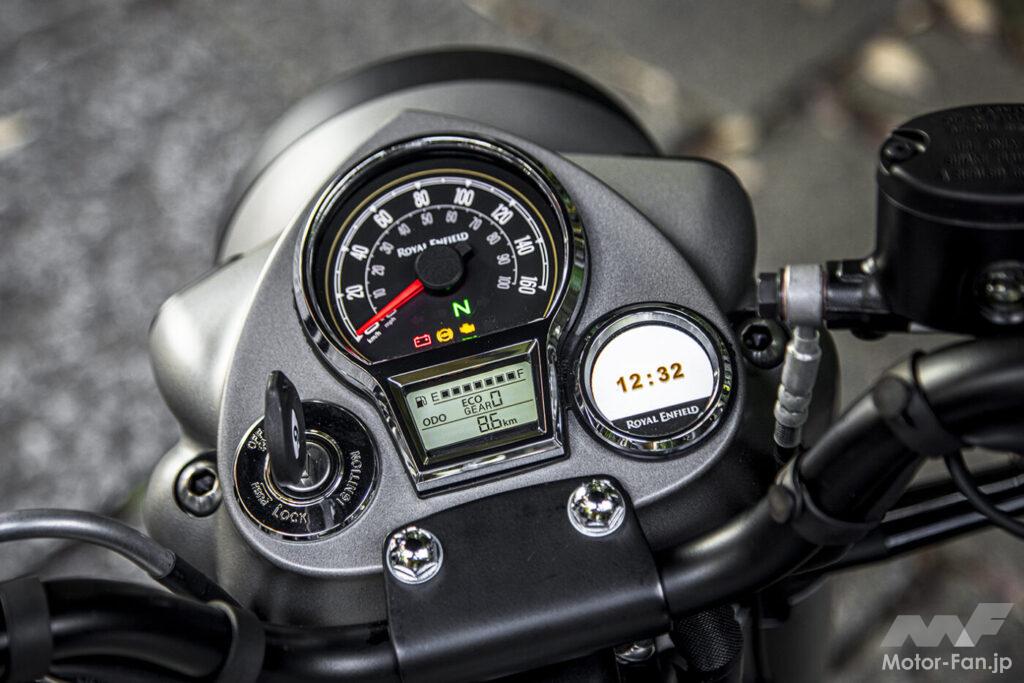
Dark meter. The LCD screen that displays the clock in this photo can be used as a Tripper navigation system.
I want to recommend it to everyone
Royal Enfield’s air/oil-cooled single-cylinder, steel-framed bikes have the qualities of a classic bike that you can buy new. However, my perception of this has changed over time, and until about 20 years ago, they were, for better or worse, classic bikes, making them difficult to recommend to everyone  . However, since 2009, they have become so refined that if you’re interested in old-fashioned single-cylinder bikes, I’d say they’re a must-have. So what about the latest Classic 350?
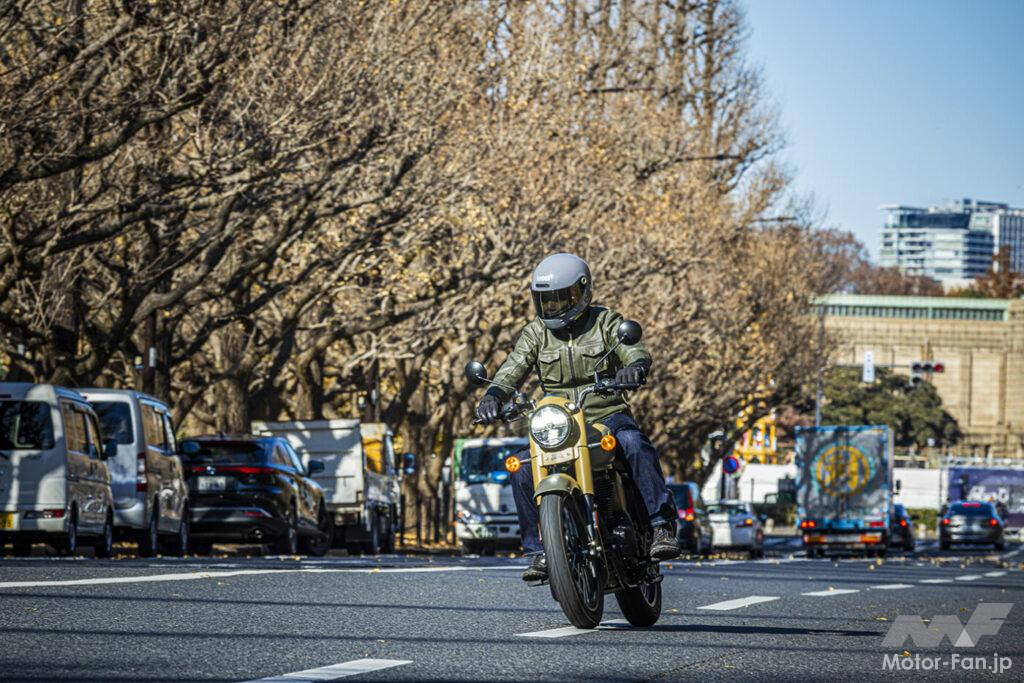
I think it’s perfectly fine to buy it for simple reasons like because you like the looks, because the color is cute, or because you’re just curious about it. Although it still has that old-fashioned feeling, this bike can be enjoyed in a way that’s not much different from a typical 350-400cc Japanese bike.
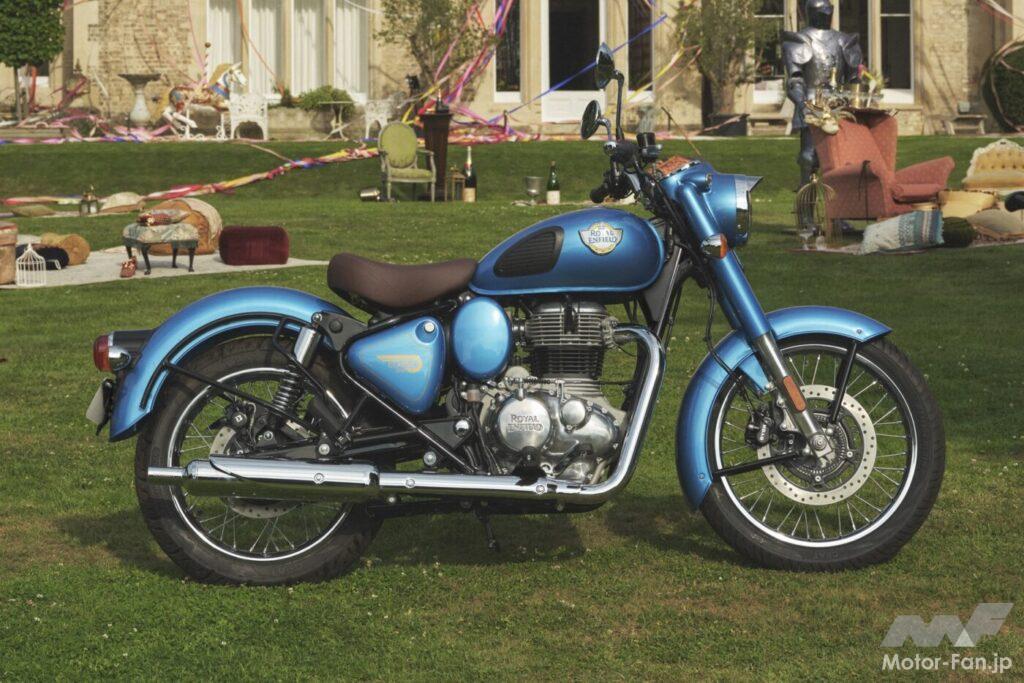
In India, the Classic 350 is sold in single-seat configuration.
First, to explain the engine, the pulsating feel and tenacity that are unique to a long stroke and a heavy, large flywheel remain the same, but the modern Classic 350 clearly responds better to throttle operation, and the vibrations that occur at high rpm have been dramatically reduced. To be more specific, the time lag that existed when opening the throttle in previous models has been exquisitely eliminated, and cruising at 100km/h, which was considered difficult in previous models, can now be done with ease. Owners of previous models will probably be amazed at how much they have evolved if they ride this model.

And in keeping with the engine, the body has also evolved significantly. While maintaining the stability and lightness that only a 19-inch front wheel can provide, the gentle and easy-to-understand self-steering around the front, and the rich traction transmitted from the rear, the modern Classic 350 has become much more tolerant, allowing you to fully enjoy sports riding and touring without the hassle of previous models.
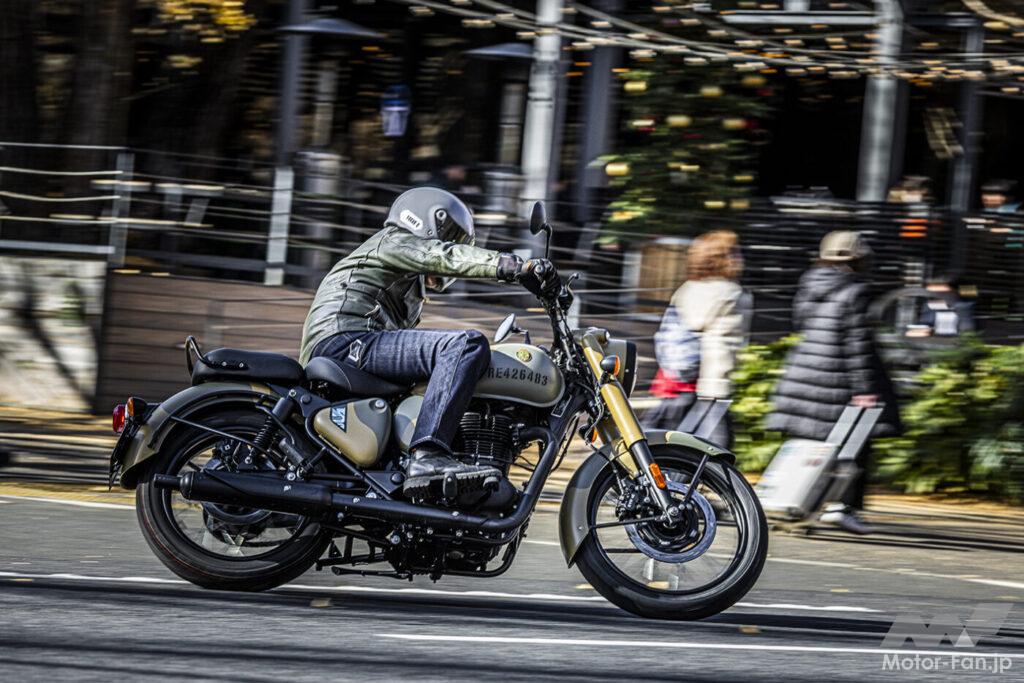
However, the Classic 350 before the 2024 model had a rather poor suspension behavior when speeding hard on mountain roads, and I thought that if I were to become the owner, I would immediately replace the original tires with the latest Japanese and European bias tires. However, the front and rear suspension settings of the 2025 model have been revised, and I don’t feel any major dissatisfaction with the original tires (the same CEAT ZOOM PLUS as before). Furthermore, the brake touch and engine feel are also better than the previous model, and I think that Royal Enfield has been steadily improving its bikes in recent years, even if they haven’t announced any specific changes.
Differences from Bullitt 350
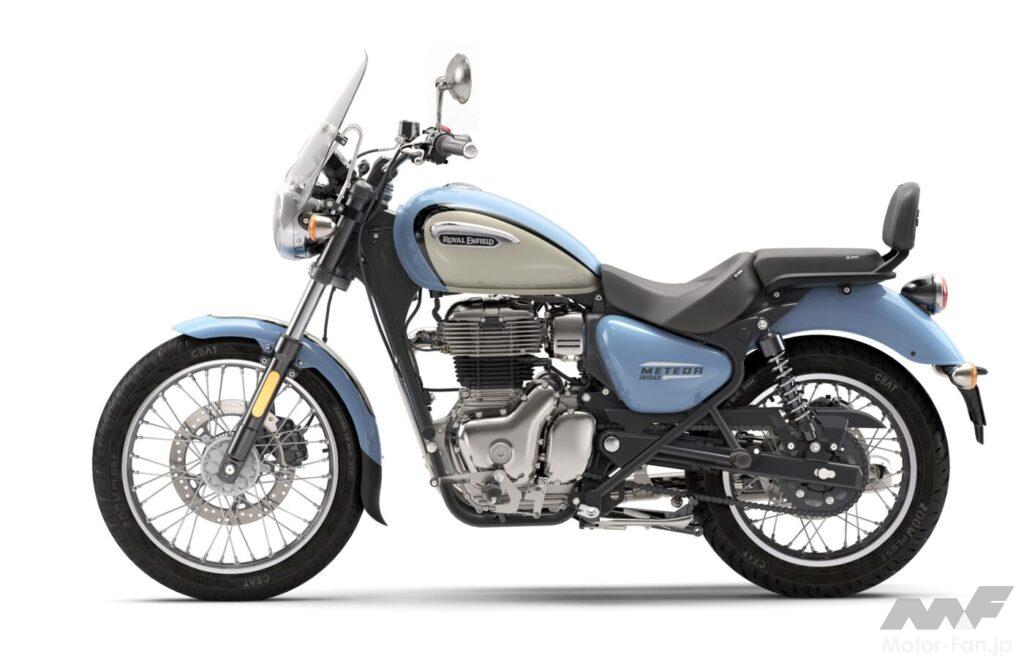
The Meteor 350 is a classic-style cruiser. The seat height is 765mm, significantly lower than its sister models.
Currently, Royal Enfield sells four types of air/oil-cooled 350cc single-cylinder + steel frame vehicles, and according to research by PCI, the importer for the Japanese market, there are many people whose attitudes change when they see the actual bikes, such as someone who visits a dealer intending to buy a Classic 350 but is drawn to the cruiser Meteor 350, or someone who comes to see the modern Hunter 350 but is fascinated by the Bullet 350. I don’t think I’ve heard of many such cases with other manufacturers, though…

The appeal of the Hunter 350 is its light weight and small size. The tire size is a modern 17-inch front and rear.
A Royal Enfield 350cc model would be a good choice. After all, the air/oil-cooled single-cylinder, steel-framed motorcycles currently on sale by the company share many of the same basic designs (although the body of the Meteor 350 is different from the other three), but each has its own appeal, and all models are priced within the range of 700,000 yen ± 50,000 yen.
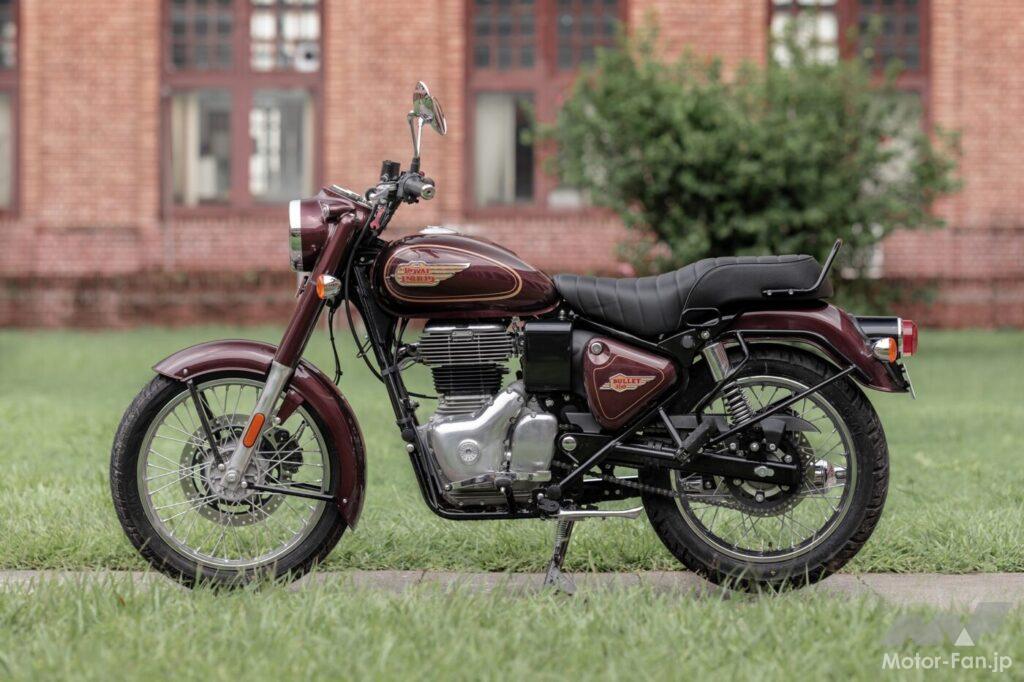
The Bullitt 350’s color scheme is different from that of the Classic 350.
The Classic 350 and Bullitt 350 are very similar models, with the only differences visible from the outside being the seat, rear fender, and injection cover. However, perhaps because the coloring is designed specifically for each model (the Classic 350 comes in seven colors, while the Bullitt 350 comes in three), it seems that even with these two models, many people change their minds after visiting a dealer and seeing the actual bike.
Detail explanation
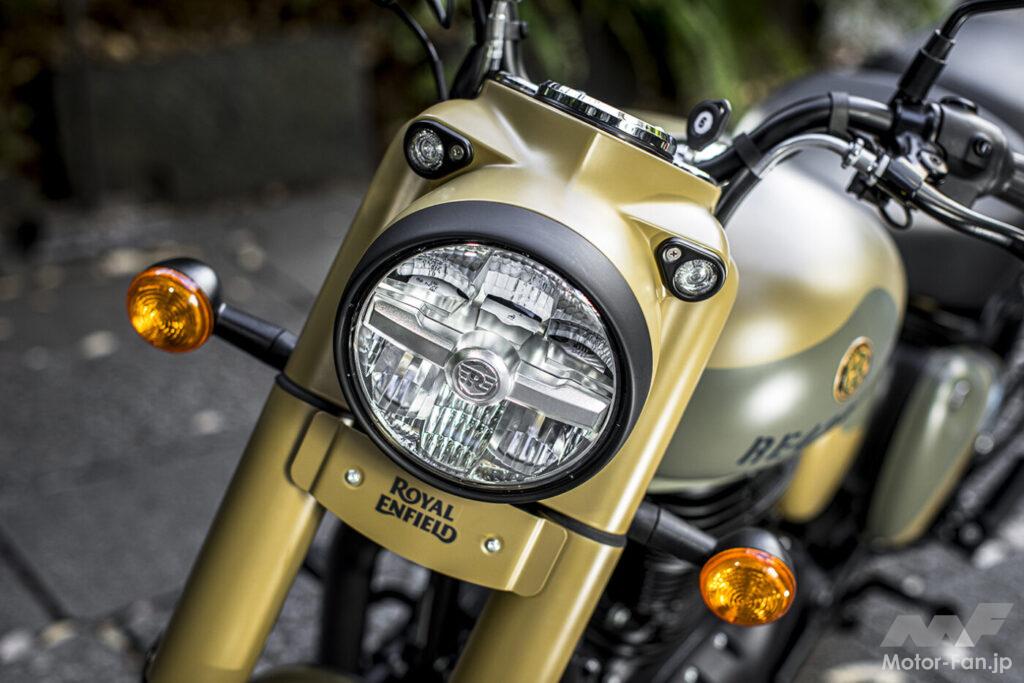
The nacelle cover that covers the headlights and the two position lamps are a long-standing traditional design for the company. The 2025 model will feature LED headlights, taillights, and position lamps.
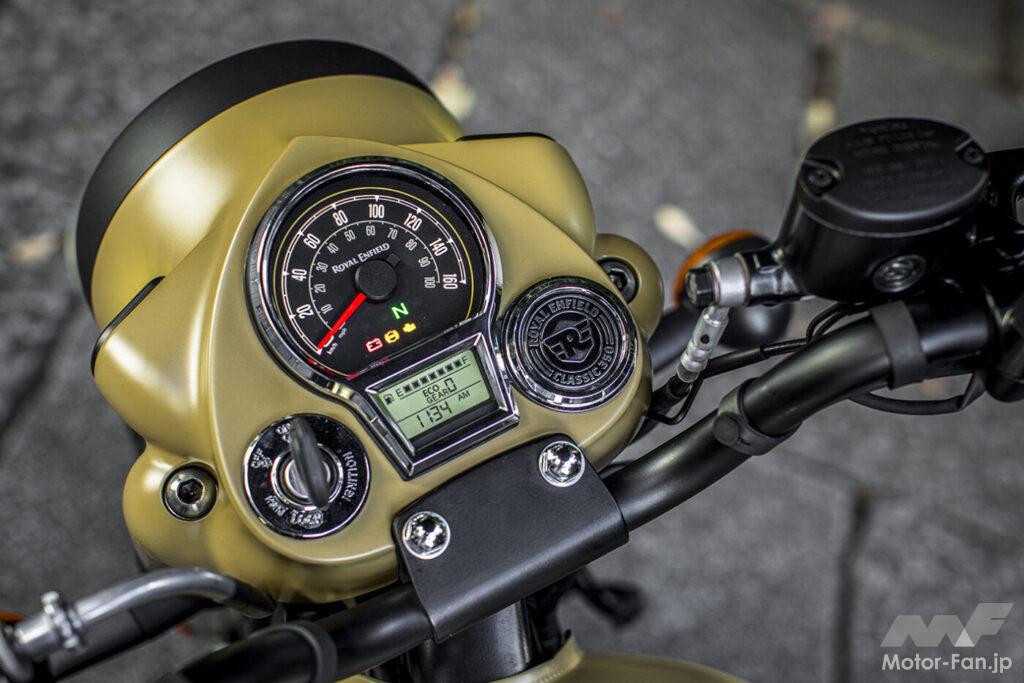
The cockpit maintains a traditional atmosphere. The 2025 model adds a gear position indicator to the LCD monitor and a USB Type-C power port below the clutch lever holder.
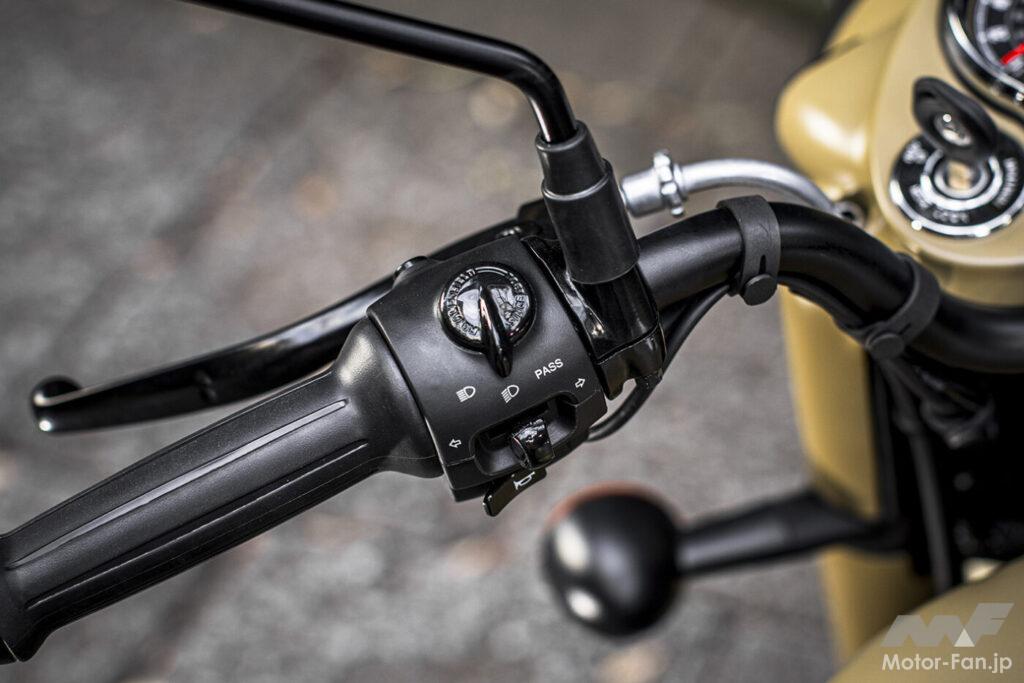
The switch box, grip rubber, and brake/clutch levers are not generic products, but are original products made by the company with a classic feel in mind.
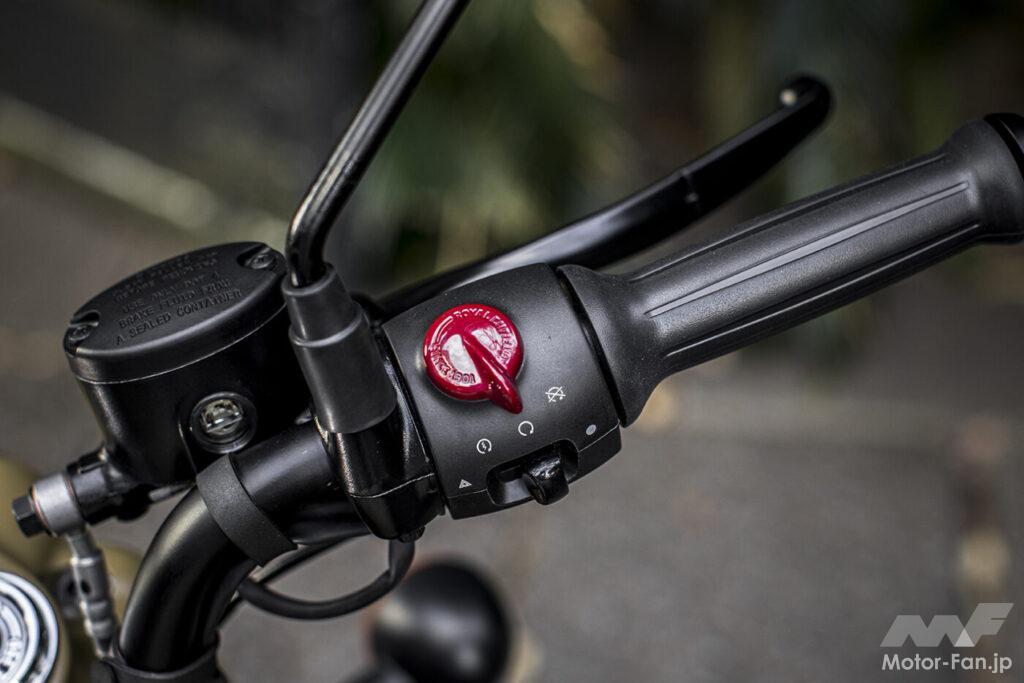
The circular dials on the top of the left and right switch boxes are for low/high/passing headlights on the left and for starting/stopping the engine on the right.
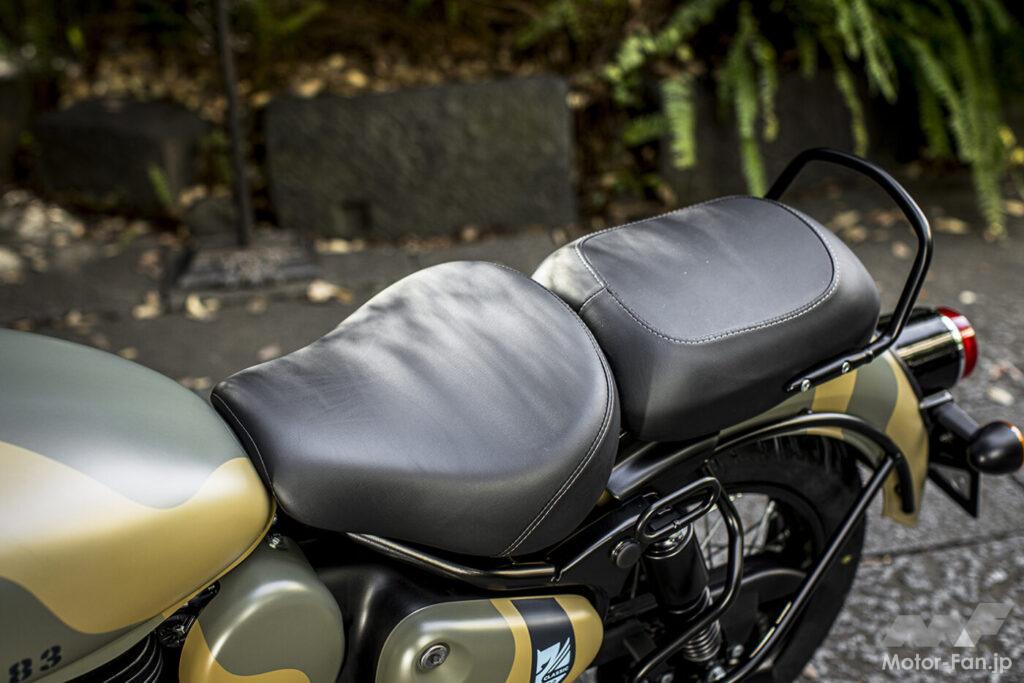
The seats are split front and rear, and the Japanese model comes standard with a tandem seat, which is an option in many other countries. The seating is very comfortable.
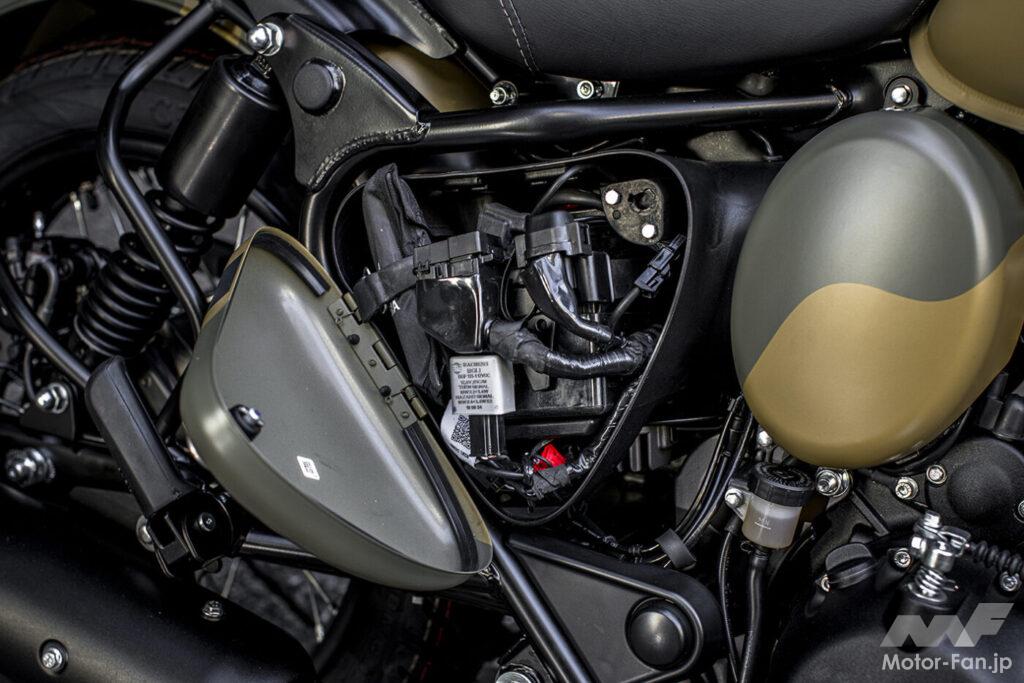
The side covers are lockable. The left one is packed with the air box, and the right one is packed with electrical components and tools, but it looks like the ETC unit will fit somehow.
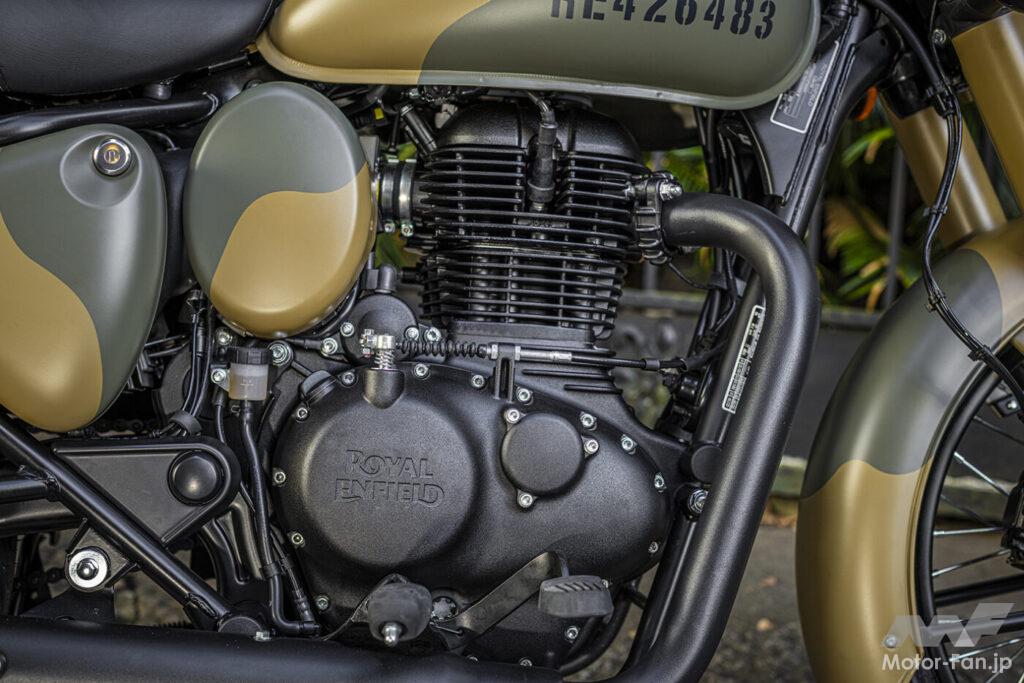
The long-stroke, air-oil-cooled single-cylinder engine, named the J Series, produces 20.2ps/6100rpm and 2.75kgf・m/4000rpm.
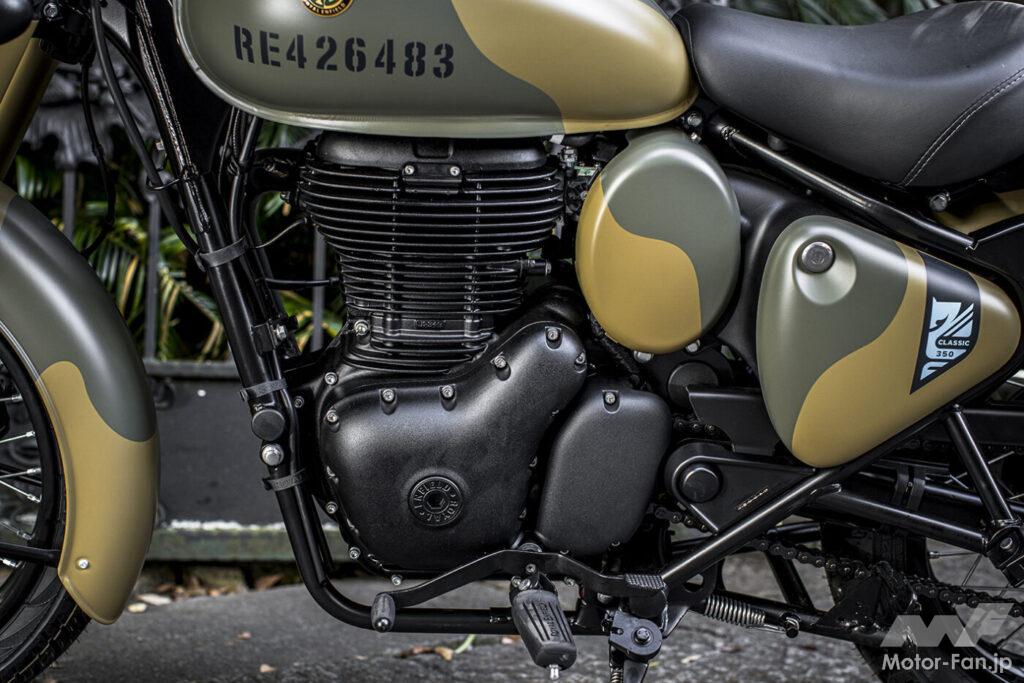
Although kick arms were available until 2020, the company’s current 350cc single-cylinder engines only have electric starters as starting methods.
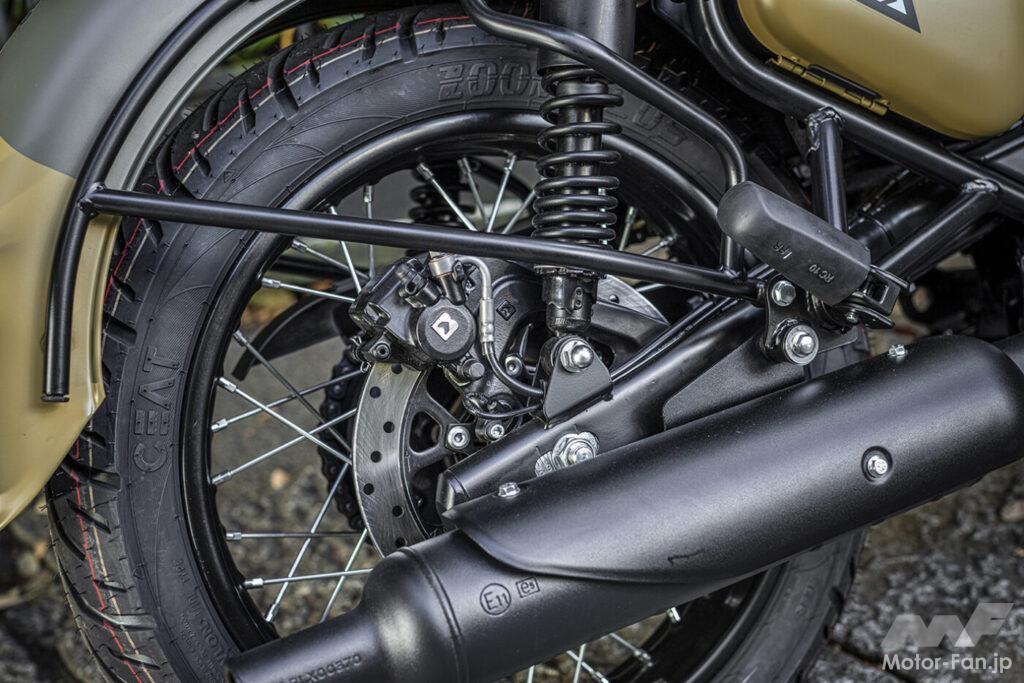
The test vehicle is blacked out, but depending on the body color, the muffler will be plated and the front and rear wheel rims will have a buffed finish. The rear shock absorber has six levels of preload adjustment.
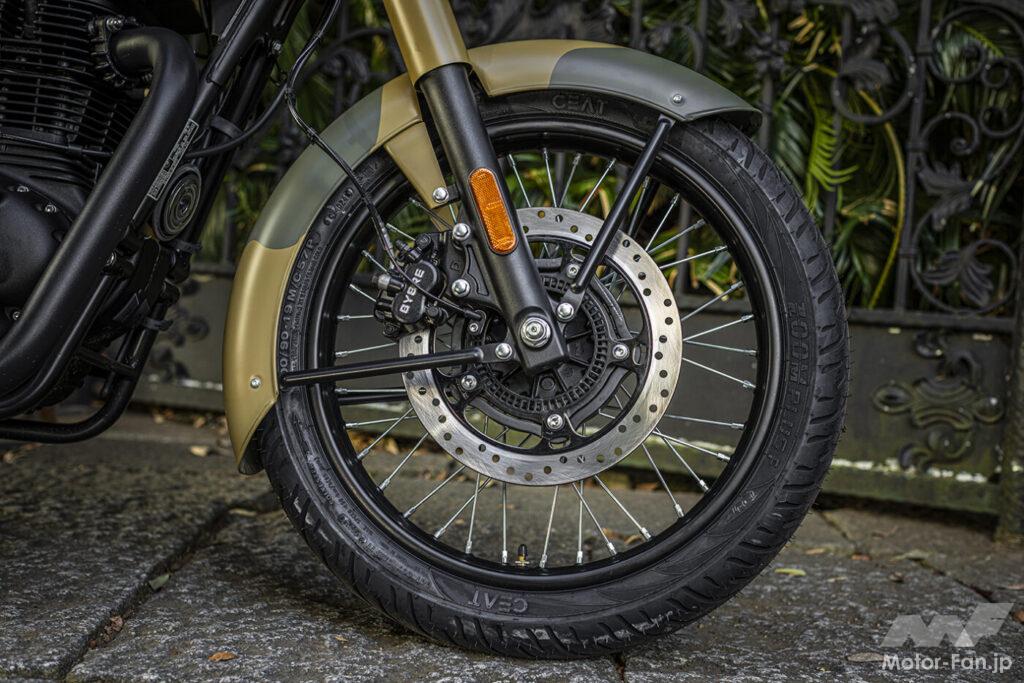
The brake discs are F: φ300mm / R: φ270mm, the calipers are bi-brake on both the front and rear, the ABS is a two-channel type, and the front forks are an orthodox φ41mm upright type.
Main specifications
Model: Classic 350
Length x width x height: 2145mm x 785mm x 1090mm
Wheelbase: 1390mm
Ground clearance: 170mm
Seat height: 805mm
Caster angle: 24 degrees
Engine type: Air-cooled 4-stroke single cylinder
Valve type: OHC 2-valve
Total displacement: 349.3cc
Bore x stroke: 72.0mm x 85.8mm
Compression ratio: 9.5
Maximum power: 14.87kW (20.2ps) / 6100rpm
Maximum torque: 27N・m (3.8kgf・m) / 4000rpm
Starting method: Self-starter
Lubrication method: Wet sump
Fuel supply method: Fuel injection
Transmission type: Constant mesh 5-speed
return Clutch type: Wet multi-plate coil spring
Gear ratios
1st gear: 2.615
2nd gear: 1.706
3rd gear: 1.300
4th gear: 1.040
5-speed: 0.875
1st and 2nd reduction ratio: 2.3, 2.8
Frame type: Diamond
Front suspension: Telescopic upright type φ41mm
Rear suspension: Swing arm twin shock
Front tire size: 100/90-19
Rear tire size: 120/80-18
Front brake type: Hydraulic single disc
Rear brake type: Hydraulic single disc
Vehicle weight: 195kg
Fuel used: Unleaded high-octane gasoline
Fuel tank capacity: 13L
Seats: 2 people