
![The DCT is smart, and the 270-degree phase-shift crankshaft pulsates with a pleasant beat. [Honda X-ADV Test Drive Report]](https://motopeek.com/wp-content/uploads/2025/01/3813-1760876959187.jpg)

Honda X-ADV…From 1,438,800 yen (released December 12, 2024)
2025 model
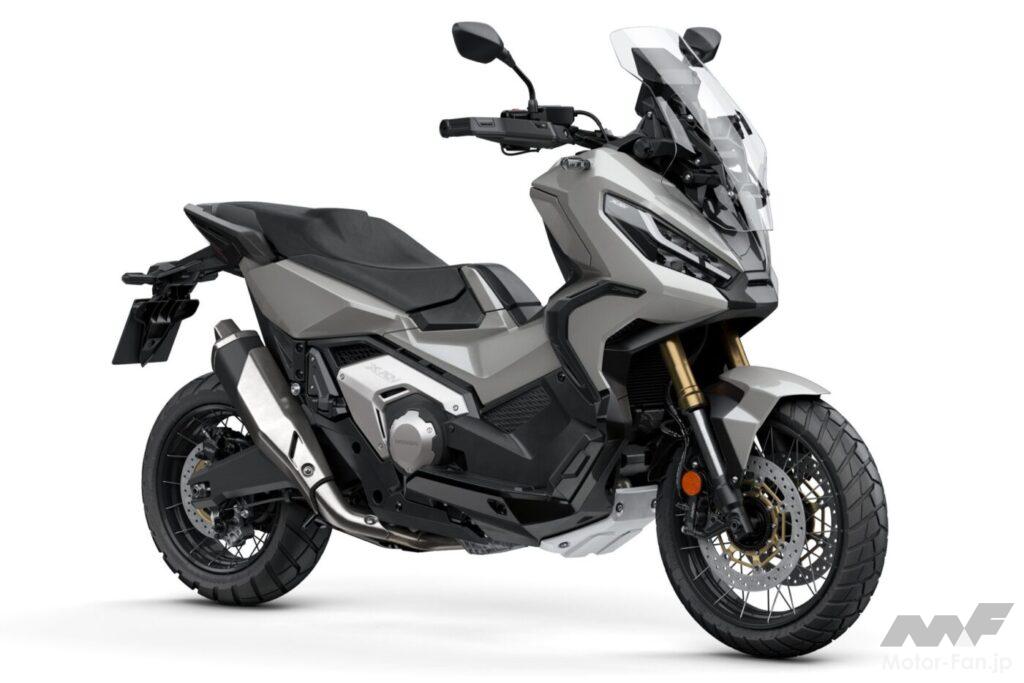
2021 model
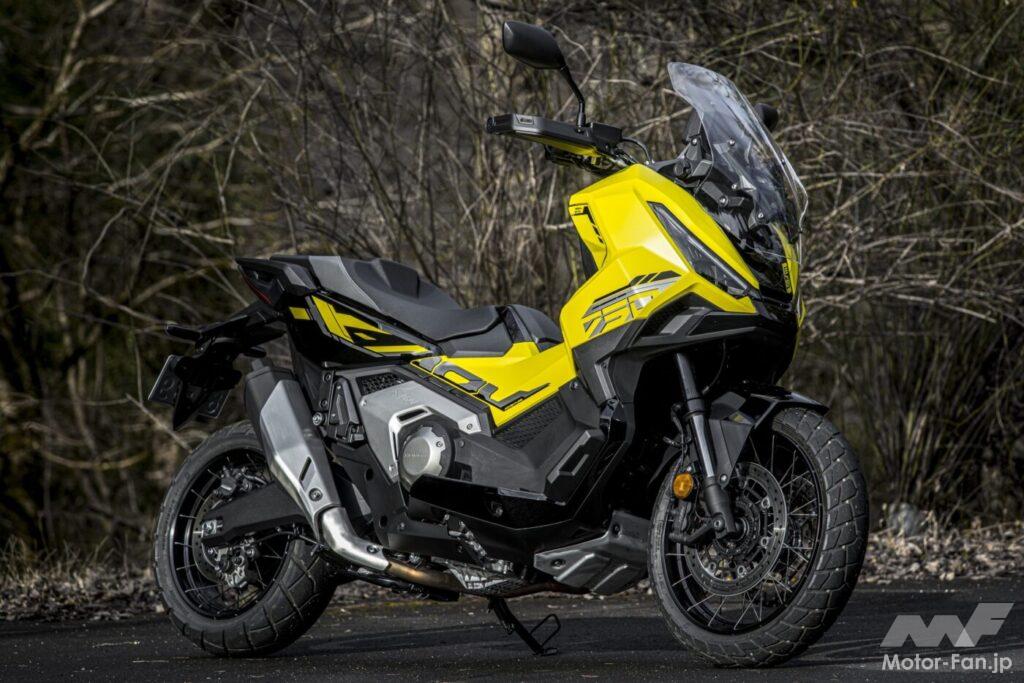
Comparing the appearance of the old and new models, we can see that the previously separate front turn signals are now integrated into the headlights, and the design of the front cowl has been changed. Perhaps due to the new adoption of cruise control, the price has increased by 118,800 yen from 1,320,000 yen to 1,438,800 yen (gray and white). The yellow model in the photo is priced at 1,471,800 yen, an increase of 33,300 yen.
The X-ADV features a new eco-friendly exterior, blending superior comfort with a pleasant engine feel.
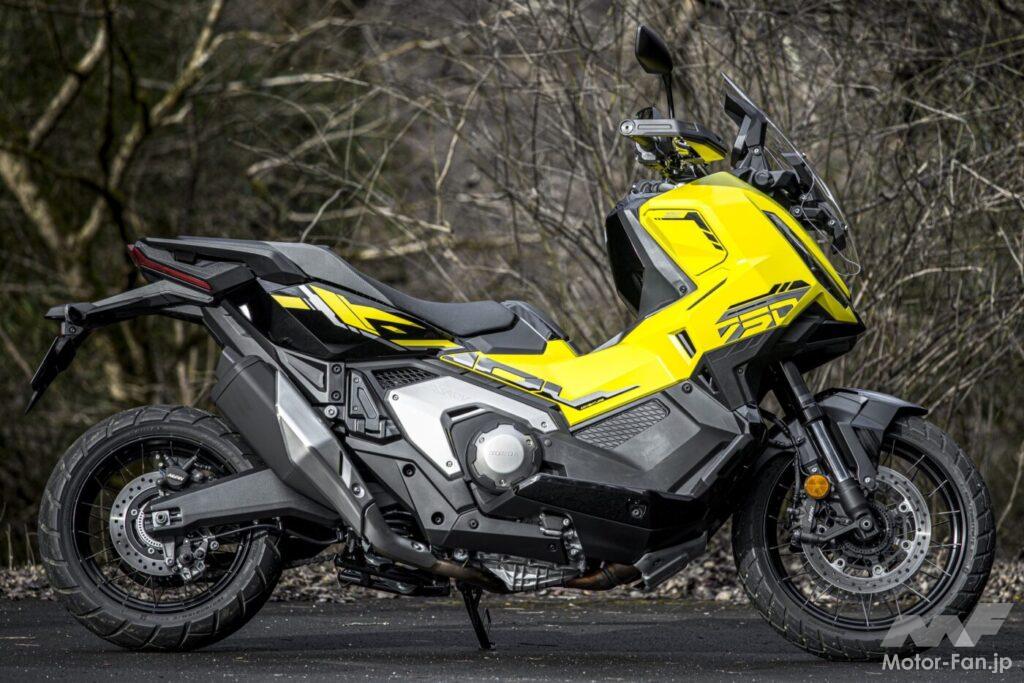
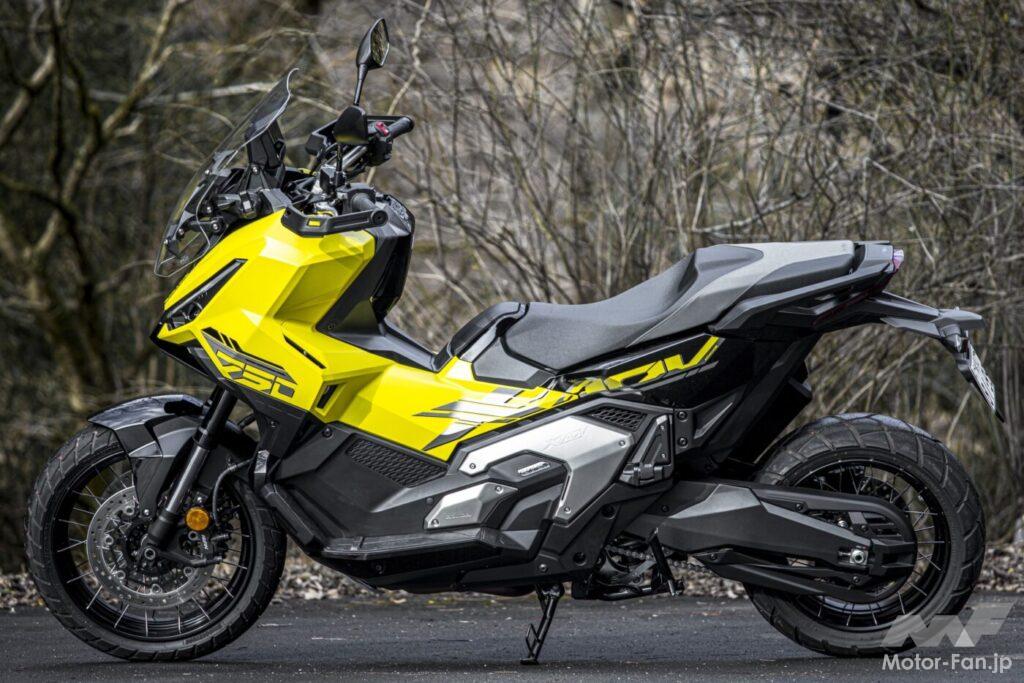
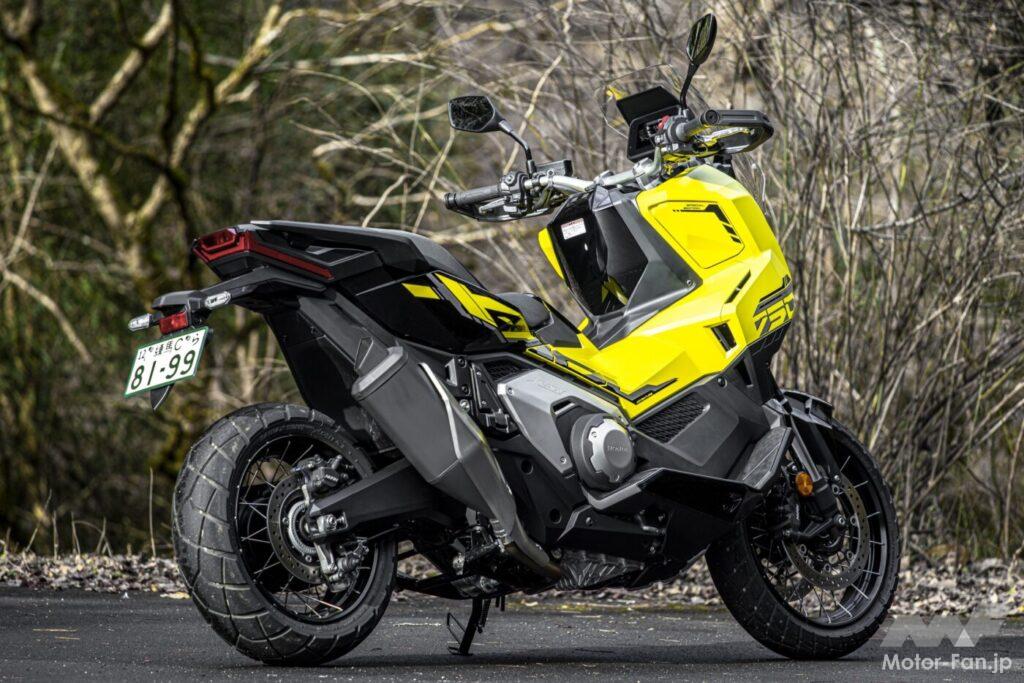
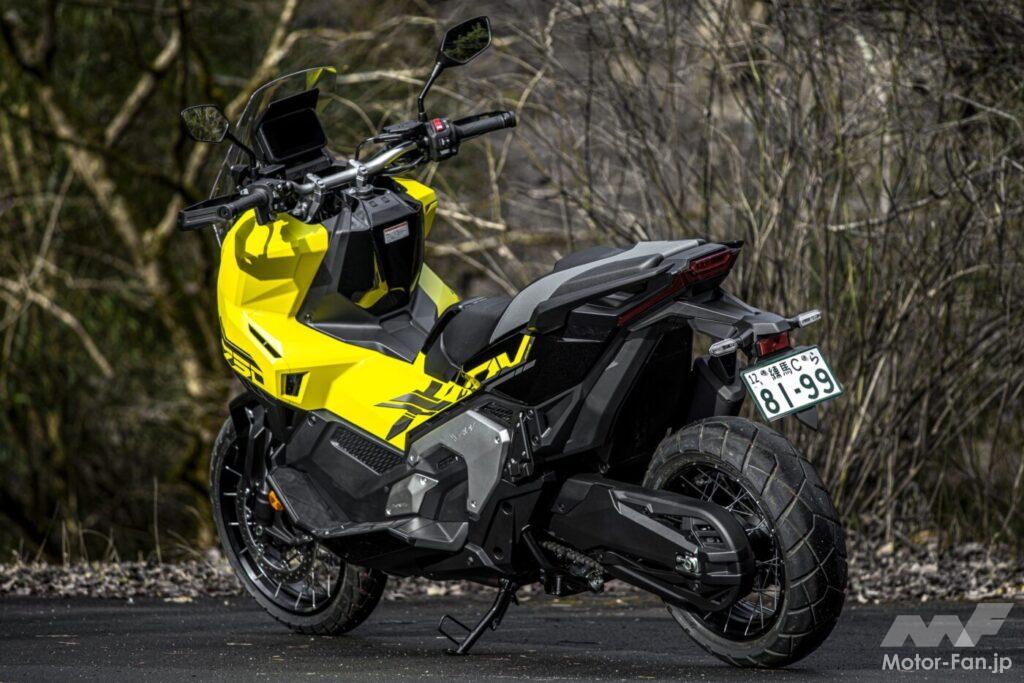
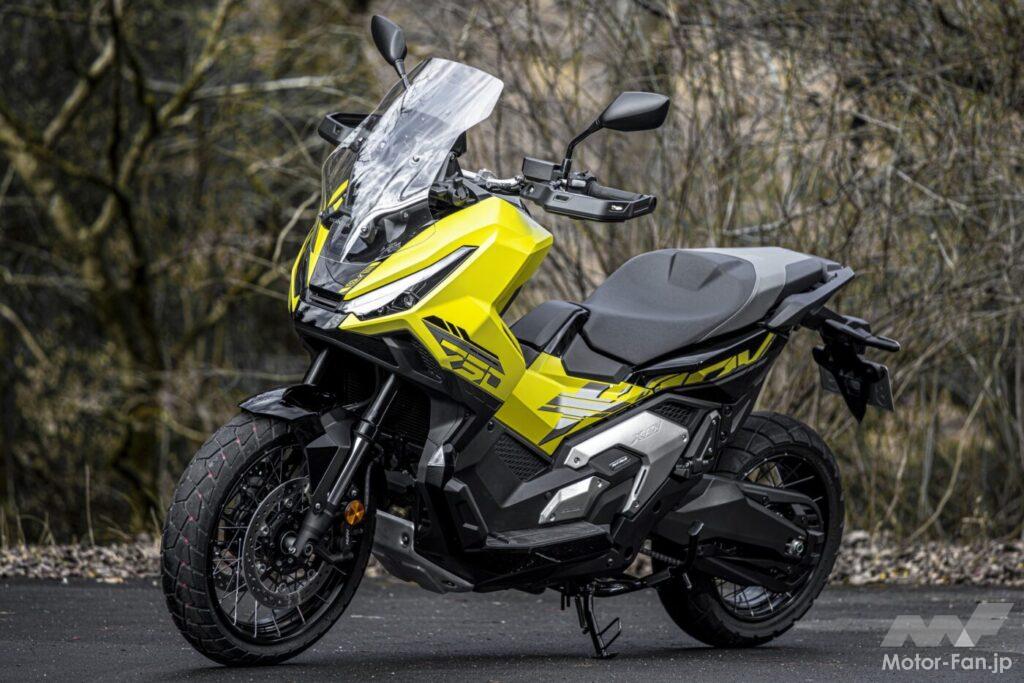
The body colors available are Matte Goldfinch Yellow, as shown in the photo, as well as Matte Deep Mud Gray and Pearl Glare White. The 2025 model is the first motorcycle to use pre-colored bio-engineered plastic “DURABIO” in part of the exterior. Furthermore, it is the first Honda motorcycle to use recycled materials from discarded Honda automobile bumpers collected from dealerships.
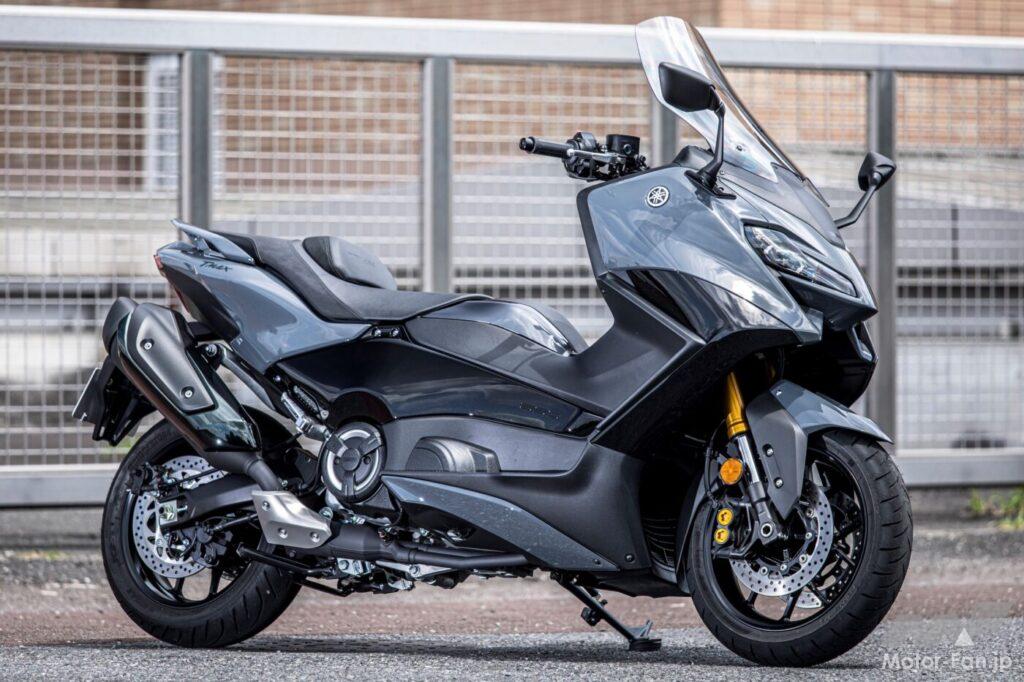
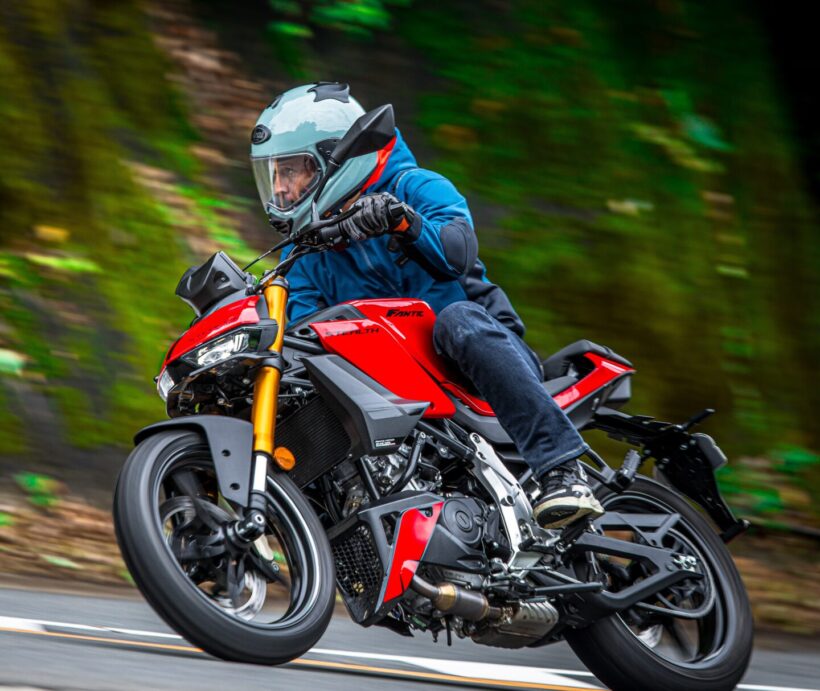
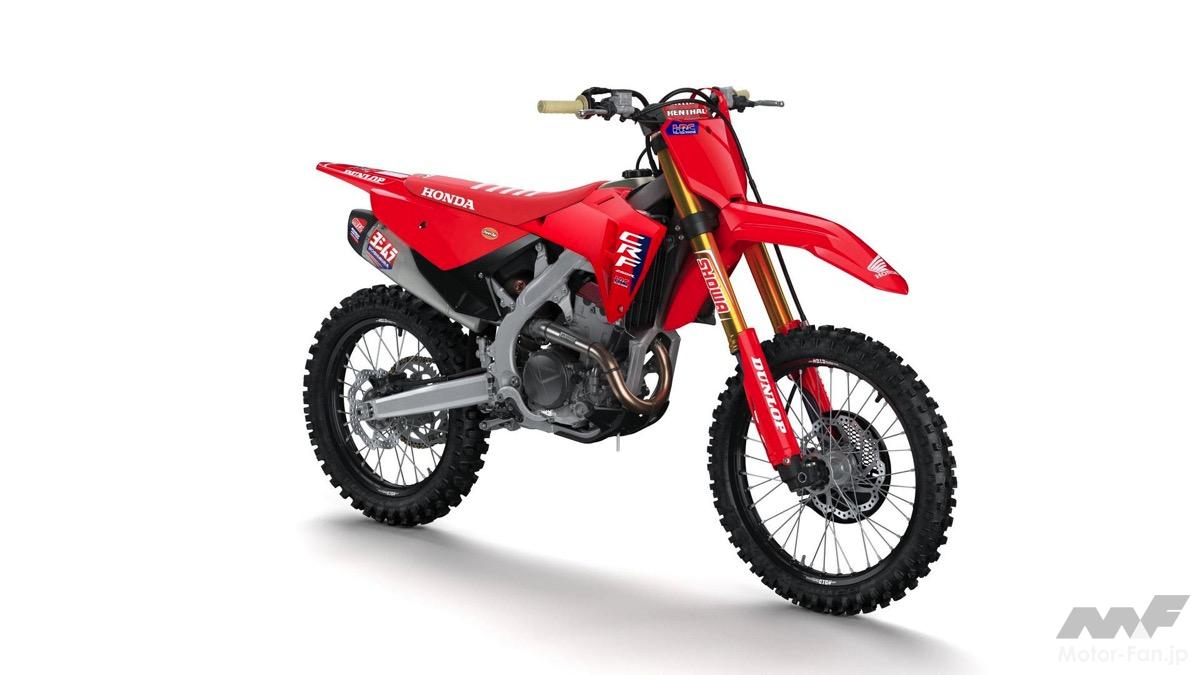
A likely competitor would be Yamaha’s TMAX560 (pictured is the 2022 model TMAX560 TECH MAX ABS). The 561cc water-cooled parallel twin-cylinder engine uses a 360-degree crankshaft and produces a maximum output of 48ps. It uses a V-belt continuously variable transmission, similar to that found in regular scooters. The 2025 model will be priced at 1,452,000 yen (the higher-spec TECH MAX is priced at 1,644,500 yen).
The intelligently evolved DCT and 270-degree phase crank are the perfect match
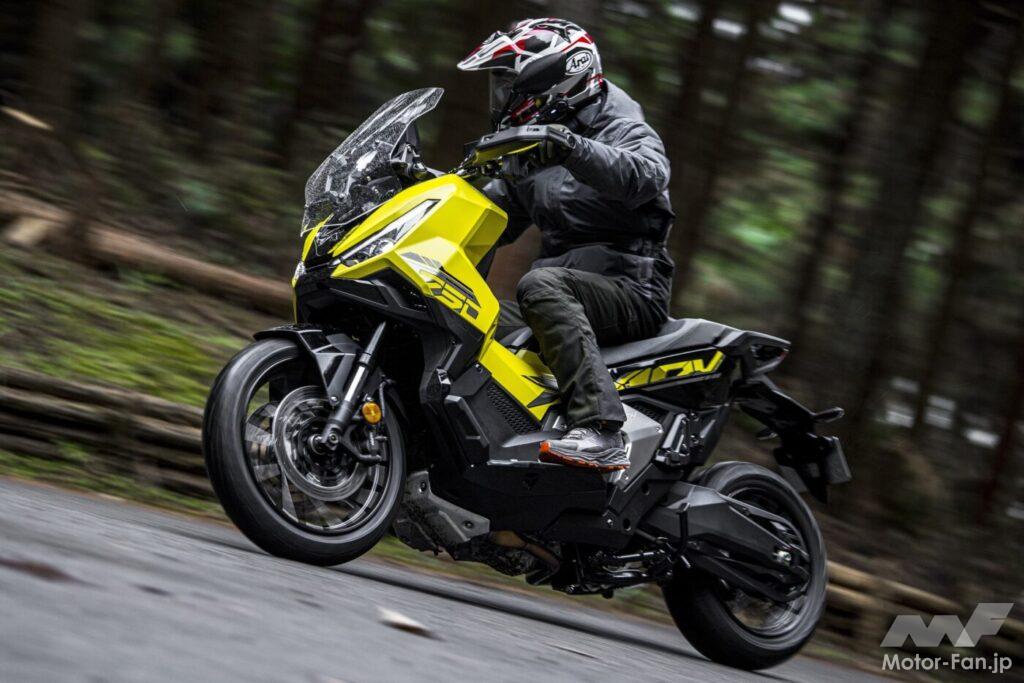
After being exhibited as a concept car under the name “City Adventure Concept” at the Milan Show in November 2015, the Honda X-ADV made its world debut at the same show the following year in 2016. Developed using the NC series platform, it is a maxi scooter with an adventurous spirit. Yamaha’s TMAX is considered the ancestor of this genre, but the X-ADV is significantly different in that it is designed for riding on flat dirt and uses Honda’s signature DCT transmission.
Let’s start with the engine. The 745cc water-cooled, four-stroke, parallel twin-cylinder engine is the same as the NC series, and features a 270-degree phase crank and a two-axis balancer. The 2021 model employs lighter pistons and optimized the weight of the counterweight, raising maximum output from 54ps to 58ps.
Start the engine, make sure the riding mode is set to “Standard,” and set off. As you gradually open the throttle, the DCT clutch gently engages, and just as the engine reaches 3,000 rpm, it quickly shifts up to second and then third gear. You can hear the mechanical clicks and the gear display changes to confirm the gear change, but the acceleration response is so smooth that you might suddenly realize, “Wait, I’m already in fifth gear!” Shifting down when decelerating is similarly smooth, allowing the rider to concentrate solely on operating the throttle and brakes.
Next, switch to sport mode. The engine output, engine braking, and DCT mode levels are higher than in standard mode, and the overall impression is literally sportier. There’s a clear power from the moment you first open the throttle, and the engine braking is a little stronger. The DCT’s gear shifting program also uses a higher RPM range on a regular basis, so you’ll now select second gear in corners, whereas in standard mode it would select third gear. The gear selection is also appropriate for changes in gradient, making this the perfect mode for brisk driving on winding roads.
During the test ride, the road surface began to get wet due to light rain, so I switched to Rain mode. The throttle response became noticeably milder, allowing for somewhat rough throttle operation. This mode seems useful not only on slippery roads, but also when you start to get tired in the latter half of a tour.
I used to own an NC750S, but I didn’t choose the DCT when I bought it. This was because the DCT’s gear shifting program at the time often didn’t synchronize with the rider’s situation or emotions. Ten years have passed since then, and I’m impressed by the evolution of the latest DCT installed in the X-ADV, and I’ve once again realized how comfortable the engine feel of the NC series is.
Its rival, the TMAX560, uses a V-belt continuously variable transmission, so the engine accelerates while always maintaining a speed of around 5,000 rpm. As a result, there is little change in the engine’s expression, such as a sense of heartbeat or pulsation, and with its low vibration and silky rotation, it gives the impression of being dedicated to working in the background. In contrast, the X-ADV clearly conveys the pulse that is unique to its 270-degree phase crank, and you can feel its presence as a power unit. The TMAX560 is called an automatic supersport, but it is the X-ADV that feels more like a motorcycle.
I was enthralled by the slightly stiff handling and comfortable ride.
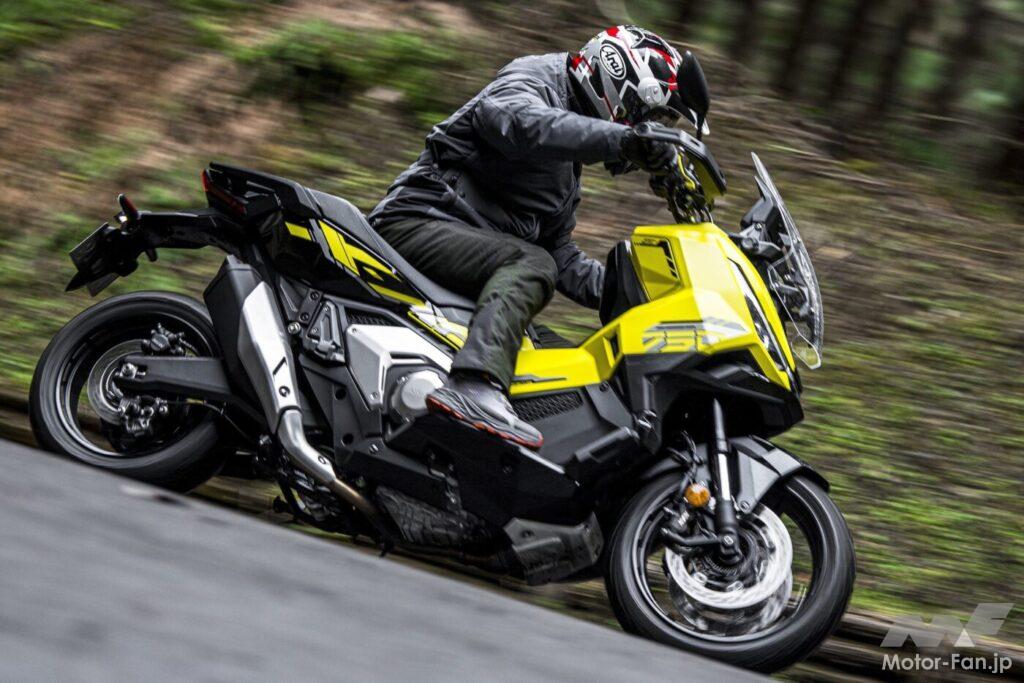
Next, let’s talk about handling. The first thing I noticed when I started driving was the strong tendency for the vehicle to try to stay upright. It’s like a tumbler. Honda vehicles are known for their easy handling, turning naturally in the direction you look without you having to pay much attention to steering or weight shifting, but this is not the case with the X-ADV, at least. Just to be sure, I checked the tire pressure and suspension settings, but both were set to the specified or standard position.
Of course, this is just because it has a strong stance, and once you lean the body by pushing or pulling the handlebars, the front tires will have a suitable steering angle and you will be able to turn. If you can increase the pace enough to make use of the body’s pitching, you will be able to naturally enter corners, but the mountain road we passed through during the test drive was fully wet, so this was not possible. With a long wheelbase of 1580mm, it is not the type to turn aggressively, and the banking angle is not very deep, so you should not be too reckless, even on dry roads.
Shaking my head at the handling, which was unusual for a Honda, I looked into it and found out that the Japanese model has had its suspension and linkages changed to lower the vehicle height by 30mm. Incidentally, the seat height of the Italian and Philippine models is 30mm higher than the Japanese model, at 820mm, with official wheel travel of 153.5mm in the front and 150mm in the rear. In other words, changing the front and rear suspension enough to lower the vehicle height by 30mm is obviously going to have some effect on handling and banking angle. That said, this change was made with the aim of improving foot reach, and they probably wanted to make it lower than the TMAX’s 800mm. In addition, I heard this during an interview with the CL250/500 developers, but in Japan, a large number of riders place a high priority on whether the seat height is above 800mm.
The suspension itself works well, and the ride quality when cruising is several levels better than that of the NC750X. The suppleness of the wire-spoke wheels probably contributes to this. The windscreen, which can be adjusted to five different heights, provides excellent wind protection, and at the highest setting it blocks out almost all of the cold air. This will allow you to travel long distances in comfort, and it’s easy to see why a top box and pannier cases are available as genuine accessories.
Both the front and rear brakes can exert high braking force with a light lever input, and the front brake in particular, combined with the highly rigid frame and inverted fork, does not break down even on winding roads. During this test ride, the road surface was mostly wet, so the rear brake ABS intervened several times, but the natural deceleration G and lever kickback never made the rider panic, so it can be said to be a very safe and reliable piece of equipment.
There’s a luggage box under the seat big enough to store one full-face helmet, and inside it comes standard with an ETC2.0 onboard unit and a Type-C USB port. It’s packed with features like smartphone connectivity for the meter, cruise control, heated grips, and a smart key, making it hard to believe it’s a 750cc bike. You might hesitate for a moment when you hear that the price is higher than the CB1000 Hornet, but apparently it’s Honda’s second best-selling bike over 350cc in Europe (the top-selling bike is the CB650R), so perhaps that’s why they were able to spend so much money on it. It’s truly a premium maxi-scooter SUV, and one that will appeal to those who are into that sort of thing.
Riding position and foot reach (175cm/68kg)
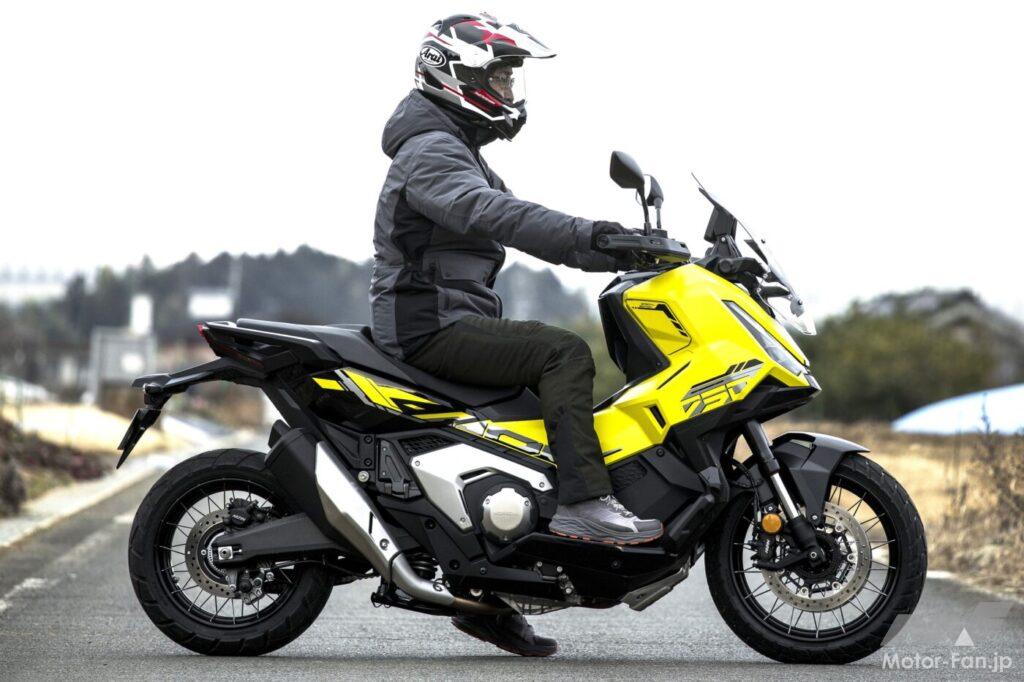
The unique riding position is made up of wide, adventure-style handlebars, step boards that allow for great freedom of movement in both the front and rear directions, and a wide seat. The large handlebar turning angle makes it easy to maneuver in tight spaces, which is a good impression for a bike of this size.
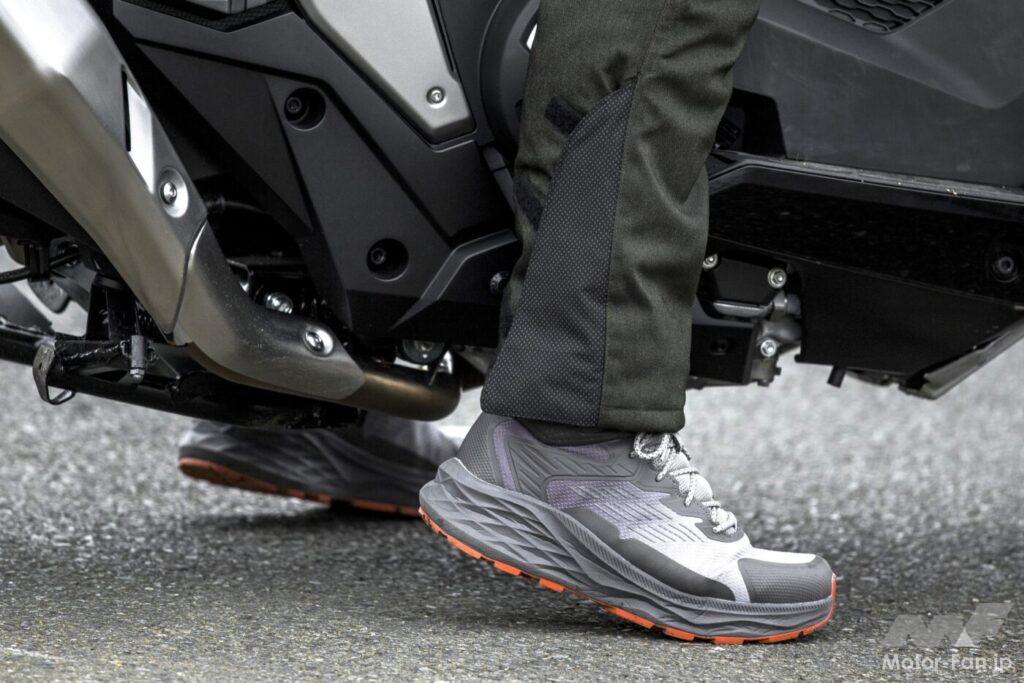
The seat height is 790mm. Although the suspension and linkage have been changed to lower it from the 820mm of the overseas model, the body is still wide, so it is difficult to reach the ground. At the same time, the ground clearance of the Japanese model is 30mm lower (from 165mm to 135mm), which sacrifices its ability to drive on rough roads.