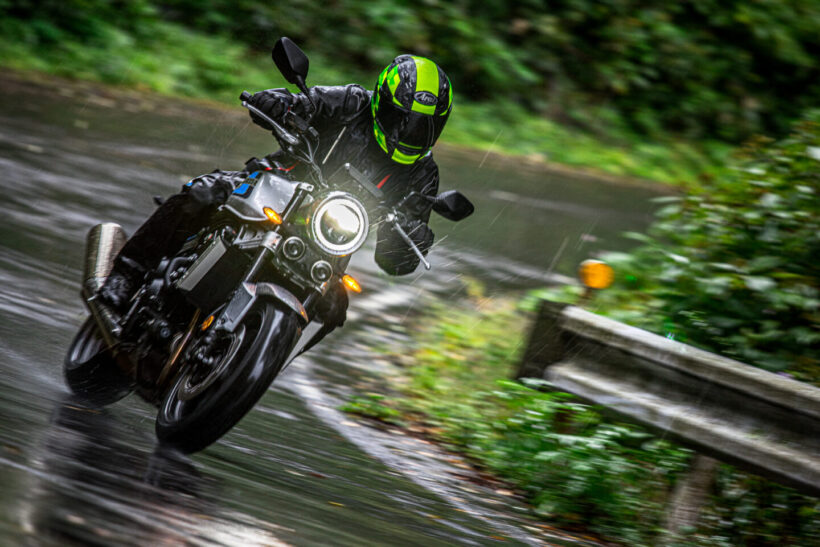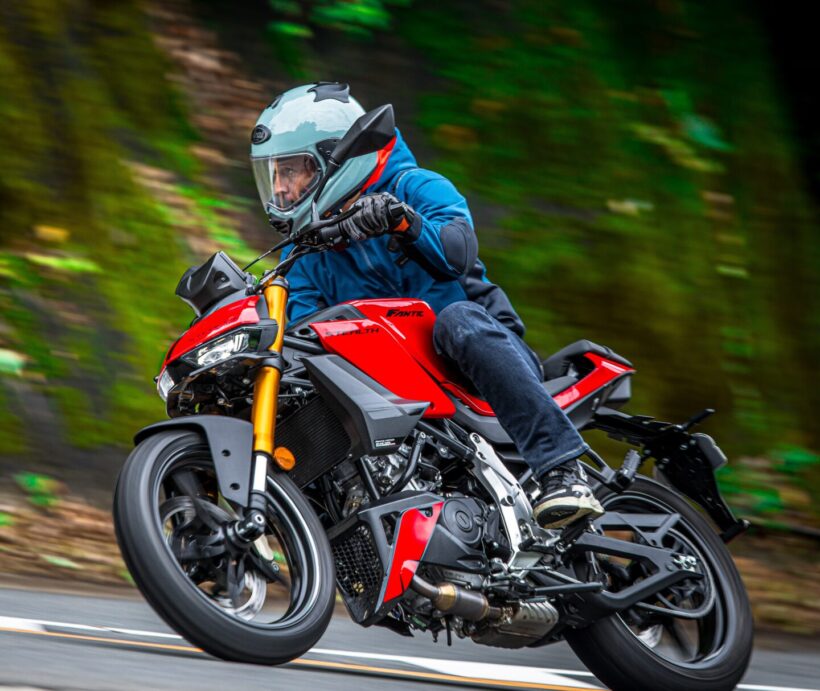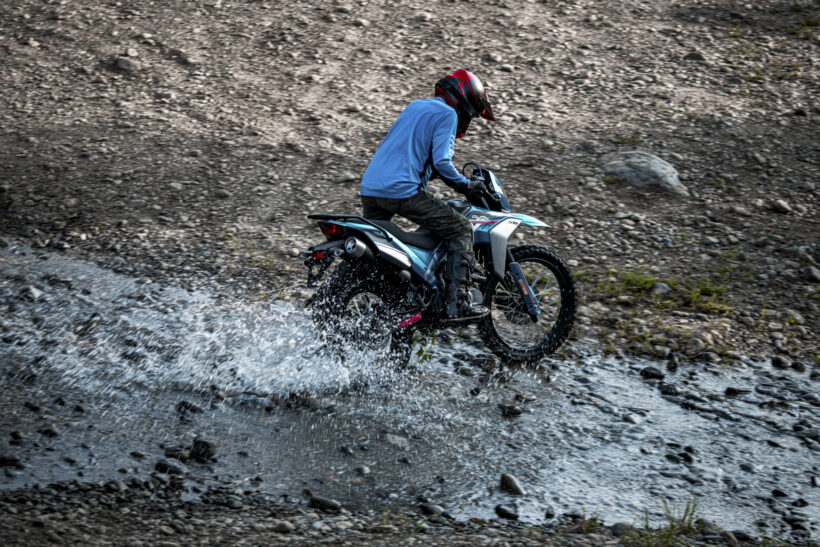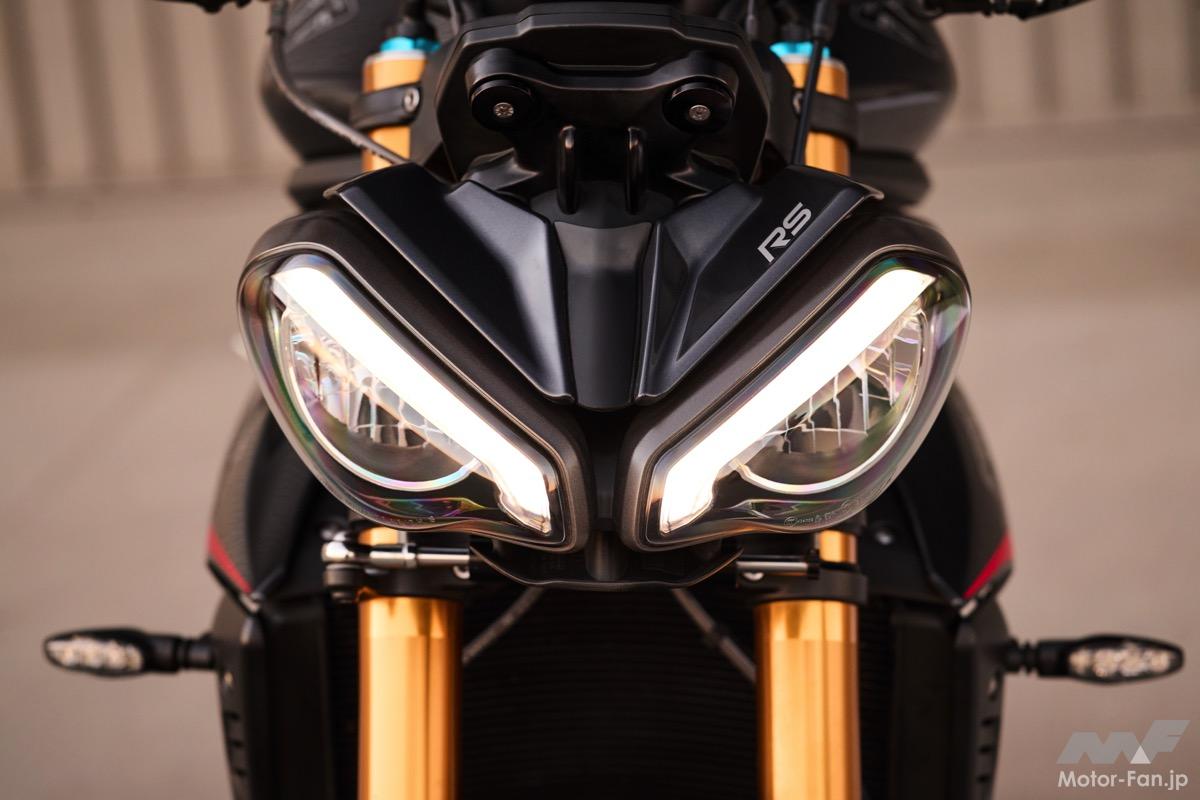

Kawasaki KLX230 S… 594,000 yen (released November 27, 2024)
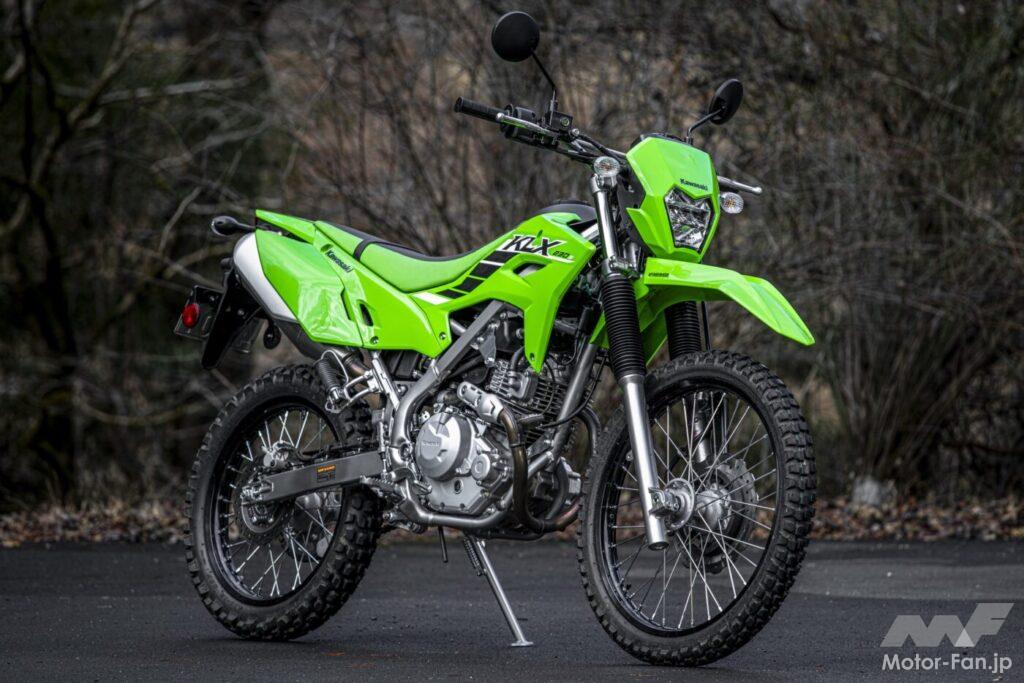
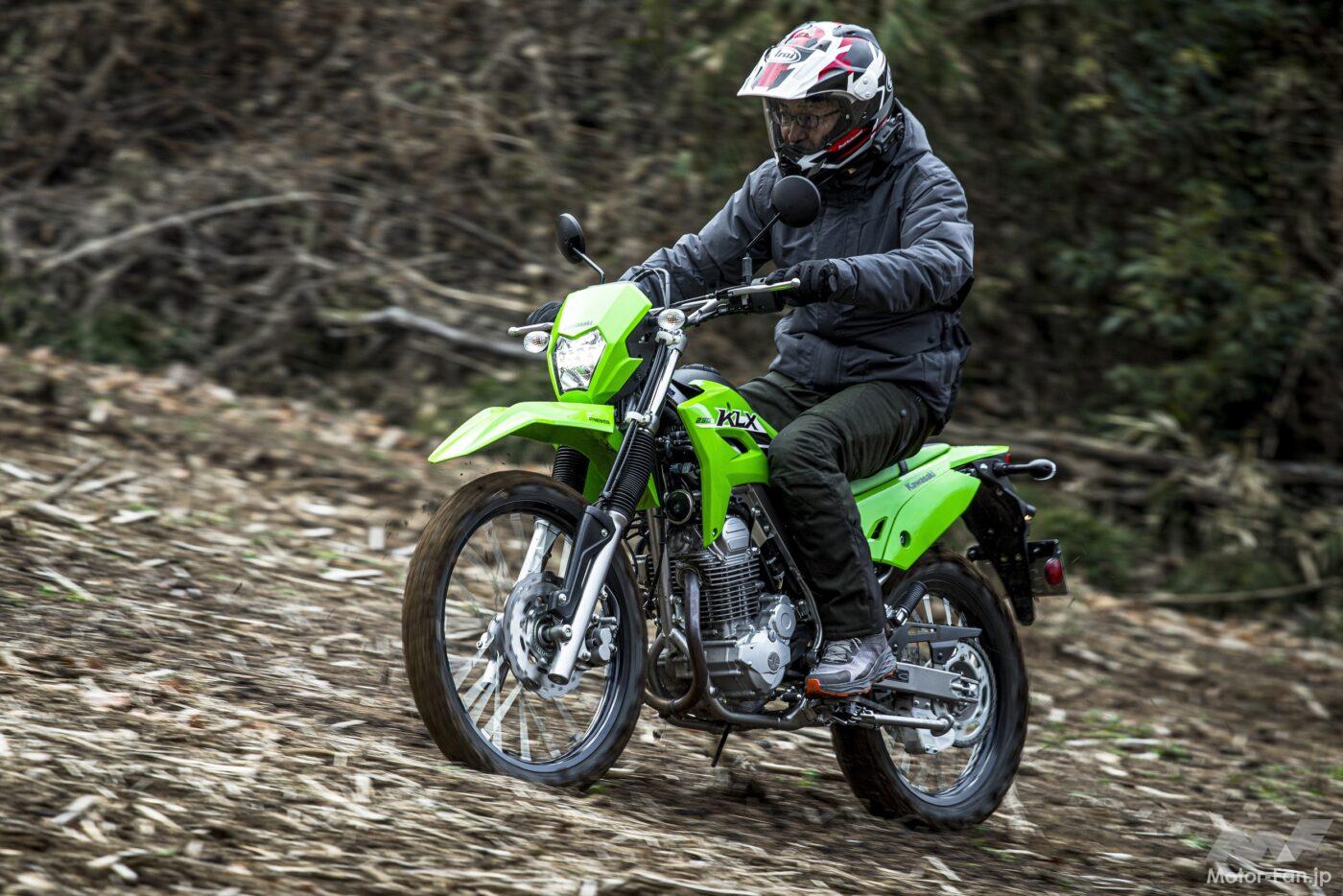
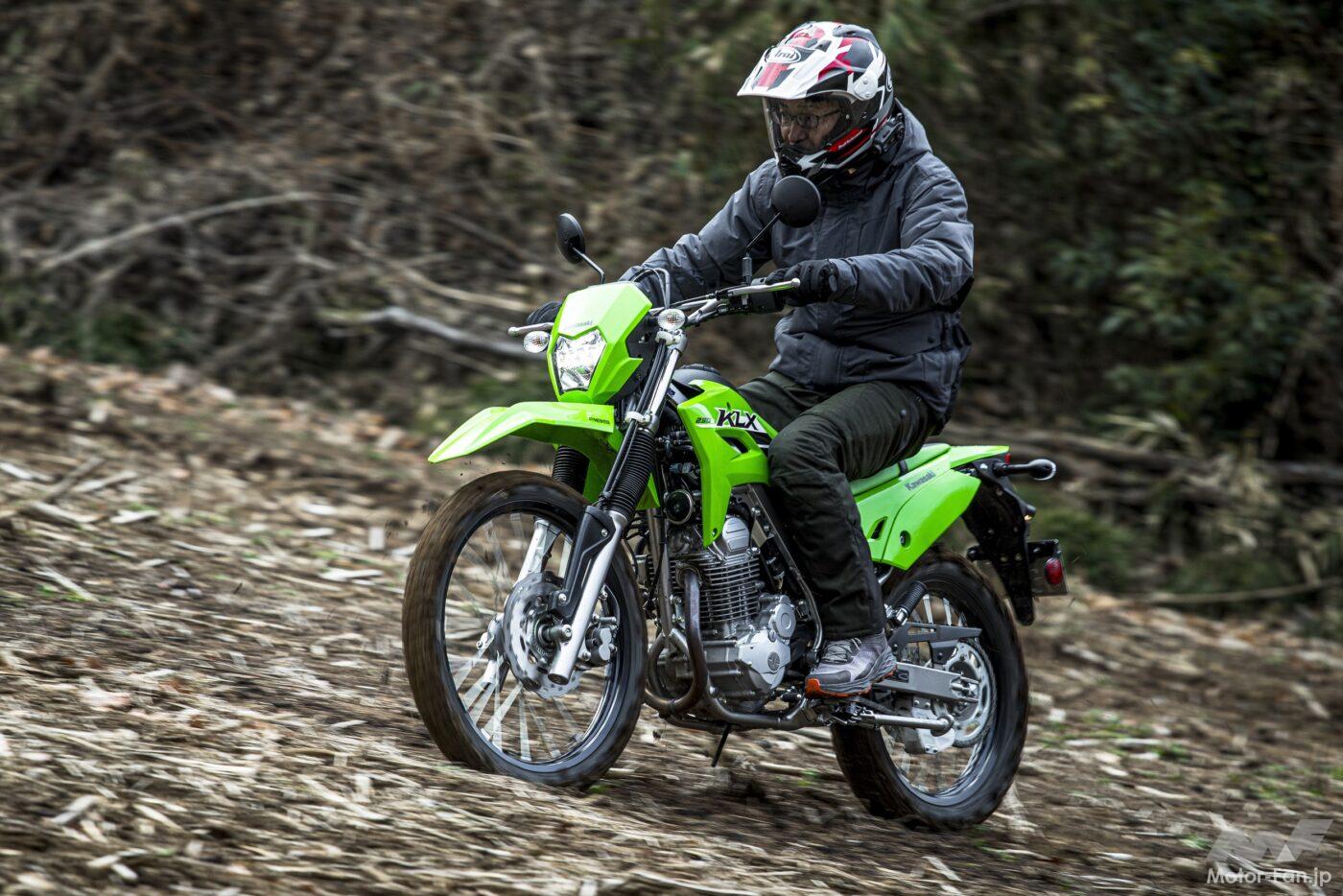
The 2025 KLX230 S model has a completely redesigned exterior, including a smaller front mask due to the change from halogen bulbs to LED headlights. The seat height has been increased by 15mm compared to the previous model, but the ground clearance has also increased by 30mm, so it doesn’t look unnatural at all. The price has also increased by approximately 17% (88,000 yen).
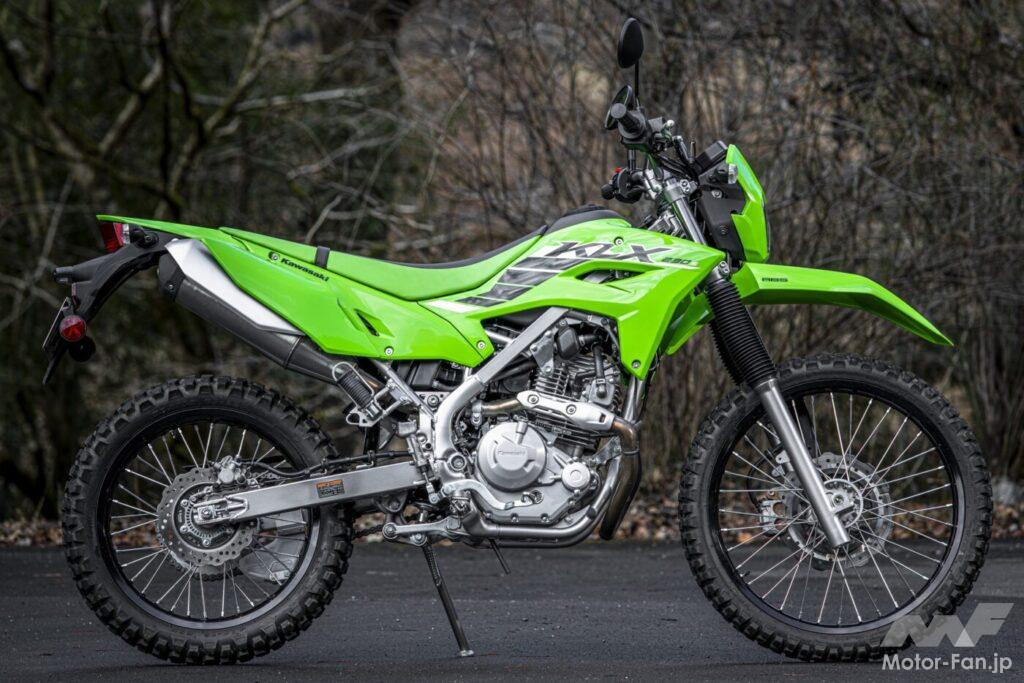
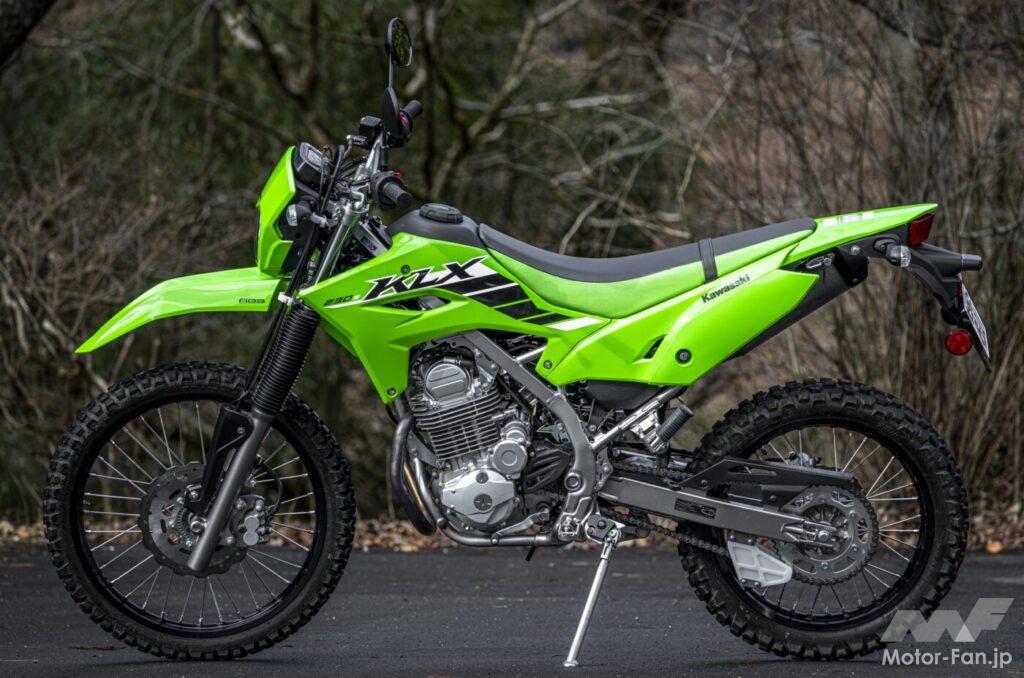
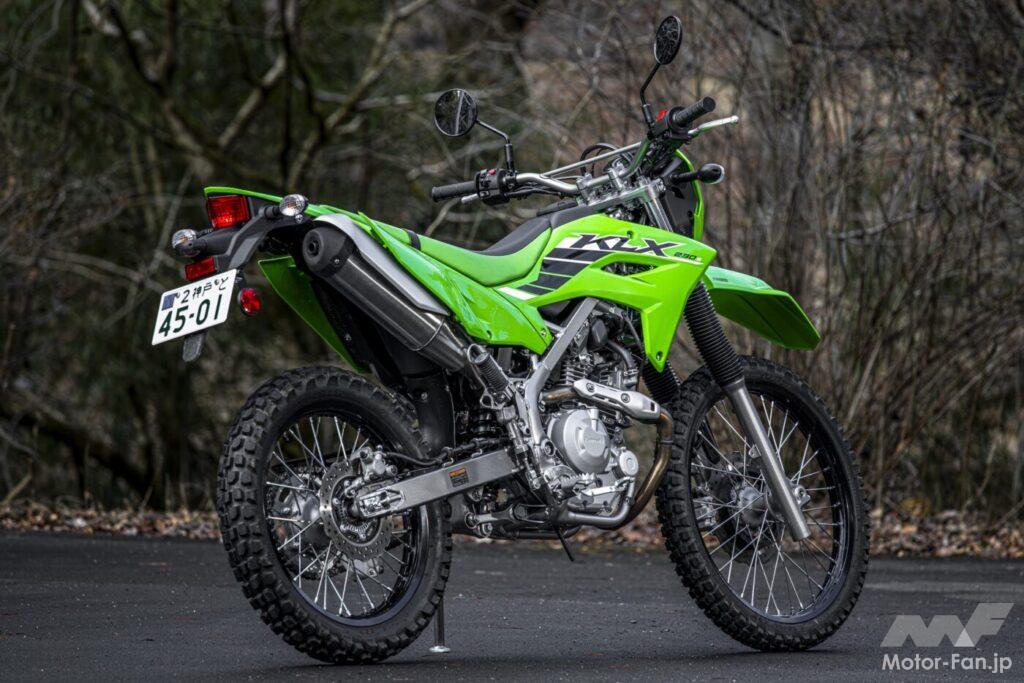
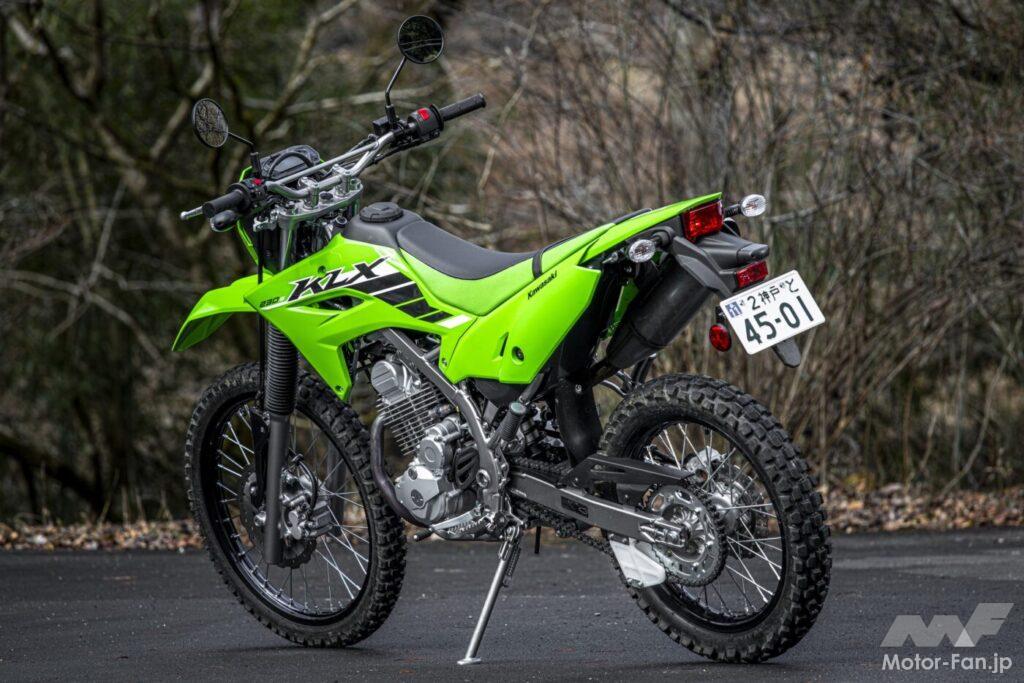
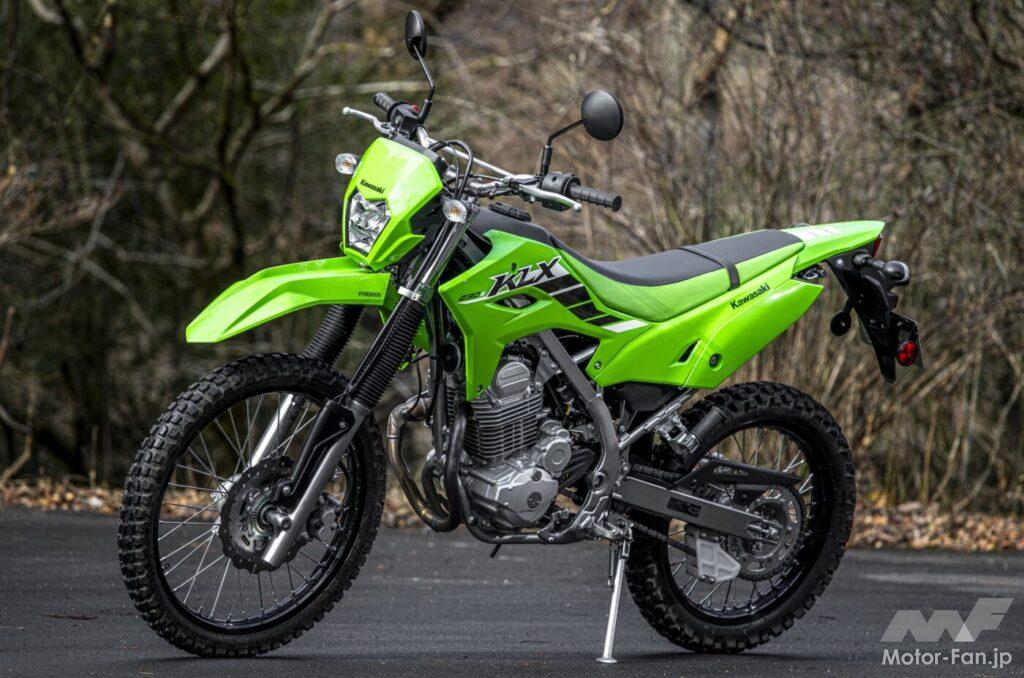
Lime Green
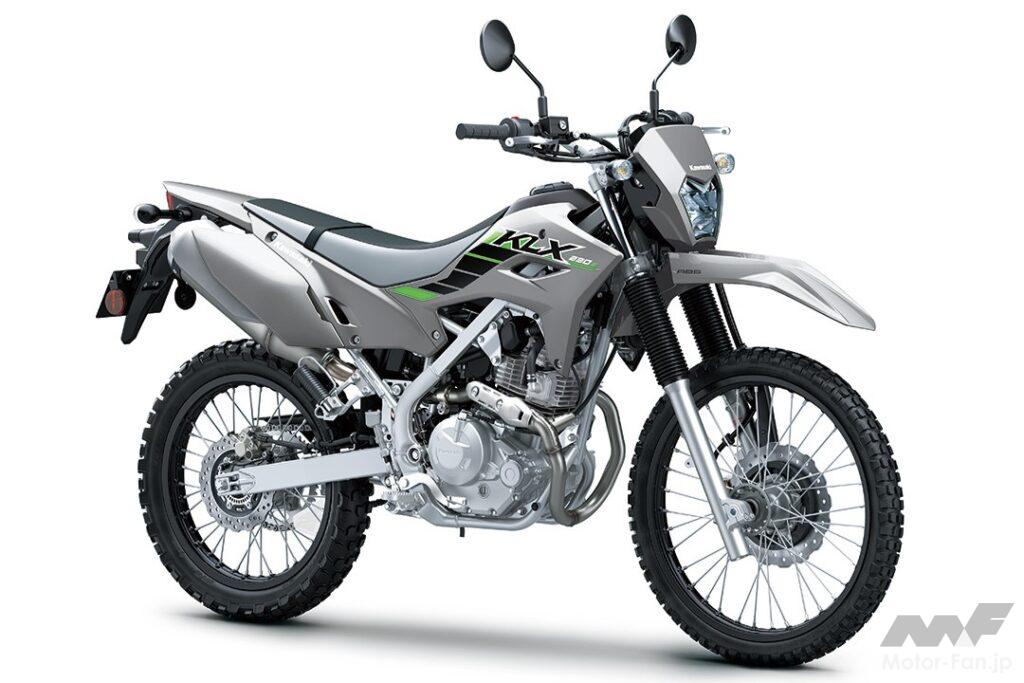
Battle Gray
The body color is available in two colors: lime green and battle gray. Incidentally, the competing Honda CRF250L also uses a similar color called Swift Gray, so the image is quite similar.
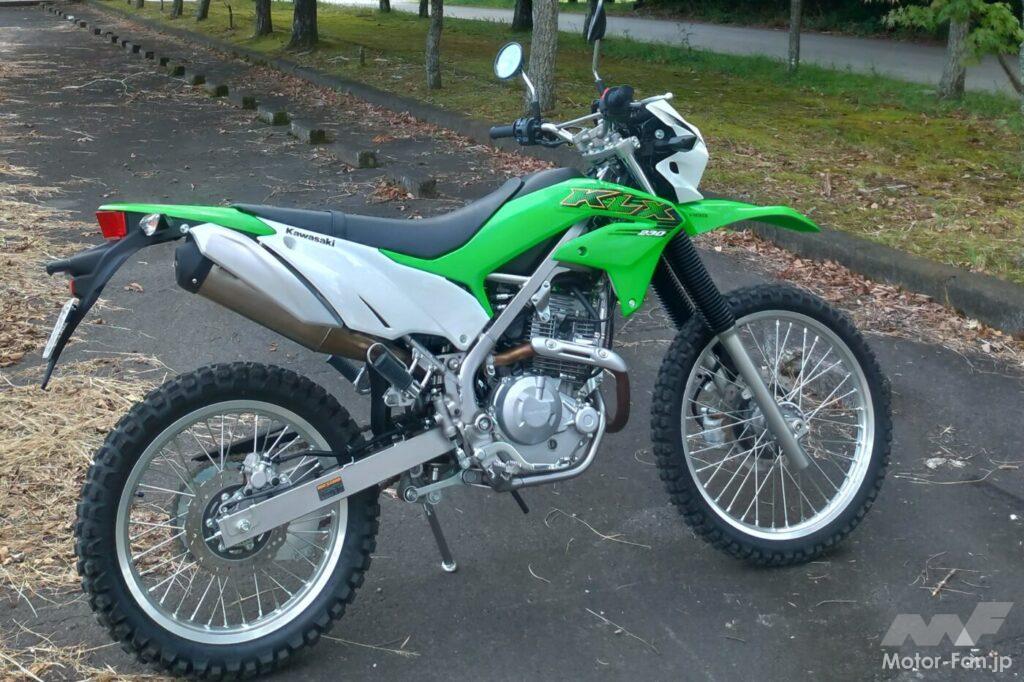
2020 KLX230
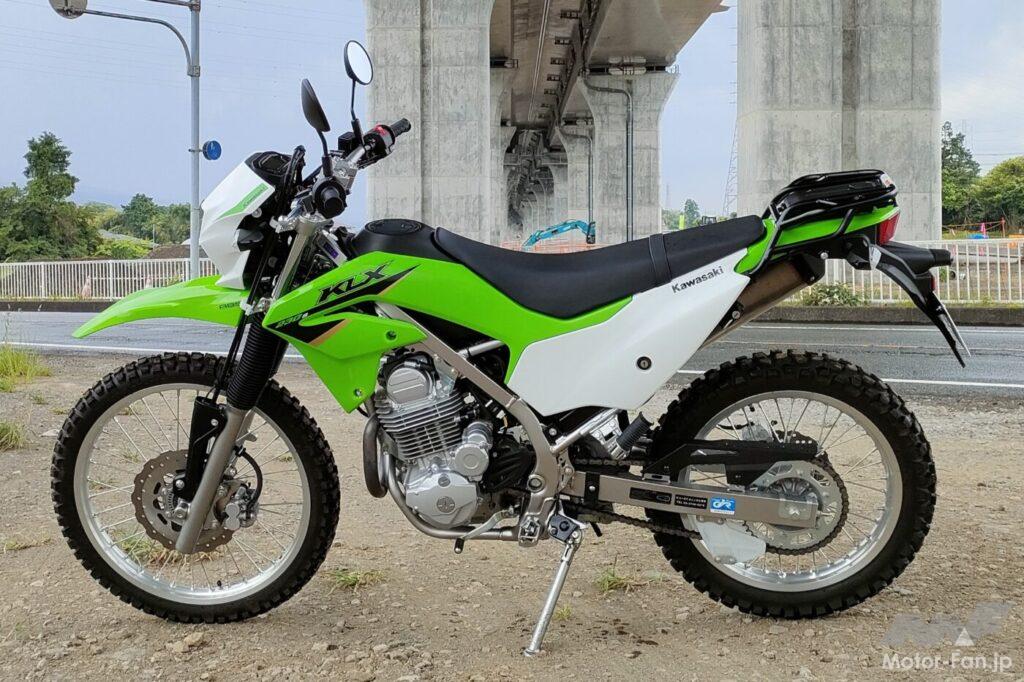
2022 KLX230 S
The previous model KLX230 was released in October 2019, and the KLX S in February 2022. As neither model complies with the 2020 (Reiwa 2) exhaust gas regulations, sales in Japan were discontinued after the 2022 model year.
Expanding coverage to both on-road and off-road
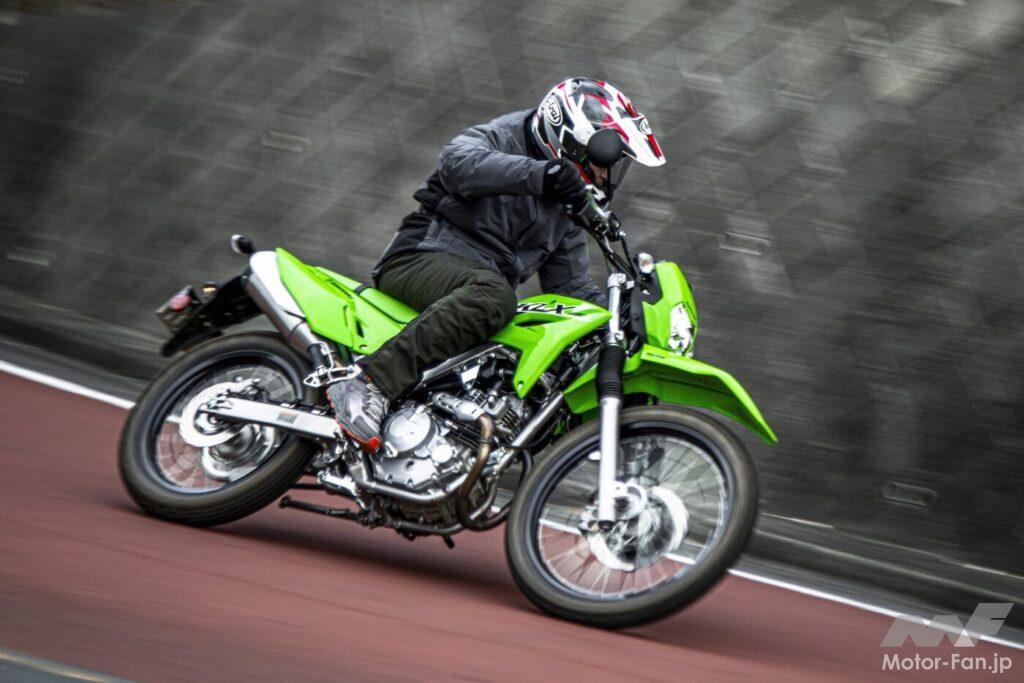
I’ve test-ridden both the standard model and the lowered S version of the previous KLX230 series. At the time, I owned the Yamaha Serow 250 Final Edition, so I was surprised at how much of a difference there was between the two models, even though they were both air-cooled, single-cylinder, dual-purpose bikes, depending on the design year. Specifically, the engine was tenacious from low RPMs, with a taut response, and the chassis was sufficiently rigid even at high speeds. With a seat height lowered by 55mm, the S model’s suspension bottomed out more often when riding on dirt roads, but it maintained a comfortable ride at high speeds and offered better straight-line stability than the standard model. I even thought that if my riding style consisted of 80% paved roads and 20% dirt roads, this model might be better, given its better foot reach.
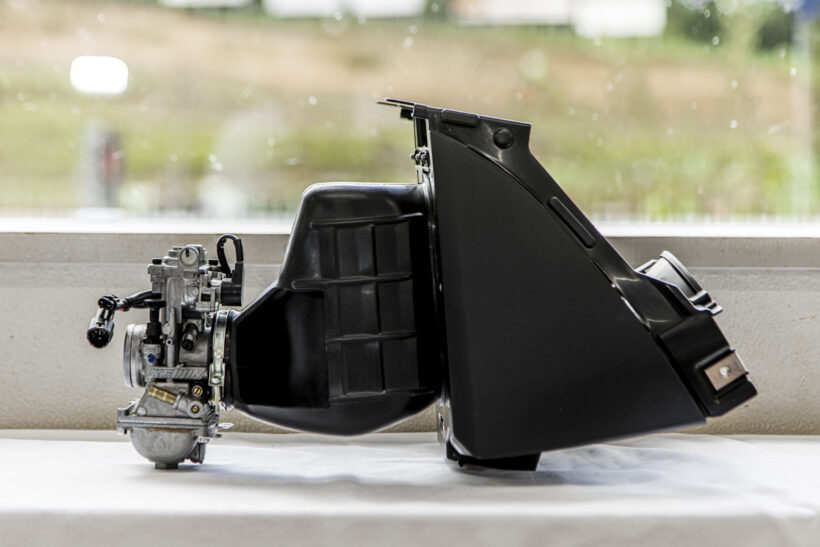
Now, the KLX230 and S, which were released as 2025 models, have lowered the seat rail mounting position in order to improve foot reach, and the air cleaner box and fuel tank have also been newly designed. The KLX230 S that I test rode this time has a seat height that has been increased by 15mm from the previous 830mm to 845mm, but the wheel travel has increased by about 30% both front and rear, from 158mm to 200mm at the front and from 168mm to 223mm at the rear.
When you see the actual bike in front of you, the seat looks so high that you might think, “Isn’t this the KLX230 with the higher seat?” However, when you actually straddle it, the front and rear suspensions sink in just enough at 1G, and as a rider of 175cm height, the soles of both heels lightly touch the ground. The competing Honda CRF250L has a seat height 15mm lower, but the KLX230 S gives the impression of a slimmer body, and overall foot reach is at the same level. In addition, the weight is 8kg lighter than the CRF, so the burden on the feet is clearly less.
The first thing you notice when you start riding is how compact the body feels, making it hard to believe it’s a full-size trail bike with 21-inch front and 18-inch rear wheels. The wheelbase is 75mm shorter than the CRF250L, but the front tire responds well when you slalom the bike, and the cornering ability is so good you could even describe it as quick.
The reason for this appears to be changes to the caster angle and trail. Looking at the specifications again, the new model has geometry that is on par with that of a naked model, going from the previous 27.5°/116mm to 24.6°/96mm (by the way, the Z250, another naked bike in the same class, has 24.5°/92mm). The relaxed handling, with the rear tire being the dominant force and the front tire being the secondary force, has now become more like that of an on-road model, making riding in urban areas and on mountain roads all the more enjoyable.
With wheel travel of 200mm front and 223mm rear, it’s close to the 225mm and 180mm of the Serow 250, allowing for smooth pitching of the vehicle even when the throttle is on and off or light braking is applied. The front and rear suspension movement on flat dirt is smoother and more ample than the previous S model, and with good foot reach, it’s also possible to ride “two wheels, two feet” on unpaved roads, a specialty of the Serow 250. In addition, the front and rear brakes have better braking power and control than the Serow, so even if you don’t use the newly added ABS cancel button, you’ll have no complaints if you’re just driving down forest roads, relying on the dual-purpose ABS.
Although it has lost 1hp, it remains easy to handle in the low and mid-range.
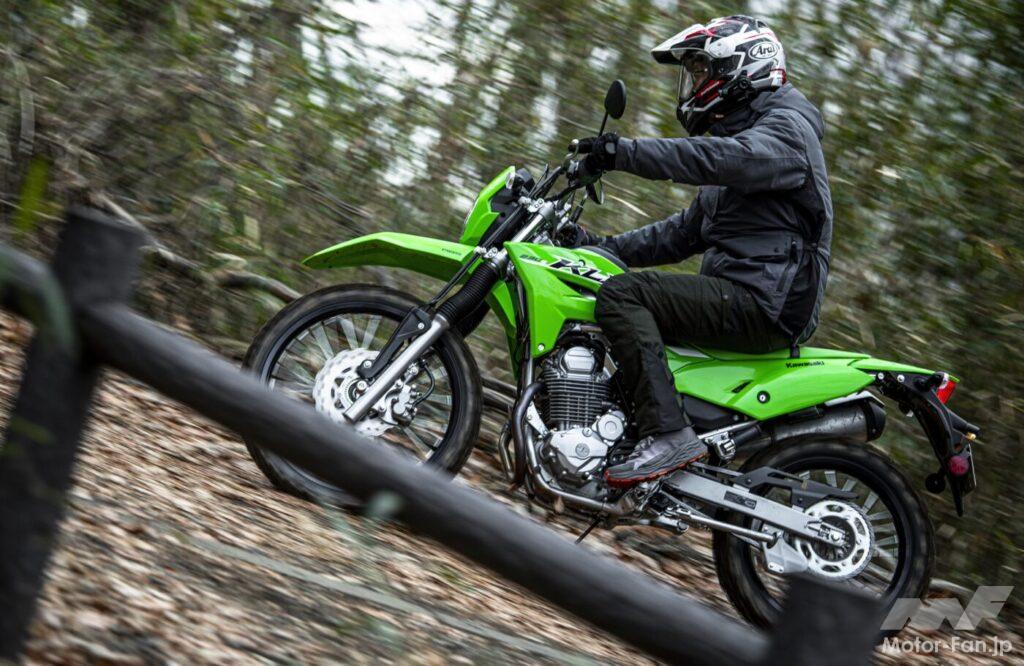
Next is the engine. As you can see from the somewhat unnaturally long exhaust pipe, the intake and exhaust systems and ECU have been modified to comply with the latest exhaust gas regulations. The intake valve diameter has been changed to accommodate the smaller intake port, and the muffler has also been redesigned. Maximum output has dropped from 19ps to 18ps, but maximum torque remains at 19Nm. It’s also good news that fuel economy in WMTC mode has increased slightly from 33.4km/L to 34.7km/L.
The power when the clutch is engaged at low rpm remains the same, and although it may be due to the clever gear ratio, the acceleration from a standstill feels livelier than the Serow 250. At high rpm, the Serow has more power due to its slightly larger displacement, but at low and mid-rpm, the response is better, and the KLX leaves a better impression as a dual-purpose engine.
The single-axis balancer is likely responsible for the suppression of unpleasant vibrations across the entire range. Despite being air-cooled, there is little mechanical noise, and the smooth acceleration suggests little friction loss. Although it does not employ a slipper clutch, the lever is light to operate, and shifting is as easy as switching a switch. There has been no particular announcement, but it appears that each part has been significantly redesigned with this model change.
The short stays make it hard to see the mirrors, the brake hose gets in the way and makes it hard to read the meters, and your butt can easily hurt on long trips – none of the negative aspects I personally felt with the previous S model have been improved. However, I do appreciate how the range of performance has been expanded both on and off-road, mainly through improvements to the chassis. The price difference between the KLX230 S and the water-cooled single-cylinder, 24 horsepower CRF250L is 27,500 yen, which is a big problem for those who were thinking of buying a dual-purpose bike in this class, but on Japan’s narrow and steep forest roads, the KLX230 S will likely be more enjoyable.
Riding position and foot reach (175cm/68kg)
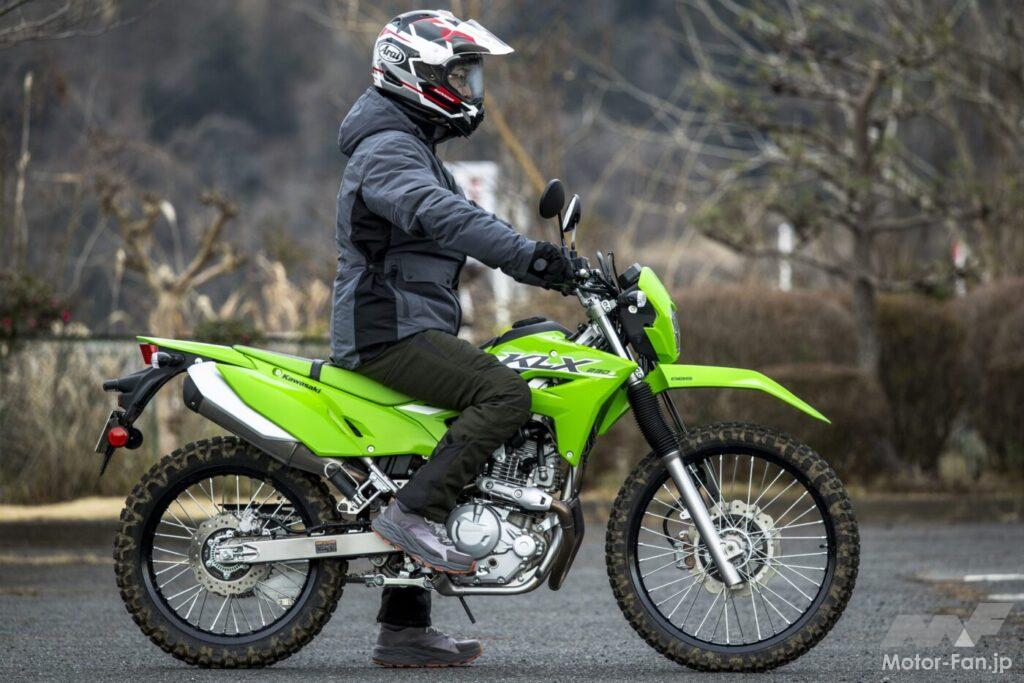
The handlebar grip position has been raised 13mm and moved 24mm forward compared to the previous model. In addition, the footpegs have been moved back 9mm, making the new model even easier to ride off-road.
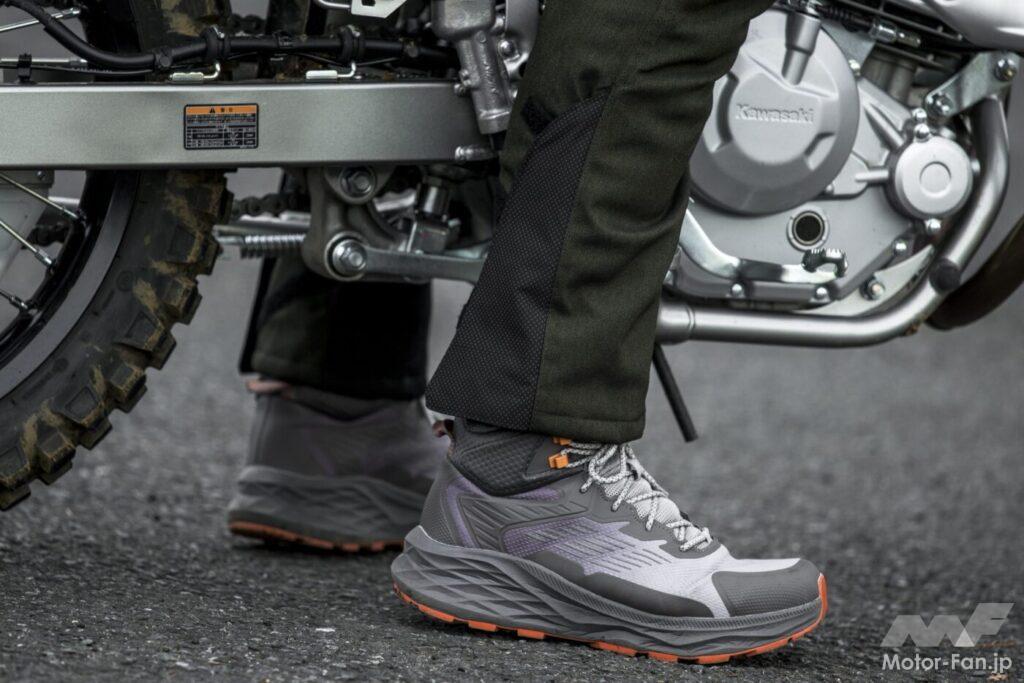
The suspension is soft, so the impression of how well the feet reach the ground will change depending on your weight, but this is more than enough for a full-size trail bike. The steering angle is also more than sufficient.