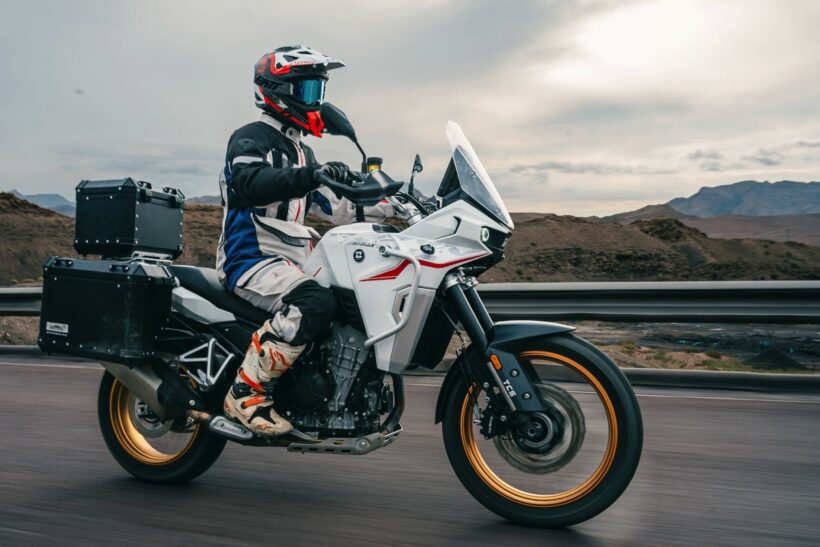


CRF1100L Africa Twin <S> … 1,639,000 yen
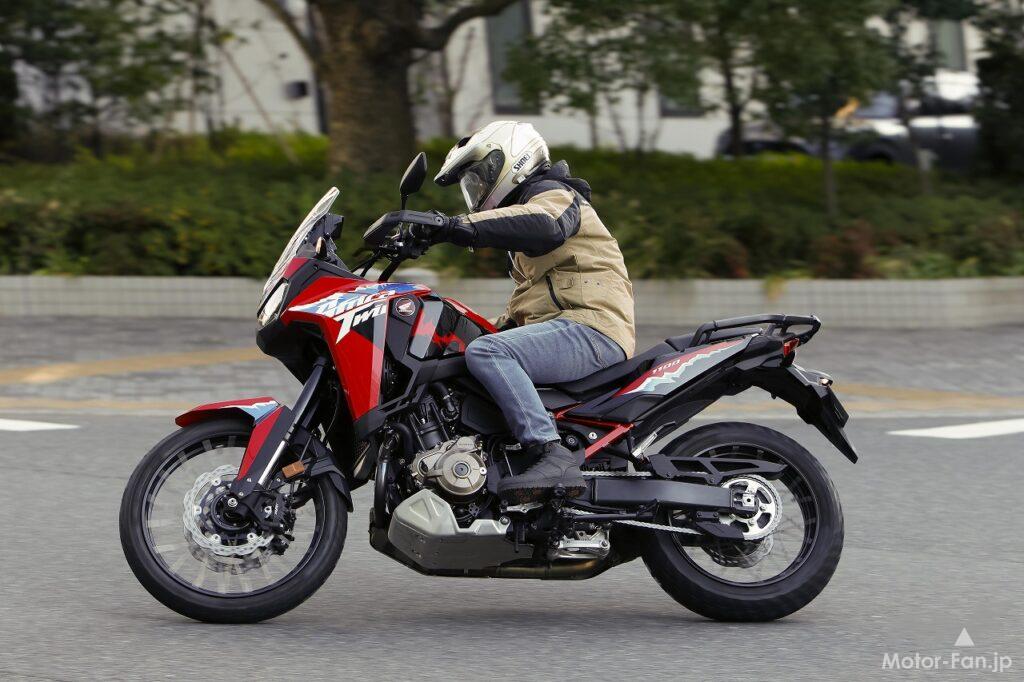
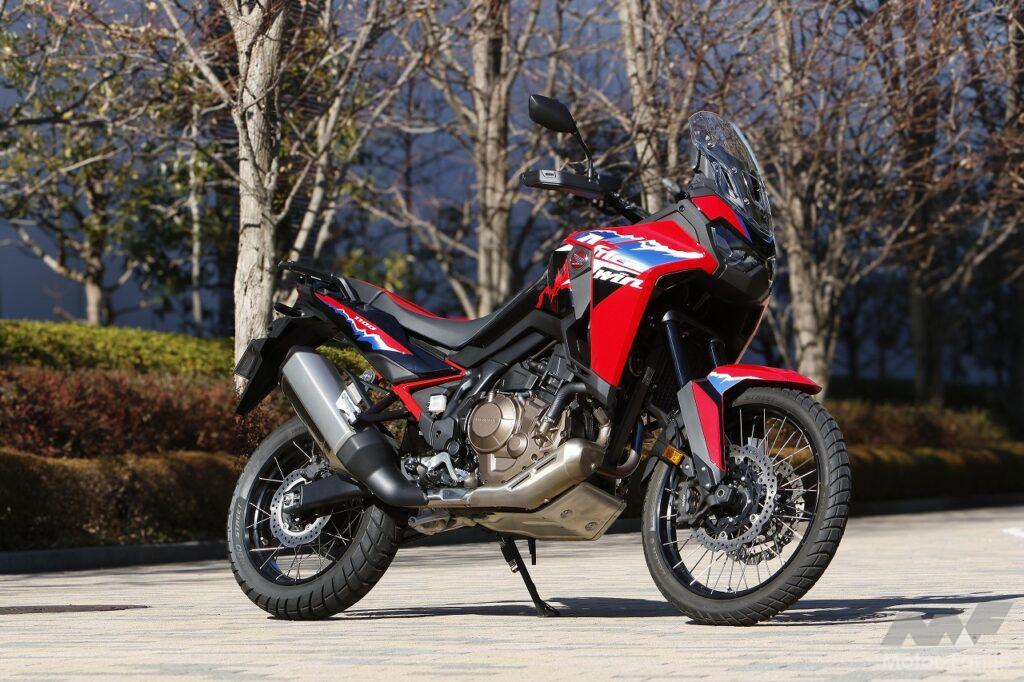
The suspension with a large stroke enhances the off-road feel.
The CRF1000L Africa Twin, a revival of the "Africa Twin" name, was released in 2016. New features, such as the addition of a model equipped with a DCT (Dynamic Coupé Transmission) that eliminated the need for clutch operation, made it a model worthy of the name adventure tourer. Further refinements have been made, including the release of the Adventure Sports model with a larger fuel tank, throttle-by-wire system, riding modes, heated grips, and an ETC 2.0 onboard unit as standard equipment.
In 2020, the CRF1100L Africa Twin was redesigned with an increased displacement and a lower ride height for easier riding. Meanwhile, the "s" model, featuring longer front and rear suspension strokes, was introduced to cater to off-road riders. Furthermore, the bike features Android Auto for enhanced convenience through smartphone connectivity and daytime running lights for improved daytime visibility. The engine also complies with the latest emissions regulations. The
current 2024 model boasts an increased compression ratio and revised valve timing to improve maximum torque, as well as a redesigned front cowl. Furthermore, it is the world's first motorcycle to use bio-based, environmentally friendly bio-engineered plastic "DURABIO™" in its transparent front screen. The Adventure Sports ES also features a 19-inch front tire, clearly differentiating it from the <s>.
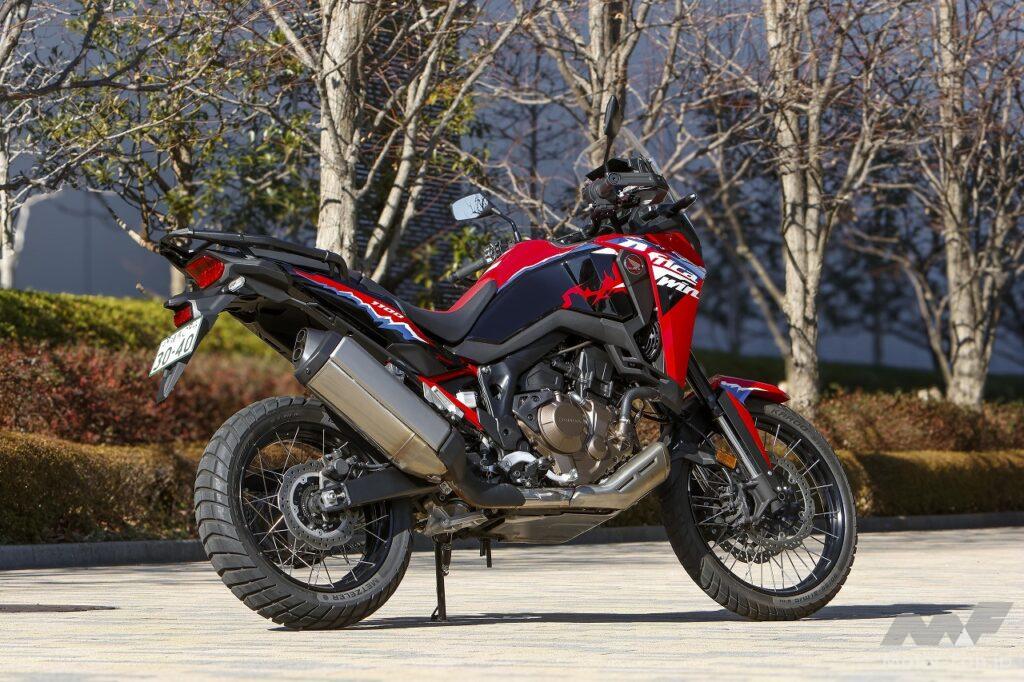
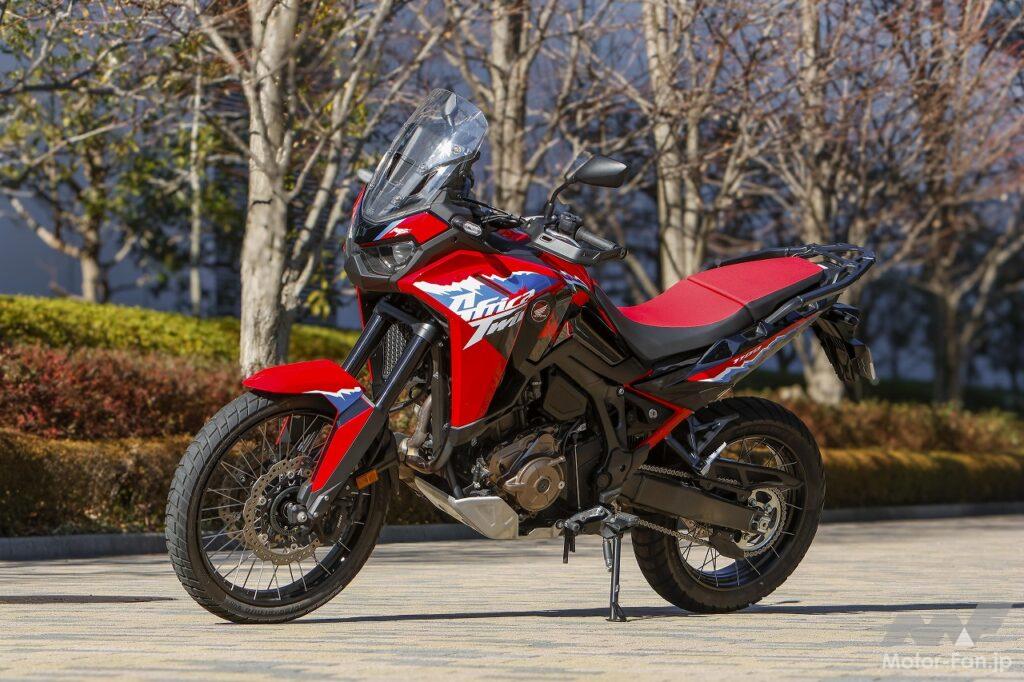
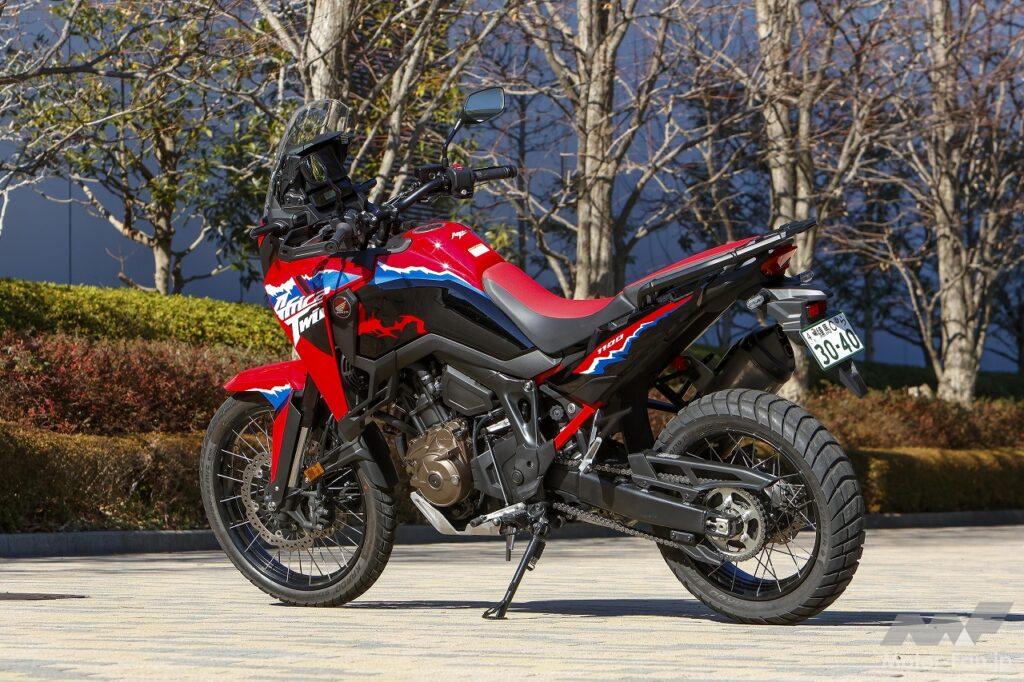
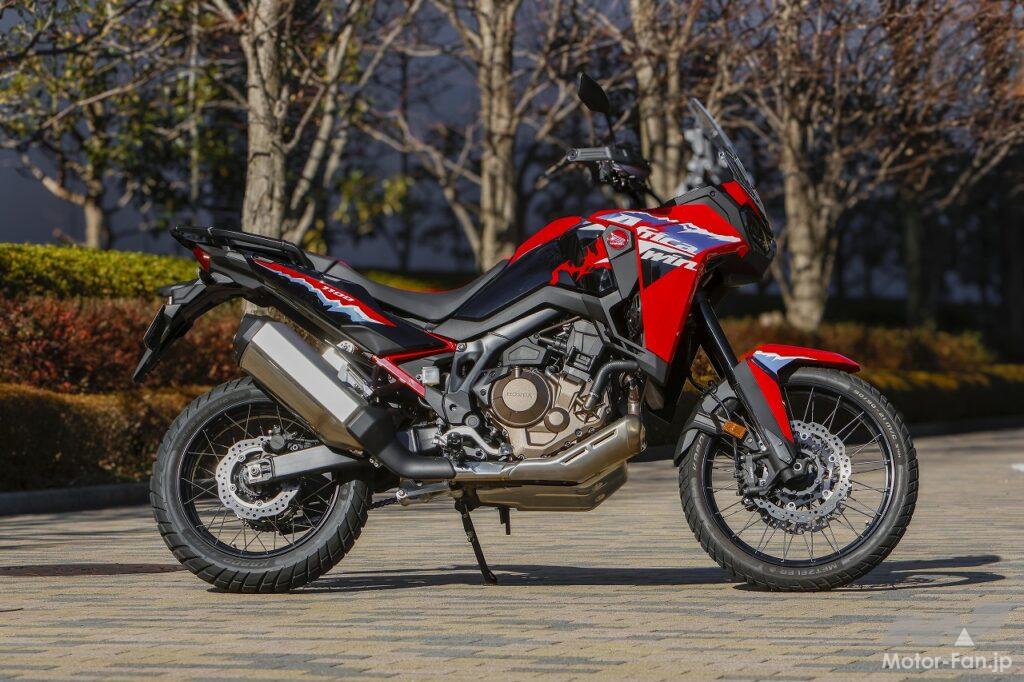
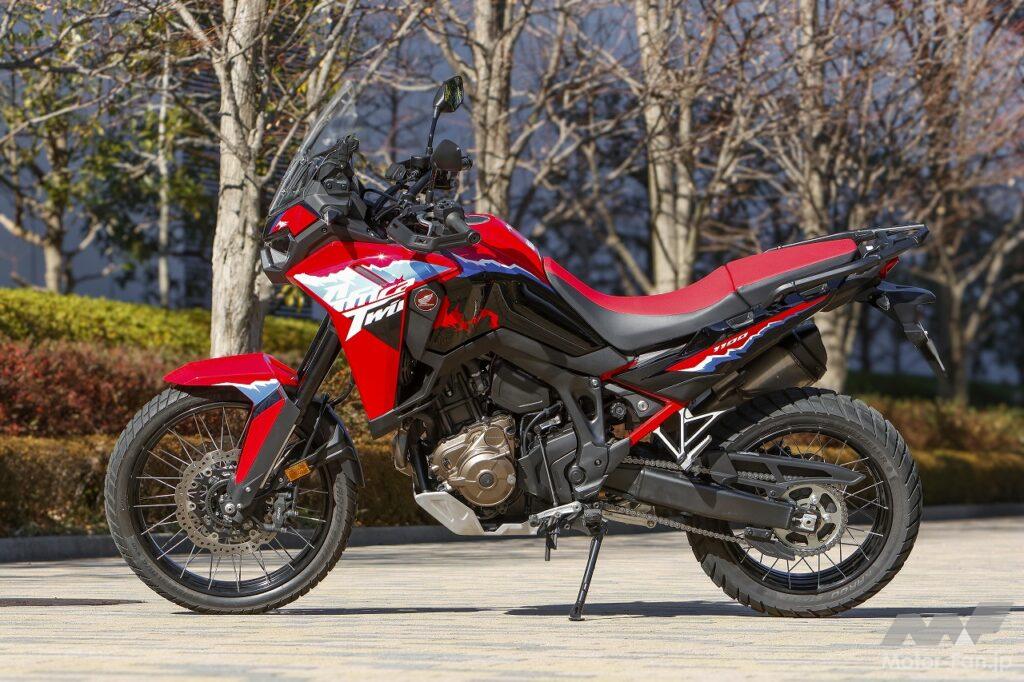
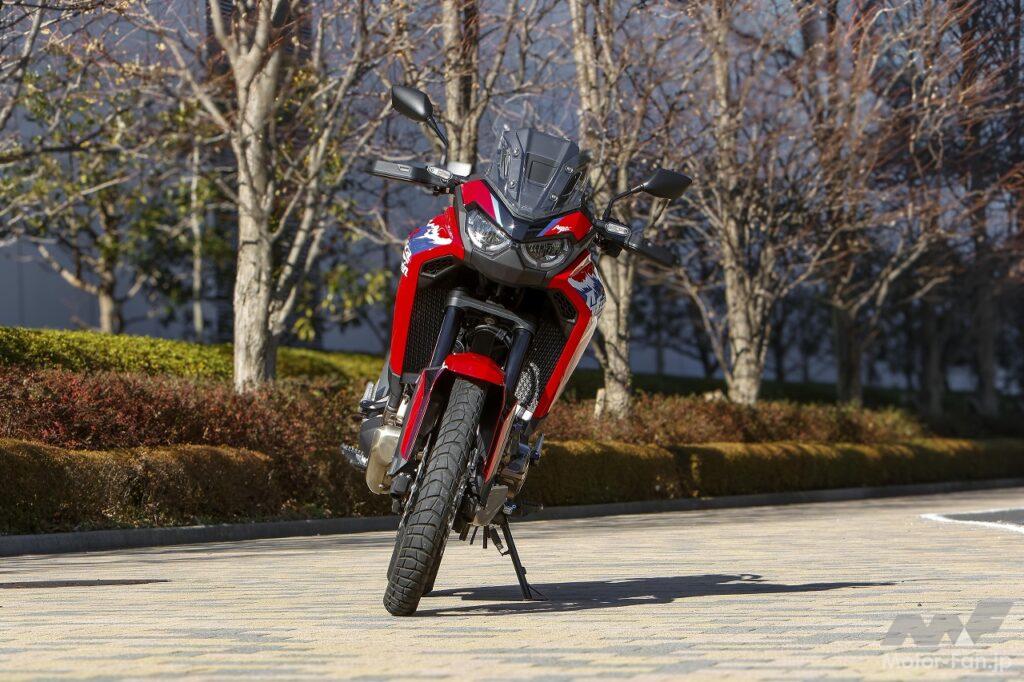
The Africa Twin has evolved significantly in the less than 10 years since its launch, but the basic model is the manual-transmission equipped <s> that we test rode this time. Its large off-roader-like body design has been further refined, and its sheer size gives it an outstanding presence. While it may be a bit daunting to ride on Japan's narrow forest roads, it will surely be a valuable ally for adventure touring that incorporates forest roads into your route.
Six riding modes to suit any situation
Since it's designed for off-road riding, the vehicle height is high. The seat height can be adjusted to two positions: 870mm and 850mm. I think it's safer for Japanese riders to set it to the low 850mm position. Even so, you'll need to raise your feet high when riding, and it takes some effort to raise the bike with the side stand down. While the bike is certainly high, the initial action of the front and rear suspension is soft, so when you sit down firmly on the seat, it sinks in just enough, and it's not as difficult to reach the ground as you might imagine. Of course, this is on flat, paved roads; on rough dirt roads, the height is undoubtedly a cause for concern.
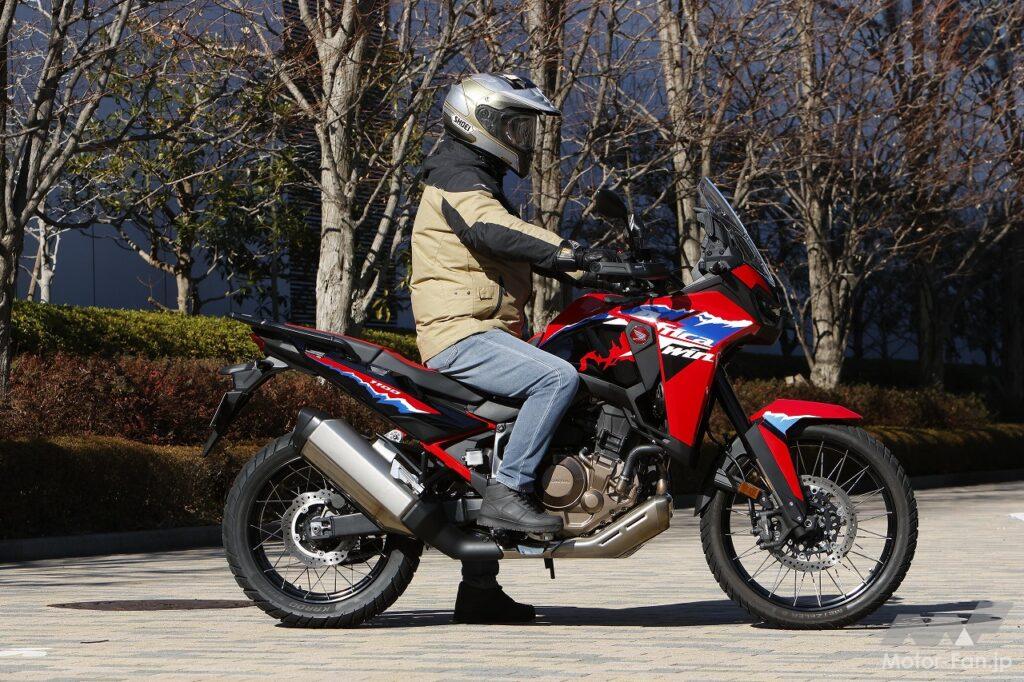
The large body provides a relaxed and comfortable position
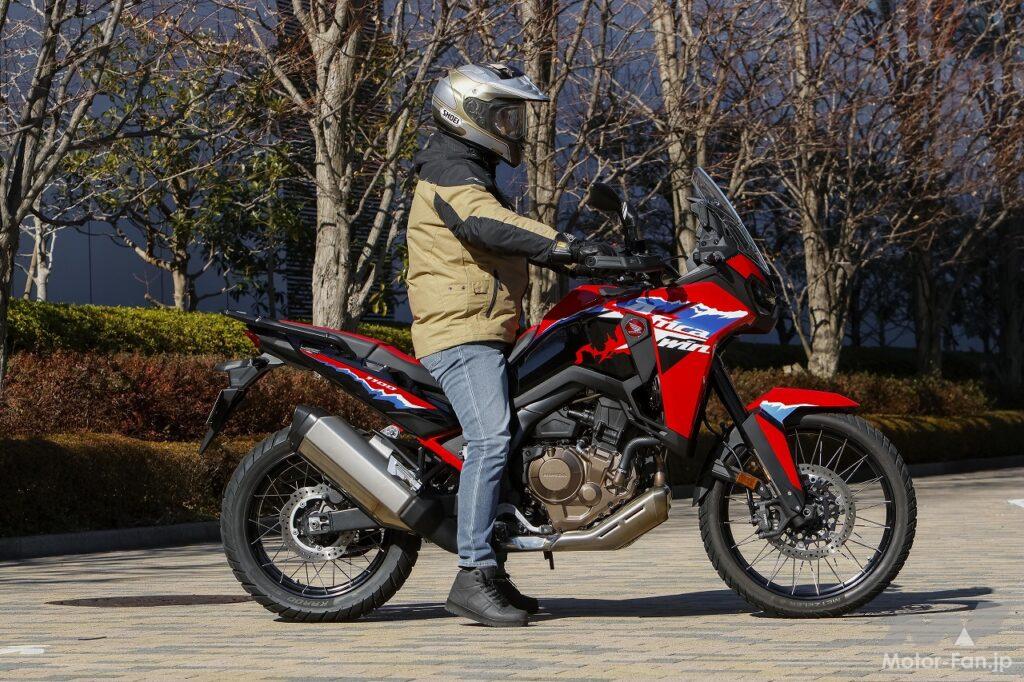
The area where you put your feet down is slim and does not interfere with the step.

The seat height can be adjusted to 870mm and 850mm. It is usually kept in the low position.
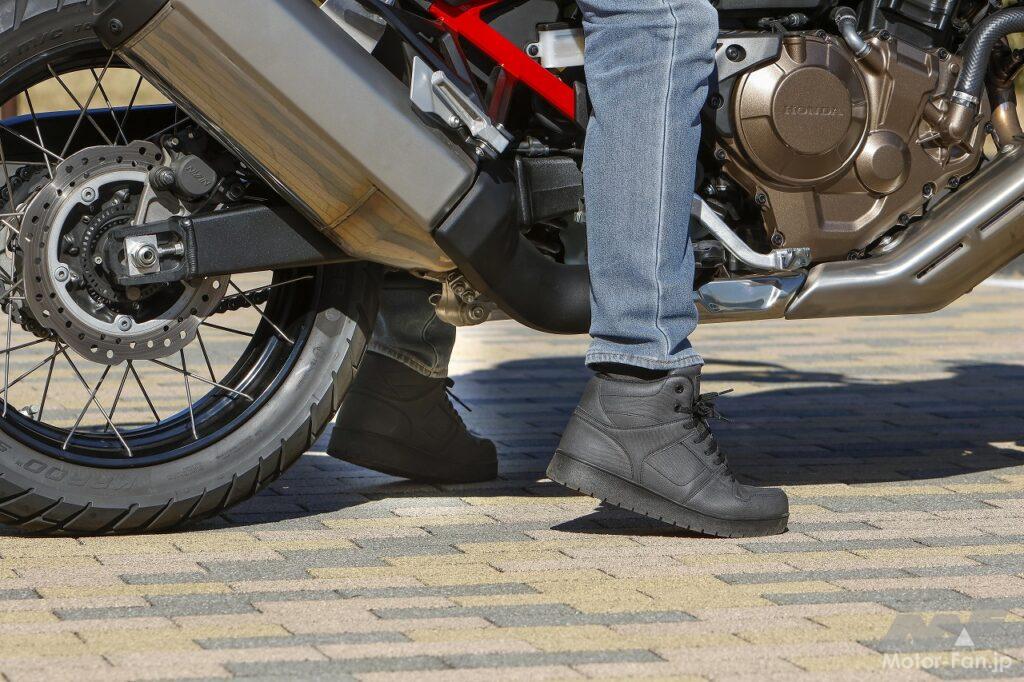
In my case, I am 178cm tall, but my heels float, but both feet can land on the ground. The suspension sinks in, so the foot placement is not as bad as you would imagine from the numbers.
When I started up the water-cooled SOHC 4-valve parallel twin engine, which prioritizes low and mid-range speeds, a quiet sound emanated from the right-hand-mounted muffler. The greenhouse is also not harsh, so even long rides won't tire me out.
I first set the riding mode to Tour and set off. This mode provides the most powerful characteristics, but it responds faithfully to throttle inputs and, while powerful, doesn't generate excessive power, making it suitable for a wide range of riding situations, from urban to touring. The engine's ability to achieve the desired acceleration with just a touch of the throttle makes riding a joy. Although the bike weighs 231 kg, the torquey engine made it feel lighter, which was a positive impression.
While this model's intended use is probably not its primary environment, I focused my test ride on urban areas. While skilled off-road riders may appreciate this, I imagine that average riders will mostly be riding the Africa Twin on city streets, public roads, and highways. So, I chose to test ride it from that perspective.
Having experienced firsthand that Tour mode is adaptable to any situation, I next switched to Urban mode. It provides a gentle power feeling overall, but there is no sense of a lack of torque across the entire range. Therefore, Urban mode is sufficient for normal riding. Also, judging from the ABS and traction control settings, Urban mode is likely the best choice in rainy or cold weather. There are also Gravel and Off-road modes, but I did not use them this time as I was not riding on dirt roads. There are also two modes that can be set by the rider, but I did not use these either. The optional modes are set according to the user's own usage situation and preferences.
ADVERTISEMENT
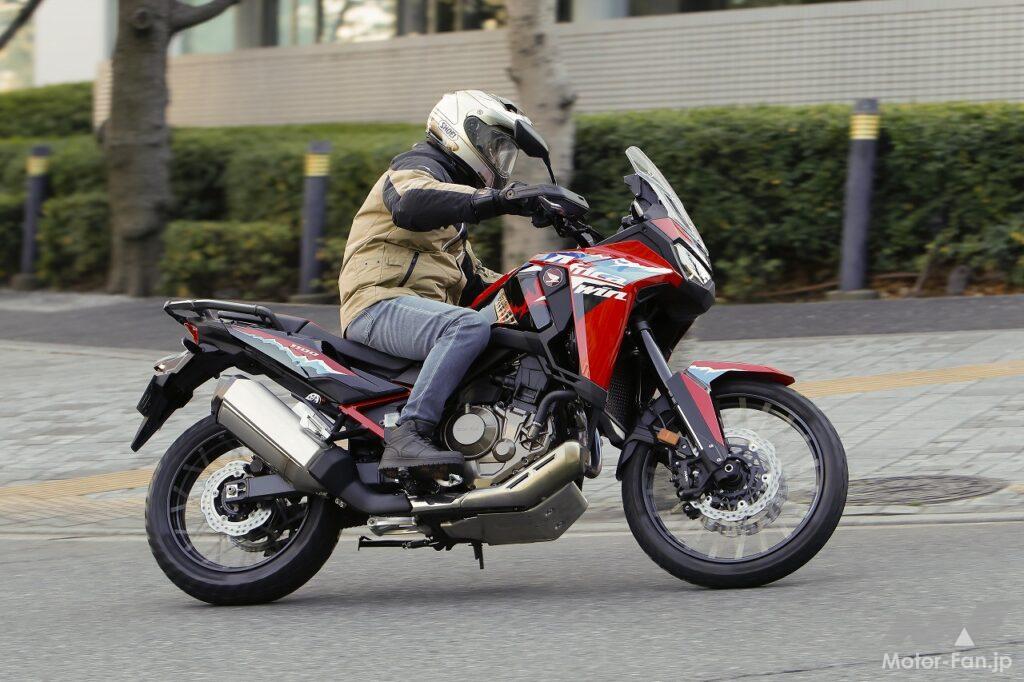

Water-cooled SOHC 4-valve parallel 2-cylinder engine with increased torque achieved by changing the compression ratio and valve timing
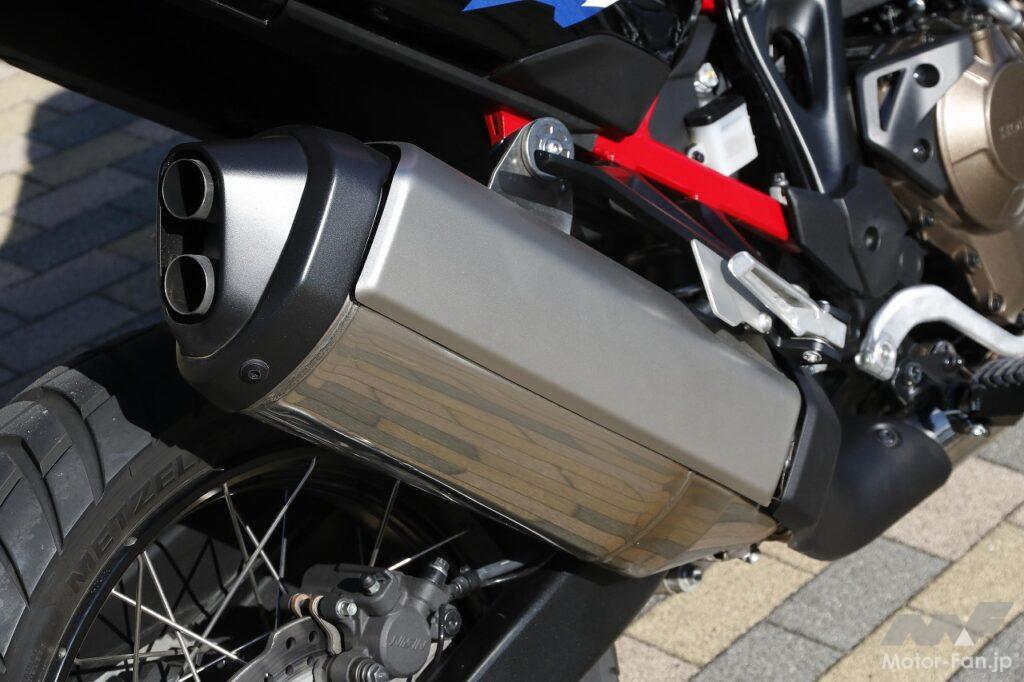
The muffler on the right side is equipped with a large silencer, producing a quiet sound.
Easy handling and high stability provide safe driving in any situation.
While the Adventure Sports ES has a 19-inch front tire, the Type <s> continues to use a 21-inch tire. Furthermore, the suspension stroke is 230mm front and 220mm rear, 20mm longer than the ES. Ground clearance is also 30mm higher. Naturally, the front trail is also different from the ES, resulting in different handling. Simply put, the ES with its 19-inch front and 18-inch rear is more suited to on-road riding, while the <s> with its 21-inch front is more suited to off-road riding.
The tire sizes are 90/90-21 front and 150/70R18 rear, both fitted with tubeless tires. While the <s> is off-road oriented, that doesn't mean it's weak on the road. You can see this for yourself by riding it, but its high stability, including its straight-line stability, is a defining feature. While this might make it seem a bit heavy and sticky when banking, it actually turns with far more agility than you'd expect. Of course, it's not strangely light, but rather has straightforward handling characteristics.
The front and rear suspensions move well, absorbing most of the impact even when passing over slightly rough roads, and the bike doesn't lose its balance. Although we didn't ride on dirt roads this time, I'm sure it would perform just as well off-road. The soft suspension also provides a comfortable ride, so I think it will reduce fatigue on long trips.
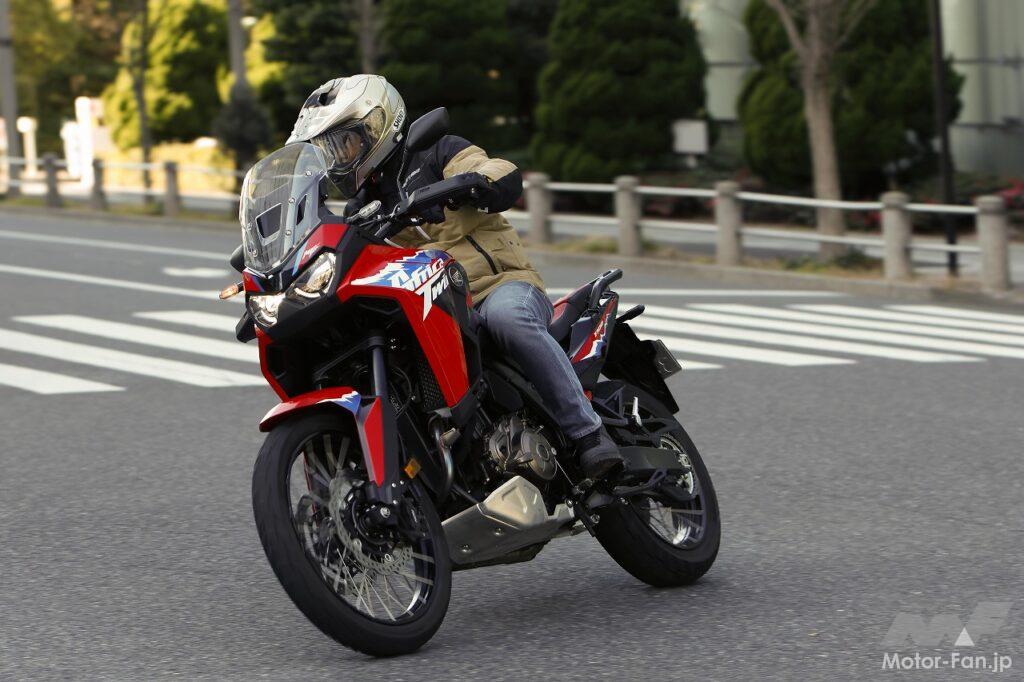
There's no doubt that the Africa Twin is one of the best models for riders who want to enjoy long-distance touring on an adventure tourer. I think whether you choose the Adventure Sports ES or this model is ultimately a matter of personal preference. While there are certainly differences, such as being more on-road or off-road oriented, both have excellent dual-purpose capabilities, so even if you come across a dirt forest road during your tour, you can easily tackle either one. At first, I wondered if they were over-quality for Japanese roads, but when I actually rode them, I found that they had the performance to handle everything from urban areas to regular roads.
I think this model will be the perfect companion for riders planning a summer tour of Hokkaido.
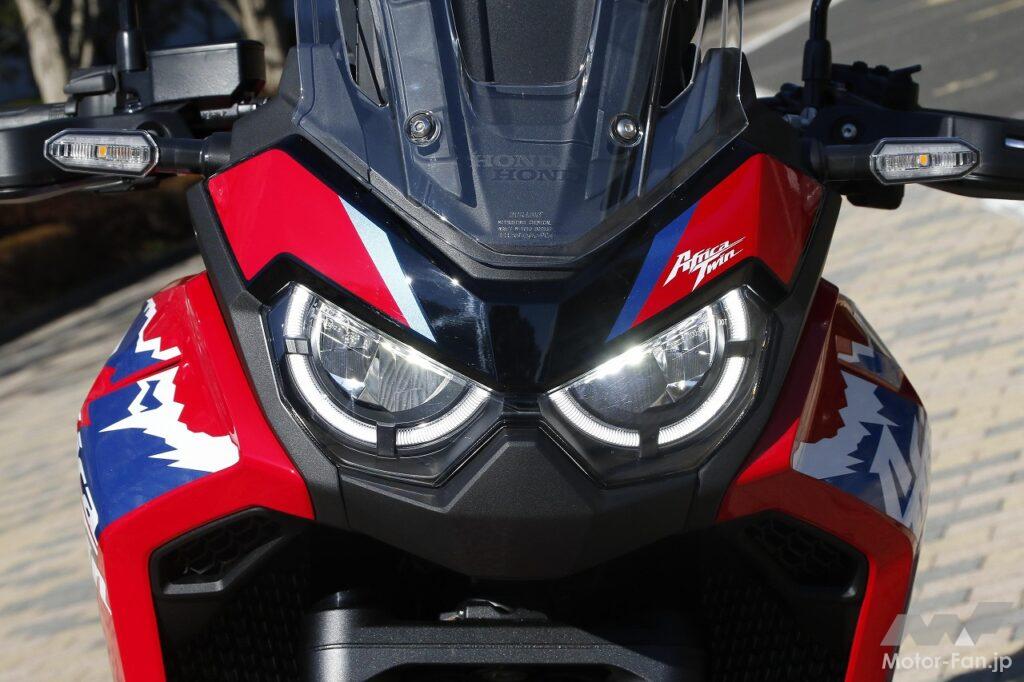
The newly redesigned cowl features LED dual headlights with a glaring design that make a striking presence. Equipped with daytime running lights to enhance visibility during the day.

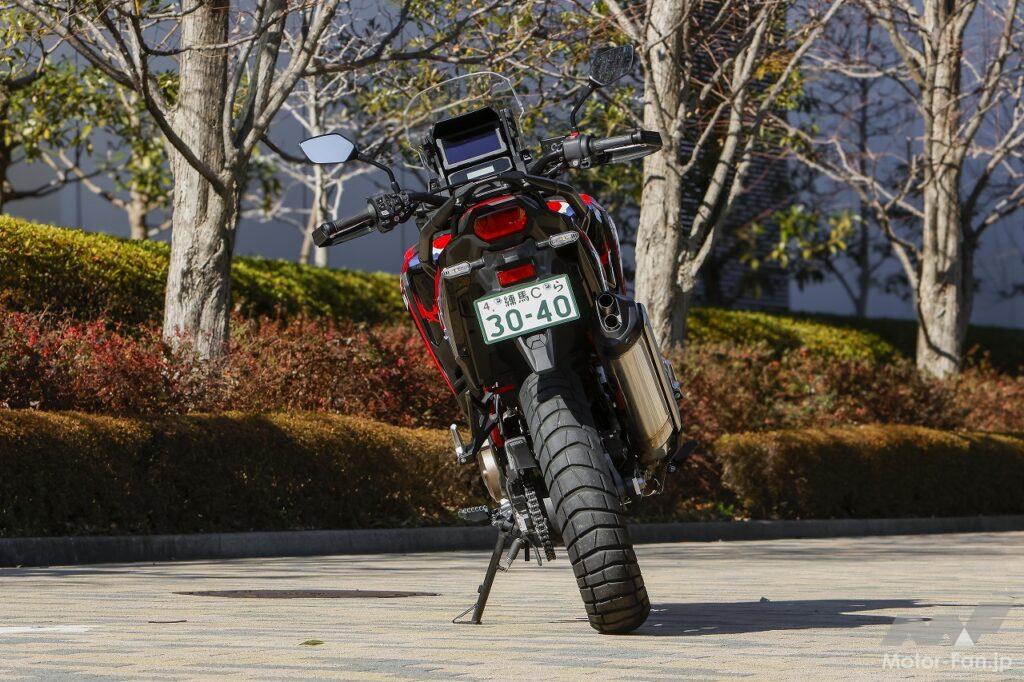
The LED taillights are set high. The white lens turn signals also use LEDs. Auto-cancel turn signals and emergency stop signals are also included.
Detailed explanation
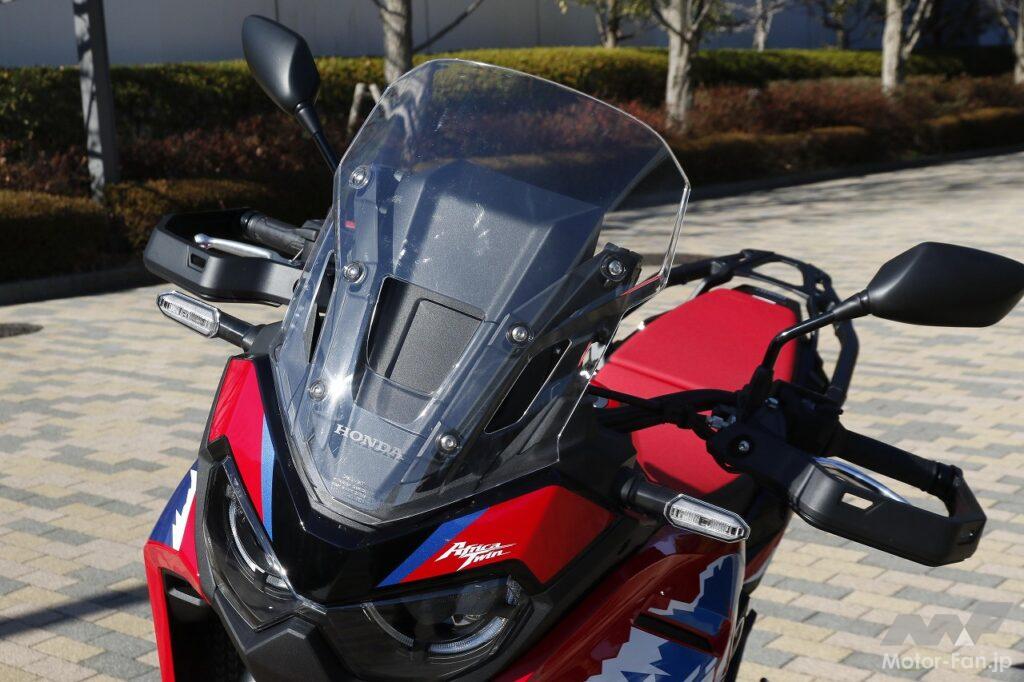
The windscreen, which can be easily adjusted manually, supports a comfortable ride.

Windscreen height adjustment in 5 stages

USB socket rated for up to 7.5 W (5 V, 1.5 A)
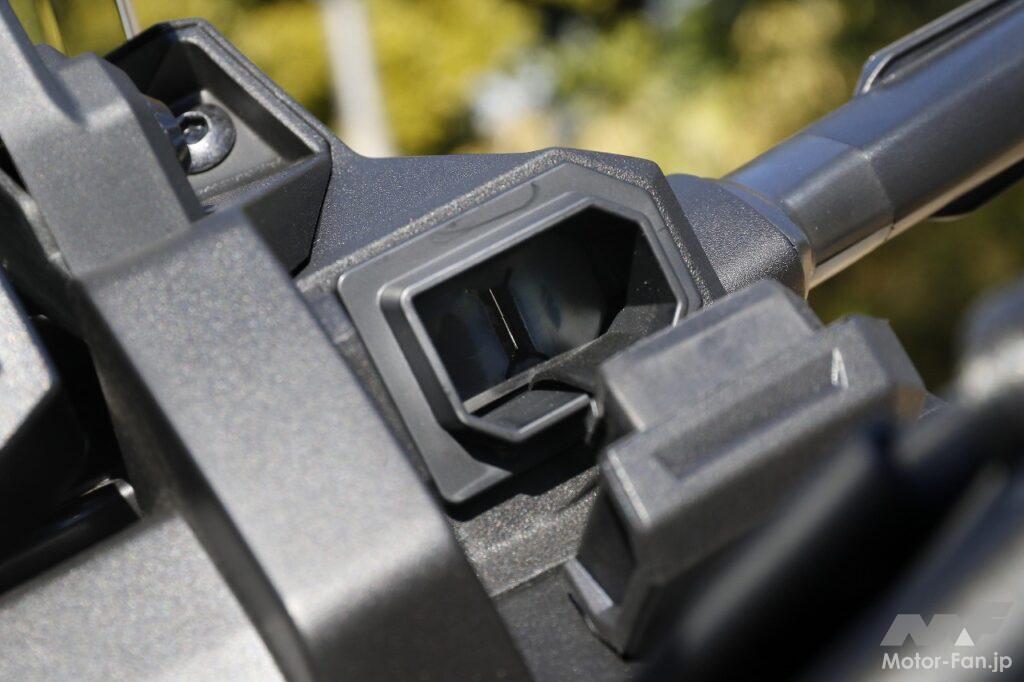
This USB socket is also used for software updates.
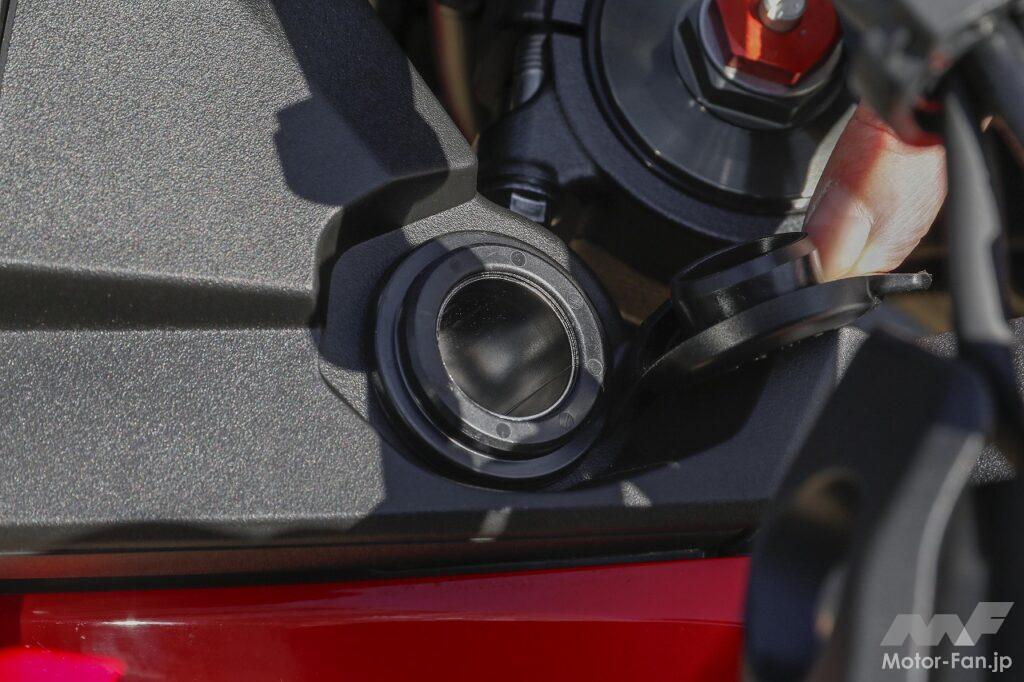
The left inner panel cover is equipped with an accessory socket.

The slim 18L fuel tank provides excellent knee grip.
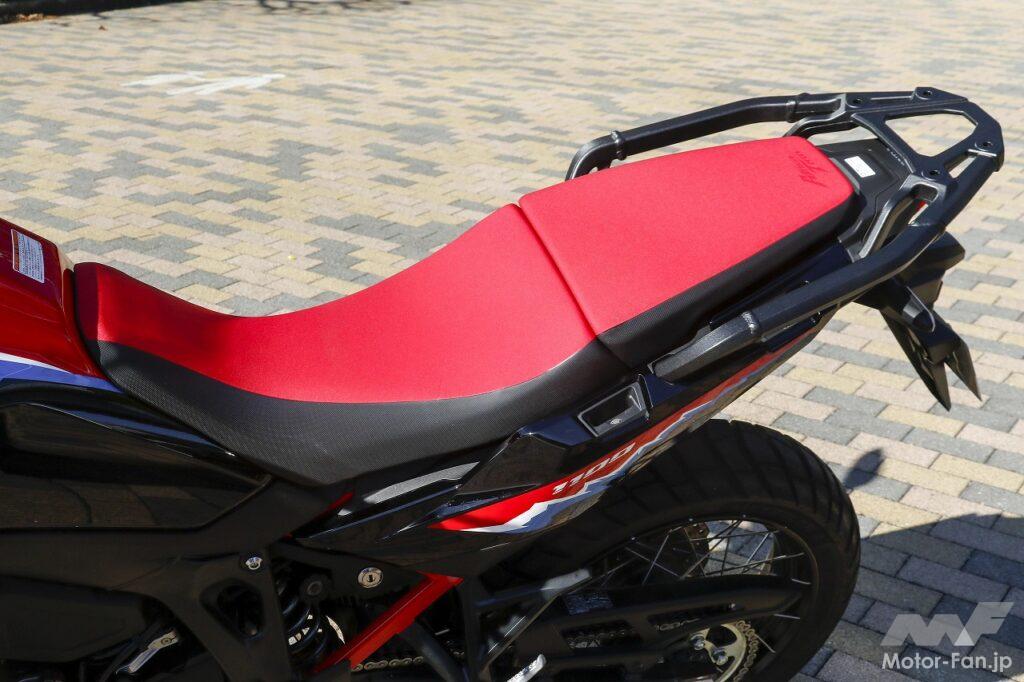
The flexible seat can be adjusted to two different heights
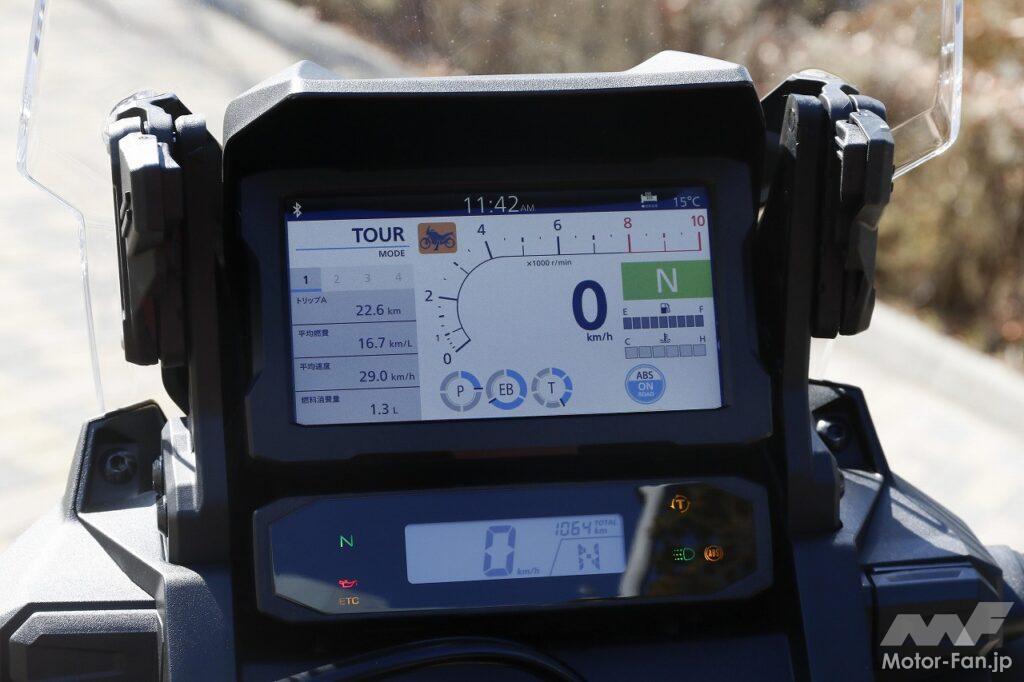
The TFT multi-information display allows you to check the machine’s status. The screen shows tour mode.
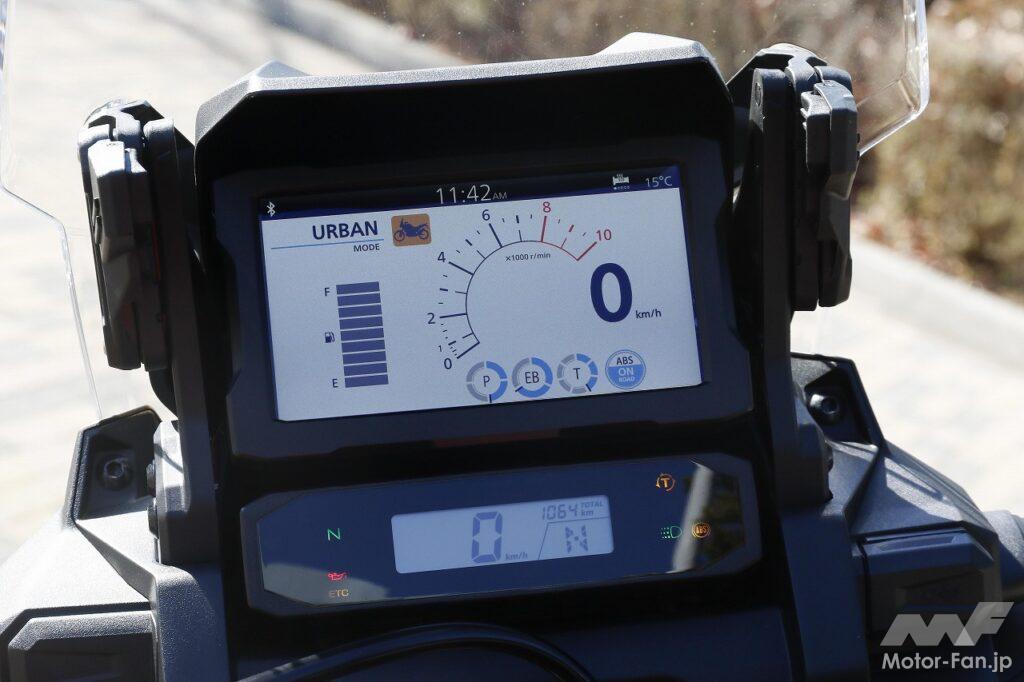
urban mode
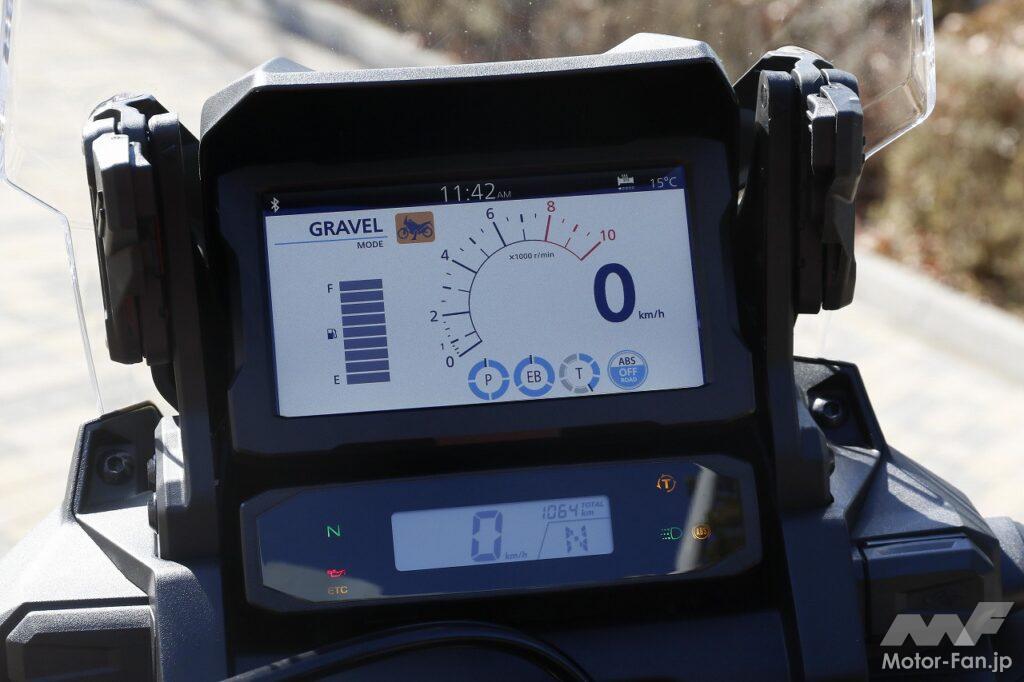
Gravel Mode
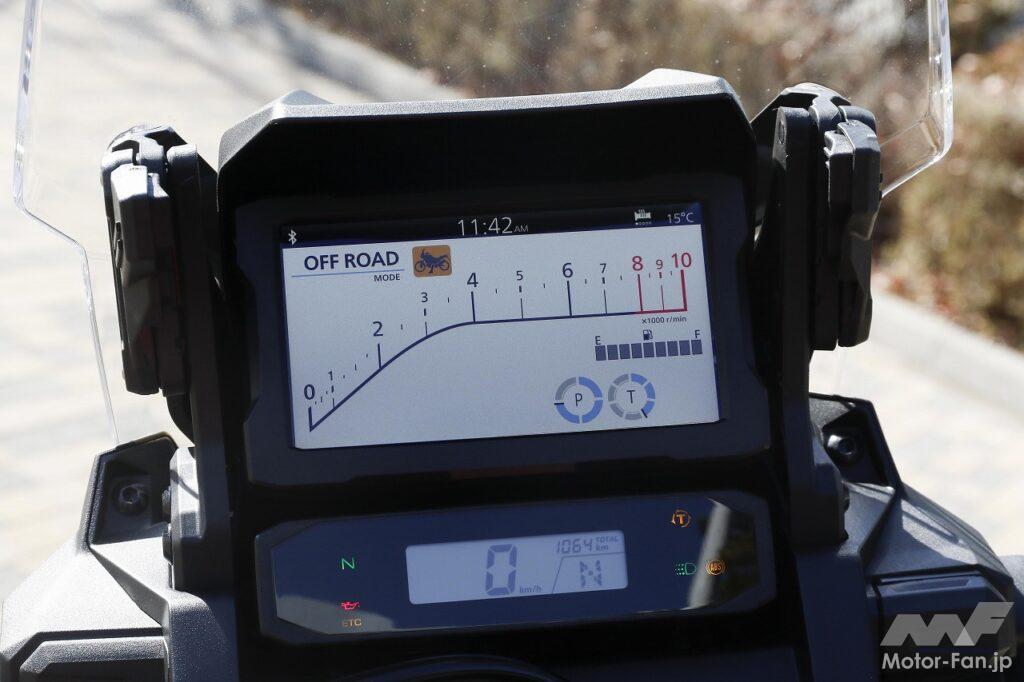
Off-road mode
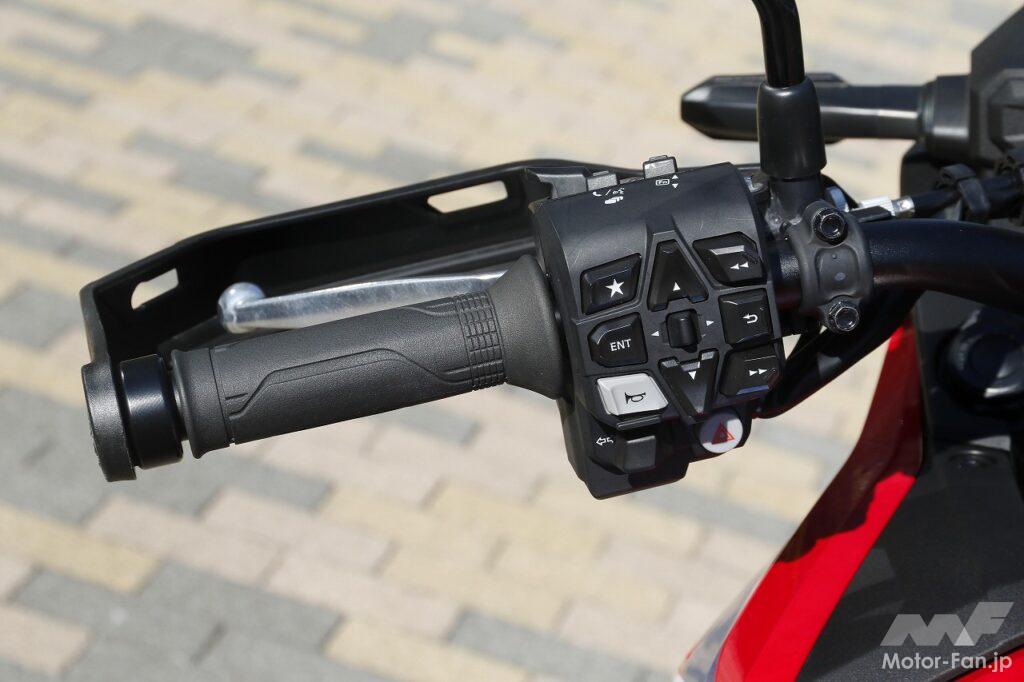
On the left hand side, there are a row of switches for switching between equipment and functions. It will probably take some time to memorize them all.

The red switch on the right is the start/kill switch, and below it is the cruise control switch.

The left switch also has switches for switching the headlights, etc. at the top
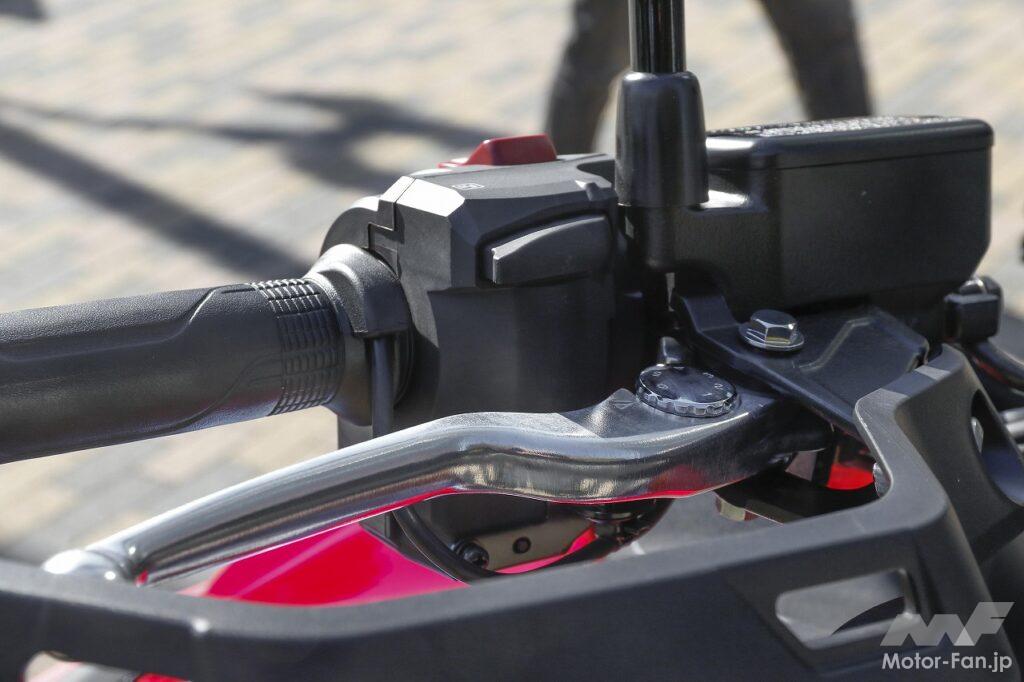
The function switch is located in front of the right-hand switch. The brake lever is equipped with an adjuster.
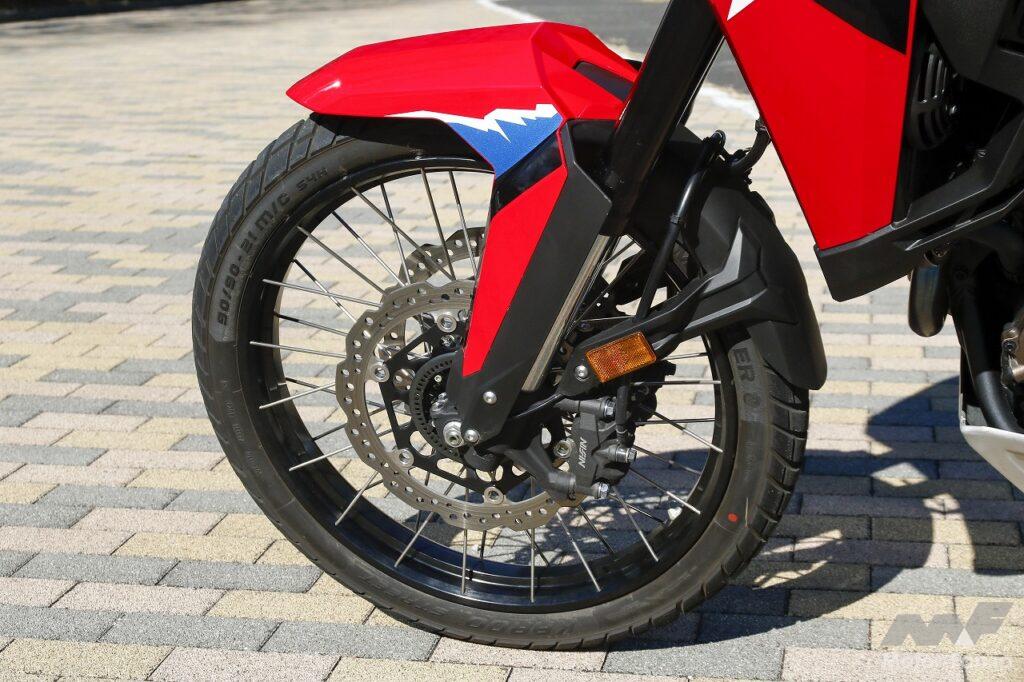
The front tire is 90/90-21M/C 54H. It is tubeless. The suspension is an inverted fork.
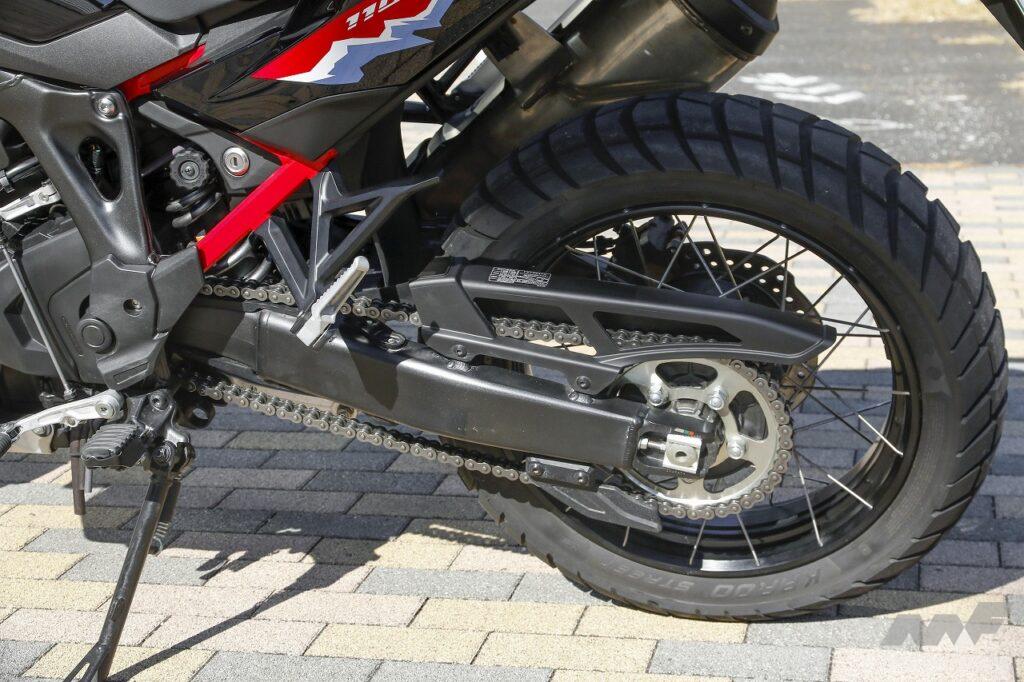
The rear tire is a 150/70R18M/C 70H radial. Of course, it is tubeless. The rear suspension is Pro-Link.
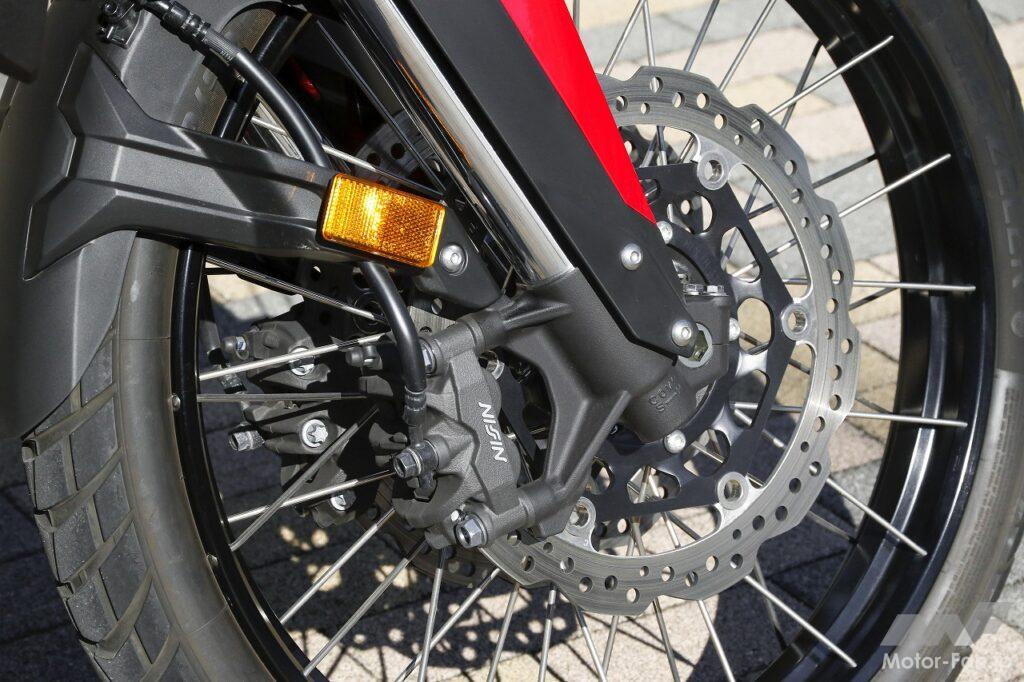
Φ310mm front double disc brakes with radial mount 4-pot calipers
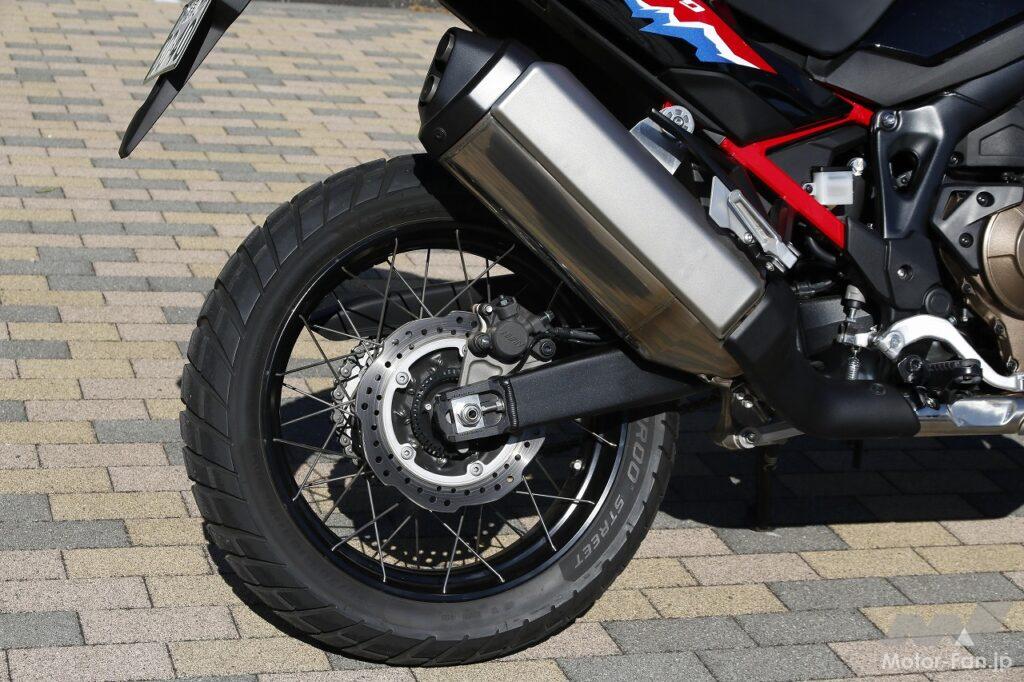
The rear brake is equipped with a Φ256mm disc. ABS with IMU is used.

The Adventure Sports ES has an electronically controlled suspension, but the <s> type is a manual type.

The rear single shock is equipped with a dial-type preload adjustment system
Main specifications
Main specifications CRF1100L Africa Twin
[ ] indicates Dual Clutch Transmission
ADVERTISEMENT
| CRF1100L Africa Twin Adventure Sports ES | CRF1100L Africa Twin〈s〉 | |||
|---|---|---|---|---|
| Car name and model | Honda 8BL-SD15 | |||
| Total length (mm) | 2,305 | 2,330 | ||
| Overall width (mm) | 960 | |||
| Overall height (mm) | 1,475 (1,530 at the top of the screen) | 1,485 (1,540 at the top of the screen) | ||
| Wheelbase (mm) | 1,570 | 1,575 | ||
| Minimum ground clearance (mm) ★ | 220 | 250 | ||
| Seat height (mm) ★ | 840 (low position is 820) | 870 (low position is 850) | ||
| Vehicle weight (kg) | 243【253】 | 231【242】 | ||
| Passenger capacity (people) | 2 | |||
| Fuel consumption rate *1 (km/L) | Ministry of Land, Infrastructure, Transport and Tourism notified value: Fixed-speed fuel consumption value *2 (km/h) | 32.0 [31.0] (60) (2 passengers) | ||
| WMTC mode value ★ (class) *3 | 19.6 (Class 3-2) (1 passenger) | |||
| Minimum turning radius (m) | 2.6 | |||
| Engine model | SD13E | |||
| Engine type | Water-cooled 4-stroke OHC (Unicam) 4-valve in-line 2-cylinder | |||
| Total displacement (cm³) | 1,082 | |||
| Inner diameter x stroke (mm) | 92.0×81.4 | |||
| Compression ratio ★ | 10.5 | |||
| Maximum output (kW [PS]/rpm) | 75 [102] / 7,500 | |||
| Maximum torque (N・m [kgf・m]/rpm) | 112 [11.4] / 5,500 | |||
| Fuel supply device type | Electronic type (Electronically controlled fuel injection system (PGM-FI)) | |||
| Starting method ★ | Self-service | |||
| Ignition system type ★ | Fully transistorized battery ignition | |||
| Lubrication method ★ | Combined pressure-fed droplet type | |||
| Fuel tank capacity (L) | twenty four | 18 | ||
| Clutch type ★ | Wet multi-plate coil spring type | |||
| Transmission type | Constant mesh 6-speed return [Electronic 6-speed transmission (DCT)] | |||
| gear ratio | 1st gear | 2.866【2.562】 | ||
| 2nd speed | 1.888【1.761】 | |||
| 3rd speed | 1.480【1.375】 | |||
| 4-speed | 1.230【1.133】 | |||
| 5-speed | 1.064【0.972】 | |||
| 6-speed | 0.972【0.882】 | |||
| Reduction ratio (1st order /2nd order) | 1.717/2.625【1.863/2.625】 | |||
| Caster angle (degrees) ★ | 27°30′ | |||
| Trail amount (mm) ★ | 106 | 113 | ||
| tire | before | 110/80R19M/C 59V | 90/90-21M/C 54H | |
| rear | 150/70R18M/C 70H | |||
| Brake type | before | Hydraulic double disc | ||
| rear | Hydraulic disc | |||
| Suspension method | before | Telescopic type | ||
| rear | Swing arm type (Prolink) | |||
| Frame Format | Semi-double cradle | |||
- ■Type designation application figures as per the Road Transport Vehicle Act (★ indicates Honda published specifications)
- ■ Manufacturer: Honda Motor Co., Ltd.
- *1 Fuel consumption rates are values under specified test conditions. They may vary depending on various conditions, such as the customer’s usage environment (weather, traffic congestion, etc.), driving method, vehicle condition (equipment, specifications), and maintenance status.
- *2 The steady-state fuel consumption value is the fuel consumption rate based on actual measurements taken while driving at a constant vehicle speed.
- *3 The WMTC mode value is a calculated value based on the results of exhaust gas tests measured in a driving mode that is an international standard and includes starting, accelerating, and stopping. Driving mode classes are classified according to engine displacement and maximum speed. For more information on the WMTC mode value, please also refer to the Japan Automobile Manufacturers Association website .
- *These specifications are subject to change without notice.
- *Africa Twin, CRF, PGM-FI, and PRO-LINK are registered trademarks of Honda Motor Co., Ltd.
- *These main specifications are current as of February 2024.