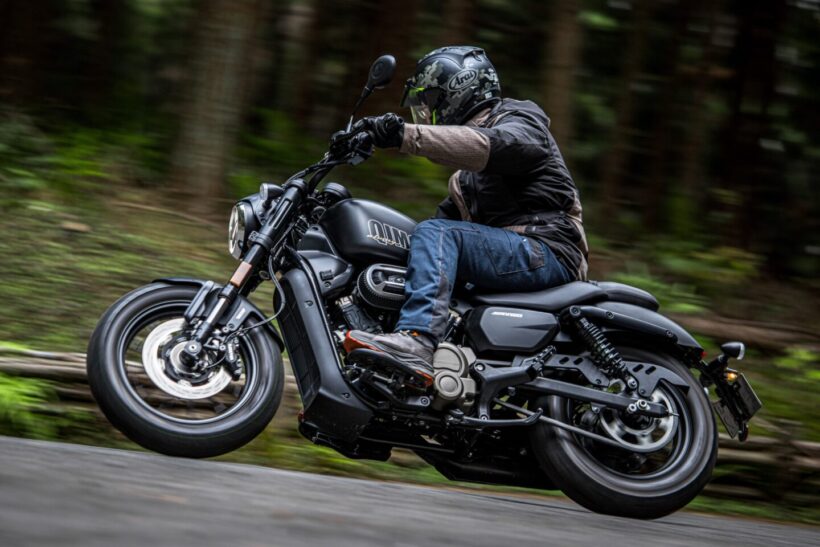


Kawasaki Meguro S1… 725,000 yen (released November 20, 2024)
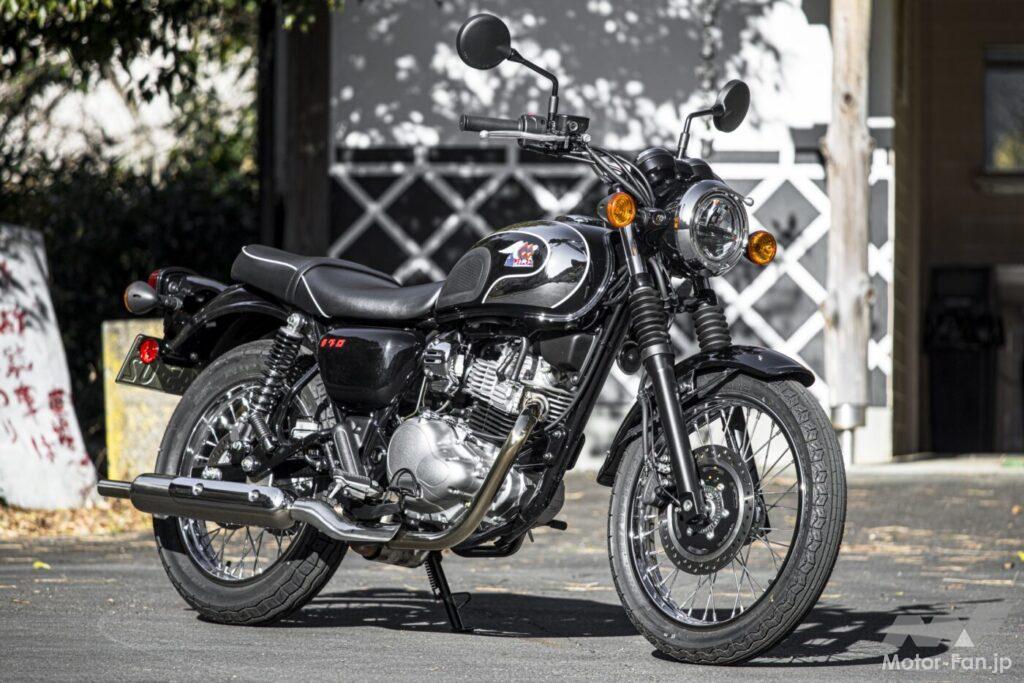
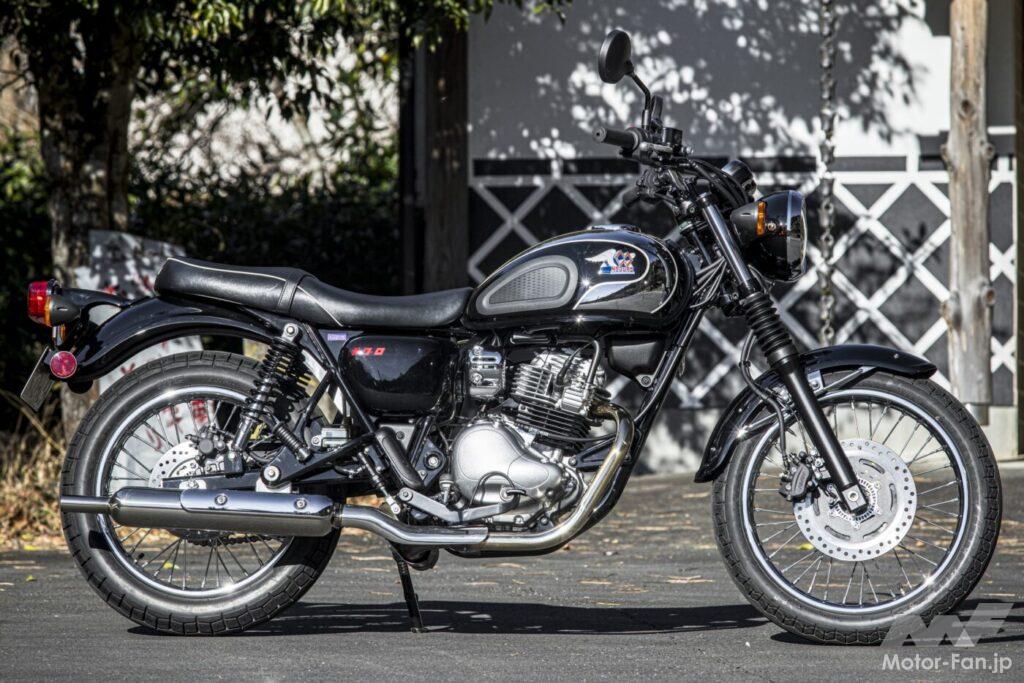
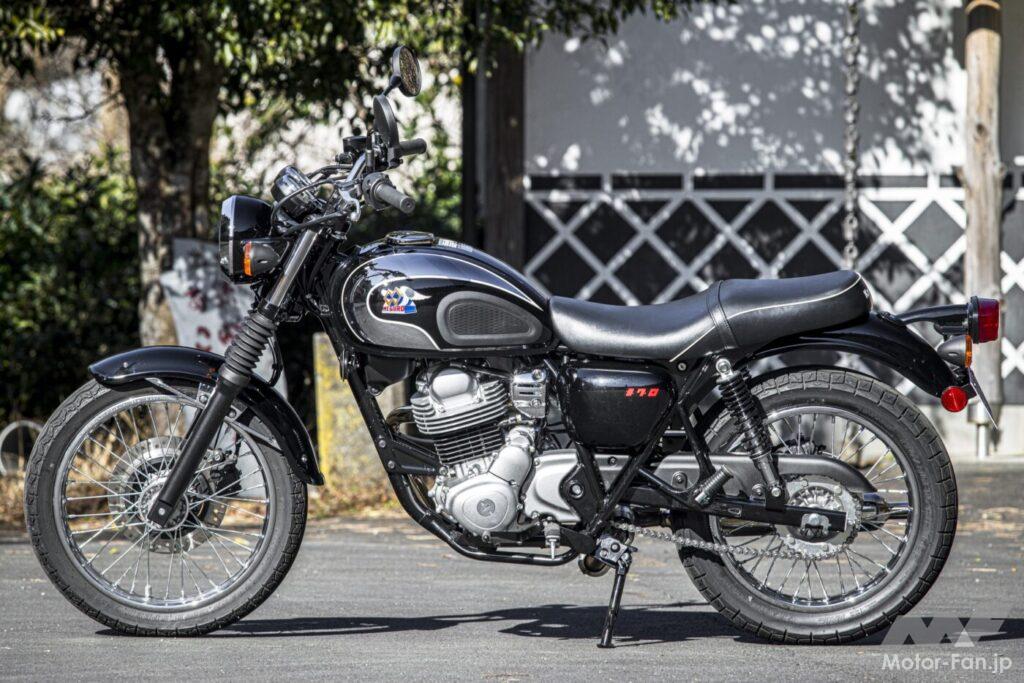
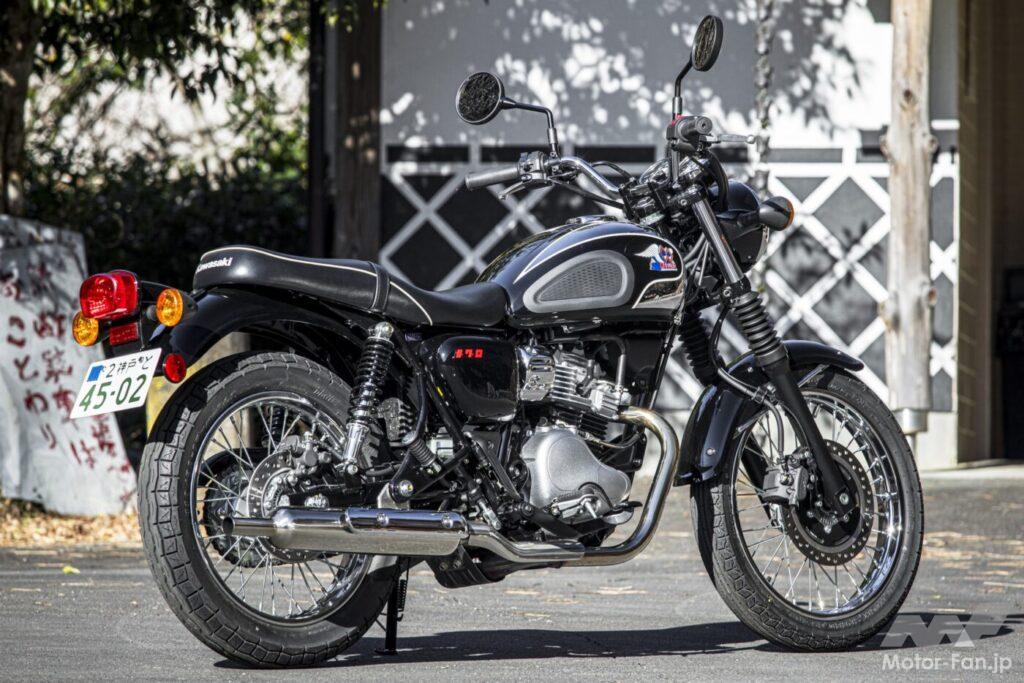
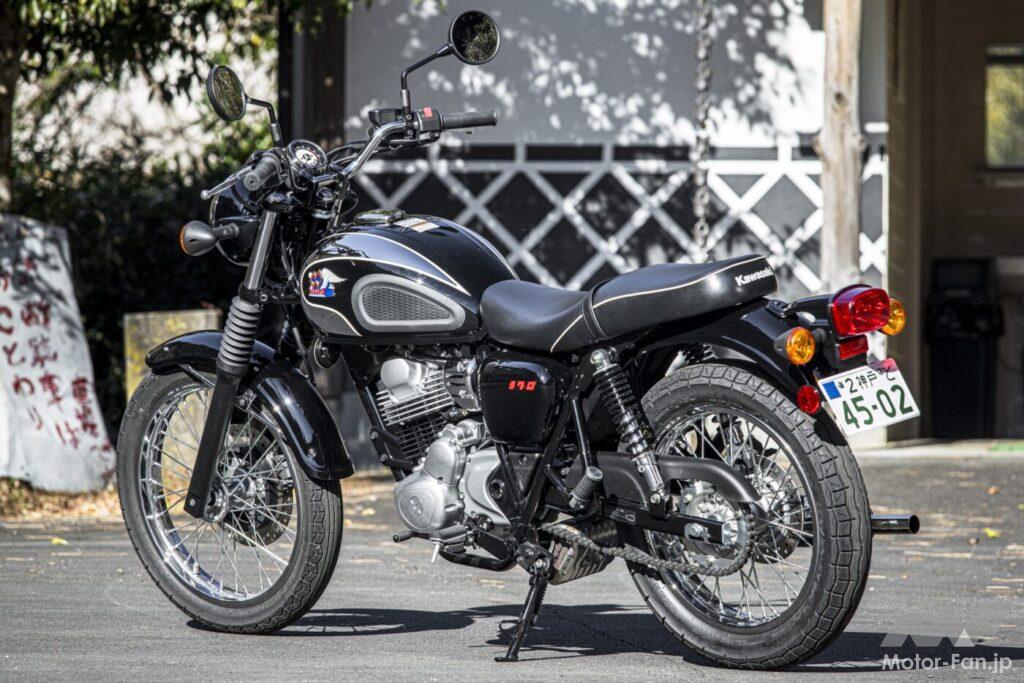
The only difference between the W230 and the Meguro S1 is the color and graphics, and due to the difference in surface, the seat height of the Meguro S1 is 5mm lower. The size and performance of the car were developed based on the Estrella, and as a result, the tire sizes are the same as the Estrella, 90/90-18 in the front and 110/90-17 in the rear. The steel semi-double cradle frame is a new design, and the fuel tank is borrowed from the W175, which is not sold in Japan.
Founded in 1924, Meguro entered into a business partnership with Kawasaki Aircraft Industries in 1960, and in order to express the worldview of the company, the development team used the Kawasaki 250 Meguro SG as a reference. This was a long-selling model that was produced from its release in 1964 until 1969, and the 250cc S series was the model that sold the most units of all the models bearing the Meguro name. The new model was named “Meguro S1”, using the missing number “1”.
ADVERTISEMENT
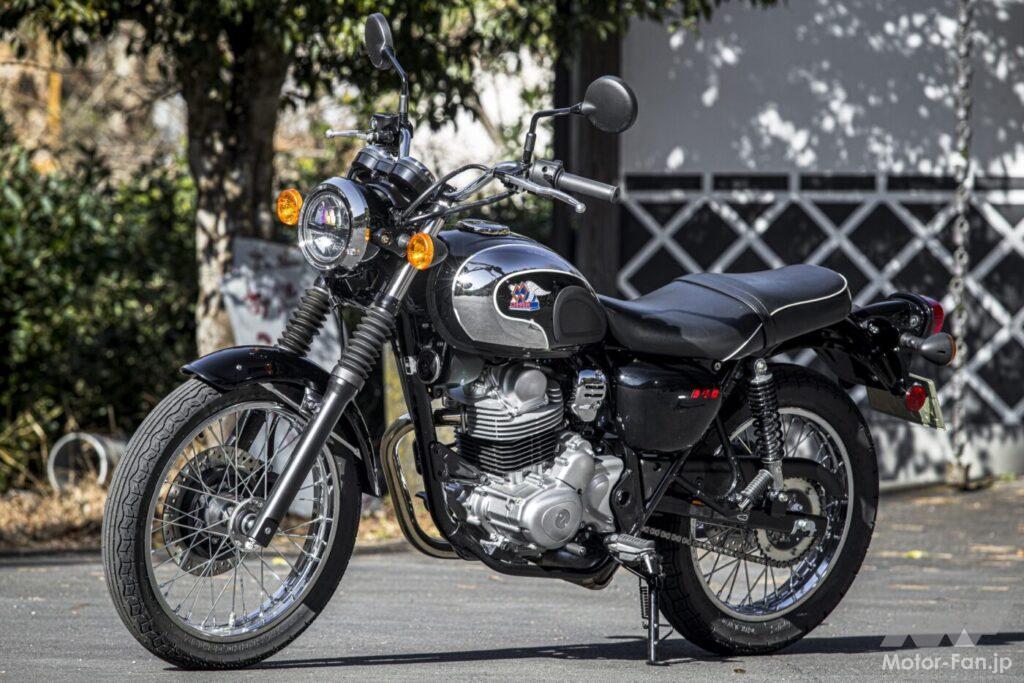
The body color is only ebony. It is not just black paint, but a black that looks jet blacker than the Meguro SG era.
A KLX230-based air-cooled single engine that combines a pulsating feel with a lively feel
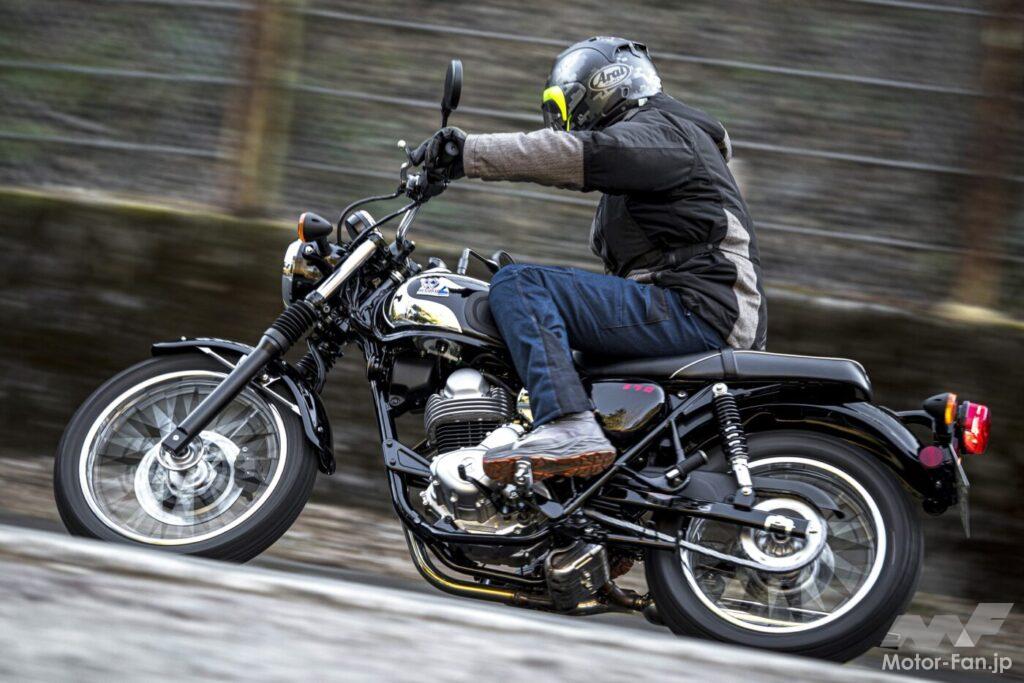
The Meguro S1 and W230 made their world debut at the Japan Mobility Show (JMS) 2023. I was present at the unveiling, and I still remember the moment it was announced that the engine would be borrowed from the KLX230. The 232cc air-cooled, four-stroke, SOHC, two-valve single-cylinder engine is a highly refined dual-purpose power unit, boasting sporty power performance across the entire range, including excellent response. Therefore, if the engine’s characteristics were to be carried over, it seemed like a mismatch for the neo-classical styling of the Meguro S1 and W230.
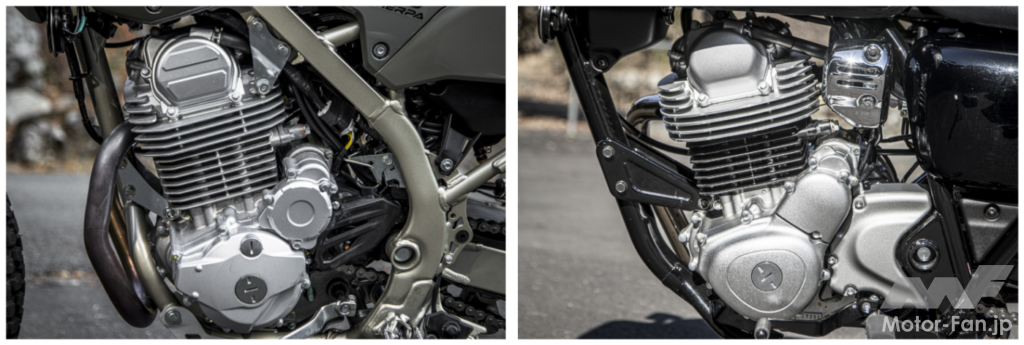
On the left is the engine of a KLX230 Sherpa, and on the right is the engine of a Meguro S1. Although it uses the engine of the KLX230, it is almost a completely different bike, with features such as a cylinder head with a reoriented exhaust port so that the exhaust pipe can exit from the right side of the down tube, a crankcase with a changed cylinder seat height to lower the compression ratio, cylinders painted with a heat-resistant black coating reminiscent of the cast iron cylinders of the past, and clutch and generator covers that create a classic atmosphere. Also note that the position of the engine mount on the cylinder head is different due to the difference in frame layout.
Nearly a year after its unveiling at JMS2023, the day finally arrived for me to test drive the Meguro S1. The engine’s exterior has been completely redesigned, blending seamlessly into the neo-classical styling. The moment I pressed the starter button to start the engine, the difference from the KLX230 became even more apparent. Having test-ridden the KLX230 S and the Sherpa about 10 days prior, I was able to notice the difference in the exhaust note even at idle. While the volume is kept low due to volume regulations, the Meguro S1’s exhaust note is soft yet crisp with each combustion, even feeling more refined than the KLX230 series. The engine’s high idle speed of around 1800 rpm makes it feel a bit hectic when stopped at traffic lights, but the meticulous sound tuning is evident.
Shifting into low gear and setting off, I realized that the difference between the Meguro S1 and the KLX230 extends not only to the exhaust sound, but also to its power performance. The Meguro S1’s smooth revs are intertwined with a sense of heartbeat and power, and its torque up to around 6000 rpm feels equal to, or even better than, a full-size 250cc single-cylinder engine. As it accelerates from 3000 rpm to 6000 rpm, or from about 30 km/h to 60 km/h, while remaining in third gear, the clean beat of the combustion pressure is truly pleasant, and I’m deeply impressed by how they managed to create such an idyllic feel. Additionally, the secondary reduction ratio of the Meguro S1/W230 is approximately 16% higher than the KLX230 series (the rear tire outer diameter difference is 10 mm), and the revs at 60 km/h in top sixth gear are approximately 3400 rpm for the Meguro S1/W230, compared to approximately 3900 rpm for the KLX230 series. Therefore, even from the setting of the secondary reduction ratio, it is clear that the aim of the former is to make use of a lower rotation range, i.e., a more enjoyable range.
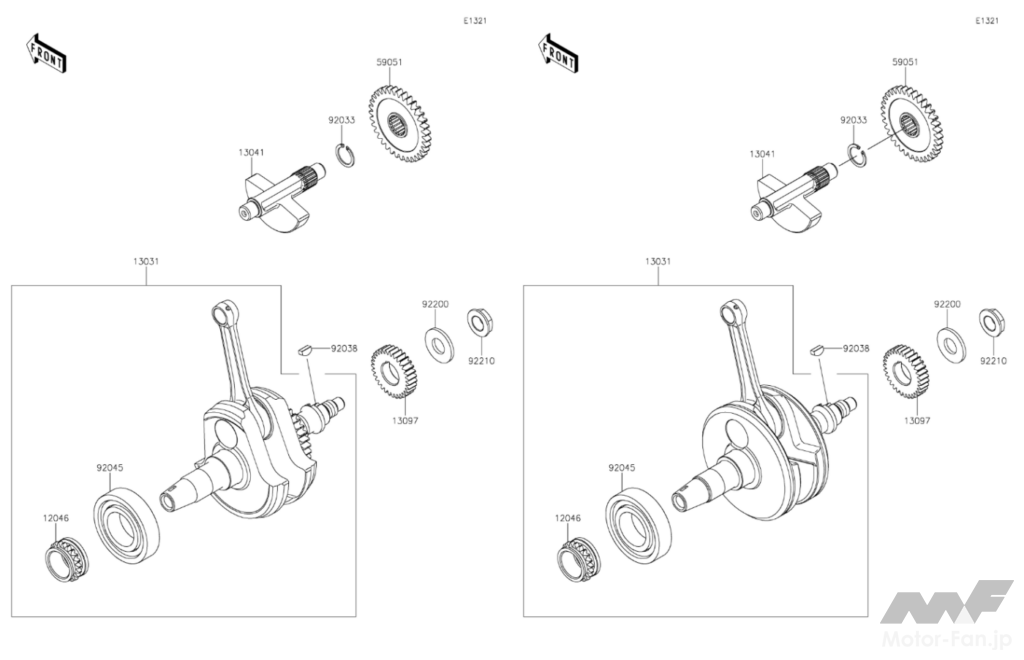
In terms of power performance, the crankshaft and camshaft appear to have been significantly changed. The left side of the illustration is the KLX230 Sherpa, and the right side is the Meguro S1, and you can see the difference in the shape of the counterweight.
On the other hand, if you open the throttle wide, it will rev up beyond the 8500 rpm redline and rise to around 9000 rpm, making it possible to lead the flow of traffic despite its maximum output of 18 hp. The old Meguro SG was a sports model of the time that aimed for high performance, and that lively feeling has been faithfully reproduced. The change in crankshaft weight not only contributes to tenacity in the low and mid-range rpm range, but also conveys the feeling of inertia that pushes you hard when shifting up. The shift feel is even lighter than the KLX230, and the advantage is that it allows you to change gears easily, like a switch, but depending on the type of shoes you wear, it may be difficult to feel the operation, and some people may feel a lack of response (or perhaps a lack of foot feel?).
The handling, mainly based on the banking angle, is easy to handle and has a sporty feel.
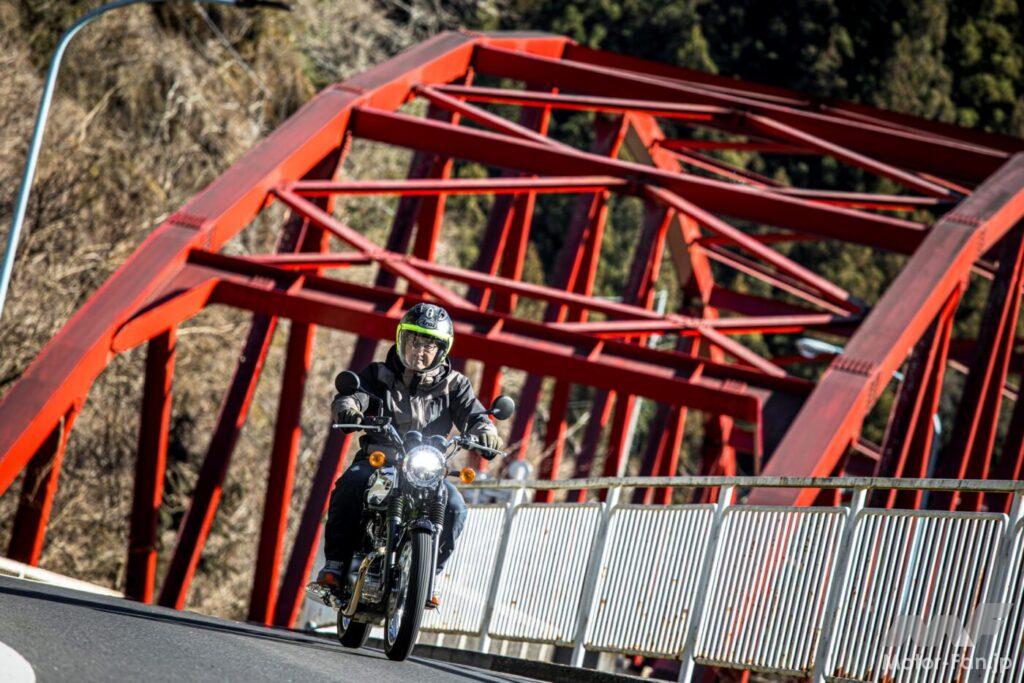
The frame has a completely different design from the KLX230 series, and uses a specially designed steel semi-double cradle. The official wheel travel is 117mm in the front and 95mm in the rear, which is slightly shorter than the standard on-road model. The wire-spoke wheels are 18 inches in the front and 17 inches in the rear.
The first thing I noticed when I started riding was that the suspension movement was very similar to that of an old bike. Specifically, it would sink even over a small gap, and this tendency was particularly pronounced in the rear. The spring rate and damping force are both low, but the resulting ride comfort is very similar to that of the 500 Meguro K2 that I test rode four years ago.
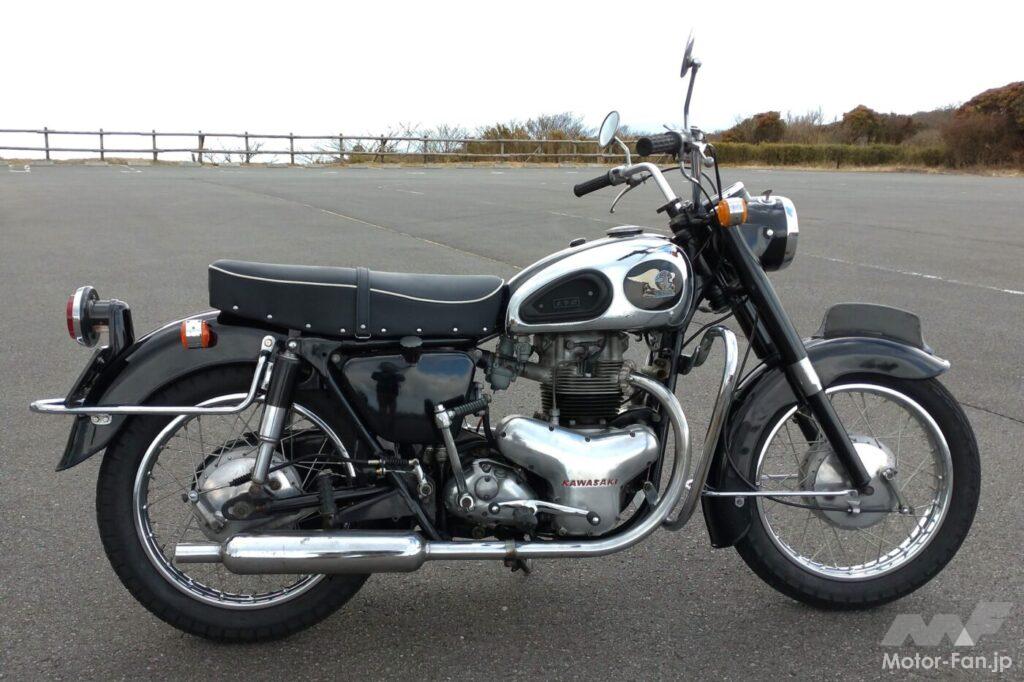
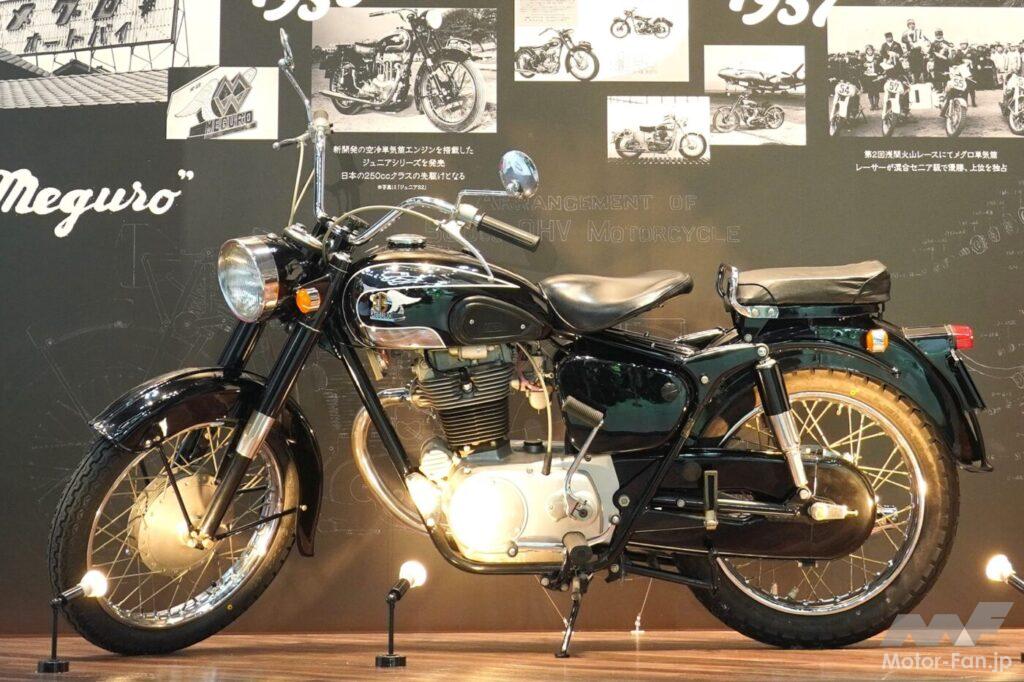
The 500 Meguro K2 was released by Kawasaki in 1965. The vehicle I test drove (pictured) was in excellent condition, and not only did it have all the driving performance you’d expect from a modern-day car, but I also felt that its engine and handling were sportier than the W800 or Meguro K3. The Meguro K2 was the flagship Japanese motorcycle of the time, and it pursued maximum performance.
One could describe it as “soft suspension,” but the fact that it miraculously doesn’t break down even when you pick up the pace on mountain roads makes me very happy with this suspension setting. The handling is extremely easy, with the bike turning as long as you lean it over no matter what maneuver you do, and the bike’s tendency to turn mainly through the banking angle makes it feel sportier than you’d expect from its looks. In addition, the narrow tire size makes leaning and turning light and easy, allowing you to easily clear mountain roads with a lean-with attitude. Personally, I’ve had a preference for Kawasaki’s steel frames since the 2017 Z650, and the Meguro S1 is an extension of that.
The brakes are discs both front and rear. They seem to be designed with an emphasis on controllability rather than absolute braking power, and the rear brakes in particular were easy to use when correcting lines during turns.
The vehicle price of 720,500 yen is quite expensive for an air-cooled single-cylinder model in this class, but the texture of the plated tank and three-dimensional emblem is very high, and it certainly creates a one-of-a-kind premium worldview. It is a bike that is likely to be accepted by veteran riders who are considering downsizing but don’t want it to look cheap, and it has been reported that the bike is nearly sold out by pre-order for the year. If you are interested, head to your dealer as soon as possible.
Riding position and foot reach (175cm/68kg)
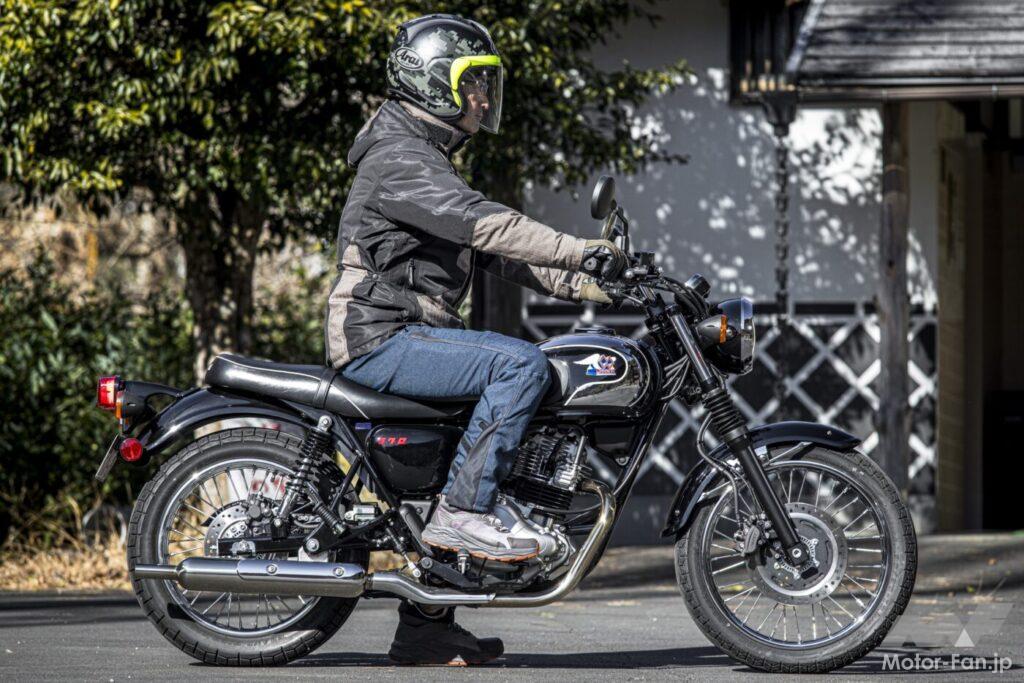
The riding position is quite compact. The grip position is not too far away like on the Rebel 250, so there is ample room for your arms even when turning the handlebars sharply for U-turns. On the other hand, the knee bending is quite cramped, so riders with longer legs may have mixed opinions about it.
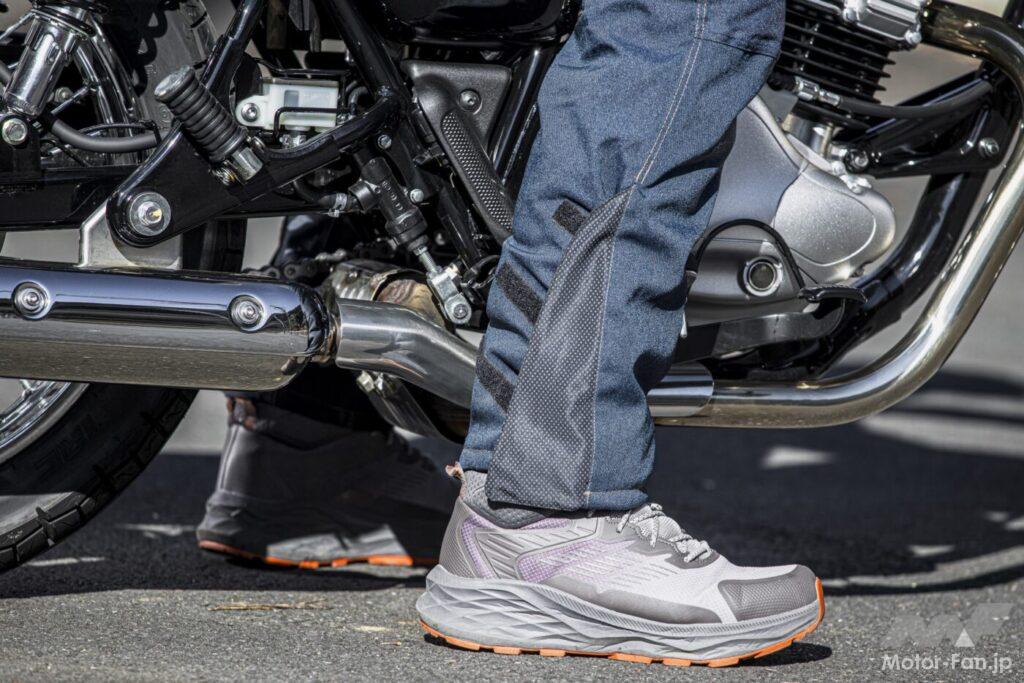
The official seat height is 740mm. The side covers overhang a lot, but as you can see, the suspension sinks at 1G, so the foot placement is excellent. However, when riding, the frame cover interferes with the heel of the right foot only, so the foot placement feels asymmetrical.