
![[1000km Actual Fuel Economy] The numerous specially designed parts show the builder’s extraordinary attention to detail](https://motopeek.com/wp-content/uploads/2025/02/3607-1760873631689.jpg)

Fantic Caballero Scrambler 700…1,750,000 yen
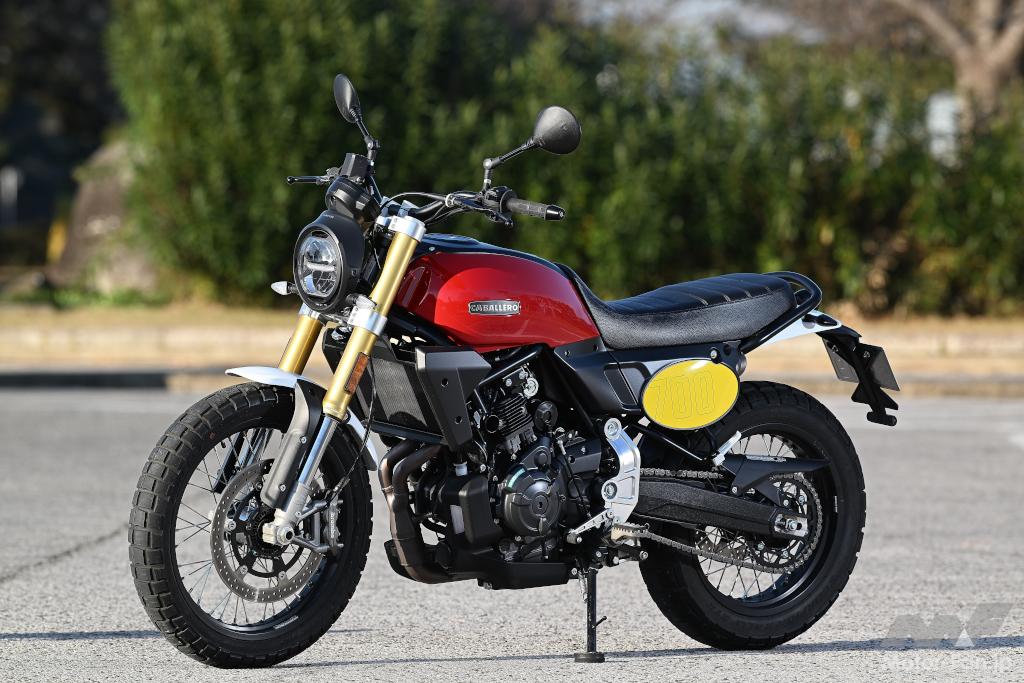
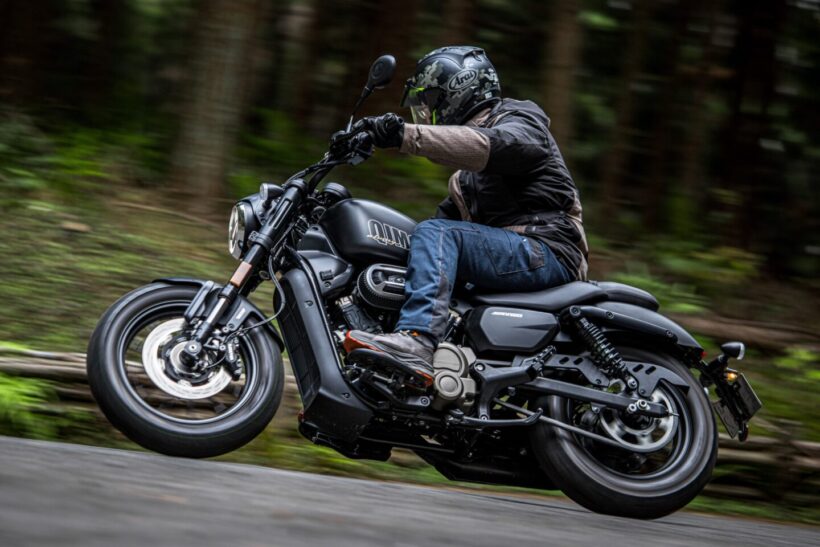
In recent years, Fantic has built a close relationship with Yamaha. The Caballero Scrambler 700 is fitted with a CP2 engine in a chassis made in-house, while the enduro racer XE300 is fitted with a two-stroke single-cylinder engine developed in-house in a YZ250 chassis.
Riding position (height 182cm, weight 74kg) ★★★★☆
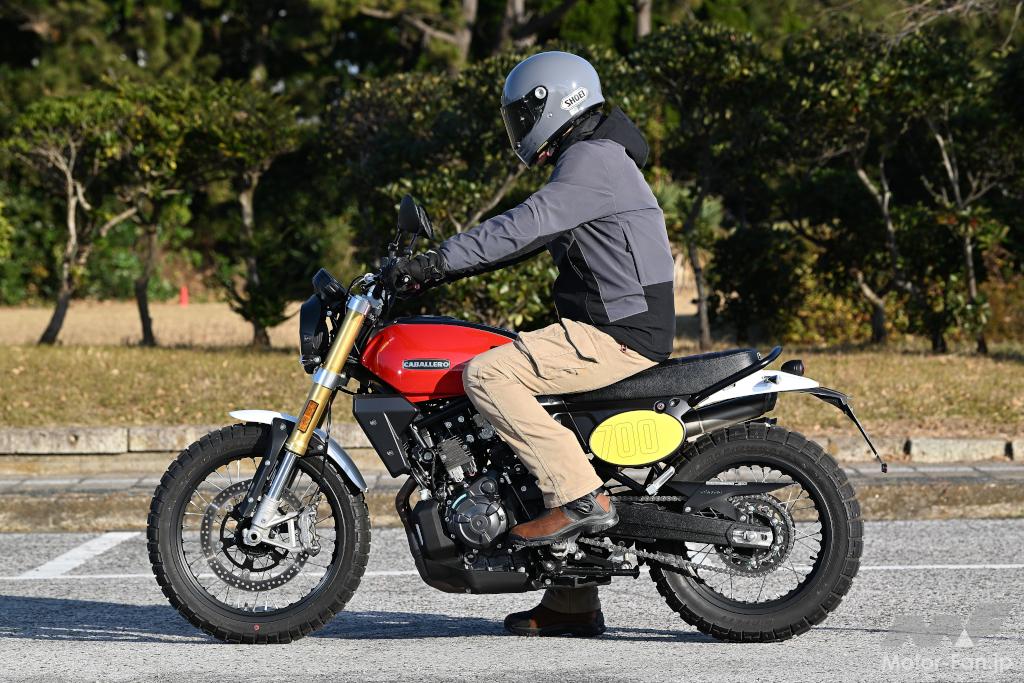
While the photo from the side seems orthodox, the wide handlebars with a narrow, not-so-narrow grip (total width is 890mm), the high, slender seat, and the footpegs that are positioned further forward than the standard for recent on-road bikes are unique to the Scrambler. I love this riding position, and while it felt great during sports riding, I felt pain on both sides of my buttocks in the latter half of a long run. This problem could be solved by widening the seat by about 30mm, but doing so would reduce the feeling of agility and would further worsen the ability to reach the ground, which is already far from good, so it’s a delicate issue.
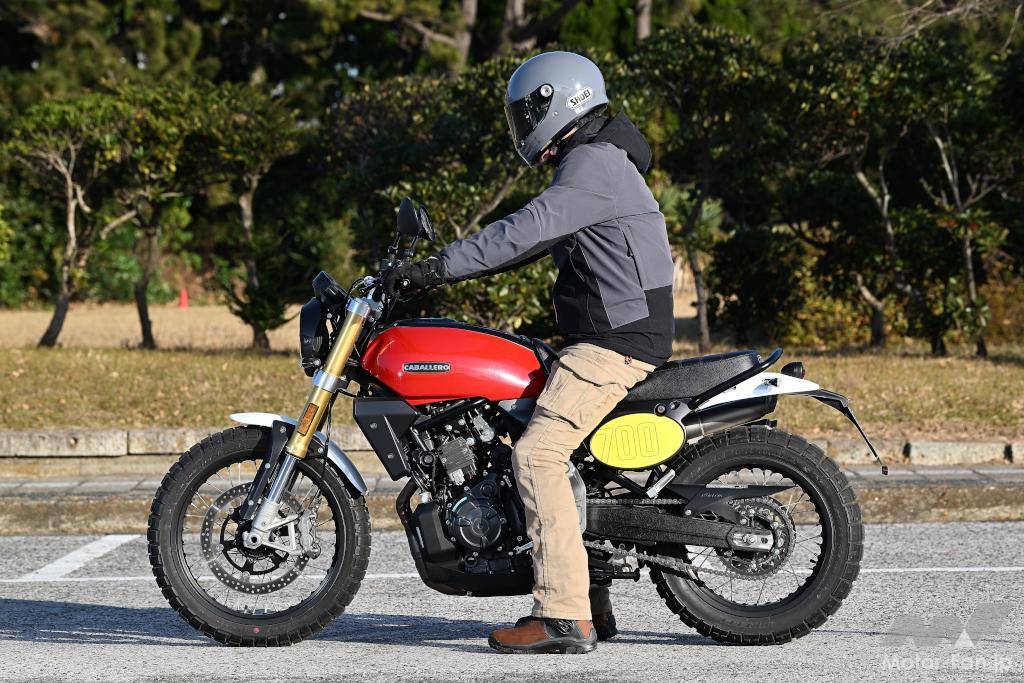
The seat height is 830mm, and the foot reach is the same as the Yamaha XSR700, which is equipped with the same CP2 engine. To get both feet firmly on the ground, you need to be around 175cm tall, but because the body is slim and light, riders over 165cm tall should not feel too uneasy. Compared to the seat heights of rival models, the Triumph Scrambler 900 is 790mm, the Ducati Scrambler is 795mm, and the Honda CL500 is 790mm.

Tandem riding ★★☆☆☆
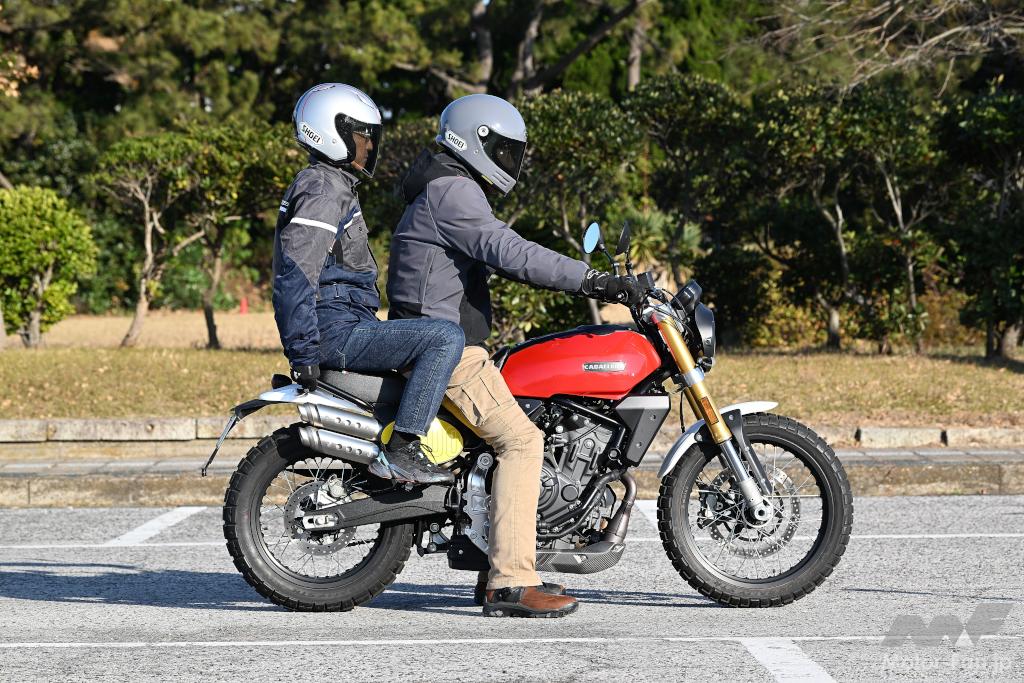
What struck me about the pillion ride was how much cameraman Togashi (height 172cm, weight 52kg)’s body, sitting on the back seat, was shaken back and forth when accelerating and decelerating. Naturally, once I realized this, I made an effort to be more careful with the throttle and brake operations, but it seems that this did not lead to a fundamental solution. “I think this bike is basically designed for one person. The seat may look comfortable but is small, the footpegs are positioned too high and it’s difficult to push on, and the grab bar is too close to the seat so it’s difficult to apply force. Still, if you’re a petite person, under 160cm tall, the problems I felt might not be such a big deal.”
Handling ★★★☆☆
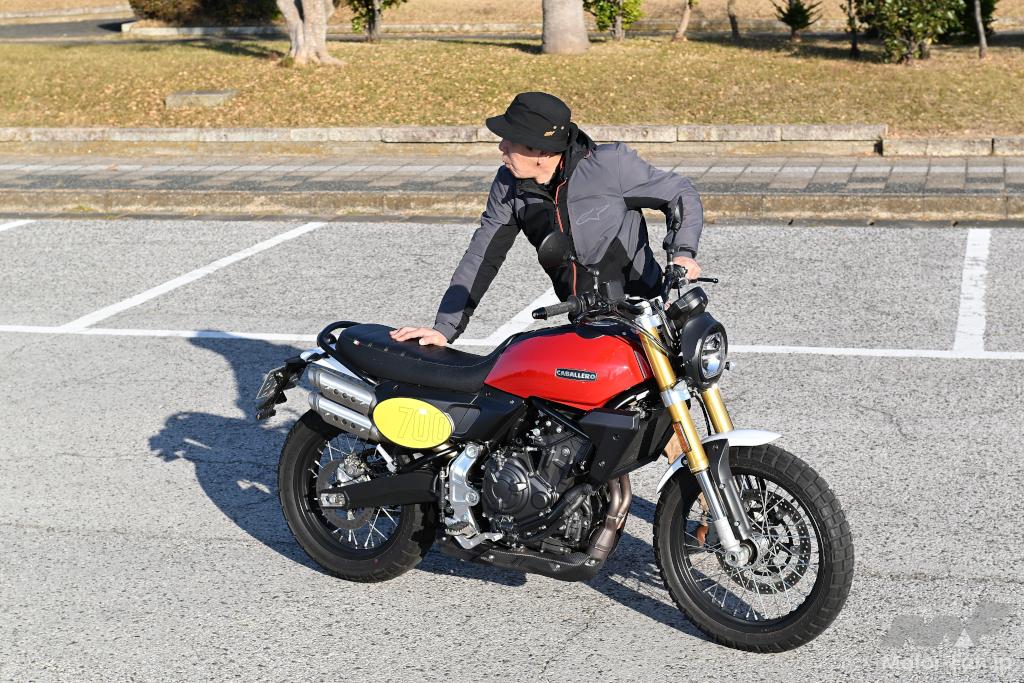
Scramblers, with their long front and rear suspension strokes and wheelbases, usually feel a little larger than on-road bikes in the same engine displacement range. Furthermore, the Caballero Scrambler 700 doesn’t have much steering angle (figures not disclosed), so you have to be careful when turning in tight spaces. That said, the equipped weight is 185.1 kg, which is light for a mid-size bike, so an adult male of average build shouldn’t have any trouble pushing or pulling it.
Steering wheel/meter area ★★★★★
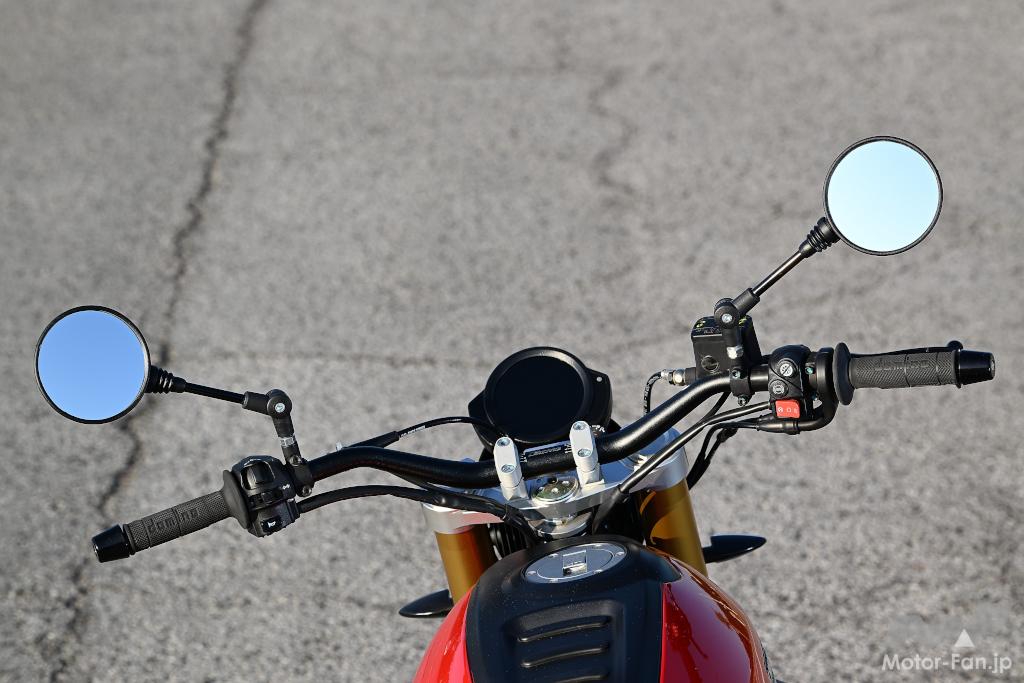
The tapered aluminum handlebars are quite wide, which felt strange on the first test ride (incidentally, modern adventure tourers are even wider), but as I got used to them, I began to think, “That’s what a Scrambler is all about.” The rearview mirror is foldable, which is useful on forest roads, and rear visibility is neither good nor bad. The round-type 3.5-inch TFT monitor is specially designed, and the riding mode is displayed pictorially on the right side (the photo shows Street. There are also Off-Road and Custom modes, the latter of which allows you to set the ABS and traction control as you like).
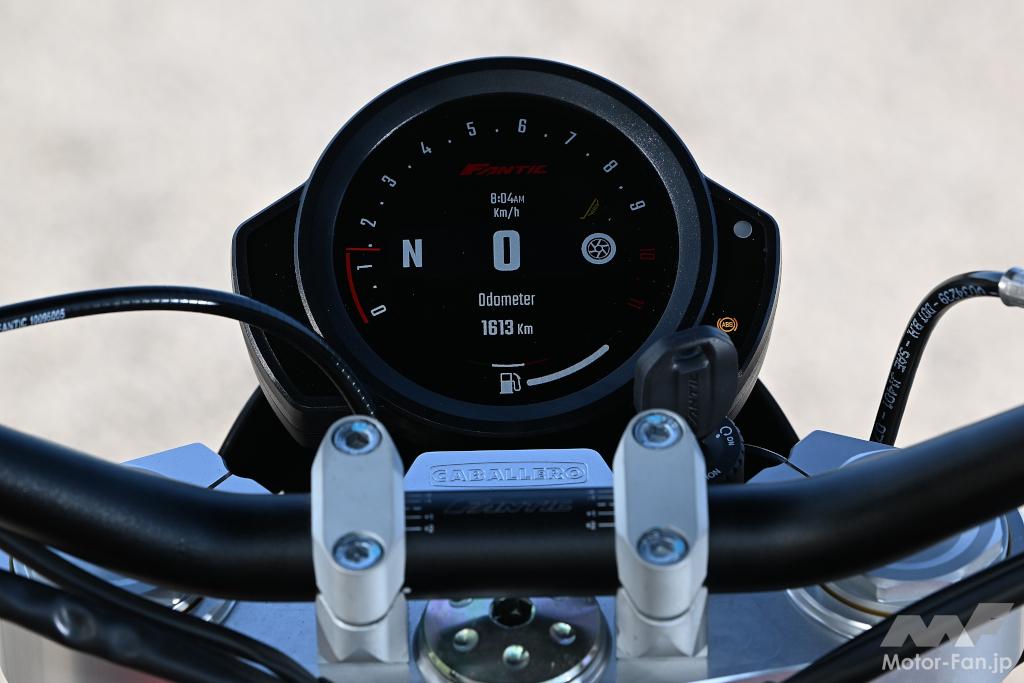
Left and right switch/lever ★★★☆☆
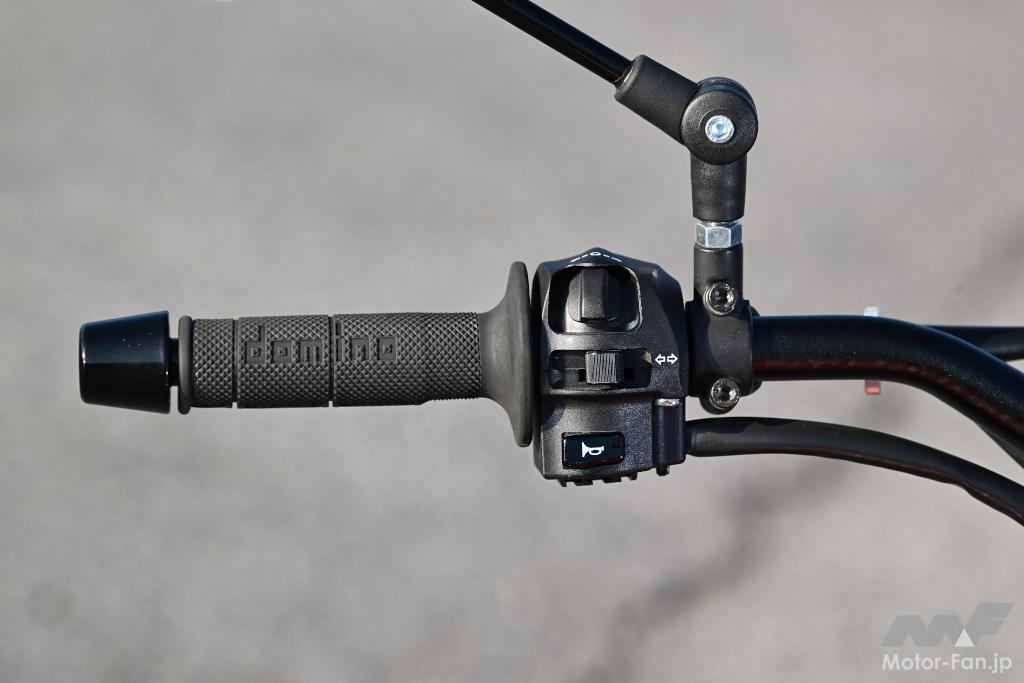
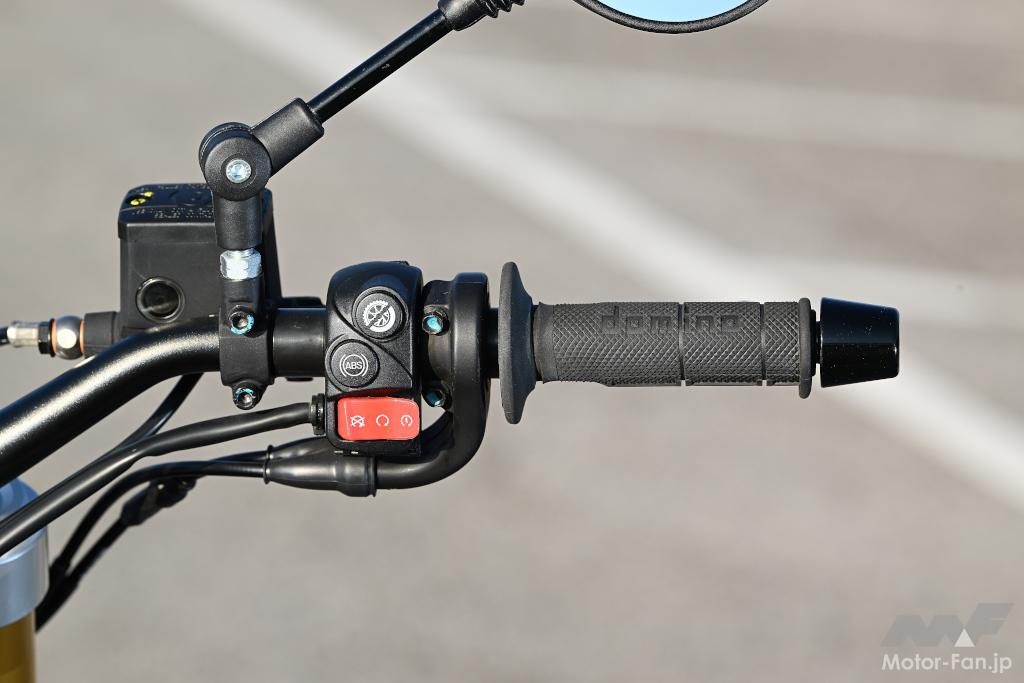
The left switch box is made by Domino, the same company that Aprilia has used in the past, and the turn signal and mode select buttons are a little vague to the touch. The hazard button is located in a surprising place, at the bottom front of the left switch box.
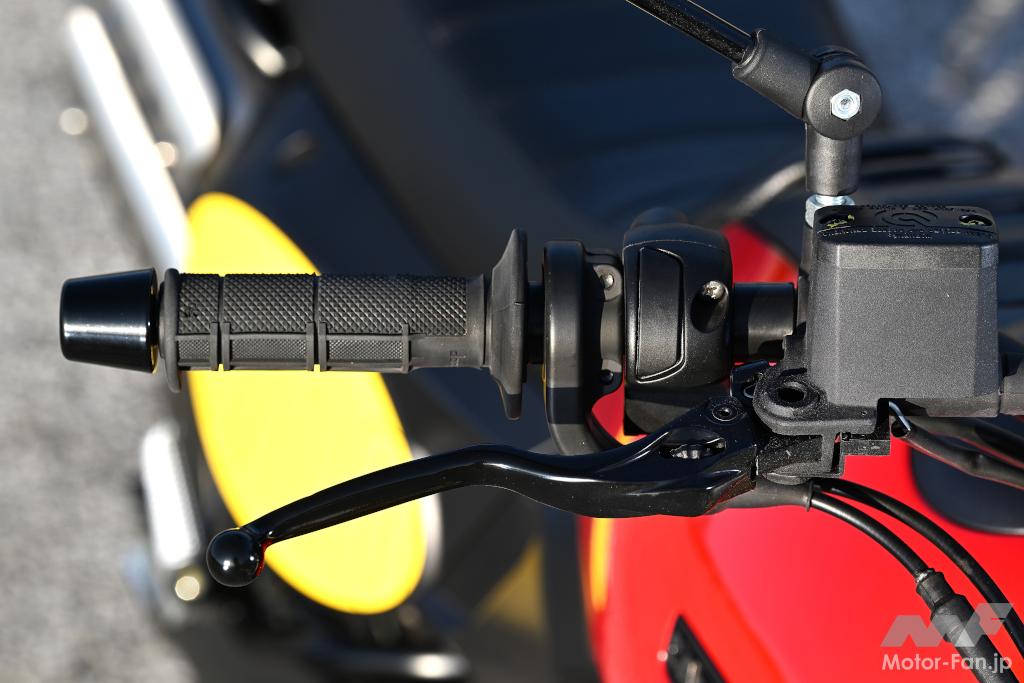
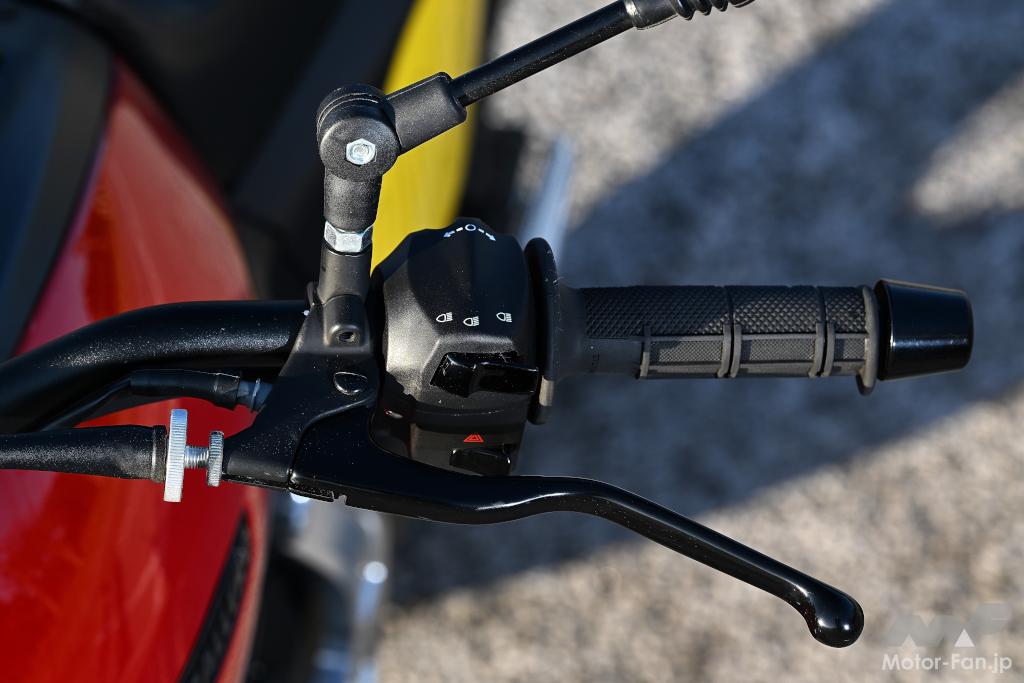
The right side, which has the riding mode and ABS switch buttons and the starter/kill switch, is very easy to operate. The throttle is a traditional cable type, and there is a simple position adjustment dial at the base of the brake lever.
Fuel tank/seat/step area ★★★★☆
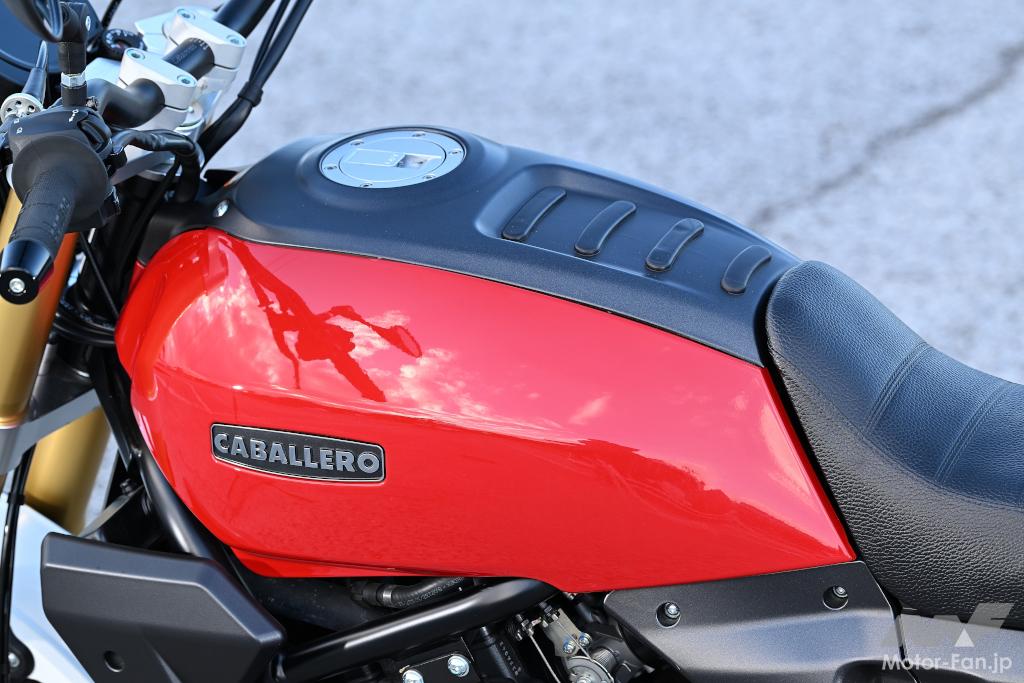
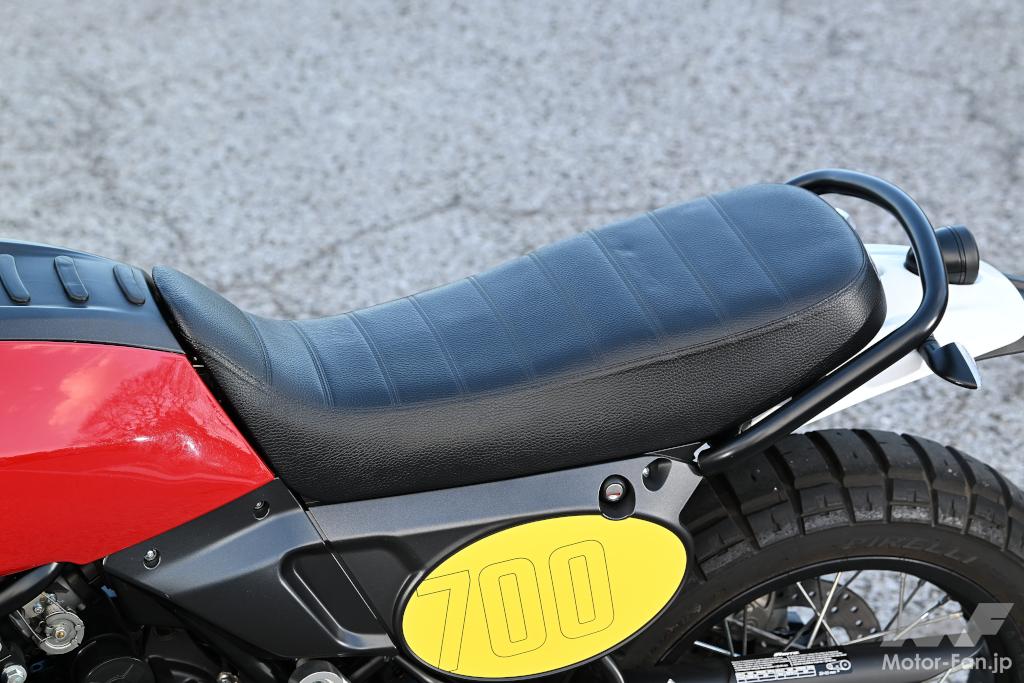
The exterior and seat are also specially designed, but the design image follows that of the existing Caballero Scrambler 125/250/500. The gas tank is made up of a resin inner + resin three-piece cover, and the double seat with a flat seating surface that allows for easy forward and backward movement is reminiscent of off-road vehicles from before the 1970s. Furthermore, these parts, including the side covers, show the development team’s attention to detail in keeping the body slim.
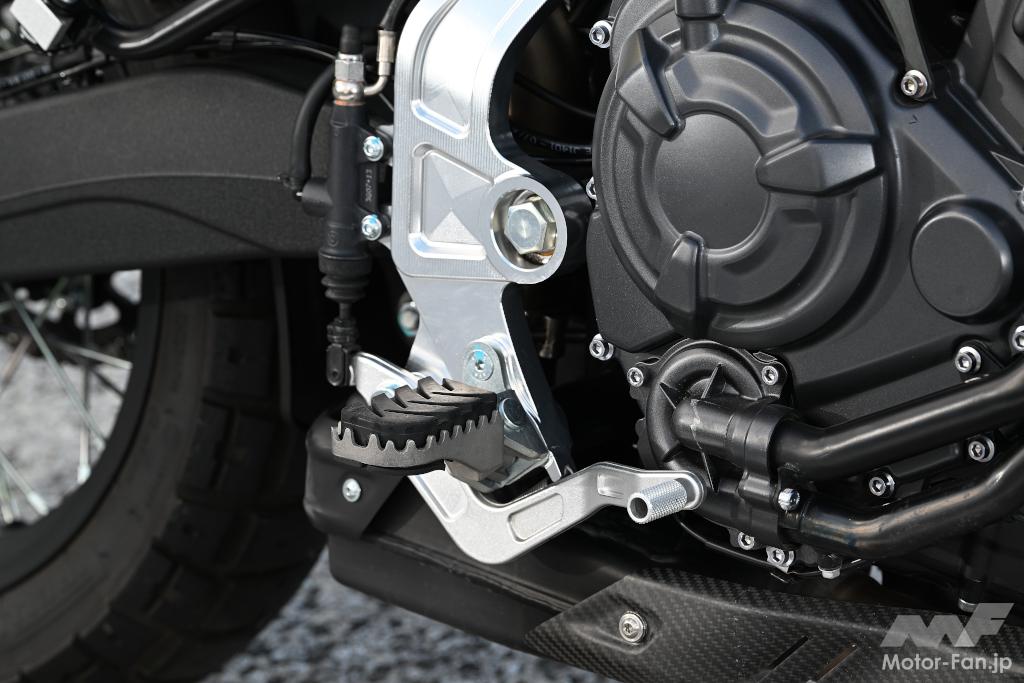
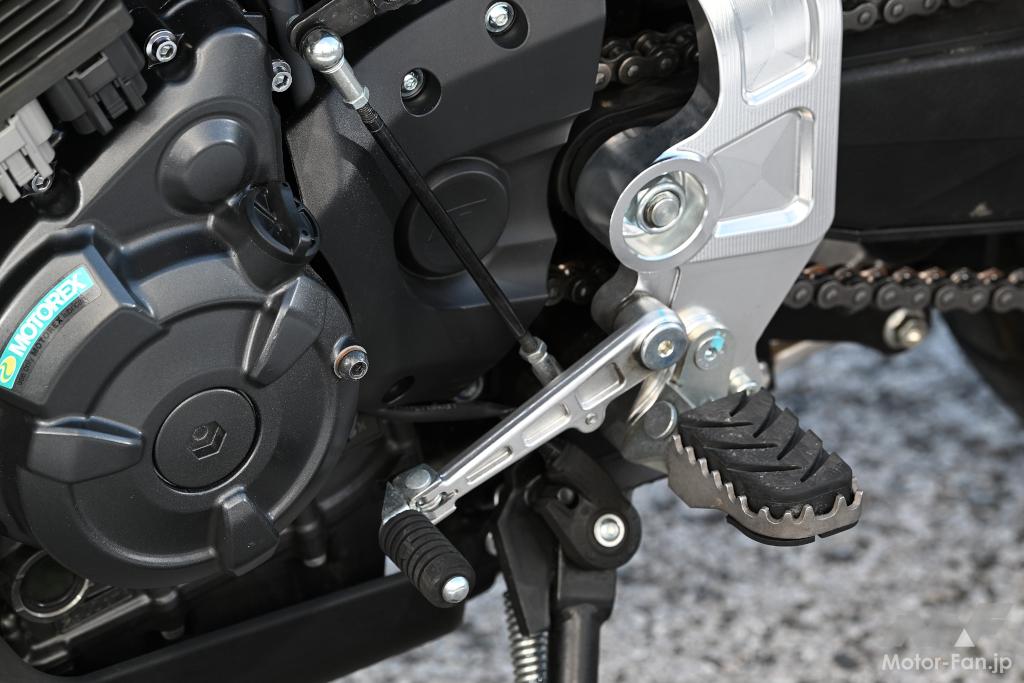
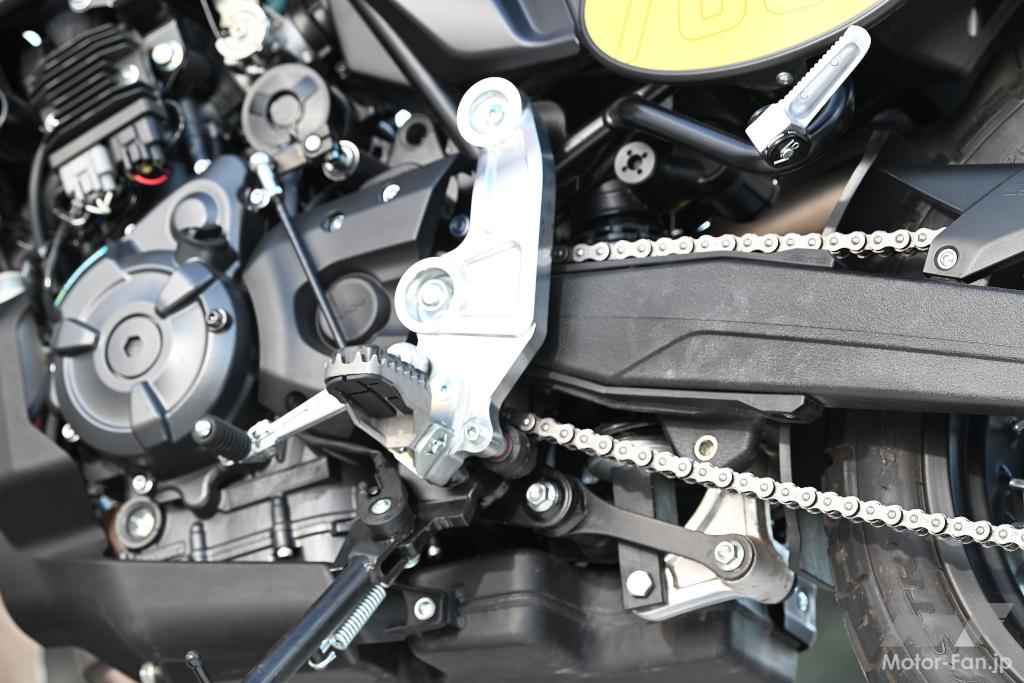
The step bars are made of durable steel (the pedals are cast aluminum, and the swingarm pivot plate is machined aluminum), and when the rubber is removed it transforms into a jagged design that improves grip with the boots. Incidentally, this rubber is quite thick, and when removed the distance between the seat and the step is wider, which I found to be a better fit for a larger rider like me.
Load capacity ★★★☆☆
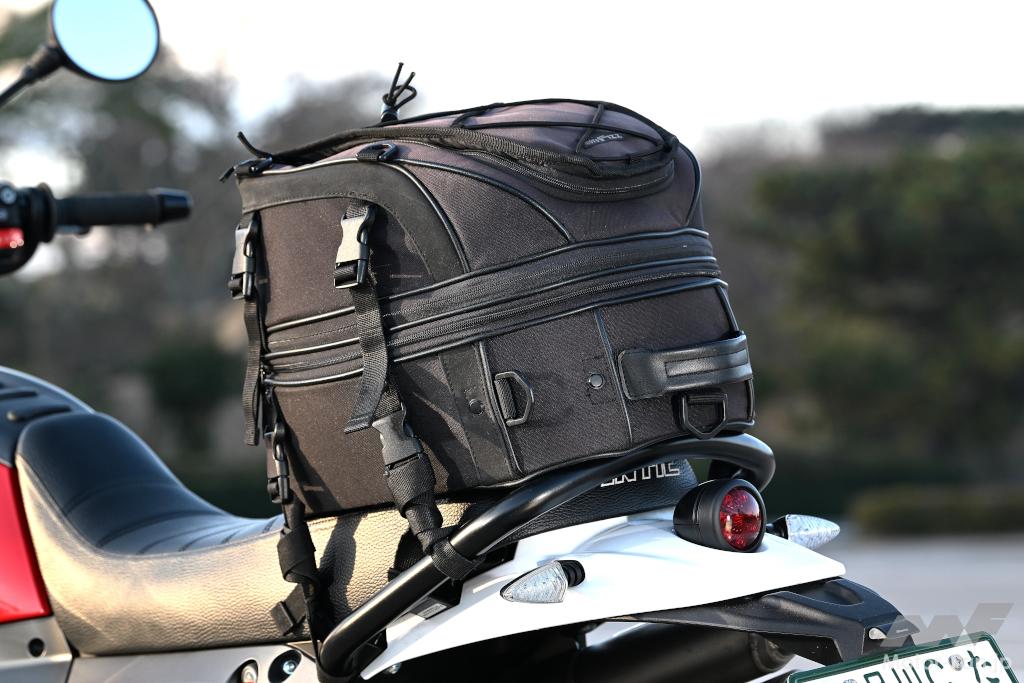
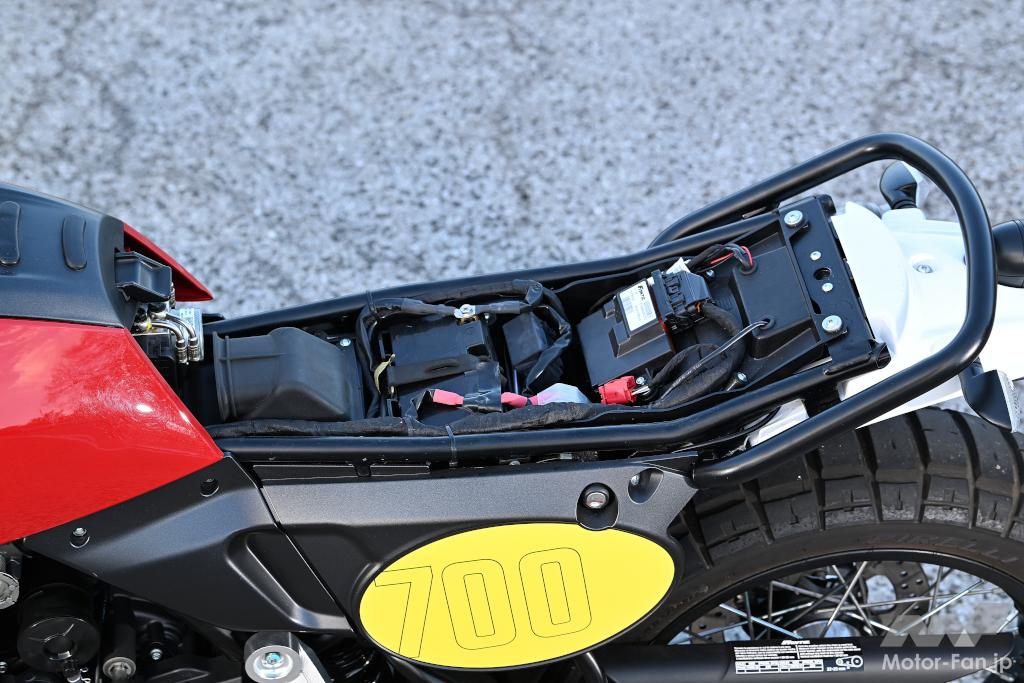
The grab bar happened to work well, and I was able to fit my personal Tanax double deck seat bag in just the right amount, but there was no particular consideration given to loading capacity. Riders who are more interested in touring should consider purchasing the original accessory rear carrier or tank/side/rear bags. The space under the seat is packed with electrical equipment and the air box, so it seems like it would be difficult to store an ETC unit.
Brakes ★★★★★
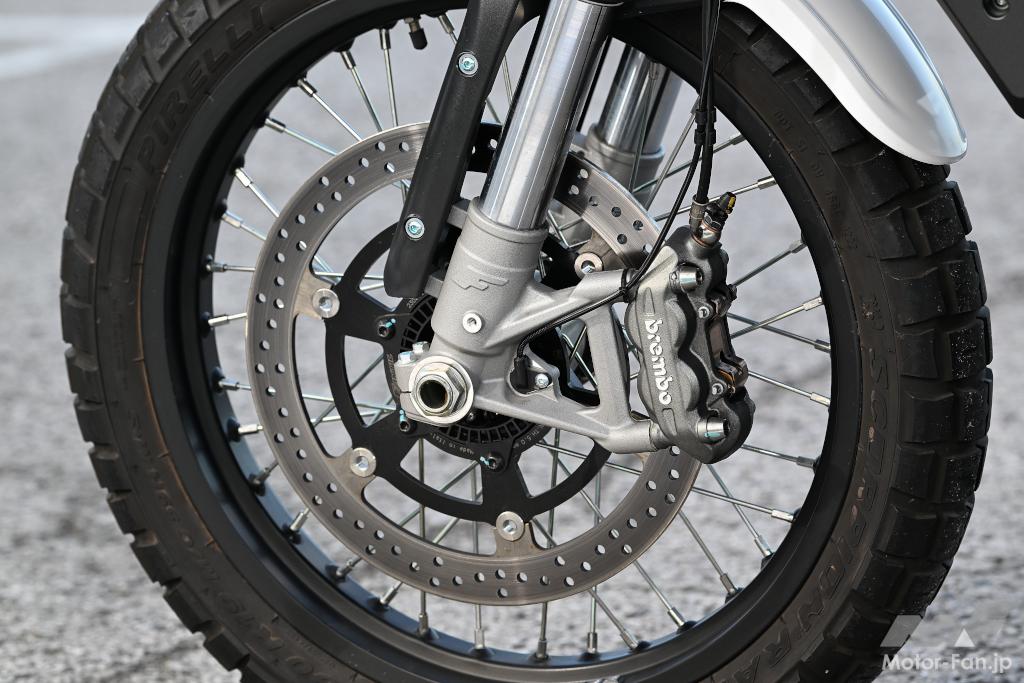
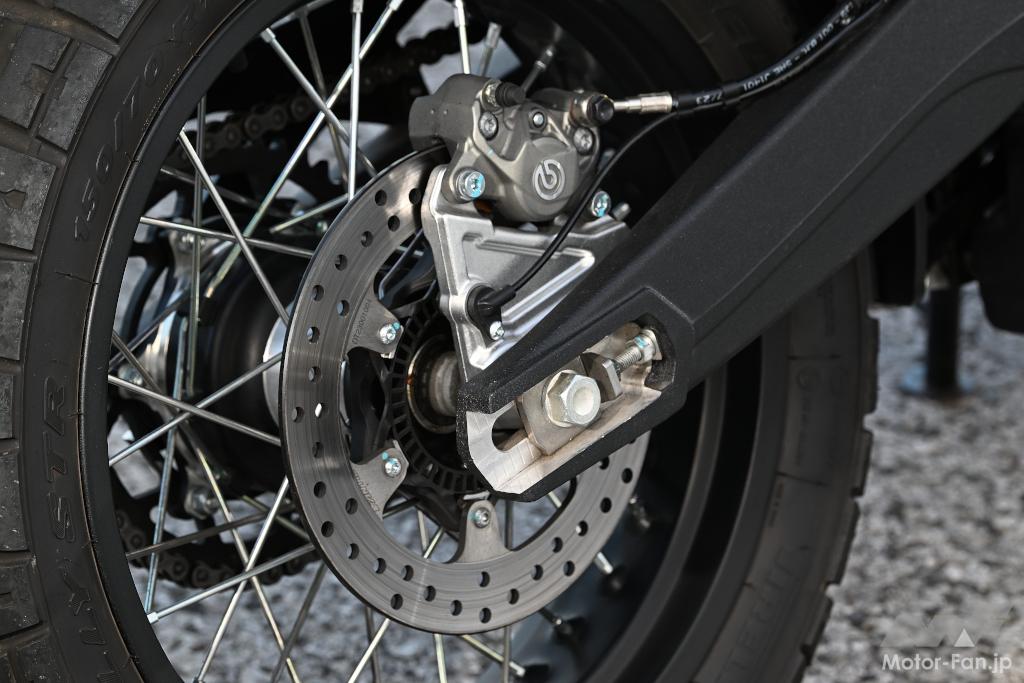
All brake parts, including the master cylinder, are Brembo. The discs are F: φ330mm, R: φ245mm, and the calipers are F: radial-mounted 4-piston, R: opposed 2-piston. When I was racing hard on paved mountain roads, I sometimes felt that the front brakes weren’t powerful enough, but the single disc is the result of pursuing lightness as a scrambler, and the controllability is top-notch, so I don’t think there’s any reason to argue with that. The ABS has two modes, on-road and off-road (the latter with less intervention), but it can also be completely turned off.
Suspension ★★★★★
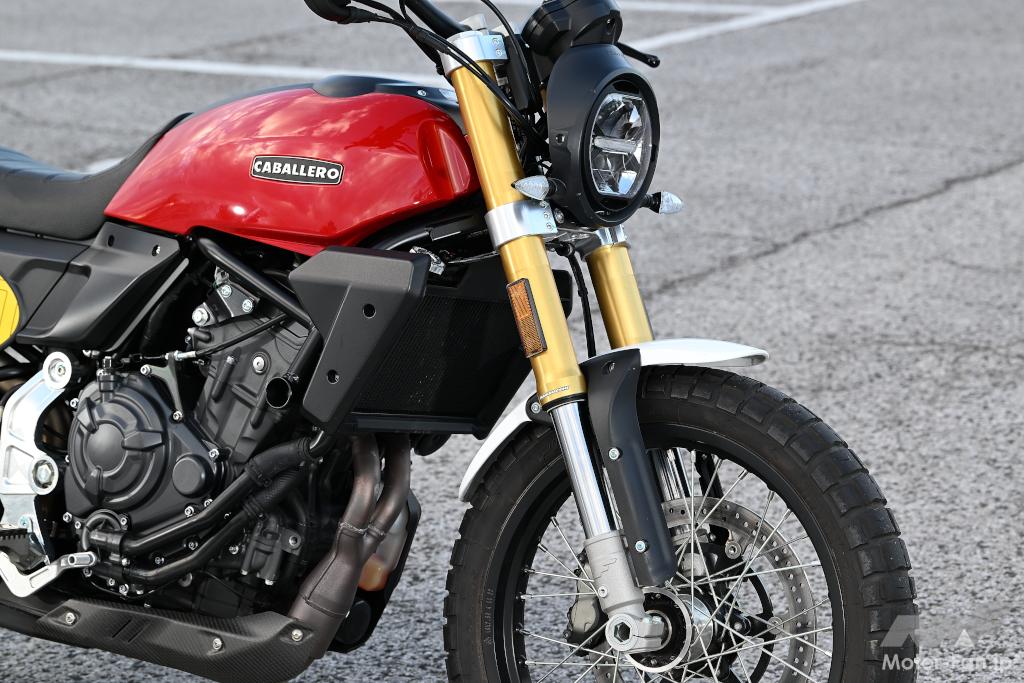
The front fork is a φ45mm inverted type, and the rear suspension is a bottom-link monoshock, both from Sachs. The only adjustment mechanism is rear preload, which initially left me feeling unsatisfied with the configuration… However, during actual riding, there was no occasion where I felt the need to adjust it. That said, I feel like if I weakened the front and rear compression dampers, I might be able to enjoy a more relaxed ride than I currently do.
Actual fuel consumption ★★★★☆
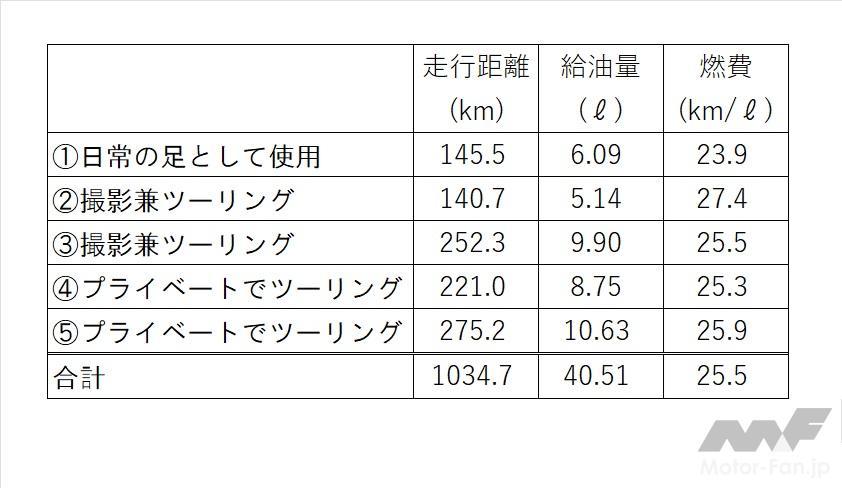
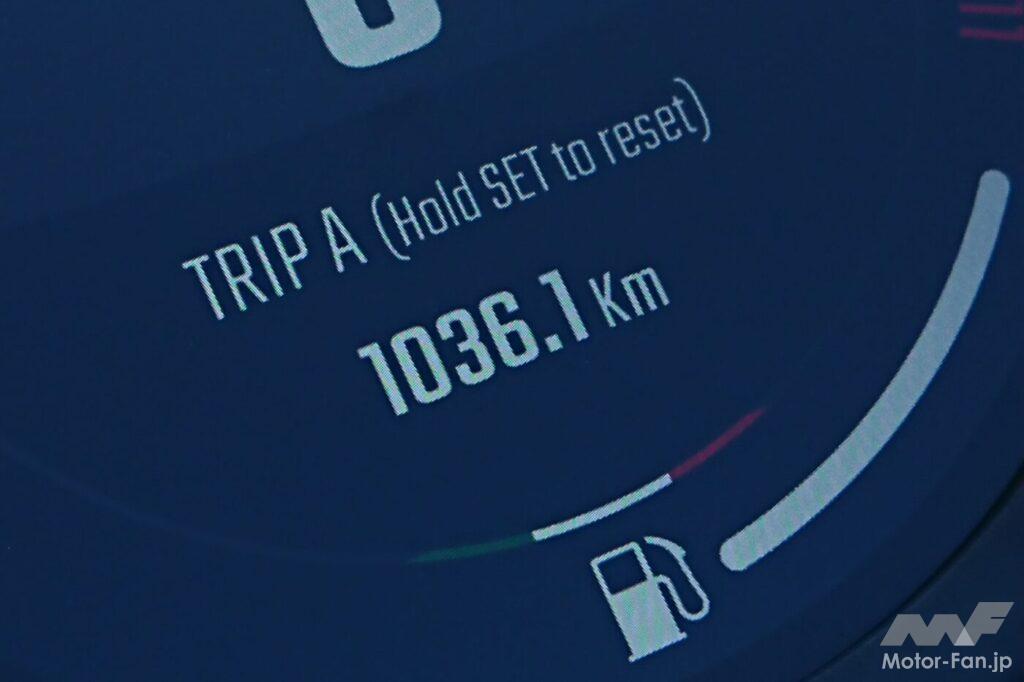
When searching online for fuel economy figures for Yamaha models equipped with the same CP2 engine as the Caballero Scrambler 700, many riders have published figures of around 27 km/L for the MT-07 and XSR700, and around 25 km/L for the Ténéré 700 and YZF-R7. Considering the size and weight of the bike, some may find the total fuel economy figures disappointing, but having thoroughly enjoyed the engine feel that sets it apart from the CP2 series, I’m satisfied, or rather, pleased (and I’m also happy that it requires premium-octane gasoline). The fuel tank capacity is 13.5 liters, so the average fuel economy gives a cruising range of 25.5 x 13.5 = 344 km.
ADVERTISEMENT
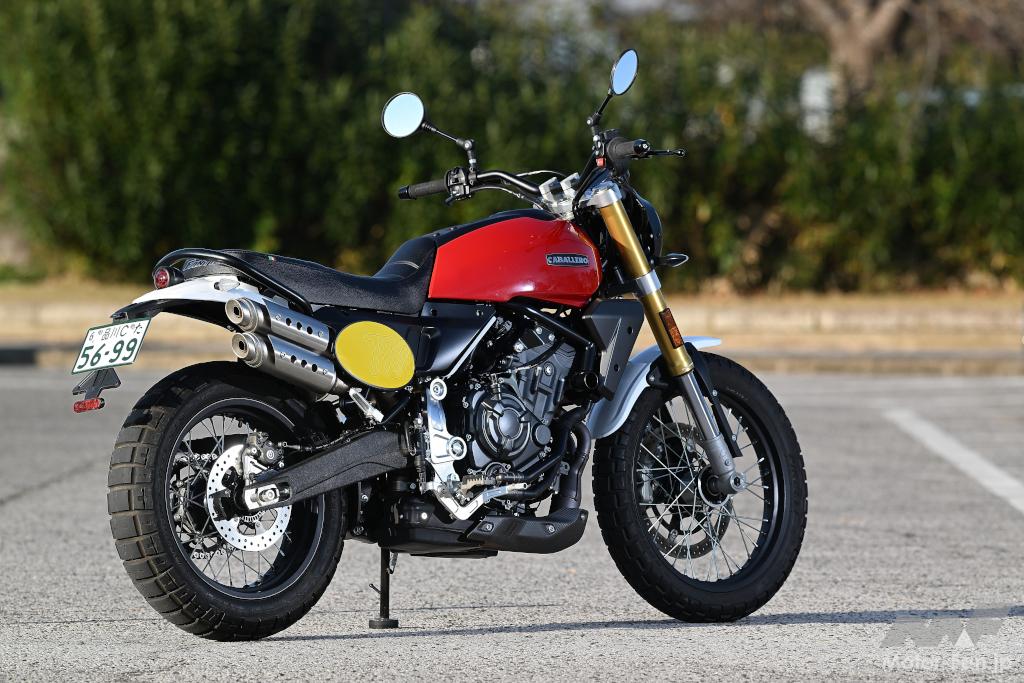
The Arrow exhaust system is a special design, with two up-type silencers on the right side. Although the volume isn’t that loud, I was able to enjoy the lively and crisp exhaust sound that is unique to the Scrambler.
Main specifications
Model: Caballero Scrambler 700
Total length x width x height: 2164mm x 890mm x 1136mm
Center distance: 1453mm
Seat height: 830mm
Engine type: Water-cooled 4-stroke parallel 2-cylinder
Valve type: DOHC 4 valve
Total displacement: 689cc
Inner diameter x stroke: 80.0mm x 68.6mm
Compression ratio: 11.5
Maximum output: 54.4kW (74ps) / 9400rpm
Maximum torque: 70N・m (7.14kgf・m) / 6500rpm
Starting method: Self-starter
Lubrication method: Wet sump
Fuel supply system: Fuel injection
Transmission type: Constant mesh 6-speed return
Clutch type: Wet multi-plate coil spring
Gear Ratio
1st gear: 2.846
2nd gear: 2.125
3rd gear: 1.632
4th gear: 1.300
5th gear: 1.091
6th gear: 0.964
Primary/secondary reduction ratio: 1.925/2.813
Frame type: Diamond
Front suspension: Telescopic inverted type φ41mm
Rear suspension: Bottom link mono shock
Front tire size: 110/80R19
Tire size: 150/70R17
Front brake type: hydraulic single disc
Brake type: Hydraulic single disc
Dry weight: 175kg
Fuel used: Unleaded premium gasoline
Fuel tank capacity: 13.5L
Passenger capacity: 2 people