
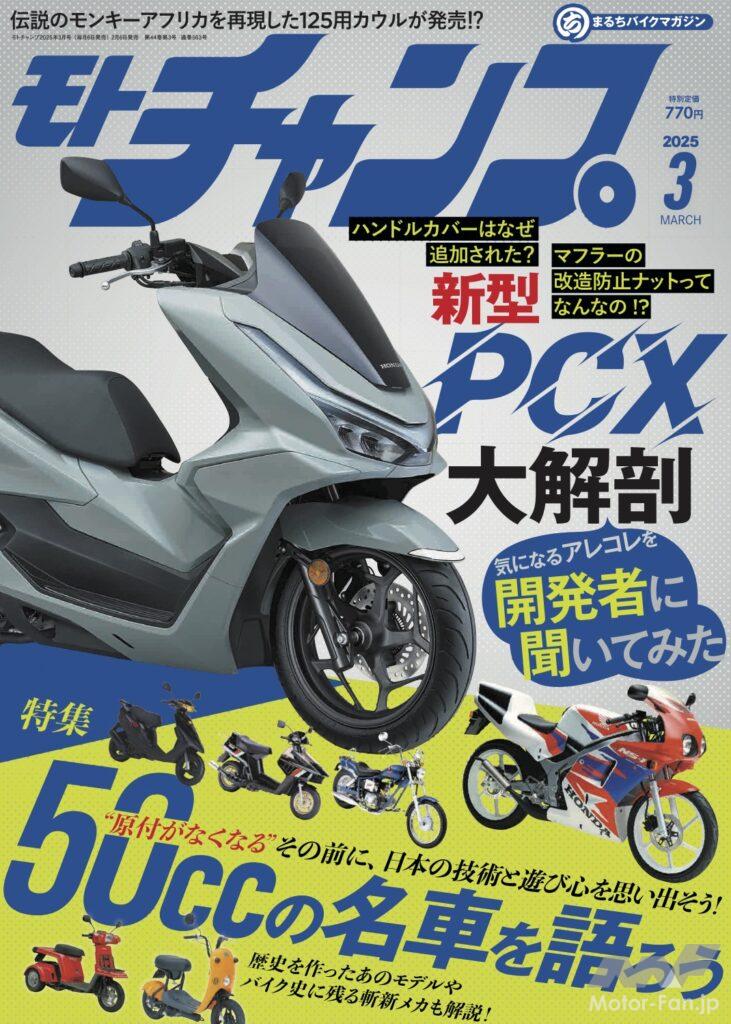
◀︎Click here for the issue in which it was published: Moto Champ March 2025 issue
Let’s talk about famous 50cc bikes!
These are the people who answered!
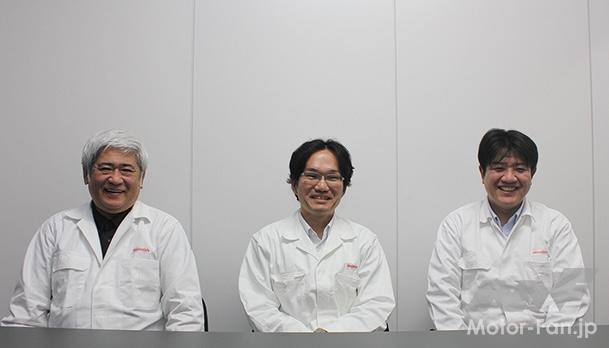
[Left] Designer Yasushi Tateishi (Honda R&D), a key figure in the N Project in the 2000s. In recent years, he has been involved in the Classic Wing Mark series. [Center] LPL Shinichiro Ishida (Honda Motor Co., Ltd.), specializing in vehicle body design/development, has been in charge of numerous vehicles, regardless of engine displacement or field. [Right] Public Relations Shiro Uchiyama (Honda Motorcycle Japan), who answered questions about price and high-end specifications. He is the chief of the Public Relations and Motorsports Division.
Although it’s not a completely new design, it’s hard to call it a minor change .
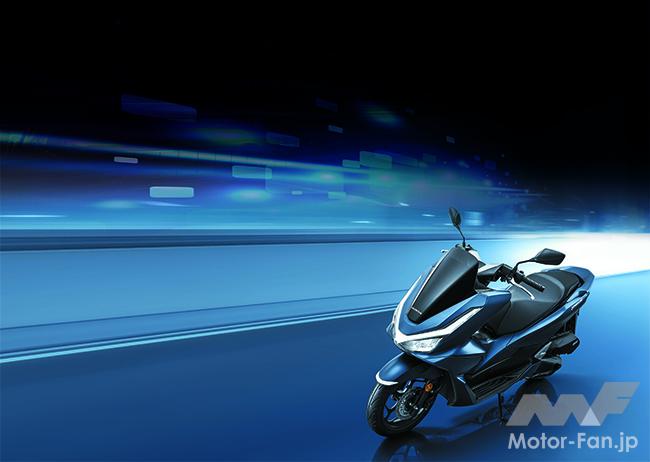
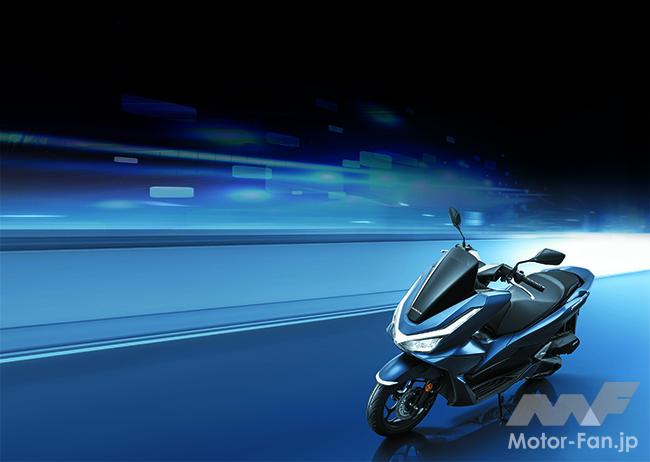
The engine, frame, suspension, dimensions, riding position, etc. are inherited from the fourth generation, so it is not a full model change, but the exterior and lights are newly designed, so it is hard to call it a minor change. The fifth generation PCX, which went on sale in Japan in February 2025, is a model that is quite difficult to classify.
However, in order to understand the actual situation of the fifth generation, our reporting team spoke with Ishida-san, the development manager, Tateishi-san, the designer, and Uchiyama-san of Honda Motorcycle Japan, and they came to the conclusion that there is not much point in classifying it as full or minor. If you read the interview below, you will understand why.
The engine, frame, suspension, dimensions, riding position, etc. are inherited from the fourth generation, so it is not a full model change, but the exterior and lights are newly designed, so it is hard to call it a minor change. The fifth generation PCX, which went on sale in Japan in February 2025, is a model that is quite difficult to classify.
However, in order to understand the actual situation of the fifth generation, our reporting team spoke with Ishida-san, the development manager, Tateishi-san, the designer, and Uchiyama-san of Honda Motorcycle Japan, and they came to the conclusion that there is not much point in classifying it as full or minor. If you read the interview below, you will understand why.
Both the 125 and 160 come in four common colors!
[PCX125] 379,500 yen [PCX160] 462,000 yen
Since its release in 2010, the PCX series has been hugely popular around the world. It has evolved through the second generation since 2014, the third generation since 2018, the fourth generation since 2021, and will enter the fifth generation in 2025. In recent years, the PCX has been produced in Vietnam, Indonesia, Thailand, etc., with the Japanese model being produced in Vietnam.
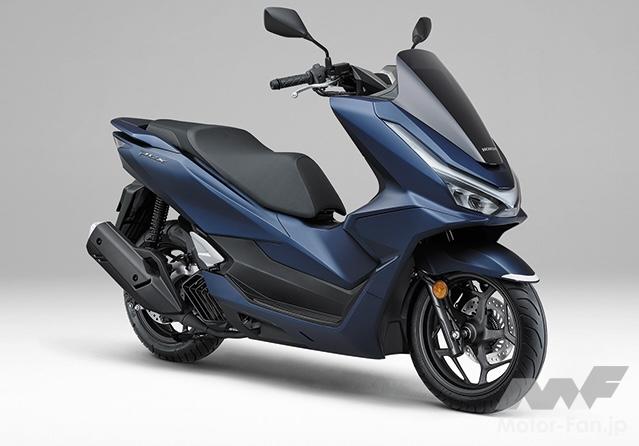
Matte Starry Blue Metallic
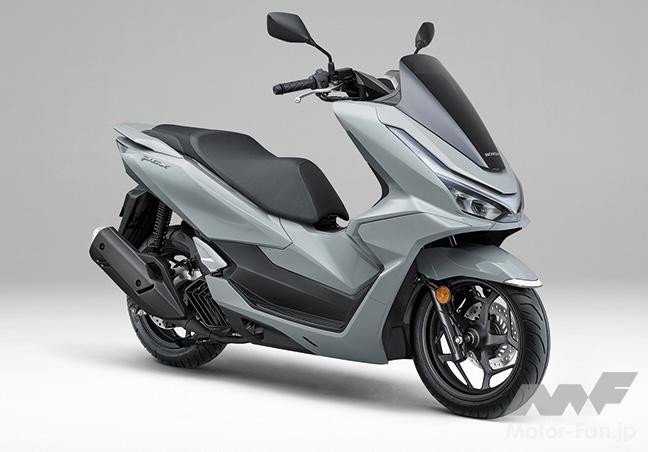
Pearl Jupiter Gray
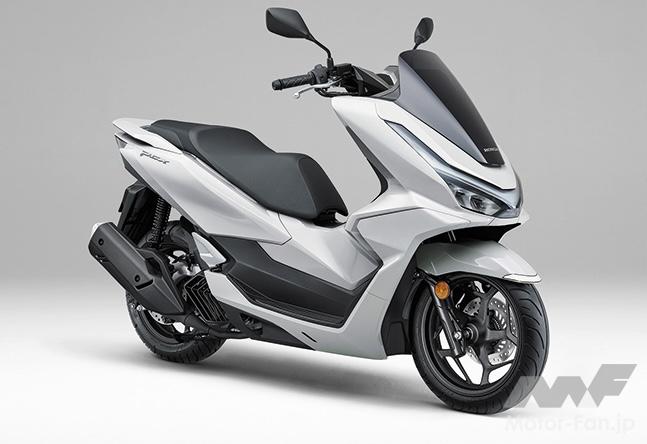
Pearl Snowflake White
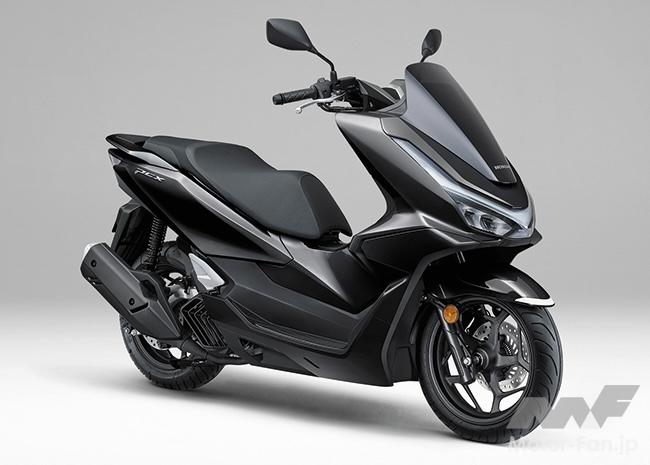
Pearl Magellanic Black
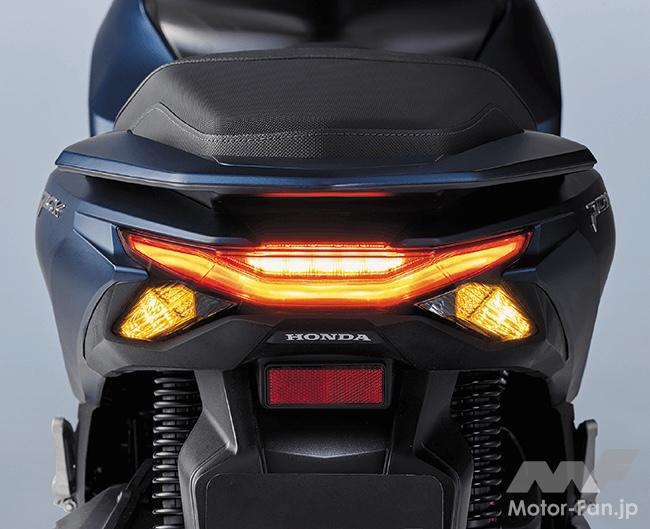
The motif is [X]!
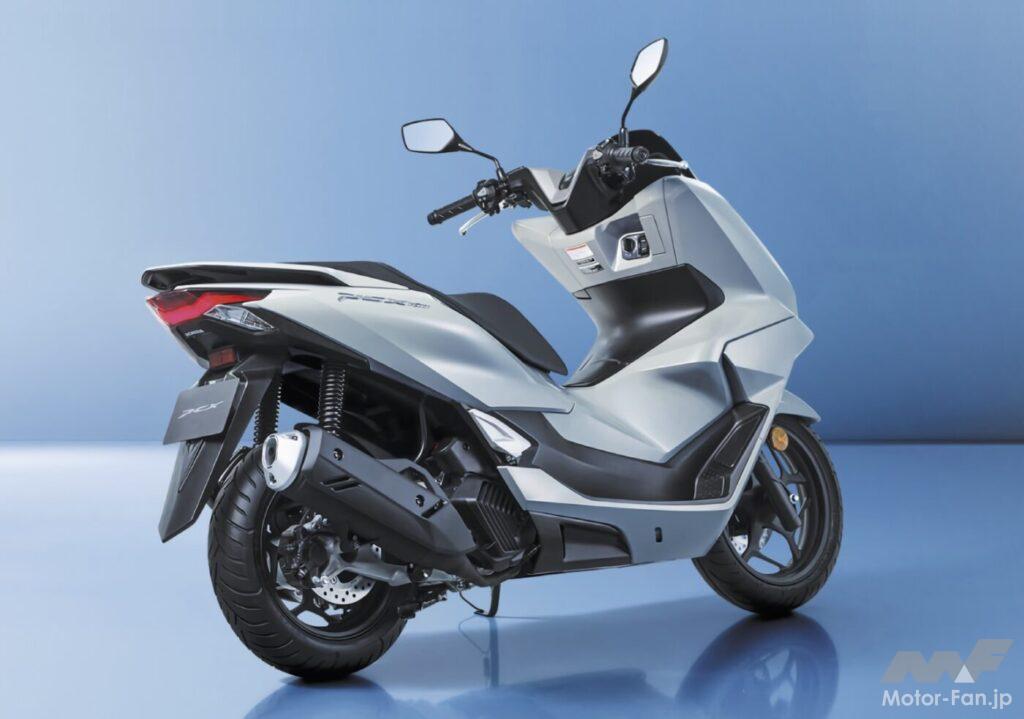
The stop and tail lamps have been made much thinner to create a sense of openness in the rear half of the body. Although they are not always on like the previous model, they light up in an X shape when the hazard lights are in use.
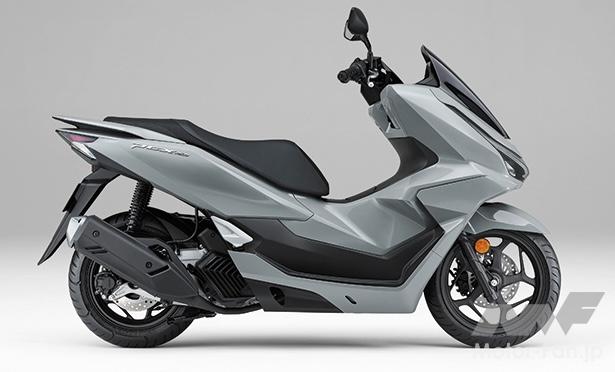
The exterior and lighting, excluding the front fender and grab rail cover, are new, but the eSP+ engine, double cradle frame, suspension, dimensions, etc. follow the structure of the fourth generation.
SPECIFICATIONS *160 in parentheses
| ■ Total length x total width x total height | 1935×740×1125mm |
| ■ Wheelbase | 1315mm |
| ■ Seat height | 764mm |
| ■Vehicle type | 133kg (134kg) |
| ■ Engine | Water-cooled 4-stroke single cylinder 124cc (156cc) |
| ■ Maximum output | 12.5ps/8750rpm (15.8ps/8500rpm) |
| ■Maximum torque | 1.2kgm/6500rpm (1.5kgm/6500rpm) |
| ■ Fuel economy (WMTC *1 occupant) | 47.7km/ℓ (44.9km/ℓ) |
| ■Fuel tank capacity | 8.1 liters |
| ■Brakes (front and rear) | disk |
| ■ Tires (front and rear) | 110/70-14, 130/70-13 |
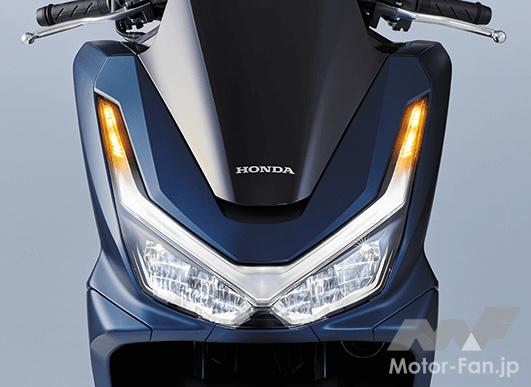
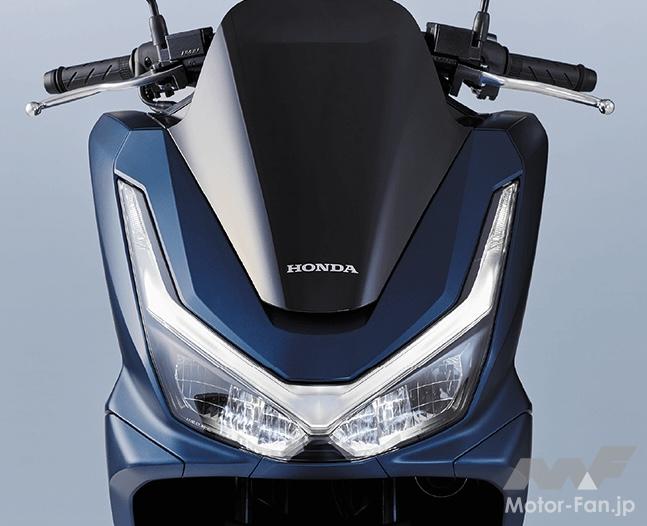
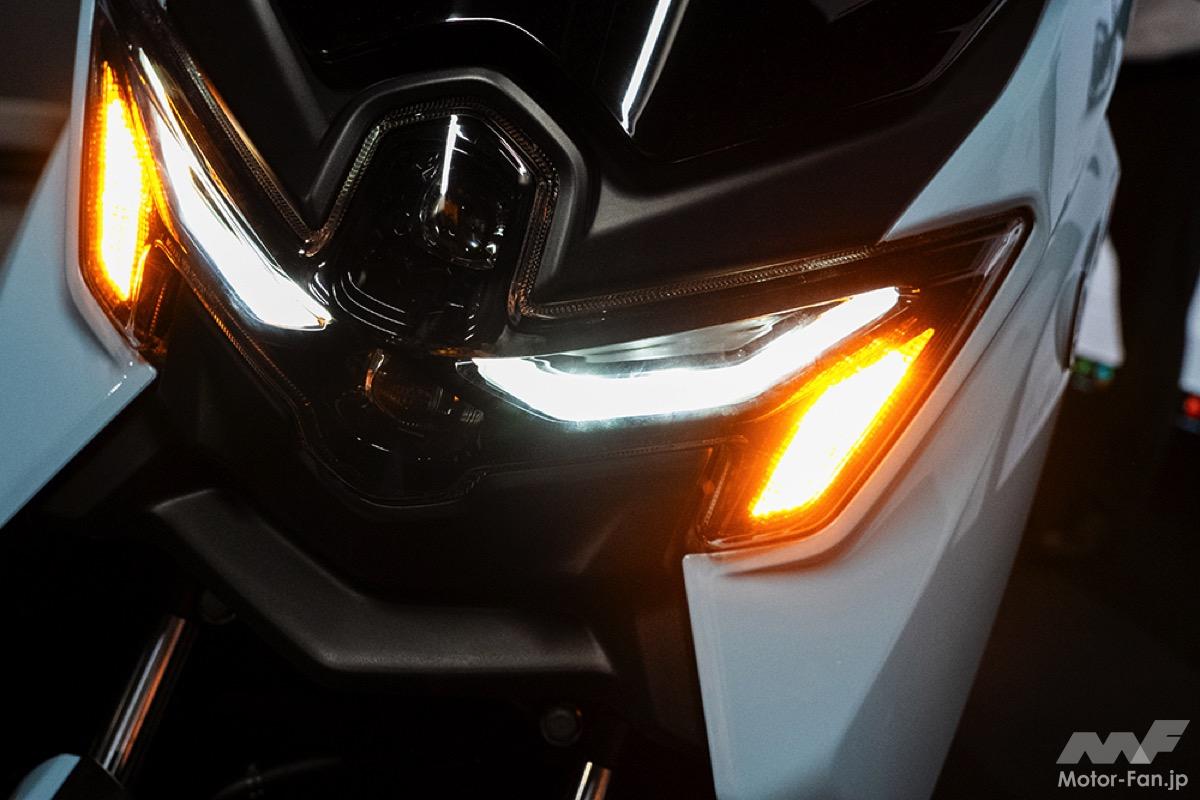
The lights on the front cowl have a design that is similar but not identical to conventional models. The V-shaped signature lights do not have DRL (Daytime Running Light) functionality.
The keywords for the fifth generation are premium and powerful
──The first question is about the reason for the model change. Considering the high level of perfection of the fourth generation, it seems like there was no need for a change…or so I think.
Ishida: It’s true that the fourth generation was extremely well-made, but considering changes in market trends and customer appeal, scooters in this class need to have their specifications updated every three to four years. Also, as emissions regulations change in Europe, we were conscious of updating other parts at that time as well. However, the fourth generation had already reached a more than satisfactory level in terms of ride quality and usability, so for the fifth generation we decided to focus our specification changes on the design.
Tateishi: The “Personal Comfort Saloon” concept, which has been carried over since the first generation, remains unchanged, but for the fifth generation we have set a new keyword: “Premium & Powerful PCX.” Specifically, we are trying to express luxury, activity, and sportiness at a higher level than ever before, while maintaining the distinctive PCX feel. I did not create all of the styling for the fifth generation; rather, we incorporated various elements from the vast number of idea sketches proposed by Honda’s many designers around the world.
The design icon of the fifth generation is the front mask. The V-shaped arrangement of the lights remains unchanged, but the headlights are now independent on the left and right, and a signature light is placed above them that makes a statement from any angle. In addition, the turn signals at the top of the left and right edges are bi-function white/orange.
Tateishi: Regarding the front, a new element is the introduction of a reverse slant nose, a first for the series. By creating a gap below the headlights, we were able to slightly raise the visual center of gravity and create a sporty look. Also, the width of the bottom of the headlights has been slightly widened from side to side when viewed from the front, emphasizing the inverted triangular line that runs from there to the front wheels, and the windscreen has been made about 15mm higher, which are also characteristics of the fifth generation.
──What catches the eye around the rear are the taillights, which are thinner vertically, although they take on the same X-shape as the third and fourth generations when the hazard lights are activated.
Tateishi: The taillights were designed with an awareness of a “feeling of openness” towards the rear, with the rear half of the underpanel made of black resin to enhance the sense of lightness, and the side panels emphasizing the outline by adopting simple, plain surfaces. Like the front cowl, I think we were able to create a sportier and lighter image compared to the fourth-generation and earlier models.
Ishida: Regarding the exterior, by revising the layout of the internal parts from the fourth generation, we were able to narrow the width of the front side covers, achieving a sense of openness without compromising the wind protection for the feet. Specifically, when you place your feet on the floor, you will feel that the space around your shins and toes is wider.
Tateishi: As a result of changing the design around the front body, negative pressure caused wind to be sucked into the feet, but we were able to solve the problem by appropriately discharging the wind introduced from the front through slits on the left and right sides of the center panel.
Did the steering wheel of the first prototype car have a cover?

[ The meter has been improved from the previous model ] While the display content and layout of the meter remain unchanged, the design of the silver outer frame has been changed. The newly adopted steering wheel cover has been designed with a focus on luxury and sportiness.
──Next, let’s talk about the handle, which has been replaced with a cover, eliminating the characteristic exposed, plated finish.
Ishida: There was a lot of discussion about this. The existing handlebars were one of the PCX’s identities, but when we think about the qualities of a luxury vehicle from a global perspective, we didn’t want the cables and harnesses to be exposed to the outside. After careful consideration, we decided to go with the current configuration. Incidentally, we also considered attaching a cover to the structure of the fourth-generation and earlier models, but this method would have disrupted the harmony of the design, so we decided to design one specifically for it.
Tateishi: For the fifth-generation cover, we designed it with a focus on luxury and sportiness. I was also involved in the design of the first-generation PCX, and in fact, the handlebars of the first-generation model had covers up until the middle of the prototype production. The reason they were left bare and finished with a chrome plating was to incorporate the trends of the time, and you could even say that “covered is the original look.” In terms of design, the outer periphery of the meter panel and the emblem were also newly developed.
Ishida: In the cockpit, the bar end weights have been reduced, while a dynamic damper has been installed inside the handlebars, which is another difference from the previous model. Of course, the suppression of vibrations while riding is the same as that of the fourth generation and earlier models.
──The fifth generation inherits many of the main parts from the fourth generation, but there are many other small changes besides the exterior and lighting.
Ishida: To accommodate the changes in aerodynamic characteristics resulting from the exterior renovation, we have revised the settings, including adjusting the fuel injection amount. And the 160 had to comply with new regulations. Methods for doing so would include using special screws to prevent the exhaust system from being replaced, or adding a function to detect deterioration of the catalyst, but this time we chose the former, being conscious of keeping the structure simple.
ADVERTISEMENT
[ The 160 meets regulations with anti-tamper nuts! ] In order to comply with new Japanese regulations, the 160 uses special bolts for the muffler attachment that cannot be removed with ordinary tools. The 125, however, still uses ordinary bolts.
[ Dynamic dampers added inside the handlebars ] The bar end weights have been made more compact. Instead, dynamic dampers have been installed inside the handlebars, achieving the same level of vibration suppression while riding as the fourth generation and earlier models.
Why the price increases are different between the 125 and 160
–In recent years, it has become commonplace in the Japanese motorcycle market for prices to rise when specifications are changed, regardless of manufacturer or category. However, the 2025 PCX model will be priced at an additional 16,500 yen for the 125 and 49,500 yen for the 160 compared to the previous model. What is the reason for this price difference?
Uchiyama: Regarding price, considering the rising cost of materials and fluctuations in exchange rates, the 125 would normally have had to go up in price by the same amount as the 160. However, because the 125 is often chosen by entry-level users, we were able to set a more moderate price range after considering the volume scale and the appropriate price range for the Japanese 25cc moped market.
–This seems to be related to the price, but are there any plans to sell the higher-end model available overseas (equipped with a TFT meter and a rear shock with a reserve tank) in Japan?
Uchiyama: Not at the moment. We consider various factors when deciding on specifications, such as market conditions and a price that customers will accept. In the ASEAN region and elsewhere, the PCX is perceived as an “affordable luxury vehicle,” which is why there is demand for a higher-end model. However, in Japan, it is positioned as a high-quality personal commuter that is also suitable for everyday use. For this reason, we believe that even if we set an even higher-end model at an even higher price range, it would not gain customer support.
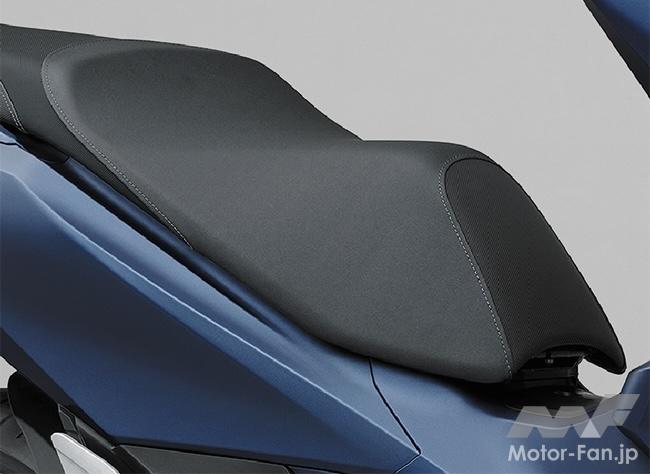
[ New stitching and other features based on the previous model ] The seat base and urethane are the same as those of the fourth-generation model. However, the front and rear dividing lines and stitching on the seat leather have been updated to harmonize with the completely redesigned exterior.
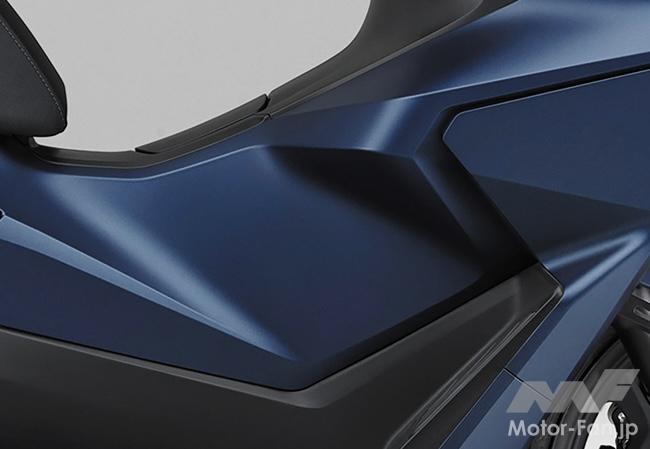
[ Slits reduce wind and rain! ] To expand the foot space, the width of the center panel has been reduced. As a result, negative pressure caused wind and rain to be drawn in while riding, but adding slits reduces the negative pressure and solves the problem.
The attachment of smartphones and other devices should be customizable!
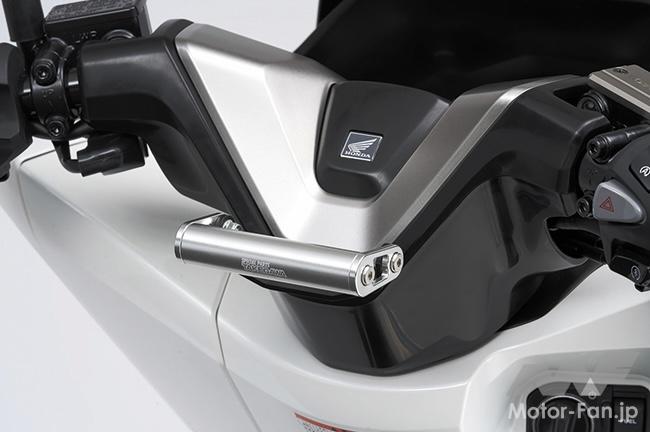
SP Takegawa’s products are made with aluminum stays and pipes, and the anodized colors are available in two colors: black and silver.
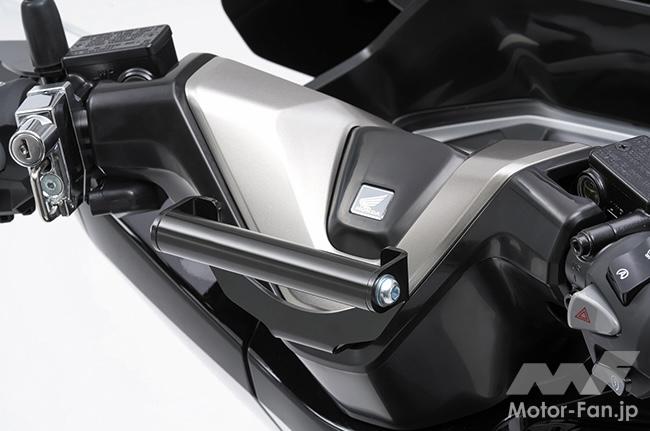
The multi-purpose bar sold by KITACO is made of steel and is only available in black.
──Finally, I would like to ask the two developers to give a message to our readers.
Ishida: With the fifth generation, we aimed to further enhance the appeal that only the PCX can offer. We would like owners of the fourth generation or earlier, as well as those who have never experienced a PCX before, to visit a dealership and see and touch the actual bike.
Tateishi: I agree that people should see the actual car. Some people may feel that the changes to each part are “unusual,” but once you see the actual car, I think you will understand how it is different from the conventional model in terms of luxury and sportiness.
Due to structural changes to the handlebars, it has become difficult to attach smartphones, cameras, etc. to the 2025 PCX, but by using aftermarket parts, it will be possible to attach a variety of gadgets, just like the existing PCX series.

Interviewer: Tomohiko Nakamura
A freelancer with 29 years of experience in the industry, he has experienced every model in the PCX series and is always amazed by the evolution of each generation.