
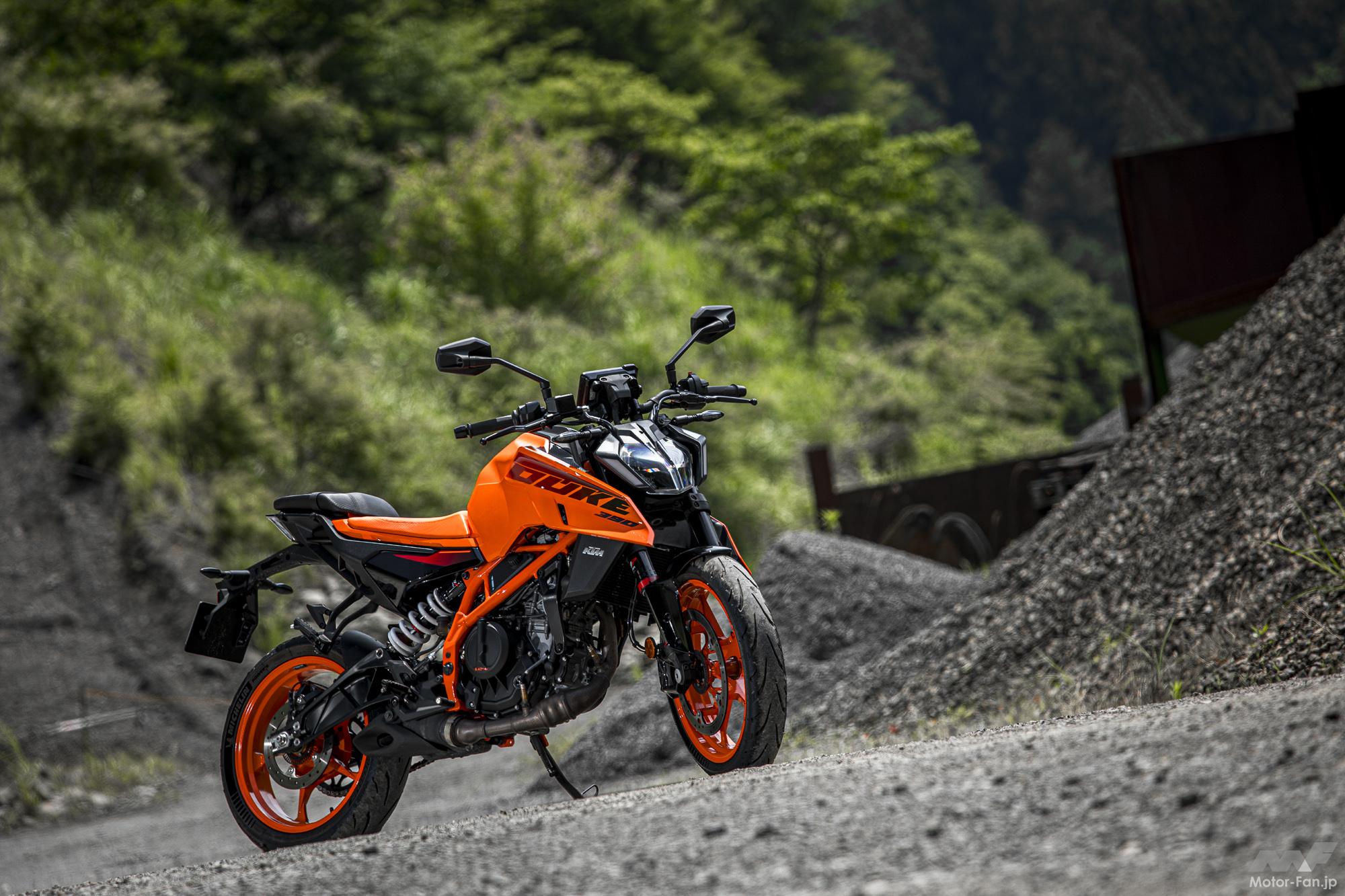

KTM 390 DUKE: ¥829,000 (including 10% consumption tax)



ADVERTISEMENT
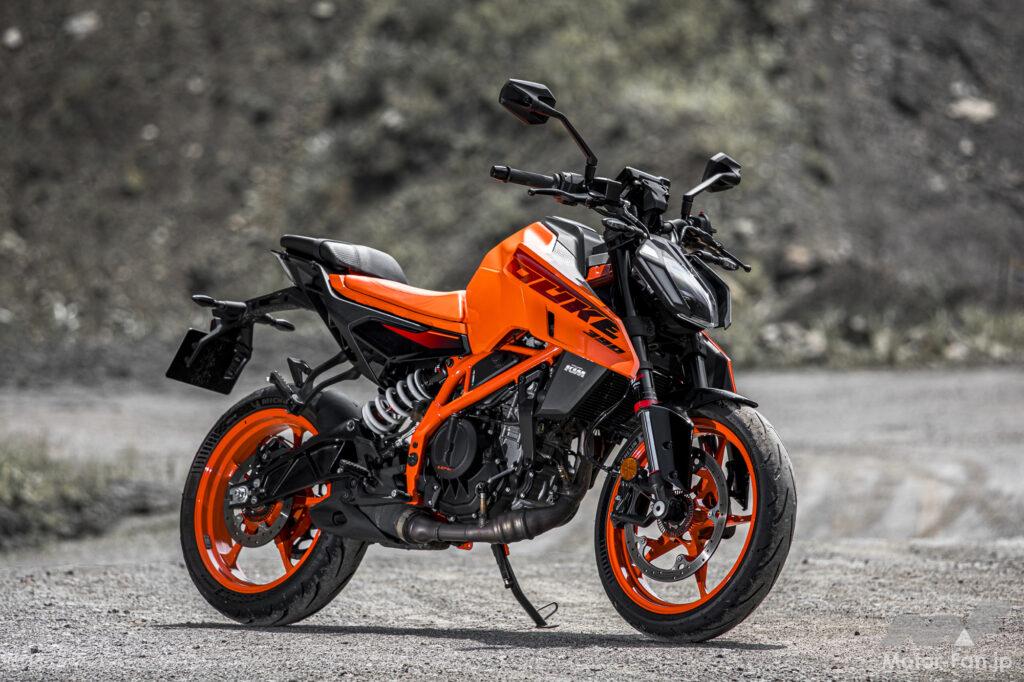
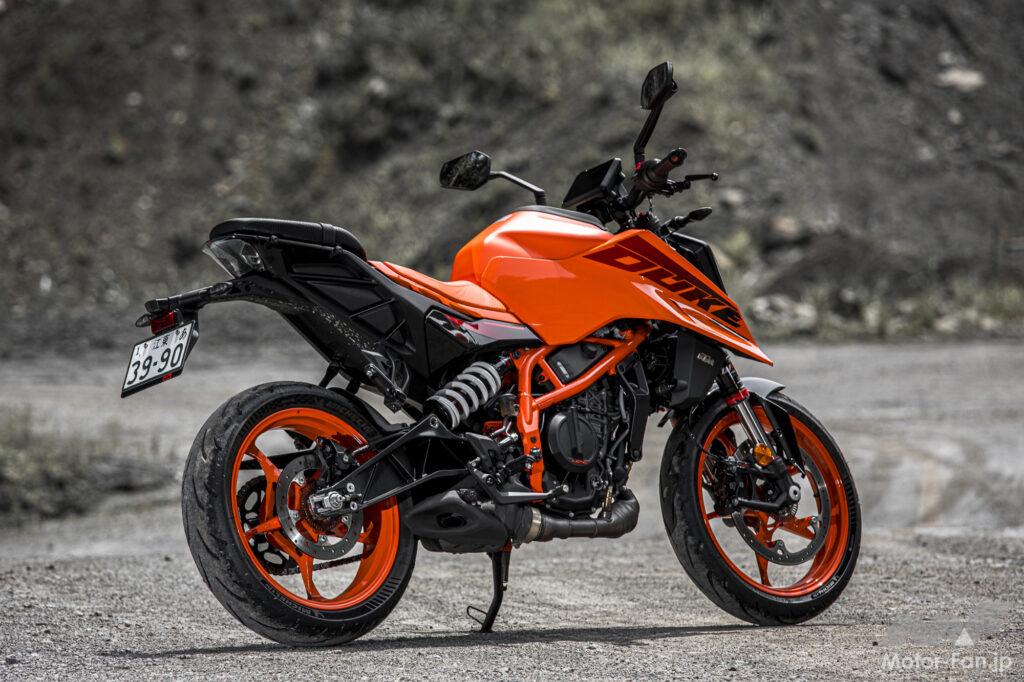
Electronic Orange


Color variations
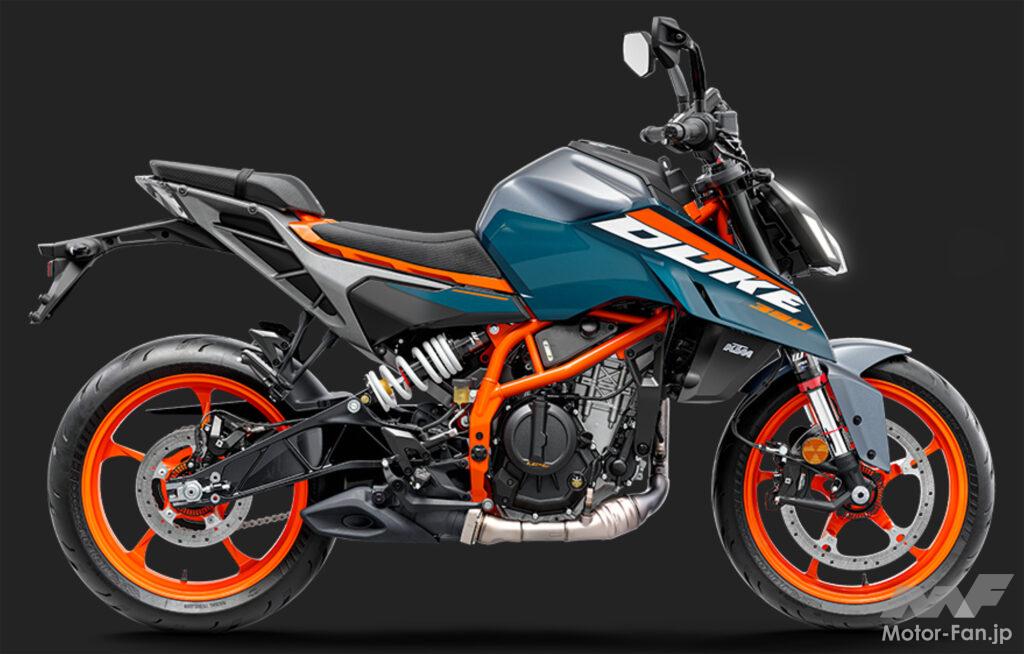
Atlantic Blue


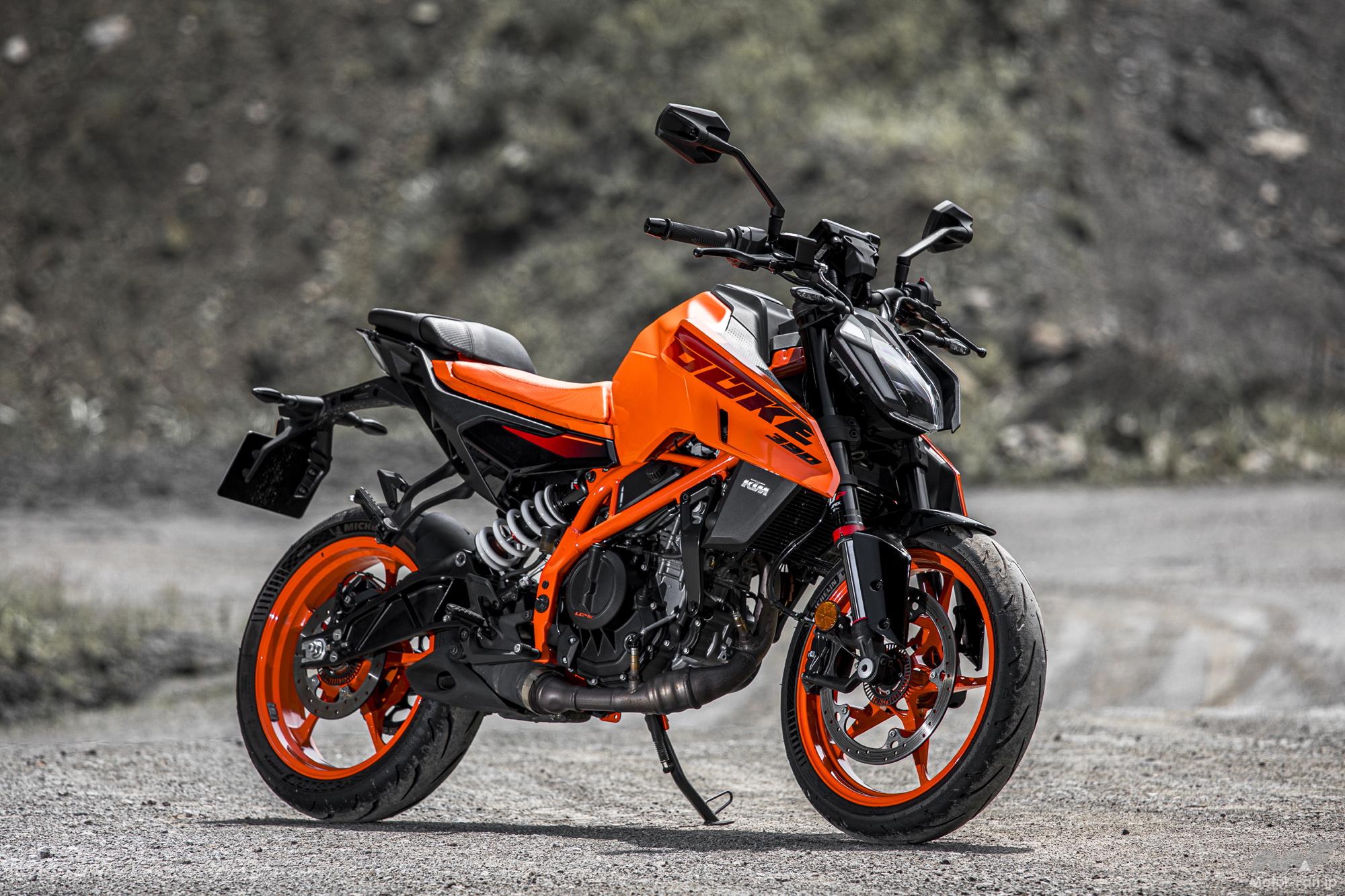

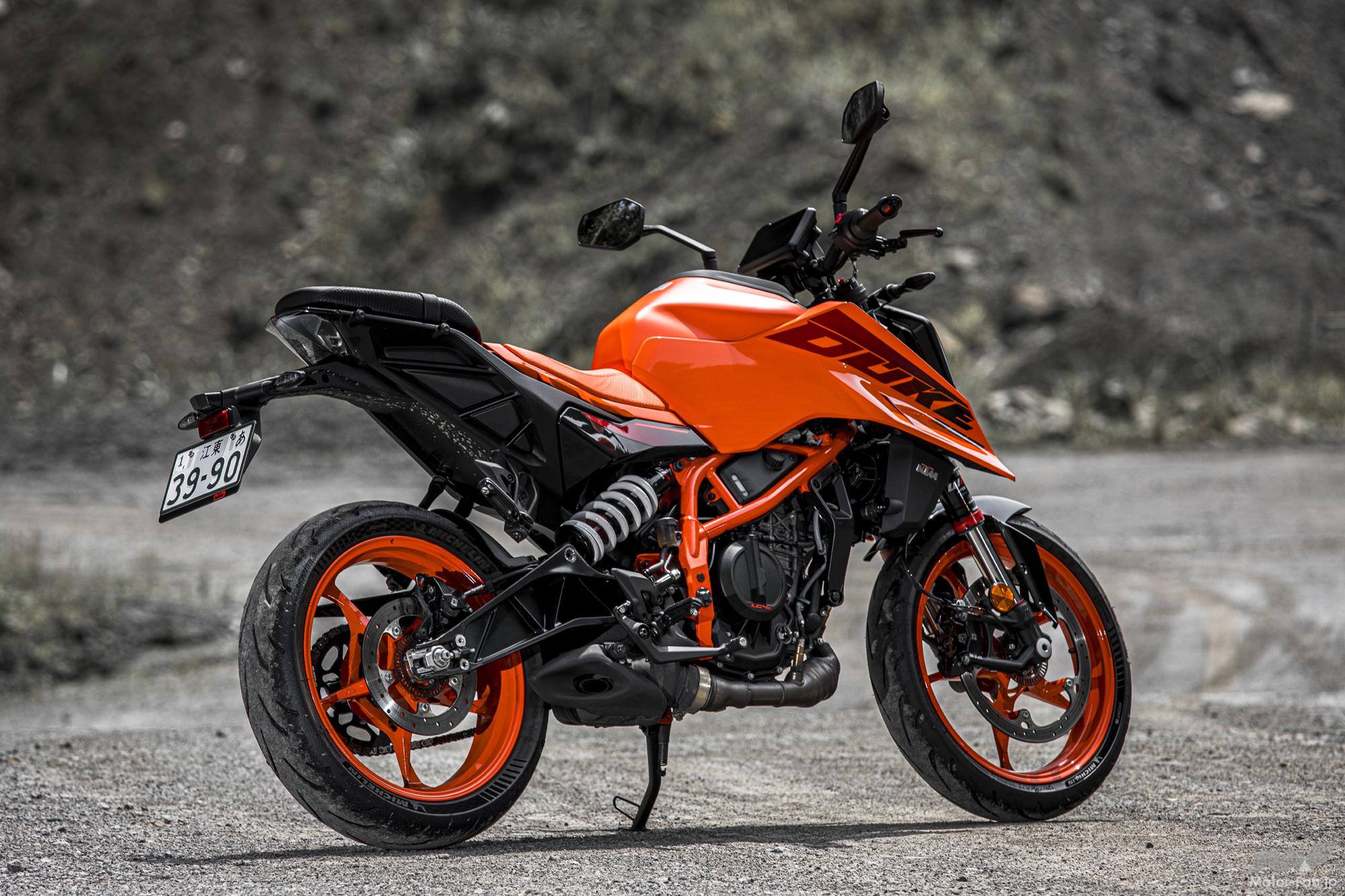
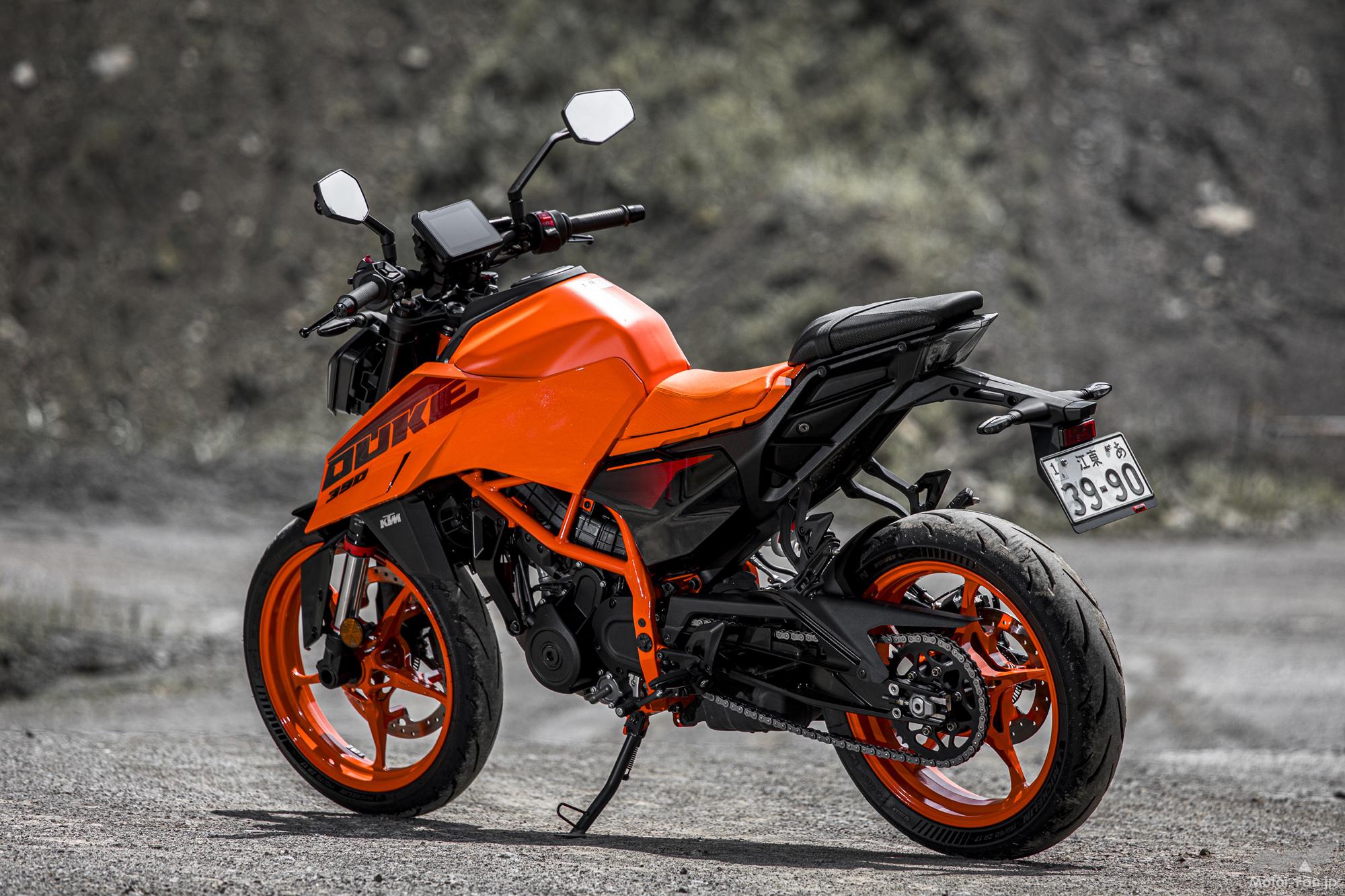
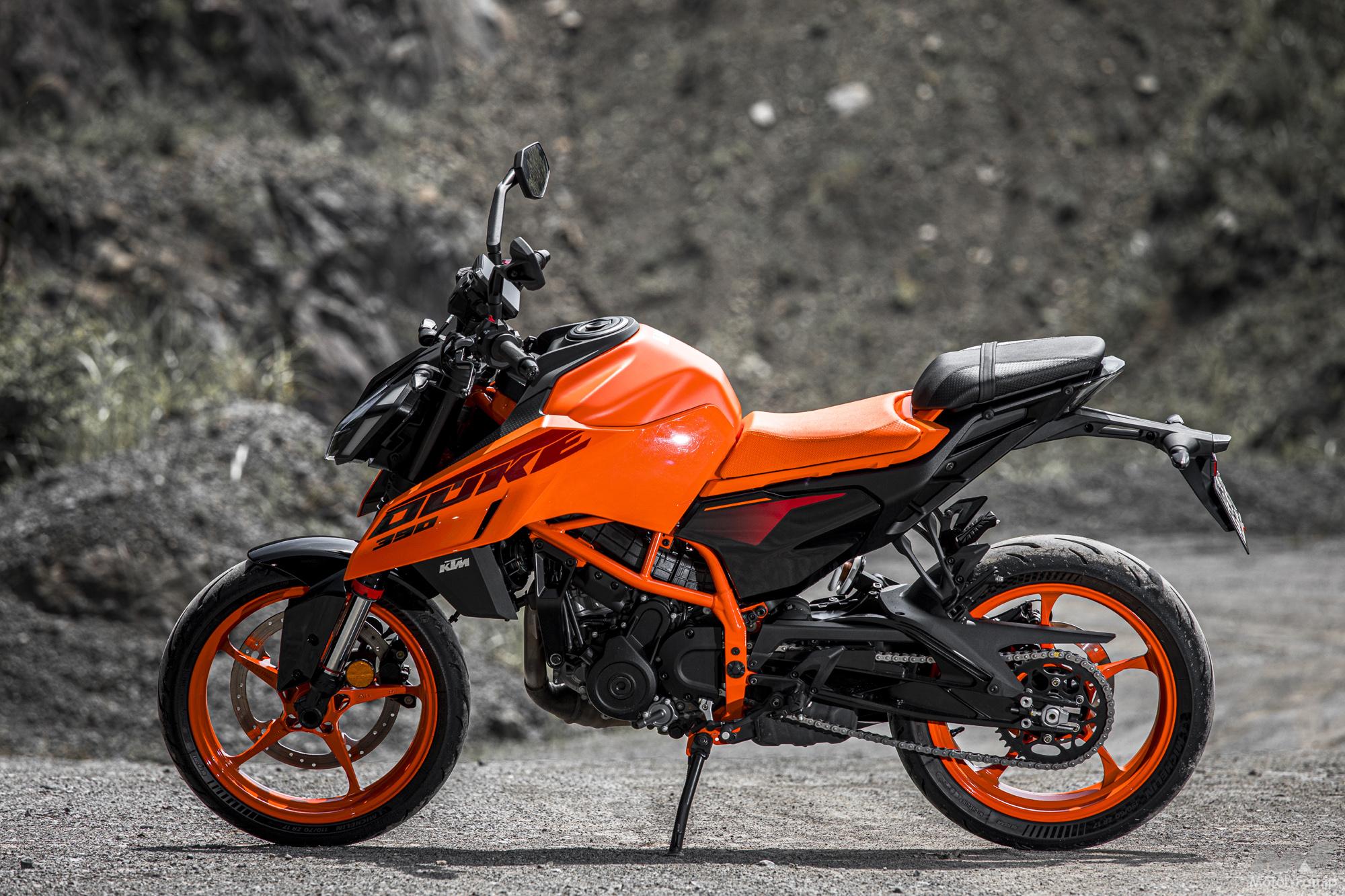

Comparison with the 2023 model
2023 390 DUKE: ¥765,000 (including 10% consumption tax)
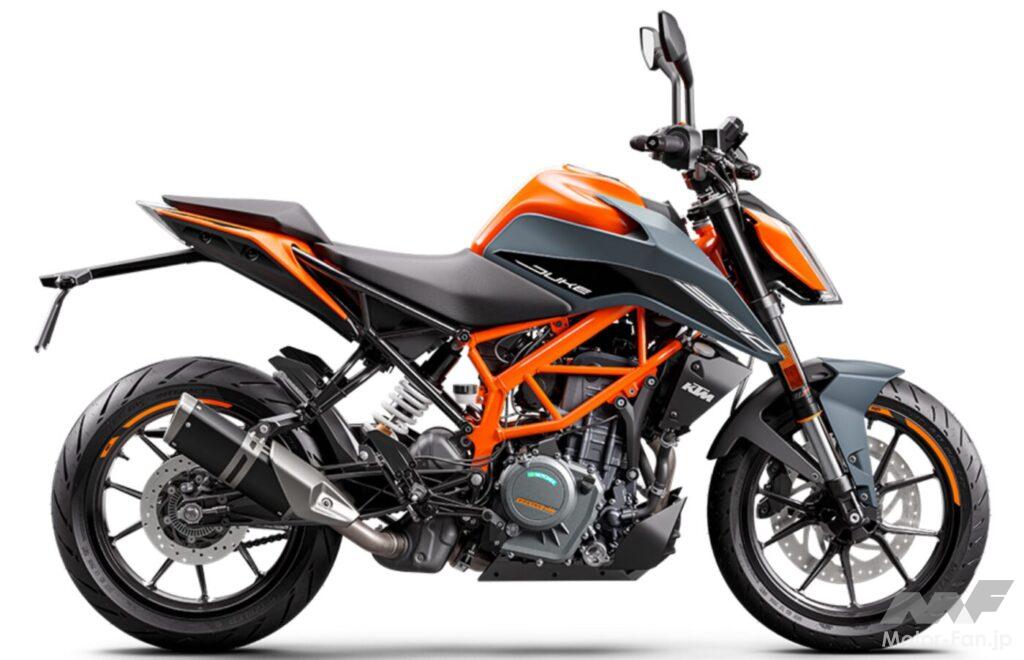
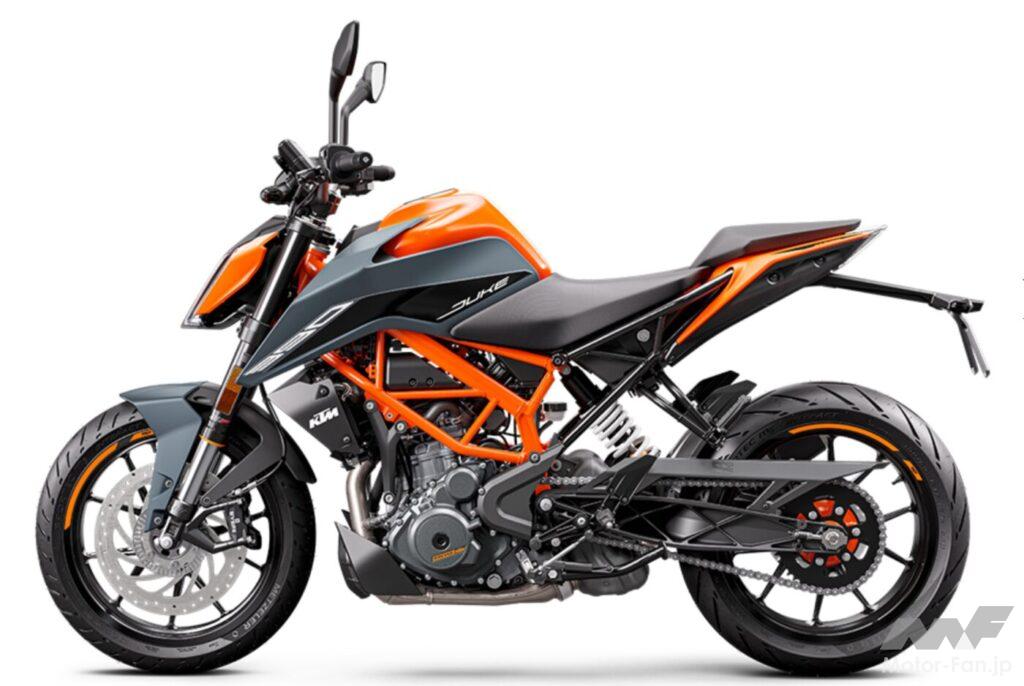
2024 390 DUKE: ¥829,000 (including 10% consumption tax)

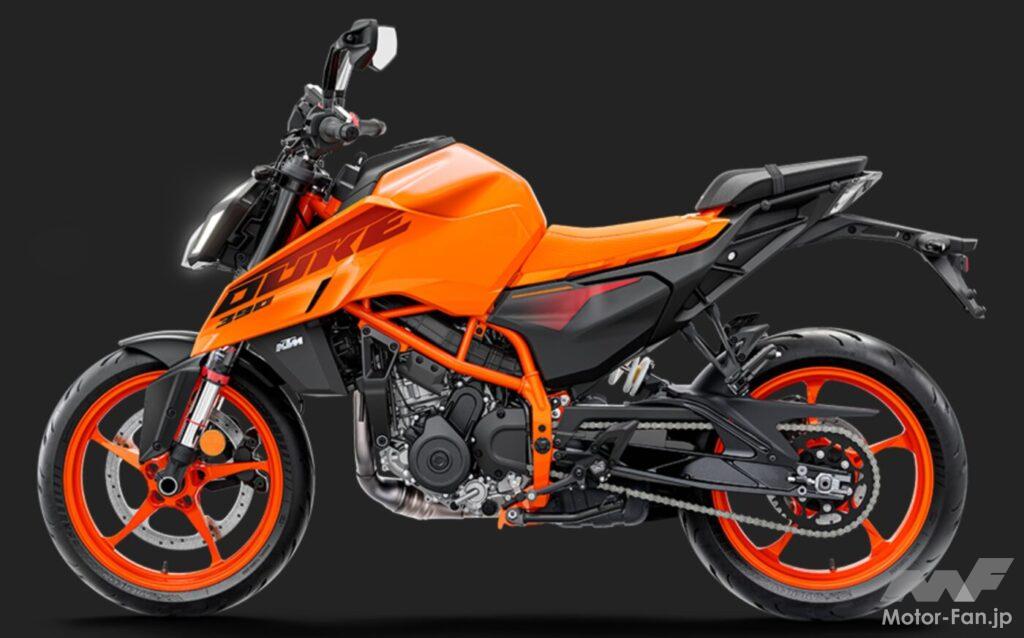
ADVERTISEMENT

The new generation LC4c engine is designed to be compact.
KTM was once known as a brand with a strong off-road presence. While there were other variations, the Japanese market, where only a small number of models close to competition models were imported, recognized KTMs as extremely expensive and high-performance.
These were motocross racing machines equipped with front and rear lamps and a center stand—a regolarita (enduro) type—and admired as hot models offering a level of potential unmatched by standard mass-produced road-going motorcycles. The newly introduced
naked bike, the “DUKE,” significantly contributed to the company’s shift away from its competition-focused brand image and toward a mass-production motorcycle manufacturer.
Currently, KTM offers a wide variety of motorcycles, with nine variations, including competition models. The DUKE, celebrating its 30th anniversary, now offers a whopping 11 models, ranging from 125cc to 1390cc, including the 2023 model. Of these, five new models, ranging from 250cc to 1390cc, are being released for 2024.
The design began in the mid-1990s with the participation of Kiska Design, the company’s Austrian development firm, which is responsible for the development of new models. The orange corporate color, which has now become firmly established, gives the watch a clearly energetic finish.
The exterior of this test vehicle is instantly recognizable as a Toyota product. Incidentally, even in the Atlantic Blue color variation, the orange accents on the wheels and frame stand out. We’ve included four side-on publicity photos, including a comparison with the 2023 model, but the orange color scheme of the latest 2024 model is even more prominent. Another notable feature is the thorough pursuit of lightweight design down to the smallest detail.
First, the aluminum cast wheels have been changed from the 2023 model’s black 10-spoke design to the new model’s thin orange 5-spoke design with a slight twist in the direction of rotation. The axle shafts are also newly designed with larger diameter hollow shafts. The front single disc rotor, relocated from the left side to the right side, has also been replaced with a ring-type rotor mounted on the spokes rather than the hub. Both highlight the company’s commitment to weight reduction.
The orange trellis frame is also a new design. The steel tubes have been redesigned to balance size and rigidity, and the new design, with the wider rear pivot section being particularly impressive. The bolt-on rear frame is also made of Ami die-cast.
The body dimensions remain unchanged, and the 1357mm wheelbase remains nearly the same between the old and new models. However, the volume around the tank has increased slightly. The tank capacity has been increased from 13.5L to 15L, giving it a more massive appearance. Incidentally, the bodywork and wheels are essentially the same as the 250 DUKE, albeit with different colors.
The enlarged left and right shrouds extending forward from both sides of the tank house a radiator for the water-cooled engine. The reduction in the coolant capacity of the cooling system from 1.2L to 1L also indicates consideration for weight reduction, but the adoption of a new curved radiator, which increases the effective surface area relative to the frontal projection area, also improves heat dissipation efficiency. Both are clear indications of thorough weight-saving design.
The WP suspension, both front and rear, has also been refined. The rear swingarm has also been redesigned, and the monoshock unit with white coil springs is now mounted more forward. If we consider uprightness to be 90°, the 2023 model was tilted forward by 50°, while the 2024 model is even more tilted forward at 30°. What’s new is the offset mounting on the right side. The shock absorber allows adjustment of preload and rebound damping. Meanwhile, the φ43mm inverted front shock absorber is equipped with a rebound damping adjuster on the right and a compression damping adjuster on the left. Both front and rear suspensions have a 150mm of stroke. The new engine,
called the “LC4c,” is a water-cooled, forward-leaning single-cylinder engine. It features a 398.7cc DOHC narrow-angle four-valve system driven by a right-side cam chain. The 2023 model had a bore and stroke of 89 x 60mm, making it 373cc, but the new model’s stroke has been extended by 4mm to 64mm. Both are short-stroke types, but they are slightly closer to square.
There are no changes to the cylinder bore, and the intake and exhaust valve heads remain unchanged at φ36mm and φ29mm. There is also no change to the valve drive system via a rocker arm known as a cam lever. However, the combustion chamber has been completely redesigned, and the compression ratio has been slightly increased from 12.54:1 to 12.59:1. The pistons are also made of forged aluminum.
As a result, maximum power has increased from 32kW (44ps) to 33kW (45ps), and maximum torque from 37Nm to 39Nm. It appears that both compliance with emissions regulations and improved performance have been achieved. According to the information on the website, the vehicle weight has also been reduced from 150kg to 149kg (semi-dry weight).
The six-speed transmission and secondary reduction ratio remain the same, but the primary reduction ratio has been increased from 2.667 to 2.606. A quick shifter is also standard equipment. The electronically controlled throttle now has selectable ride modes. It also comes with launch control, which is beneficial for acceleration from a standstill.
The ride is lively and the perfect all-rounder.
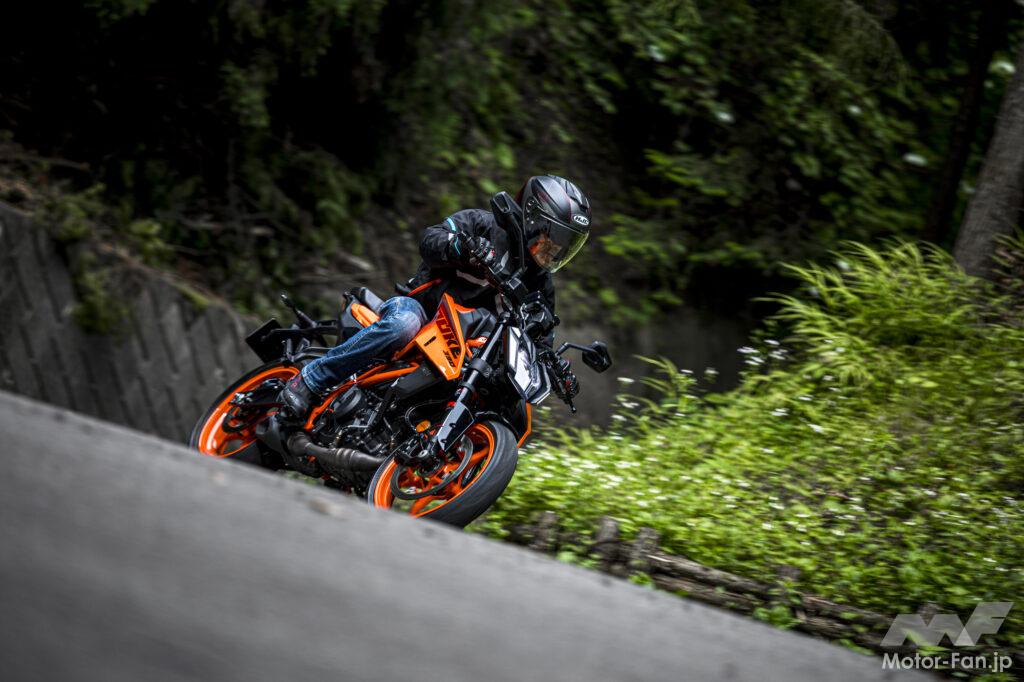
To get straight to the point, it was a very appealing bike. One reason was that it perfectly matched my build and preferences, but more than anything, it was the way its thrilling high performance was effortlessly delivered. It allowed me to fully enjoy the thrill of handling a motorcycle even in the most ordinary riding conditions.
When I saw the test bike in front of me, the volume around the tank felt a little bulky, but once I sat on the orange seat, the body design, with its moderately recessed knee grip area, felt smart and comfortable.
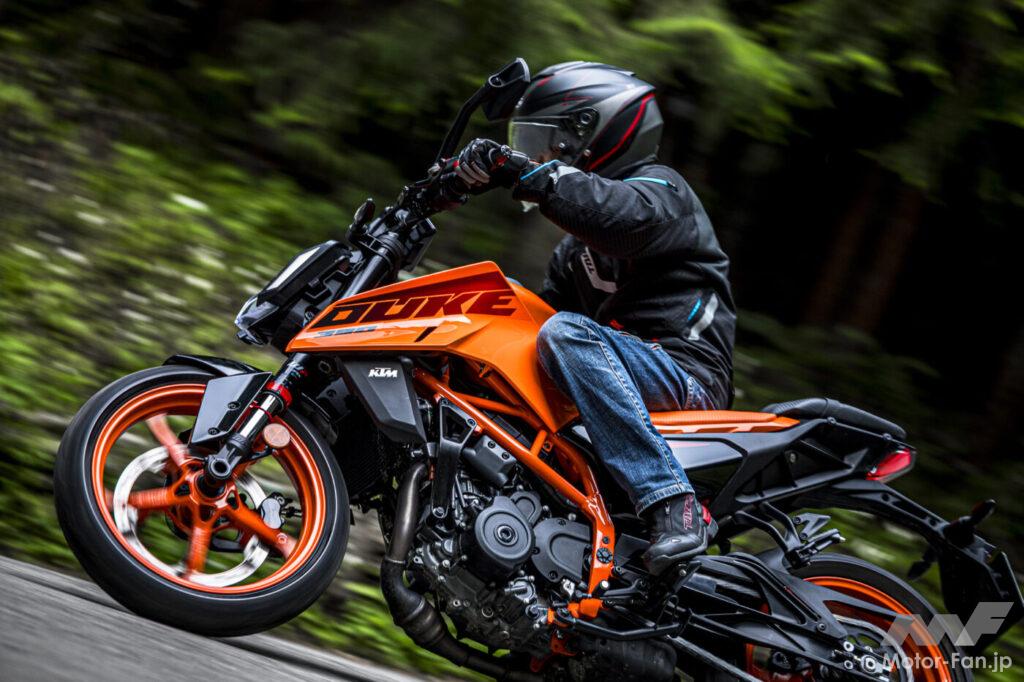
The seat cushion was just the right amount of firm, with a good amount of tension, making it easy to shift my weight. For example, even in cornering situations where I was in a dramatic hang-on position, it was easy to move forward, backward, left, and right, and it was also easy to hook the back of my outside knee. Even in a slightly crouched position, my posture was stable, making it easy to handle even in an aggressive, sporty riding style.
The ride, which naturally fosters a sense of unity between man and machine, underscores its character as a naked sports bike. What’s more, it exudes a sense of anticipation for an exciting ride.
The bike’s size isn’t too large for a 400cc class bike. As seen in the photo of the foot reach test, both feet can reach the ground up to the heels, and even when supporting with one foot, the bike isn’t too heavy, making it easy to get on and off and handle. This moderate scale makes it easy to get into.
From the moment I picked up the handlebars, straddled the seat, and started off, I was impressed by how easy it felt to handle, like a familiar bike I’d ridden for a long time, without feeling daunting. The intuitive feeling of being able to control it (a straightforward, easy-to-follow feel) and the engine performance, which isn’t too extreme, are also not to be missed.
When the engine was cold immediately after starting, the torque felt a little weak below 3,000 rpm, but after warming up, it was smooth and tenacious, even when starting and riding at low speeds. The crank mass feels light, and the power output characteristic is first-rate, with the sharp acceleration you expect from a short-stroke engine. The light, crisp rhythm and powerful response to right-hand throttle operation are truly lively.
Whether riding in the city or on mountain roads, the responsive and agile power output ensures a lively ride, guaranteed to instantly rejuvenate the rider’s spirit and make them feel energized.
The tachometer’s red zone starts at 9,500 rpm, but the torque is strong from 3,000 rpm, and the punch from 5,000 to 7,000 rpm is quite impressive. Taking advantage of the cross transmission to shift up early in succession, the acceleration performance is exhilarating and highlights the bike’s first-rate potential. The
engine also offers smooth revs, and the entire meter illumination turns orange at 8,500 rpm. To fully utilize the torque characteristics, shifting up around 7,500 rpm is the most efficient way to do so. The quick shifter’s feel is also quite satisfying.
Thanks to its light weight, its dynamic performance cannot be underestimated. Its agile handling during overtaking and corner exits rivals that of a high-end mid-class bike. From urban areas to suburban areas, mountain passes to highways, you can enjoy ample high performance.
The handling is also quick and responsive, allowing you to easily navigate winding roads with a series of tight corners. The caster angle has been increased by one degree to 64 degrees, and the slightly wider handlebars also contribute to an outstandingly light and nimble steering feel.
The ride is so exciting and energetic that you’ll find yourself wanting to take each corner at high speed. It’s an exciting ride that a 250cc class bike simply can’t match. As mentioned at the beginning, the lively engine feel and responsiveness are truly exhilarating.
Braking requires a somewhat firm grip when braking suddenly, but both front and rear are easy to control. The front and rear suspensions are well-finished for footwork, but on rough roads I found myself wishing for more flexible shock absorption, especially in the rear.
In any case, it is an excellent product when riding on normal paved roads. The only thing that bothered me was the slight vibration that occurred in the handlebars when riding continuously at high speeds. However, it wasn’t noticeable while riding. Incidentally,
the engine speed when cruising at 100km/h in sixth-speed top gear was just under 6,000rpm.
With its reasonable size and high performance that is sufficient in any situation, this is a bike that makes you want to own it as an all-around sports bike for use in Japan.
Foot reach check (rider height 168cm/weight 52kg)
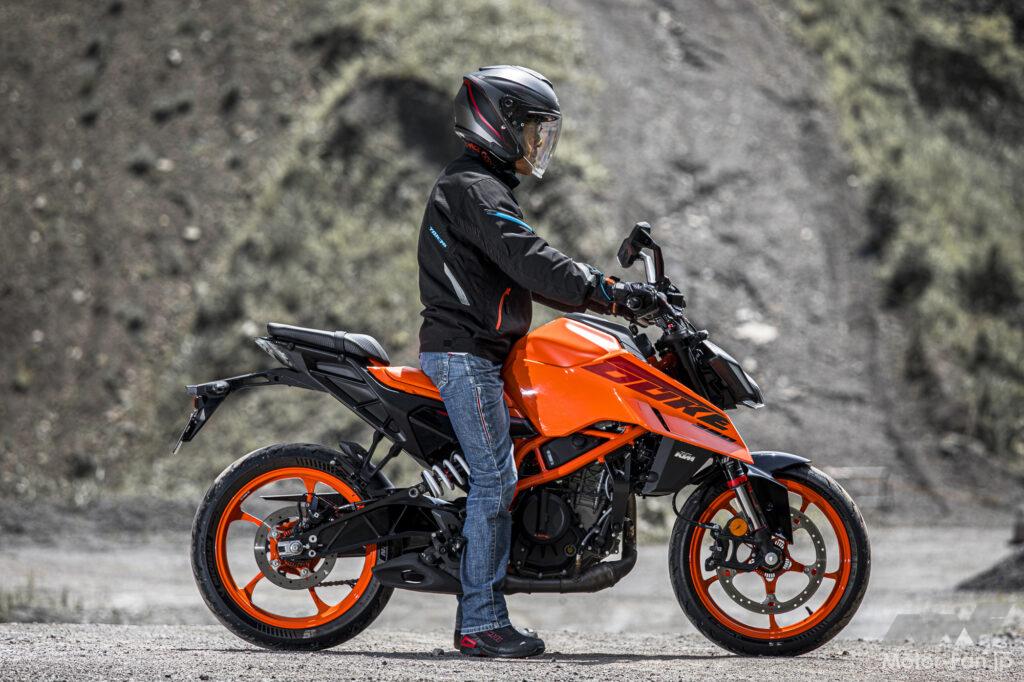
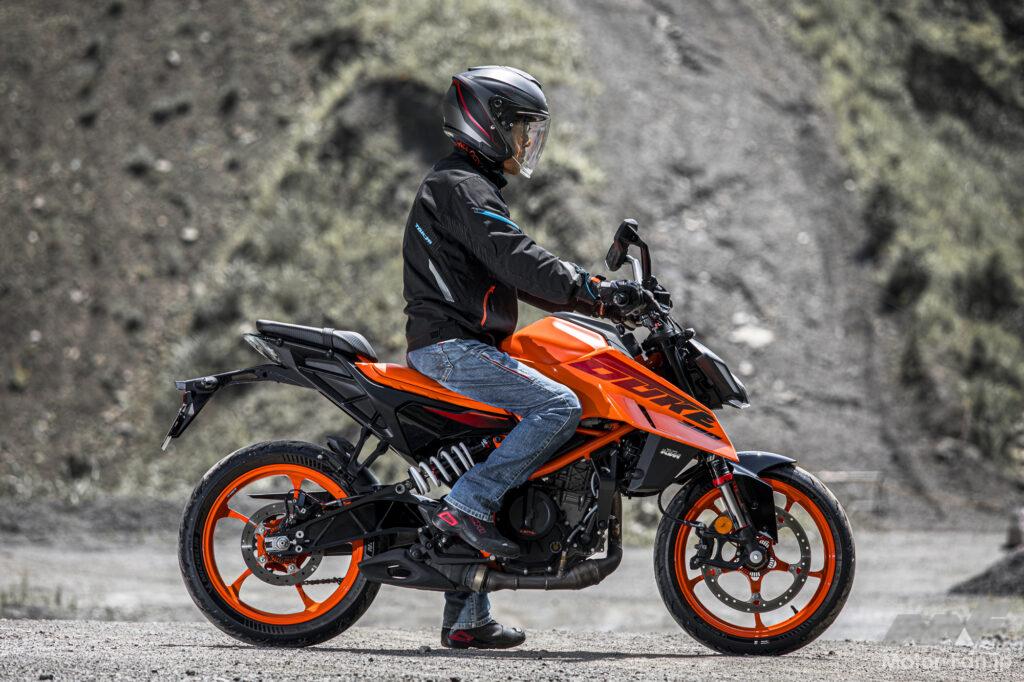
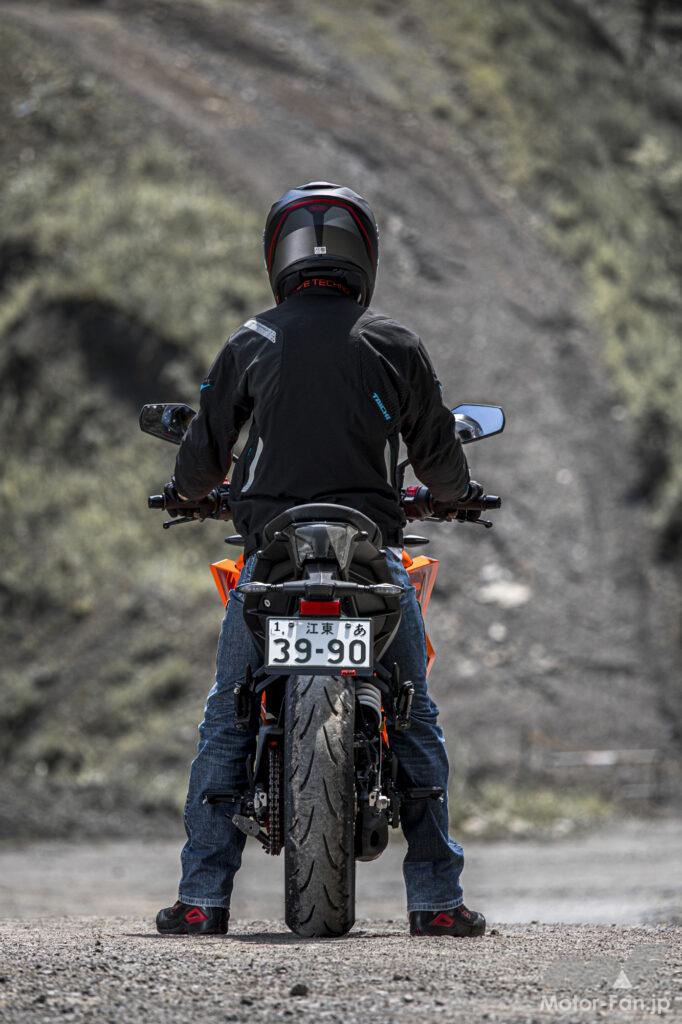

The seat height is 820mm. Combined with the sleek body, it is easy to reach the ground with your feet. As you can see, both feet are firmly on the ground up to the heels. The body is lightly supported, and you can intuitively tell how easy it is to handle.