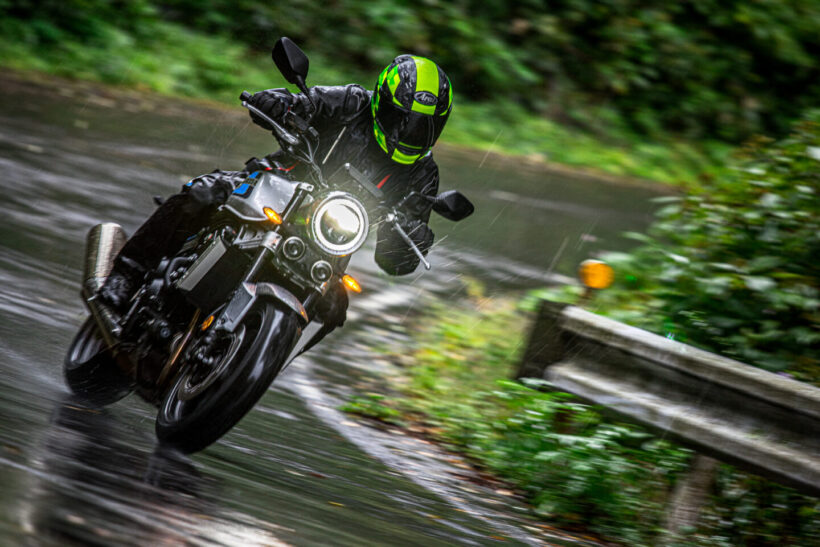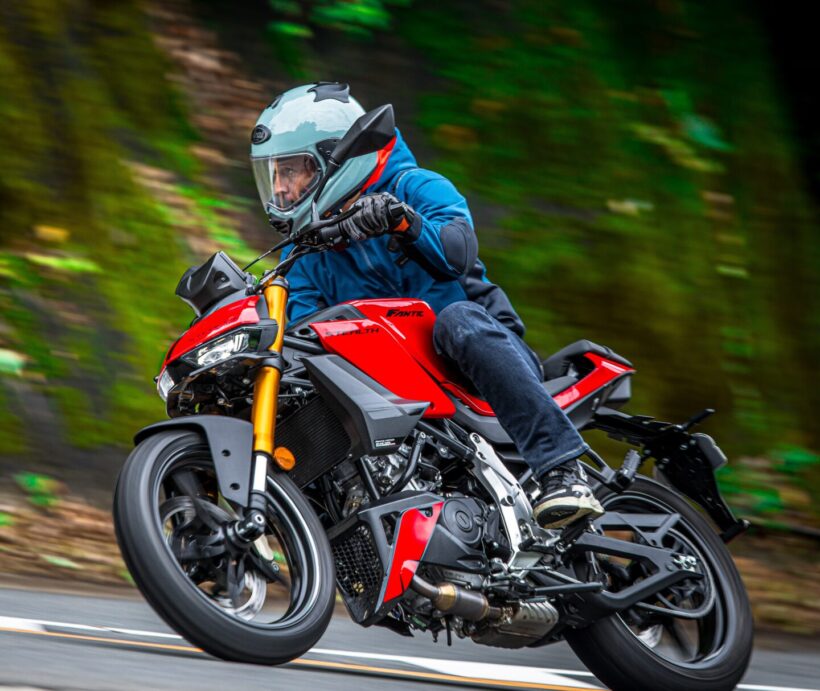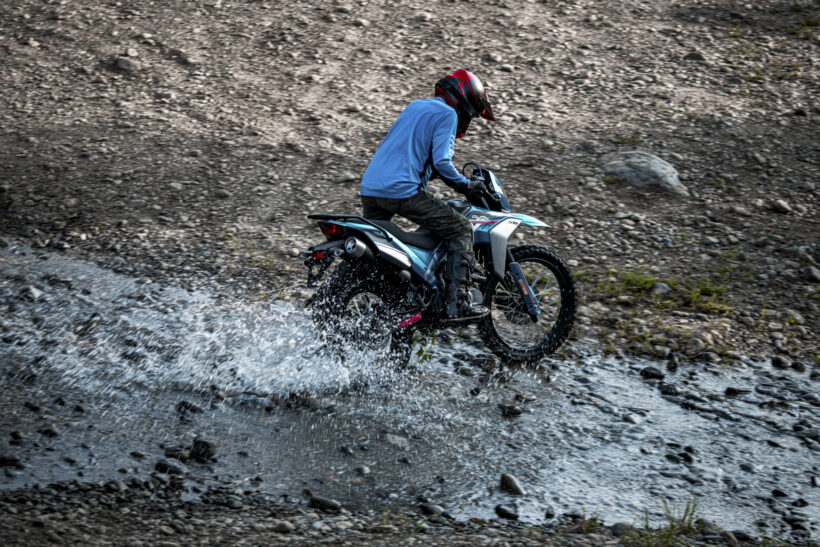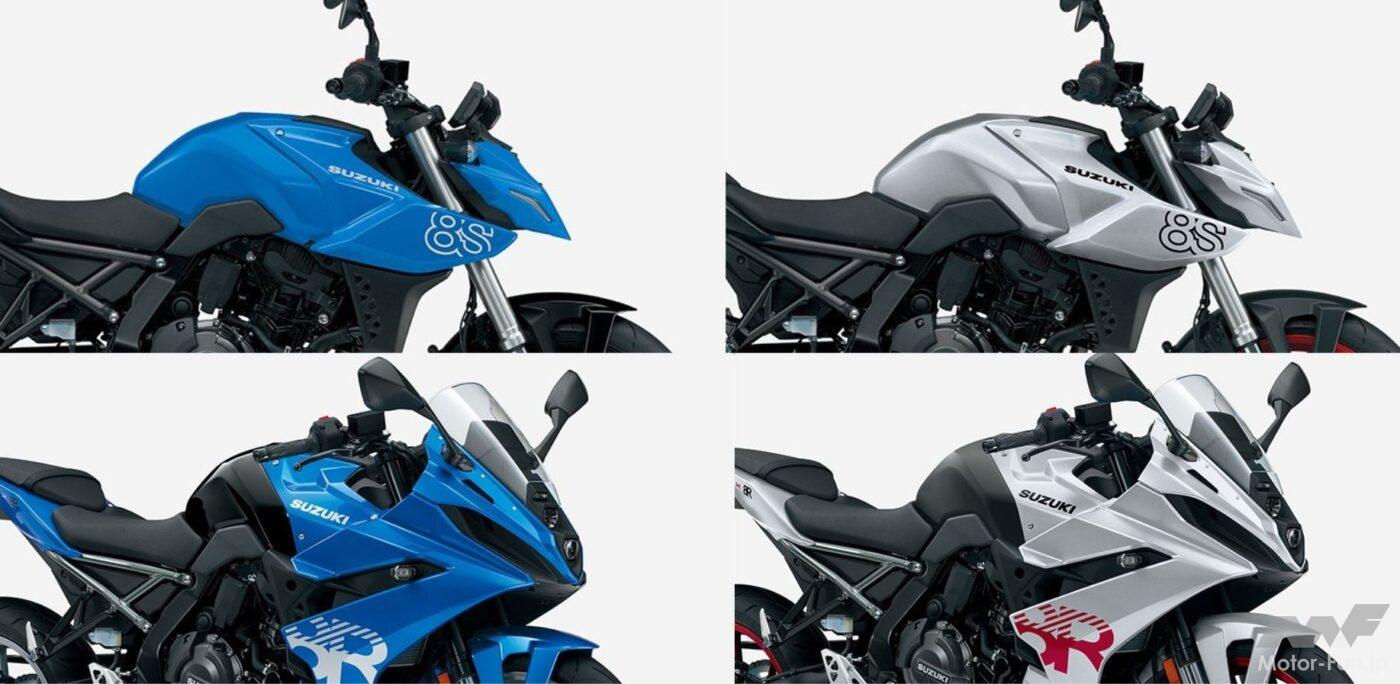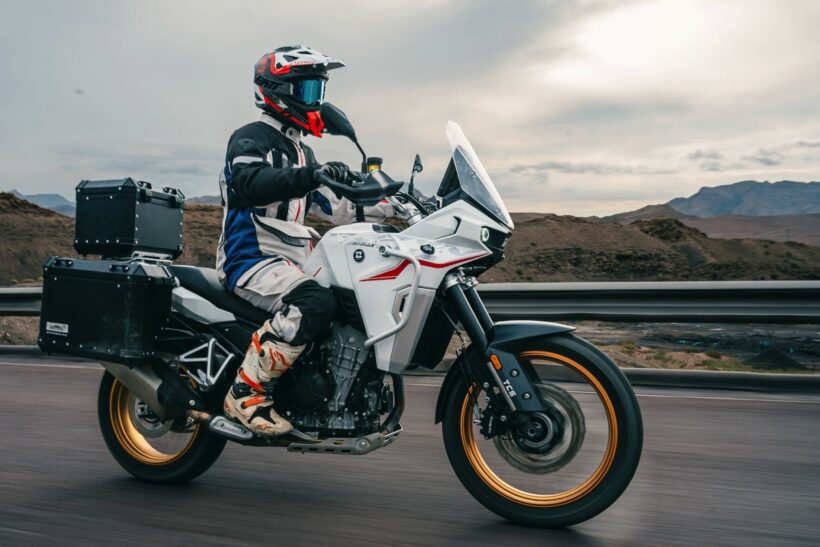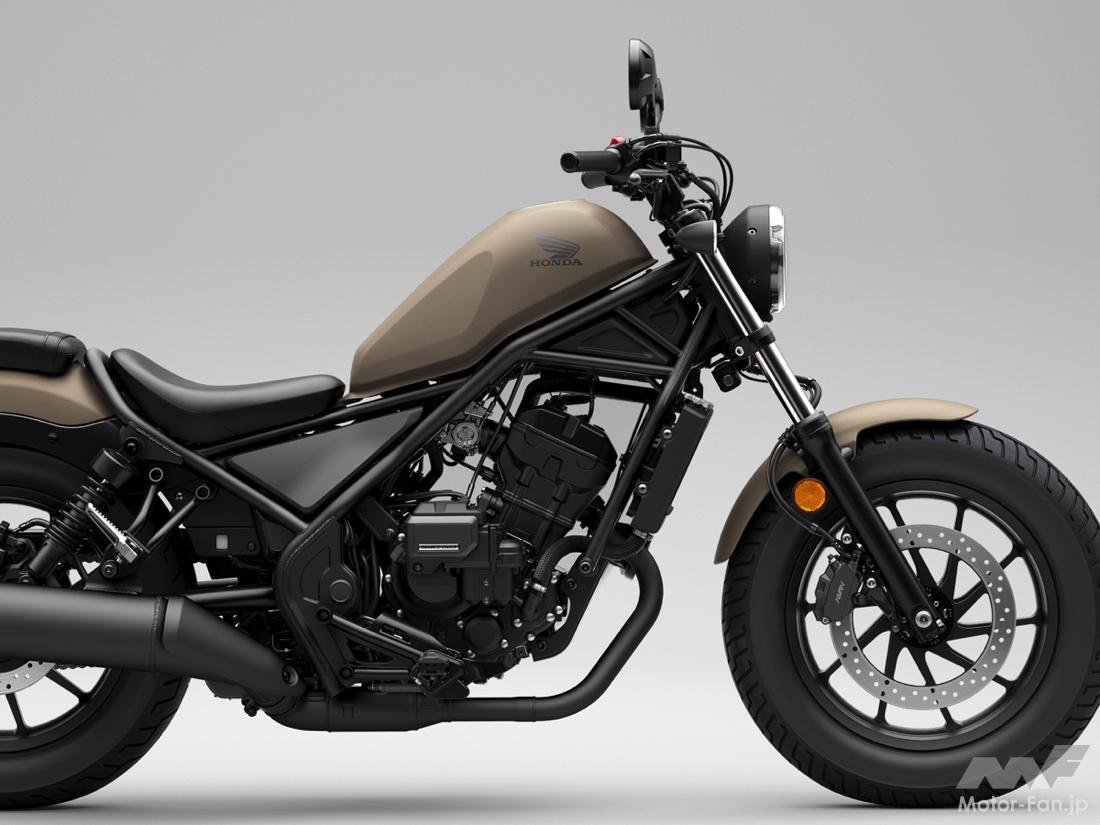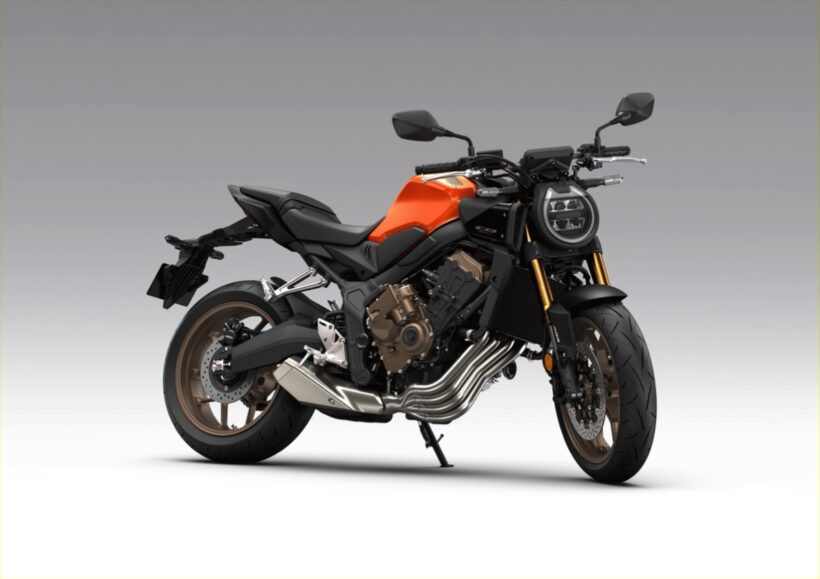

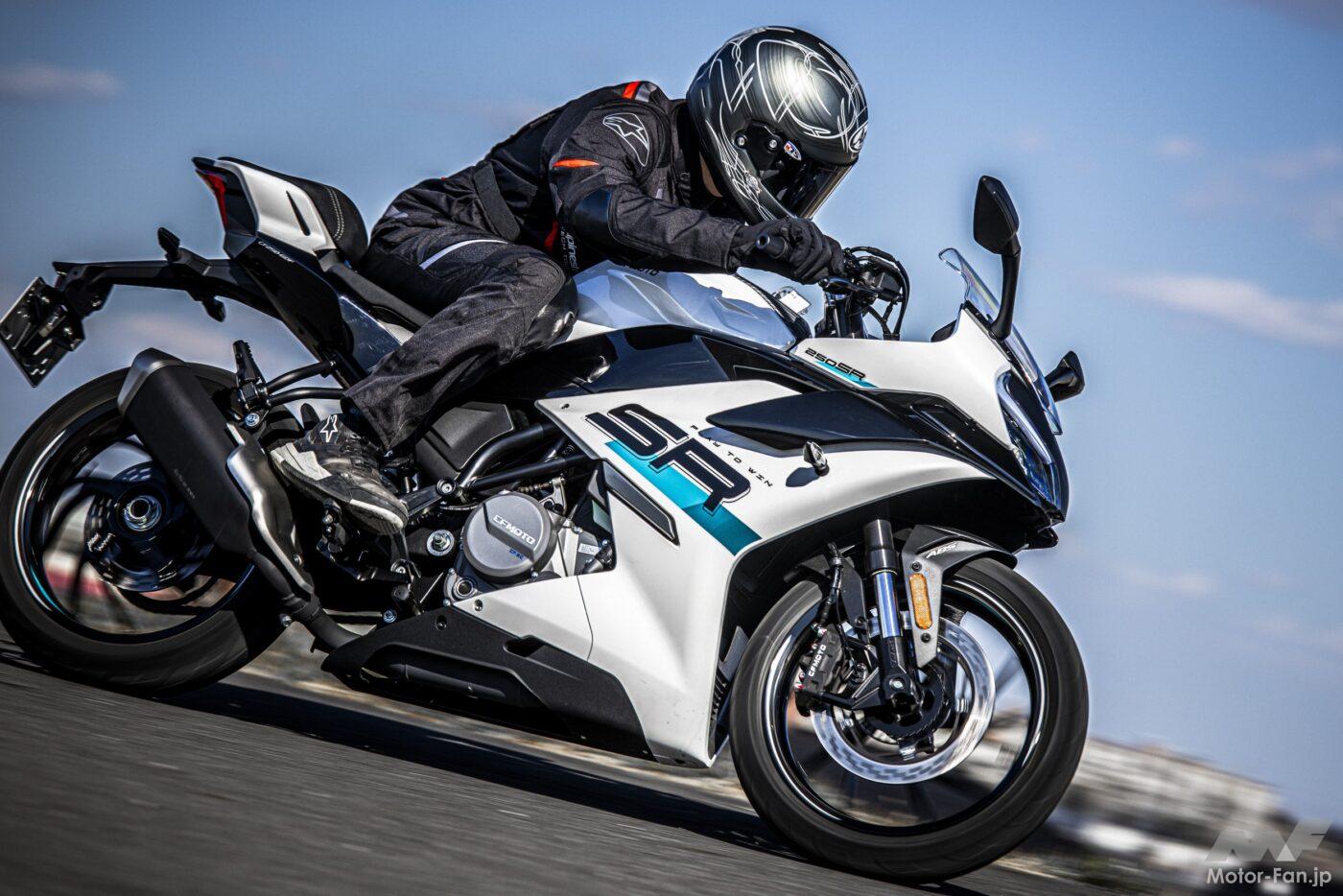

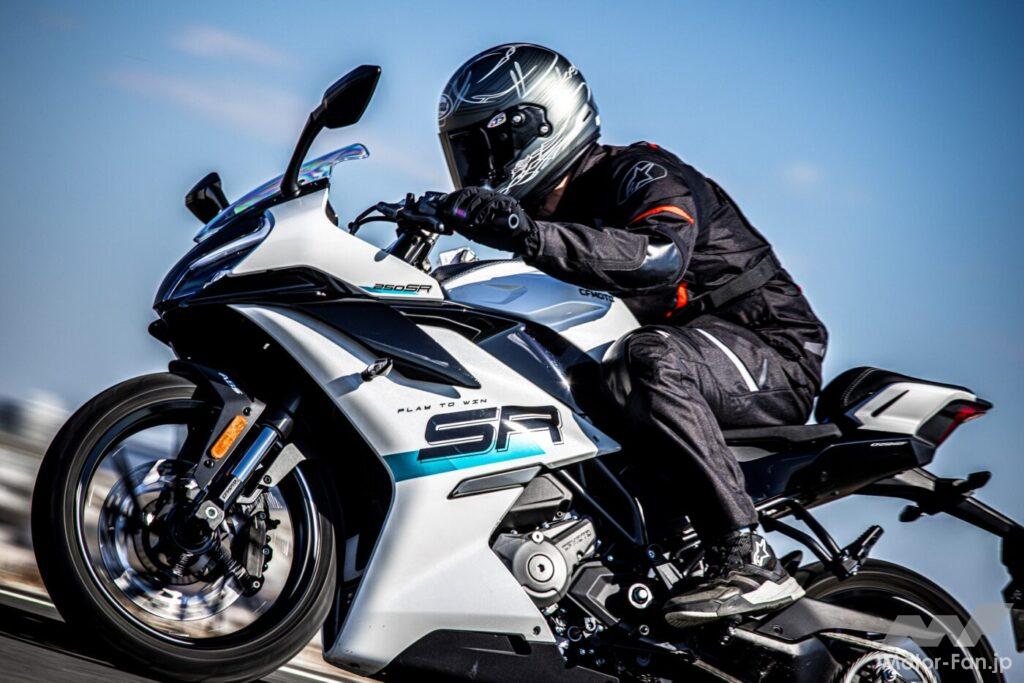
CFMOTO 250SR-S…674,300 yen (as of early March 2025)
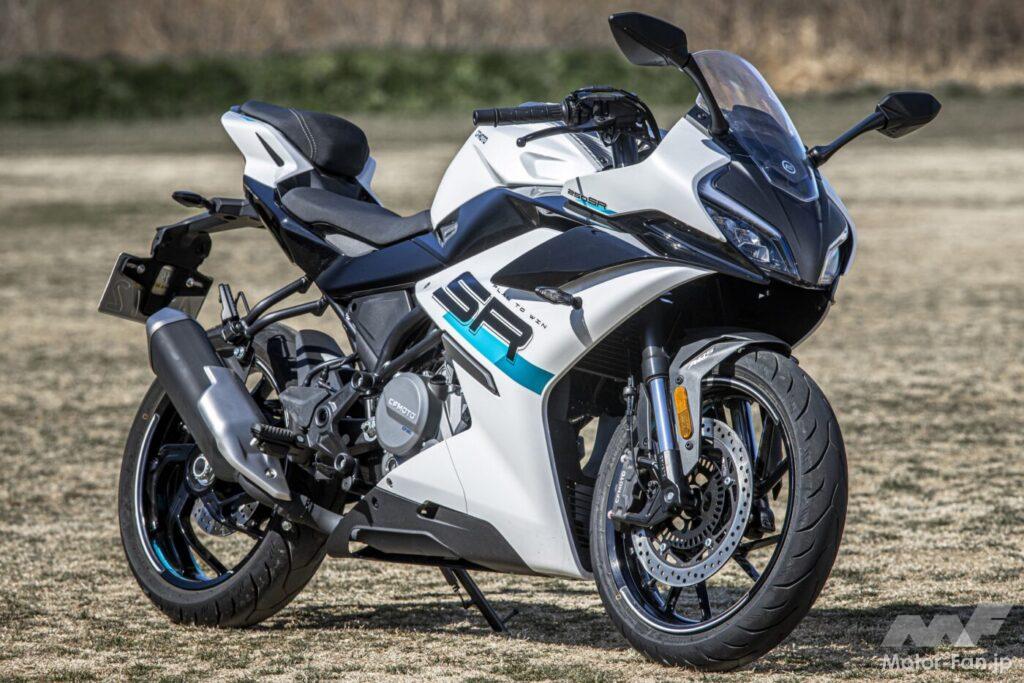
It features a stylish exterior inspired by the concept model “SR-C21” unveiled by CFMOTO in 2021. Its direct rival is the Suzuki Gixxer SF250 (514,800 yen), which is equipped with the same single-cylinder engine, but the 250SR-S is equipped with an inverted fork, a single-arm swingarm, radially mounted 4-piston calipers, a TFT full-color LCD meter, and even winglets on the front cowl, making it an overwhelmingly more spectacular bike.
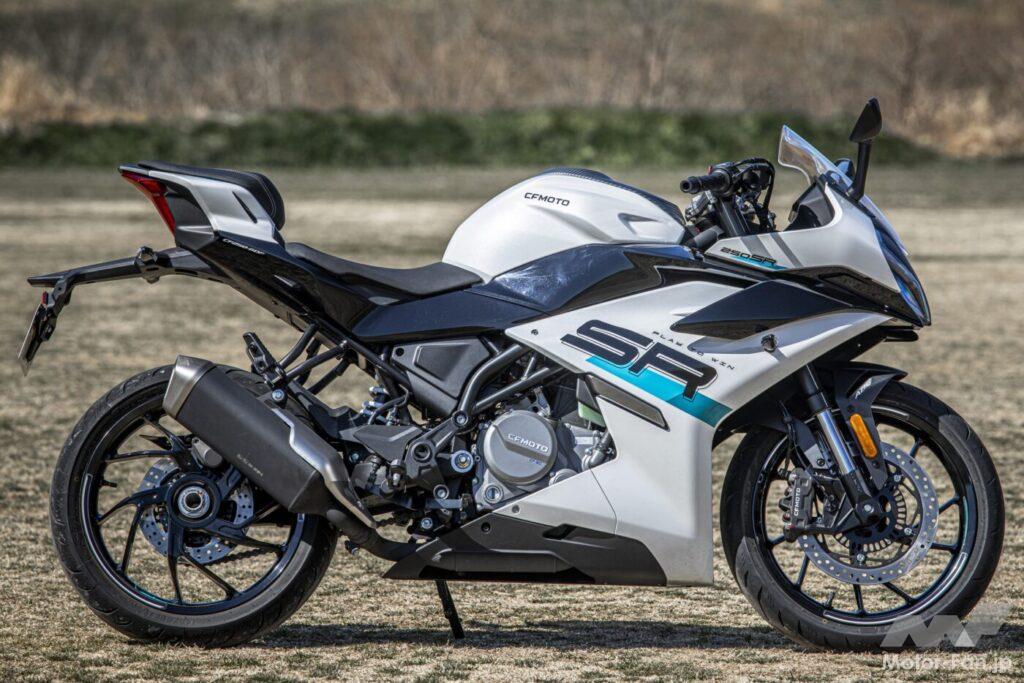
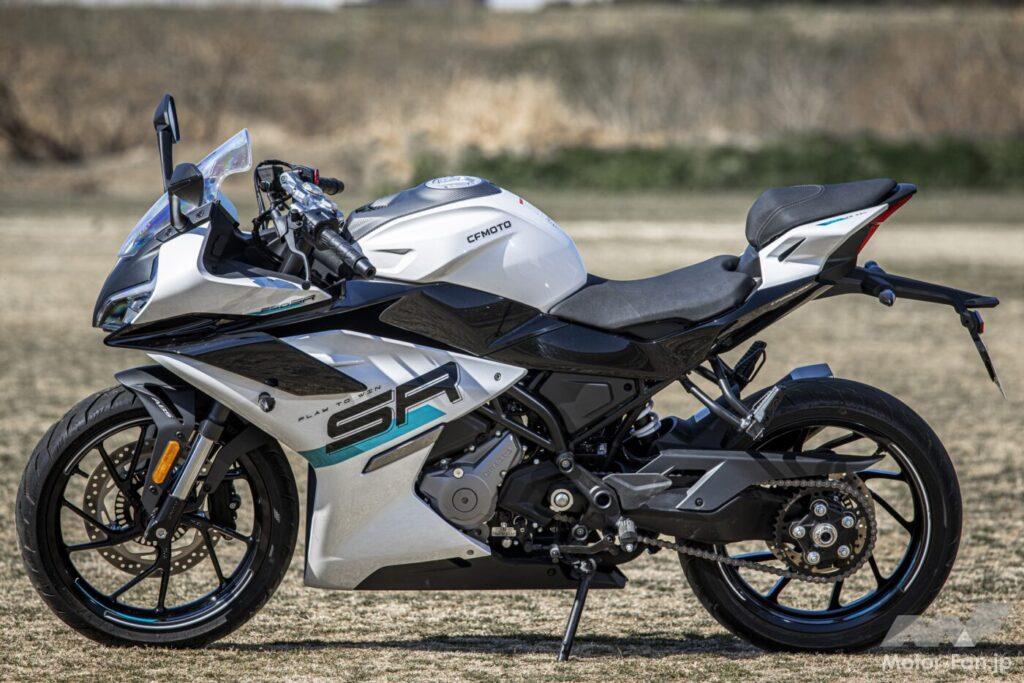
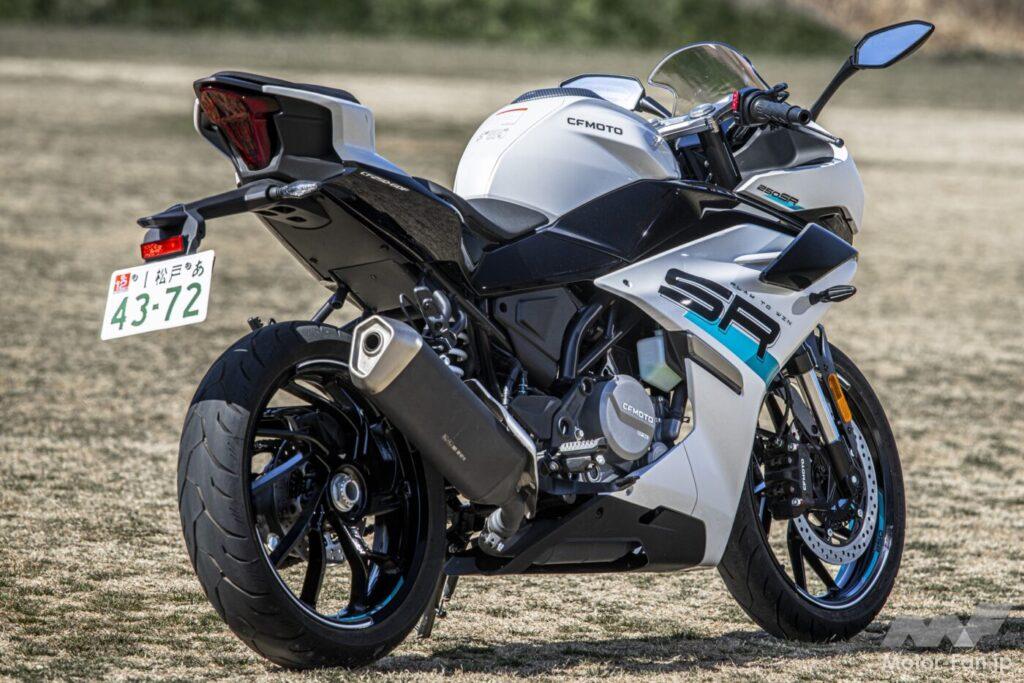
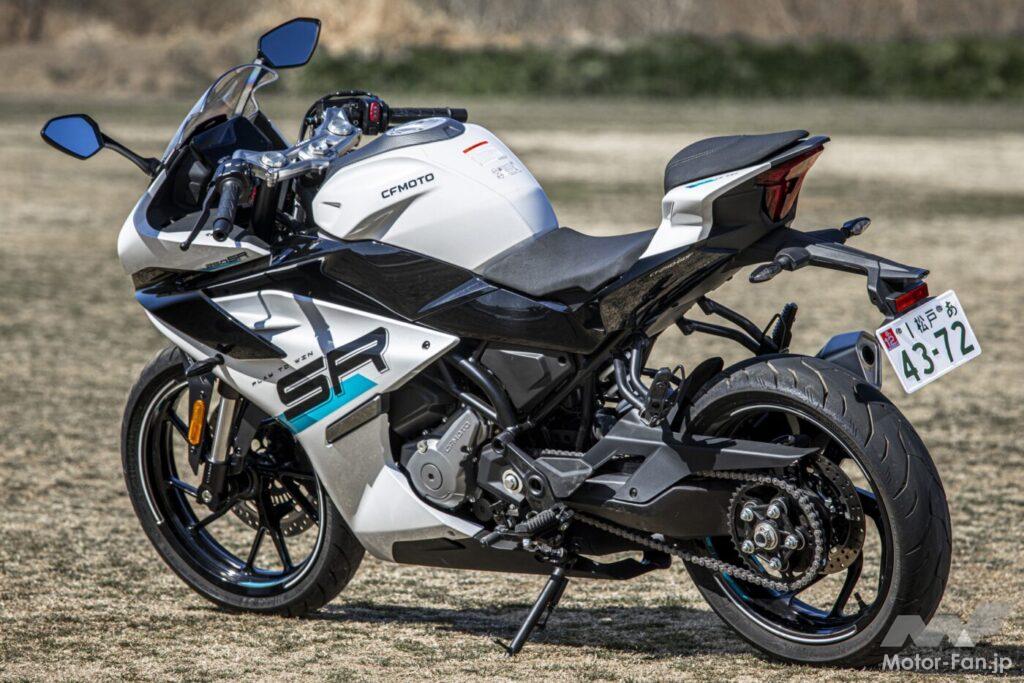
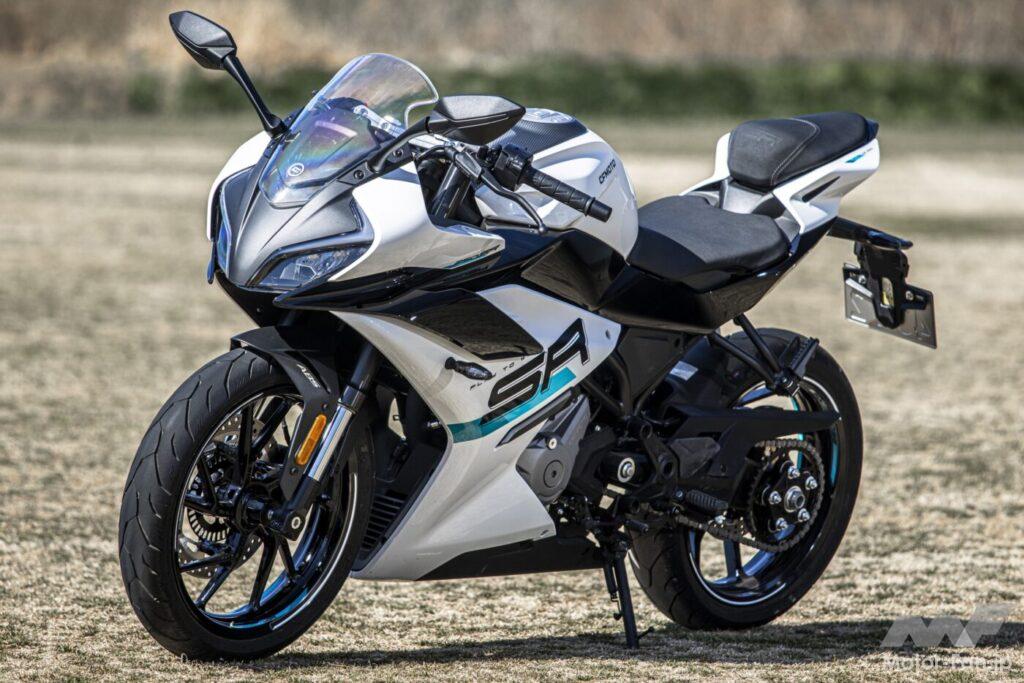
The body colors are Nebula White (pictured) and Nebula Black, and the price, color, and arrival date are subject to change.
ADVERTISEMENT
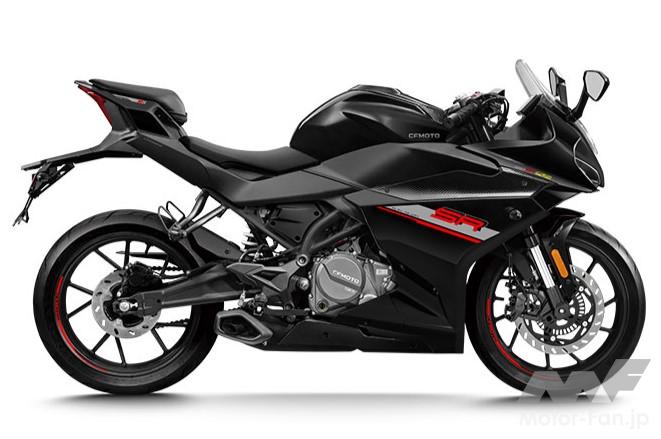
It was based on the “250SR” (SR stands for Sports Racing), which has not been introduced in Japan, and this model has a double-sided swingarm.
Once it exceeds 5,000 rpm, it shows its true power in a two-character curve.
CFMOTO was founded in Wenzhou, China in 1989 and is currently headquartered in Hangzhou. It is a motorcycle manufacturer that has grown significantly, having entered into a commercial partnership with KTM in 2011 and starting a joint venture with Yamaha in 2023. Those familiar with MotoGP will remember that David Alonso, a member of the CFMOTO Asper Team, won the championship in the MOTO3 class last year.
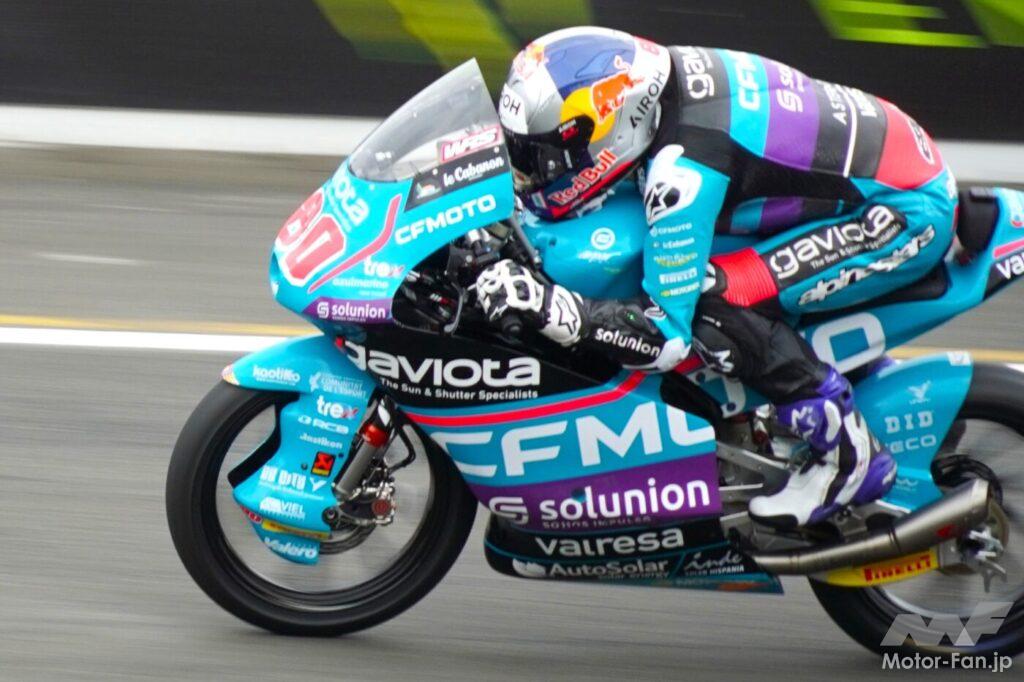
In 2024, CFMOTO Asper Team will win the MotoGP MOTO3 class championship, with KTM and rider David Alonso (pictured).
The model I test rode this time was the light motorcycle sports model “250SR-S.” It is one of the hottest genres around the world, and depending on the destination, the 298cc “300SR-S” is also sold. The engine is a short-stroke 249cc water-cooled 4-stroke single cylinder with a DOHC 4-valve valve train. The maximum output is officially stated to be 29.2ps, and this is mounted in a lightweight body weighing 155kg.
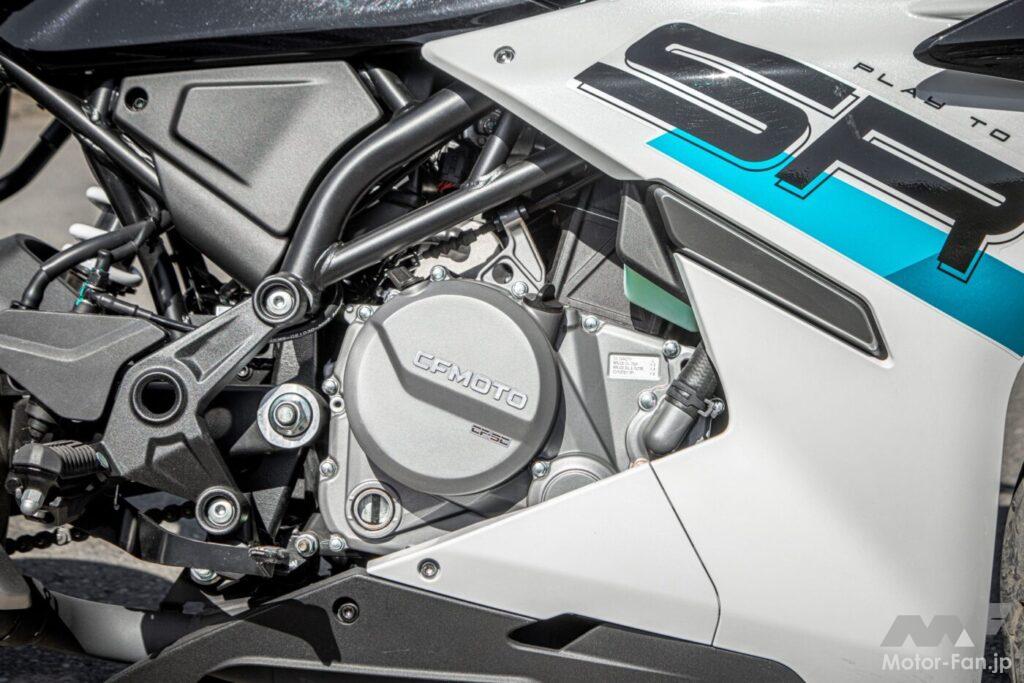
The engine is a 249cc water-cooled, four-stroke, single-cylinder DOHC 4-valve engine with a single-axis balancer. The transmission is six-speed and uses a slipper clutch. The official maximum output is 29.2ps. This is not as good as the CBR250RR’s 42ps or the YZF-R25 or Ninja 250’s 35ps (all three of which are parallel twin-cylinder), but it is better than the oil-cooled single-cylinder Gixxer SF250 (26ps).
Press the starter button to start the engine. The mechanical noise is a little loud, perhaps amplified by the cowling, but the exhaust sound is crisp and clear, typical of a single-cylinder engine. The clutch uses a slipper mechanism, so the lever is easy to operate, and shifting from neutral to low is also smooth. After a brief warm-up, it’s time to start the machine.
The clutch engages just above idle, at around 2,000 rpm. The torque is still weak in this range, and it’s not until above 2,500 rpm that the throttle response becomes smooth. Thanks to its light weight, the bike is easy to launch, even on steep uphill slopes, but it’s far from being torquey. However, this is merely a subtle undertone. Around 5,000 rpm, the engine’s power curve rises in a quadratic fashion, and it really unleashes its full potential as it revs straight up into the redline. This duality, which changes dramatically at certain rev ranges, is reminiscent of the Kawasaki Ninja 250SL, a water-cooled single-cylinder engine that Kawasaki once sold. The pursuit of power to compete with twin-cylinder engines resulted in a bike that was reborn as a true mid-to-high-revving engine.
The exhilarating feeling of a clear power band is what makes this water-cooled single-cylinder engine so fun. Even though it has a single-axis balancer, there is a lot of slight vibration, but even that vibration contributes to the bike’s powerful feel, making it so much fun to ride. The target audience for this machine is likely young riders, but even veteran riders will likely find this satisfying engine feel addictive.
The suspension works well, and the handling is natural and easy to handle.
The frame is mostly hidden by the cowling, but a look at the parts list reveals that it shares the same platform with other variant models, including the naked 250NK, scrambler 250CL-X, and cruiser 250CL-C.
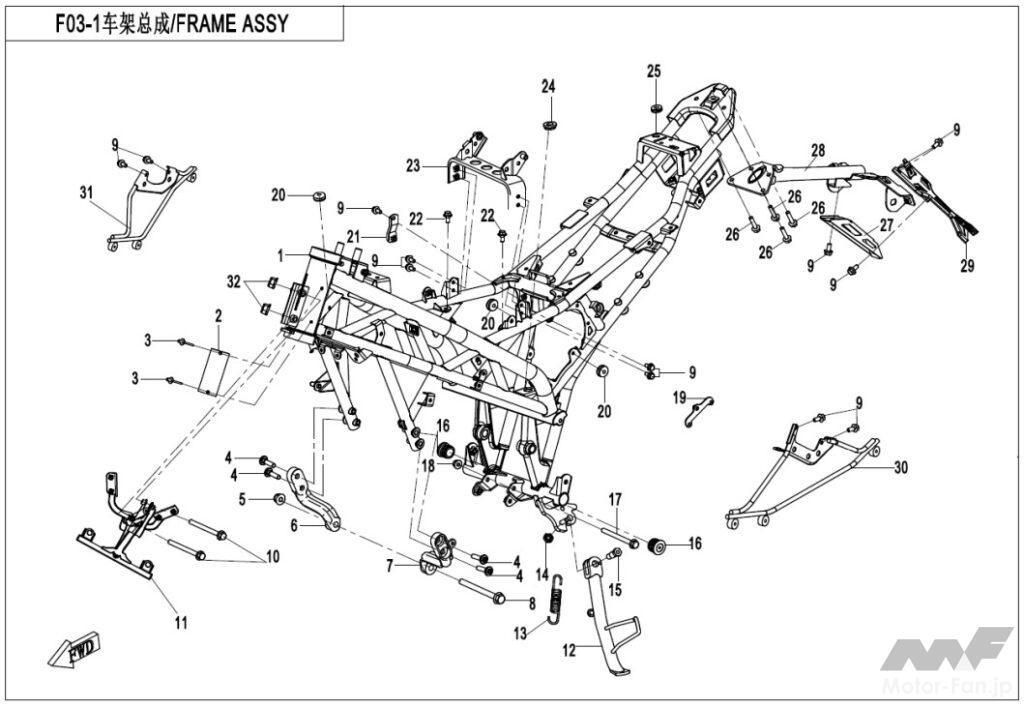
From the CFMOTO parts list. The frame is a diamond type made of steel pipes.
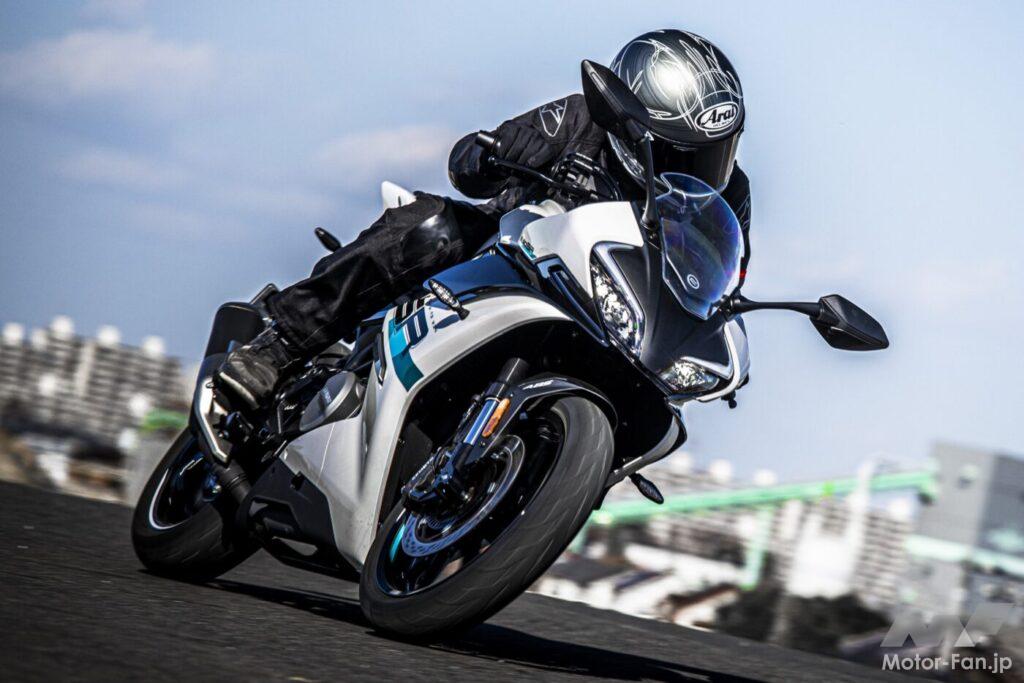
When actually riding, the rigidity around the front is as high as that of the φ37mm inverted front forks, making it easy to trace the intended line even under hard braking. The basic handling is easy to handle, with the steering angle naturally adjusting to the lean of the body, and the impression remains the same from tight turns like U-turns to high-speed corners.
The front fork has almost constant movement from the beginning to the depths, and it gives the impression of using a single-rate spring or a similar spring. The movement is very clear, and it will become smoother as the break-in period progresses. The same goes for the rear, which, combined with the CST radial tire, creates a comfortable ride.
Regarding the brakes, perhaps because the pads on the test vehicle had not yet broken in, the front brakes required a strong lever input. However, the braking force generated was directly proportional to the amount of pressure applied, so controllability could be said to be excellent. On the other hand, the rear brakes were easy to adjust speed by adjusting the pressure on the pedal, so I had no complaints.
Currently, the bike closest in price to the 250SR-S is the YZF-R25 with its water-cooled parallel twin engine, with a difference of just 16,500 yen. The CFMOTO is made in China, while the Yamaha is made in Indonesia, and the former, with its TFT LCD meter, even gives off a more luxurious impression. The lightness that comes with a single-cylinder engine and the fact that not many people are riding it yet are the selling points of the 250SR-S, so if you’re interested in this styling, we recommend you take it for a test ride.
Riding position and foot reach (175cm/68kg)
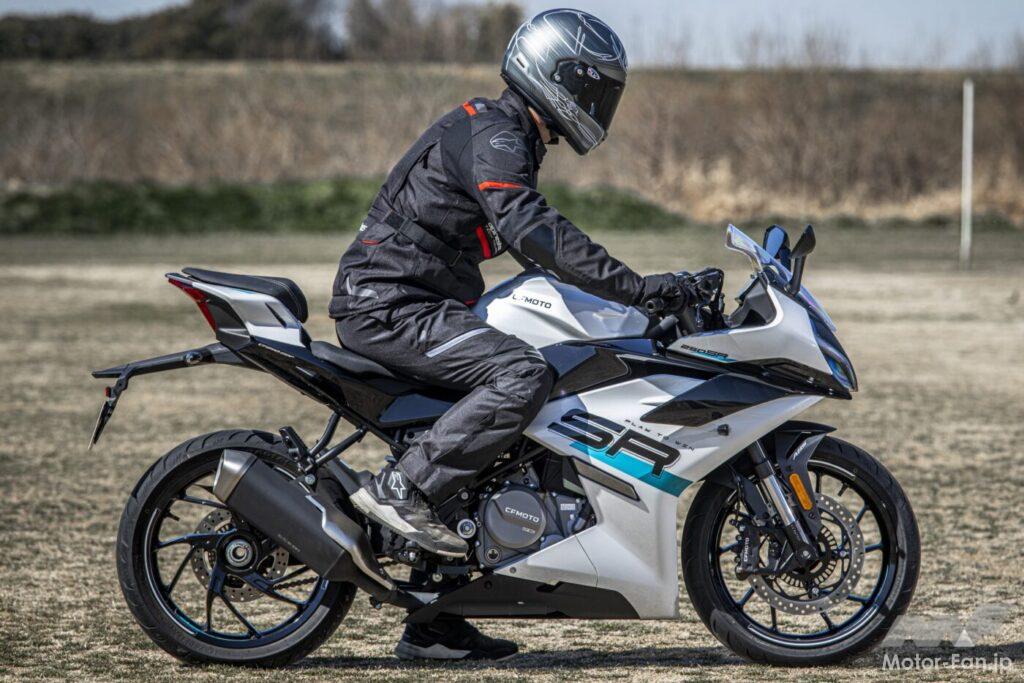
The handlebars are separate, but have a small drooping angle, and the upper body does not lean forward too much, making it suitable for a wide range of riding styles, from sporty riding to city riding. The seat is wide, allowing for a high degree of freedom in seating position.
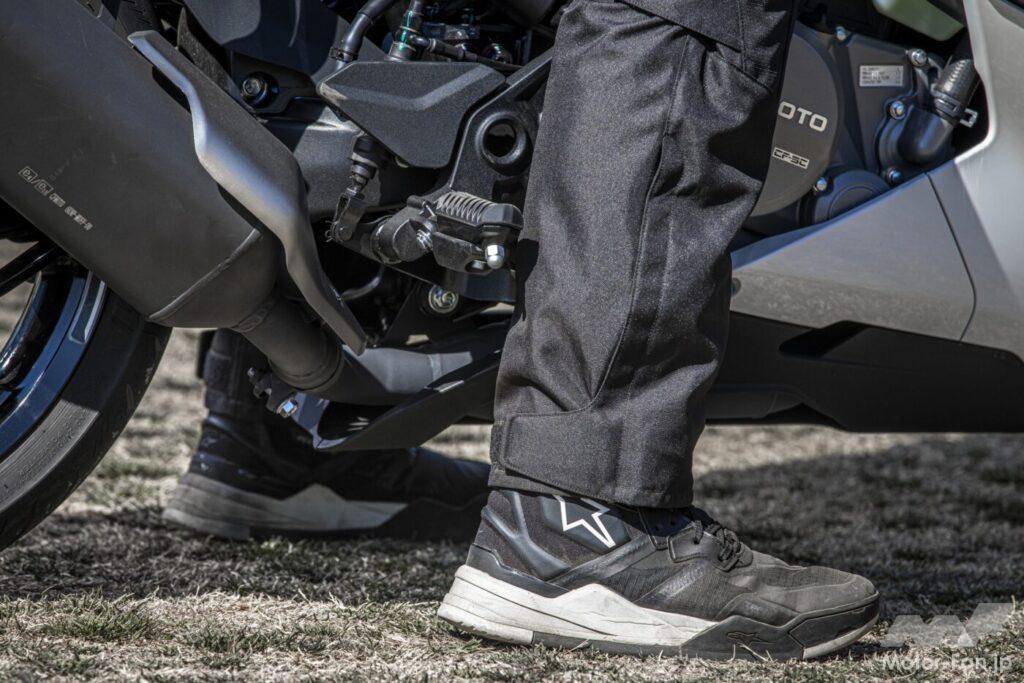
The official seat height is 780mm. Because it has a single-cylinder engine, the knee grip area is slim, and I, who am 175cm tall, can comfortably place both heels on the ground. Overall, it creates a riding position that leaves a good impression.