

Kawasaki KLX230 Sherpa…638,000 yen
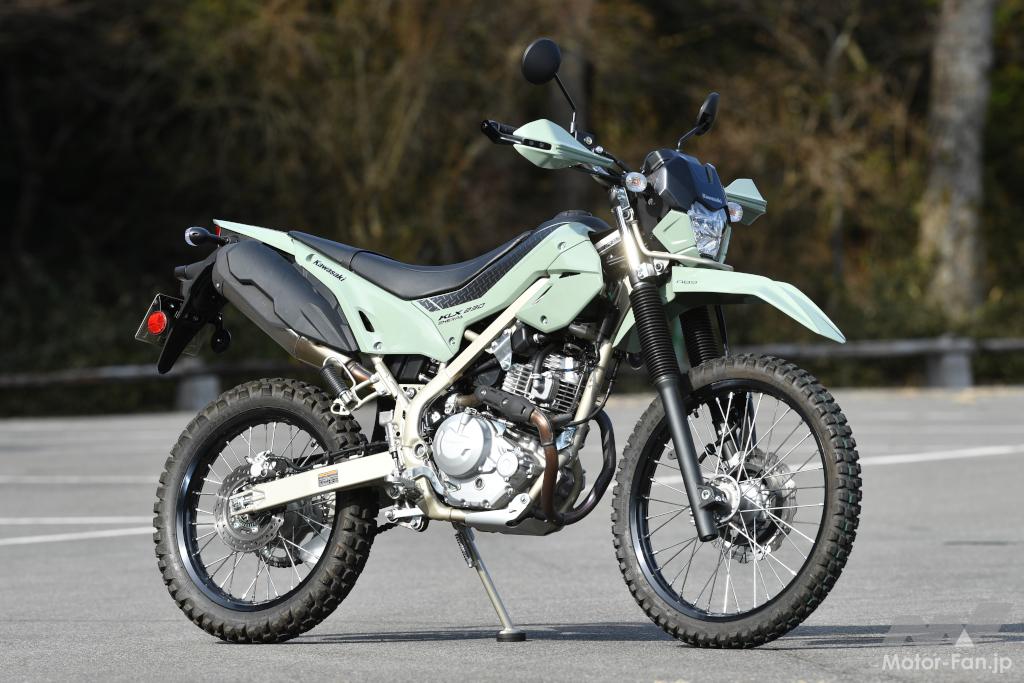
The tire sizes are standard for light trail bikes, 2.75-21 in the front and 4.10-18 in the rear, and the original spec is the IRC GP-21/GP-22, suitable for both on- and off-road use. If you’re looking to choose from the same brand, the GP-210 or GP-410 would be good for on-road enthusiasts, while the GP-610 would be good for off-road enthusiasts.
Riding position (height 182cm, weight 74kg) ★★★★★
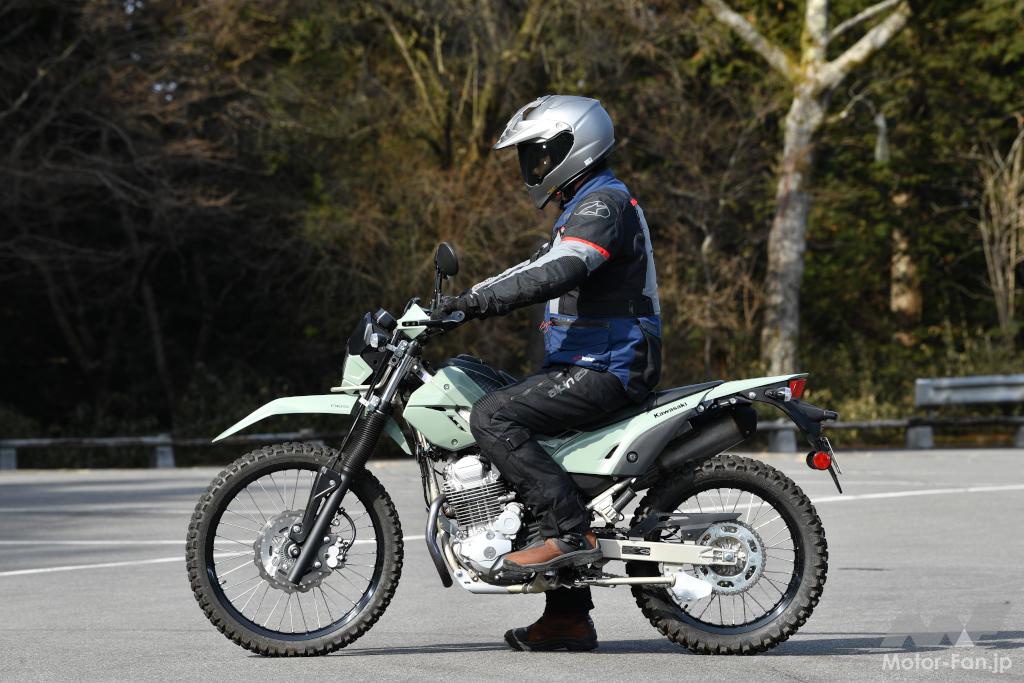
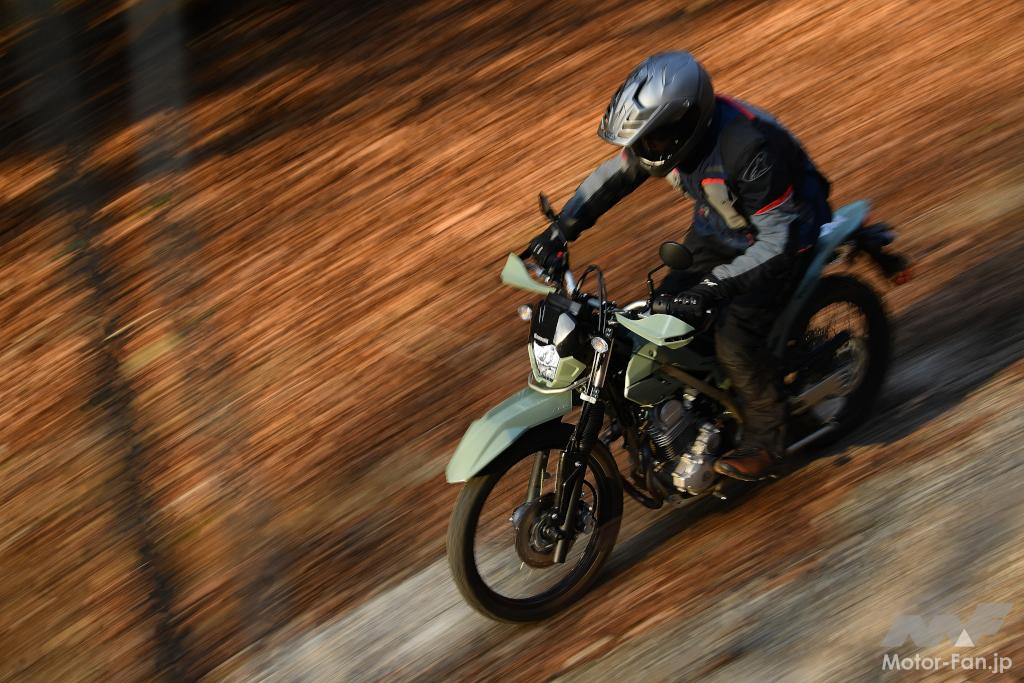
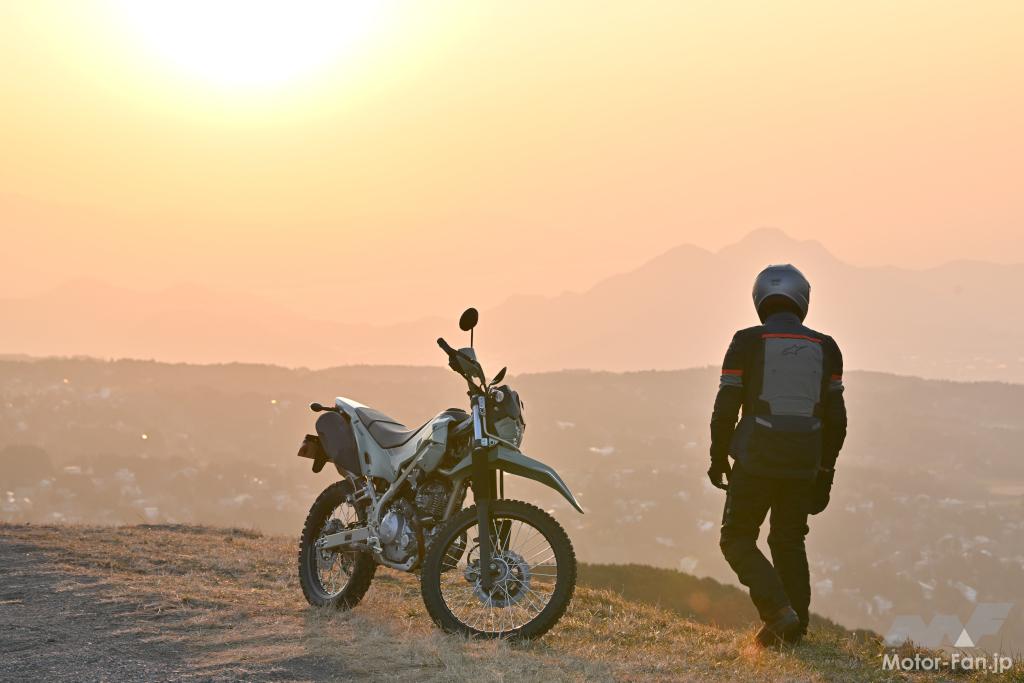
In this photo, it may look like my lower body is slightly cramped, but the riding position is perfectly normal, I was able to fully enjoy sports riding, and I didn’t feel any pain in my body even on long runs that continued from early morning until after sunset. However, I feel that the genuine accessory high seat (priced at a reasonable 11,440 yen), which increases the seat height by 13.5mm from the standard, is a better fit for my physique.
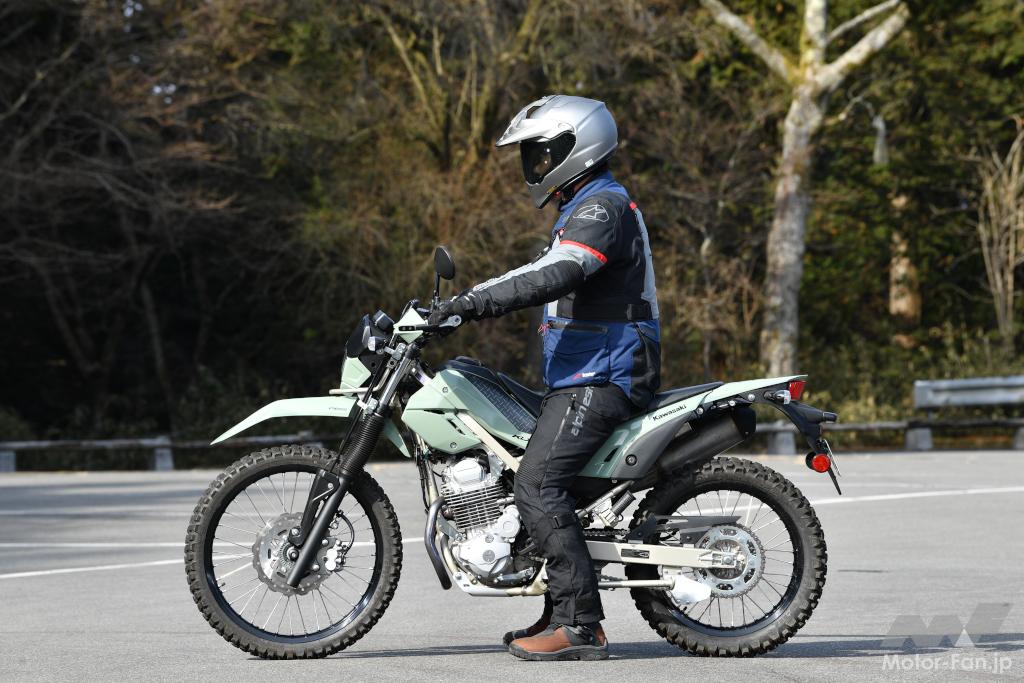
The body is light and slim, and there is a lot of sinking when riding, so riders over 165cm tall should not feel uneasy, but the seat height is 845mm, which is a little high for a recent trail bike (the previous KLX250S was 830mm), so by general standards it is hard to say that it is easy to reach the ground with your feet. Taking this into consideration, several dealers and shops have already announced lowered versions.
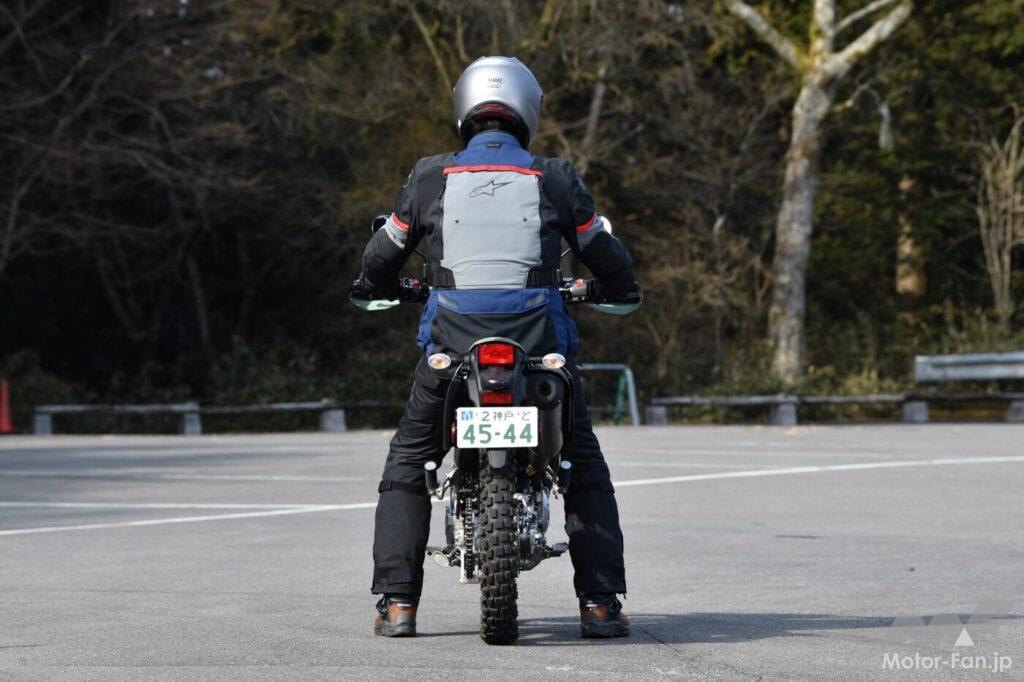
Tandem riding ★★☆☆☆
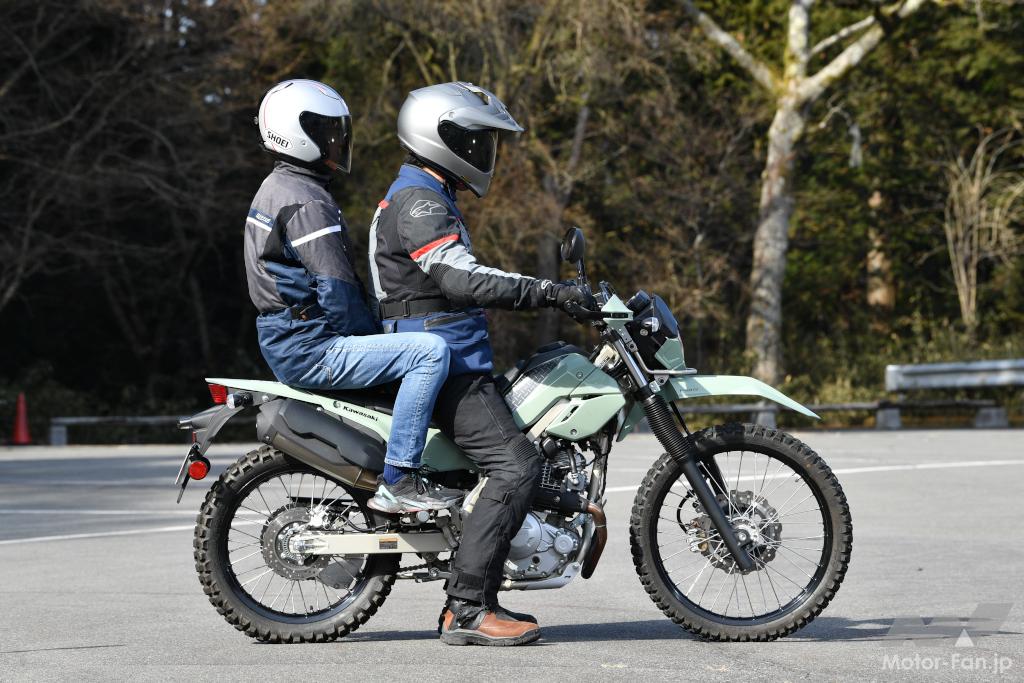
As with existing light motorcycles and smaller trail bikes, riding two people can be a challenge. Below are the impressions of photographer Togashi, who is 172cm tall and weighs 52kg and served as the pillion rider. “The seat is small and thin, and the footpegs are farther forward than ideal, so I just couldn’t get my body to sit comfortably. If it had a rear carrier that could be used as an assist grip, the impression might have been a little different, but pillion riding on this bike is primarily for emergencies. Conversely, if you’re primarily looking to ride pillion, I think you’d be better off buying a W230 or Meguro S1, which have similar engines.”
Handling ★★★★★

The pushing and pulling feel is roughly the same as that of the Yamaha Serow 250, and is easier than its rivals on the current market, such as the Honda CRF250L/<S> and Suzuki V-Strom 250SX. However, when parking in tight spaces, you need to be careful of the width of the closed-type knuckle guards (the overall width of the KLX230S without knuckle guards is 845mm, while the Sherpa is 920mm) and the lateral protrusion of the muffler.
Steering wheel/meter area ★★★★☆
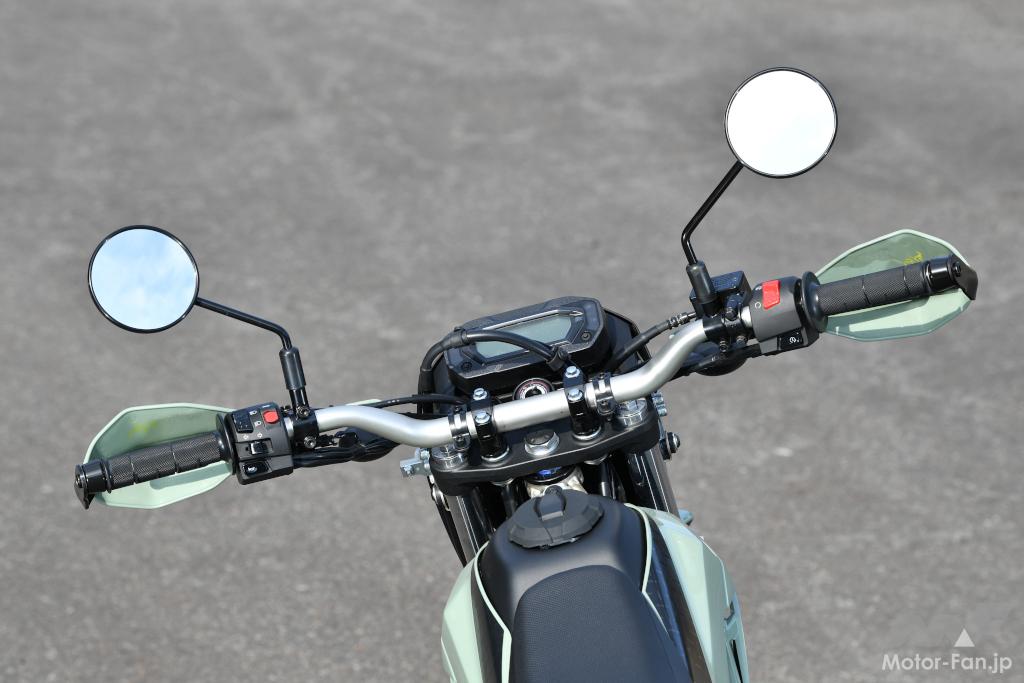
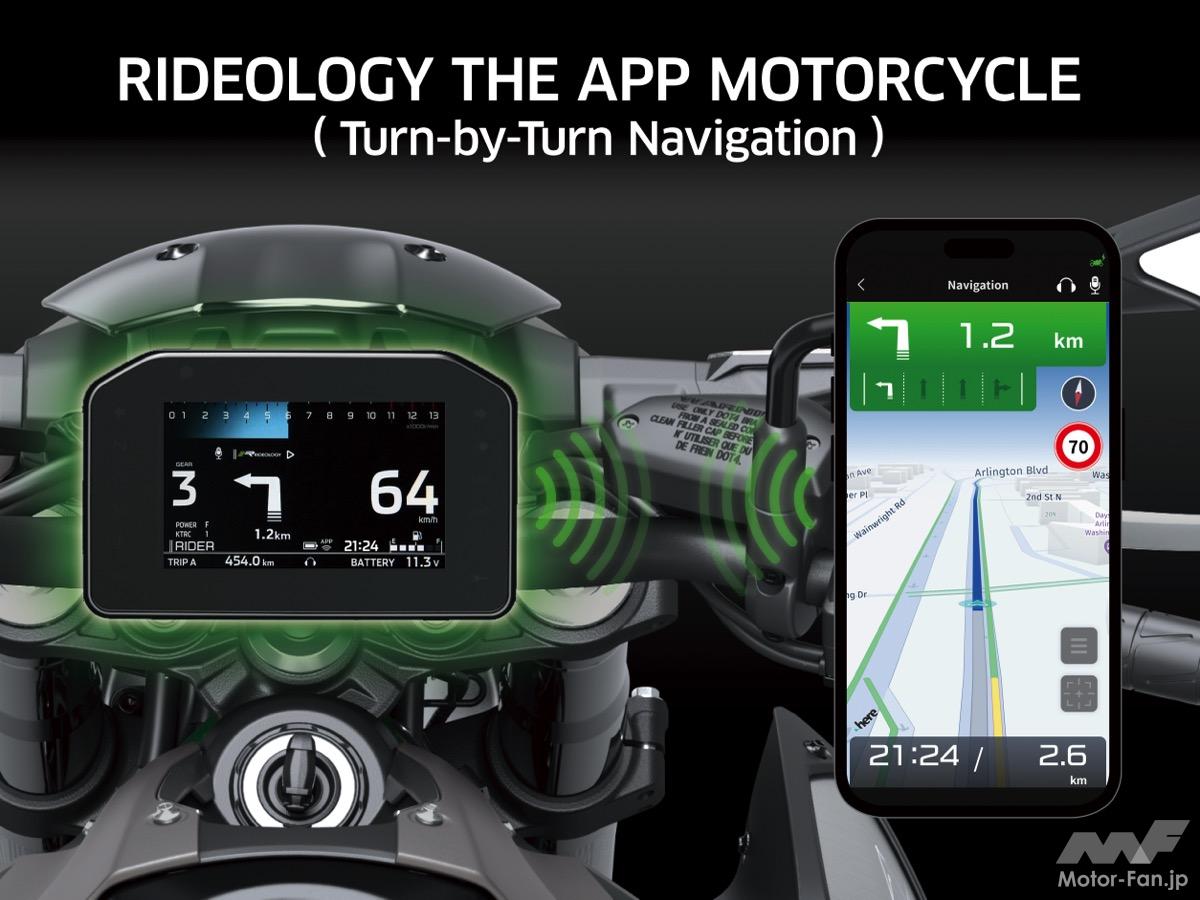
The handlebars are tapered aluminum, a standard feature on off-road bikes these days (although the KLX230/S/SM have steel φ22.2mm bars). It’s nice that closed knuckle guards are standard equipment, but a closer look at the structure of the stays makes you a little worried about deformation in the event of a fall. The monochrome LCD meter is equipped with a smartphone link function. There is a space on the right edge of the screen that looks like it might be used to display the gear number, but what is displayed there is a battery voltage warning light.
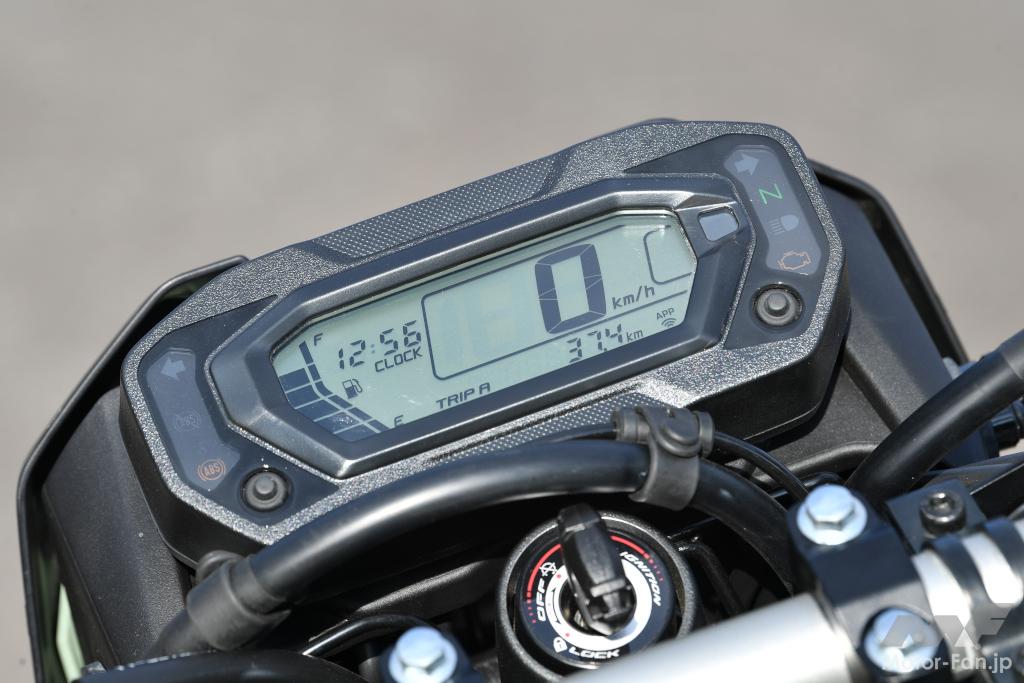
Left and right switch/lever ★★★☆☆
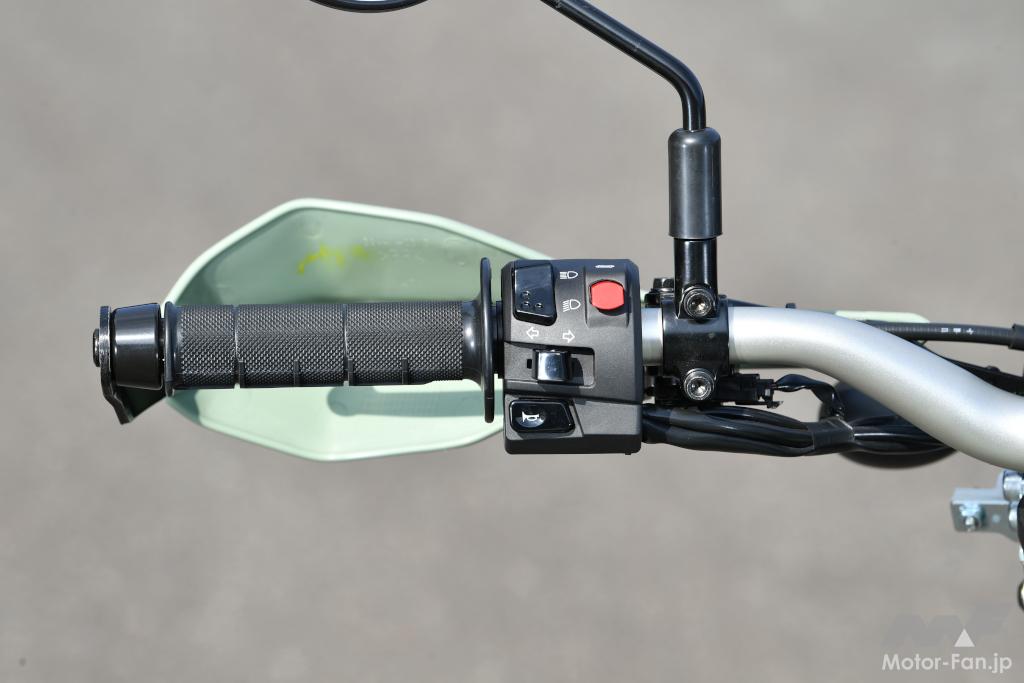

The left and right switch boxes have the same structure as the previous model, but an ABS cancel button has been added to the left (this turns off both the front and rear wheels, not just the rear). The grip rubber is of course an off-road type, and this part has also been inherited from the previous model.
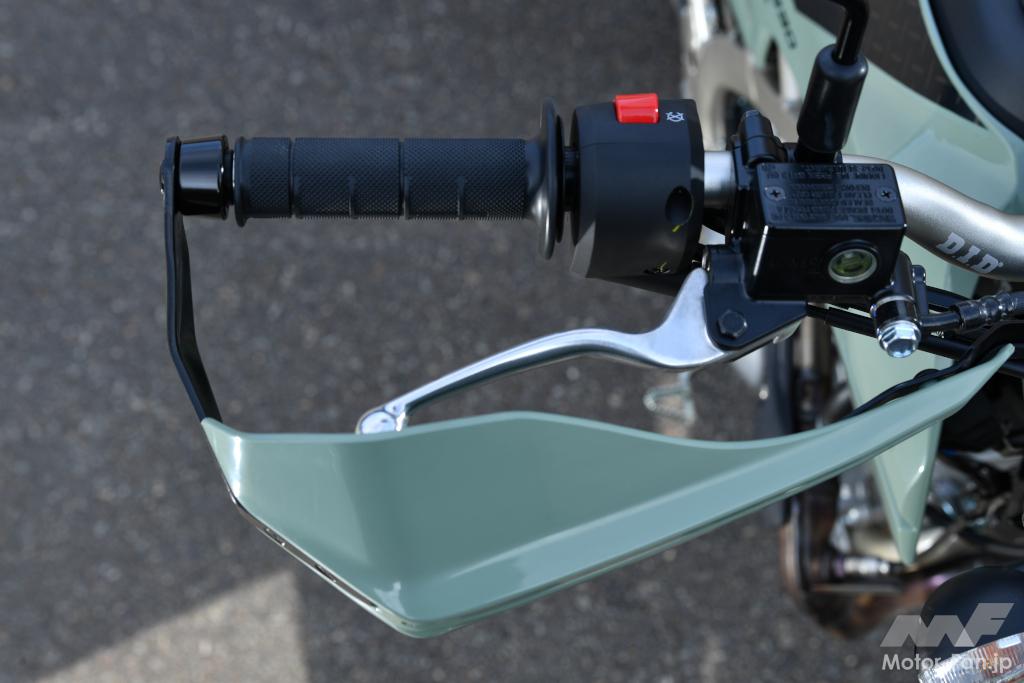
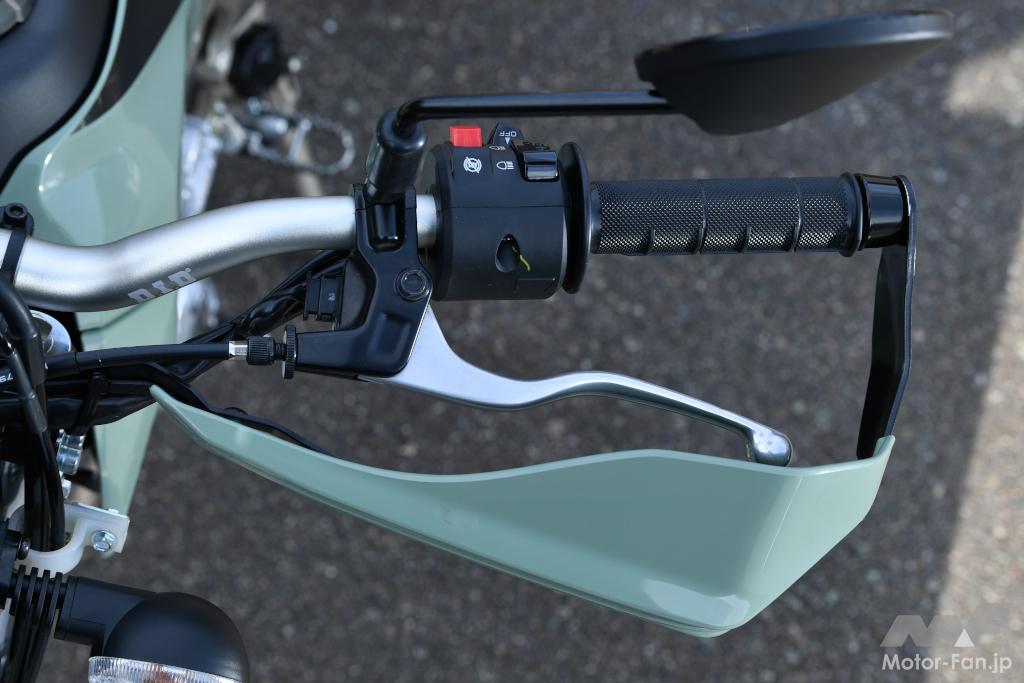
Kawasaki has been a manufacturer that has been keen on brake/clutch lever position adjustment mechanisms for a long time, but they have had almost no experience of introducing them to trail bikes. Also, by the standards of modern light motorcycles, the clutch lever operation is somewhat heavy.
Fuel tank/seat/step area ★★★★☆
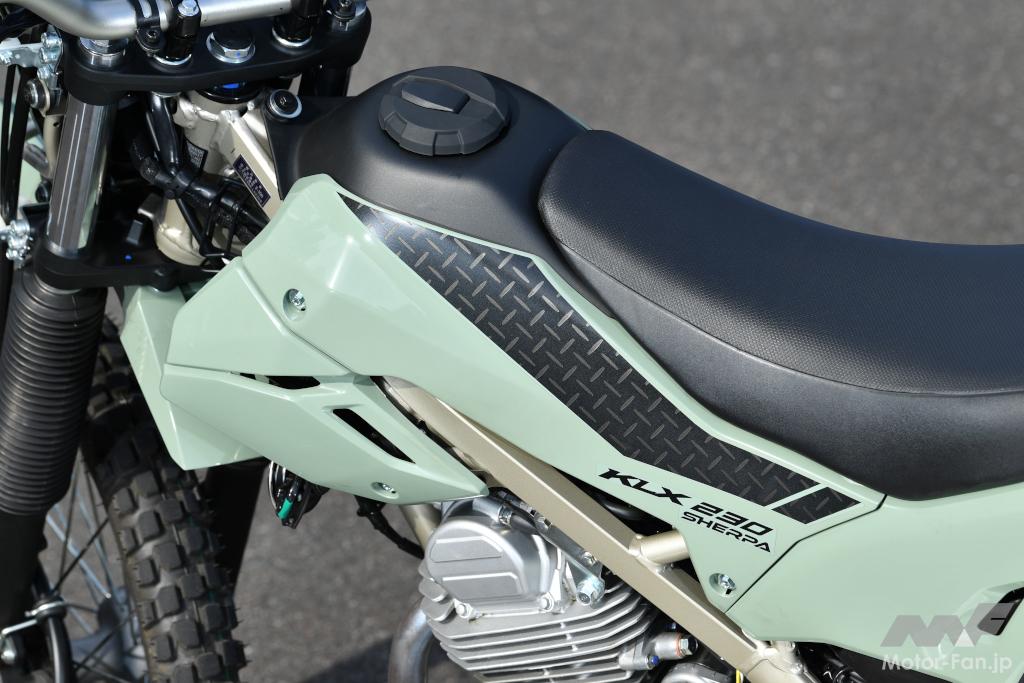
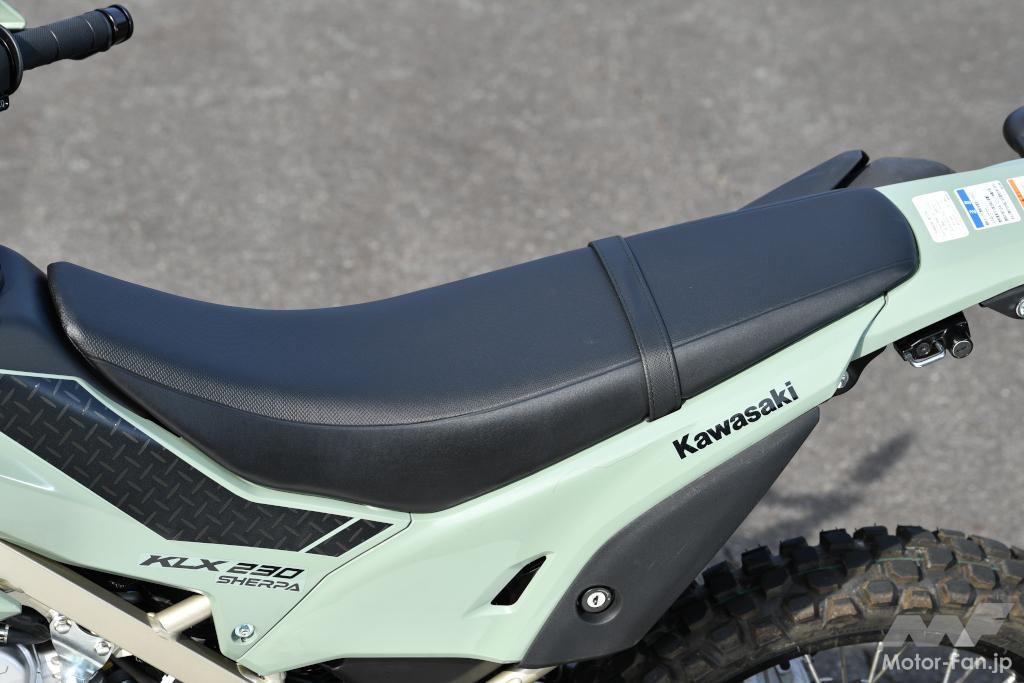
The fit of the tank cover is extremely good. Whether you’re sitting in the front or back, there’s a comfortable feeling of support, whether you’re going straight or cornering. How people feel about the 7.6-liter gasoline capacity is different for each individual, and I’d personally say it’s enough… but considering the sense of security when touring on forest roads, I’d like it to be 2 liters larger if possible. The seat is designed with an emphasis on ease of movement and comfort, with little consideration given to foot reach. The key cylinder on the left side cover is for removing the left side cover itself, and the seat is fixed to the frame with bolts. A helmet holder is equipped on the left side of the tail cowl.
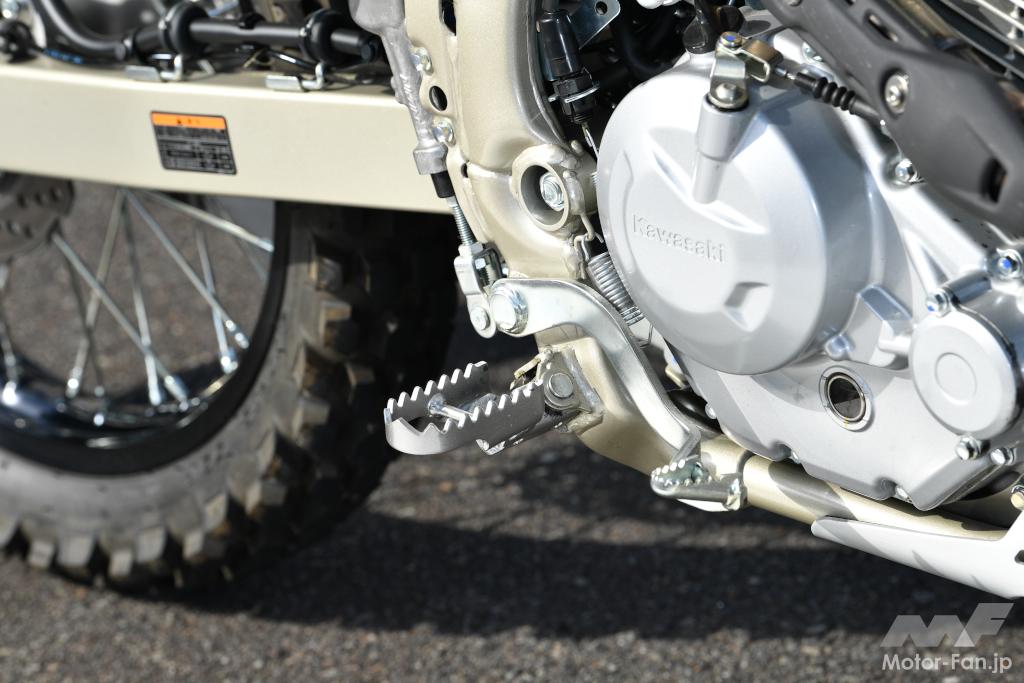
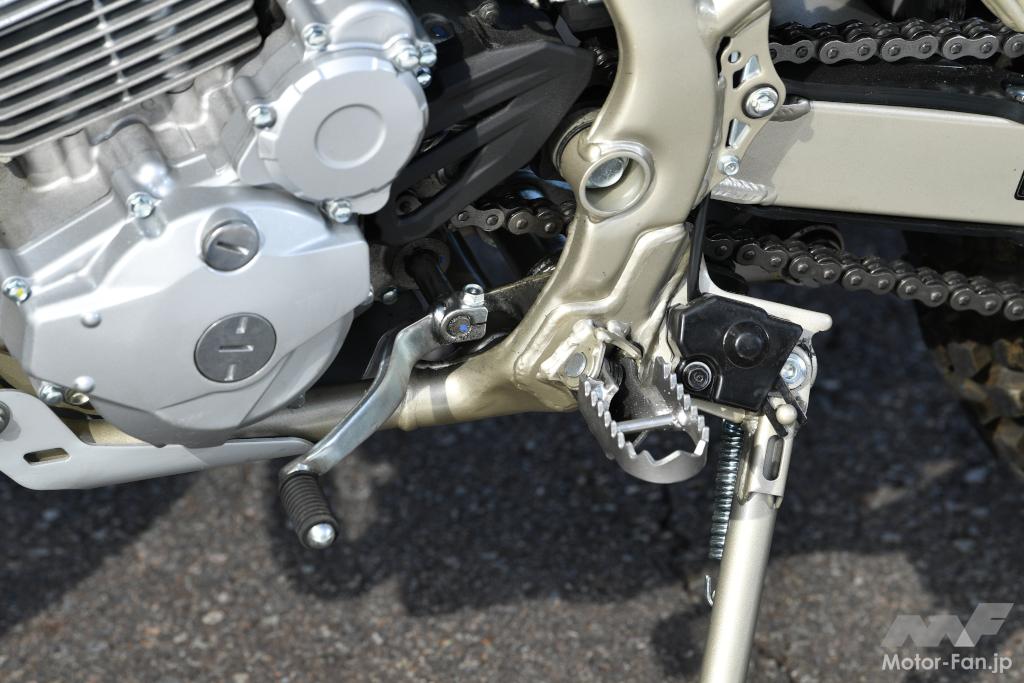
The footpegs are fully off-road spec, with no removable rubber. The serrated bars and the underside of the boots don’t have a particularly strong grip, but they should be sufficient for general use, including forest road touring. The reserve tank for the rear brake master cylinder, which was separate on the first generation, has been integrated into the 2025 KLX230 series.
Loading capacity ★☆☆☆☆

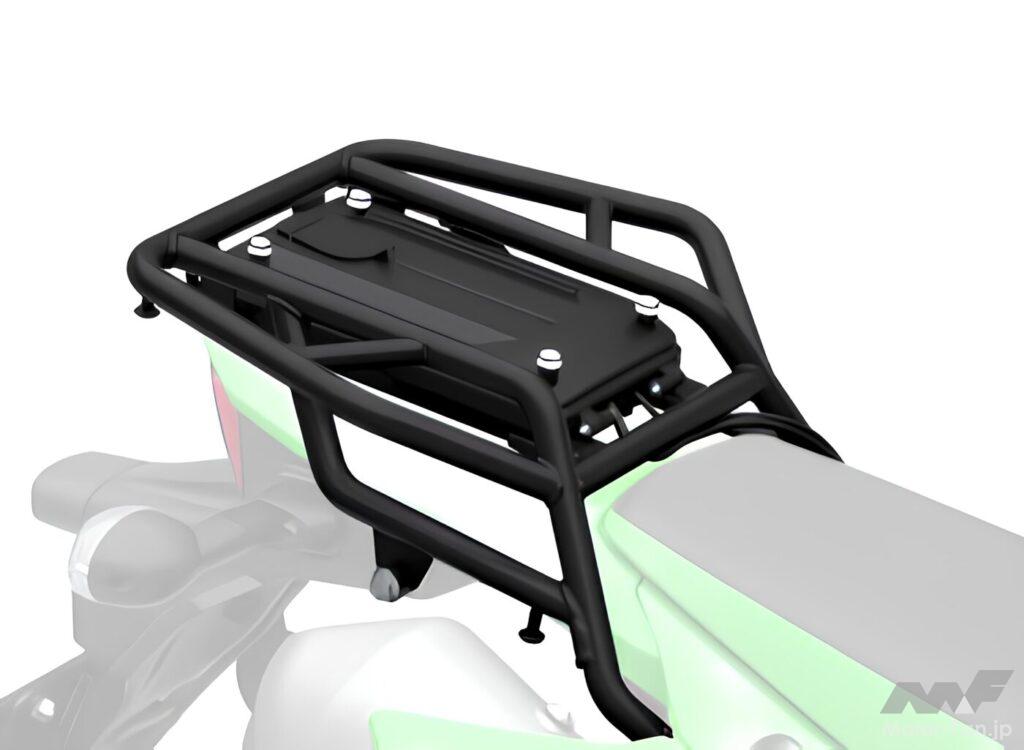
There is absolutely no equipment for carrying loads. I managed to attach my personal Tanax double deck seat bag using a belt that wraps around the seat and a reflector base (I put a cloth between the seat bag and the tail cowl to prevent scratches), and it felt surprisingly stable, but touring riders should still consider installing a carrier. There are two types of genuine accessory carriers: small (photo below): 19,140 yen, and large: 30,300 yen. There is no storage space under the seat, and it is assumed that the ETC unit will be installed inside the rear carrier.
Brakes ★★★★☆
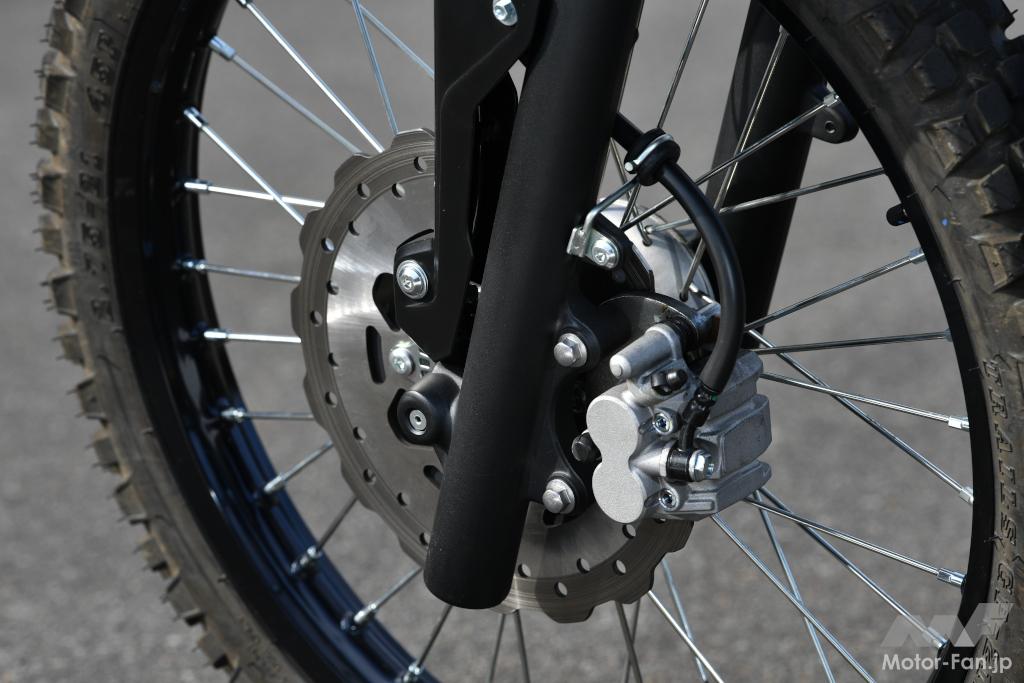
The brakes, with a 265mm diameter petal disc + single-piston two-piston caliper in the front and a 220mm diameter petal disc + single-piston one-piston caliper in the rear, are easy to use in any situation, and it was great that the ABS could be easily disabled off-road. The swingarm of the 2025 KLX230 series has been changed from steel to aluminum, and the chain guide at the rear has been redesigned to have a more racy look.
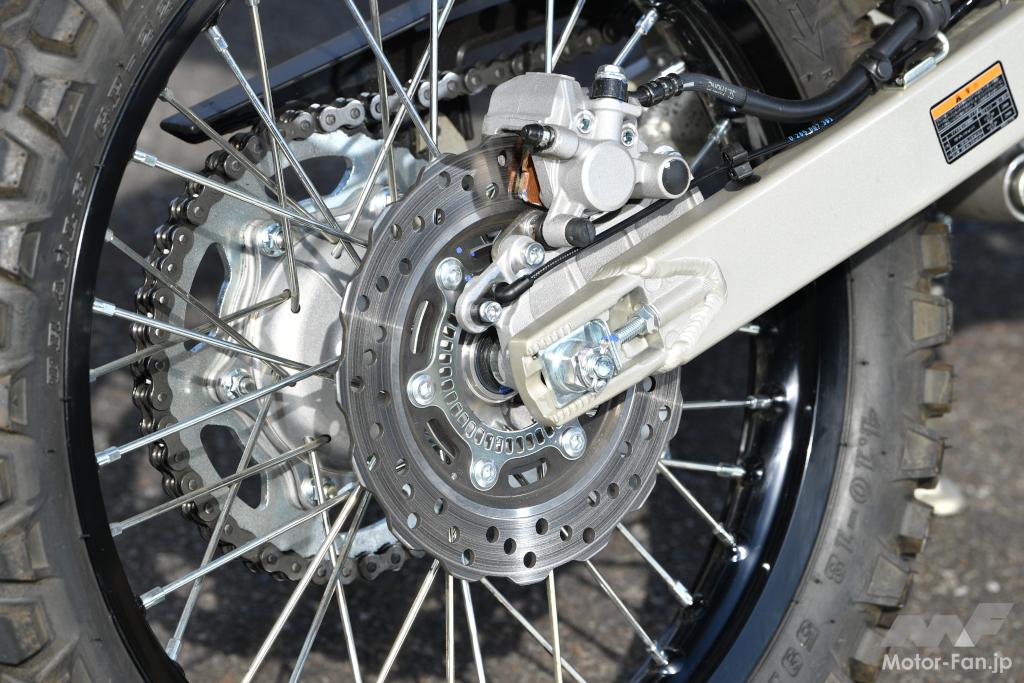
Suspension ★★★★☆

The φ37mm upright front forks and bottom-link rear suspension are the same as the previous model. However, unlike the previous model, which seemed to be focused on high loads and high speeds, the Sherpa’s settings are much more versatile, and it can easily handle relaxed cruising as well. The only adjustment mechanism is the rear preload. The front and rear wheel travel is 200/233mm, the same as the KLX250S (the off-road-oriented KLX250 is 240/250mm, and the supermotard SM is 188/223mm).
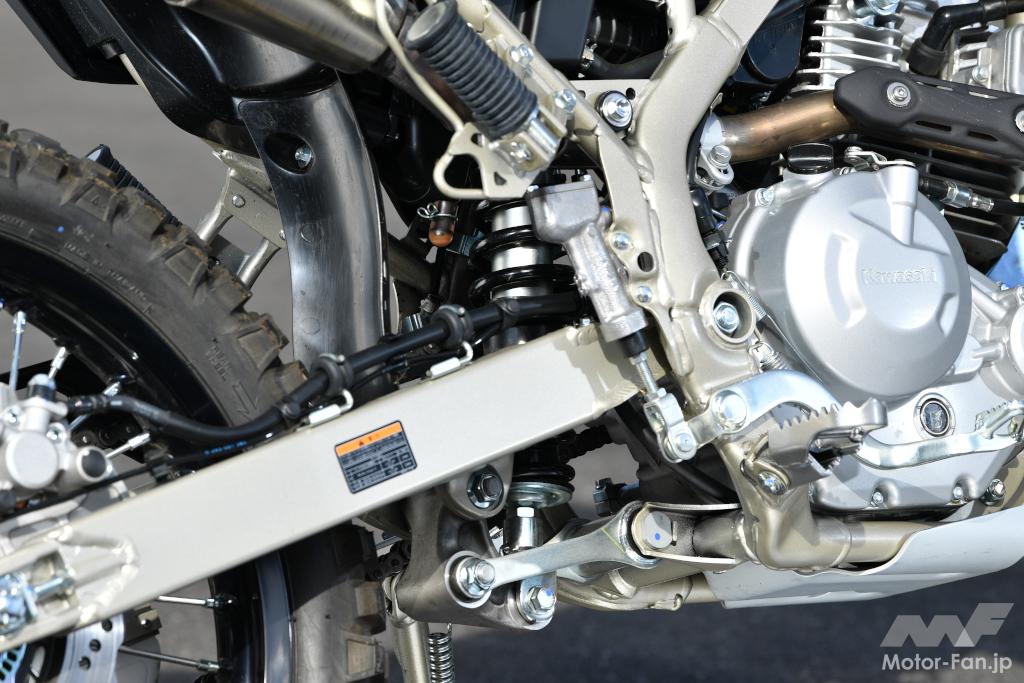
In-vehicle tools ★★☆☆☆
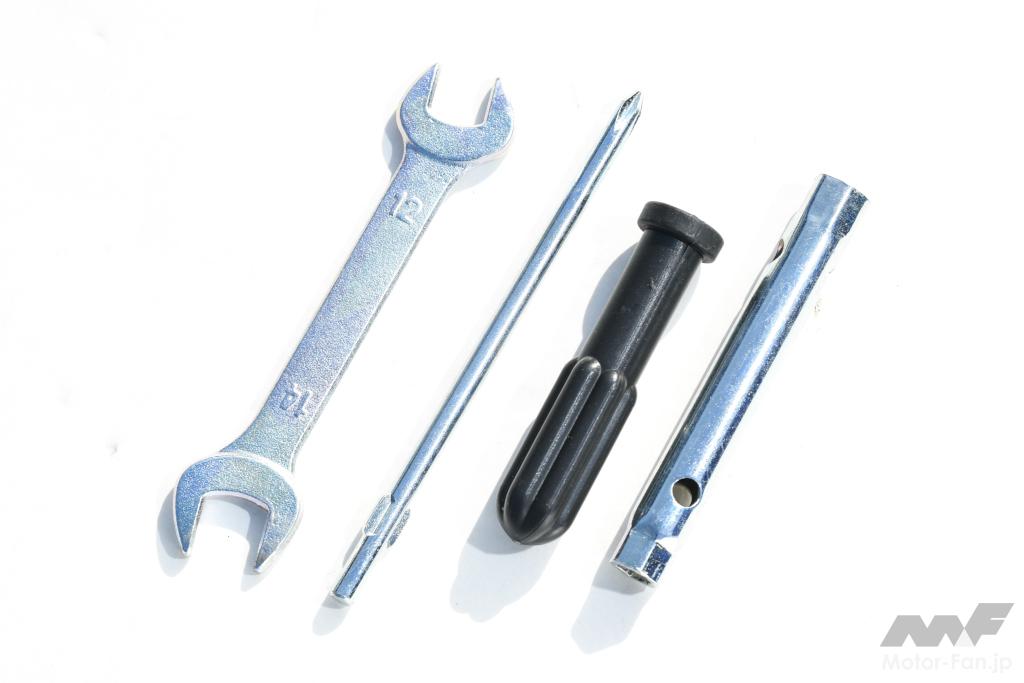
The onboard tools consist of only a 12 x 14 mm open-end wrench, an interchangeable screwdriver, and a spark plug wrench. This is a bit disappointing considering that the previous model featured in this article in 2020 had seven tools: a 14 x 17 mm open-end wrench, a 22 mm open-end wrench, a hook wrench + extension bar for rear shock preload, and pliers.
Actual fuel consumption ★★★★★
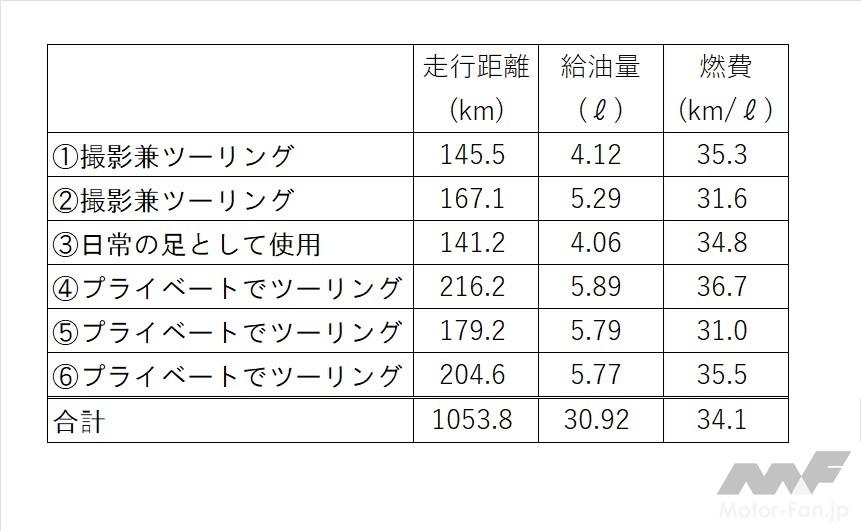
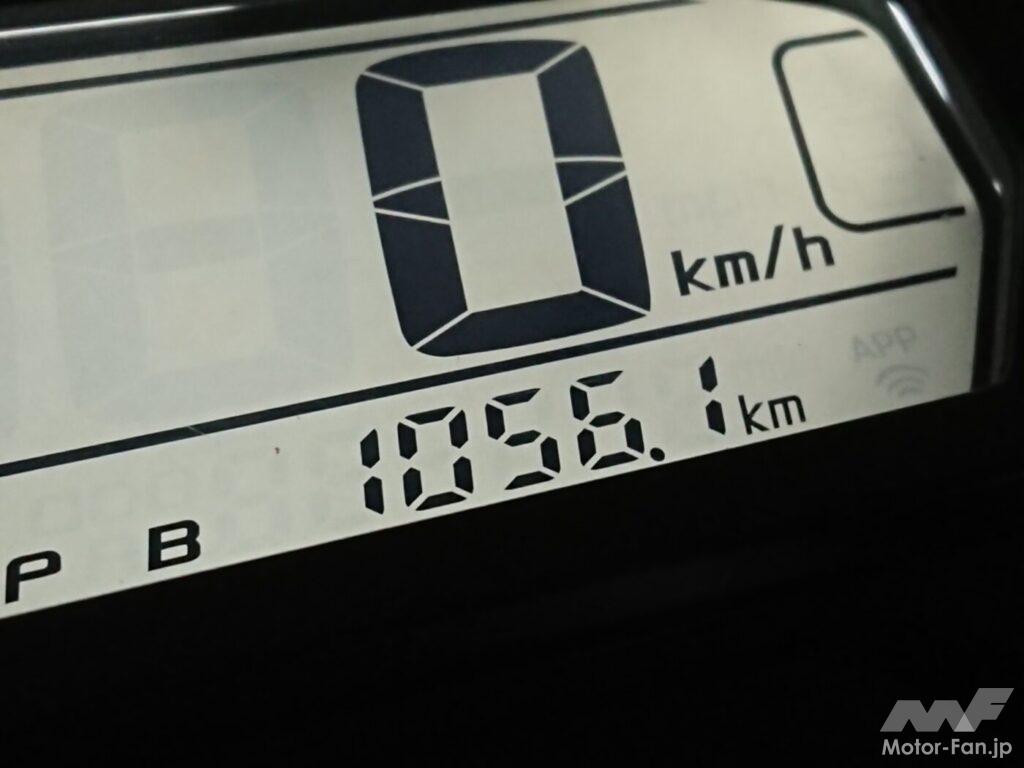
The total fuel economy of 34.1km/L is average for a modern 250cc class single-cylinder vehicle. The cruising range for model ⑤, which had the worst fuel economy, was 31.0 x 7.6 = 235.6km, while model ④, which had the best fuel economy, was 36.7 x 7.6 = 278.9km, meaning that in either case you can be sure you can travel over 200km. However, because the fuel level warning light flashes early (the manual states it should be about 2.3L, but the test vehicle started flashing at 3-3.5L), I was quite nervous before refueling models ②, ④, ⑤ and ⑥.
ADVERTISEMENT
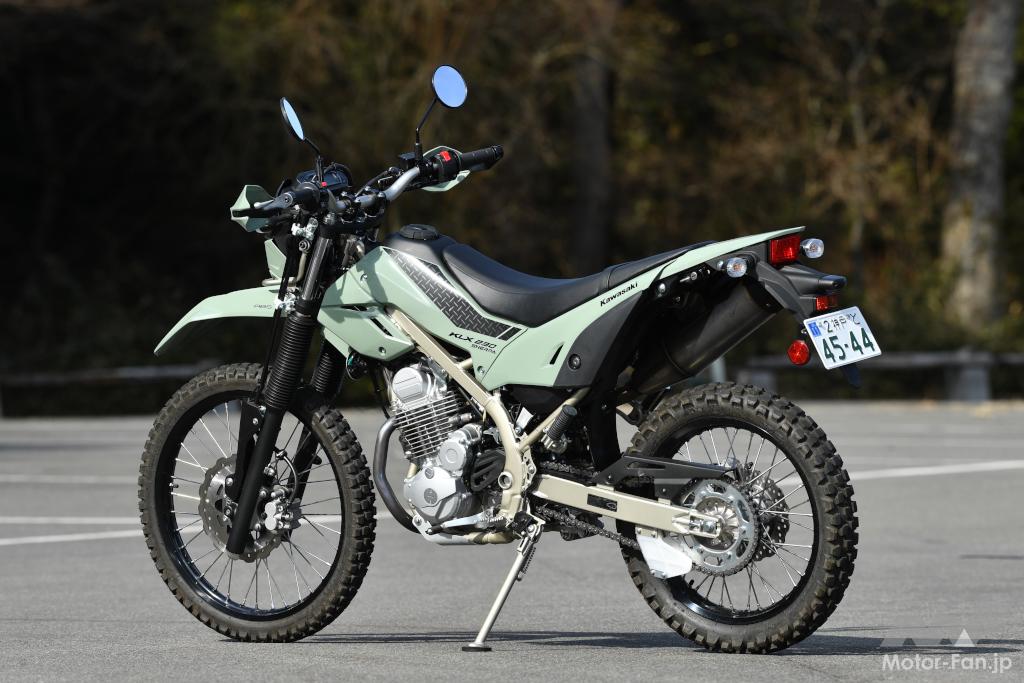
One of the few negative aspects of the KLX230 Sherpa that bothered me during this test ride was its stability when stopped. While there were no issues on flat, good roads, on slopes or rough terrain, I encountered several situations where it felt like it might flop over, or where it felt strangely difficult to straddle. Perhaps the angle at which the side stand was attached was wrong?
Main specifications
Model: KLX230 Sherpa
Model: 8BK-LX232A
Length x Width x Height: 2080mm x 920mm x 1150mm
Wheelbase: 1365mm
Ground Clearance: 240mm
Seat Height: 845mm
Caster/Trail: 24.6°/96mm
Engine Type: Air-cooled 4-stroke single cylinder
Valve Type: OHC 2-valve
Total Displacement: 232cc
Bore x Stroke: 67.0mm x 66.0mm
Compression Ratio: 9.4
Maximum Power: 13kW (18ps) / 8000rpm
Maximum Torque: 19N・m (1.9kgf・m) / 6000rpm
Starting Method: Self-starter
Ignition Method: Full Transistor Lubrication Method:
Wet Sump
Fuel Supply Method: Fuel Injection
Transmission Type: Constant Mesh 6-speed
Return Clutch Type: Wet Multi-plate Coil Spring
Gear Ratio
1st: 3.000
2nd: 2.066
3rd gear: 1.555
4th gear: 1.260
5th gear: 1.040
6th gear: 0.851
1st and 2nd reduction ratios: 2.870 and 3.214
Frame type: Semi-double cradle (perimeter)
Front suspension: Telescopic upright φ37mm
Rear suspension: Bottom link monoshock (New Unitrack)
Front tire size: 2.75-21
Rear tire size: 4.10-18
Front brake: Hydraulic single disc
Rear brake: Hydraulic single disc
Vehicle weight: 134kg
Fuel: Unleaded regular gasoline
Fuel tank capacity: 7.6L
Passenger capacity: 2 people
Fuel consumption rate (Ministry of Land, Infrastructure, Transport and Tourism notified value): 45.5km/L (with 2 passengers)
Fuel consumption rate (WMTC mode value, class 2-1): 34.7km/L (with 1 passenger)