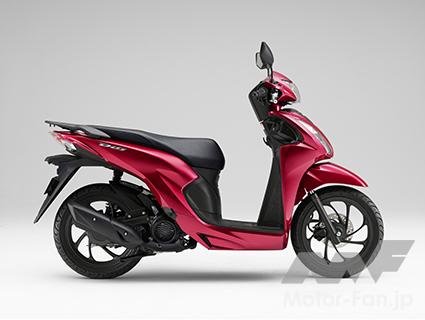


Honda Lead 125…Starting from 341,000 yen (released January 16, 2025)
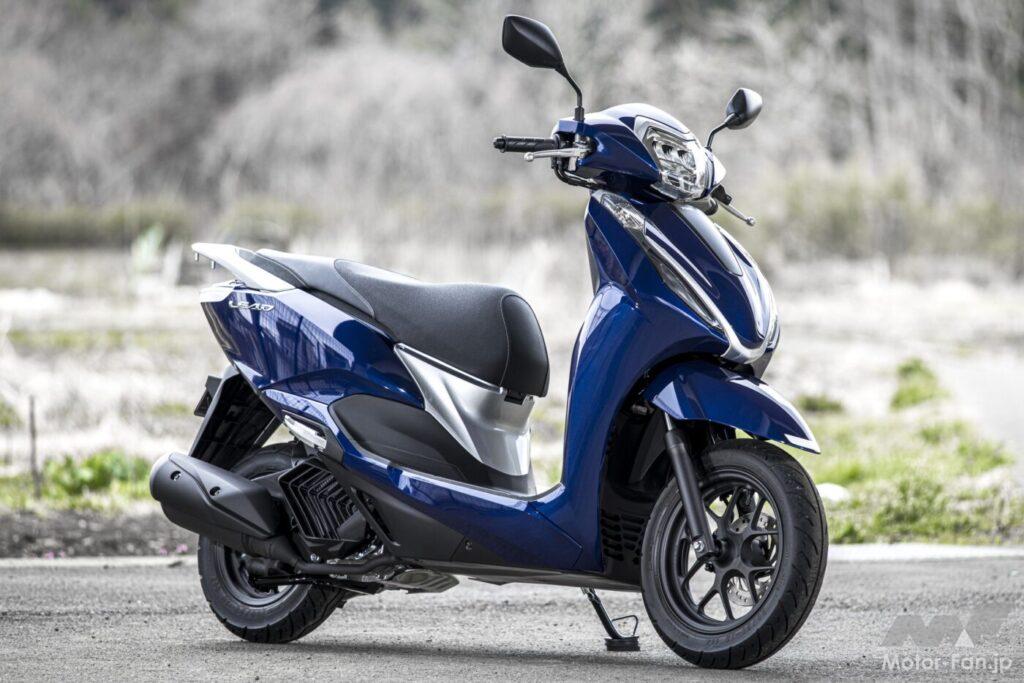
2025 model
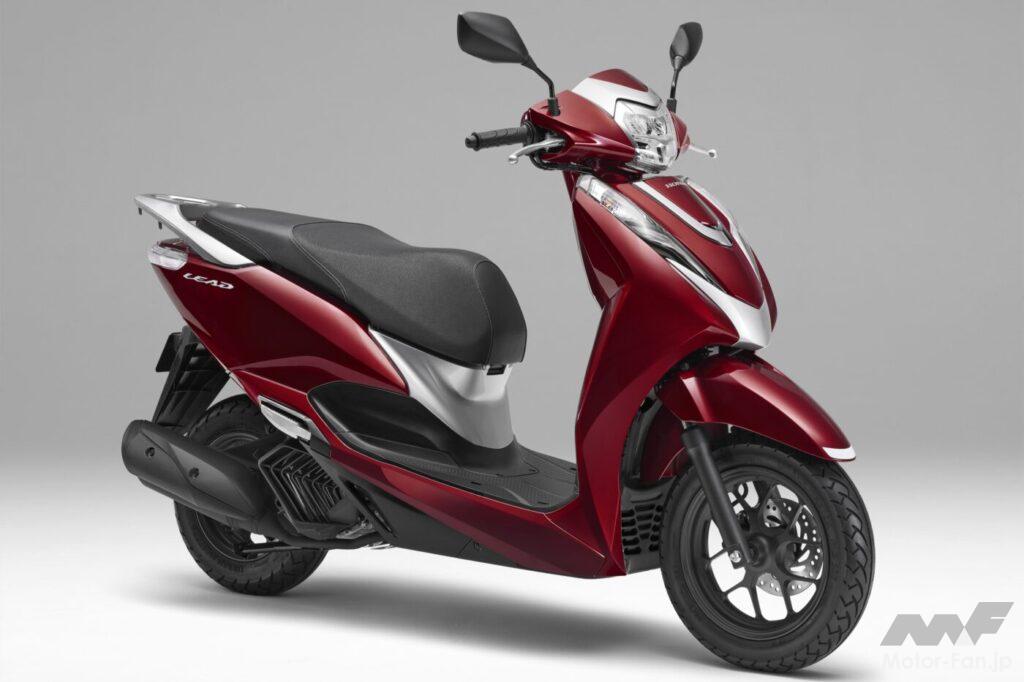
2023 model
The 2025 model has changed the components of the front cover and handle cover, but the basic design remains the same, making it difficult to tell the difference. In terms of specifications, the overall width has increased from 680mm to 700mm, and the constant speed fuel economy has increased slightly from 52.5km/L to 53.0km/L, and the WMTC mode value has increased slightly from 49.0km/L to 49.3km/L.
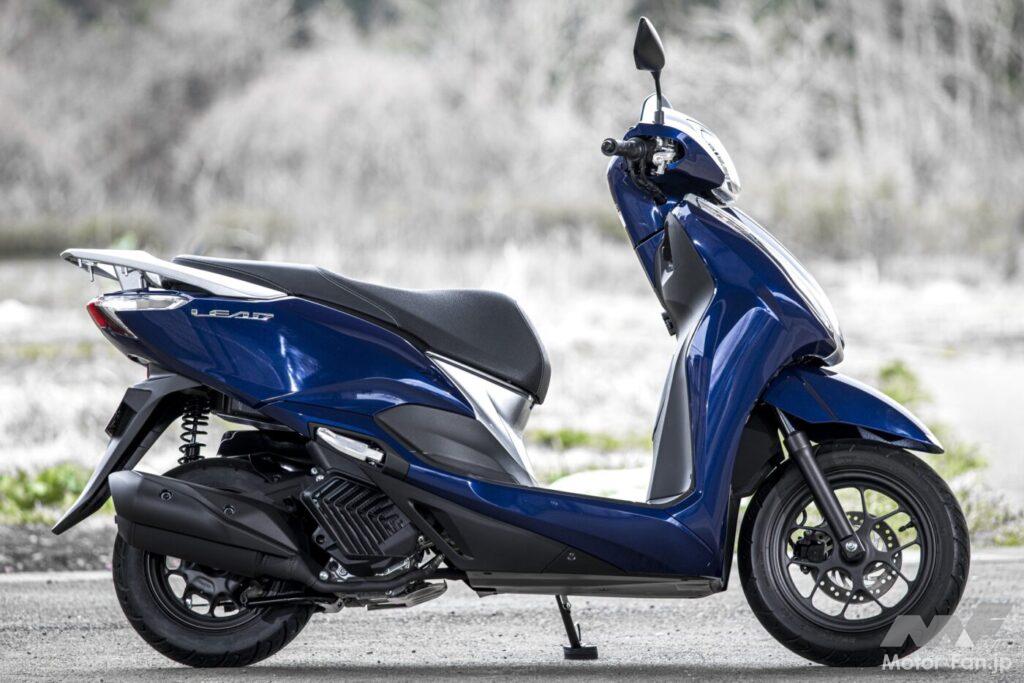
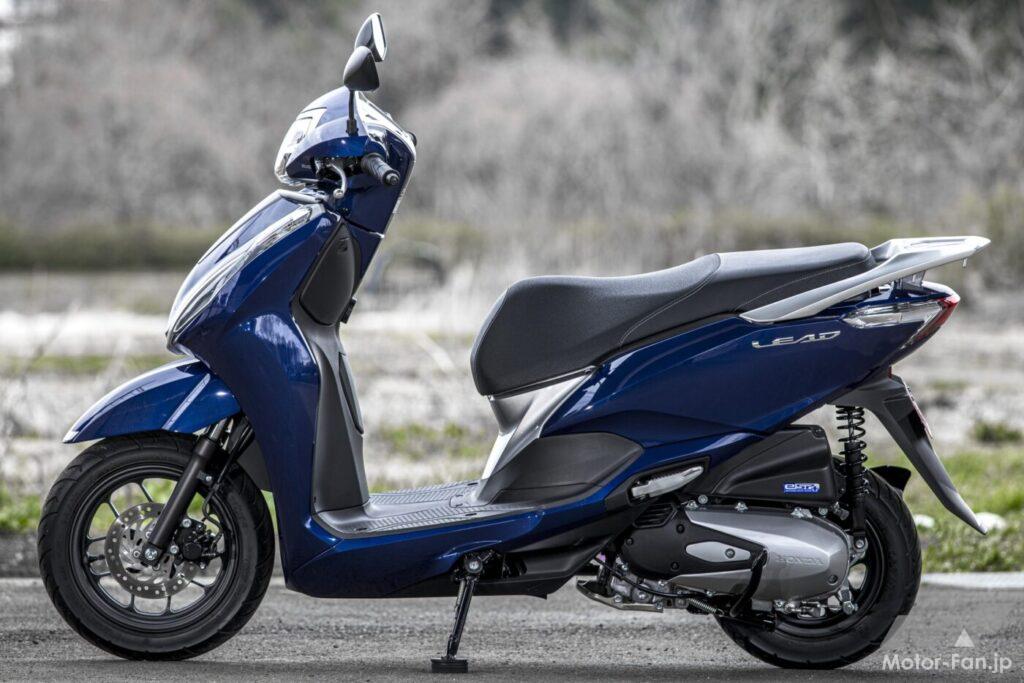
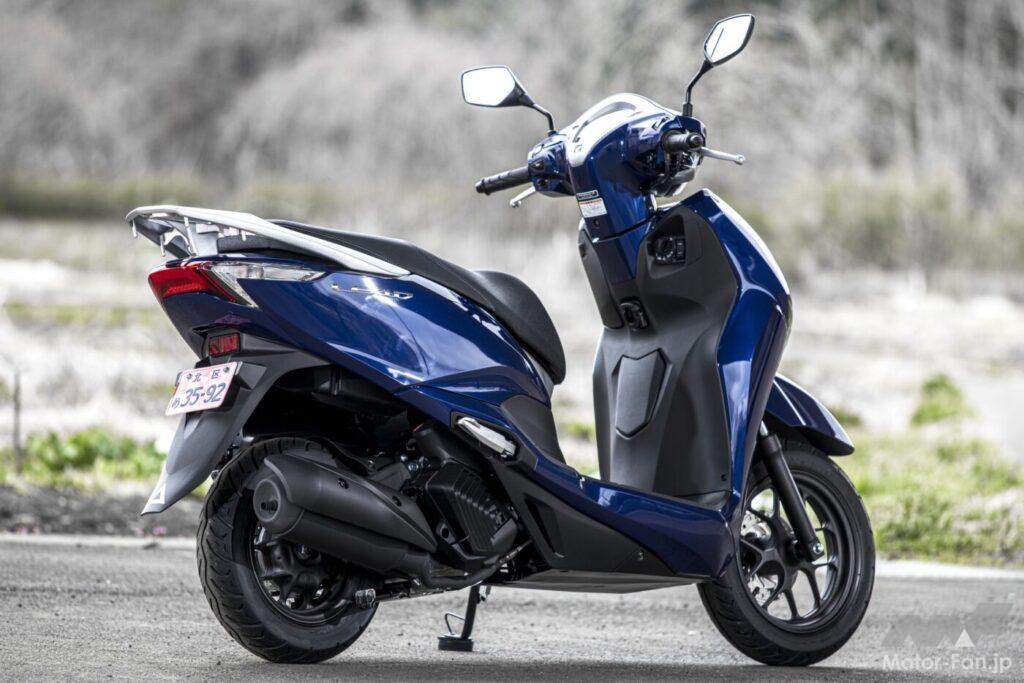
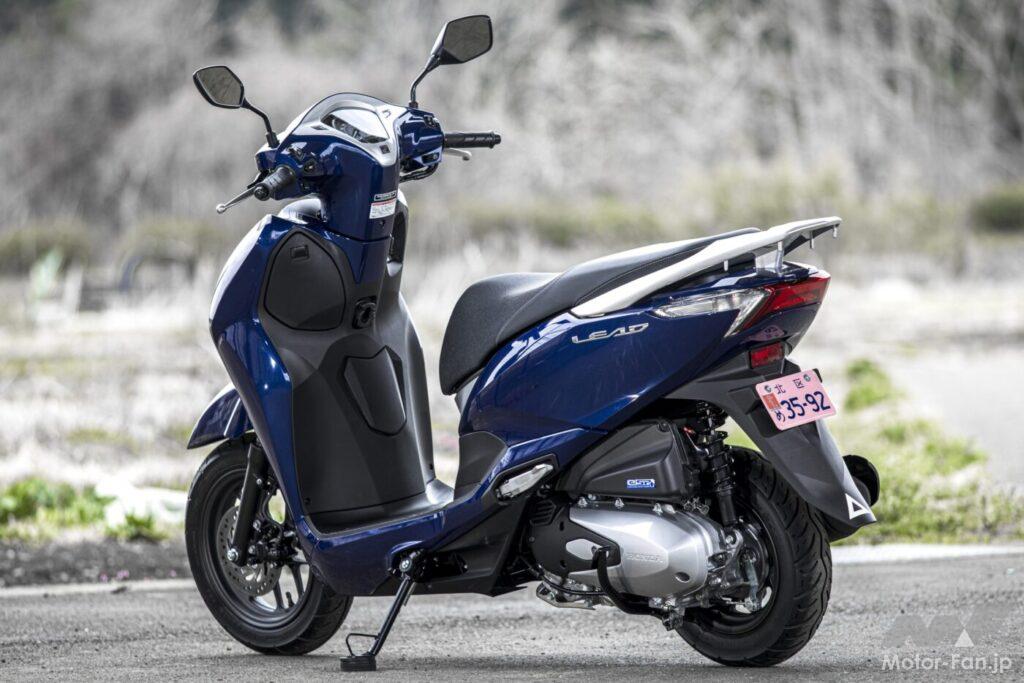
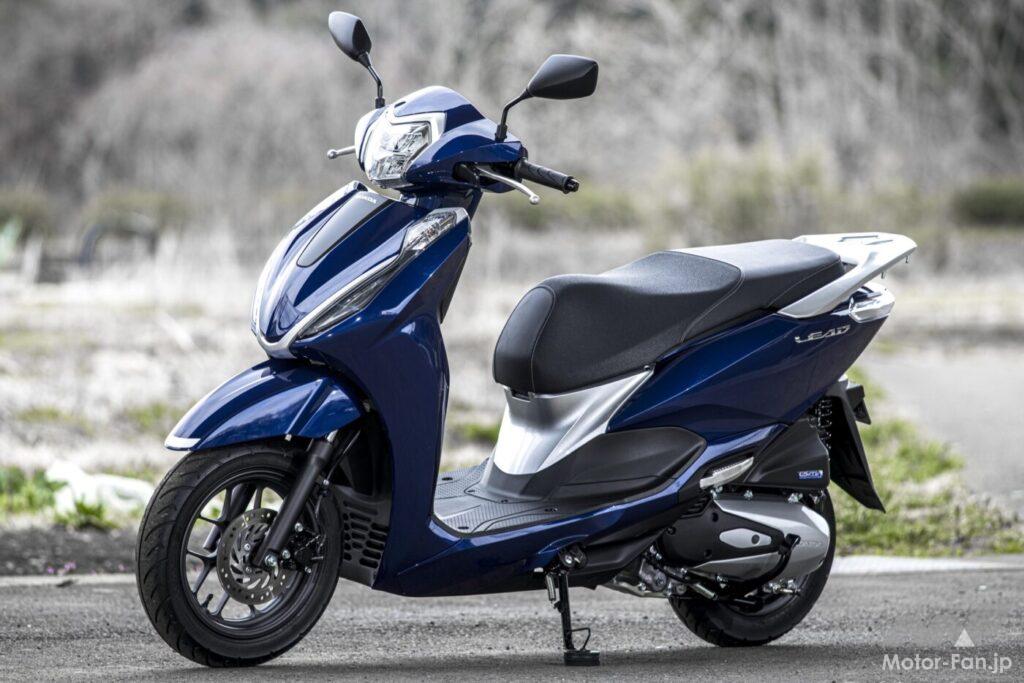
There are four body colors available: Night Tide Blue Metallic, Pearl Snowflake White, and Poseidon Black Metallic, which are priced at 341,000 yen, and Matte Dim Gray Metallic, which is priced at 346,500 yen, an increase of 5,500 yen. The price of the 2025 model will increase by 16,500 yen.
eSP+ engine that responds gently to any riding technique.
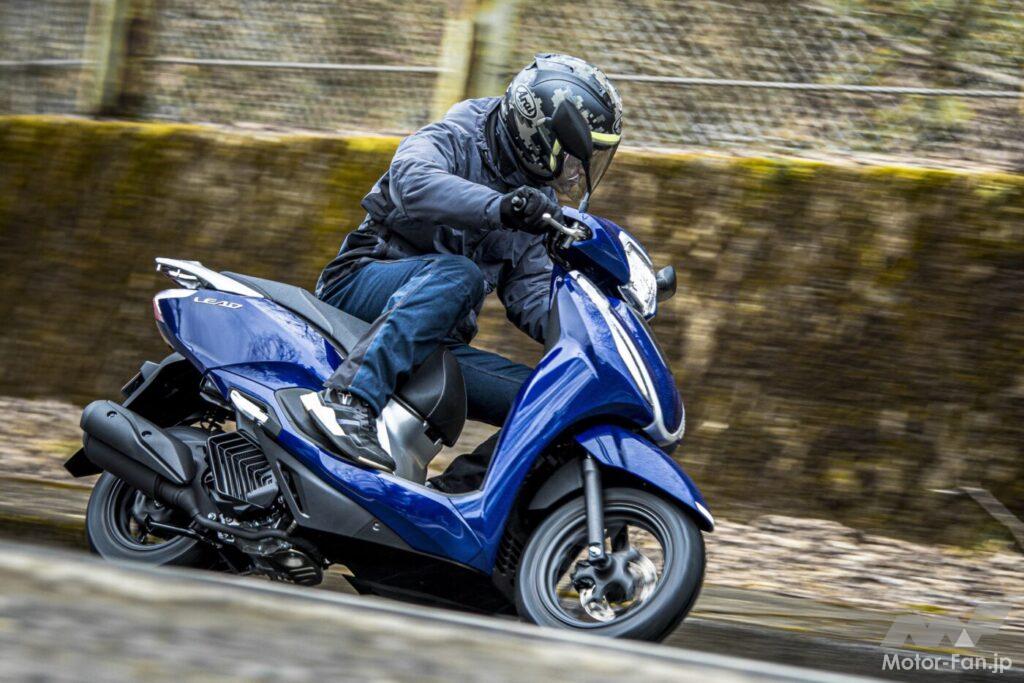
Honda’s PCX has reigned supreme at the top of the 50cc scooter market since its release in 2010. The Lead 125, which appeared three years later in 2013, is a scooter with an orthodox style, and although its planned annual sales figures are more than double those of the PCX, it remains a firm favorite and continues to sell consistently.
I’ll admit it, the first motorized vehicle I ever owned when I was in high school was the Lead 50DX, so I have quite a special attachment to the name. At the time, Honda had a lineup of 4 models and 11 types of moped scooters alone, and the Lead in particular was marketed as a serious scooter, even featuring professional tennis player Bjorn Borg in its advertising. I think that basic concept hasn’t changed even now, in the Reiwa era.
Let’s start with the engine. The eSP+ engine produces a maximum output of 11ps and uses an ACG starter, so there’s no whirring motor noise or gear whine, and it starts idling very quietly when you press the starter button. Both the mechanical noise and exhaust noise are much quieter than those of an air-cooled engine, and the vibrations transmitted to the body are also significantly reduced.
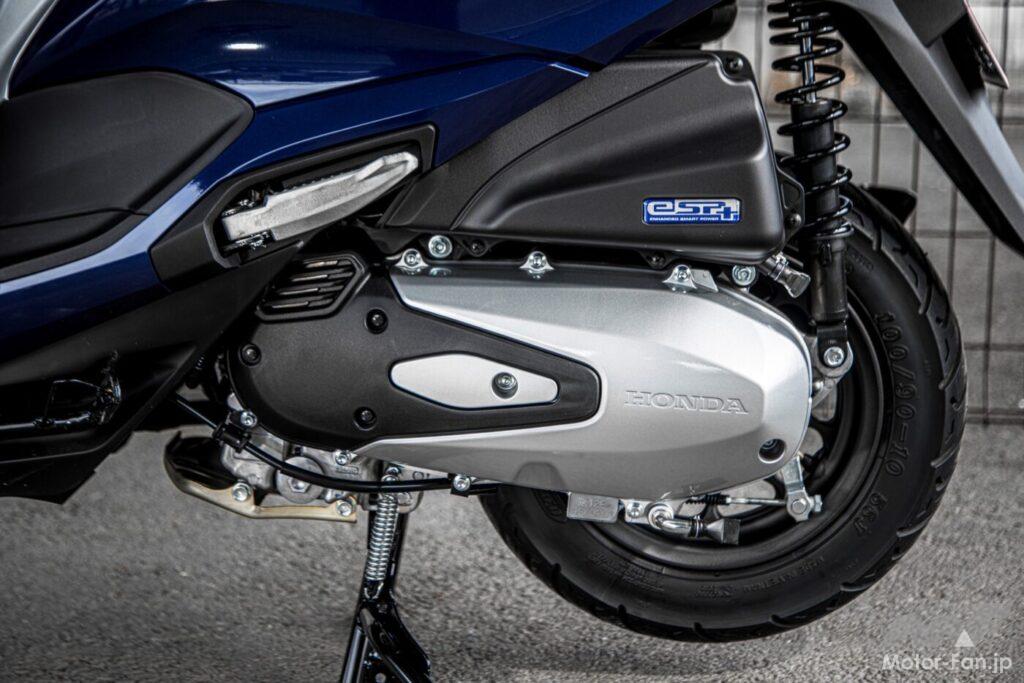
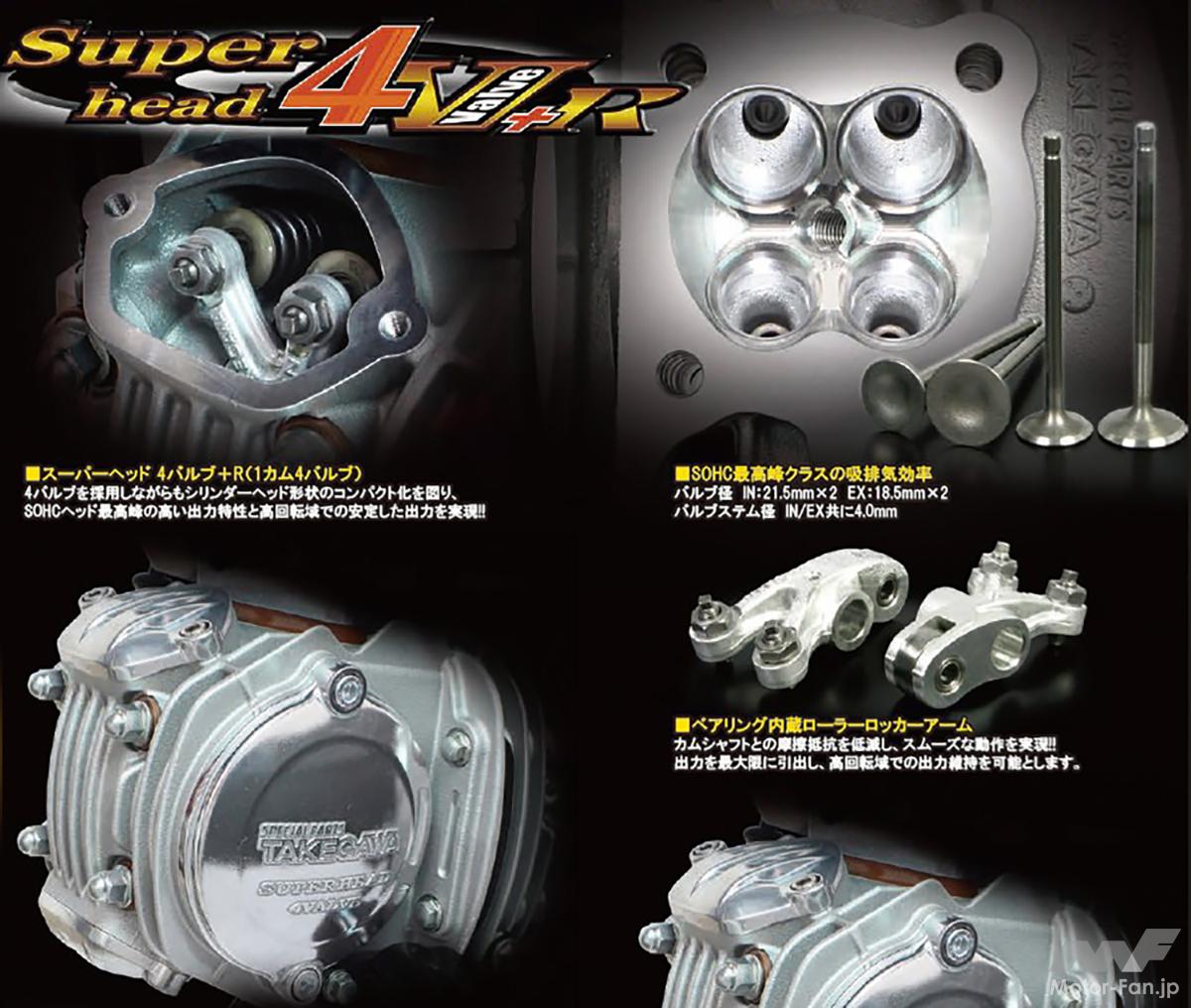
The 124cc water-cooled, four-stroke, single-cylinder SOHC 4-valve “eSP+” engine has been adopted since the 2022 model. The basic design is the same as the PCX, but the maximum output is slightly lower at 11ps/8750rpm for the Lead 125, compared to the PCX’s 12.5ps/8750rpm. Although no specific announcement has been made, the fuel efficiency of the 2025 model has been slightly improved, which suggests that there may have been changes to the ECU.
When the throttle is gradually opened, the centrifugal clutch immediately engages at low rpm, allowing the bike to start off very naturally. This gentle clutch engagement makes it easy to adjust speed even on slow-moving traffic jams, and the rider doesn’t feel rushed. It’s so “normal” that it’s easy to overlook, but this natural drivetrain setting is a testament to Honda’s unique style.
With a big movement of my right hand, the speed quickly reaches 60km/h, and with that momentum, it looks like it could easily exceed 80km/h. It has enough power to feel insufficient on the fast-flowing bypass, yet the throttle response is extremely gentle. And even around 60km/h, the vibration and noise are still minimal. In terms of the sense of quality, it’s on the same level as the PCX, which is equipped with a similar eSP+ engine, and this is the main reason why, if I were to buy a 50cc scooter, I would choose a water-cooled model.
The greatest advantage is the ease of getting on and off thanks to the step-through design.
Next, let’s talk about handling. The wheel diameters are small, 12 inches in the front and 10 inches in the rear, and the wheelbase is 40mm shorter than the PCX. The crisp response to inputs is typical of a small-diameter scooter, and despite the underbone frame, which makes it difficult to ensure rigidity, it gives a sense of security, as if it has a solid core. On rough asphalt, the handlebars may bounce due to the small wheels, but the front and rear suspensions move well and the bike settles down quickly afterwards.
From tight U-turns to high-speed corners, the body is smooth and stable in any situation, and just like the engine, the word “high quality” can be used here as well. While it may not be a very assertive vehicle equipped with an internal combustion engine, on the other hand, it is the result of a thorough effort to eliminate elements that are perceived as noise, and as a commuter scooter, it should be praised.
The brakes are discs in the front and drums in the rear. In terms of braking power and safety, the PCX wins with front and rear discs and ABS, but the Lead 125 uses a combination brake that links the front and rear brakes with the left lever, which has the advantage of allowing you to concentrate on deceleration with your left hand. Another perk of the Lead 125 is that the left lever can be locked, which should come in handy when parking the bike on an incline.
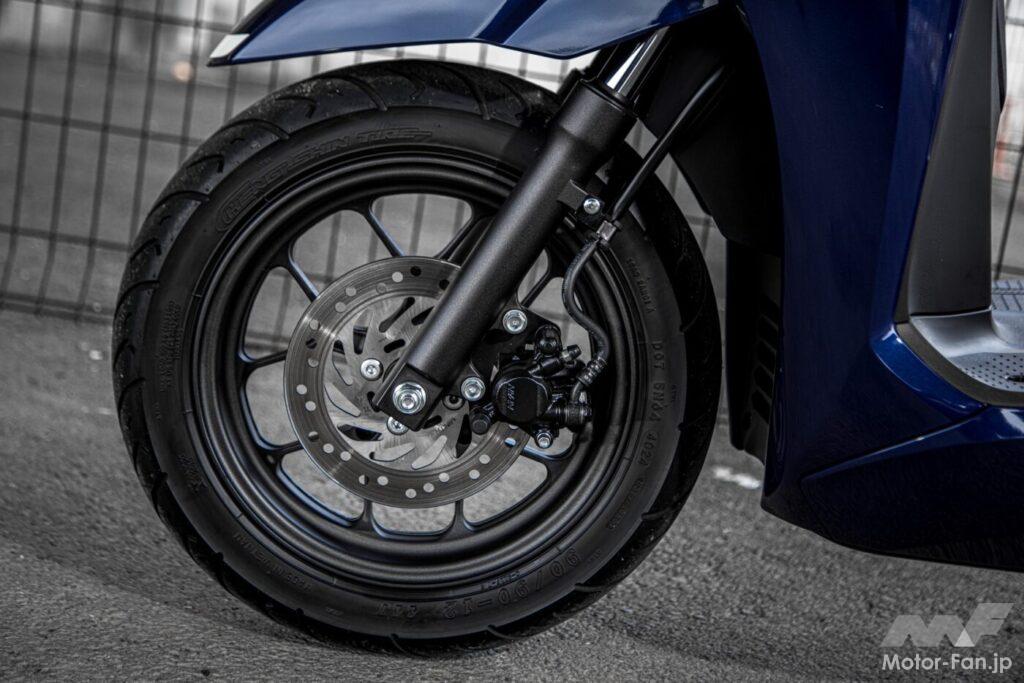
The wheel diameter is 12 inches in the front and 10 inches in the rear, and the standard tires are made by Cheng Shin. The brakes are disc in the front and drum in the rear, and a combination brake is used that links the front and rear with the left lever. Note that an ABS specification is available in Vietnam, where it is produced.
After test riding the Lead 125, I once again felt that its strengths were the ease of getting on and off, something you’ll likely do many times when riding around town. The PCX has a floor tunnel, so after debating whether to climb back over it or swing my foot backwards, I chose the former and ended up scratching the exterior of the tunnel with my shoe more than once. In exchange for this, the PCX’s advantages are the overwhelming rigidity of the frame and the large fuel tank capacity (Lead 125: 6.0L, PCX: 8.1L), which are likely to be important points to consider when choosing.
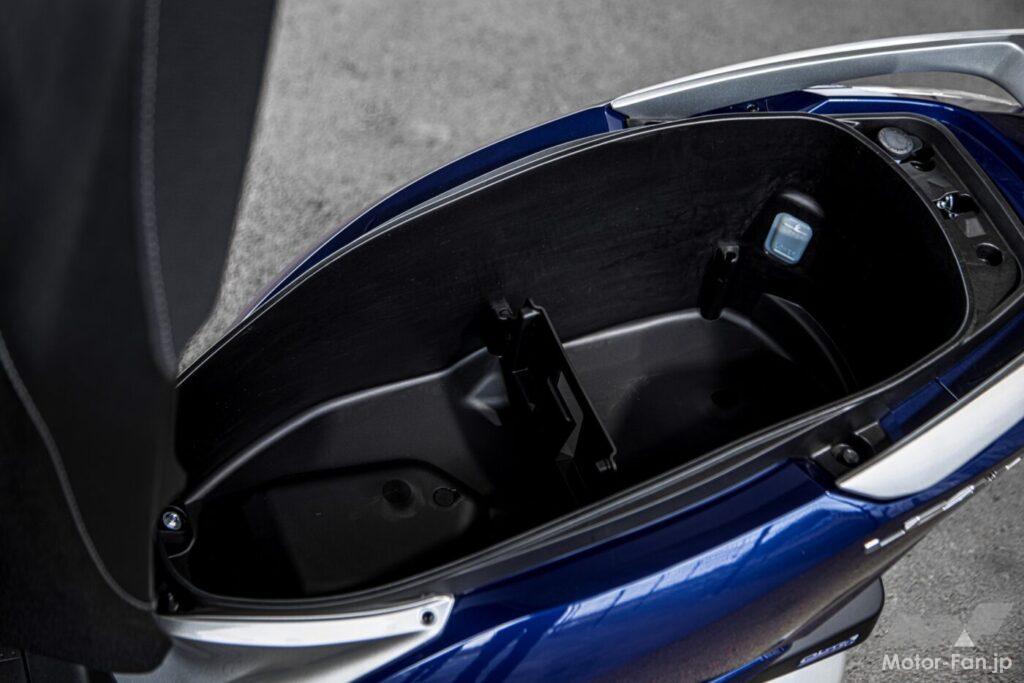
The Lead 125’s luggage box boasts a capacity of 37L compared to the PCX’s 30L. It’s recommended to check beforehand that even jet-type helmets may not fit depending on their size and shape. The 2025 model also comes with a partition board.
The Lead 125 is 38,500 yen cheaper (when the body color is blue, white, or black), but with that small of a difference, many people will likely choose the PCX, which is likely to have a better resale value.However, if you are not going to use it for touring or other hobbies, and are only concerned with short-distance travel on public roads, I would recommend the Lead 125, which is 17kg lighter and easier to get on and off.
Riding position and foot reach (175cm/68kg)
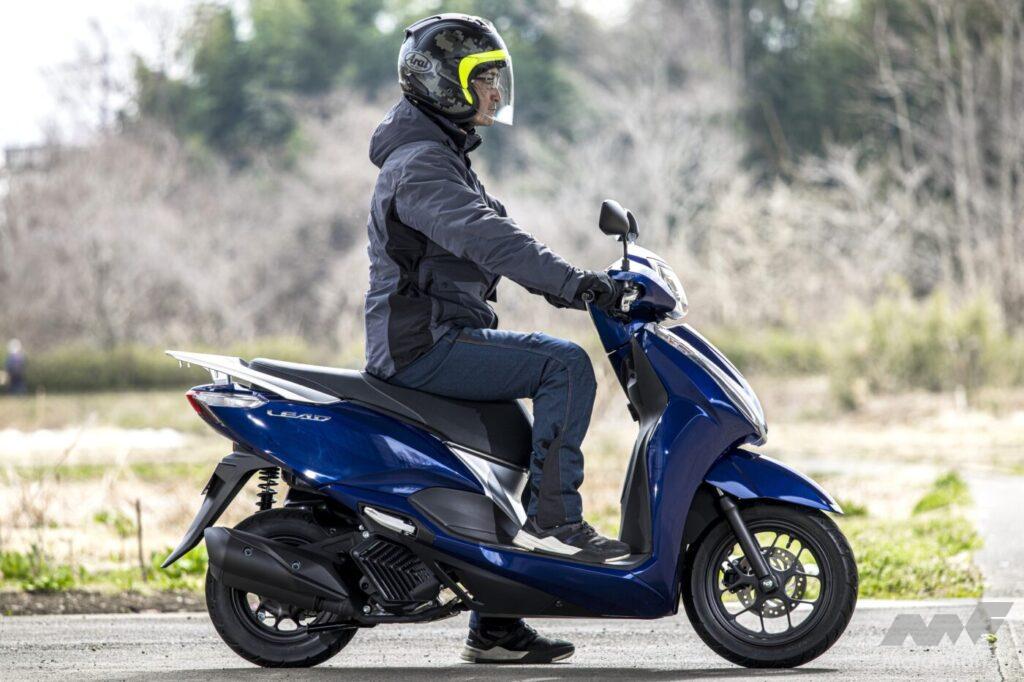
The step-through design makes it easy to get on and off, which is a major advantage over the PCX. The floorboard is high because the 6.0L fuel tank is located under the feet, but the wide seat allows for a high degree of freedom in seating position, which is a plus.
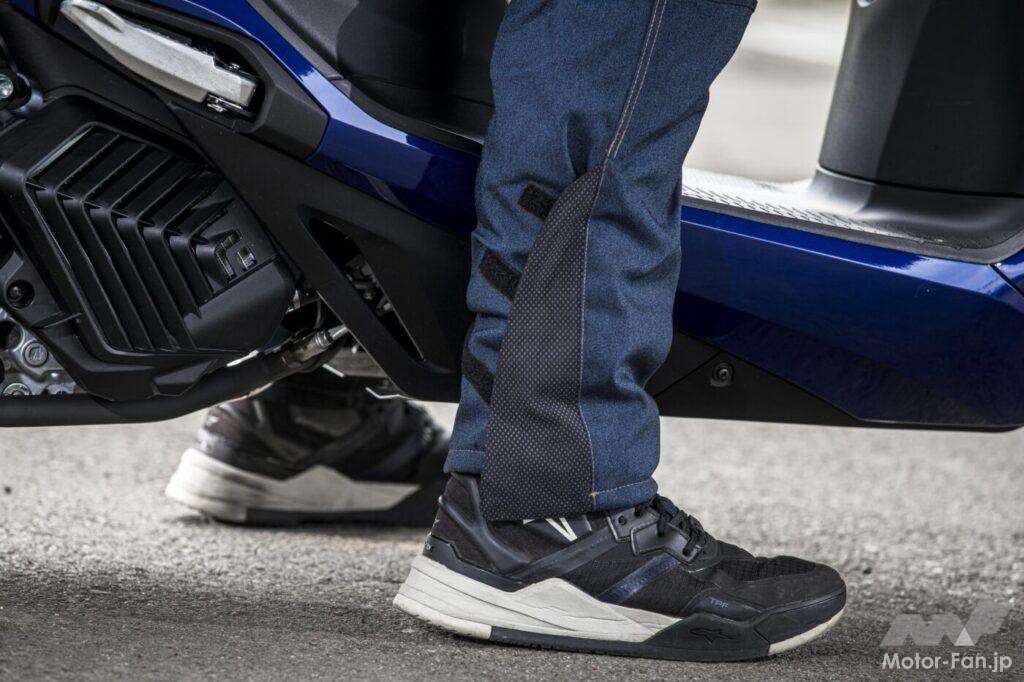
The official seat height is 760mm, and as you can see, the foot reach is excellent. Incidentally, the PCX’s seat height is 4mm higher, but the foot reach is at the same level. In addition, the wheelbase of the PCX is 40mm longer, but the minimum turning radius is 0.1m smaller, which is an inverse phenomenon.