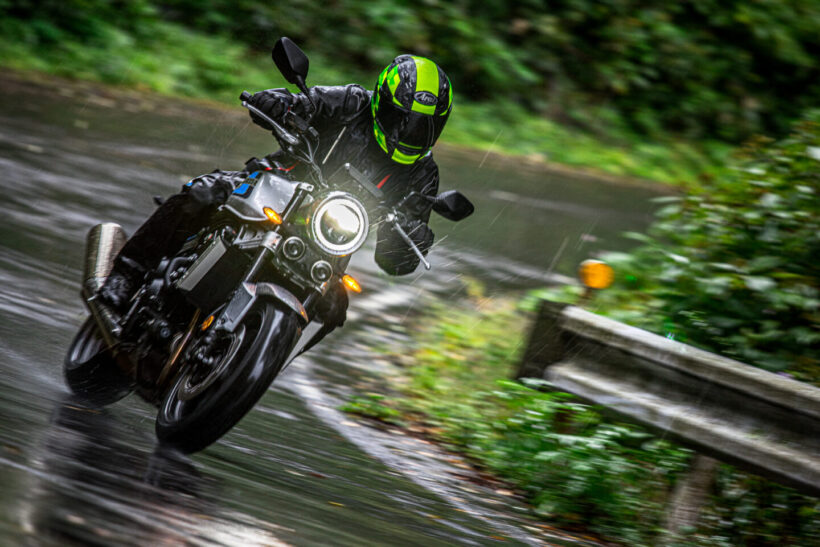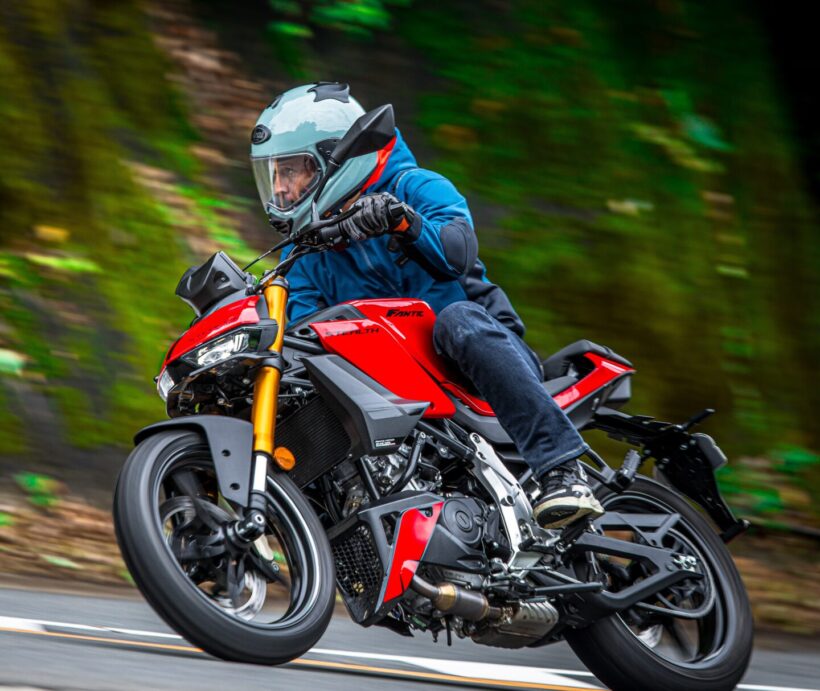

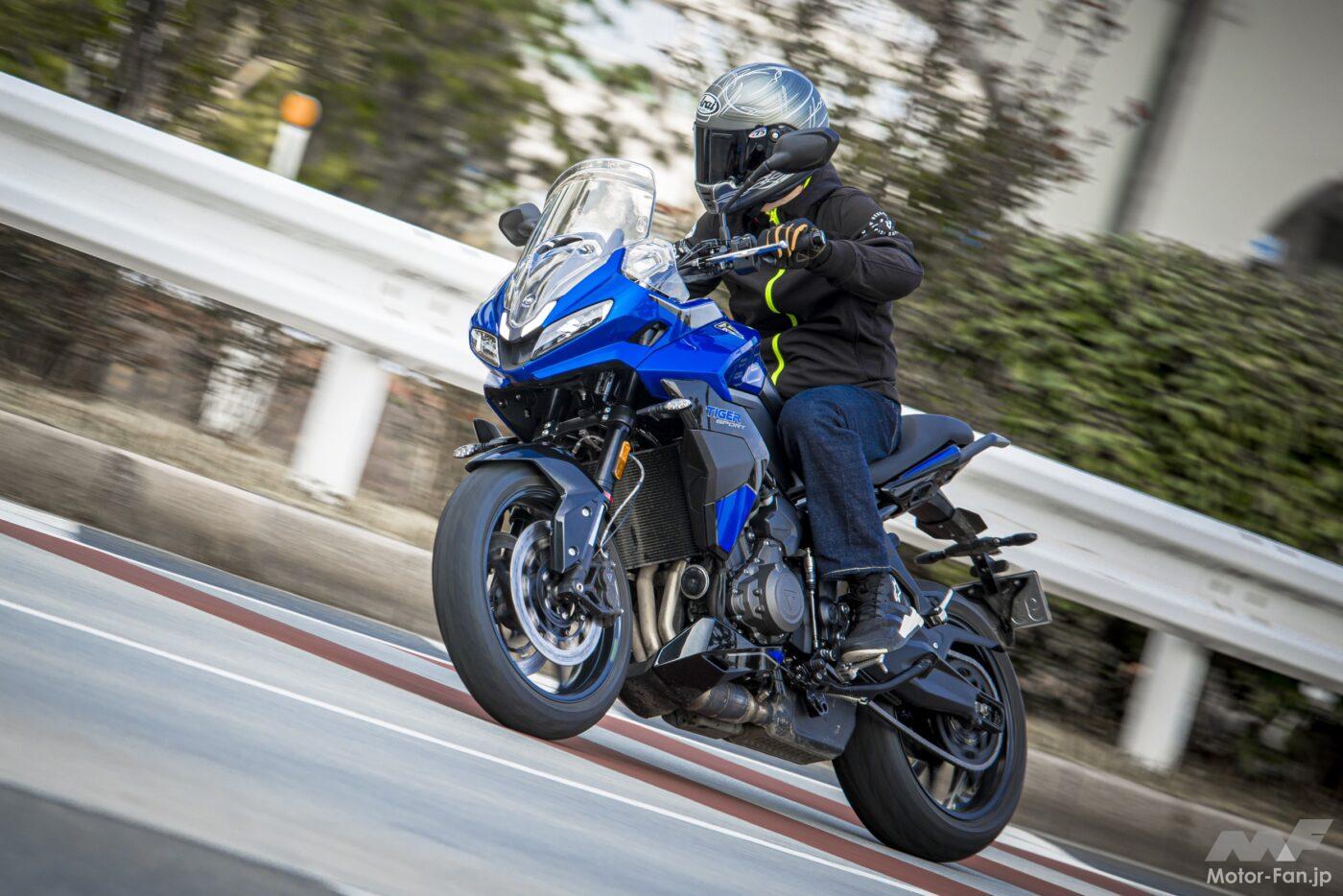
Tiger Sports 800…From 1,395,000 yen (released in February 2025)
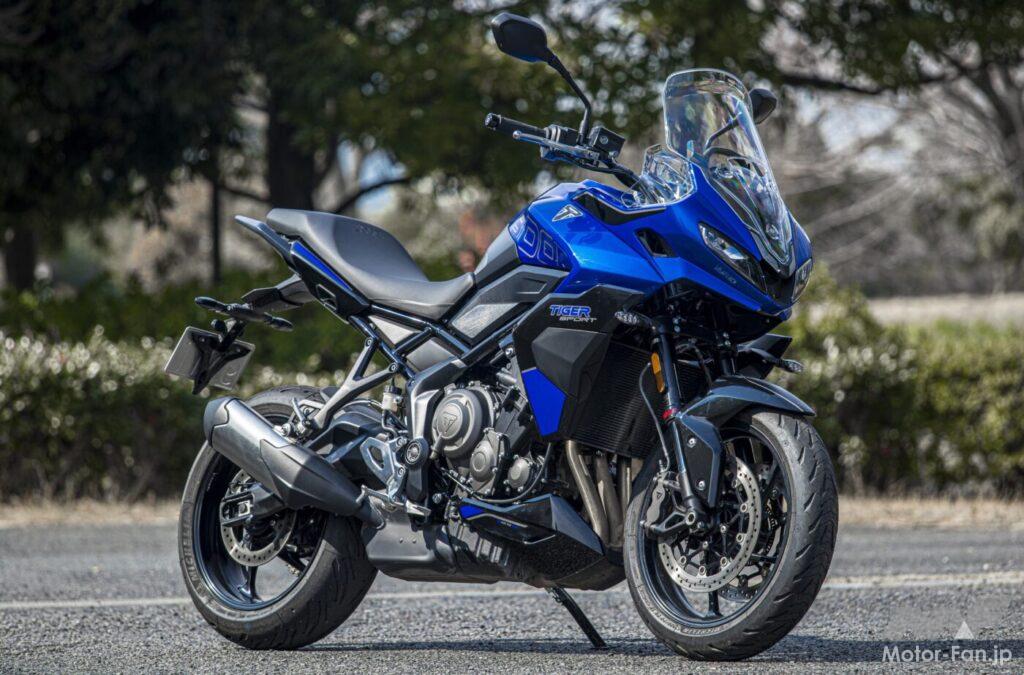
Tiger Sports 800
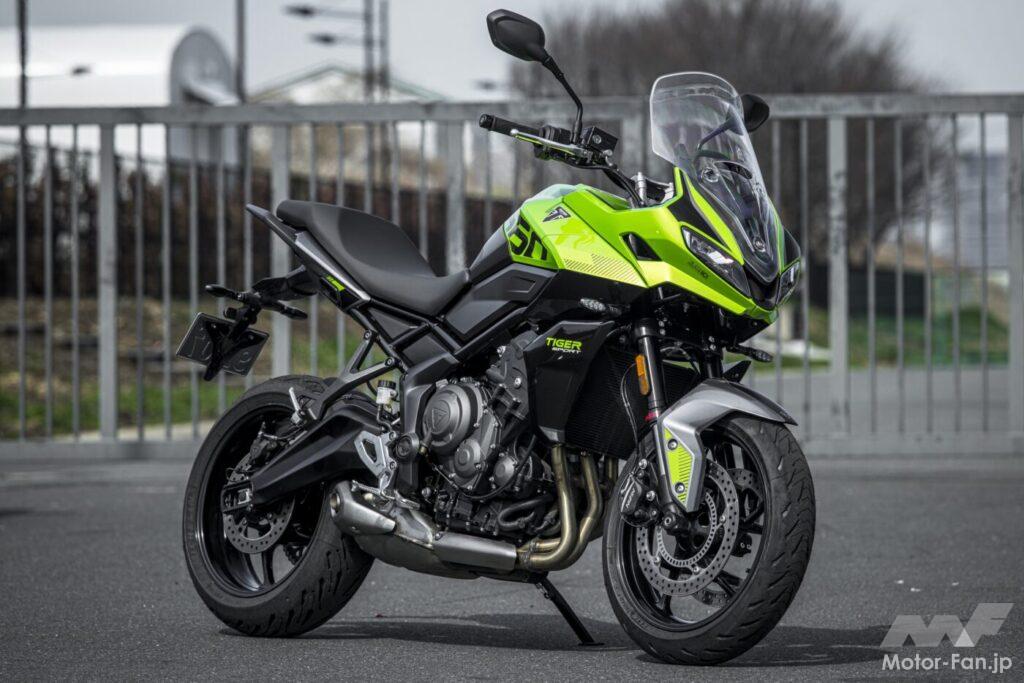
Tiger Sports 660 (2025 model)
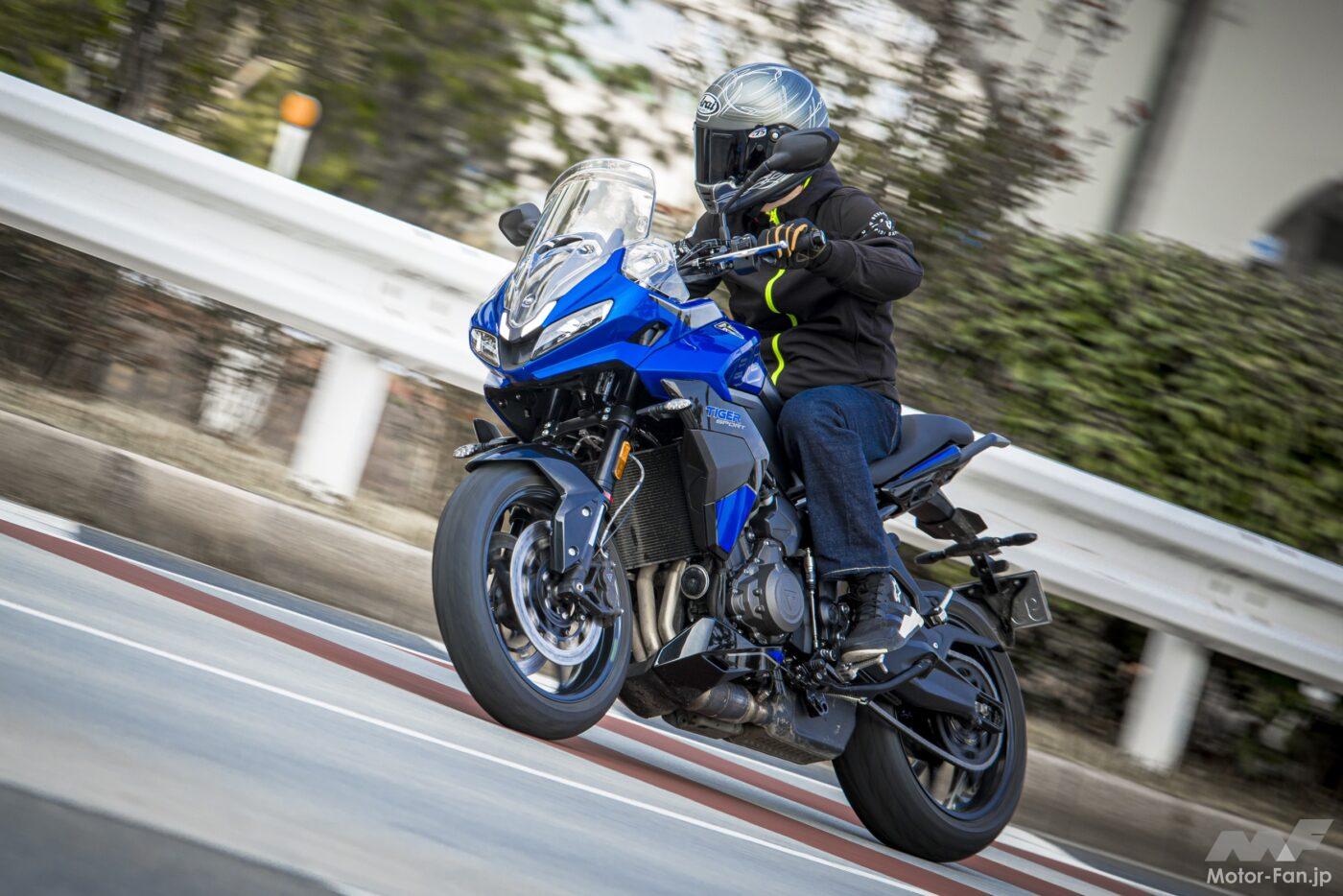
While sharing the same platform as the 660, the Tiger Sports 800 is equipped with a 798cc water-cooled triple engine based on the Street Triple 765RS. The main exterior differences include a separate silencer, wind deflectors added to both sides of the windscreen, a larger radiator shroud, and seat upholstery with the model name printed on it. The fuel tank capacity of the 800 is 18.6L, 8% more than the 660’s 17.2L.
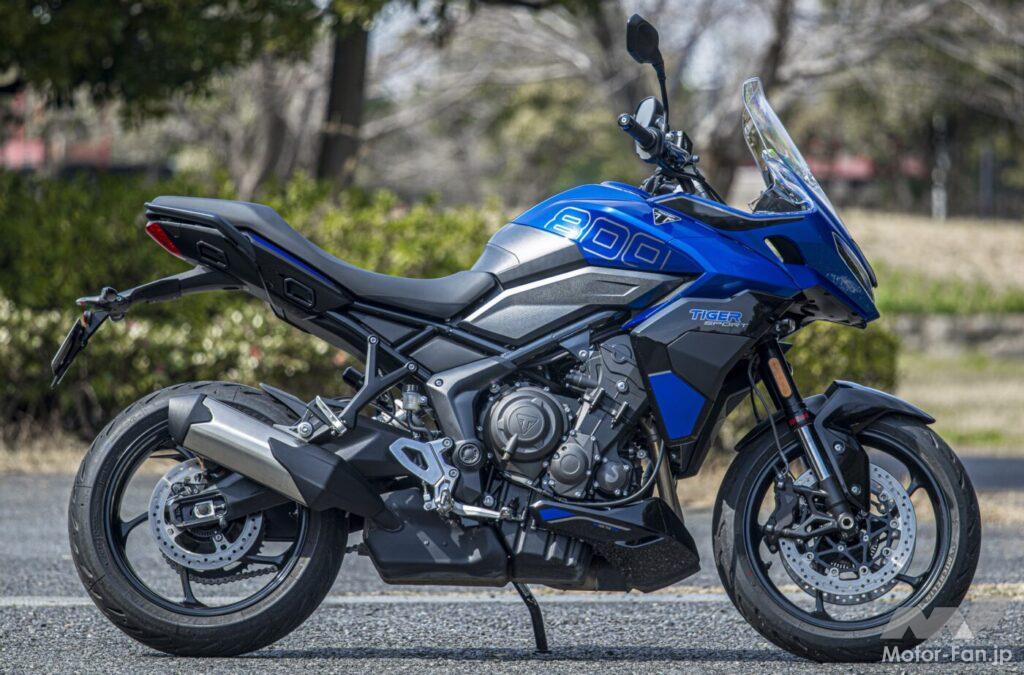
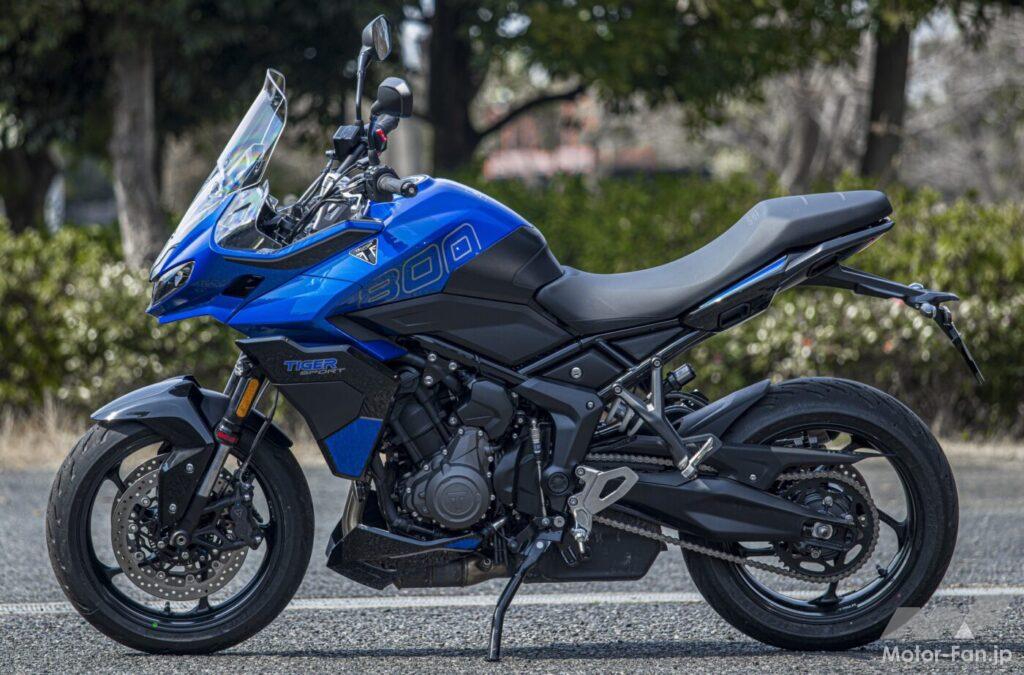
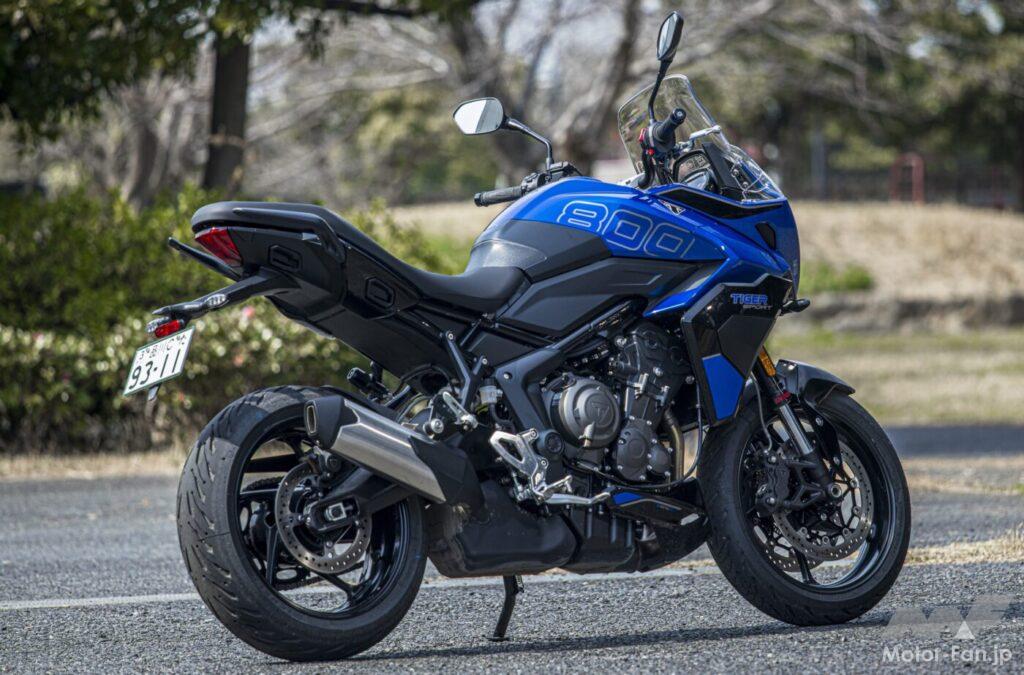
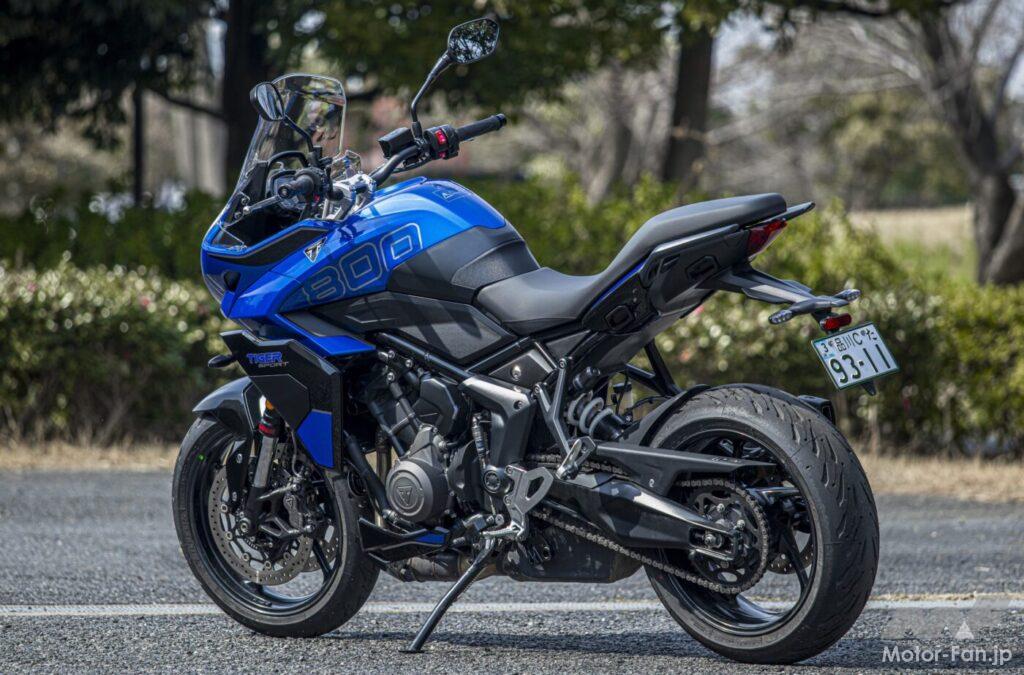

There are four body colors available. Graphite x Sapphire Black is priced at 1,395,000 yen. Caspian Blue x Phantom Black, Cosmic Yellow, and Sapphire Black are priced at 1,408,000 yen, an increase of 13,000 yen. Incidentally, the 660 is priced at 1,125,000 yen (green, white, and red are priced at 1,138,000 yen), so the difference is 270,000 yen.
The smoothness is outstanding because of the engine based on the Street Tri 765RS.

I watched the Tiger Sports 800 launch video on Triumph’s official YouTube channel. Nearly 500 comments were, unsurprisingly, in English. I was surprised by the number of voices welcoming the “More Power” option. Personally, I felt the 660 was sufficient for both the Trident and Daytona. As I pondered this, I suddenly wondered, “How much does the average adult male weight differ between countries?” A quick search revealed that men in the UK, where Triumph’s headquarters are located, are about 19% heavier than Japanese men. Taking this into account, I calculated how much of a disadvantage the power-to-weight ratio would be. It seems that a bike weighing 200kg would feel about 5% less powerful. Additionally, the frontal projection area, including the rider, would likely increase, so it’s not surprising that some well-built Westerners would complain that the 660 lacks power.

The 800’s 798cc water-cooled, four-stroke, in-line three-cylinder engine is based on the Street Triple 765RS rather than the Tiger Sport 660, with the stroke extended by 2.3mm and the displacement increased from 765cc to 798cc. As a result, the primary/secondary reduction ratios and each of the six gear ratios are different from those of the 660. The compression ratio is quite high at 13.2:1, and the maximum output is declared at 115ps compared to the 660’s 81ps. It features an electronically controlled throttle and slip-assist clutch, and has three riding modes: Sport, Road, and Rain. Simple cruise control is also standard equipment.
The 800’s engine produces 115hp compared to the 660’s 81hp. With a 42% increase, you’d think it’d be incredibly powerful, but actually driving it, surprisingly, the torque in the low to mid-range is only slightly stronger than the 660’s. There are two possible reasons for this feeling. One is that the overall reduction ratio is slightly longer than the 660’s. For example, in top sixth gear, the engine speed at 100km/h is about 4,800rpm for the 660, while it is about 4,500rpm for the 800. The other is that the engine speed at which maximum torque is generated is higher, at 8,500rpm, compared to the 660’s 6,250rpm.
You might think that if the difference is that small, there’s no need to go out of your way to choose the 800, but in fact, there’s a clear difference from the moment you start the engine. The 800 clearly has less vibration than the 660, and runs smoother. In addition, on regular roads, the maximum you can rev it to is 4000-5000 rpm, but the pulsating feeling from idling to that point, like a subtle fizzing, is very pleasant and even feels high quality. It’s amazing how much of a difference in feeling can be made just by using a different base engine, even though the displacement is only 20% different with the same water-cooled triple.
Opening the throttle wide in the most powerful Sport mode produces a sensual sound and a pleasant charge. The 34hp increase in power means acceleration that’s a world apart from the 660. Even in the intermediate Road mode, the power in the mid- to high-rev range is clearly superior to the 660, and even picky British riders will be pleased with this. The standard bidirectional quickshifter produces a slightly larger shock when shifting up in low gears, such as from 1st to 2nd and from 2nd to 3rd, but in practical terms, it’s not particularly problematic. However, I did accidentally slip off the shift pedal a few times, so I checked and found that the pedal shape is completely different from that of the Trident and Daytona. I hope this will be improved in the near future.
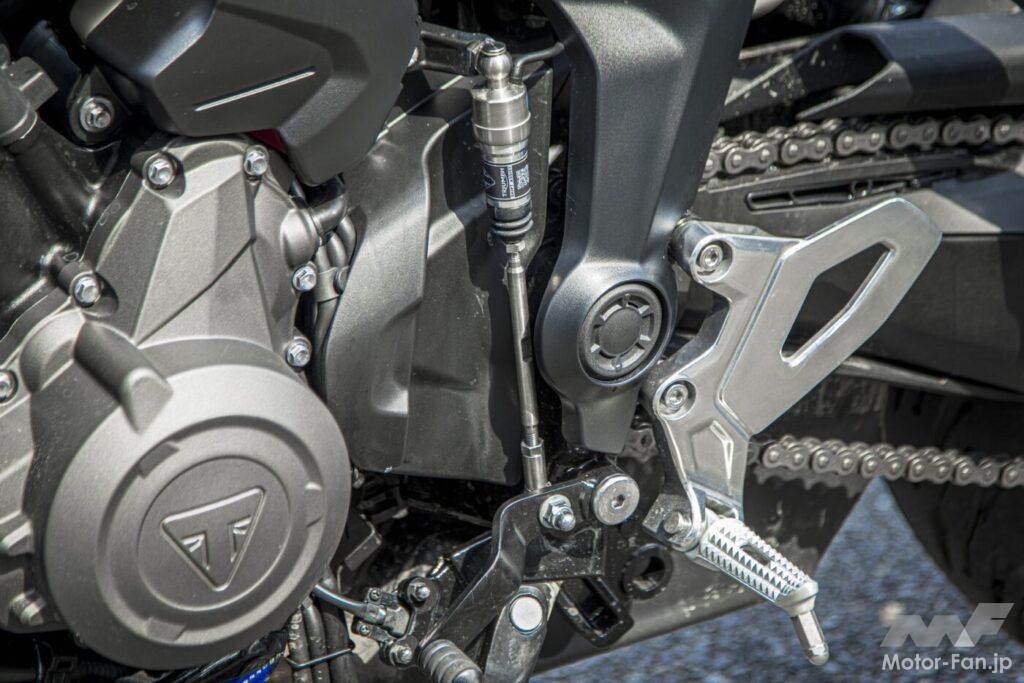
The Triumph Shift Assist bidirectional quick shifter is standard equipment. The shape of the shift pedal is different from that of the Trident 660 and Daytona 660, and the difference in link ratio made the gear shifting a little heavy. Also, the protrusion of the pedal was short, so I sometimes missed my foot.
The cruise control, which is also standard equipment, is a simple system that does not allow you to increase or decrease the speed by 1 km/h with the push of a button once it is activated. Since I frequently increase or decrease the speed while the cruise control is set, I found it quite disappointing that this was not possible. However, it will be a useful feature for those who just want to use it on an empty highway.
The suspension movement is top-notch and the wind protection is top-notch.
In terms of handling, the wheelbase is 5mm longer, likely due to a difference in secondary reduction ratio, and as a result, the caster angle and trail are slightly different, but the basic direction is essentially identical to the 660. Its neutral cornering characteristics are similar to those of the naked Trident 660, and it responds faithfully to the rider’s control without excess or deficiency. Though it bears the “Tiger” name, which is an adventure bike, its character is that of a pure sports tourer. The lineup also includes the “Tiger 850 Sport” with a 19-inch front wheel, which is likely
why it was necessary to clearly distinguish the two bikes. While the basic handling is similar to the 660, the 800 is noticeably more comfortable to ride. Since both bikes share the same standard tire brand, Michelin Road 5, the difference is likely due to the shock absorber. The 800’s front forks are Showa’s separate-function type, with adjustable rebound and compression damping. The difference in grade likely accounts for the difference in operability. On the other hand, the rear is equipped with a hydraulic preload controller, just like the 660, and I found it very convenient to be able to turn it with my left hand even while straddling the bike.

It uses a Showa 41mm inverted separate function cartridge fork (SF-CF). While the 660 is non-adjustable, the 800 allows adjustment of the rebound damping force on the right and the compression damping force on the left. The standard setting is 1.75 turns back from the full clockwise position on both the rebound and compression sides.
ADVERTISEMENT
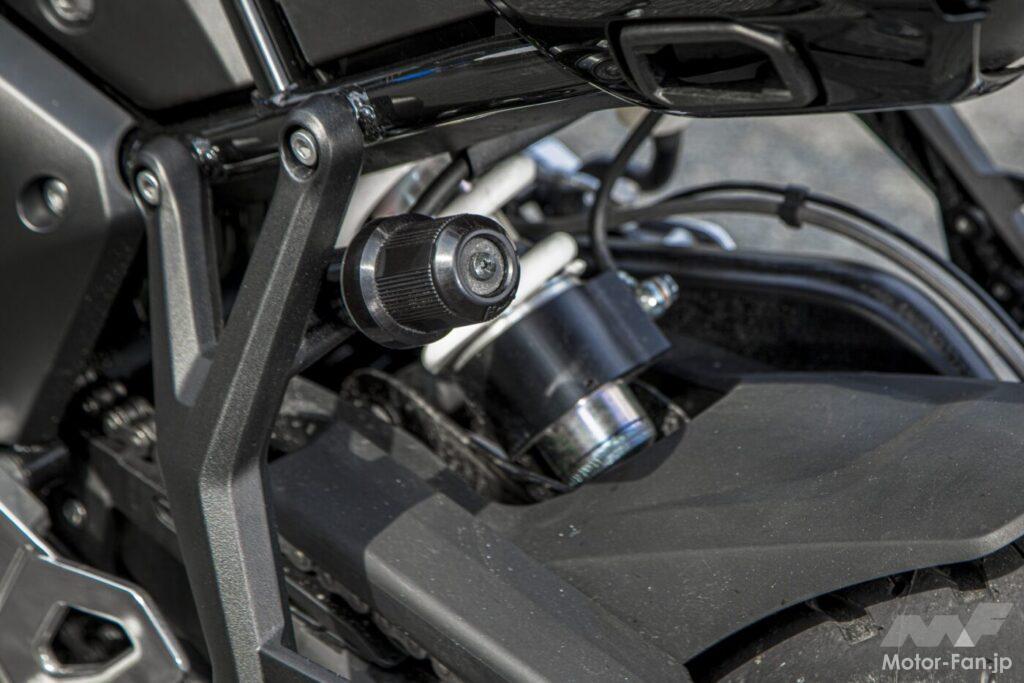
The rear suspension is a link-type monoshock with a hydraulic preload controller. The standard setting for a single-seater is the minimum (fully released), with the rebound damping force set to 1.25 turns back.
What is particularly noteworthy about the 800 is its high level of wind protection. The 660 was also at a level that could be said to be quite comfortable, but the 800 has added transparent wind deflectors on the left and right sides of the screen, and the larger radiator shroud also contributes to wind protection for the lower half of the body. By adjusting the screen to the appropriate height, the rider is almost completely shielded from the wind while riding, allowing them to enjoy comfortable high-speed cruising.

The screen can be adjusted to seven different heights with one hand, and the 800 has DRLs above the air intakes.
The front brakes, which use radially mounted, opposed 4-piston calipers, not only have higher absolute braking power than the 660’s single-piston 2-piston brakes, but also have a wider range of control. This is another factor that makes the machine feel high quality. In addition, the cornering ABS, which adjusts its intervention level according to the banking angle, is a great source of peace of mind.
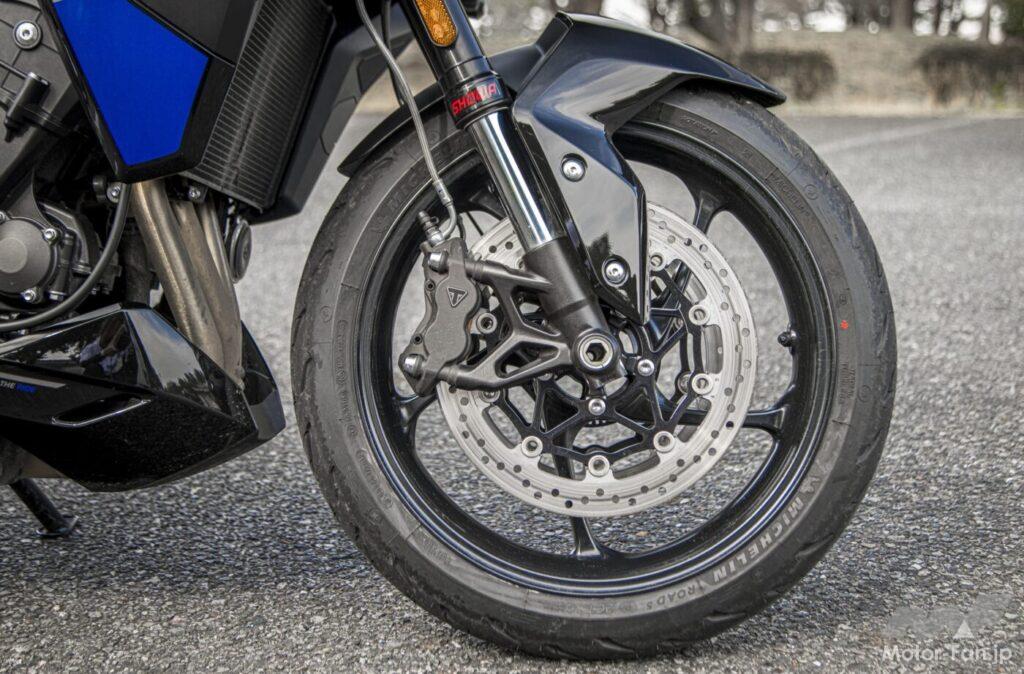
The front brake set has been upgraded from the 660. The φ310mm brake disc is a standard type combined with a disc hub (inner disc), and the caliper has been changed from a pin-slide single-piston type with a two-piston caliper to a radial-mount opposed type with a four-piston caliper. Cornering ABS combined with an IMU (6-axis inertial measurement unit) is adopted. The standard tires are Michelin Road 5, the same as the 660.
In the YouTube comments mentioned above, the most prominent opinion after the praise for More Power was that “the meter panel is disappointing.” It’s true that these days, 5-inch TFT meters like those on smartphones are on the rise, so it’s understandable that people would think that. However, since it comes with Bluetooth connectivity from the start, there’s no doubt that it’s very convenient if you can get the hang of it.

The instrument panel has an LCD on the top and a TFT on the bottom. The My Triumph Connectivity System, which allows connection to smartphones, is standard equipment, and can display information such as turn-by-turn navigation, incoming calls, and music information.
The Tiger Sports 800 is a complete upgrade from the 660, and it’s definitely worth the 270,000 yen difference. The reason the 660 is still sold alongside the 660 is likely because, in addition to being cheaper, it’s also compatible with the A2 license in EU member states (the 800 currently doesn’t support the A2 license). It’s the ideal mid-class sports tourer, and personally, I think it’s going to be my pick of the year.
Riding position and foot reach (175cm/68kg)
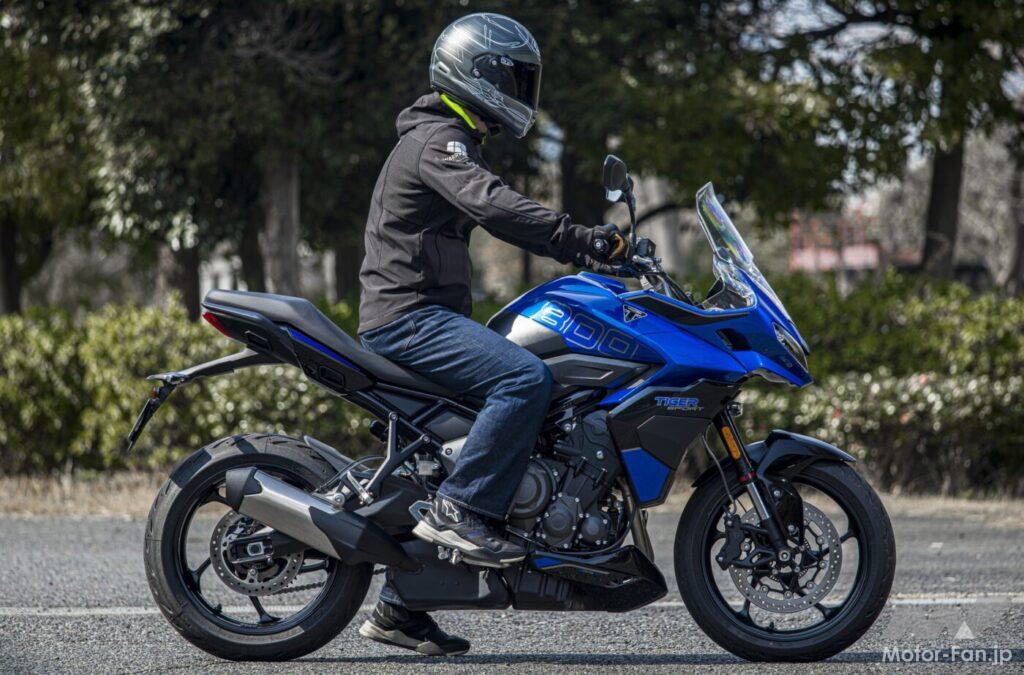
The riding position is the same as the 660, with the upper body almost upright and knees gently bent.

The seat height is 835mm, the same as the 660. When I, who am 175cm tall, put both feet down, my heels were slightly raised.
Detailed explanation
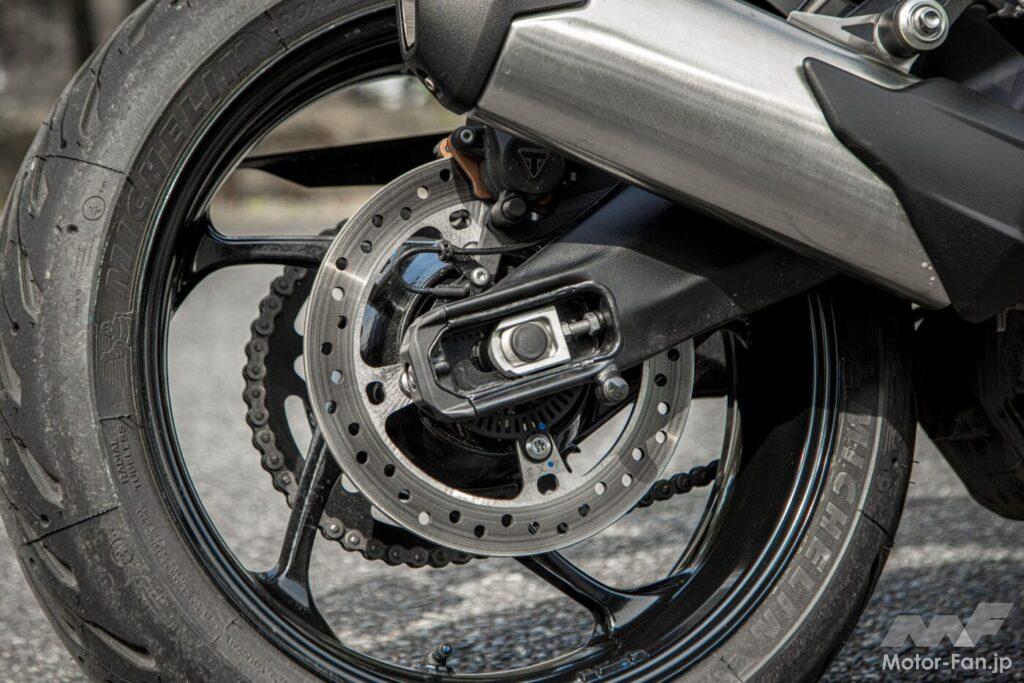
The swingarm is made from pressed steel plate. The rear brake is a combination of a φ255mm disc and a one-sided single-piston caliper. Wheel travel is 150mm both front and rear, the same as the 660.
ADVERTISEMENT

The parts that make up the cockpit, including the color, are almost the same as those of the 660. The 800 has added wind deflectors on both sides of the screen.
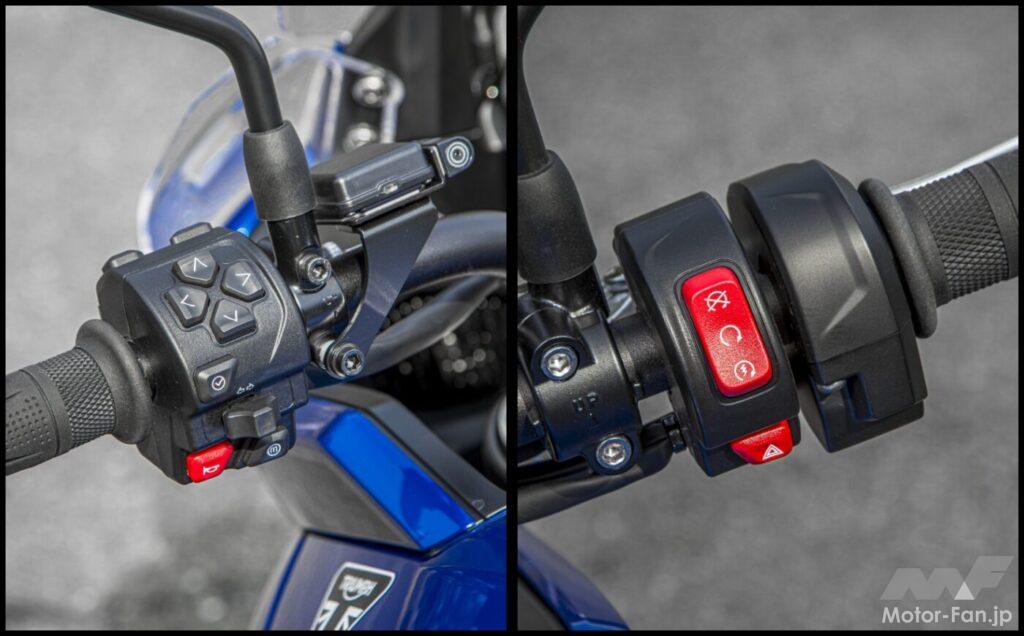
Many operating functions are concentrated in the left switch box. The 800 is equipped with a DRL button, which automatically switches between DRL and low beam depending on the ambient brightness. The cruise control can be activated at speeds from 30 to 160 km/h and in second gear or higher, and is a simple system that does not allow speed adjustment by button operation. The hazard button is on the right side.
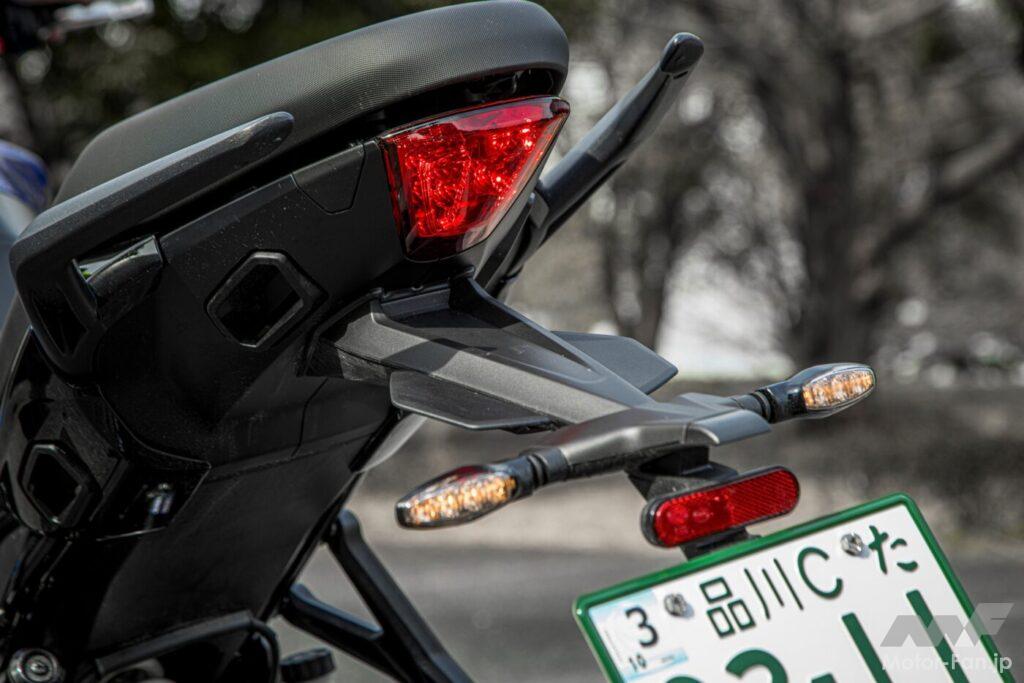
All the lights are LED. The bike is already equipped with an integrated pannier mount, so you can easily install the genuine accessory pannier cases.

The seats are one piece, front and rear, and the 800 has the car name logo on the upholstery.
Tiger Sports 800 main specifications
●Engine, transmission
type: Water-cooled in-line 3-cylinder DOHC 12-valve
Displacement: 798cc
Bore: 78.0mm
Stroke: 55.7mm
Compression ratio: 13.2:1
Maximum power: 115ps (84.6kW) @ 10,750rpm
Maximum torque: 84Nm @ 8,500rpm
System: Bosch multi-point sequential electronic fuel injection, electronically controlled throttle, 3 riding modes (RAIN, ROAD, SPORT)
Exhaust system: Stainless steel 3-into-1 header system, side-mounted stainless steel silencer
Drive system: X-ring chain
Clutch: Wet multi-plate wire type, slip assist
Transmission: 6-speed
Chassis
Frame: Tubular steel perimeter frame
Swingarm: Double-sided, steel
Front wheel: Tubeless 5-spoke 17 x 3.5-inch, aluminum
rim Rear wheel: Tubeless 5-spoke 17 x 5.5-inch, aluminum rim
Front tire: 120/70ZR17
Rear tire: 180/55ZR17
Front suspension: Showa 41mm inverted separate function cartridge fork (SF-CF), 150mm travel *Adjustable rebound damping force
Rear suspension: Showa monoshock RSU with hydraulic preload adjustment, 150mm travel *Adjustable rebound damping force
Front brakes: 310mm floating double discs, 4-piston radial calipers, OCABS
Rear brakes: 255mm single disc, single-piston sliding caliper, OCABS
Instrument display and functions: LCD multi-function meter, TFT color screen
Dimensions and weight
Overall length: 2,070mm
Width including handlebars: 835mm
Overall height (excluding mirrors): 1400mm
Seat height: 835mm
Wheelbase: 1425mm
Caster angle: 23.8º
Trail: 99mm
Vehicle weight: 214kg
Fuel tank capacity: 18.6 liters
Fuel consumption: 4.7L/100km (21.3km/L)