
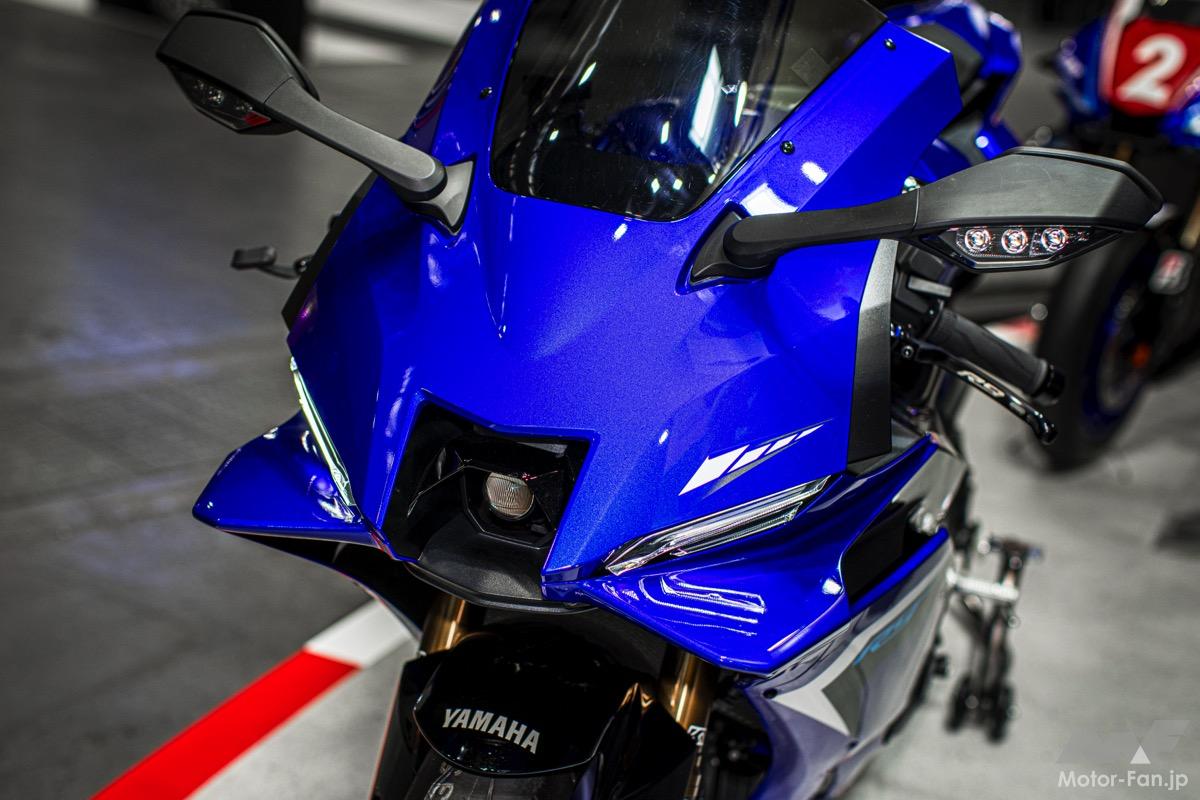
Yamaha YZF-R9…To be released after spring 2025
Easy-to-handle power and engine performance
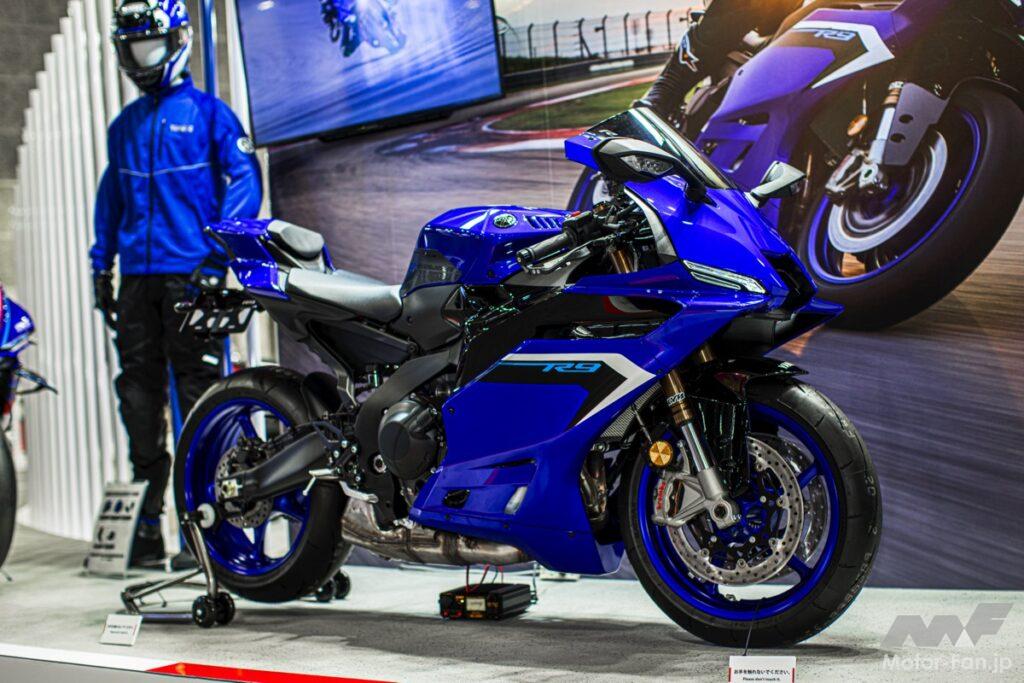
Yamaha has announced the new supersport YZF-R9 as a 2025 model. This model is equipped with an 890cc water-cooled DOHC inline 3-cylinder engine that produces a maximum output of 117.3 horsepower at 10,000 rpm (European model).
It also produces a maximum torque of 93.5Nm at 7,000rpm, providing powerful acceleration from low to mid-range.While sharing the same basic structure as the MT-09, this engine has been specially tuned for its ECU and optimized gear ratios, making it suitable for circuit use as well.
Specially designed chassis and suspension
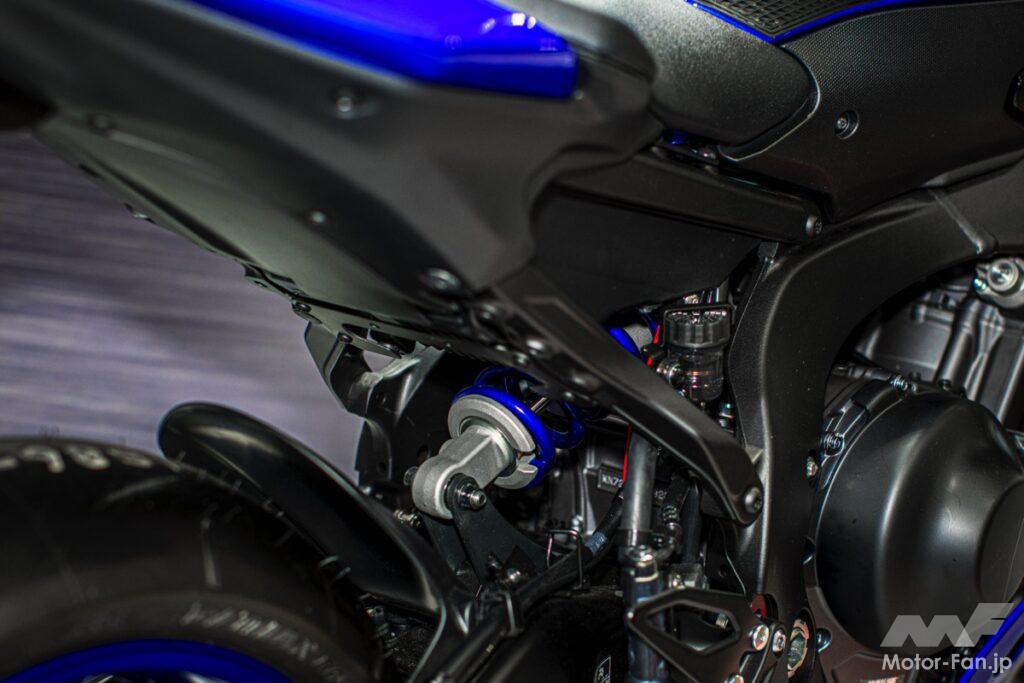
The YZF-R9 uses the lightest aluminum Deltabox frame of any Yamaha supersport model, which increases the rigidity of the body while reducing weight.
The front and rear suspension is equipped with a fully adjustable KYB 43mm inverted fork and single shock absorber, which allows adjustment of preload, high-speed and low-speed compression, and rebound, making it suitable for a variety of riding situations.
The braking system uses premium Brembo Stylema monoblock calipers and radial master cylinders. It is equipped with dual 320mm discs at the front and a single 220mm disc at the rear, and ABS is also standard. This provides high braking power and excellent controllability.
Equipped with 6-axis IMU
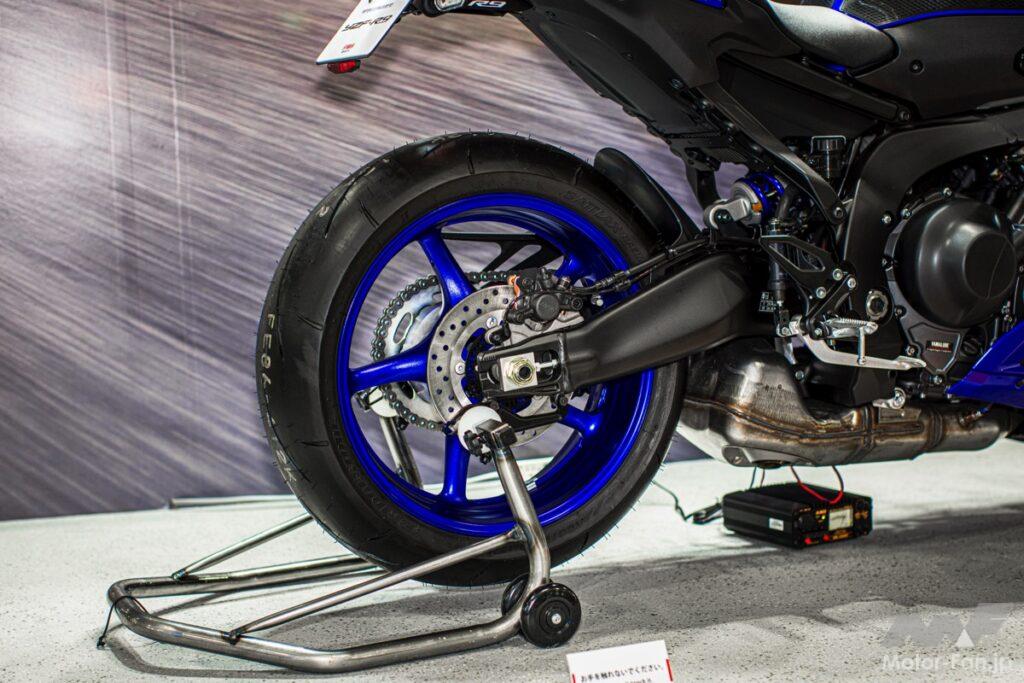
The YZF-R9 is equipped with a 6-axis IMU (Inertial Measurement Unit) inherited from the flagship model YZF-R1, which enables a variety of electronic control systems, including 9-stage traction control, 3-stage slide control, 3-stage lift control, and brake control.
These systems can be adjusted to suit rider preference and riding situation, providing optimal performance in all conditions.
Motorsports becomes more accessible
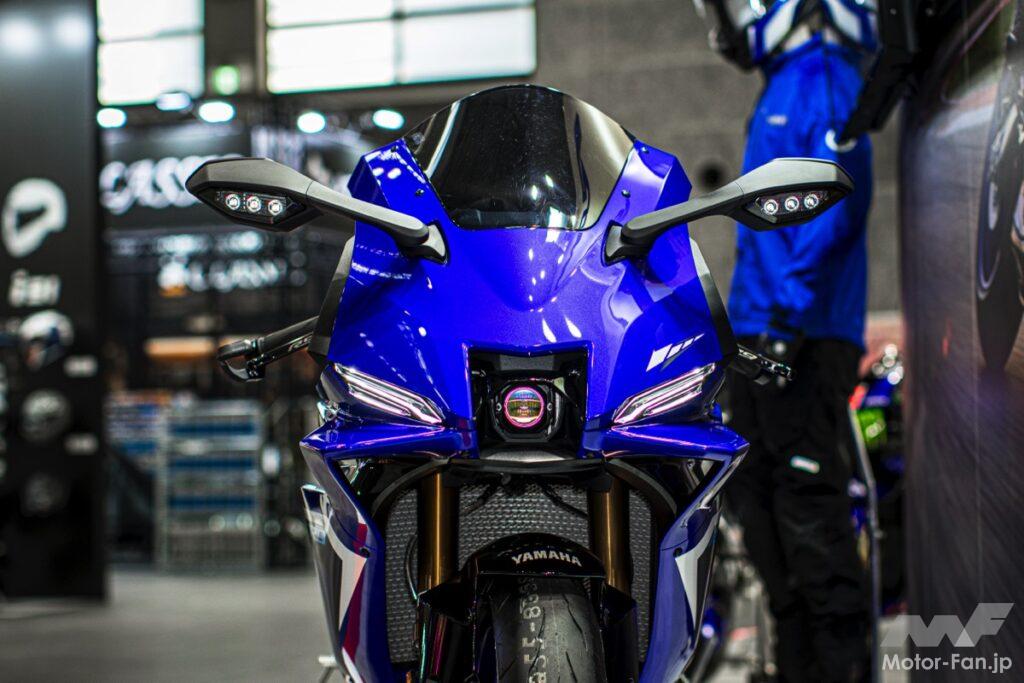
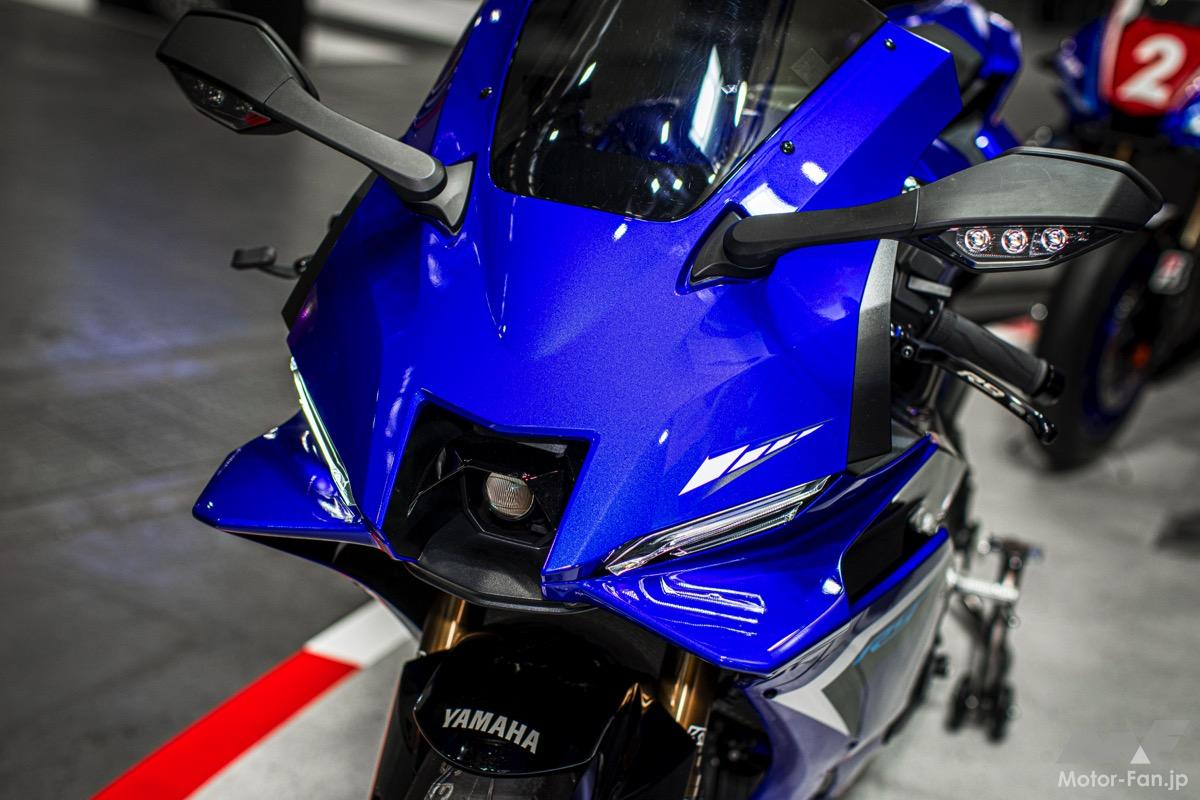
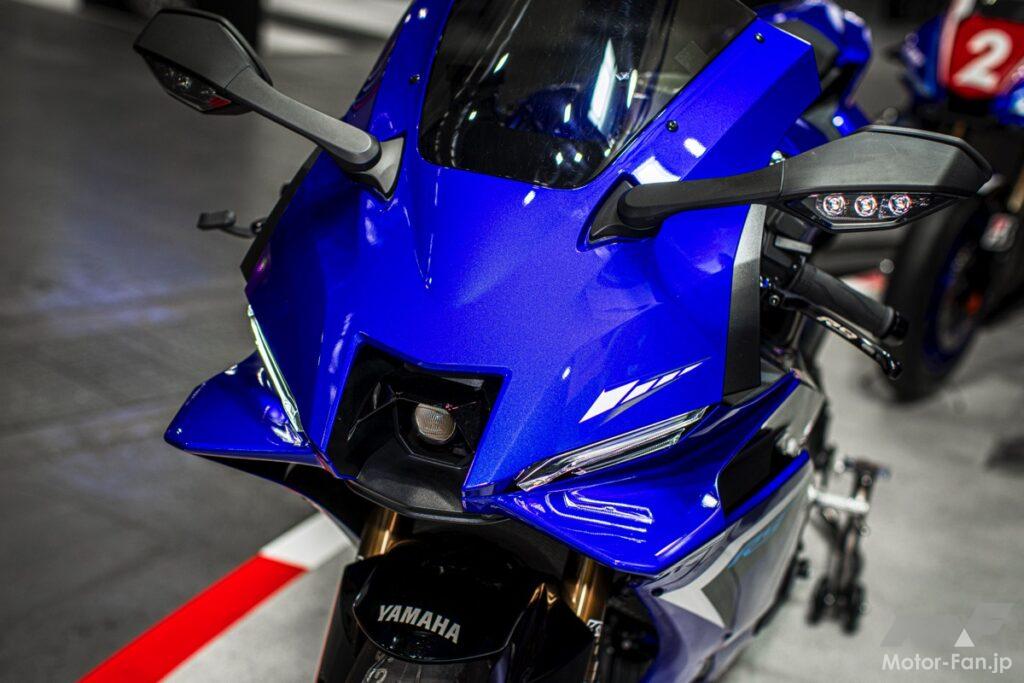
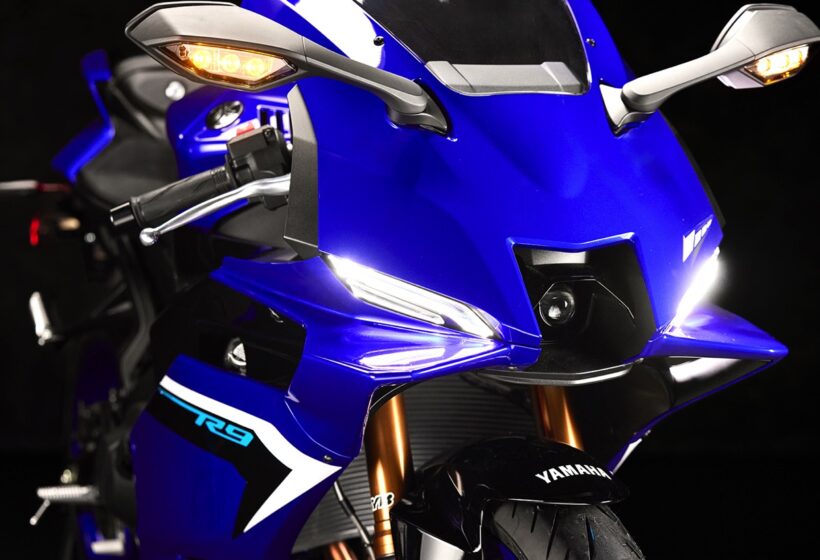
The body design inherits the M-shaped front duct and tail wing that are characteristic of Yamaha’s R series, while incorporating the latest design elements. It features LED position lights and MotoGP-inspired front winglets, improving aerodynamic performance and visibility. The seat height is 830mm, and the body dimensions are 2070mm long, 705mm wide, and 1180mm high, making it suitable for Japanese riders.
The theory behind large Japanese special purpose vehicles has always been that they are powered by 1000cc four-cylinder engines, but the YZF-R9 will be a model that breaks that convention and offers new value. It is likely to make circuits and motorsports, which have traditionally been difficult to access, more accessible.










![Yamaha’s PROTO BEV, one form of EV sports bike [Japan Mobility Show 2025]](https://motopeek.com/wp-content/uploads/2025/10/4634-1761685765068.jpg)