
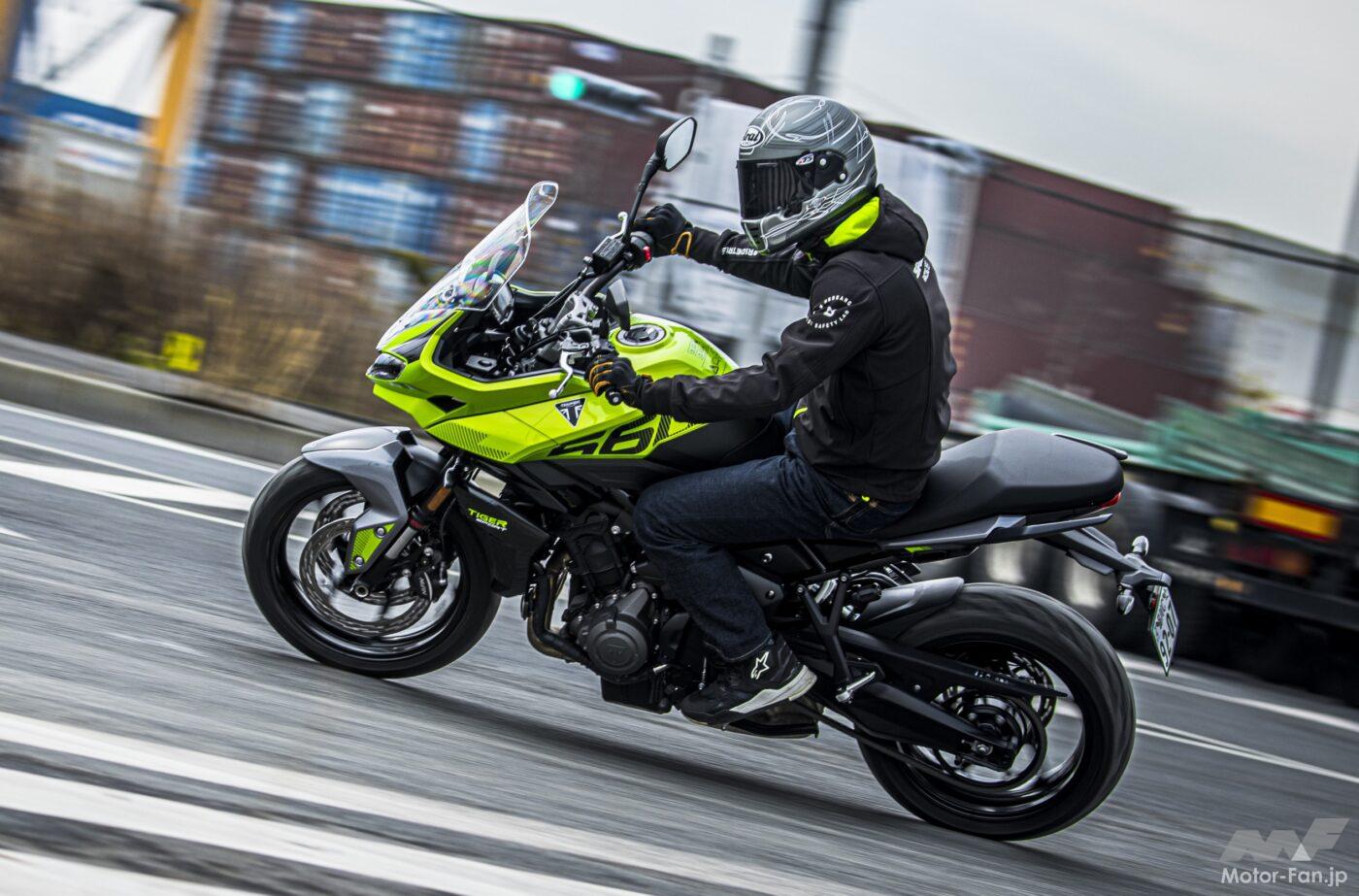

Triumph Tiger Sport 660…From 1,125,000 yen (released in February 2025)
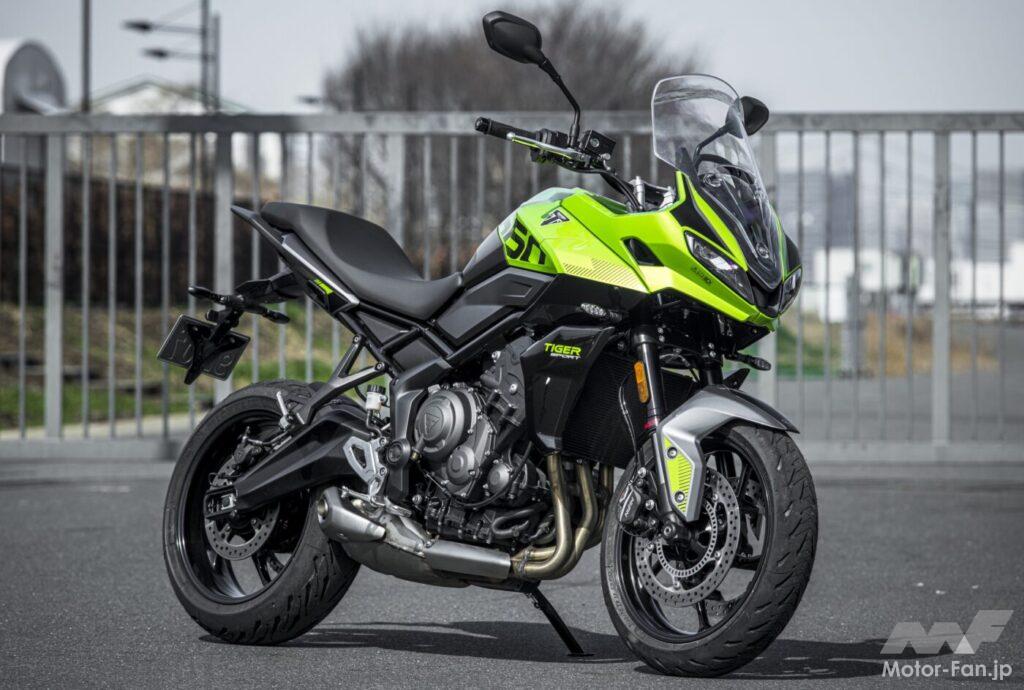
Tiger Sports 660
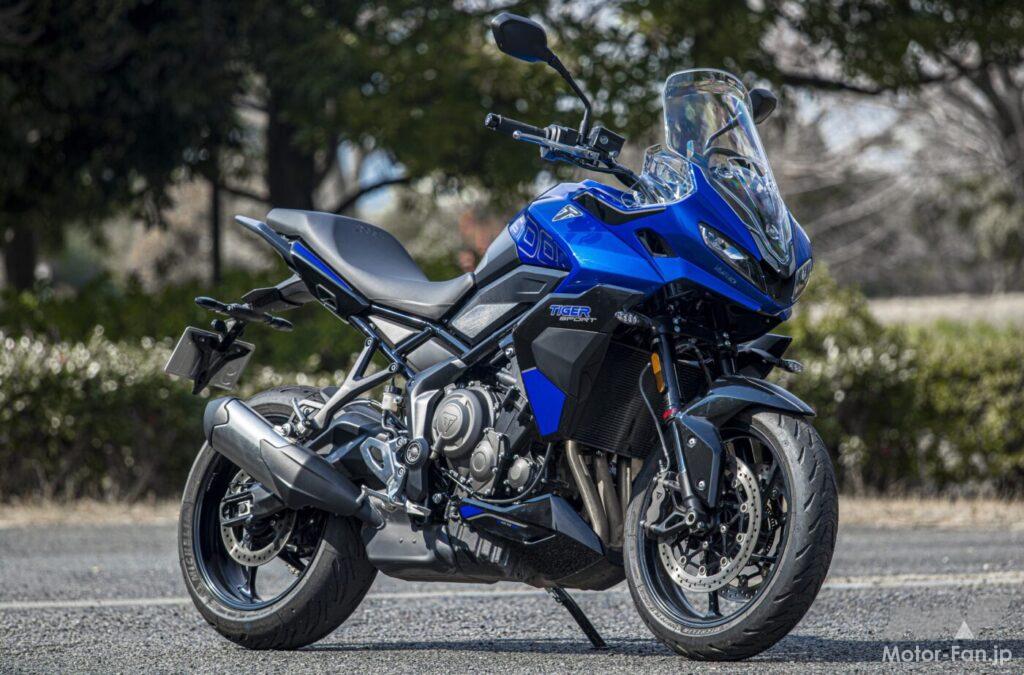
Tiger Sports 800
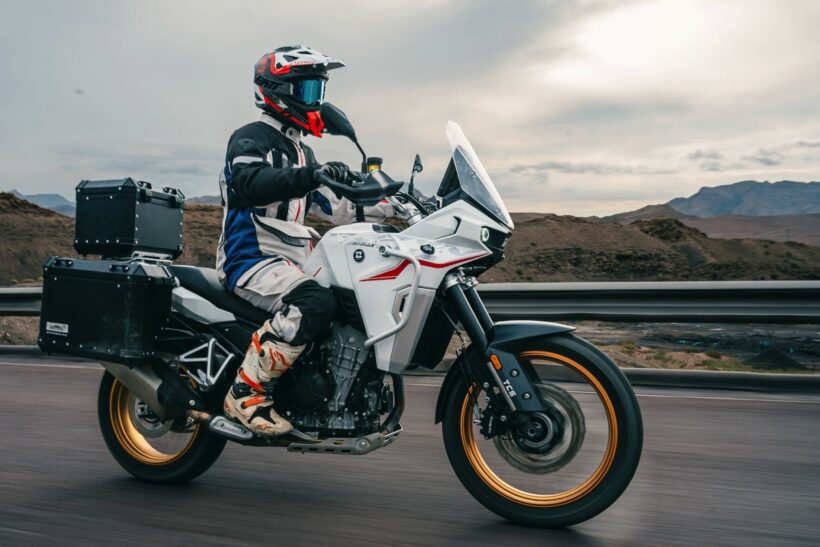
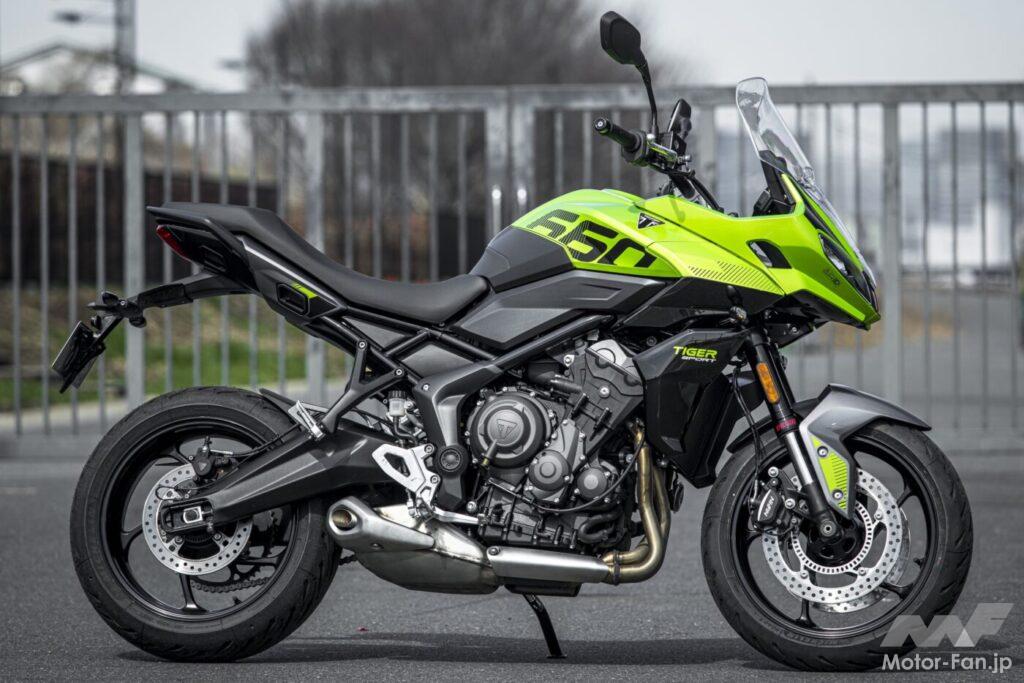
The Tiger Sport 660 is 270,000 yen cheaper, or about 20%, than the new 800 released this year, and is 7kg lighter. The silencer shape is significantly different, and the presence or absence of DRLs and wind deflectors, the shape of the radiator shroud, and other factors also make it easy to distinguish it from the 800.
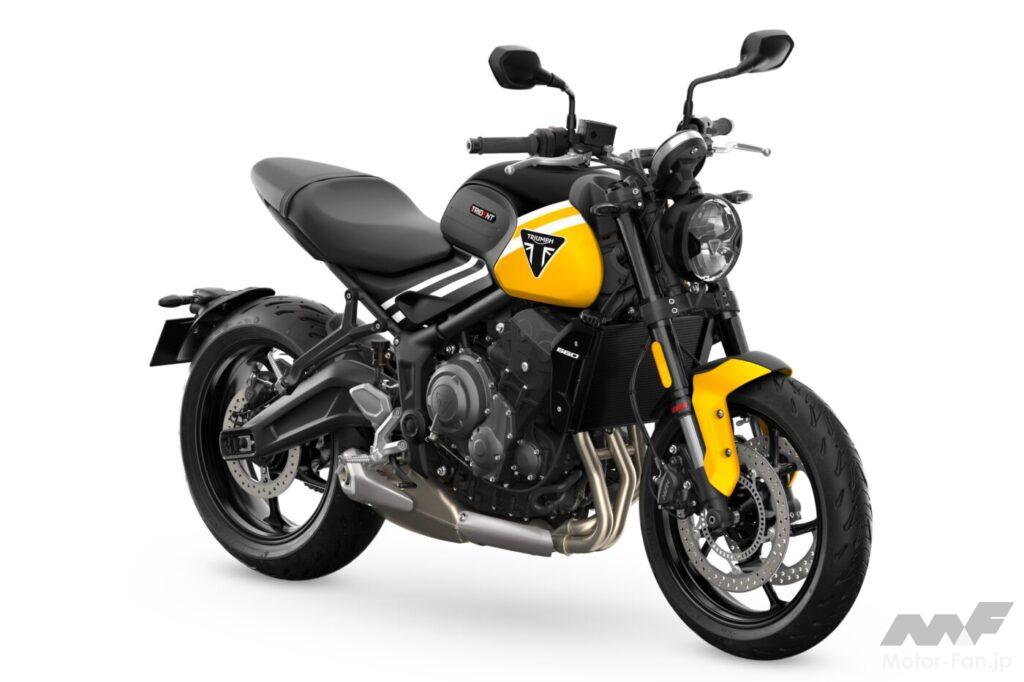
Trident 660
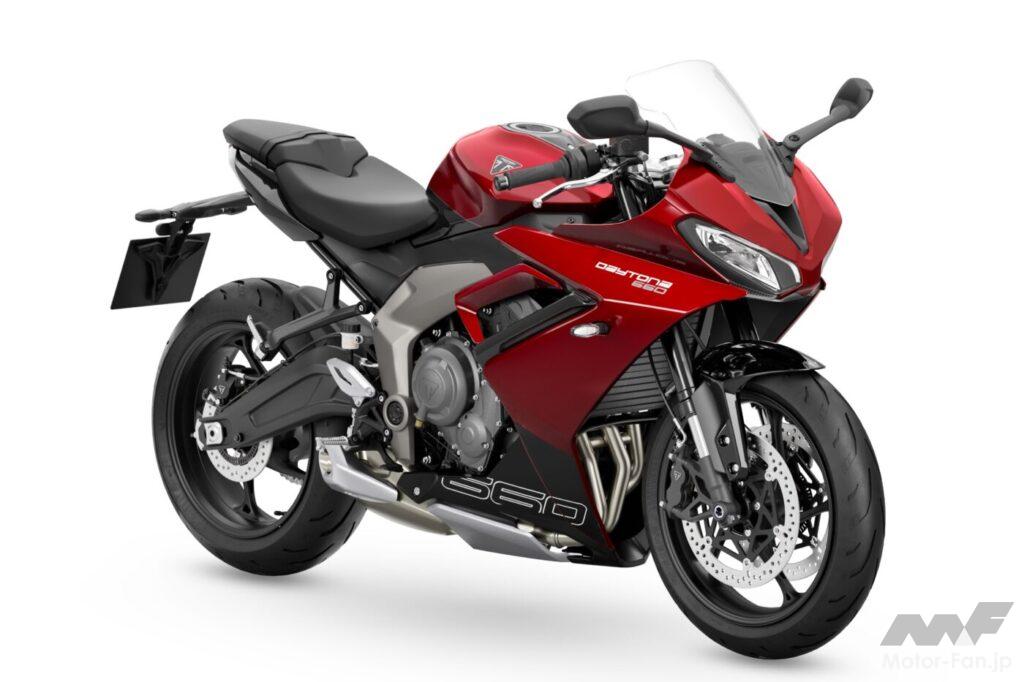
Daytona 660
These two models share the same platform as the Tiger Sports 660/800. The roadster Trident 660 will be released in 2021, and in 2025 will be equipped with cruise control, cornering ABS, a bidirectional quickshifter, smartphone connectivity, and a “Sport” riding mode, just like the Tiger Sports 660. Prices start from 995,000 yen. The Daytona 660, a mid-weight sports car with 95 horsepower, will be released in 2024. Prices start from 1,085,000 yen.
ADVERTISEMENT
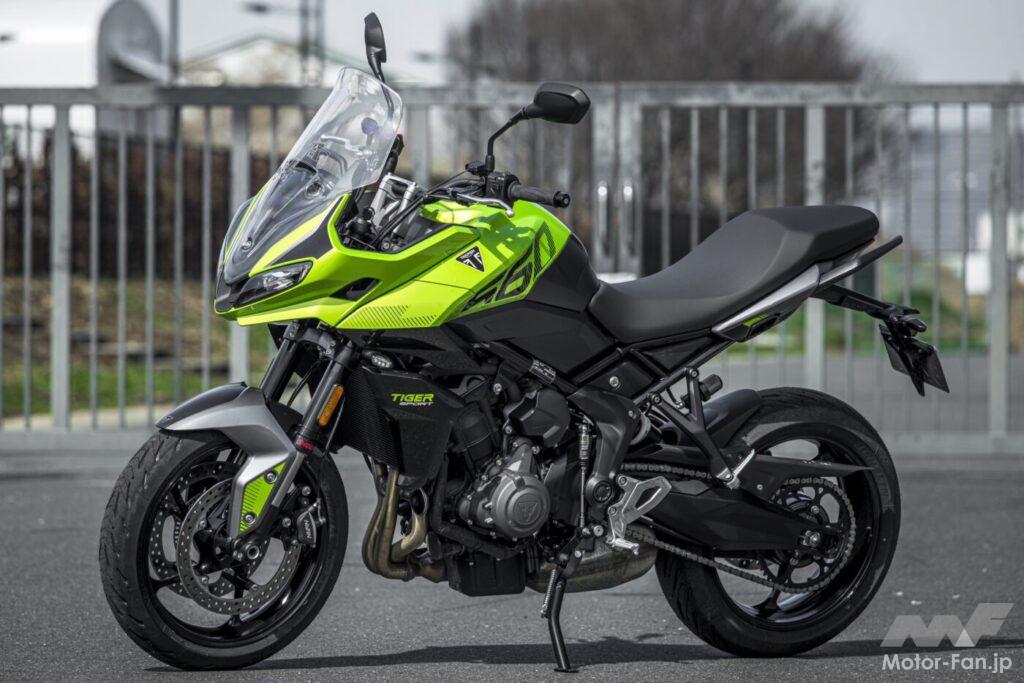
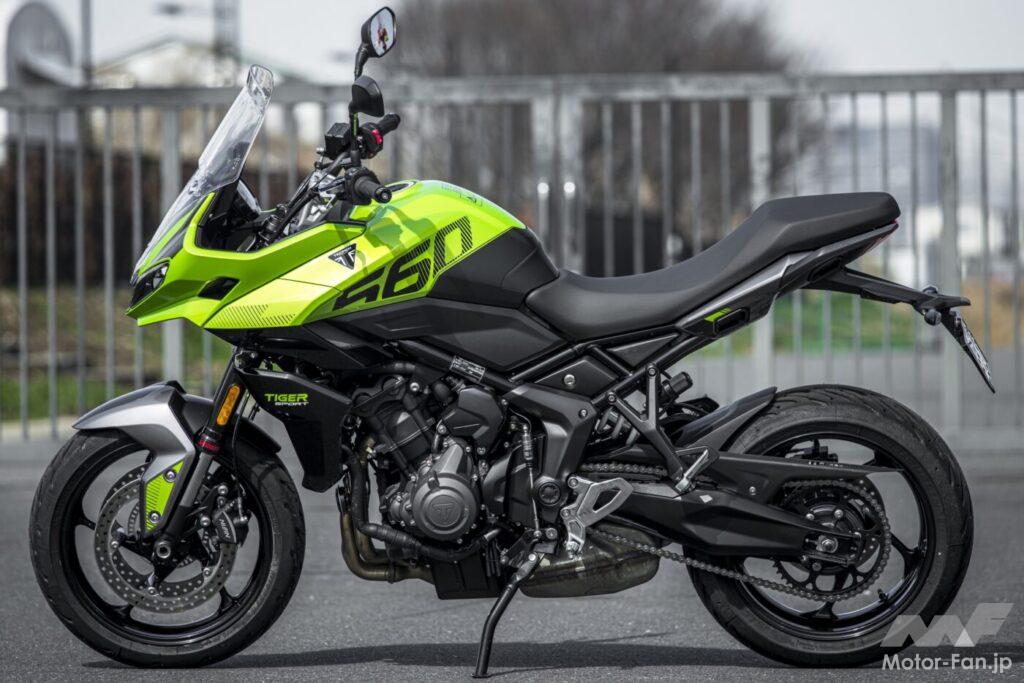
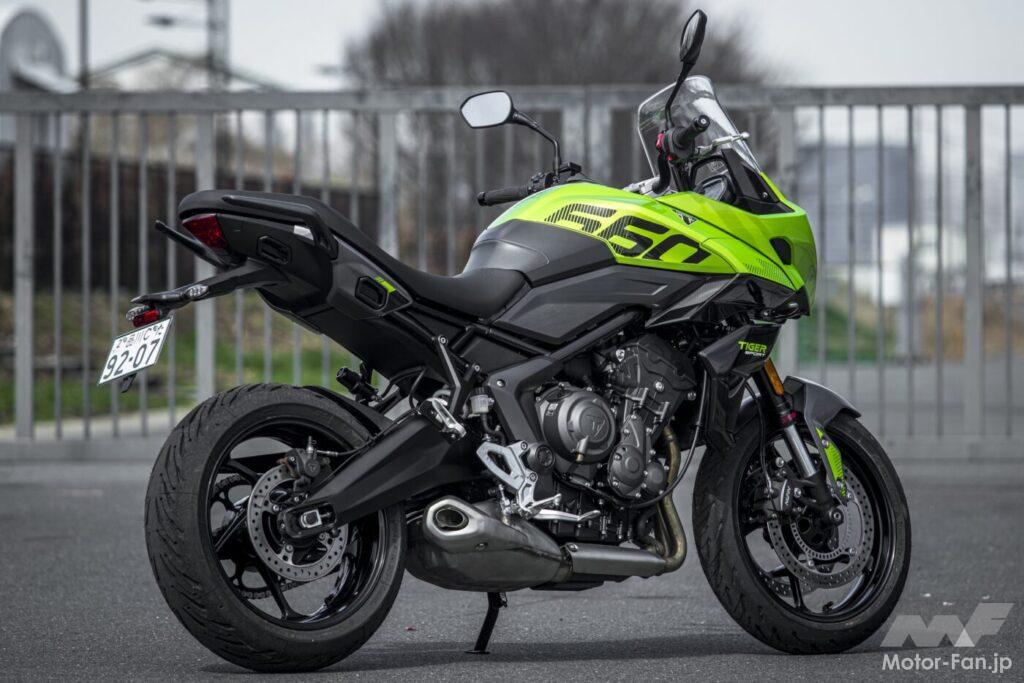
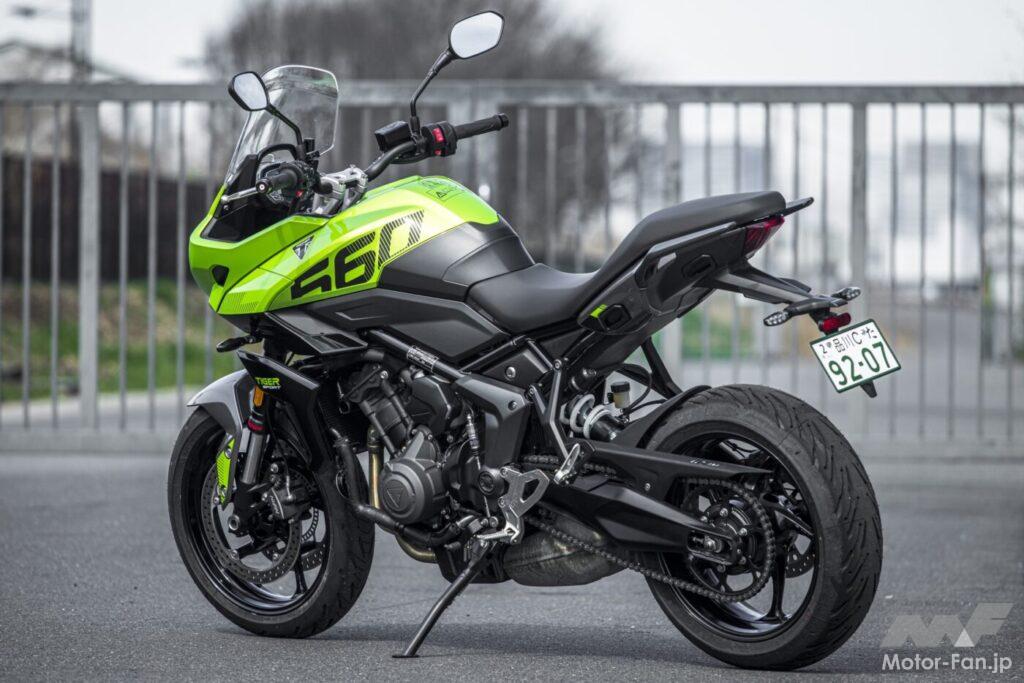
There are four body colors available. Sapphire Black is priced at 1,125,000 yen. Roulette Green, Carnival Red, and Crystal White are priced at 1,138,000 yen, an additional 13,000 yen. A two-year, unlimited mileage global warranty is included.
Adding a sports mode makes for an exciting ride
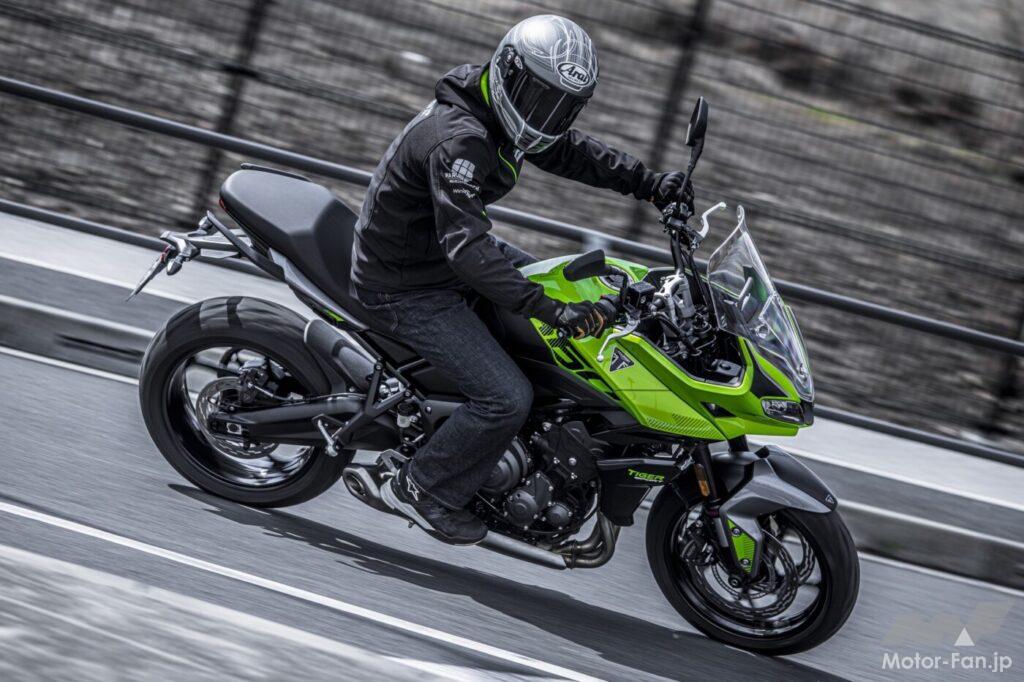
Three years ago, in 2022, Motorcycle News (MCN), a long-established British motorcycle magazine, selected the Triumph Tiger Sport 660 as its Bike of the Year. The article is available online, and if you take a look, you’ll see that it states, “This is a half-cowled Street Triple disguised as a sports adventure bike.” This description is particularly apt. While MCN awarded the bike perfect scores in all categories, including ride comfort, brakes, engine, reliability and quality, and value compared to rivals, it also cited the lack of cruise control and smartphone connectivity as areas of dissatisfaction. Incidentally, Triumph’s official YouTube channel introducing the new Tiger Sport 800 in Triumph’s home country featured numerous comments welcoming its greater power than the 660. While MCN praised the 660’s “engine-friendly,” it seems that many Western riders still find it underpowered.
It could be said that the new Tiger Sports 660 reflects these various requests. The 2025 model not only comes standard with cruise control and smartphone connectivity, as pointed out by MCN, but also adds a “Sport” riding mode as a means of more power. What’s more, it even comes equipped with a bidirectional quickshifter and optimized cornering ABS, yet the price remains unchanged, which is surprising. With the introduction of the new 800, the 660 may feel like it’s been pushed aside, but when you look at the many added features, you’ll see that it offers overwhelming cost performance.
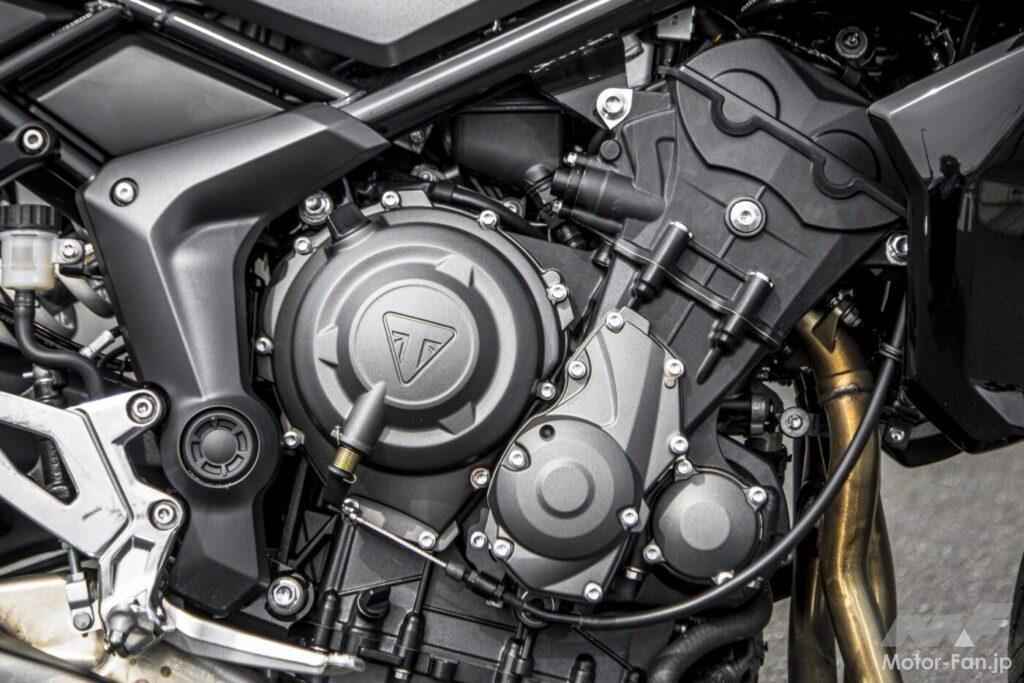
No hardware changes have been announced for the 660cc water-cooled, four-stroke, in-line three-cylinder engine. Maximum output is 81ps, the same as the Trident 660, and more than 90% of the maximum torque of 64Nm is available across the entire rev range. The 2025 model adds cruise control and a bidirectional quickshifter. Furthermore, the riding modes, which previously consisted of two (Road and Rain), have been expanded to three (Sport). The slip-assist clutch will continue to be used. Overseas, a restrictor kit compliant with the EU A2 license and Australia/New Zealand LAMS is available.
The 660cc water-cooled triple with a single-axis balancer still has the same specifications of 81 PS maximum output and 64 Nm maximum torque. There is a slight roughness and vibration from idle to the mid-range, but this can also be seen as the pulsating feeling that is unique to triples. The change in expression as the revs increase, which was the case with the Street Triple before the Trident 660 was released, seems to have been somewhat diluted. However, the design that delivers over 90% of peak torque across the entire rev range is not just for show, as the bike can smoothly exit corners even at low revs around 3000 rpm.
There are three riding modes: Sport, Road, and Rain. The only changes are the throttle response and the traction control intervention level. The most versatile is Road mode, with appropriate response during acceleration and deceleration, and good manners when using partial throttle. The newly added Sport mode is more powerful than Road mode, not only when starting to open the throttle from 0 degrees, but also when opening the throttle from intermediate throttle positions when overtaking, making it feel as if the power has increased. The redline is around 10,500 rpm, and if you push it that far in second gear, the speed will approach 100 km/h. It is more than powerful enough, and you won’t be dissatisfied even with heavy camping gear loaded.
There are two complaints about the engine. The first is the cruise control. With a typical cruise control system, you set your speed and then use the buttons to increase or decrease the speed by 1-2km/h, but the Tiger Sport 660’s system only maintains the initially set speed. Riders who were hoping for cruise control, including the MCN, must have been quite disappointed. The other is the shape of the shift pedal. The part that comes into contact with the toe is short, and I missed several shifts. As for the standard quick shifter, it does produce a slightly large shock when shifting up in low gears, but in practical terms it’s not a problem.
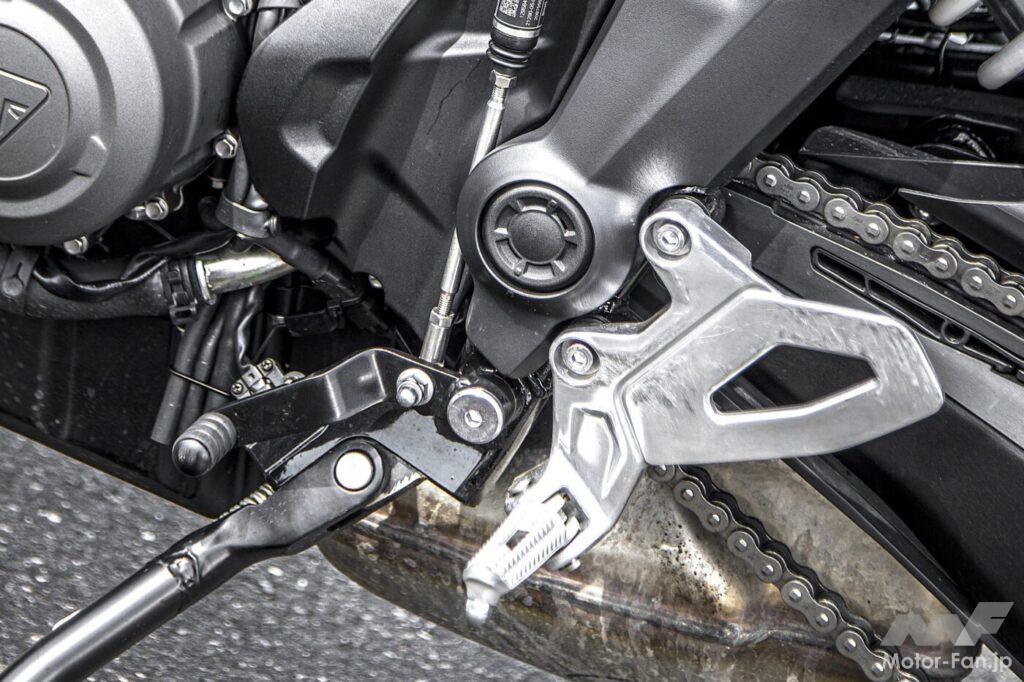
In addition to the short tread of the shift pedal, when the sole touches the crank-shaped part at the front, the entire shoe is bounced outward, which also seems to be a factor in slipping off.
The handling is smooth and easy to maneuver under your waist, and the wind protection is also excellent.
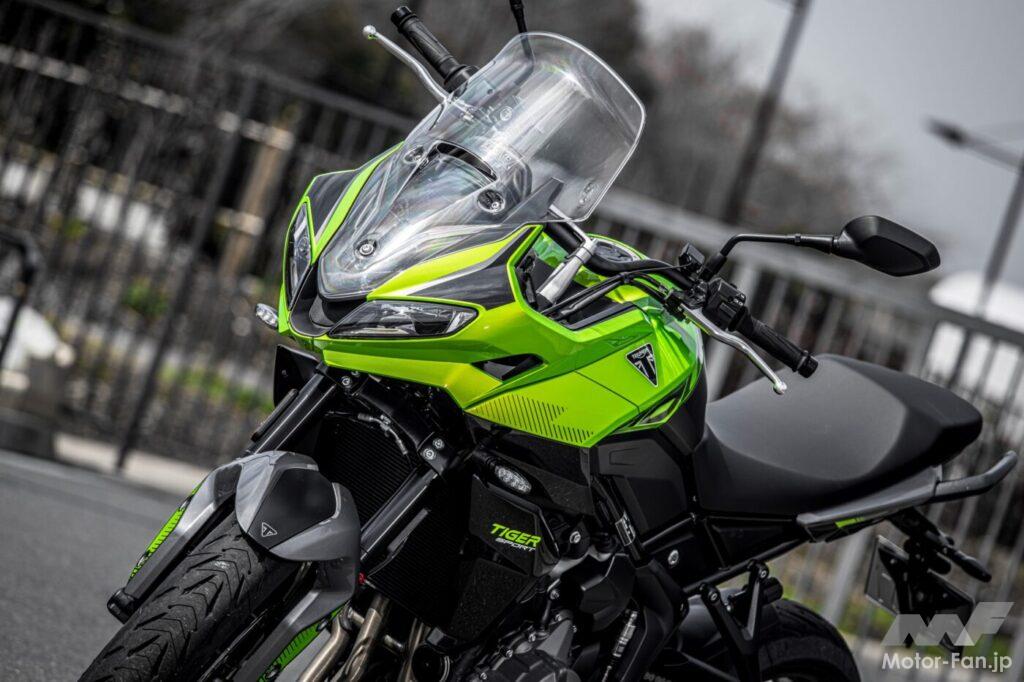
The handling is completely that of an on-road model, and even with such a large cowl, leaning into corners and turning is as light and nimble as a naked bike. Without any particularly exaggerated action, just giving the wide handlebars a nudge causes the machine to lean gently under the hips and change direction with a neutral steering angle. If you were to do a blind test, you’d probably say, “Is this a Honda?” The handling is so effortless.
The front and rear suspensions are made by Showa and work well. The ride quality of the 800 is a notch above that of the 660, but considering the vehicle price of 1,125,000 yen, the 660 is not bad at all, and the Michelin Road 5s do a good job.
The brake set is the same as the Trident 660, both front and rear. Wheel travel has increased by 30mm at the front and 20mm at the rear compared to the Trident, but even when the front brake is applied hard, the body does not pitch too much, allowing it to be operated with confidence. The Optimized Cornering ABS, which was introduced on the 2025 model, did not intervene during this test ride, but there is no doubt that it provides great peace of mind for the rider.
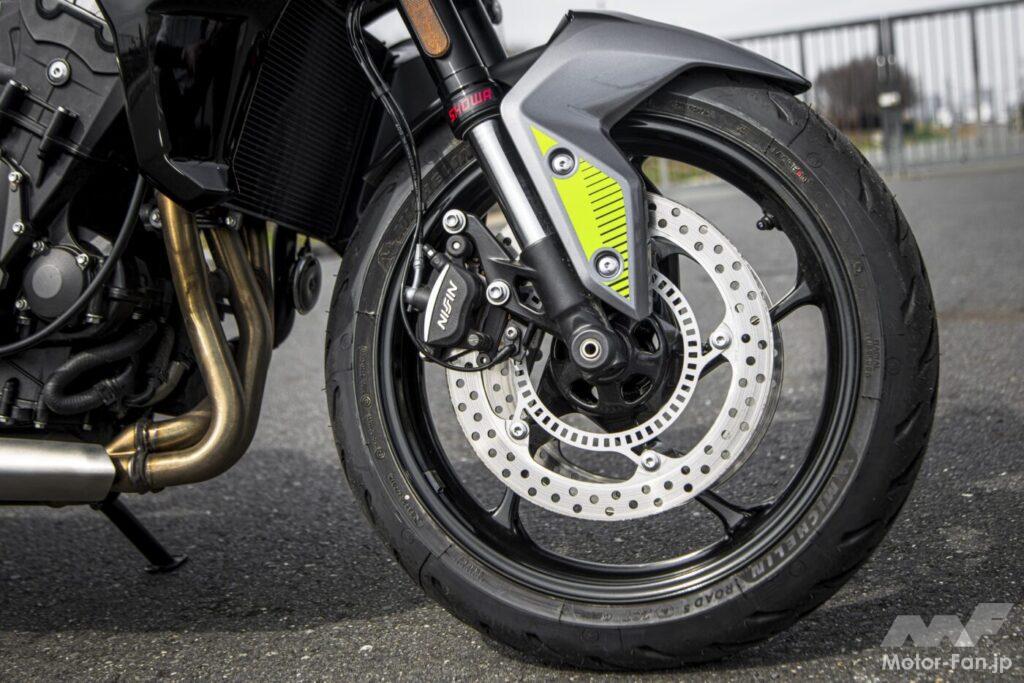
The Showa φ41mm inverted cartridge front forks are non-adjustable. The front and rear wheels are 17 inches in diameter and come standard with Michelin Road 5 tires. The front brake is a Nissin pin-slide single-piston two-piston caliper with a φ310mm disc, and the 2025 model features optimized cornering ABS.
The Tiger Sports 660’s strength is its excellent wind protection. The screen height can be adjusted to seven positions, and the top edge is exquisitely curved, so even at the lowest position it effectively reduces the wind hitting your chest. It also depends on your height, but for me, who is 175cm tall, it is very comfortable on the highway when raised to the top position, and being able to adjust it with one hand is very convenient.
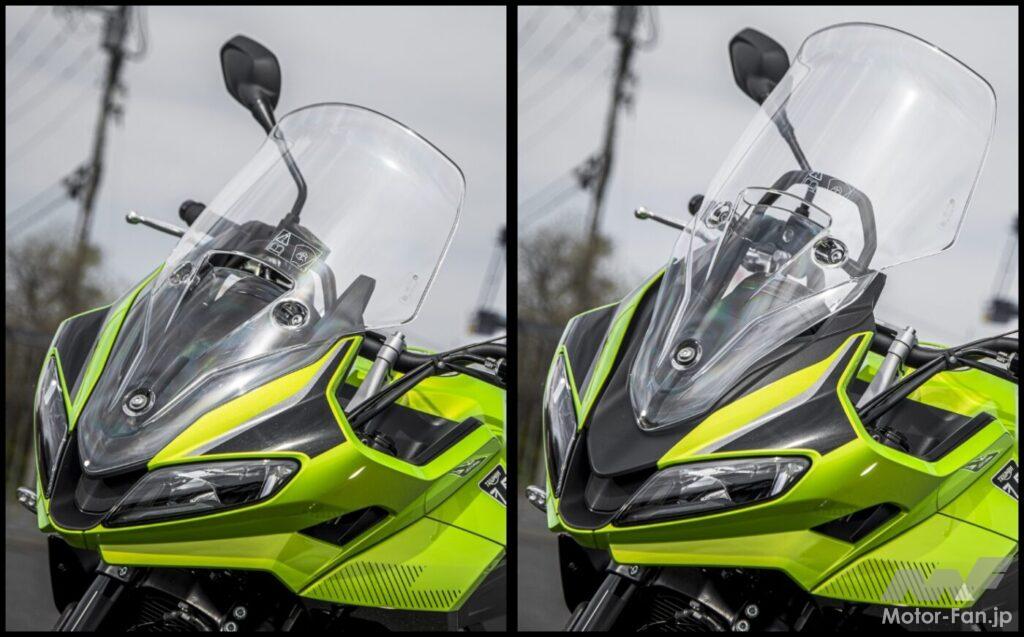
The screen height can be adjusted to seven levels. It is a simple mechanism that can be operated with one hand by turning the inner bar. Incidentally, the turn signals are self-canceling and can be set to either auto or manual.
Its competitors are the Kawasaki Versys 650 and the Yamaha Tracer 7, and it’s clear that Triumph has done a lot of research into both vehicles. The Tracer 7 isn’t available in Japan, so it’s hard to compare, but even considering that the Versys 650 is priced at 1,155,000 yen and that it’s a Kawasaki Care model (three years of regular inspections and oil changes are included in the vehicle price), the Tiger Sports 660 is more than competitive in Japan. If your budget allows, we recommend the 800, which is on the same level, but we’d say that this year’s 660 will provide just as much or more satisfaction.
Riding position and foot reach (175cm/65kg)
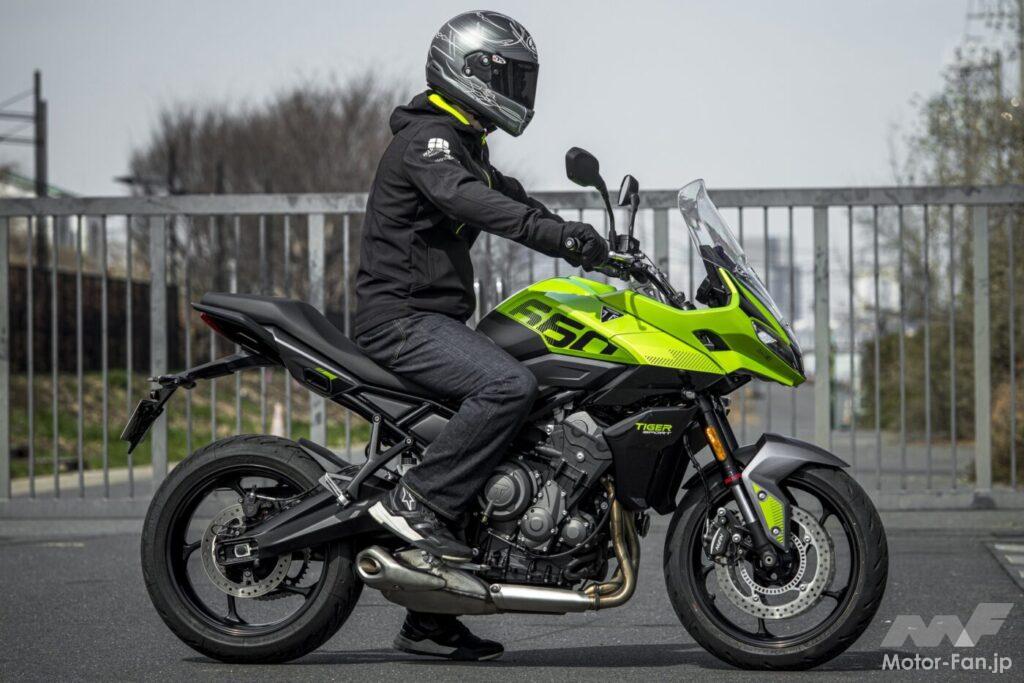
The riding position is impressive with a wide field of vision, as the upper body is almost upright. The knees are gently bent, so you won’t get tired even on long trips.
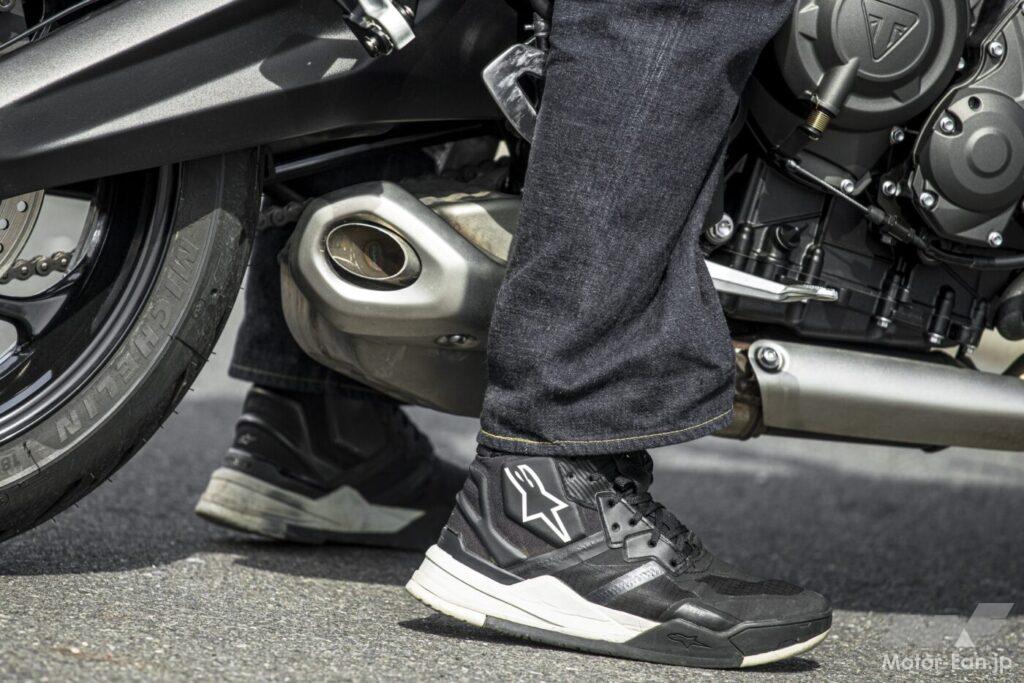
The official seat height is 835mm. As you can see, when I, who am 175cm tall, put both feet on the ground, my heels just sink slightly. I’d say the foot placement is good.
Detailed explanation
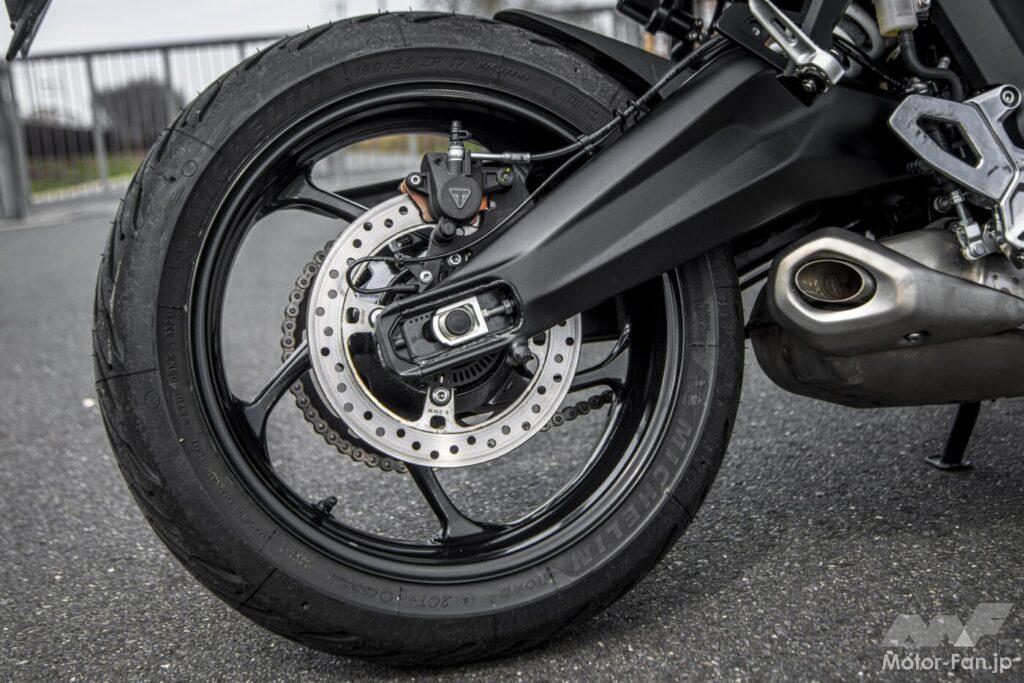
The rear brake is a set of φ255mm discs and single-piston calipers. The swingarm is made of pressed steel plate, and the wheel travel is 150mm both front and rear, which is longer than the Trident’s 120/130mm.
ADVERTISEMENT
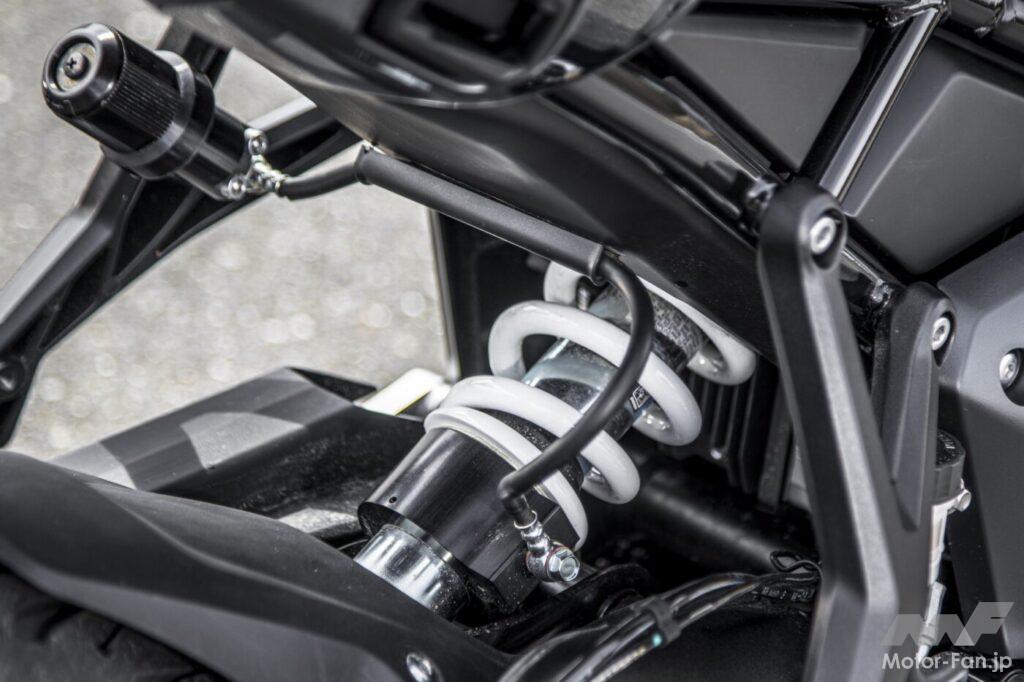
The rear suspension is a link-type monoshock with a hydraulic preload controller. The 800 has a rebound damping force adjustment mechanism, but the 660 does not.
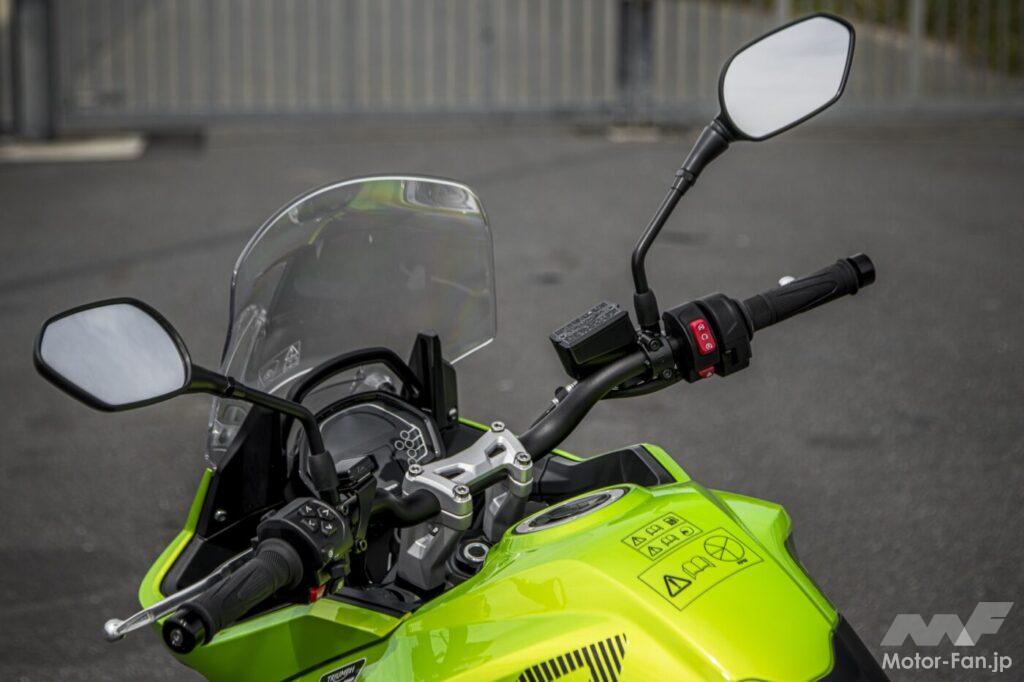
It features an aluminum tapered handlebar. The fuel tank capacity is 17.2L, and the fuel cap has the Triumph logo.
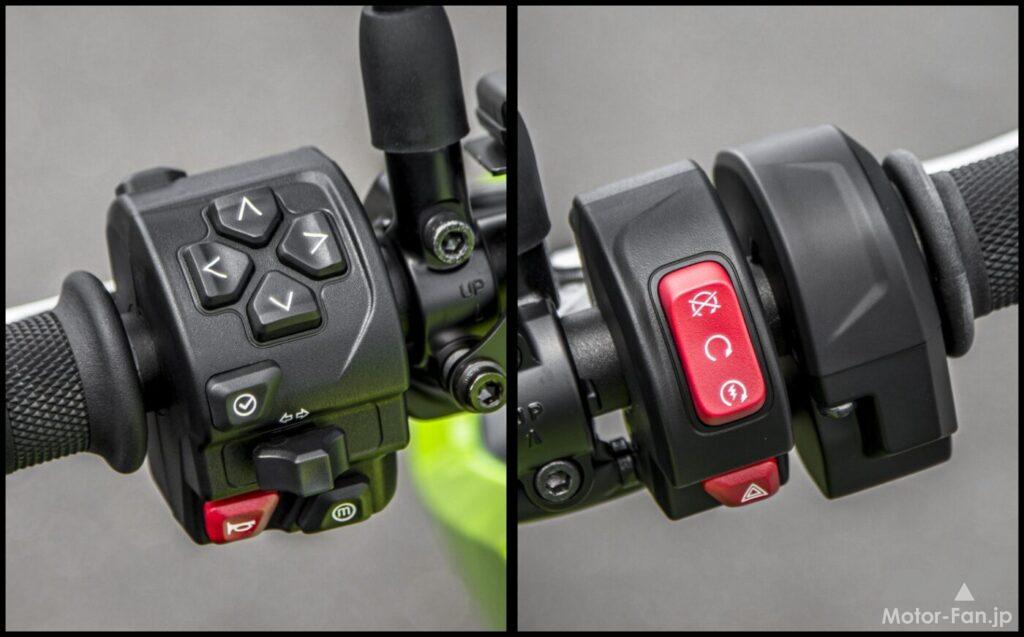
A switch box with a cruise control button added to the upper left side. The difference from the 800 is the presence or absence of a DRL button. There is no throttle wire as it uses an electronically controlled throttle.
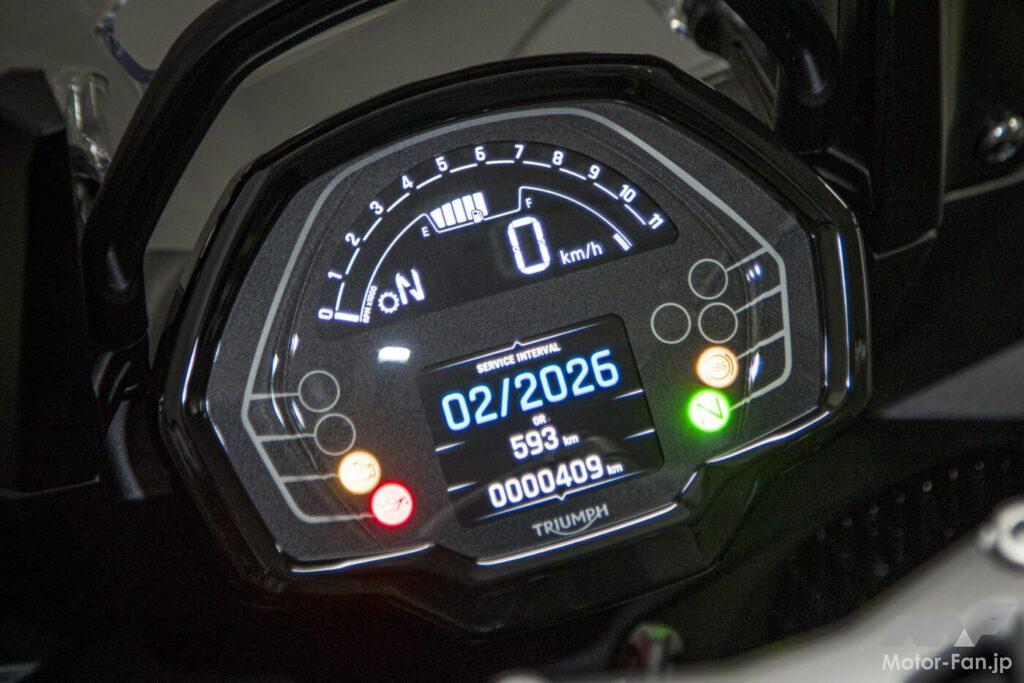
The meter panel is a combination of a semicircular LCD on the top row and a square TFT on the bottom row. It is good news that the smartphone connection function “My Triumph Connectivity System”, which was previously an optional feature, is now standard equipment.
ADVERTISEMENT
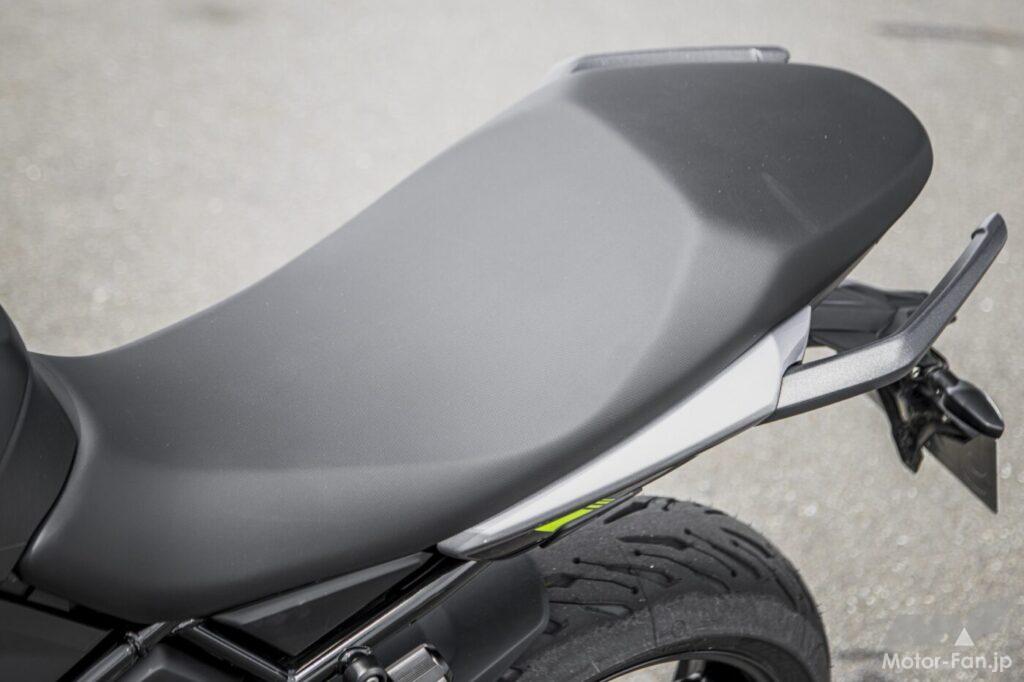
While the 800 features the car’s logo, the 660’s seat upholstery is plain. The grab bar is positioned at a height that makes it easy to support the upper body, and its cross-section is designed for easy grip.
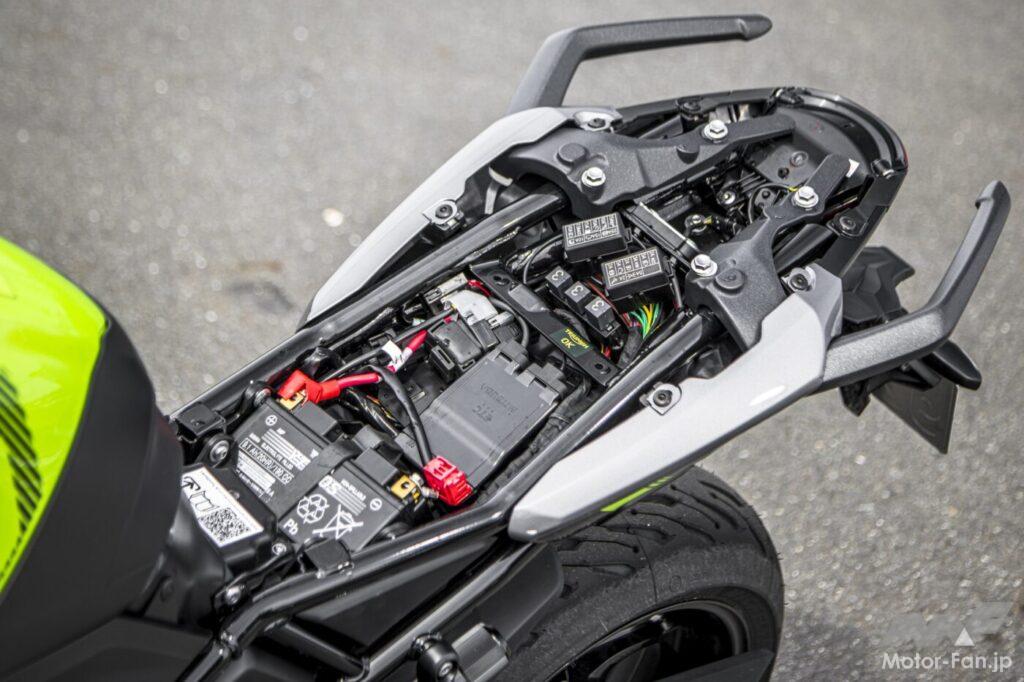
The test car was equipped with an ETC onboard unit. As you can see, it’s nice that the unit can be installed neatly.
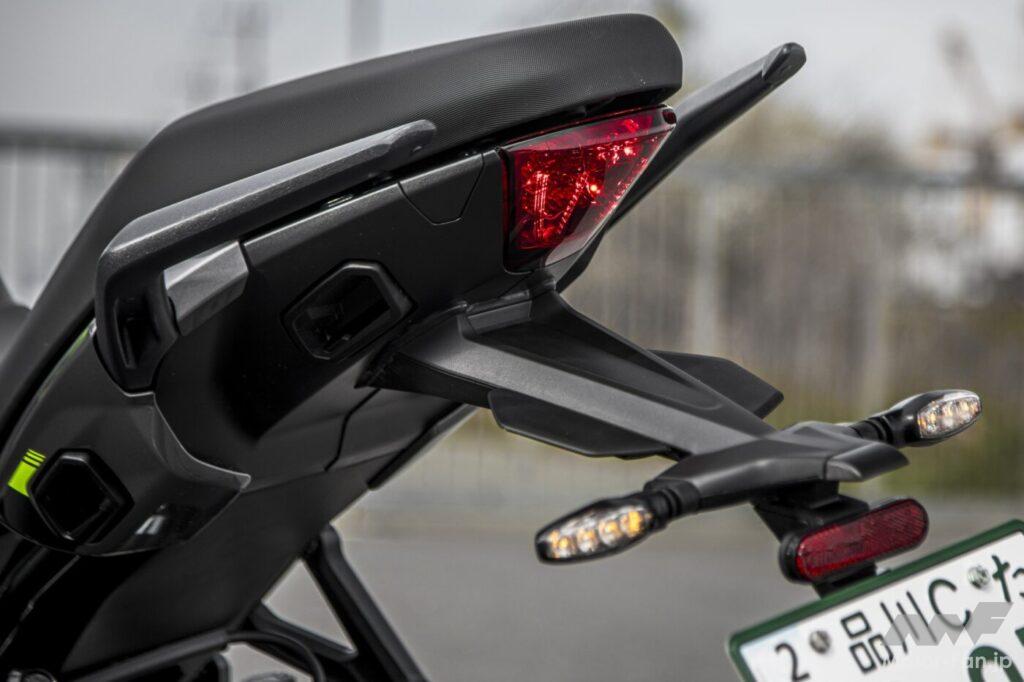
All the lights are LED. The square recess visible at the bottom of the tail cowl is an integrated pannier mount.
Tiger Sports 660 (2025 model) main specifications
●Engine, transmission
type: Water-cooled in-line 3-cylinder DOHC 12-valve
Displacement: 660cc
Bore: 74.0mm
Stroke: 51.1mm
Compression ratio: 11.95:1
Maximum power: 81ps (59.6kW) @ 10,250rpm
Maximum torque: 64Nm @ 6,250rpm
System: Bosch multi-point sequential electronic fuel injection, electronically controlled throttle, 3 riding modes (RAIN, ROAD, SPORT)
Exhaust system: Stainless steel 3-into-1 header system, side-mounted stainless steel silencer
Drive system: X-ring chain
Clutch: Wet multi-plate wire type, slip assist
Transmission: 6-speed
Chassis
Frame: Tubular steel perimeter frame
Swingarm: Double-sided, steel
Front wheel: Tubeless 5-spoke 17 x 3.5-inch, aluminum
rim Rear wheel: Tubeless 5-spoke 17 x 5.5-inch, aluminum rim
Front tire: 120/70ZR17
Rear tire: 180/55ZR17
Front suspension: Showa 41mm inverted separate function cartridge fork (SF-CF), 150mm travel
Rear suspension: Showa monoshock RSU with hydraulic preload adjustment *Rebound damping force adjustable
Front brakes: 310mm floating double discs, 2-piston calipers, OCABS
Rear brakes: 255mm single disc, single-piston sliding caliper, OCABS
Instrument display and functions: LCD multi-function meter, TFT color screen
Dimensions and weight
Overall length: 2,070mm
Width including handlebars: 835mm
Overall height (excluding mirrors): 1400mm
Seat height: 835mm
Wheelbase: 1420mm
Caster angle: 23.1º
Trail: 97mm
Vehicle weight: 208kg
Fuel tank capacity: 17.2 liters
Fuel consumption: 4.7L/100km (21.3km/L)