
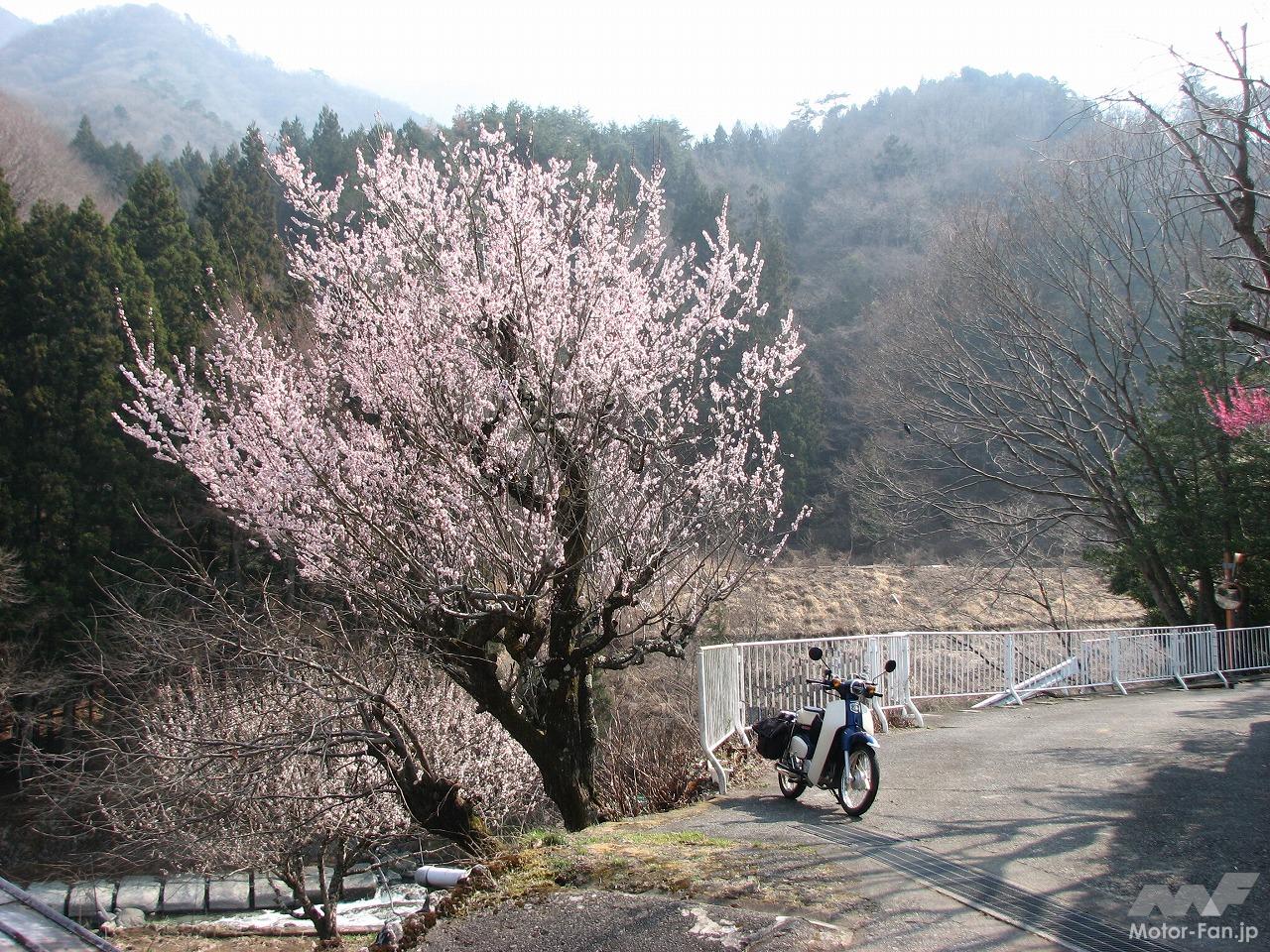


A blissful ride along mountain roads while gazing at the Doshi River
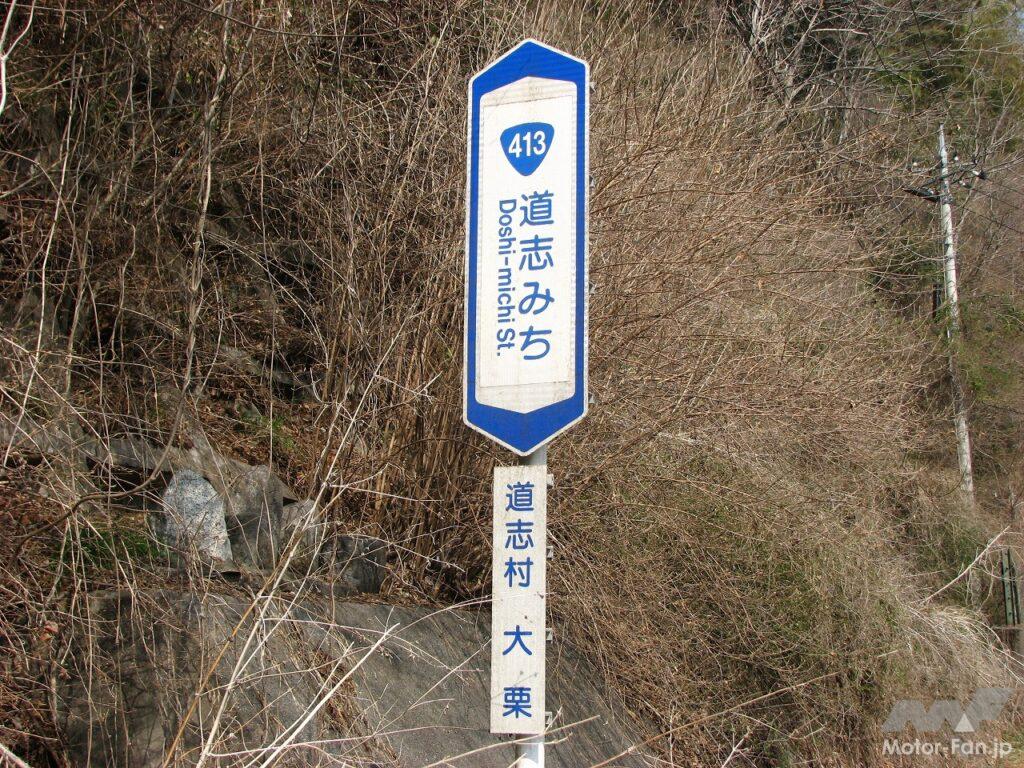
From Hashimoto in Sagamihara City, where Kanagawa Station for the Linear Chuo Shinkansen is currently under construction, we enter National Route 413. After finally leaving the busy city streets, we cross Shiroyama Dam and pass Lake Tsukui before passing through Tsukui city. Turn left at the Mikage intersection and then right, and the number of houses decreases significantly. National Route 413, commonly known as Doshi Road, heads west from Mikage along the Doshi River, leading to Lake Yamanaka, one of the Fuji Five Lakes.
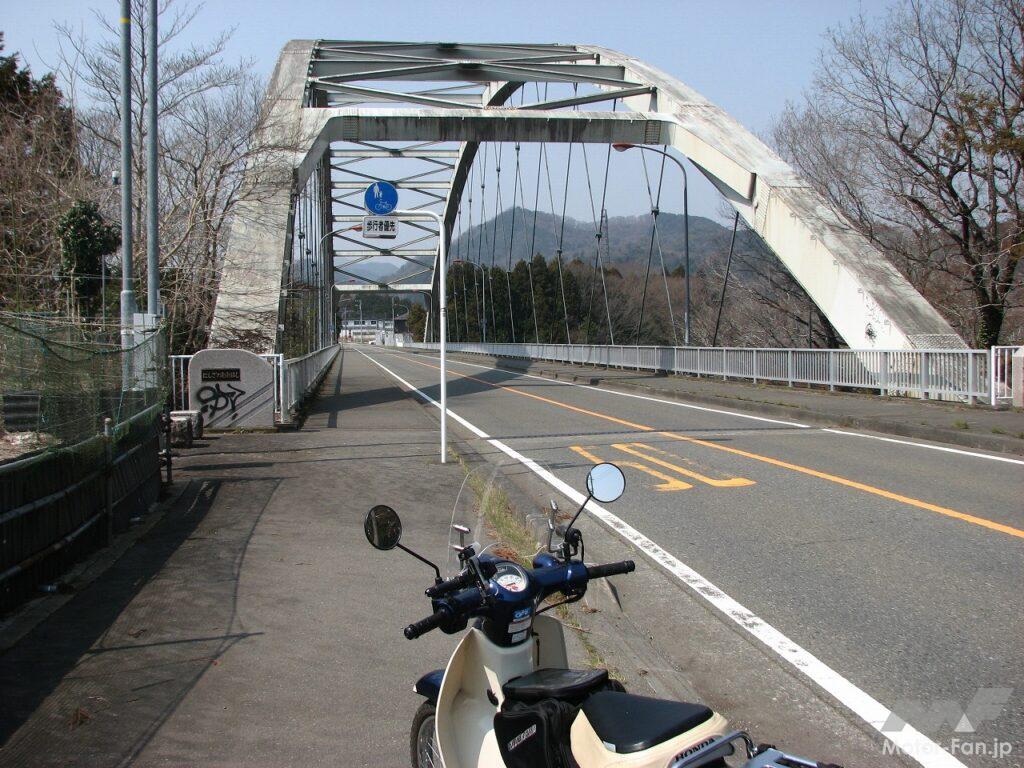

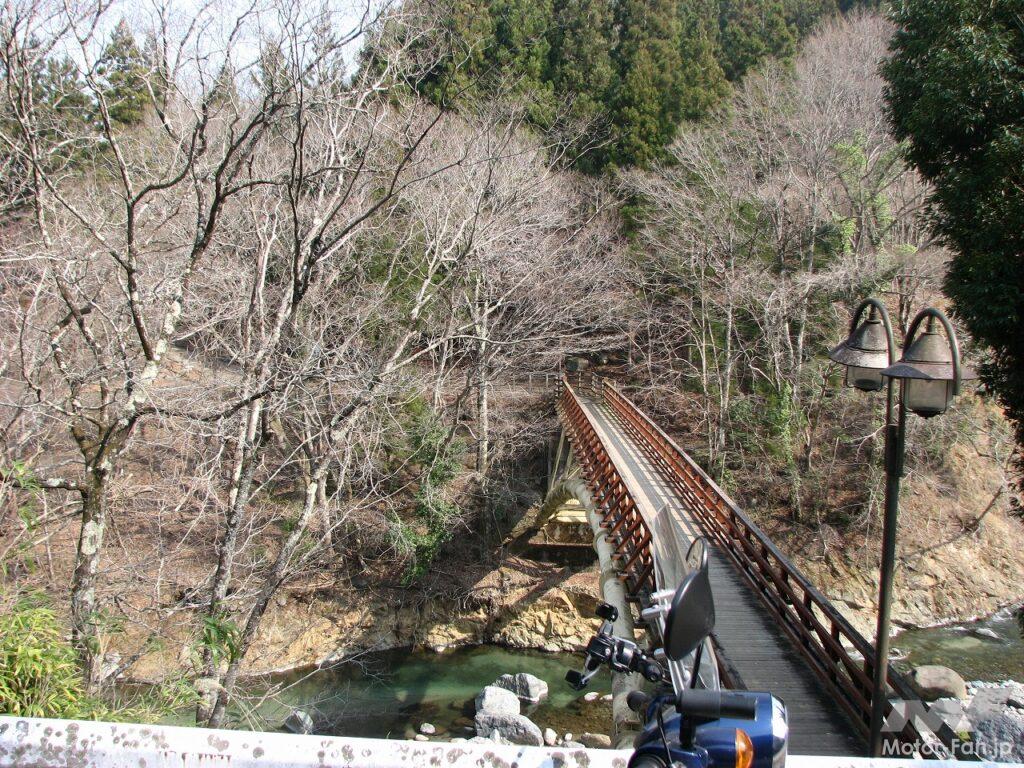
After passing Aonohara, the road narrows in places, gradually increasing the number of curves, including some winding ones, so you need to be careful. The road continues to go up and down repeatedly, but at higher altitudes you can sometimes see small villages and rural landscapes below. I was intrigued by these views, so I guided my Super Cub in search of a road that led down. The road leading to the riverside campsite was also the road to the village. Once across the Doshi River, houses were scattered along the mountain slope, giving it the feel of a simple mountain village. The road came to a dead end at the edge of the village.
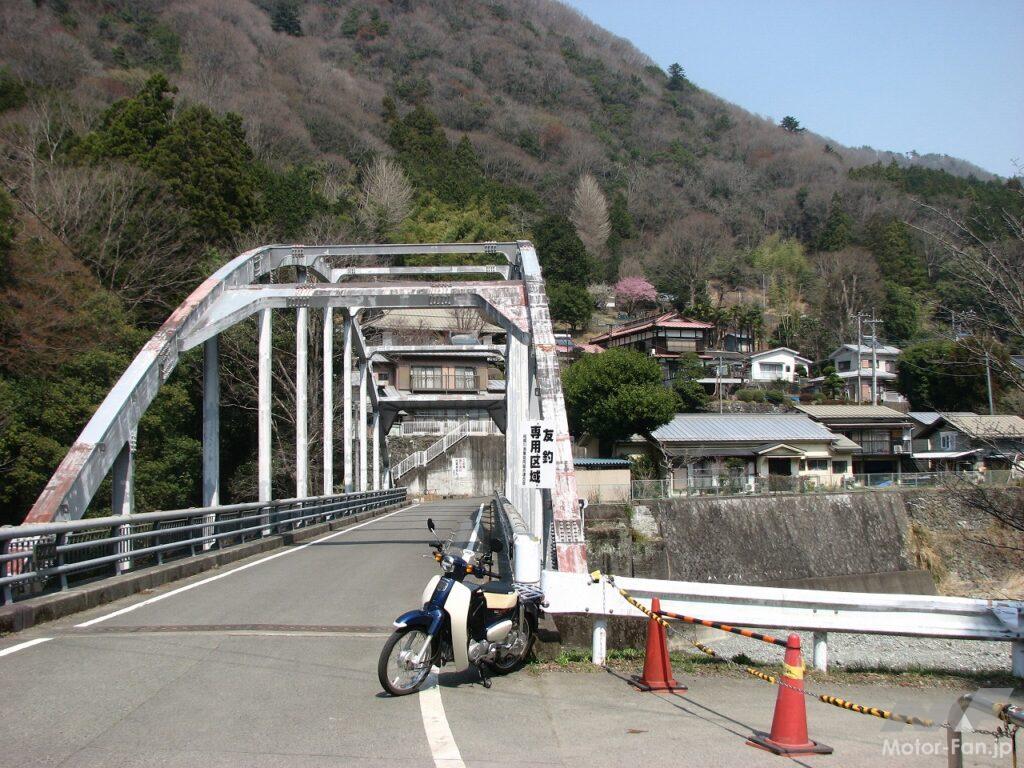
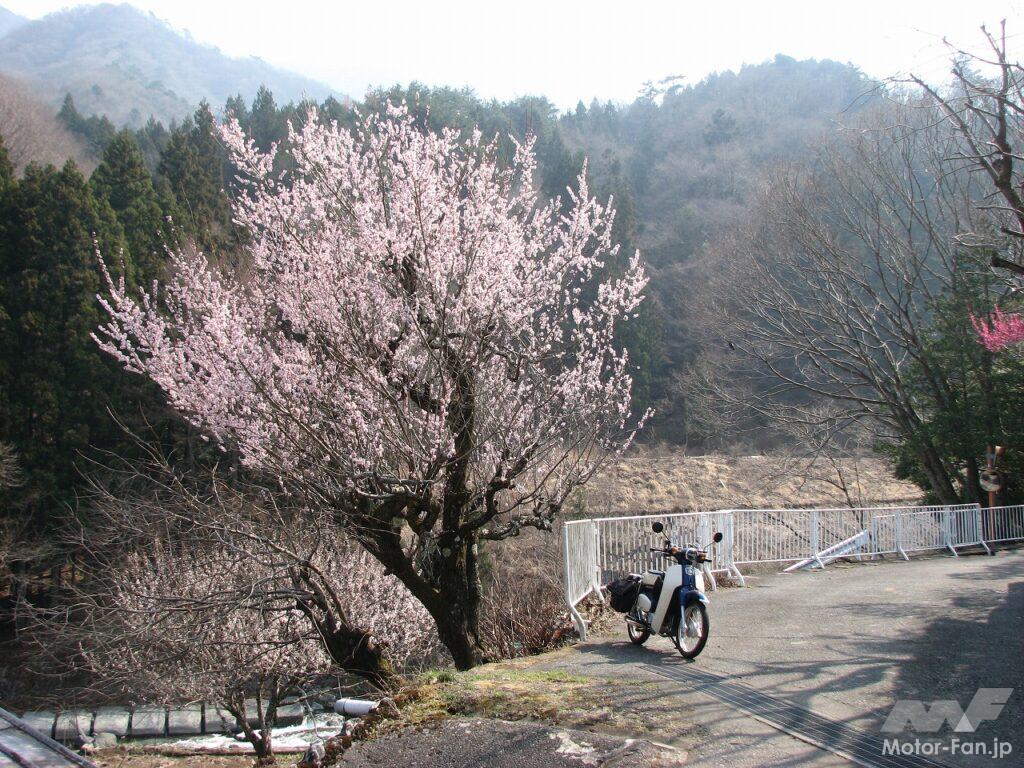
I visited one of the villages scattered throughout the valley. The mountain village atmosphere is soothing.
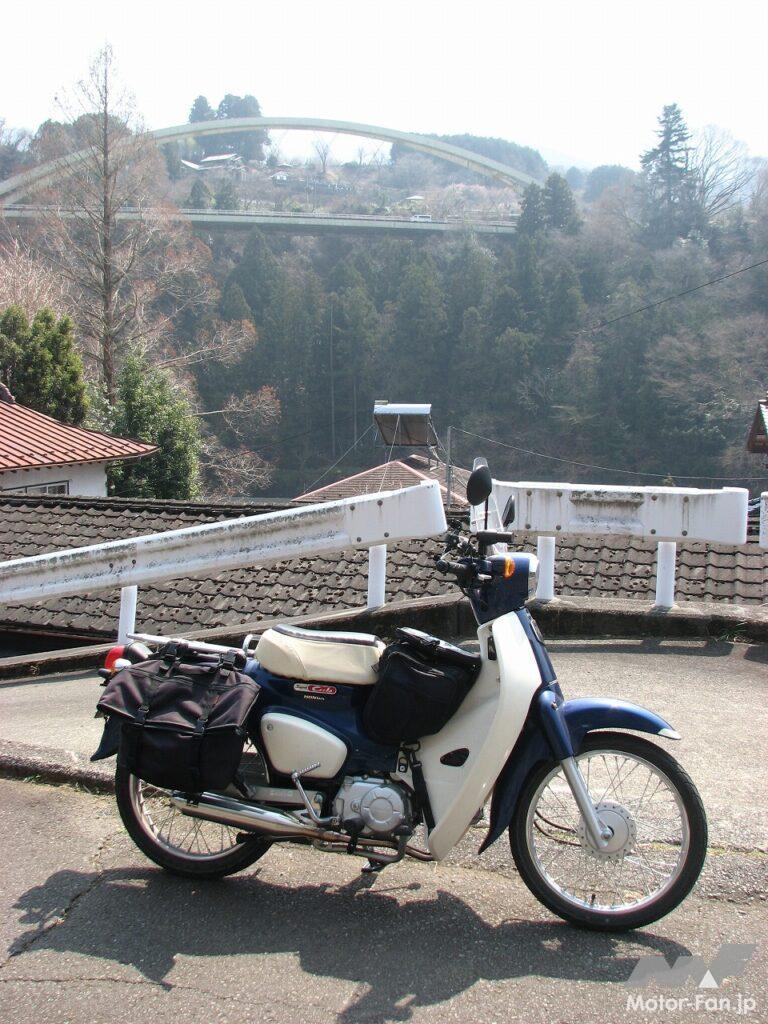
I returned to Doshi Road and rode smoothly on my Super Cub. Entering Doshi Village, the road followed the river through a valley. Small settlements dotted the road. Riding through tranquil scenery is always soothing. Being able to encounter such scenery just two hours from Tokyo truly makes me glad I'm on a motorcycle. Of course, I could have come by car, but the feeling of being on a motorcycle, experiencing the mountain air firsthand, truly feels more like a journey.
There are restaurants and other establishments around the town hall in the center of the village, and many of them have signs saying "Riders Welcome," suggesting this road is popular with touring riders. I felt a little happy. Before I knew it, I arrived at Doshi Roadside Station.
While it's popular with drivers, its strong image as a mecca for riders is perhaps its defining feature. Despite being a weekday, there were already nearly 100 motorcycles parked in the parking lot. Moreover, with motorcycles constantly coming and going, the total number of motorcycles must be over 500. I've been there on a weekend, and it was impossible to fit all the motorcycles. There are roadside stations all over the country, but I don't think there are any other roadside stations that attract as many motorcycles as Doshi Roadside Station. There are no
facilities specifically for riders. It's a typical roadside station with a shop selling local specialties, agricultural products, and souvenirs, a restaurant called Tezukuri Kitchen, a rest area, a tourist information center, and toilets. If I had to say what makes it special, it would be that you can swim in the Doshi River that flows just behind it.
Although I didn't swim in the river, I did cross the Kappabashi suspension bridge, browse the souvenir shops, and then enjoy lunch at Tezukuri Kitchen, one of their specialties, mountain vegetable soba.
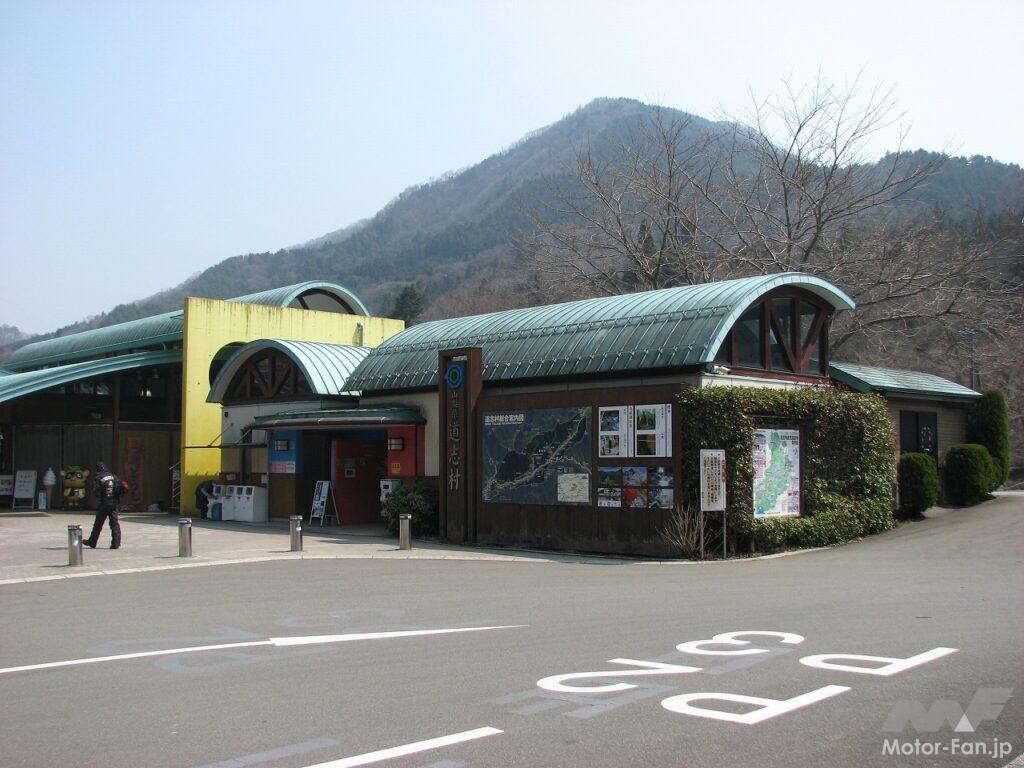
Doshi Roadside Station, a popular tourist spot on National Route 413 Doshi Road
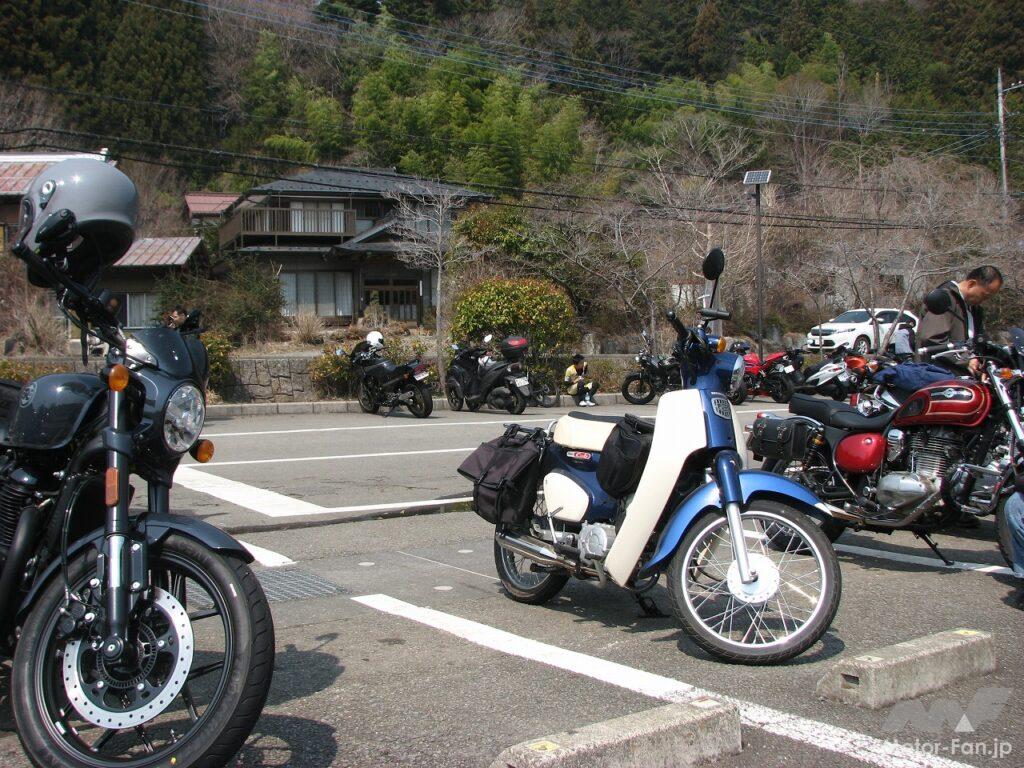
About half of the parking spaces are always full of motorbikes.

“Michi-no-Eki Doshi” 9745 Doshi Village, Minamitsuru District, Yamanashi Prefecture, 402-0219 TEL. 0554-52-1811 FAX. 0554-52-1810 Michi-no-Eki Doshi Roadside station along National Route 413
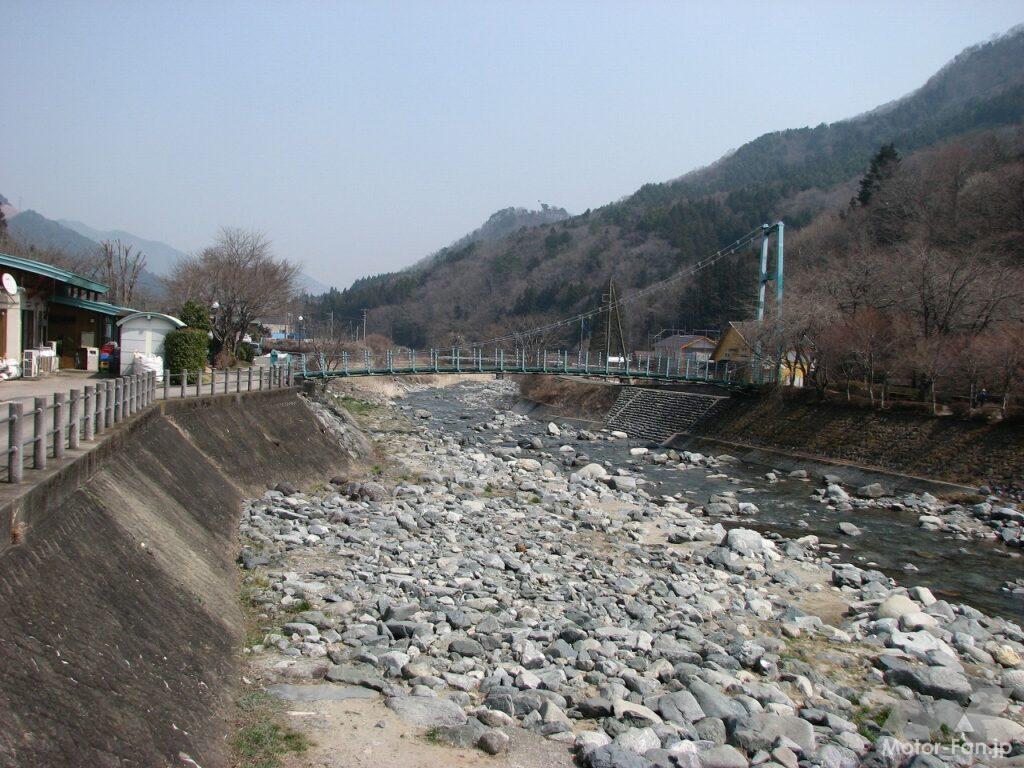
The Doshi River flows behind the roadside station. You can enjoy playing in the river.
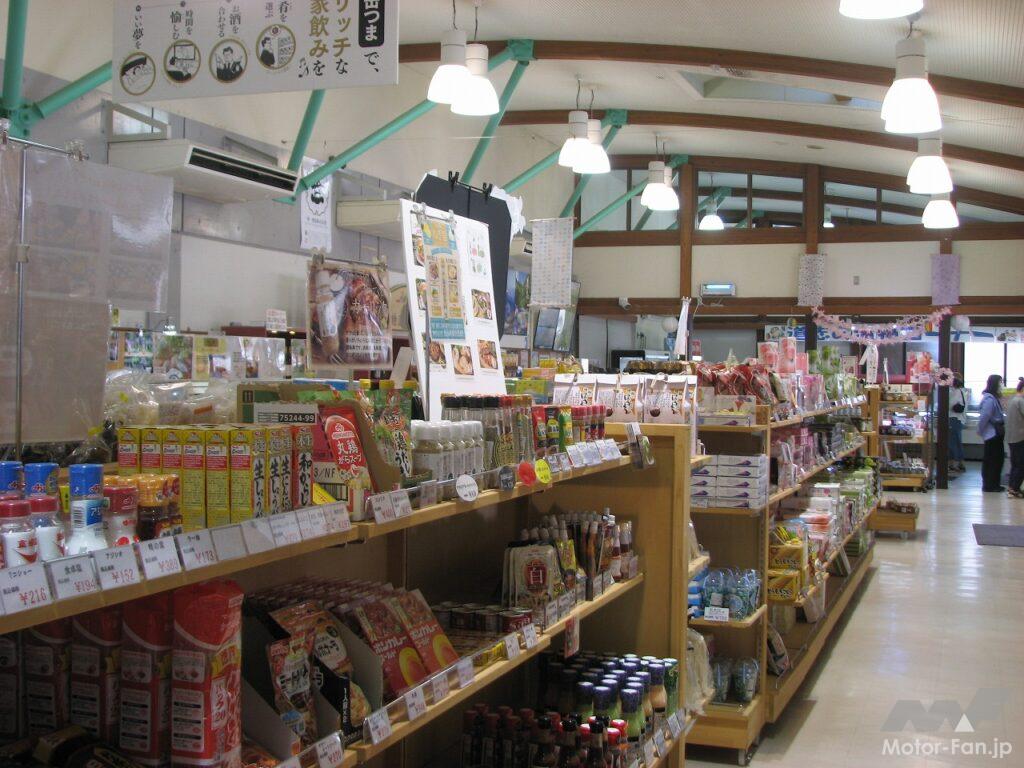
Roadside stations have facilities such as tourist information centers, shops selling local specialties, agricultural products, and souvenirs, rest areas, and restaurants.

At the restaurant, Handmade Kitchen, you can enjoy a variety of dishes made with local ingredients.
On the way back, I decided to do a little sightseeing, starting with a day-trip hot spring called "Doushi no Yu." I brought a towel so I could bathe, but there was a cruel sign saying it was closed. It wasn't actually a closed day. I had no choice but to continue on the road into the mountains. I've been to Doshi many times, but I rarely ventured off road. The road follows the Takakubo River, a tributary of the Doshi River. Once past Doushi no Yu, there were small inns, campsites, and vacation homes scattered around, and further ahead was a famous spot called "Matosama no Taki." Apparently, the waterfall is named after the target-like pattern on the rock face where the waterfall cascades. Since I was there, I decided to take a look.
I found stairs leading down to the basin, but the simple steps, made of steep logs, were so wobbly that they would sink if I stepped on them. The drop in each step was quite large, so I had to be very careful not to slip. At the same time, the thought of having to climb back up here makes me dizzy. I stopped about two-thirds of the way down to admire the waterfall. Some might wonder, "Why not go all the way to the base?" The remaining third of the way was merely a ladder, so I felt the risk of getting lost and decided not to. While there were many people at the roadside station, there was not a single soul at Matosama Falls. I was worried that if I were to lose my footing, I might die unnoticed, or be attacked by a bear just emerging from hibernation. So, I quickly retreated.
 I returned to Doshi Road on my Super Cub without any problems and enjoyed a ride back toward Sagamihara. As expected, as this is a popular route for riders, I encountered many motorcycles. While I didn't see any this time, it seems that some riders do reckless riding, and fatal accidents are not uncommon. So, when touring Doshi Road, I urge everyone to take it easy and not rush. Since we were able to run through such beautiful scenery, I thought it would be a shame not to enjoy the nature and atmosphere.
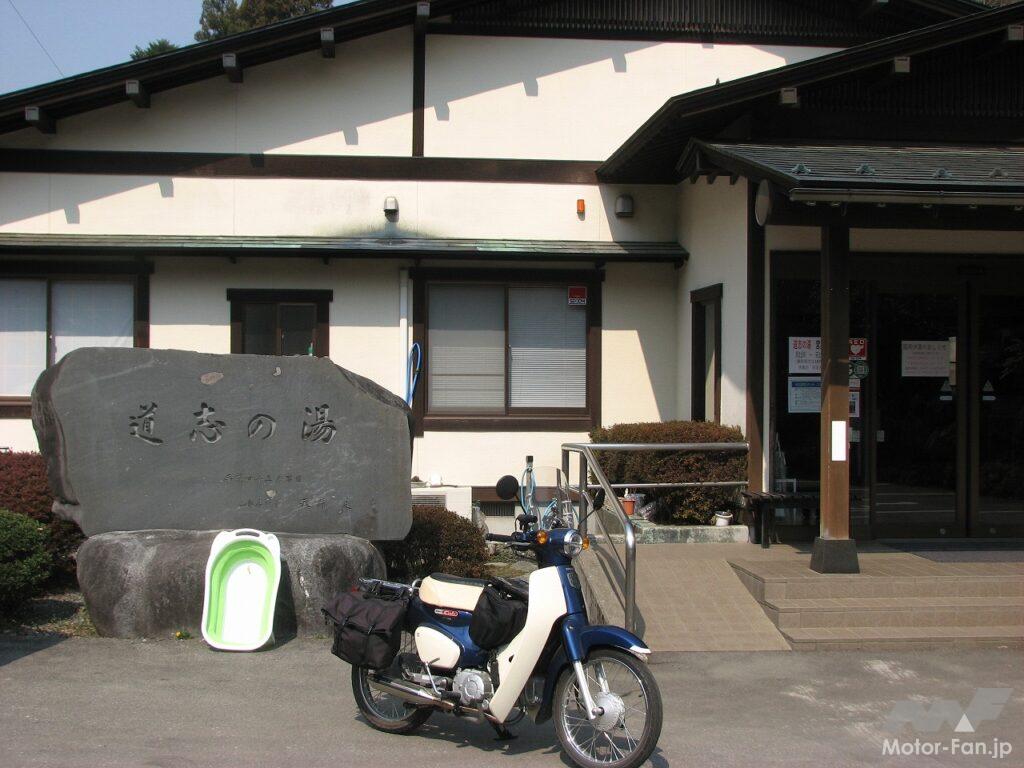
Doshi no Yu is a day-trip hot spring with a shop and restaurant. Bathing fee: 700 yen for adults (500 yen for Yokohama residents). Doshi no Yu is a day-trip hot spring in Doshi Village, Yamanashi Prefecture.
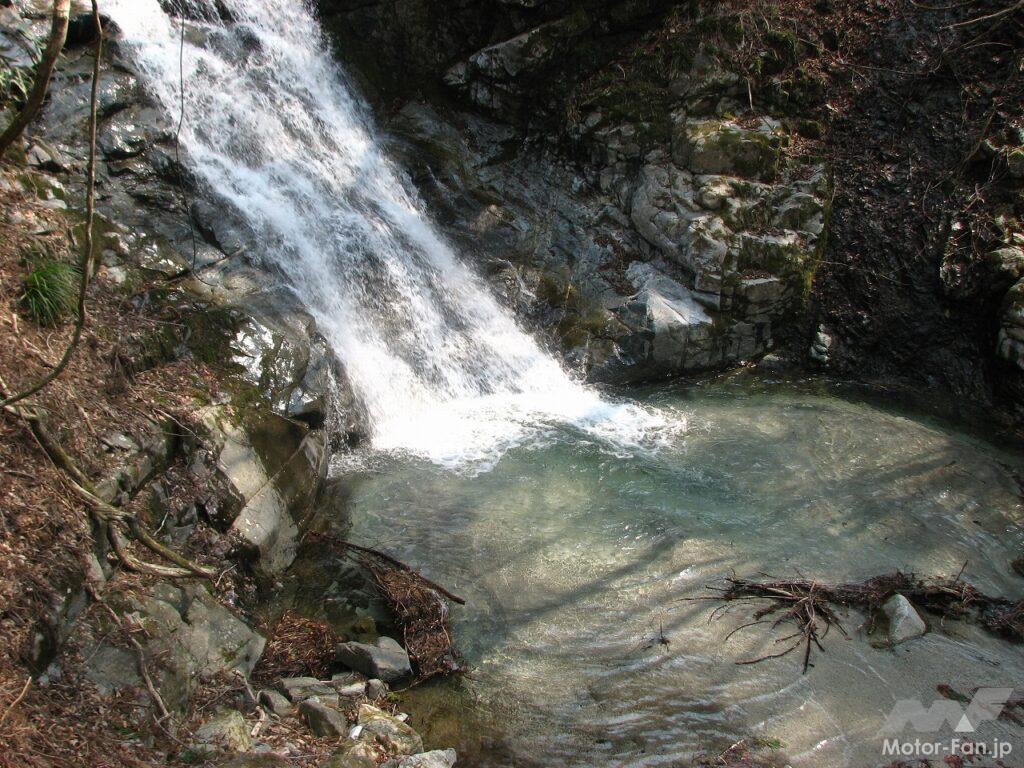
Further into the mountains from Doshi no Yu is Matosama Falls
The distance traveled on this Yuru Cub Touring was 116 km, and 1.77 L of gasoline was used, resulting in a fuel efficiency of about 65.5 km/L. The total cost, including meals, was about 1,000 yen.













![[Izu City, Shizuoka Prefecture] A great touring spot to visit by motorcycle | Passing the Amagi Pass through central Izu.](https://motopeek.com/wp-content/uploads/2025/11/4734-1762339049801.jpg)