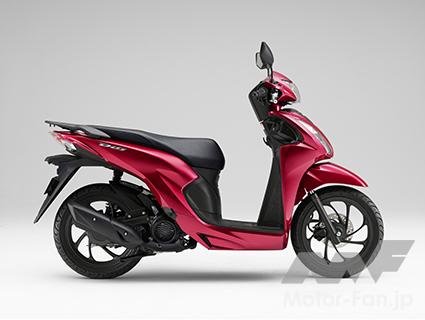

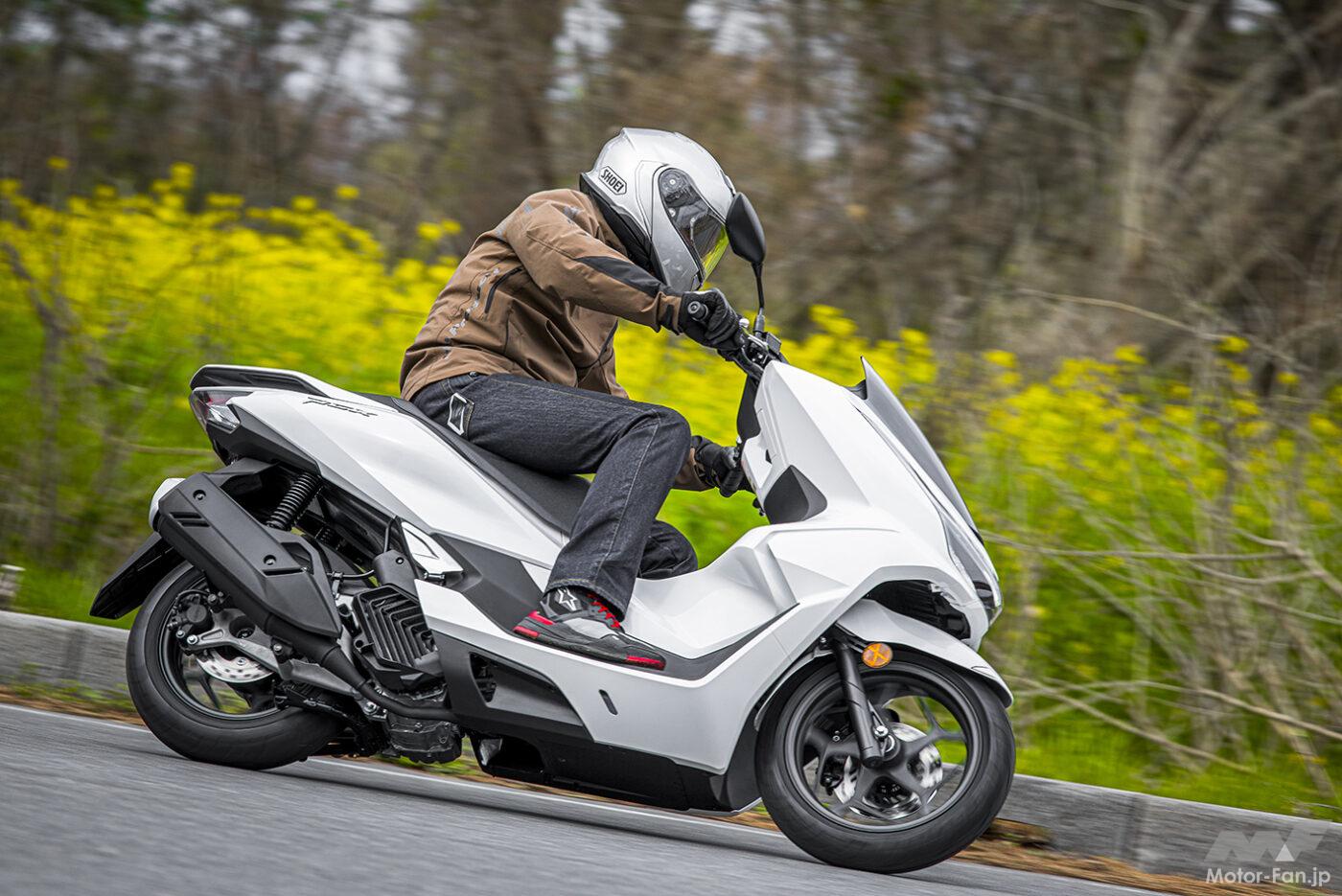

Honda PCX…379,500 yen

The first generation of the PCX series was released in 2010, and has since evolved into the second generation since 2014, the third generation since 2018, the fourth generation since 2021, and the fifth generation since 2025. In recent years, the PCX has been produced in Vietnam, Indonesia, Thailand, and other countries, with the Japanese model being produced in Vietnam.
Shocking and groundbreaking in many ways
The PCX series is a globally popular model that stands out from existing scooters and is highly acclaimed for its qualities as a “small luxury vehicle.” Looking back, to me, each of the previous PCX models was shocking and groundbreaking in many ways.
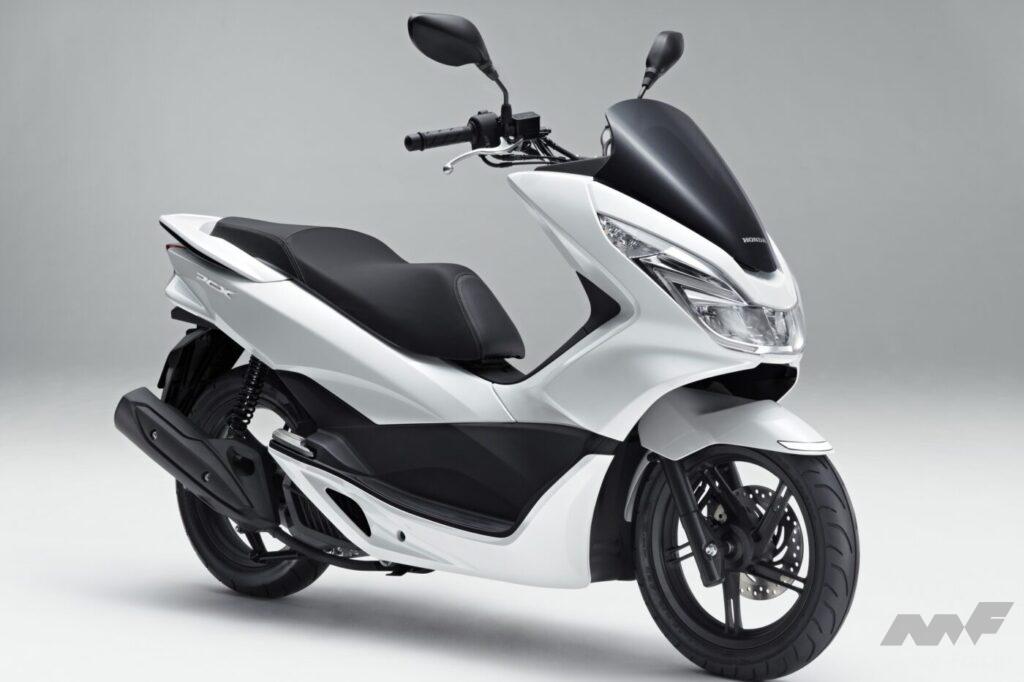
The first generation PCX debuted in 2010. In 2012, a larger displacement 150 model was released.
The first thing that surprised me when I test rode the first generation in 2010 was the outstanding stability and comfort, which made me wonder if it was really a 125cc scooter. However, that wasn’t the only good thing about the first generation, as it also achieved performance that went beyond the common sense of existing 2-class mopeds in terms of luxury and convenience.
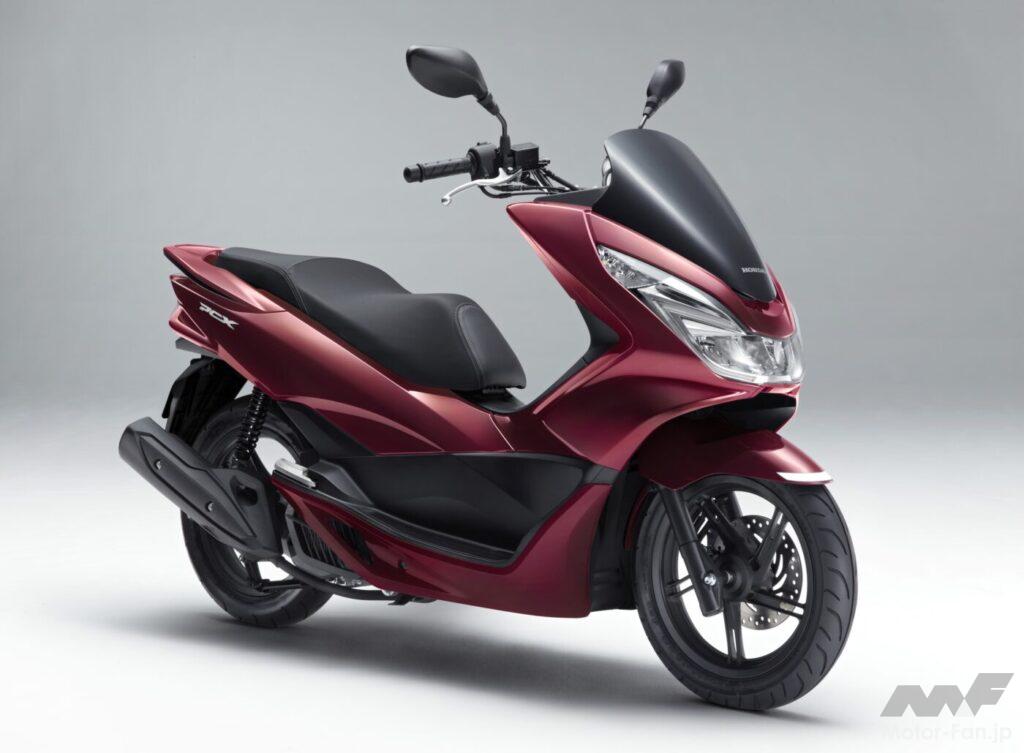
The second generation, which went on sale in 2014, was ahead of its rivals in adopting full LED lighting.
Following on from the first generation, what impressed me most was the performance of the third generation that was released in 2018. The power of the 150, which was released in 2012, and the solid specification changes made to the second generation that debuted in 2014 are also noteworthy elements, but the third generation, which changed the frame from an underbone to a double-clade type and widened the front and rear tires, provided high-quality, solid handling that clearly surpassed the first and second generations.

The third generation, which was released in 2018, underwent major reforms, mainly focusing on chassis-related parts.
However, of all the PCX series models, the one that surprised me the most was the fourth-generation model released in 2020. With a completely redesigned engine and chassis, a change from drum to disc rear brakes, and an even larger trunk space than was already large, the fourth-generation model once again surpassed its predecessor in every way. What’s more, the engine displacement of its big brother model, which has been increased from 149 to 156cc, and the hybrid model e:HEV (the first hybrid model was released in 2018), are also excellent, and having experienced the three fourth-generation models, the word “perfect” comes to mind.
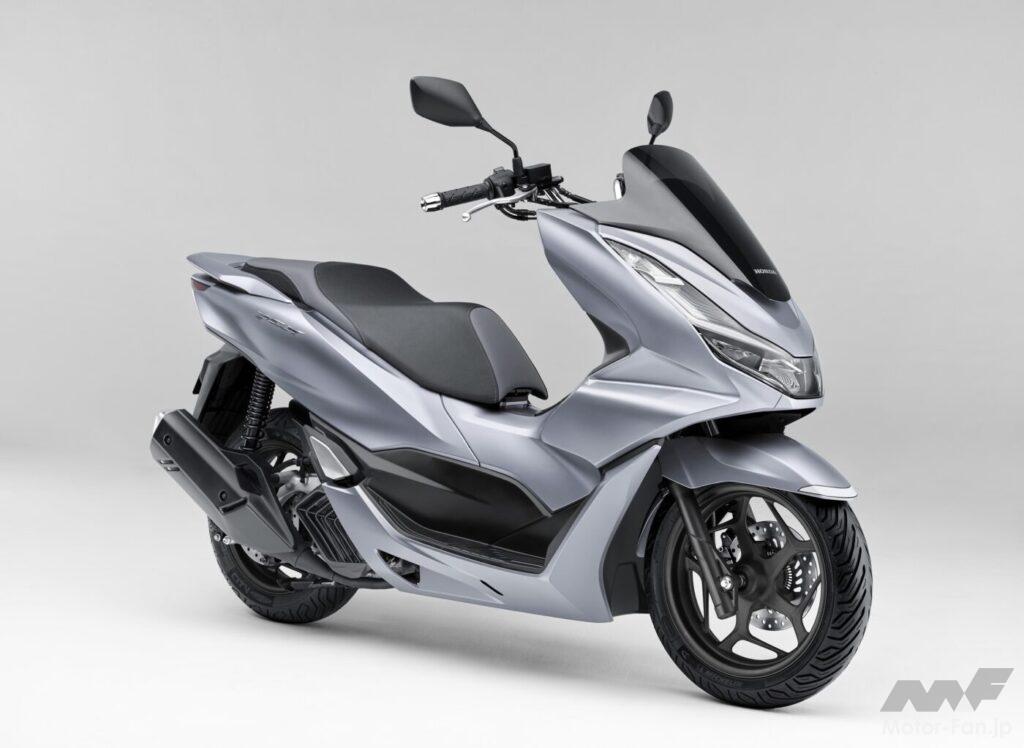
The fourth generation, which began rolling out in 2020 as a completely redesigned vehicle, has rear wheels that have been changed from 14 to 13 inches.
However, in recent years, the world of scooters in the 125/150-160cc range has become a fierce battleground, and it’s becoming increasingly necessary to update them every few years. This is why the PCX underwent a model change for the 2025 model year. However, having experienced the incredible evolution of the third and fourth generations, I felt that the fifth generation, which mainly focused on design changes and inherited the basic engine and chassis design from the fourth generation, was somewhat lacking. However…
The elegant and sporty design is captivating
Generally, I rarely comment on looks in my test drive reports. However, when I looked at the fifth-generation model from various angles during this test drive, I was blown away by its elegant and sporty design, so I would like to share my impressions below.

What first caught my interest in the fifth-generation design was the series’ first reverse-slant nose, with a glamorous front cowl that is slightly wider below the headlights when viewed from the front and then tapers downwards. In addition, the side panels and rear area, which are a stark contrast to the front, feature sharp, light, and supersport-like, taut lines, as well as the more prominent signature lights and the now independent left and right headlights, are also essential elements when discussing the fifth-generation design.

By the way, when I first saw the promotional photos I felt something was off about the handlebars being covered, which is common for scooters, rather than the original exposed and plated design, but when I saw the actual bike I was instantly in favor of it. In addition to the “personal comfort saloon” concept that has been carried over from the first generation, in order to realize the fifth-generation keyword of “premium and powerful PCX”, it must have been essential to adopt this design, where almost no cables and harnesses are exposed to the outside.

Another great thing about the fifth generation is that it has introduced different techniques in many places from its predecessors, while still retaining the PCX feel. This isn’t limited to scooters, but I think that a vehicle with this kind of consistency in a long-selling model, a design that most users of the previous model would be happy with, is quite rare in the world of two-wheeled vehicles these days.
Feel the wind protection and improved aerodynamics

Now, finally, let’s talk about the ride quality. The fifth-generation model has not undergone any specification changes that contribute to improved maneuverability. So, although I didn’t have any particular expectations at first, I immediately felt the body’s lighter movement when I started riding. This is probably due to the vibration-absorbing weights that have been moved from the bar ends to inside the handlebars, and the slimmer front side covers. That said, the main purpose of the latter is to increase leg room (in fact, it was more spacious than the previous model), but perhaps because the area between the shins and ankles has become narrower, the fifth-generation model feels smaller in size and the body’s movements are lighter.

Furthermore, improvements to aerodynamics may also be contributing to the lightness of the body’s movement. This is because the exterior parts of the fifth generation have not simply been redesigned, but have also undergone improvements in wind protection. In addition to the wind hitting the rider less, it seems that the airflow is more efficiently rectified than before. This may sound strange, but Honda has long used aerodynamics to enhance handling, so I think the fifth generation has also been carefully designed in this regard.

Well, the engine and chassis remain unchanged, so the basic maneuverability and stability of the fifth generation are the same as the fourth generation. How people feel about this fact will vary, but for me, who felt that the fourth generation was the “final form,” the fact that it hasn’t changed is not a negative factor. On the contrary, I’m somehow glad that there are no flaws to be found.

If I were to voice an objection to the fifth-generation PCX, it would be that the higher-end DX (Deluxe) model will not be introduced in Japan. Of course, Honda Motorcycle Japan must have given up on introducing it after careful consideration of various circumstances, but considering the popularity of the PCX to date and the appeal of the fifth-generation model, I believe there are certainly many riders who would be willing to pay an extra few tens of thousands of yen to purchase the DX model, which is equipped with a TFT meter and a rear shock absorber with a reserve tank.

The 2025 PCX125 is available in four body colors: Matte Starry Blue Metallic, Pearl Jupiter Gray, Pearl Snowflake White, and Pearl Magellanic Black.
Riding position (height 182cm, weight 74kg)

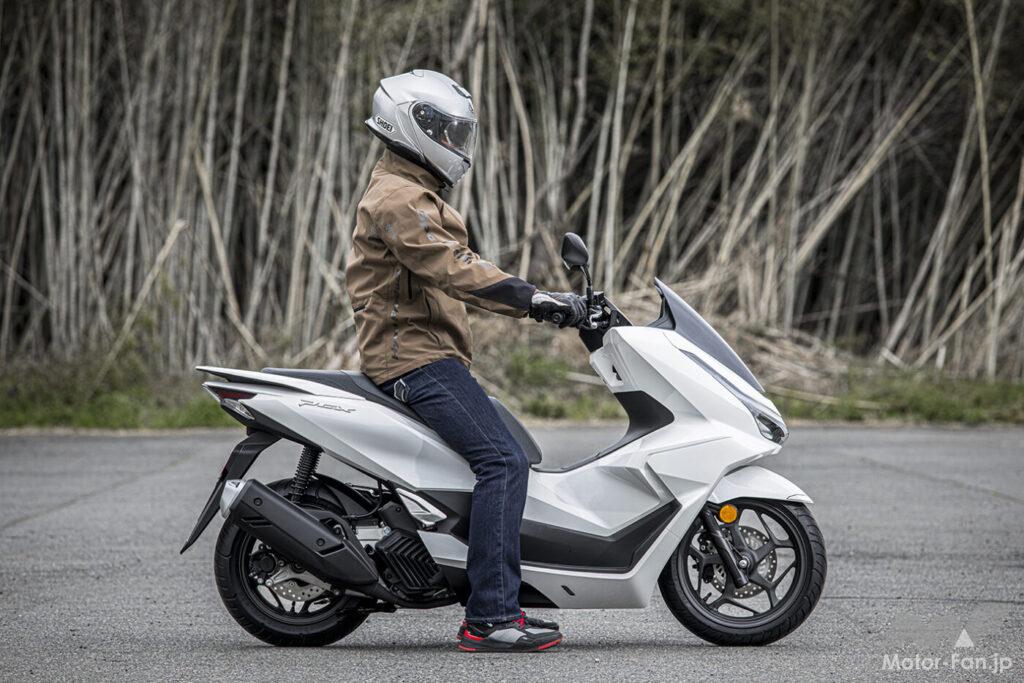
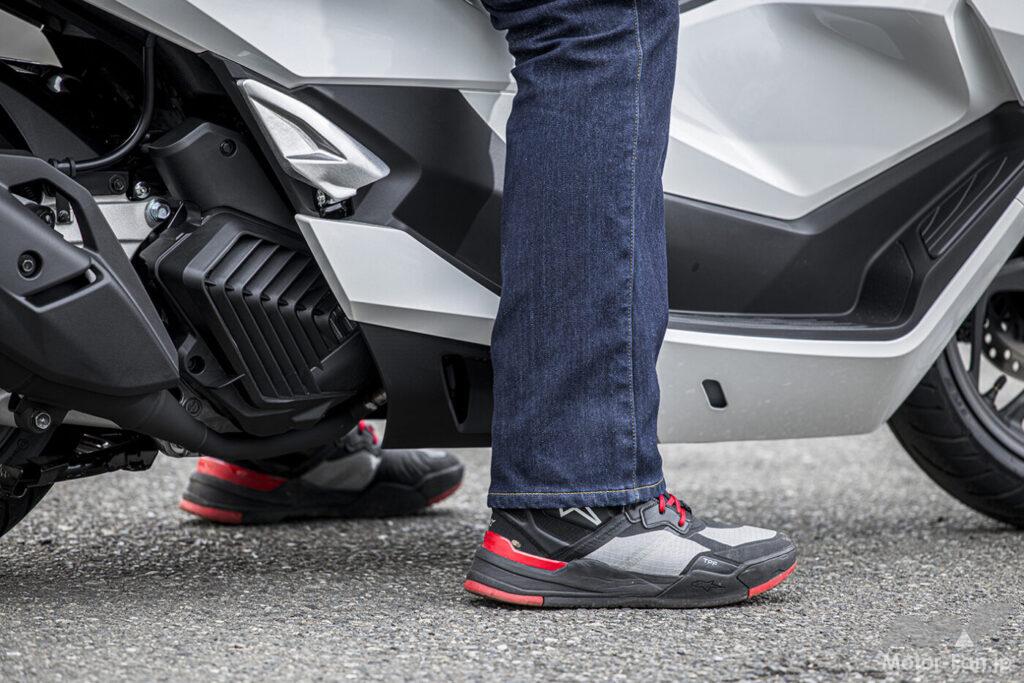
The riding position is very natural, and it feels like it’s right in between a sports bike and a touring bike. The seat height of 764mm is average for 125cc scooters sold by Japanese manufacturers in recent years, but since it doesn’t have a step-through structure and the side panels protrude quite a bit to the left and right, riders under 160cm tall may find it difficult to ride. To solve these problems, there are many lowering kits available on the aftermarket.

Detail explanation

The headlights, which were integrated in the previous model, have been redesigned to be independent on the left and right sides in the fifth generation. The signature lights above the headlights are equipped with bi-function front turn signals at the top left and right edges.

The side panels and rear area, designed with a sense of openness in mind, give a sharper and lighter impression than the previous model. The taillights are thinner, but when the hazard lights are on, they flash in the same X-shape as the previous model.

The newly adopted steering wheel cover is designed with a focus on luxury and sportiness, with almost no exposed cables or harnesses.

The highly visible digital meter’s display content and layout remain the same as the fourth-generation model, but the design of the silver outer frame has been changed.

The seat base and urethane are the same as those of the fourth-generation model. However, the front and rear dividing lines and stitching of the seat leather have been updated to harmonize with the completely revamped exterior.

The trunk space under the seat has a capacity of 30 liters. Although it is not as large as the Lead 125’s 37 liters, it seems to be able to store most full-face helmets.

The front inner box can be opened and closed with one touch and can hold a 500ml PET bottle.

The top of the front inner box is equipped with a USB Type-C socket, which has become increasingly popular on motorcycles in recent years.

To increase the foot space, the width of the center panel was reduced. As a result, negative pressure occurred, causing wind and rain to be sucked in while riding, but this problem was solved by adding a slit to the front cowl.

The eSP+ water-cooled single-cylinder engine was developed with the global market in mind, and is designed to be practical, durable, quiet, etc. The drive belt uses a double-cog type that provides excellent transmission efficiency.
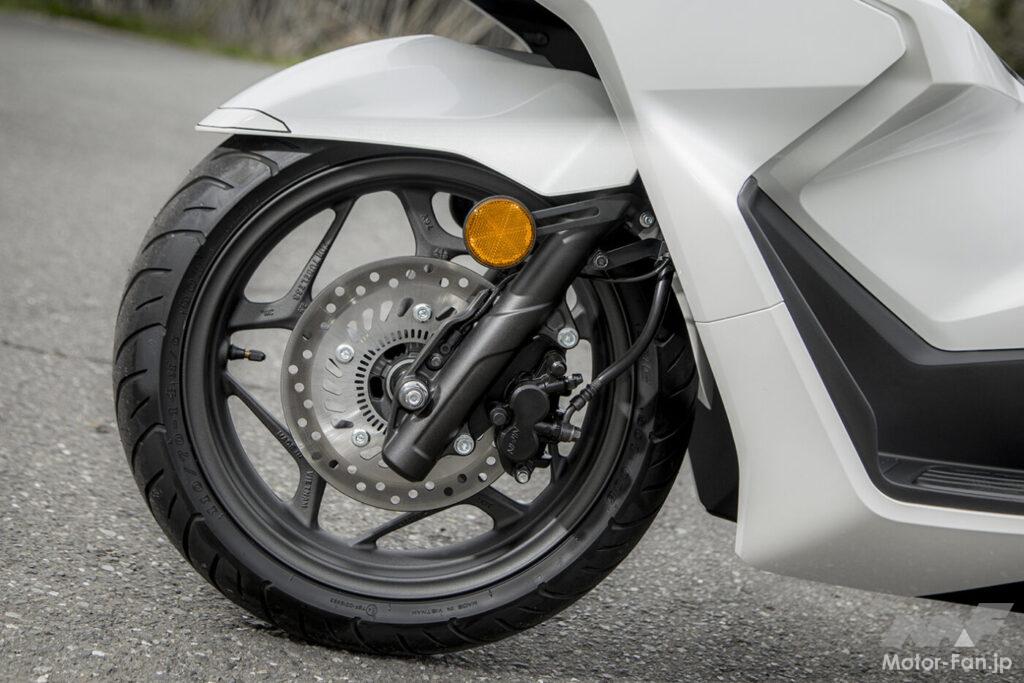
The brake discs are 220mm in diameter on both the front and rear, and the brake calipers are two-piston, one-sided, in the front, and one-piston, in the rear. ABS is a single-channel type only on the front.

While most scooters have the same tire size front and rear, the fourth-generation PCX and later models use 14-inch tires in the front and 13-inch tires in the rear. The original part number is IRC SCT-006/007.
Main specifications
Model: PCX
Model: 8BJ-JK05
Length x Width x Height: 1935mm x 740mm x 1125mm
Wheelbase: 1315mm
Ground Clearance: 135mm
Seat Height: 764mm
Engine Type: Water-cooled 4-stroke single cylinder
Valve Type: OHC 4-valve
Total Displacement: 124cc
Bore x Stroke: 53.5mm x 55.5mm
Compression Ratio: 11.5
Maximum Power: 9.2kW (12.5ps) / 8750rpm
Maximum Torque: 12N・m (1.2kgf・m) / 6500rpm
Starting Method: Self-starter
Ignition Method: Full Transistor Lubrication Method:
Wet Sump
Fuel
Supply Method: Fuel Injection Transmission Type: Continuously Variable (V-Matic)
Frame Type: Underbone
Front Suspension: Telescopic upright type φ31mm
Rear Suspension: Unit swing type Twin shocks
Tire size (front): 110/70-14
Tire size (rear): 130/70-13
Brake type (front): Hydraulic single disc
Brake type (rear): Hydraulic single disc
Vehicle weight: 133 kg
Fuel: Unleaded regular gasoline
Fuel tank capacity: 8.1 L
Occupancy: 2 people
Fuel consumption rate (reported by the Ministry of Land, Infrastructure, Transport and Tourism): 55.0 km/L (with 2 passengers)
Fuel consumption rate (WMTC mode value, class 1): 47.7 km/L (with 1 passenger)