
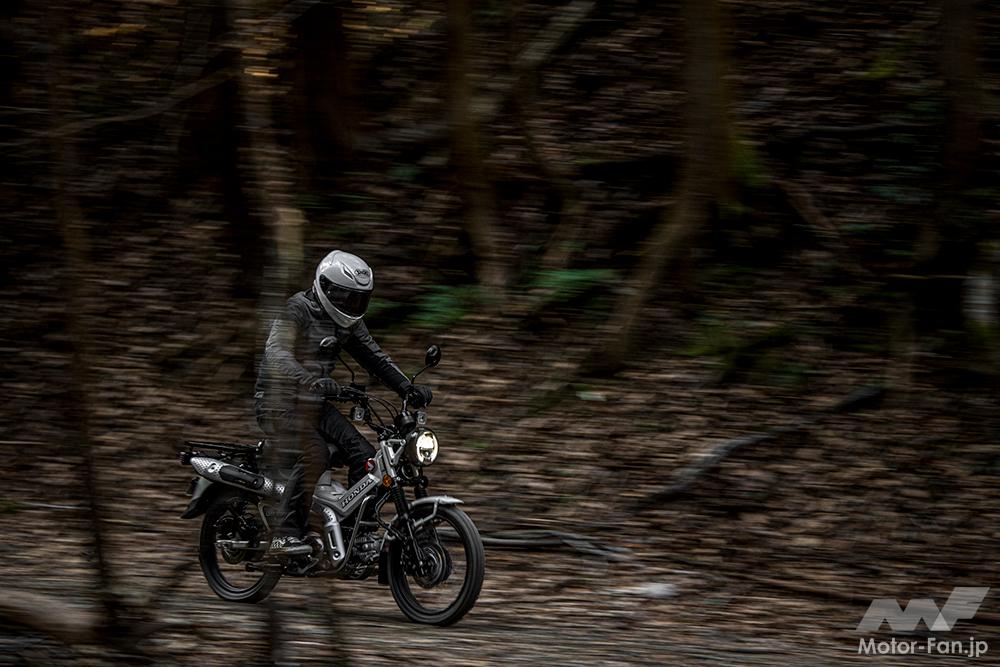
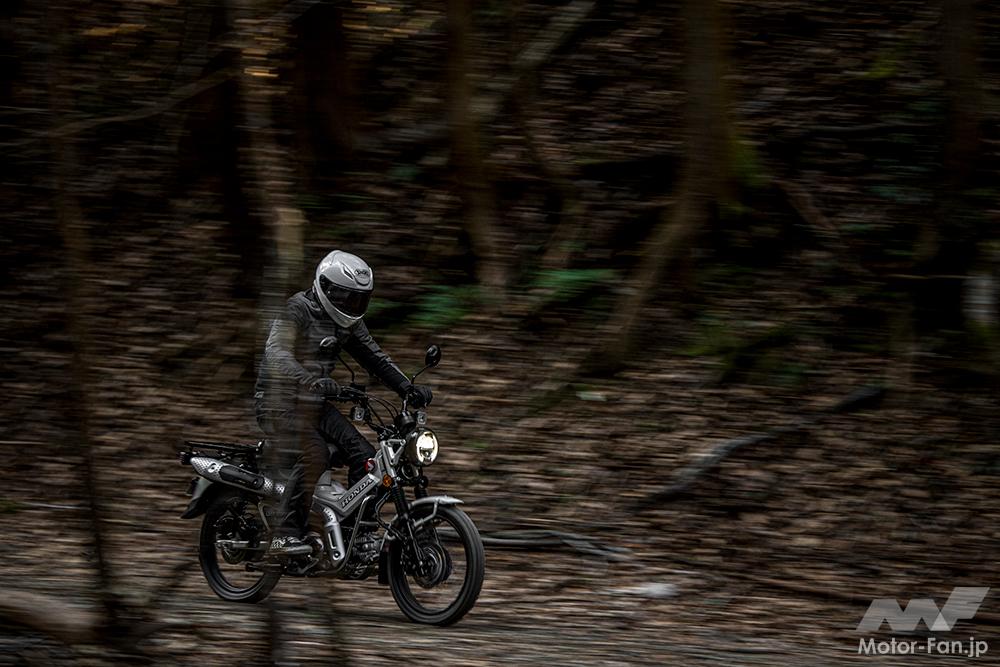
The CT125 Hunter Cub has been overwhelmingly popular since its debut.
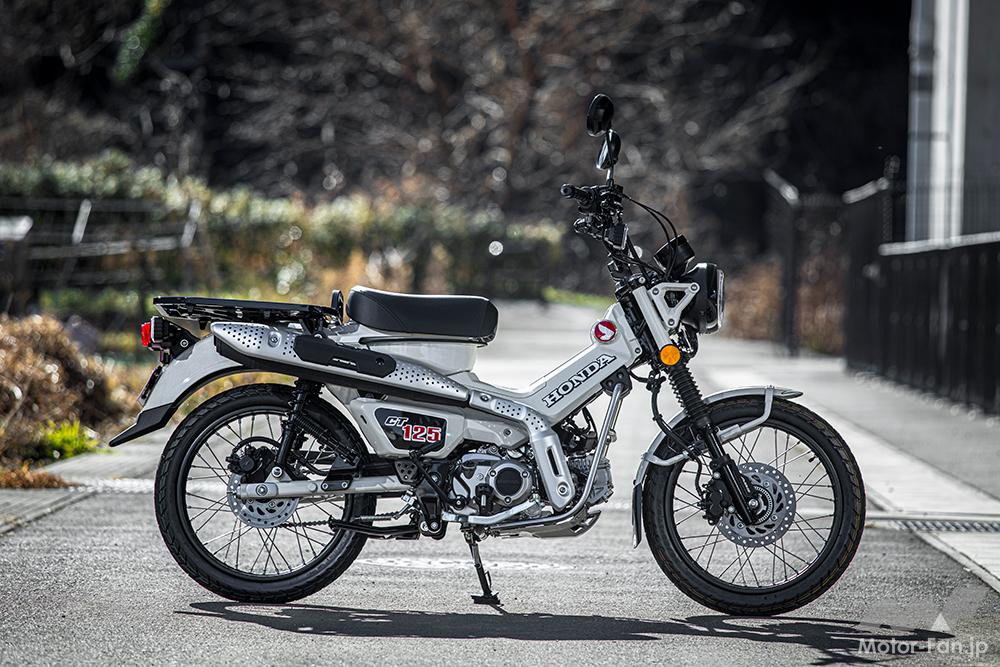
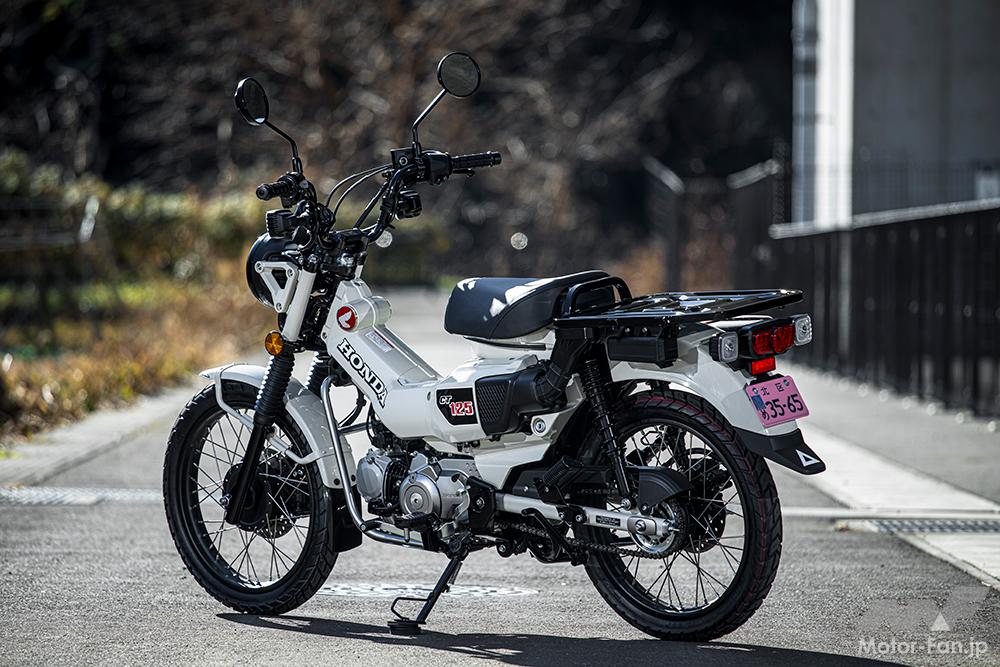
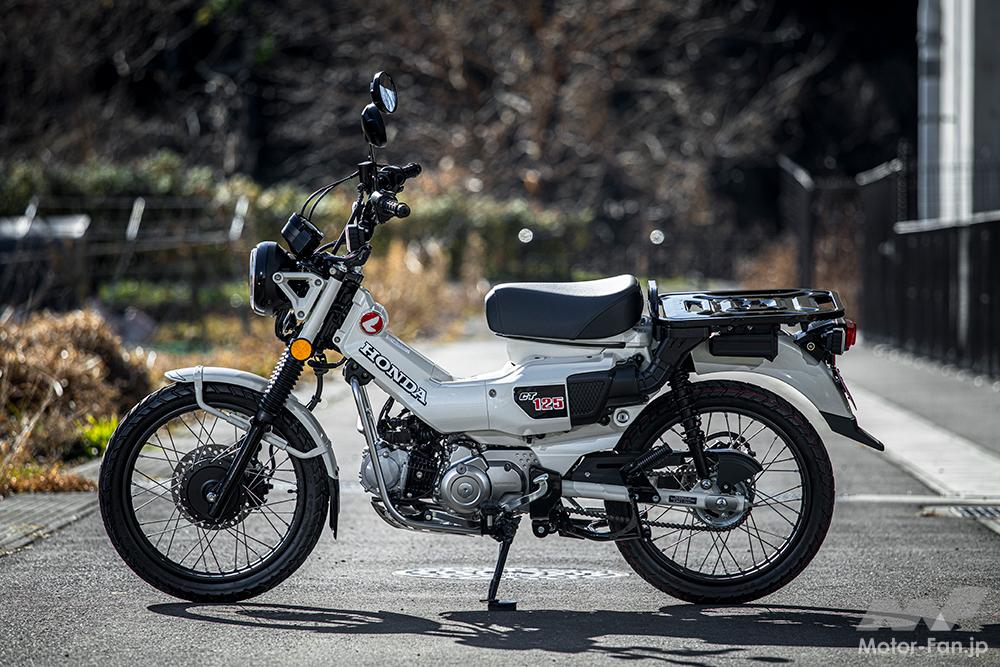
The CT125 Hunter Cub (hereafter referred to as the Hunter Cub) went on sale in Japan in June 2020. Based on the Super Cub 125, it has added reinforcements around the steering head and a pivot plate around the swingarm pivot. The rear section of the frame has been extended to increase frame rigidity, improving rear-area living space and cargo capacity. The front suspension also features a telescopic front fork supported by a top bridge and under brackets. It is also equipped with front and rear spoke wheels, raised handlebars, an up-style silencer, an intake port for a high-positioned air cleaner box, and an underguard, with a strong focus on improving off-road performance.
Honda CT125 Hunter Cub…473,000 yen
ADVERTISEMENT
In December 2022, Honda will launch the second-generation model, featuring a new engine that complies with the latest exhaust gas regulations
. However, this engine is not simply a matter of adding devices or changing settings to clear regulations; it is a major change to the bore and stroke. This increases maximum power output and sets the rotation speed at which it is generated slightly lower. In return, the rotation range at which maximum torque is generated has been slightly raised. This engine is installed on all of Honda’s new 125cc air-cooled horizontal cylinder engine models, including the Grom, Super Cub C125, Monkey 125, and Dax 125.
The sales target for the first year is 8,000 units, with 7,000 units for the 2022 model, 14,000 units for the 2023 model, 11,000 units for the 2024 model, and 12,000 units for the 2025 model that I test drove this time – these are pretty ambitious figures. However, looking at data from industry newspapers, these figures are easily exceeded. In 2023, sales are expected to exceed 18,000 units. Incidentally, the Japan Light Motor Vehicle Association announced that the total number of new light motorcycles sold in 2023 will be 71,648 units, which means that approximately 25% of those will be Hunter Cubs.
The 2025 model will have minor changes and new colors.
The 2025 model Hunter Cub has not undergone any major changes from the second generation model launched in 2022. However, Honda’s continued high sales figures show its strong confidence in the Hunter Cub.
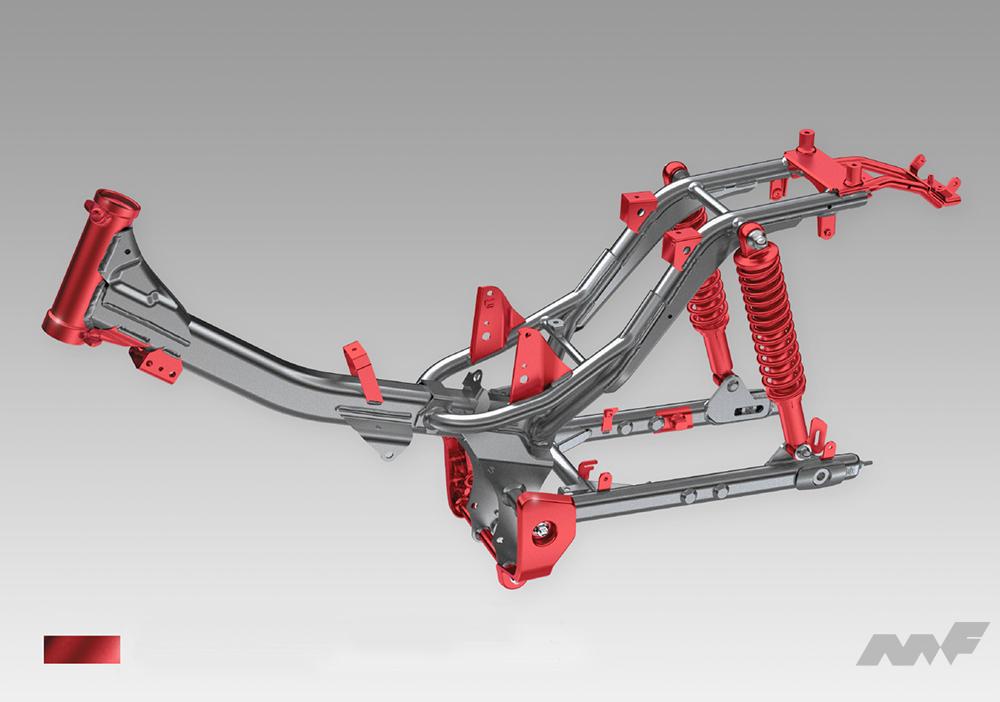
↑Frame layout data for the Hunter Cub announced at its debut in 2020
Changes from the 2024 model include a longer protector attached to the exhaust pipe and a change to the cover design of the left and right rearview mirrors.
The color scheme continues to be the classic glowing red, but the lineup now includes three new colors: pearl smoky gray and pearl sugar cane beige, which was the color we test drove this time.
Style and performance that will captivate both enthusiasts and beginners
When I ride a Honda Cub, I somehow feel like I’m standing up straighter. All of the vehicles are characterized by a dignified appearance, and although I still don’t take the “Nicest People…” tagline used in their old promotions in the US to heart, there’s no denying that riding a Cub makes me feel a little more at ease. Of course, the riding position created by the slightly closer distance between the handlebars and the seat, the handlebars being slightly lower than the seat height, and the footpegs being positioned directly below the seat varies slightly depending on the model, but it’s common to all Cubs. The Hunter Cub is no exception.
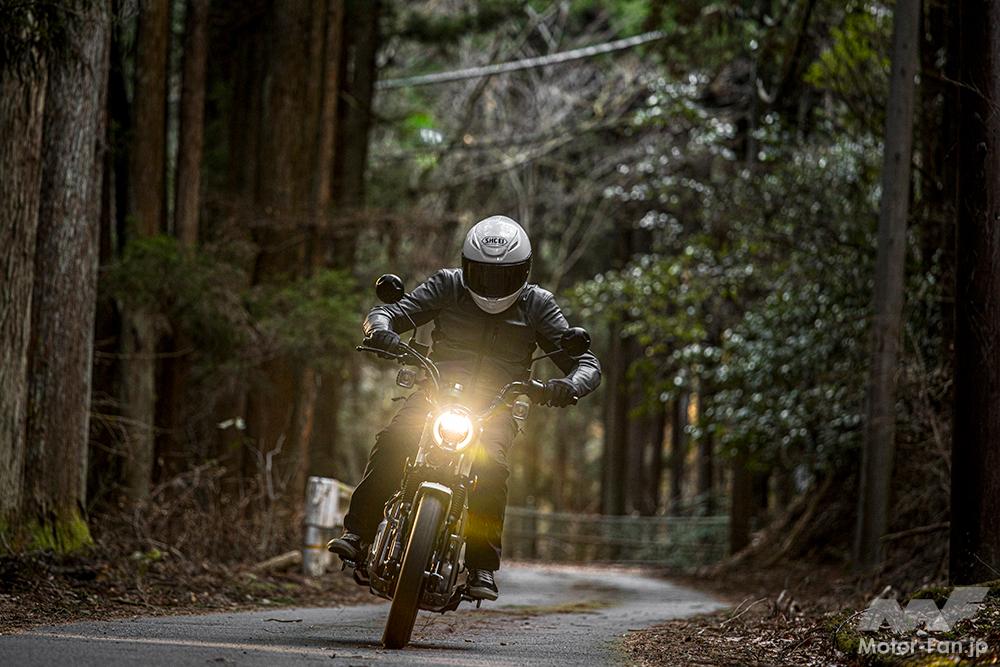
The body of the bike changes direction with a quick shift of weight, or even just by lightly placing weight on the footpegs. I’ve never owned a Cub before, so it takes me a little while to get used to the bike’s quick response, but once I do, it becomes even more fun to control. The Hunter Cub also has that same fun response, but the front area, with the front fork supported by the top bridge and under bracket, and the rear area with the pivot plate, add a sense of security to that fun response. I didn’t make any changes myself, but when a larger rider is riding or when carrying a large load, it would be a good idea to adjust the preload of the five-stage adjustable rear shock unit.
The shift pattern is also unique. According to the specs, it has a 4-speed return, but it switches to rotary mode only when the bike is stopped, which makes the shift pattern different from that of a normal manual transmission bike. The shift pattern is N-1-2-3-4. Pressing the toe side of the seesaw pedal shifts up, and pressing the heel side shifts down. And because it switches to rotary mode only when the bike is stopped, pressing the toe side of the pedal from 4th gear will return to N (neutral). If you’re not used to it, it can be confusing and you won’t know what gear you’re in… but just like the reaction of the bike, you’ll quickly get used to it.
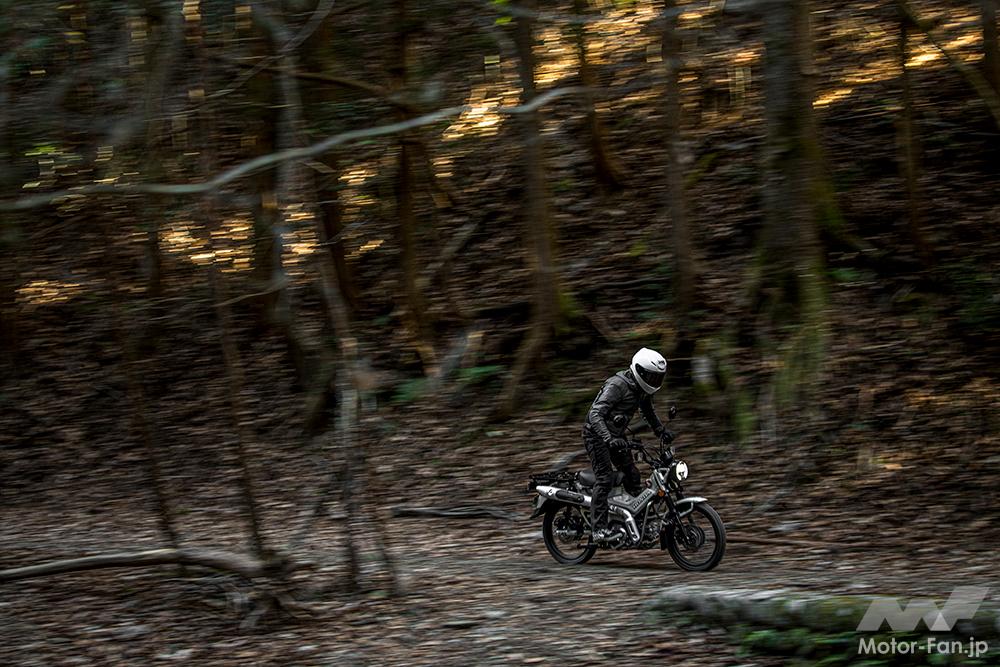
Once you get used to the Hunter Cub’s controls and response, driving becomes more and more enjoyable. When riding in relaxed mode, simply depress the shift pedal quickly into third gear in the city or fourth gear in the suburbs, and then, even if the engine speed drops, gently operate the accelerator to gently accelerate and keep up with other vehicles. In energetic mode, you can also enjoy accelerating by revving the engine steadily in each gear. By taking advantage of the characteristic of the automatic centrifugal clutch, which does not require clutch operation with a clutch lever—the clutch disengages when the shift pedal is depressed—you can combine pedal operation and accelerator operation when downshifting, matching engine speeds for a very sporty ride. When combined with the crisp, responsive chassis mentioned above, you’ll have such fun riding that you’ll be reluctant to return the vehicle.
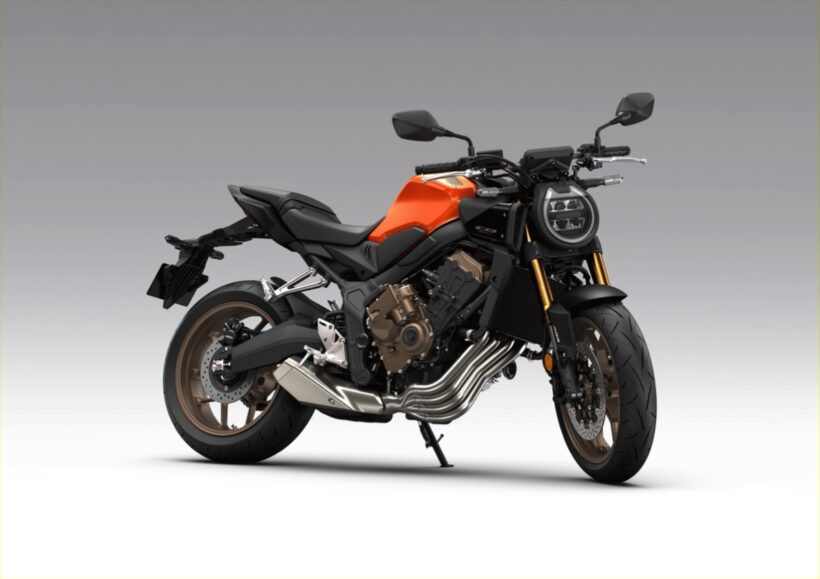
What was also moving this time was that the CB650R E-Clutch was photographed at the same time as the Hunter Cub. Both bikes require no clutch operation, and yet are full of the joy of riding a motorcycle. It makes you wonder how the roughly 70 years that have passed between the two bikes has allowed the mechanisms for achieving their goals to evolve in this way.
The CT125 Hunter Cub allows you to experience Honda’s ancient ideals with modern technology, and of course I highly recommend it to inexperienced riders. Even for riders who are thinking of waiting until the popularity dies down a bit, I encourage you to go for it while you can.
Riding position & foot reach (170cm/65kg)
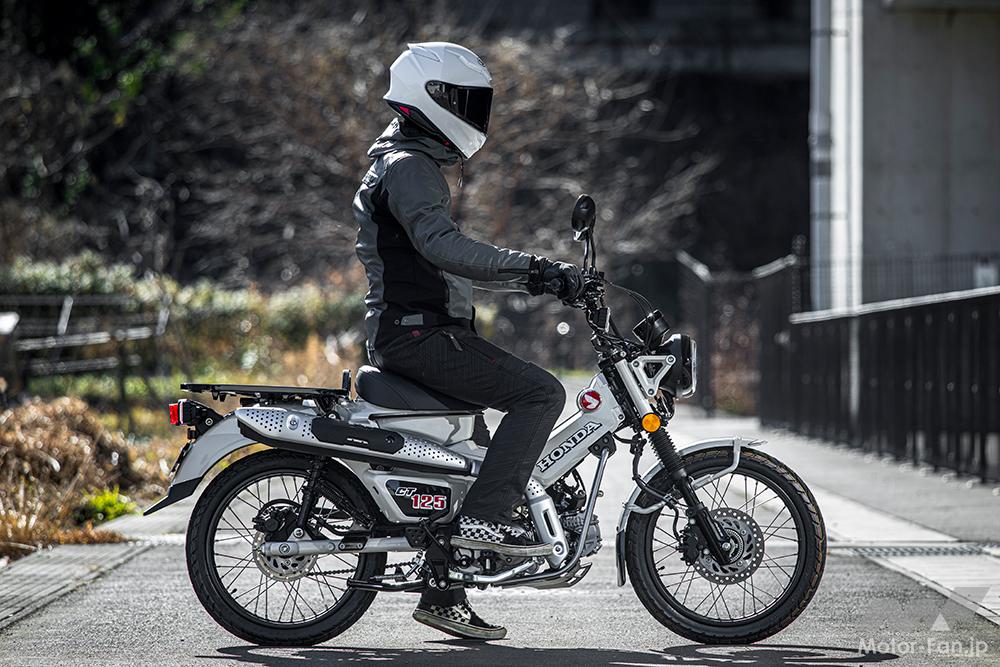
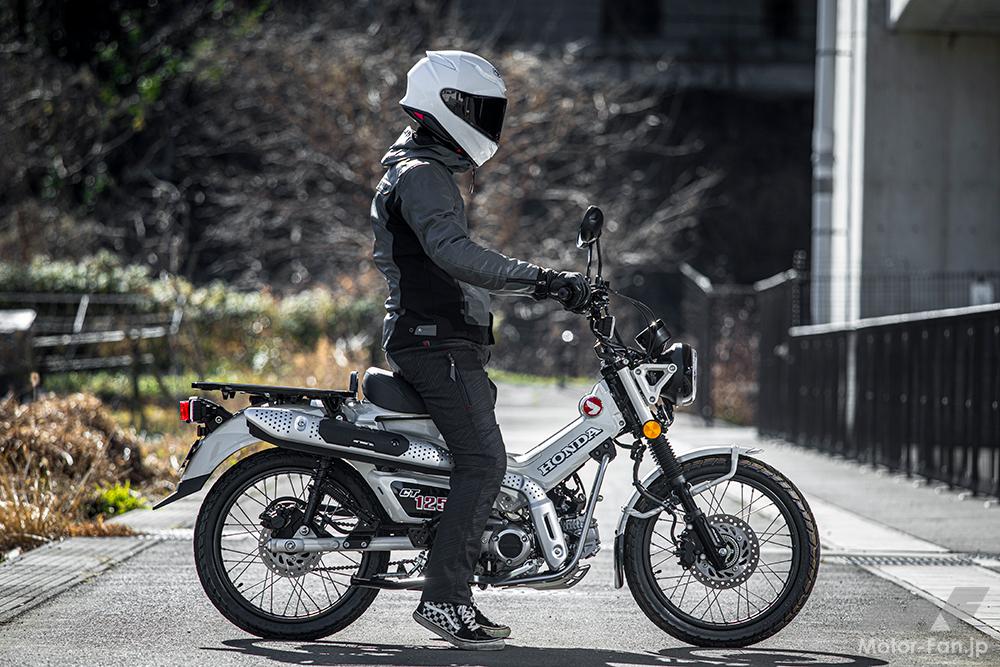

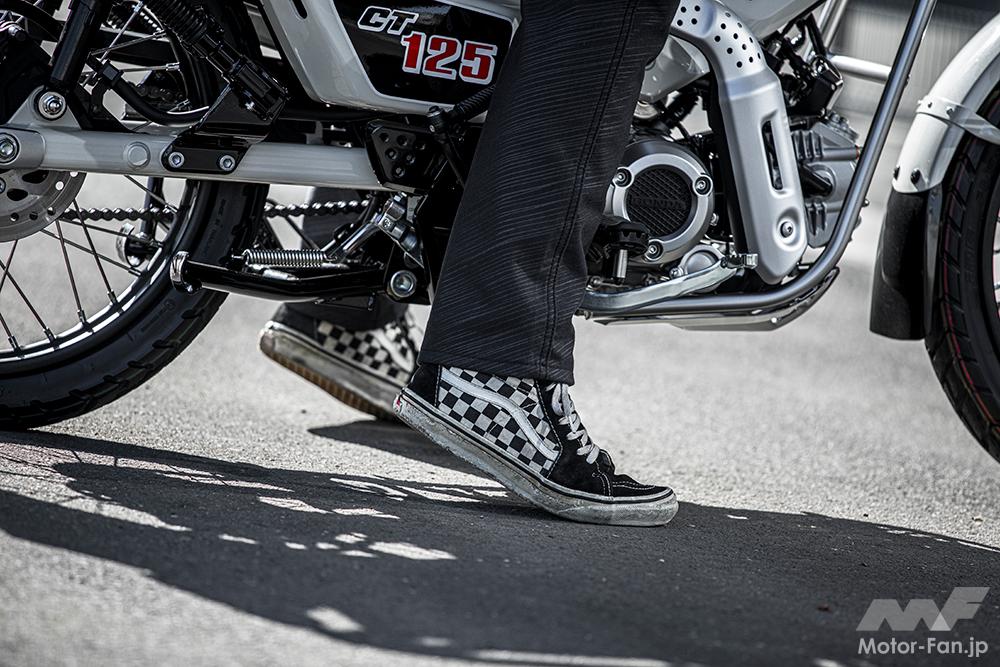
The seat is slightly higher than other 125cc models, and the position of the handlebars and seat is unique.
Detailed explanation
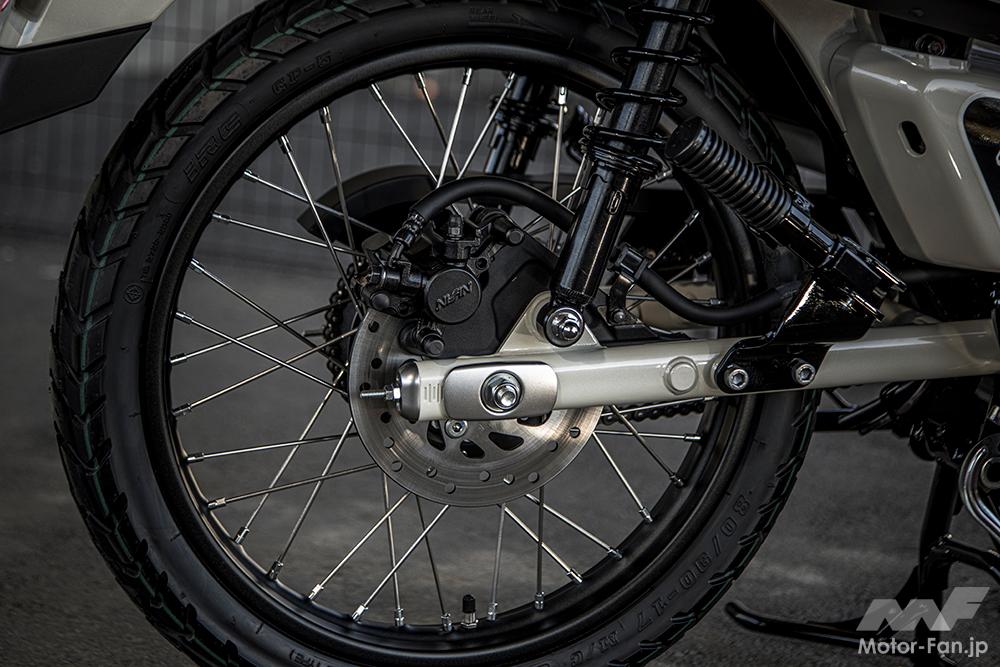
The rear also features a disc brake. The wheel size is 17 inches, and spoke wheels are used.
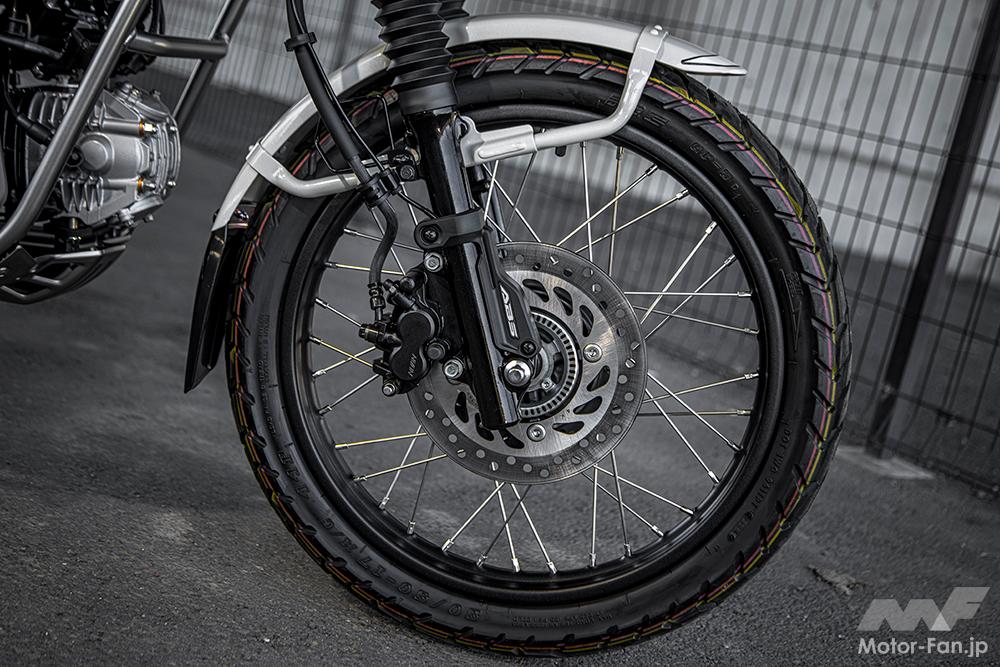
Only the front is equipped with ABS. The upright telescopic front fork, supported by the top bridge and under bracket, has a stroke of 110 mm.
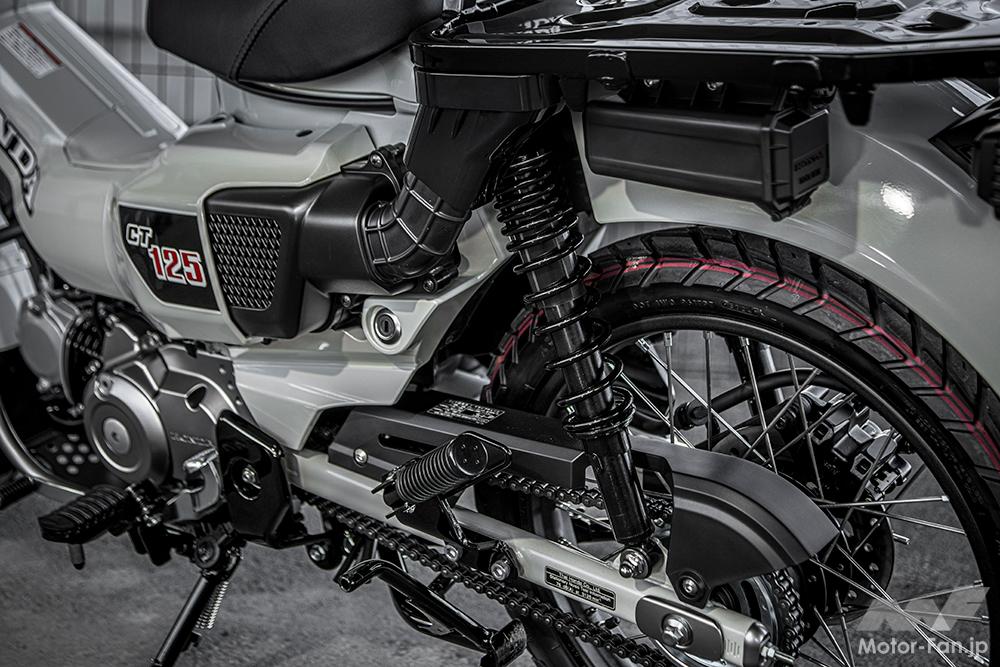
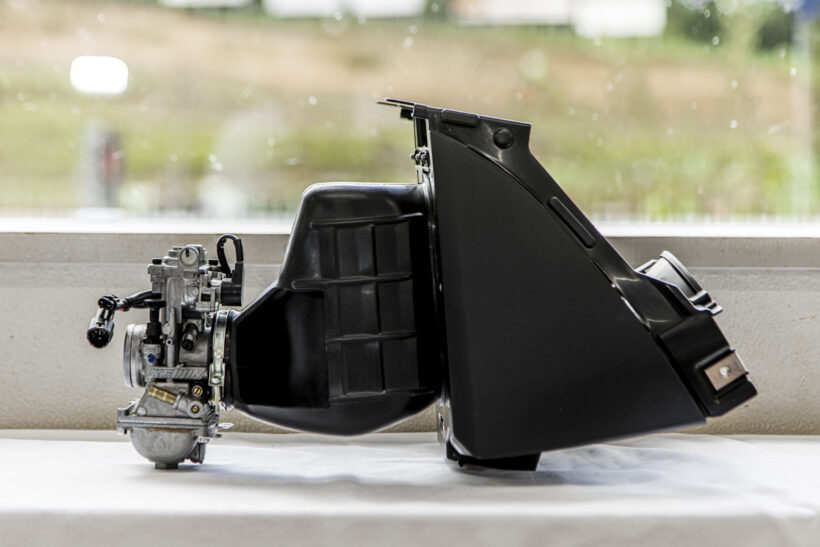
An intake port extending from the air cleaner box is installed at the rear shock mounting position on the left side of the vehicle. The rear shock preload can be adjusted in 5 stages.
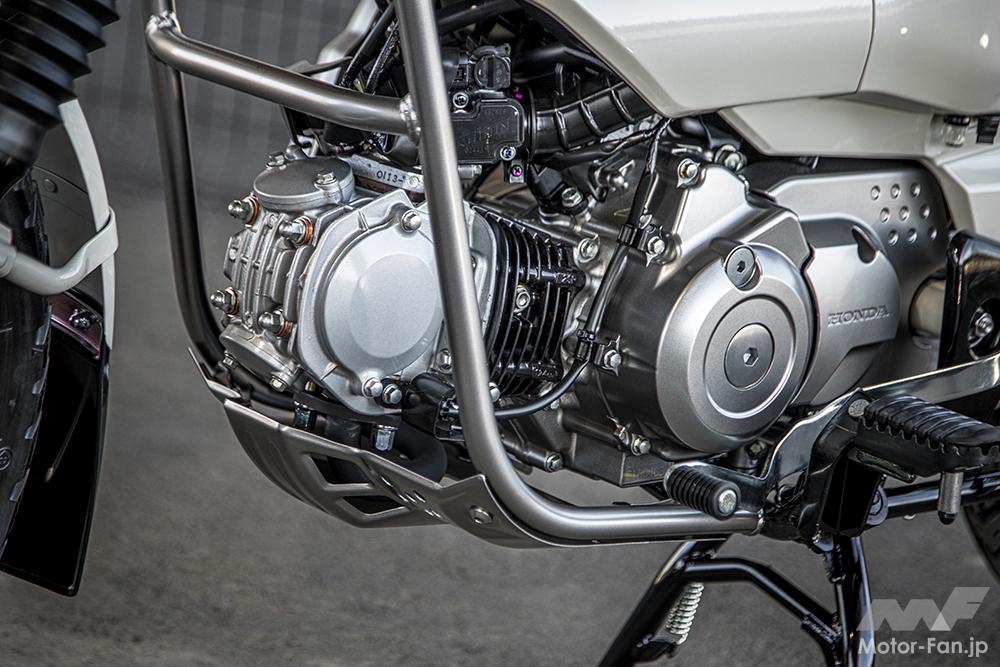
123cc air-cooled 4-stroke OHC single-cylinder engine. Subframe and engine underside guard are standard equipment.
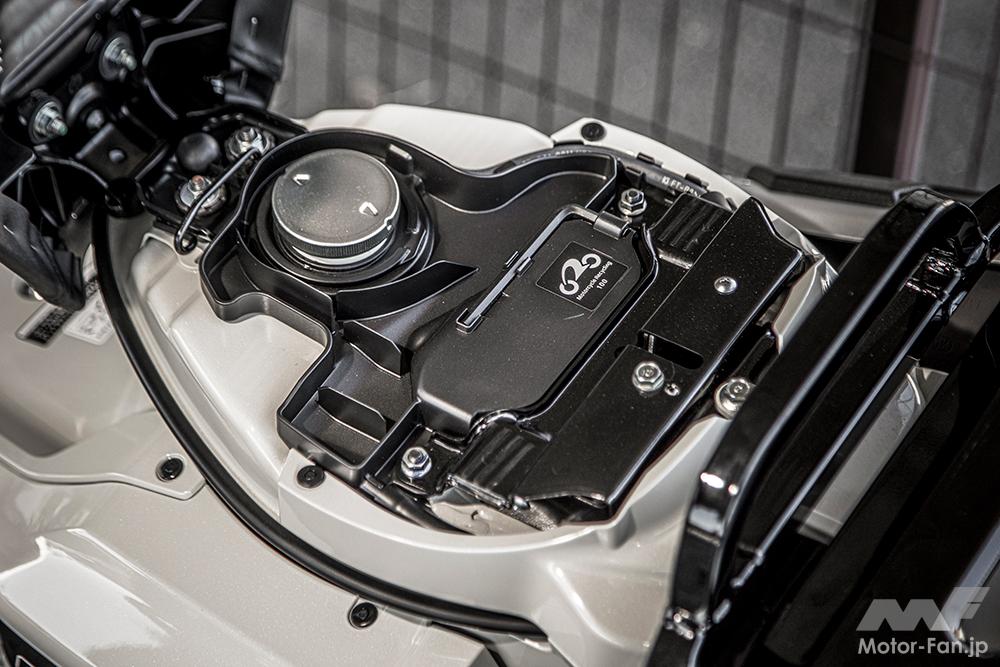
When you open the seat with a hinge at the tip, the fuel tank filler cap appears. The WMTC mode value, which is the international standard for fuel economy calculation, recorded a class-leading 67.2 km/L.
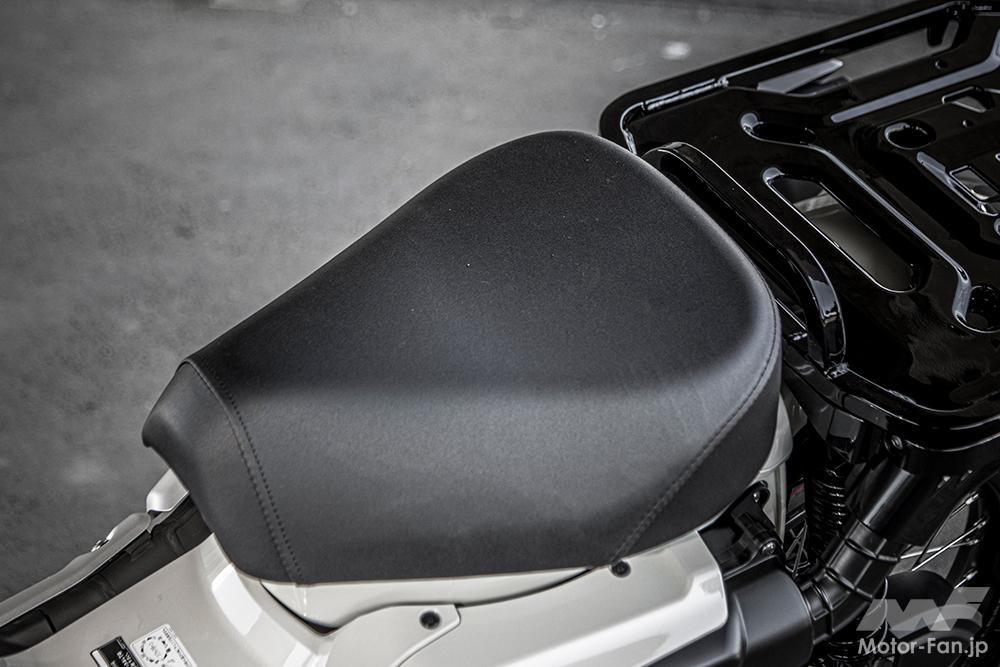
The seat height is 800mm. Compared to scooters of the same displacement, the seat height is slightly higher. The seat has good cushioning and is comfortable to ride.
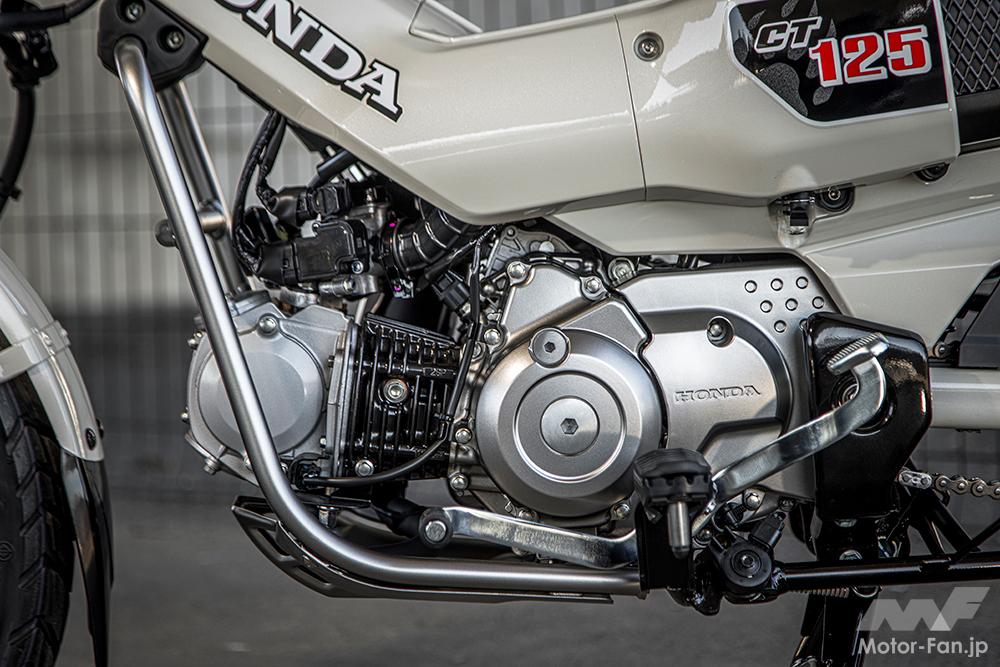
Although it’s a little hard to see, the seesaw-type shift pedal is also a feature of the Hunter Cub. The shift pattern is N-1-2-3-4. Pressing the toe side of the seesaw pedal shifts up.
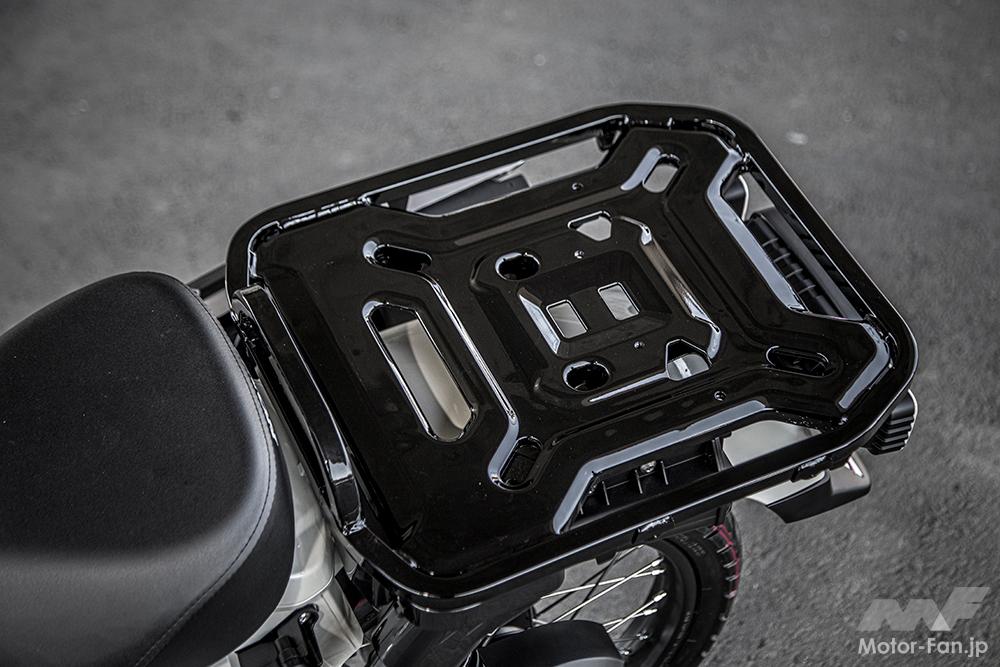
The biggest feature of the Hunter Cub is its huge rear carrier. To mount it, the rear end of the Super Cub C125-based frame was extended.
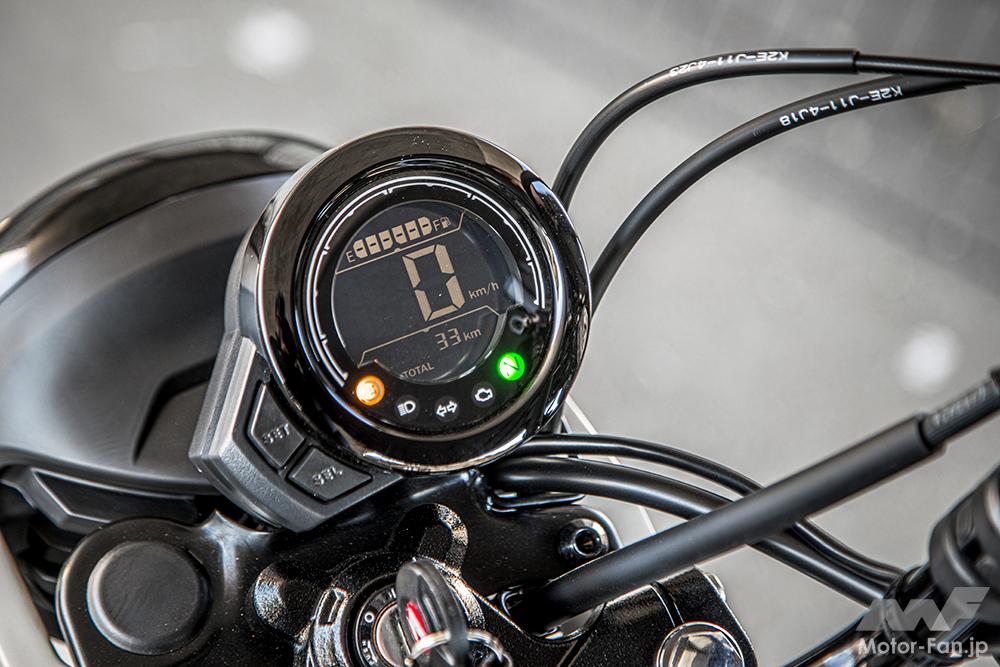
Below the round meter are a row of indicator lamps, and the fuel gauge and odometer are laid out around the digital speedometer.
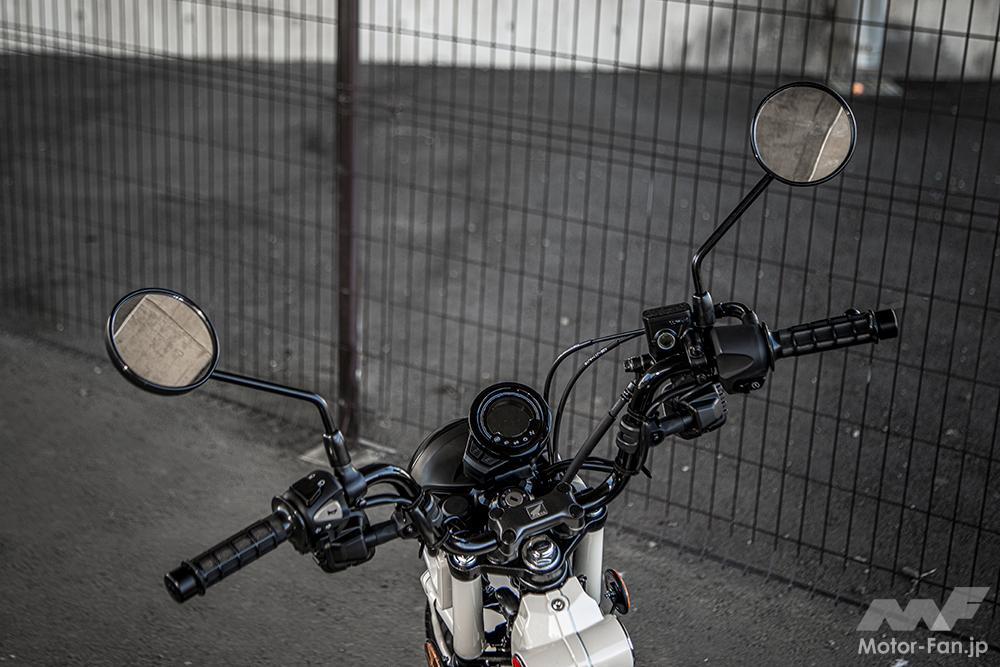
The handlebars are raised high. The distance from the seat and the balance with the seat height make the grip position a little low when in riding position.
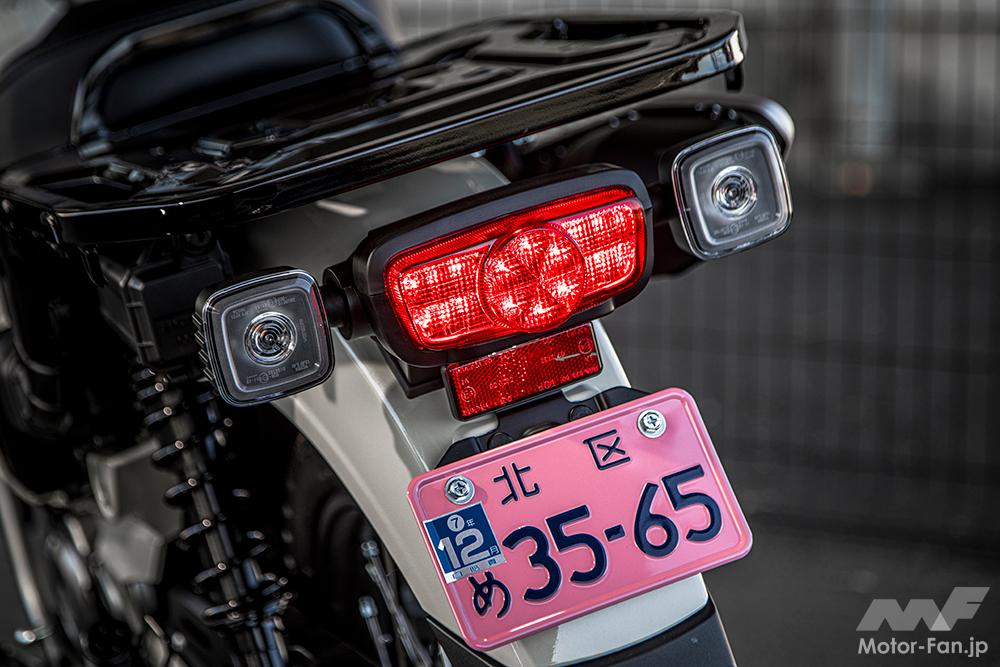
Around the tail. Although a round lens is placed in the center, the lens design of the taillight and turn signals is unified with a square design.
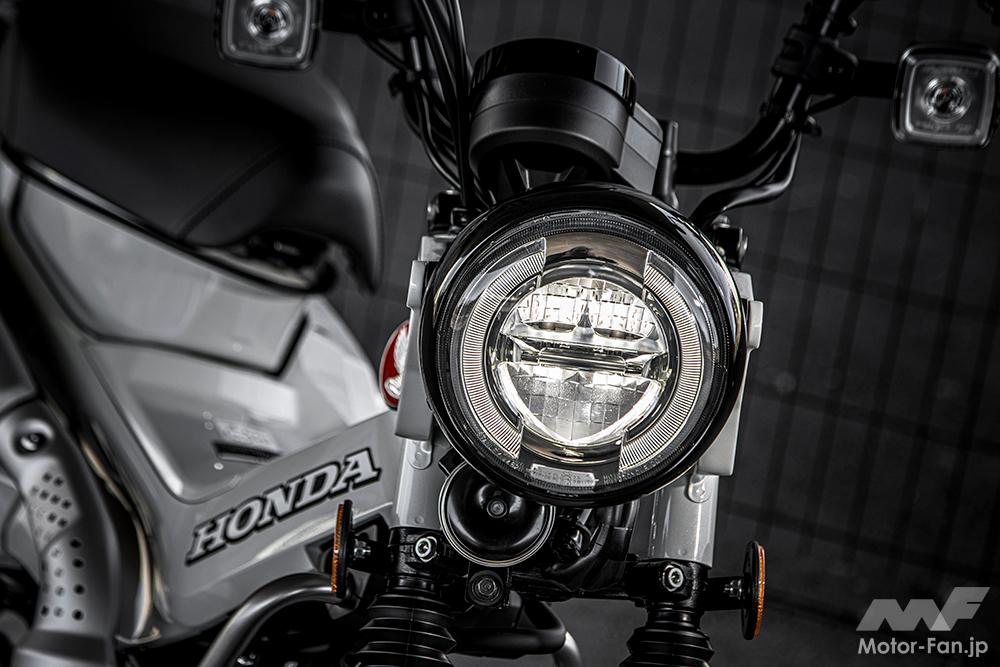
All lighting, including the headlights, is made of LED. The combination of round headlights and square turn signals is unique to the Hunter Cub.
“CT125 Hunter Cub” main specifications
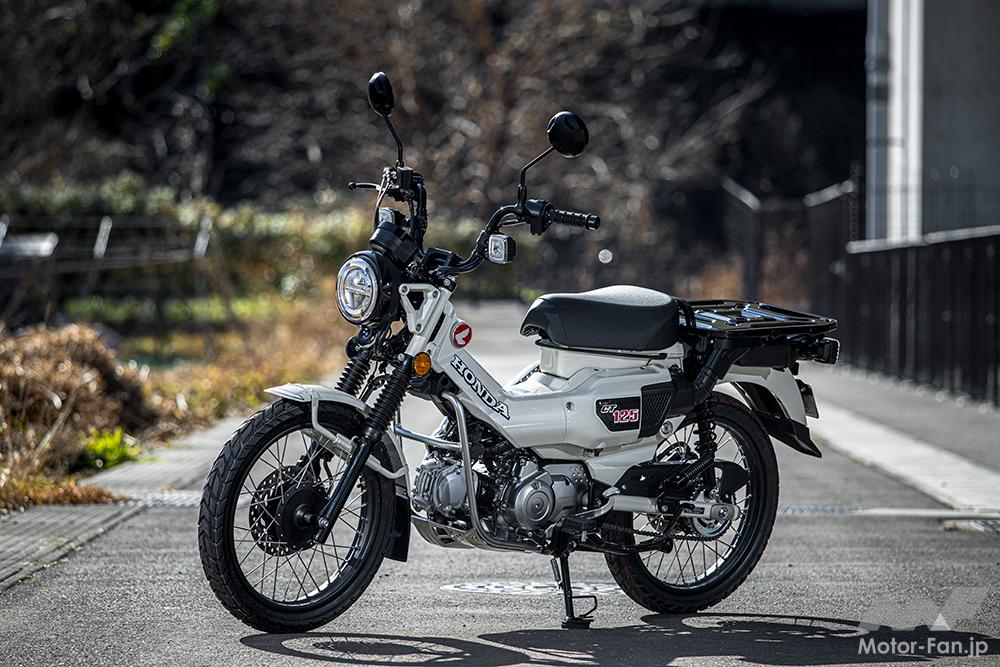
■Length x Width x Height 1,965 x 805 x 1,085 mm
■Wheelbase 1,260 mm
■Ground Clearance 165 mm
■Seat Height 800 mm
■Vehicle Weight 118 kg
■Engine Type Air-cooled 4-stroke OHC single cylinder
■Total Displacement 123 cc
■Bore x Stroke 50.0 mm x 63.1 mm
■Compression Ratio 10.0:1
■Maximum Output 6.7 kW (9.1 PS) / 6,250 rpm
■Maximum Torque 11 N・m (1.1 kgf・m) / 4,750 rpm
■Fuel Supply System FI
■Fuel Tank Capacity 5.3 L
■Frame Backbone
■Suspension (Front and Rear) Telescopic and Swingarm
■Transmission Type 4-Speed Return
■Brake Type (Front and Rear) Hydraulic Disc (ABS) and Hydraulic Disc
■Tire Size (Front and Rear) 80/90-17M/C 44P・80/90-17M/C 50P
■Price ¥473,000-