
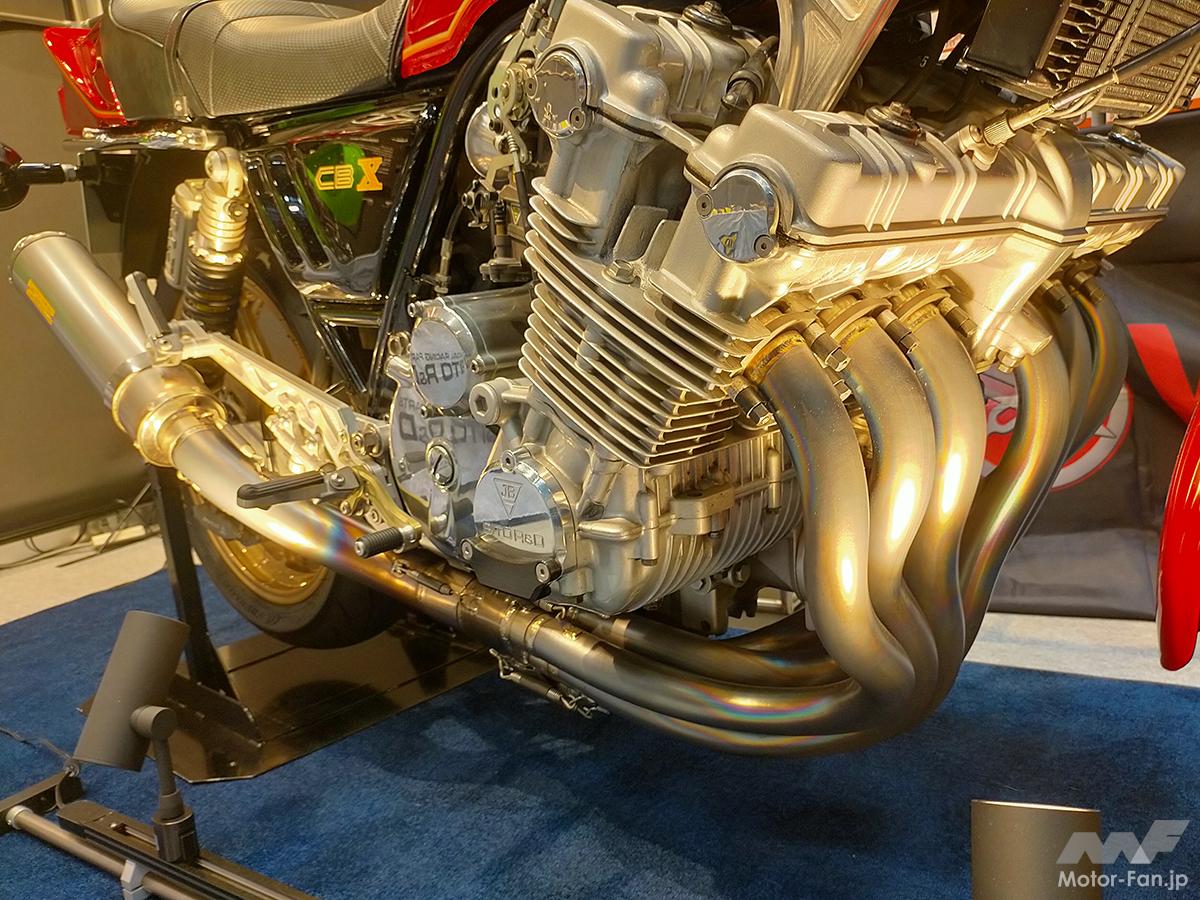
Honda CBX1000 BITO R&D complete
The Honda CBX1000’s engine is an air-cooled, 4-stroke, in-line 6-cylinder, DOHC, 4-valve engine with a displacement of 1,047cc. The complete machine in the photo has been bored out to 1,130cc with JP-POWER/CP pistons.
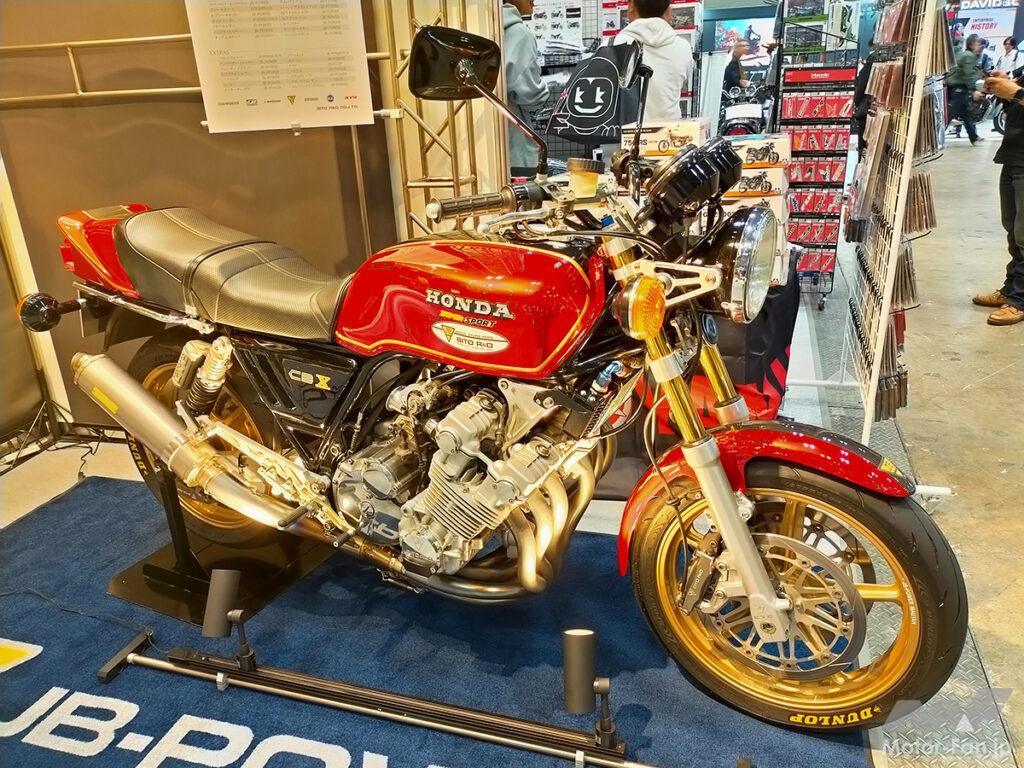
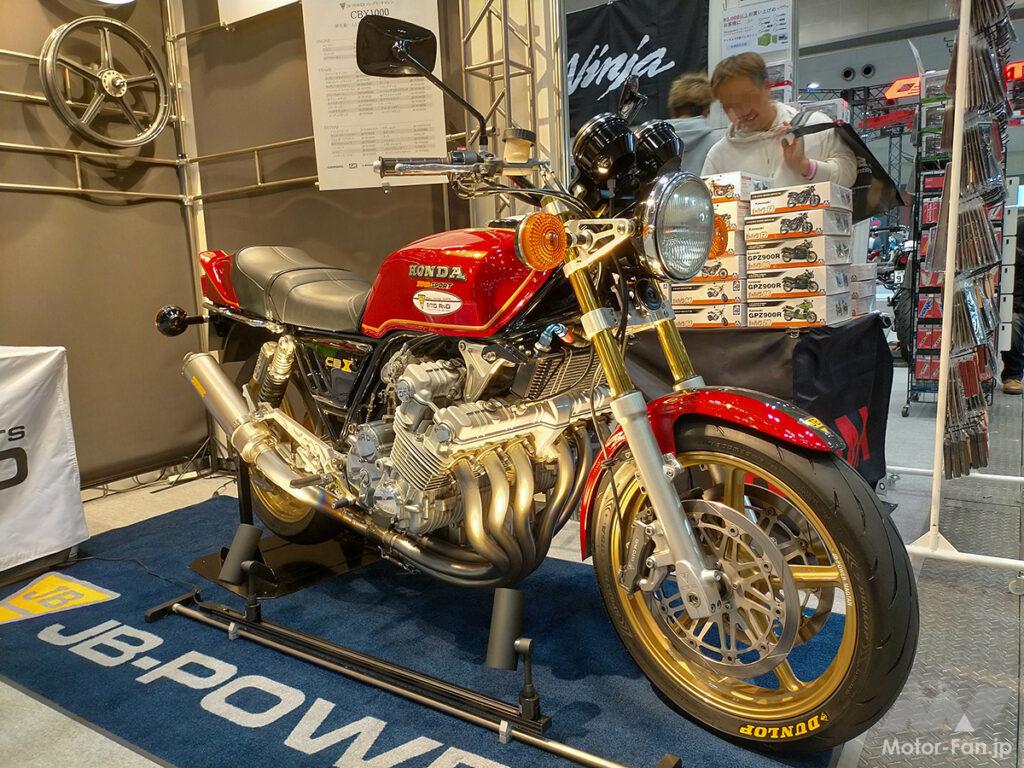
The front forks are based on a Kayaba upright type and have been tuned by JP-POWER, including gold coating of the inner tubes. The rear shock is also tuned based on a Kayaba twin type with a reserve tank.
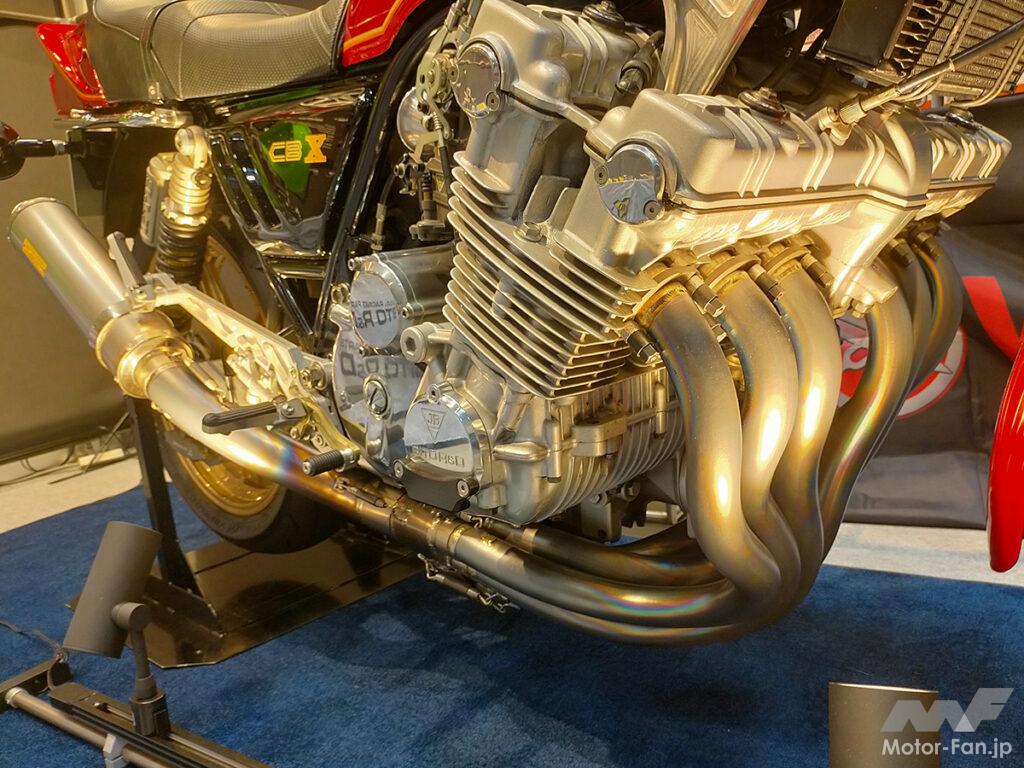
The JP-POWER full titanium exhaust muffler is significantly lighter, has beautiful hand-bent curves, and uses a connector (muffler) manufactured with advanced welding technology. Its unique inner diameter (Φ63.5) ensures excellent exhaust efficiency from low to high speeds.
ADVERTISEMENT

The full titanium exhaust produces a high-pitched, sporty sound that is sure to please when you apply the throttle.
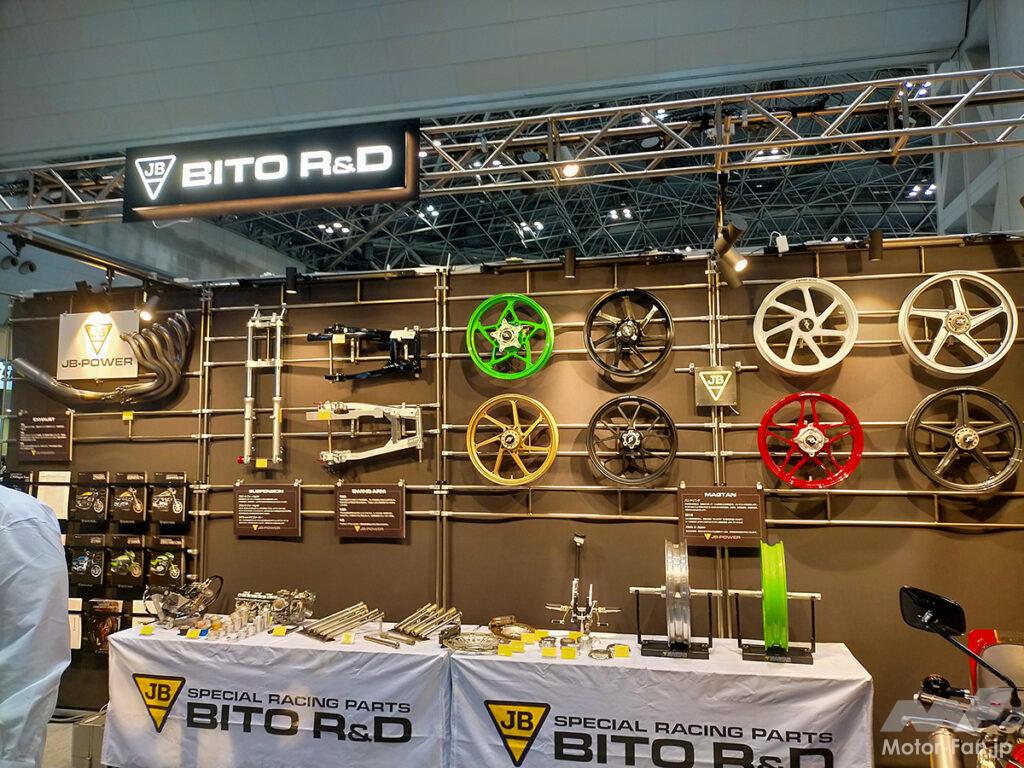
At the BITO R&D booth, various parts were on display, including JP-POWER magnesium wheels.
BITO R&D, located in Toyooka City, Hyogo Prefecture, offers the high-performance motorcycle parts brand JB-POWER, various motorcycle tuning and customization services, and the production of complete machines.
Representative Bito is a racing mechanic and tuner for the parts manufacturer Yoshimura Japan in the US, and is also active as a racer. He is also famous for having worked as a mechanic for Takazumi Katayama as a member of America Honda’s NS500 in the World GP 500cc class.
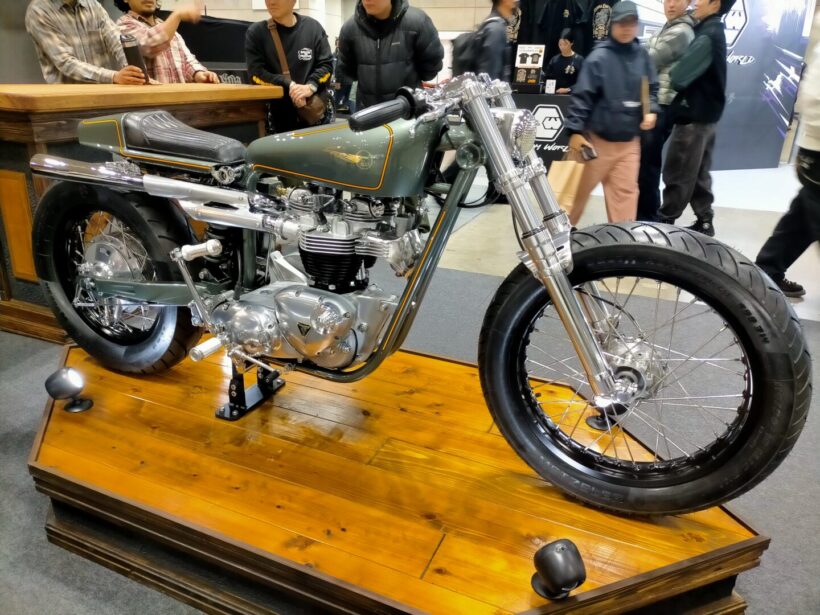
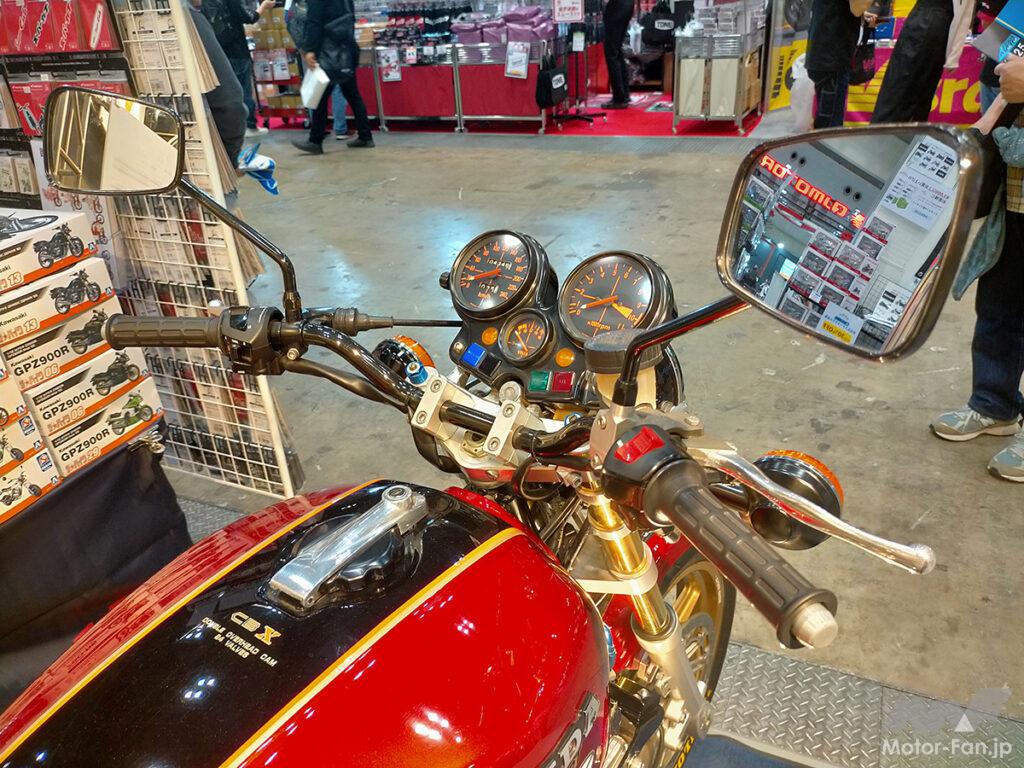
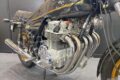
The photo shows a complete machine made by BITO R&D of Honda’s legendary air-cooled 4-stroke 6-cylinder model, the CBX1000 (officially called CBX). The main exterior parts are genuine. While retaining the stock image, the frame and suspension have been tuned to be as strong as the current model, mainly using custom parts from JP-POWER.
The Honda CBX1000’s engine is an air-cooled, 4-stroke, in-line 6-cylinder, DOHC, 4-valve engine with a displacement of 1,047cc. The complete machine shown in the photo has been bored out to 1,130cc using JP-POWER/CP pistons. The compression ratio is set to 11.5:1. The vehicle weight has been reduced to 227kg.
Key specifications
| ●ENGINE | |
| Cylinder head | JP-POWER |
| piston | JP-POWER/CP |
| Connecting rod | JP-POWER/CARRILLO |
| carburetor | JP-POWER/KEIHIN FCR Φ33 |
| Air Funnel | JP-POWER |
| Point Cover | JP-POWER |
| muffler | JP-POWER |
| ●FRAME | |
| Frame | JP-POWER |
| Engine mount/mount bolt | JP-POWER |
| Swingarm | JP-POWER |
| F/R axle shaft | JP-POWER |
| F/R axle nuts | JP-POWER |
| Racing Stand Hook | JP-POWER |
| Front brake disc | JP-POWER |
| Front brake caliper | JP-POWER |
| F caliper bracket | JP-POWER |
| Front brake master | AP-RACING |
| Throttle holder and wire set | JP-POWER |
| Brake hose | GOODRIDGE |
| Rear brake kit | JP-POWER |
| Oil cooler | JP-POWER/EARL’S |
| Mirror holder | JP-POWER |
| Headlight stay | JP-POWER |
| Tandem step | JP-POWER |
| Fork Bridge | JP-POWER |
| Riding steps | JP-POWER |
| Oil catch tank | JP-POWER |
| Horn stay | JP-POWER |
| Turn signal bracket | JP-POWER |
| ●EXTRAS | |
| Front fork | JP-POWER/KYB |
| Pivot shaft | JP-POWER |
| Rear shock | JP-POWER/KYB |
| wheel | JP-POWER |
| tire | DUNROP |
| Front fender | JP-POWER |
| Fender bracket | JP-POWER |
| license plate holder | JP-POWER |
| handle | JP-POWER |
| Bar ends | JP-POWER |
| Sheet | JP-POWER |
| Meter cable | JP-POWER |
ADVERTISEMENT
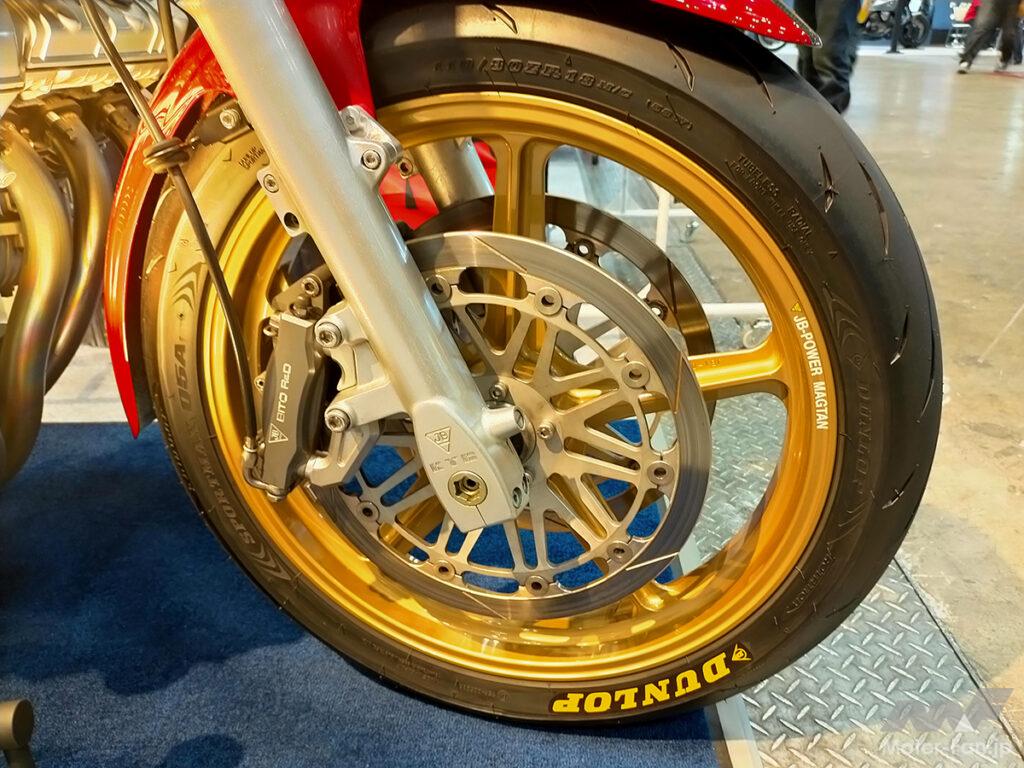
The front area is made up entirely of JP-POWER parts, including an 18-inch magnesium wheel, front disc caliper, caliper support, and front disc rotor.
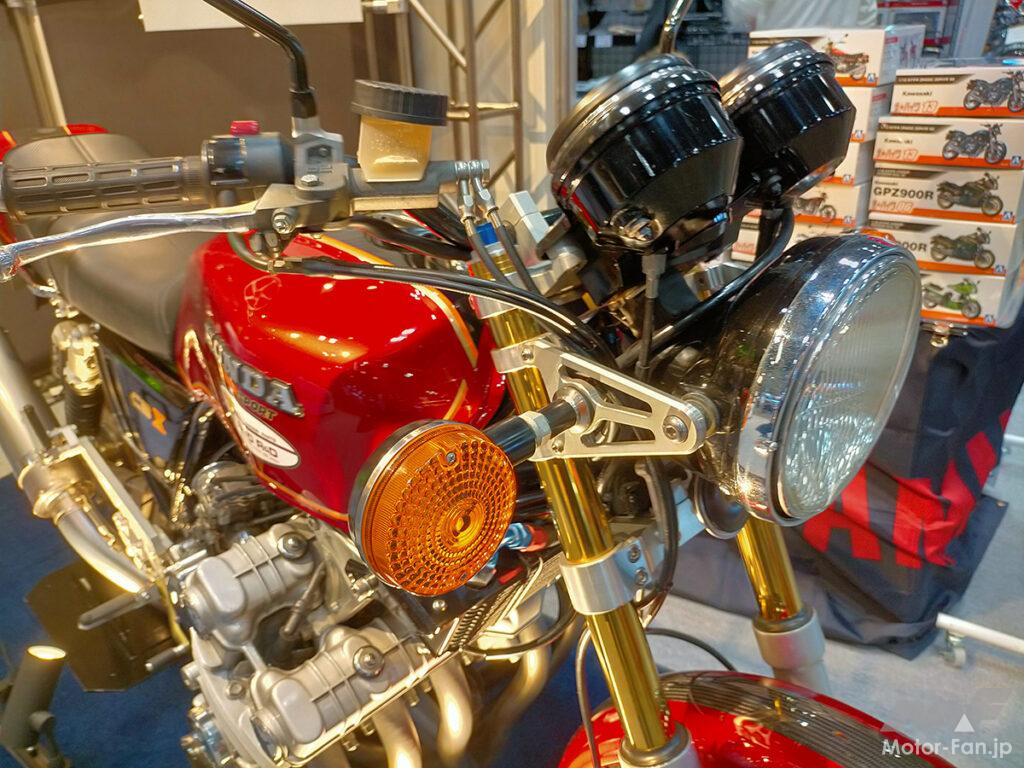
The handlebars, headlight stays, and turn signal stays are customized with POWER parts.
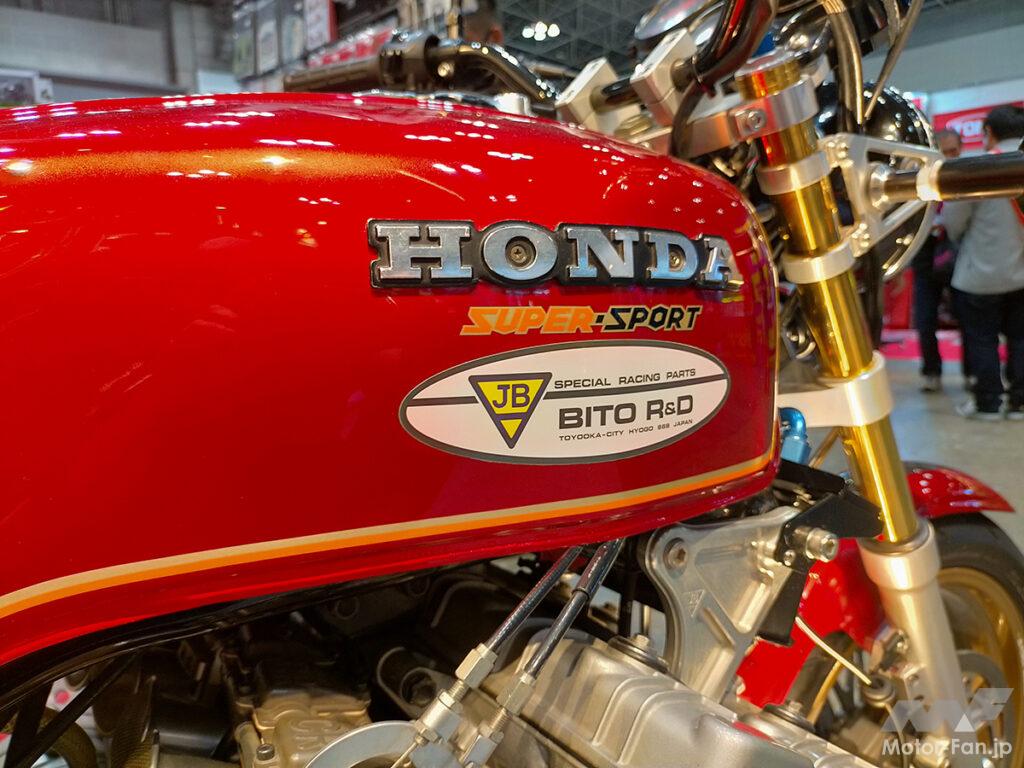
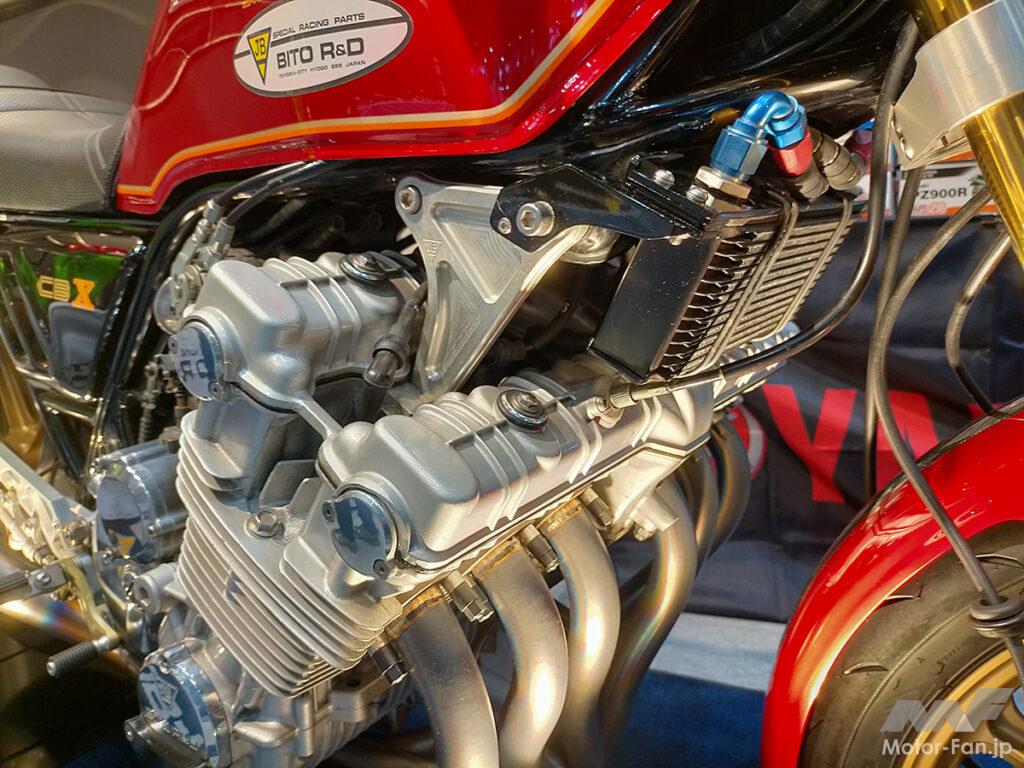
The engine is fixed in place using a machined aluminum mount, with an oil cooler located in front of the mount.

The intake system is equipped with a fuel injection pump and is a genuine four-stroke racing carburetor, Keihin FCRΦ33.
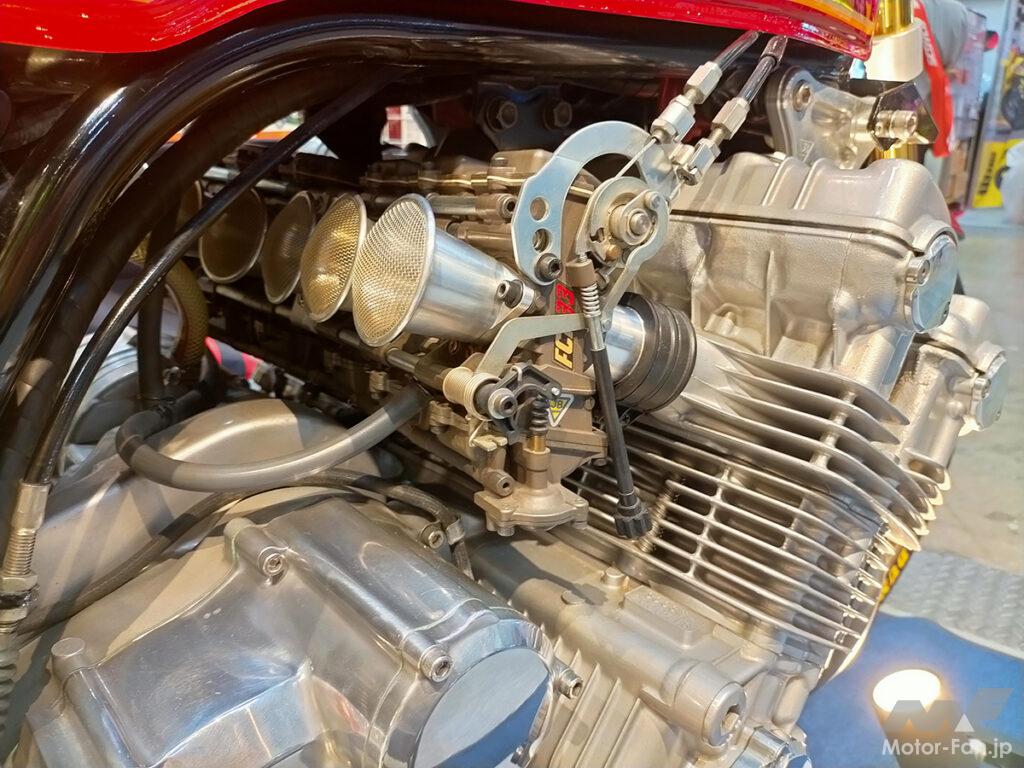
The intake vents use air funnels (with a net to prevent the intake of dust, etc.) that have excellent air intake properties.
ADVERTISEMENT

This is a 6-carrier carburetor for the CBX1000 made by JP-POWER and Keihin CRS Φ31.
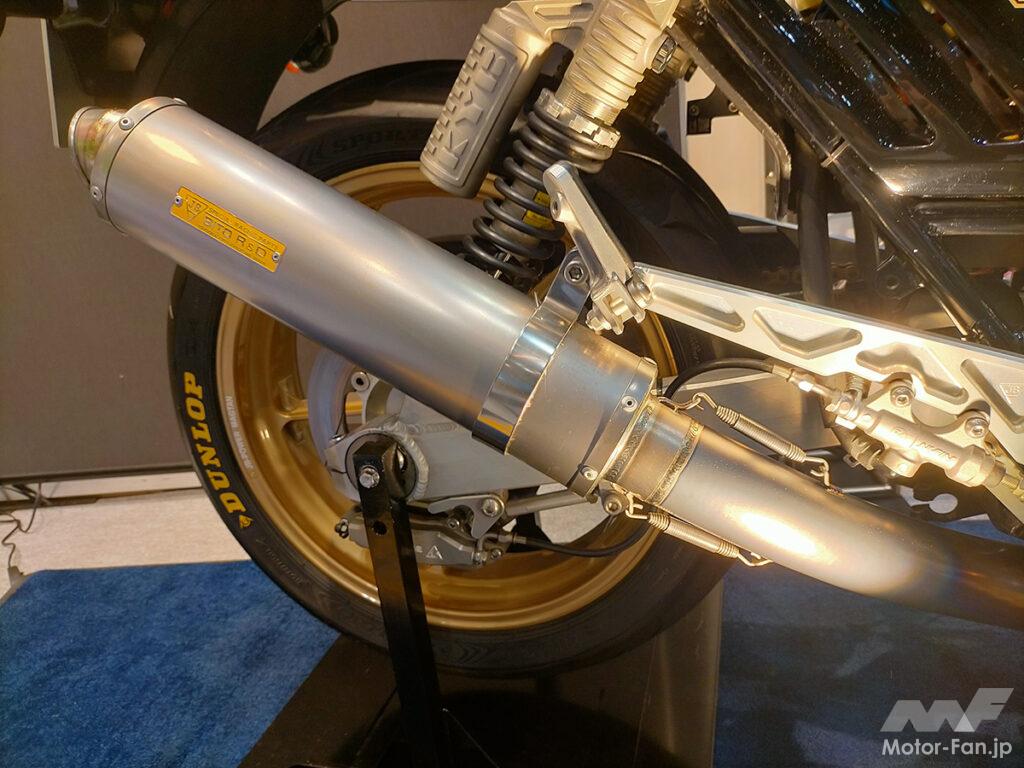
The large silencer part of the full titanium muffler features the BITO R&D emblem. A spring hook with excellent shock resistance is used to connect the exhaust pipe and silencer.
Honda CBX1000 *The official model name is CBX
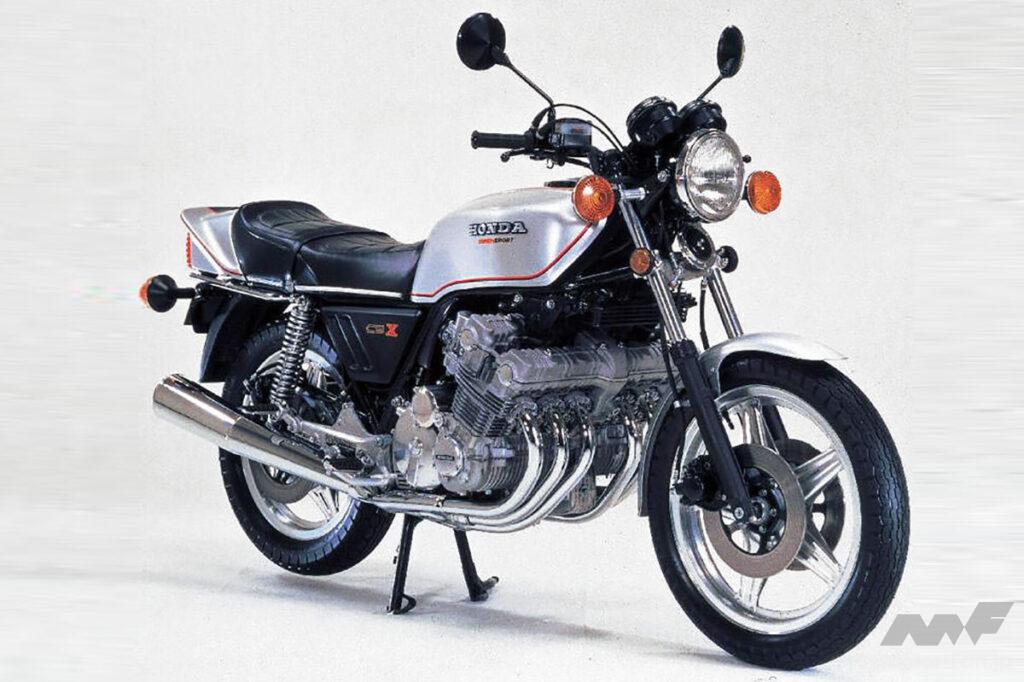
The Honda CBX1000 was released in 1979. Its engine was an air-cooled, four-stroke, in-line six-cylinder, DOHC, four-valve engine with a displacement of 1047cc. It produced a maximum output of 105ps/9000rpm and a maximum torque of 8.6kg-m/8000rpm. The transmission was a five-speed return gear.
ADVERTISEMENT
Honda CB Series 60th Anniv. Special Movie 1979 CBX
Honda Collection Hall Vehicle Running Video CBX (1979)
The CBX1000 inherits the racing spirit of the Honda 250 Works “RC166”
The Honda CBX1000 (official model name: CBX) was released in 1979 (Showa 54). It was fitted with an air-cooled, four-stroke, in-line, six-cylinder, DOHC, four-valve engine, the same type as that used in GP racers, in pursuit of the “ultimate form” of an air-cooled, four-stroke bike. The displacement was 1047cc. Maximum power was 105ps/9000rpm, and maximum torque was 8.6kg-m/8000rpm. The transmission was a five-speed return. The CBX1000’s six-cylinder engine had such a big presence that at the time of its release some people said that it was not “the engine mounted on the bike,” but rather “the body mounted on the engine.”
The origins of the CBX1000 lie in the Honda works machines, the 3RC164, RC165, and RC166, introduced in the GP250cc class in 1964. The 2RC164 was a four-cylinder engine, but to compete with Yamaha’s two-stroke machines, the 6-cylinder 3RC164 was introduced. The 6-cylinder works machines then evolved into the RC165 and RC166.
In 1966, the RC166 boasted overwhelming dominance, winning all 10 races in the World GP and winning the Isle of Man TT, and also won the World GP title in 1967. After that, six-cylinder engines were banned by regulations because they were too powerful.
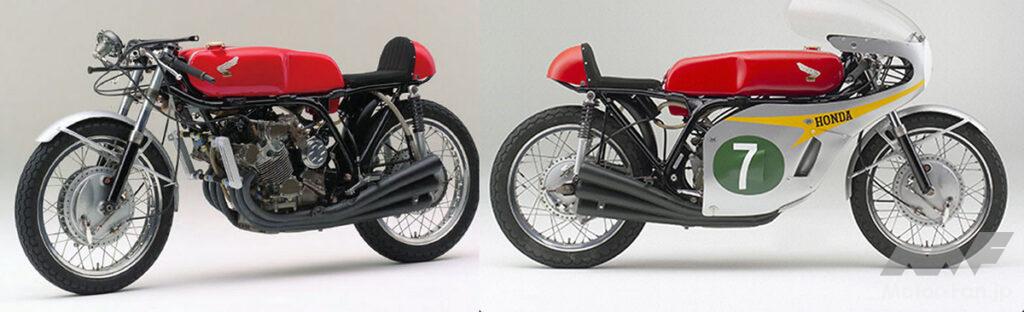
Honda’s RC166 works machine in the GP250cc class. Equipped with an air-cooled 4-stroke parallel 6-cylinder DOHC 4-valve 249.42cc engine. Maximum output: over 60ps / 18,000rpm Maximum speed: over 240km/h Vehicle weight: 112kg Transmission: 7-speed
The CBX1000, which could be called a “hidden racer replica” and inherited the lineage of the overwhelmingly powerful works machine “RC166,” is still respected today as a “powerful six-cylinder engine vehicle, rare for a commercially available vehicle,” just like the Kawasaki Z1300, which was released in 1978 (Showa 53) and was equipped with a water-cooled, four-stroke, in-line six-cylinder DOHC two-valve 1286cc engine. Vehicles in good condition are traded at extremely high prices as extremely rare treasure models.
The CBX1000 was sold in Europe and the US. The American model had a large handlebar and an upright riding position. The European model had a “European style” with a low handlebar position and rearward footpegs. In 1981 (Showa 56), it was released as a touring model, equipped with a cowl.
 A cafe racer version of the Honda CBX1000, a six-cylinder machine inherited from the World GP works. | A masterpiece by “Remotion”, who has worked on customizing the Pro Arm for the Ducati.
The Honda CBX1000 (official model name CBX), which appeared in 1979 (Showa 54), is a legendary model equipped with an air-cooled 4-stroke parallel 6-cylinder DOHC 4-valve 1047cc engine. The photo shows a street cafe racer made by Remotion, which specializes in customizing CBX1000s. At the Yokohama Hot Rod Custom Show (HCS) 2023, one of Japan’s largest custom car and custom bike events, it was exhibited alongside a cafe racer with a Ducati 1098 Pro Arm swapped onto a Honda CBX1000. REPORT ● Kita Hideaki PHOTO ● Remotion Remotion https://remotion.jp/
 A cafe racer that swaps the Ducati 1098 Pro Arms onto the legendary six-cylinder Honda CBX1000 | Yokohama Hot Rod Custom Show
The Yokohama Hot Rod Custom Show (HCS), one of Japan’s largest custom car and custom bike events, was held on Sunday, December 3, 2023, at Pacifico Yokohama (Yokohama City, Kanagawa Prefecture). Now in its 31st year, the event brought together high-level creations by builders from all over the country. Here we introduce a custom cafe racer based on the Honda CBX1000, where the rear half of the frame was rebuilt and the body was created from scratch. PHOTO/REPORT●KITA Hideaki Remotion https://remotion.jp/ Event organizer: Mooneyes https://www.mooneyes.co.jp/
 The 906cc 6-cylinder Benelli “900sei” model released in 1979 is on display. Its rivals include the Japanese CBX1000 and Z1300. | Motorcycle Show 2024
Benelli is a prestigious Italian motorcycle manufacturer. The company’s 750sei, released in 1973, shocked the world with its air-cooled, four-stroke, in-line six-cylinder SOHC two-valve engine. It was the world’s first commercially available in-line six-cylinder engine! The photo shows the legendary 900sei, which debuted in 1979 with the displacement of the 750sei increased to 906cc. In addition to the history of the 750sei and 900sei, let’s look back at their rivals, the Honda CBX and Kawasaki Z1300, both of which were equipped with in-line six-cylinder DOHC engines. PHOTO & REPORT ● KITA Hideaki Benelli (Proto) https://www.plotonline.com/benellimotorcycle/