
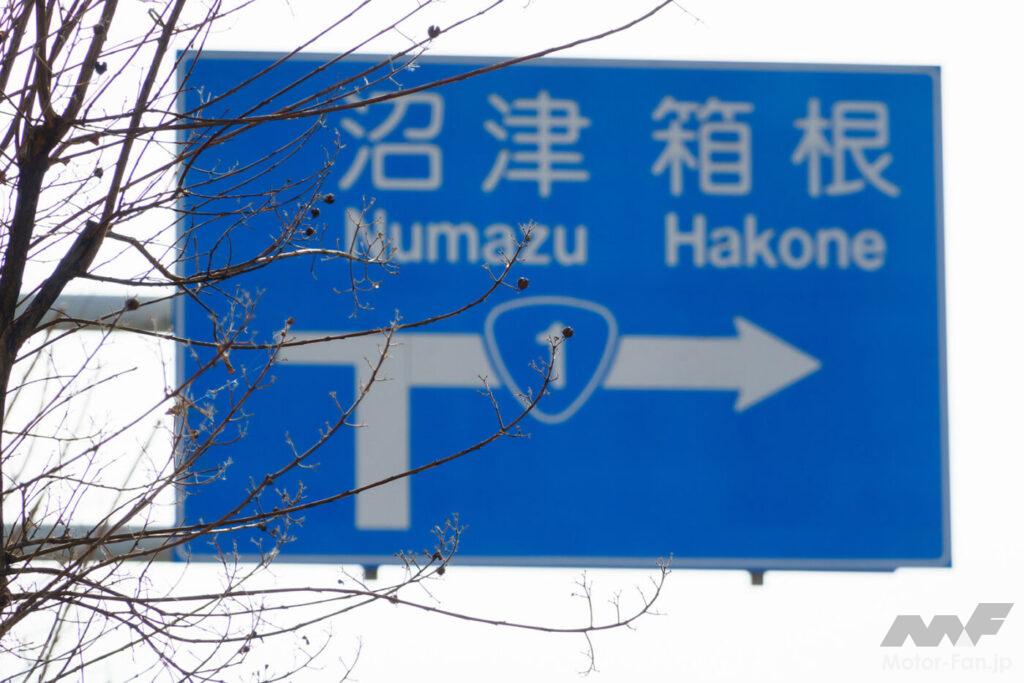
National Route 1 makes a sharp right-angle turn in Odawara and heads towards Hakone.
Leaving the inn, I returned to the Tokaido and headed for Odawara along the coast. The wind had been strong since the morning, and household garbage bags had been blown over and strewn all over the road. If that had been the only problem, apart from ruining the scenery, it wouldn’t have been a big problem, but if I wasn’t careful, I could be blown around by the strong crosswinds and lose course, which is a real problem. Not just the Burgman 125, but many scooters are more susceptible to crosswinds than regular sports bikes. The fully covered body offers excellent rider protection and a comfortable ride, but the large side projection area means it is more susceptible to being blown around by the wind.
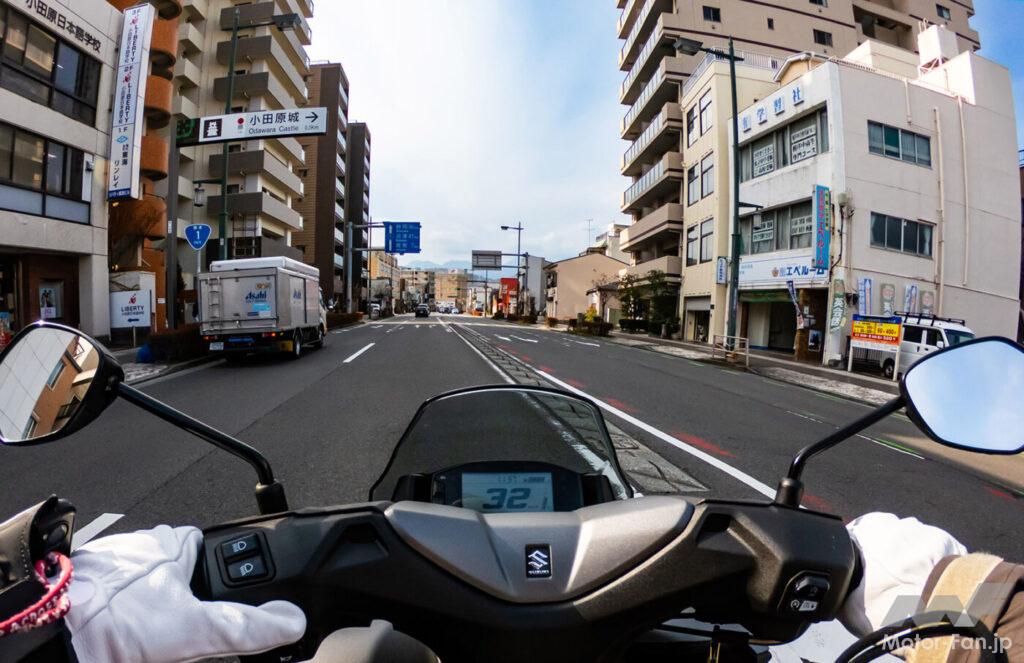
Blown by the wind like Bob Dylan, I wandered along National Route 1 towards Odawara Castle, searching for meaning in a journey that had run out of gas, which could not possibly exist.
ADVERTISEMENT
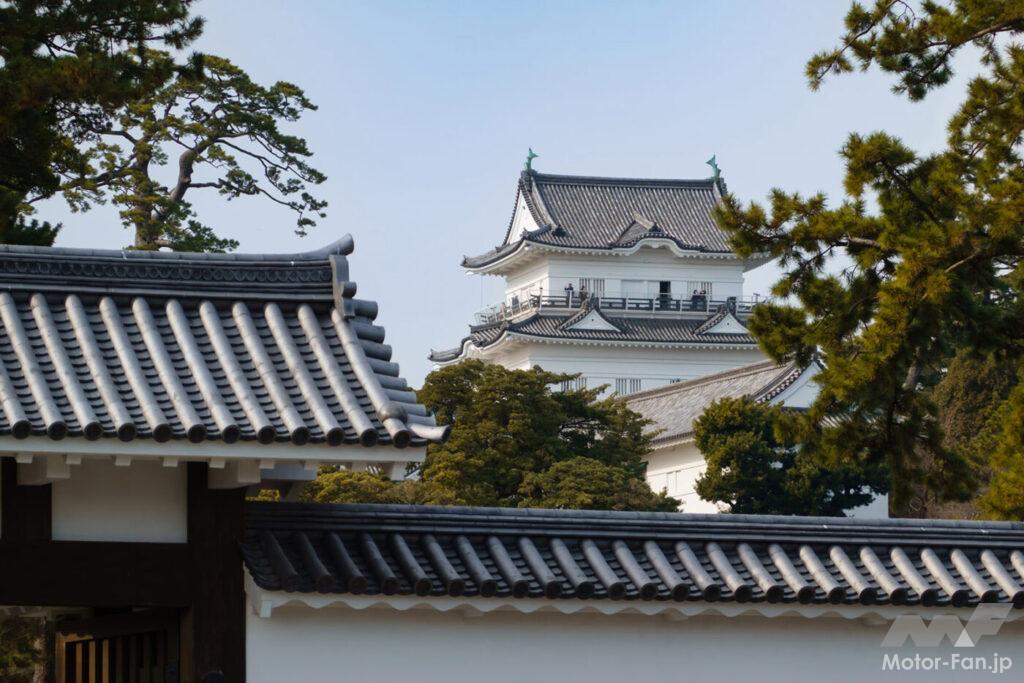
Odawara Castle’s main tower. It looks incredibly old, but it’s actually a reinforced concrete structure that was reconstructed in 1960. It’s too much of a hassle to go inside, so whenever I pass by, I just take a quick look from the outside.
Red train and Hakone mountain climbing

We pass through Odakyu Hakone-Yumoto Station and head up the mountain pass. The Odakyu Romancecar MSE, shining in Vermeer blue, is parked there.
After passing Hakone Yumoto, the winding road to Lake Ashi begins. The Burgman 125’s engine doesn’t seem particularly torquey, but that’s just a matter of feeling. In reality, torque is available across the entire range, and even with a full load, the ride on an uphill climb like Hakone is almost the same as on flat ground. The bike runs smoothly and steadily uphill, depending on the angle at which you twist the throttle grip.
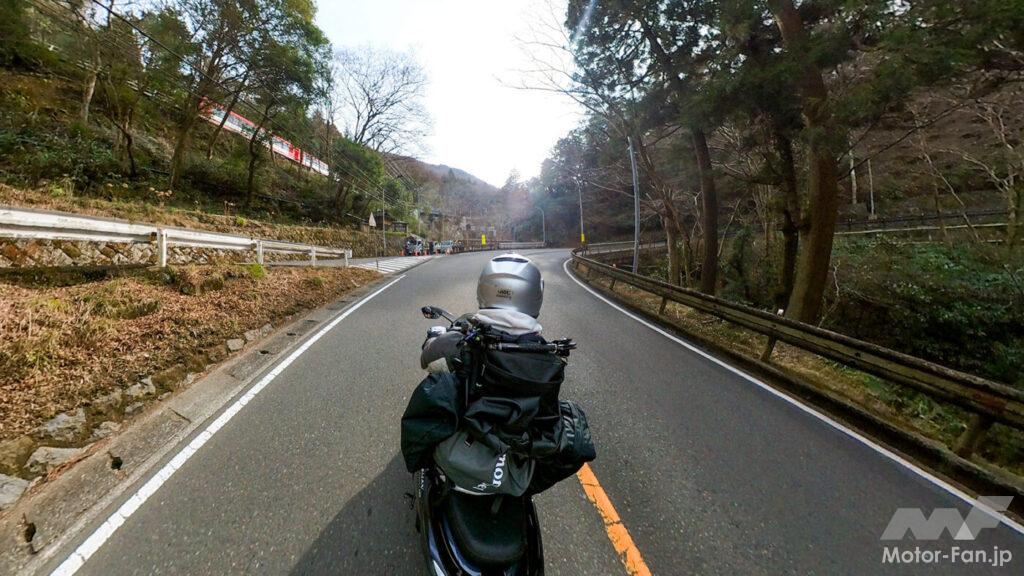
The cute red Hakone mountain railway can be seen flickering around. Just recently, the company was merged with Odakyu and the name “Hakone Tozan Railway” disappeared into history, but the red mountain railway still runs through Hakone as it did in the Showa era.
ADVERTISEMENT
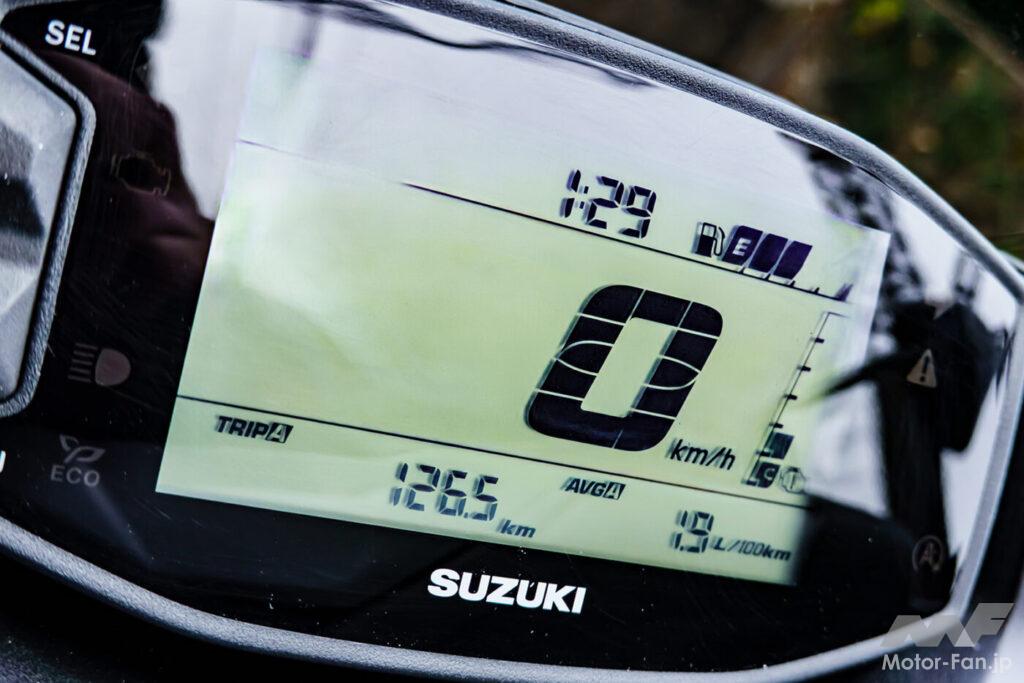
I was riding along with confidence and almost missed the fact that the fuel gauge was dropping. At the 126.5km mark on the trip, halfway up the mountain pass, there were only three fuel levels left.
To Gongenzaka, the old Tokaido
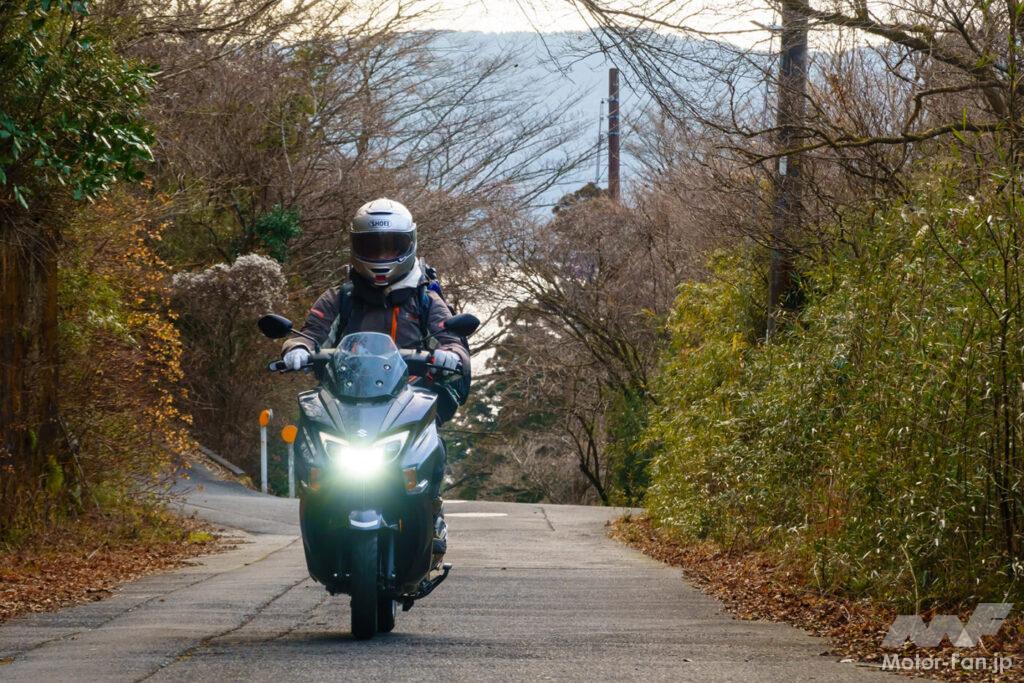
The Burgman 125 heads towards Gongenzaka along a narrow mountain road.
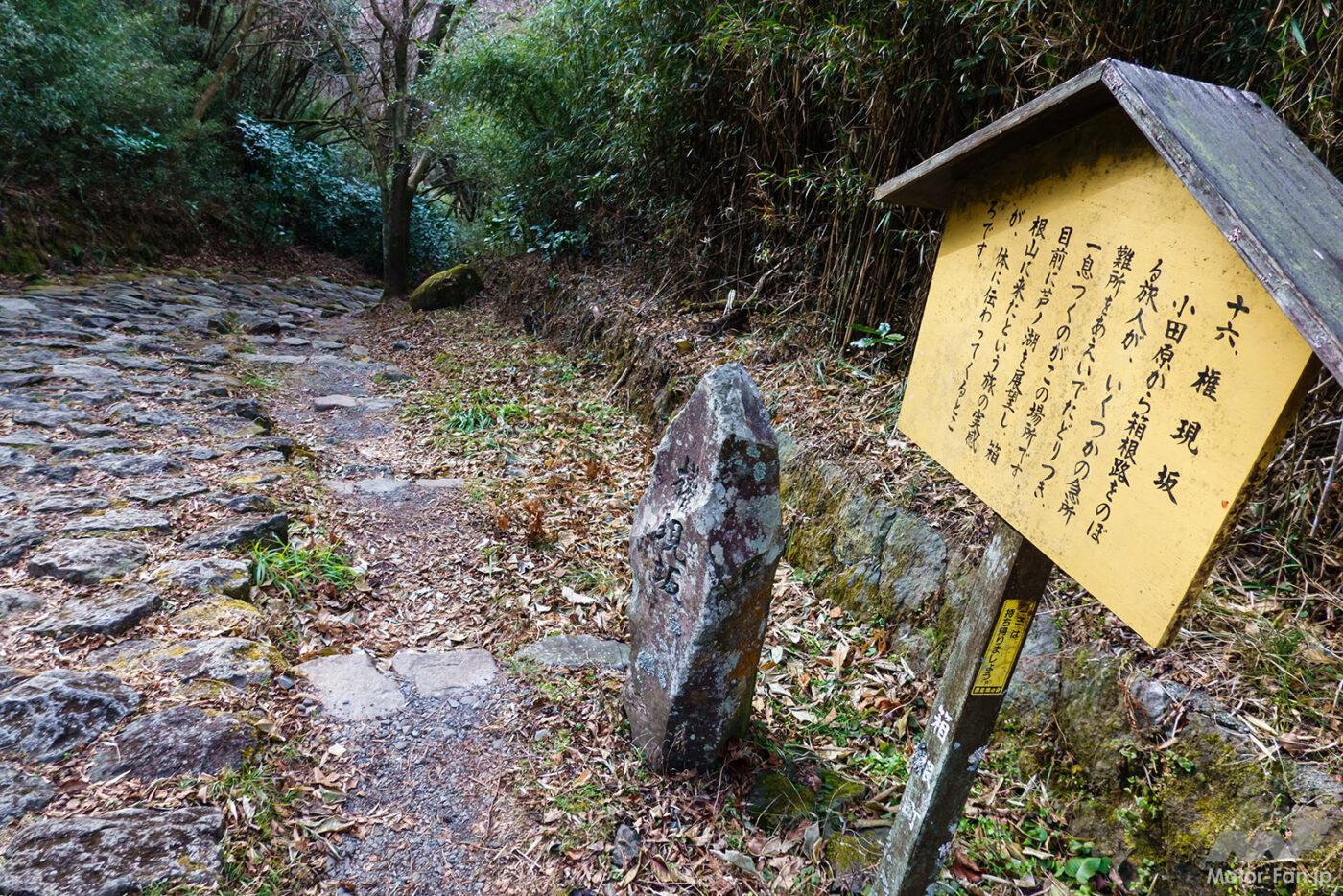
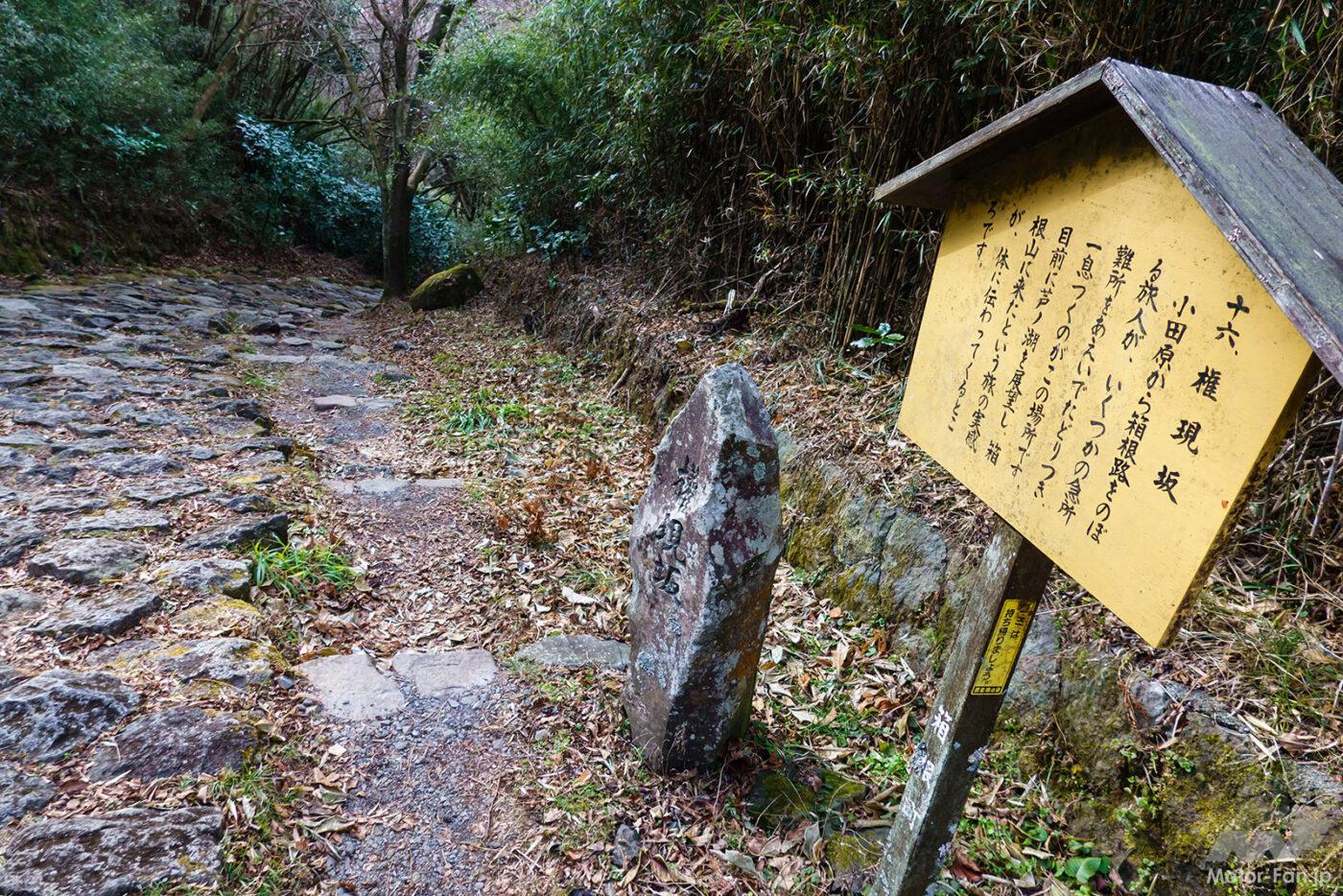
After climbing up the Hakone pass and approaching the entrance to Hatajuku with Lake Ashi in sight, I decided to take a side road. It was a narrow mountain road that could be found anywhere, but after a short distance, I came across Gongenzaka, a slope on the old Tokaido road.
Gongenzaka is a steep slope located east of Lake Ashi. The sign explains that it was a downhill slope from the Edo side to Lake Ashi, and that it was a place where “travelers ascending the Hakone road from Odawara could take a break after struggling through several steep and difficult sections,” but today Gongenzaka is often used as an uphill slope from Lake Ashi. While Takahashi was strolling around, many foreign tourists were panting and climbing up the slope.
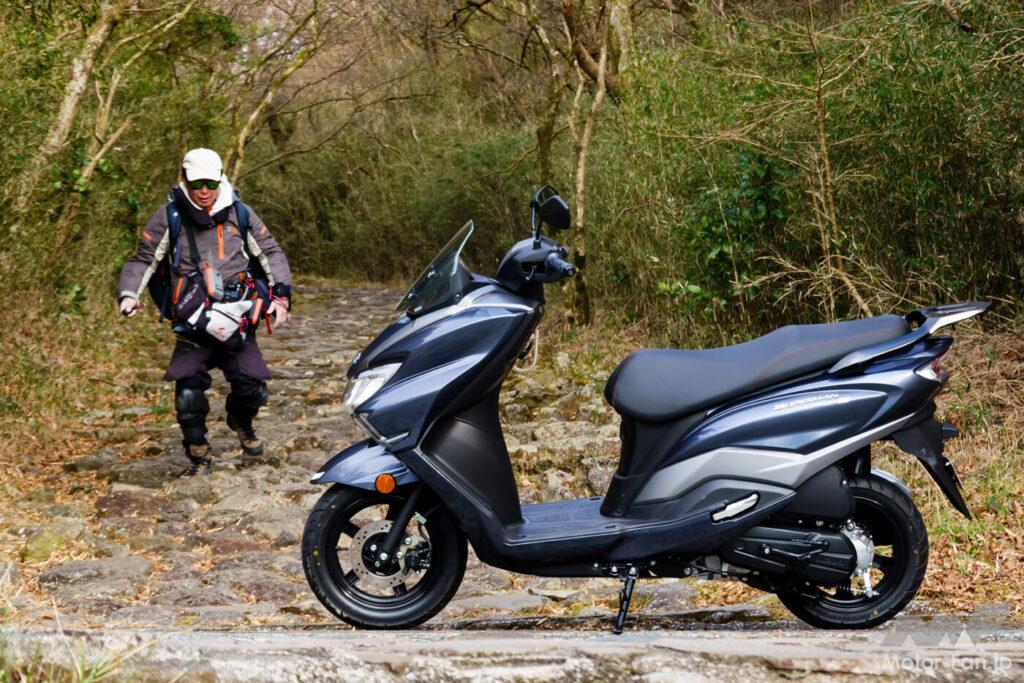
The old Tokaido Gongenzaka crosses the apex of the curved paved road. Not only in Hakone, but many old highways near mountain passes have steep slopes that continue to cross over and weave through modern paved roads for automobiles.
ADVERTISEMENT
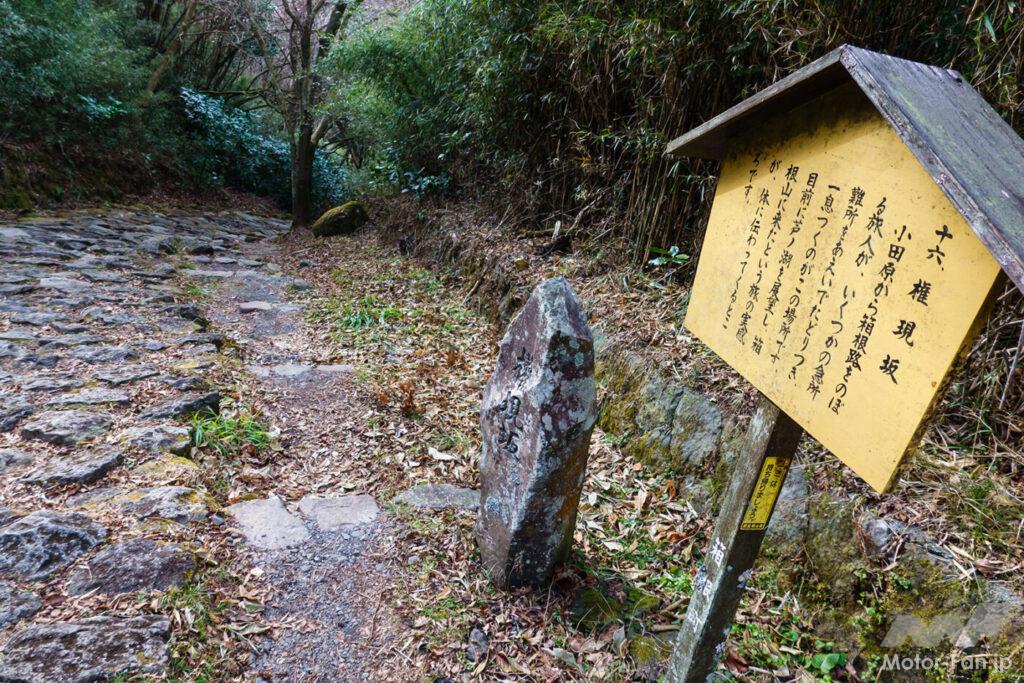
Lake Ashi is at the bottom of this slope. To get to the Edo side, you have to go up a few more slopes.
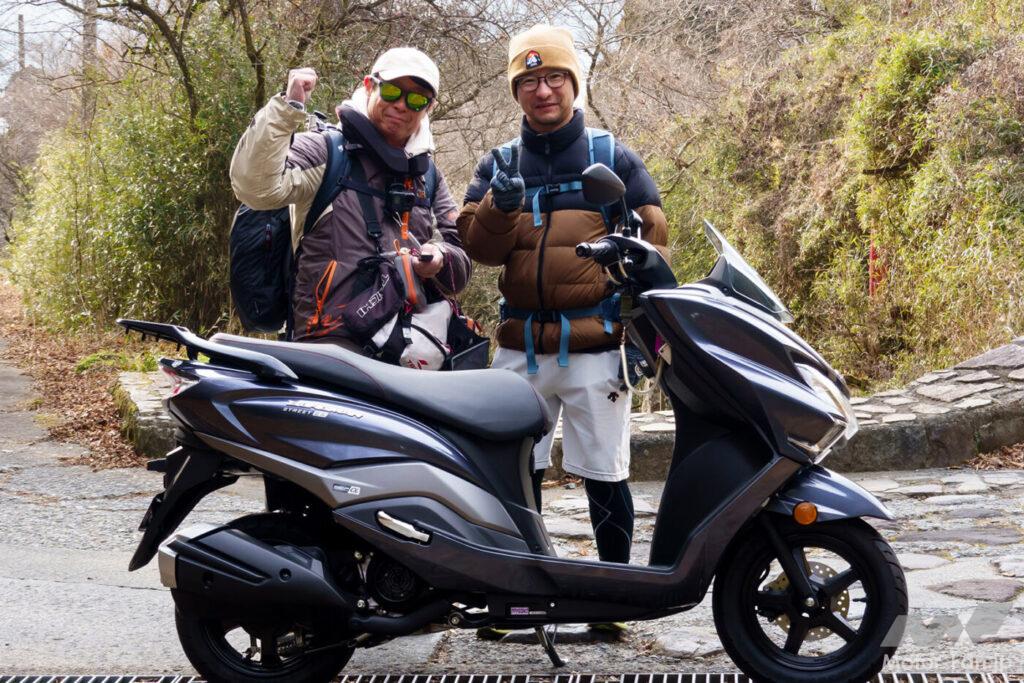
Climbing Gongenzaka from Lake Ashi alongside the foreign tourists was Mr. A, a walking traveller along the Tokaido. Although he is a working adult, he planned to take a long vacation and cover the Tokaido in parts, and is enjoying his walking trip. In fact, there were many more interesting stories to be told, but the recording data from the interview was lost, so the details (and even his name) are unknown. (Sorry, Mr. A)
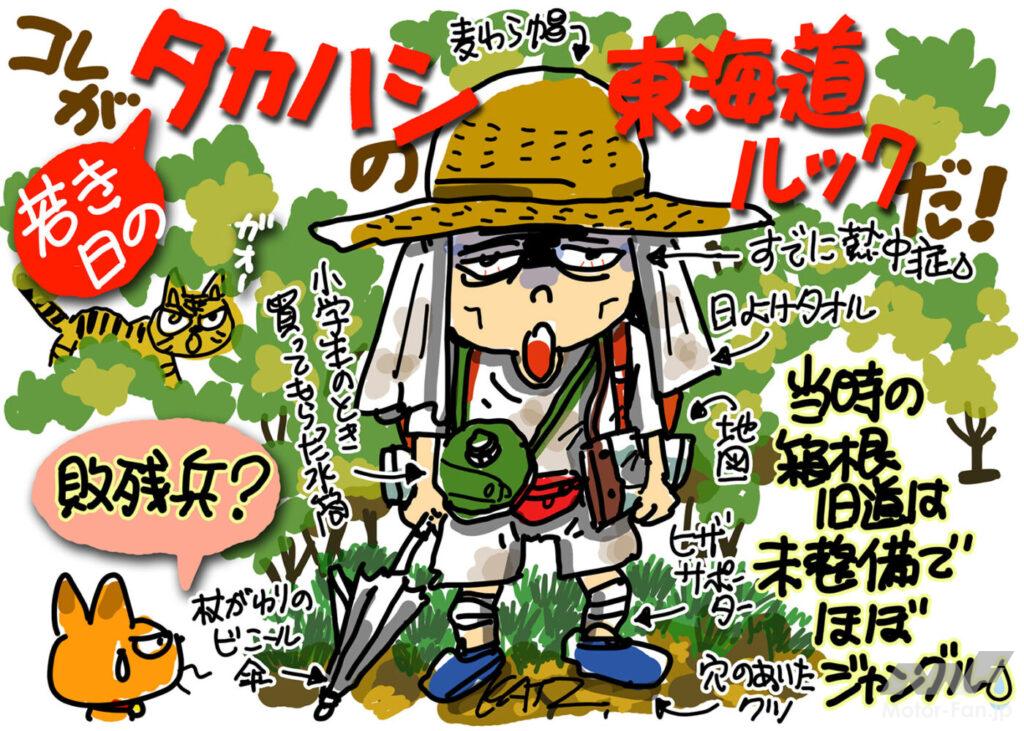
[A picture of a young Takahashi walking along the old Hakone road in an attempt to complete the Tokaido] At that time, the old road was still overgrown with weeds and in worse condition than it is now, and even the travelers were poorly dressed.
Descending from Hakone to Mishima
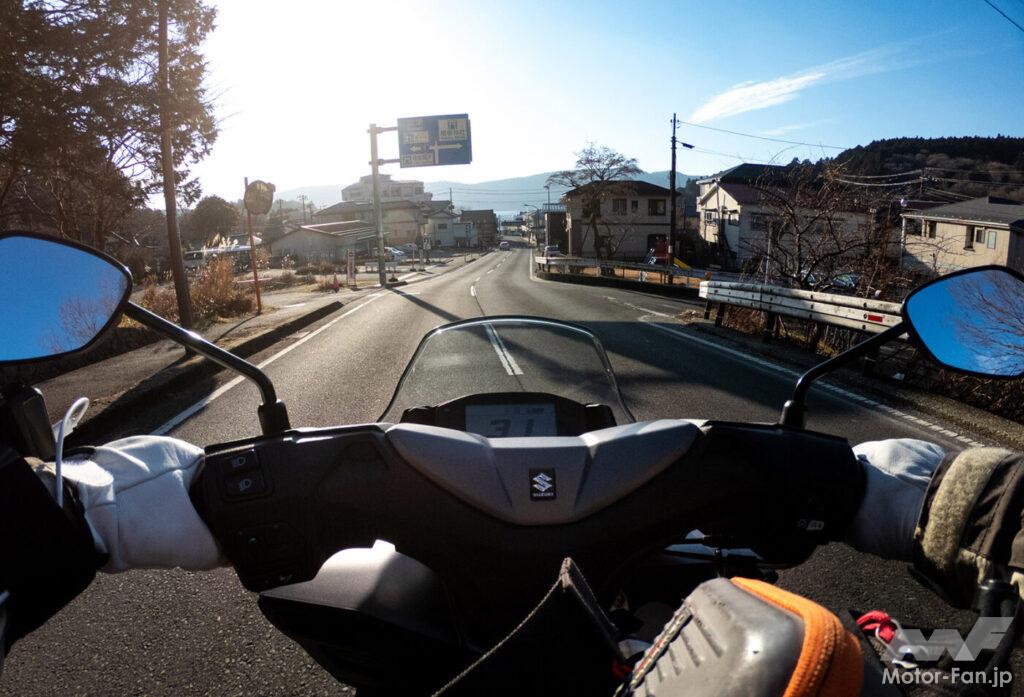
We finally arrived at Lake Ashi. Most riders would have continued straight to the end of the road and ended up splashing into the lake, but Takahashi turned left just before that point, dodging it gracefully and heading towards Mishima City.
Lake Ashi is the highlight of a trip to Hakone. It’s home to Hakone Shrine, sightseeing boats, and swan boats, and there are a fair number of tourists hanging around. However, seeing the shrine, sightseeing boats, and swan boats isn’t particularly interesting to me, so I skipped them all and headed straight west to Mishima City.
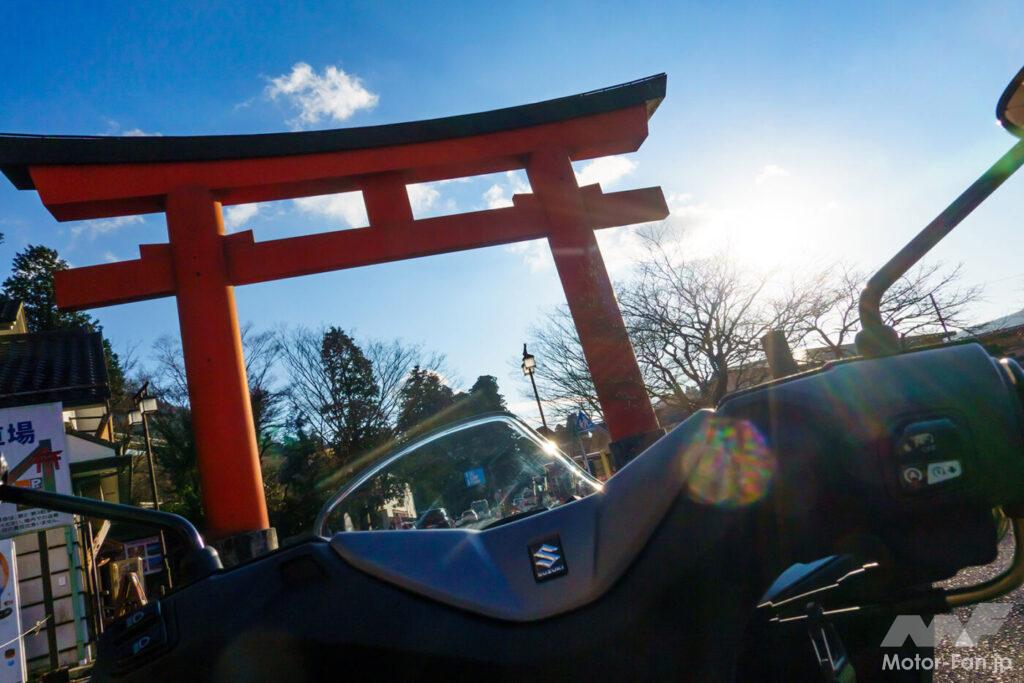
The first torii gate of Hakone Shrine stands out in vivid vermilion against the blue sky.
ADVERTISEMENT
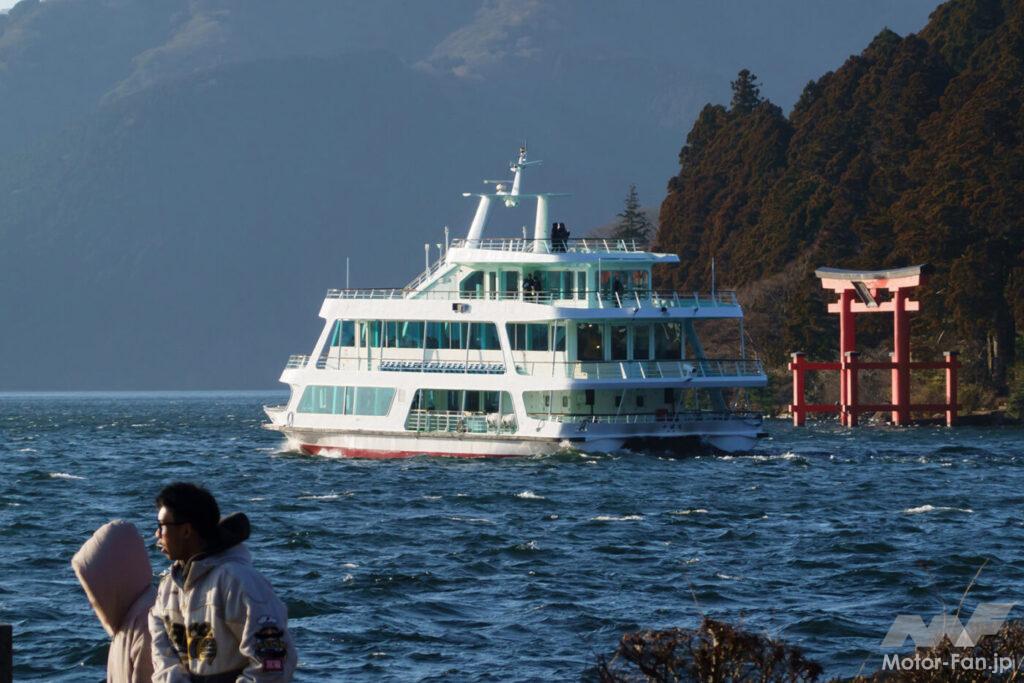
There are several pleasure boats that ply Lake Ashi. This is one of them, the Jukoku Maru. It has a capacity of 700 people, a gross tonnage of 337 tons, and a speed of 11 knots (approximately 20.4 km/h).
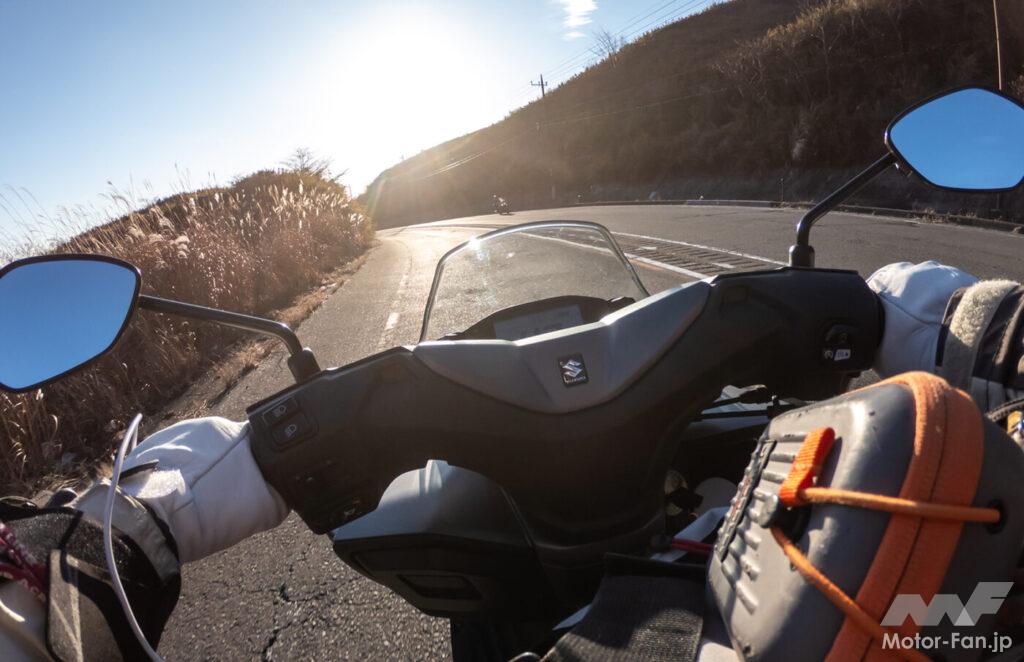
On National Route 1 to Mishima, you can enjoy one of the best winding roads on the Tokaido.
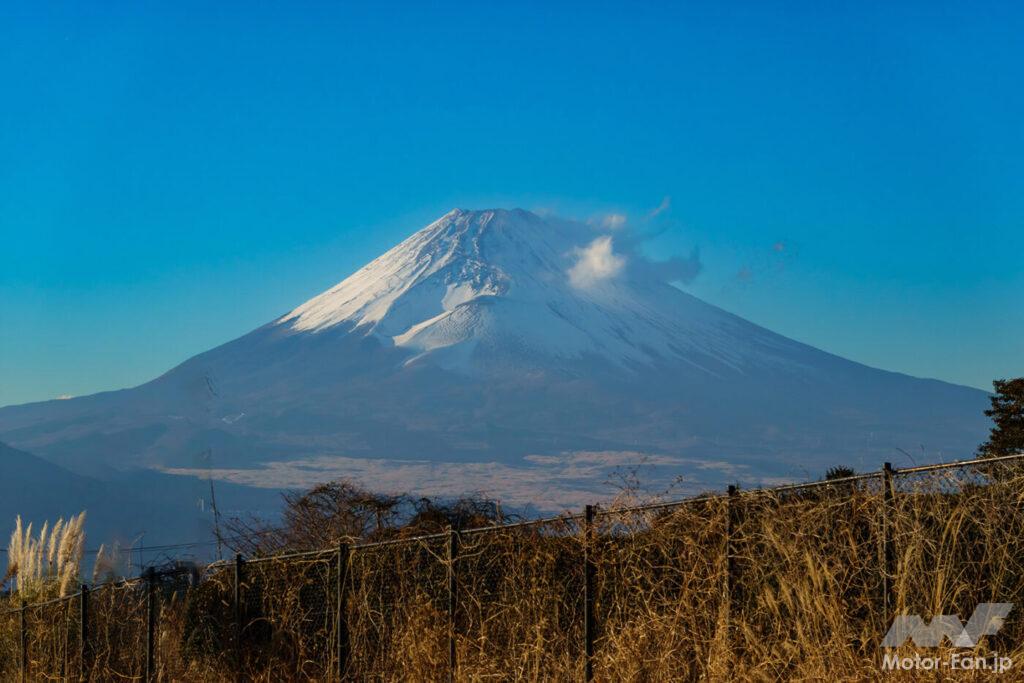
Fuji’s appearance changes from moment to moment. On this day, its clear white peak was visible.
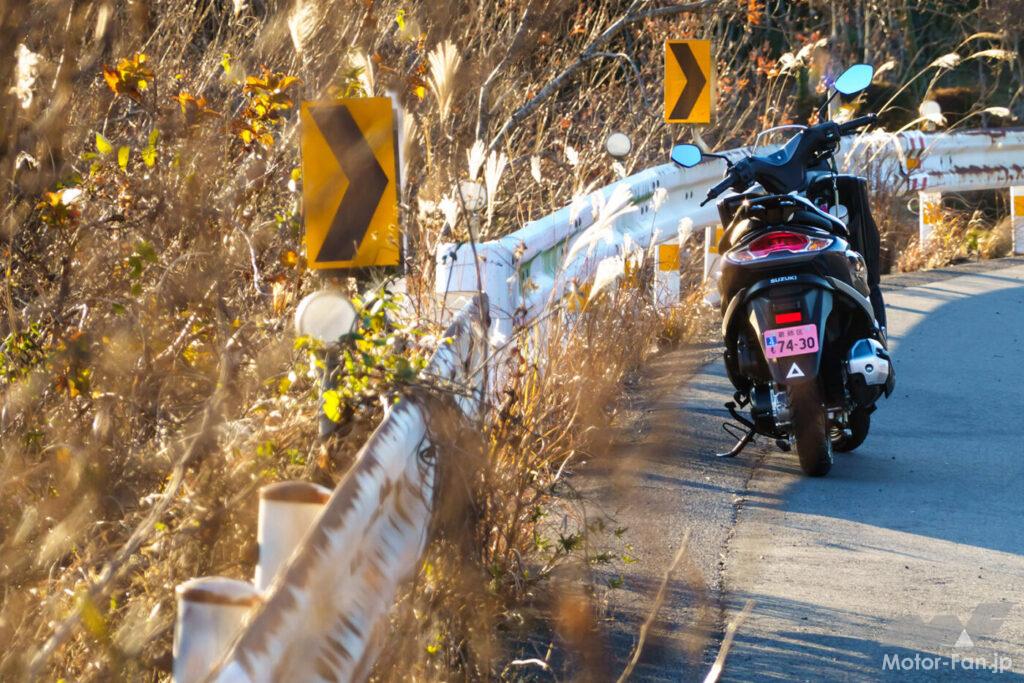
The faint sound of spring’s footsteps can be heard on the winter-dead roadside. It’s still cold when you’re driving, but when you stop, you can feel the warmth of the sunlight.
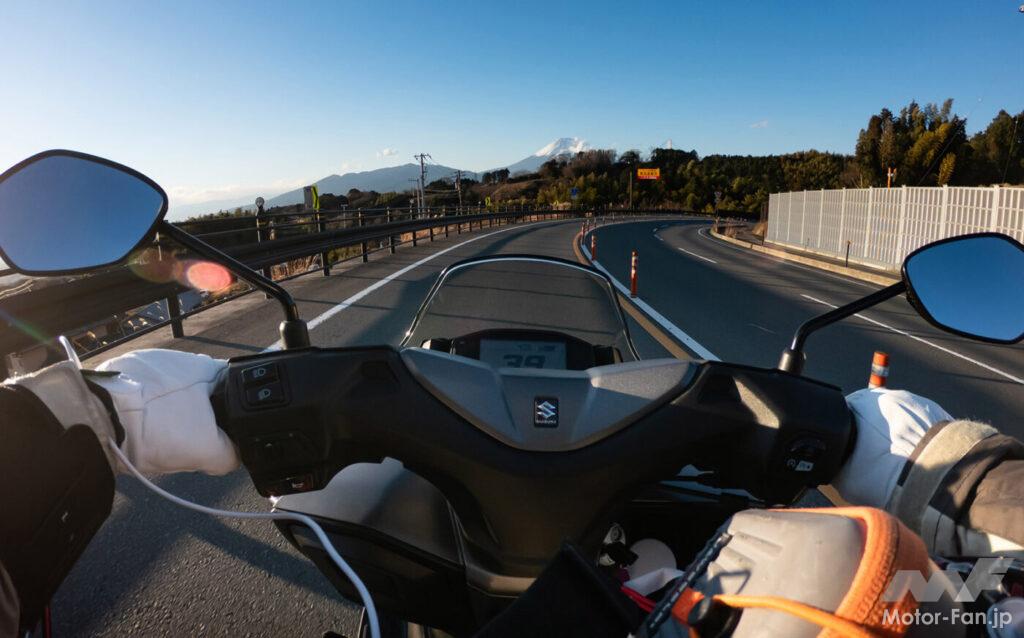
The weather was clear, but the wind was strong. It would have been fine if it was just a headwind, but the wind was blowing in and causing the boat to wobble and stagger like a boat drifting on the waves.
On a clear day, National Route 1 from Hakone to Mishima offers a spectacular view no matter the season. As we made our way down the mountain, we were not only buffeted by strong winds but also by fierce downhill drivers who didn’t seem to care about the speed limit. As we drove, our eyes captivated by the glimpses of Mount Fuji, the sun began to slowly set.
We left National Route 1 where the Mishima Bypass turned into the Numazu Bypass. We headed towards the coast on Shizuoka Prefectural Route 380, Fuji-Shimizu Line. This coastline stretching in a gentle arc from Numazu City to Tagonoura is known as Senbon Matsubara. It is a spectacular area with a row of pine trees stretching for about 15km.
Soon the burning red sun fell into the sea with a whoosh through the gaps in the pine trees, and the world was instantly dyed in ink. From here, it was time for a night ride west along the sea.
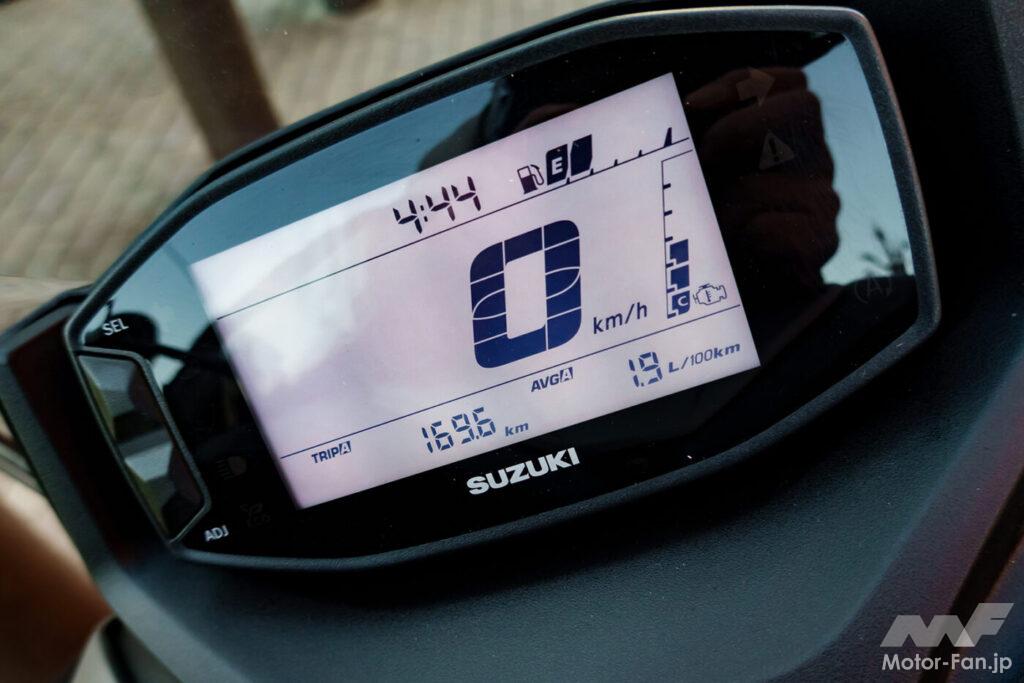
In Numazu city, near the ruins of Numazu Castle, the trip was 169.9 and the fuel meter had dropped by 3, leaving 2 remaining.
ADVERTISEMENT
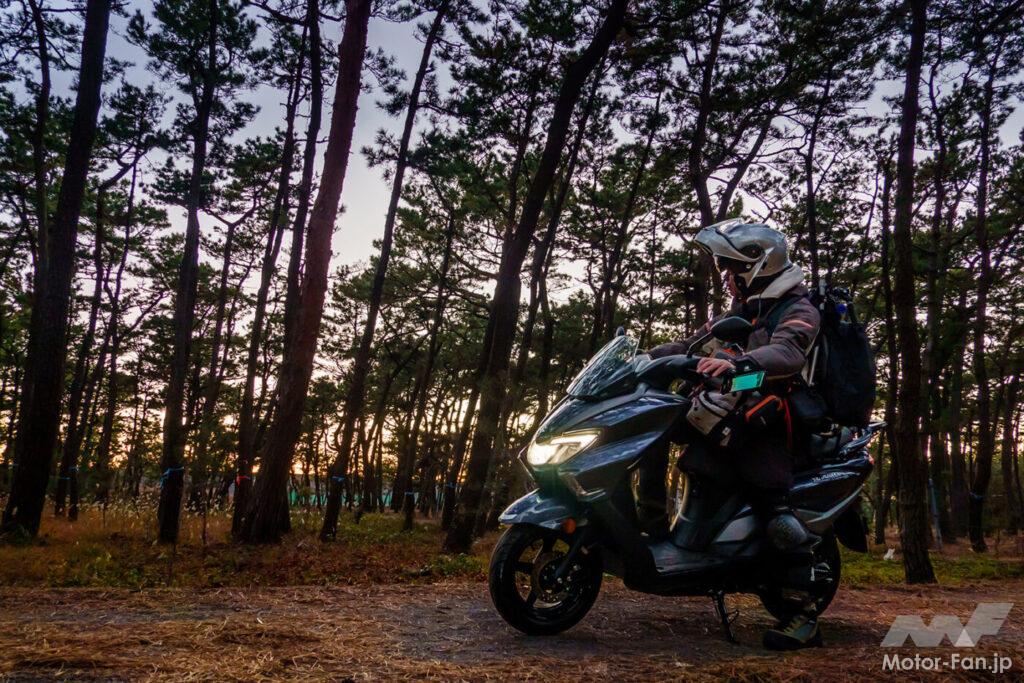
The Senbon Matsubara grove stretches along the coast of Numazu City. I watched the afterglow of the sun shine through the pine forest.
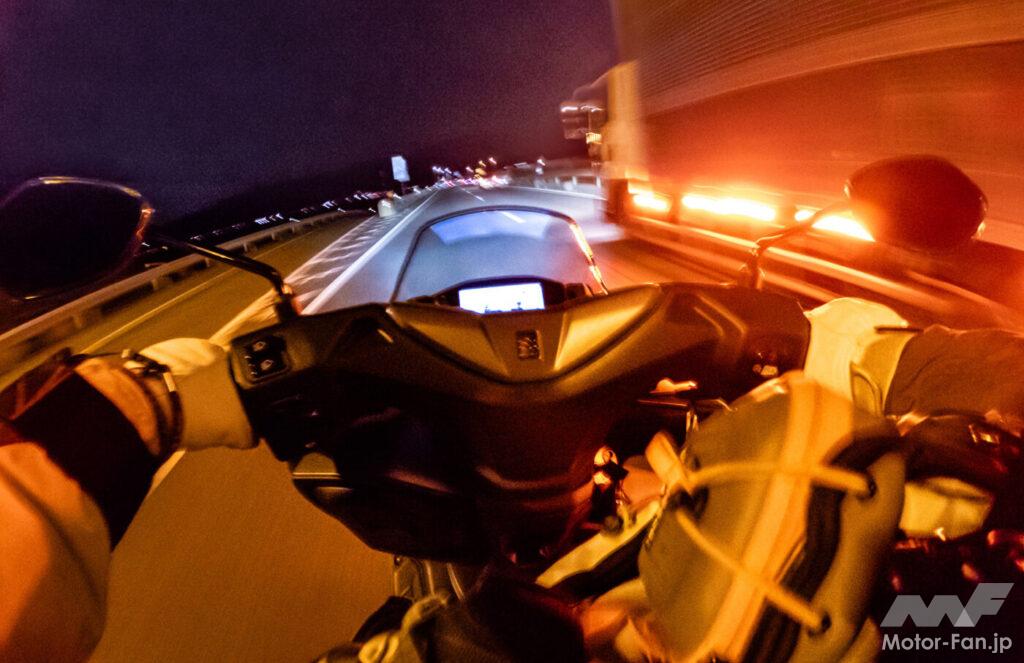
The Fuji-Yui Bypass is a humiliating road where you’ll be overtaken not only by fire-breathing trucks but also by minicars loaded with stuffed toys. The Burgman 125’s power performance is more than enough even on the bypass, and you can easily go faster if you want to. However, good public road riding still means staying within the legal speed limit.
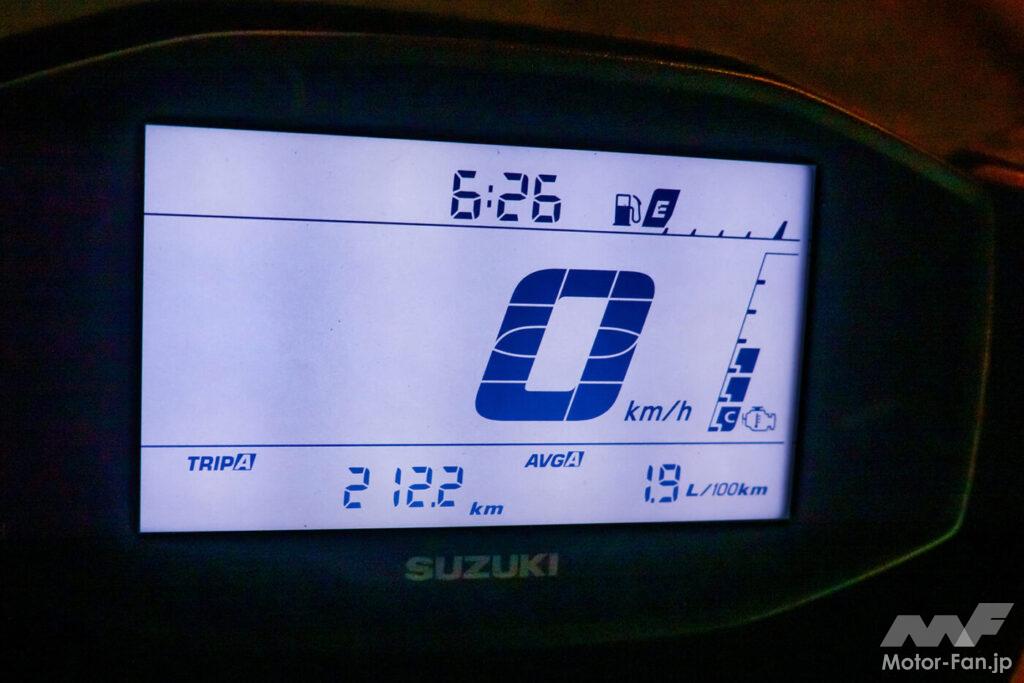
After 212.2km of the trip, the fuel meter finally reached the last mark. The scale remained lit, but the fuel gauge mark flashed, entering warning mode.
We got off the bypass and headed for Shizuoka city. Just before the inn, the fuel meter hit the last mark. Immediately after that, we decided to stop at an inn along the national highway and drop off our luggage. The trip was 214.9km, so we decided to call it a day and go to sleep. It wouldn’t be long before we ran out of gas anyway.
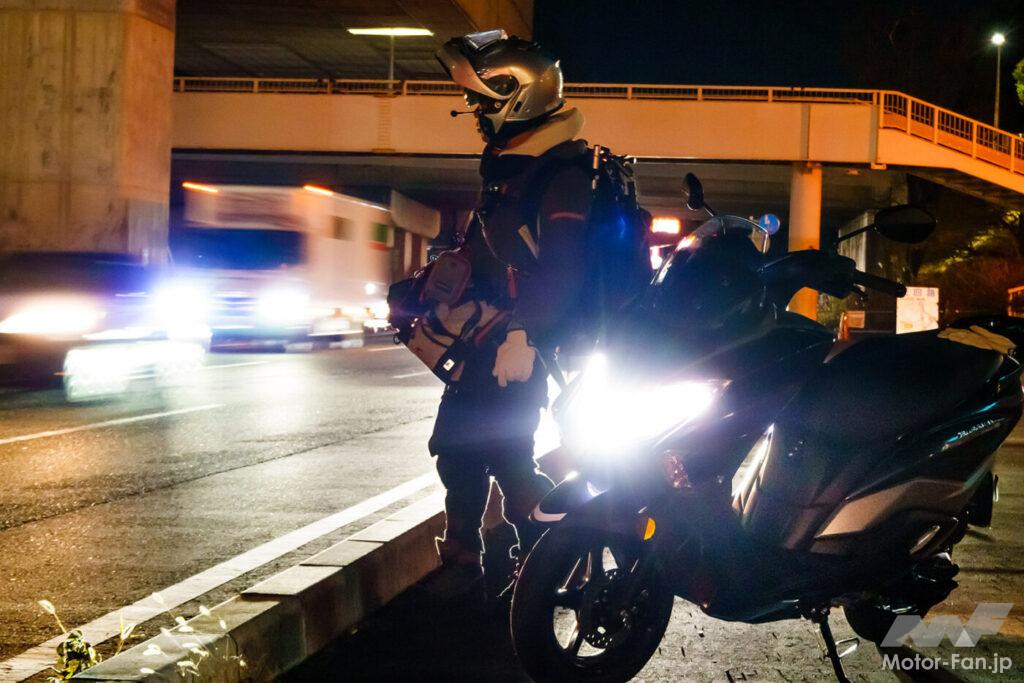
I parked my motorcycle at the inn and unpacked my heavy luggage, surrounded by the roar of trucks traveling along National Route 1, which runs through Shimizu Ward, Shizuoka City.
ADVERTISEMENT
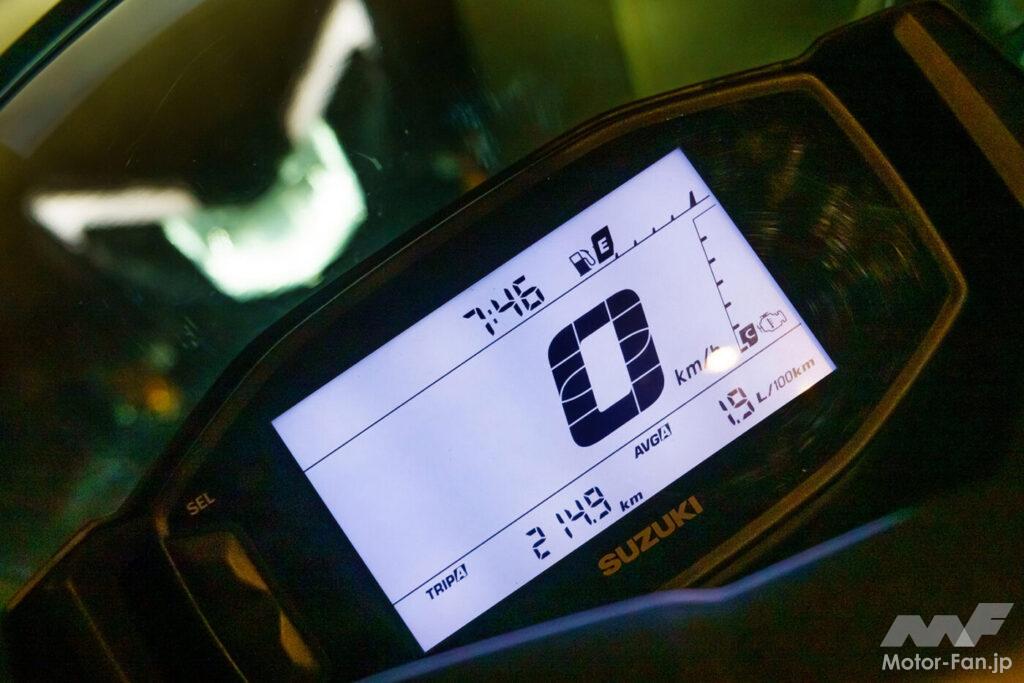
Trip distance 214.9km, today’s driving distance 133.6km.
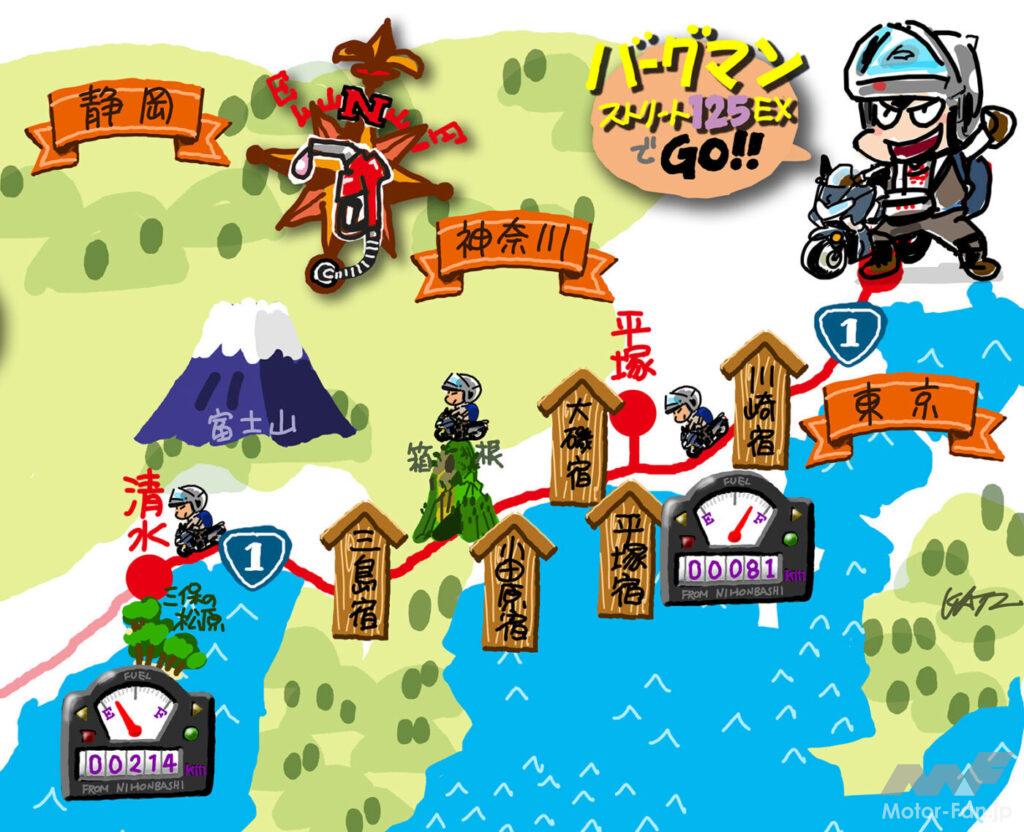
[MAP] Tokaido Gas Challenge #9 Suzuki Burgman Street 125EX [Nihonbashi to Shimizu]
 How far can a Suzuki Burgman Street 125EX go with a full tank of gas? Part 9 of the Tokaido Gas Challenge, from Nihonbashi, Tokyo to Kyoto! [Day 1]
Riding a Suzuki Burgman Street 125EX, we head from Nihonbashi, Tokyo to Kyoto, taking on a one-way attack on the Tokaido, using up a full tank. From Orochi Park to Shonan at sunset! REPORT ● AFO RIDER Takahashi PHOTO ● Takahashi Katsuya ILLUSTRATION ● Takahashi Katsuya