

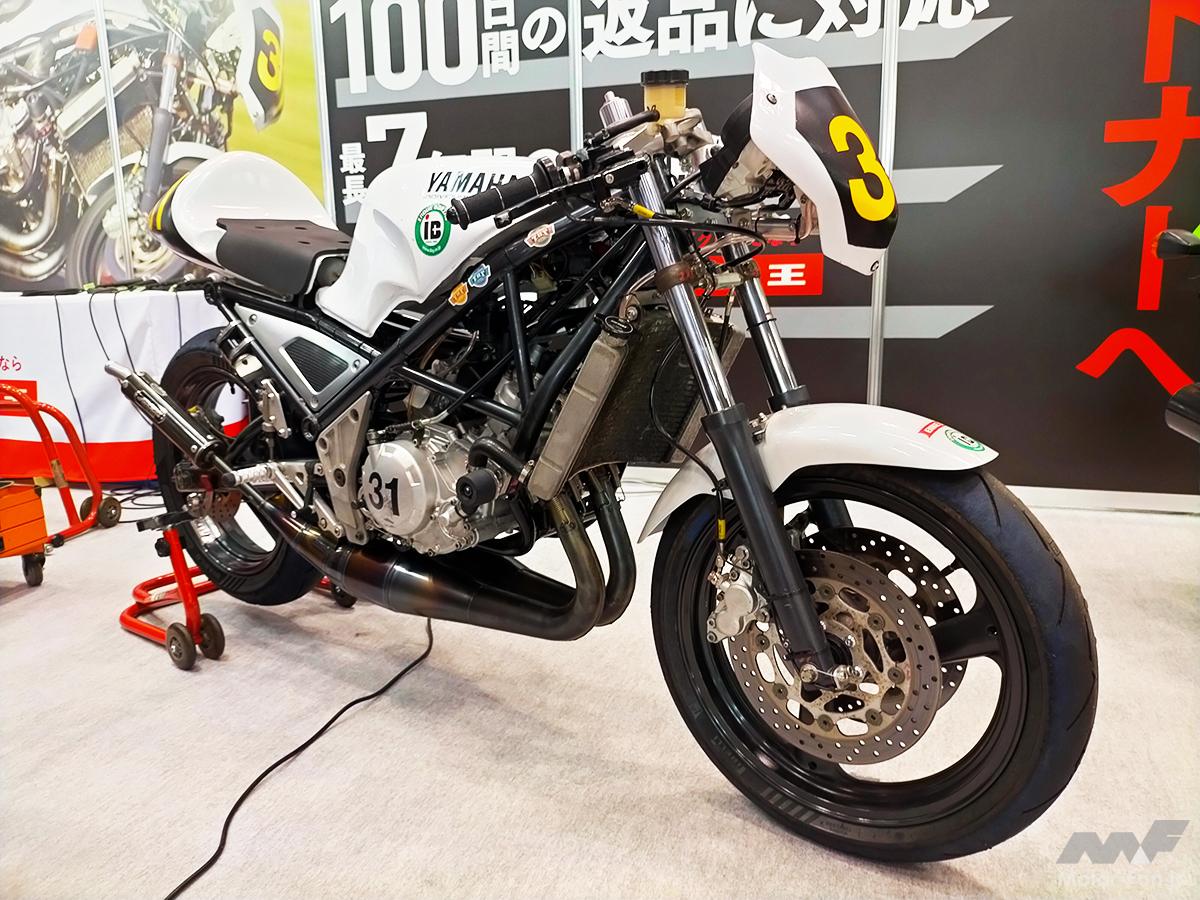
Yamaha R1-Z Modified Display: Bike King & Company
The photo shows a modified R1-Z (Ar One Z) that was customized for racing by the maintenance staff of Bike King & Company, a well-known motorcycle buying and selling company. Safety parts have been removed and a bikini cowl-style number plate has been fitted to the front. The seat has been changed to a single type. It has been tuned for circuit racing with a dual exhaust racing chamber, a large radiator, and rear steps.
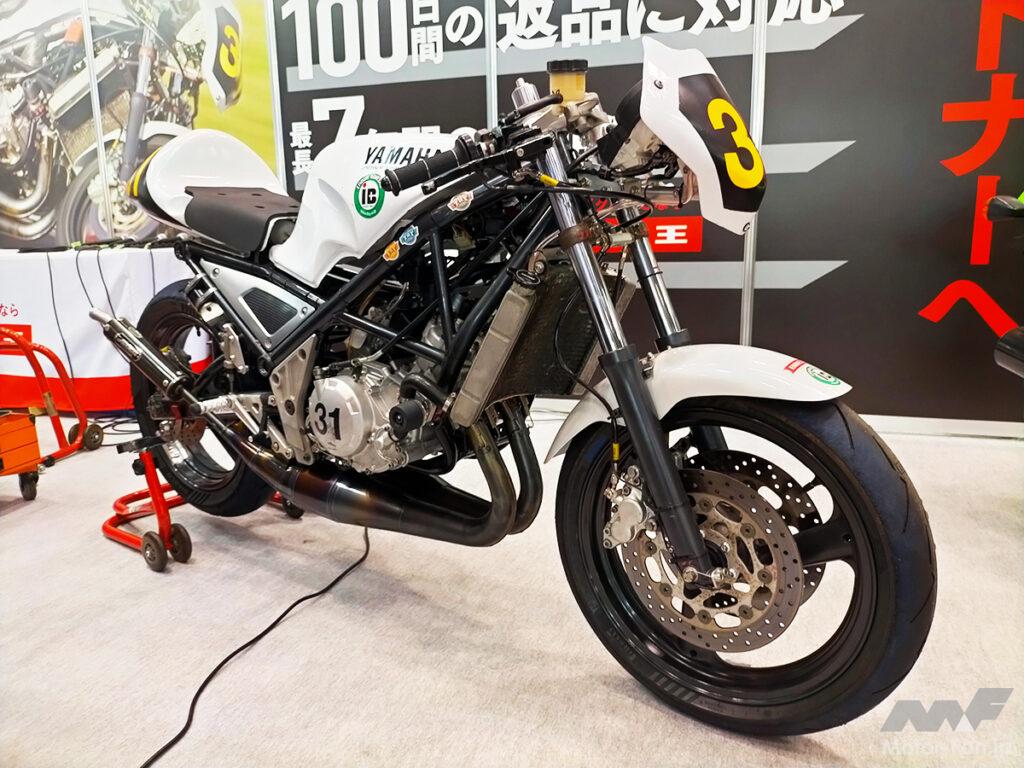
The exterior is made up almost entirely of genuine parts, with the exception of the seat cowl, maintaining a standard look.
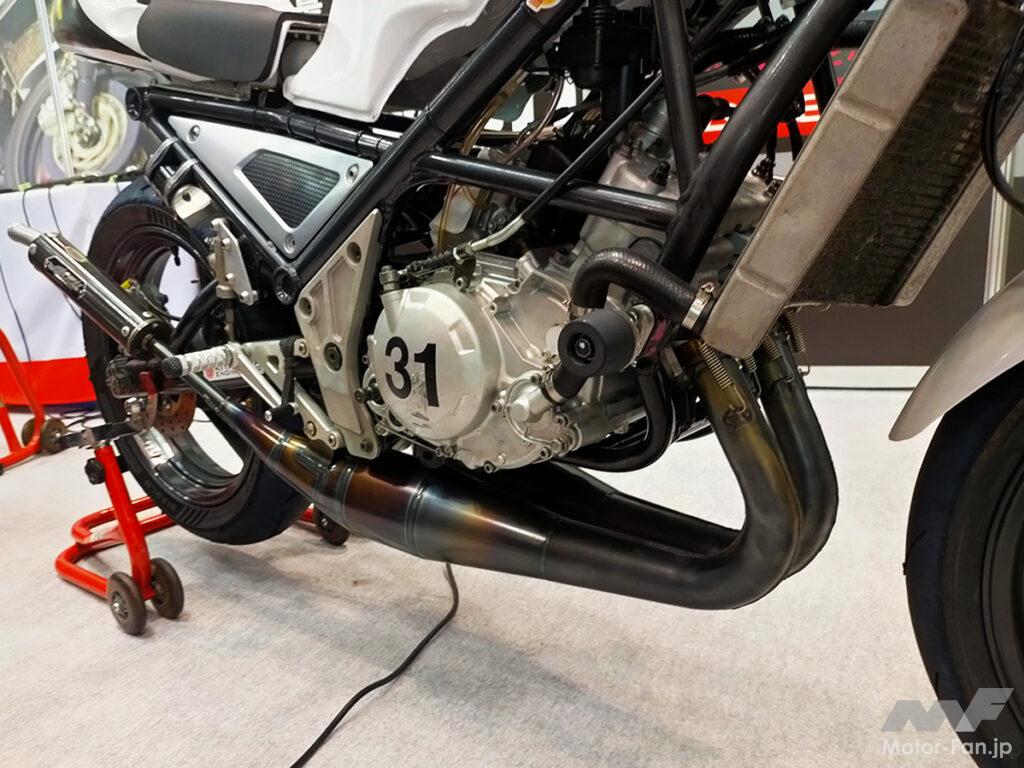
The standard model has two exhaust pipes on the right with the exhaust pipes crossed, but this has been changed to a racing chamber with two exhaust pipes on the left and right.
ADVERTISEMENT
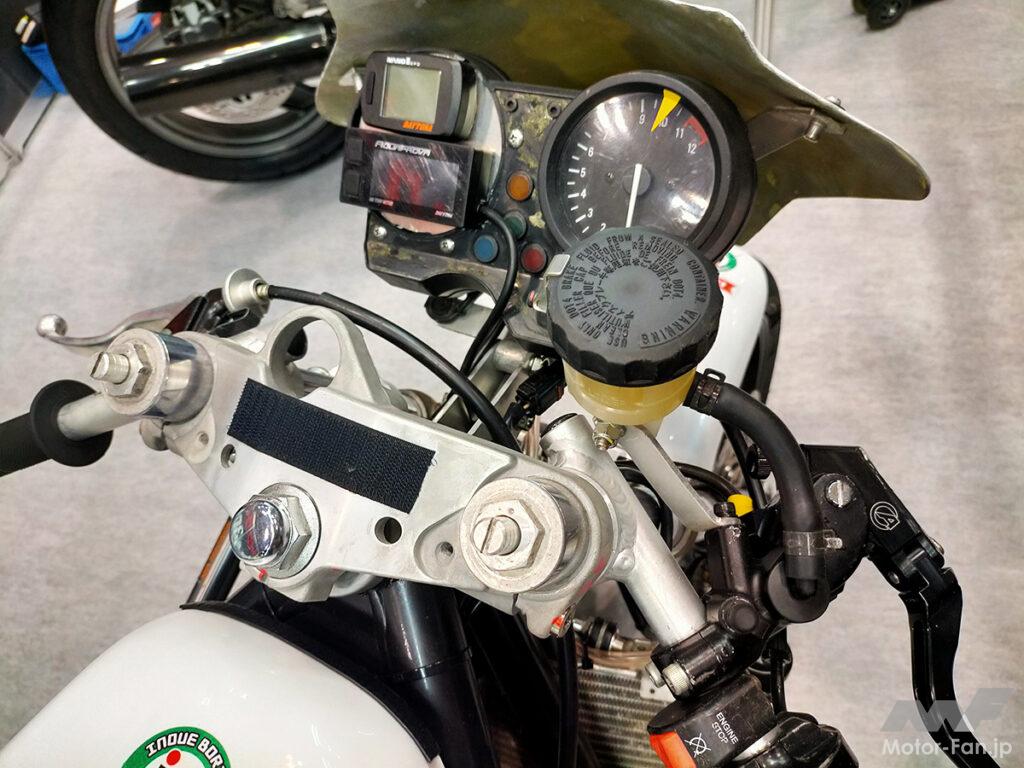
The meter area has a racing-style layout with an analog tachometer and various digital meters.
It’s not a cowled racer replica or a naked RZ! The Yamaha R1-Z, a 2-stroke 250cc bike with a unique design…released in 1990 (Heisei 2)
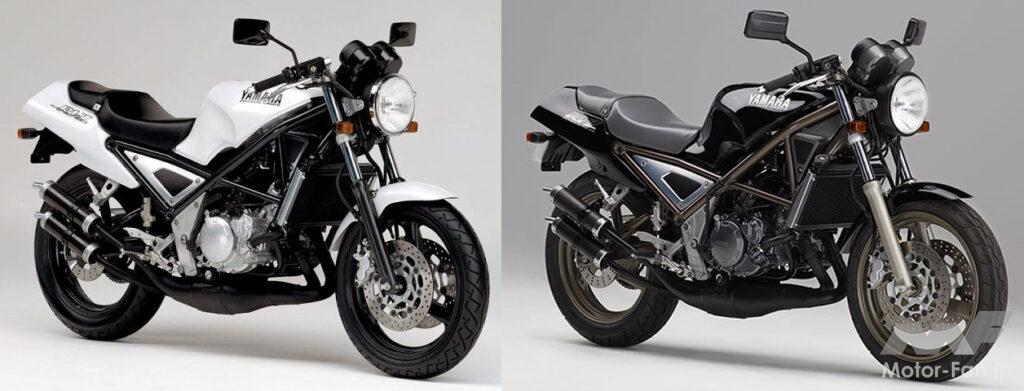
Yamaha R1-Z (Photo left) White (Photo right) Black
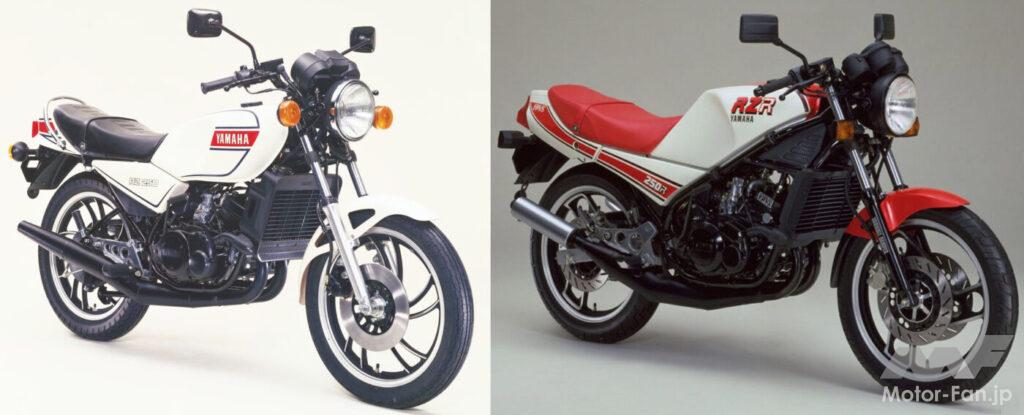
Left: Yamaha RZ250 (early model) Right: Yamaha RZ250R
A non-racer replica! It appeared during the naked boom that saw the “Zephyr phenomenon”
The 1980s was a time of unprecedented motorcycle boom, when the common belief was that “motorcycles = high-powered, cowled racer replicas” were the best and most impressive. In 1990 (Heisei 2), just as the hugely popular racer replica boom began to decline, Yamaha’s water-cooled, 2-stroke, 250cc model, the R1-Z, was born.
The eventful Showa era came to an end, and in 1989 (the first year of the Heisei era), many riders were beginning to feel that they had had enough of racer replicas and that the replica boom would come to an end along with the Showa era (when Emperor Showa passed away and the Showa era ended, there was certainly a strange sense of emptiness throughout the world, as if a festival had ended). Kawasaki debuted the Kawasaki Zephyr, equipped with an air-cooled, 4-stroke, in-line 4-cylinder, DOHC, 2-valve, 400cc engine.
The Zephyr was equipped with an underpowered, outdated air-cooled, two-valve engine with a maximum output of 46 horsepower (at the time, high-performance 400cc bikes typically had water-cooled, four-valve engines with a manufacturer-imposed maximum limit of 59 horsepower). When the Zephyr was released, I (born in 1969), who had held a motorcycle license for four years at the time, had a simple question: “Why a bike that goes against the times now???”
However, its retro design befitting the name “iron horse” and its simple, nostalgic form, typical of motorcycles, made it a huge hit, especially among young people who were new to motorcycles. (One can imagine that even Kawasaki itself did not expect it to become such a hit at the time.)
The enthusiasm for this best-selling product was later dubbed the “Zephyr phenomenon,” and it established and solidified the “naked” (naked, without cowling) genre.
This was the moment when the common belief that “motorcycles = high-powered, cowled, racer replicas” was completely overturned. It was the moment when times changed and new values were born.
The naked bike boom led to the birth of a variety of models, including the Suzuki Bandit 400/250, Yamaha Zeal (250cc), Honda CB-1 (400cc), Honda Hornet (250cc), Honda Jade (250cc), Honda CB400SF, Yamaha XJR400, Suzuki GSX400 Impulse, Kawasaki Zephyr 750/1100, and various 2-stroke 125cc models.
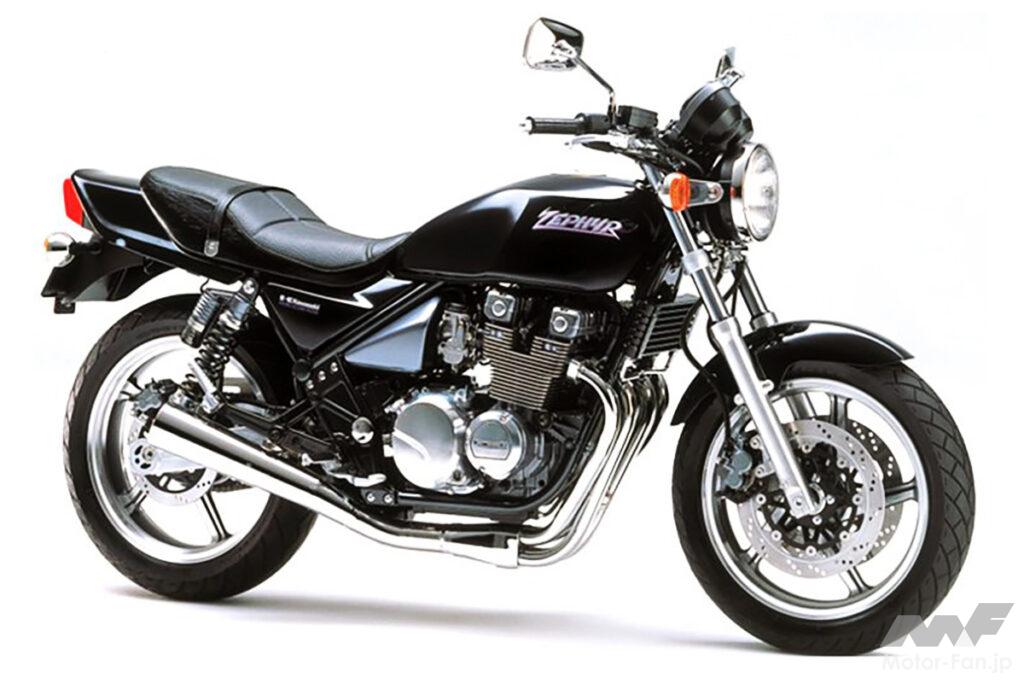
This is an early model of the Kawasaki Zephyr, which pioneered the naked bike boom. In 1989, when racer replicas were on the wane, the ZR400AE was equipped with an improved version of the outdated GPz400 series 4-cylinder DOHC 2-valve engine that had been installed six years earlier in 1983.
Yamaha has developed the new R1-Z, a new model that inherits the lineage of the naked RZ250R.
ADVERTISEMENT
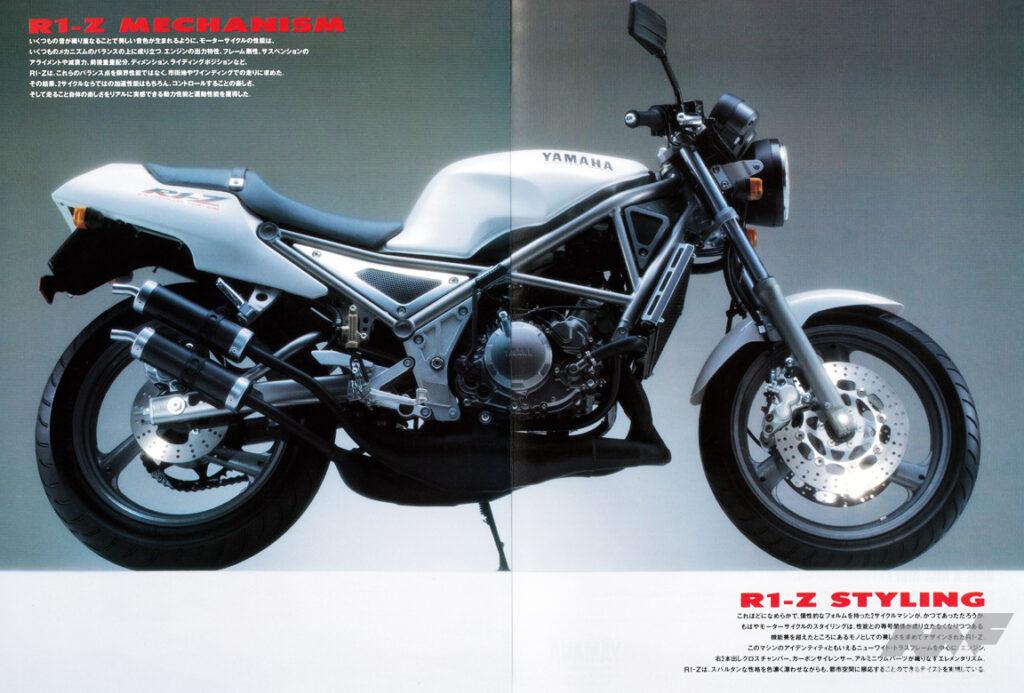
From the manufacturer’s catalog
During the heyday of the motorcycle boom, it was hard to say that all riders preferred fully faired racer replicas.
The non-cowled naked bike is easy to handle around town without the “obtrusive” cowl, and is lighter and more affordable than a replica. There was a certain amount of demand for this nimble bike from around 1986, when the motorcycle boom was in full swing, and each manufacturer released several models.
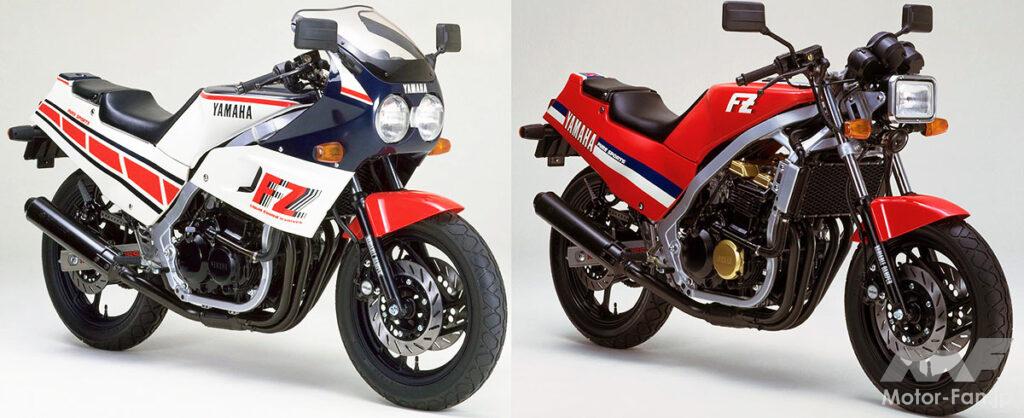
Left: Yamaha FZ400 Right: Naked Yamaha FZ400N (N stands for naked)
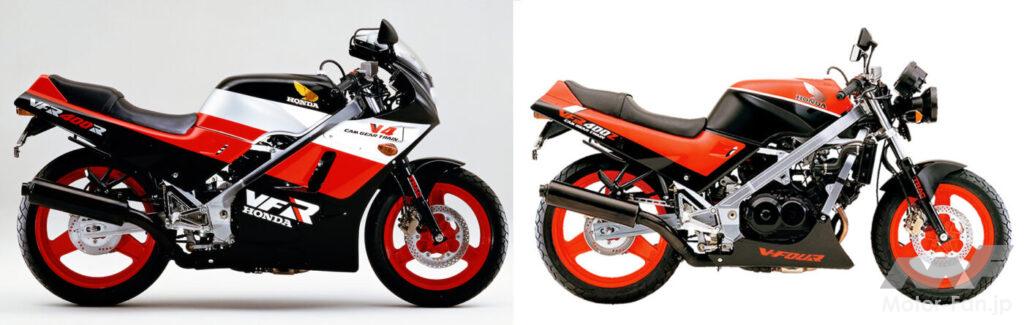
Left: Honda VFR400R (early model NC21) Right: Naked Honda VFR400Z
For example, in the 400cc class, the cowling was “forcibly” removed and a headlamp, blinkers and rearview mirror were simply added, which some people derided as “shoddy”, and some models were released in naked specification that were also used as driving school vehicles (Honda VFR400Z → based on the first VFR400R, Yamaha FZ400N (N stands for naked) → based on the FZ400, Kawasaki FX400R → shared the exterior and engine with the GPZ400R).
In the 250cc class, the Honda VT250Z and VT250 Spada were equipped with four-stroke V-twin engines, and Suzuki’s Wolf was a two-stroke machine based on the RGV250 Gamma, which was the most powerful machine in the 250cc class at the time.Yamaha’s RZ250R, which was fitted with a steel double cradle frame and a two-stroke parallel twin engine from a generation earlier, played the role of naked bikes.
At the time, Yamaha had already handed over the reins of the top 2-stroke 250cc class from the RZ250R (naked) and RZ250RR (with half-cowl) to the full-scale racer replica TZR250 (which later evolved into the TZR250R).
Yamaha had defined an era with the first-generation RZ250, and was seeking the next step for the naked RZ250R, which was equipped with a two-stroke parallel twin engine from a generation earlier. Influenced by the rise in popularity of naked bikes sparked by the Zephyr, Yamaha developed the newly designed R1-Z as a new model that would carry on the lineage of the RZ250 and RZ250R.
The newly designed truss structure diamond frame is equipped with a parallel twin engine (water-cooled, two-stroke, parallel twin-cylinder) based on the TZR250.
ADVERTISEMENT
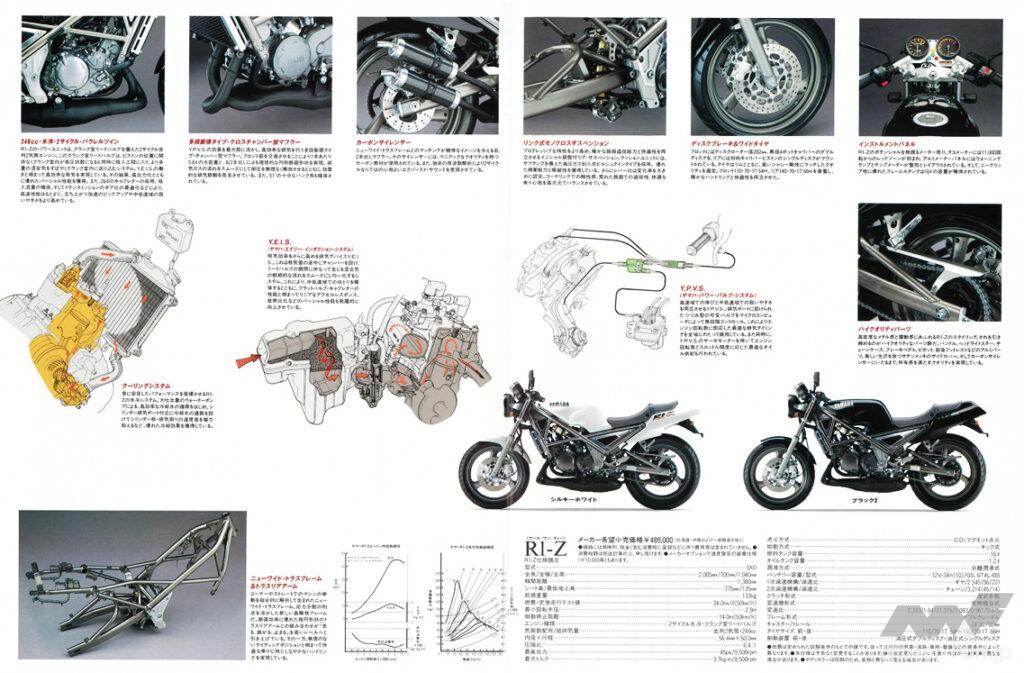
From the manufacturer’s catalog
The R1-Z is equipped with a parallel twin engine (water-cooled, two-stroke, parallel twin-cylinder) based on the original TZR250, mounted on a newly designed truss structure diamond frame.
The chamber, which uses a right-side dual carbon silencer for a racing look, has a cross exhaust pipe section, optimizing the expansion chamber and allowing for a deep bank angle.
In 1991, the year after the R1-Z was released, I decided to buy Kawasaki’s 4-stroke 250cc naked model “Valius” instead of the R1-Z (because it had better style, fuel economy, and exhaust sound). At that time, the racer replica boom was over and the naked boom was just beginning.
The R1-Z is different from racer replicas equipped with the aluminum frame and aluminum swingarm often used on racers, and from its big brothers the RZ250 and RZ250R. It has a completely new design with a right-side dual exhaust silencer, iron frame, and iron swingarm, giving it a new street style.
At the time, I went to a motorcycle shop and thoroughly inspected the actual white R1-Z inside the shop. Unlike existing racer replicas, which are mainly made of resin and aluminum, the body incorporates old-fashioned iron, reminiscent of the unique naked bike “SDR” released in 1987, equipped with a water-cooled two-stroke single-cylinder 195cc engine.
I also felt a nostalgia that is hard to explain, a mixture of freshness and warmth, that made me think, “This is the charm of naked bikes.” (I liked the style, but I didn’t like the unique exhaust sound of a two-stroke bike, and I ended up choosing the Varius because of its poor fuel economy.)
 This was a rare gathering. Nearly 100 of the rare 2-stroke single-sport Yamaha SDRs were gathered.
The SDR is a two-stroke single-sport bike that Yamaha suddenly launched onto the market in 1987. It was a purely lightweight sports model with a 195cc single-cylinder engine mounted on a plated truss frame, and was designed as a single-seater. However, due to the boom in racer replicas, it didn’t attract much attention and ended up being short-lived. Here’s a report on an owners’ meeting for this machine with such a background! REPORT/PHOTO: YOKOTA Kazuhiko
ADVERTISEMENT
 Kawasaki Balius 250, Yamaha TW200 | Yahoo! Auctions 2020 Search Rankings, Top Models in the Motorcycle Category Explained | Motor-Fan Bikes
Yahoo! Auctions, an internet auction service operated by Yahoo Japan Corporation, has released a ranking of keywords that saw a rapid increase in search volume in 2020. In first place in the “Motorcycles” category is the Kawasaki Balius 250, which was produced from 1991 to 1996 and is popular in the second-hand market (production of the Balius II ended in 2007). In second place is the Yamaha TW200, which became popular in the early 2000s. In third place is the Honda ADV150, a 150cc SUV scooter. Keep an eye out for the rankings in other categories, which reflect the events of the year throughout the year! REPORT: Kita Hideaki
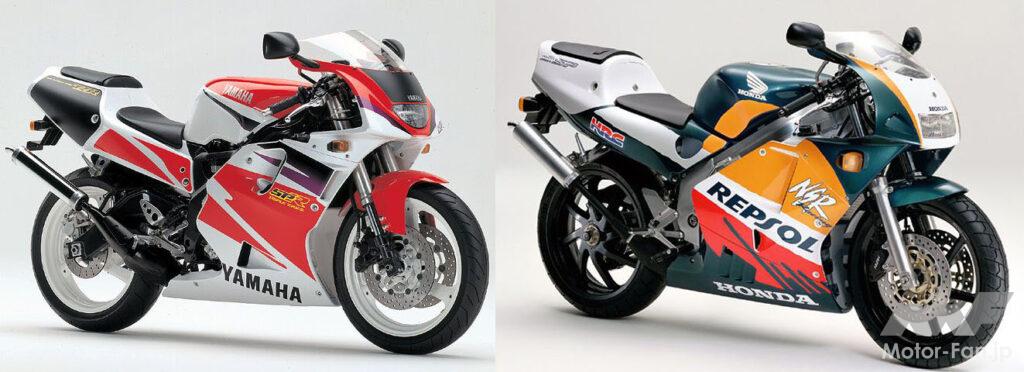
Left: The TZR250SPR (1995 model), the final model in the Yamaha TZR250 series.
Right: The final model of the Honda NSR250R (1996 model), featuring the Honda works colors of the time, the Repsol color scheme.
 The HachiHachi NSR comes in three colors. From Aoshima! This is a 1/12 scale painted and assembled model of the Honda NSR250R/R-SP.
Aoshima Bunka Kyozai Co., Ltd. (Aoshima), well-known for its plastic models and hobbies, will release the Honda NSR250R (1988 model) from its 1/12 scale completed motorcycle series under its brand “SKYNET” in September 2024 (planned). The 1988 model, the MC18, is known as “Hachi-Hachi” among NSR250R enthusiasts and is respected as a legendary model among all the NSR250R models. We will introduce the Hachi-Hachi along with its features. REPORT●KITA Hideaki Aoshima https://www.aoshima-bk.co.jp/
In the latter half of the 1990s, due to environmental concerns and strict exhaust gas regulations, production of the Yamaha TZR250R, which was equipped with a two-stroke engine, ended with the 1995 model, while production of the Honda NSR250R and Suzuki RGV-Gamma 250 ended with the 1996 model.
The R1-Z continued to be produced after undergoing minor changes such as a reduction in maximum power output (from 45 horsepower to 40 horsepower due to changes to the CDI, etc.) and a change from bias tires to radial tires. It was included in manufacturer catalogs until 1999, when all manufacturers stopped producing and selling 2-stroke 250cc models.
With a lightweight body of 134 kg, unique to a two-stroke naked bike, a 250cc displacement suitable for narrow Japanese roads, a chassis that is more than strong enough for the city, and a water-cooled two-stroke parallel twin engine tailored for the street, it demonstrates high-level potential to aim for the “strongest street bike.” Although the R1-Z has been out of production for a long time, as of May 2025, with the vintage bike boom, good condition vehicles are trading at high prices exceeding 1 million yen.
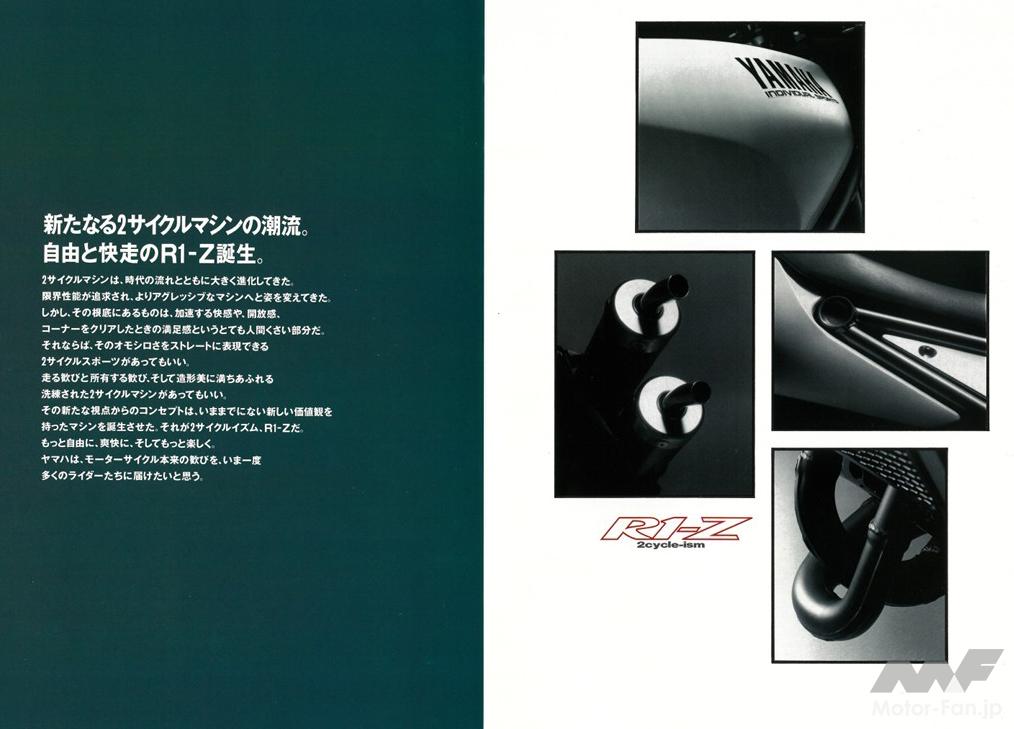
From the manufacturer’s catalog
Main specifications (early model)
ADVERTISEMENT
| Car name | R1-Z |
|---|---|
| Model change category | New Arrival |
| Model | 3XC |
| Release year | 1990 |
| Release month | 6 |
| Total length (mm) | 2005 |
| Overall width (mm) | 700 |
| Overall height (mm) | 1040 |
| Wheelbase (mm) | 1380 |
| Minimum ground clearance (mm) | 135 |
| Seat height (mm) | 775 |
| Dry weight (kg) | 134 |
| Minimum turning radius (m) | 2.8 |
| Passenger capacity (persons) | 2 |
| Fuel consumption rate (1) (km/L) | 34.0 |
| Metrics (1) | When driving 50km/h |
| Engine type | 3XC |
| Engine type | 2-stroke |
| Number of cylinders | 2 |
| Cylinder arrangement | Parallel (series) |
| Cooling method | water cooling |
| Displacement (cc) | 249 |
| 2-stroke intake type | Crankcase reed valve |
| Inner diameter (cylinder bore) (mm) | 56.4 |
| Stroke (piston stroke) (mm) | 50 |
| Compression ratio (:1) | 6.4 |
| Maximum power output (PS) | 45 |
| Maximum output speed (rpm) | 9500 |
| Maximum torque (kgf・m) | 3.7 |
| Maximum torque rotation speed (rpm) | 8500 |
| Fuel supply method | carburetor |
| Fuel supply device type | TM26SS×2 |
| Fuel tank capacity (L) | 16 |
| Fuel (type) | Regular gasoline |
| Cruising range when full tank (approximate/reference value) | 544.0 |
| Engine starting method | kick starter type |
| igniter | CDI type |
| Spark plug standard installation type | BR9ES |
| Total number of spark plugs required | 2 |
| Installed battery and model | YT4L-BS |
| Battery capacity | 12V-3Ah(10H) |
| Engine lubrication system | Separate fuel supply (2-stroke) |
| 2-stroke engine oil tank capacity | 1.20 |
| Clutch type | Wet/multi-plate |
| Transmission type | Return type, 6-speed |
| Transmission and operation method | Foot Shift |
| Primary reduction ratio | 2.545 |
| Secondary reduction ratio | 3.214 |
| gear ratio | 1st speed 2.333/2nd speed 1.647/3rd speed 1.315/4th speed 1.083/5th speed 0.961/6th speed 0.875 |
| Power transmission method | chain |
| Number of sprocket teeth (front) | 14 |
| Rear sprocket teeth | 45 |
| Chain size | 520 |
| Standard number of chain links | 114 |
| Frame type | truss frame |
| Caster angle | 24°30′ |
| Trail (mm) | 92 |
| Brake type (front) | Hydraulic double disc |
| Brake type (rear) | Hydraulic disc |
| Brake fluid compliance standards | DOT 4 |
| Suspension method (front) | Telescopic fork |
| Front fork type | Upright fork |
| Suspension method (rear) | Swing arm type |
| Tires (front) | 110/70-17 |
| Tire (front) structure name | bias |
| Tire (front) load index | 54 |
| Tire (front) speed symbol | H |
| Tire (front) type | Tubeless |
| Tire (rear) | 140/70-17 |
| Tire (rear) structure name | bias |
| Tire (rear) type | Tubeless |
| Wheel rim shape (front) | MT |
| Wheel rim width (front) | 2.75 |
| Wheel rim shape (rear) | MT |
| Wheel rim width (rear) | 3.5 |
| Headlight rating (Hi) | 60W/55W |
| Taillight Rating (Brake/Taillight) | 21W/5W |
 An unused NSR250R costs 7.98 million yen, and an NSR50 costs 4 million yen… Prices for two-stroke bikes are soaring, but aftermarket tuning parts are still popular for restoration and repair.
As exhaust gas regulations become stricter, domestic vehicles equipped with 2-stroke engines are gradually disappearing and being replaced by vehicles equipped with 4-stroke engines. As a result, 2-stroke engine vehicles have become more rare, and are now traded at surprisingly high prices in the used car market. Here we report on the appeal and features of 2-stroke engines and the latest tuning parts for 2-stroke engines! REPORT ● KITA Hideaki DAYTONA https://www.daytona.co.jp/
ADVERTISEMENT
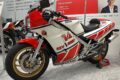 Looking back at classic motorcycles. Yamaha RZV500R (1984) | Equipped with a 499cc water-cooled 2-stroke V4 engine! Released as a replica model of the WGP works racer YZR500
The RZV500R, equipped with a water-cooled, two-stroke, V4, 499cc engine, was released in 1984 (Showa 59) as a replica model of Yamaha’s World GP works racer, the YZR500. The RZV500R, which appeared in the midst of the HY Wars (a battle between Honda and Yamaha for sales share), was a masterpiece developed with the prestige of being “Yamaha’s two-stroke” at stake. Let’s take a closer look at this legendary model, which could be called the pinnacle of Yamaha’s commercially available two-stroke history. PHOTO/REPORT●KITA Hideaki Bike King https://www.8190.jp/ Bike King Zeppankan https://www.8190.jp/wish/ds/zeppan/
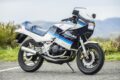 The origin of replicas! The story behind the immense popularity of the Suzuki RG250 Gamma
If you were to ask what the most racing bikes are today, the first name that comes to mind would be a 1000cc class supersport. However, if you trace its roots back to the Japanese market in the 1980s, it would be the 250cc class “racer replicas” that imitated the racers that were active in the WGP and other events. In this article, we will take a closer look at the RG250 Gamma, which is said to be the origin of racer replicas. PHOTO: WATANABE Masahiko *This is a re-edited version of an article published on September 10, 2019.
ADVERTISEMENT
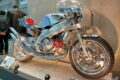 The engine is a Suzuki RGV250Γ (Gamma) export-spec water-cooled, 2-stroke, V-twin, 249cc, producing an astounding 70 horsepower! Customized Aprilia RS250 | Motorcycle Show 2024
The Aprilia RS250 was released as a racer replica model of the RSV250, which competed in the World GP250cc (now Moto2). The vehicle is equipped with a water-cooled, two-stroke, V-twin 249cc engine, an export version of the Suzuki RGV250Γ (Gamma). It produced an astonishing maximum output of 70 horsepower (the domestic two-stroke 250cc class is self-imposedly limited to 40 horsepower). The photo shows a custom Aprilia RS250 made by HIROKAWA MOTORS, which was exhibited at the Tokyo Motorcycle Show 2024. It has a gorgeous and impactful exterior, with red accents based on silver plated and aluminum parts. PHOTO & REPORT: Kita Hideaki, HIROKAWA MOTORS https://peaky1racing.wixsite.com/level5
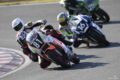 A detailed look at TOT’s ZERO-2 and ZERO-4, two-stroke 250 and four-stroke 400 models competing against each other | Taste of Tsukuba
In road races before the 1990s, such as the All Japan TT-F3 Championship and the Suzuka 4 Hours, there were classes in which 2-stroke 250 and 4-stroke 400 bikes competed together. The current evolution of this class is the ZERO-2 and ZERO-4 from TOT: Taste of Tsukuba. REPORT: Nakamura Tomohiko PHOTO: Togashi Hideaki
 The surprisingly light and refreshing KR250: A look back at the history of the Kawasaki 2-stroke 250cc, born in the 1980s.
The word “original” is often used in descriptions of the KR250, which was released in 1984. And that word applies not only to the looks and engine type, but also to the riding feel. REPORT: Nakamura Tomohiko PHOTO: Togashi Hideaki