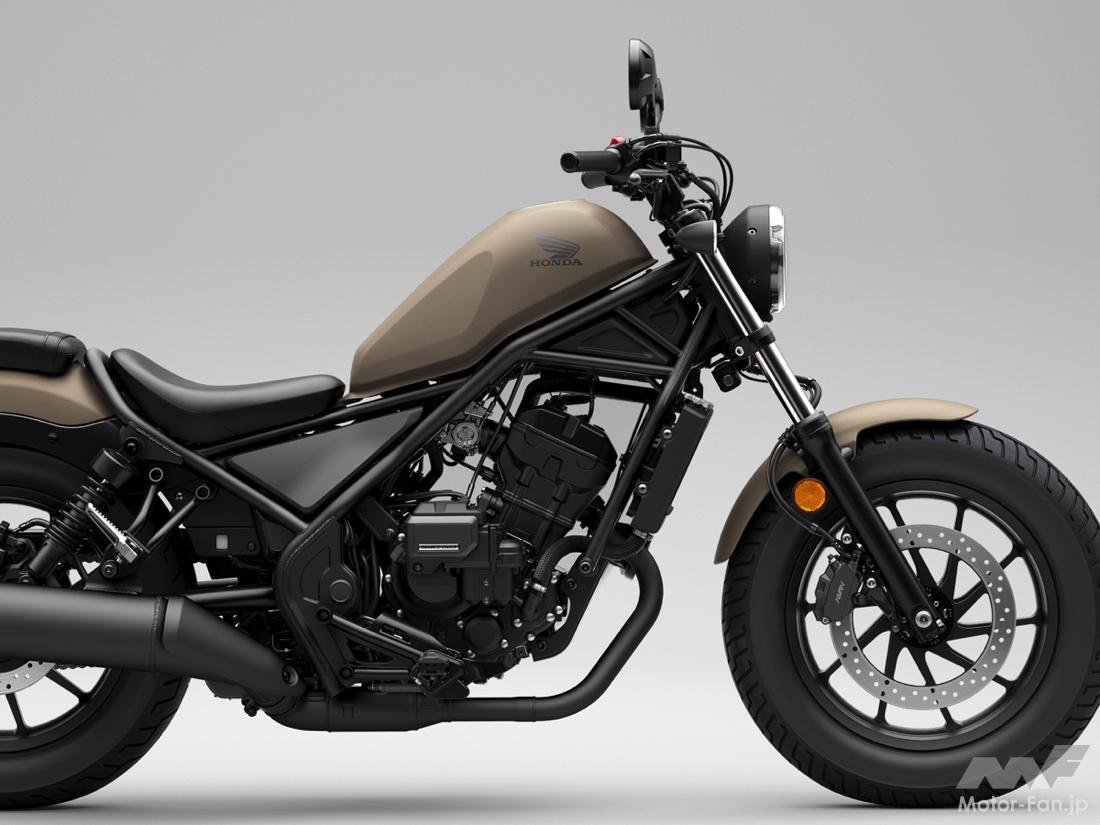


Honda Rebel 250 S Edition E-Clutch… 731,500 yen
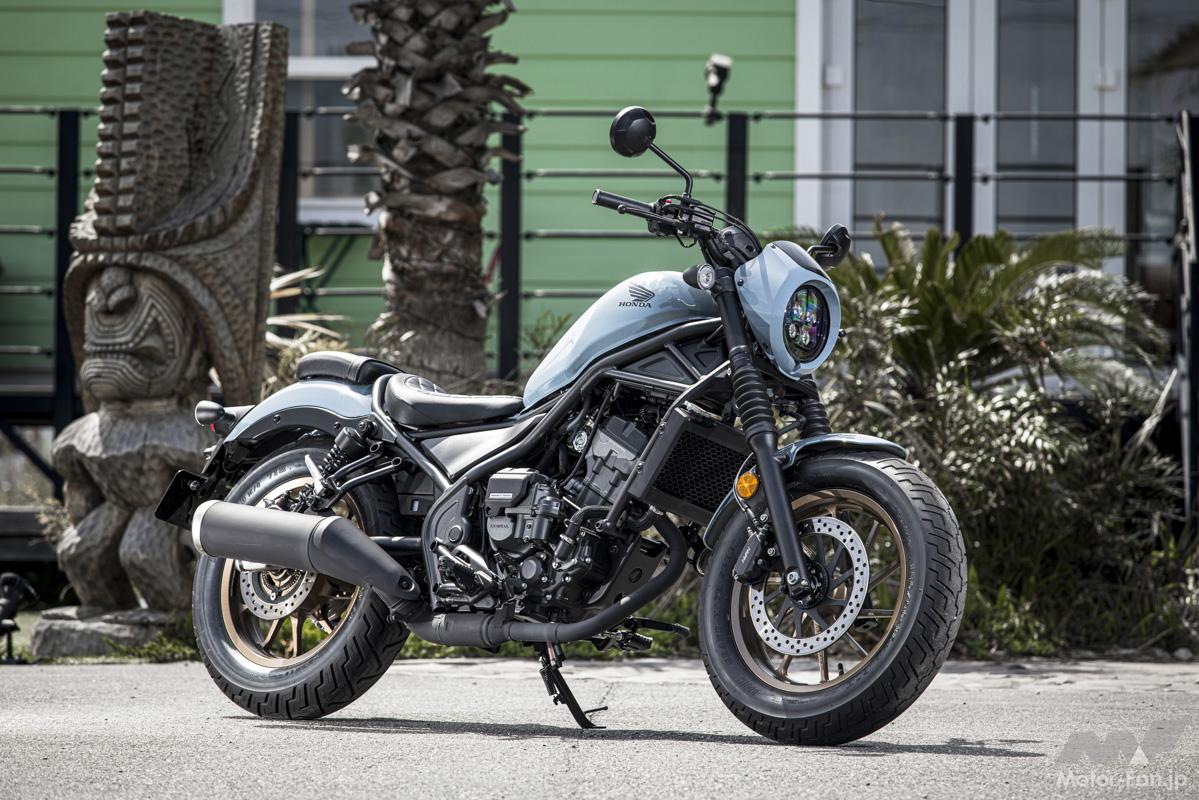
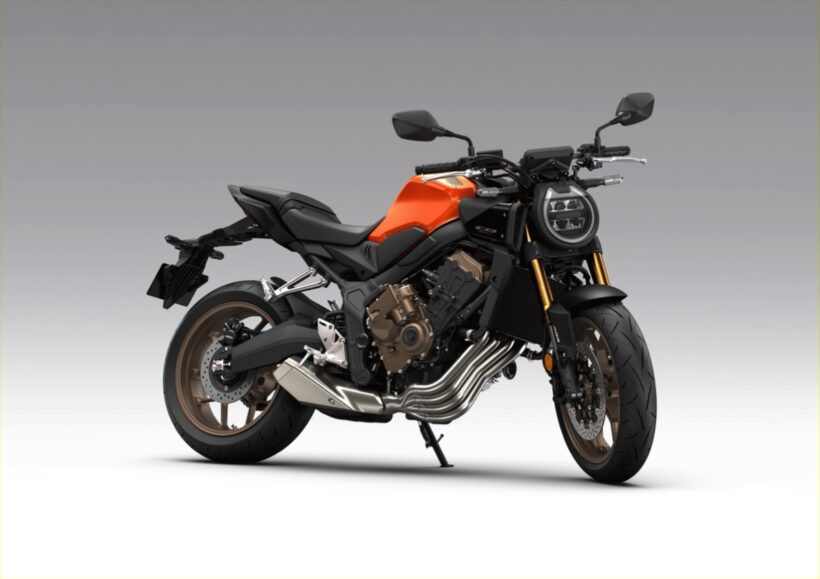
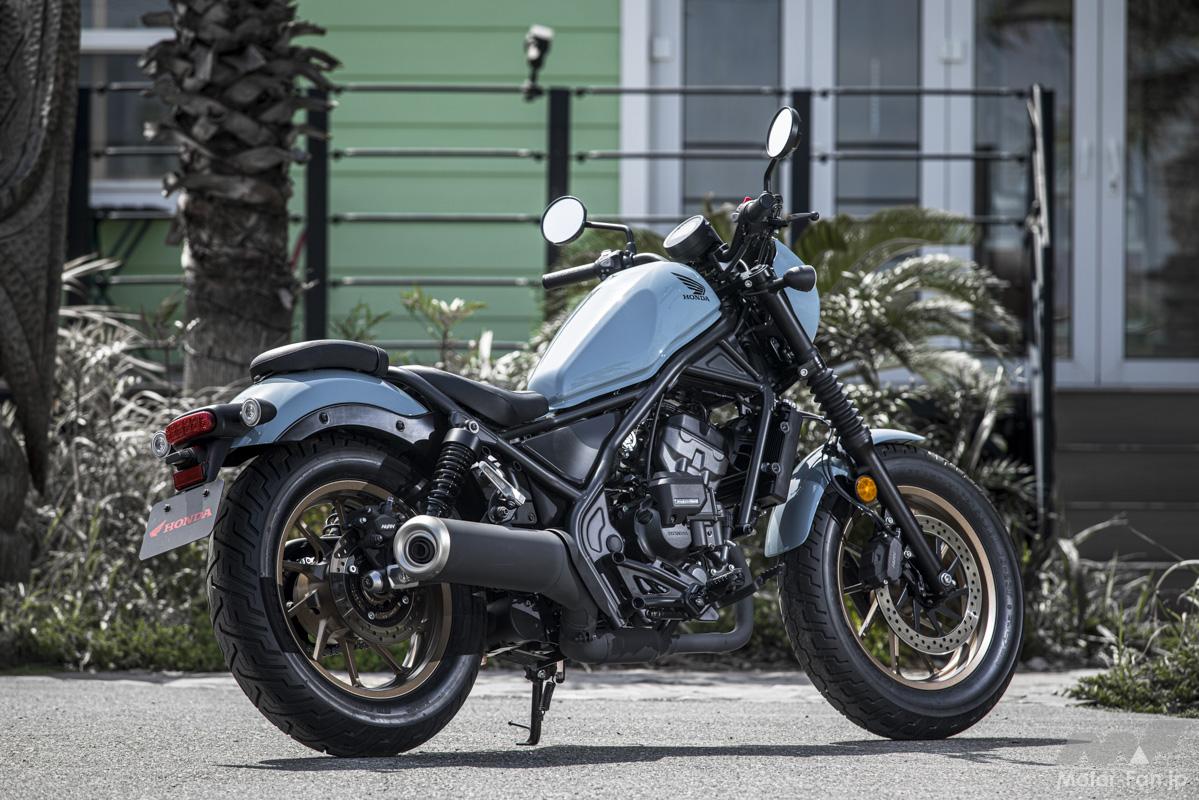
The Rebel 250 E-Clutch is Honda’s second model to feature an E-Clutch. The E-Clutch model was developed by the Rebel 250 development team, who worked in collaboration with the engineers who developed the CB650R E-Clutch.
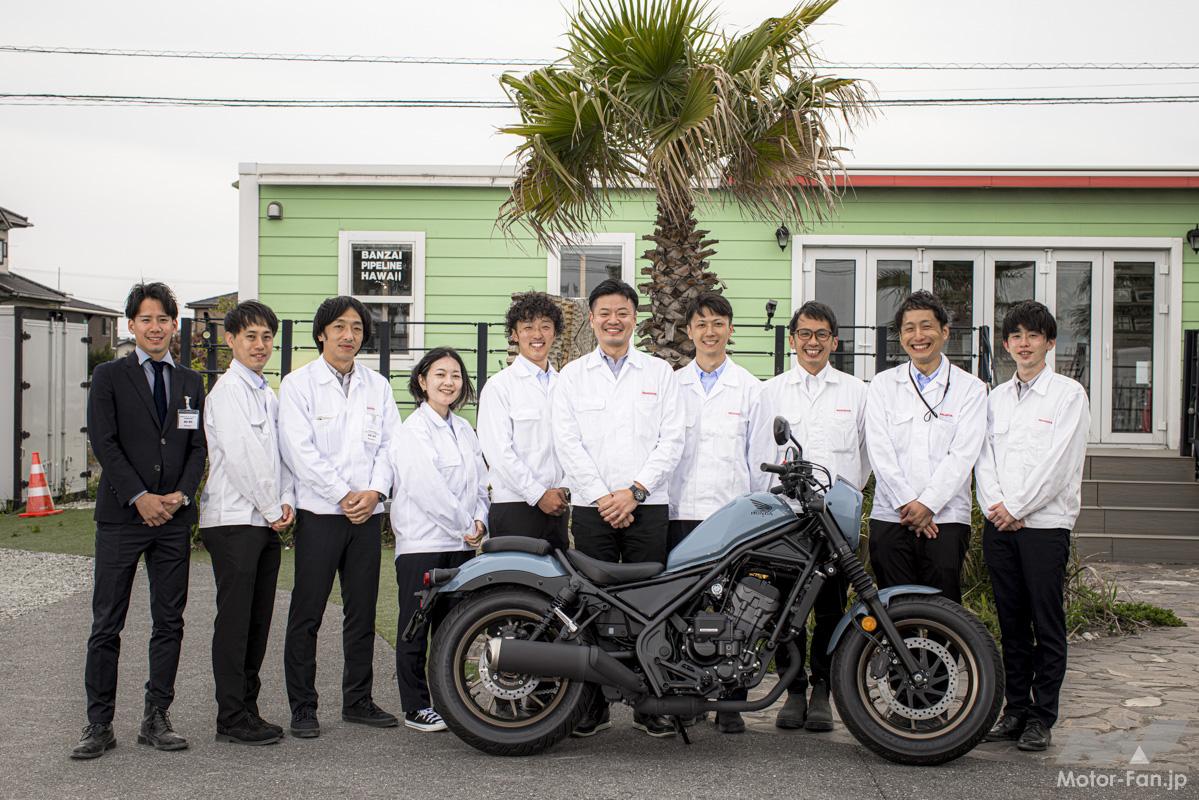
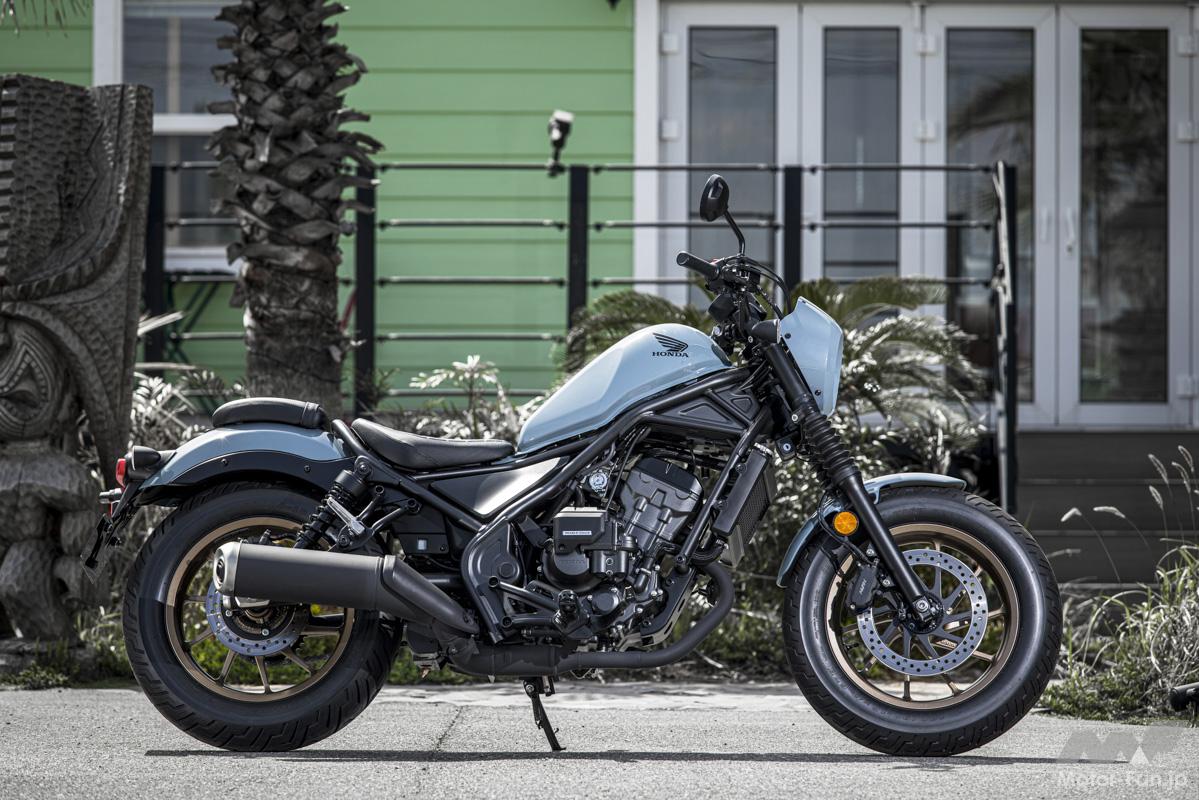
Second place for E-Clutch equipped vehicles
“I was surprised when I first touched the CB650R E-Clutch. It took the level of starting, shifting, and riding to the next level. I had hoped that it would be used in a variety of vehicle models, so I was very happy when it was decided to adopt it for the Rebel 250,” said Acting Development Manager Nojima Kazuto.
There haven’t been any major changes to the hardware of the E-Clutch. Apart from some of the parts that push and pull the clutch, it uses the same unit as the CB650R E-Clutch, and only the design of the cover and the control of clutch operation have been revised.
The size and design of the cover were decided with consideration given to how it would blend in with the Rebel250’s compact engine.
Basically, the E-Clutch can be installed on any vehicle with a clutch, but that doesn’t mean it’s easy to install. The shape of the clutch cover on the Rebel 250 is different from that of the CB650R, and it was necessary to avoid water and oil paths. It took a lot of effort to overcome these issues and make the E-Clutch function without destroying the Rebel 250’s atmosphere.
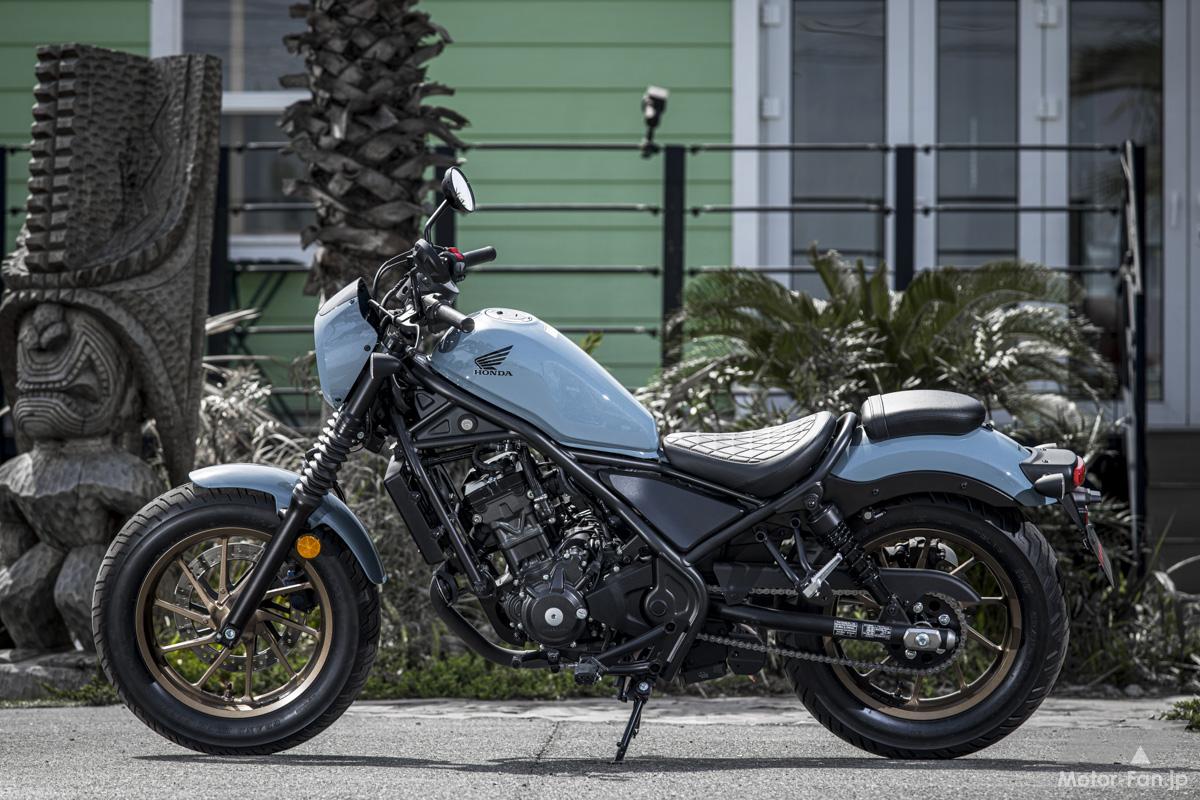
Another problem was the addition of a motor control unit and ECU. The slim and compact Rebel 250 had no space to install the new parts. It would have been easy to increase the seat height to make more space, but we didn’t want to change the design or seat height.
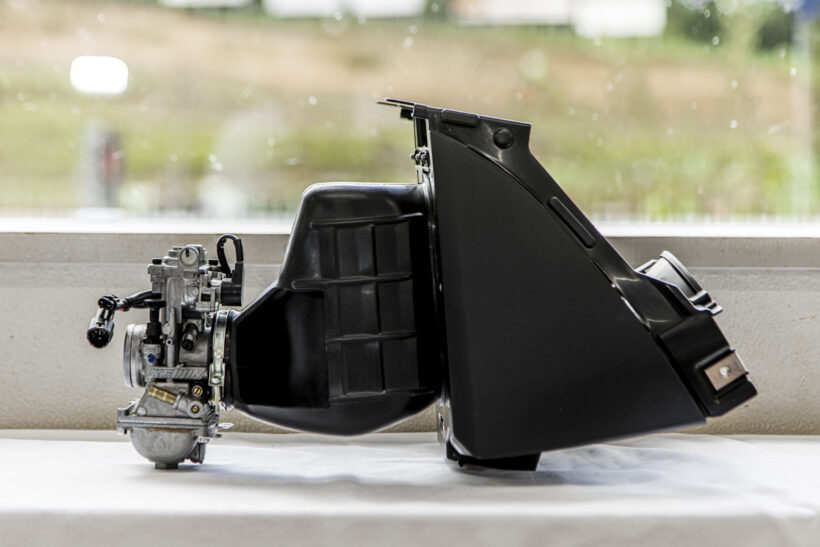
Although they were able to redesign the various components under the seat and place the units, the motor control unit and ECU ended up blocking the intake duct.In the end, they were able to fit all the components under the seat by redesigning the intake duct.
This model has seen improvements other than the E-Clutch. These include changes to the handlebar position and seat. In response to user feedback that the handlebars were difficult to reach when fully locked, the handlebar position has been shortened by 10mm (8.9mm at the gripping position), moved forward by 6.5mm, and raised by 5mm. The distance from the steering stem has been shortened to improve operability when turning the handlebars. High-resilience urethane has been used in the seat to improve comfort.
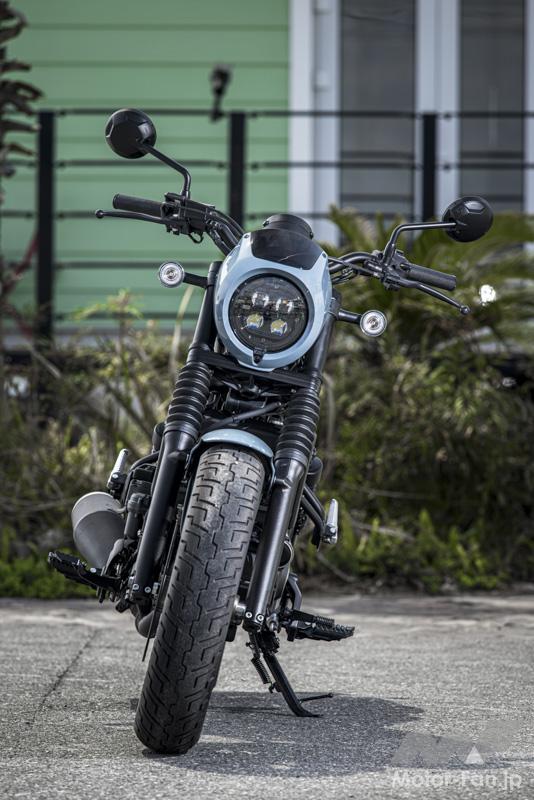
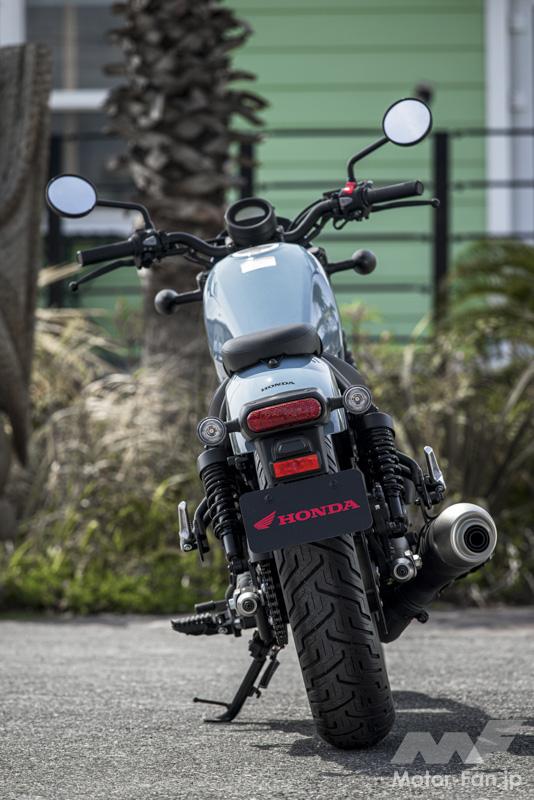
The meter now has a light that shows the operation of the E-Clutch and a shift-down indicator , and the rear fender is now made of plastic. Options include heated grips, ETC, and a comfortable rear seat with a 10mm thicker sponge for improved comfort, so the Rebel 250 has been updated while still retaining its distinctive character.
I was surprised by the feel of the E-Clutch
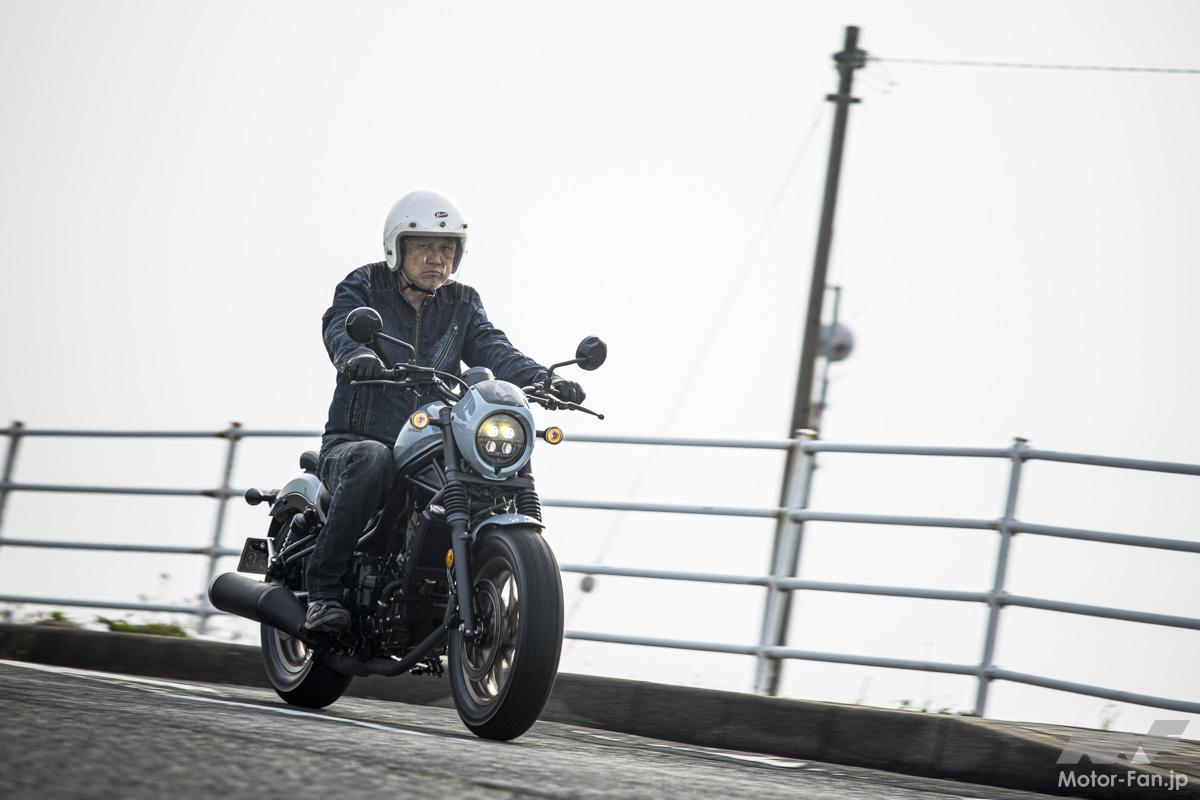
The tester had been using the CBR650R E-Clutch for about 10 days. So, he assumed the Rebel250’s E-Clutch would have a similar feel, but he was surprised at how different it was the moment he first opened the throttle and started moving. It was smooth to start, and even shifting up at low RPMs was smooth. The clutch feeling was quite impressive.
According to the development manager, the ignition cut time for upshifts is longer and the clutch engagement is gentler.
“The CB650R is a four-cylinder engine, while the Rebel 250 is a single-cylinder. If we controlled it the same way, it would jerk, so we tailored the characteristics to suit the engine’s characteristics. On the CB650R, the gear changes are quicker and crisper to give it a sporty feel, but on the Rebel 250, in line with the model’s concept, we set the ignition cut time a little longer and engage the clutch with a longer half-clutch so that the vehicle doesn’t behave as it should even when upshifting while cruising. The half-clutch engagement when downshifting is also set to a gentler engagement,” says the development manager.
This feeling is truly pleasant, making relaxed riding enjoyable. And the shifting feel at high RPMs is also excellent.
The ignition cut and half-clutch time change depending on the engine speed and vehicle speed. In the case of the Rebel 250 E-Clutch, when changing gears at high speeds, the gears do not shift abruptly like a normal quick shifter, but rather smoothly. This is because the setting prioritizes gentleness over directness. The feeling of seamless acceleration even while changing gears is a bit strange.
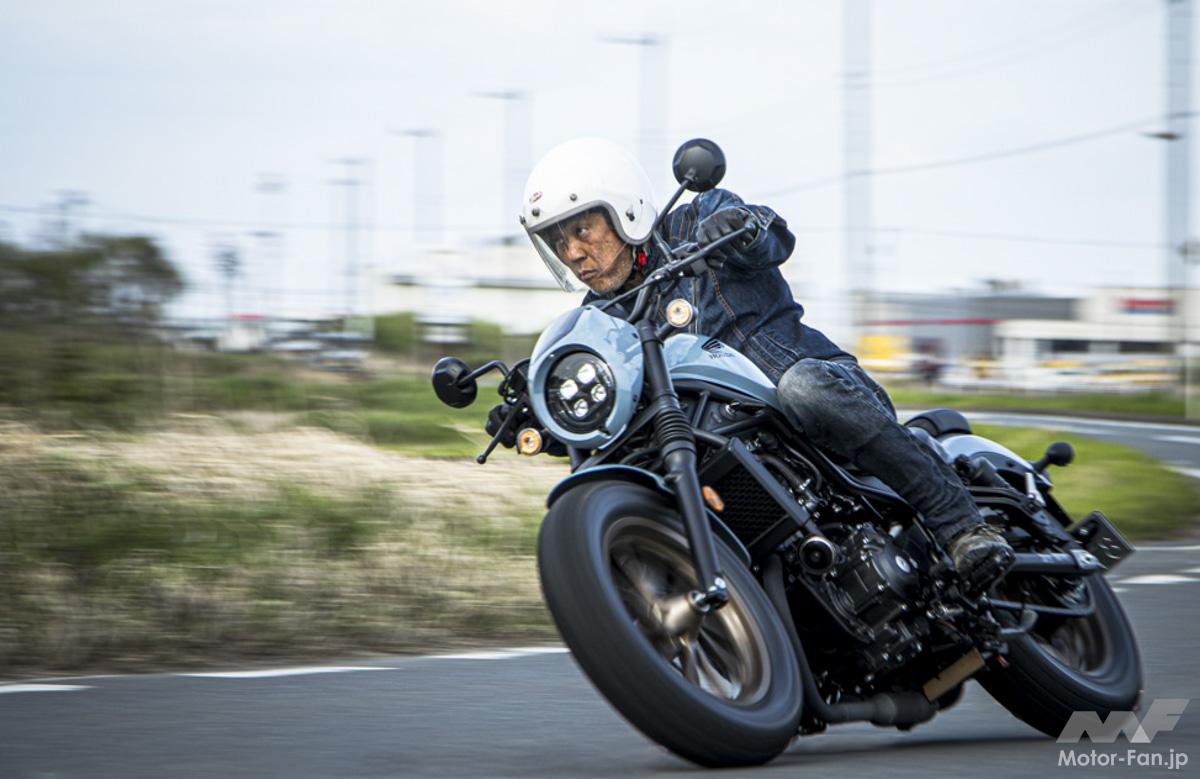
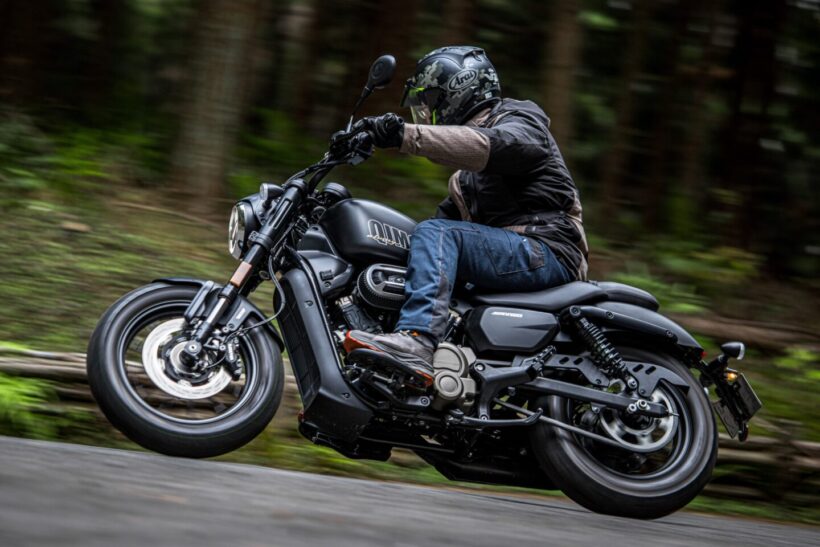
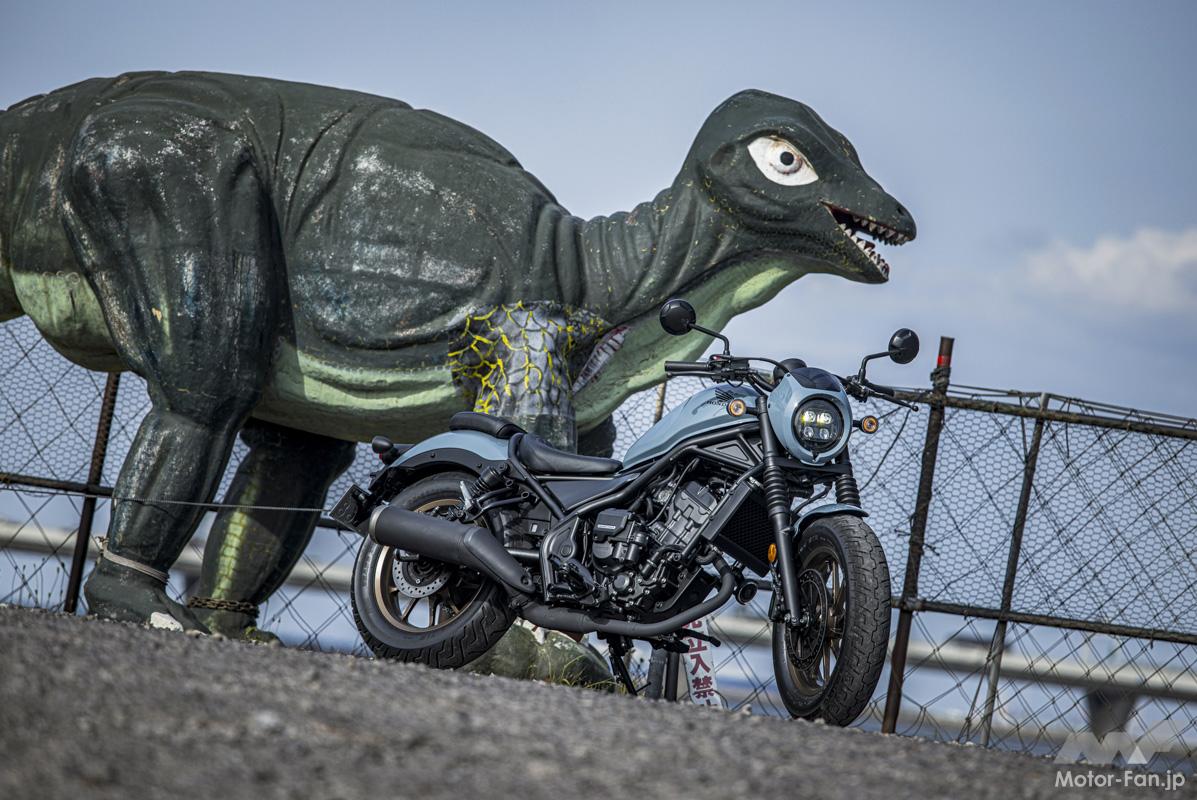
There is no downshift blipper, but I didn’t feel the need for one at all. During the test ride, I rode on a road that climbed up a riverbank. I slowed down while climbing a steep hill in second gear and made a sharp U-turn. I shifted down to first gear while banking deeply and accelerated. Because I wasn’t going very fast, it was a situation where the bike’s balance could easily be lost. Even in a situation like this, the Rebel 250 E-Clutch allowed me to decelerate and downshift smoothly with only a partial clutch. I’m very grateful for the ability to change gears without hesitation in any situation.
By the way, the E-Clutch allows you to operate the clutch manually by squeezing the clutch lever. When making delicate maneuvers such as U-turns, the rider can operate the clutch at will.
However, the Rebel 250’s E-Clutch has gentle half-clutch control, so there should be very few opportunities to operate the clutch lever. In fact, even during this shoot, I made many U-turns with the handlebars fully locked, but I never once had to operate the clutch lever.
The Rebel250’s E-Clutch seems like it would be a great addition to a pillion ride. Everyone has probably experienced a situation where shifting became too rough while riding pillion and their helmets collided. This doesn’t happen with the E-Clutch, which allows for smooth acceleration and deceleration with almost no shock up or down. Using the optional comfort pillion seat will also greatly reduce fatigue on long pillion rides.
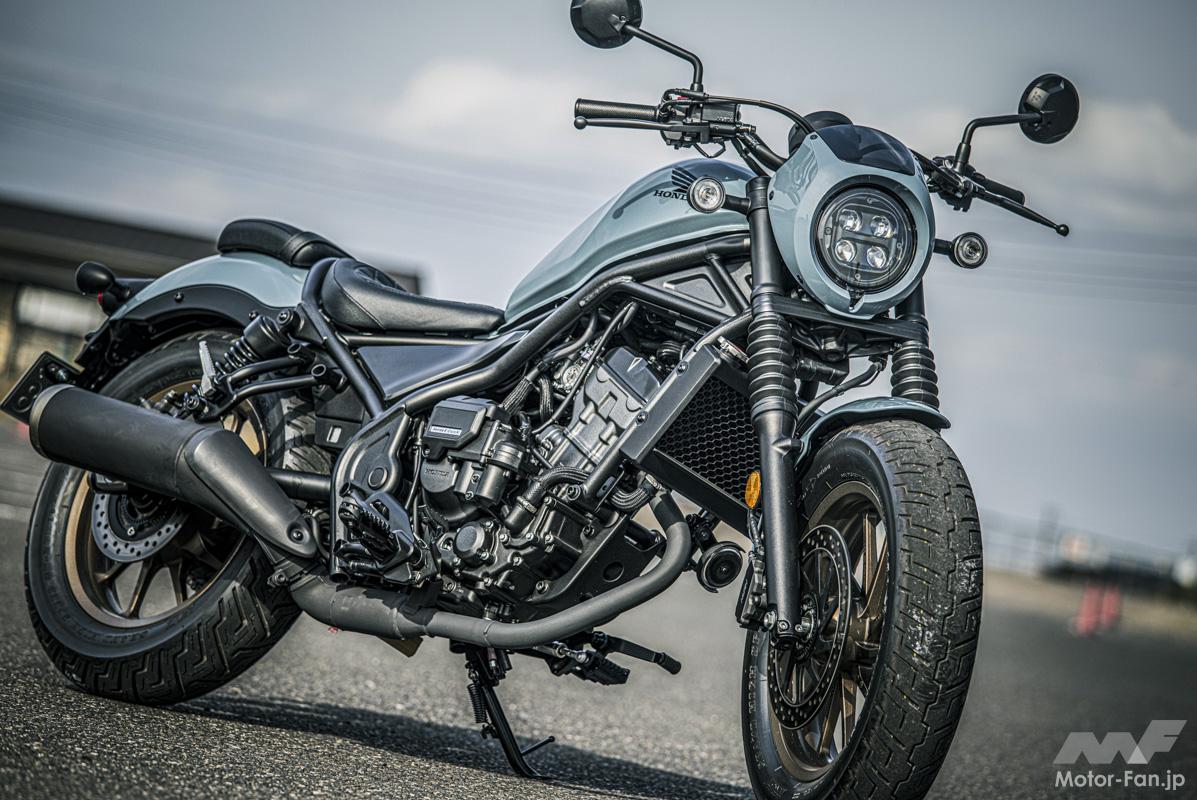
The Rebel250 E-Clutch surprised me with how smoothly a single-cylinder 250 can accelerate and decelerate. The engineer said, “We designed it so that you’ll enjoy changing gears,” and it’s a machine that really conveys that.
Position & Foot Landing (Height 178cm, Weight 75kg)
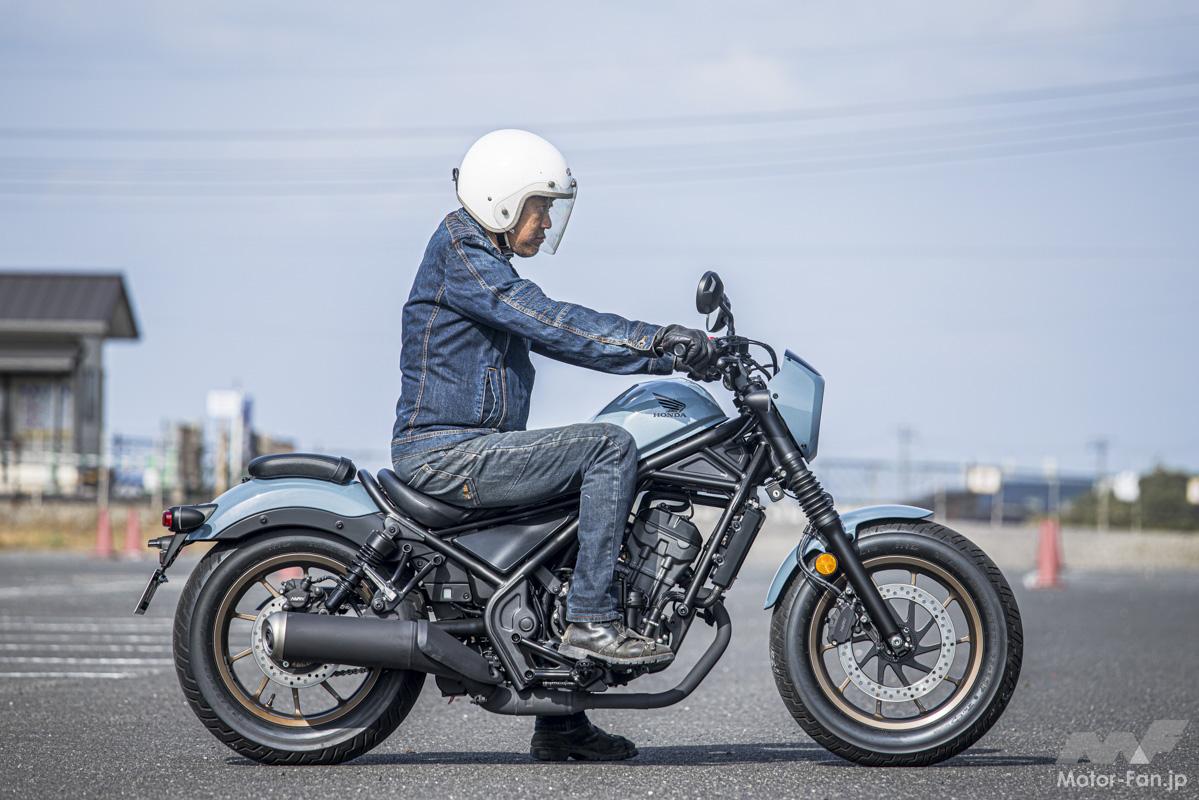
The change in handlebar position is also due to the rider’s build, so I didn’t feel much difference from the previous model, but the improved seat comfort was noticeable the moment I got on. Together with the E-Clutch, this will likely greatly reduce rider fatigue on long-distance tours.
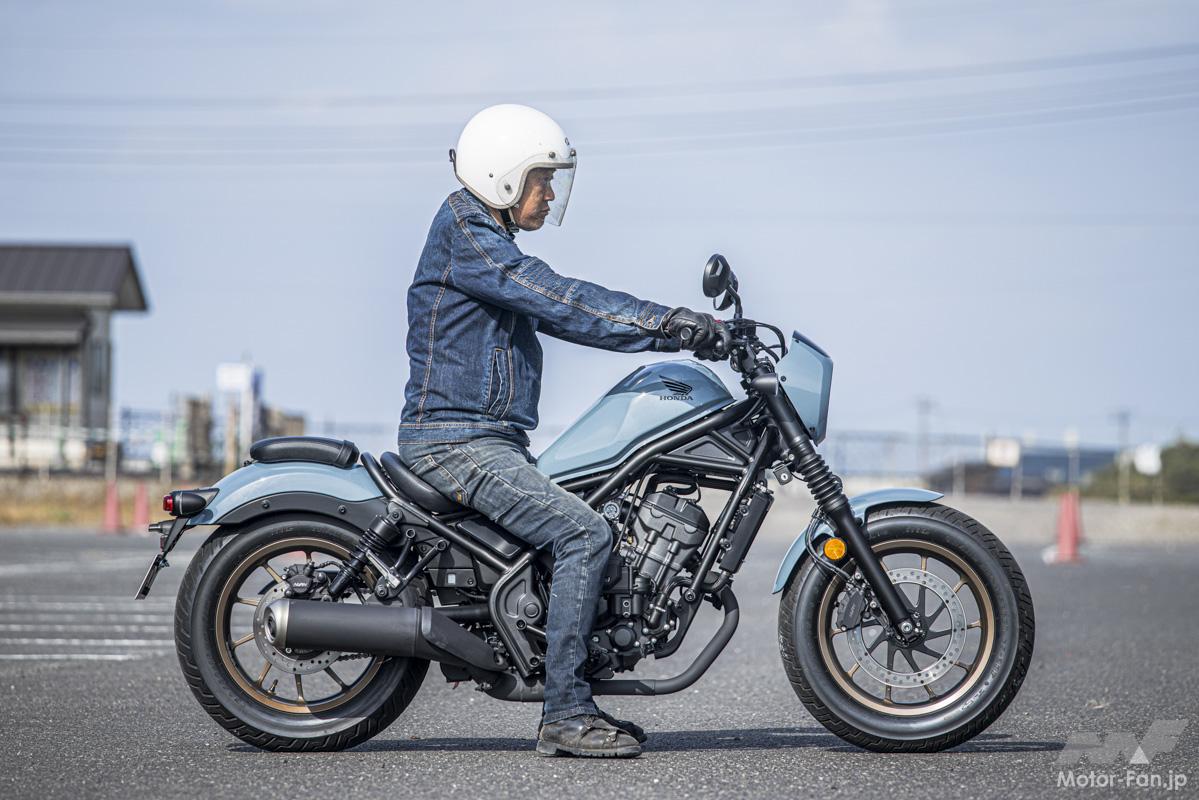
The sponge on the seat has been changed, but the ease of putting your feet on the ground remains the same. The E-Clutch protrudes from the clutch cover, but it only slightly hits your feet when you put your feet on the ground. It didn’t bother me at all when I was actually riding.
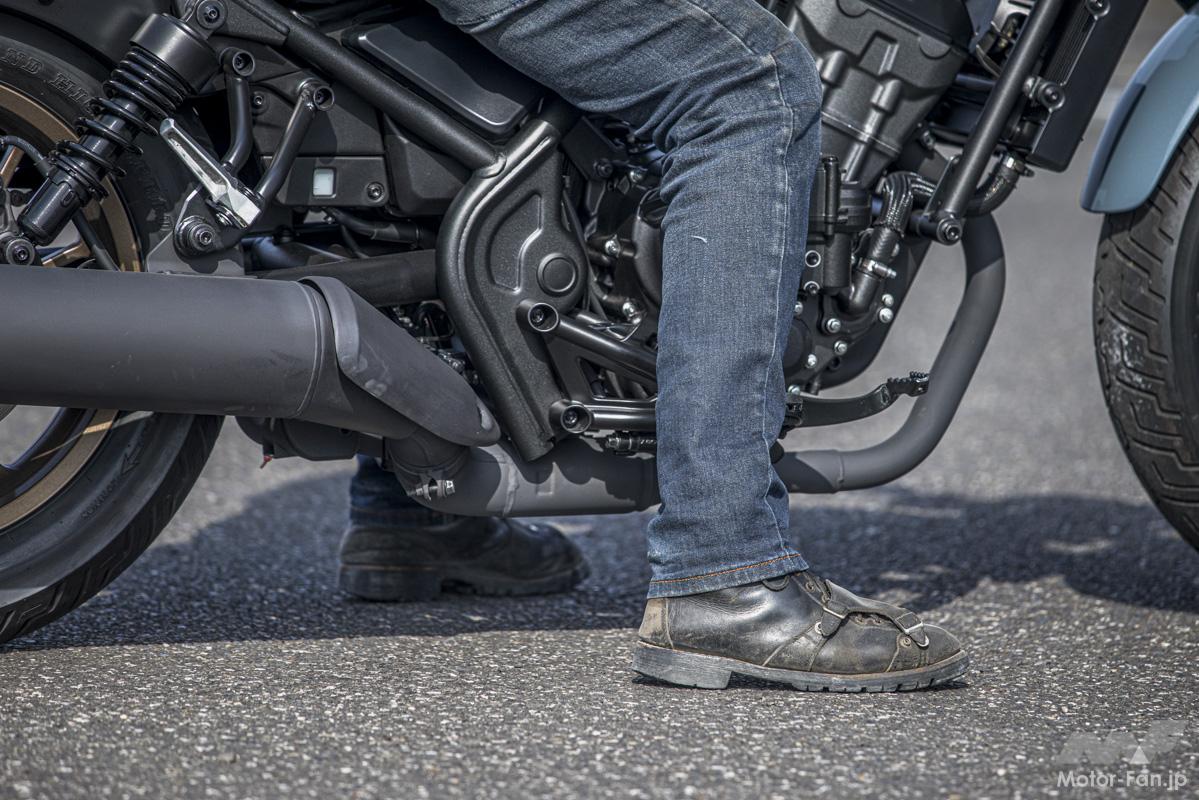
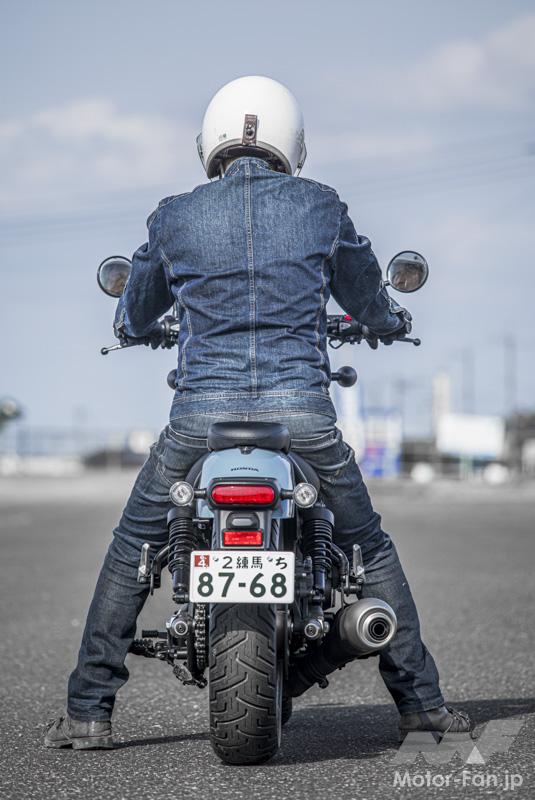
detail
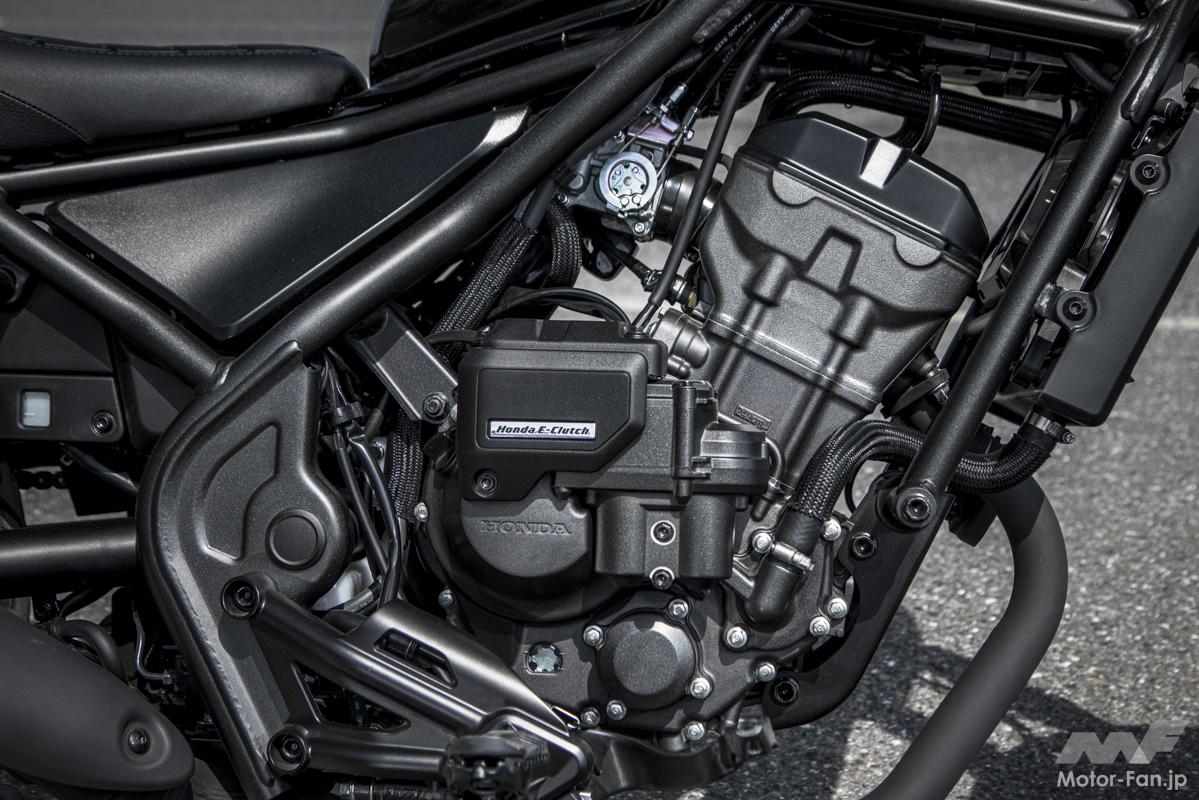
The E-Clutch unit is basically the same as the CB650R, with only some parts and covers redesigned to suit the Rebel 250.
ADVERTISEMENT
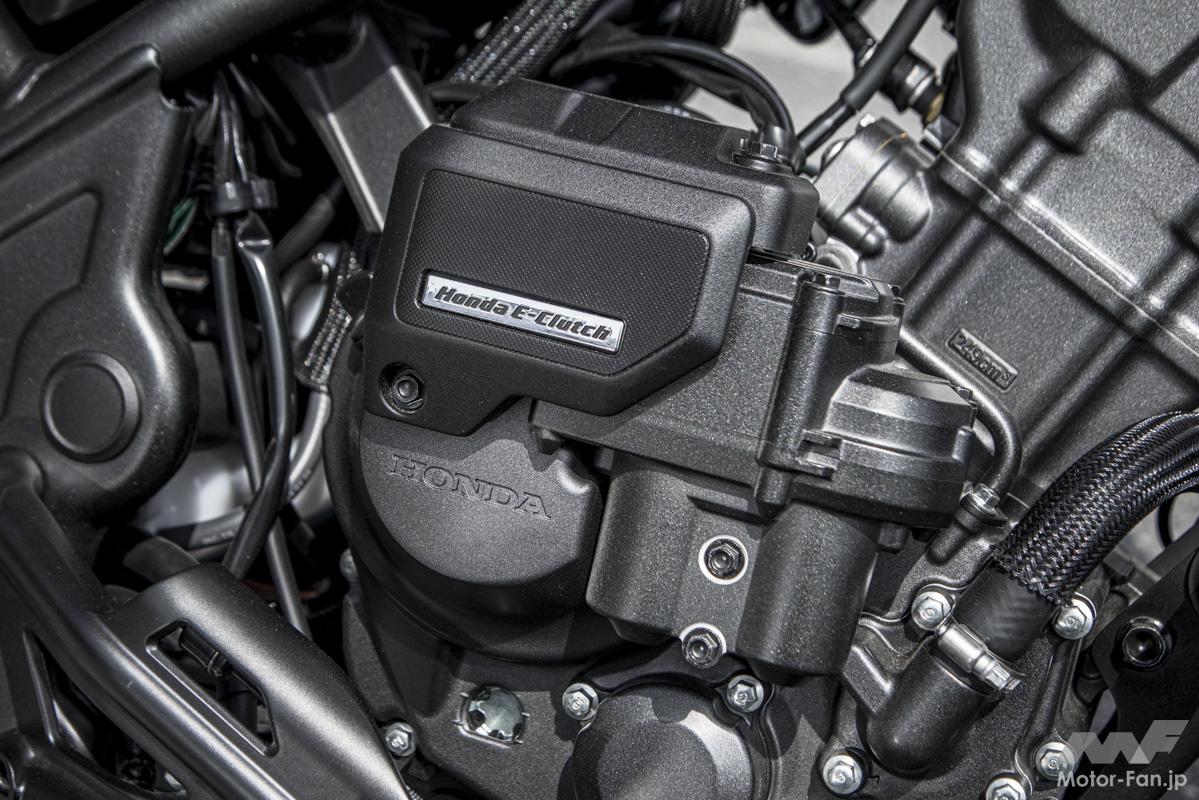
The CB650R unit is too large as it is, so the cover was designed not to ruin the atmosphere of the Rebel 250 engine.
ADVERTISEMENT
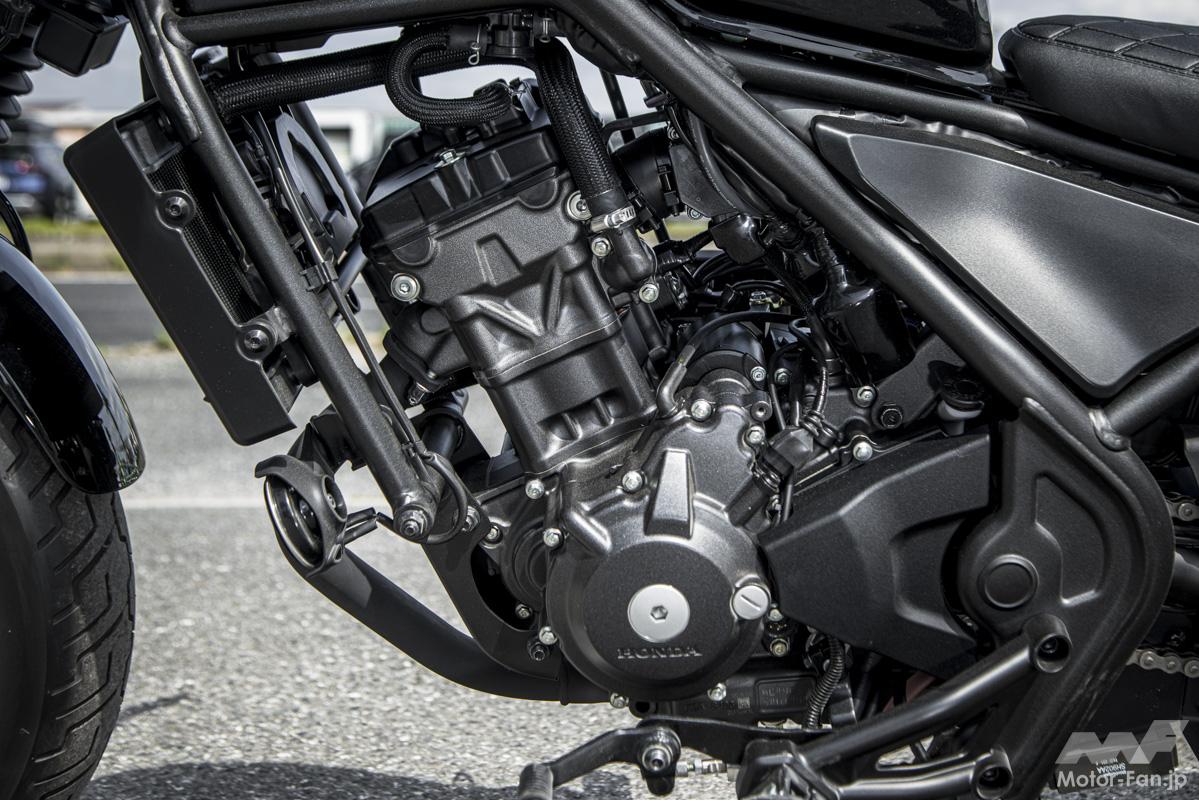
When viewed from the left side, the engine design is the same as that of a manual clutch.
ADVERTISEMENT
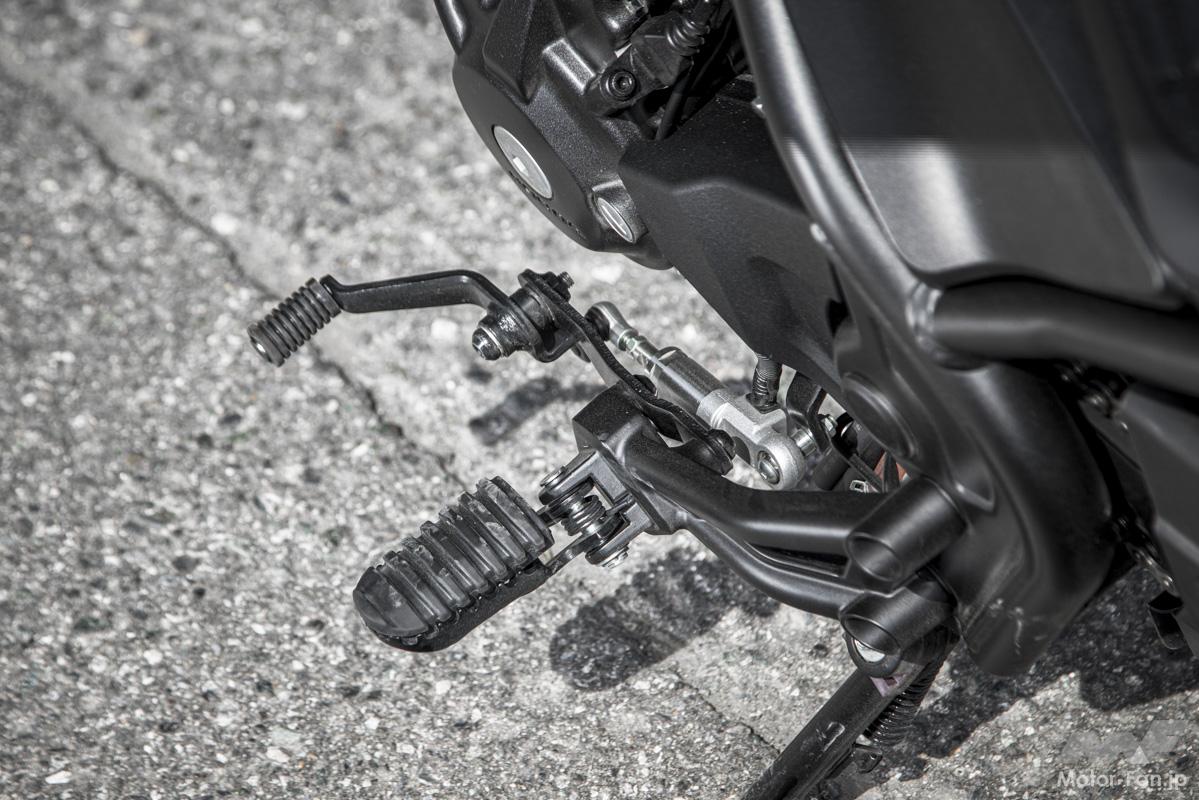
The shift pedal stroke sensor is set inside the pedal so that it cannot be seen from the side.
ADVERTISEMENT
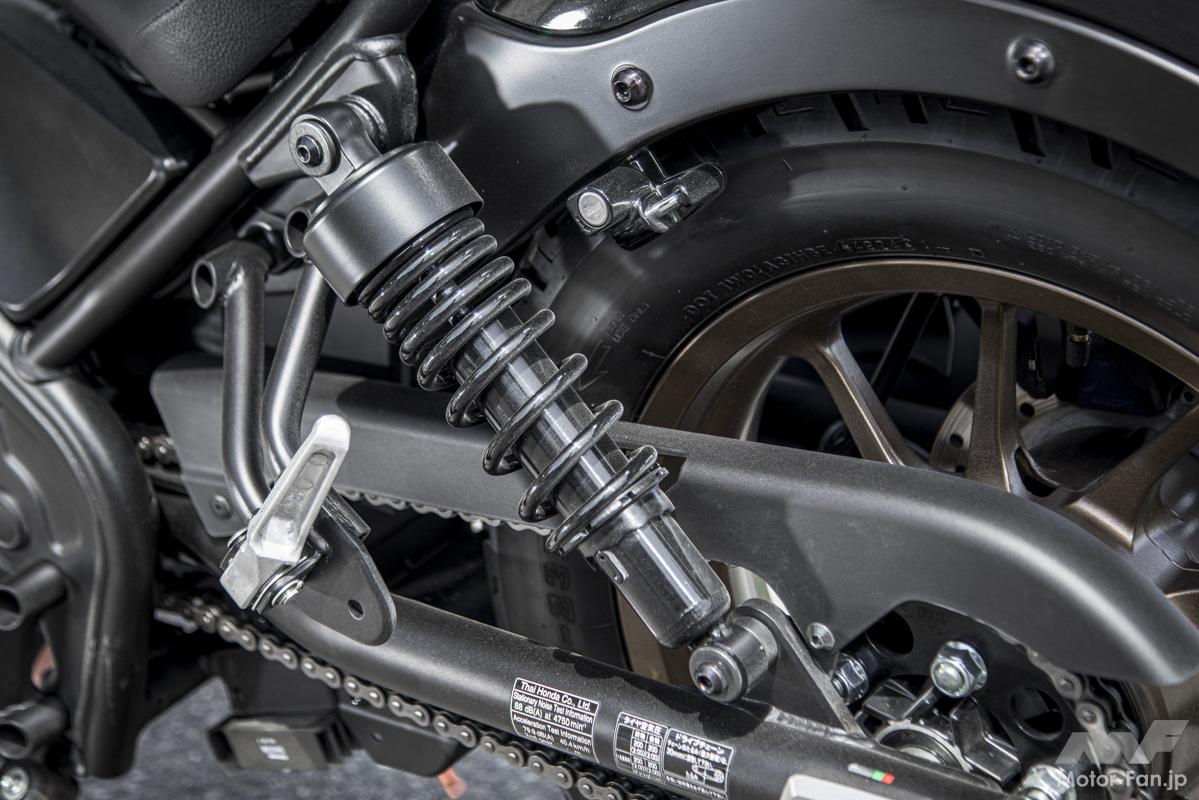
The rear suspension is a twin shock absorber. Cruiser-type bikes with low seat heights can have poor shock absorption, but the Rebel 250’s suspension reliably absorbs shocks from the road surface.
ADVERTISEMENT
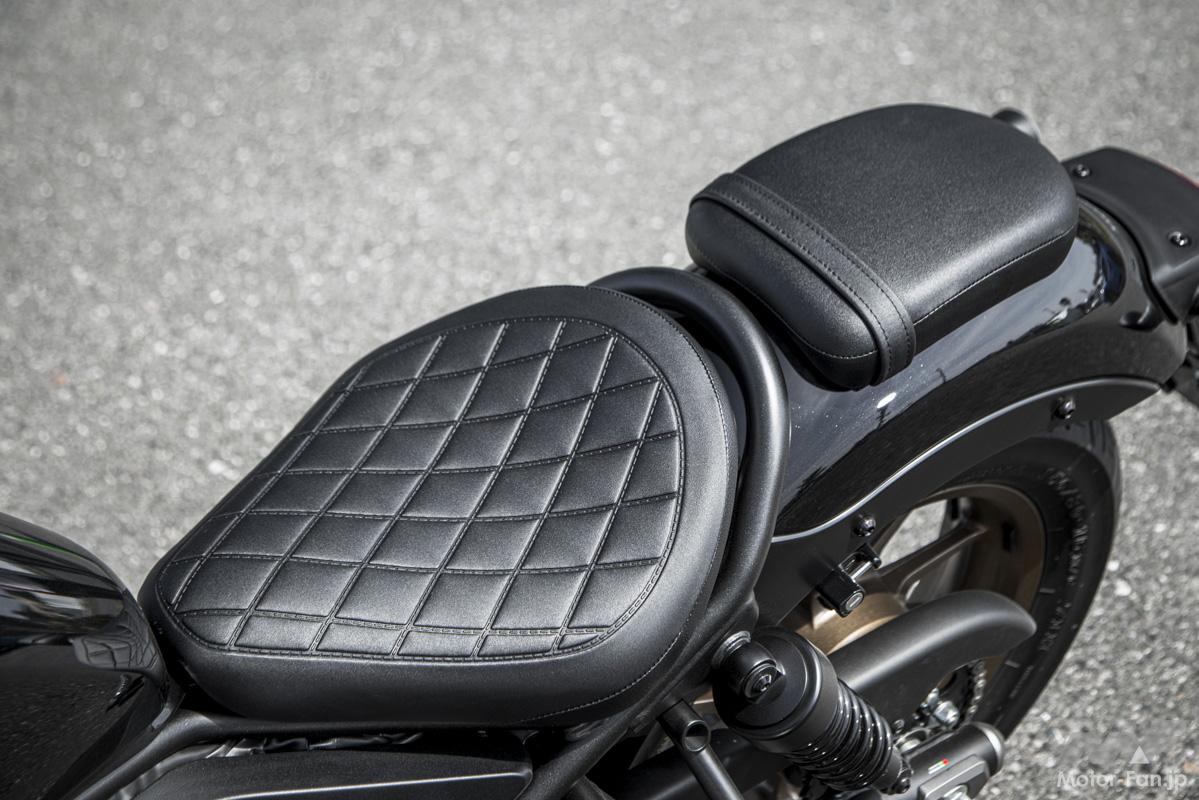
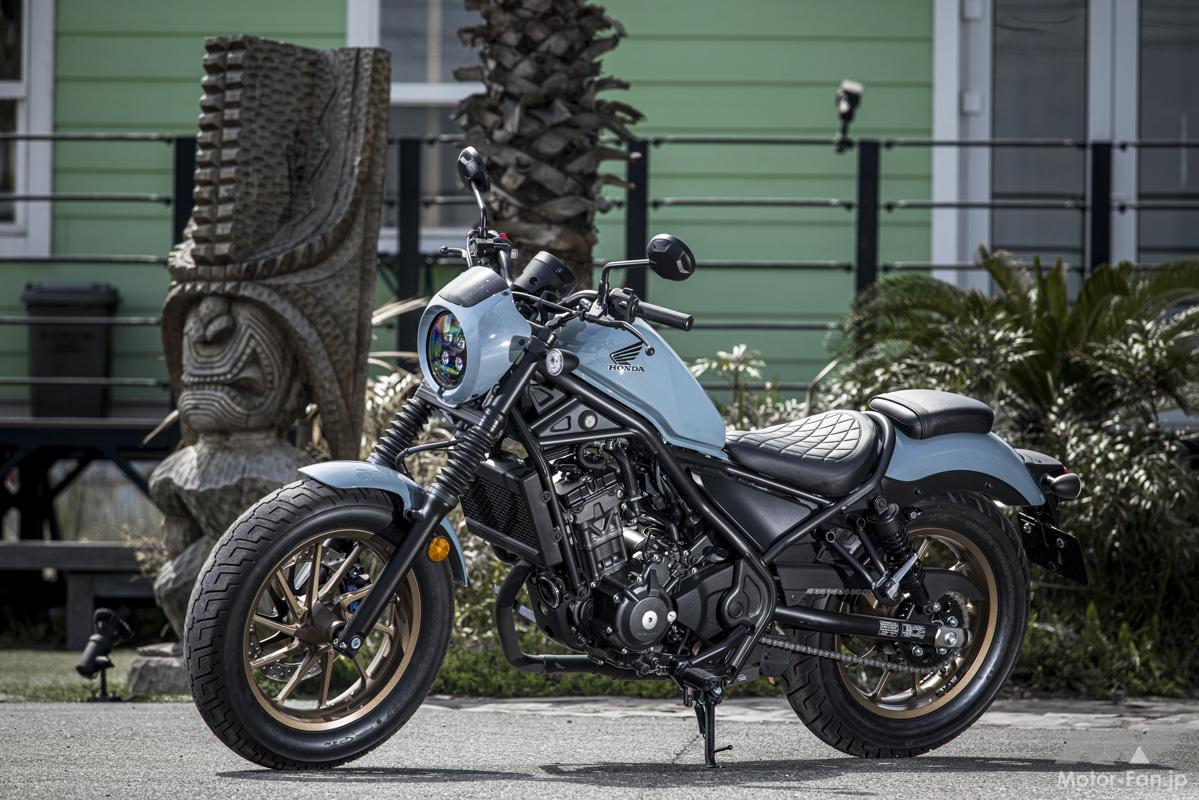
The seat uses high-resilience sponge for improved ride comfort, and the Rebel 250 S Edition E-Clutch’s seat leather features diamond-stitched wadding.
ADVERTISEMENT
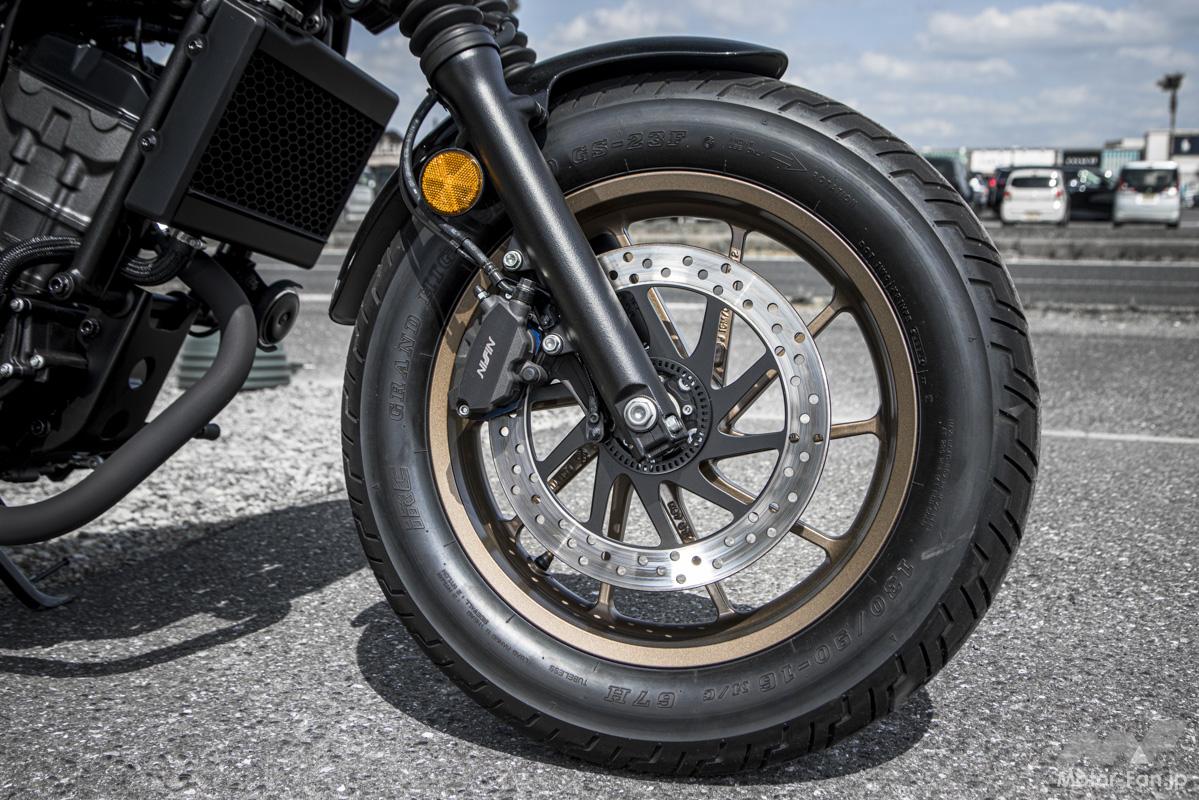
The front tire is 130/90-16. The wide 16-inch tire creates a low and long image. ABS is equipped on both the front and rear brakes.
ADVERTISEMENT
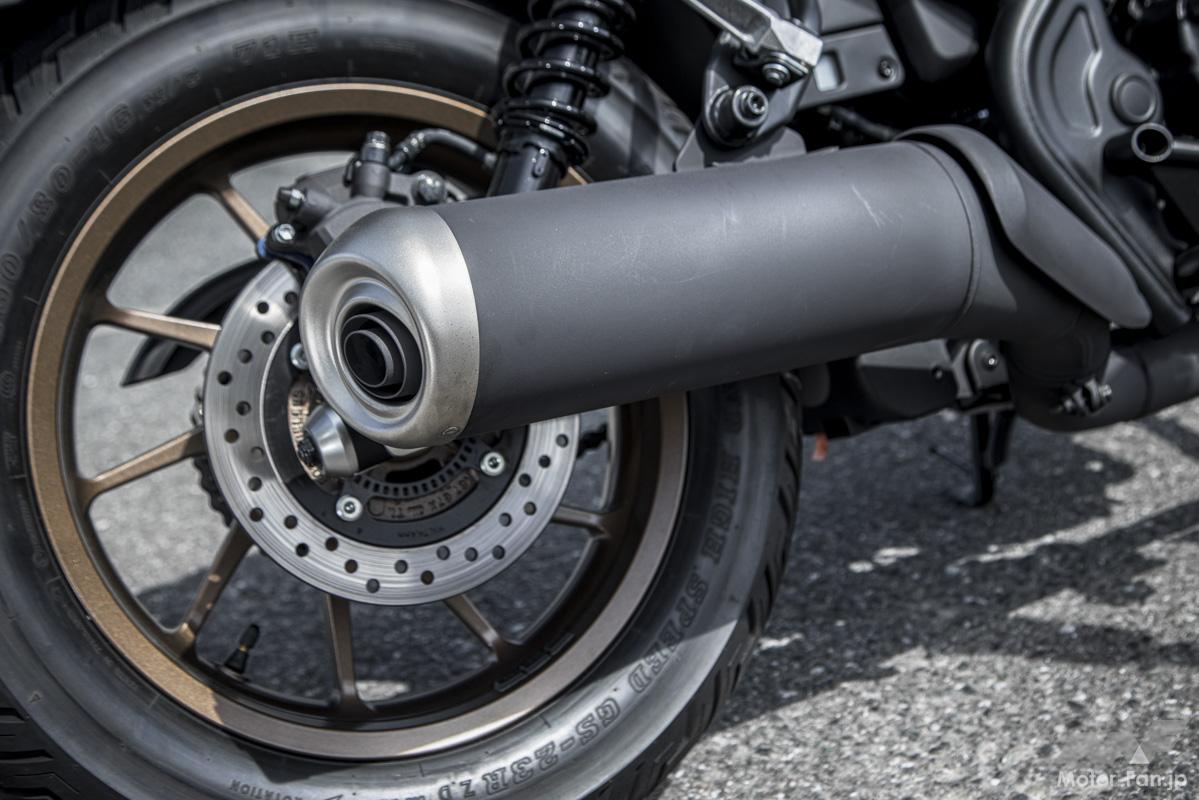
A muffler that produces the pleasant exhaust sound of a single-cylinder engine.
ADVERTISEMENT
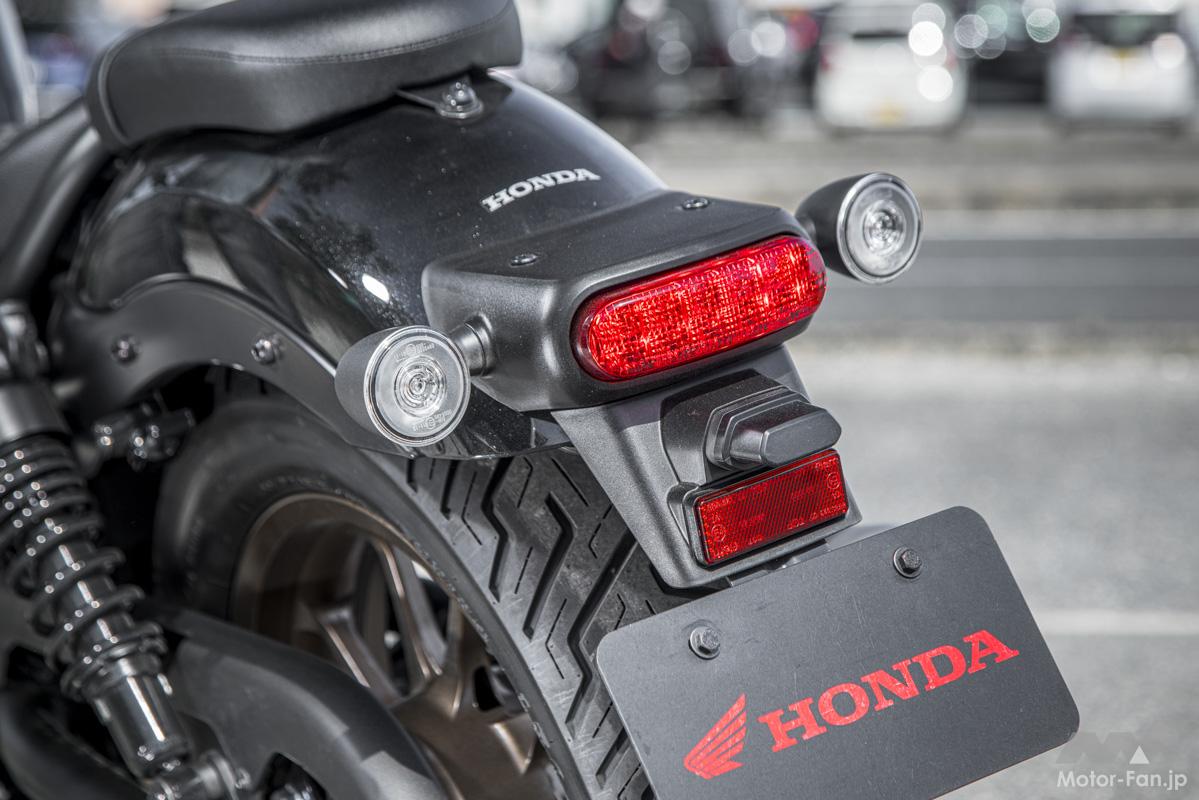
The lights are fully LED, and the rear fender is made of plastic.
ADVERTISEMENT
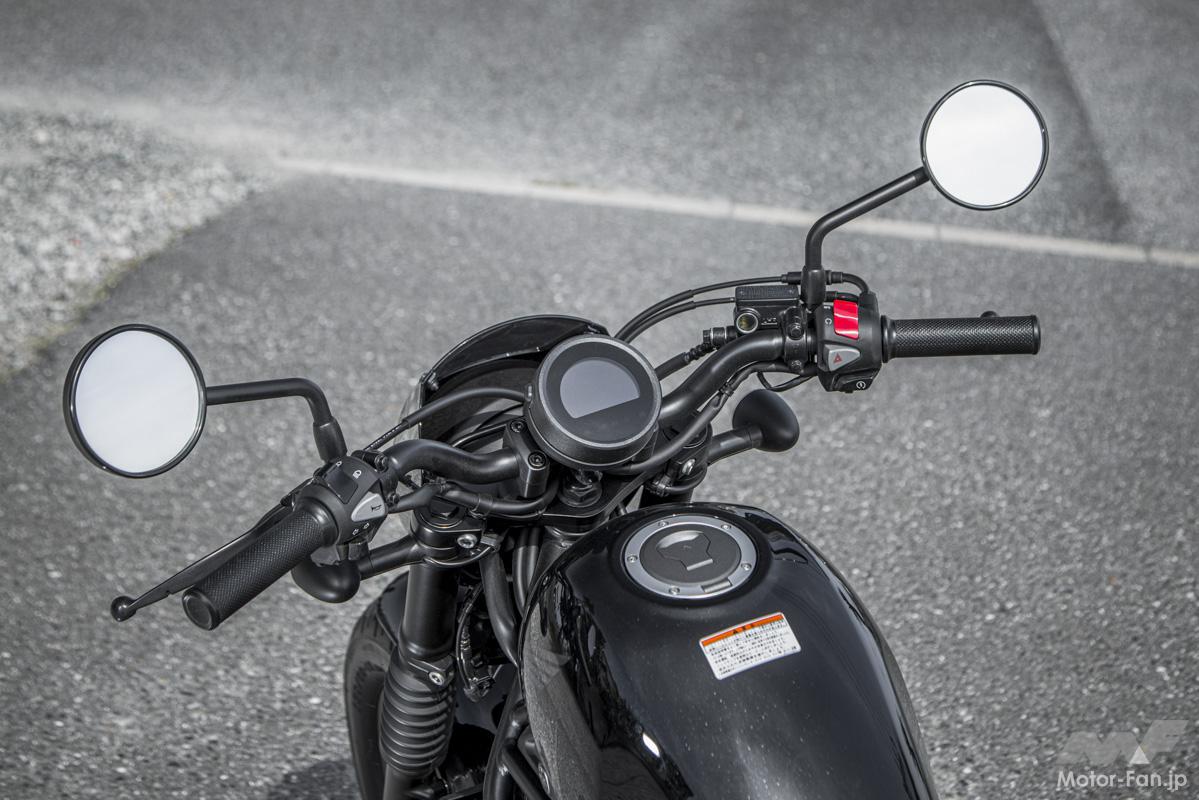
In response to user feedback that the handlebars were difficult to reach when fully locked, the handlebar position has been shortened by 10mm (8.9mm at the gripping position), moved forward by 6.5mm, and raised by 5mm. The distance from the steering stem has been shortened to improve operability when turning the handlebars.
ADVERTISEMENT
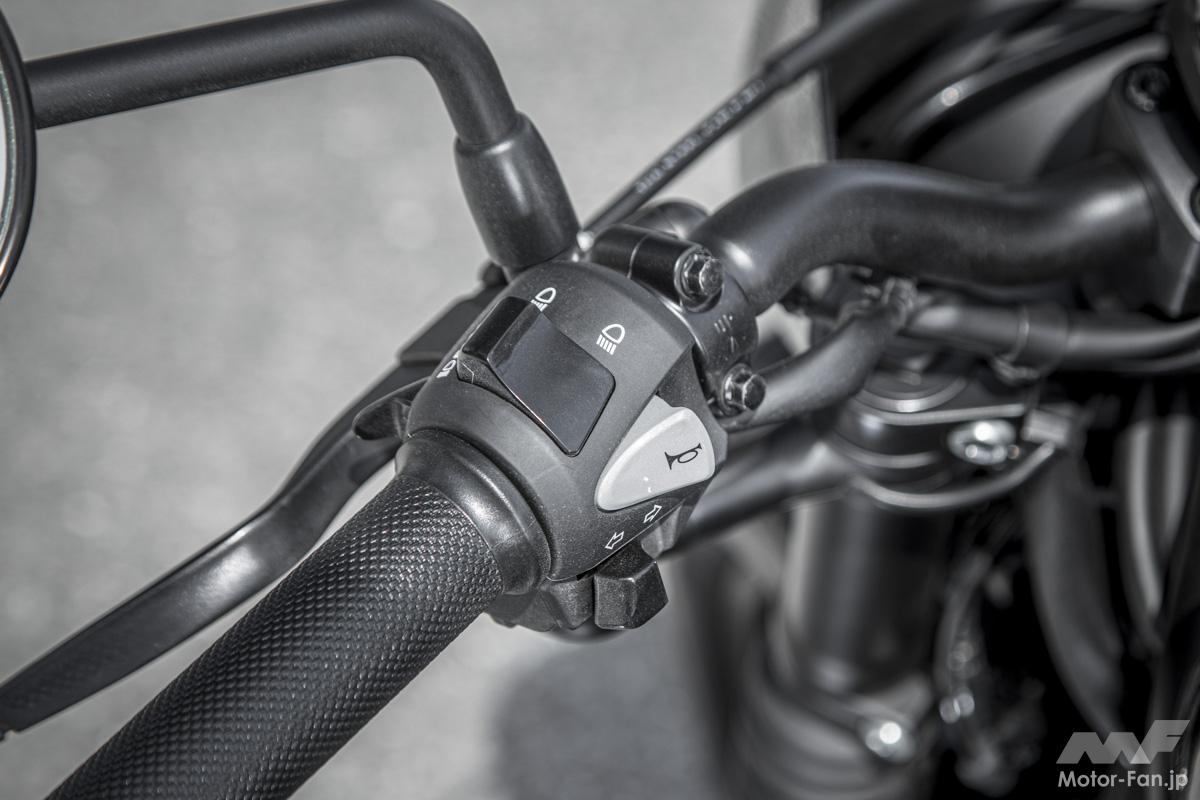
The left switch box has buttons for the headlight up/down, horn, and turn signals.
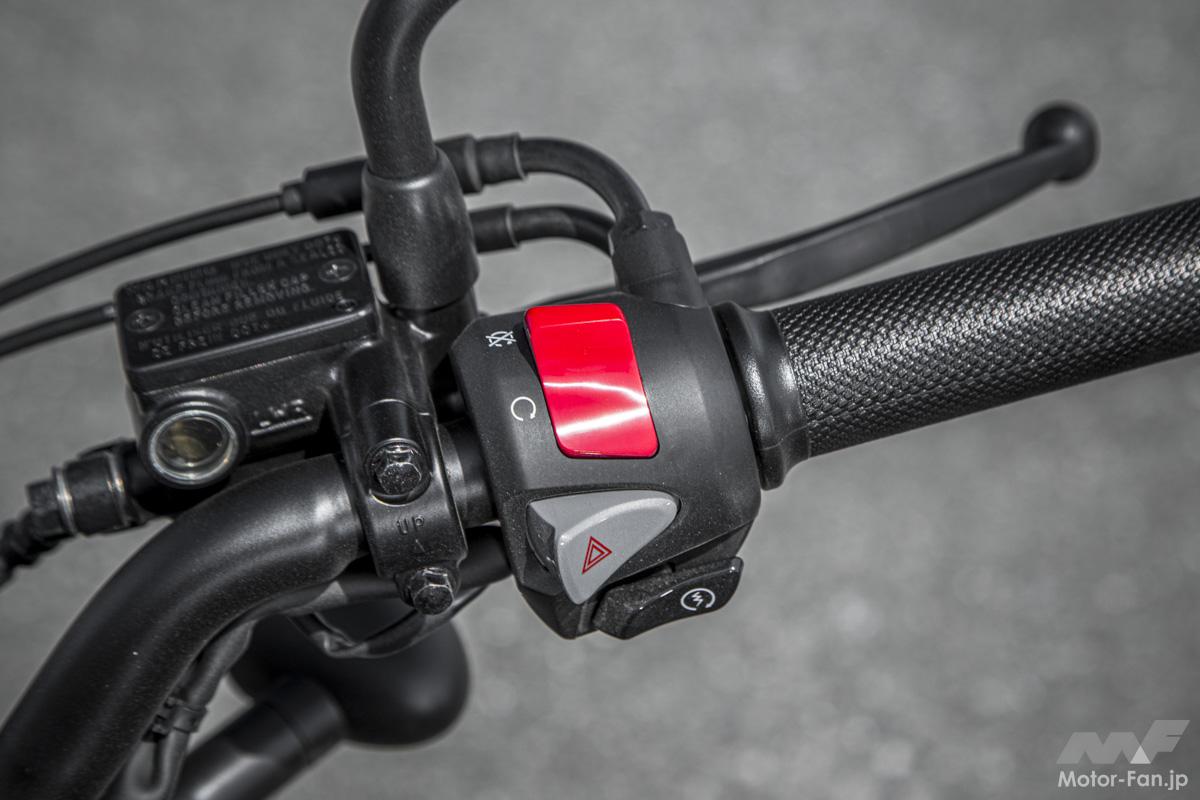
The right switch box has the kill switch, starter, and hazard light buttons. Just because it’s an E-Clutch doesn’t mean there are any extra switches.
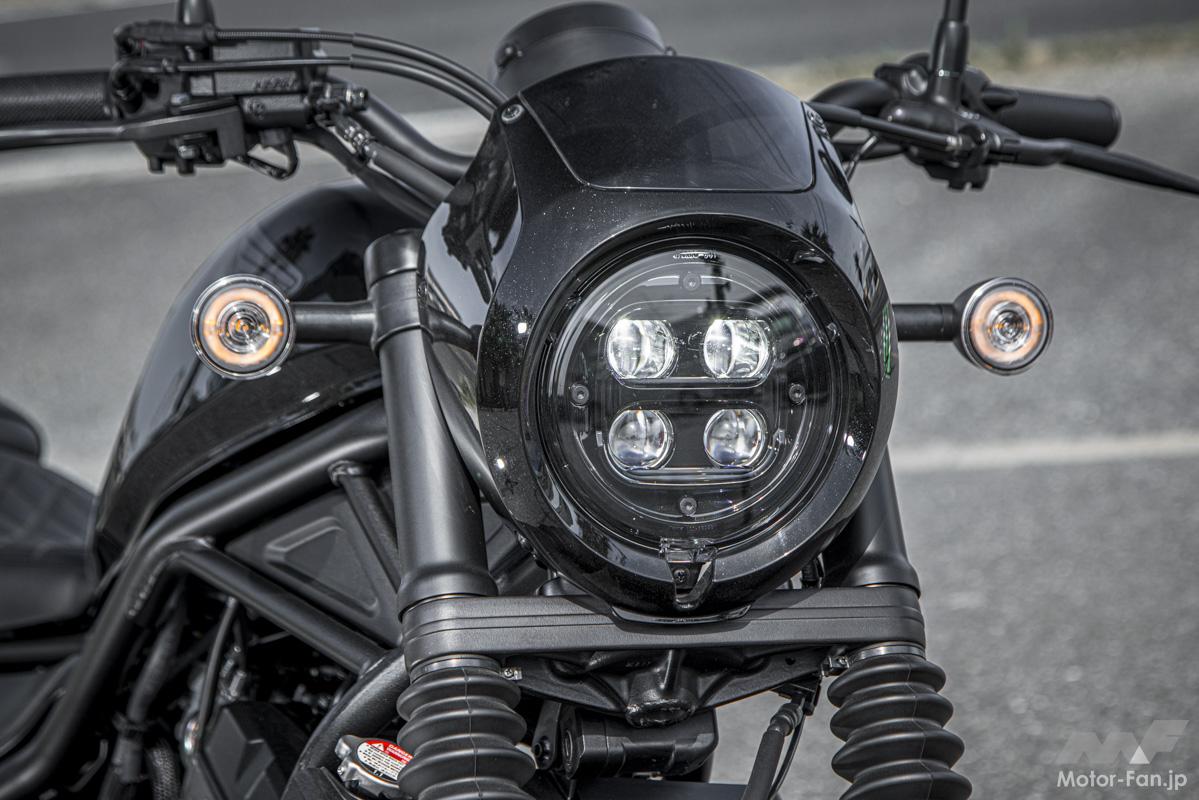
The Rebel 250 S Edition E-Clutch has a bikini cowl-style light cover on the headlight, giving it a different image.
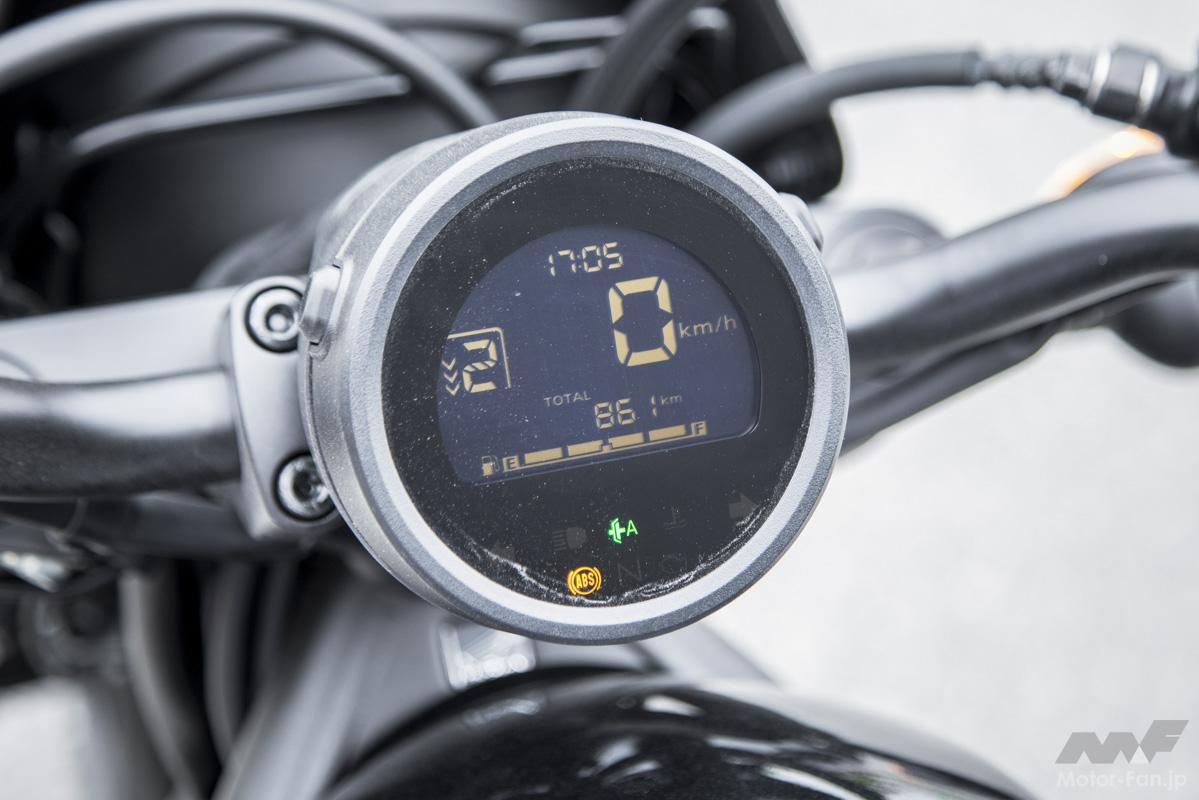
The meter now has an indicator that shows the operation of the E-Clutch. A downward arrow to the left of the gear position urges the rider to downshift. The E-Clutch has excellent clutch control, so it is possible to ride in a higher gear without any problems, but frequent use of the half-clutch increases wear on the clutch plates.
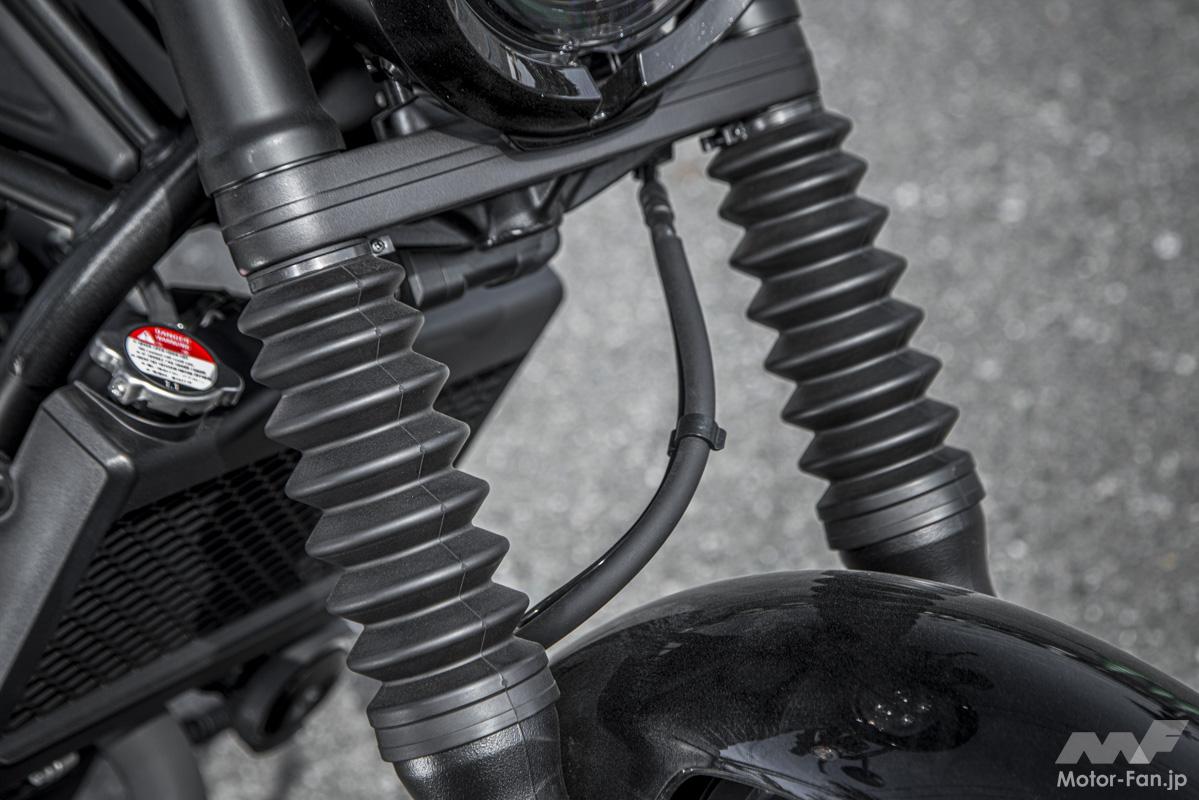
The Rebel 250 S Edition E-Clutch is fitted with fork boots on the front forks, which give it a retro feel and also help prevent foreign matter from getting into the oil seal.
Main specifications : [ ] indicates E-Clutch, [ ] indicates S Edition E-Clutch
| Car name and model | Honda 8BK-MC49 | |||
|---|---|---|---|---|
| Total length (mm) | 2,205 | |||
| Overall width (mm) | 810 | |||
| Overall height (mm) | 1,090 | |||
| Wheelbase (mm) | 1,490 | |||
| Minimum ground clearance (mm) ★ | 134 | |||
| Seat height (mm) ★ | 690 | |||
| Vehicle weight (kg) | 171【174】〔175〕 | |||
| Passenger capacity (people) | 2 | |||
| Fuel consumption rate *1 (km/L) | Ministry of Land, Infrastructure, Transport and Tourism notified value: Stationary fuel consumption value *2 (km/h) | 47.0 (60) (2 passengers) | ||
| WMTC mode value ★ (class) *3 | 34.9 (Class 2-2) (1 passenger) | |||
| Minimum turning radius (m) | 2.8 | |||
| Engine model | MC49E | |||
| Engine type | Water-cooled 4-stroke DOHC 4-valve single cylinder | |||
| Total displacement (cm 3 ) | 249 | |||
| Inner diameter x stroke (mm) | 76.0×55.0 | |||
| Compression ratio ★ | 10.7 | |||
| Maximum output (kW [PS]/rpm) | 19 [26]/9,500 | |||
| Maximum torque (N・m [kgf・m]/rpm) | 22 [2.2]/6,500 | |||
| Fuel supply device type | Electronic type (Electronically controlled fuel injection system (PGM-FI)) | |||
| Starting method ★ | Self-service | |||
| Ignition system type ★ | Fully transistorized battery ignition | |||
| Lubrication method ★ | Combined pressure-fed droplet type | |||
| Fuel tank capacity (L) | 11 | |||
| Clutch type ★ | Wet multi-plate coil spring type | |||
| Transmission type | Constant mesh 6-speed return | |||
| gear ratio | 1st gear | 3.416 | ||
| 2nd speed | 2.250 | |||
| 3rd speed | 1.650 | |||
| 4-speed | 1.350 | |||
| 5-speed | 1.166 | |||
| 6-speed | 1.038 | |||
| Reduction ratio (1st order /2nd order) | 2.807/2.571 | |||
| Caster angle (degrees) ★ | 28°00′ | |||
| Trail amount (mm) ★ | 110 | |||
| tire | before | 130/90-16M/C 67H | ||
| rear | 150/80-16M/C 71H | |||
| Brake type | before | Hydraulic disc (ABS) | ||
| rear | Hydraulic disc (ABS) | |||
| Suspension method | before | Telescopic type | ||
| rear | Swing arm type | |||
| Frame Format | diamond | |||
- ■ Type approval application figures according to the Road Transport Vehicle Act (★ indicates Honda published specifications)
- ■ Manufacturer/Thai Honda Co., Ltd.
- ■ Country of manufacture: Thailand
- ■ Importer: Honda Motor Co., Ltd.
- *1 Fuel consumption rates are based on specified test conditions and may vary depending on various factors such as the customer’s operating environment (weather, traffic congestion, etc.), driving style, vehicle condition (equipment, specifications), and maintenance status.
- *2 Steady-state fuel consumption values are fuel consumption rates based on actual measurements taken while driving at a constant vehicle speed.
- *3 The WMTC mode value is a calculated value based on the results of exhaust gas tests measured in driving modes that are international standards and include starting, accelerating, stopping, etc. Driving mode classes are classified according to engine displacement and maximum speed.