
The aggressive and modern styling is sure to appeal to younger users.
While each of the new Mondial's models boasts eye-catching, unique designs, they generally have a somewhat classical feel. The Piega 125, however, boasts a modern streetfighter aesthetic. Its sharp bodywork, which extends all the way to the main frame, is equipped with a front wing, a short muffler for mass centralization, and sporty suspension—all styling and equipment sure to inspire the racing enthusiast. After all, the Piega 125 was designed by Italian designer Rodolfo Frascoli, who also designed Suzuki's new Katana.
The Benelli 125S is in the same category, and the Yamaha MT-125 and KTM DUKE125 are likely to be its direct rivals. While its engine power is slightly less than that of the MT-125 and DUKE125, it's not a big deal for street use, and should offer comparable performance.
FB Mondial Piega 125 ABS… 536,800 yen (tax included)
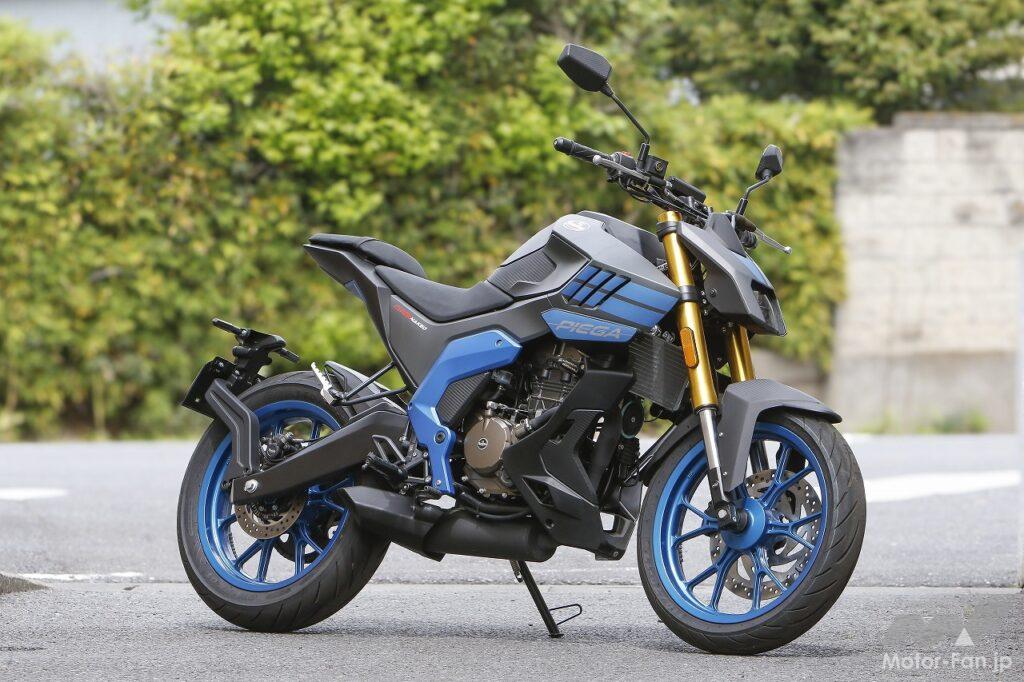
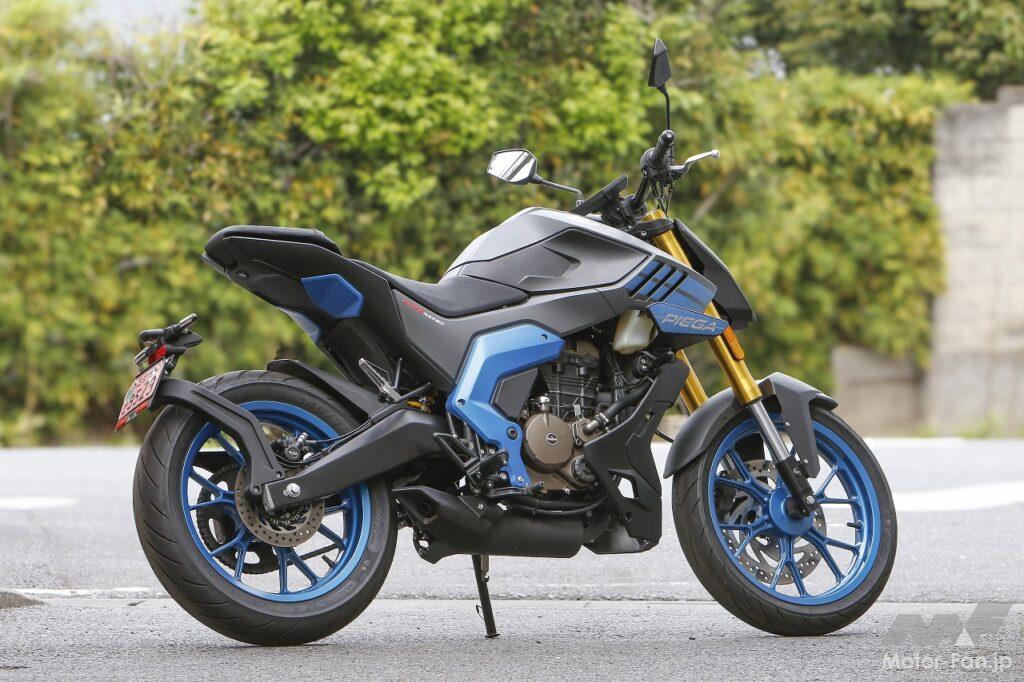
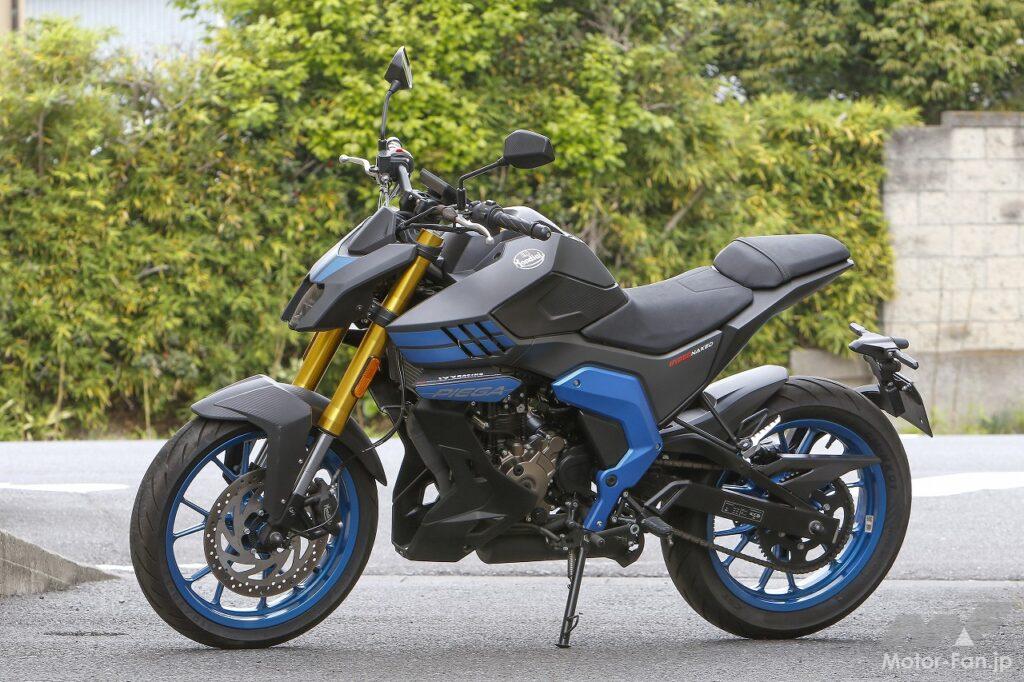
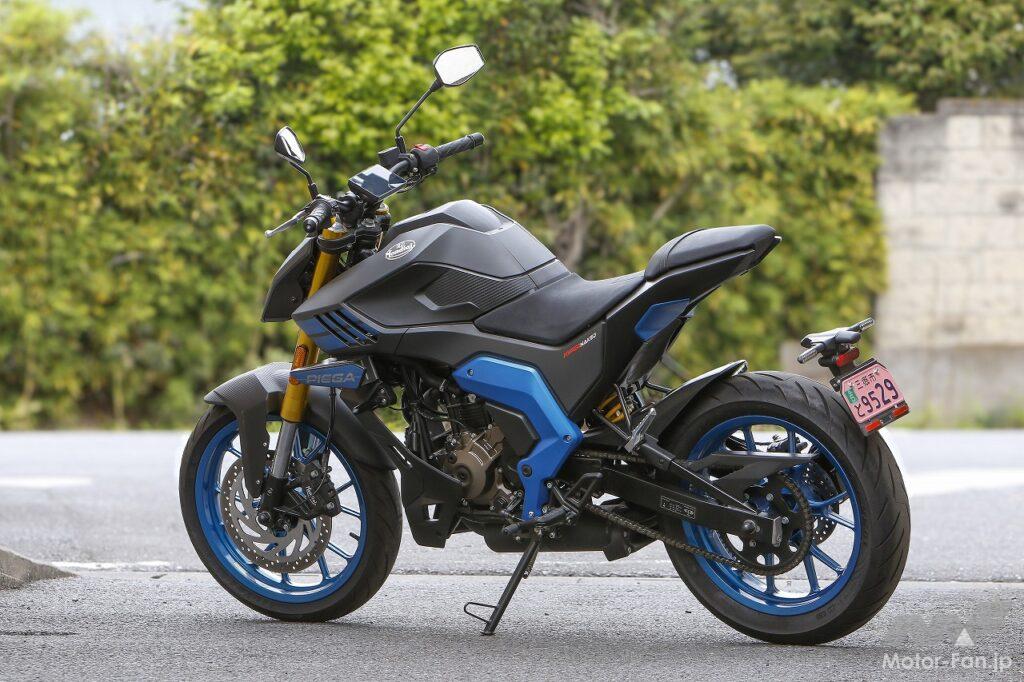
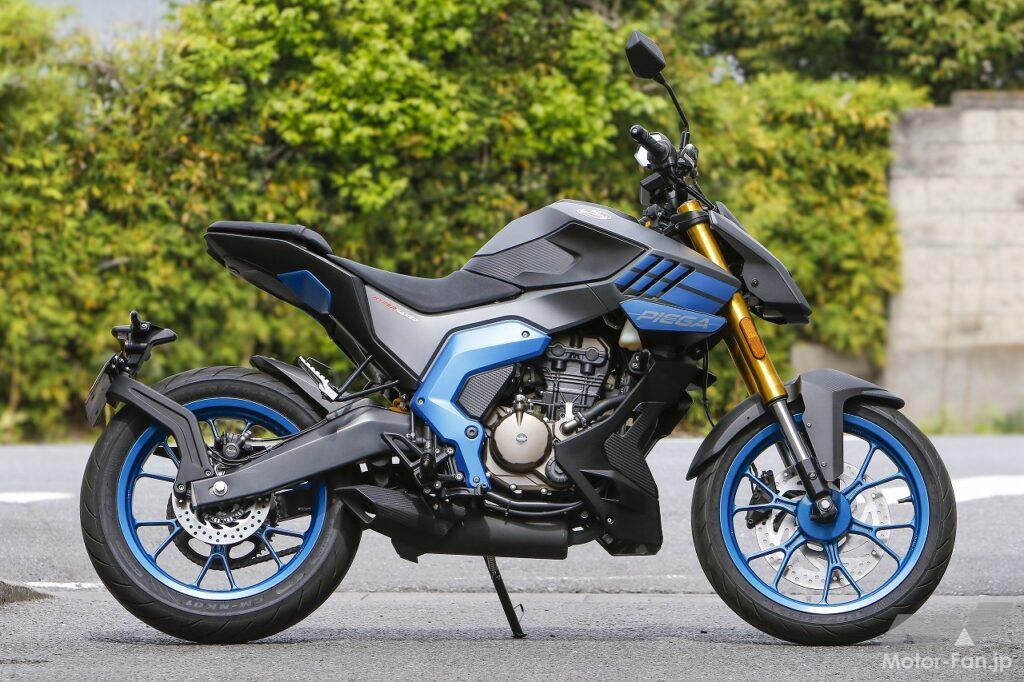
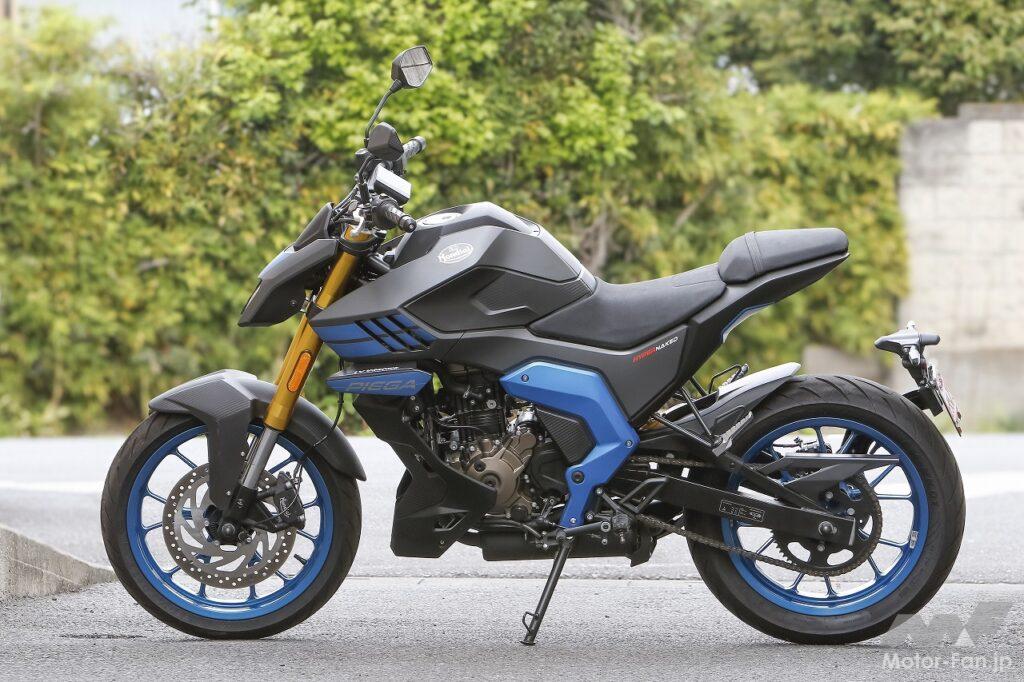
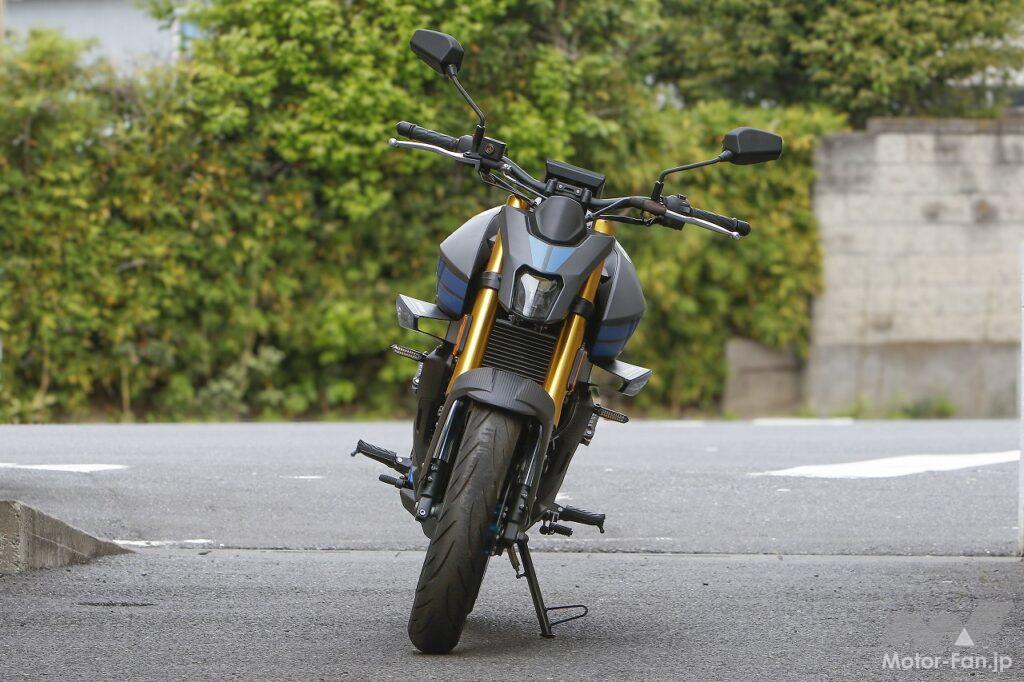
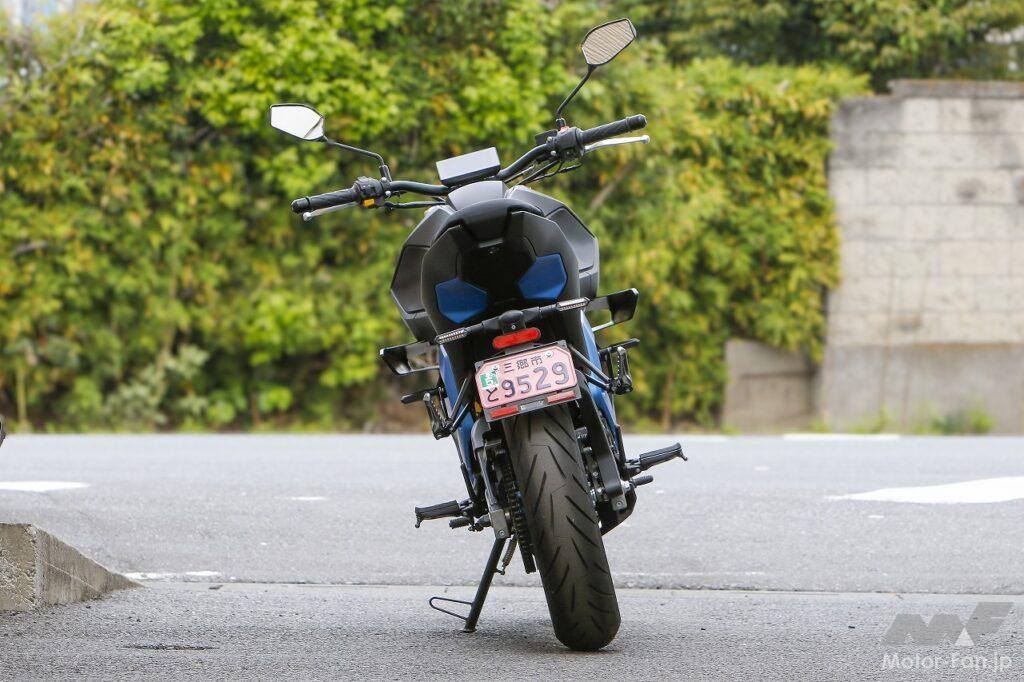
The upright riding position means it doesn’t feel cramped at all, even though it’s a Class 2 moped.
It is equipped with flat, semi-up handlebars, as befits a streetfighter. When you straddle the seat and place your hands on the handlebars, the compact body creates an upright upper body position. This position is suitable not only for street riding but also for touring.
The seat height is 820 mm, which is high for a Class 2 moped. However, the body is slim and the weight is light at 135 kg, so even smaller riders should be able to handle it without any worries. The seat is a short type, so there is not much freedom in seating position, but it fits your buttocks well and has good knee grip, so I felt it was easy to feel one with the machine.
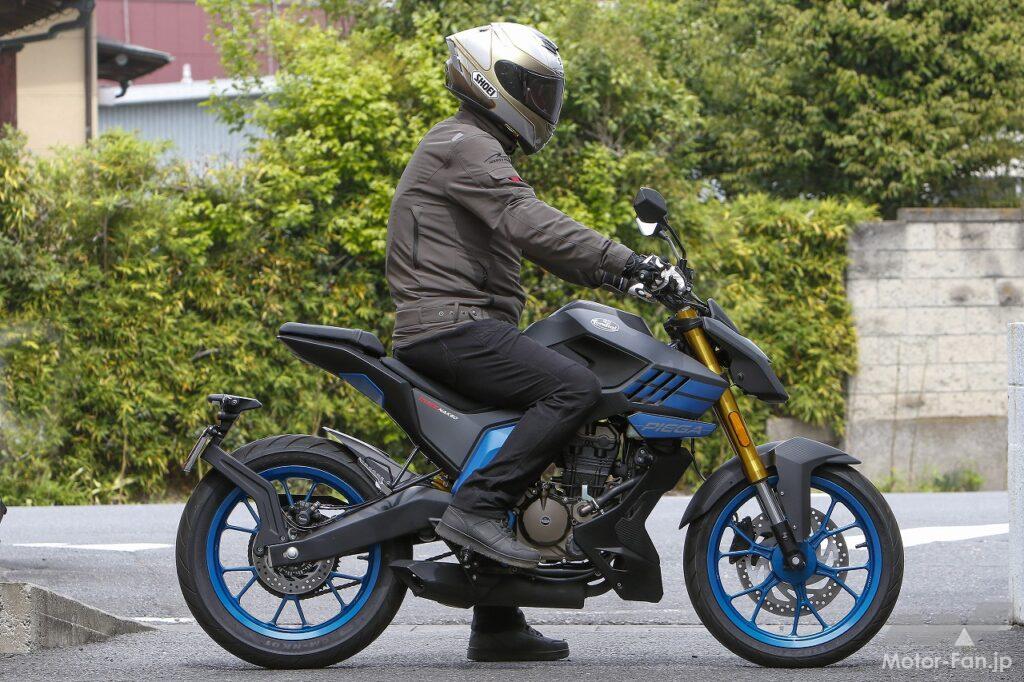
The seat height is 820mm, but the lightweight and compact body makes it easy to handle. The handlebars are low, but the upper body is upright, so the riding position is comfortable.
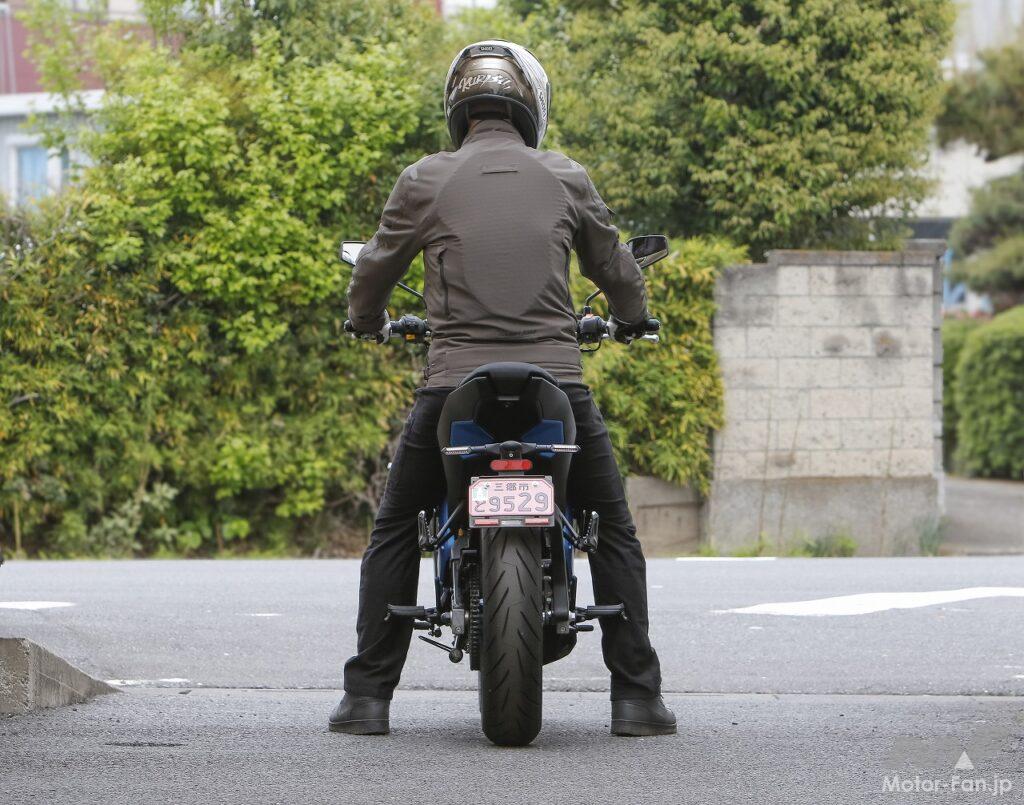
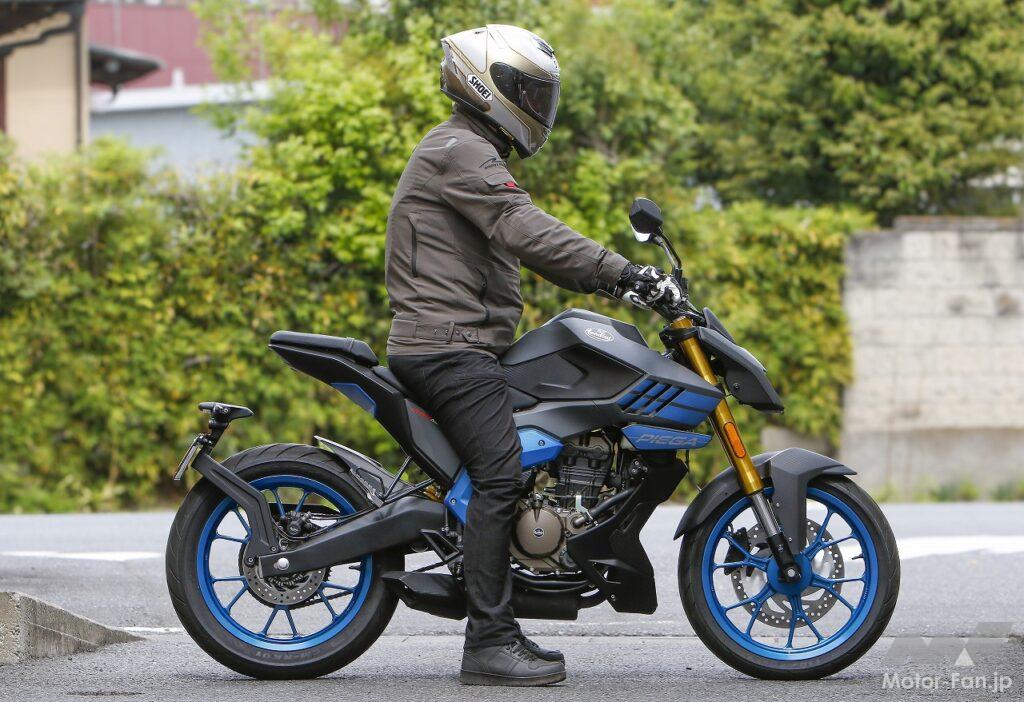
The engine revs up to high speeds without any stress, allowing you to fully enjoy sports riding.
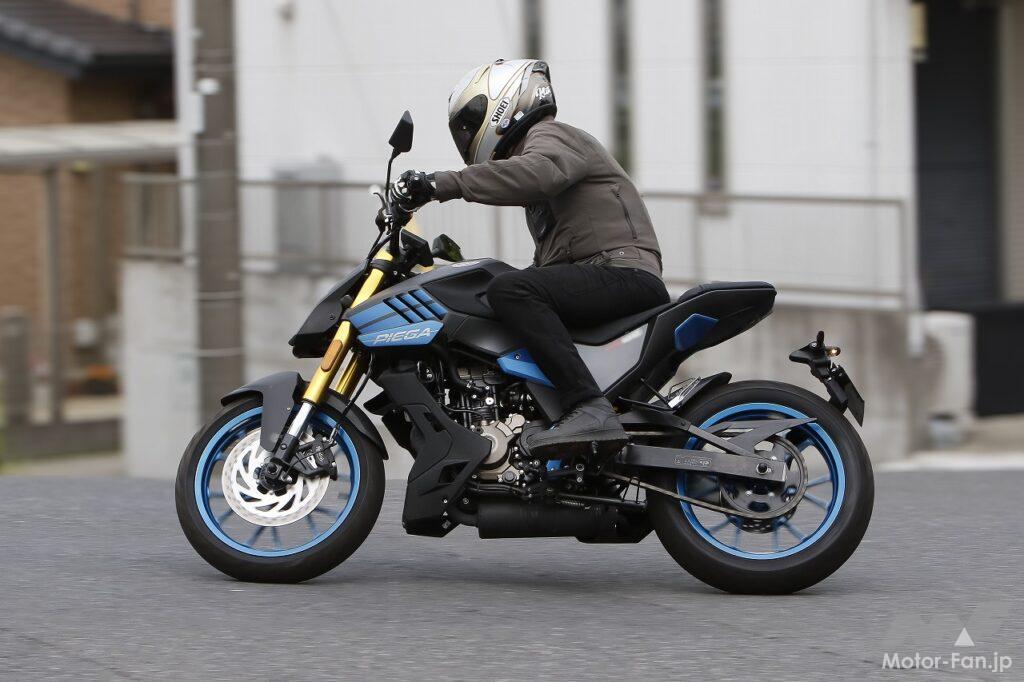
The Piega 125's engine is a 124cc water-cooled, DOHC, 4-valve, single-cylinder engine with Dell'Orto injection. It boasts a maximum power output of 10.0 kW at 9,750 rpm and a maximum torque of 10.5 Nm at 8,000 rpm. In actual riding, the engine responds smoothly from low rpm and revs up effortlessly all the way to 10,000 rpm. While the limited 124cc displacement doesn't give the impression of being particularly powerful, its flat torque distribution allows for linear response to throttle inputs at any rpm. This makes for an extremely user-friendly engine. In everyday driving, primarily around town, it's possible to accelerate at full throttle if desired. Of course, on winding roads, you can open the throttle and enjoy sporty riding. While Class 2 mopeds cannot be driven on highways, their greatest appeal lies in the ability to fully utilize their performance on regular roads and mountain passes. In that sense, I think the Piega 125 is a model that will remind you of the origins of the fun of sports bikes.
 The sound of the short muffler is well muted and not at all harsh to the ears. Warming up in the early mornings should be no problem. So, it will be a good companion for everyday use and weekend touring.
Not only is it light, but it also has a solid sense of stability.
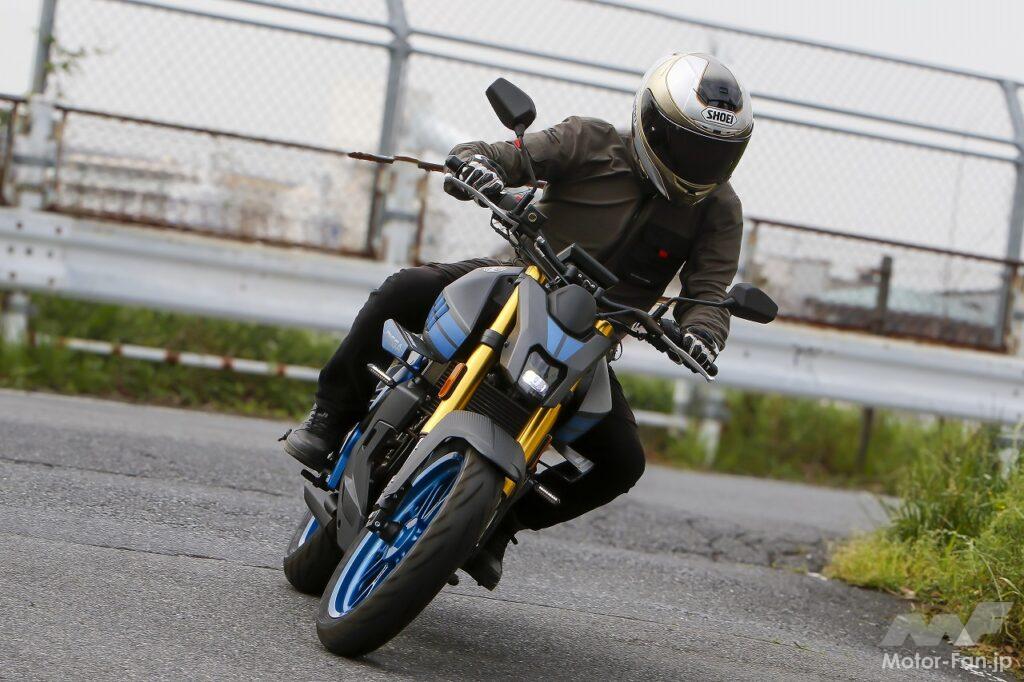
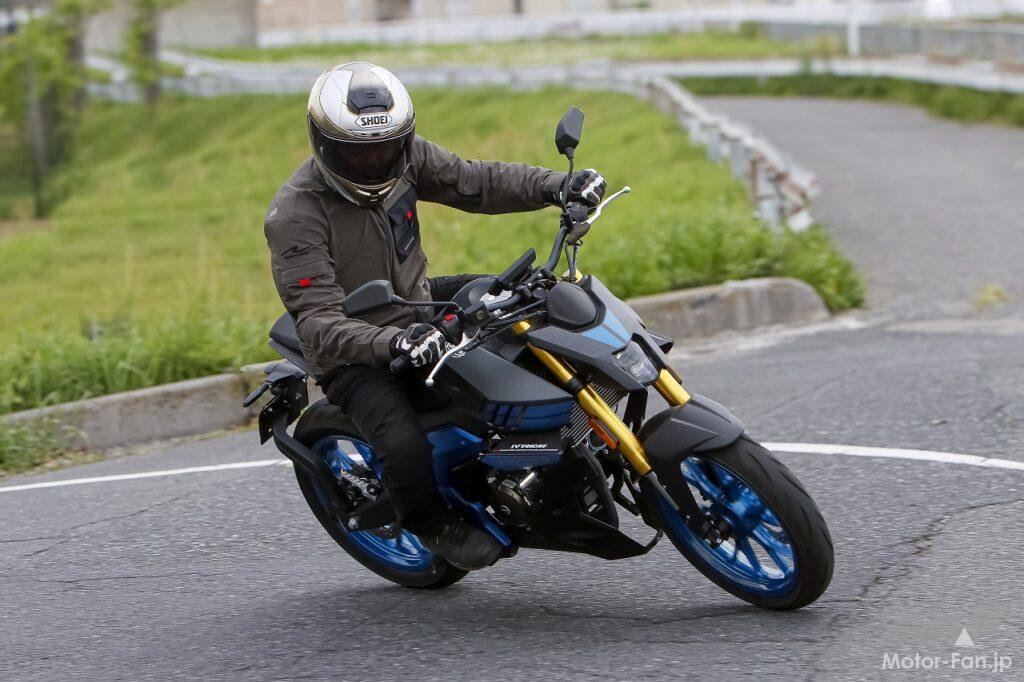
As you can see from its appearance, the body's mass is centralized around the engine, so it's easy to imagine its agile maneuverability. The suspension, equipped with a 40mm inverted fork with a 97mm stroke in the front and a 120mm monoshock in the rear, feels more than adequate in terms of performance.
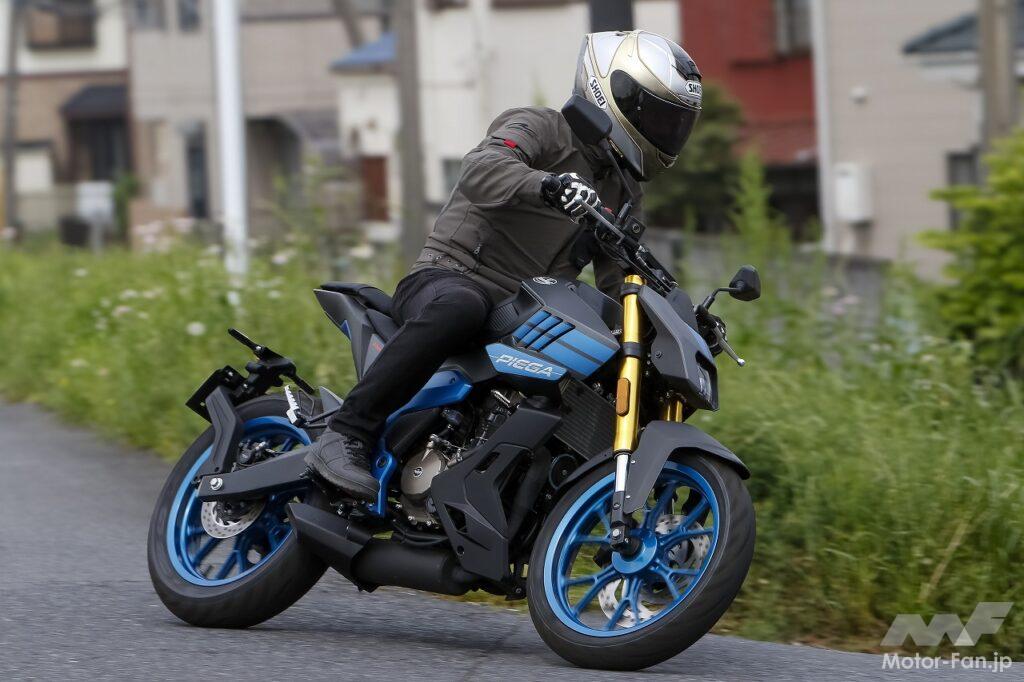
Riding it makes it immediately clear: the bike's movements are incredibly nimble. The light weight also helps, for example, make small turns when turning at intersections in the city. Banking is easy, and the front and rear suspension move well. I initially worried the ride might feel a little rough, but I found it to be fine for street use.
While light handling is an advantage of lightweight models like this, it can also lack stability due to its light weight. However, the Piega 125 also felt stable. There was no wobbling at the beginning of banking, and in fact, it delivered more responsive maneuverability than I expected. This allowed me to lean the bike without any worries, and I felt that cornering stability was also excellent.
The brakes were also high-grade, with a single front disc with a 300mm rotor and a radial-mount 4-pot caliper, and a rear disc with a 220mm rotor, so there were no issues with actual stopping power. And of course, ABS is standard on both the front and rear, so I think braking on rainy days will be less of a worry. It

's a rare model in Japan, so you're sure to stand out when you take it out on the town. So, I think it's perfect for the unique rider who doesn't want to be the same as everyone else. Well, if I had to point out a downside, it would be that it's about 50,000 to 100,000 yen more expensive than rival models. Either way, it's definitely a fun bike to ride.
Detailed explanation
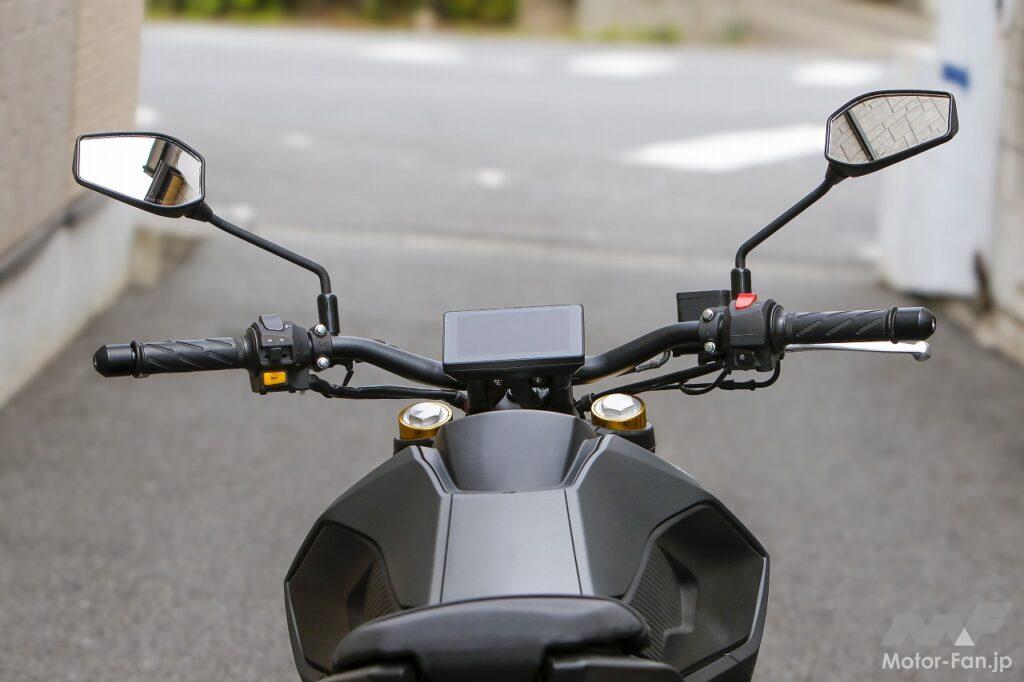
Flat semi-up handle
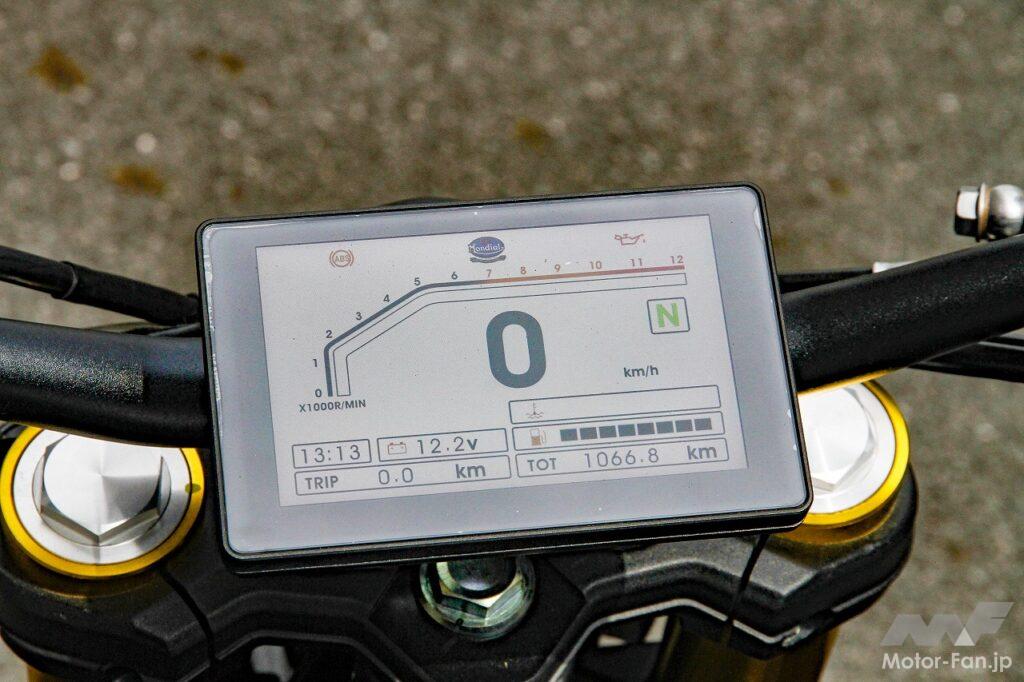
The meter uses a color LCD display, which provides a wealth of information and is easy to read.
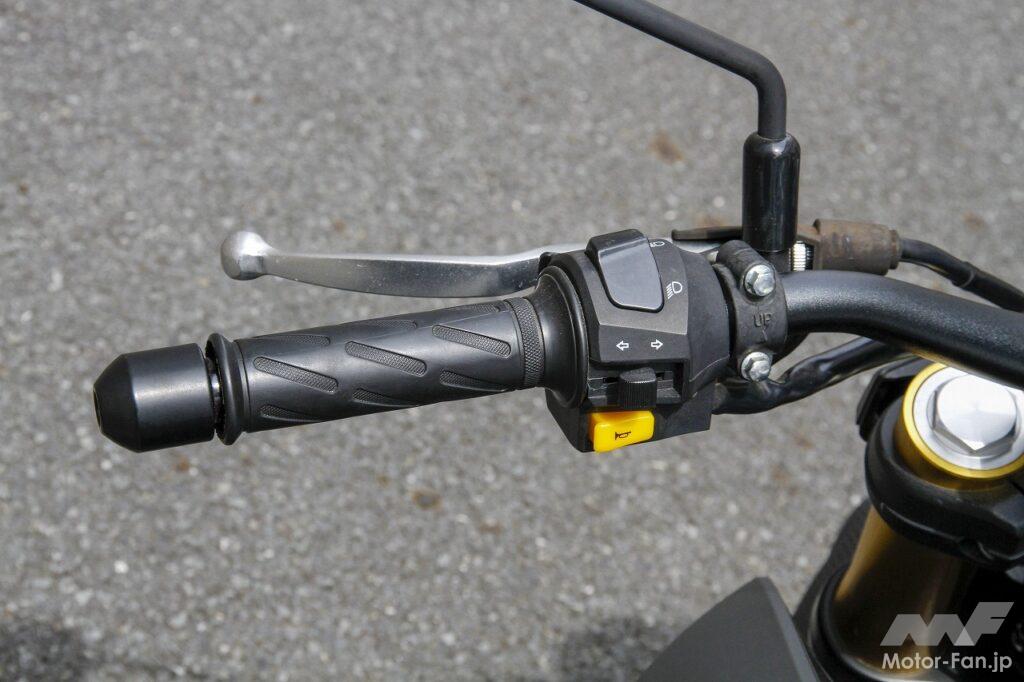
The switches are simple and easy to operate. The clutch lever does not have an adjustment mechanism.
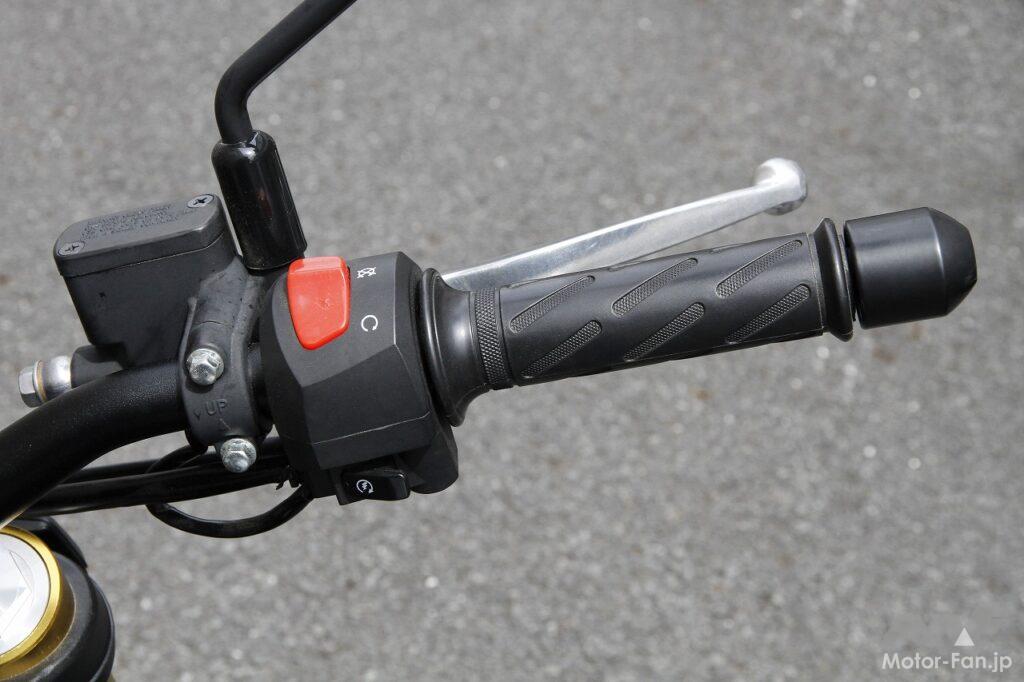
The right-hand switch is equipped with a starter and kill switch. The brake lever also has no adjuster.
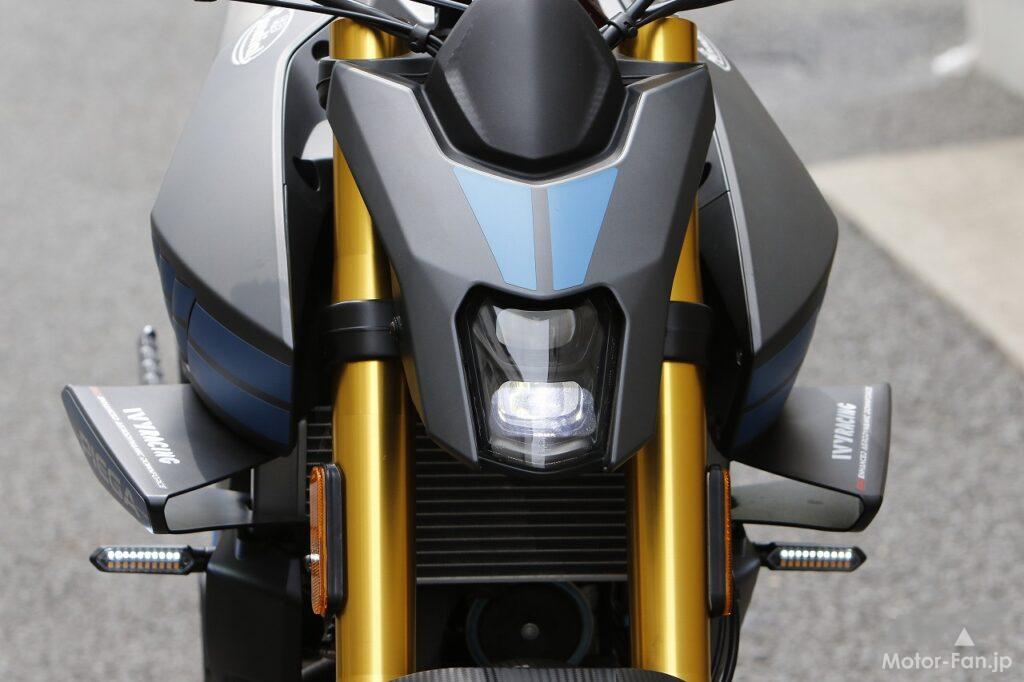
The two vertically lit compact LED headlights create a unique look. The small turn signals are also LED.
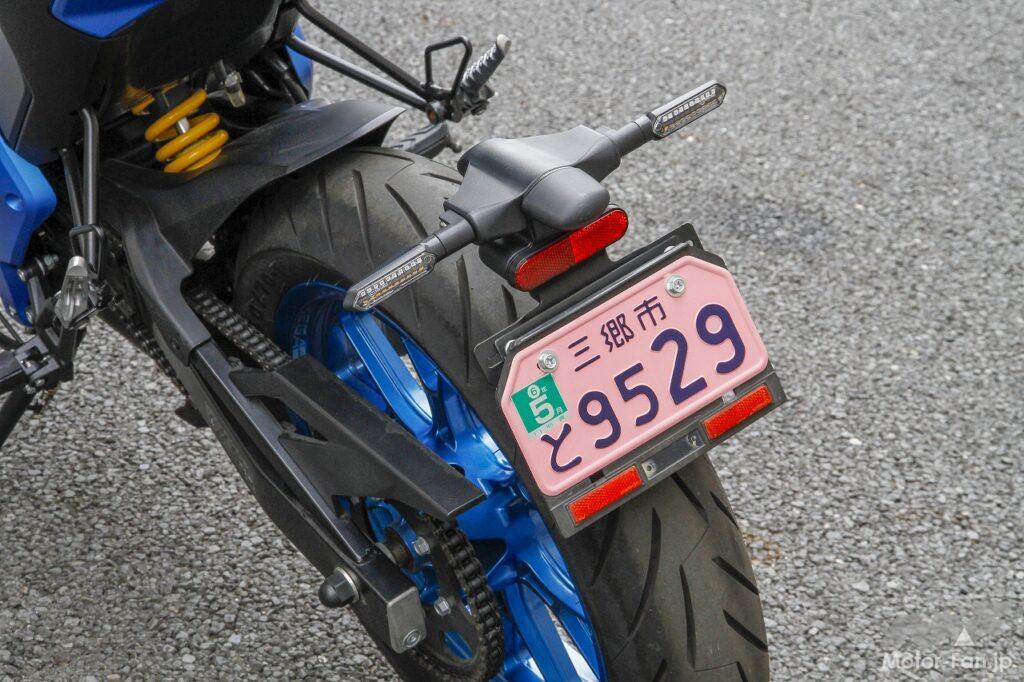
The rear combination lamp is mounted on the license plate holder. Both the tail lamp and the turn signal lamp are LED.
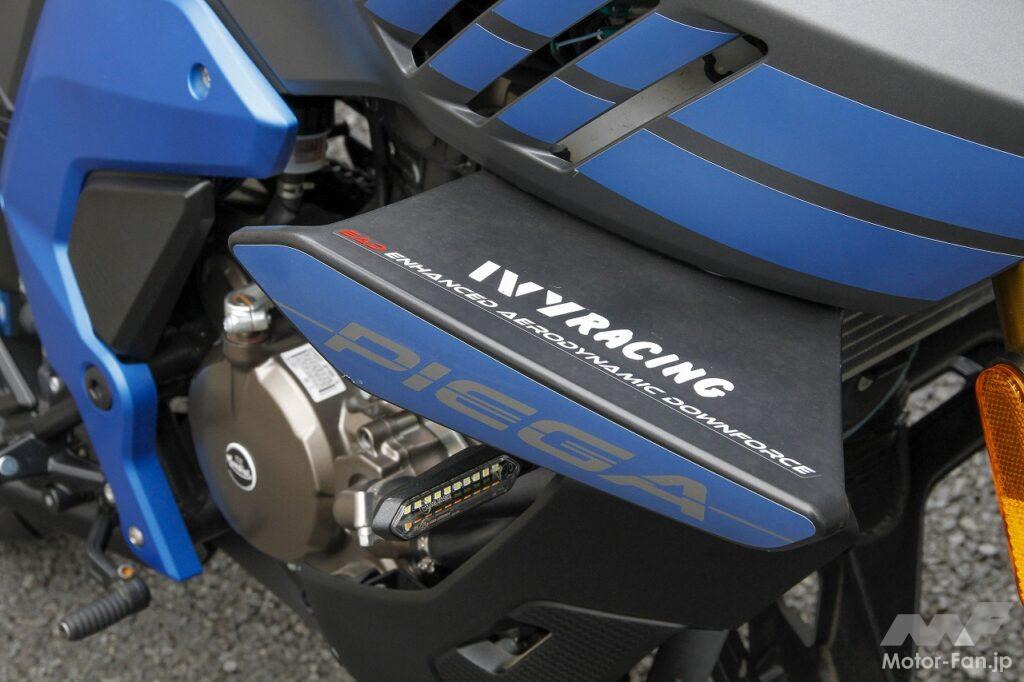
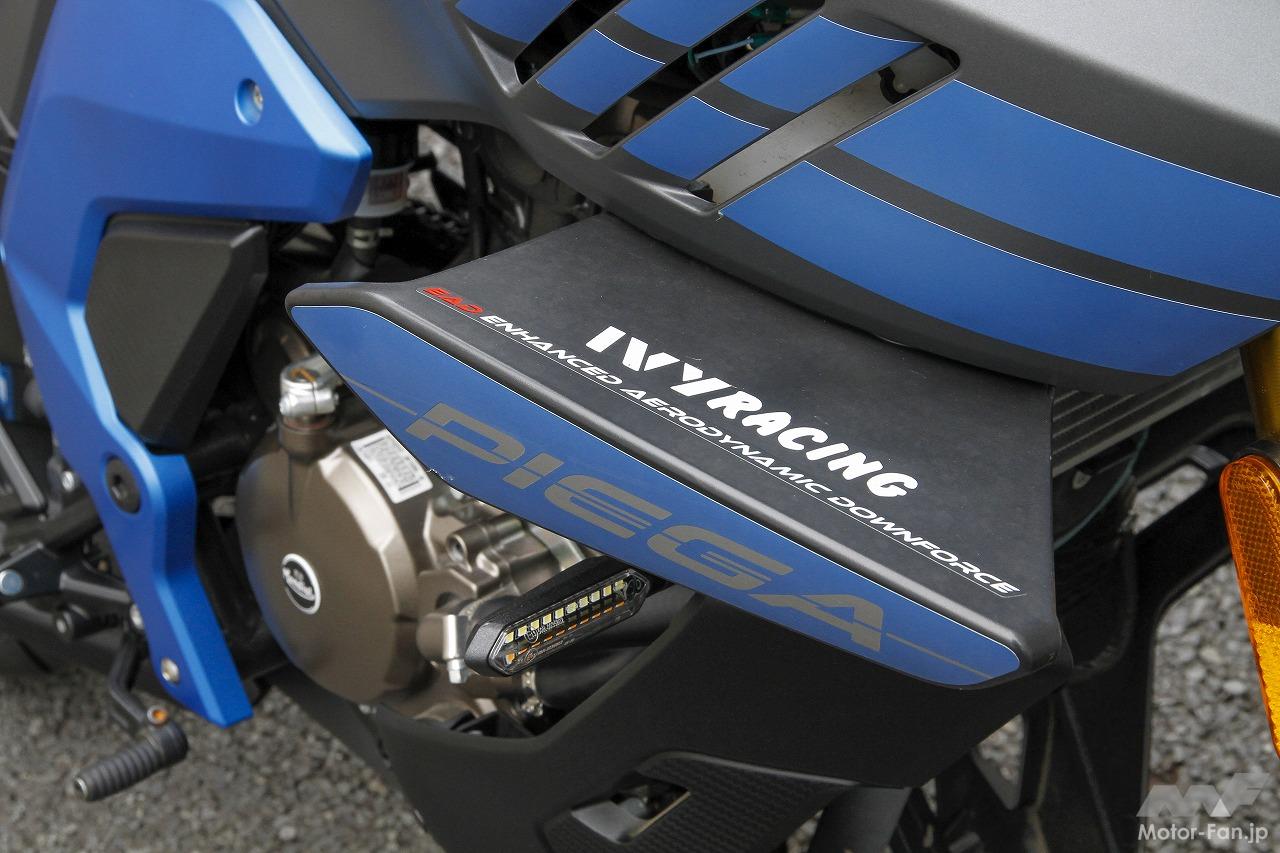
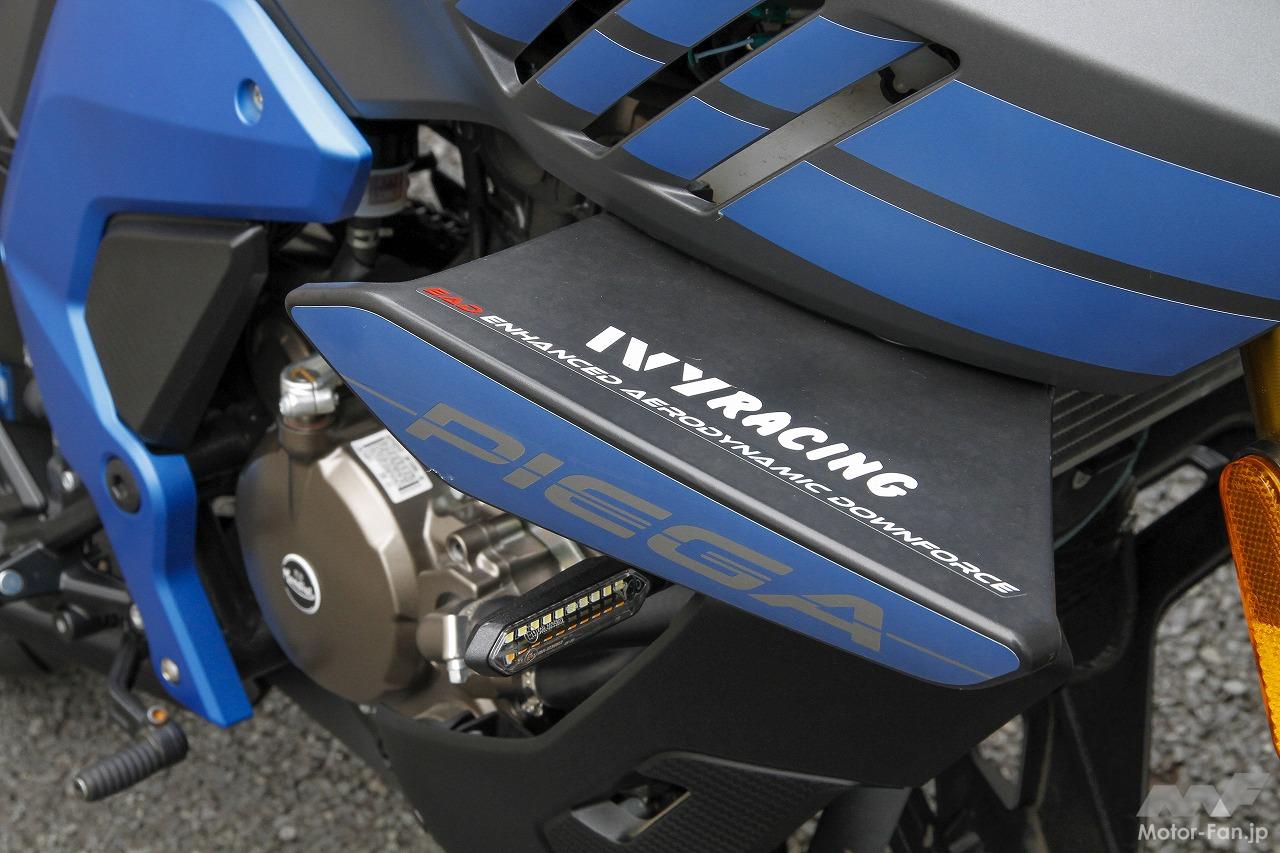
It is equipped with a front wing reminiscent of a MotoGP machine.
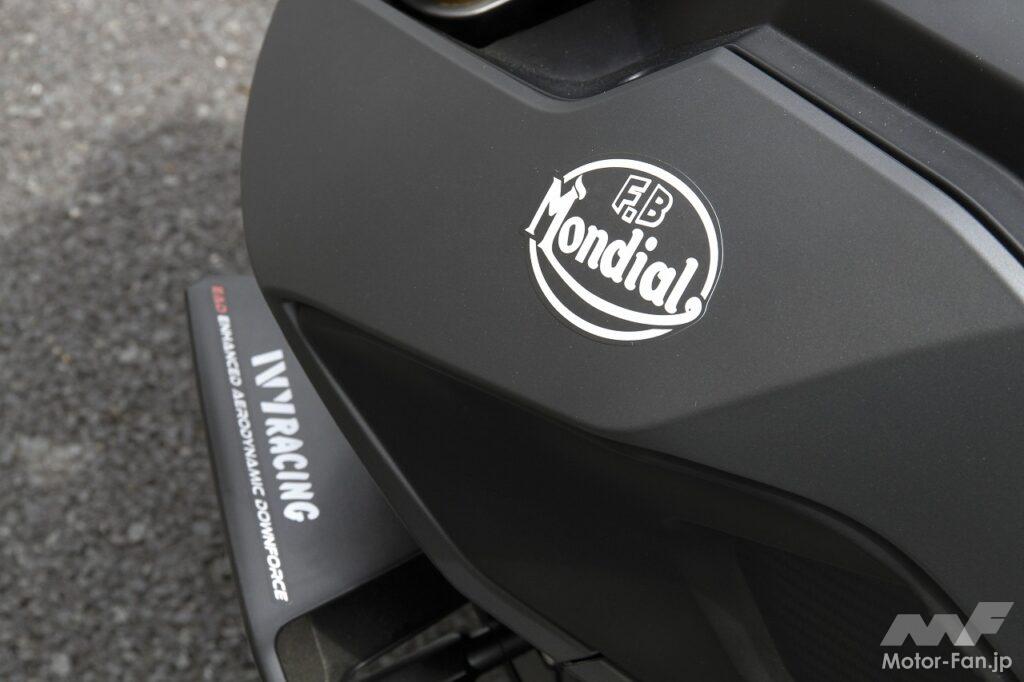
The wing may also be responsible for the light yet stable handling.
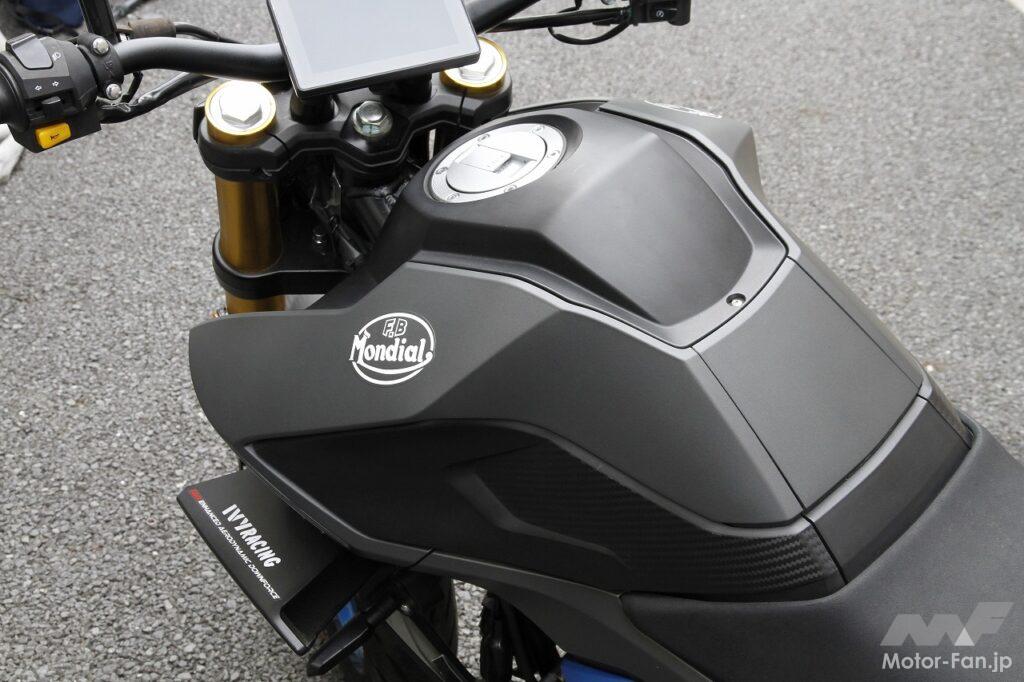
The sharply designed fuel tank has a capacity of 9.5L. It is also easy to grip with your knees.
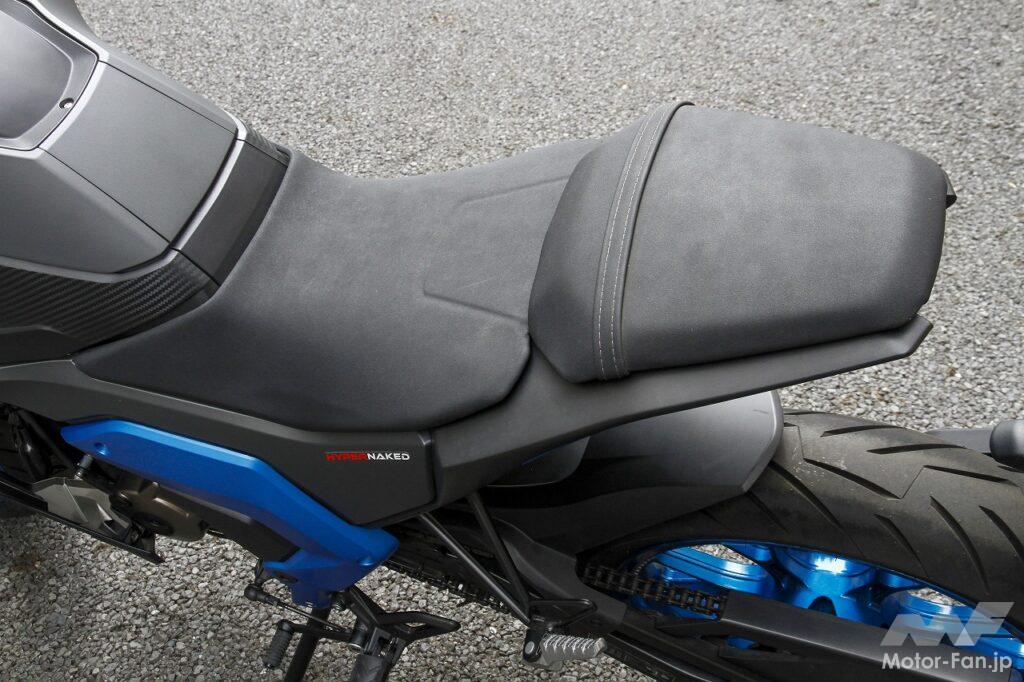
The separate seat is designed for sports riding. It doesn’t have much cushioning and is difficult to ride pillion on.
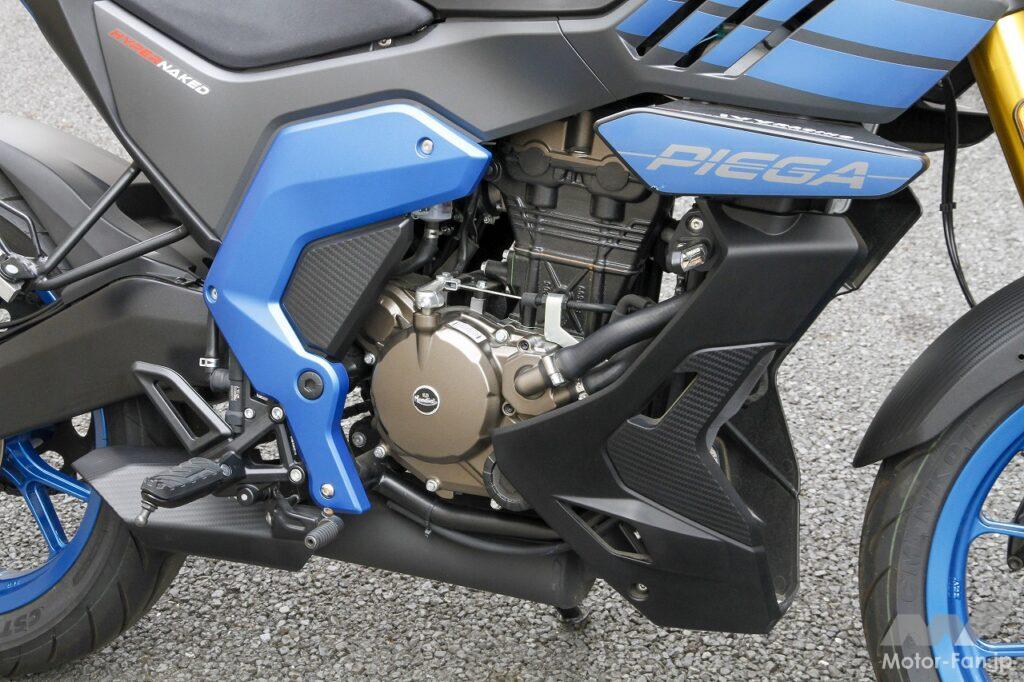
The engine is a water-cooled DOHC 4-valve single-cylinder with a Dell’Orto injection system. The displacement is 124cc and the transmission is 6-speed. In Japan, it is classified as a moped.
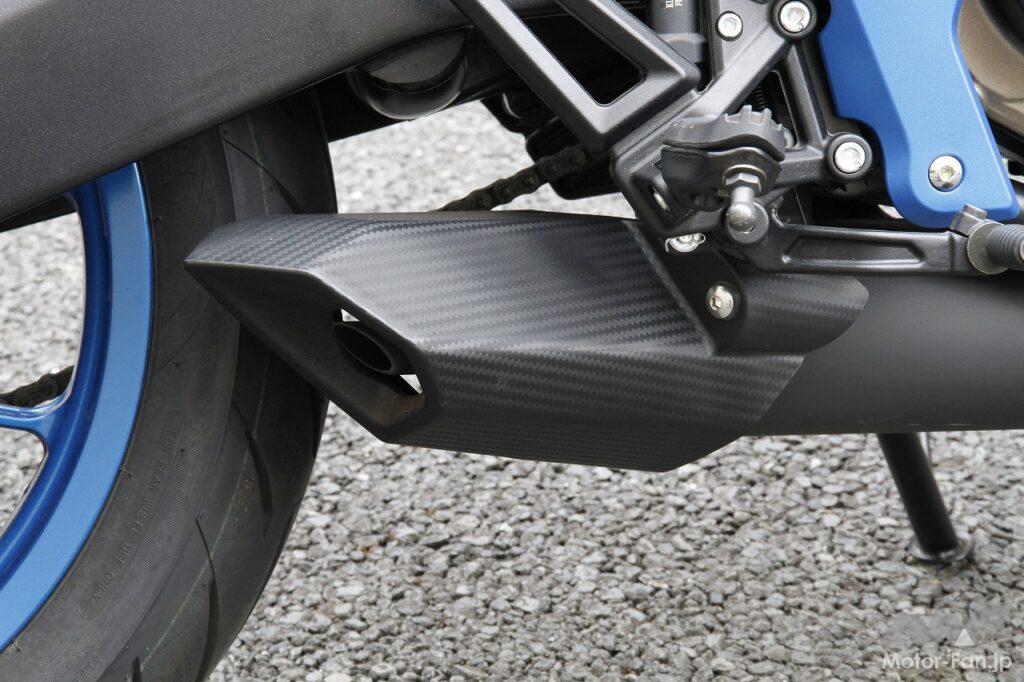
The muffler is a short type, which contributes to mass centralization. The exhaust sound is surprisingly quiet.
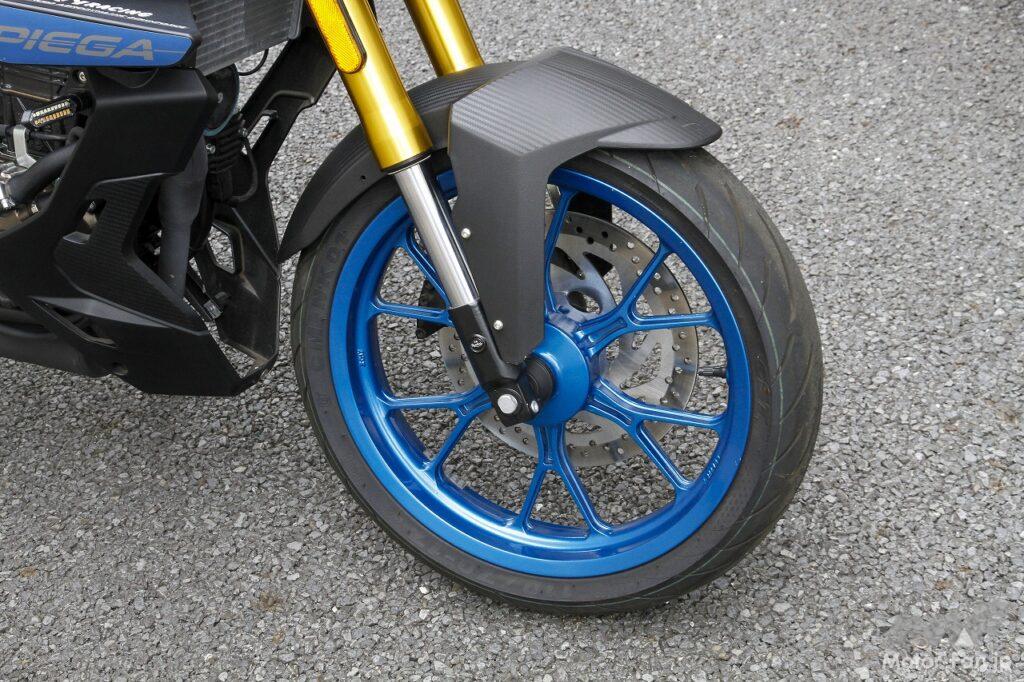
The front suspension is equipped with a Φ40mm inverted fork with a stroke of 97mm. The aluminum cast wheels are fitted with 110/70-17 tires. The brakes are single discs with 300mm rotors and 4-pot radial mount calipers.
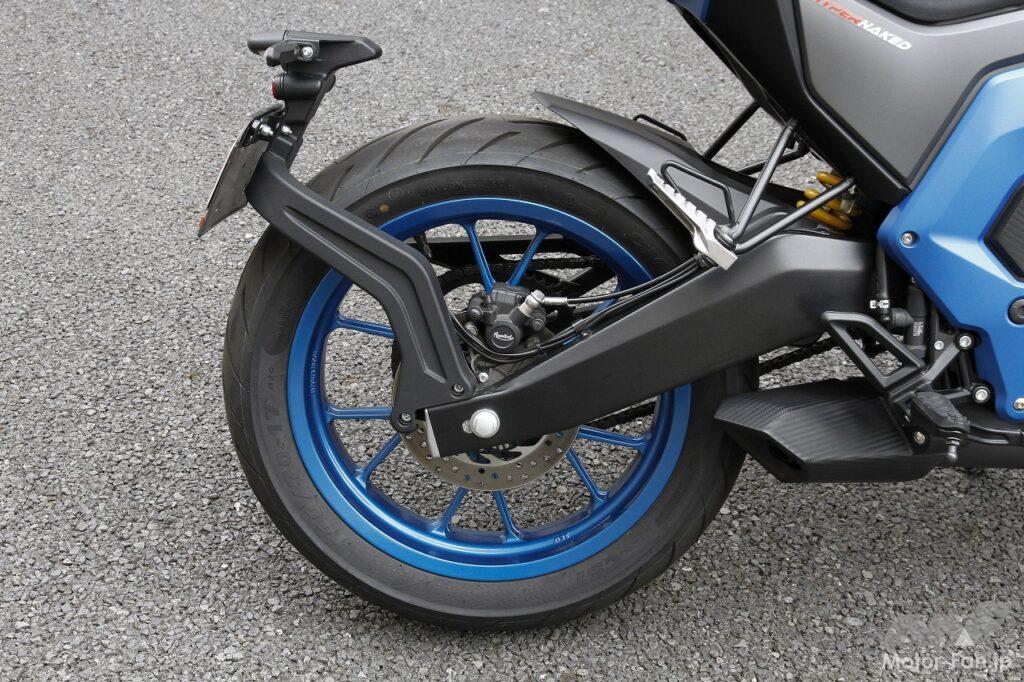
The rear tire is 140/70-17 size. The brake is a disc equipped with a 220 mm rotor and a 1-pot floating caliper. ABS is standard on both the front and rear brakes.
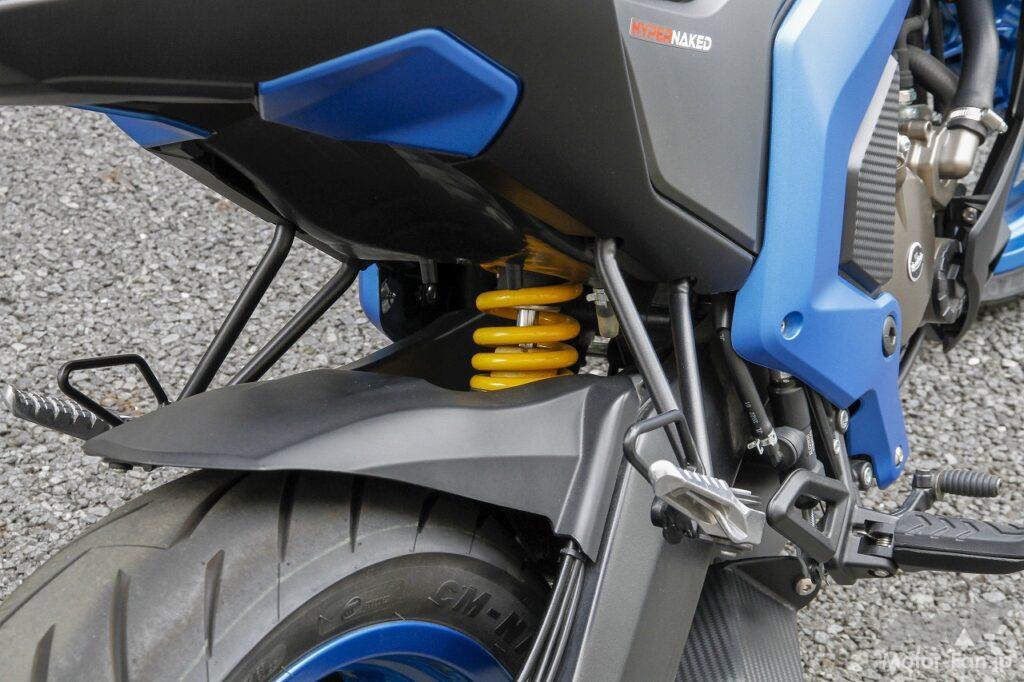
The rear suspension is a mono shock with a stroke of 120 mm.
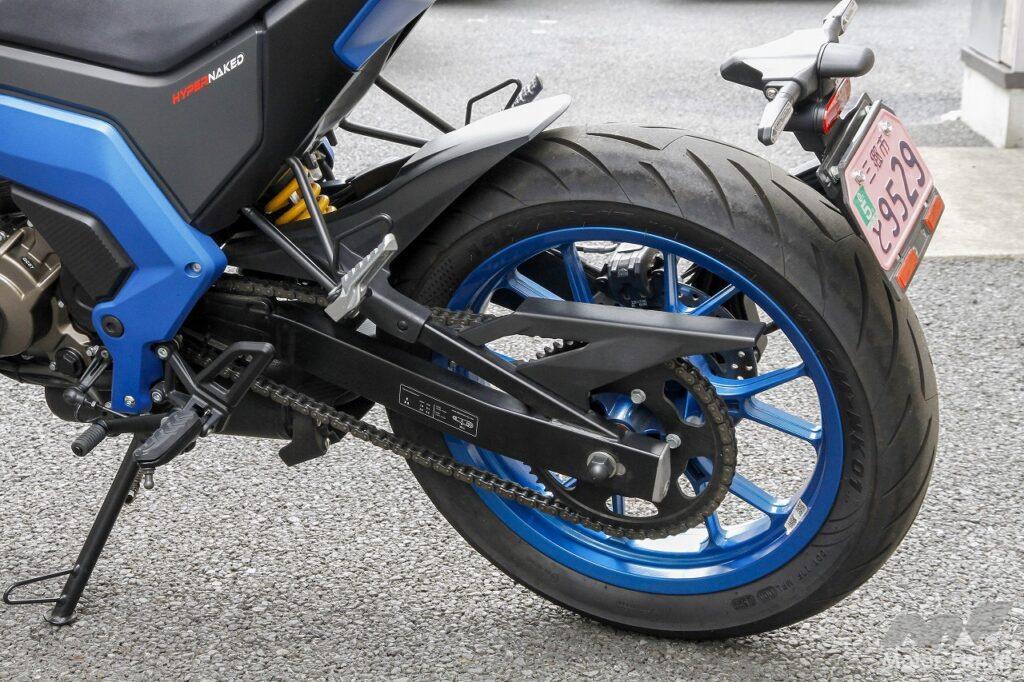
The rear is equipped with an inner fender, but it seems like mud splashes up quite a bit.
Main specifications
| type | Single cylinder / 4-stroke / DOHC / 4-valve |
| Engine displacement | 124cc |
| Maximum power | 10.0 kW / 9,750 rpm |
| Maximum torque | 10.5 Nm / 8,000 rpm |
| Lubrication method | Wet sump |
| Cooling system | water cooling |
| Intake system | EFI |
| Starting method | Electric Starter |
| Transmission type | 6-speed return |
| fuel tank | 9.5 L |
| Front suspension | 40mm inverted fork – 97mm |
| Rear suspension | Single shock absorber (120mm) |
| Vehicle weight | 135kg |
| Passenger capacity | 2 |
| Front brake | 4-piston radial caliper, 300mm, ABS |
| Rear brake | 1-piston floating caliper, 220mm, ABS |
| Front tire | 110/70 x17” |
| Rear tire | 140/70×17” |
| color | SILVER / BLACK / MAGNESIUM |
| full length | 2,000mm |
| Overall width | 810 mm |
| Overall height | 1,070 mm |
| Wheelbase | 1,340 mm |
| Seat height | 820 mm |