

There are many roads known as "kaido" (highways). In the Tokyo area, the Koshu Kaido, Kawagoe Kaido, Mito Kaido, and Nikko Kaido are well-known. The Jinba Kaido is also an ancient road that connects Hachioji City in Tokyo with Sagamihara City in Kanagawa Prefecture and Uenohara City in Yamanashi Prefecture. For this reason, it is also known as the Koshu Waki-Okan and Koshu Ura Kaido. However, the Jinba Kaido is extremely narrow, and the steepness around the summit of Wada Pass can be quite a challenge for drivers. There is very little traffic. This makes it the perfect touring route for a Super Cub.
This road is too harsh to be called a shortcut off Route 20.
From Tokyo, head west on National Route 20 Koshu Kaido. Turn right at the Oiwakecho intersection in Hachioji City and you'll enter Tokyo Prefectural Route 521 Jimba Kaido. It's a residential road with heavy traffic and no fun to drive on. That's a bit harsh, but once you pass Kawarajuku Intersection, where it intersects with Tokyo Prefectural Route 61 Miyama Dori, the traffic volume drops dramatically. In fact, there are barely any cars on the road at all. The
road narrows a little, but it's still one lane in each direction with a clear center line. This area is the Ongata district on the western edge of Hachioji City, a rural mountain area dotted with houses along the Kitaasakawa River, a tributary of the Tama River. Riding through this scenery finally gets you in the mood for touring.

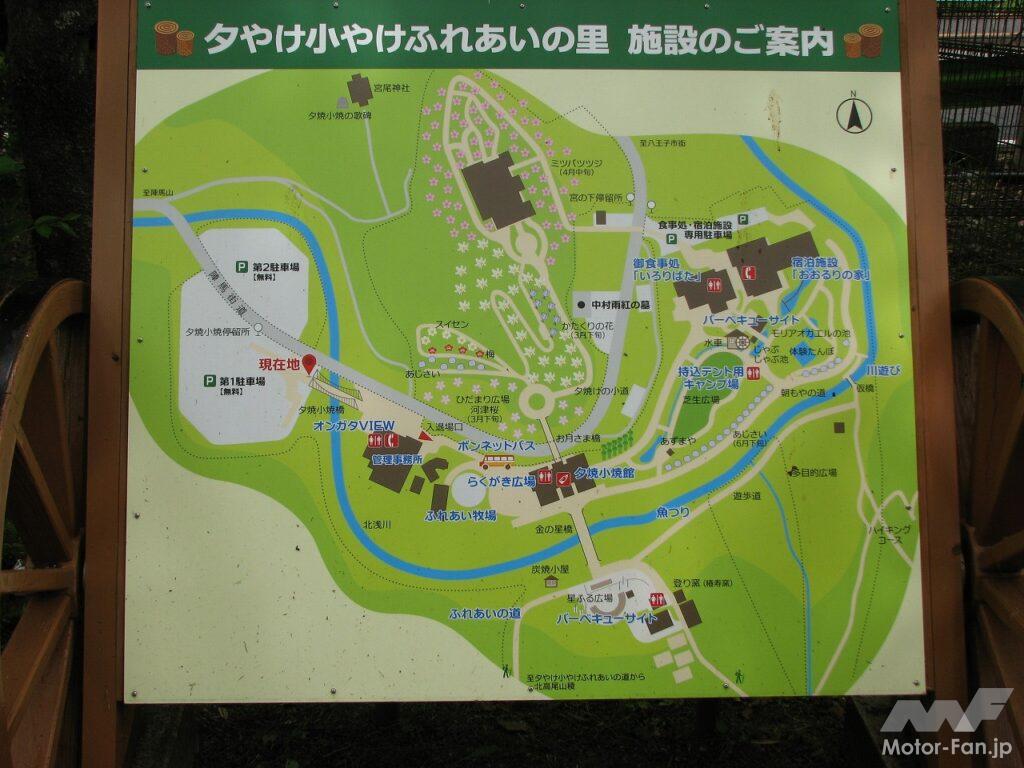
After a short ride along this tranquil road, you'll come across Yuyake Koyake Fureai no Sato, a popular tourist spot in Hachioji. This nature experience facility was named after Nakamura Uko, the lyricist of the children's song "Yuyake Koyake," who was born in Kami-Ongata Town.Various events are held here throughout the year, and the facility also offers accommodation, a campsite, and a restaurant.
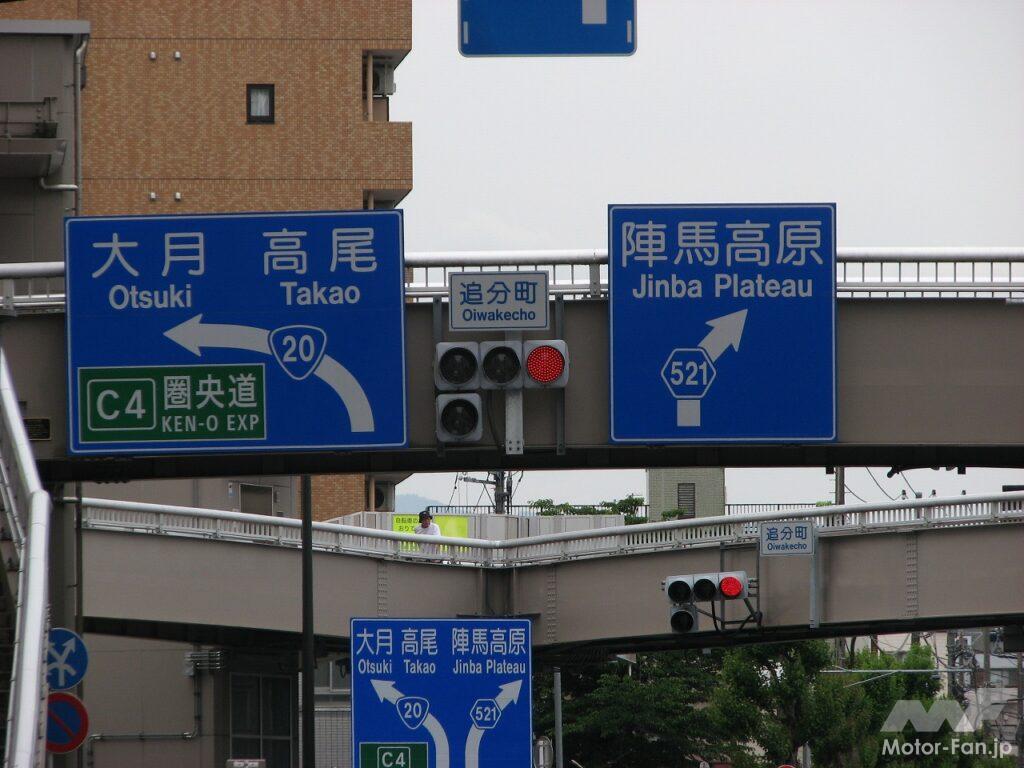
The Jinba Kaido begins at Oiwakecho in Hachioji City, where it branches off from the Koshu Kaido.
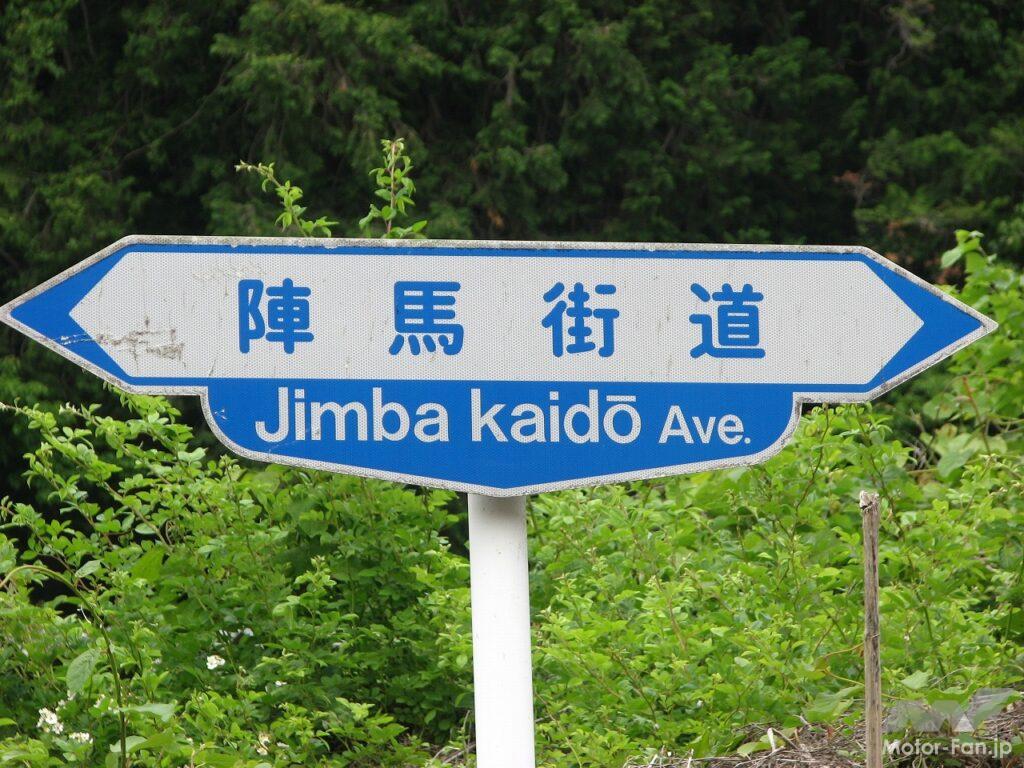
There are no prefectural road signs along the road, but there are signs for the Jinba Kaido.
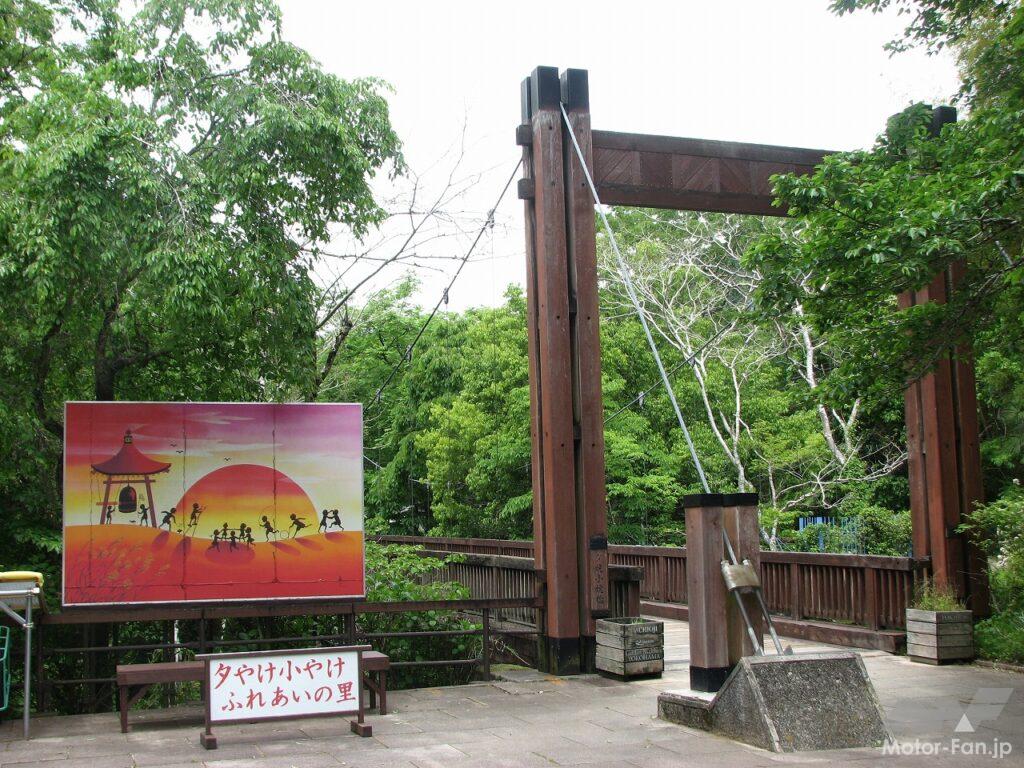
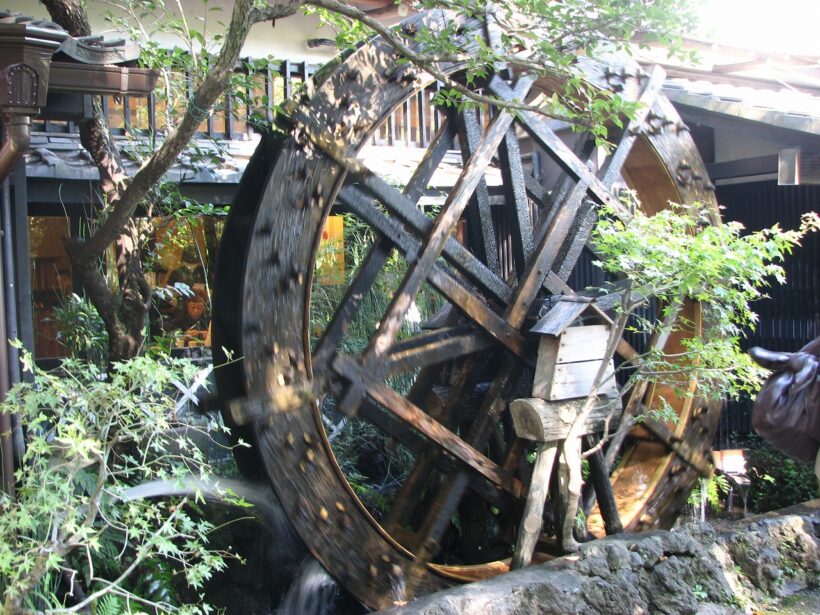
Yuyake Koyake Fureai no Sato is a facility where you can experience nature
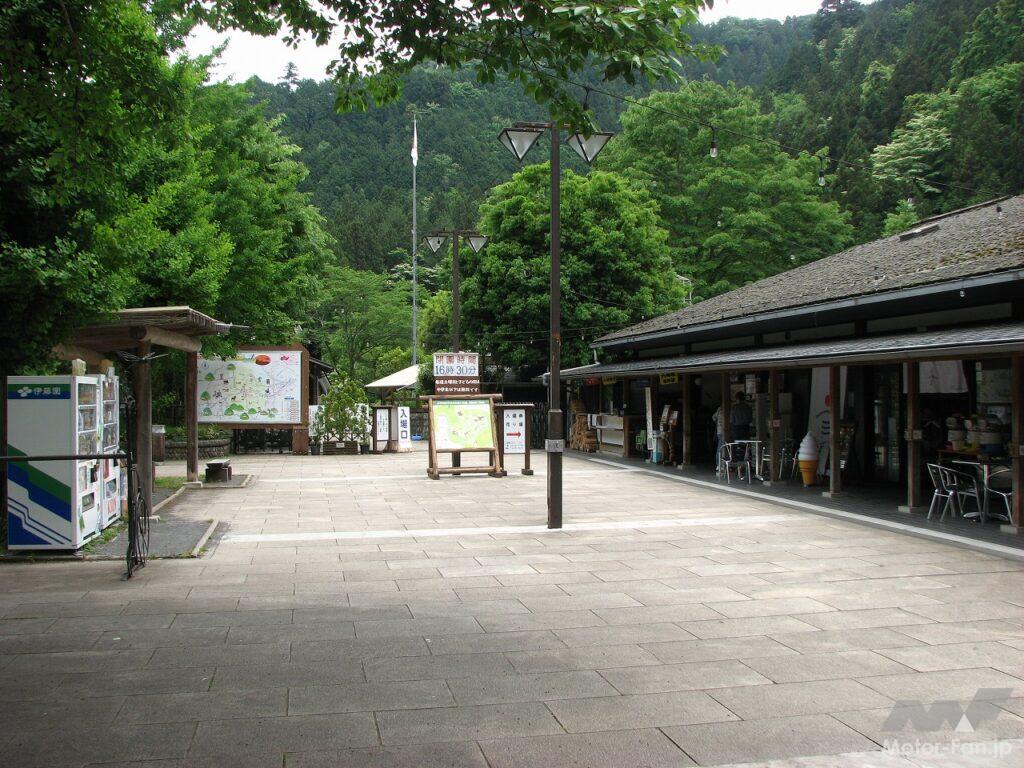
There are also tourist facilities such as restaurants and souvenir shops.
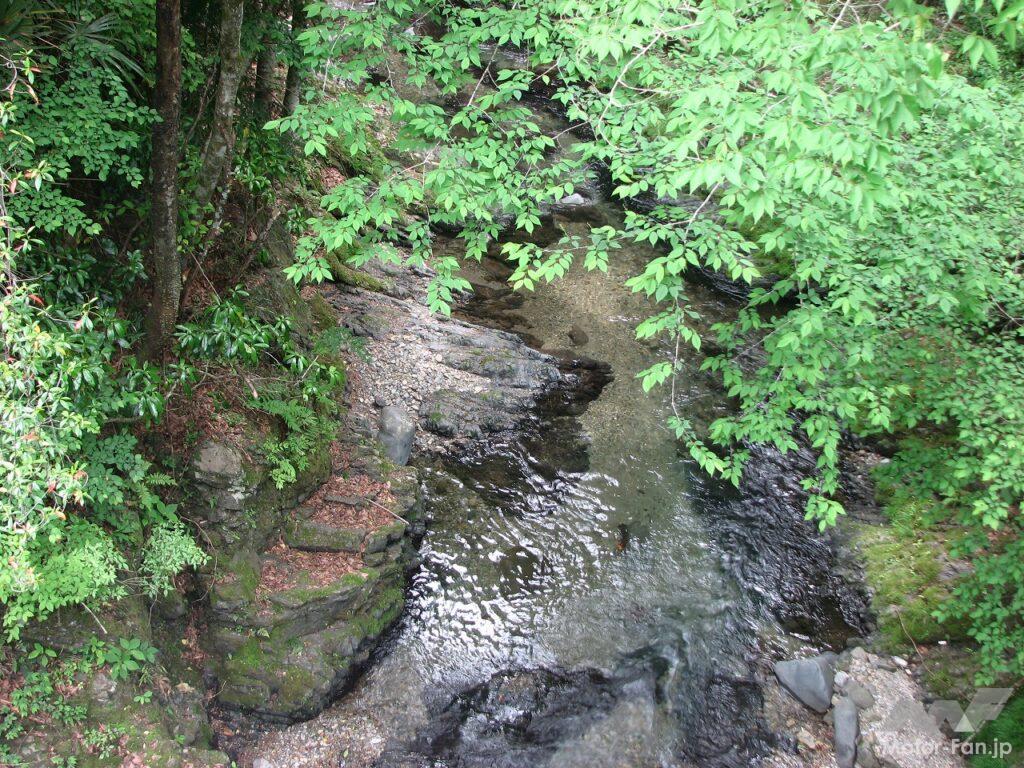
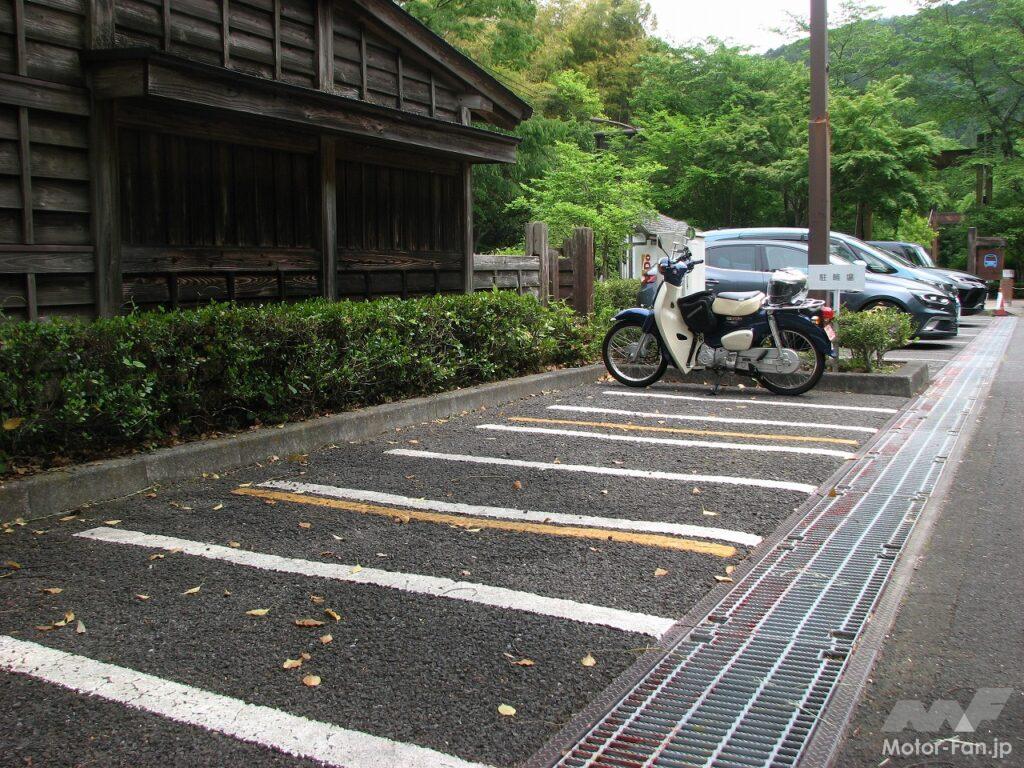
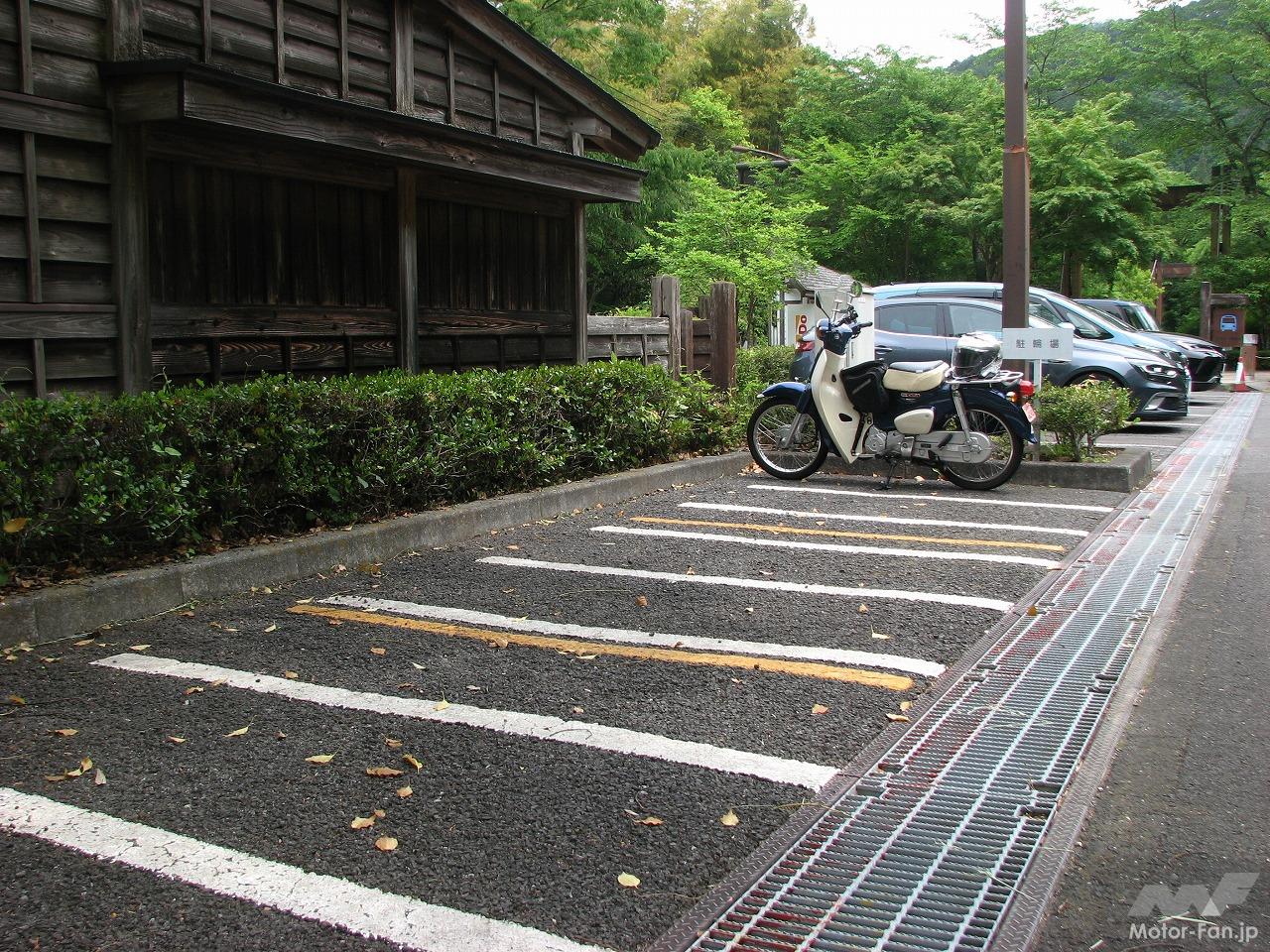
Motorcycle parking space also available
After passing Yuyake Koyake Fureai no Sato and turning off toward the Daigo Forest Road, the Jinba Highway becomes even narrower. Surrounded by dense forest, the narrow mountain road is dim even during the day, making for a very pleasant experience. After a while, the view opened up, and I arrived at the bottom of the Jinba Plateau. Surprisingly, a local bus runs all the way here. Even on a weekday, there were several hikers at the bus stop.
Next to the bus stop at the bottom of the Jinba Plateau is a popular soba restaurant called "Jinba Soba Yamashitaya." In fact, one of the goals of this Cub tour was to eat their Jinba soba. Established 80 years ago, Yamashitaya's Jinba soba is made with 100% domestic buckwheat flour. I ordered the standard mori soba, but even the regular portion was quite filling. They offer three types of dipping sauces: a warm broth, a walnut broth, and a salt and sudachi citrus ...
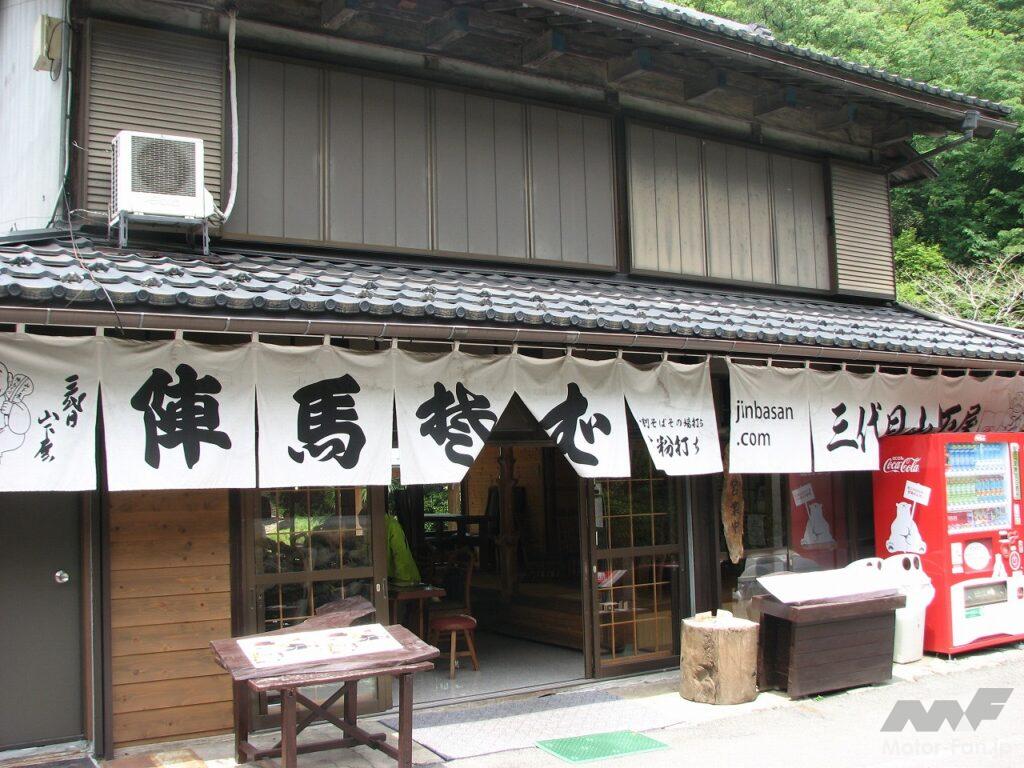
Located at the end of the bus route, under the Jinba Plateau, is Jinba Soba Yamashitaya, a 80-year-old soba restaurant.
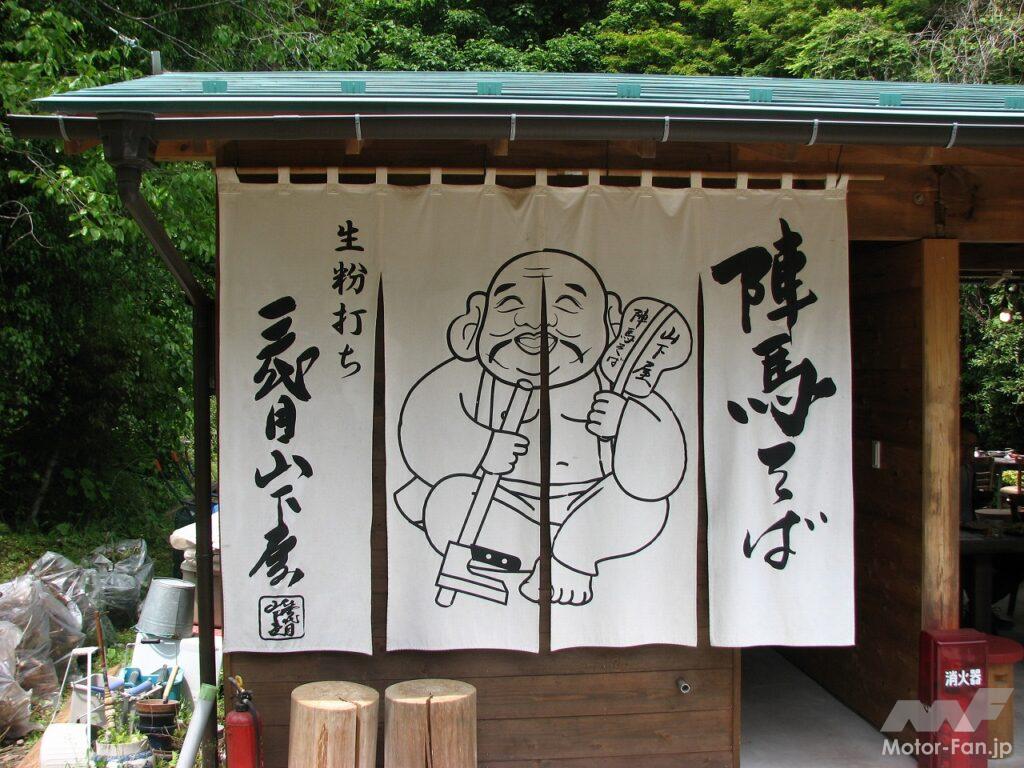
Currently, Yamashitaya is run by the versatile third generation owner, who is also active in music.
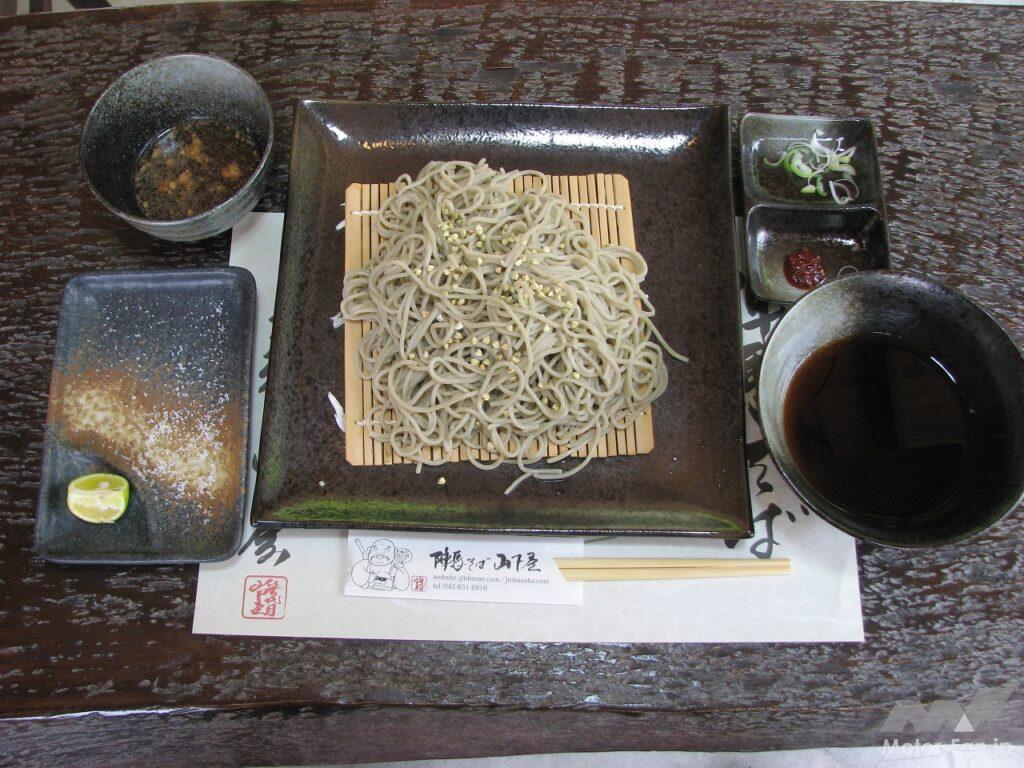
Juwari soba noodles made from 100% domestic buckwheat flour are rich in flavor and exquisite
ADVERTISEMENT

The roughly 4km stretch from the bottom of the Jinba Plateau to Wada Pass, 690m above sea level, is the most challenging part of the Jinba Highway. As soon as I set off, the road narrowed, with fallen leaves, rocks, and moss adding a colorful finish to the surface. The dense foliage gave the road a somewhat damp feel. As the elevation increased, the road became even more rugged, with a succession of tight hairpin turns—a truly exhilarating experience. After climbing this daunting mountain pass in second and third gear, I was greeted by a teahouse at the top of the pass. However, it's often closed on weekdays, and on this day it was closed. Behind the teahouse at the pass, a trail leads to Mount Jinba, 855m above sea level. There are two routes: a stepped hiking trail and a forest road via a winding path. Apparently, it takes about 30 minutes to reach the summit. Of course, I didn't climb it because I was on a tour.
Still, it's fascinating to think that the border between Hachioji, a core city with a population of 560,000, and Sagamihara, a designated city with a population of 730,000, is in the mountains. To the south are the Kobotoke Tunnel on the Chuo Expressway, Otarumi Pass on National Route 20 Koshu Kaido, and Kobotoke Pass, which can be reached on foot, but Wada Pass is the highest and steepest of the passes that can be crossed on a Super Cub, making it even less suitable as a route connecting the cities of Tokyo and Kanagawa. For this reason, the chances of encountering a car were actually quite low, and I didn't pass a single car until I arrived at Wada Pass. Instead, I did see several hikers and bicycles.
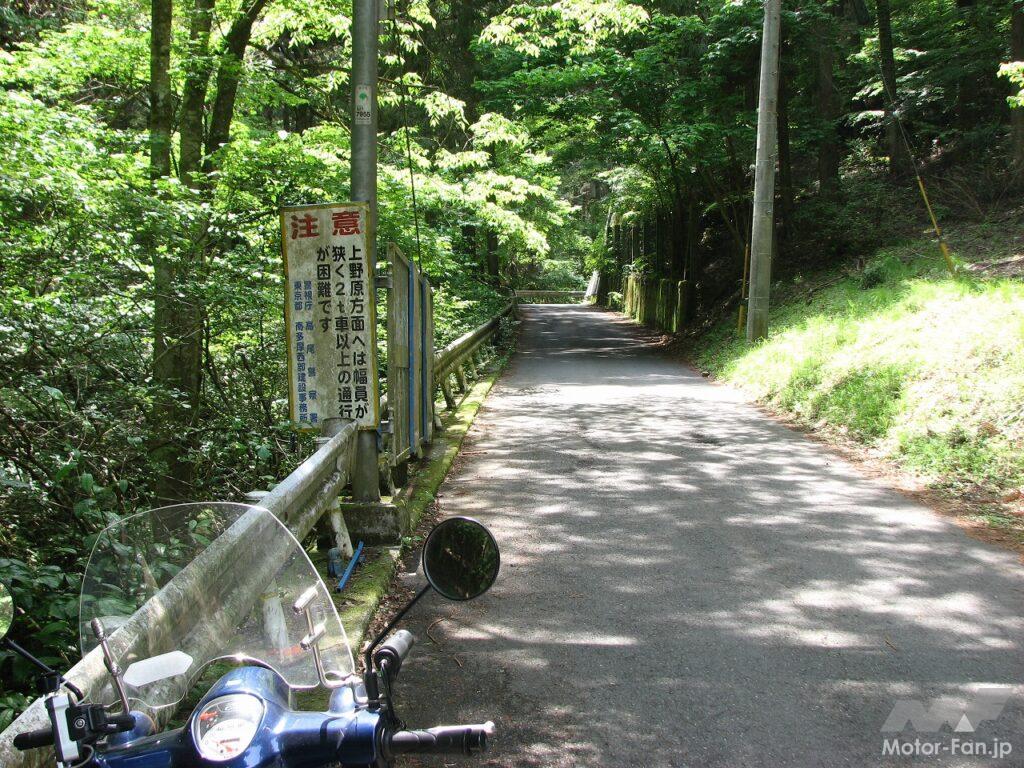
As you start to climb towards Wada Pass, the Jinba Highway becomes even more rugged.
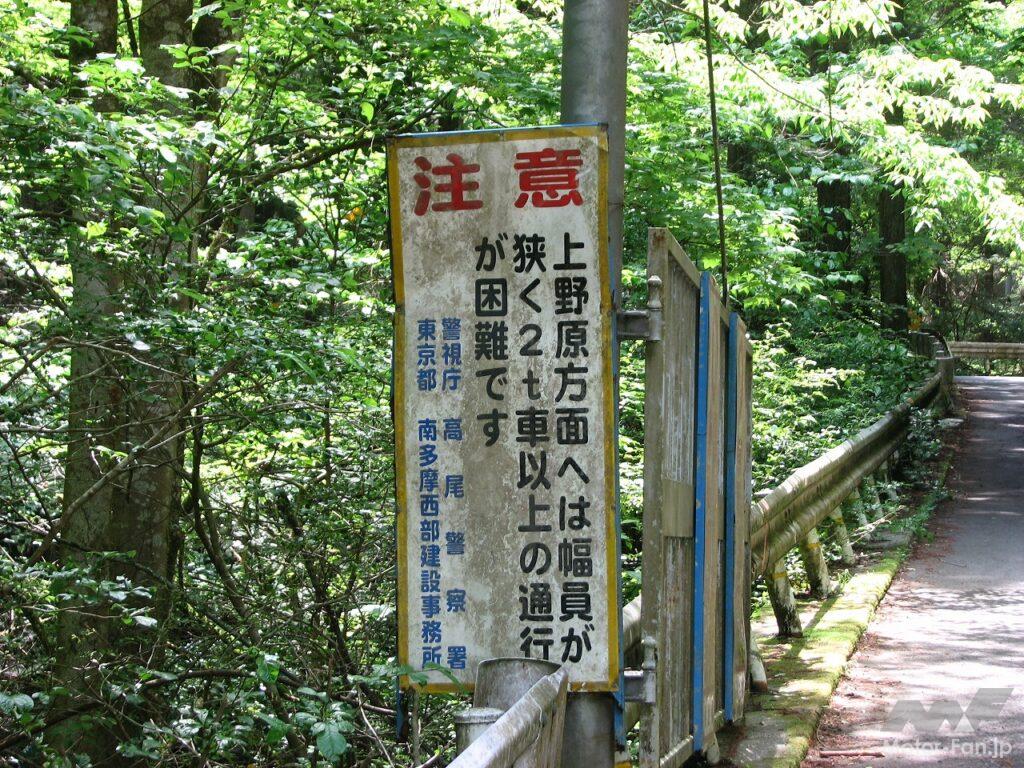
Roads in conditions that you don’t want to drive on
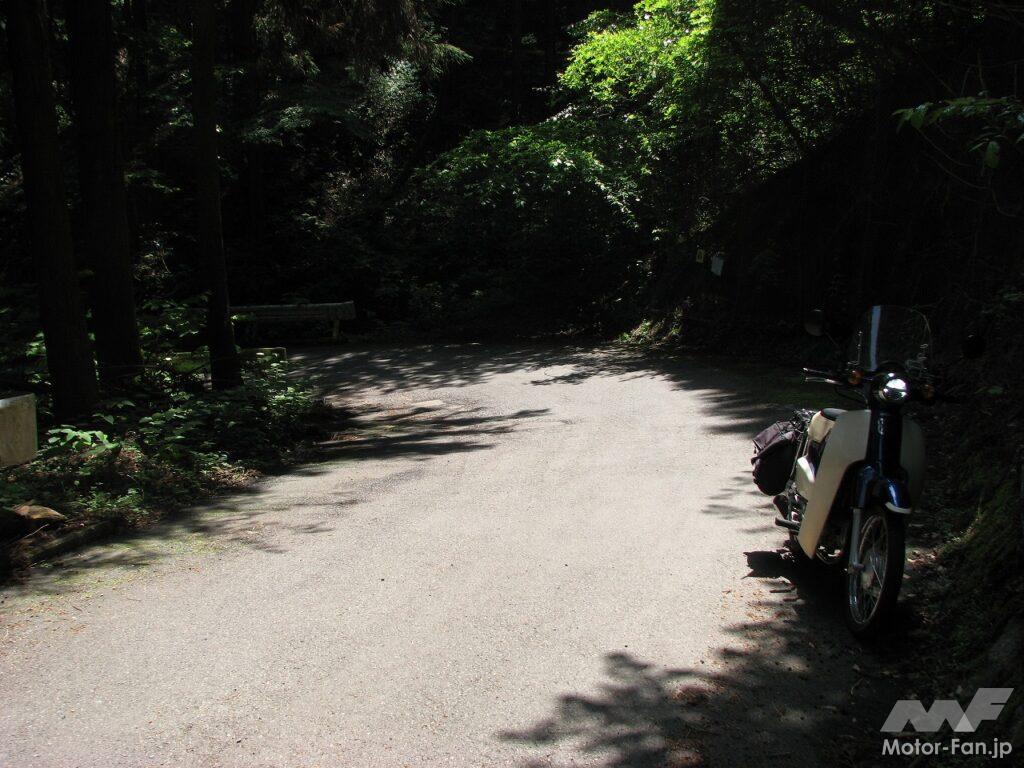
The narrow, steep road has a series of hairpin turns and quickly rises in elevation. It’s a perfect road for a Super Cub.
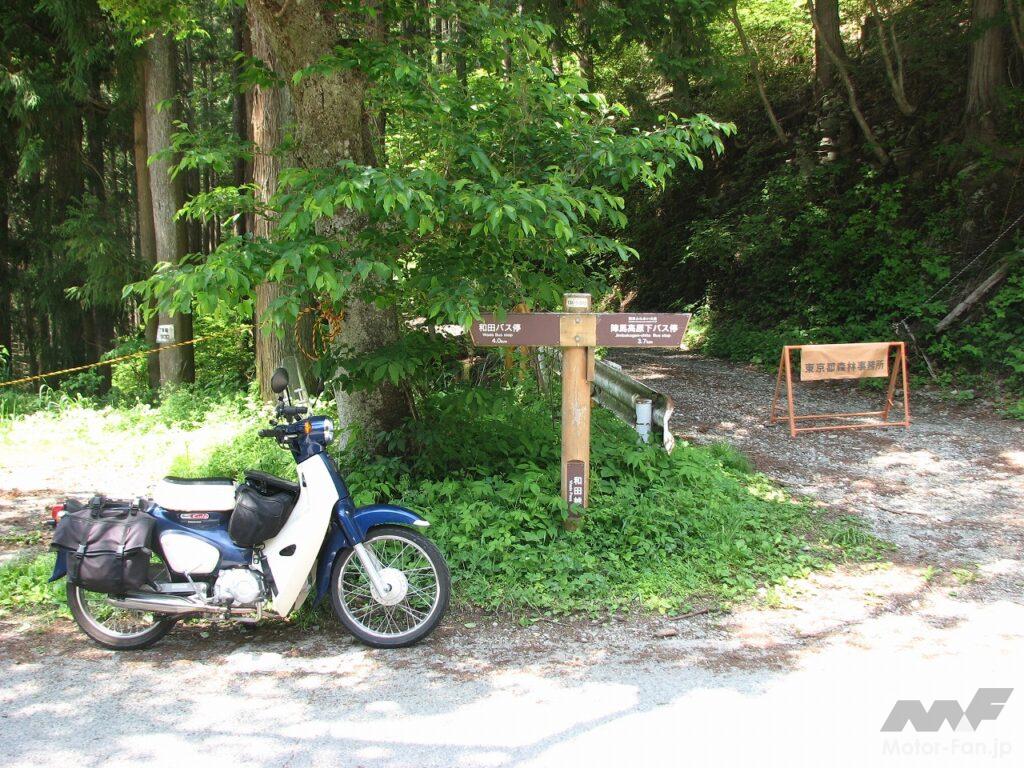
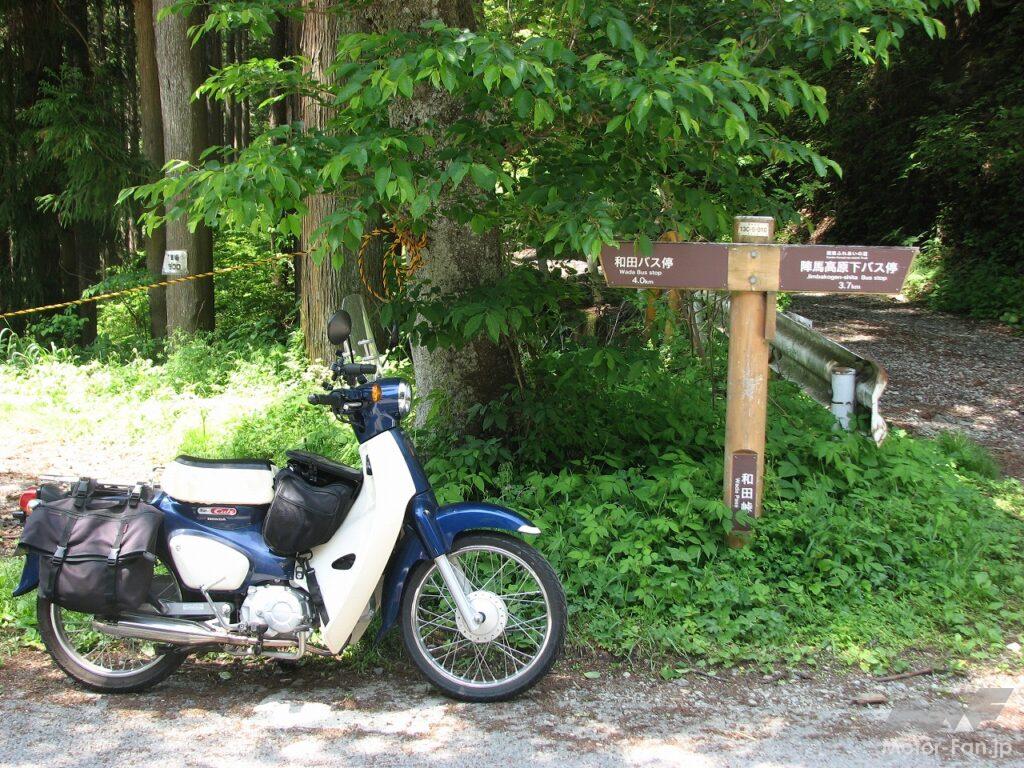
Wada Pass, the highest point on the Jimba Highway, is 690m above sea level.
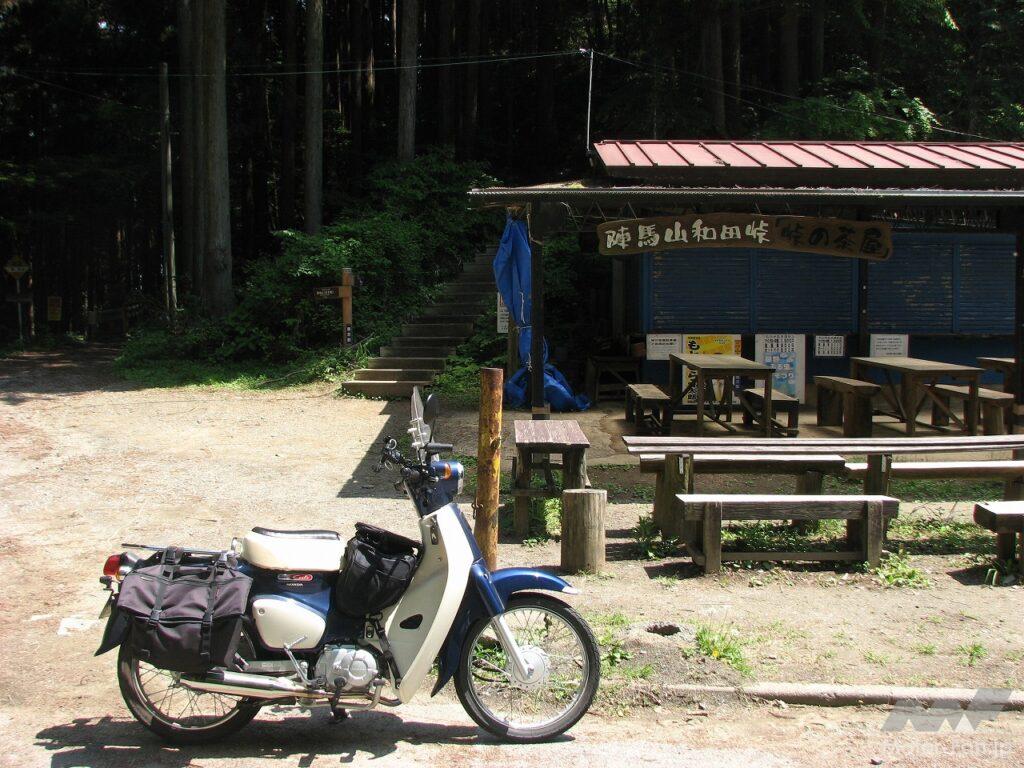
There is a teahouse at Wada Pass where you can eat and drink. There is also a good paid parking lot for climbers. Parking for motorcycles is 500 yen.
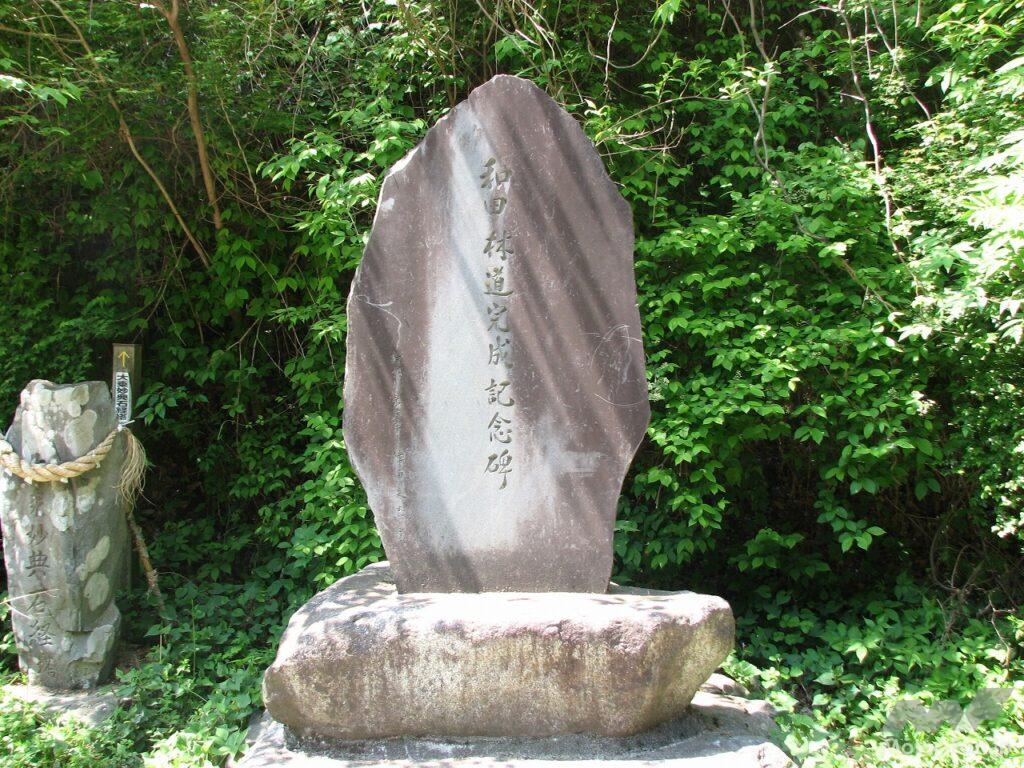
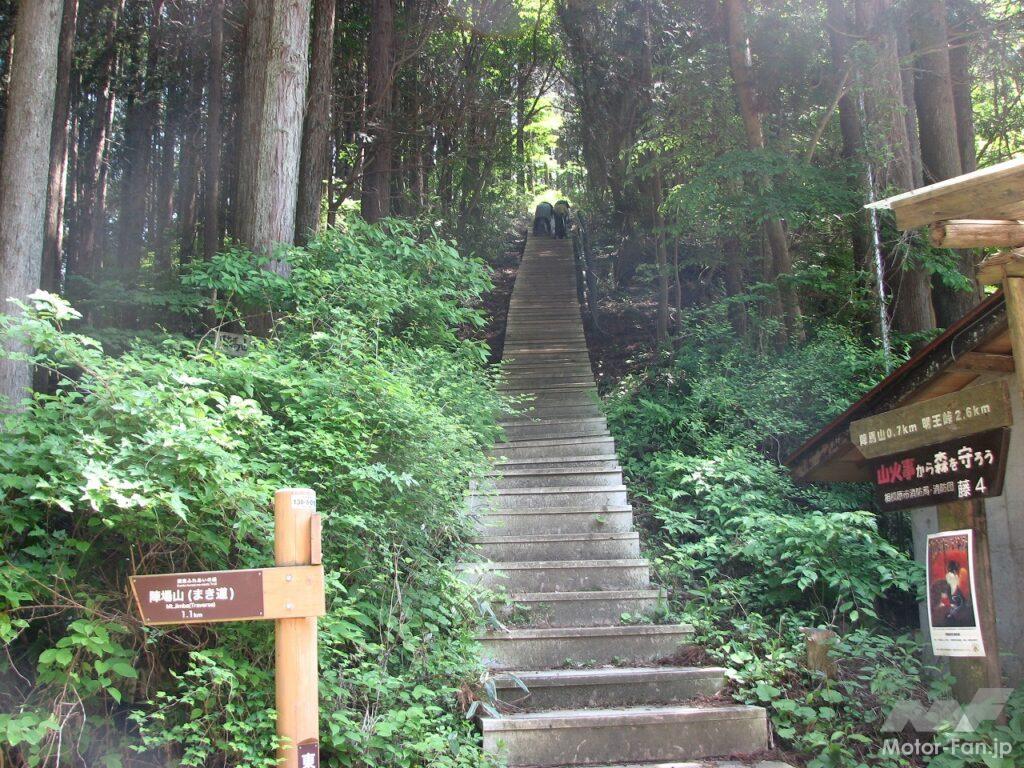
The hiking trail to Mount Jinba is lined with long stairs
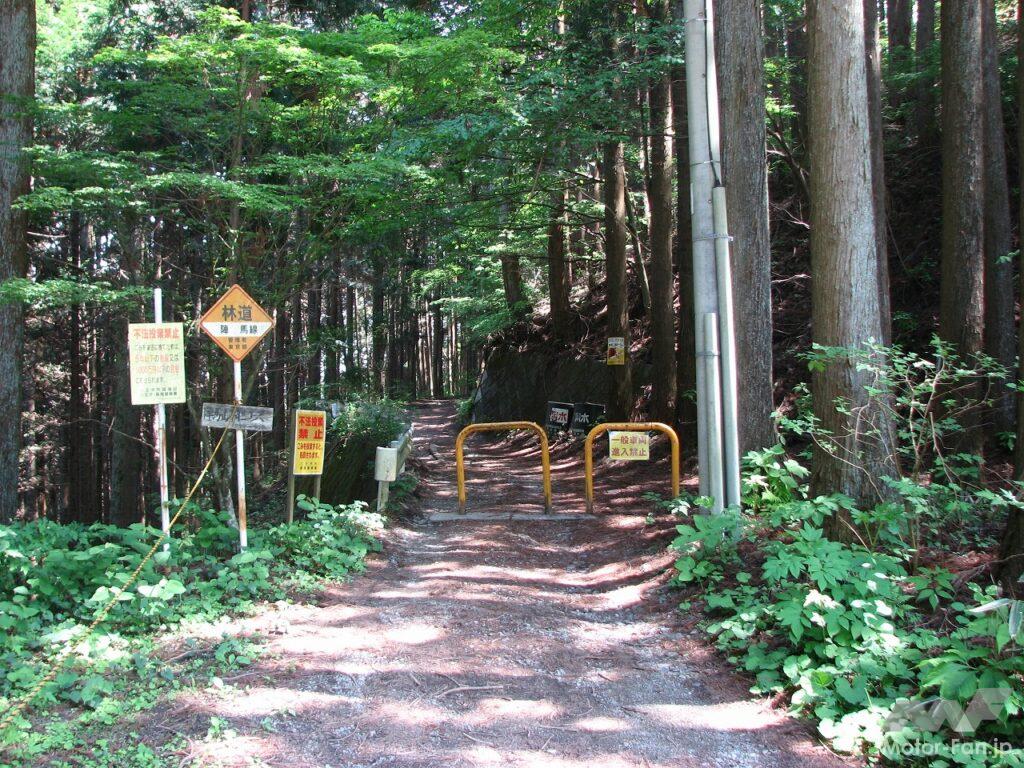
Another hiking trail can be reached from the forest road on the side.
At the Wada Pass, the Jinba Highway on the Kanagawa side becomes Prefectural Route 521. Leaving the pass behind and heading down toward Sagamihara, I came across an observation deck offering a distant view of Mount Fuji. Unfortunately, it was slightly cloudy that day, so I couldn't see the mountain, but I have fond memories of eating my packed lunch while admiring the mountain when I came here on my Super Cub a few years ago.
The road still has many sharp curves, but it's slightly wider and better maintained than the Hachioji side, making it an easy ride. As the villages begin to appear, the road splits into two. To the right is Prefectural Route 521, which leads into Yamanashi Prefecture toward Uenohara. To the left is Prefectural Route 522, which leads to Fujino and merges with National Route 20, the Koshu Highway. I took the left this time.
After a while of smooth, single-lane road travel, I came across a sign for the secluded Jinba no Yu hot spring. Attracted by the word "secluded," I decided to head there.
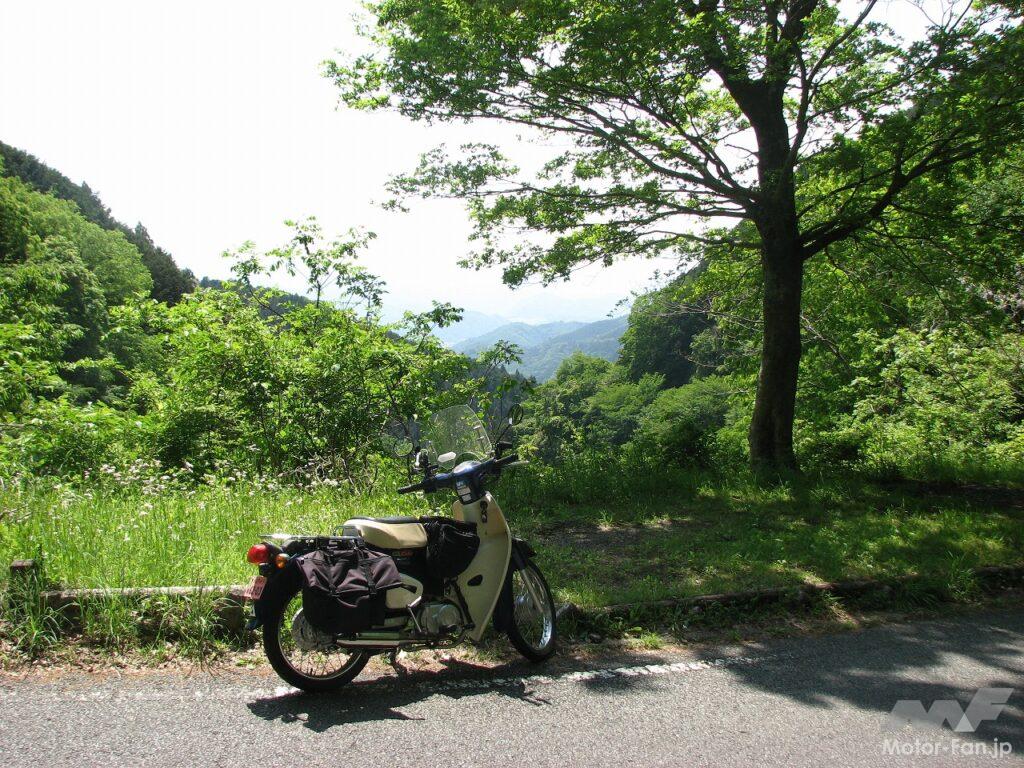
A viewing spot for Mt. Fuji located on the Sagamihara side from Wada Pass

As I headed down the Jinba Kaido towards Sagamihara, I came across tea fields stretching across the steep mountainside.
The road that winds its way up the Tochiya River into the mountains is lightly traveled, and the further I go, the more remote and exciting the feeling. The first place I came across was Jinya Onsen, a hot spring inn tucked away in the mountains. Further along, I came across a ryokan called Jinkeien. It seems there are two hot spring inns in Jinba no Yu. Even though it's only a stone's throw from Tokyo, it feels like I've been to a hidden hot spring.
Looking at the map, the road continues on, eventually joining National Route 20, the Koshu Kaido, near Obara-juku. Driving off an unfamiliar road seemed like quite a fun experience, so I continued on. However, less than two kilometers in, the road was closed. It seemed like regular vehicles couldn't travel the forest road. Still, I decided to head home, content with the fact that I'd traveled as far as I could.
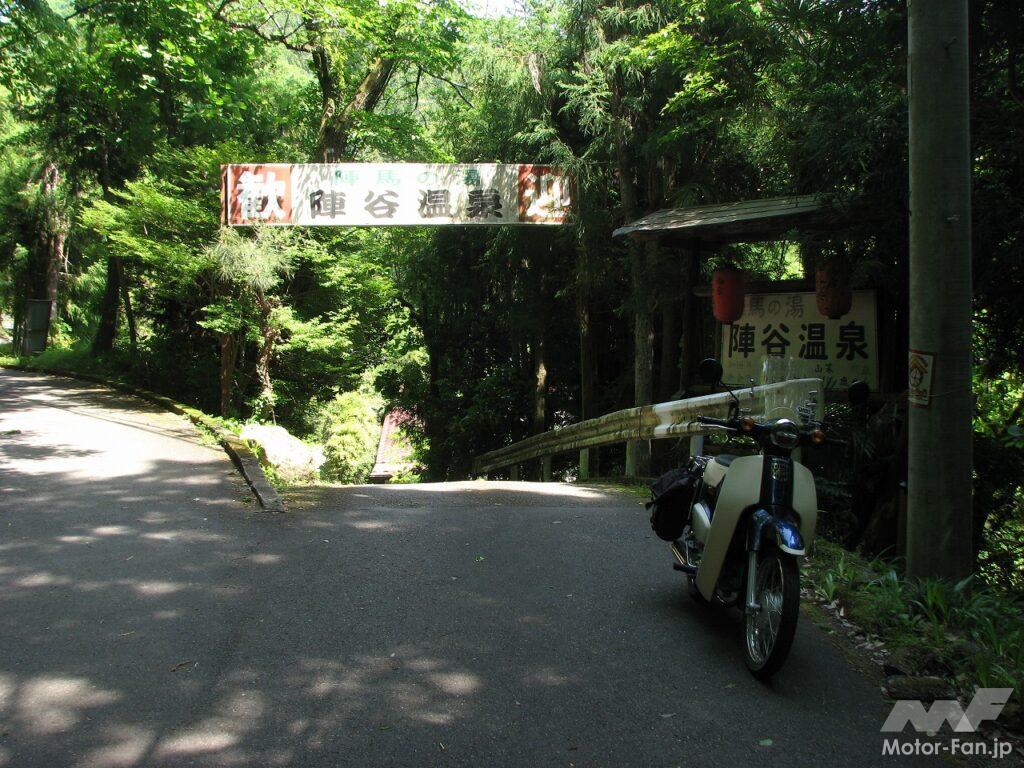
Jinba no Yu “Jinya Onsen”
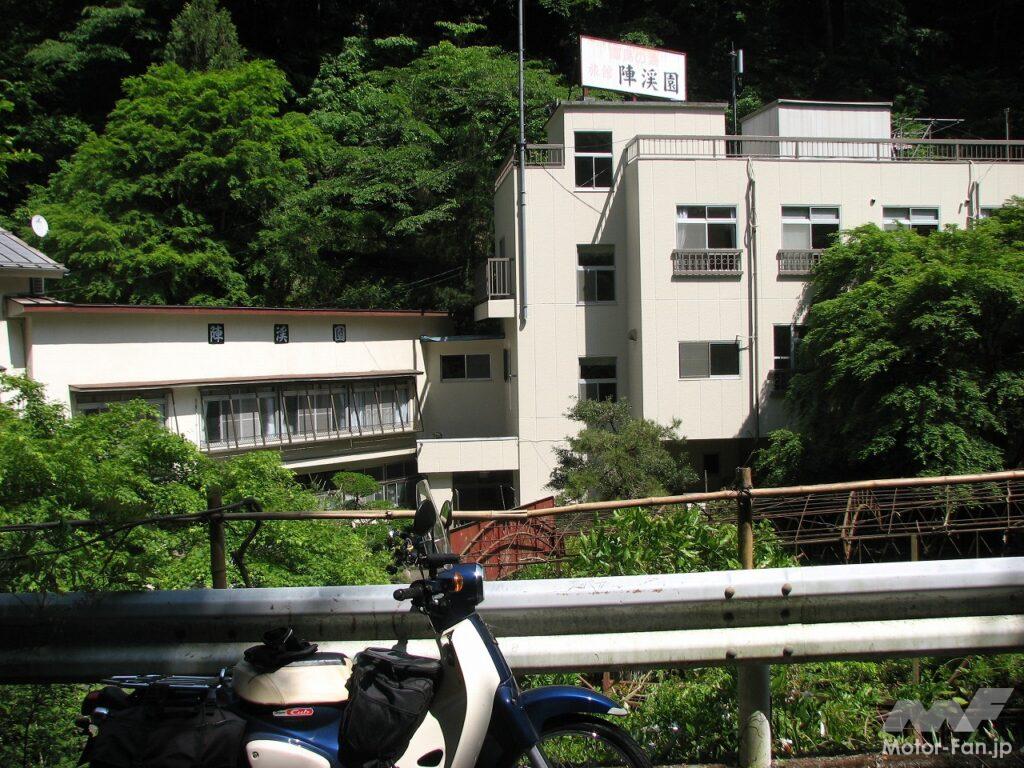
Jinba no Yu “Jinkeien”
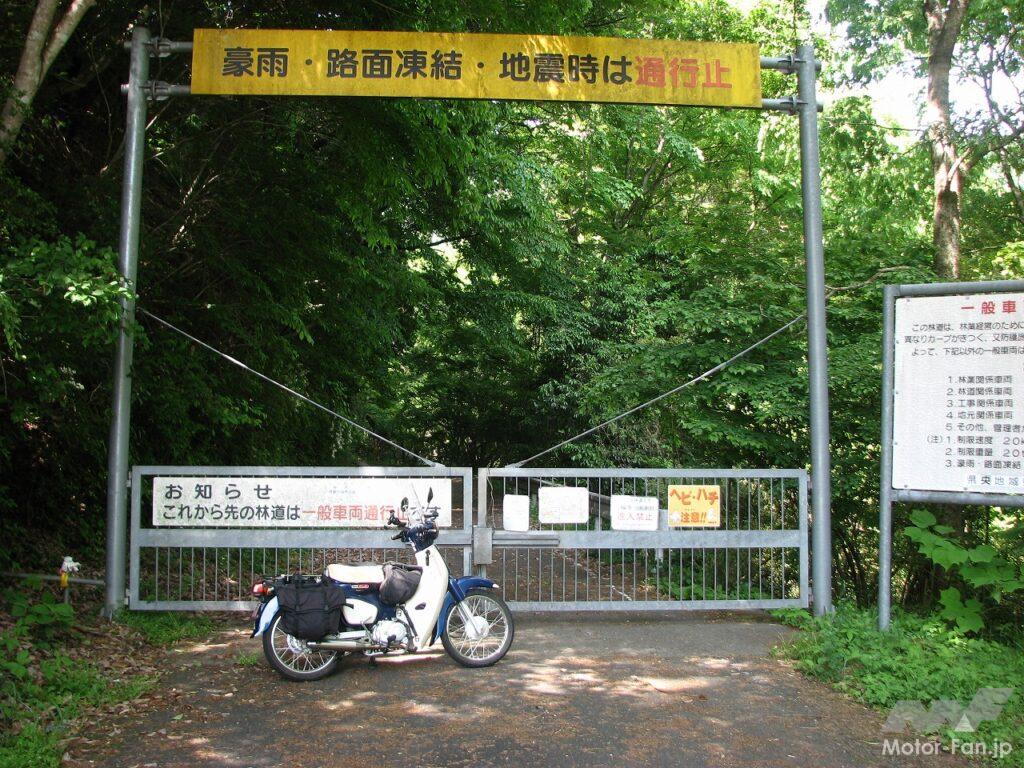
From Jinba no Yu, a forest road continues to the Koshu Kaido road near Obarajuku, but general vehicles cannot pass through.
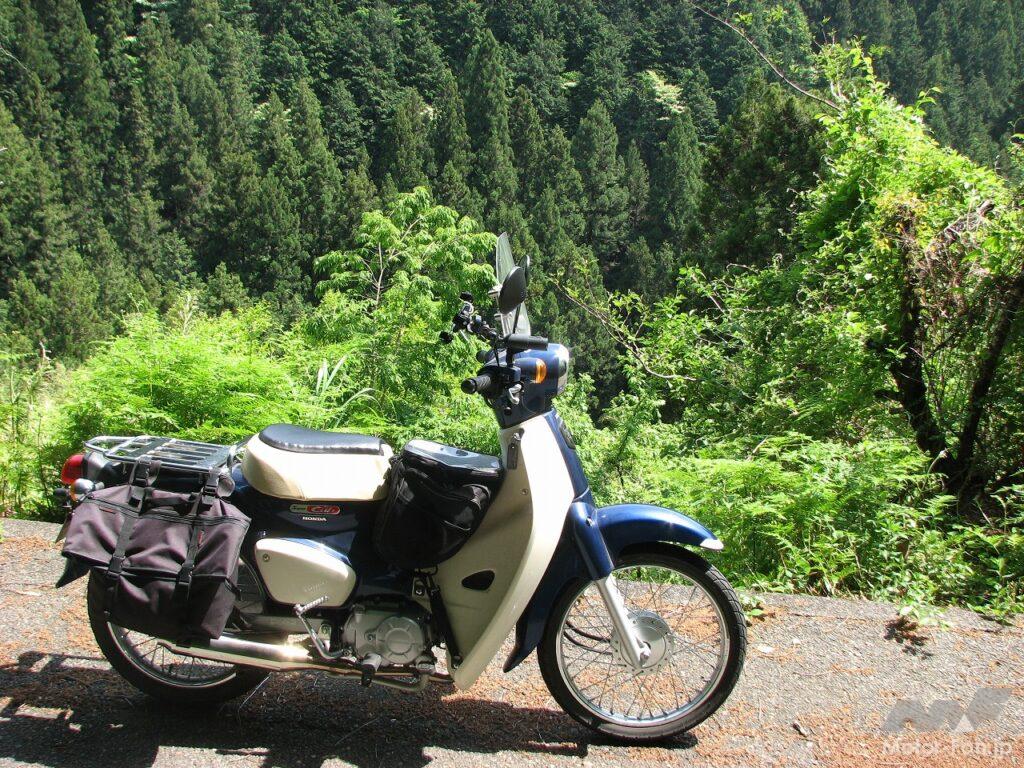
Although the Jinba Kaido is a relatively short road, connecting the two major cities of Hachioji and Sagamihara, the deep mountainous and rugged roads make it a very interesting route for a leisurely ride on a Super Cub. Although we didn't stop there this time, it might be nice to try the hidden hot springs at Jinba no Yu. It may be a bit challenging for beginners, but I recommend it as a casual touring course.
The distance traveled was 90 km, gasoline consumption was 1.48 liters, and the total cost, including lunch, was about 1,900 yen.
ADVERTISEMENT
 The village in the sky, also in Tokyo! Yuru Cub Touring Part 8: Okutama Town and Tomiura District
Adjusting the drive chain before setting off. During my last tour, I noticed a strange rattling noise coming from the drive chain. So, before this tour, I decided to adjust the tension and lubricate it. The Super Cub’s drive chain is covered by a chain cover and cannot be seen directly. However, there is an opening in part of the cover so that tension and lubrication can be done without removing the cover. The opening is covered with a rubber cap, so you can open it to check the chain. When I checked the tension, it was indeed quite loose. To adjust the tension, I first placed the bike on the center stand, loosened the rear wheel axle shaft, and then adjusted the chain at the rear of the swingarm…












![[Izu City, Shizuoka Prefecture] A great touring spot to visit by motorcycle | Passing the Amagi Pass through central Izu.](https://motopeek.com/wp-content/uploads/2025/11/4734-1762339049801.jpg)