
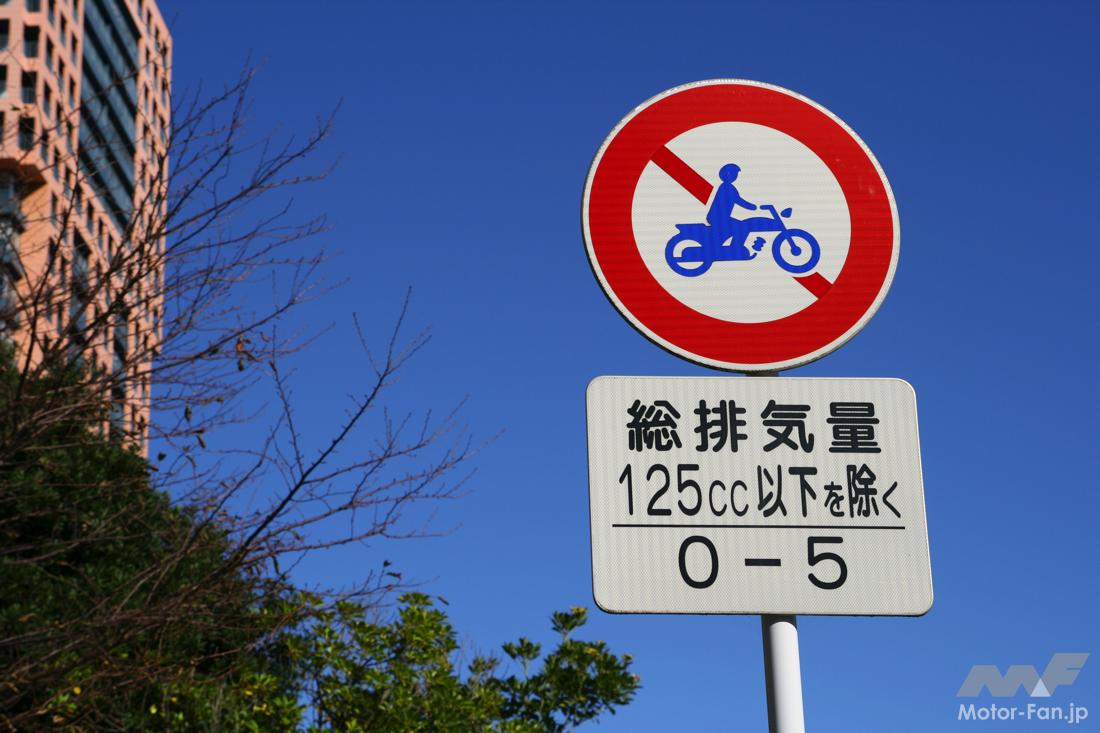
Where are motorcycle-free zones?
There are many sections of roads in Japan where cars (four-wheeled vehicles) can pass but motorcycles (two-wheeled vehicles) cannot. Some people may have experienced having to take a detour or not being able to reach their destination when they came across roads, bridges, or tunnels where motorcycles are restricted while touring.
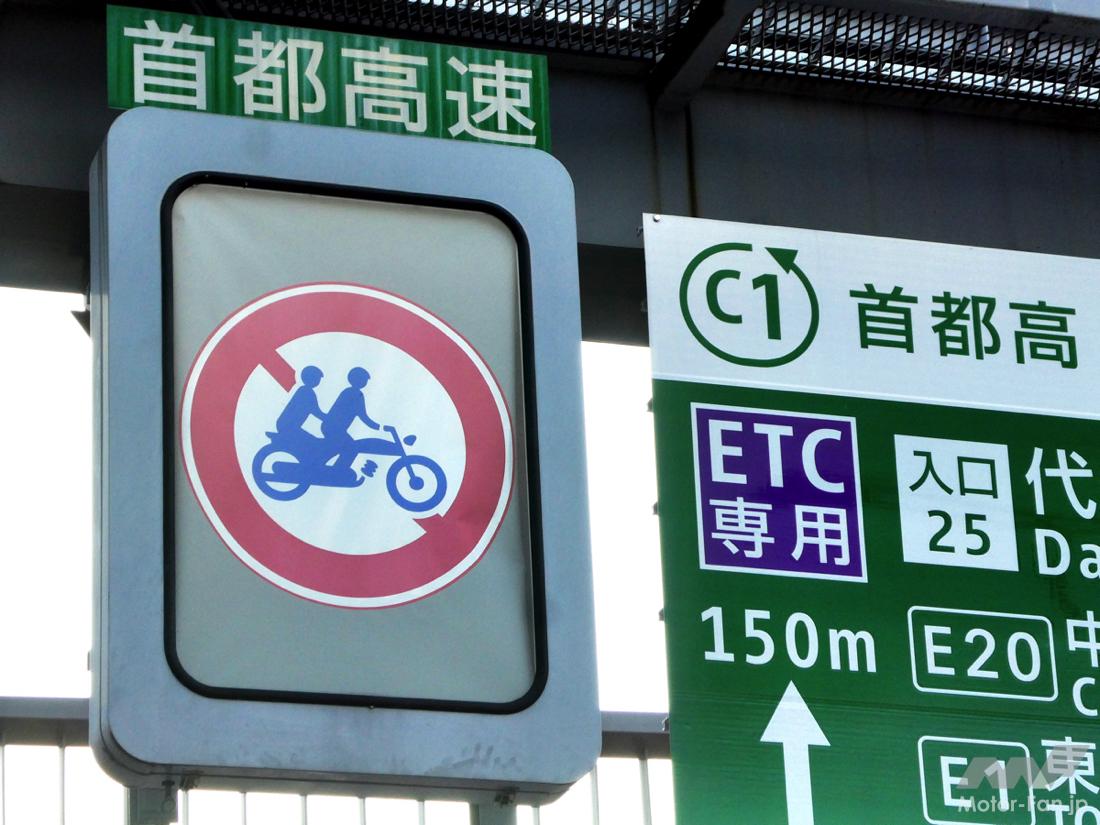
Furthermore, there is usually a “No Motorcycles Allowed” sign just before the section where the road is closed, but there is a possibility that a motorist may overlook this sign, or may follow the car in front of them and enter the road without realizing it, which could result in them being caught.
These are the areas that are legally designated as “no motorcycle zones.” What makes it tricky is that each zone has different restrictions on motorcycles. Restrictions on engine displacement vary depending on the location, such as mopeds only, motorcycles under 125cc, motorcycles under 250cc, or motorcycles of all engine sizes, making it difficult to grasp the trends and increasing the risk of accidentally entering a wrong zone.
So what are some specific areas where motorcycles are prohibited? Let’s take a look at some examples below.
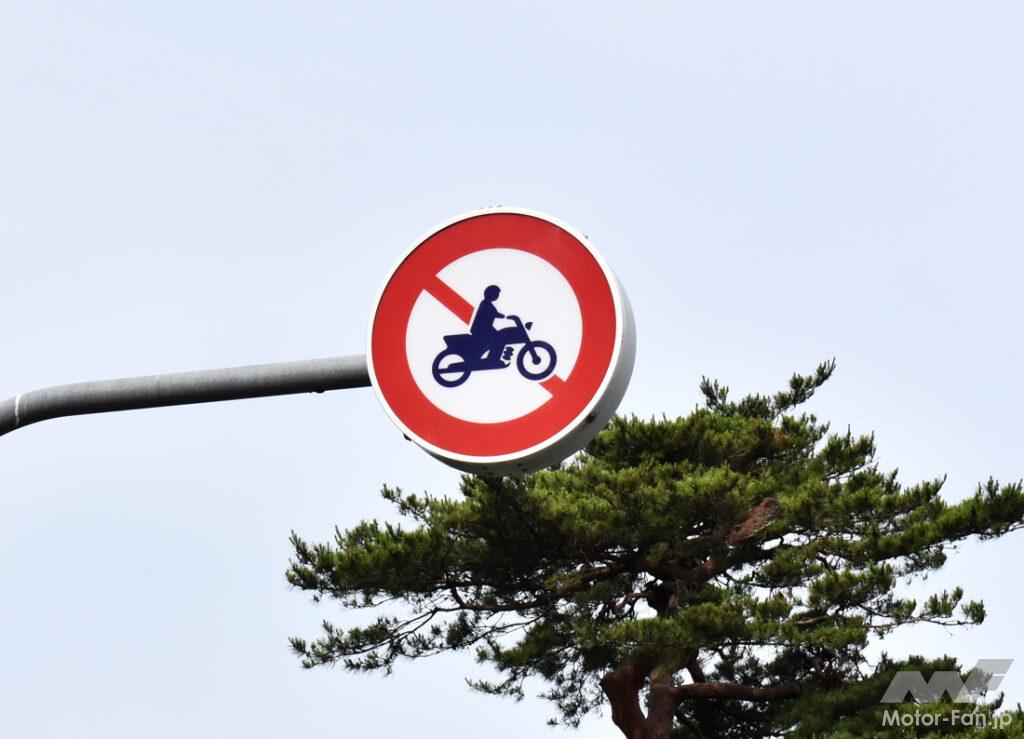
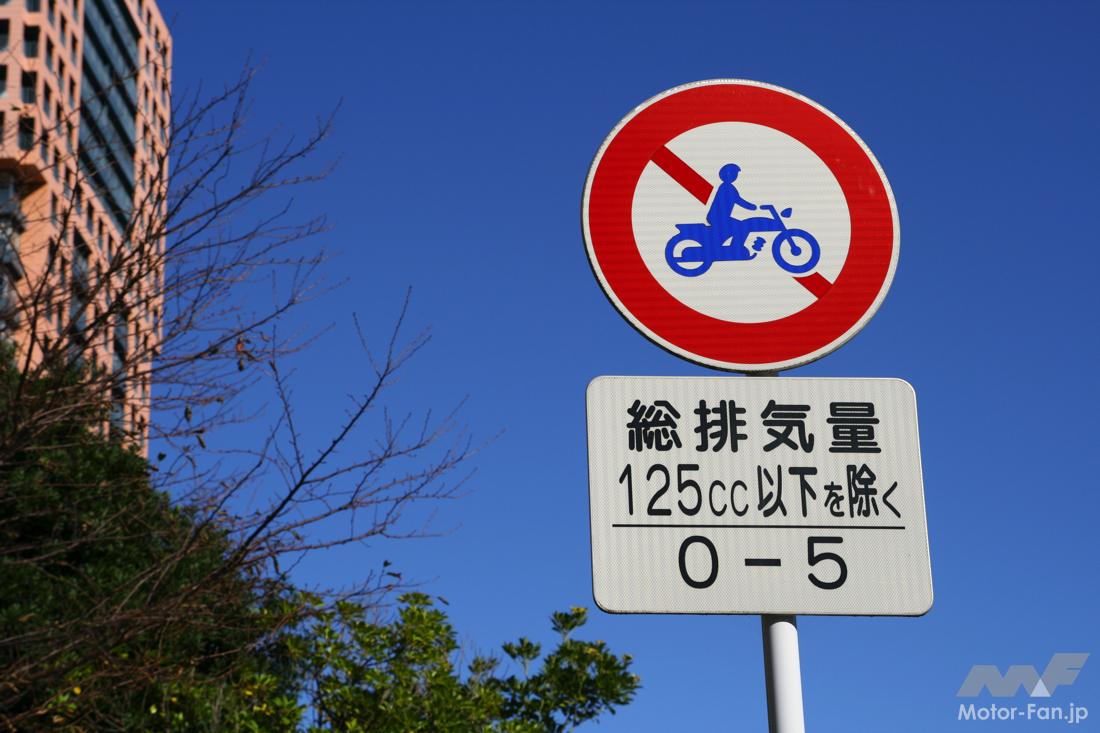
Example of a “No Motorcycles” sign
[Overpass/Underpass]
First of all, there are overpasses and underpasses. Even when touring, especially when passing through urban areas, you will often come across areas where motorcycles are prohibited.
For example, in Tokyo, the famous Shinbashi Underpass (Tokyo Route 316) runs from National Route 15 (Daiichi Keihin) in Shinbashi to Showa-dori. All motorcycles are prohibited from passing through here. If you enter this passage while heading north on National Route 15 towards Ueno, you will be breaking the law, so you will need to take the side road and turn right at the intersection ahead.
Many underpasses and overpasses in urban areas prohibit Class 1 mopeds, but in some cases, like this section, all motorcycles are prohibited. However, not all underpasses and overpasses prohibit motorcycles, which can make it even more confusing as to whether or not you can use them.
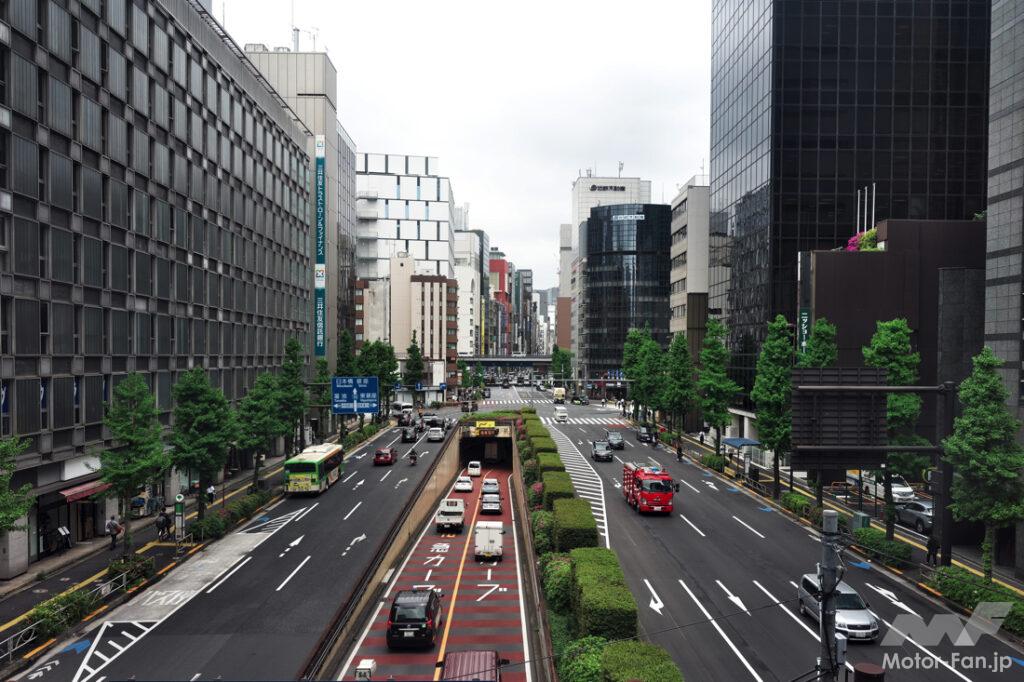
Near the entrance to the Shinbashi Underpass on National Route 15
[Bridges at tourist spots]
There are also places and sections of bridges where motorcycles cannot pass. One particularly confusing example is the Yokohama Bay Bridge in Kanagawa Prefecture, which is also known as a tourist spot. This bridge has a two-level structure, with the upper level being an expressway. Motorcycles over 250cc can pass through. Meanwhile, the lower level is used as a general road, but motorcycles under 125cc (class 1 and class 2 mopeds) are not allowed to pass through.
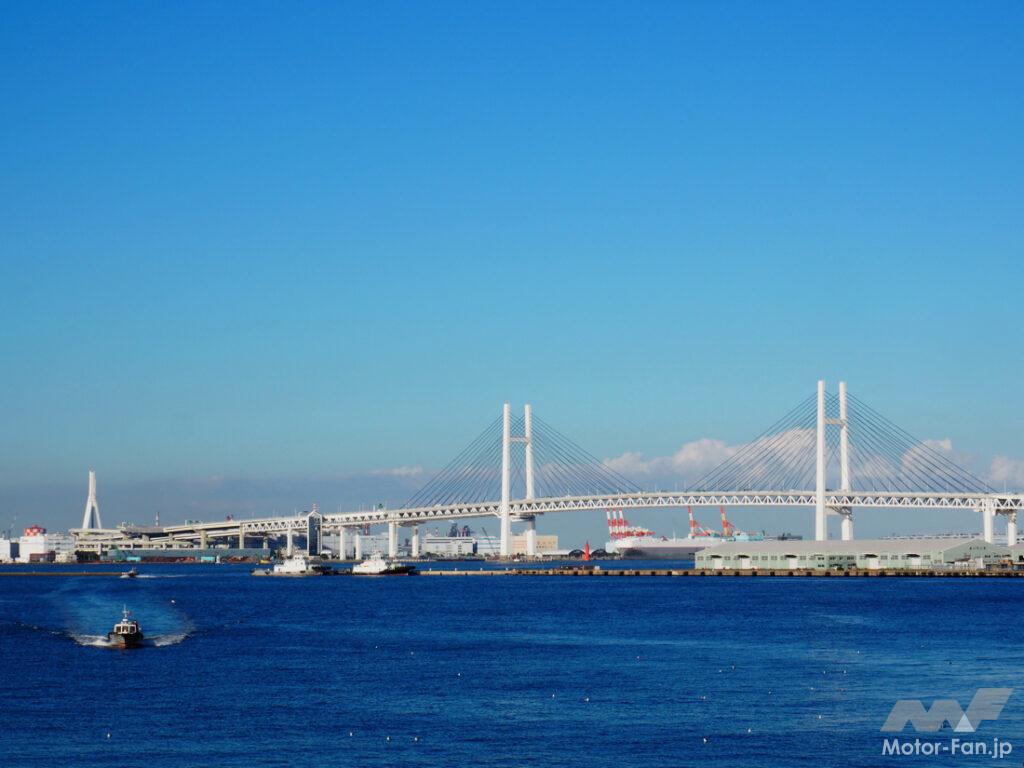
Yokohama Bay Bridge
Incidentally, Tokyo’s famous Rainbow Bridge is also a two-tiered bridge. The upper level is an expressway, and the lower level is a general road. However, in this case, only Class 1 mopeds are allowed on the lower level, which is a general road. Class 2 mopeds, such as 110cc and 125cc, are allowed. In this way, even on bridges with similar structures, the motorcycle restrictions vary depending on the location, which makes the no-motorcycle zones tricky.
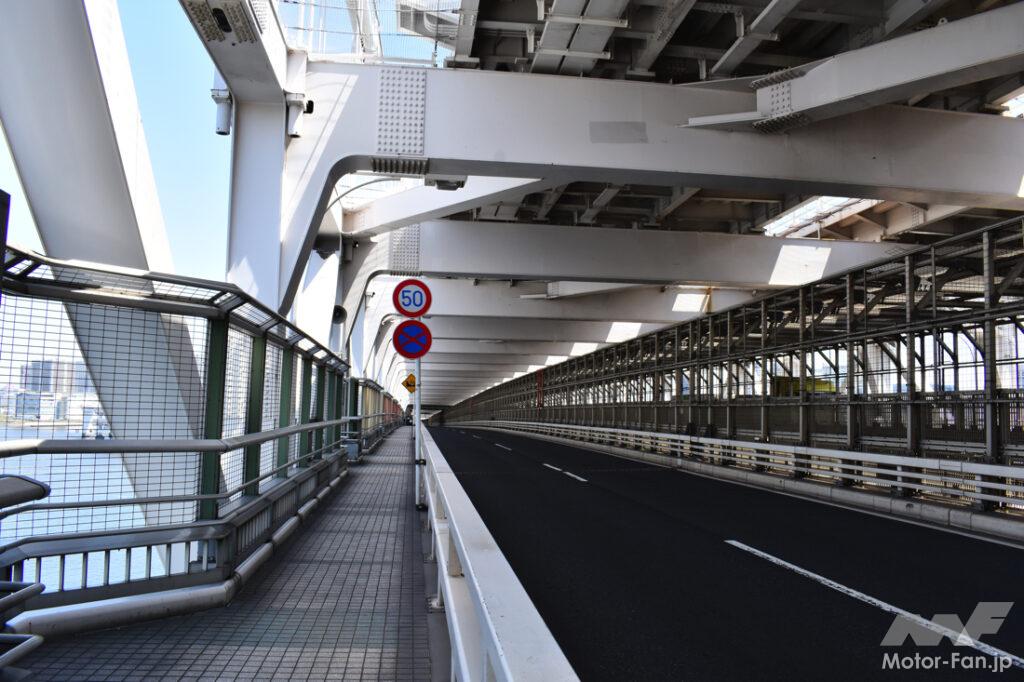
The public road section of Rainbow Bridge
[Mountain passes in tourist areas, etc.]
Even mountain passes in tourist destinations have sections where motorcycles are prohibited. For example, Mount Tsukuba (Ibaraki Prefecture), one of Japan’s 100 most famous mountains, has cable cars and ropeways that lead up to the summit, making it a popular tourist spot with many visitors on weekends and holidays.
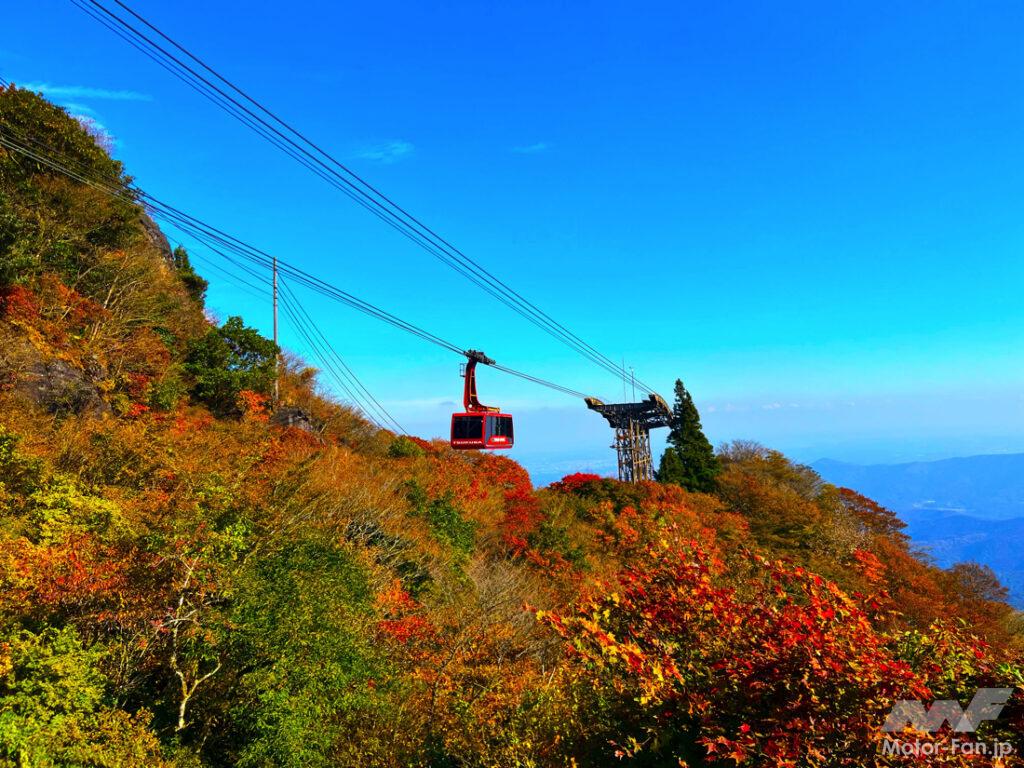
Mount Tsukuba is a tourist spot where you can climb to the summit by ropeway
Normally, the most convenient and comfortable way to get to Mount Tsukuba’s ropeway is via the Tsukuba Purple Line (Prefectural Route 236, Tsukuba Park Nagai Line). This road, known as a driving route by car, merges the former toll roads, the Omote Tsukuba Skyline and the Tsukuba Skyline, which were made toll-free in 2006. However, the former Omote Tsukuba Skyline section is closed to all motorbikes, from mopeds to motorcycles, all day long. The former Tsukuba Skyline section is also closed to all motorcycles between 7 PM and 8 AM. Additionally, the Fruit Line, which connects to the Purple Line from the Tsuchiura City area, is also closed to motorcycles all day long.
Additionally, on the Hakone Old Highway (old Tokaido/Prefectural Route 732) in Hakone Town, Kanagawa Prefecture, motorcycles with an engine displacement of less than 550cc are prohibited from traveling between 8:00 and 15:00 on Saturdays, Sundays, and holidays from April 1st to November 30th every year. Incidentally, mopeds of the first class are exempt from the restrictions and can travel on the road.
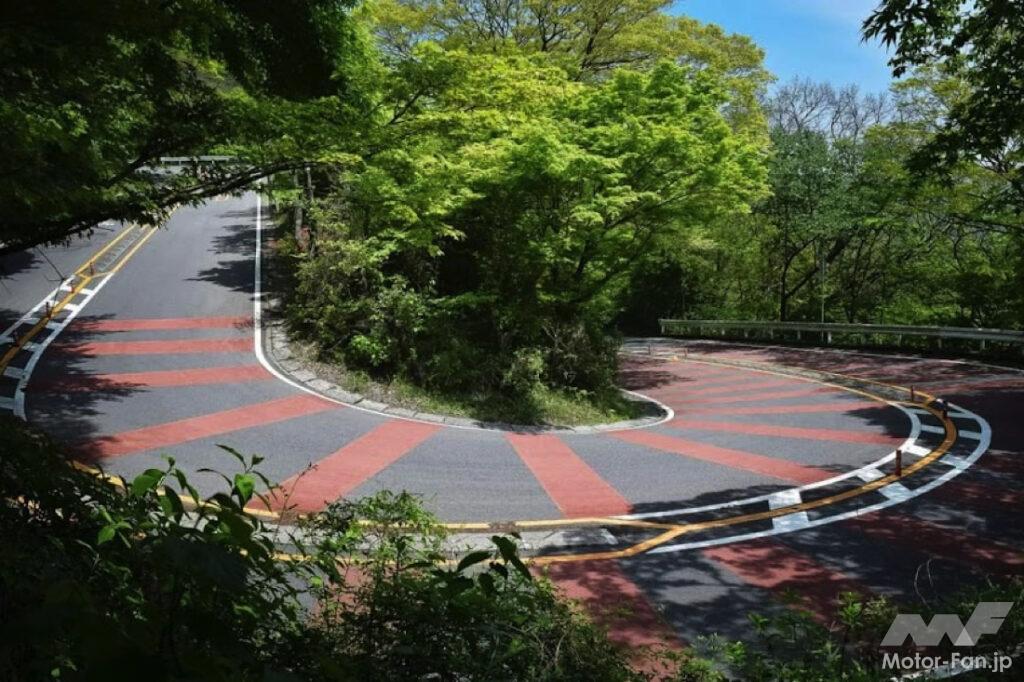
Near the Seven Curves of the Old Hakone Highway. Due to the steep slopes and tight curves, there are many accidents.
Why are motorcycles banned?
As such, motorcycles are prohibited from traveling in various places and sections across the country. According to a survey by the Motorcycle Promotion and Safety Association (hereinafter referred to as “Motorcycle Promotion and Safety Association”), as of May 2025, there are approximately 500 motorcycle-restricted areas across the country, including areas restricting large motorcycles.
So, what are the criteria for determining motorcycle traffic restriction areas? According to the National Police Agency’s “Traffic Regulation Standards,” in principle, roads that fall into any of the following categories are subject to motorcycle traffic restriction.
[Implementation criteria for motorcycle traffic restriction areas]
1: Roads where there is a high volume of automobile traffic due to overpasses, underpasses, tunnels, etc., and the roadway width is insufficient, resulting in the risk of traffic accidents occurring due to the mixed traffic of motorcycles or ordinary motorized bicycles and other vehicles.
2: Roads that are connected to expressways, etc., and therefore require the prohibition of the use of standard motorcycles (hereinafter referred to as “small motorcycles”) and general motorized bicycles with a total engine displacement of 0.125 liters or less and a rated output of 1.00 kilowatts or less.
3: A road with a series of curves or steep slopes that may cause traffic accidents due to the passage of two-wheeled vehicles or ordinary motorized bicycles.
4: Roads where it is necessary to prevent traffic hazards caused by reckless driving and to ensure peace and quiet in the area
ADVERTISEMENT
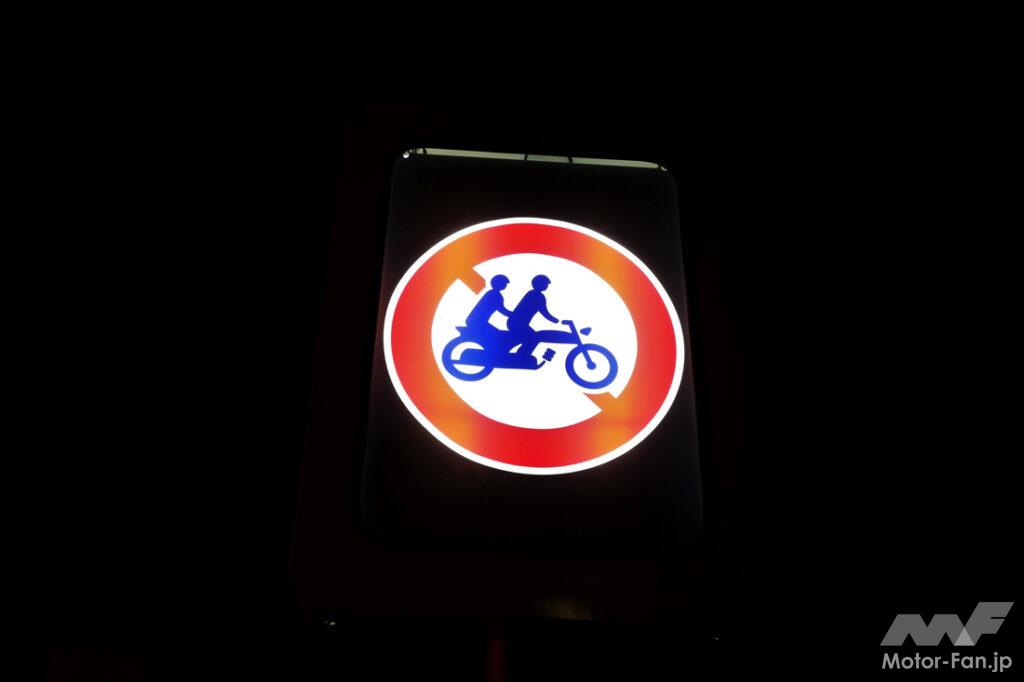
There are four main enforcement standards for motorcycle traffic restriction areas.
Looking at these standards, it seems that in many cases motorcycles are prohibited from passing through for safety reasons. For example, the general road below the Yokohama Bay Bridge is a road that “connects to expressways, etc.” as mentioned above, and therefore motorcycles under 125cc (class 1 and class 2 mopeds) are not permitted to pass through.
Additionally, roads such as the Omote Tsukuba Skyline and Tsukuba Skyline in Ibaraki, and the Hakone Old Highway in Kanagawa, seem to fall under category 3, which has “continuous curves or steep slopes,” and category 4, which “prevents traffic hazards caused by reckless driving.” These roads are known as winding roads, with a series of sharp corners. Furthermore, motorcycles are banned from these roads due to the frequent occurrence of accidents caused by “rolling gangs” (illegible motorcycle gangs that circle mountain passes) on motorbikes and cars.
As mentioned above, motorcycles with an engine displacement of less than 550cc are prohibited from using the Hakone Old Highway. Large motorcycles are permitted, but mid-class motorcycles such as 250cc and 400cc, which are popular among touring enthusiasts, are not permitted. But why is the 550cc engine displacement limit set? One theory is that the reason is that “when the restrictions were put into place in 1984, motorcycles with an engine displacement of less than 550cc were driving dangerously.” If this is true, then restrictions from over 40 years ago are still in place, and seem out of place in today’s situation. Perhaps the restrictions need to be revised in this area.
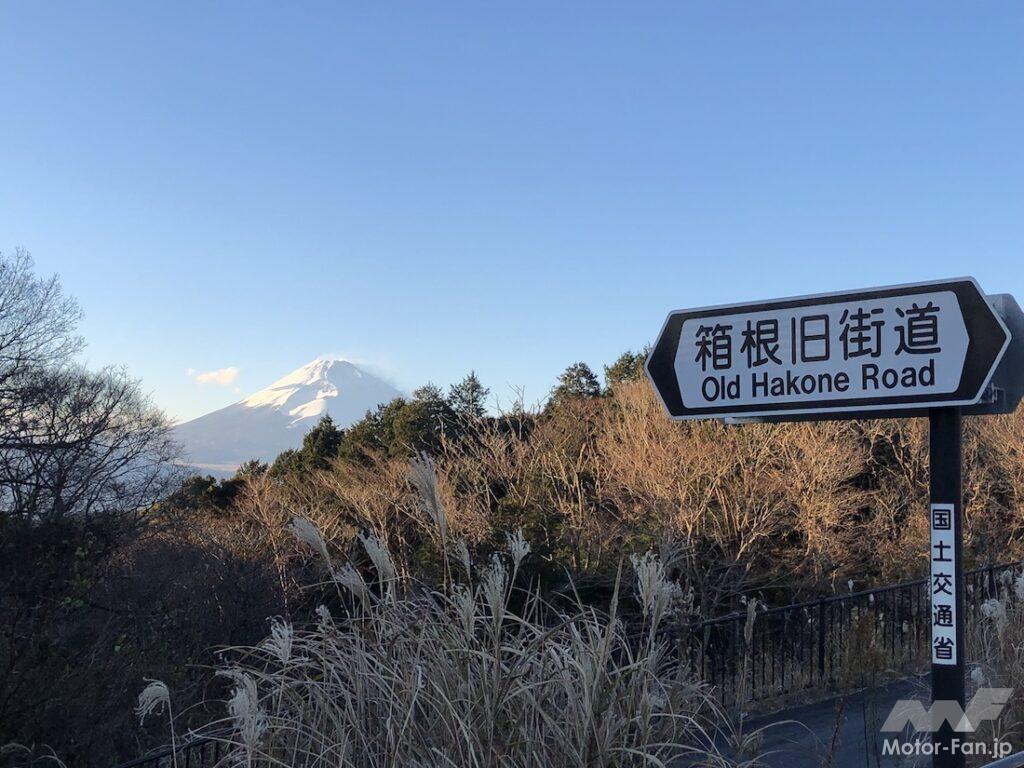
It seems that the regulations in place on the Hakone Old Highway from over 40 years ago are still in place.
Check the restricted roads at your destination in advance
As you can see, restricted motorcycle zones are a real nuisance for motorcyclists. However, under the current system, if you accidentally enter a restricted motorcycle zone, you could be arrested, putting a damper on your touring adventure.
As a countermeasure, it is a good idea to check before going on a tour whether there are any sections of your planned route where such motorcycles are prohibited.
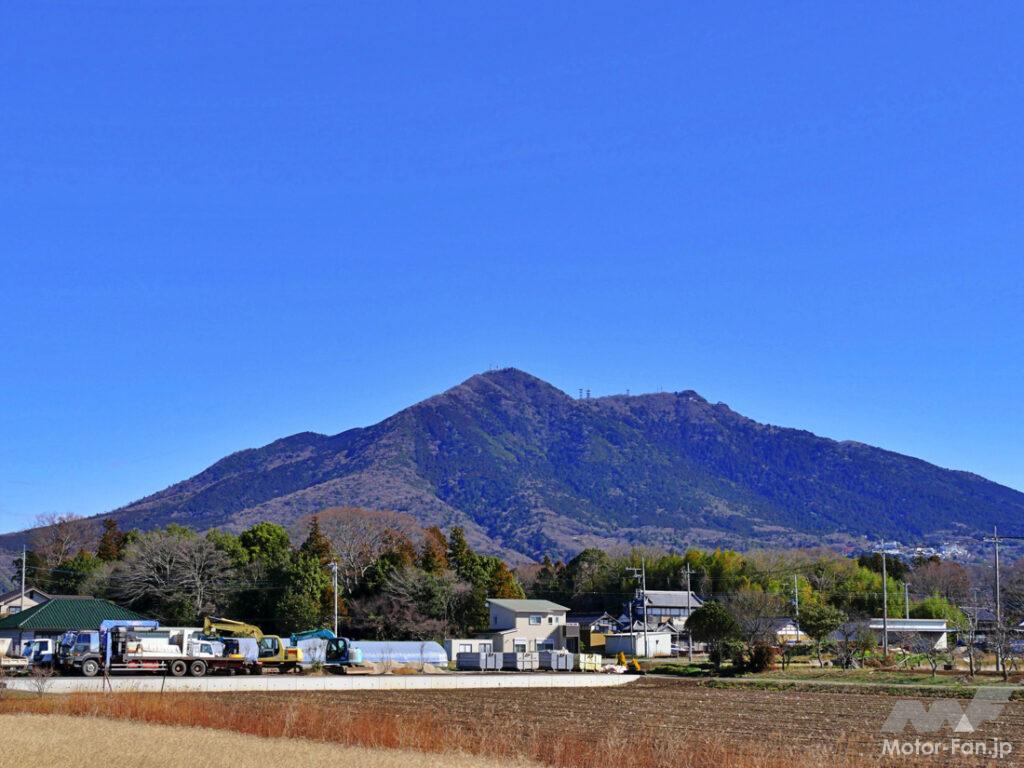
If you find out that a road is closed when you get there, your plans will be ruined. It’s best to check in advance if motorcycle traffic is restricted (photo of Mount Tsukuba).
The aforementioned Motorcycle Association provides information on motorcycle traffic restriction zones nationwide on its website. The published data is surveyed at the end of March each year with the cooperation of prefectural police departments and updated in June, so it’s great for getting the latest information. We recommend visiting the website and checking out the motorcycle traffic restriction zones.
[Related link]
Information on restricted areas for motorcycles from the Japan Motorcycle Promotion and Safety Association
: https://www.jmpsa.or.jp/society/roadinfo/