
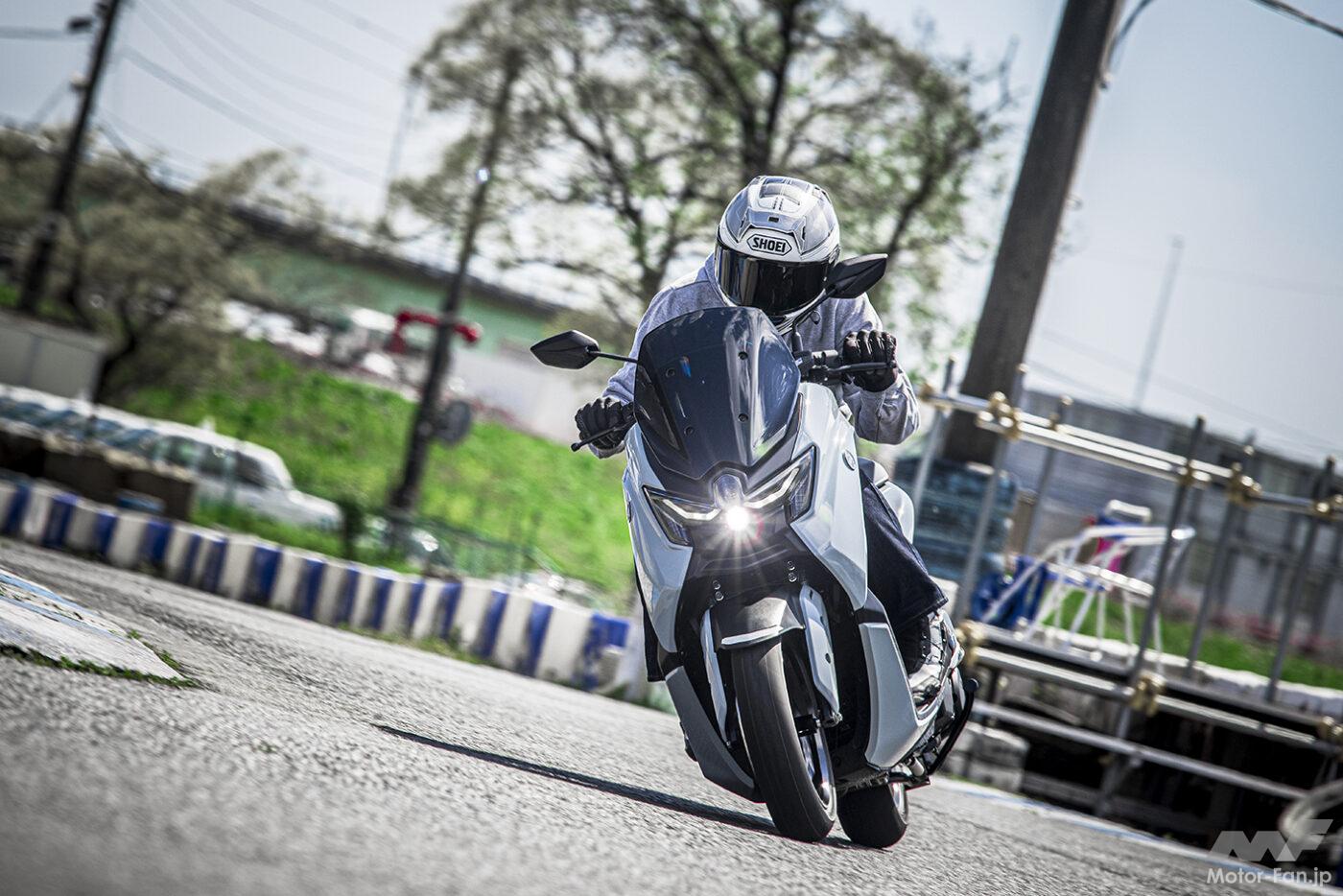

Yamaha NMAX (125) / 155… 384,000 yen / 459,800 yen
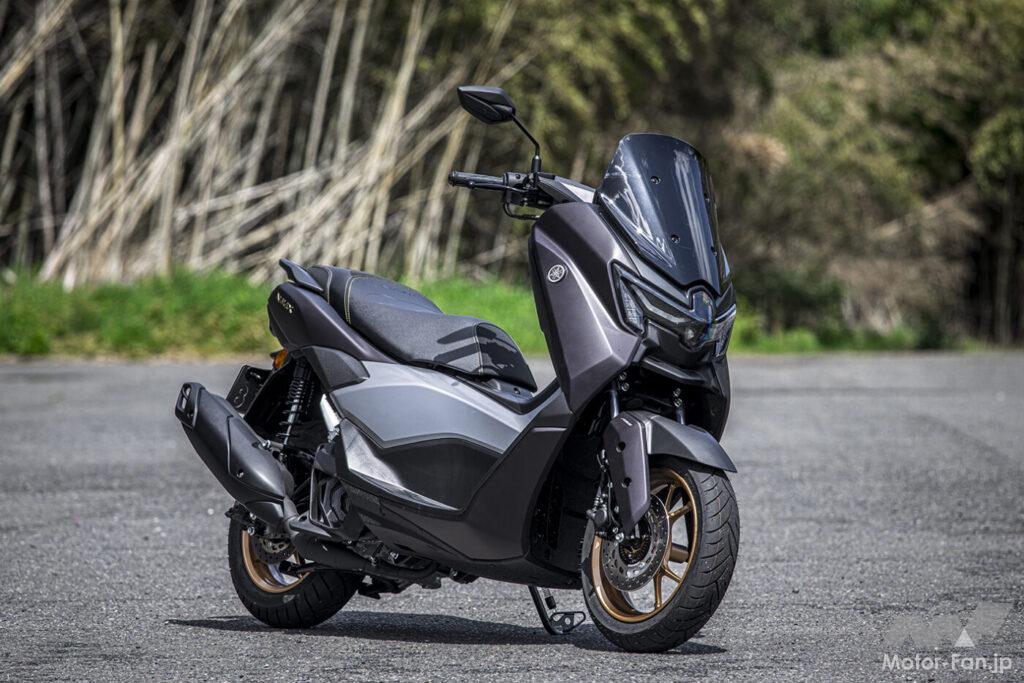
The differences between the 125 and 155 that can be seen from the exterior are the leather seats, left switch box, meter, radiator cover, and drivetrain, but there are no numbers indicating engine displacement anywhere. This vehicle, with gold stitching on the seat laser, is a 155.
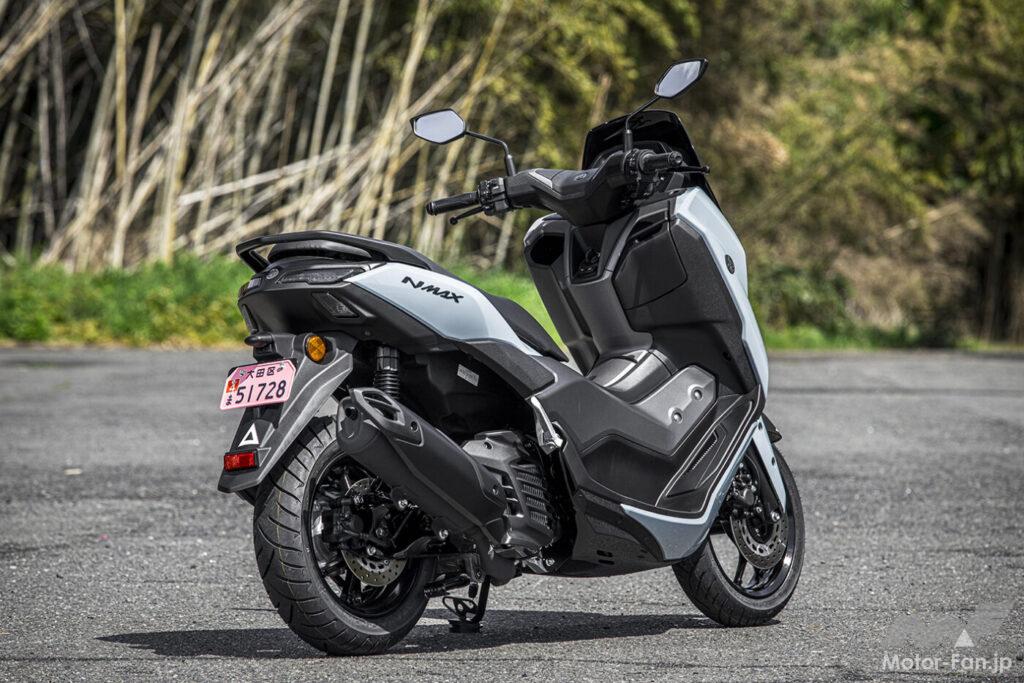
The 125 comes in four body colors: Bluish Gray Cocktail (pictured), Matte Dark Reddish Gray Pearl, Matte Gray Metallic, and White Metallic. The big brother 155 comes in three colors: Matte Dark Reddish Gray Pearl, Black Metallic, and Darble Solid, with side covers and front and rear wheels in exclusive colors different from the 125.
If you own one, go for the big brother equipped with YECVT.
Is it the younger brother of a Class 2 moped, or the older brother of a light motorcycle? When discussing the Yamaha NMAX and Honda PCX, 125/155/160cc scooters that share many of the same basic designs, the question of which is best often comes up. The general answer to this question is that if you prioritize low maintenance costs, you should go for the 125, and if you want to use the highway, you should go for the 155/160…
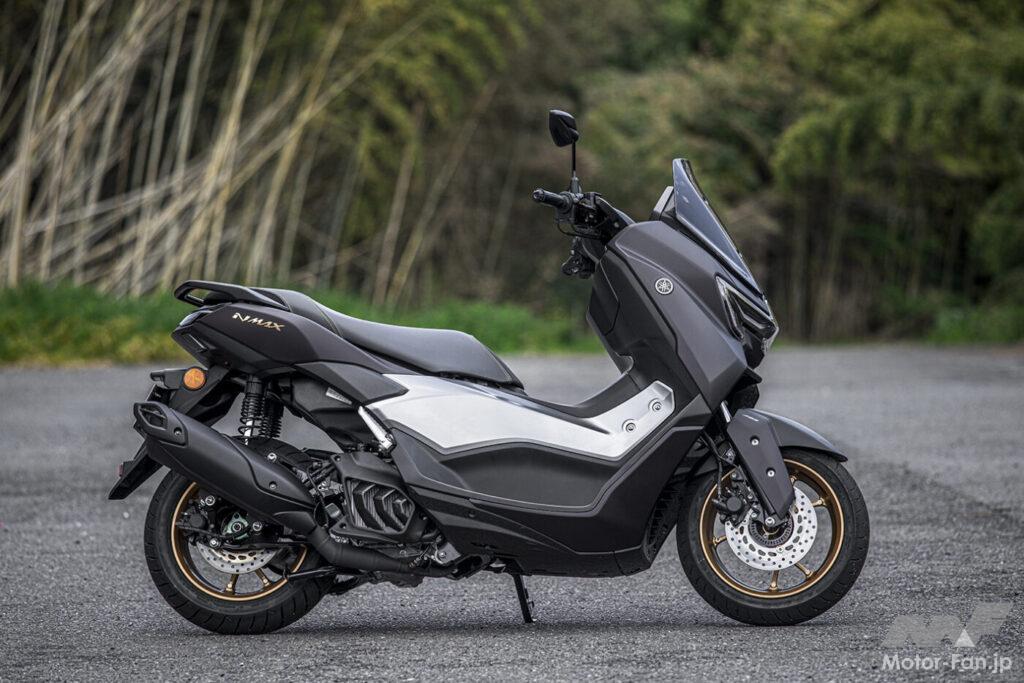
After test driving the 2025 NMAX (125), the third-generation model, and the 155 under the same conditions, I felt that if I were to own one, it would be the big brother. The reason for this is that the electronically controlled drivetrain, which is only used in the 155, has two modes, T and S, and allows for optional three-stage downshifting. The feeling of the YECVT (Yamaha Electric Continuously Variable Transmission) was excellent.
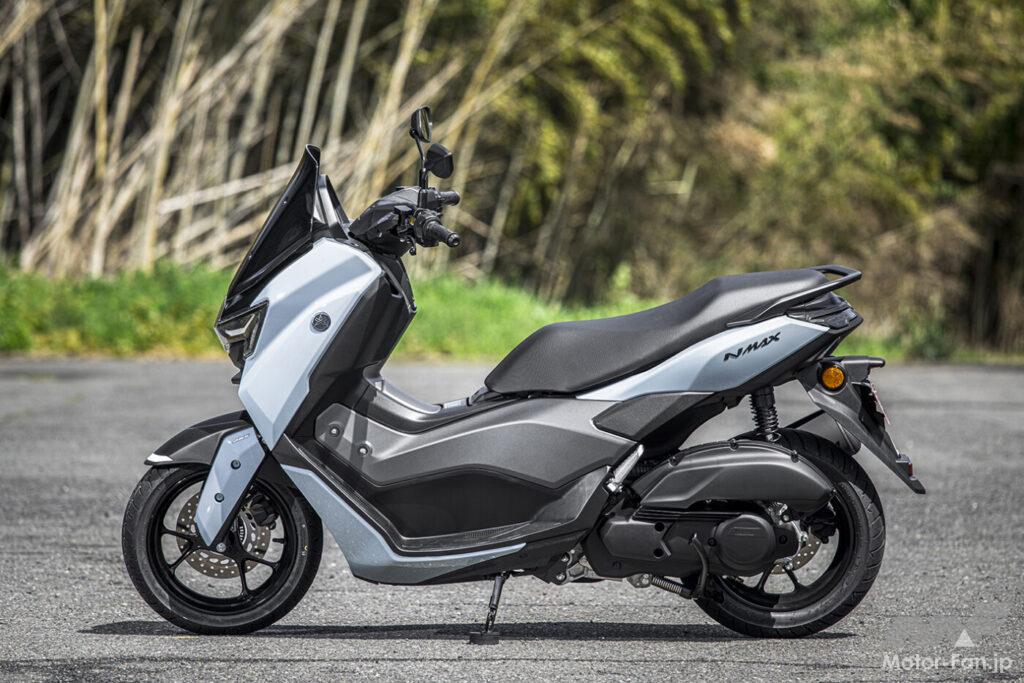
A taut, athletic design
Before getting to the main topic, let me provide some basic information. Yamaha’s press release lists three features that are common to the third-generation NMAX/155: the refinement of the power unit (the only change to the 125 was the cam chain tensioner, which has been changed from a torsion spring type to a hydraulic type, but the 155 has a newly developed crankshaft, crankcase, intake and exhaust systems, oil pump, etc.), revised front and rear suspension settings, and revamped styling. What people focus on among these will be different for each individual, but the first thing that caught my interest during this test ride was the styling, which is similar but not the same as the previous model.
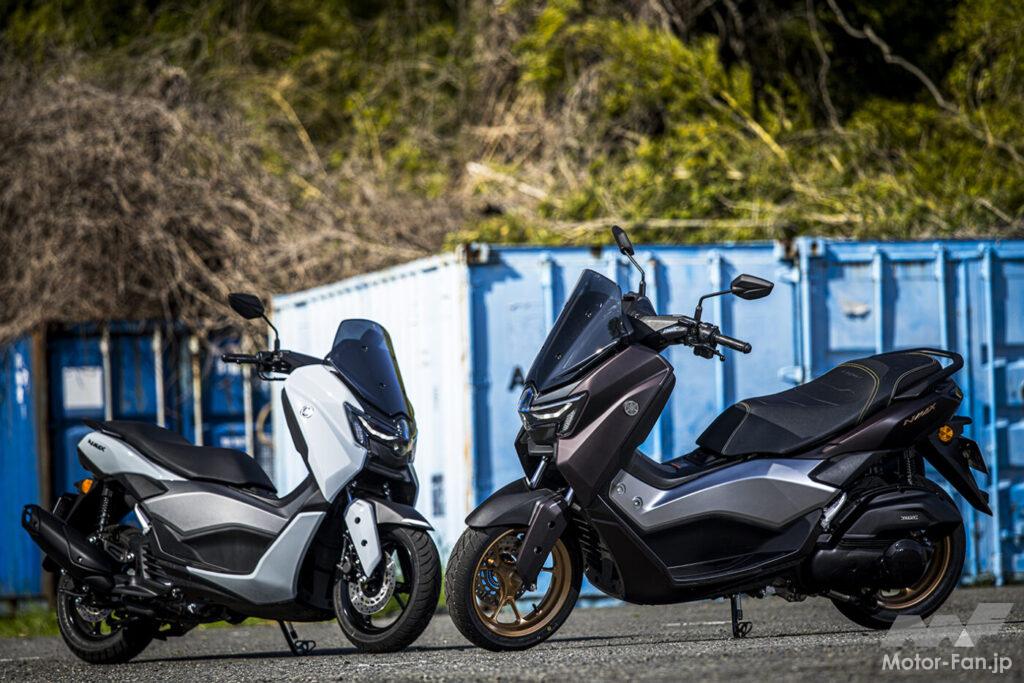
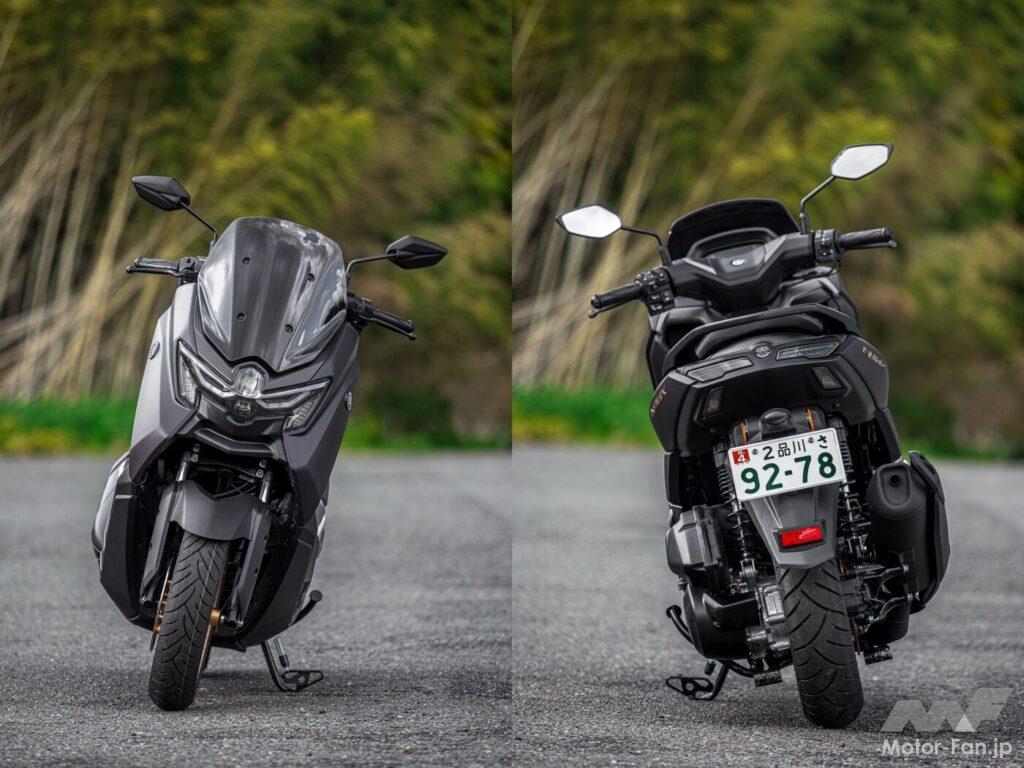
What caught the eye in particular was the presence of the boomerang-motif side covers and the sense of unity between the front cowl and front fender, but other features unique to the third generation include the significantly shortened front and rear overhangs (the extension from the axle in the front-to-rear direction when viewed from the side) and the LED lights, which are smaller, lighter and look more manly.
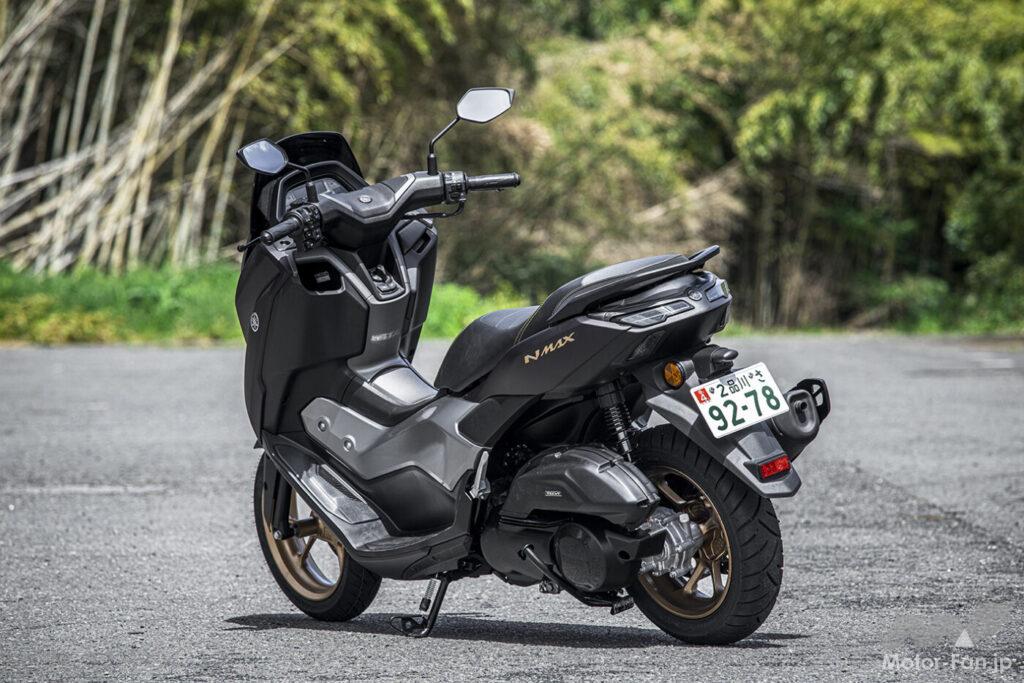
Incidentally, the main design concept for the 2025 NMAX/155 is “Accelerating Core,” with the development team also setting keywords such as “Powerful Stance,” “Force Flow,” and “Serious Aura.” However, the word that resonated with me the most was “Condensed Element.” The entire body of the third-generation NMAX/155 looks like an athlete with a tight, toned body, and this style is likely to resonate with many Yamaha and MAX series fans.
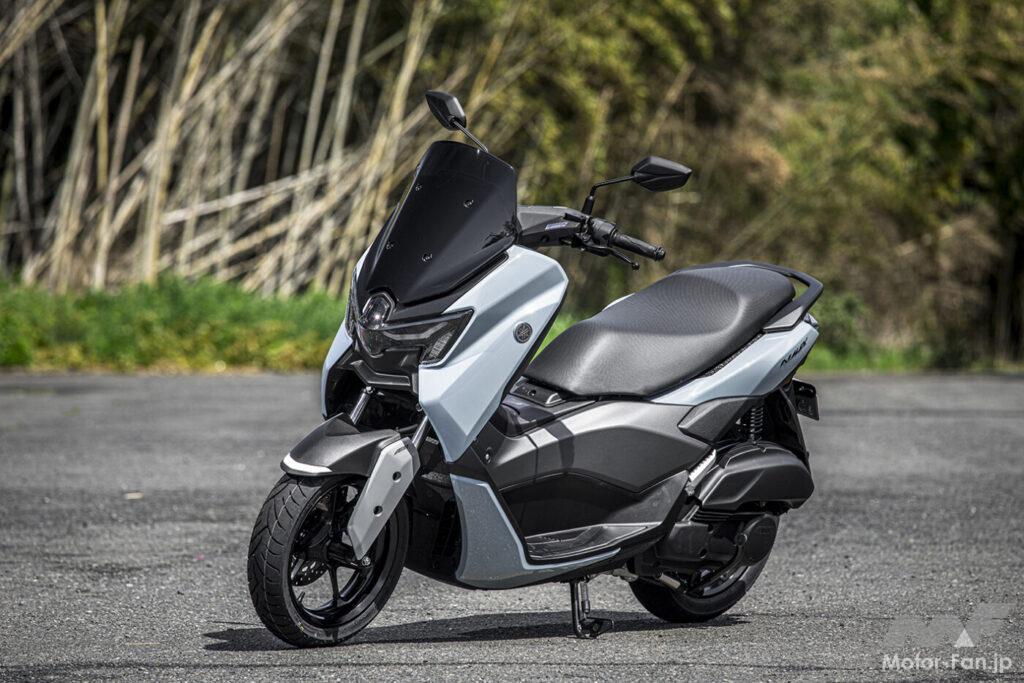
Thanks to the YECVT, acceleration and deceleration are fun.

Now, on to my impressions, I’ll start by sharing my thoughts on the YECVT, a mechanism only available on the 155 mentioned above. To be honest, I used to have the impression that the manual mode that was all the rage on 250cc scooters was a good thing, but not really necessary. However, in the case of the YECVT, there’s a big difference between having it and not having it.
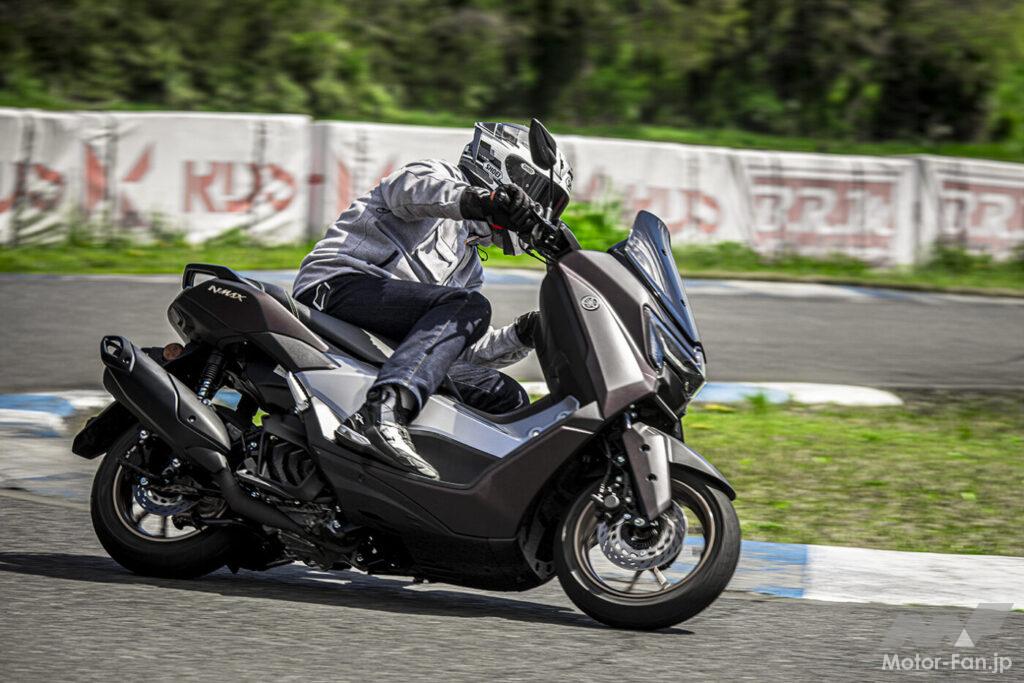
To be more specific, you can enjoy completely different feelings in T mode and S mode (T is smooth, gentle and fuel-efficient, while S has direct acceleration and deceleration and is sporty), and by using the downshift button on the left switch, you can enjoy just the right amount of deceleration and stability as if the rear tires are being pulled from behind when entering a corner, and when exiting, you can enjoy sharp acceleration as if the engine displacement has been increased…although that may be an exaggeration.
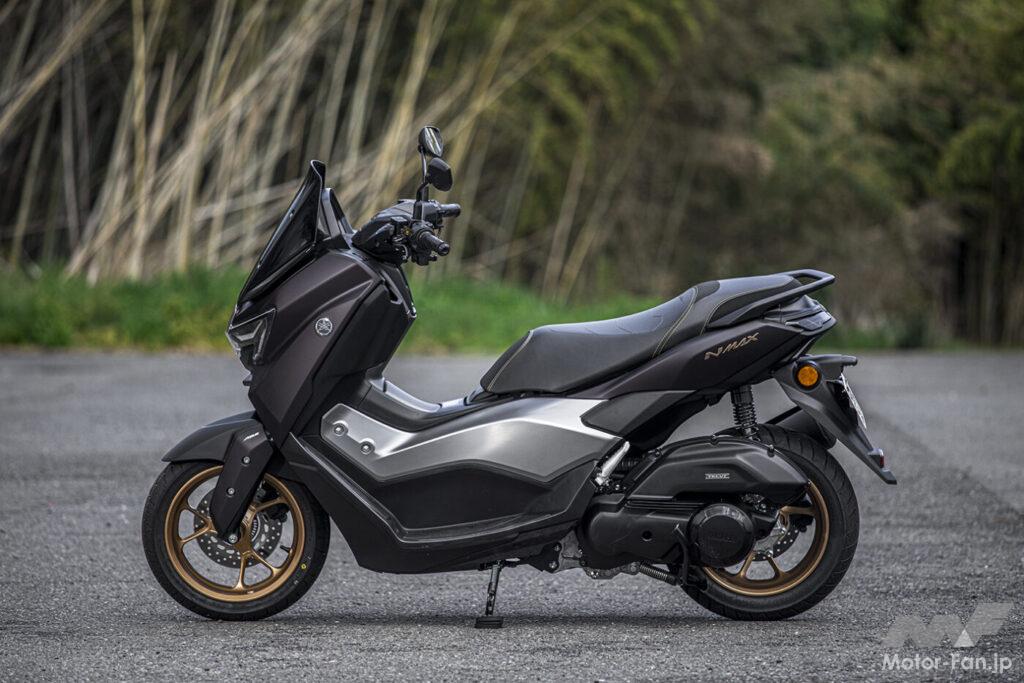
Incidentally, while the CVTs found in typical scooters determine the gear ratio based on vehicle speed and driving load, the YECVT uses various sensors, control units, and motors to optimize the gear ratio according to driving conditions (electronic intervention is limited to the front pulley), and pressing the downshift button forces the transmission into a low-geared state.
Knowing this, some might imagine that the characteristics might not suit the rider’s needs in some situations, but there was absolutely no sign of that happening with the YECVT. I was able to enjoy comfortable acceleration and deceleration in any situation, using T mode in urban areas, S mode on smooth highways and mountain passes, and the downshift button when it really counts.
Achieves comfort and mobility that surpasses conventional models
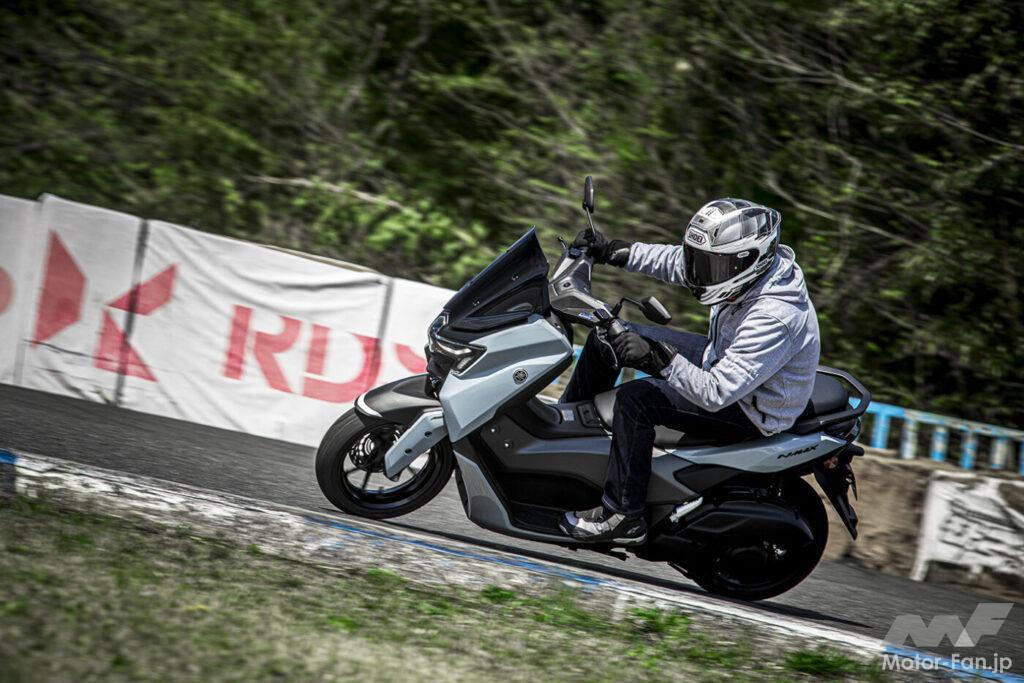
So, having been impressed by the 155, what was my first impression of the 125 I rode next? I wanted the YECVT. Of course, it would be difficult for Yamaha to put a price tag of over 400,000 yen on a 50cc scooter, and considering the price difference with its bigger brother, no one would object to the 125 not being equipped with the YECVT. That said, if they were to sell a high-end 125 model equipped only with the YECVT, without the TFT + LCD dual display, another feature of the 155, for around 50,000 yen more, wouldn’t there be many riders who wanted to buy one?
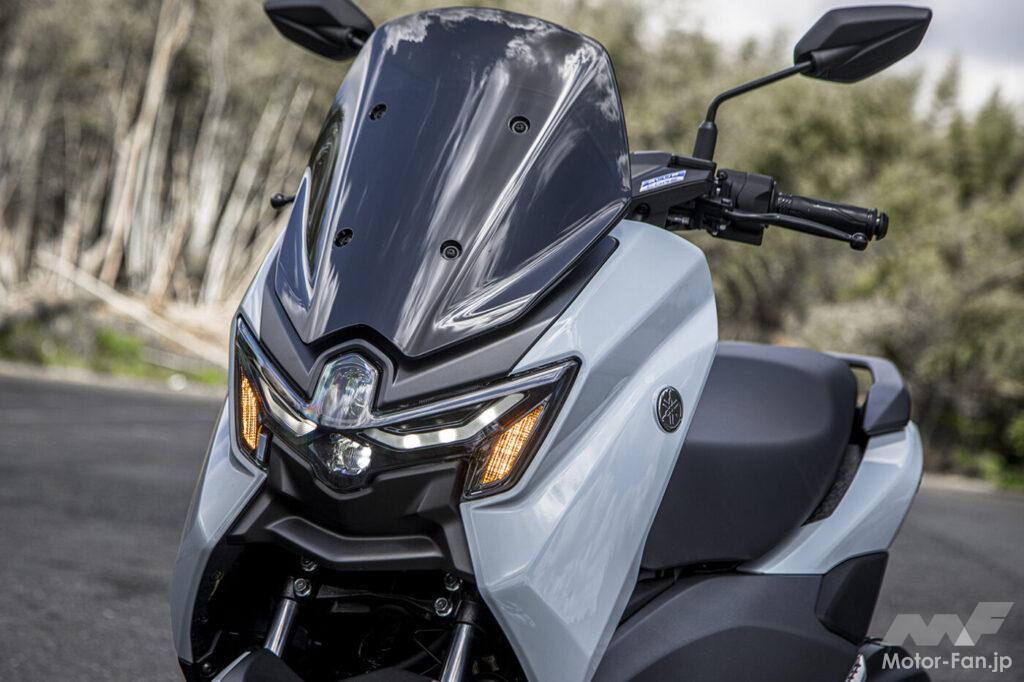
However, I only had that thought for about ten minutes into the test ride of the 125, and before I knew it, I was immersed in the sporty riding that only the NMAX can offer. Humans are interesting creatures, and if you can’t change modes or downshift, you’ll still pursue efficient riding, which is a fun thing to do, and from a tuning perspective, it seems like a 125 with a standard CVT would be more enjoyable.
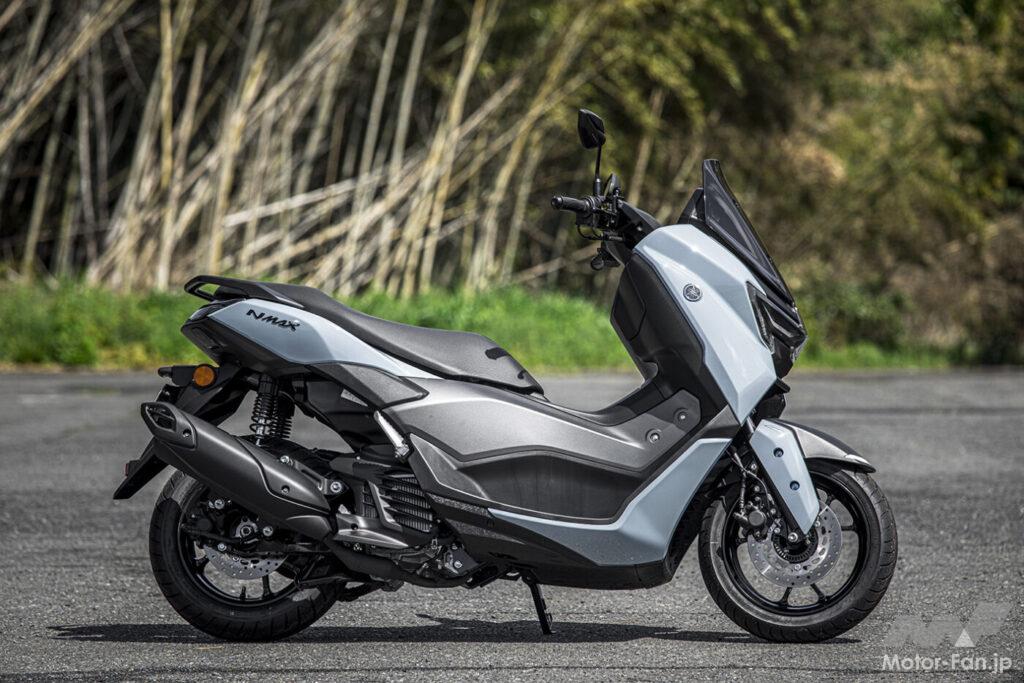
More than anything, what caught my eye while riding the 125 in various situations was the excellent ride quality that set it apart from the previous model, and the handling that was even more nimble than the previous model. In fact, I was so engrossed in the feel of the YECVT that I didn’t notice it when test riding the 155 (I confirmed it later), but the two 2025 NMAXs have improved absorption of road irregularities thanks to revised front and rear shock settings, and in addition, perhaps thanks to the exterior and lights that contribute to centralizing the mass, the vehicle’s response to the rider’s inputs has become just the right amount of agile.
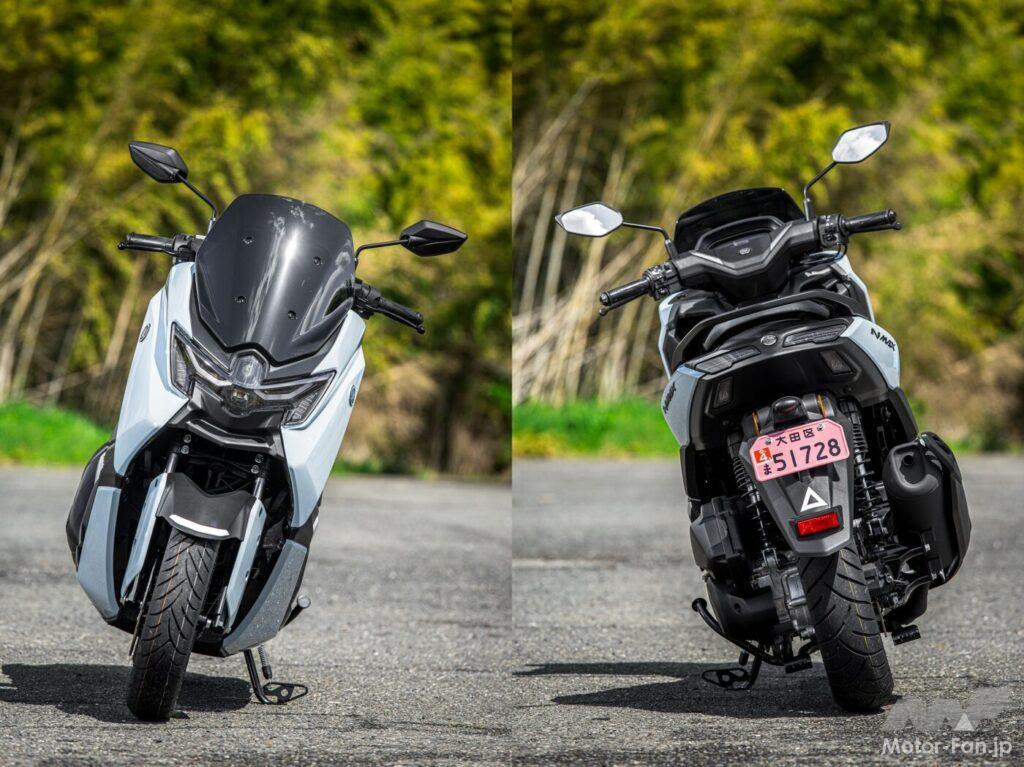
After realizing these facts, I felt that the 125 was also a good choice… but if I were to own one, I would go for the 155. The main reason is the YECVT, but the big brother’s appeal is also its high maximum output and fuel economy in WMTC mode, which is not much different from its younger brother (125: 12ps, 49.1km/L, 155: 15ps, 46.4km/L), so even though the price is 459,000 yen (125 + 70,400 yen), I felt that the 155 was a good deal.
Riding position (height 182cm, weight 74kg)
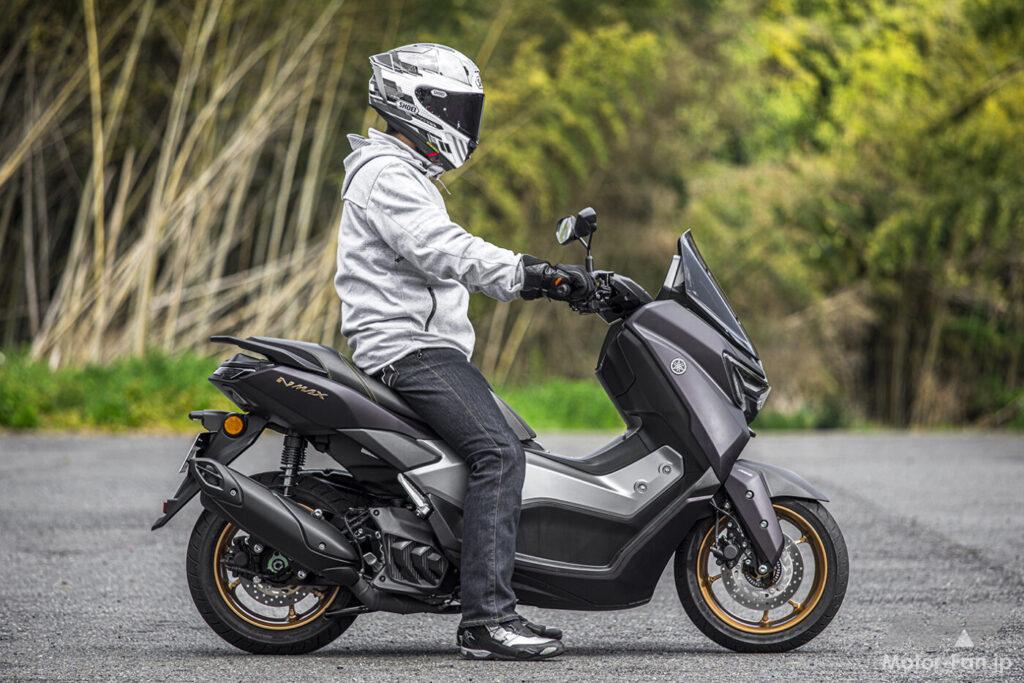
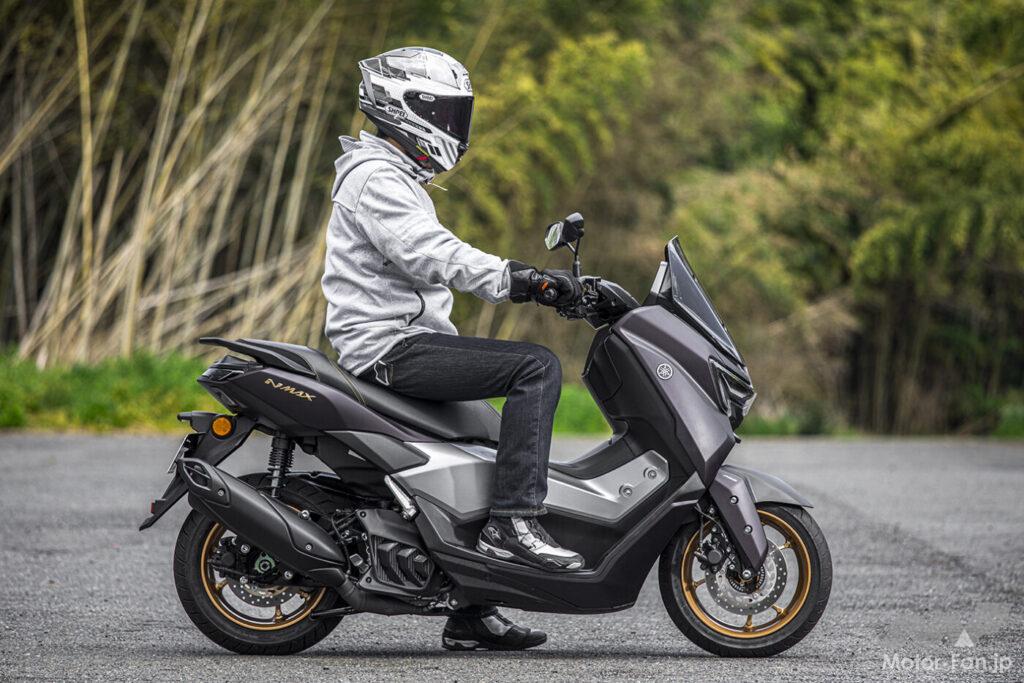
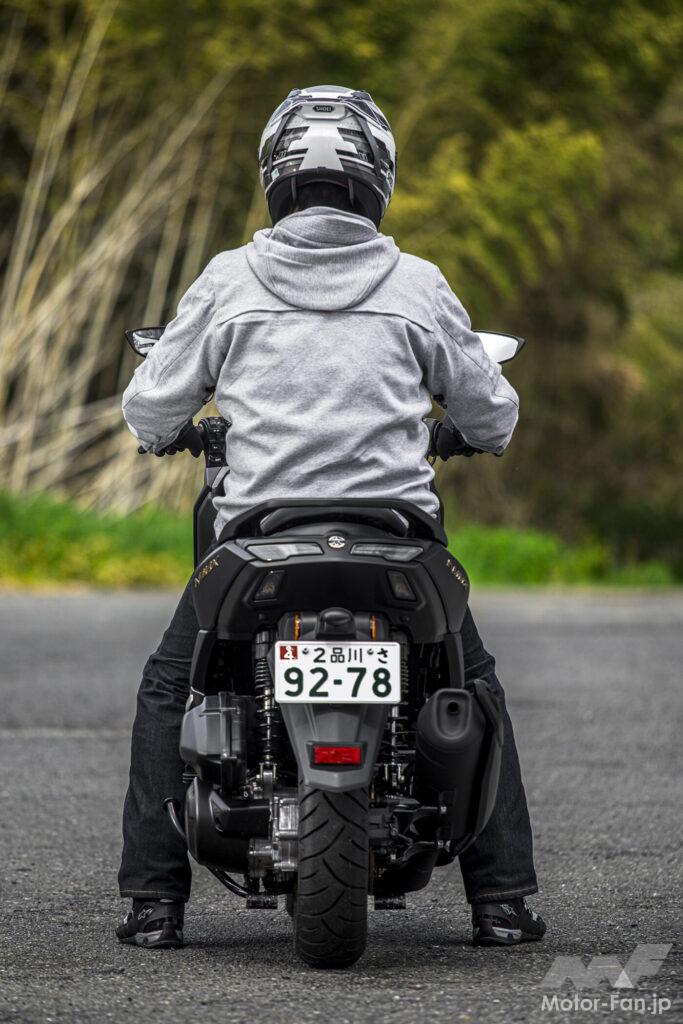
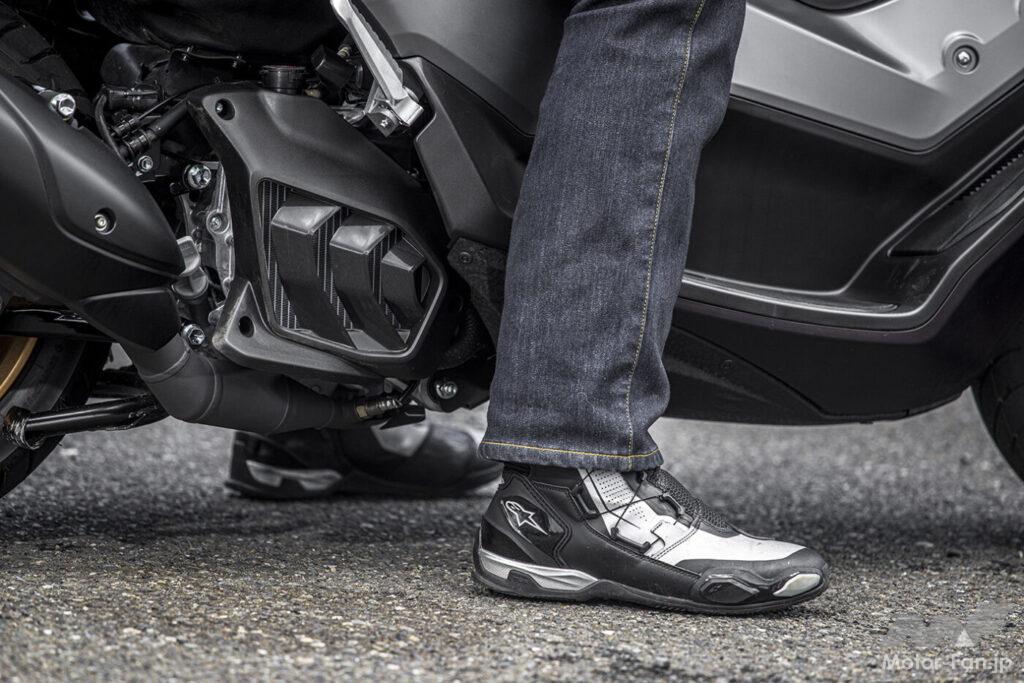
It can be used for everyday travel around town or for touring, but perhaps because it’s slightly higher, the riding position has a sporty feel. The seat height is 770mm, 5mm higher than the previous model. This is an average figure for recent scooters in the 125-160cc range, but since it doesn’t have a step-through structure and the side panels do not overhang to the left and right, you need to be over 170cm tall to have both feet flat on the ground.
Detail explanation (NMAX155)
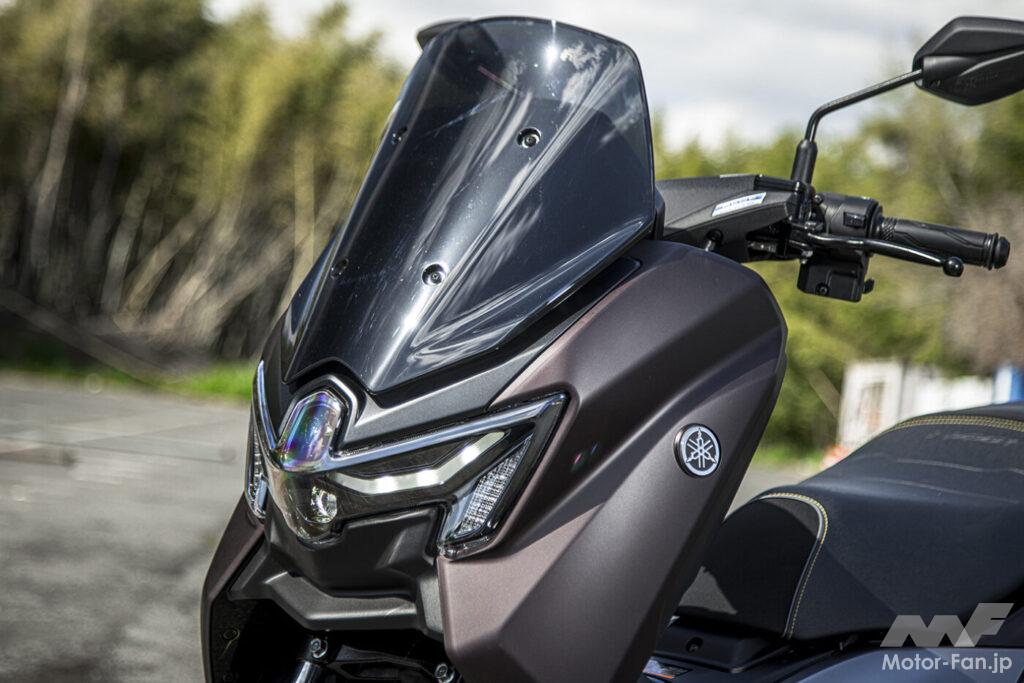
The front mask, which is different from the conventional model, is designed based on the keywords “Serious Aura” and “Agile Expression.” The central projector headlights are twin-lamp type, with the position lamps featuring the mirrored letters “N” and “N.”
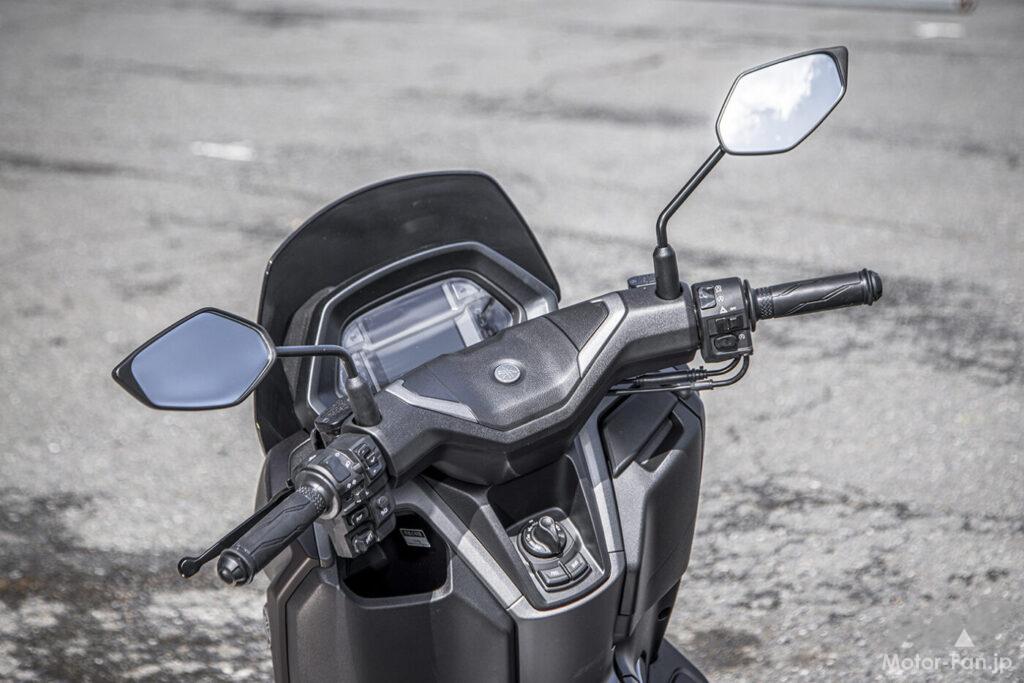
The ignition is smart, and the seat and fuel lid unlock buttons are located below the main switch. Only the right side of the small item compartment on the front inner panel has a lid, and the left side, which can hold a 600ml PET bottle, has a USB TYPE-C charging socket.
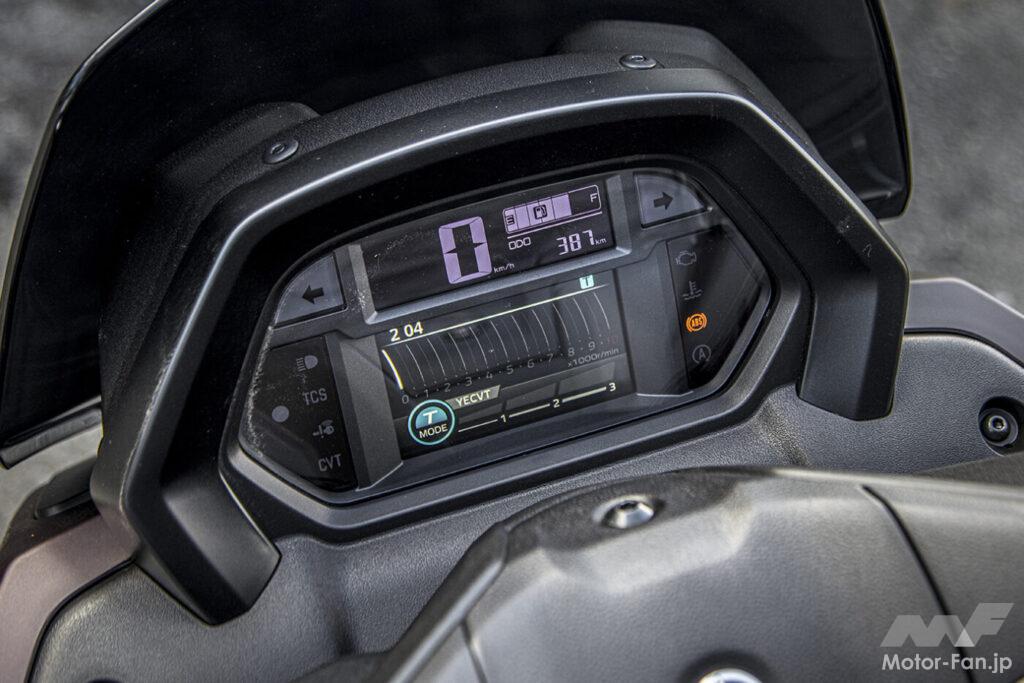
The dual display of 4.2-inch TFT + 3.2-inch LCD is a feature unique to the 155. The lower TFT monitor displays the driving mode, downshift intervention level, navigation screen, etc.
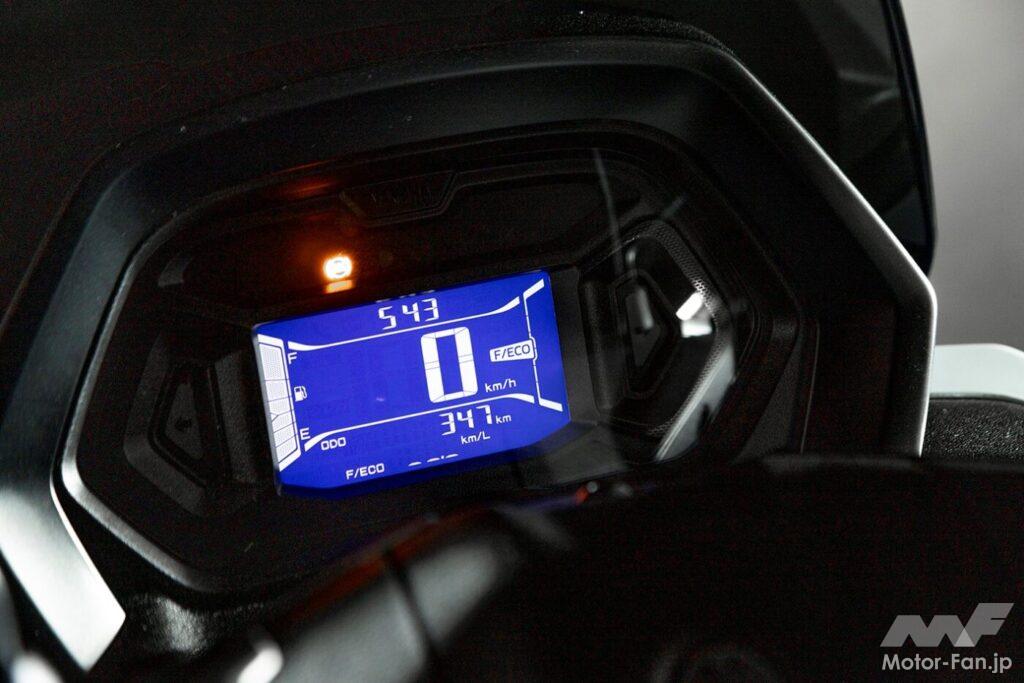
The 125’s LCD meter has also been redesigned. Yamaha calls the layout of information, which increases the rider’s concentration, the “telescopic cockpit.” Like its big brother, it is equipped with a smartphone link function.
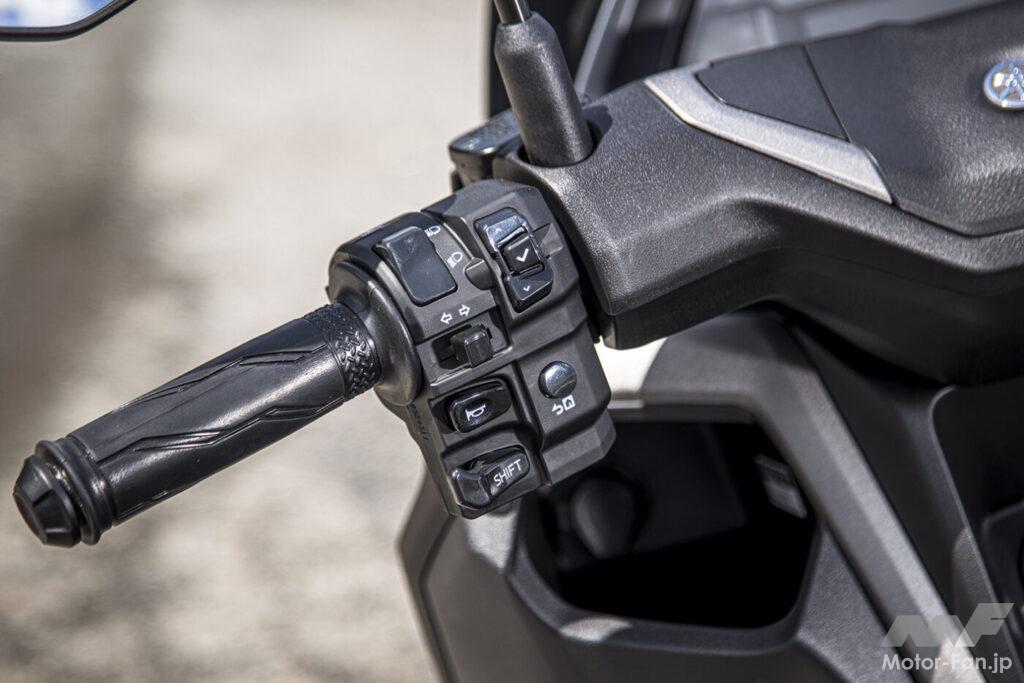
The left switch box of the 155 is equipped with a lever/button for downshifting, switching modes, and selecting and deciding on information on the TFT monitor.
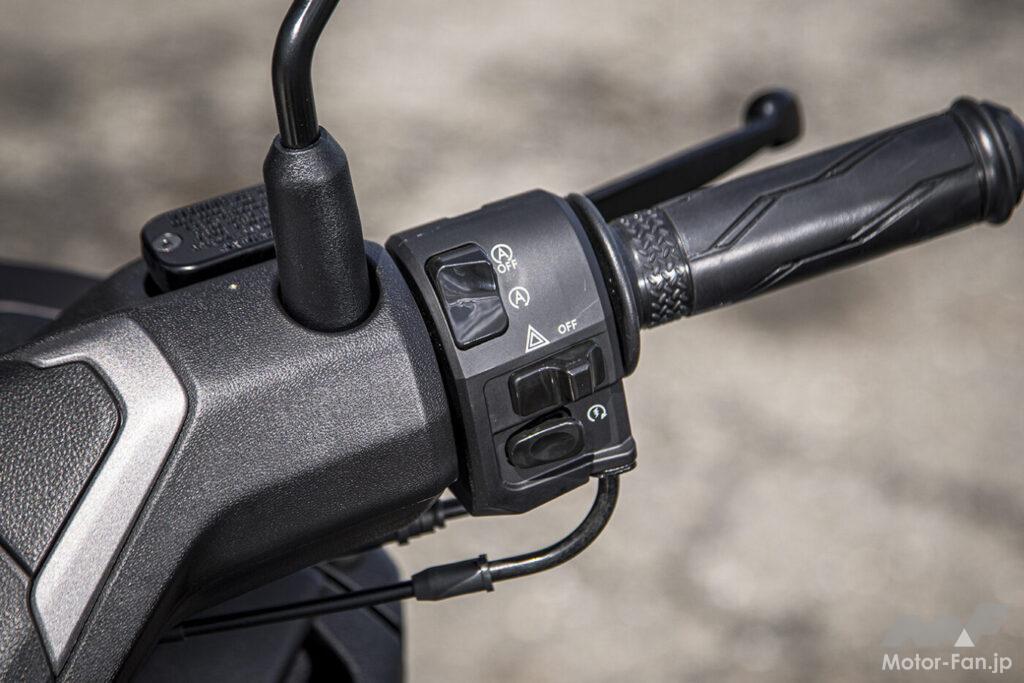
The right switch box, which is equipped with the idle stop on/off lever, hazard switch, and starter button, is common to both the 125 and 155.
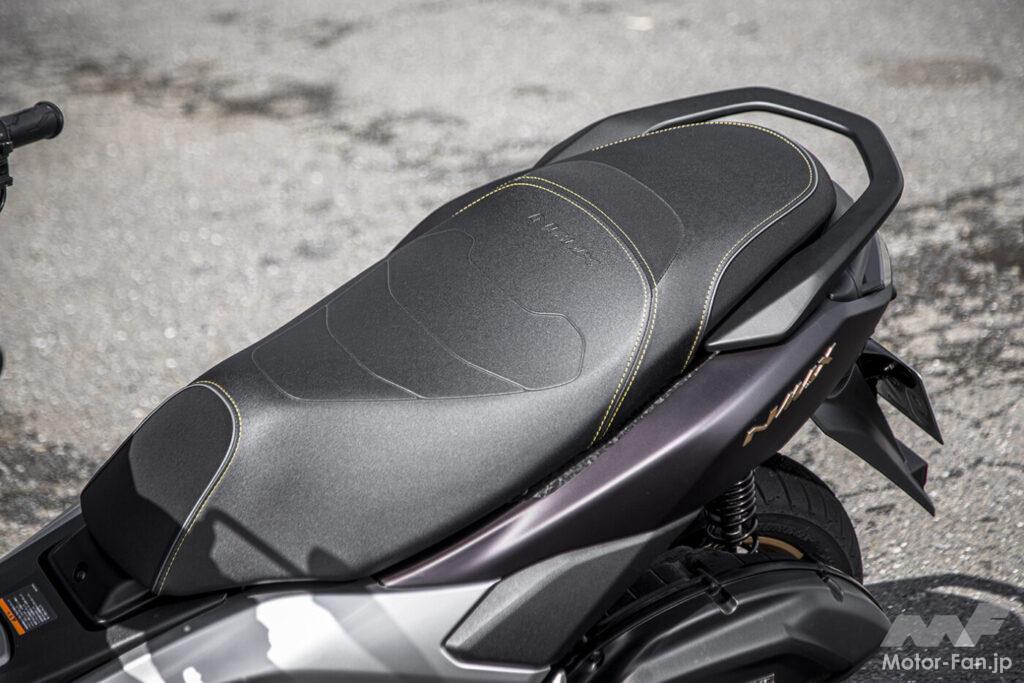
The basic shape of the seat is the same as the previous model, but the 155’s leather is a combination type that emphasizes luxury, with gold stitching at the joints of each material and suede-like material used on the parts that do not come into contact with the rider’s body.
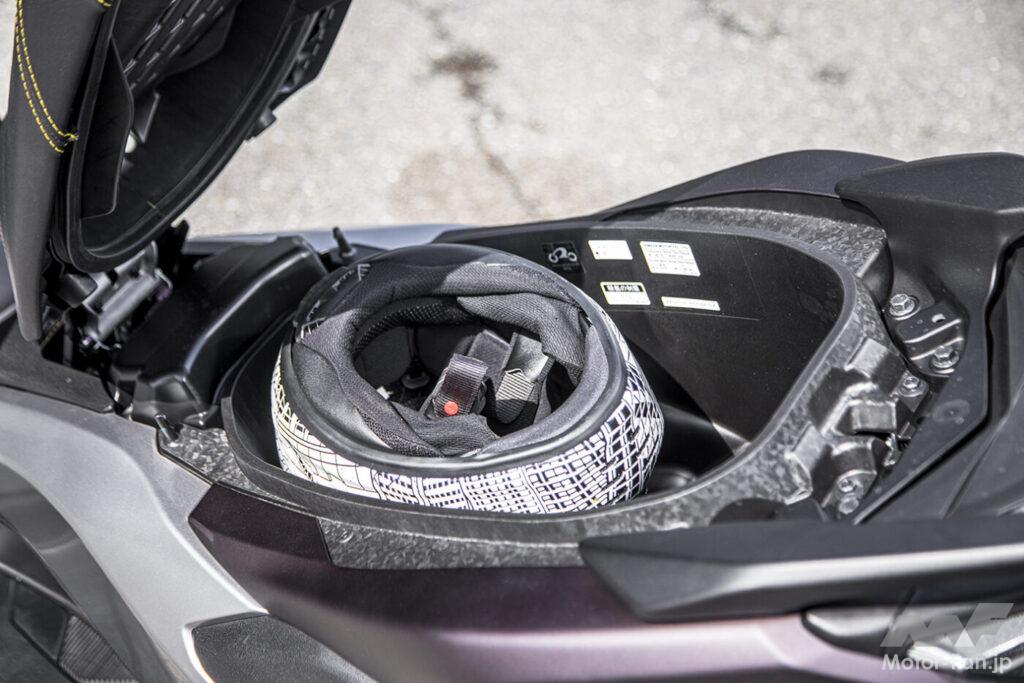
The trunk space under the seat has a capacity of approximately 23 liters. It seems that full-face helmets may not fit depending on their shape. It is equipped with a stopper to keep it open, and there are helmet hangers on the left and right sides of the front.
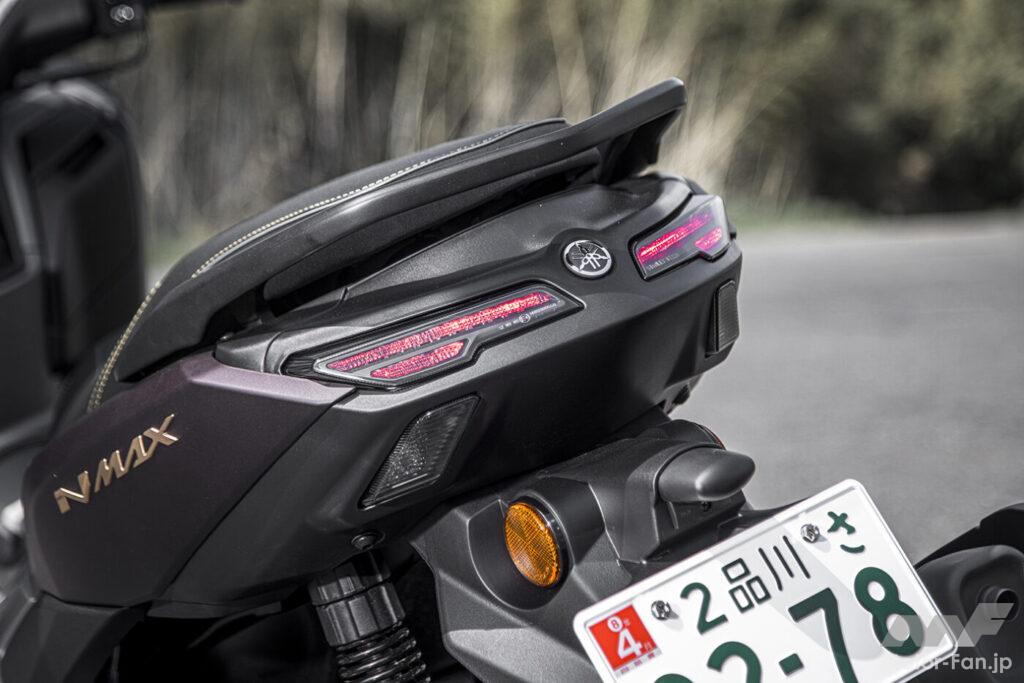
The rear lights, which were previously integrated, have been changed to a split structure: upper: tail and stop lamps / lower: rear turn signals. The thinner tail and stop lamps have been designed with the intention of appearing M when viewed from an angle above.
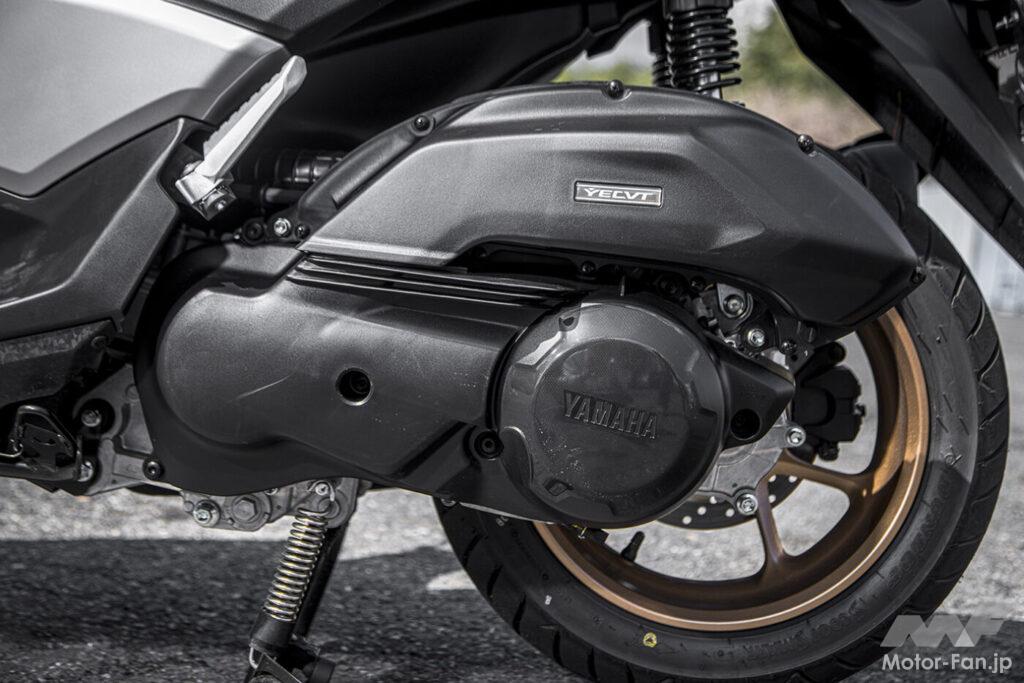
The basic structure of the Blue Core engine, which is equipped with a variable valve mechanism that switches the intake cam between low and high at 6000 rpm, remains unchanged. However, the 155, which incorporates the YECVT, has different covers for the drivetrain and intake system than the previous model.
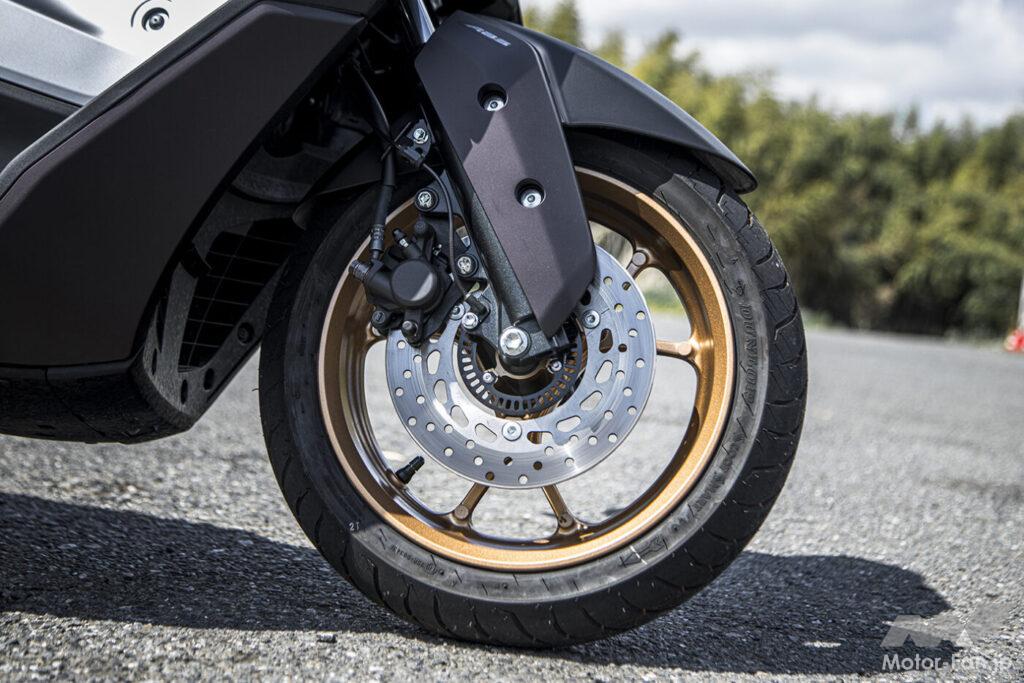
The only changes to the front and rear shocks mentioned in the press release are that an oil lock mechanism has been added to the front fork and that the rear stroke has been extended by 5mm, but during the test ride it seemed that the spring rate and damping characteristics of both the front and rear shocks had changed.
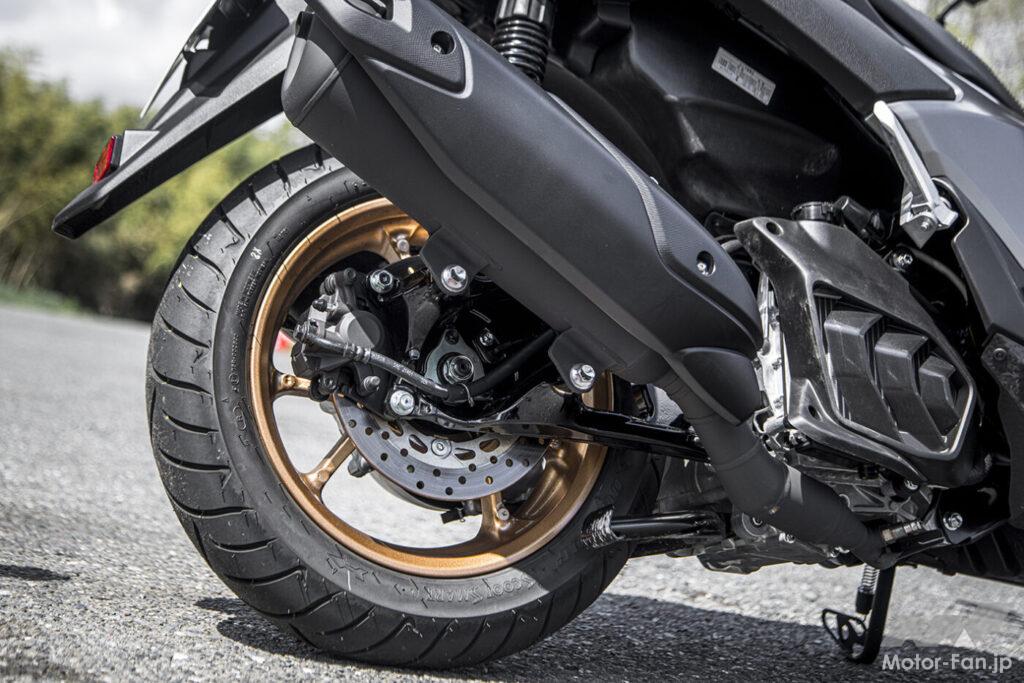
The Y-shaped 3-spoke aluminum wheels and φ230mm disc + single-piston front and rear brakes follow the conventional configuration. The factory-specified tires are Dunlop Scoot Smart. The rear shock absorber has two-stage preload adjustment.
Main specifications [ ] is 125
Model: NMAX155 [125]
Model: 8BK-SG92J [8BJ-SEL1J]
Length x Width x Height: 1935mm x 740mm x 1200mm
Wheelbase: 1340mm
Ground Clearance: 125mm
Seat Height: 770mm
Engine Type: Water-cooled 4-stroke single cylinder
Valve Type: OHC 4 valve
Total Displacement: 155cc [124cc]
Bore x Stroke: 58mm x 58.7mm [52 x 58.7mm]
Compression Ratio: 11.6 [11.2]
Maximum Power: 11kW (15ps) / 8000rpm [9kW (12ps) / 8000rpm]
Maximum Torque: 14N・m (1.4kgf・m) / 6500rpm [11N・m (1.1kgf・m) / 6000rpm]
Starting method: Self-starter
Ignition method: Full transistor
Lubrication
method: Wet sump Fuel supply method: Fuel injection
Transmission type: V-belt continuously variable
transmission Frame type: Backbone
Front suspension: Telescopic upright type φ30mm
Rear suspension: Unit swing type twin shock
Front tire size: 110/70-13
Rear tire size: 130/70-13
Front brake type: Hydraulic single disc
Rear brake type: Hydraulic single disc
Vehicle weight: 135kg [132kg]
Fuel: Unleaded regular gasoline
Fuel tank capacity: 7.1L
Occupancy capacity: 2 people
Fuel consumption rate (MLIT report): 52.2km/L [51.7km/L] (with 2 people)
Fuel consumption rate (WMTC mode): 46.4km/L [49.1km/L] (with 1 person)