
Two wheels in the front and one in the rear is an innovative system!
The Yamaha Tricity series features two wheels in the front and one in the rear. Its innovative design made it an unfamiliar scooter at first, but now, 11 years after the first model (125) was released, I feel there has never been a more logical commuter bike.

The first Tricity 125 (EBJ-SE82J) debuted in September 2014. Since then, 155cc and 300cc classes have also been introduced, making it a part of the series.
This is because Yamaha’s unique LMW (Leaning Multi-Wheel) mechanism allows you to lean the body and turn like a normal motorcycle, making it easy to operate, and the stability provided by the three wheels means you can easily tackle even slightly rough roads!
On the other hand, it does have some weak points, such as an increased weight, a slightly upright riding position, and limited storage space, but it is packed with charms that more than make up for them. In addition to the 125, the Tricity has a lineup of three models: a 155 version that shares the same platform, and a 300 class model that is mainly targeted at Europe. In this article, we will introduce some exquisite custom models based on the Tricity 155 (early model).
Make it all-weather with a roof kit!
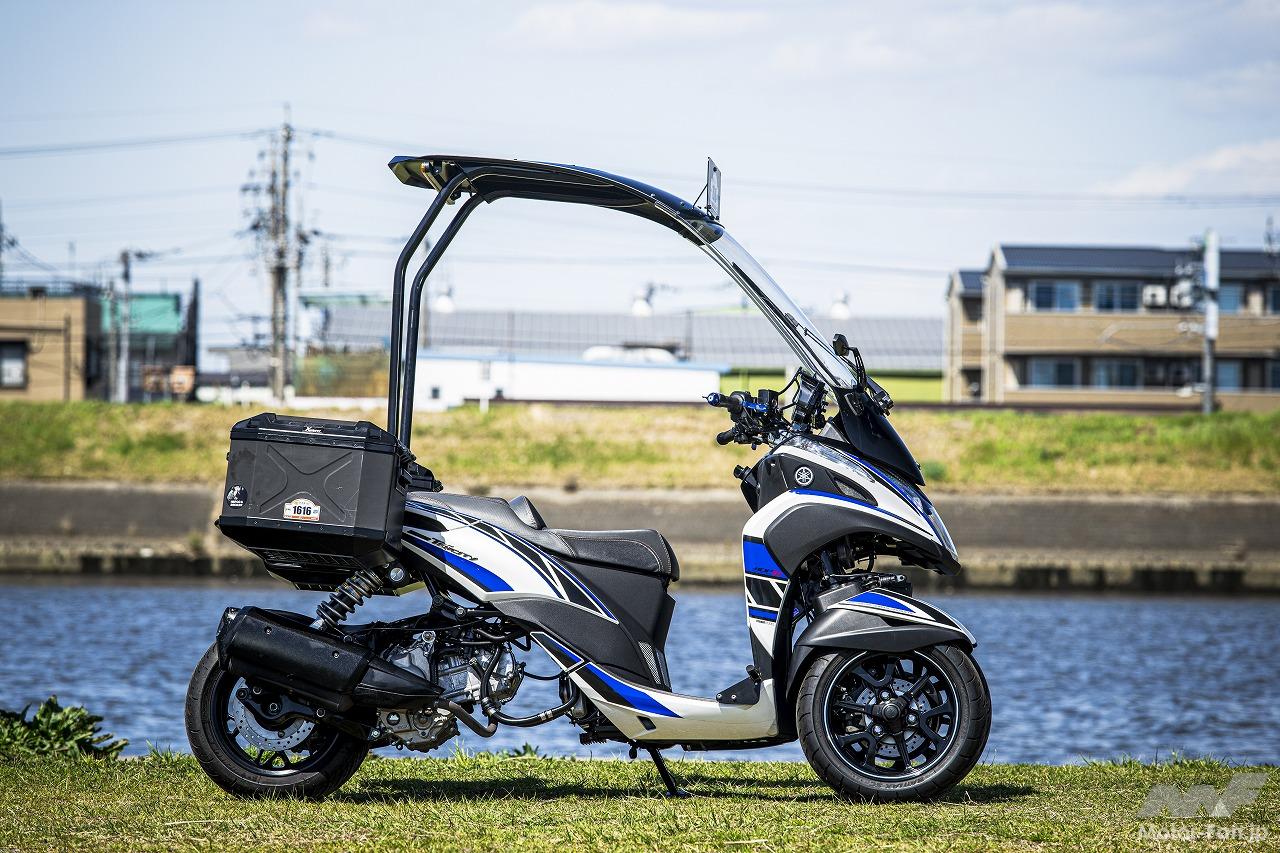
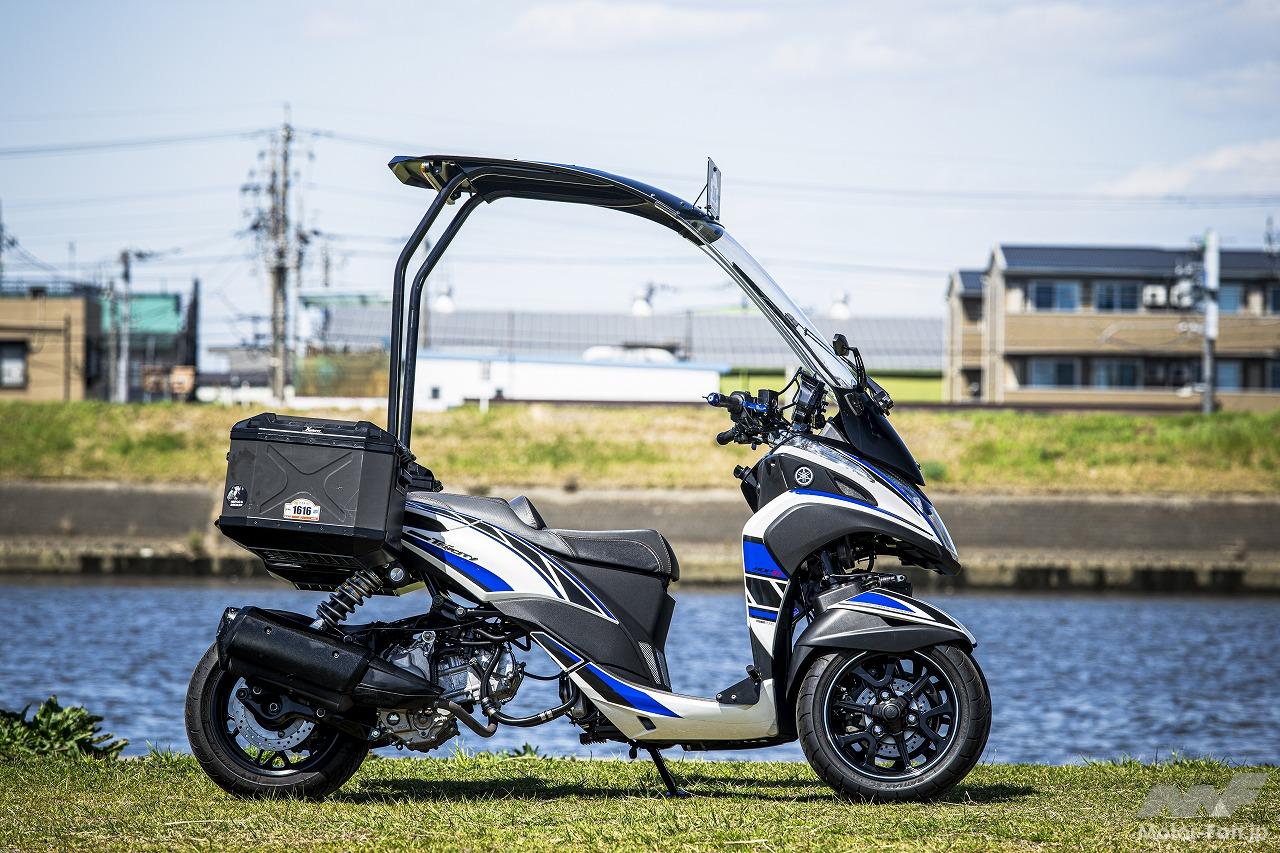
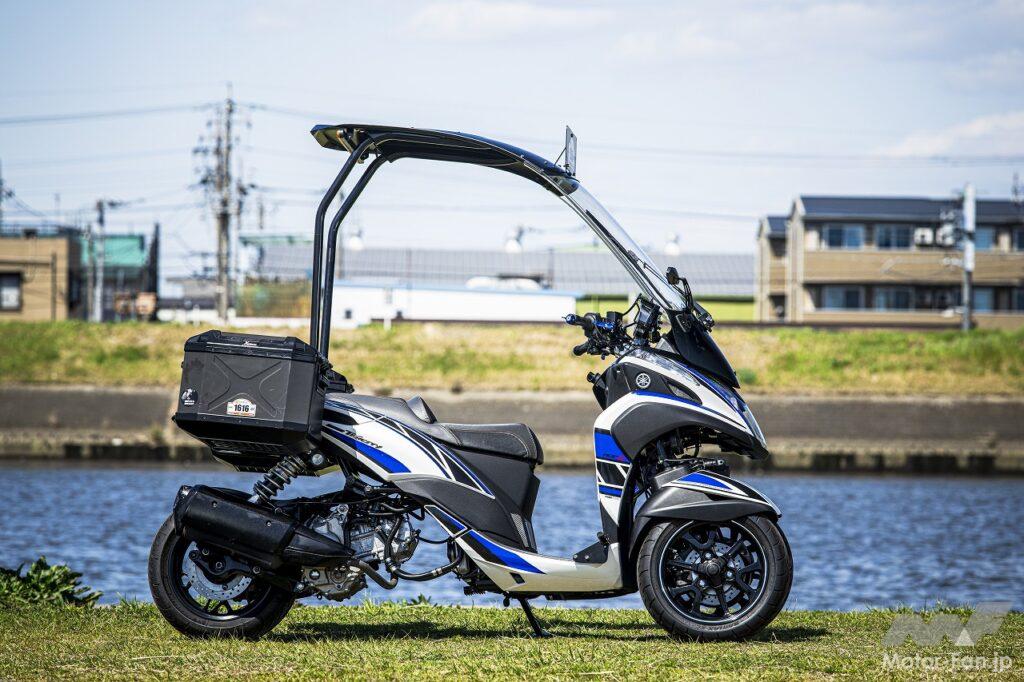
The exterior is dressed up with an MDF decal kit! The white body and blue strobe lights give it a sporty look.
The Tricity is in some ways complete, and because of its unique body, it tends to have relatively few custom parts (I think). That’s why it has such a strong presence when tweaked, and the satisfaction is even greater when you go all out like the owner in this case (Kiboshi-san).
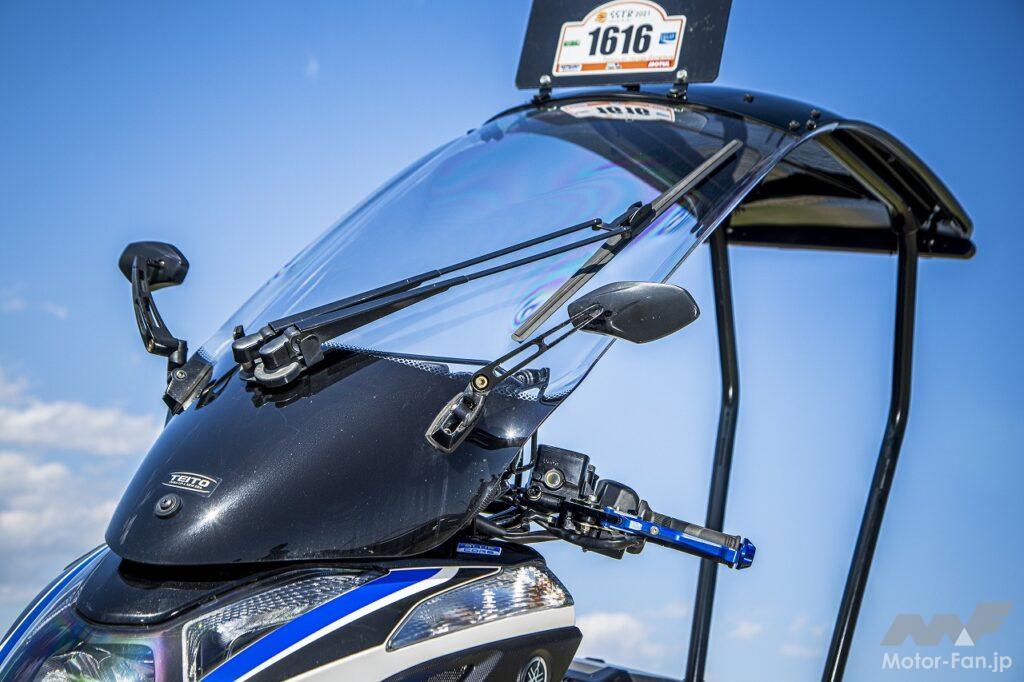
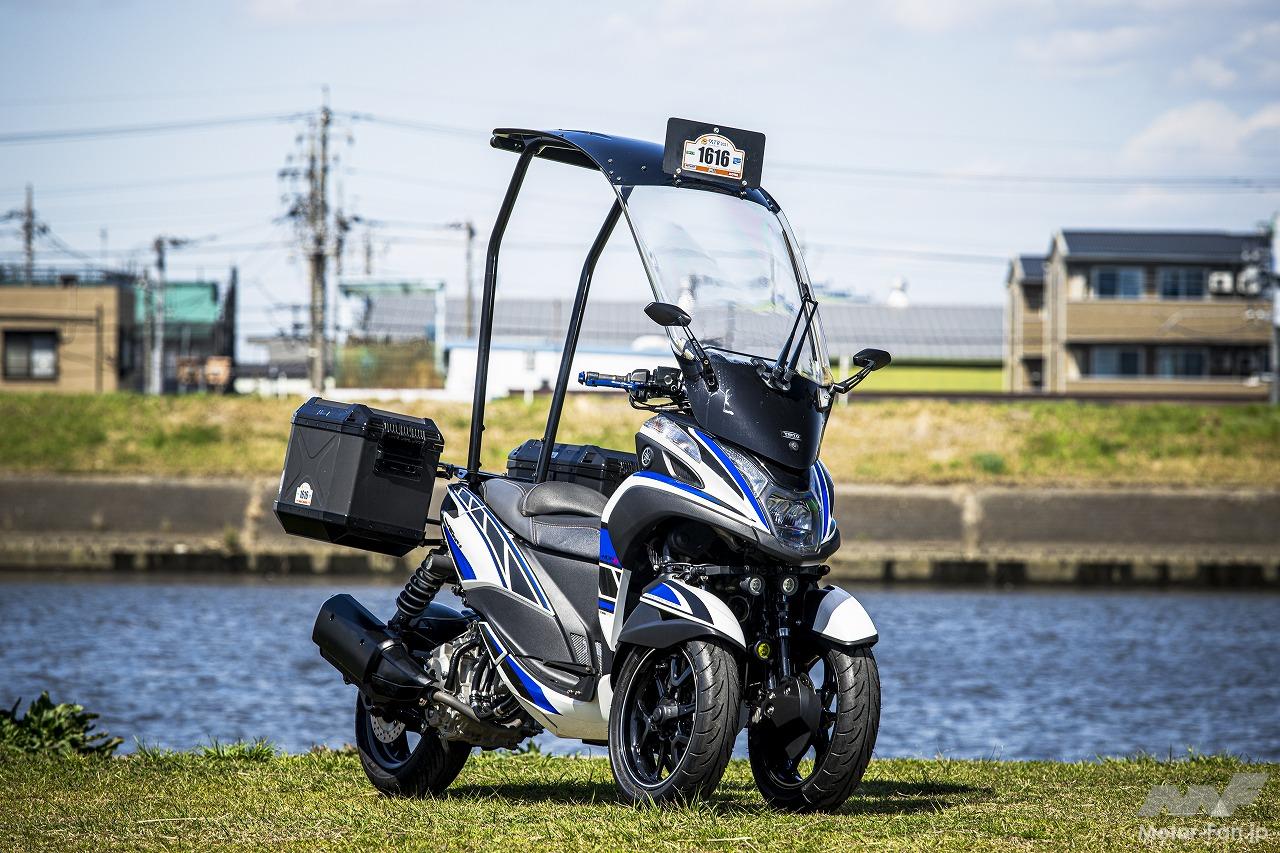
The first thing that catches your eye is the large windscreen and roof. This is a TEITO roof kit, a time-honored product that is also available from Y’s Gear (standard accessories)! The polycarbonate hard-coated windscreen is also equipped with electric wipers, and in recent years it has also been installed on food delivery vehicles.
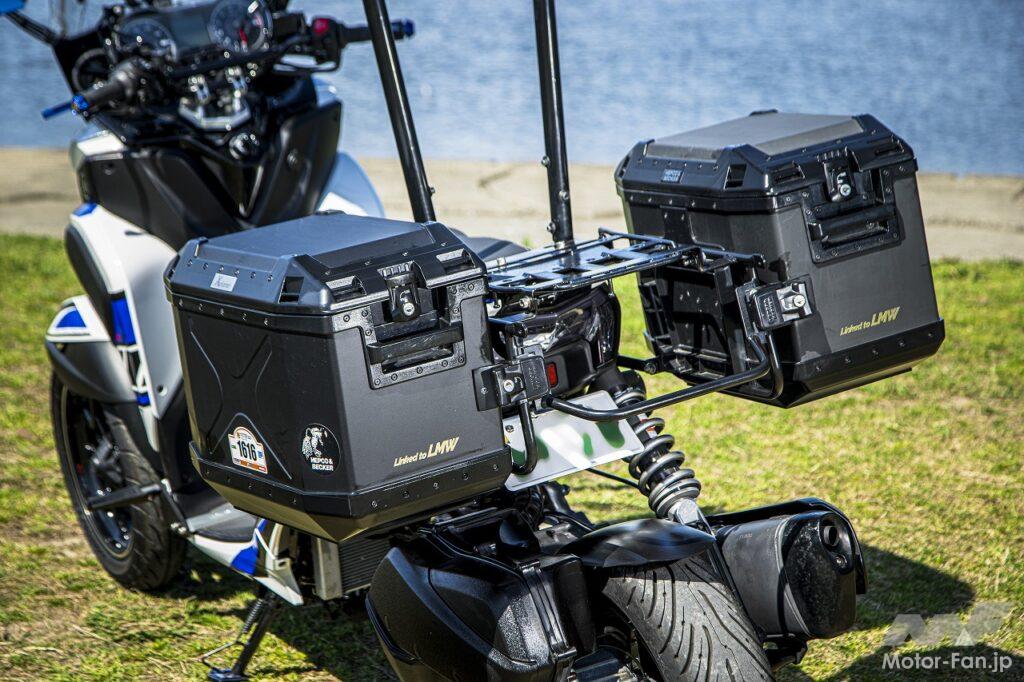
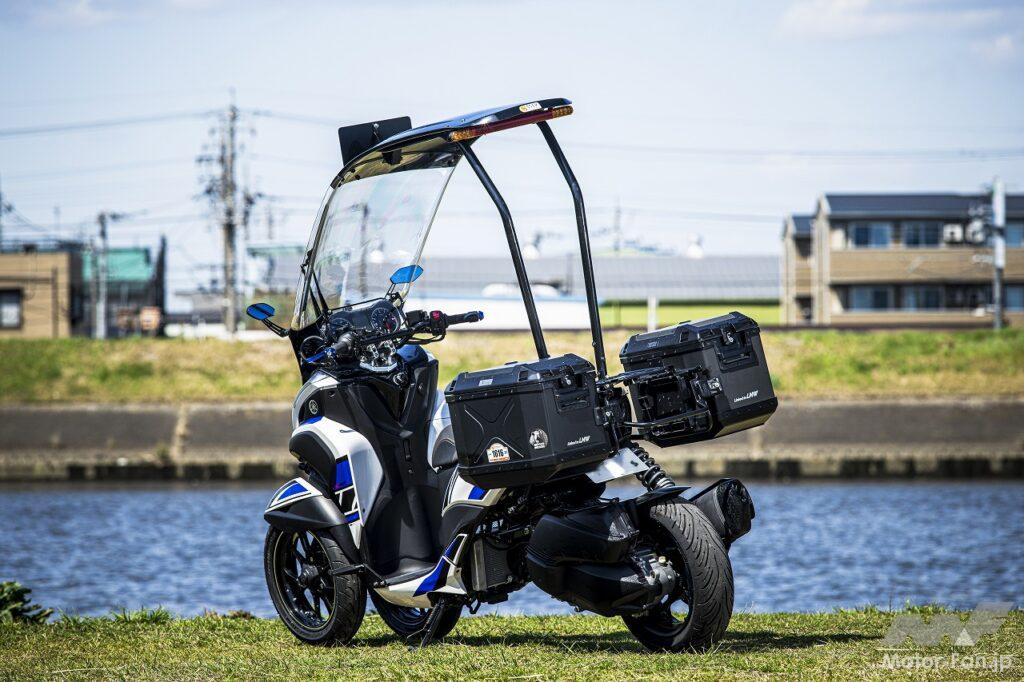
The owner didn’t stop there, expanding the “cargo bed” by adding a minibike rack to the carrier and extending it. He also installed a support bracket for a Kawasaki GTR1000 and set up Hepco & Becker pannier cases.
With its outstanding loading capacity and more, it’s perfect for camping trips!
The outfit is reminiscent of the now-standard adventure style, and that’s no surprise, as the owner is such a big fan of touring that he participates in SSTR every year! He also goes camping often, and seems very pleased, saying, “I can bring a large tent and chairs with me, so I can enjoy camping comfortably!” With motorcycles, which have less carrying capacity than cars, you’re inevitably limited to the bare minimum of leisure equipment, but with this vehicle, which can carry as much luggage as a light car, it’s no problem!
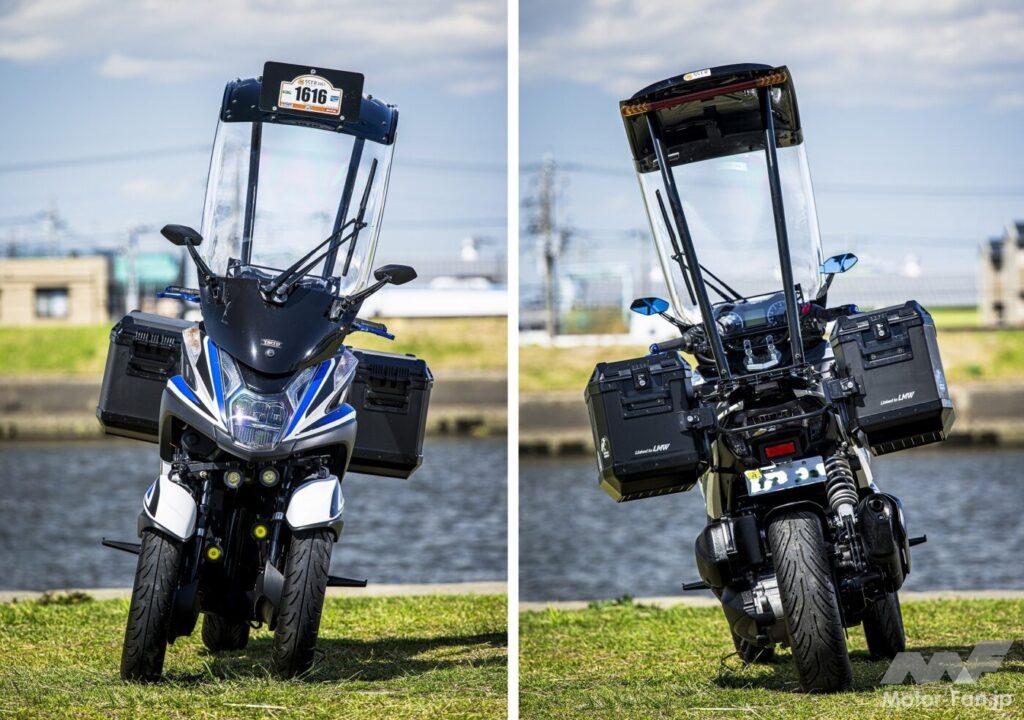
The Tricity, which uses LMW, is also unique in that it doesn’t wobble even when carrying heavy luggage, allowing for a stable ride! The aforementioned TEITO roof kit also helps protect against wind and rain, making it even more powerful. Furthermore, since it is ridden at night, there are four fog lamps between the front two wheels to compensate for poor visibility, and the fact that the fog lamps, which were installed after much trial and error, can be installed smartly is one of the bike’s unique features.
A position that allows for a comfortable cruise!
What I personally really liked was the riding position. First of all, it is equipped with a genuine Yamaha Taiwan “bumped” seat, and the backrest firmly supports your lower back and buttocks.
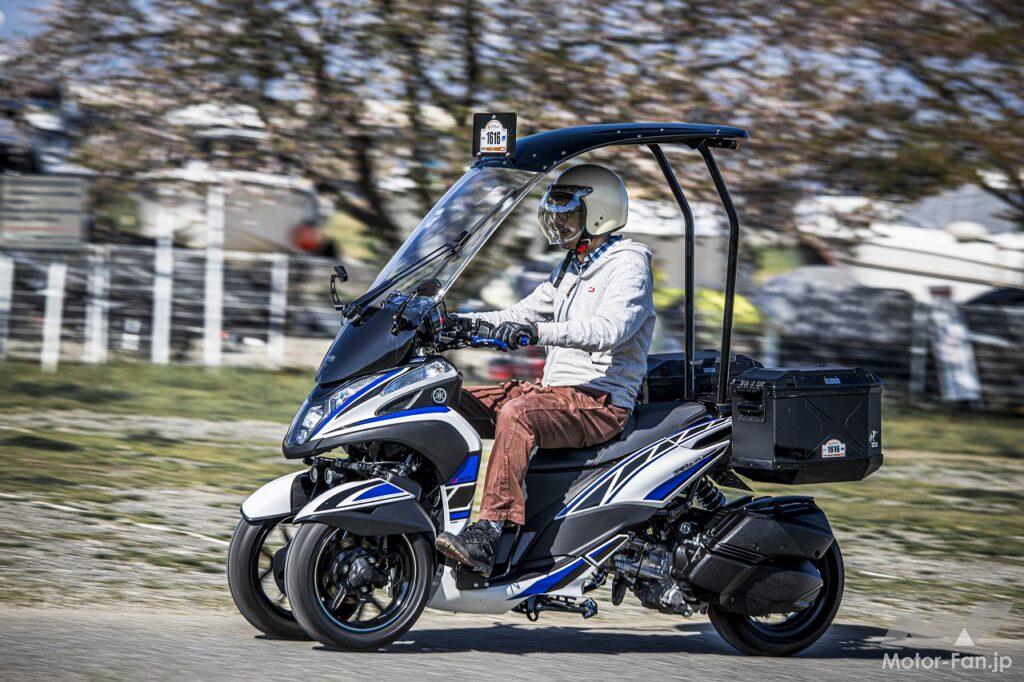
In addition, the owner added a forward footpeg that he purchased online, allowing him to stretch out his legs. The Tricity doesn’t have much foot space, so for a guy like me with long legs, my knees tend to be at a right angle, but this allows me to enjoy relaxed cruising.
Engine swap tips from a skilled customer
Although the bike is packed with all these comfortable features, there’s one problem! The Tricity 155 has a maximum output of 15ps and is convenient for highway driving, but perhaps due to its heavy original weight, it’s hard to say it’s particularly fast. In order to reach its destination smoothly, the owner resorted to the forbidden method of “engine swap”!
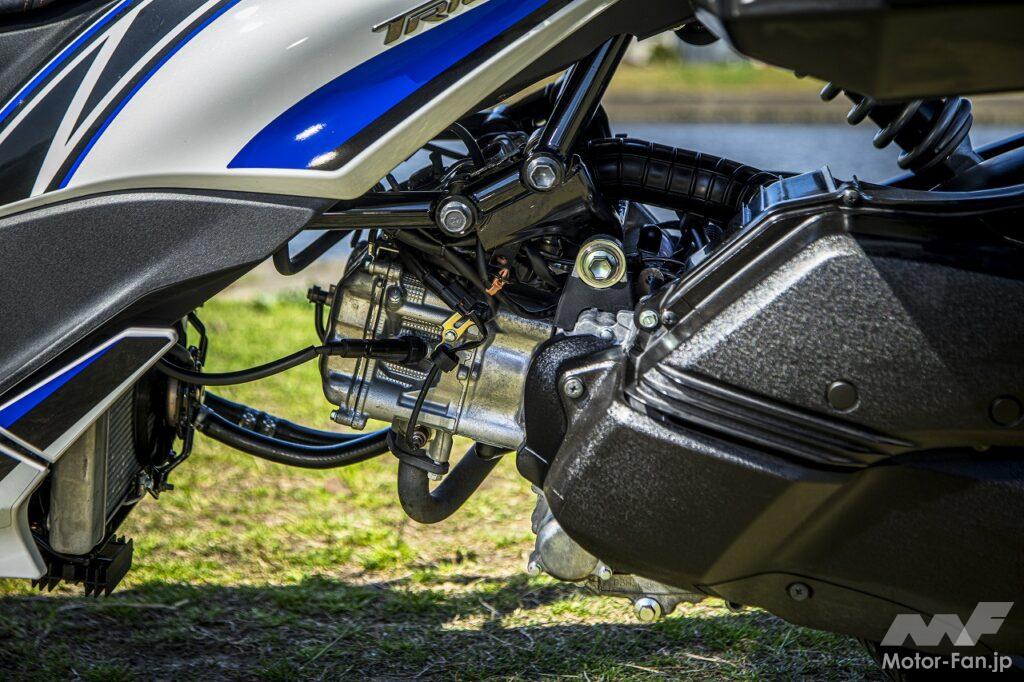
While it’s common for scooters to have their engines replaced with those from other vehicles or with larger displacements, this is rare for a Tricity. The owner took the bike to Moto Service Mac, known for its big scooter customization, and had the power unit replaced with one from an older XMAX that the owner owned.
Two fans are installed in the space in front of the engine, and efficiently guide the airflow through the intake at the feet.
The rear of the frame has been completely redesigned to create a truss structure, and the engine has been remounted using a one-off hanger. This has resulted in a power increase of approximately 8 horsepower! At the owner’s request, it has also been mounted with a long wheelbase of approximately 300 mm. The pannier cases are almost fixed in place, so the bike is well-balanced when viewed from the side.
[Test drive] More stability and agility than you’d expect!
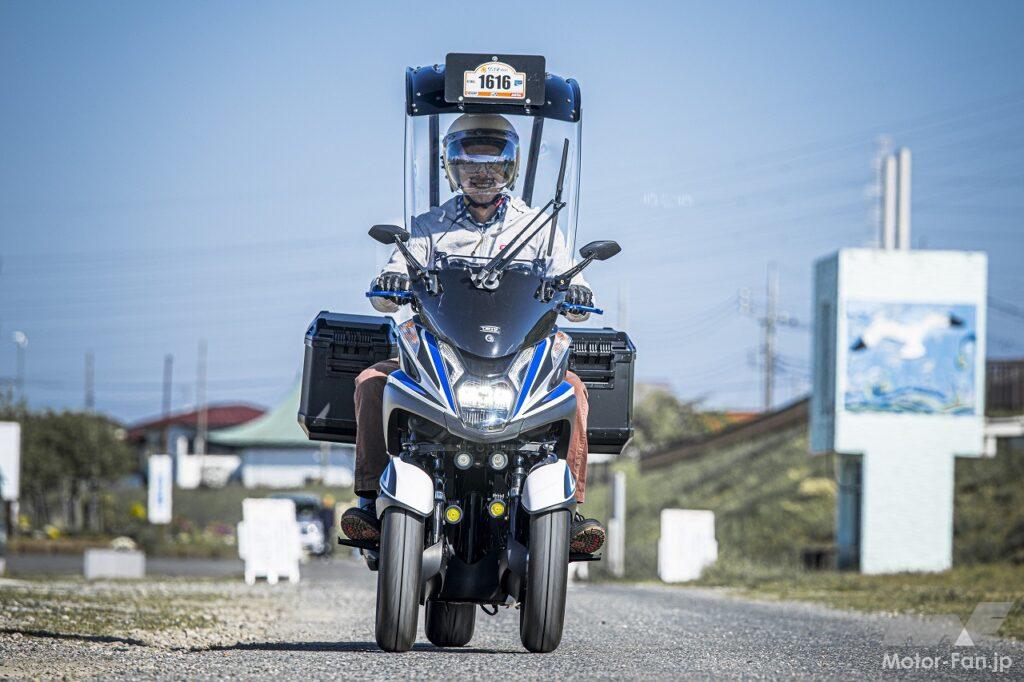
The comfortable ride puts a smile on your face! It’s great that it’s a three-wheeled bike, so it doesn’t slip easily on gravel roads. It has a different ride feel from its big brother, the 300, or the large-displacement Niken.
When I actually test rode it, it didn’t feel particularly sluggish, and I was able to make smooth turns by making full use of the handlebars and weight shift. The stock Tricity has a 50/50 weight distribution, which is rare for a scooter, and although this custom bike is likely rear-heavy, there’s no sign of the body sliding around even on steep bends. What’s more, the 250-class engine allows for stress-free acceleration right from the start. The fact that the intake/exhaust and drivetrain haven’t been tweaked also helps, and the smooth acceleration up to the high rev range is likely the result of prioritizing feel.
The area around the handle is also very active!
Along with this engine swap, the electrical system, including the harnesses, has also been replaced with those for the XMAX, and it’s also worth noting that it comes with a smart key, which the early Tricity 155 did not have!
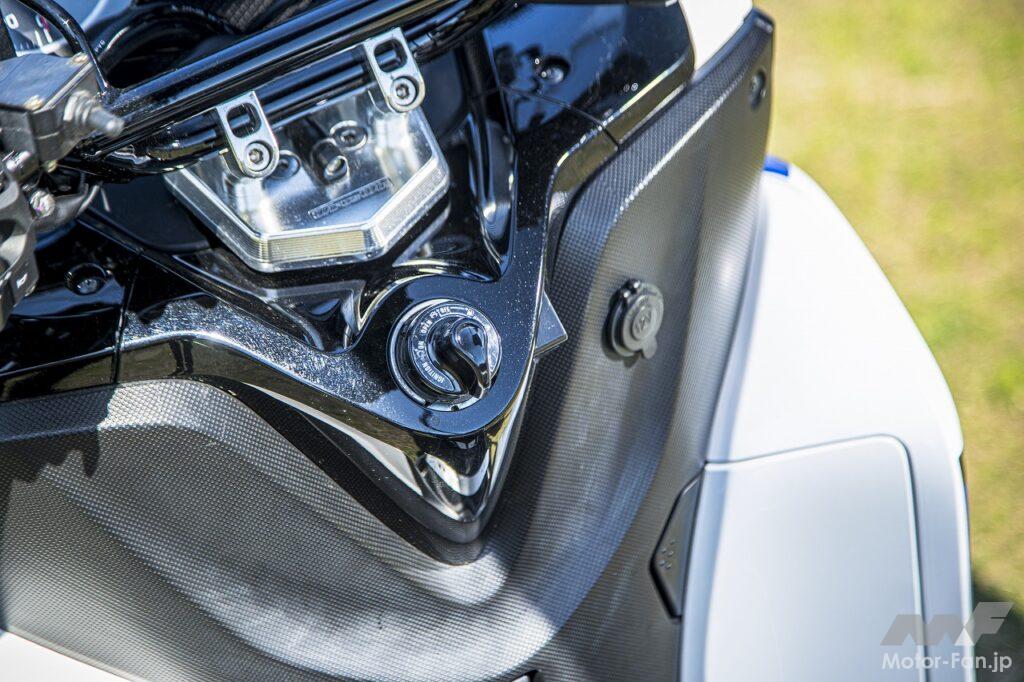
The stem is made by Wilswin and has plated posts, which are bar handlebars.
The meter has also been relocated from the XMAX, with Moto Service Mac custom-making the handlebars and installing them directly on the brace. The genuine Tricity has a horizontal LCD type, which has a futuristic design in itself, but the XMAX’s panel is larger, making it easier to read all the information, and above all, it has an analog tachometer, which gives it a sporty feel.
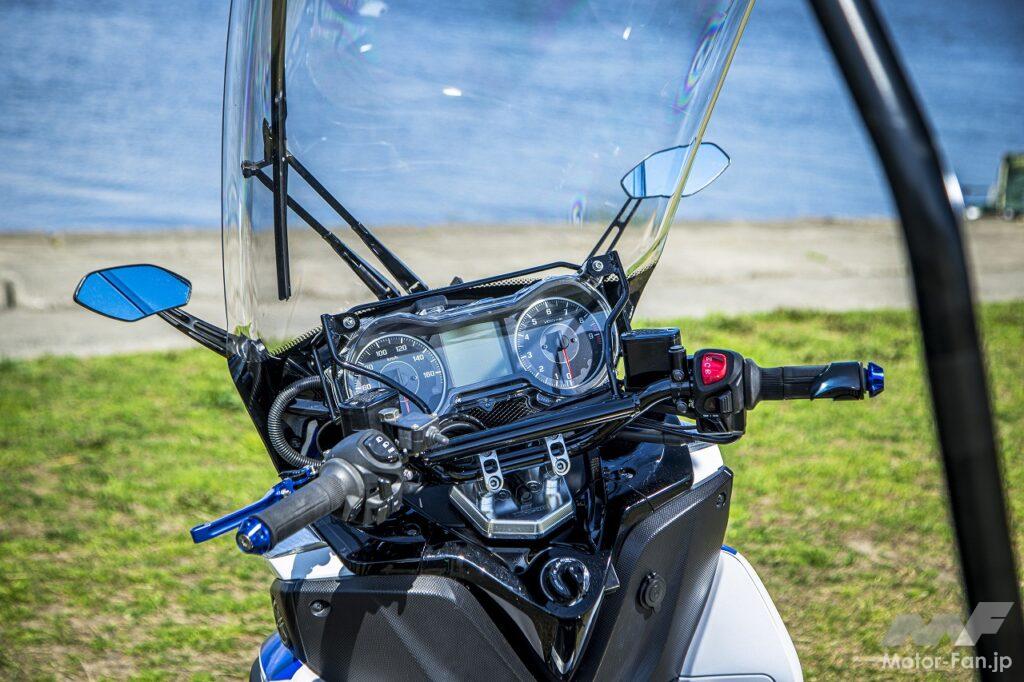
The handlebar width seems a little narrow, but it doesn’t affect the handling that much, and it’s great for riding on narrow roads. The blue anodized aluminum on the levers and bar ends is also a highlight.
Under-seat storage is still there!
Additionally, when replacing the engine on a scooter, it is often the case that the under-seat storage space is lost. This is influenced by the size and layout of the engine itself, and is also due to tuning and dressing up, such as adopting a big throttle body (or big carburetor) or running the rear shock through the center.
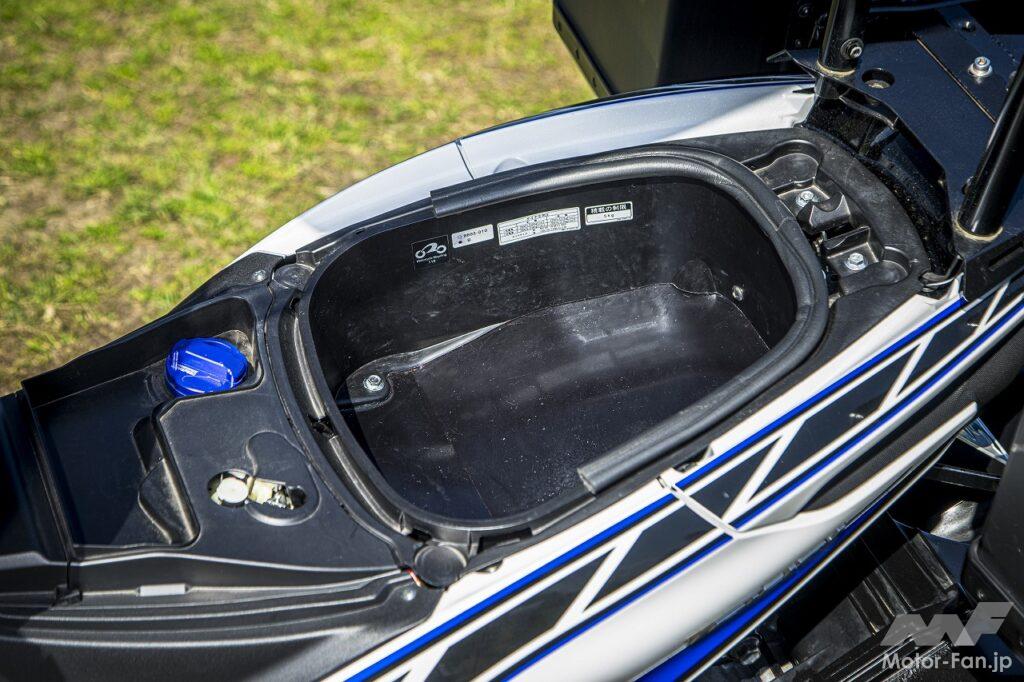
However, this vehicle follows the original inner cover (shape) while leaving the upper half flat. You can’t fit a helmet in it, but it’s enough to store small items like rags, tools, rain gear, and gadgets! The Tricity itself only has a limited under-seat capacity of about 23.5 liters, so it’s nice that they’ve left even a little space.
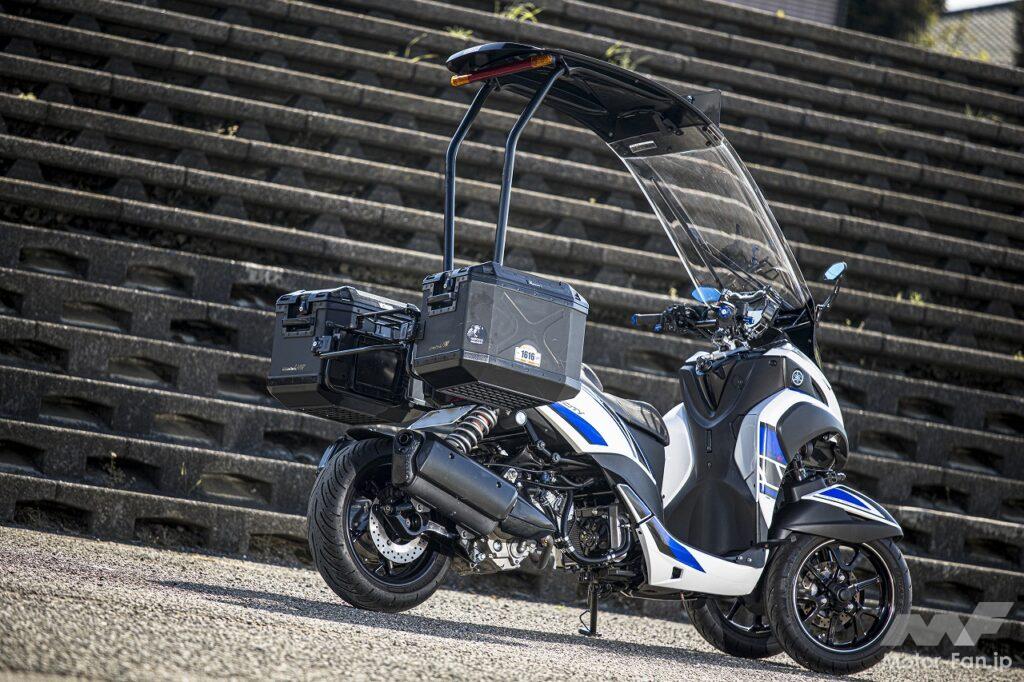
For this reason, the rear shock has been changed to a single shock absorber due to changes to the frame structure, etc. This is mainly for appearance reasons, but the suspension from the ZX-14R is used via a bracket on the rear brake side, resulting in a very firm suspension system.
Hub-mounted wheels for the Tricity 300 have been transplanted!
Now that we’ve talked about the suspension, let’s move on to the final step! Owners of the Tricity 125/155 might understand, but take a closer look at the front. You’ll see that the wheels from the Tricity 300 have been transplanted onto the bike!
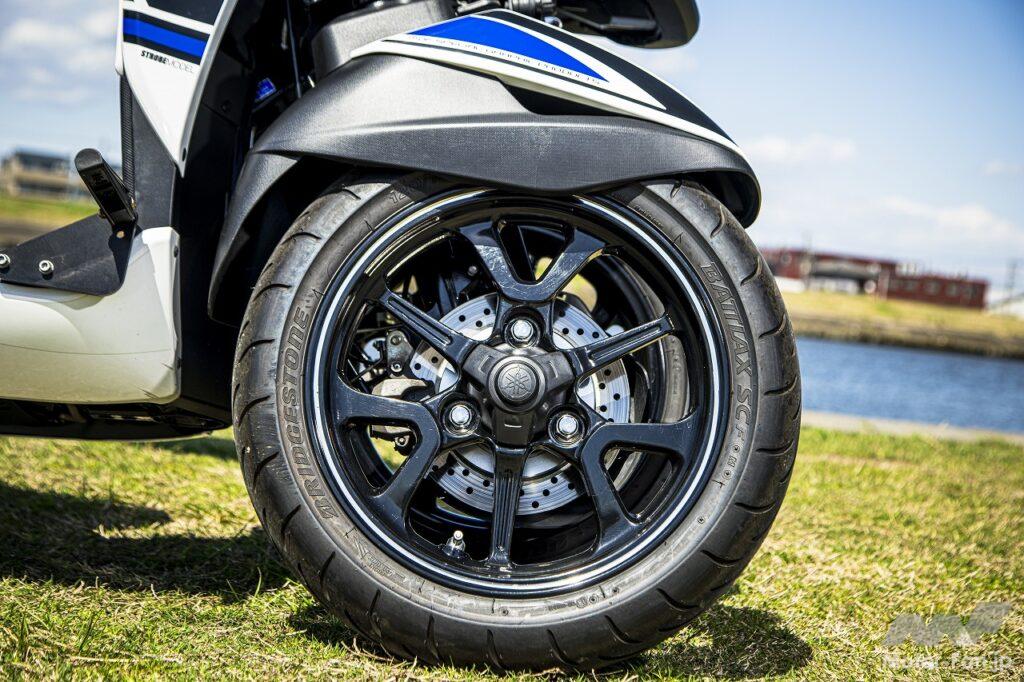
The Tricity 125/155 uses a standard axle mount, but the 300 uses the same hub mount as cars. It’s not something that can be easily replaced, and Moto Service Mac has made this possible by creating wide tread spacers! Of course, the rim width is also wider, increasing rigidity, and allowing for wider tires (120/70-14), which contributes to a stable ride.
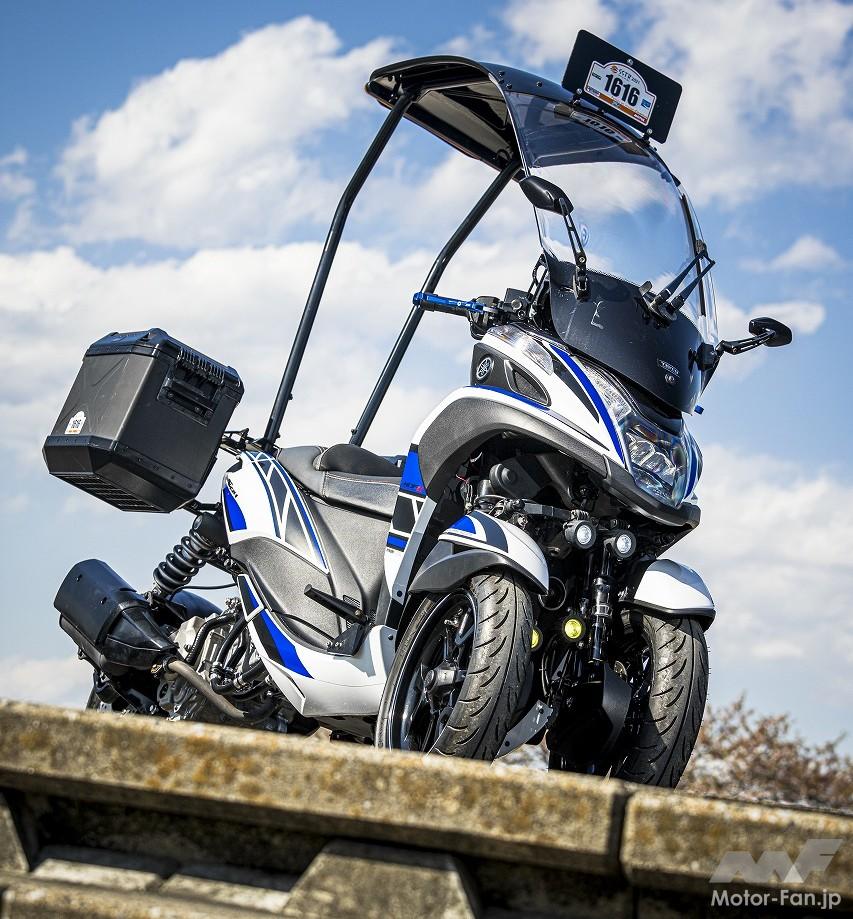
With the addition of a roof and increased loading capacity, touring on this Tricity 250, which has been transformed into an all-weather adventure LMW, is sure to be extremely comfortable. “What!? If you’re going to do all this, wouldn’t a Tricity 300 have been better from the start?” you might be thinking, but the owner actually purchased a 300 once. However, he apparently gave it up due to a series of circumstances, including the suspension of sales due to an early recall. He also uses the current Tricity 155 (8BK) and Aprilia SR GT200 depending on the situation. He also owns a range of mini to mid-class full-cowl sports and adventure bikes, including an MV Agusta Turismo Veloce, a Ducati 748R, an NSR250R, and a YZF125R, and seems to be enjoying a motorcycle lifestyle that anyone would envy!
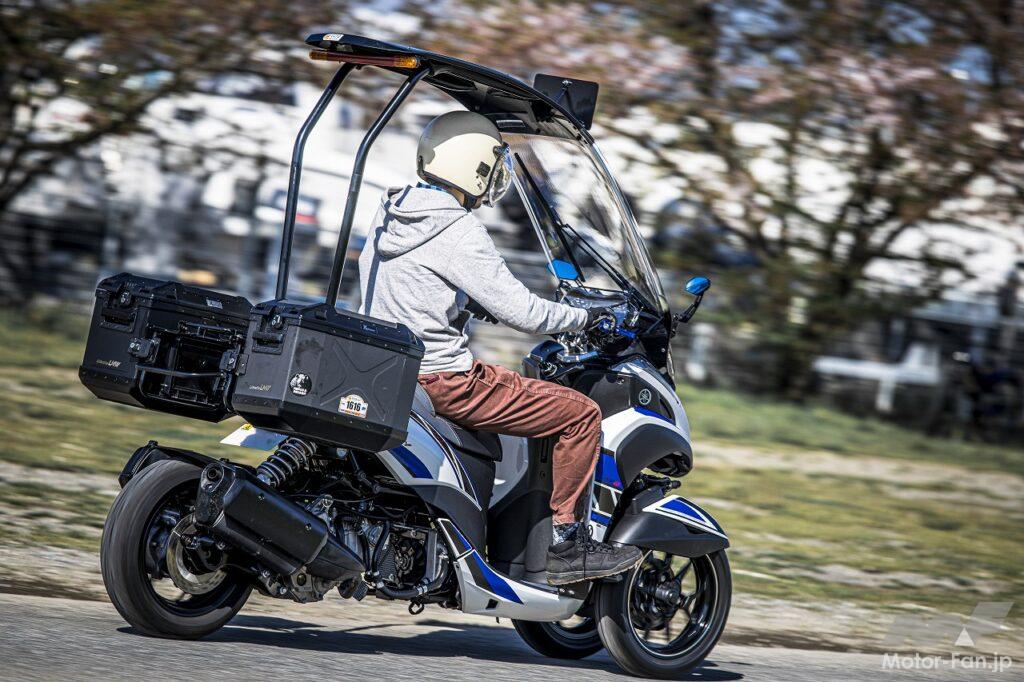
Being such a big bike enthusiast, the owner had no doubts about creating a one-of-a-kind Tricity 250 customized just for him, and Moto Service Mac, who made it happen, are quite skilled! Customizing bikes is what makes it so fun, because you get to encounter vehicles like this!!










![The child seat is retro and cute. But the 124cc straight-line leader is the Honda Chari! [Portrait of a 4MINI Enthusiast]](https://motopeek.com/wp-content/uploads/2025/10/4598-1762340867209.jpg)
![Only the frame and tank are genuine! A modified Ape finished with used parts [Portrait of a 4MINI Enthusiast]](https://motopeek.com/wp-content/uploads/2025/10/4604-1762340994544.jpg)