
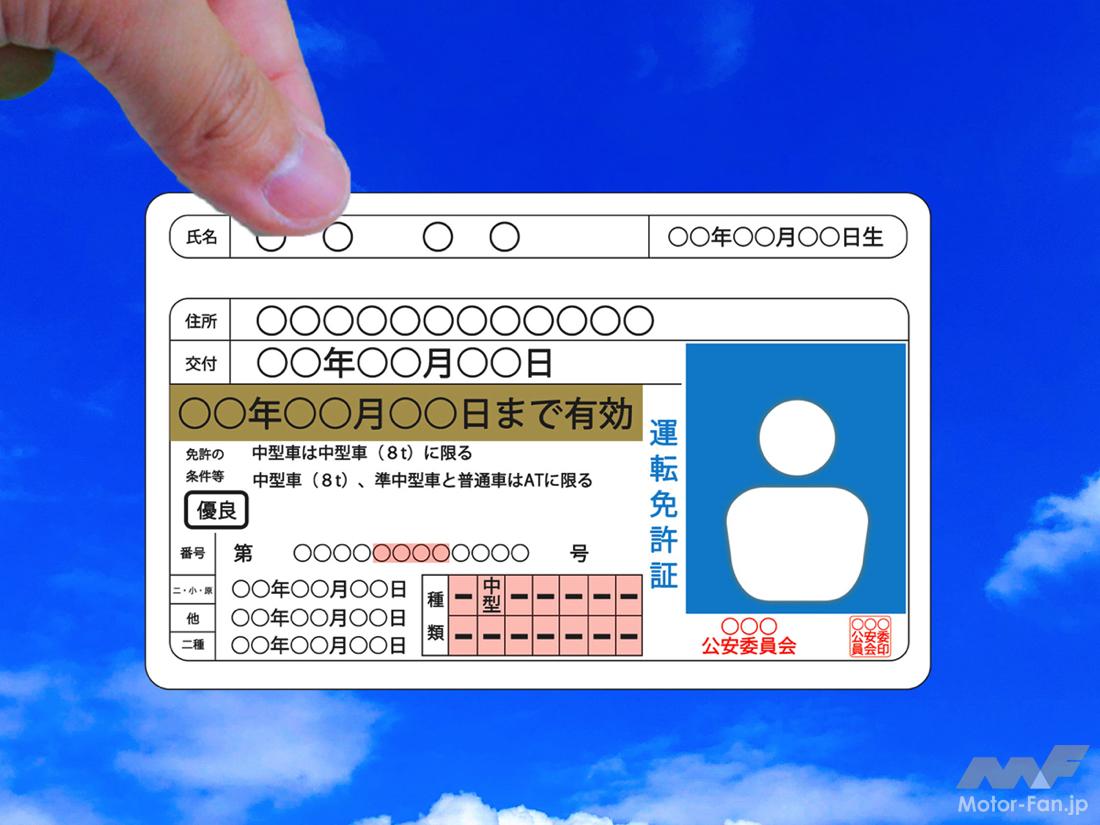
The color of your license tells you the classification and validity period
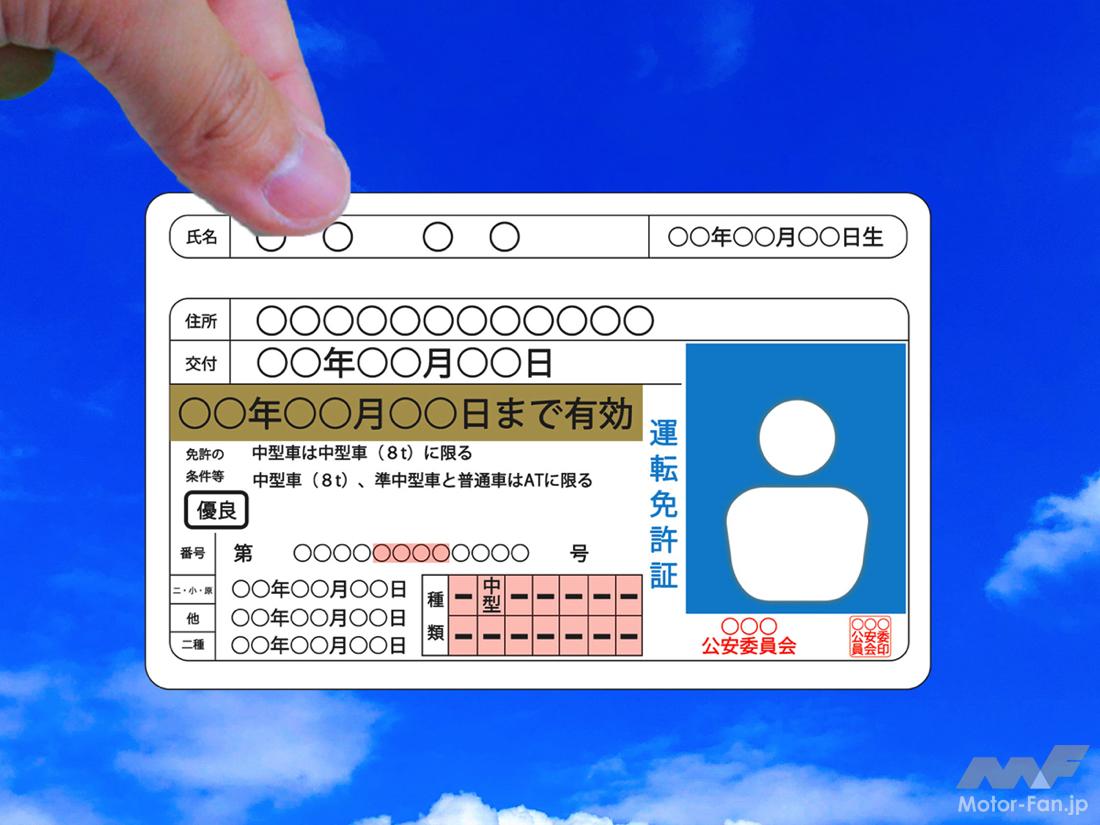
First of all, the different colours of the bands on your driver’s license have the following meanings:
[Green License]
・License category: New holder
・Validity period: 3 years
・Continuous period since obtaining license: First time
・Whether or not there has been a violation or accident: None
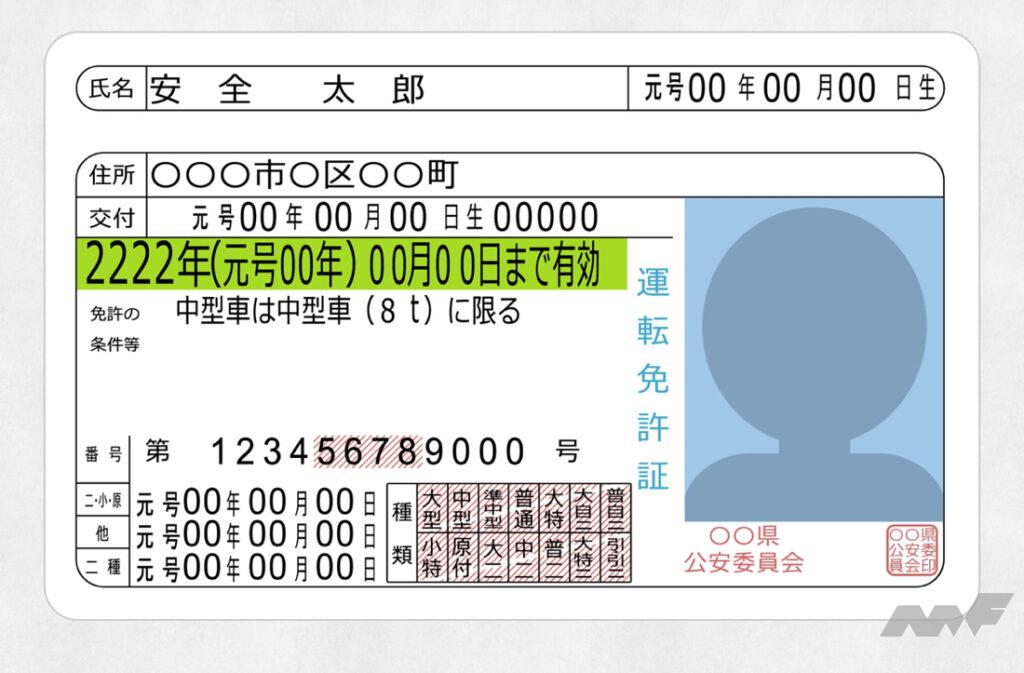
Image of a green license
[Blue License Part 1]
・License classification: First-time renewer
・Validity period: 3 years
・Continuous period since obtaining license: Less than 5 years
・Whether or not there have been any violations or accidents: Not applicable to the category of violating driver training
[Blue License Part 2]
・License classification: Driver with violations
・Validity period: 3 years
・Continuous period since obtaining license: None
・Whether or not there are any violations or accidents: Multiple violations or accidents resulting in injuries
[Blue License No. 3]
・License category: General driver
・Validity period: 5 years
・Continuous period since obtaining license: 5 years or more
・Whether or not there have been any violations or accidents: Only one minor violation with a score of 3 points or less
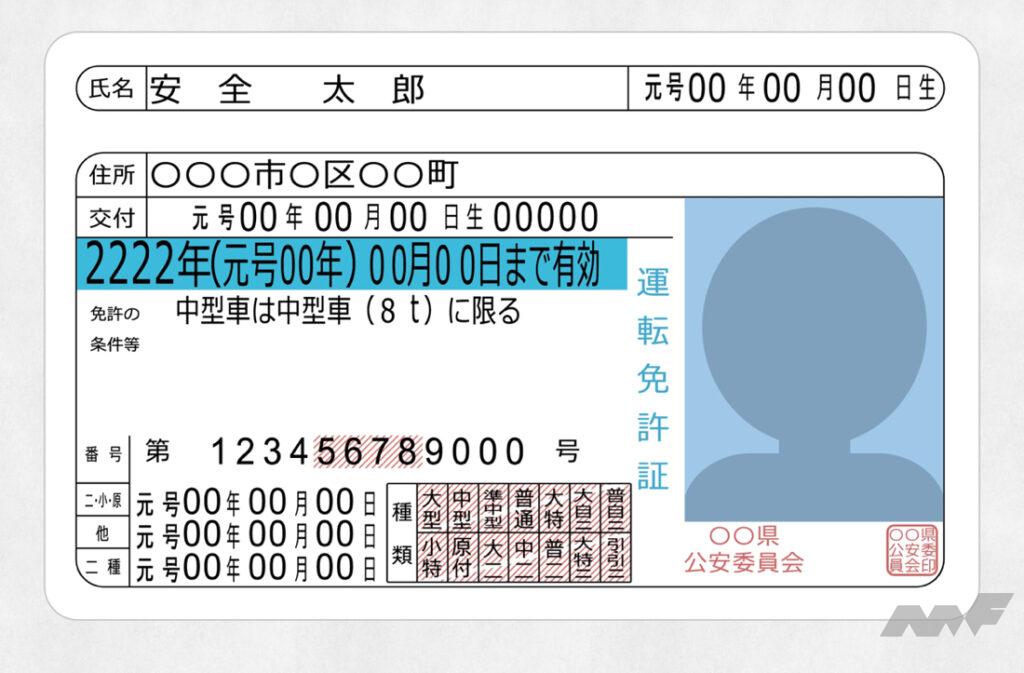
Image of a blue driver’s license
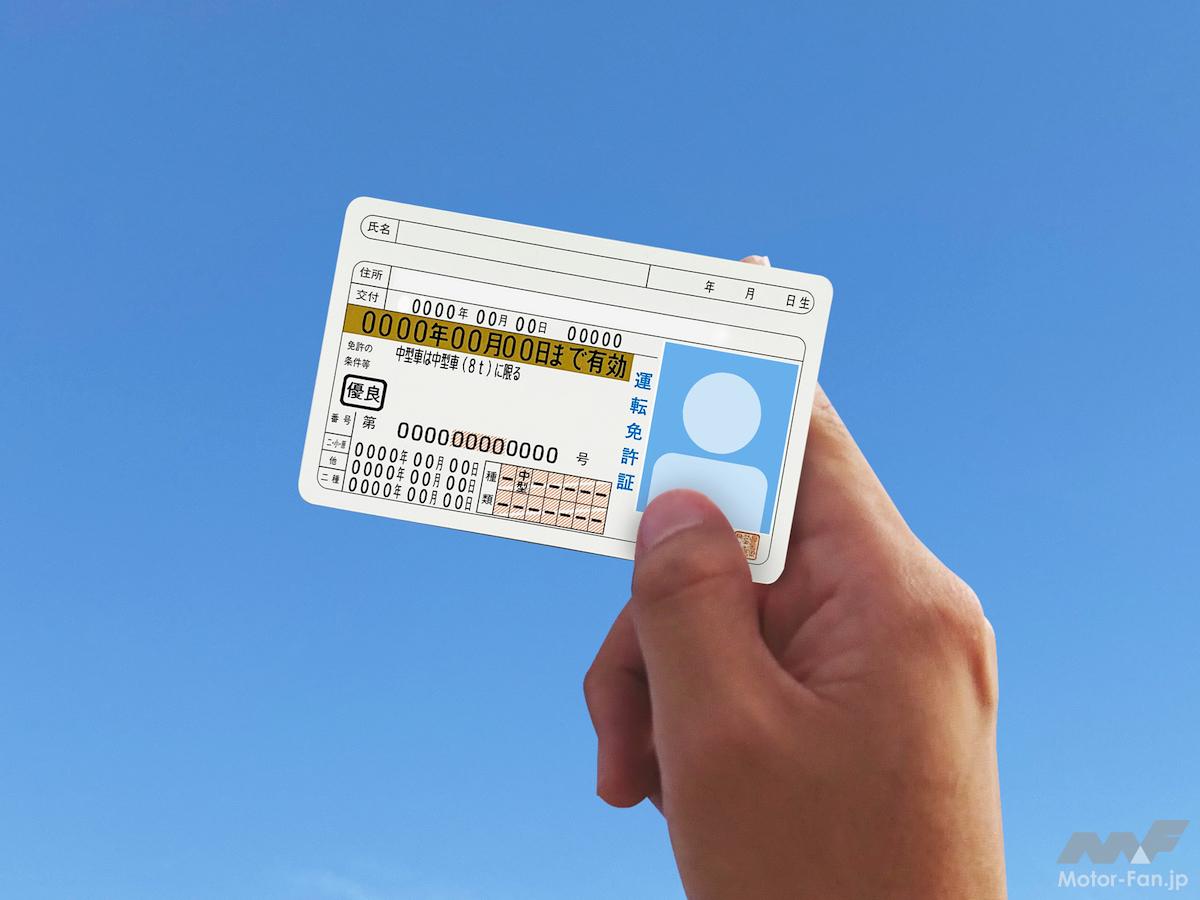
[Gold License]
・License classification: Good driver
・Validity period: 5 years
・Continuous period since obtaining license: 5 years or more
・Whether or not there are any violations or accidents: No accidents or violations
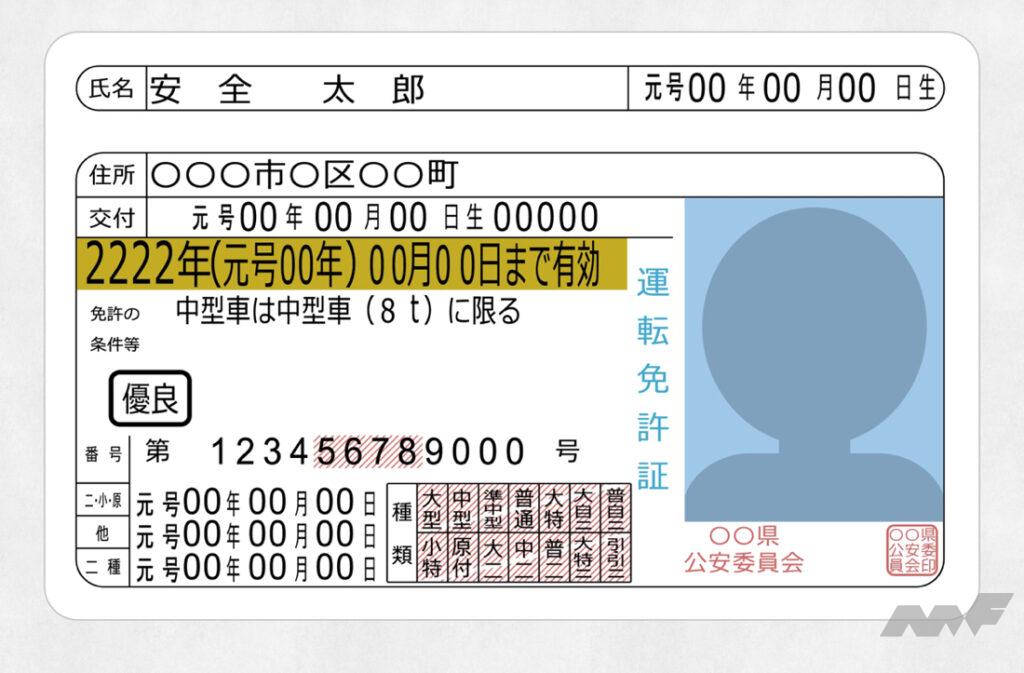
Image of a gold license
In the above, “validity period” refers to the number of years from the date of obtaining the license or the date of the last renewal until the third or fifth birthday. If the validity period is three years, it is the third birthday from the date of obtaining the license or the date of the last renewal, and if the validity period is five years, it is the fifth birthday.
However, the actual validity period is one month after your birthday. For example, if you have a three-year driver’s license and your birthday is June 20th, your license will be valid until July 20th of the year that marks your third birthday from the date you obtained your license or last renewed it.
Also, please note that the “continuous period since obtaining a license” does not refer to the total number of years since obtaining a license. For example, if a person whose license has expired has undergone procedures to re-obtain a license, only the number of years since the license was re-obtained will be counted.
In addition, the color of the driver’s license band and expiration date will reflect all points, including traffic violations and accidents resulting in injury, for the five years prior to the 40 days prior to the driver’s birthday.
Therefore, for example, if a person whose license has been suspended has had no accidents or violations for over a year, they will be considered to have no criminal record. Please note that this is different from the case where no points are accumulated after the suspension if certain conditions for administrative punishment are met.
Depending on the category of license, there are differences in the validity period of the license and the courses to be taken when renewing the license.
Green is the first time you get your license
Of these five categories, licenses with a green band are given to people who obtain a license for the first time, and they will use this license for three years.
However, there are cases where the belt changes to blue before the expiration date, such as when you first obtain a regular four-wheeled vehicle license and then obtain a motorcycle license within one year.
The same applies to those who do not have a regular driver’s license, for example, if they obtain a moped license as their first driver’s license, and then obtain a higher-level license such as a regular motorcycle license or a large motorcycle license before their first renewal procedure. In these cases, the license band will change from green to blue even if it has not been three years since they first obtained their license.

If you obtain a higher-level license after obtaining your first driver’s license and before your first renewal, the color of your license will change from green to blue.
Blue licenses are divided into three categories based on violation and accident history.
On the other hand, licenses with blue bands are actually divided into three categories, each with different validity periods and the content of the courses required for renewal.
The “first-time renewer” category mentioned in [Blue License Part 1] above refers to the category given to new Green License holders when renewing their license for the next time if their violations or accidents do not fall under the category of a driver’s violation training course.
Incidentally, the driver’s offender course is a course (for people under 70 years old) that is taken by people who have a history of violations (excluding one minor violation with three points or less) or accidents in the past five years, counting from 41 days before the birthday immediately before the license expiration date. In other words, people who have had no accidents or violations in the three years since obtaining a green license, or who have only had one minor violation with three points or less, are considered “first-time renewers.”
The “violating drivers” in [Blue License Part 2] are those who have committed multiple violations or who have caused an accident resulting in injuries. As mentioned above, even new Green License holders will be classified as violating drivers if they take a violating driver training course within the three years after obtaining their license.
The “ordinary driver” in [Blue License No. 3] refers to a person who has held a license continuously for more than five years and has only one minor violation with three points or less. The license band is the same blue as first-time renewals and drivers with violations, but the validity period is usually five years.

Even if you have the same blue license, the classification will change depending on whether you have had any violations or accidents.
A gold license is for a good driver with no accidents or violations.
On the other hand, a gold license is awarded to drivers who have held a license continuously for more than five years and have not committed any violations or caused any accidents resulting in injuries. The validity period is usually five years.
The validity period for a gold license is the same as that for regular drivers with a blue license, but the course for license renewal (described below) takes less time and the fees are lower. Another advantage is that renewal procedures can be completed not only at driver’s license testing centers, but also at the nearest designated police station in your area.
By the way, having a gold license also comes with various other financial benefits, such as discounts on car insurance premiums.
The five-year validity period for general drivers with a blue license and a gold license applies to those under the age of 70. For those aged 70, the validity period is four years, and for those aged 71 or older, the validity period is three years. In recent years, accidents caused by accidentally stepping on the accelerator have become a social problem for elderly people, so the validity period is set shorter even if they have had no accidents or violations.
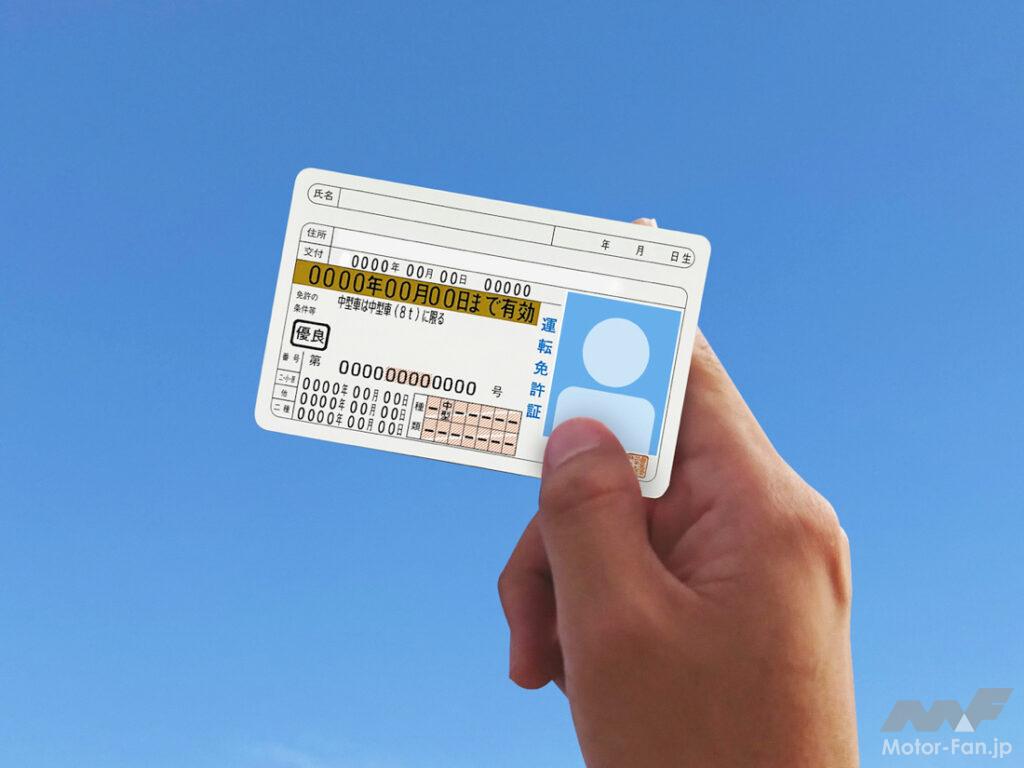
A gold license comes with a variety of benefits.
Changes with the introduction of My Number licenses
As such, there are five main categories of driver’s licenses, but will there be any changes with the introduction of the “My Number Driver’s License” from March 24, 2025?
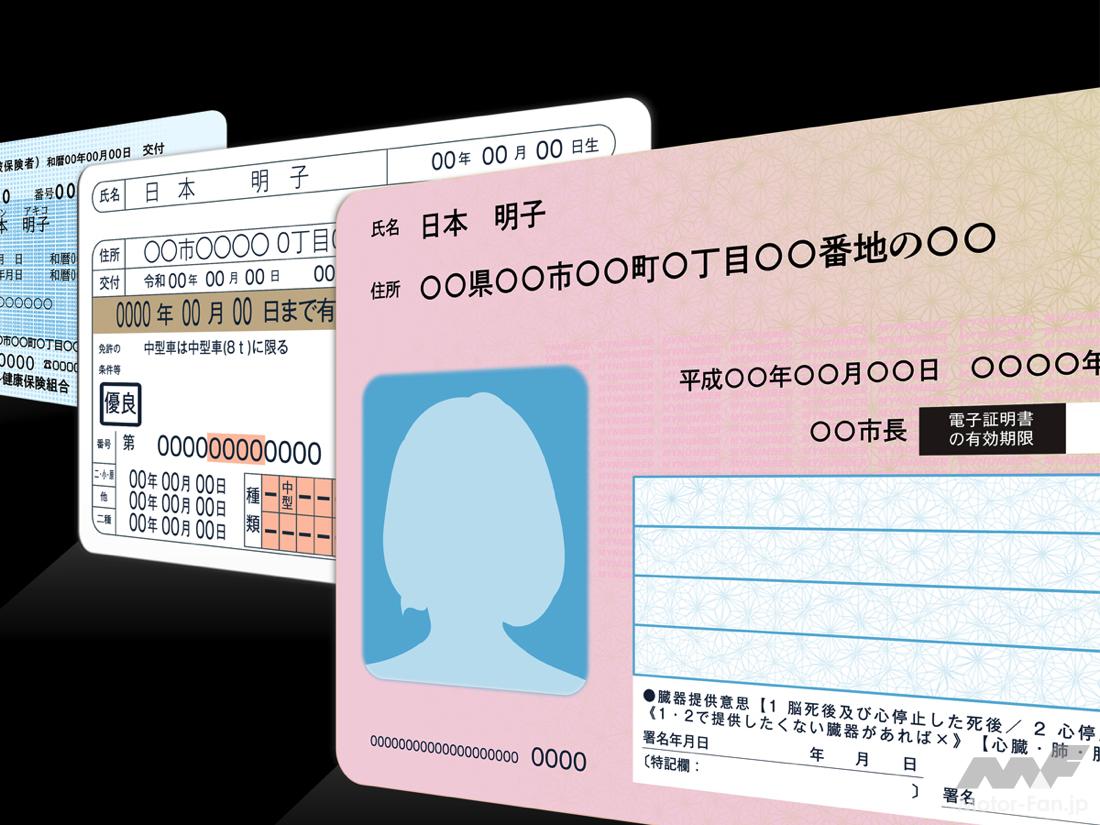
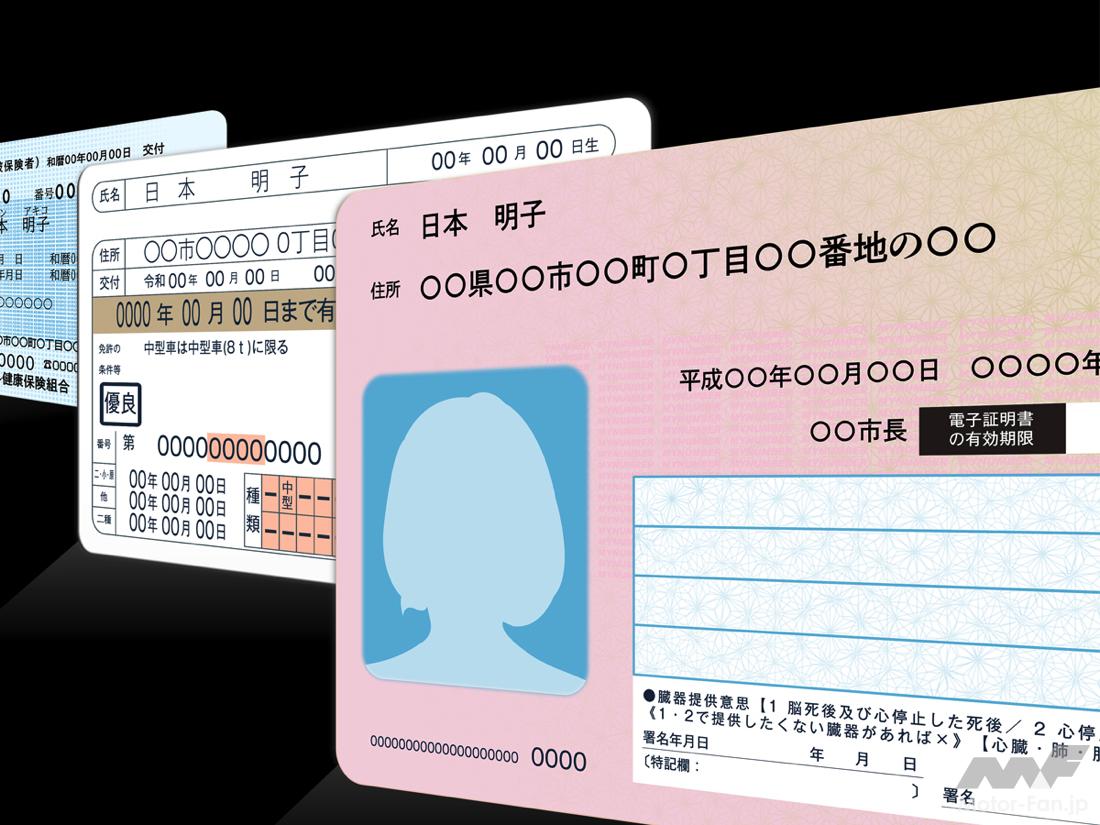
The My Number card is a combination of a driver’s license and a My Number card. The license-specific information stored on the IC chip of the driver’s license is recorded on the IC chip of the My Number card, thereby integrating the two.
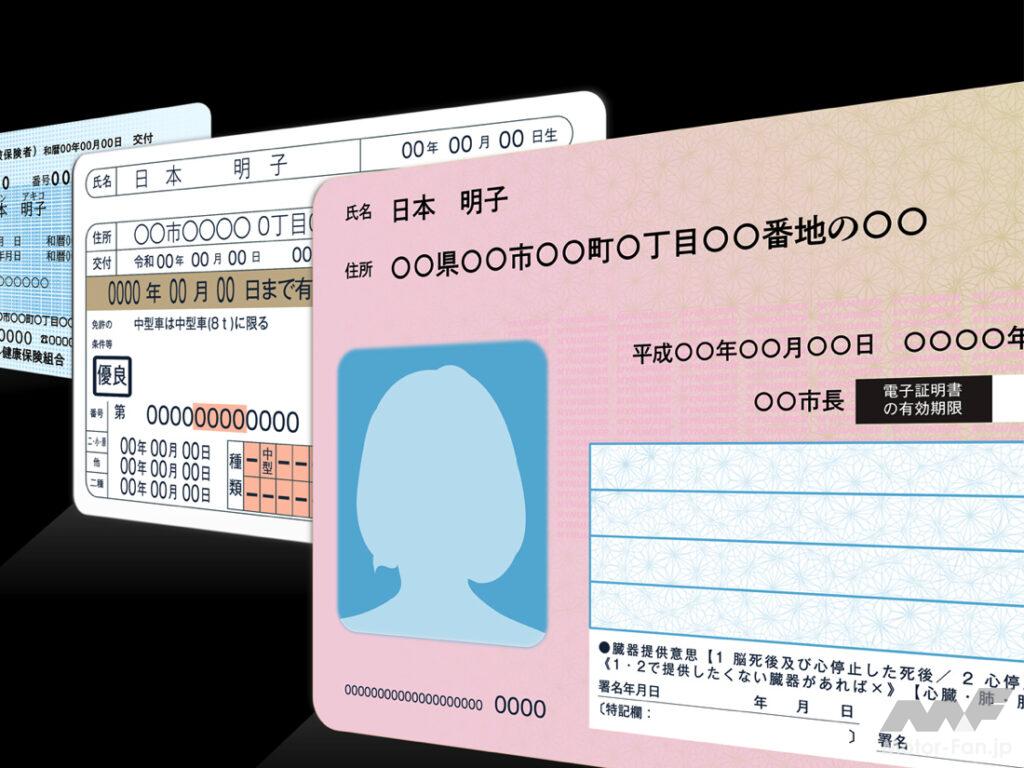
My Number Card linked to driver’s license information is My License
Whether or not to obtain a My Number license is up to the license holder. Obtaining a My Number card itself is also optional, so naturally, there are people who do not have one. And with regards to driver’s licenses, there are now three ways to hold them:
1. Only have a “traditional driver’s license”
2. Only have a “minority driver’s license”
3. Have two licenses: a traditional driver’s license and a minority driver’s license
If you choose option 2, your driver’s license and My Number card will be combined into one, which is beneficial for people who find it troublesome to carry around a lot of cards, such as point cards and credit cards. However, in this case, since it looks like a regular My Number card, your license category cannot be identified by the color of the band, as with conventional licenses.
Therefore, to find out information about your driver’s license, such as the type, number, date of issue, and validity period, you need to either use a “My Number license reading app” installed on your smartphone, or access the “My Number Portal” website and link it to your My Number license. Incidentally, My Number Portal is an online window for administrative procedures that My Number card holders can access. It allows you to apply online for a variety of administrative procedures, not just driver’s licenses, but also My Number insurance cards, nursing care, taxes, and more.

If you only have a minor driver’s license, you can read the information using a dedicated app installed on your smartphone.
Another thing to be aware of when only having one card is your My Number driver’s license is that if you lose your My Number card, it takes time and effort to reissue it, which can be a bit of a hassle. The procedure begins with getting your My Number card reissued at your city, ward, or village office. After that, the police will record your license information on the IC chip of your My Number card. Furthermore, it is said that it generally takes about a week to reissue your My Number card, and you will not be allowed to drive a motorcycle or car until the police have recorded your license information on your reissued My Number card. If you drive a motorcycle or car before your card is reissued, you will be in violation of the law for not carrying your license.
On the other hand, if you have two licenses (as in 3), you can say that there is less anxiety than if you have only one Minority Number license. This is because as long as you have either one, you will be able to drive while the reissue process is in progress (although it will be more troublesome if you lose both). However, the fees required, for example, when renewing your driver’s license, are higher for two licenses than for one (the specific prices will be discussed later).
It’s best to consider all of these factors when deciding which method of storage is best for you. You should also consider your personal circumstances and circumstances, such as whether you need to drive a motorcycle or car on a daily basis, or whether it’s better to keep all your data on one card, as well as costs.
Online training for renewal also available
At the same time as the introduction of the My Number license, an “online renewal course” was also launched. This system allows you to take the driver’s license renewal course, which was previously held at driver’s license testing centers or designated police stations, at your own convenience, such as at home, using your smartphone or computer. However, there are some points to note, such as the fact that it is not available to everyone and that not all renewal procedures can be done online.
First, the conditions for taking this online renewal course are as follows:
[Conditions for taking the online renewal course]
・Holder of a minor driver’s license (those who have one or two licenses)
・Course category: “Excellent” or “General”
・Under 70 years old (not eligible for the elderly course)

The online renewal course is available to drivers with good driving records who will be eligible for a gold license, or general drivers with a valid license for 5 years.
As such, the online renewal course is a prerequisite for obtaining a minor driver’s license, and is limited to “good drivers” or “ordinary drivers.” It does not apply to “violators,” “first-time renewers,” or those over 70 years old who are eligible for “elderly driver courses,” and these people will need to take face-to-face courses at driver’s license testing centers, as before.
Furthermore, even if you take an online course when renewing your license, you will still need to go to a driver’s license testing center or designated police station for the renewal procedures, such as aptitude tests, photographs, and license issuance, just as before. Naturally, even if you do not take the online renewal course, all renewal procedures, including attending the course, will still need to be done at a driver’s license testing center or designated police station.

As before, drivers will need to go to a driver’s license testing center or designated police station for aptitude tests, photographs, and license issuance.
The course fees and handling fees for license renewal have also changed.
In addition, with the introduction of My Number licenses and online renewal courses, the fees for renewing a license have also changed as follows:
[License renewal and training fees by category]
<Good Driver Training (Gold License/Training Time: 30 minutes)>
●For conventional licenses
Face-to-face training: 3,350 yen (renewal fee: 2,850 yen, training fee: 500 yen)
Online training: 3,050 yen (renewal fee: 2,850 yen, training fee: 200 yen)
For those with a My Number license (single card holder)
: In-person course: 2,600 yen (renewal fee 2,100 yen, course fee 500 yen)
Online course: 2,300 yen (renewal fee 2,100 yen, course fee 200 yen)
●If you have a conventional driver’s license and a minor driver’s license (two cards)
: In-person course: 3,450 yen (renewal fee 2,950 yen, course fee 500 yen)
Online course: 3,150 yen (renewal fee 2,950 yen, course fee 200 yen)
<General driver’s course (Blue license/1 hour course)>
● For conventional licenses
In-person course: 3,650 yen (renewal fee 2,850 yen, course fee 800 yen)
Online course: 3,050 yen (renewal fee 2,850 yen, course fee 200 yen)
For those with a My Number license (single card holder)
: In-person course: 2,900 yen (renewal fee 2,100 yen, course fee 800 yen)
Online course: 2,300 yen (renewal fee 2,100 yen, course fee 200 yen)
●If you have a conventional driver’s license and a minor driver’s license (two cards)
: In-person course: 3,750 yen (renewal fee 2,950 yen, course fee 800 yen)
Online course: 3,150 yen (renewal fee 2,950 yen, course fee 200 yen)
<Driver Violator Course/First-Time Renewal Course (Blue License/2-hour course)>
●For conventional licenses,
face-to-face course only: 4,250 yen (renewal fee 2,850 yen, course fee 1,400 yen)
●If you have a My Number license (one card)
, face-to-face training only: 3,500 yen (renewal fee 2,100 yen, training fee 1,400 yen)
●If you have a conventional driver’s license and a minor driver’s license (two cards),
face-to-face training only: 4,350 yen (renewal fee 2,950 yen, training fee 1,400 yen)
The cost of license renewal varies depending on whether you choose a minor license or not, and whether you take online or face-to-face courses for premium and general licenses.
As such, please note that the amount differs depending on whether you have one traditional driver’s license or one minor license, or both a traditional driver’s license and a minor license.
For example, if a driver in good standing renews their license, the cost will be the lowest at 2,300 yen if they take the online renewal course with only their minor license. On the other hand, if they have both a conventional license and a minor license and take the face-to-face course, the cost will be 3,450 yen, meaning that even for the same driver in good standing, the renewal cost will differ by 1,150 yen.
As you can see, the introduction of the new system means that there are many things to be aware of when it comes to license classifications and renewal procedures. It’s important to understand the rules and system thoroughly and choose the method that suits you best.