
What kind of bikes are available as domestic models?
As mentioned above, adventure bikes are available in a wide variety of engine displacements from various manufacturers, and there is now a huge variety to choose from. This shows how popular they are, but let’s start by looking at some examples of domestic models to see what types of models are actually available.
Honda:
CRF1100L Africa Twin Series (1082cc, inline twin-cylinder)
, XL750 Transalp (754cc, inline twin-cylinder)
, CRF250 Rally (249cc, single-cylinder)
, CRF250L (249cc, single-cylinder)
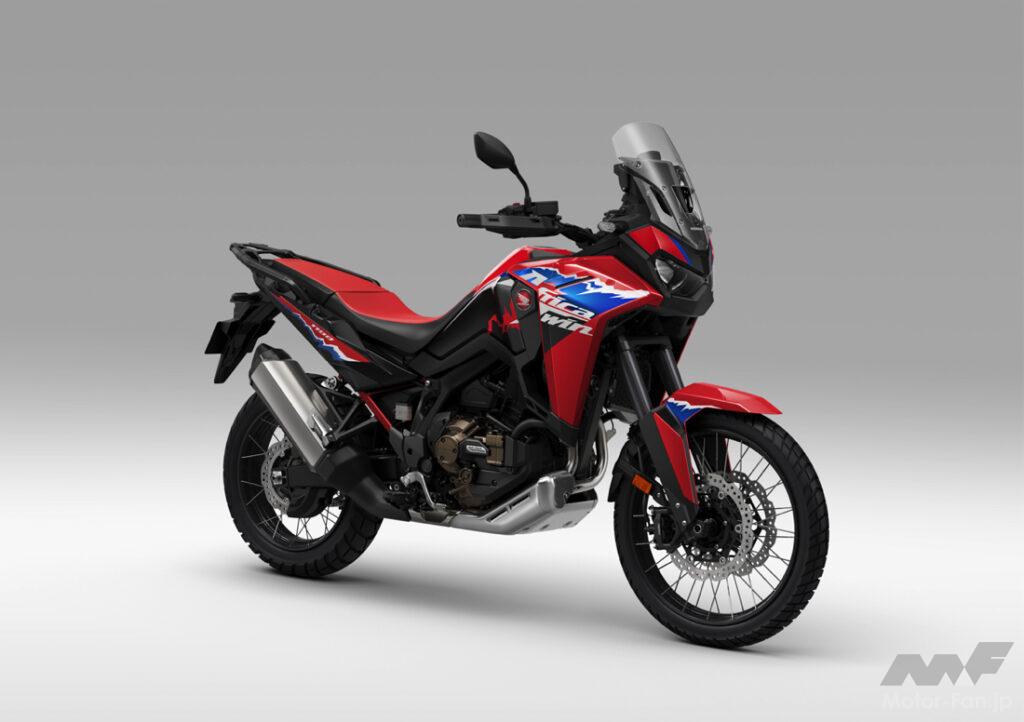
CRF1100L Africa Twin<s>
ADVERTISEMENT
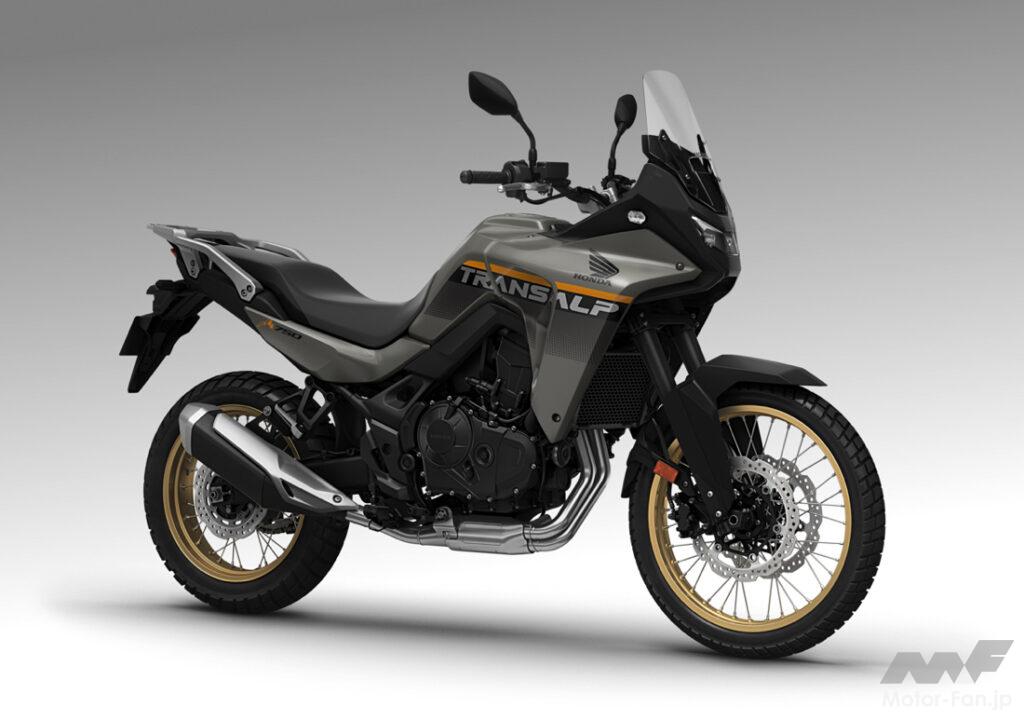
XL750 Transalp
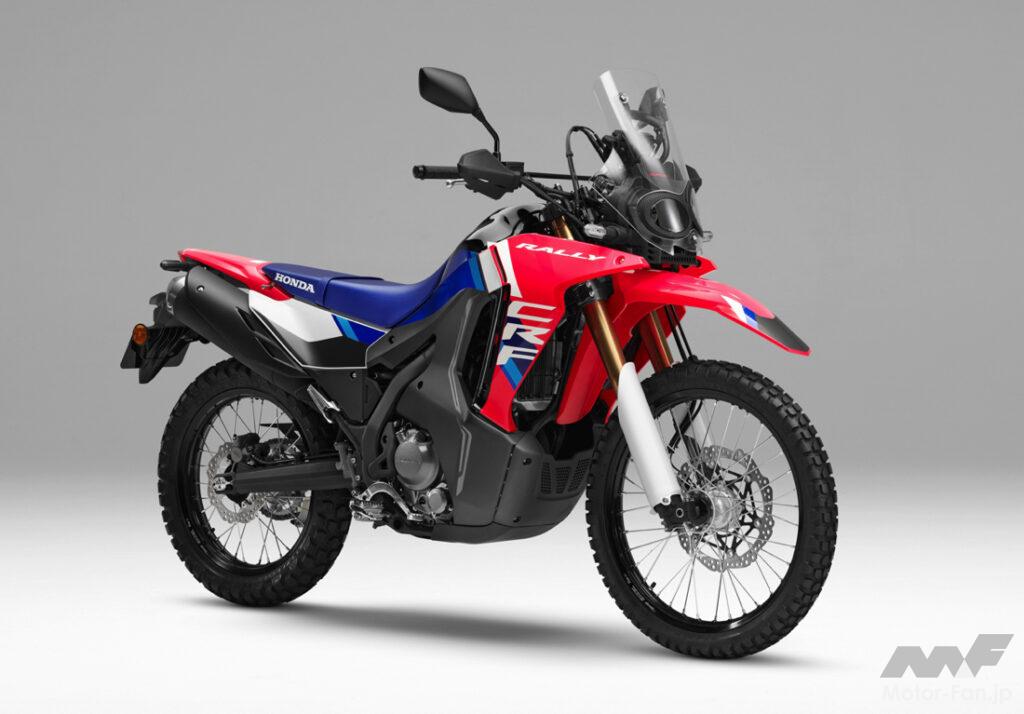
CRF250 Rally

CRF250L
[Yamaha]
Ténéré 700 (688cc inline twin-cylinder)

Ténéré 700
Suzuki:
V-Strom 1050/1050DE (1036cc, V-twin)
, V-Strom 800/800DE (775cc, 2-cylinder)
, V-Strom 650/650XT (645cc, V-twin)
, V-Strom 250/250SX (248cc, 2-cylinder)
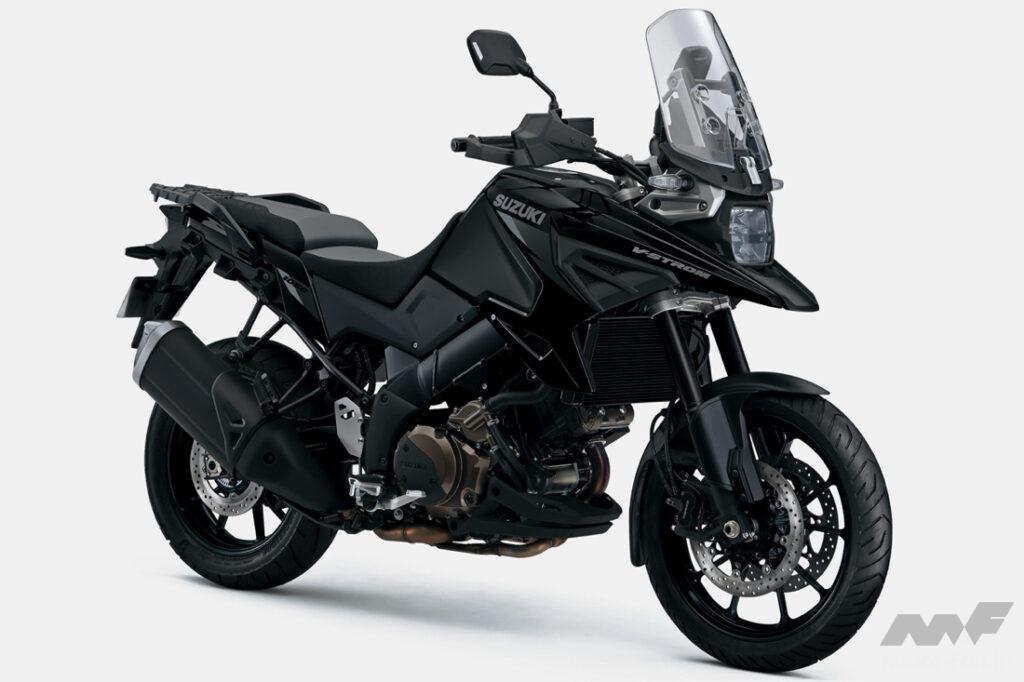
V-Strom 1050
ADVERTISEMENT
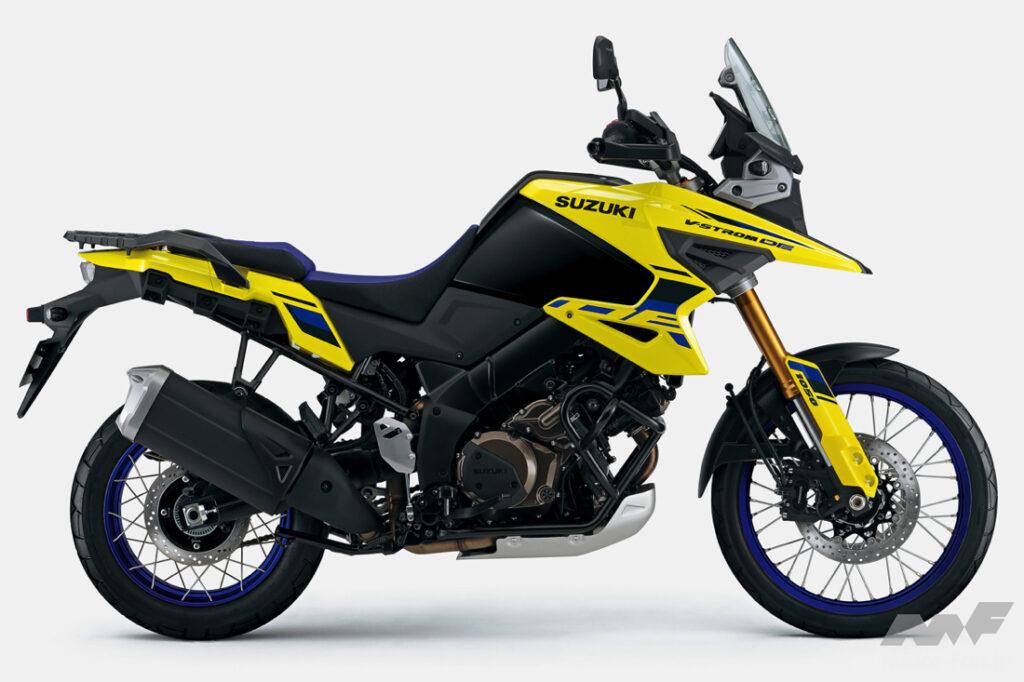
V-Strom 1050DE
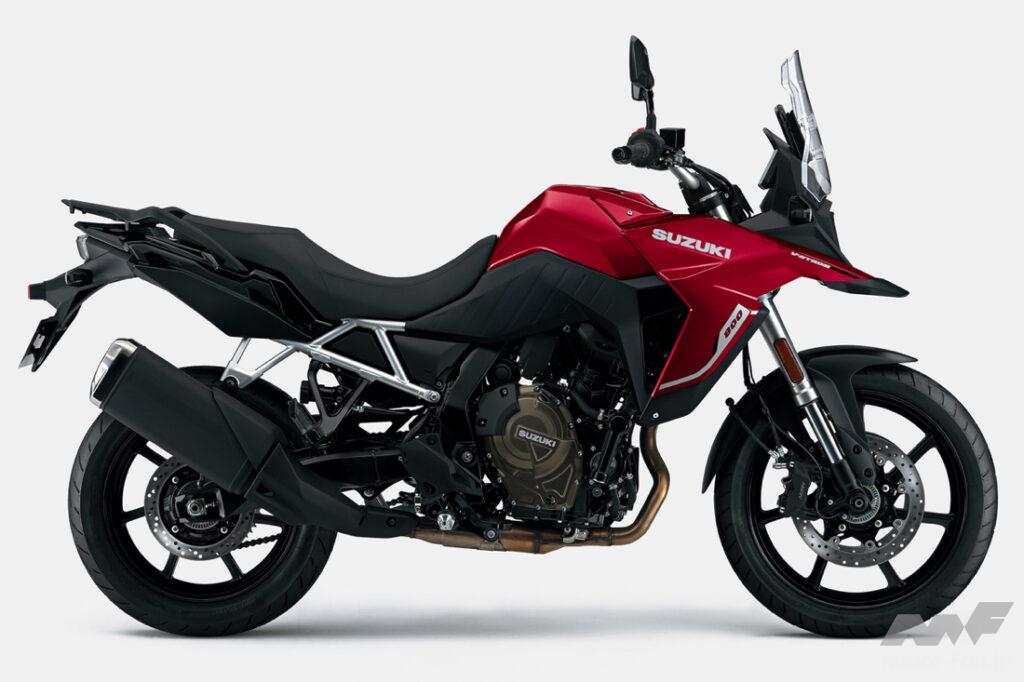
V-Strom 800
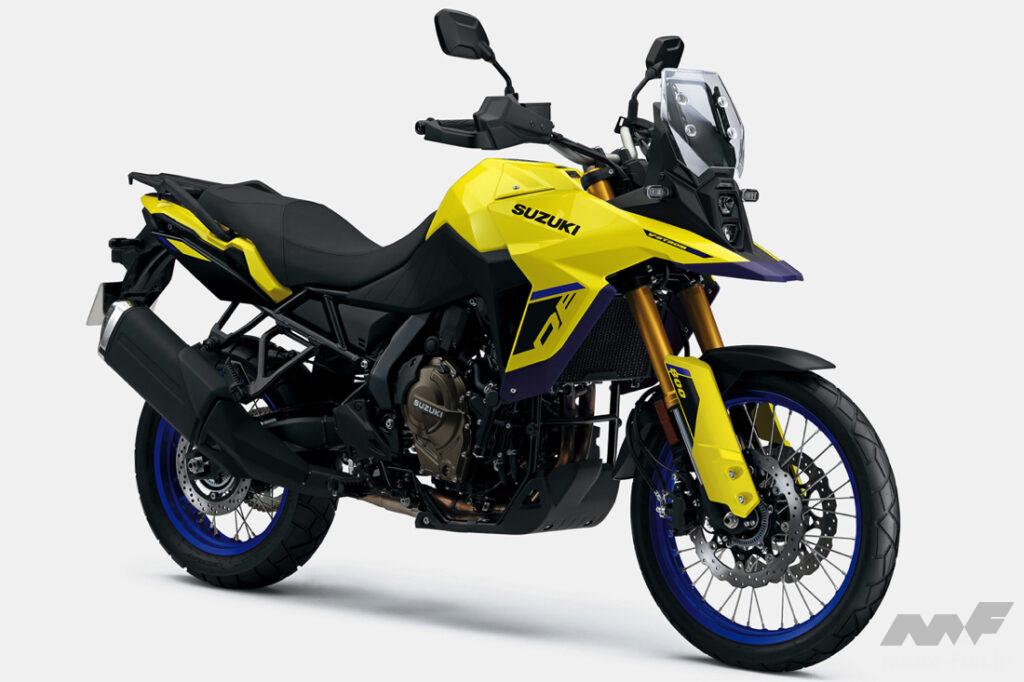
V-Strom 800DE
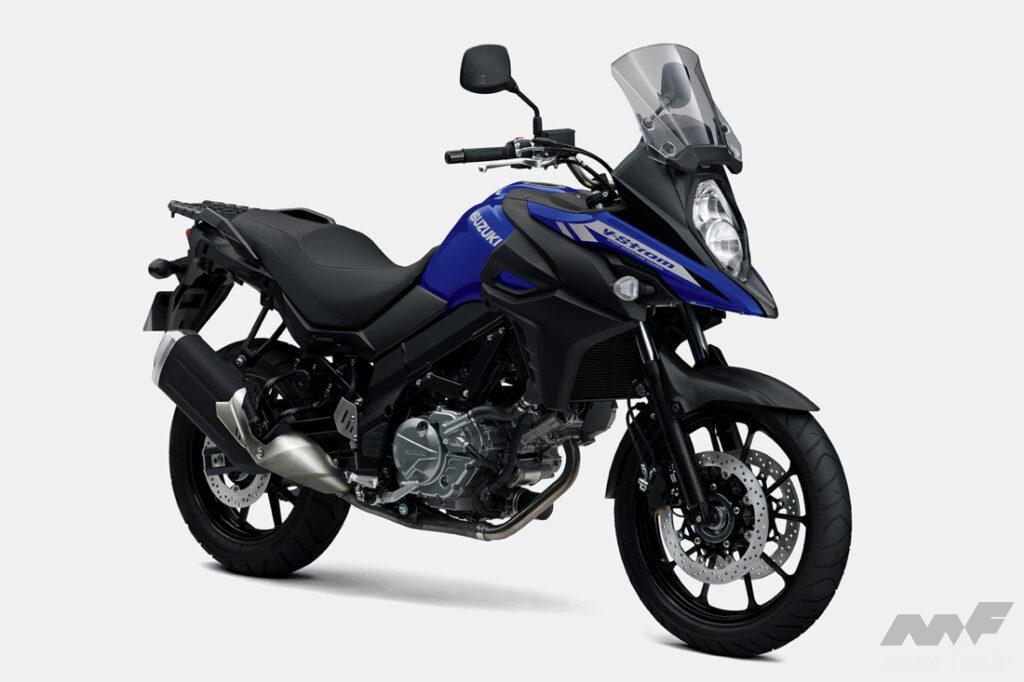
V-Strom 650

V-Strom 650XT

V-Strom 250SX
ADVERTISEMENT
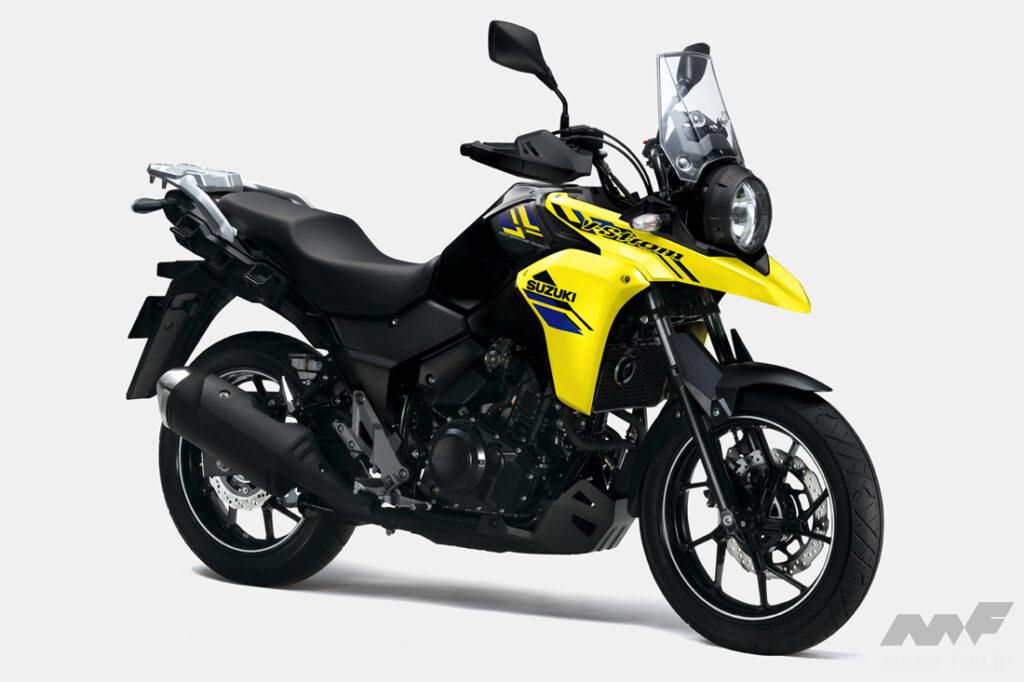
V-Strom 250
[Kawasaki]
Versys 1100SE (1098cc, inline 4-cylinder)
Versys 650 (649cc, inline 4-cylinder)
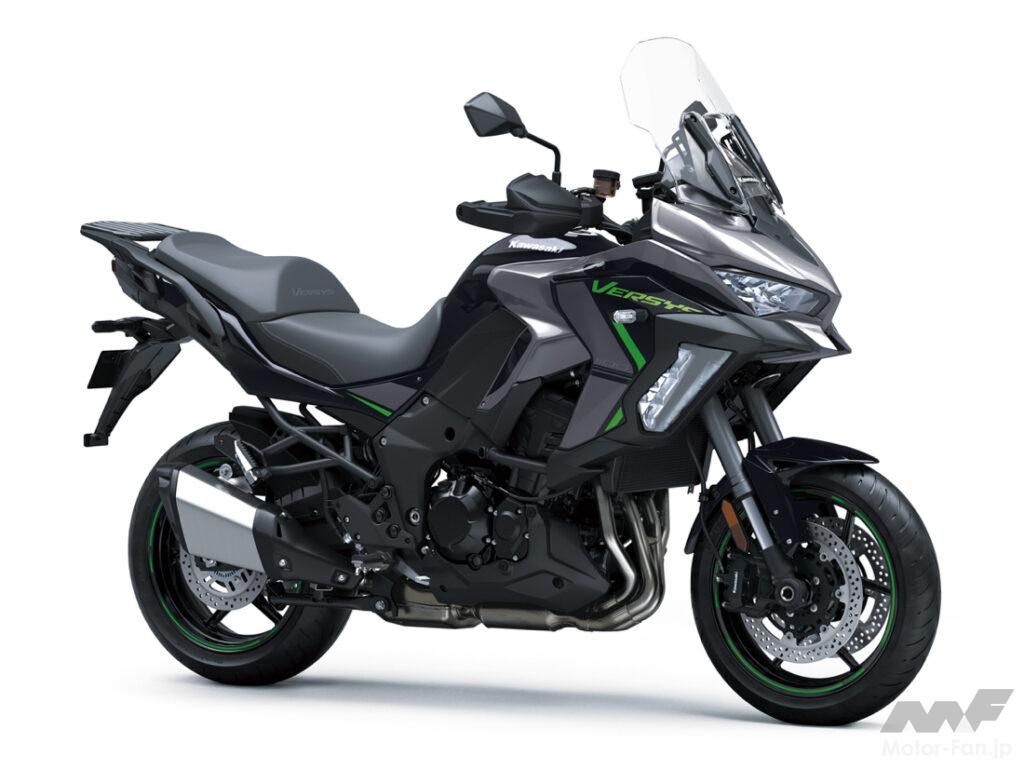
Versys 1100SE

Versys 650
These are models that each manufacturer classifies as “adventure” on their official websites.
Incidentally, the latest 2025 model, the Versys 1100SE, has an increased displacement of 1098cc and a maximum output of 135PS. Kawasaki also includes both models of the Versys 650, which is equipped with a 649cc parallel twin-cylinder engine, in the “Adventure/Touring” category, so they are included in the list above. Suzuki also includes the V-Strom 250 in the adventure category, but for reasons that will be explained later, these may not be considered pure adventure bikes. Classification methods vary by manufacturer, so it is difficult to generalize, but we will explain the details later.
Anyway, as you can see, there are models with a variety of engine displacements, from 1000cc to 250cc. Also, with a few exceptions, most are equipped with two-cylinder or single-cylinder engines. All of them have the appeal of having torquey power characteristics even at low speeds, and an easy-to-handle ride feel in a wide range of situations, from city streets to highways.
Fun both on and off-road
What these models have in common is that while they inherit the feel of off-road bikes, they are equipped with comfort and convenience for long-distance touring. They offer high stability when cruising at high speeds on highways and other roads, while also providing excellent maneuverability on rough, bad roads, making them appealing for their ability to handle both on-road and off-road riding.
Recent trends in style include front screens that offer excellent wind protection, and upright positions using handlebars that reduce fatigue even during long rides.
Many machines also tend to have long cruising ranges thanks to large-capacity fuel tanks. Additionally, many models feature long-stroke suspensions that provide high stability even when driving off-road. Some models are even equipped with skid plates underneath the engine to reduce damage when hitting rocks or other debris, in preparation for rough roads.
Furthermore, it also features a flat, wide rear seat that makes it easy to load luggage and is stable. Some models come with a rear carrier as standard, and special pannier cases are available as options, making it highly portable for long trips and outdoor camping.
Many other models also feature the latest electronic control systems, such as traction control to prevent tire spin and ABS to ensure stable braking performance. In particular, premium models with large engine displacements are equipped with riding modes that allow you to select the optimum characteristics depending on the riding situation, such as on-road, off-road, or cruising with luggage. Specifications are also available that allow you to enjoy a more comfortable and stable ride.

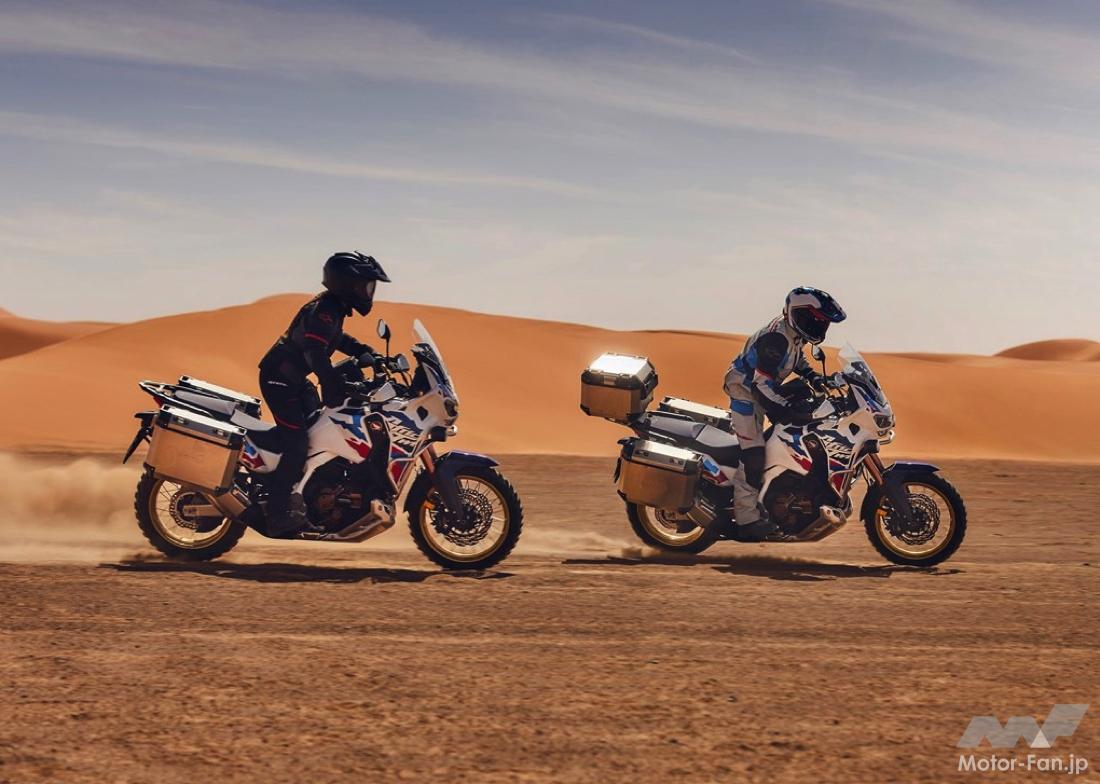
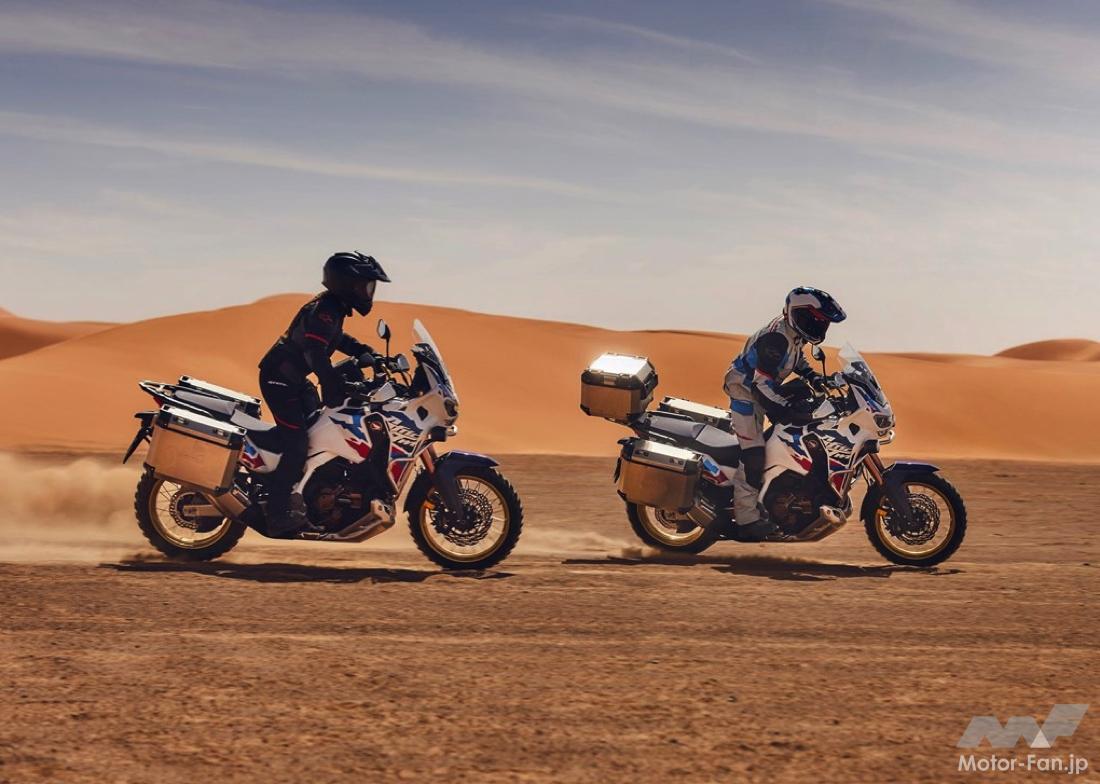
Adventure bikes boast high performance and comfort both on and off-road, and are equipped with a variety of features that make them suitable for long-distance touring (pictured is the European-spec Honda CRF1100L Africa Twin Adventure Sports ES).
It all began as the world’s toughest motorcycle race
So why are adventure bikes designed to be used on both on-road and off-road? The answer lies in their roots.
When it comes to Japanese-made adventure bikes, the most representative ones would be Honda’s CRF1000L Africa Twin series and Yamaha’s Ténéré 700. Both are long-selling models that have been around since the 1980s, and can be said to have been instrumental in establishing the genre.
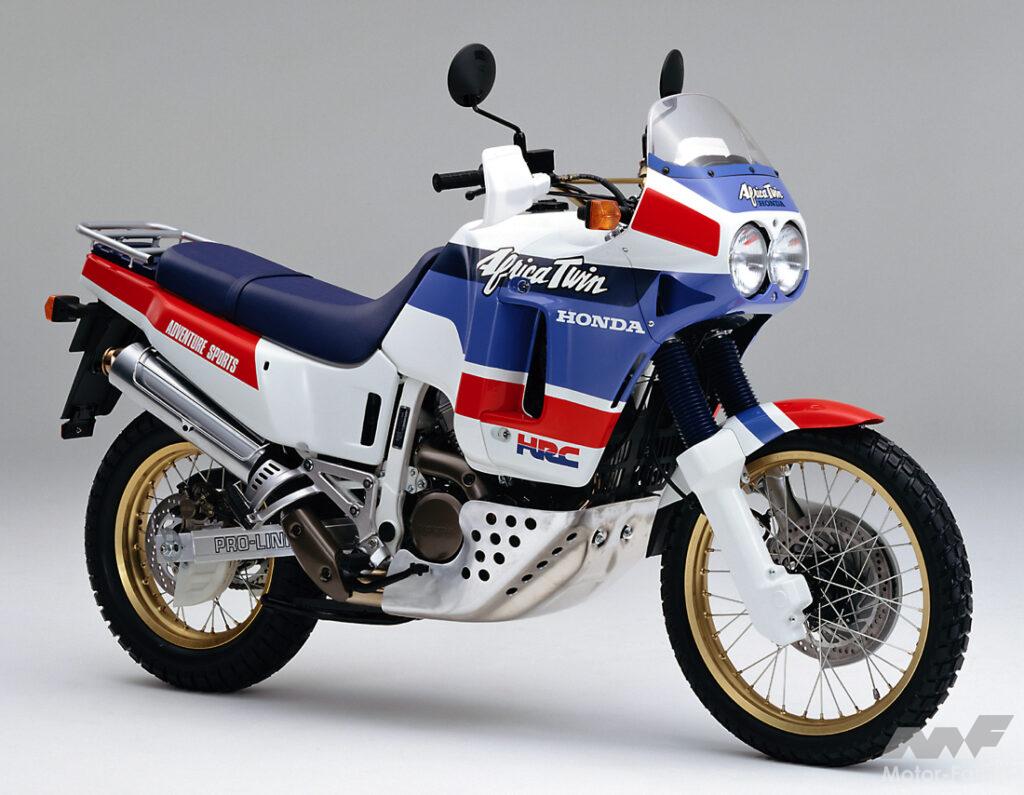
The first Africa Twin, which appeared in 1988
The first generation of each model was the Yamaha XT600 Ténéré, released in 1983, and the Honda Africa Twin, released in 1988. Both featured relatively large engine displacements: the Ténéré had a 595cc single-cylinder, while the Africa Twin had a 647cc V-twin. Their appeal included torquey riding that was not affected by rough roads.
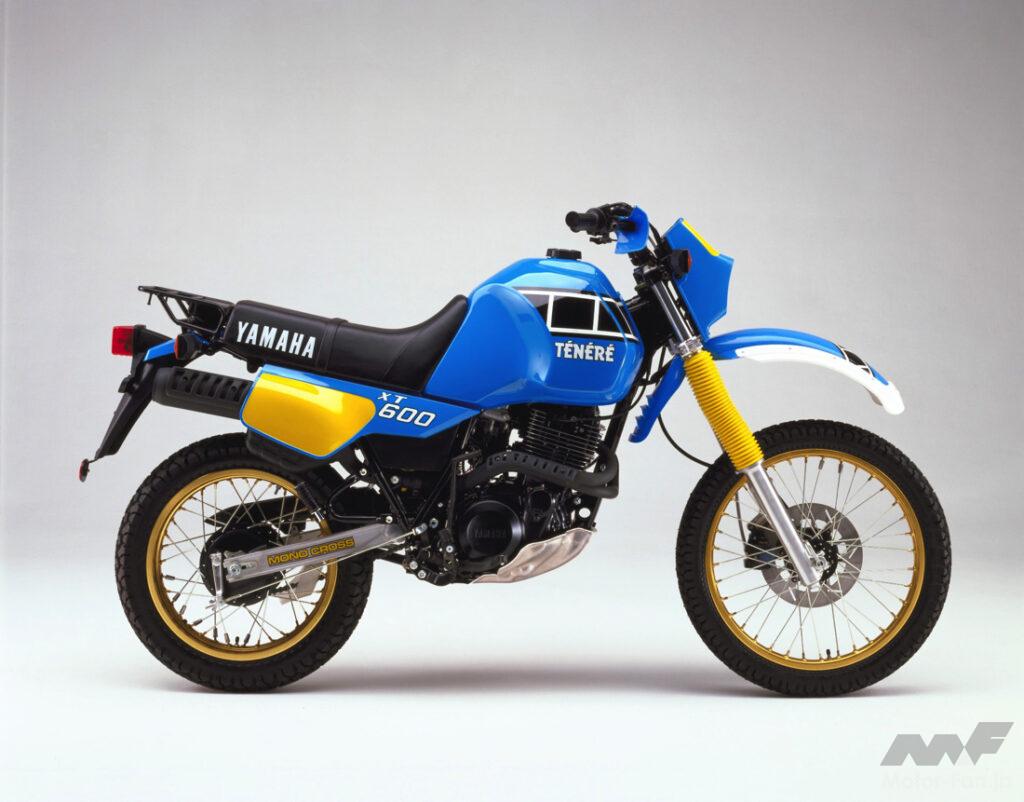
Yamaha XT600 Tenere (1983)
Another thing both models have in common is that they were released as replica bikes based on the Honda and Yamaha works machines that competed in the Paris-Dakar Rally (now the Dakar Rally), which was hugely popular at the time, and performed very well.
Held since 1978, this competition is known as the “world’s toughest event,” with motorbikes and cars traversing all kinds of terrain, including deserts, muddy areas, and mountainous regions. It takes place over two weeks from the end of the year to the beginning of the new year, and is so tough that daily distances can exceed 800km in the scorching heat. Riders and drivers must be physically fit, and their vehicles must also be highly durable and capable of handling a variety of rough terrain, with the ability to withstand long distances.
The Africa Twin and Ténéré are commercial models that incorporate the technology developed through these grueling competitions. These models are called adventure bikes because they are based on the technology of factory machines honed in the “world’s toughest rally,” a competition that can also be considered “adventure” in a sense. These models form the foundation of the aforementioned adventure bike characteristics, such as high off-road performance, stability and convenience during long-distance touring, and high performance on both on- and off-road surfaces.
Incidentally, the Paris-Dakar Rally once ran from Paris, France, across the African continent, through the Sahara Desert, and finished in Dakar, the capital of Senegal. This long and rugged route was nicknamed the “Paris-Dakar” and was widely loved around the world.
Due to political instability in the region, the event is now held in Saudi Arabia in the Middle East, but the name “Dakar” remains, and it remains one of the motorsports that attracts many fans around the world.
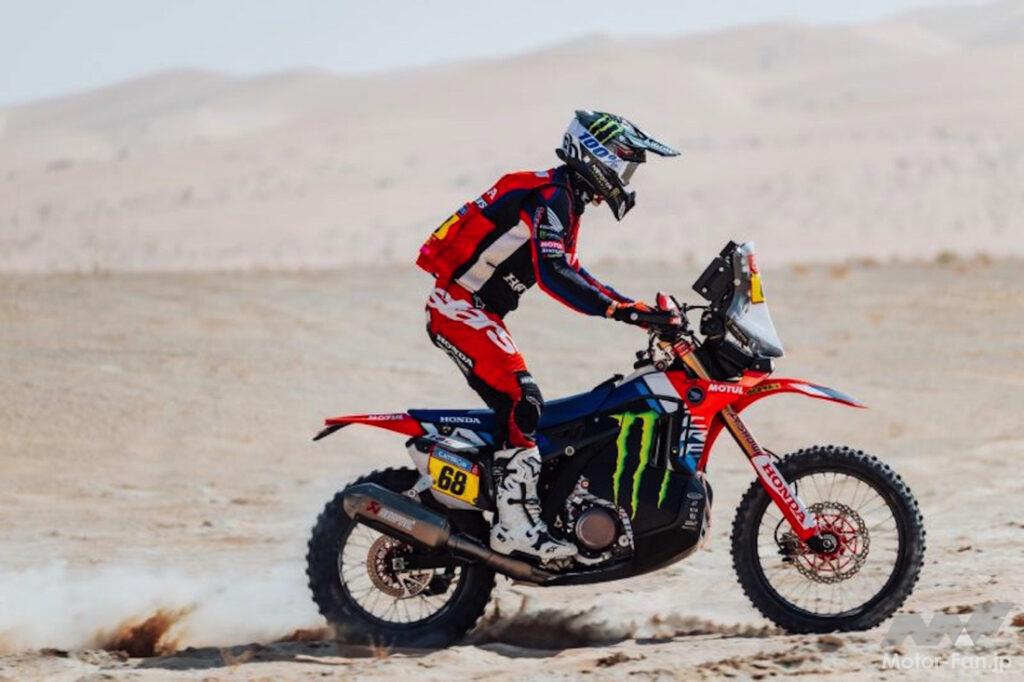
The 2025 Dakar Rally (January 3rd to 17th, 2025). Honda is currently competing with its factory machine, the CRF450 Rally.
Differences from sports tourers and crossovers
In this way, it can be said that the adventure bike originally began as a commercial product based on a rally machine that could be ridden on public roads.
On the other hand, what is interesting is the difference between sports tourers, crossovers, and other models that have similar styles but are classified as different genres by each manufacturer.
For example, the following bikes fall into the category of sports tourers and crossovers:
[Sports Tourer Examples]
Yamaha Tracer 9GT/9GT+ Y-AMT
Honda NT1100
[Crossover examples]
Honda NC750X/DCT,
Honda X-ADV,
Suzuki GSX-S1000GX
Yamaha’s Tracer 9 GT and its higher-end model, the Tracer 9 GT+ Y-AMT, are sports tourers equipped with an 888cc, three-cylinder engine. In particular, the latest 2025 model, the Tracer 9 GT+ Y-AMT, is equipped with millimeter-wave radars at the front and rear of the vehicle, and is equipped with the latest driving assistance systems, such as ACC, which automatically follows the vehicle ahead on highways and other roads. It also features the electronically controlled shift Y-AMT. It is equipped with the latest equipment, which allows you to choose between MT mode, where you change gears using the shift lever on the handlebars, and AT mode, where the bike changes gears completely automatically, by eliminating the need for a clutch lever and shift pedal.
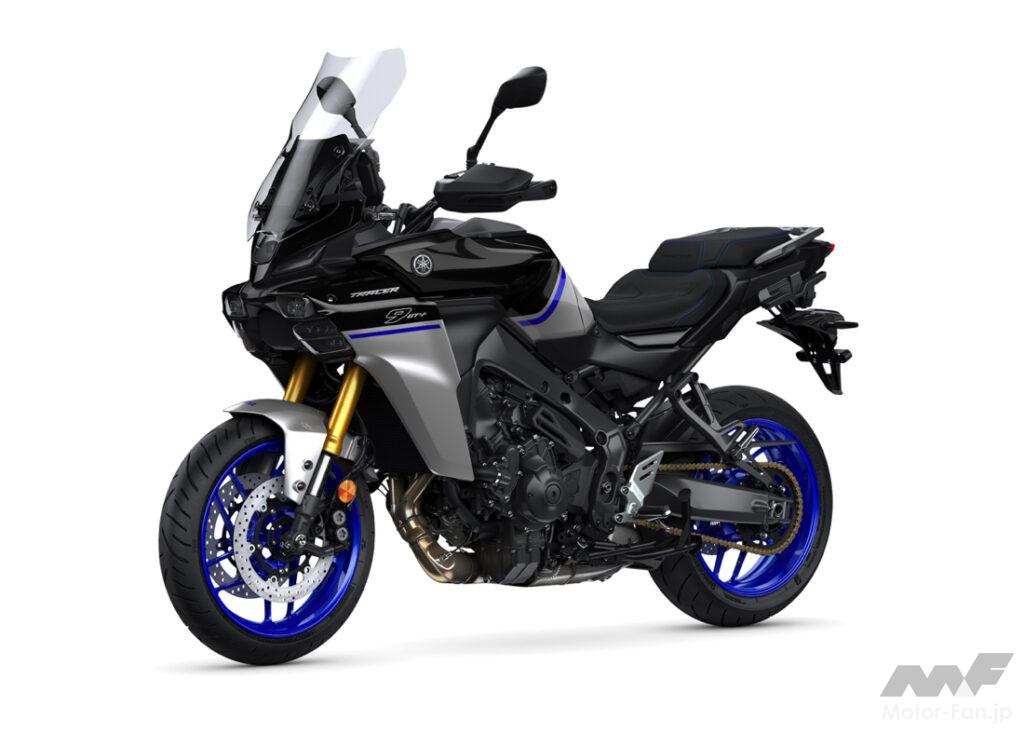
Tracer 9 GT+ Y-AMT
Additionally, Honda classifies the NT1100, which is equipped with the same 1082cc inline twin engine as the CRF1100L Africa Twin, as a “touring model.”
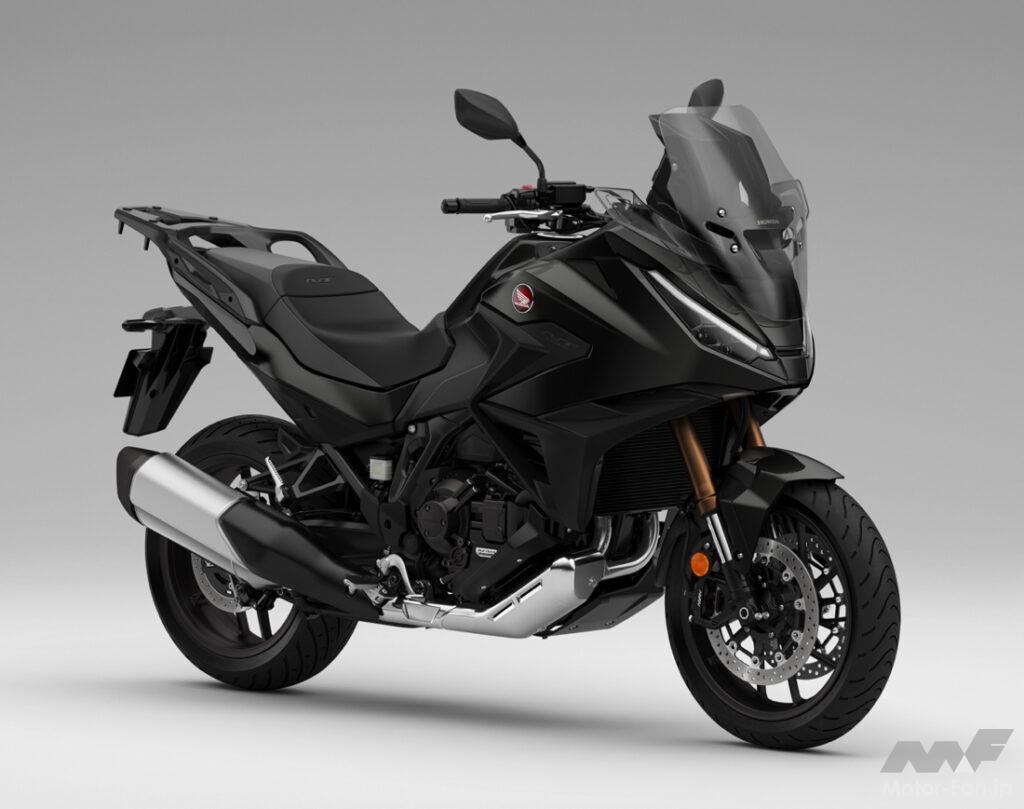
NT1100
Honda also categorizes the NC750X and X-ADV, which are equipped with 745cc inline-twin engines, as “crossover” bikes. Furthermore, Suzuki’s GSX-S1000GX, which is equipped with a 998cc inline-four engine, is also called a “crossover bike” by the manufacturer.

NC750X
ADVERTISEMENT

X-ADV
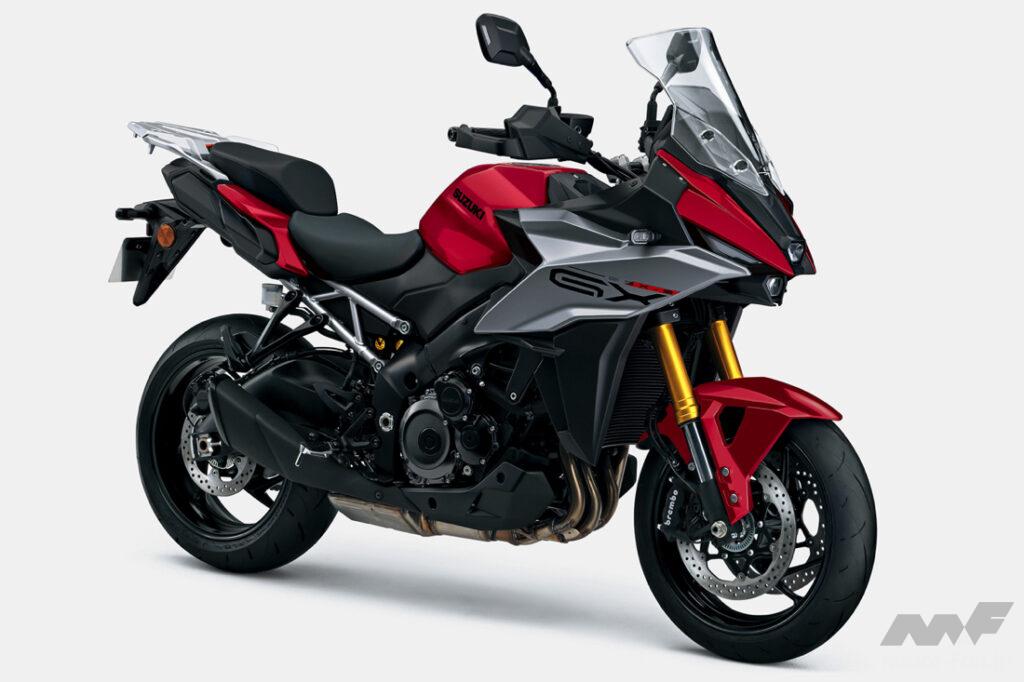
GSX-S1000GX
Why are the front and rear wheel sizes different?
These models are certainly quite similar in style to adventure models, with large windscreens and other features. So why are they differentiated?
These models are likely closer to adventure bikes in terms of their high level of comfort for long-distance touring, but are likely more geared towards on-road riding.
The easiest way to see this is by the size of the front and rear wheels. For example, the Yamaha Ténéré 700 and Honda CRF1100L Africa Twin<s>/DCT use 21-inch wheels in the front and 18-inch wheels in the rear. The CRF1100L Africa Twin Adventure Sports ES/DCT, which uses electronically controlled suspension, uses 19-inch wheels in the front and 18-inch wheels in the rear. In both cases, the front wheels are larger than the rear wheels.
In addition, many of the aforementioned adventure bike models tend to have large front wheels and small rear wheels. This configuration is thought to be to improve off-road performance, such as making it easier to overcome gaps and unevenness in rough roads, as is the case with many off-road bikes.
Generally, when riding a motorcycle on rough roads, a small front wheel is more likely to get stuck in gaps, and in severe cases, may even tip over. On the other hand, a larger front wheel has the advantage of making it harder to lose control of the handlebars even on slightly rough roads.
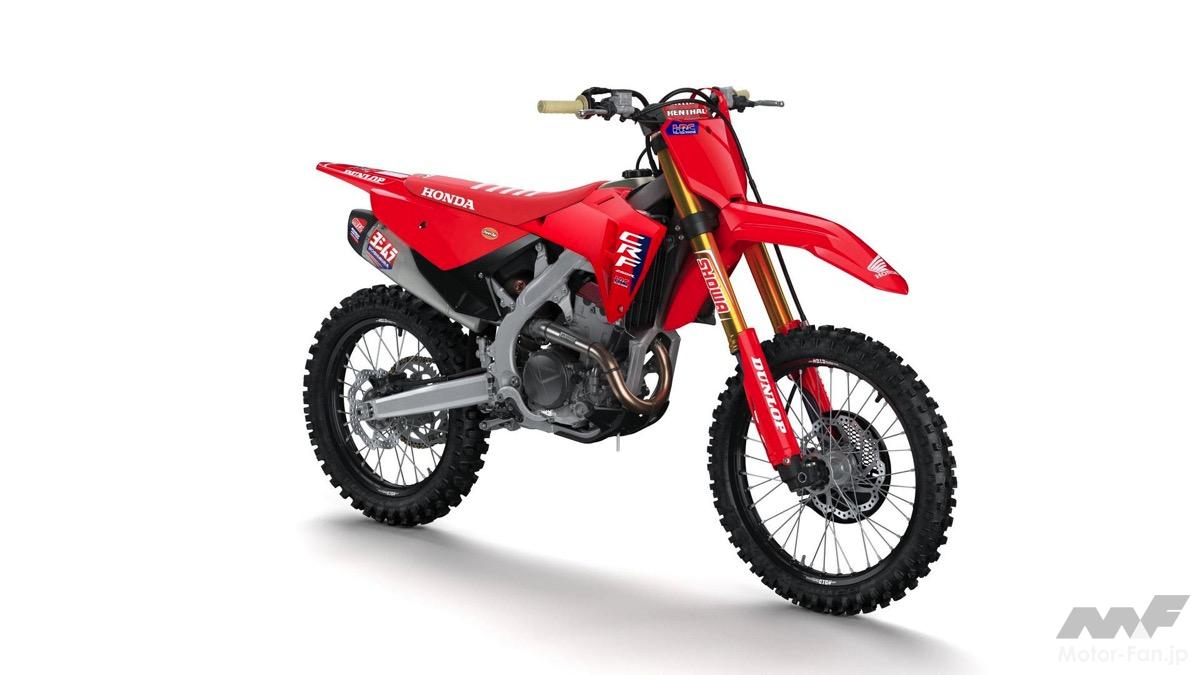
In particular, the 21-inch front and 18-inch rear wheels used on the Ténéré 700 and CRF1100L Africa Twin (s) are a size that is also often used on enduro racers for off-road competitions (motocross bikes often have 21-inch front and 19-inch rear wheels).
Perhaps after years of trial and error, this front and rear size is often adopted as the optimal solution for enduro races, which cover relatively long distances. And it is also used for adventure bikes for public roads that also ride off-road. In other words, adventure bikes are models that have characteristics closer to off-road bikes.

The Tenere 700 uses 21-inch wheels in the front and 18-inch wheels in the rear.
Why Tourers Use 17-inch Wheels Front and Rear
In contrast, many of the sports tourers and crossover bikes mentioned above use 17-inch wheels front and rear.
This size is often used for road sports models such as super sports and naked bikes. It is now common as it offers excellent cornering and braking performance on paved roads, as well as comfort when cruising at high speeds on highways.
In that sense, it can be said that sports tourers prioritize on-road riding, and pursue more agile handling and a more comfortable ride on paved roads.
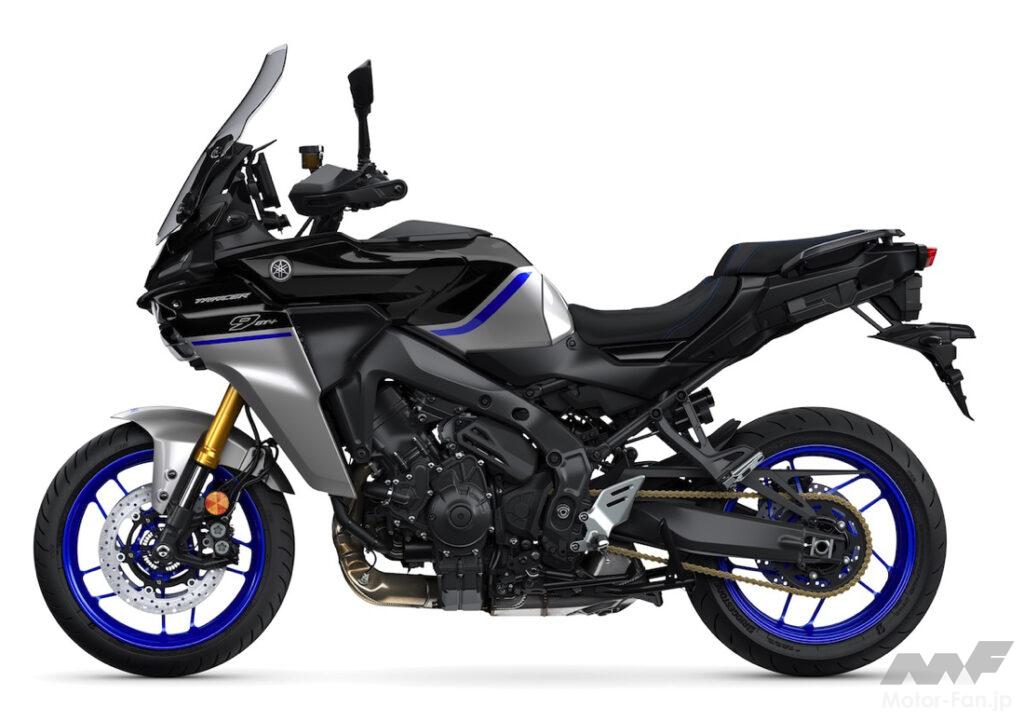
Sports tourers such as the Tracer 9GT+ Y-AMT often have 17-inch wheels front and rear.
As for the definition of a crossover bike, it seems that each manufacturer has a slightly different idea.
For example, the NC750X. Honda seems to have adopted the style of an adventure bike, such as an upright riding position and a large front screen, to make this model more comfortable for long-distance touring, while maintaining the handling of a road sports model. In other words, it can be called a crossover, as it is a mix of road sports and adventure.
Suzuki also describes the GSX-S1000GX as a model that “combines sports touring and adventure” in terms of performance. This bike is equipped with the high-performance 998cc inline 4-cylinder engine of the GSX-S1000 series, and incorporates new technologies and equipment to improve touring performance.
In particular, the car is also suitable for off-road driving, with features such as the Suzuki Advanced Electronic Suspension (SAES) electronically controlled suspension system being used for the first time on a Suzuki vehicle, and Suzuki’s original SRAS (Suzuki Road Adaptive Stabilization) program, which detects uneven road surfaces and automatically adjusts suspension control. These features are said to combine a smooth ride with reduced vibration on unpaved roads with dynamic, sporty driving on the road.
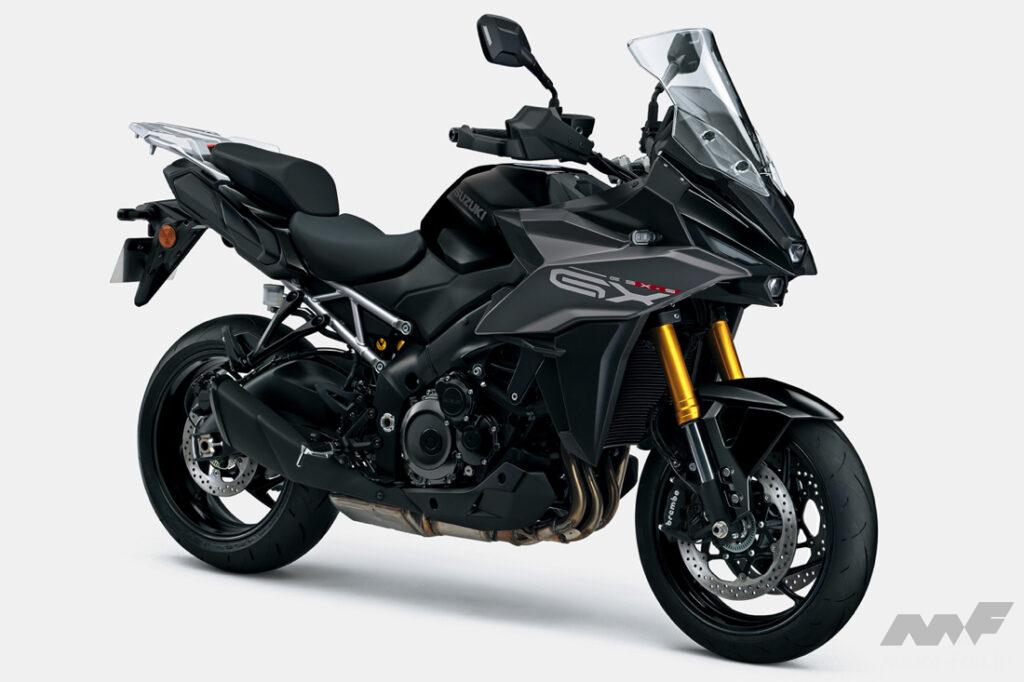
The crossover GSX-S1000GX also uses 17-inch wheels front and rear.
The GSX-S1000GX, which uses 17-inch wheels front and rear, is likely to have high off-road capability, not only on-road but also on flat dirt, for example. In contrast, the Ténéré 700 and CRF1100L Africa Twin (s), which have 21-inch wheels in the front and 18-inch wheels in the rear, are suitable for tougher, rougher terrain. The CRF1100L Africa Twin Adventure Sports ES, which saw its 2024 spec change from a 21-inch to a 19-inch front wheel, offers improved on-road comfort, making it a little closer to a crossover bike.
Incidentally, the aforementioned Versys 1100SE and Versys 650, which Kawasaki classifies as adventure/touring bikes, also have 17-inch wheels front and rear. Therefore, they can be said to be closer to sports tourers or crossovers. Suzuki’s V-Strom 250, also mentioned above, also has 17-inch wheels front and rear. Even within the V-Strom series, which incorporates adventure elements, this model can be said to prioritize comfort and ease of riding on the road.

Models such as the Versys 1100SE, which uses 17-inch wheels front and rear, can also be said to be similar to sports tourers and crossovers.
An adventure bike perfect for camping trips
In any case, the greatest appeal of adventure bikes is their versatility, allowing them to be ridden on any type of road. Not only are they popular for long-distance touring, but it’s also becoming more common to see riders on adventure bikes at camping events, which have become popular recently.
Some campsites have muddy or unpaved dirt roads, but an adventure bike can easily handle those. Also, if you have the off-road skills and desire, you can even tackle difficult forest roads.
Adventure bikes are truly all-purpose models that can be used for everything from long-distance highway touring to enjoying adventures in the great outdoors on dirt roads. There’s no doubt that adventure bikes, which allow for a wide variety of motorcycle trips, will continue to be highly popular around the world for years to come.
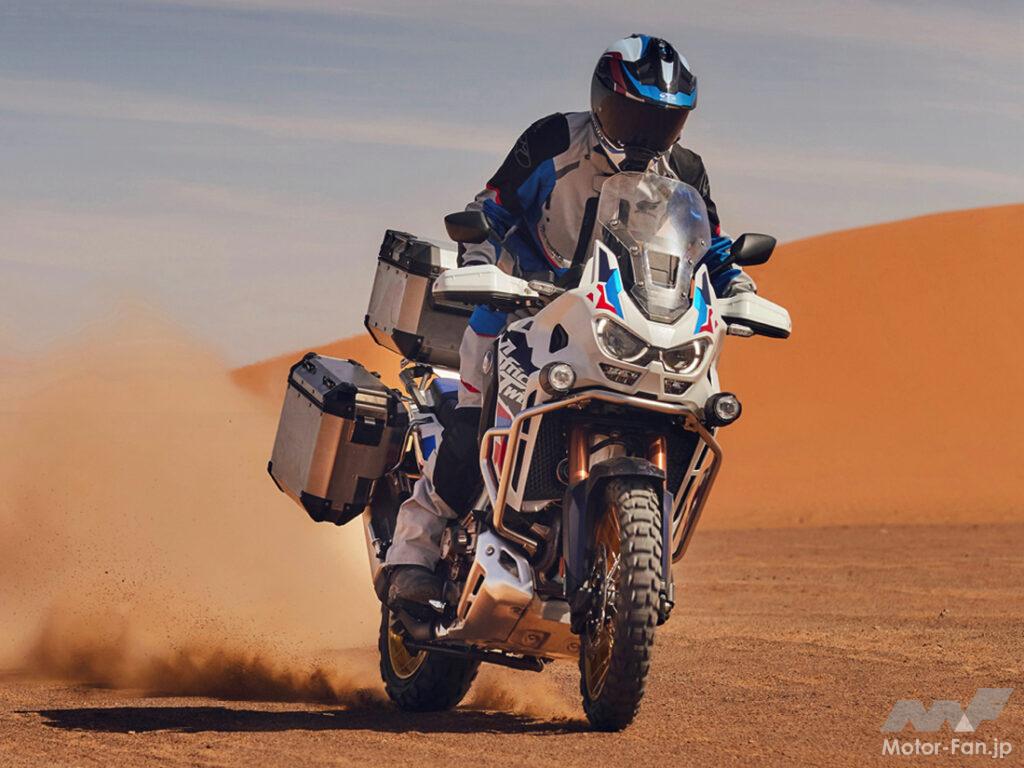
Adventure bikes are versatile models that can be used for everything from long-distance highway touring to enjoying adventures in the great outdoors on dirt roads (pictured is the European-spec Honda CRF1100L Africa Twin Adventure Sports ES).