
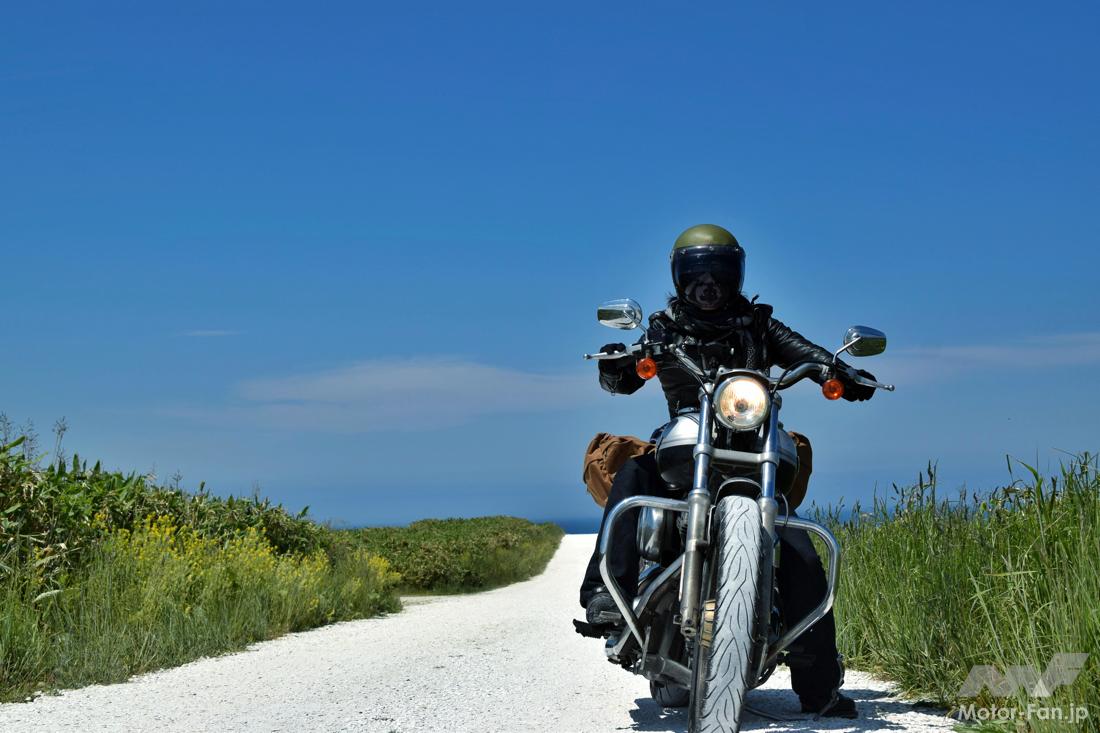
Comparing the performance of the Rebel 1100 and Rebel 250 when touring
First, let’s compare large-displacement and small-displacement bikes using actual models with the same style.
For example, Honda’s Rebel 1100 and Rebel 250 are both cruiser models that are especially suited to leisurely touring on straight roads.
The Rebel 1100 will undergo some changes for the 2025 model, including changes to the engine’s compression ratio to improve torque in the low and mid-range. The lineup includes the cowl-less standard “Rebel 1100” and the “Rebel 1100T” equipped with a large front cowl and saddlebags. In addition to the standard 6-speed manual transmission, each type will also be available with a “DCT (Dual Clutch Transmission)” with an automatic mechanism. Furthermore, the 2025 model will also include the “Rebel 1100 S Edition DCT,” which features a headlight cowl and fork boots, to meet a wider range of needs.
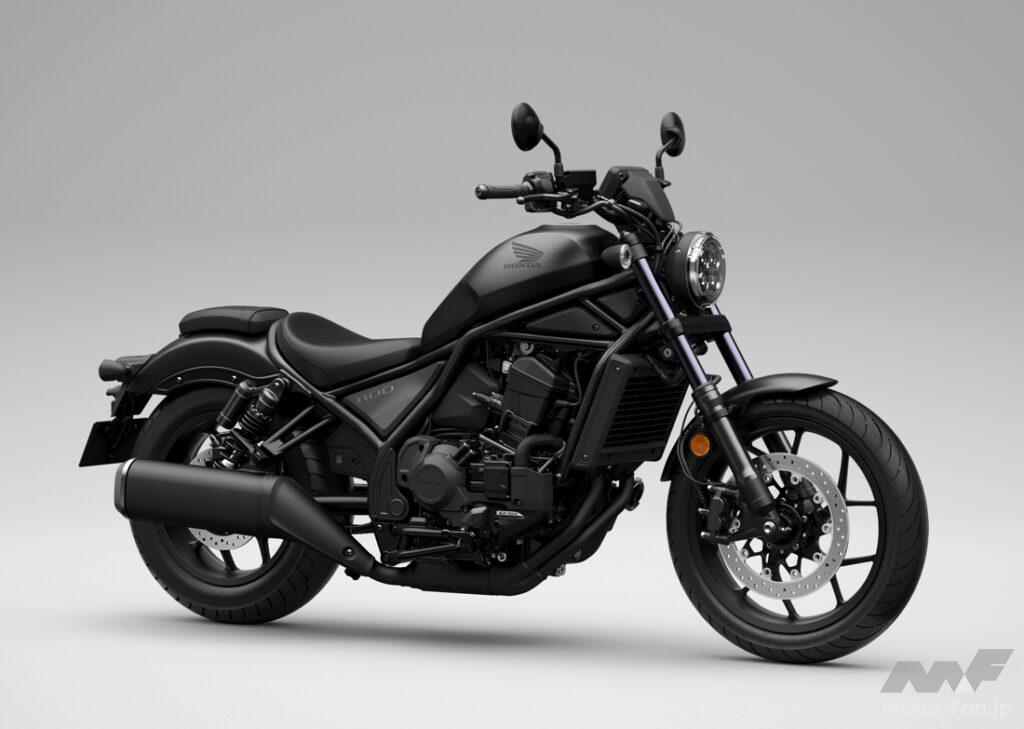
Rebel 1100 DCT
ADVERTISEMENT
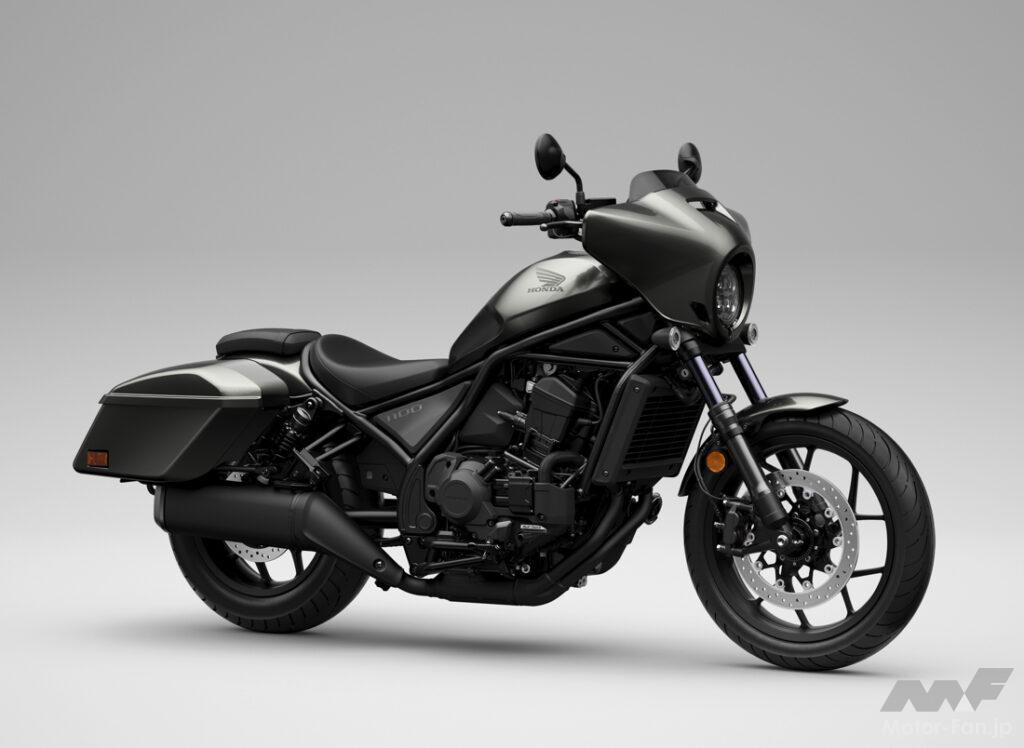
Rebel 1100T DCT
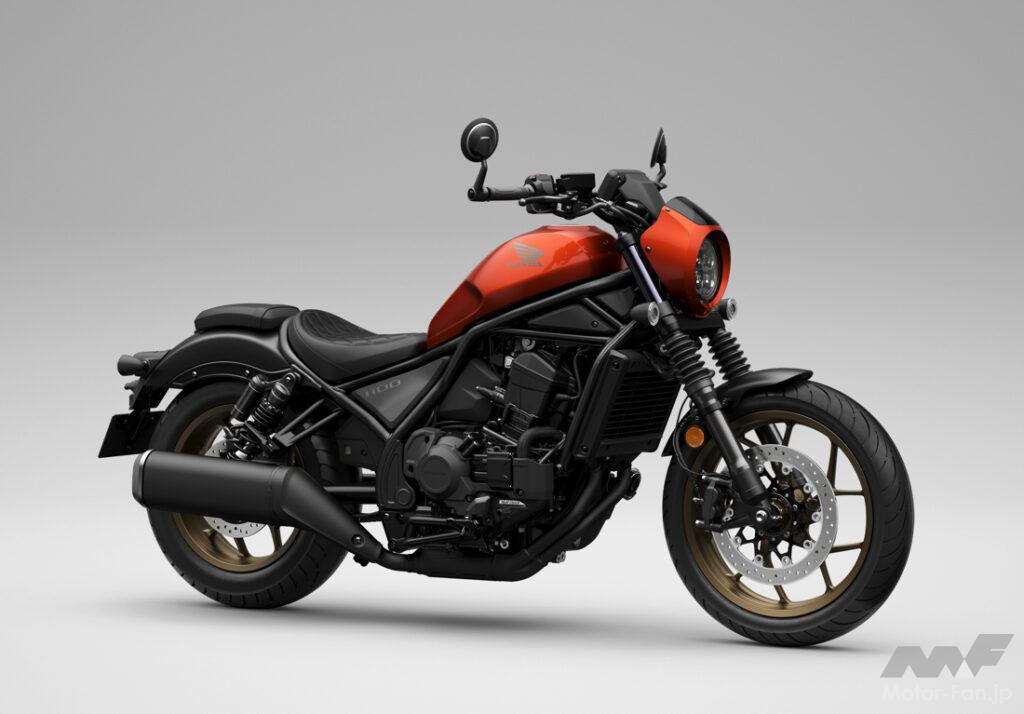
Rebel 1100 S Edition DCT
Meanwhile, the Rebel 250 has also undergone a minor change for the 2025 model. The handlebar shape has been revised to optimize positioning, and the material inside the seat has been changed to improve comfort. Two new models have also been added, each featuring the latest electronically controlled shift mechanism, the Honda E-Clutch. The Rebel 250 E-Clutch has the same style as the previous standard Rebel 250, and the Rebel 250S Edition E-Clutch is equipped with a headlight cowl and other features, and these also enhance the range.
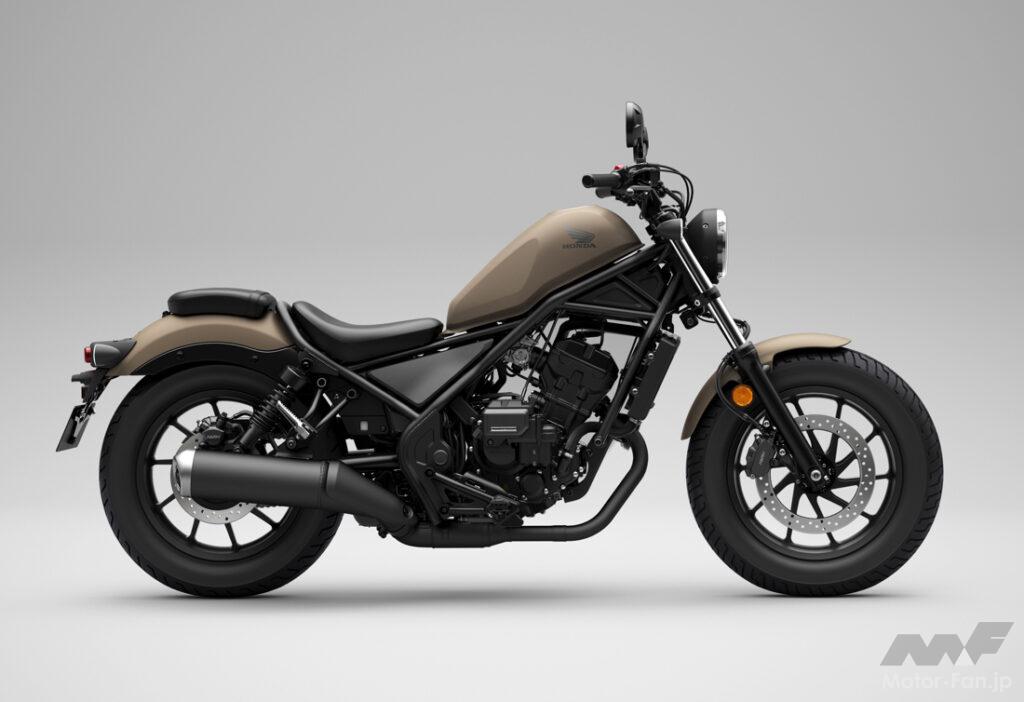
Rebel 250E-Clutch
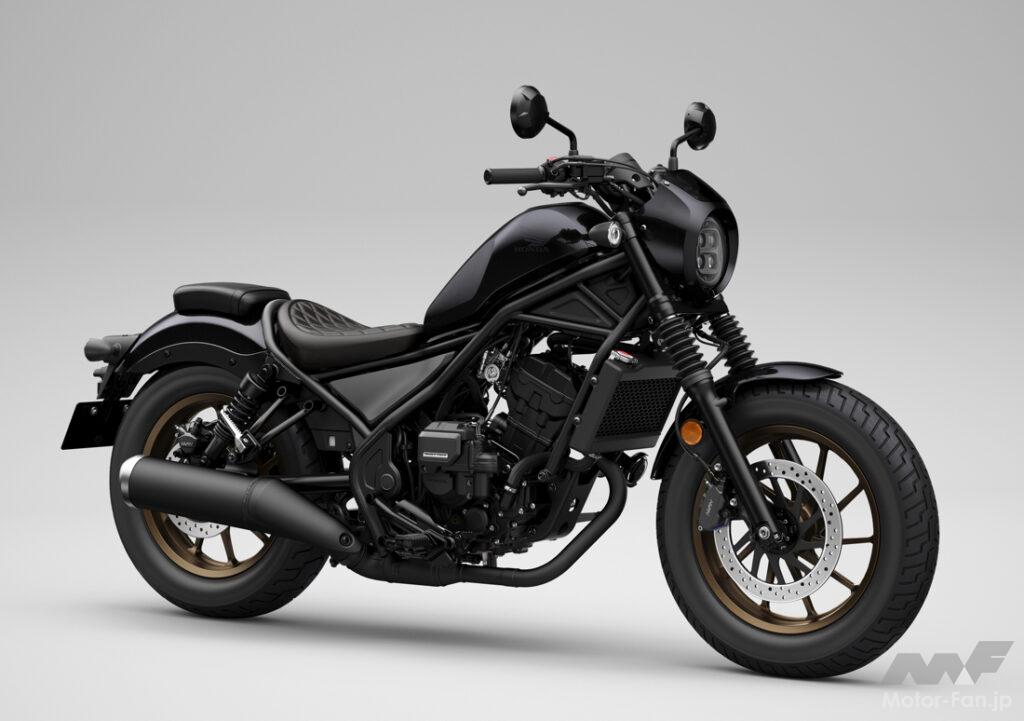
Rebel 250S Edition E-Clutch
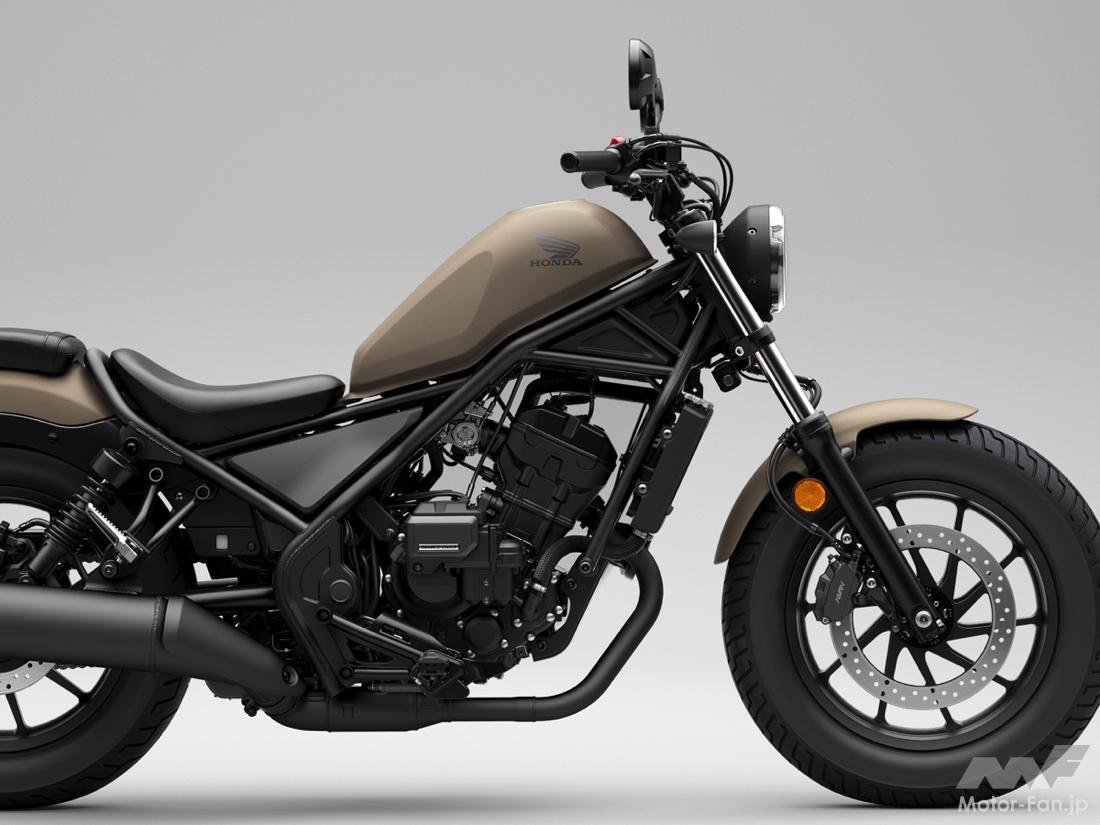
The Rebel 1100 series and Rebel 250 series are quite similar in style, especially the cowl-less Rebel 1100/DCT and Rebel 250/E-Clutch. However, the Rebel 1100/DCT has a 1082cc twin-cylinder engine, while the Rebel 250/E-Clutch has a 249cc single-cylinder. While the engine displacements are quite different, which one is actually more suitable for touring? To answer this question, let’s first compare the main specs of the cowl-less versions of the two models.
[Rebel 1100/DCT Main Specifications]
■ Body size: Overall length 2240mm x Overall width 850 [835]mm x Overall height 1125mm
■ Seat height: 710mm
■ Vehicle weight: 226 [236]kg
■ Engine type: 1082cc, water-cooled 4-stroke in-line 2-cylinder
■ Maximum output: 65kW (88PS) / 7250rpm
■ Maximum torque: 98N・m (10.0kgf-m) / 4750rpm
■ Fuel tank capacity: 13L
■ Fuel consumption rate: WMTC mode value 18.6km/L
■ Tire size: Front 130/70B18M/C 63H, rear 180/65B16M/C 81H
■ Price (tax included): 1,204,500 yen [1,314,500 yen]
*Prices in [ ] are for DCT (Dual Clutch Transmission) models
[Rebel 250/E-clutch main specifications]
■ Body size: Overall length 2205mm x Overall width 810mm x Overall height 1090mm
■ Seat height: 690mm
■ Vehicle weight: 171 [174] kg
■ Engine type: 249cc, water-cooled 4-stroke single cylinder
■ Maximum output: 19kW (26PS) / 9500rpm
■ Maximum torque: 22N・m (2.2kgf-m) / 6500rpm
■ Fuel tank capacity: 11L
■ Fuel consumption rate: WMTC mode value 34.9km/L
■ Tire size: Front 130/90-16M/C 67H, rear 150/80-16M/C 71H
■ Price (tax included): 638,000 yen [693,000 yen]
*Prices in [ ] are for E-clutch models
It is clear from a comparison of the figures that the Rebel 1100/DCT is larger overall than the Rebel 250/E-Clutch, which suggests that it has better straight-line stability on the highway.
A large-displacement bike with less vibration and less fatigue
Moreover, the Rebel 1100/DCT has an engine displacement that is more than 4.3 times that of the Rebel 250/E-Clutch, so it also produces approximately 3.3 times the maximum power and 4.5 times the maximum torque. In addition, both are generated at lower rpm than the Rebel 250/E-Clutch.
In particular, the torque of the Rebel 1100/DCT reaches its maximum at an engine speed of 4750 rpm, which is significantly lower than the maximum torque generated at 6500 rpm for the Rebel 250/E-Clutch.
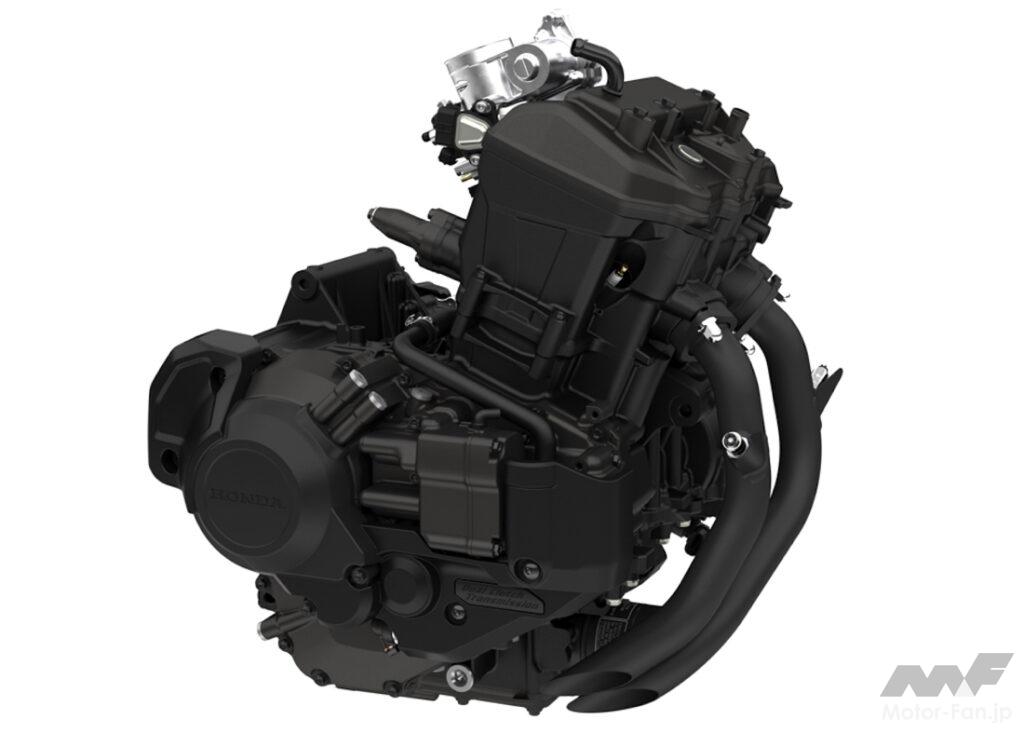
Rebel 1100 engine (photo shows European model)
Therefore, for example, when merging onto a highway, the Rebel 1100/DCT can accelerate at lower rpm to reach a speed of 80-100 km/h. It can also be used to cruise at the same speed, with the engine rpm lowered.
Generally speaking, bikes with lower engine revolutions during acceleration and cruising transmit less vibration to the body, making it less tiring to ride. In other words, the Rebel 1100/DCT not only has more room to ride than the Rebel 250/E-Clutch, but also has engine characteristics that make it less tiring to ride.
Furthermore, the Rebel 1100/DCT, which is not only larger in size but also weighs more than 1.3 times as much, can be said to offer relatively high riding stability. Generally speaking, especially when there’s a strong crosswind, lighter bikes tend to be more susceptible to being blown around, which can even be scary. On the other hand, heavier, larger-displacement bikes tend to be more resistant to the wind, and as a result, you tend to feel less fatigued, which can also be a psychological relief.
Of course, the Rebel 250/E-Clutch is probably easier to handle in parking lots, but once you’re on the move, the Rebel 1100/DCT also has lighter handling and a greater sense of security on straight roads.
The Rebel 250/E-Clutch is also well-known for its good foot reach, but its seat height is 690mm, while the Rebel 1100/DCT has a seat height of 710mm, so it’s worth noting that there isn’t much difference between the two.
Large-displacement models make overtaking and two-seater riding easy.
Furthermore, as mentioned above, large-displacement bikes like the Rebel 1100/DCT have plenty of engine power, making it relatively easy to overtake cars on the highway. Depending on the speed and the gradient of the road, there are many cases where you can accelerate by simply shifting to the top gear or one gear down.
On the other hand, with a small-displacement bike like the Rebel 250/E-Clutch, you often have to shift down two or three gears to accelerate in similar situations. In particular, compared to a conventional 6-speed manual transmission, the Rebel 1100/DCT should require fewer shift pedal and clutch lever operations while riding. Considering this, it can also be said that a large-displacement bike causes less fatigue during long touring trips.
In addition, for example, when riding with a lot of luggage or touring with two people, the Rebel 1100/DCT has a more powerful engine, so it is certain to have more power not only when starting off but also when cruising. Also, because the vehicle weight is heavier, it can be said that it can ride more stably than the Rebel 250/E-Clutch even when riding tandem or carrying heavy luggage.
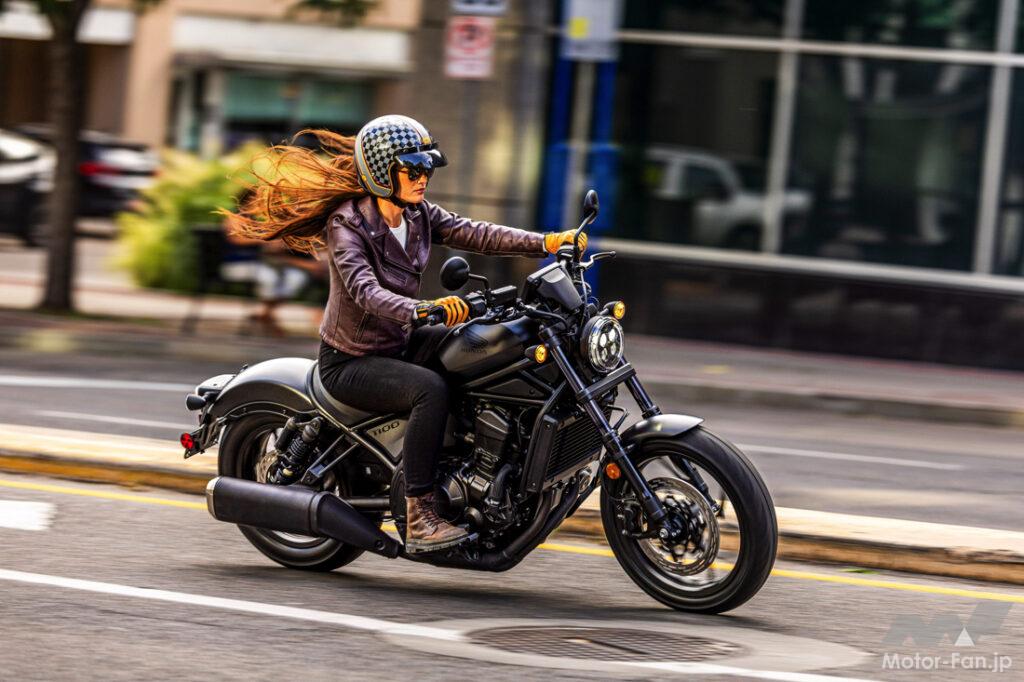
Rebel 1100 performance (photo shows European-spec CMX1100 Rebel)
The high price makes it well equipped for touring.
However, the Rebel 1100/DCT is priced at 1,204,500 to 1,314,500 yen (tax included), nearly twice as expensive as the Rebel 250/E-Clutch, which is priced at 638,000 to 693,000 yen (tax included).However, it is equipped with a wide range of features that make it ideal for touring.
For example, the Rebel 1100/DCT comes standard with cruise control, which can maintain a set vehicle speed on highways, etc. This is a convenient feature that eliminates the need for frequent accelerator operation when cruising at high speeds on long tours.
The Rebel 1100/DCT also features Honda RoadSync, which connects the vehicle to a smartphone, allowing the rider to operate map and music apps on the smartphone using the handlebar switches or their voice via a Bluetooth-connected headset.
Other features include a grip heater that is effective in cold weather such as winter, and a 3L storage space under the seat, making it a fully equipped bike.
As you can see, large-displacement bikes, especially touring models, differ significantly from small-displacement bikes in terms of their power, weight, and equipment. Because they are more expensive, they also offer better comfort and convenience.
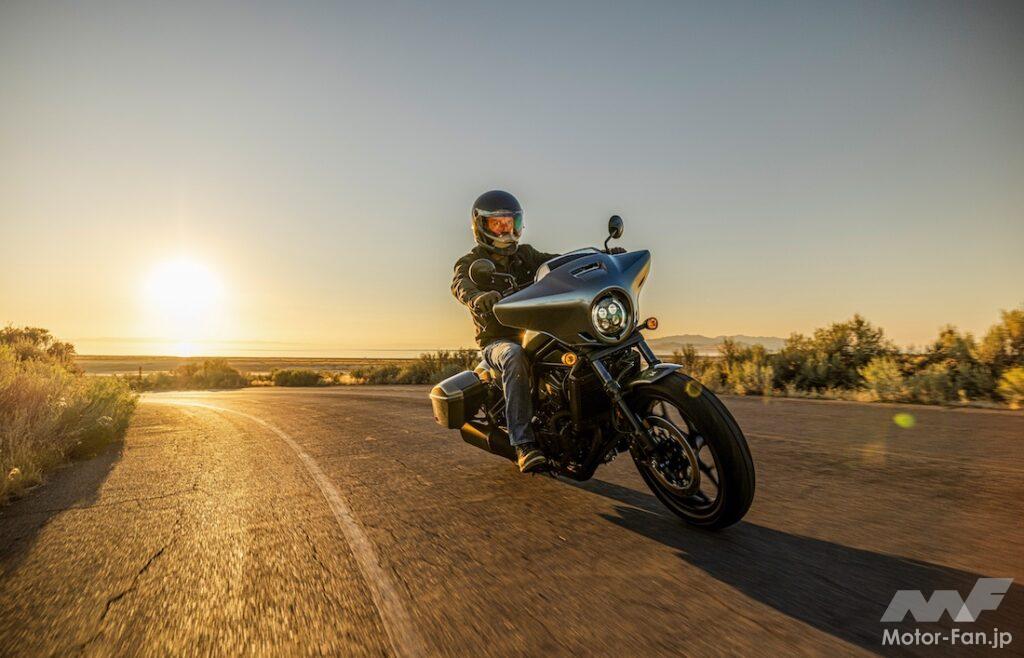
The Rebel 1100 series is also equipped with cruise control (the photo shows the European-spec CMX1100T Rebel).
The electronic shift mechanism is now on par with the
However, it is worth noting that in the case of the Rebel 250, the 2025 model will be available with the Honda E-Clutch.
The Rebel 1100 is available with a DCT specification, which is similar to the AT model that does not have a shift pedal or clutch lever, and this will continue to be sold as a current model. If you choose this specification, the rider will not need to operate the clutch or the shift pedal at all times, from starting to accelerating and decelerating, and cruising. This reduces the burden on the rider on long-distance touring.
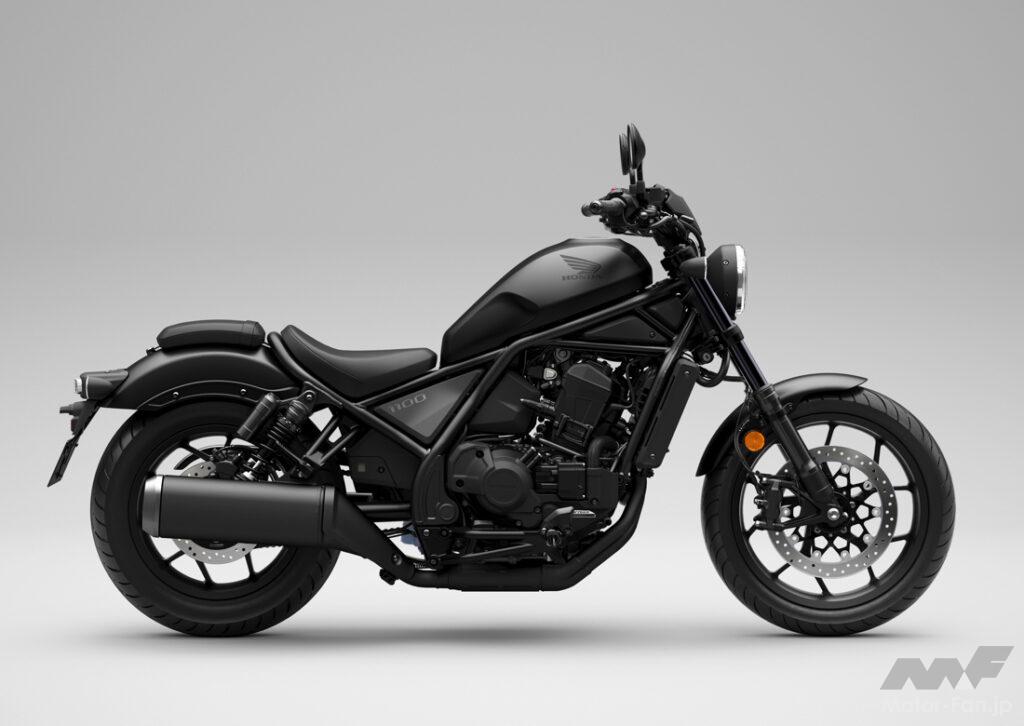
Rebel 1100 equipped with DCT
Meanwhile, the Rebel 250 was previously only available with a 6-speed manual transmission, which required shift pedal and clutch lever operation in most riding situations. However, if you choose a model equipped with the new Honda E-Clutch, starting, shifting, and stopping will no longer require clutch lever operation. Of course, with the Honda E-Clutch, shifting is still required. However, thanks to the latest electronic control technology, optimal clutch control is automatically controlled, reducing clutch lever operation errors and allowing beginners to ride more smoothly than with a 6-speed manual transmission. It can also be said that fatigue during long-distance touring has been reduced more than ever before.
What’s more, the Honda E-Clutch allows the rider to manually control the clutch by operating the clutch lever even when the electronic control is active, meeting the needs of riders who want the same operation as with a conventional 6-speed manual transmission vehicle.
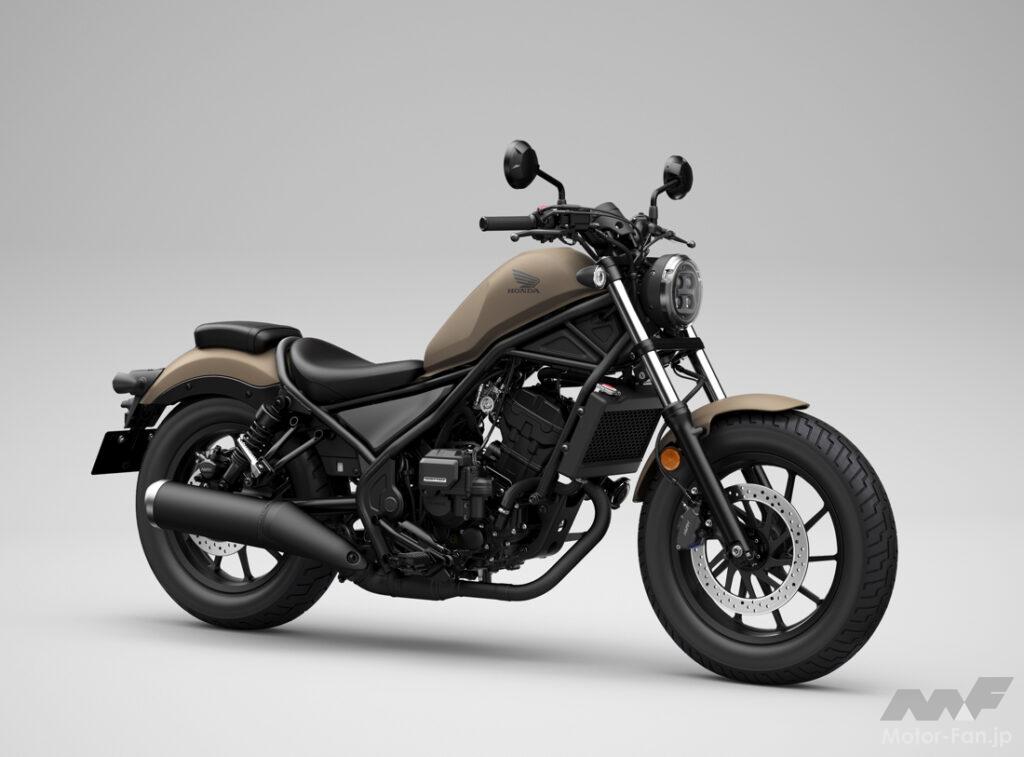
Rebel 250E-Clutch
Incidentally, even on the Rebel 1100 equipped with a DCT, shifting up and down can be done using a switch on the left handlebar. This is similar to the paddle shift function found on four-wheel automatic transmissions, but it is similar in that it meets the needs of riders who want sporty manual transmission shifting.
In any case, since the mechanisms of DCT and E-Clutch are different, it is difficult to make a general statement, but in terms of reducing shifting operations, it can be said that the new Rebel 250 E-Clutch has specifications that are quite close to the benefits of the Rebel 1100 DCT.
Are small-displacement bikes better in terms of fuel economy and range?
In this way, it can be said that the Rebel 250/E-Clutch is closer to the Rebel 1100/DCT in terms of functionality in some ways. However, in the comparison so far, it seems that the larger-displacement bike still has many advantages.
So, when it comes to touring, are large-displacement bikes better than small-displacement bikes? No, actually, small-displacement bikes have some advantages over large-displacement bikes.
For example, fuel economy and the distance that can be traveled on one full tank. The Rebel 250’s fuel tank has a capacity of 11L, which is smaller than the Rebel 1100’s 13L. However, the fuel consumption rates, both in WMTC mode, are 34.9km/L for the Rebel 250/E-Clutch and 18.6km/L for the Rebel 1100/DCT.
Therefore, the distance that can be traveled on a single tank of fuel is merely a calculation based on specifications, but the Rebel 250/E-Clutch can travel 383.9km, which is longer than the Rebel 1100/DCT’s 241.8km.
Especially when traveling in rural areas, the number of areas with few gas stations is increasing, so timing your fuel refueling is important. In that respect, the Rebel 250/E-Clutch offers a greater sense of security than the Rebel 1100/DCT.
And, not just with the Rebel 250/E-Clutch, small-displacement bikes tend to have better fuel economy than larger-displacement bikes. In terms of fuel economy when touring, it can be said that in many cases small-displacement models such as 250cc models are better than large-displacement bikes of over 1000cc.
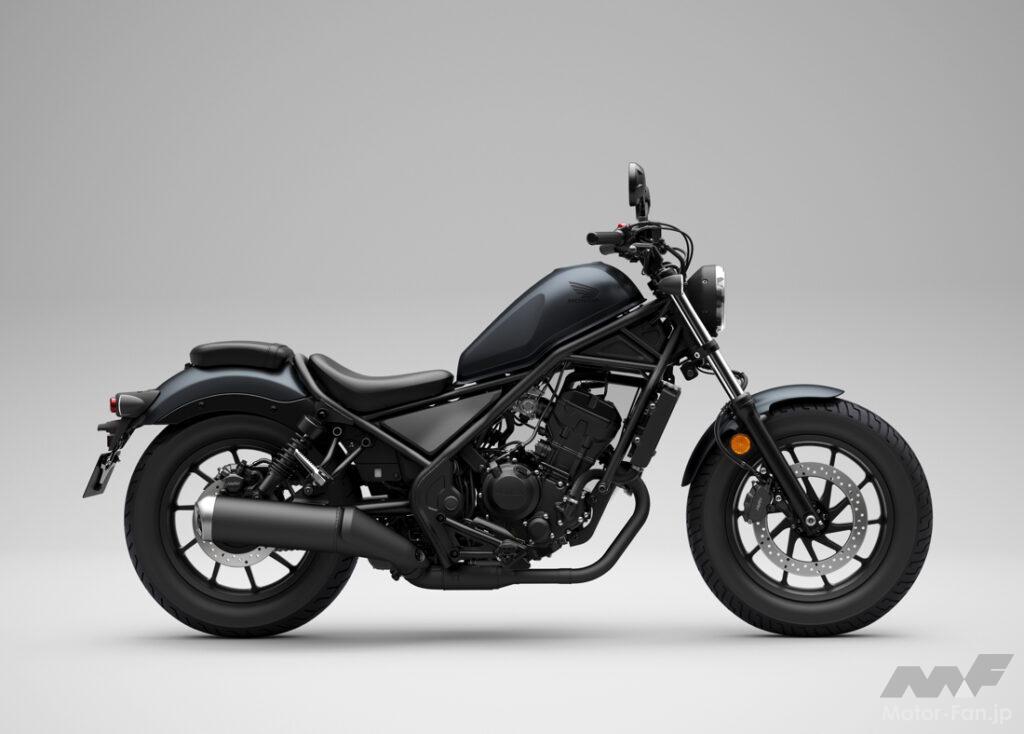
The Rebel 250 boasts excellent fuel economy (pictured is the standard 6-speed manual transmission).
Of course, fuel economy and cruising range cannot be generalized because they vary depending on the weather, road conditions, and riding style of the rider. They also differ depending on the model.
For example, the Honda CRF1100 Africa Twin has an engine similar to that of the Rebel 1100/DCT. In the case of the Adventure Sports ES, which is equipped with a large 24L fuel tank, the fuel consumption rate is 19.6km/L in WMTC mode, which means that it can travel 470.4km on a single tank.
In other words, even if fuel efficiency is inferior, if it is a large-displacement touring model with a large body, it will undoubtedly tend to have a longer range by being equipped with a large-capacity fuel tank.
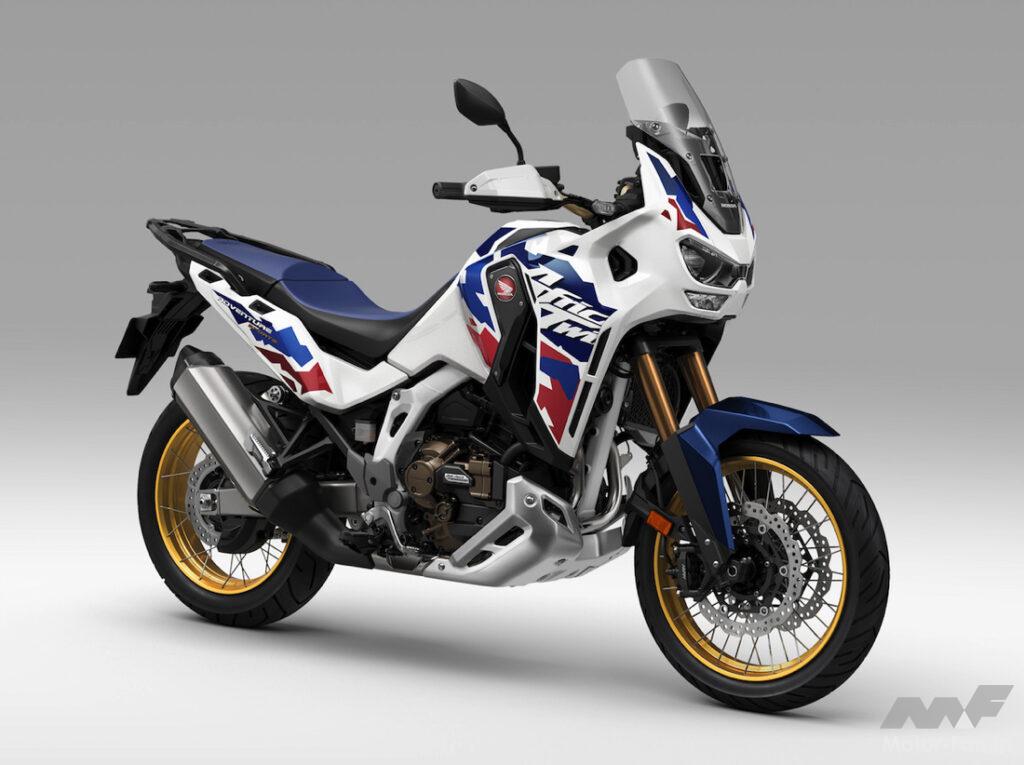
CRF1100 Africa Twin Adventure Sports ES
Is there a scene where a small-displacement bike beats the Hayabusa?
In addition, depending on the model and the situation, there are also scenes where a large-displacement bike loses to a small-displacement bike. For example, the second generation Suzuki Hayabusa (official name GSX1300R Hayabusa) that I used to own.
As you may know, the Hayabusa is a full-cowl model known as a mega sports bike, equipped with a 1,339cc water-cooled 4-cylinder engine and boasting a top speed of 300km/h. It is a long-selling Suzuki model with fans all over the world, and the current third-generation model was released in 2021.
The second-generation model had an equipped weight of 266 kg, and the body felt quite heavy when maneuvering in parking lots. However, once you got on, it was light and nimble, and with a maximum output of 197 PS, it offered ample running and outstanding straight-line stability when cruising on the highway. It was also somewhat resistant to wind, making it a very comfortable bike for long-distance touring.
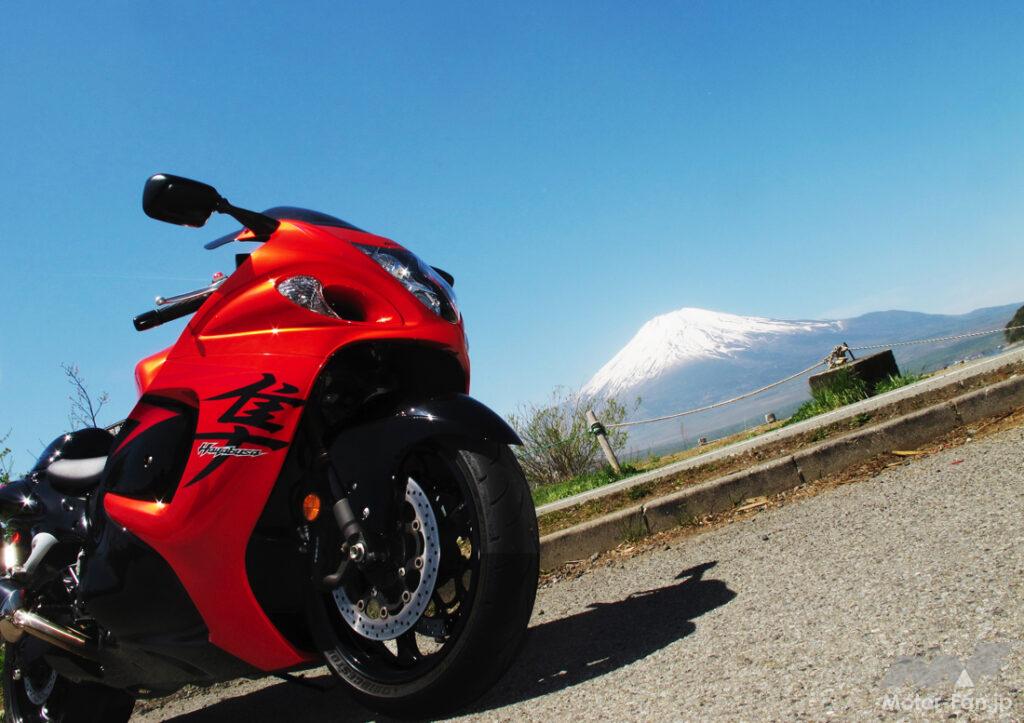
The second-generation Hayabusa that the author owned
However, when I was riding on the expressway in early spring when there were strong gusts of wind, the Hayabusa’s body was blown around, which was a scary experience. The Tokyo Bay Aqua-Line, which is well-known to riders in the Kanto region, was particularly bad. On the Aqua-Bridge, a bridge over the sea connecting Umihotaru PA and Kisarazu, strong winds of over 10 m/s can blow, and the crosswinds coming in from the sea can be so strong that the road is sometimes closed to traffic.
I once drove my Hayabusa in such strong winds, and was hit by a sudden typhoon-like crosswind (so strong it felt like it was coming from a typhoon), which almost sent me flying into the next lane of a two-lane road. If there had been a car in the lane next to me at that time, we might have collided and caused a major accident.
After that, I was so scared that I slowed down to about 50km/h and drove very slowly in the lane. I remember being exhausted not only psychologically but also physically from putting too much pressure on the steering wheel to avoid being blown away, and wanting to get off the highway as soon as possible.
At that moment, a 250cc single-cylinder off-road bike (I forget the model) approached from behind in the passing lane. With a nonchalant look on its face (or so it seemed), it passed my Hayabusa at a speed of nearly 80km/h. How could an off-road bike that was inferior in absolute power and lighter in weight to my beloved bike have been able to pass it so easily? Under normal circumstances, this would never happen.
This is purely my opinion, but I think the likely reason is that the second-generation Hayabusa had a large body with a total length of 2190mm and a total height of 1170mm, and that it was a full-cowled model. In particular, the Hayabusa’s cowling, which is the same as the current model, is literally a fully covered model that takes into account aerodynamic characteristics to increase top speed. As a result, it is extremely resistant to wind blowing from the front, and if you lean forward and dive your helmet into the windscreen, the wind will hardly hit your body.
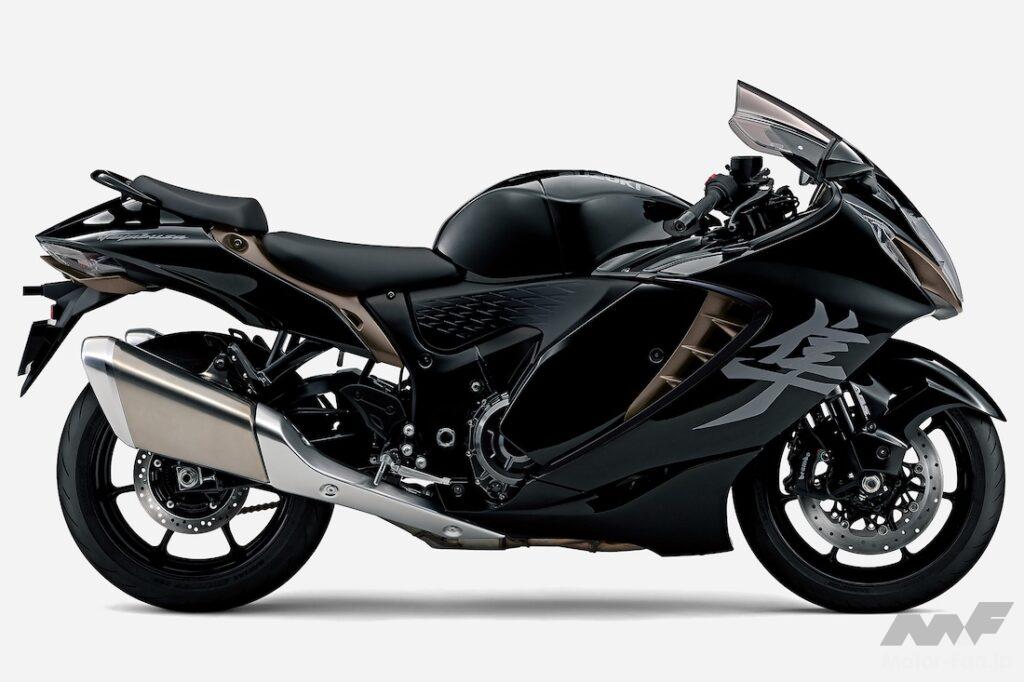
The current Hayabusa model also has a fully covered body.
However, there are no gaps in the side cowlings or anywhere else for the wind to pass through, and as it is a large bike, the surface area exposed to crosswinds is also large. A 250cc off-road bike that covers the body has many gaps when viewed from the side, and although it is tall, the surface area exposed to the wind is small. For that reason, it is thought that the Hayabusa is more susceptible to the effects of crosswinds.
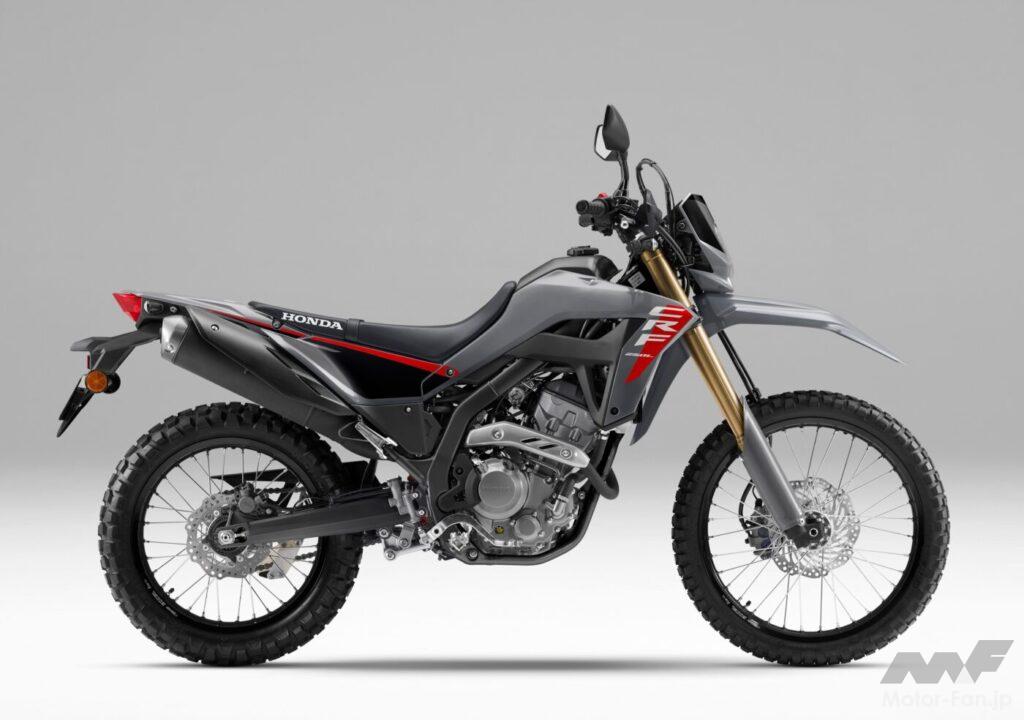
Is a 250cc off-road bike more resistant to crosswinds than the Hayabusa? (Photo: Honda CRF250L)
Incidentally, I sometimes hear from owners of 1000cc supersport bikes that full-cowl models are weak in crosswinds, so my guess may not be entirely wrong. Considering this, it may be fair to say that full-cowl sports bikes tend to be weaker in crosswinds than naked or American bikes, even though they are both large-displacement bikes.
A small-displacement bike perfect for a leisurely motorcycle trip
In addition, when parking a large-displacement motorcycle at a touring destination, you may need to be careful about the parking space. This is also something that happened to me when I was riding a Hayabusa, but for example, if the back of the parking space was on a slope, if you carelessly drove the motorcycle front-first, there were cases where it was quite difficult to leave the parking lot.
In particular, when the downhill slope to the back is steep, standing on the left side of the vehicle, putting the side stand back up, and then pulling the handlebars to back out of the parking space requires a lot of strength, as the equipped weight is 266 kg. There were more than one times when I thought, “I wish the Hayabusa had a reverse gear!”
On the other hand, if you have a lighter 250cc or smaller displacement bike, you won’t have to worry too much about where to park. Of course, this will depend on the rider’s build, but in terms of being easy to ride around town and on tours, a small displacement bike is probably better.
Another thing we often hear is that because small-displacement bikes are slower than large-displacement bikes, you can enjoy the scenery around you at a leisurely pace when touring. Many also say that it’s easier to discover hidden scenic spots that you might pass by on a large-displacement bike, thanks to the slower speed of a small-displacement bike.
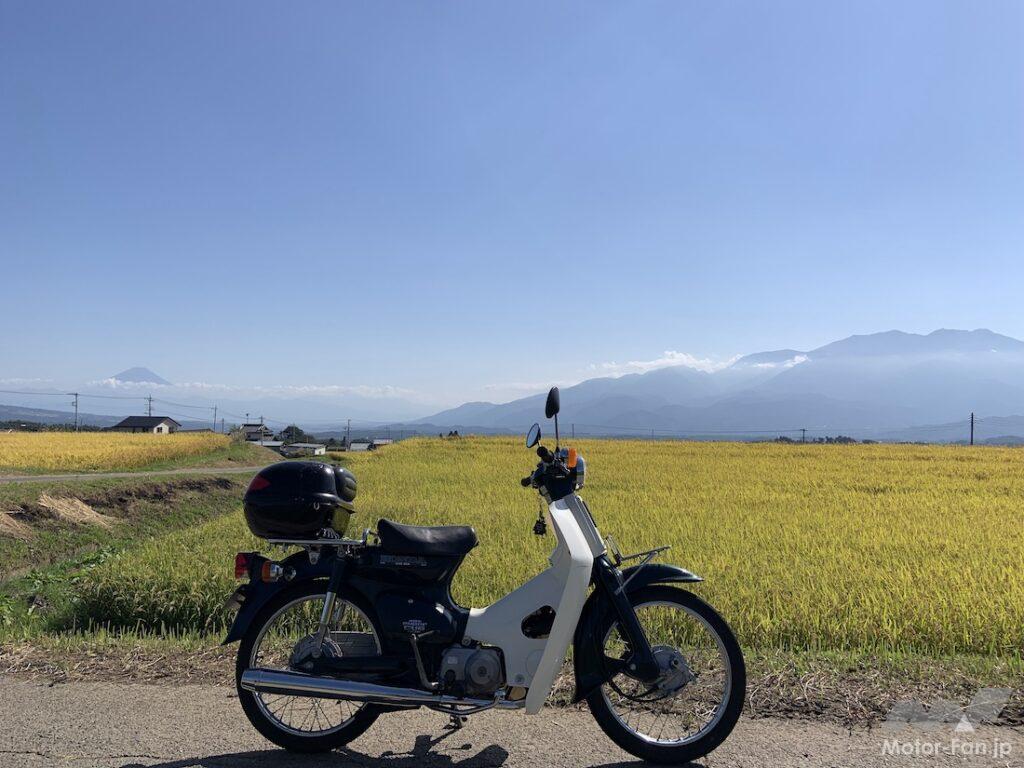
The appeal of small-displacement bikes is that you can ride at a leisurely pace while enjoying the scenery around you.
Considering all of this, large-displacement and small-displacement bikes offer different ways of enjoying travel, and in that sense there is no superiority or inferiority. Ultimately, I think the best answer is to choose the model and displacement depending on the type of touring you want to do.