

The reason I was interested in it was because of its overwhelming sense of authenticity.
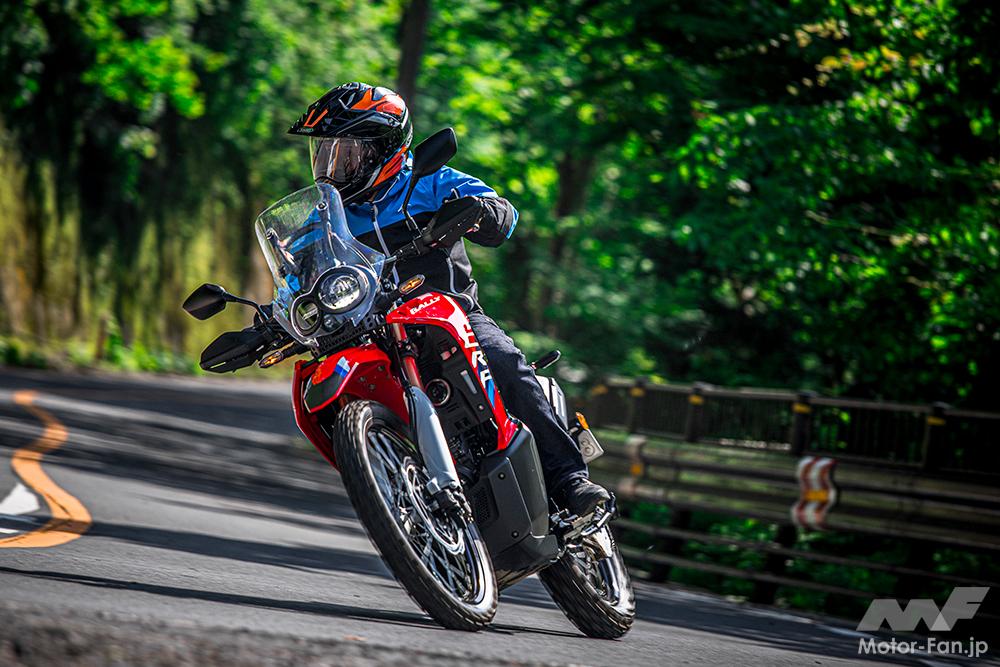
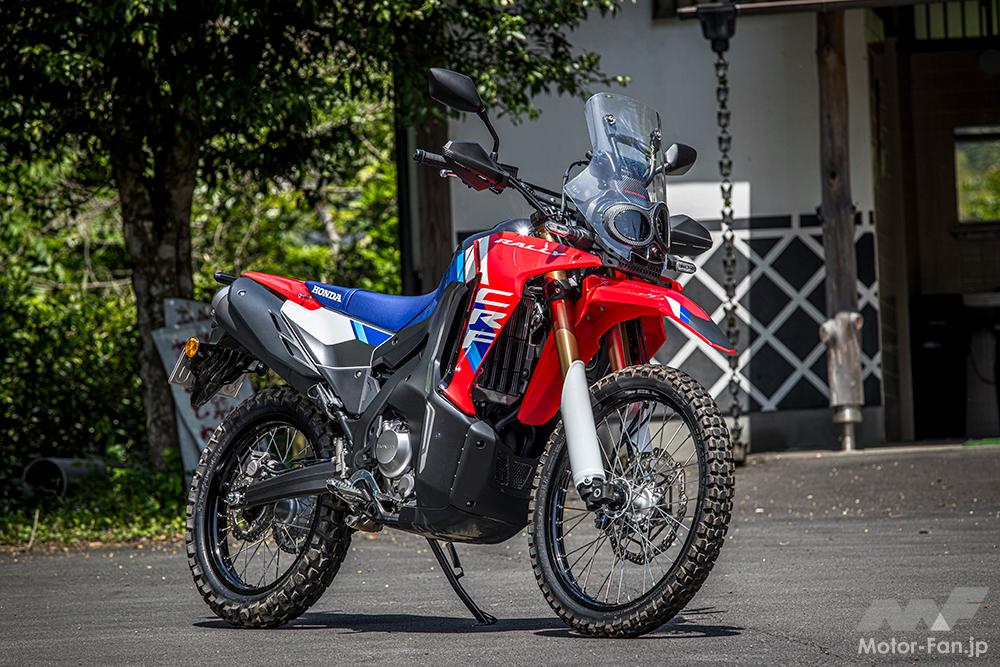
I’d always been interested in the Honda CRF250 Rally. I’d often seen loaded, travel-ready CRF250 Rally bikes at highway service areas and rest stops along my tours. While various manufacturers offer small-displacement adventure models, this bike stands out among them with its overwhelming “authenticity” as a rally sprinter, making it a great choice for off-road riders wearing off-road boots. And yet, it’s also perfectly suited to casual styles like jeans and sneakers, and I’ve seen riders use it as a road-focused touring bike. While it’s serious about its seriousness, it’s also versatile enough to accommodate a wide range of riders, and its core strength has allowed it to remain unfazed by such demands. It’s more than just a variation model based on a 250 off-road bike.
Honda CRF250 Rally…792,000 yen (including consumption tax)
ADVERTISEMENT
ADVERTISEMENT

Details designed with long-distance riding in mind
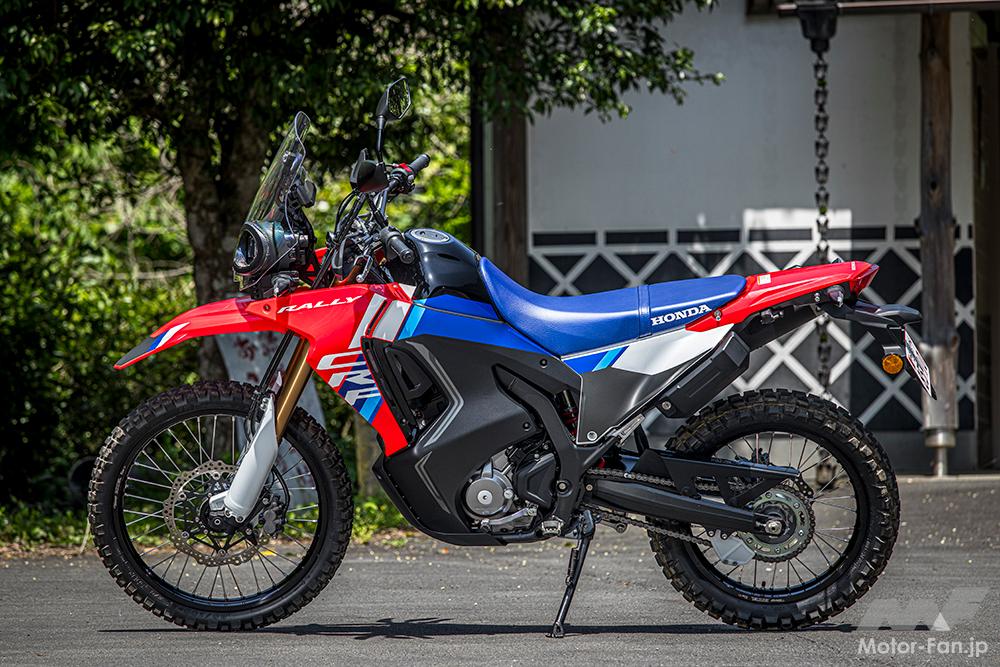
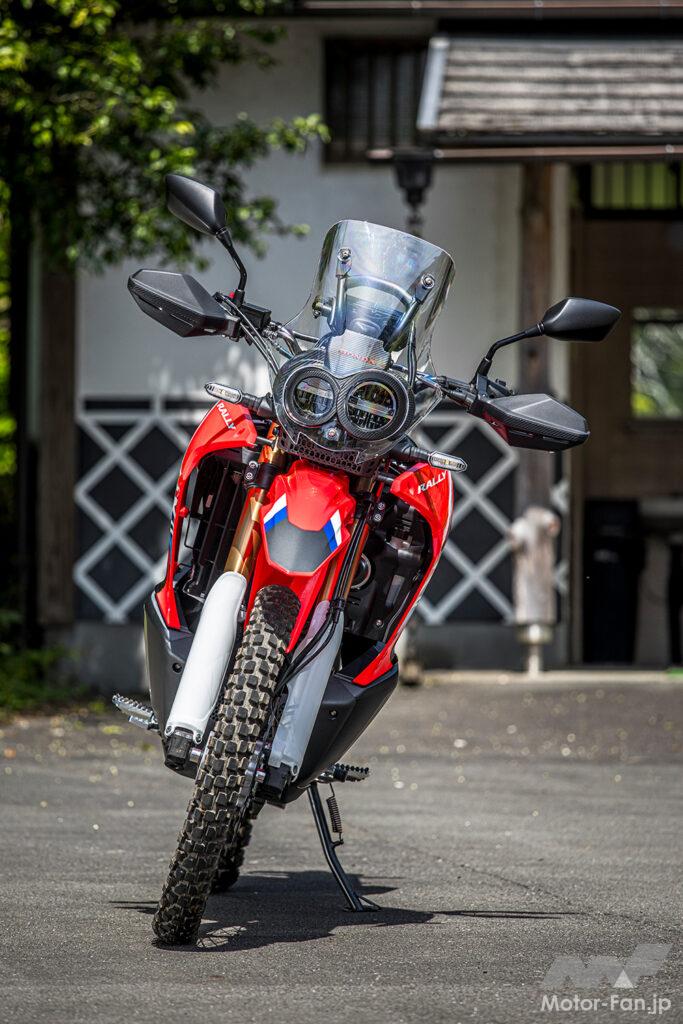
As you may know, the CRF250 Rally shares its platform with Honda’s on- and off-road model, the CRF250L. The bike is equipped with an irregular twin-lens LED headlight, a large screen that covers it, a large-capacity 12-liter fuel tank, and a special seat that is 2cm wider than the CRF250L, and the seat is rubber-mounted to reduce rider fatigue during long rides.
There are other detail changes tailored to suit long-distance touring bikes. The handlebars now feature inner weights and bar ends to reduce vibration. The footpegs are removable but equipped with rubber. This test ride was only a short distance, including off-road, so I wasn’t able to fully appreciate the benefits of the various vibration countermeasures and fatigue-reducing items designed for long-distance riding. However, long-distance travel on the highway with a 250cc single-cylinder engine involves long periods of riding while maintaining the engine at high rpm, so it’s easy to imagine how engine vibrations will gradually wear down the rider’s stamina (I’ve experienced this myself as the owner of a 250 off-road model). By focusing on vibration countermeasures in areas where the rider comes into direct contact with the bike, you can really feel the developers’ love for minimizing rider fatigue.
The S model, which was in the CRF250L series lineup and features extended front and rear suspension stroke and a specially shaped high seat as standard for improved off-road performance, is also now in the CRF250 Rally series lineup. The model I test rode this time was the standard CRF250 Rally model. Therefore, compared to the S model, the seat height is 55mm lower at 830mm and the ground clearance is 55mm lower at 220mm. The numerical difference between the standard and S models is very small. If I had to choose one as my favorite bike, I would have a very difficult time deciding.
ADVERTISEMENT

The differences and advantages of each
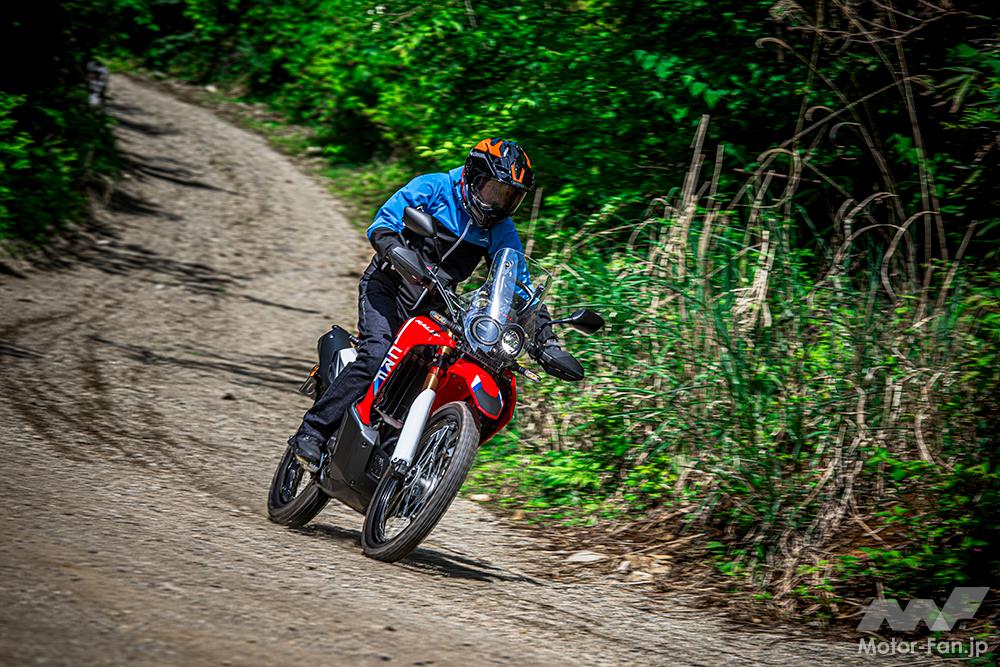
This is because, along with the standard model of the CRF250 Rally, I also test rode and photographed the CRF250L s, the model whose test ride report was previously published on this website, allowing me to compare the standard and s models of the CRF250 series. I was able to fully appreciate the strengths of both models. As mentioned earlier, the two models differ primarily in appearance, resulting in the CRF250 Rally weighing 153 kg, 12 kg heavier than the CRF250L s. If I rode it with the same feeling as the CRF250L s, on winding roads and forest roads, the deceleration distance when decelerating before corners was longer than expected, and I almost overran several times. However, once I got used to it and slowed down earlier, I was able to quickly overcome the behavior. The same goes for the size of the fuel tank, which I felt against the inside of my knees when gripping the bike with my knees. More than anything, the benefit of the stability provided by the weight of the bike gradually took over my body and mind. I thought that the longer the mileage, the more this weight would reduce the rider’s fatigue. Lightness is good for a motorcycle, but sometimes weight can be good too.
I also felt there were few drawbacks to a low seat. Low-seat specifications, which reduce suspension stroke, shorten suspension length, or even the seat itself, often lower the rider’s center of gravity, making the seat uncomfortable and reducing the rider’s freedom of movement, leaving many riders feeling unsure. However, with the standard CRF250 Rally model, I didn’t experience any of the negative aspects typically associated with low-seat models. And yet, the improved foot reach offers overwhelming benefits. Imagine riding a fully loaded bike and riding it off-road, and good foot reach is a given. That said, if I were a little shorter, I’d likely choose the standard model with its low seat for its security, while if I were a little taller, I’d opt for the S model’s high seat for its superior maneuverability. I’m 170cm tall, the average build of a Japanese adult male, and I can manage to reach the ground with my feet even with the S model’s high seat. But I imagine many average-sized Japanese male riders have similar concerns. What will you all do?

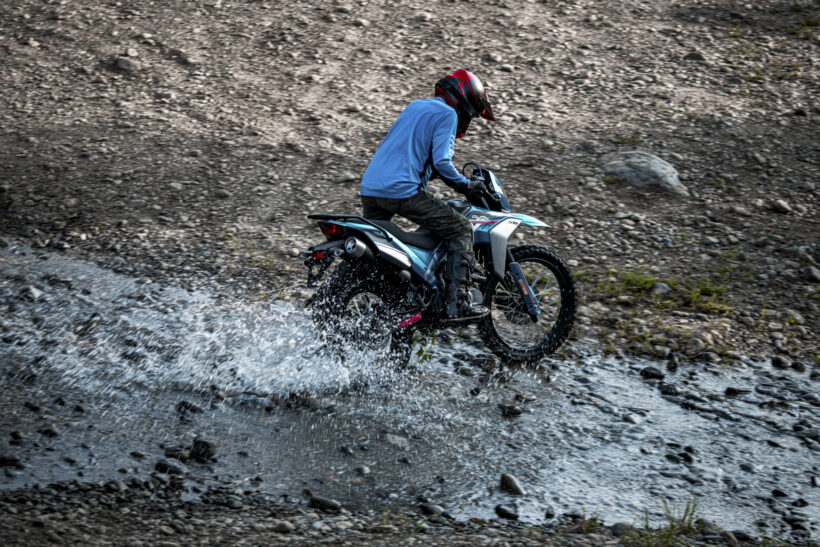
On winding roads, it felt a little heavy for a 250 off-road bike, but thanks to the engine’s tenacity at low and mid-range speeds and its good high-speed response, it was able to ride briskly. The winding roads were quite fun. I also rode a bit on forest roads, and it performed well. Due to the size of the fuel tank, I felt more comfortable riding it while sitting, but riders accustomed to riding large adventure bikes will also enjoy riding it standing up like an adventure bike. I could clearly feel the difference from small-displacement adventure models that only look good. Its off-road performance is quite high.
I see, so that’s what it was. I have a somewhat traditional image of 250cc off-road bikes, thinking of them as either shortstops around town, taking advantage of their lightness and slimness, or as sport bikes for forest roads. The CRF250 Rally, for me, had a somewhat traditional image of bikes, and there were parts of it that deviated from that image, which really bothered me. However, those parts that deviated were crafted with great precision, and their style and mechanics firmly supported the rider’s sense of travel and adventure. No wonder it was a hit. That’s what I felt when I rode the CRF250 Rally.
Riding position and foot reach (170cm/65kg)

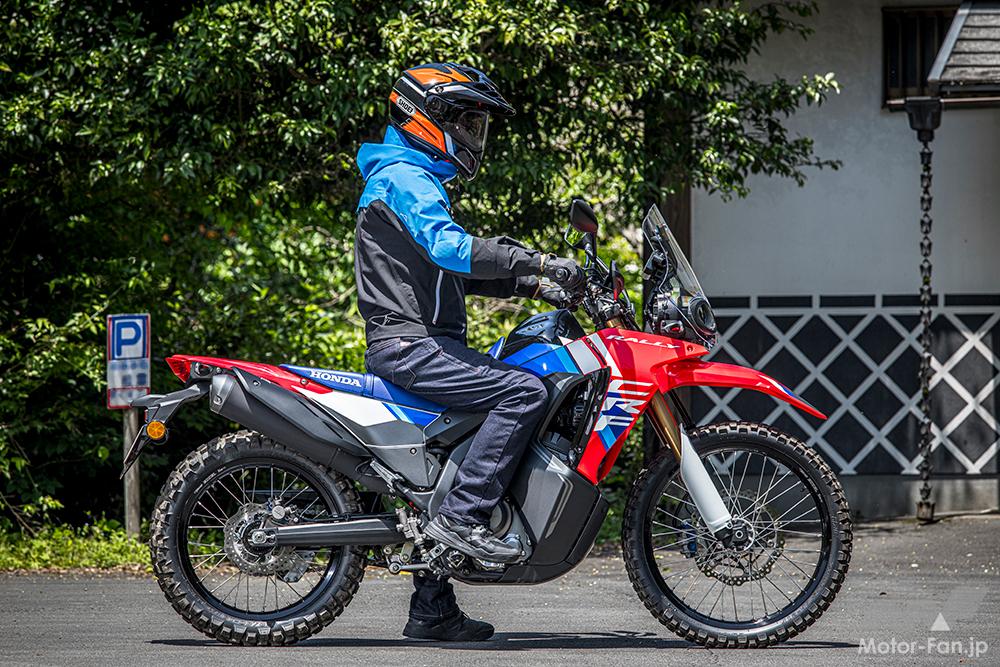
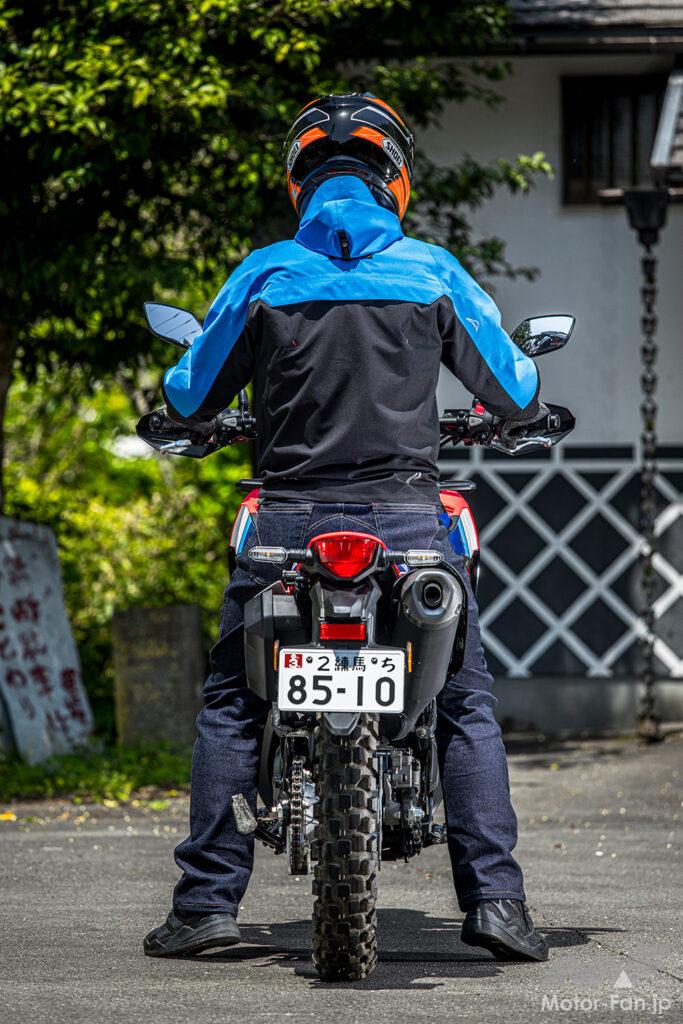
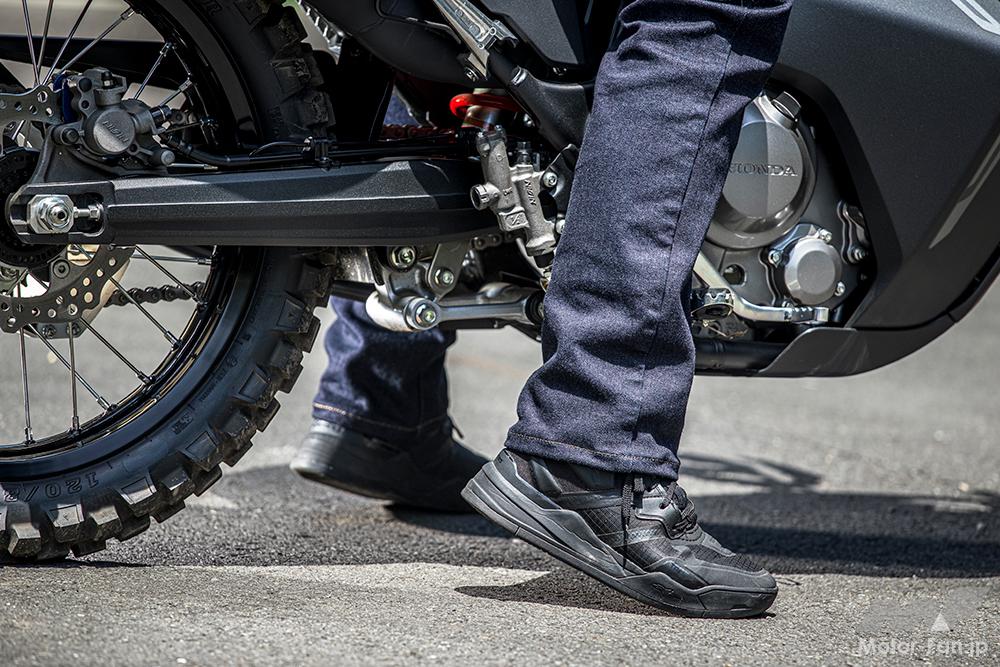
The standard model has a seat height of 830mm, which is 55mm lower than the S model, and the foot reach is outstanding. With both feet down, the heels are slightly raised. The seat height (and ground clearance) has been lowered by changing the suspension stroke length, so the riding position is almost the same as the S model. When gripping the bike with your knees, your knees tend to spread apart a little, but you’ll get used to it quickly. The handlebar position relative to the seating position is also natural.
Detailed explanation
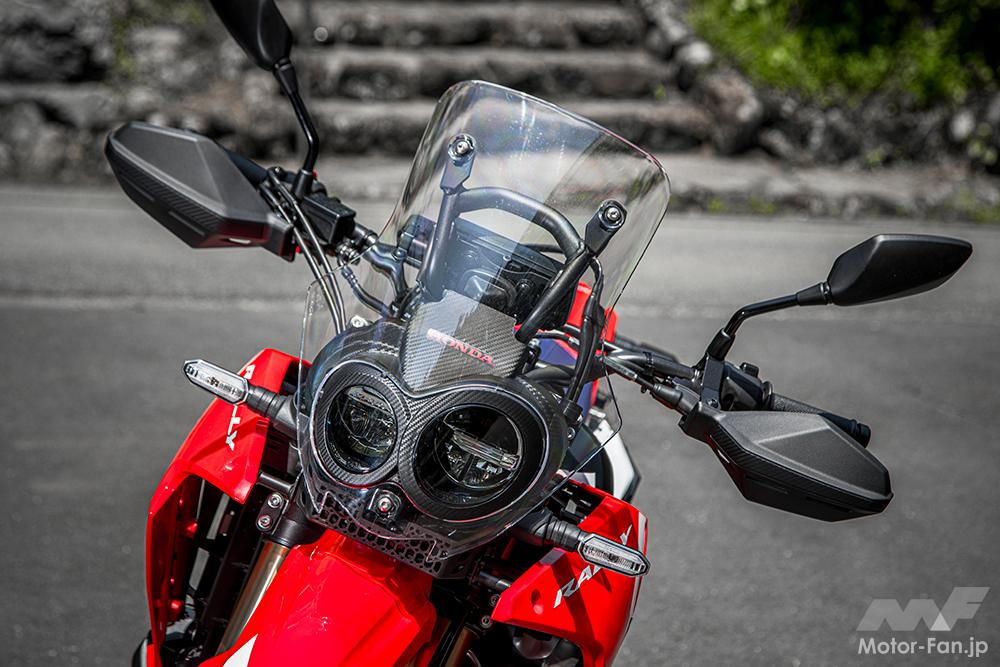
The front face is based on a large floating screen that covers the rally tower, a trend among serious rally racers competing in the Dakar Rally and other events. The unique twin LED headlights are also unique. The wind passing through the radiator is designed to pass through the side slits of the body.

While ensuring the steering angle of the handlebars, the radiator is located on the front right side of the fuel tank, so the increased fuel tank volume is shaped to bulge out from the rear around the fuel filler cap. The digital display common to the CRF250 series is located on the headlight unit. An accessory bar is also included as standard.
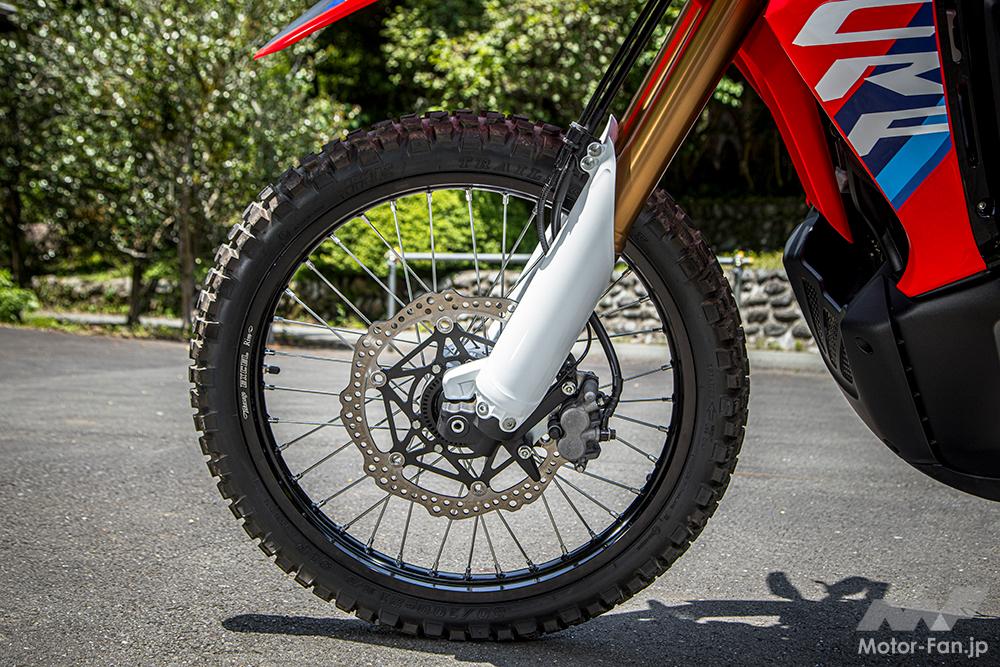
Compared to the CRF250L series, the front brake disc has been enlarged. It has been changed from a solid type to a floating type. In line with this change, the brake caliper mount has been changed to accommodate the brake caliper.

The footpegs with rubber mounts are also equipped for the CRF250 Rally. The footpegs themselves are common to the CRF250 series, and the rubber is bolted on, so they can easily be changed to a rubber-less version.
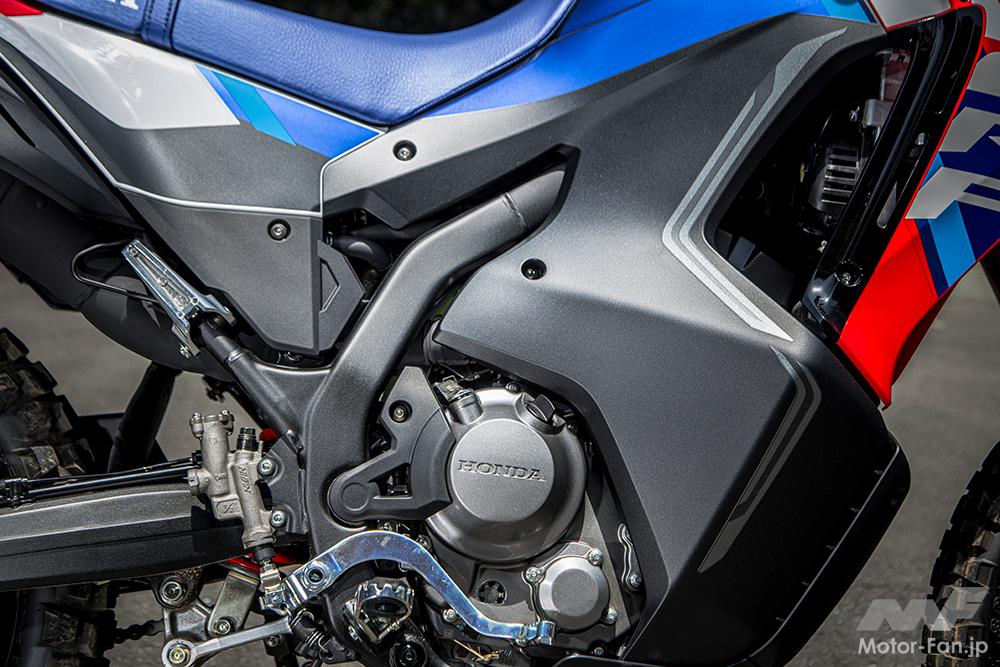
The engine is a 249cc water-cooled, four-stroke, single-cylinder DOHC 4-valve engine, common to the CRF250 series. It is equipped with an FCC assist and slipper clutch. Clutch operation is very light, and there is little change in the vehicle’s behavior when shifting gears.
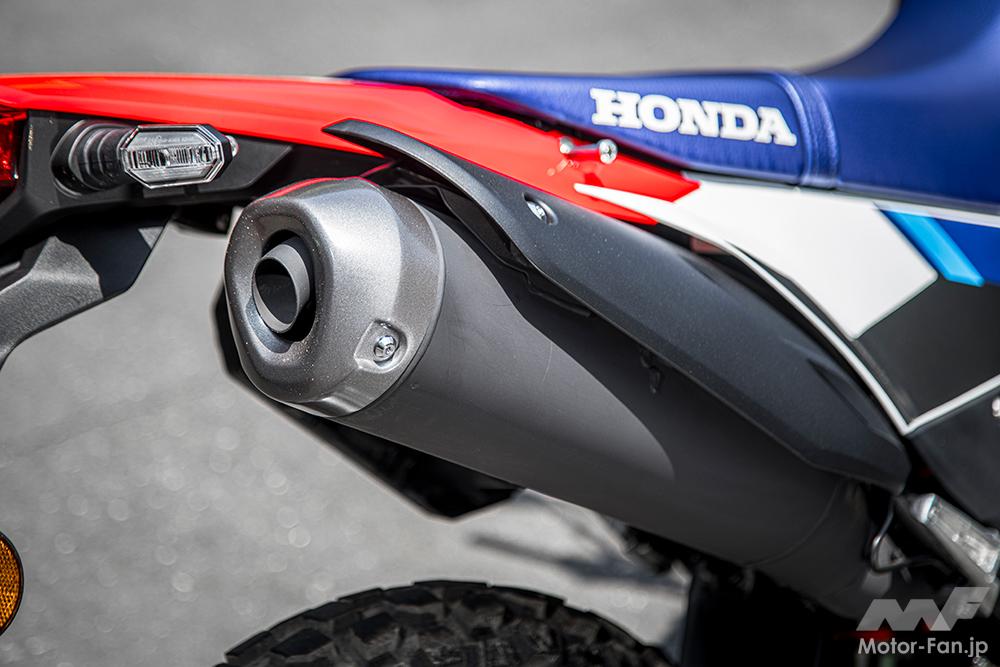
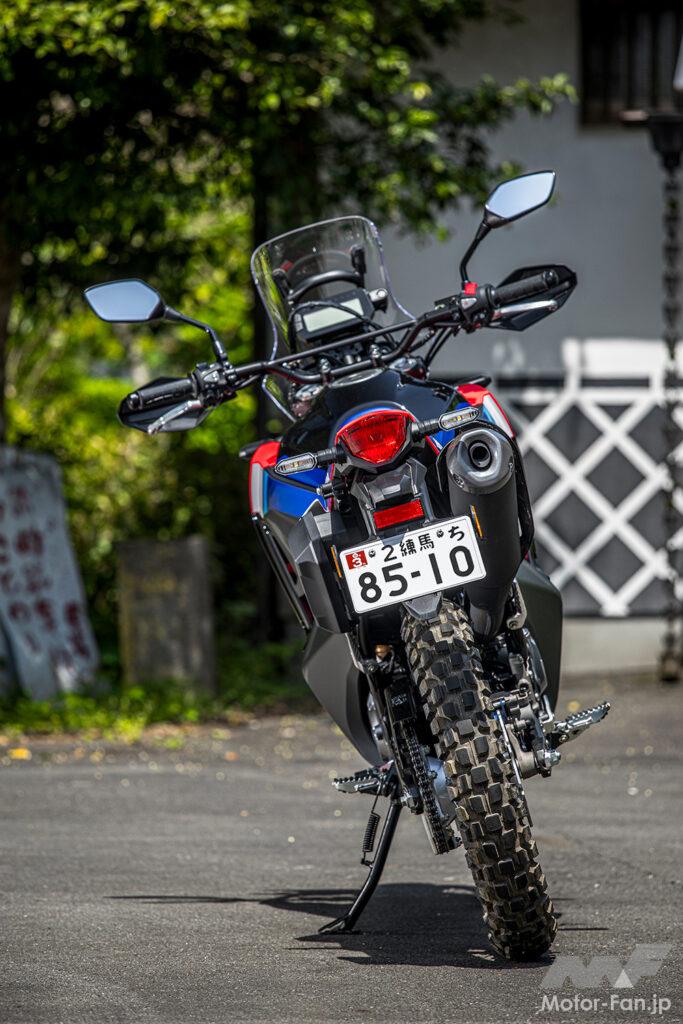
The silencer is positioned to link with the line of the raised rear fender. The exhaust sound, which gives the rider a sense of the engine’s pulse, excites the rider. In addition, the shape of the radiator grille and side cover has been changed to improve heat dissipation around the exhaust pipe.

Although the color of the cast aluminum one-piece swingarm is different, the rear section is the same as the CRF250 series. The rear shock is a Pro-Link mono shock. The rear ABS can be canceled or restored by operating the button on the right side of the digital display.

The steel twin-tube frame is also common to the CRF250 series. A small item box is set on the right side of the rear frame, and simple tools are also included as standard. The rear seat can be opened and closed using the tools.

The rear fender, taillight and rear turn signal areas are also common to the CRF250 series.
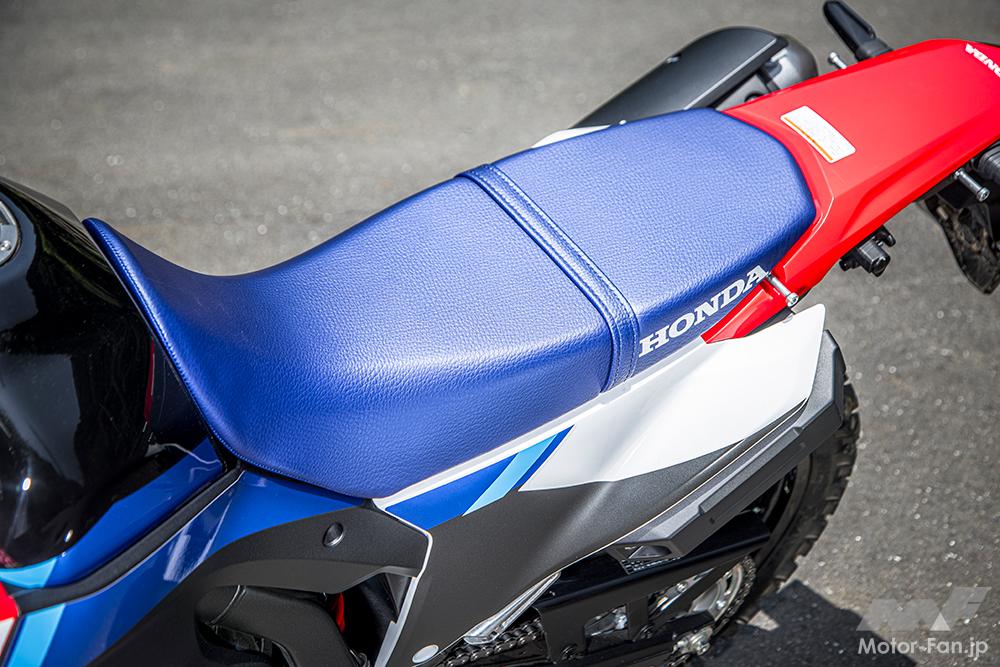
The seat width has been increased by 20mm compared to the CRF250L, and the seat is now rubber mounted. Details have been added to reduce the burden on the rider when riding long distances while seated. And yet, there is no discomfort even when riding in a standing position.
CRF250 Rally Main Specifications
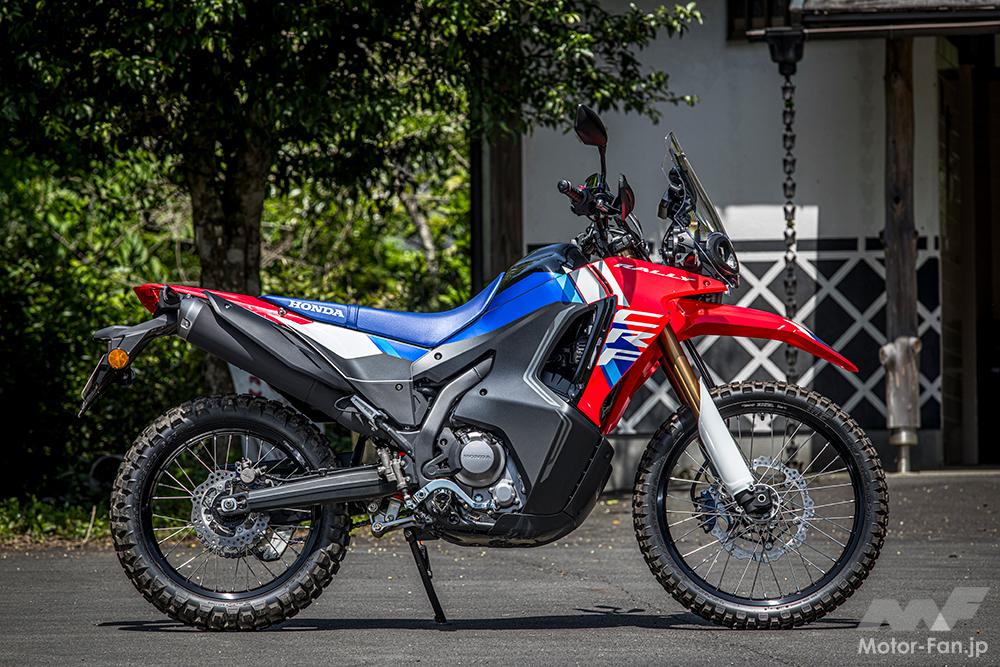
■Length x Width x Height 2,200 x 920 x 1,355mm
■Wheelbase 1,435mm
■Ground Clearance 220mm
■Seat Height 830mm
■Vehicle Weight 153kg
■Engine Type Water-cooled 4-stroke DOHC 4-valve single-cylinder
■Total Displacement 249cc
■Bore x Stroke 76.0mm x 55.0mm
■Compression Ratio 10.7:1
■Maximum Output 18kW (24PS) / 9,000rpm
■Maximum Torque 23N・m (2.3kgf・m) / 6,500rpm
■Fuel Supply System FI
■Fuel Tank Capacity 12L
■Frame Semi-double cradle
■Suspension (Front and Rear) Telescopic inverted type, swingarm Pro-link
■Transmission Type 6-speed return
■Brake Type (Front and Rear) Hydraulic disc, hydraulic disc (with ABS rear cancel function)
■ Tire size (front and rear) 80/100-21M/C 51P, 120/80-18M/C 62P
■ Manufacturer’s suggested retail price ¥792,000-