

Astemo will change its name from April 1, 2025
Hitachi Automotive Systems, a renowned mega-supplier of automotive parts, merged with Keihin, Showa, and Nissin Kogyo in January 2021 to form Hitachi Astemo, which will change its name to “Astemo” from April 1, 2024. This article introduces the Astemo Tech Show 2025, a technology presentation and test ride event for the media held by Astemo at the end of May. Among the many exhibits, this time we will introduce the driver assistance system ADAS (Advanced Driver Assistance System) and a front fork + brake caliper created based on the concept of harmonized function design.
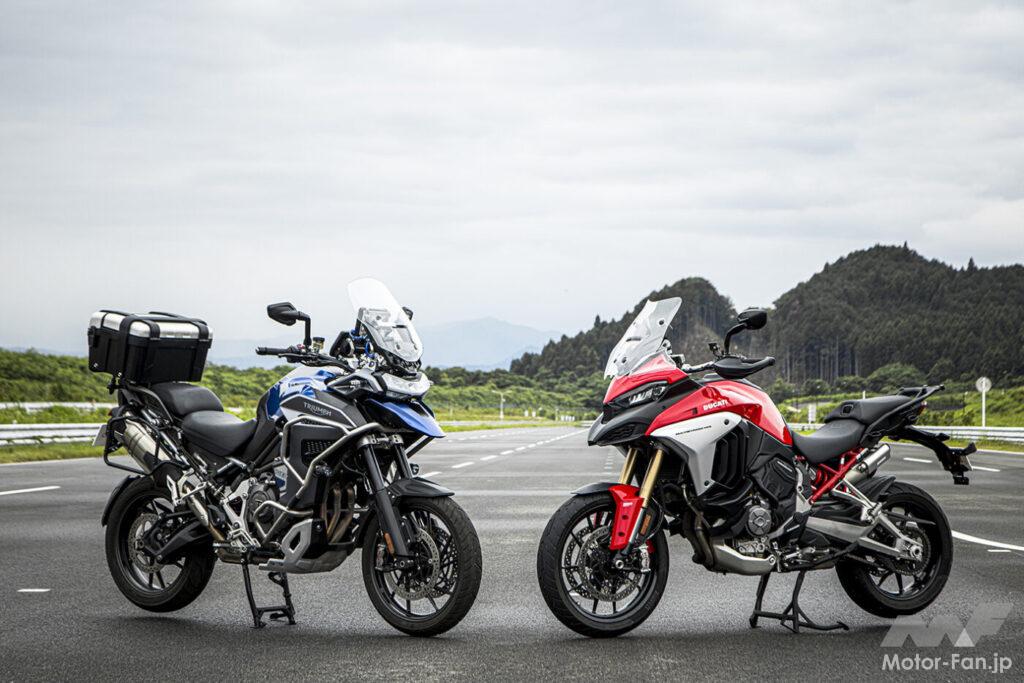
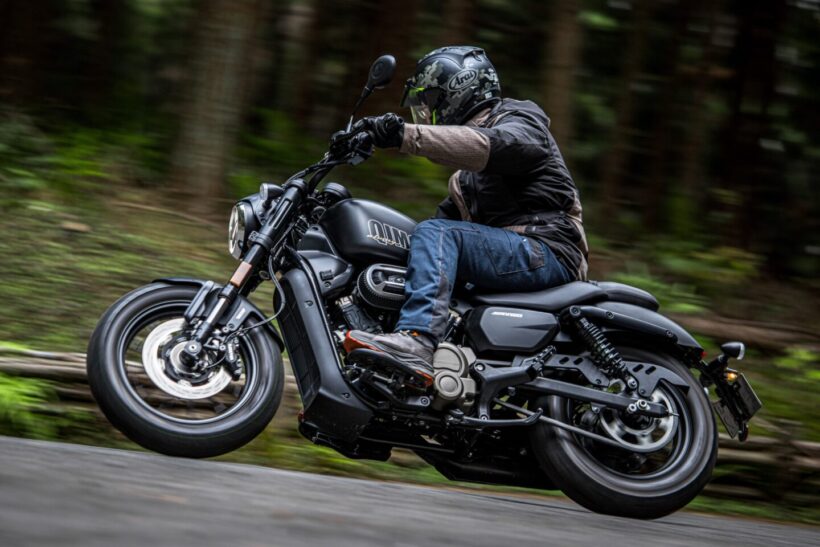
Test vehicles prepared at the venue. Unfortunately, we were not able to test ride the Triumph Tiger 1200 equipped with ADAS, but we were able to ride the Ducati Multistrada V4S equipped with EERA Gen2, so we hope to share our impressions on this site in the near future.
Astemo stands for “Advanced Sustainable Technologies for Mobility,” which expresses the company’s philosophy of “providing a safe, comfortable, and sustainable mobility life through technologies that contribute to an advanced and sustainable society,” and ADAS is an abbreviation for “Advanced Driver-Assistance Systems.”
ADAS development progressing through collaboration between four companies
Before getting into the main topic, let me give you a little background. When I heard in the fall of 2020 that Hitachi Automotive Systems was going to absorb and merge three well-known brands in the motorcycle industry, I wondered, “Why Hitachi Automotive Systems, which doesn’t seem to have much to do with motorcycles?” In fact, I had a selfish fear that Hitachi Automotive Systems’ intervention would make it harder for Keihin, Showa, and Nissin to do their jobs.
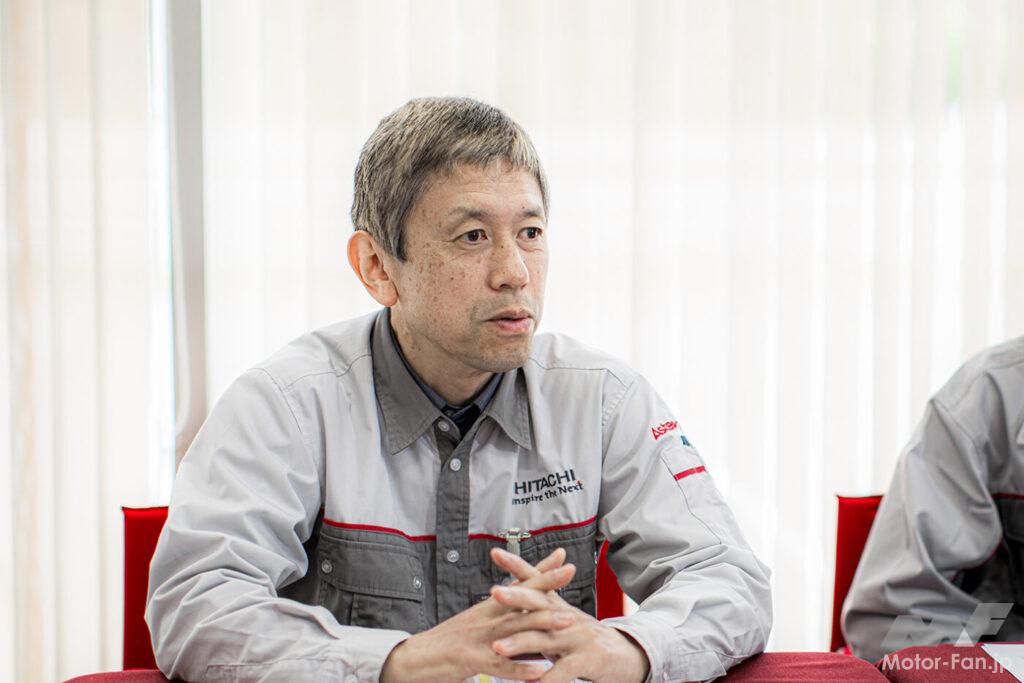
Katsumasa Suzuki, General Manager of the Global Design Headquarters.
However, now that I’ve spoken to various engineers at Astemo Tech Show 2025, I truly understand the significance of the business integration. Readers should be able to understand my change of heart by reading the summaries of what I heard from Katsumasa Suzuki (General Manager of Global Design Division), Tomoharu Sasaki (Deputy General Manager of Global Design Division), and Tatsuyoshi Sakurai (General Manager of Sales Strategy Division, Motorcycle Business Unit and General Manager of Global Sales Division, CS BU), introduced below.
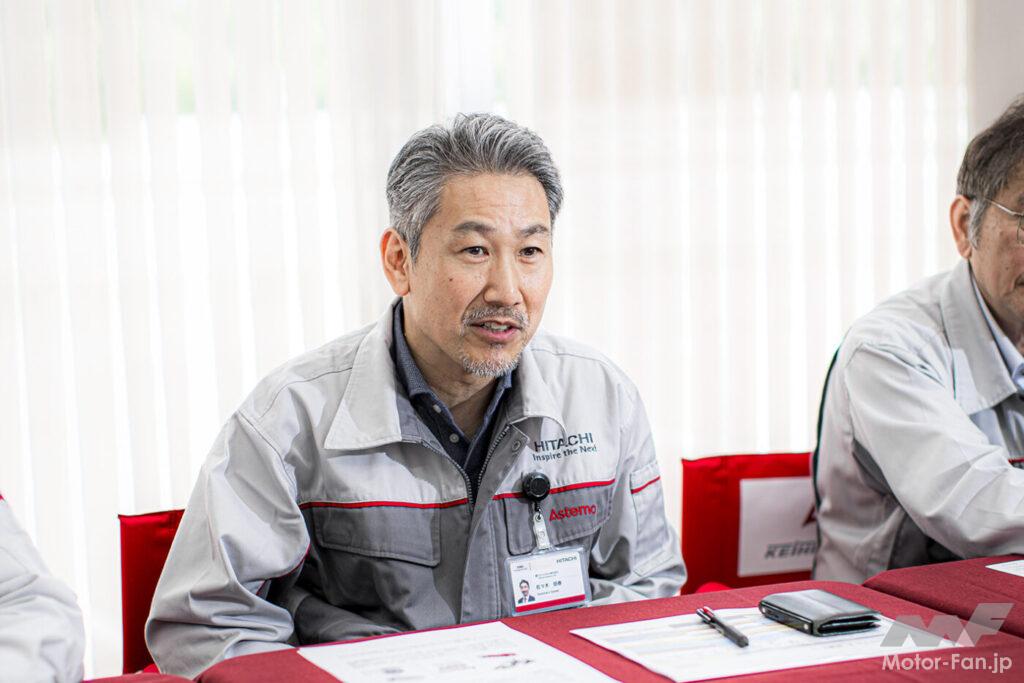
Tomoharu Sasaki, Deputy General Manager of the Global Design Headquarters.
“I’m sure there were quite a few employees who were confused immediately after we joined the same group. But the four companies were able to build a cooperative relationship at a surprisingly early stage. Although each company’s main business is different, we all share the same goal of pursuing comfort and safety. To put it another way, by working closely together on a daily basis as four companies with the same goal, we were able to start working on technologies and products that were on a completely different level than before.”
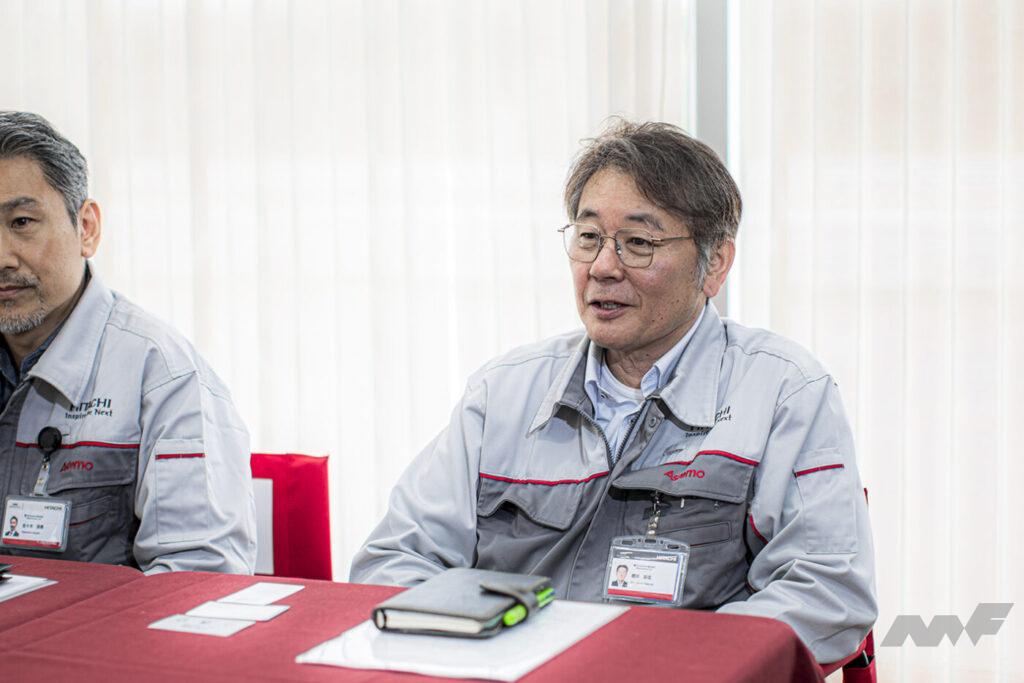
Tatsuyoshi Sakurai, General Manager of the Sales Strategy Division of the Motorcycle Business Unit and General Manager of the Global Sales Division of the CS BU.
“Until now, Keihin, Showa, and Nissin have each independently developed new technologies and proposed them to vehicle manufacturers or sold them as aftermarket parts. However, we have now taken a step further and are focusing on integrated technologies. The most prominent example of this is the ADAS traffic assistance system. This technology, which controls the power unit, suspension, and brakes according to driving conditions, is being developed with the four companies contributing their opinions.”
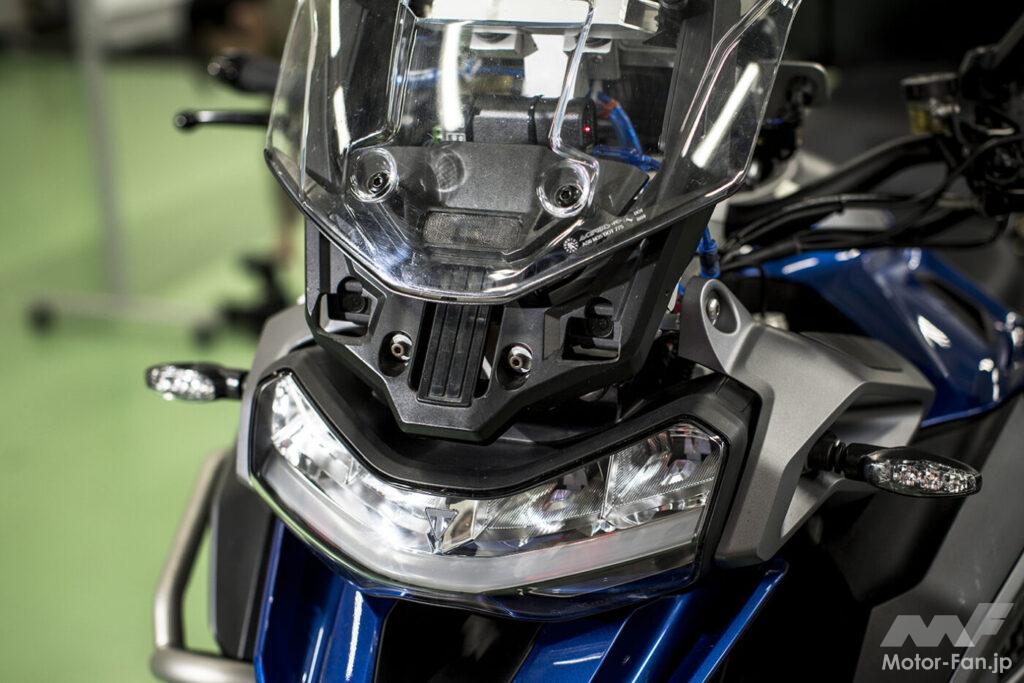
The stereo camera manufactured by Hitachi Automotive Systems is installed at the bottom of the screen base.
The most obvious feature of ADAS is the use of a stereo camera for forward sensing (of course, it can also be used for rearward sensing.) Some people may mistakenly believe that this mechanism performs the same function as the millimeter-wave radar that other manufacturers already use for sensing active cruise control and forward collision warnings.
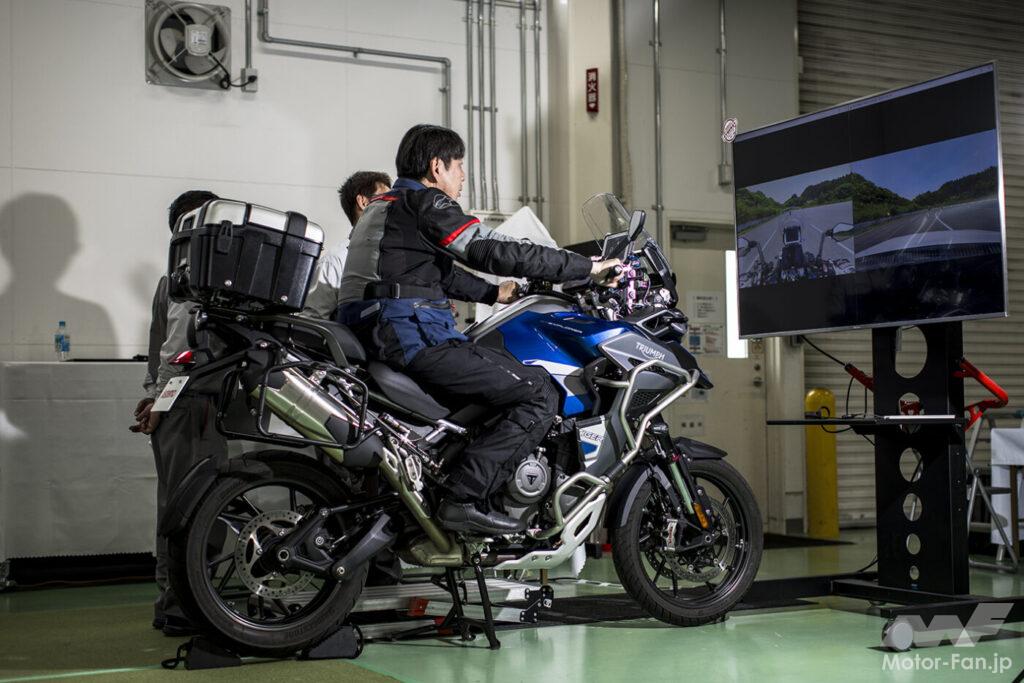
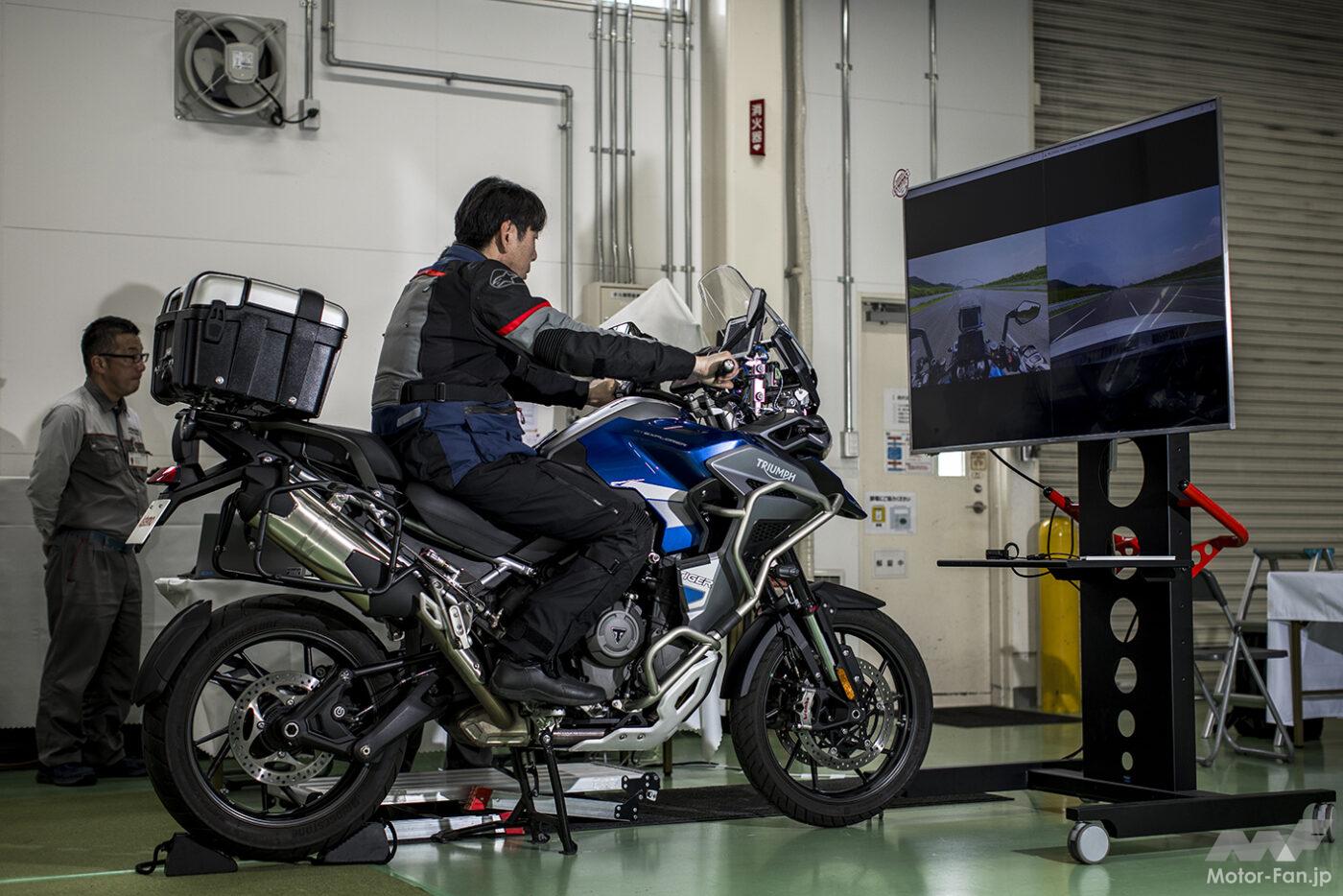
I experienced ADAS in a simulator, where I was able to see the automatic deceleration according to speed signs and flawless zigzag driving.
Unlike millimeter-wave radar, which only recognizes vehicles and obstacles ahead, stereo cameras can also recognize road signs, lane markings, and bumps in the road. Based on this diverse information, the system automatically controls the power unit and brakes (suspension control is also planned for the future. The company’s ADAS adaptive cruise control also supports the zigzag driving pattern that is common in group motorcycle touring, which is said to be difficult for millimeter-wave radar to accurately recognize).
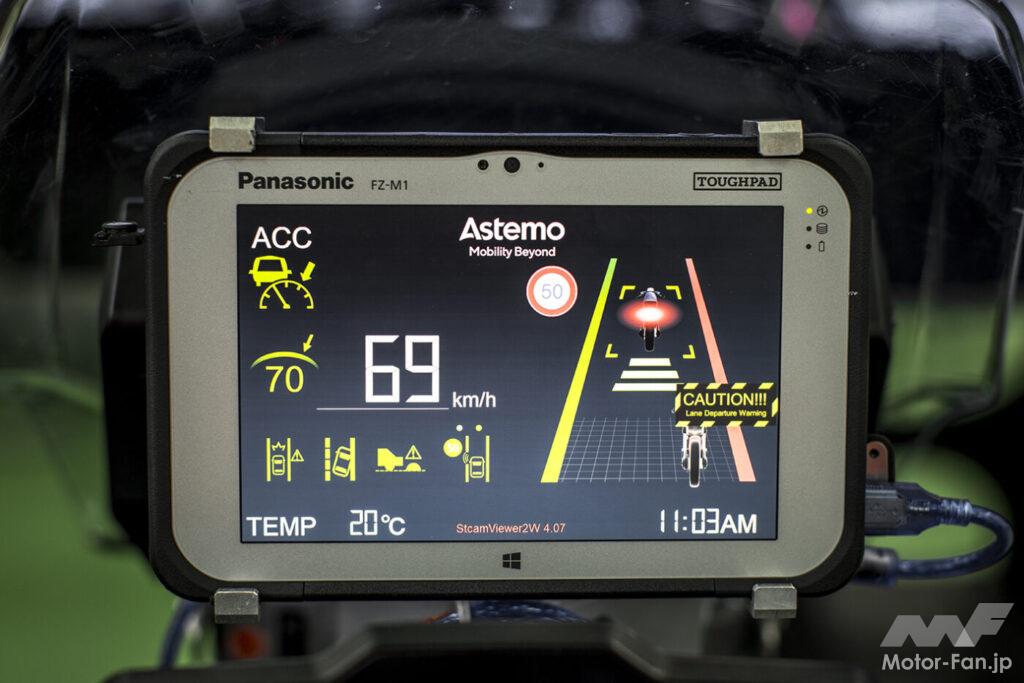
A monitor installed in the cockpit of an ADAS test vehicle. The key feature is that it displays the speed limit indicated by road signs.
“Regarding ADAS, we are building a system for two-wheel vehicles based on the sensing and vehicle integration technologies and simulation technologies that Hitachi Automotive Systems has cultivated for four-wheel vehicles, with Keihin, Showa, and Nissin exchanging ideas. Radar and cameras have their advantages and disadvantages, and the ideal situation is to use them together. However, there are surprisingly few things that only radar can do, while there are many things that only cameras can do, so we chose cameras.”
Unprecedented harmonized functional design
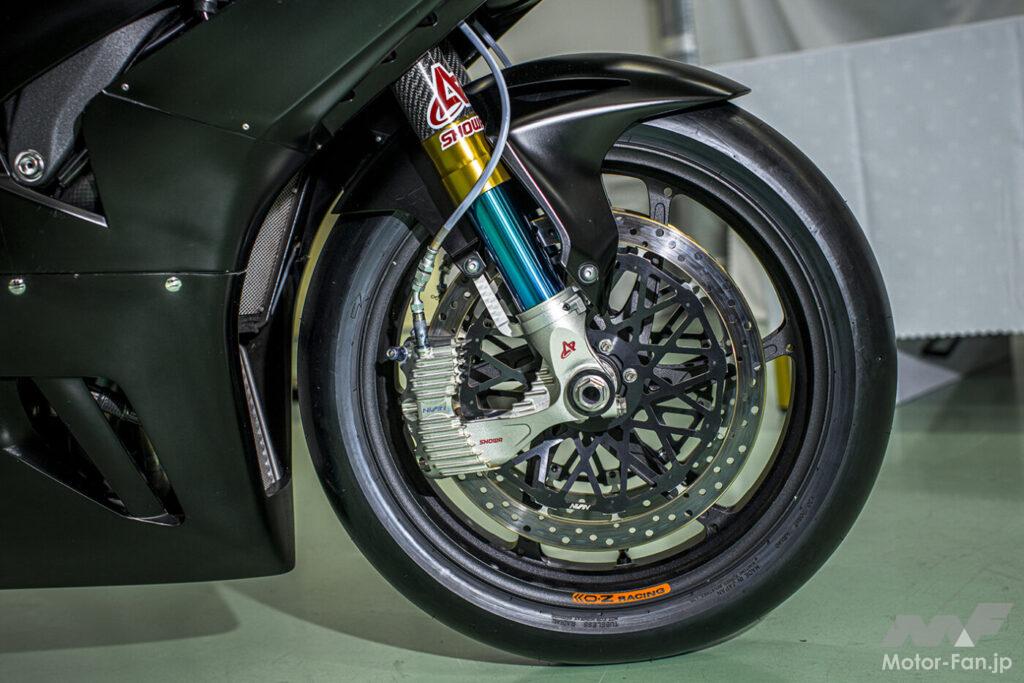
The Harmonized Function Design has functional merits such as reduced weight and improved heat dissipation, but perhaps the most important element is its innovative look, which has never been seen before.
Next, we’ll talk about the suspension parts that incorporate Harmonized Function Design. The brake calipers, which are single-supported and feature numerous fins on the body, and the front axle shaft holders, which feature bold cutouts, were apparently suggestions from Hitachi Automotive Systems.
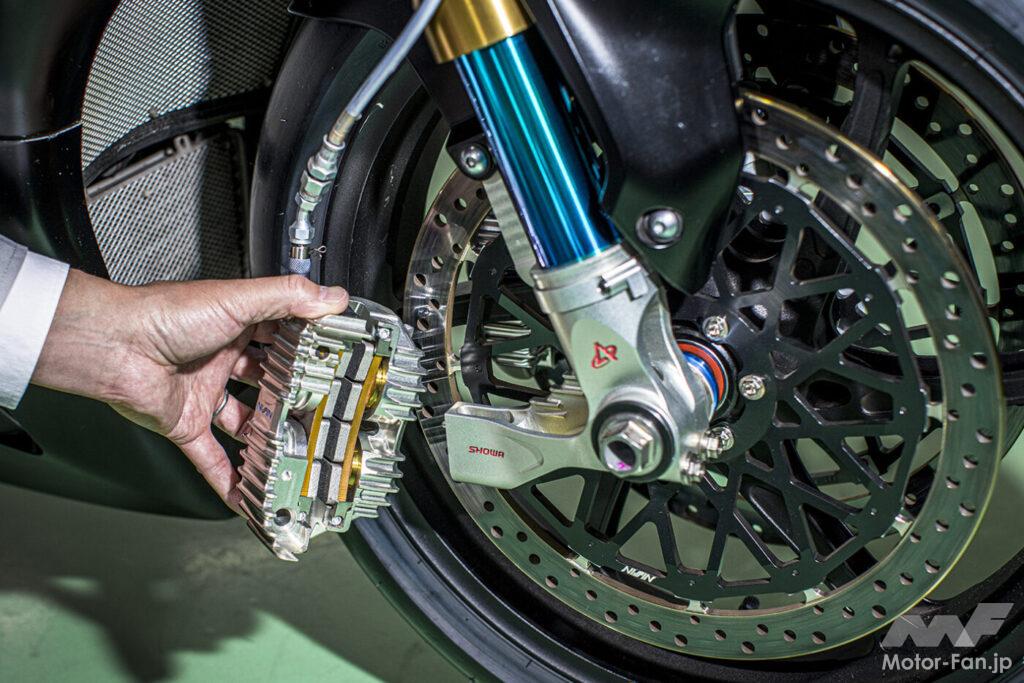
At first glance, the front axle holder and front brake caliper appear to be integrated, but they are actually separate parts and are fastened together with a single bolt.
“Although this configuration is not possible in conventional motorcycle design, Showa and Nissin engineers felt that there was new potential in the Harmonized Function Design. After analyzing the strength, rigidity, heat conduction, etc., they found that this configuration would also work. We are currently conducting on-road tests in-house, and hope to introduce it in the All Japan Championships in 2026 and the World Championships in 2027.”
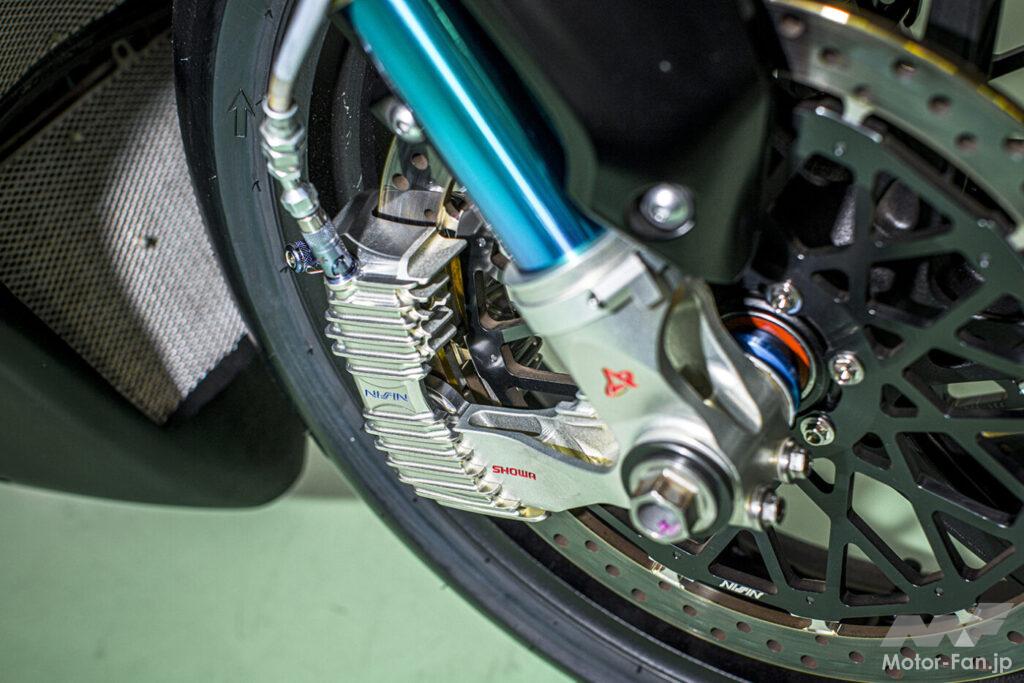
The large number of fins engraved on the brake caliper and the bold cutouts on the front axle holder contribute to improved heat dissipation. Compared to the existing configuration, the contact area between the brake caliper and the front fork axle holder has increased by approximately 30%.
“With existing products, Showa, which is in charge of the front forks, had to match them to the brake calipers, and Nissin, which is in charge of the brake calipers, had to match them to the front forks, so there was a lot of consideration and hesitation. But now that we’re in the same group, we’ve built a cooperative system from the start of development, so there’s almost no consideration or hesitation, and we can thoroughly pursue the ideal design and performance.”
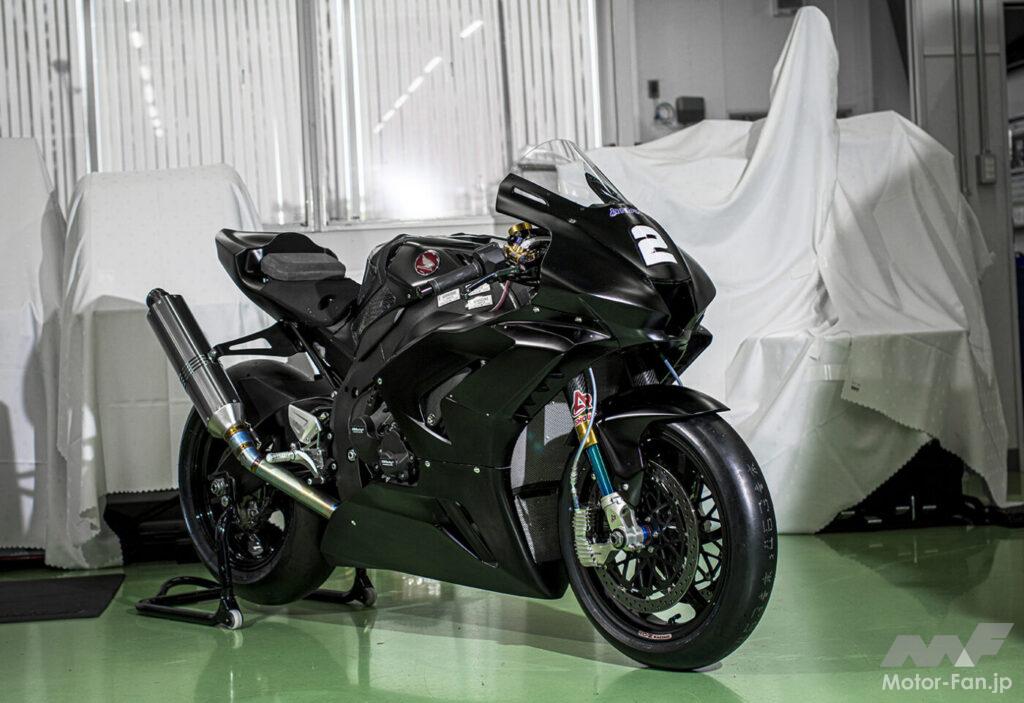
The Honda CBR1000RR-R used by Astemo for testing the suspension. The suspension, with its Harmonized Function Design, looks like it would also look good on a cruiser custom, which is the complete opposite of a supersport bike.
“We are also considering selling the Harmonized Function Design front fork + brake caliper and the EERA Gen2 electronically controlled suspension, which has an ECU attached to the main body, as aftermarket parts. In any case, by establishing a cooperative system between the four companies from 2021, the scope of the entire group has been greatly expanded.”
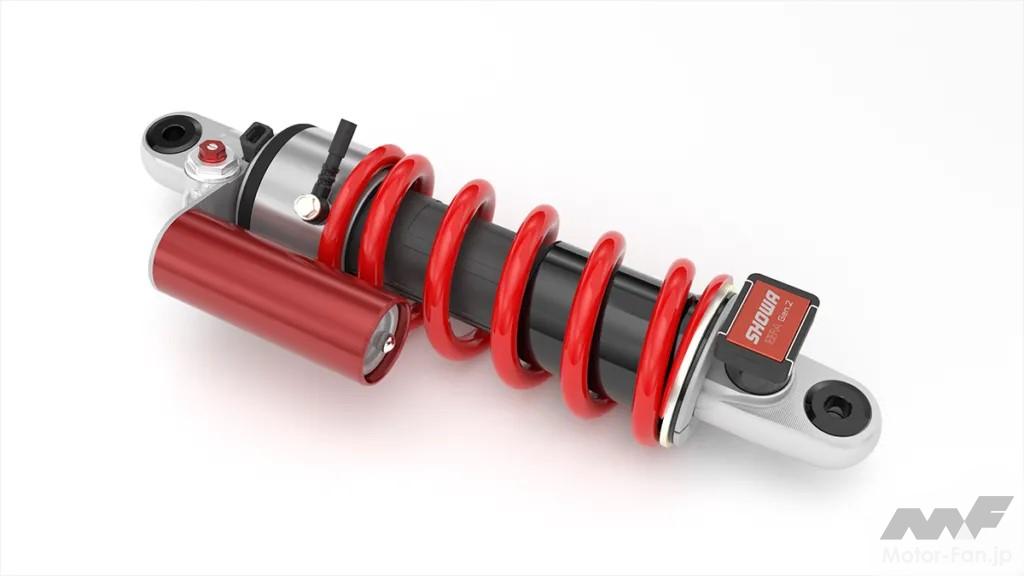
A feature of the EERA Gen2 is that the actuator attached to the shock unit itself has an ECU that changes the damper characteristics and an IMU (inertial measurement unit) built in.
Listening to the three of them speak, I was reminded of Bosch, Marelli, and Continental, which supply a wide variety of electronic control technologies and parts to vehicle manufacturers around the world. Or rather, it might be fair to say that Astemo, which brings together Hitachi Automotive Systems, known as a leader in sensing and vehicle integration technologies in the four-wheel world, and Keihin, Showa, and Nissin Kogyo, which are well-known in the two-wheel world, already surpasses their potential.