

Semi-active suspension + vehicle height adjustment
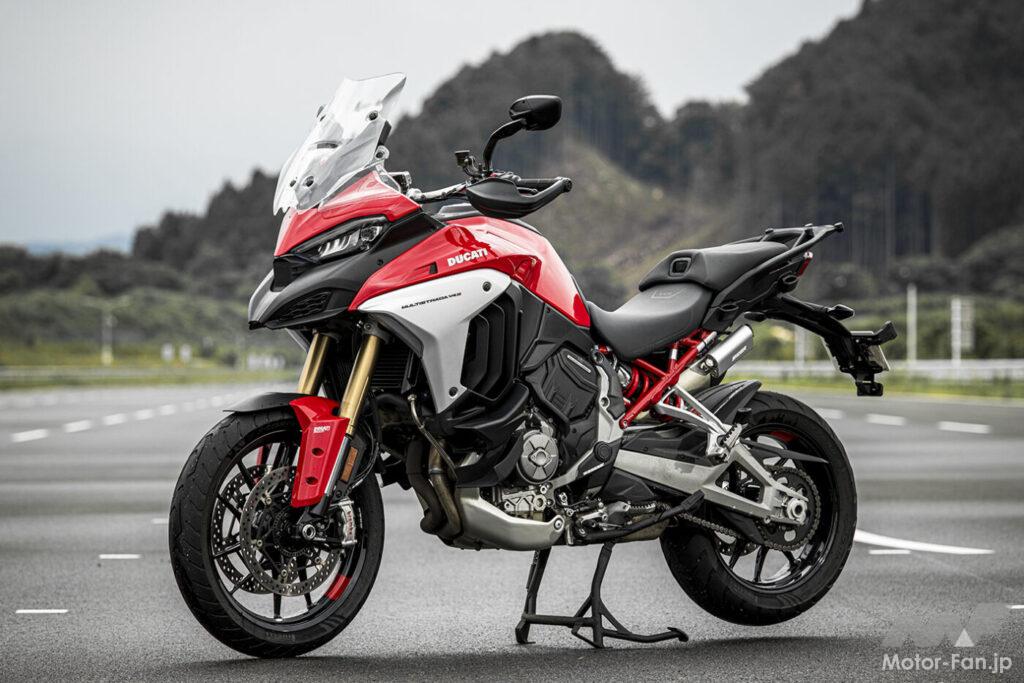
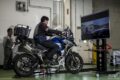
The test vehicle, the Ducati Multistrada V4S, prepared at the Astemo Tech Show 2025 venue is equipped with the EERA Gen2 developed by Showa and the latest HEIGHT FLEX.
In recent years, the world of motorcycles has seen a rise in the use of electronic controls for front and rear shock units. Specifically, more and more motorcycles are being equipped with a select function that allows you to easily change damper characteristics with the push of a button, semi-active suspension that automatically adjusts the damper’s action depending on the situation, and even systems that automatically lower the vehicle height and seat height when stopped.
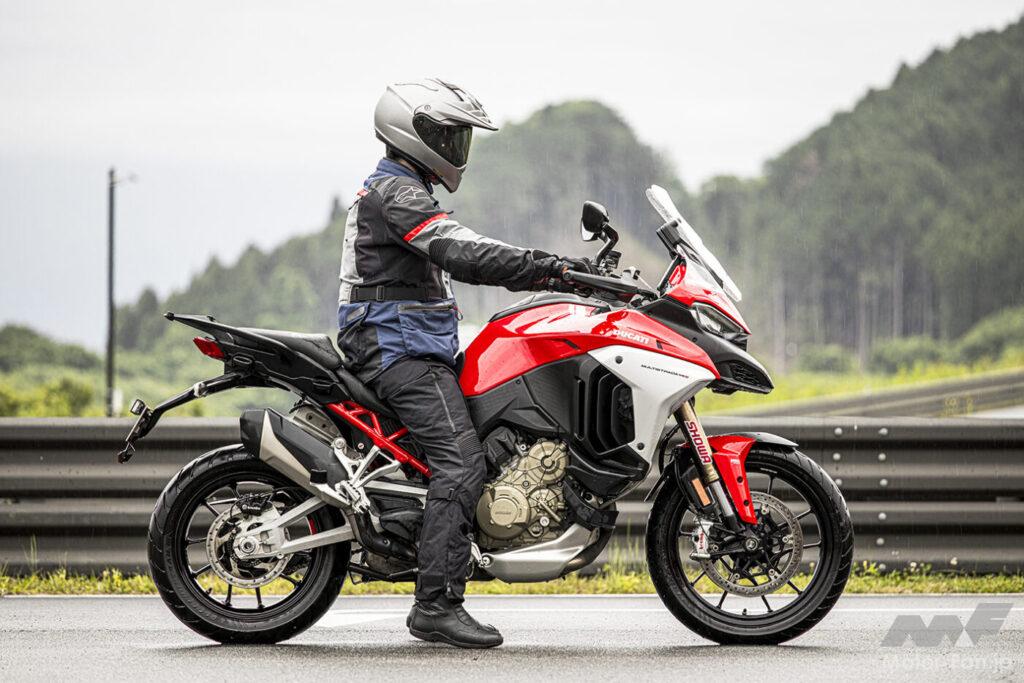
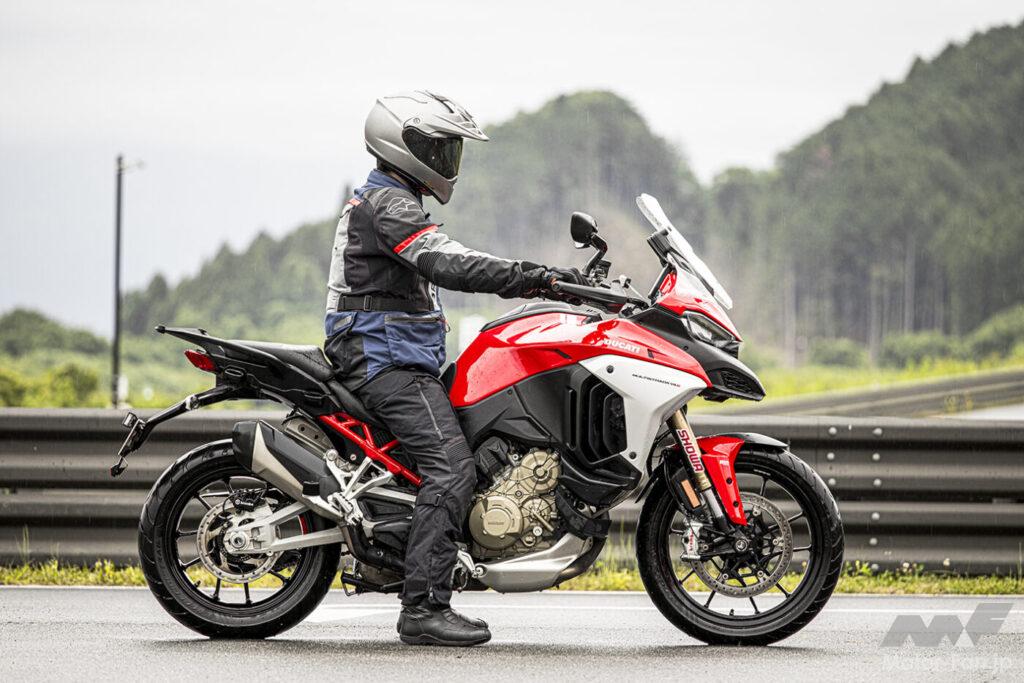
The photo above is the standard version, and the photo below shows the vehicle with the front and rear heights lowered by approximately 50mm.
The Ducati Multistrada V4S, which was prepared by the company for the Astemo Tech Show 2025 held at the end of May, was a test vehicle that allowed us to experience all of this. First of all, my impression of the HEIGHT FLEX, which automatically adjusts the vehicle height, was that it was simply wonderful, smooth, and natural.
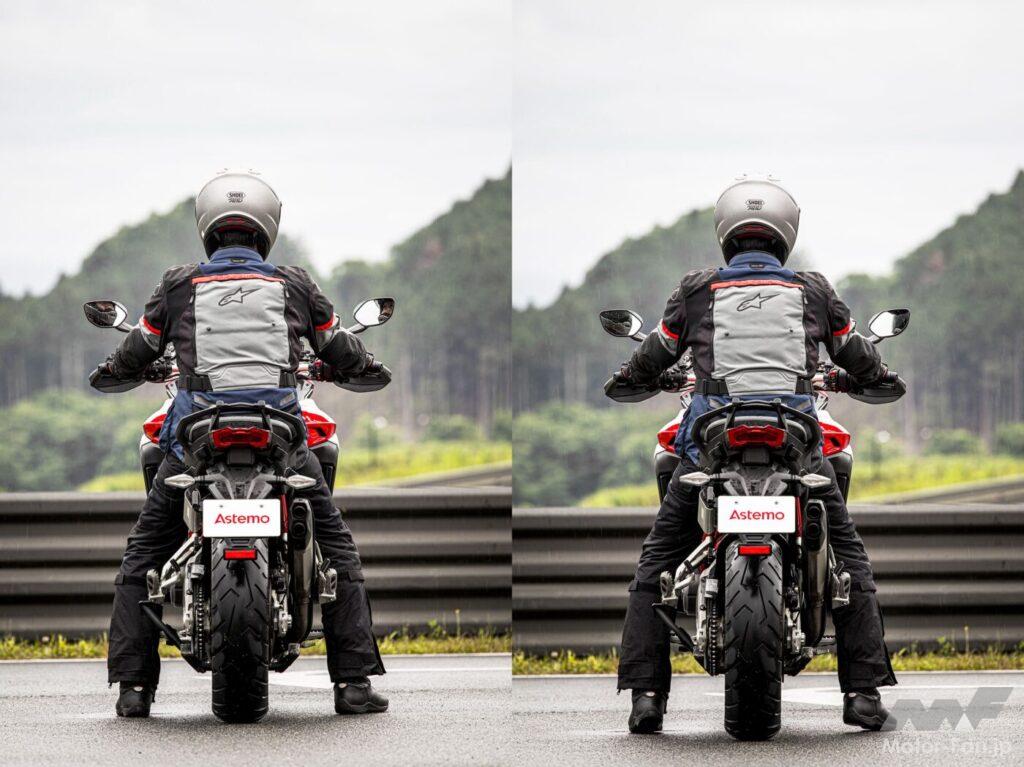
I’m 182cm tall. With the standard setup on the right, my heels lift a little, but with the lowered setup on the left, both feet are firmly on the ground.
Of course, some people may have the impression that automatic vehicle height adjustment is only for small riders. However, in the case of a high-riding model like the Multistrada V4S, even for me, who is 182 cm tall, HEIGHT FLEX is extremely useful, as it lowers the front and rear vehicle height by about 50 mm when stopped, and then returns to normal within 7 to 8 seconds once you start riding, allowing you to enjoy the original handling. This time, the test ride was only on the test course, but I’m sure it will be even more appreciated in urban areas with lots of stop-and-go traffic, on unpaved roads where you often encounter unexpected situations, and on U-turns where you frequently make while taking riding photos.

So what about the other model, the EERA Gen2? It also feels quite good. The test bike had three modes: Comfort and Sport, which have fixed damper characteristics, and Dynamic, which is automatically variable. I was most impressed with Dynamic, which has a wide range of control. However, if I were to go on a tour with this bike, I think I would use Comfort, which offers a high-quality ride in urban areas and on highways, and Sport, which keeps the vehicle’s posture stable on mountain roads.
I was impressed, but not surprised…
Well, I’ve written down my impressions of the EERA Gen2 and HEIGHT FLEX, but since I’ve experienced these three electronic control technologies on other models in the past (in the case of Showa, the damper characteristics selection function and semi-active suspension were first adopted on the 2019 Kawasaki ZX-10R SE, and the automatic vehicle height adjustment function was first adopted on the 2021 Harley-Davidson Pan America 1250 Special), I was impressed but not surprised.

The ZX-10R SE, released by Kawasaki in 2019, is the first motorcycle to feature Showa’s electronically adjustable semi-active suspension, which Kawasaki calls KECS (Kawasaki Electronic Control Suspension).
However, compared to the Showa vehicles I have used that use electronically controlled suspension, the semi-active function is more precise and the time required for automatic adjustment of the vehicle height has been shortened (EERA Gen2 operates in approximately 2 seconds for both front and rear down, and approximately 8 seconds for front up and approximately 7 seconds for rear up, making the up and down movement almost imperceptible), but the clear difference in this regard would not be apparent unless the old and new models were compared under the same conditions.
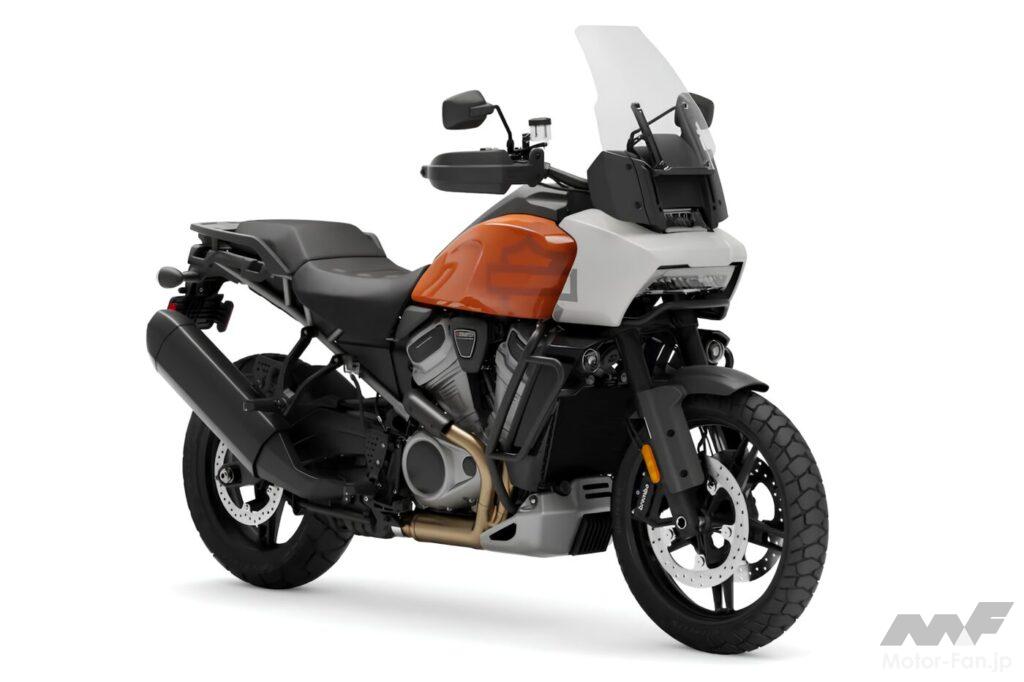
The Pan America 1250 Special, which Harley-Davidson began selling in 2021, is the world’s first vehicle height adjustment function, incorporating Showa’s technology. The company calls it Adaptive Ride Height.
However, when I later heard an explanation from the Showa engineers in charge of development, I was very surprised by two elements. To put it simply, the EERA Gen2 and HEIGHT FLEX had evolved into something completely different from their predecessors.
EERA Gen2 has a significantly simplified structure
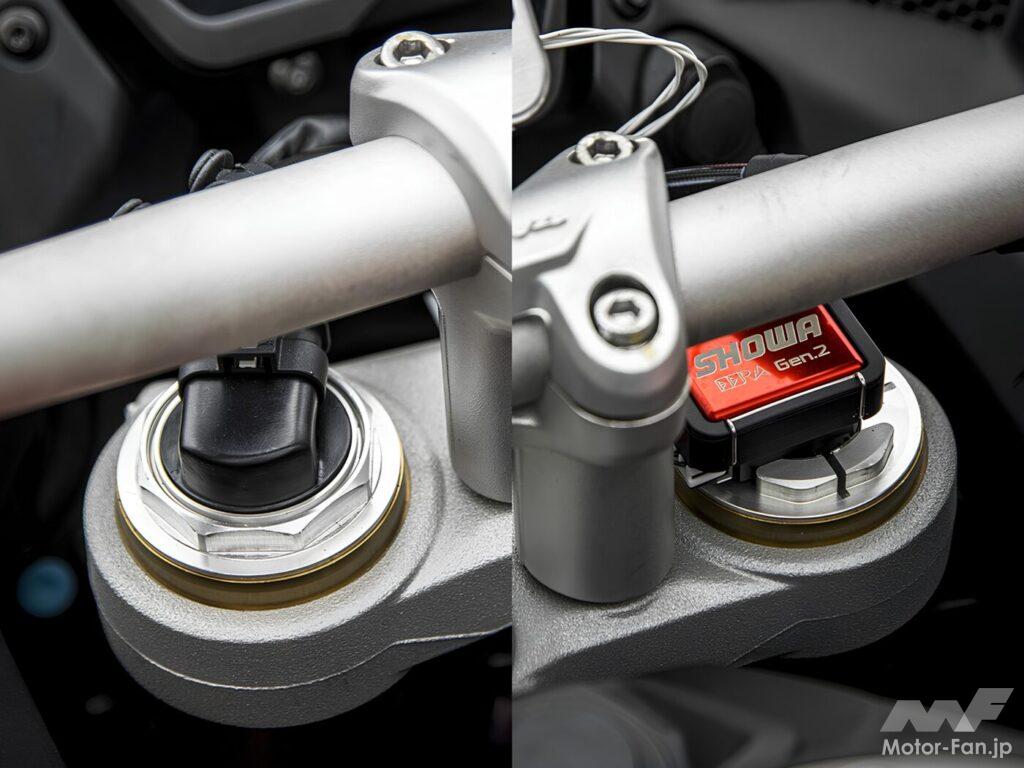
The front forks of the Multistrada V4S used in the test are separate function types with different functions on the left and right. The left houses the spring and ride height adjustment mechanism, while the right houses the damper unit. The red part on the top cap on the right is the actuator that houses the ECU and IMU.
One notable feature of the EERA Gen2 is its significant simplification of structure. Existing electronically adjustable semi-active suspensions, including the Gen1 EERA, required a control unit (ECU), IMU for inertial measurement, and stroke sensor as separate components, but the EERA Gen2 integrates the ECU and IMU with the actuator and mounts them directly to the front and rear shocks (printed circuit board-type stroke sensors are also mounted on the body).
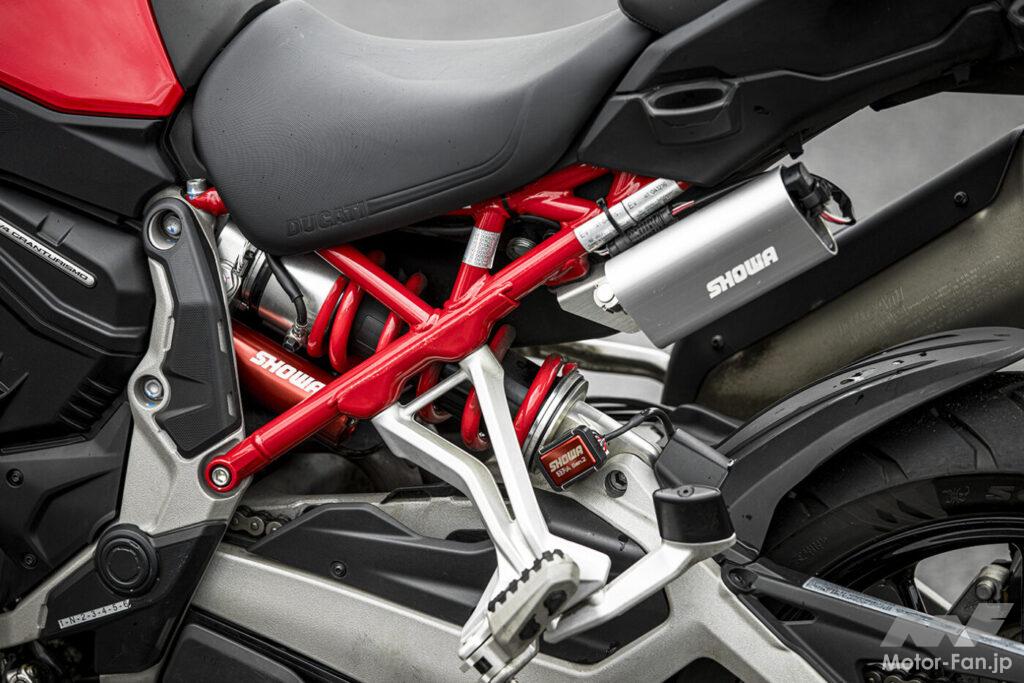
The rear suspension of the Multistrada V4S used for the test. The red part at the bottom of the shock unit is the actuator that houses the ECU and IMU, and the gear pump unit for adjusting the vehicle height is fixed to the seat rail.
ADVERTISEMENT

The latest stroke sensor developed by Showa is a printed circuit board type that is highly durable and space-efficient.
By the way, the people who will be most pleased with the significant simplification of the structure implemented in the EERA Gen2 are probably the engineers at motorcycle manufacturers. After all, motorcycle design in recent years has become a battle for territory, with developers focusing on securing space for the parts they are responsible for. However, Astemo is considering selling the EERA Gen2 as an aftermarket part, and if that becomes a reality, all riders around the world, regardless of engine displacement, model year, or nationality, could potentially enjoy the benefits unique to the EERA Gen2.
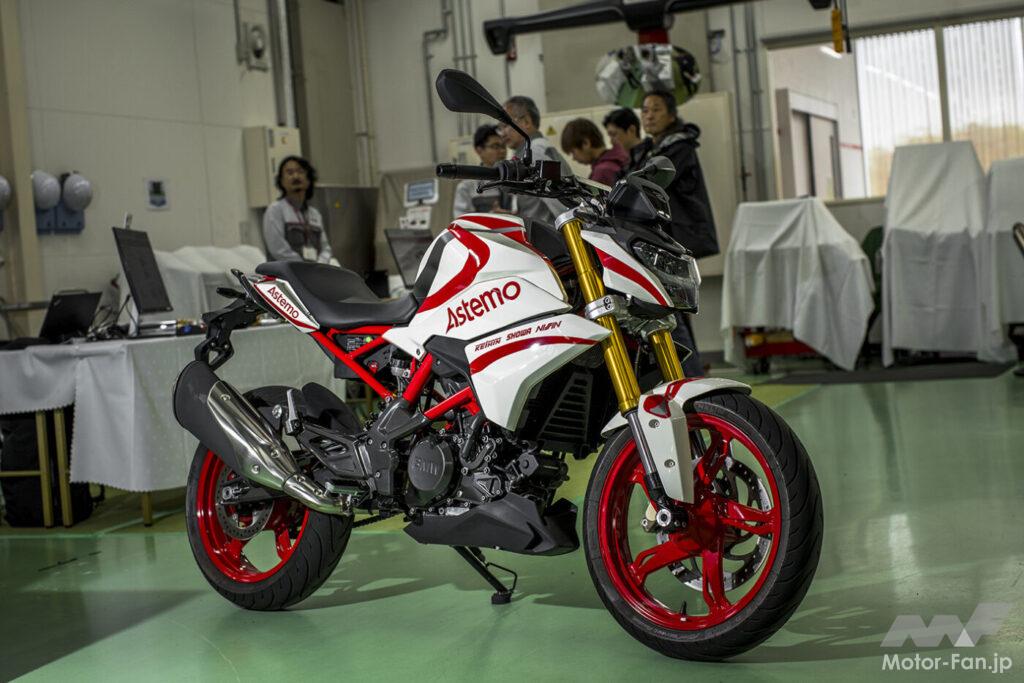
The BMW G310R on display at the venue had only its rear shocks replaced with EERA Gen2 specifications. When I straddled the seat and adjusted the front and rear shocks, testing the weakest and strongest dampers, I could clearly feel the difference.
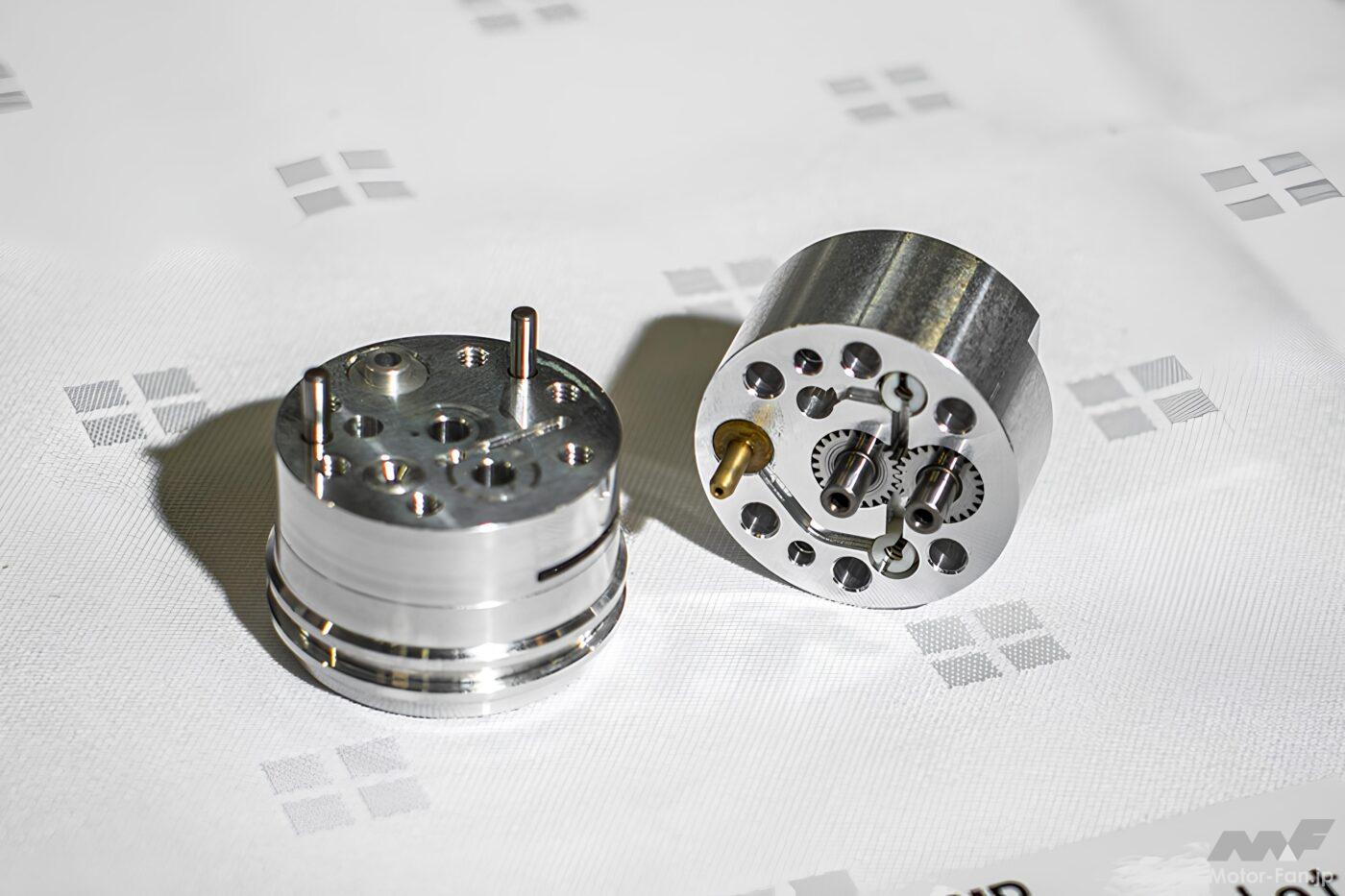
HEIGHT FLEX using a gear pump

A gear pump used to adjust the vehicle height. By adopting this mechanism, the time required to raise the vehicle height has been significantly reduced.
What’s interesting about the HEIGHT FLEX is how it raises the vehicle height after it has been lowered. Whereas the previous model used the pitching of the vehicle body to gradually apply pressure to the hydraulic jack, the latest model uses the power generated by a gear pump to quickly move the hydraulic jack, and the front has a gear pump unit built into the fork (a built-in type is also under development for the rear).
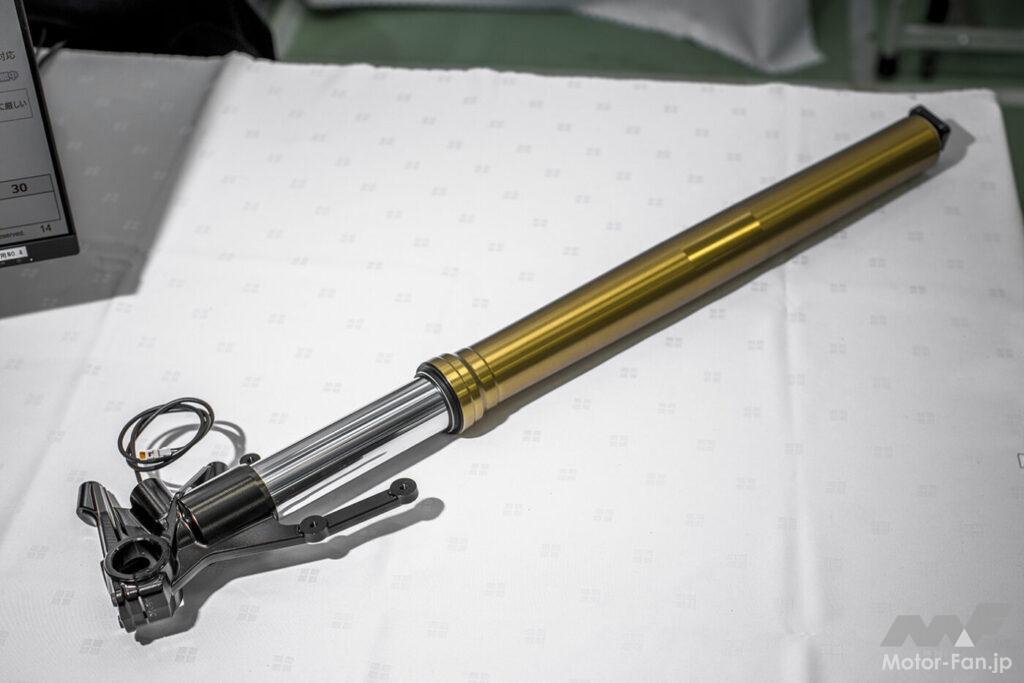
The HEIGHT FLEX front forks are equipped with a gear pump and hydraulic jack inside for adjusting the vehicle height. From the outside, it is impossible to tell the difference between them and regular front forks.
Showa’s new generation HEIGHT FLEX is the world’s first telescopic front fork with a built-in vehicle height adjustment mechanism, and I believe the reason behind this is that the company has long been working on SFF (Separate Function Forks), which separate the spring and damper on the left and right. And speaking of separate, another feature of this mechanism is that it can control the front and rear vehicle height separately (previous products either had the same front and rear or only the rear was adjustable), so for example, in the case of a supersport bike that typically has a raised rear body posture, setting just the rear low while riding would likely improve usability in everyday use.
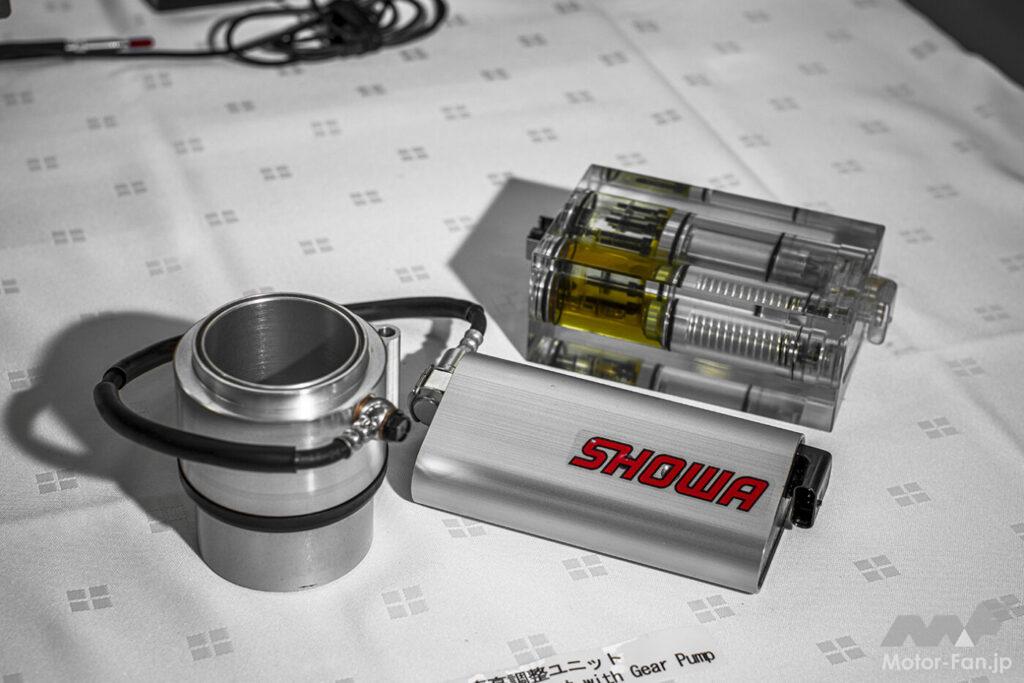
Complete height adjustment unit for rear shock. A skeleton version is also available to make the structure easier to understand.
So, after understanding the structure of the EERA Gen2 and the latest HEIGHT FLEX, I  felt a sense of joy, as if to say, “I see.” On the other hand, as someone who has been in the motorcycle media for almost 30 years, I have had fewer opportunities to get excited about the latest technology in recent years, but the new technologies I experienced and understood at the Astemo Tech Show 2025, including the ADAS and Harmonized Function Design suspension that we introduced on this site a while ago, gave me a sense of excitement for the first time in a long time.
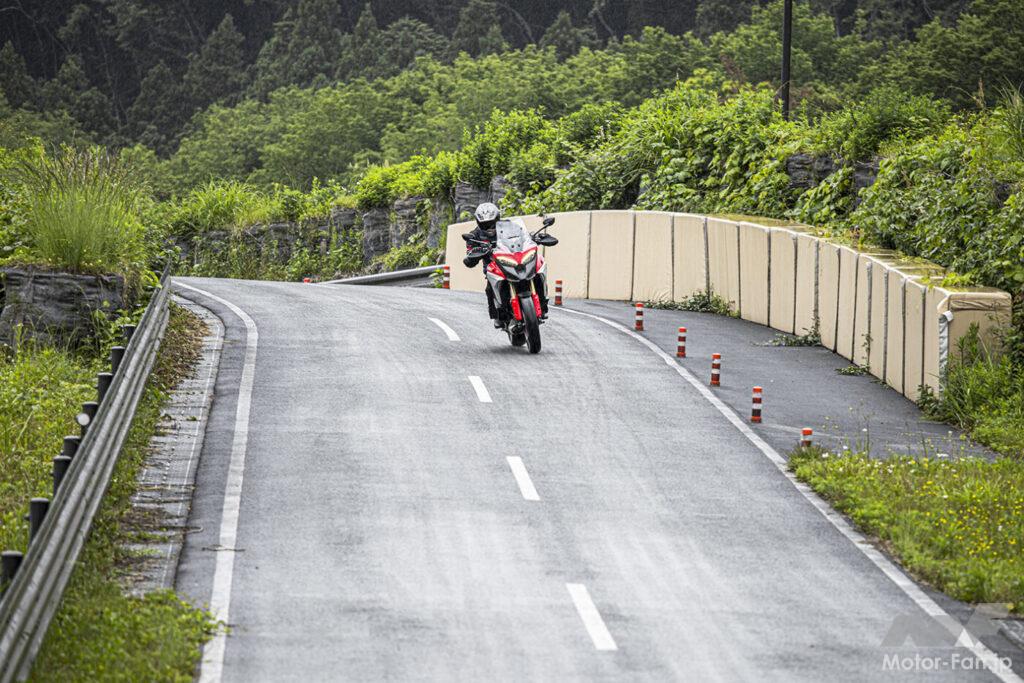
 From suspension to ADAS. The synergy born from the collaboration of the four companies was truly felt at Astemo Tech Show 2025
Corporate integration does not necessarily lead to positive results. However, I attended the Astemo Tech Show 2025 held at the end of May and was deeply impressed by the new technology that was born from the collaboration between Hitachi Automotive Systems, Keihin, Showa, and Nissin Kogyo. REPORT: Nakamura Tomohiko PHOTO: Yamada Shunsuke