

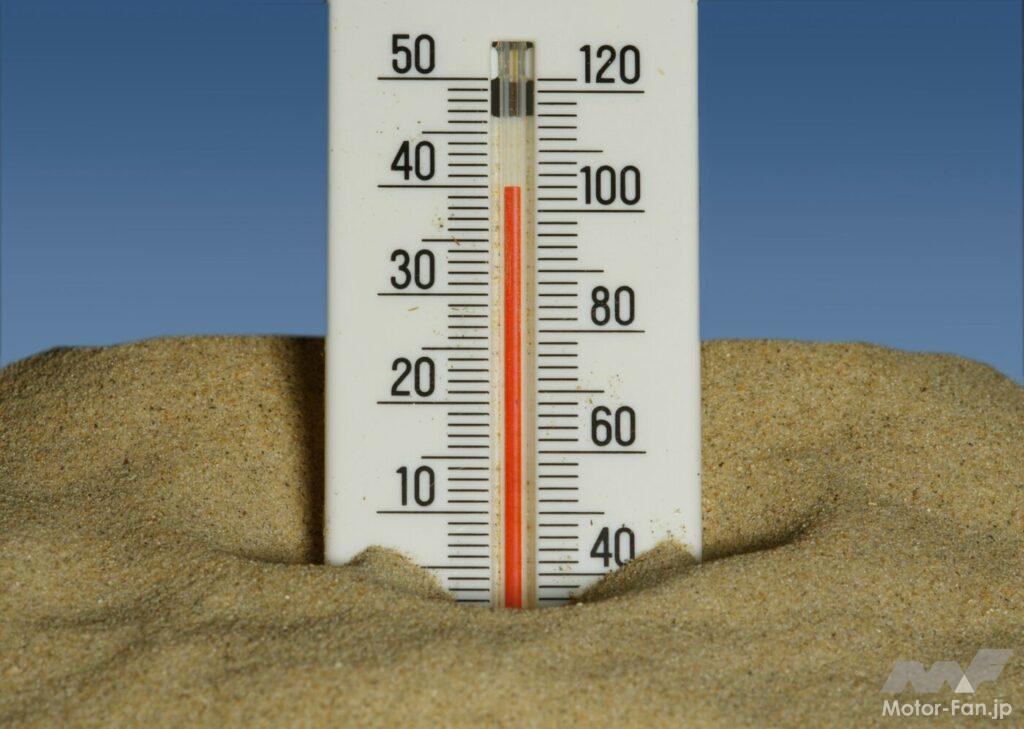
It was a scorching hot day with a maximum temperature of 35°C and humidity of 65%. The weather was clear, making for a perfect experimental environment…
Every year, Motorfan BIKES conducts an experiment and test-and-feel project to find out if there are any items that can help you beat the heat when riding your bike in the summer. In 2025, we will introduce a group of items that our editorial team found comfortable and purchased with their own money (we tested six items in 2025).
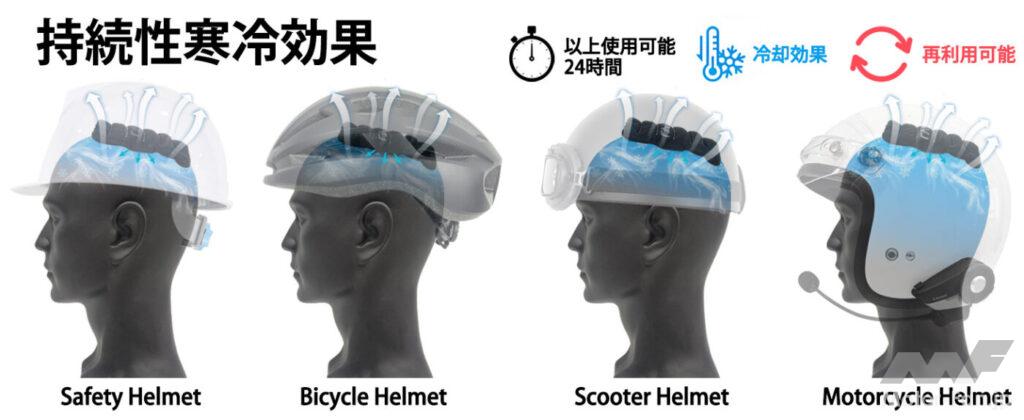
This time, for the second installment, we tested the Raincore Helmet Ice Pad, an in-helmet type that absorbs water and expands when immersed in water for about three minutes, providing a cooling effect. This is a cooling item perfect for wearing a helmet in the middle of summer, whether for motorcycle riding, cycling, or work.
[Experimental Data]
 Test date: Daytime in early July 2025
Location: A city in Chiba Prefecture
Weather on the day: Sunny with occasional clouds
Maximum temperature: 35°C (as announced by the Japan Meteorological Agency)
Humidity: 65% (as announced by the Japan Meteorological Agency)
Heatstroke warning alert issued
Test environment: The glare from the asphalt was intense. The measured temperature in the sun was over 45°C
Feeling temperature: The sun was strong and it was extremely humid. If you didn't take a break in the shade every now and then, you'd get heatstroke. The heat was so unbearable that it made the tester wonder, "Is this a punishment game?" There was also a warning on TV to "avoid going out during the day as much as possible."
Test vehicle: Honda Super Cub 50
Raincore Helmet Ice Pads…1,540 yen (tax included) / Free shipping (Tokyo)
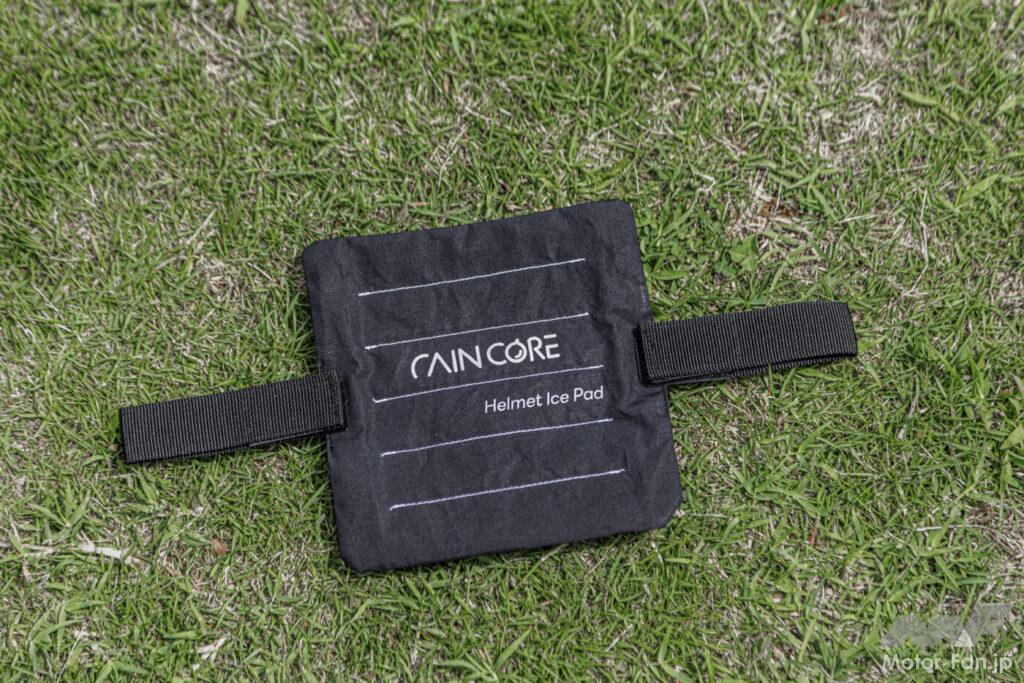
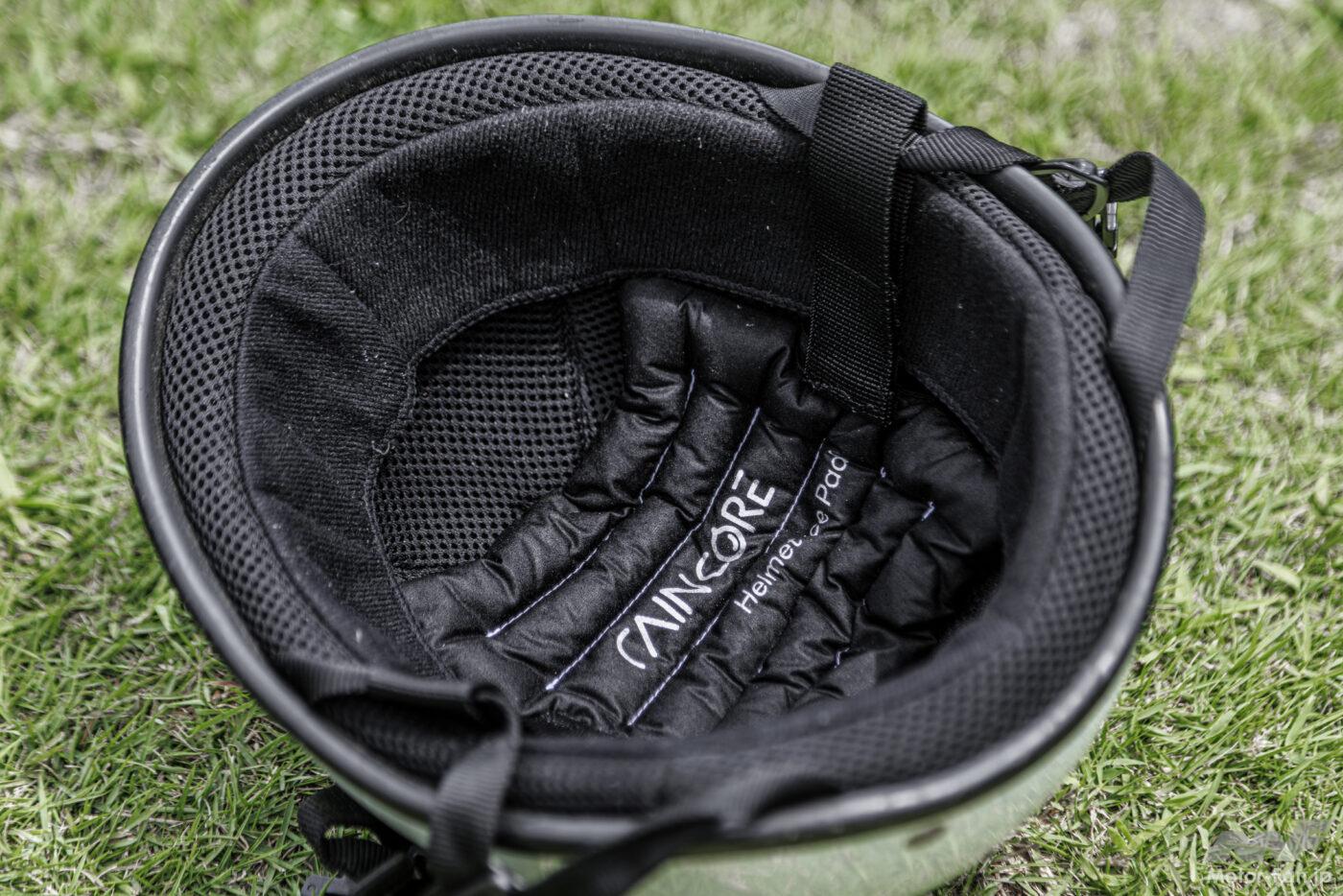
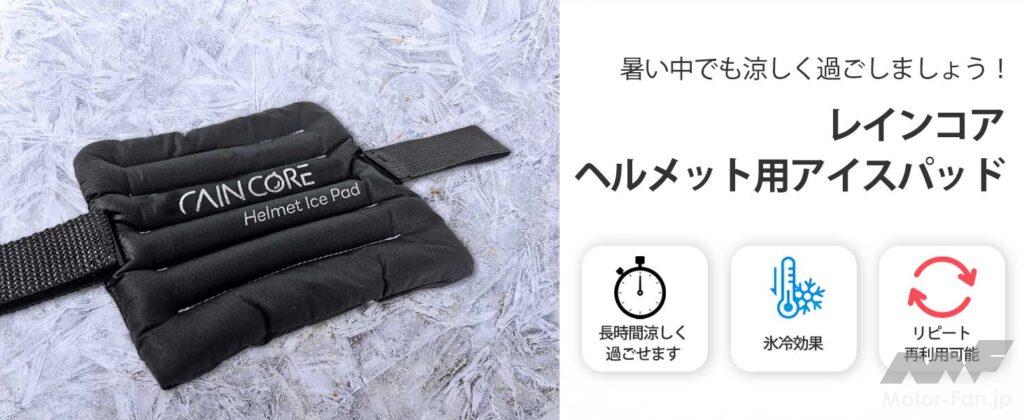
Raincore helmet ice pad body.
Overview of “Raincore Helmet Ice Pad”
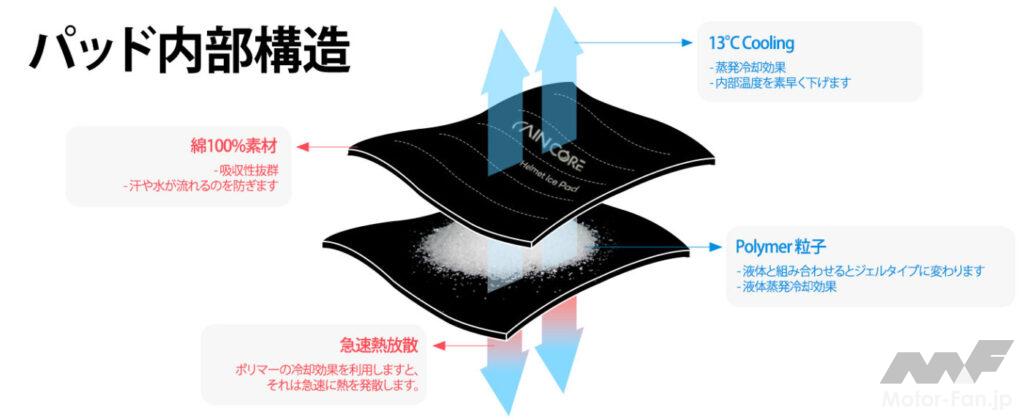
This helmet-mounted cooling pad is compatible with a variety of helmets. Utilizing Crystal Polymer Cooling Technology, the highly absorbent crystals (polymer particles) instantly cool the head when wet, keeping the pad moist and maintaining a cool feeling.
First, submerge the entire pad in water for about three minutes, waiting for the built-in crystals (polymer particles) to completely absorb the water to activate the cooling technology. After removing it from the water, remove any excess water, and place it inside the helmet and you’re ready to go.
The approximately 15cm x 15cm square pad itself is made of durable, high-quality cotton and polyester materials that can be reused semi-permanently. These are non-toxic, so they are safe for people with sensitive skin and small children. After use, you can wash them by hand with warm water and soap, so they can always be kept clean.
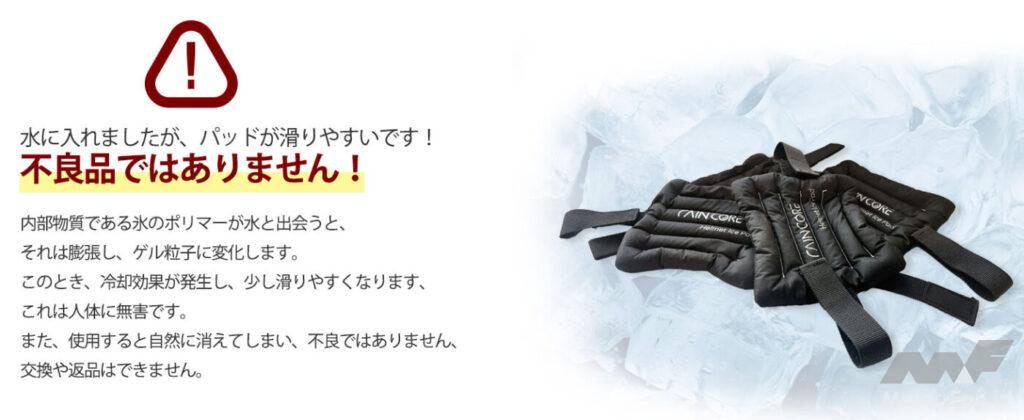
If the pad absorbs too much water, the built-in crystals will expand excessively and the stitching may come undone, so be careful not to leave the pad submerged in water for long periods of time. Seawater is not recommended.
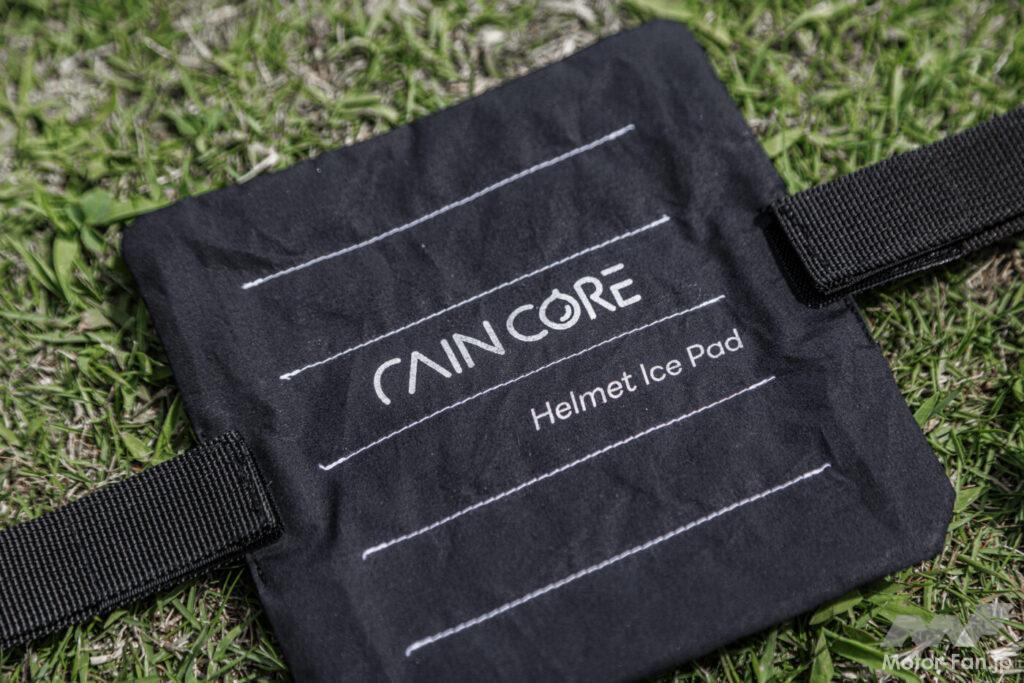
the surface of the main body.
ADVERTISEMENT
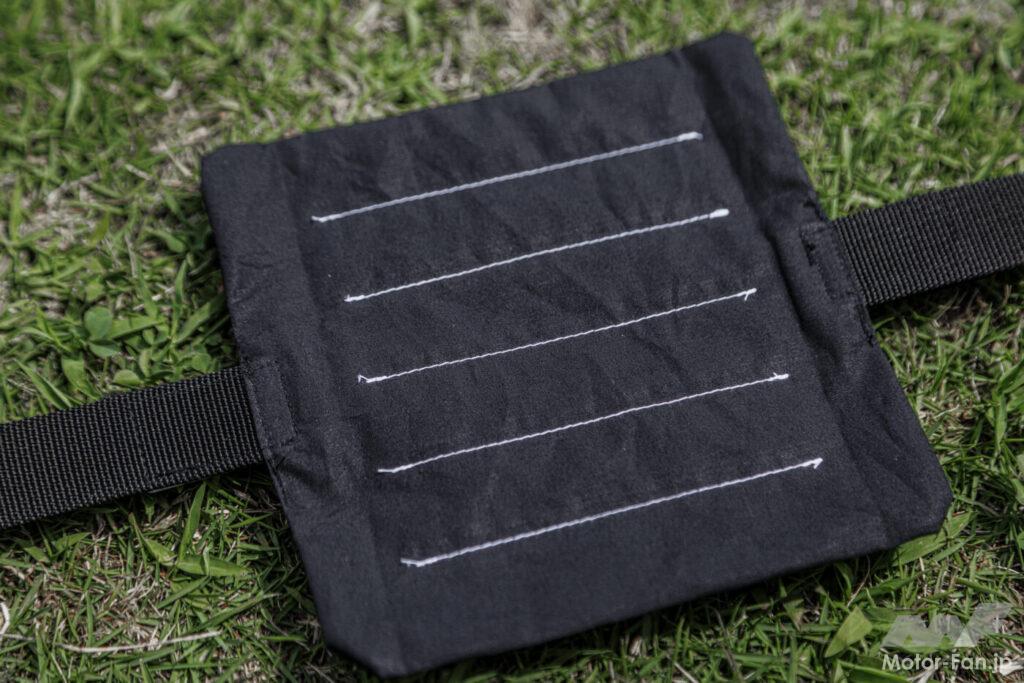
Back of the main unit.
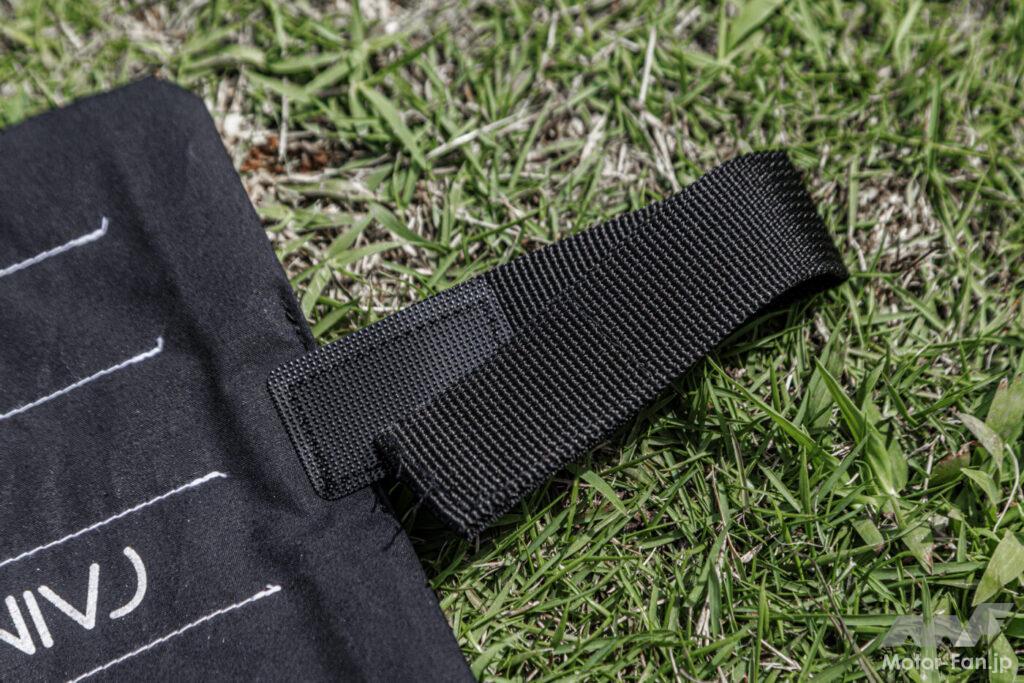
A string for fixing that uses Velcro.
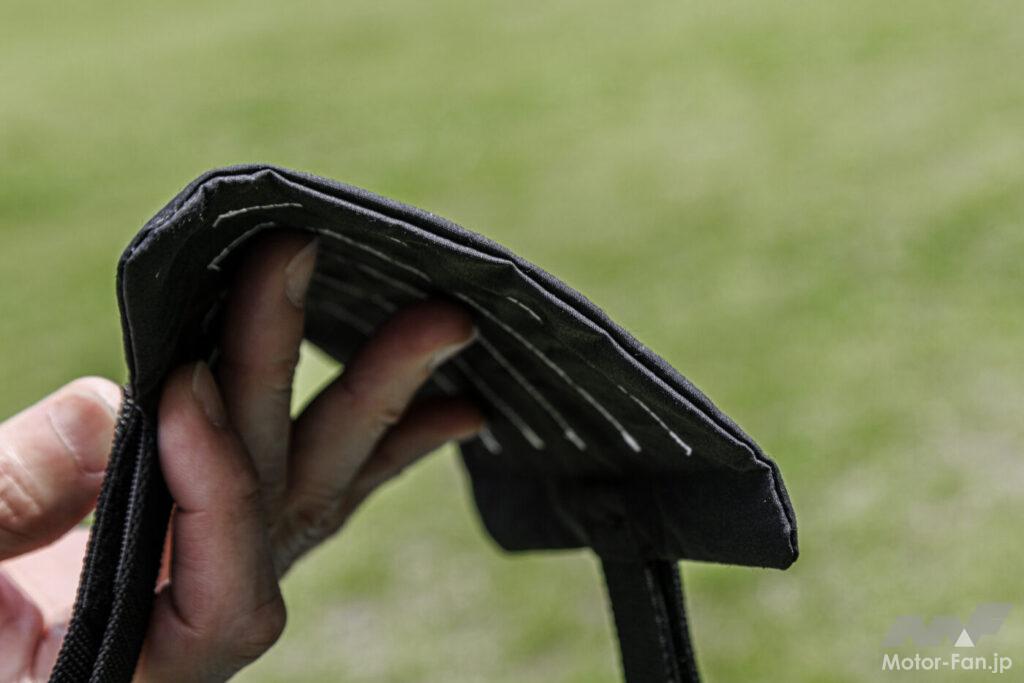
It is in a thin state without any water.
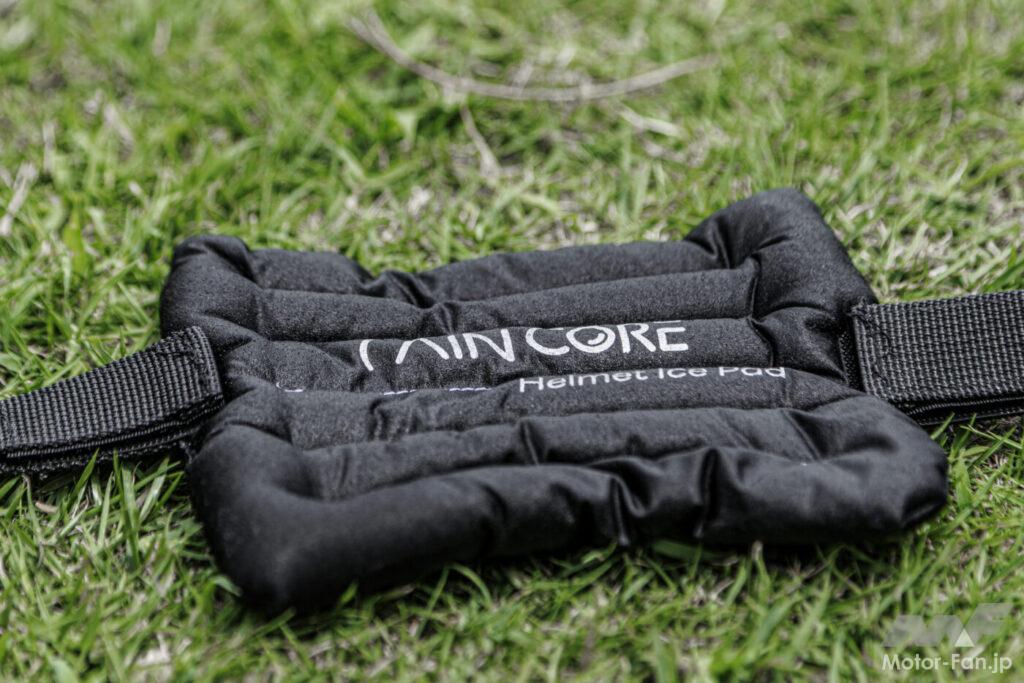
It is swollen with water.
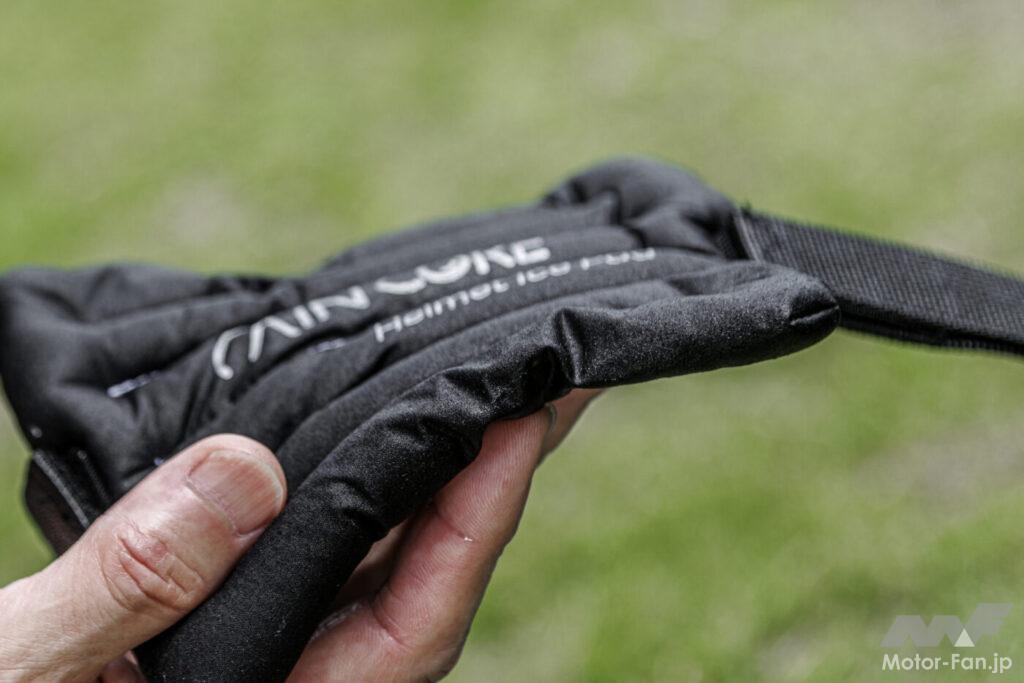
When soaked in water, it expands to a thickness of about 2cm.
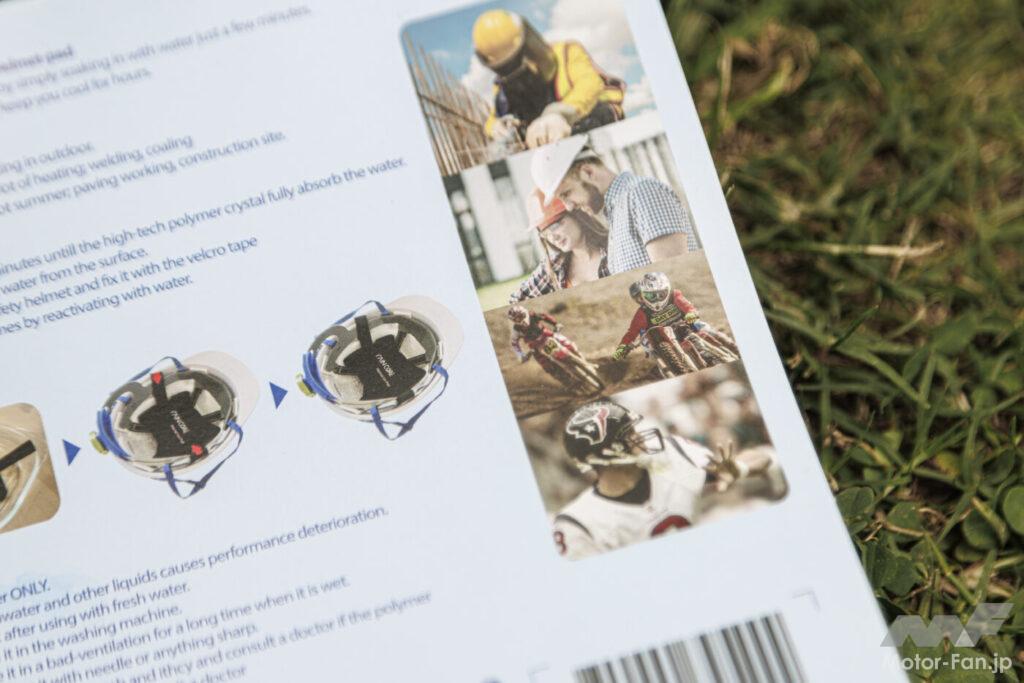
English instructions included. Compatible with various helmets as shown in the photo.
Product data
ADVERTISEMENT
| color | black |
| size | Free |
| material | cotton |
| Battery included or built-in | none |
| Weight (dry) | 30g |
| Product size | 14.48cm x 14.48cm x 0.3cm |
| Purchase site | Amazon.co.jp: Ice Helmet Cool Pad – Reusable Ice Cooling Pack Pad – Helmet Cooling Sheet for Hot Weather – Bicycle/Motorcycle Helmet Ice Pack – Ice Head Cooler – Heatstroke Prevention – Prepare for the Hot Weather – Reusable – Scalp Care – Scalp Cooling – Outdoor Work – Ice Pack – Neck, Shoulder, Knee Injuries – All You Need is Water: Industrial & Scientific |

“Raincore Helmet Ice Pad” Comfort Index
When riding a motorcycle ★★★★☆
Waiting at traffic lights ★★★★☆
Air-conditioned interior ★★★★☆
Convenience ★★★★☆
Compatibility with motorcycles ★★★★☆
ADVERTISEMENT
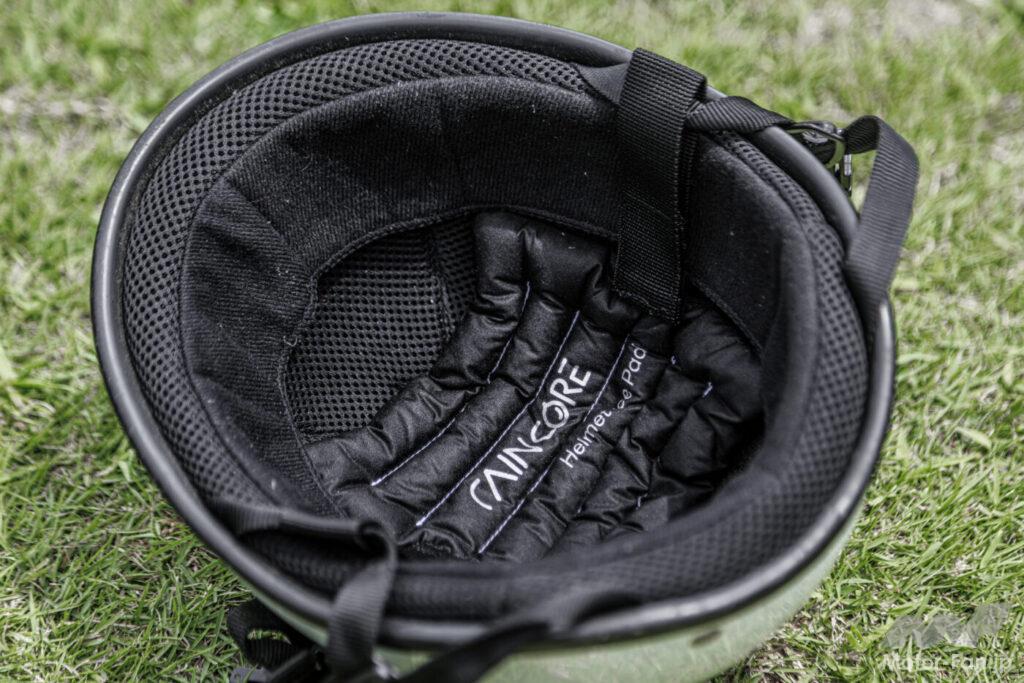
Attached to a half-cap helmet.
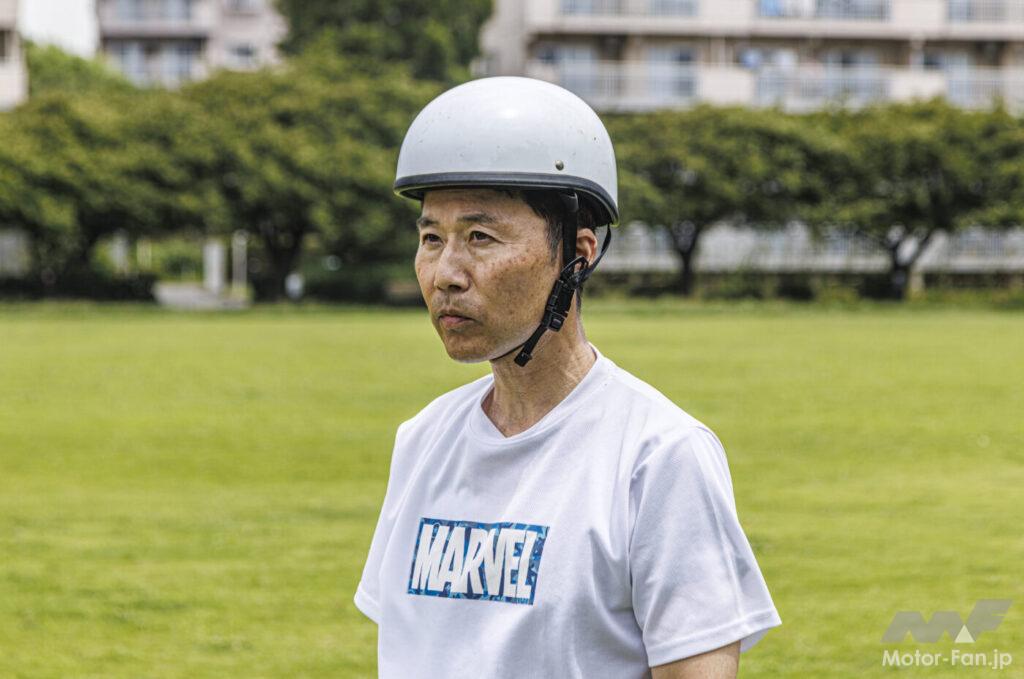
Attached to a half-cap helmet and put on.
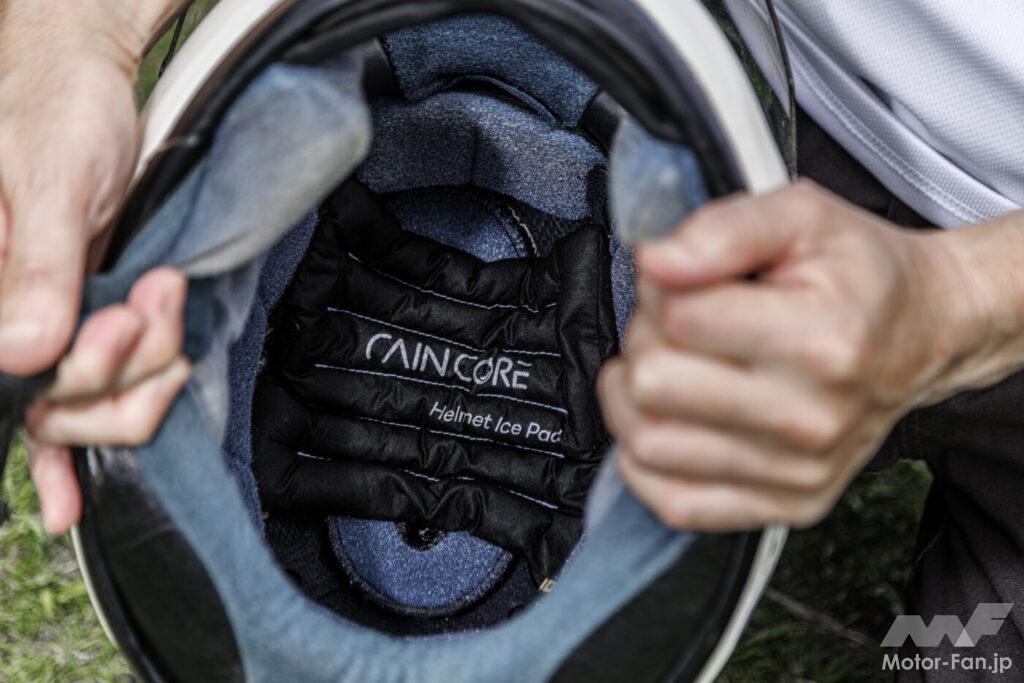
Attached to a full-face helmet.
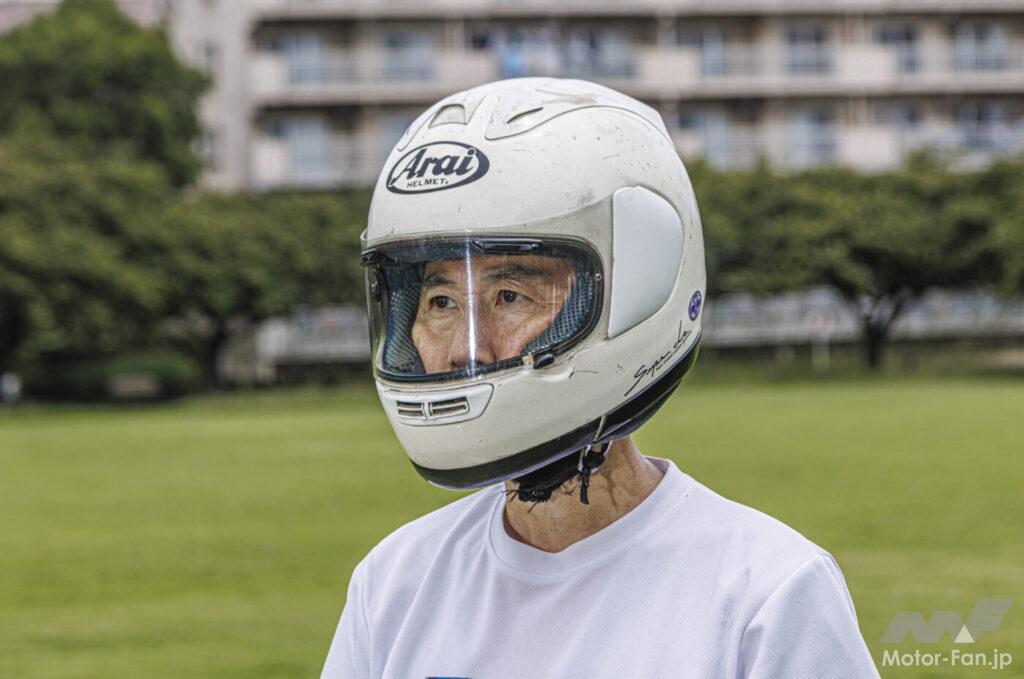
Attached to a full-face helmet and put on.
When the entire ice pad is immersed in water, the thin, flimsy body absorbs moisture and thickens. When you touch it with your hand, it transforms into a slippery gel. The ice pad expands to a thickness of about 2cm, providing a cool, refreshing sensation on hot days.
The ice pad is secured to the left and right sides of the helmet using Velcro straps. This time, I tried it with a half-cap helmet and a full-face helmet, but I couldn’t secure it to the chin straps of either helmet (it didn’t reach), so I didn’t use the Velcro straps.
The ice pad set on the top of the head inside the helmet fits snugly without slipping even when wearing the helmet. With the half-cap, the thickness of the ice pad, which is about 2cm, is clearly felt, and there is a slight feeling of pressure, as if “something is sitting on your head.”
Also, the half-face helmet is thicker above the head, so the position of the chin strap needs to be adjusted (the chin strap needs to be lengthened). On the other hand, unlike the half-face helmet, the full-face helmet fits tightly to the head, so the feeling of “something sitting on your head” is slightly less. This is clearly different from the thin “Ice Head” that was tested in the first round of 2025.
The ice pad is installed inside the helmet, and when you try it on, it feels “gently cool.” This is also a decisive difference from the “Ice Head,” which has a strong image of “instant cooling the moment you put it on.”
It weighs approximately 30g when dry and approximately 165g when wet (both measured values). Just looking at the numbers, it might seem a little heavy, but perhaps because of its soft and elastic texture, it doesn’t feel as heavy as 165g.
Set the ice pad inside the helmet and take it for a test drive!
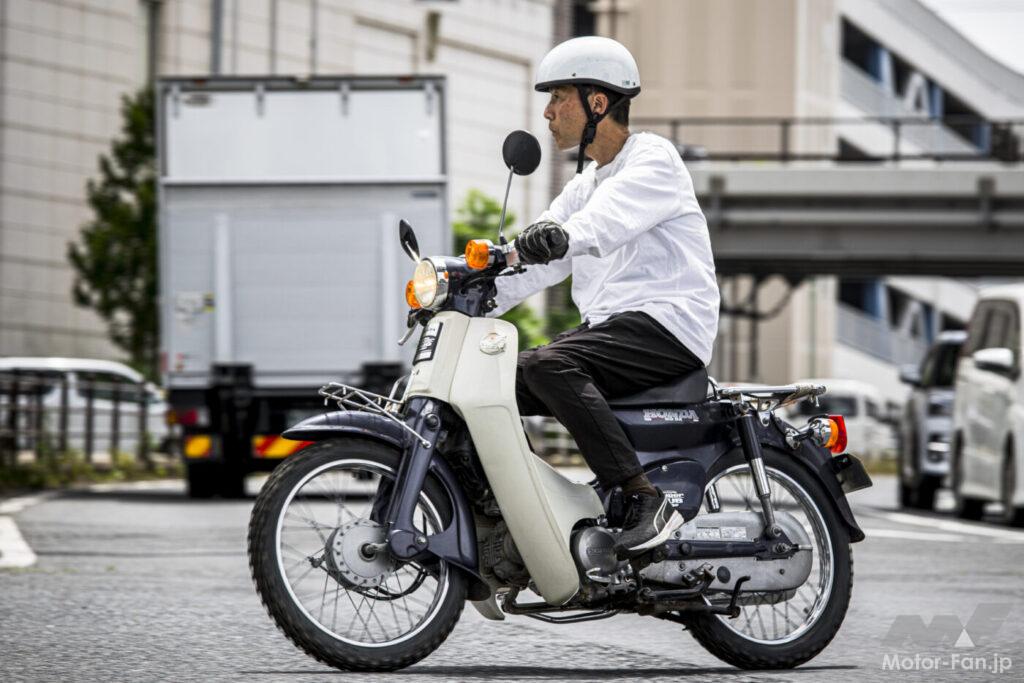
Test drive with a half-cap helmet attached.
This time, we test rode a half-cap helmet and a full-face helmet. At first, both felt a bit like there was something on my head, but once I got used to them, there was no major discomfort and it didn’t particularly interfere with riding.
My head felt cool and comfortable while riding. Especially with the full-face helmet with the shield closed, I could clearly feel my head getting cold, probably because the temperature inside the helmet was rising.
However, with a half-cap helmet, which allows the wind to blow onto your head while riding, or a full-face helmet with the shield open, the cooling sensation seems to be reduced by the wind.
During the test in the heat of summer, the cooling duration was about 15 minutes for both the half cap and full face. The coolness returned when the cap was wetted with water and lightly wiped dry. The good thing about this product is that water is readily available at convenience stores.
Water does not drip inside the helmet while riding. After use, I removed the ice pad and checked the inside of the helmet, and it was only slightly damp. I dried it in the shade and it dried in a few hours.
Unlike the “Ice Head,” which requires you to chill it thoroughly in cold water, the refrigerator, or the freezer before use, the Ice Pad can be easily cooled using just water. I felt that the Ice Pad was designed with convenience in mind, rather than immediate results.
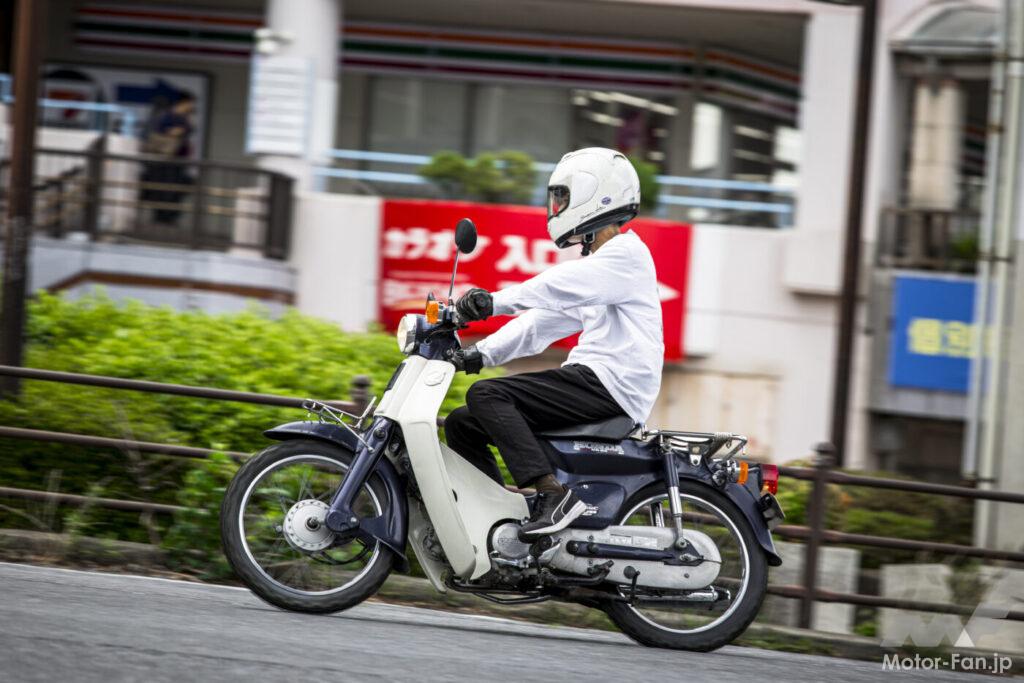
Test drive with full-face helmet attached.
*Note: The above is merely the author’s opinion. Your experience may vary depending on your personal sense, constitution, health condition, weather conditions, etc.
 [Preventing heatstroke on motorcycles] We tried out three interesting “neck cooler” products on our motorcycles.
As summer temperatures rise, neck coolers that cool arteries and veins to prevent heatstroke have become popular in Japan. It has become common to see people using neck coolers on the streets and on trains. Might using a neck cooler while riding a motorcycle make for a more comfortable ride? We conducted an experiment using commercially available neck coolers and ice packs to see if they would be effective while riding a motorcycle. PHOTO: YAMADA Shunsuke REPORT: KITA Hideaki
ADVERTISEMENT
 [Preventing Heatstroke on Motorcycles] Seeking Unbeatable Coolness! How about Combining Three Items? [Beginner’s Guide (STEP 1)]
Motorfan BIKES has become an annual tradition of conducting experiments and test experiences in the scorching heat, exploring whether there are any items that can help riders avoid the heat even just a little when riding their bikes in the sweltering summer. In 2024, the editorial team once again introduced a selection of items that they thought were “just the thing!” Here, they pursued the ultimate in comfort by combining various items with the sole purpose of “surviving the scorching heat.” They completely ignored practical aspects such as the “hassle of combining several items” and the “durability of each item.” They focused solely on “momentary coolness and comfort,” and divided the items into beginner, intermediate, advanced, and ultimate levels. First, take a look at the beginner level! PHOTO: Yamada Shunsuke TESTER/REPORT: Kita Hideaki
 [36°C Temperature and Riding a Bike] Wearing arm covers is cooler than wearing short sleeves and bare arms! | Mizuno Ice Touch UV Arm Covers
The scorching summer has finally arrived. Temperatures have been hitting 35°C or higher every day, and recently, temperatures exceeding 40°C are not uncommon in some areas. Japanese summers are also characterized by high humidity and muggy conditions. For riders, the heat and humidity can be likened to a harsh, ascetic practice, as they ride in the hot, humid conditions while wearing helmets that turn riders into natural saunas. This article is an annual feature exploring “are there any items that can help riders beat the heat even a little?” Our first installment of 2024 introduces Ice Touch’s “UV Arm Covers,” which can be worn on both arms. Perhaps using these arm covers while riding a motorcycle could make the experience a little more comfortable? With great expectations, we set out to test the product outdoors in the middle of summer, sweating profusely under the relentless scorching sun of early July, with a clear sky and an outside temperature of 36°C (according to the Japan Meteorological Agency). PHOTO: YAMADA Shunsuke TESTER/REPORT: KITA Hideaki Official manufacturer website: https://jpn.mizuno.com/ec/disp/attgrp/C2JYA102/ Purchase site: https://store.shopping.yahoo.co.jp/akichan-do/mizuno-c2jya102-14-nolot.html *Note: All data in the article is current as of July 2024.