
It was a scorching hot day with a maximum temperature of 35°C and humidity of 65%. The weather was clear, making for a perfect test environment…

Every year, Motorfan BIKES conducts an experiment and test to find out if there are any items that can help you stay cooler while riding your bike during the scorching summer. In 2025, we will introduce some of the best items that our editorial team thought might be comfortable and actually purchased (we tested six items in 2025).
For the first test, we tested the “Meccha Cool Ice Head,” a midsummer item that helps prevent heatstroke by cooling the head by placing the device in cold water, the refrigerator, or the freezer, then attaching it to a helmet or hat. This head-cooling item is perfect for when you’re “wearing it while doing anything,” such as riding a motorcycle around town, touring, leisure activities, sports, or work.
[Experimental Data]
Test date: Daytime in early July 2025
Location: A city in Chiba Prefecture
Weather on the day: Sunny with occasional clouds
Maximum temperature: 35°C (as announced by the Japan Meteorological Agency)
Humidity: 65% (as announced by the Japan Meteorological Agency)
Heatstroke warning alert issued
Test environment: The glare from the asphalt was intense. The measured temperature in the sun was over 45°C
Feeling temperature: The sun was strong and it was extremely humid. If you didn’t take a break in the shade every now and then, you’d get heatstroke. The heat was so unbearable that it made the tester wonder, “Is this a punishment game?” There was also a warning on TV to “avoid going out during the day as much as possible.”
Test vehicle: Honda Super Cub 50
Super Cool Ice Head…Purchase price: 3,960 yen (tax included) / Free shipping (nationwide)
*Prices may vary depending on the time of purchase.
ADVERTISEMENT
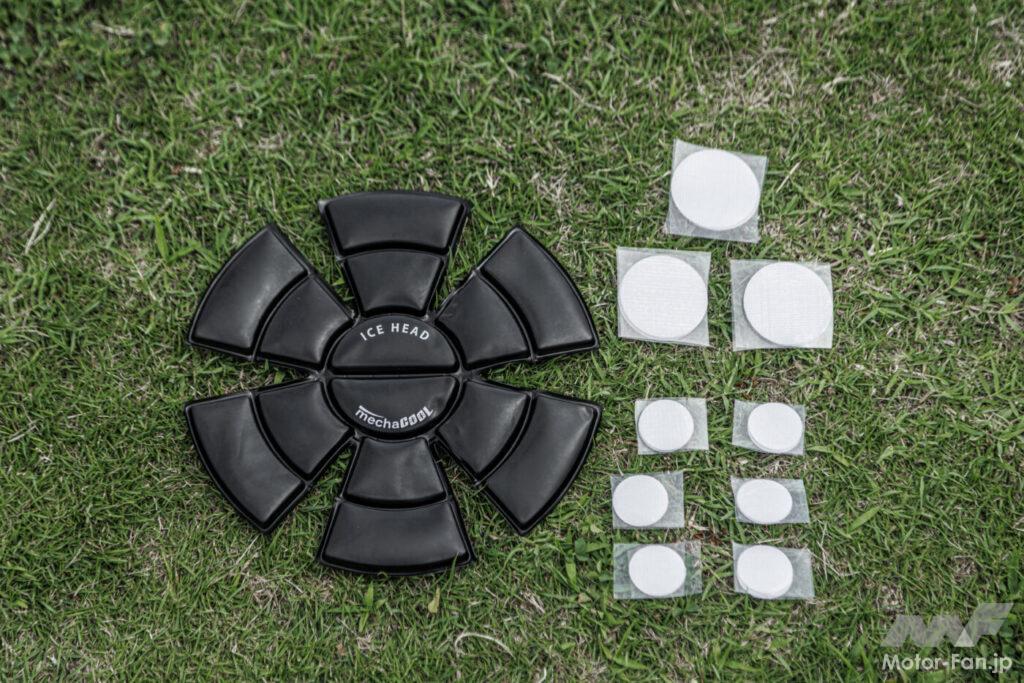
Complete product set. The black item on the left in the photo is the main body. The included white Velcro fasteners are attached to the Ice Head and helmet bodies to secure them in place.

The surface is made of durable, lightweight, and portable “TPU (thermoplastic polyurethane),” while the body is soft and foldable.

The cooling section uses PCM (Phase Change Material) developed by the National Aeronautics and Space Administration (NASA).
Overview of “Super Cool Ice Head”
The “Meccha Cool Ice Head” is a cooling type that you place inside your helmet or hat (on your head) to cool the top of your head. The included hook-and-loop fastener (white) attaches to the Ice Head and helmet bodies to secure them in place.
The surface is made of durable, lightweight, and easy-to-carry TPU (thermoplastic polyurethane). The plastic material TPU is extremely soft and flexible. It also boasts 99.9% antibacterial effect against E. coli and 99.5% against Staphylococcus aureus.
The cooling section, which is the “source of cooling,” uses PCM (Phase Change Material), developed by the National Aeronautics and Space Administration (NASA). PCM prevents dynamic cracks in the spacecraft caused by sudden temperature changes and protects the astronauts from extreme temperature changes. With ordinary materials, the temperature of the material rises as the surrounding temperature rises. On the other hand, PCM stops rising at a certain temperature range, absorbing heat and maintaining a constant temperature, even when the surrounding temperature rises. This is why it can maintain cooling.
PCM can be used for a longer period of time than ice. It is also 30% lighter than water, so it doesn’t feel as heavy as water. The ice head does not pose the risk of low-temperature burns or frostbite, so it is safe for people with sensitive skin and small children to use.
Product data
ADVERTISEMENT
| Product name | Super Cool Ice Head (registered trademark) |
| Item number | MCIH |
| country of origin | South Korea |
| material | Surface: TPU (Thermoplastic Polyurethane) Interior: PCM (Phase Change Material) |
| Size/weight (approx.) | S size: Diameter 18cm / Approx. 94g M size: Diameter 22cm / Approx. 162g L size: Diameter 24cm / Approx. 196g |
| Duration of coldness | S size: Approx. 70 minutes M size: Approx. 85 minutes L size: Approx. 90 minutes *Measured in an indoor environment of 35°C (time until PCM is completely dissolved) |
| Clotting time | Cold water (with ice): All sizes/approx. 10 minutes Freezer: All sizes/approx. 30 minutes Refrigerator: All sizes/approx. 50 minutes |
| Purchase site | https://store.shopping.yahoo.co.jp/alleguretto88jp/mcih.html |
Cool in cold water for about 30 minutes…
The solidification time is about 10 minutes if you soak it in cold water (with ice), about 30 minutes in the freezer, and about 50 minutes in the refrigerator. Regardless of the cooling method, the cooling effect and duration when used are almost the same.
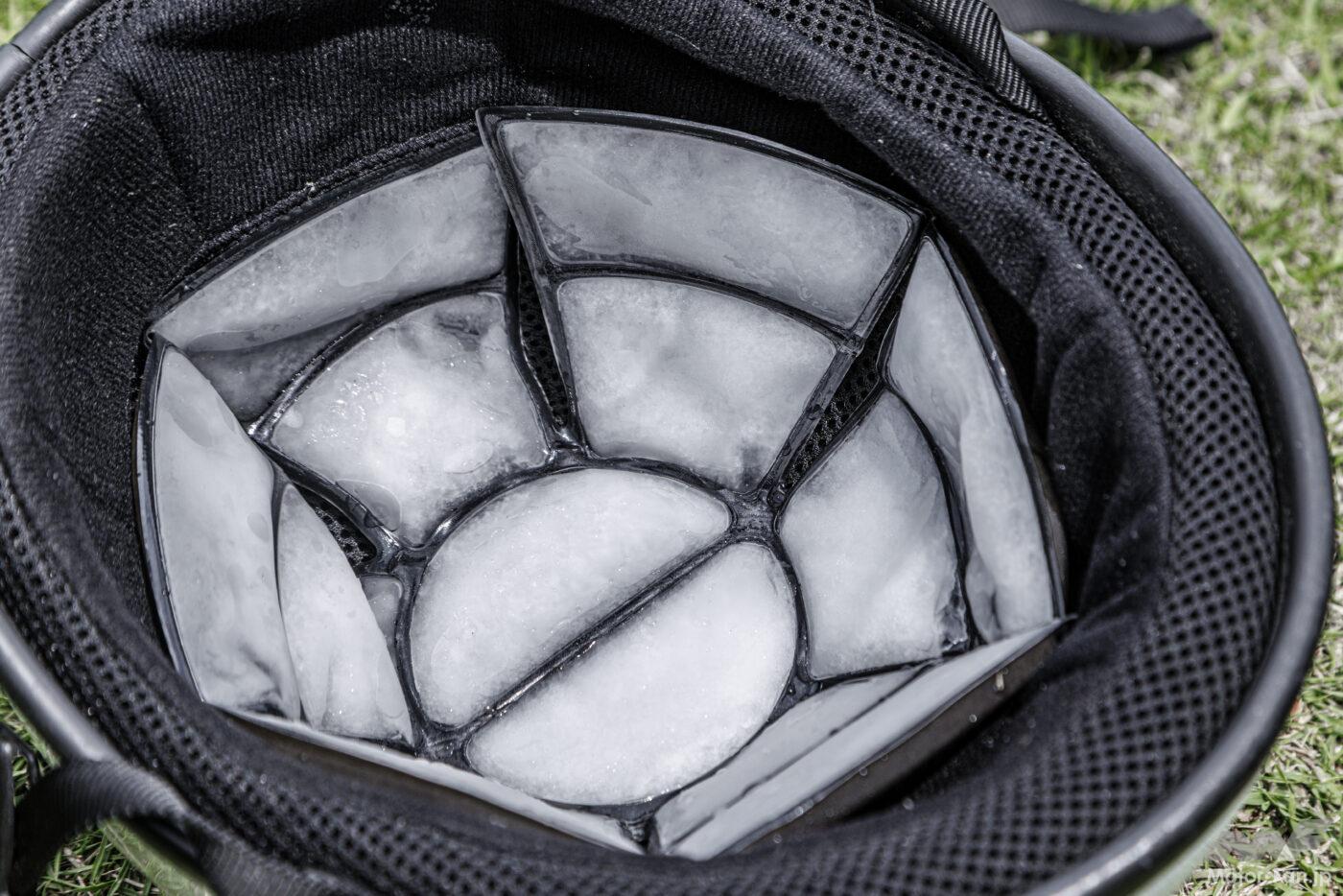
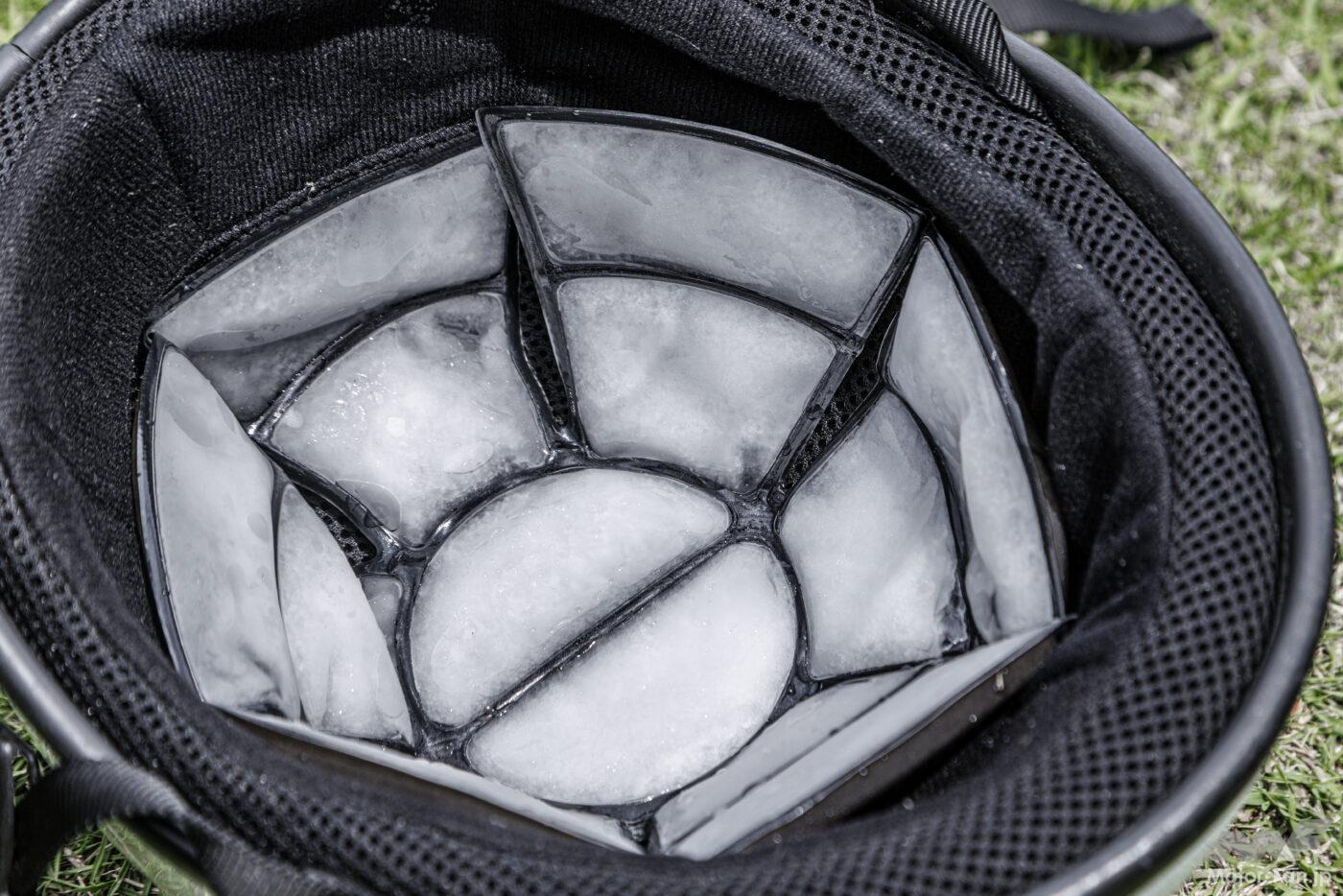
When the device is cooled, the PCM in the cooling section freezes and turns white. Its cool appearance is sure to impress! The thickness of the white, cooled device is about the same as a thin-crust pizza.
The helmet and Ice Head body are secured using the included Velcro, which allows the helmet to be firmly attached to the head inside the helmet.
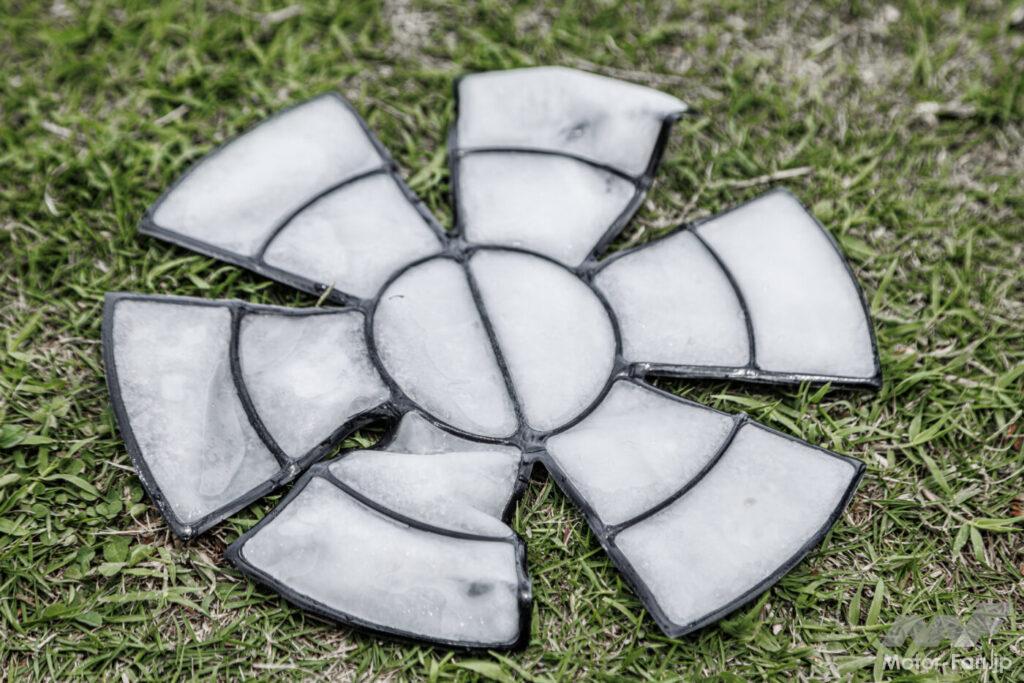
The PCM in the cooling section has solidified. It looks cool!
ADVERTISEMENT
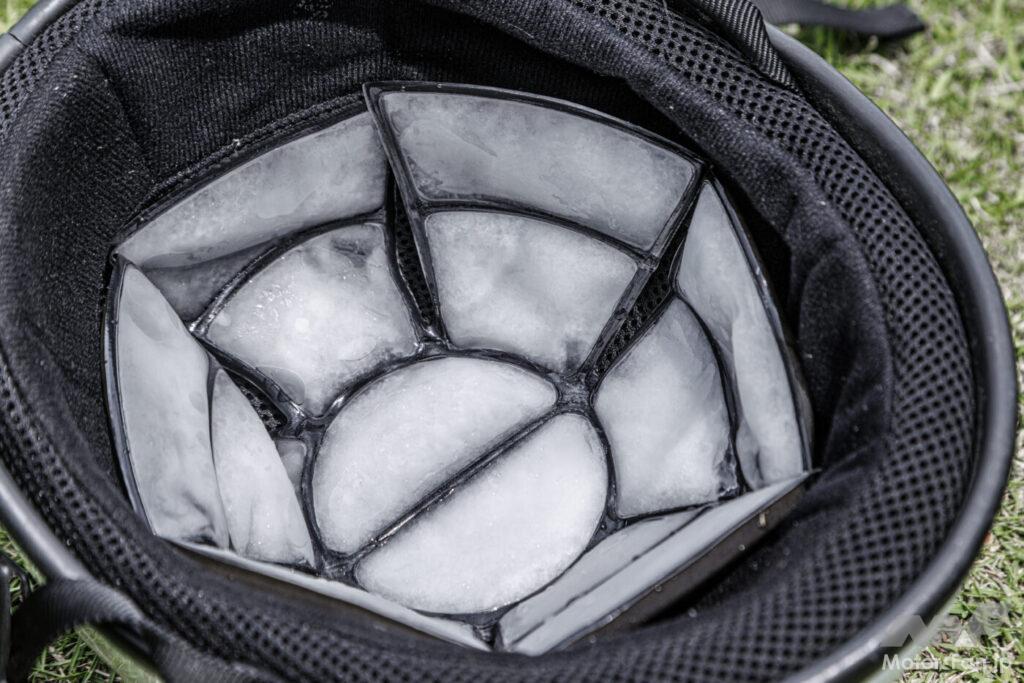
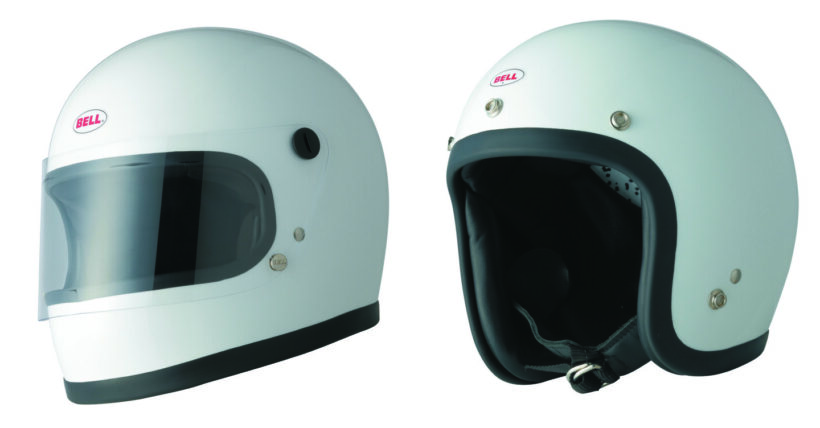
The ice head is set inside the half-cap helmet.

Set the ice head on the head inside the full-face helmet.
“Mecha Cool Ice Head” comfort index
When riding a motorcycle ★★★★★
Waiting at traffic lights ★★★★★
Air-conditioned interior ★★★★★
Convenience ★★★☆☆
Compatibility with motorcycles ★★★★★
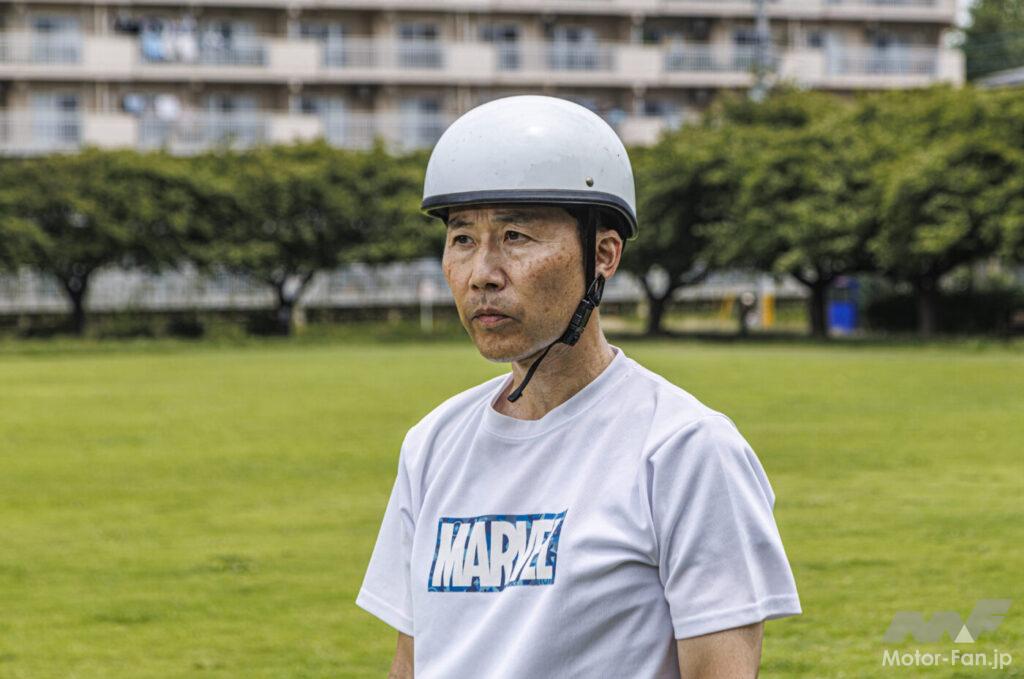
The Ice Head is placed on the head inside the half-cap helmet and put on.
ADVERTISEMENT
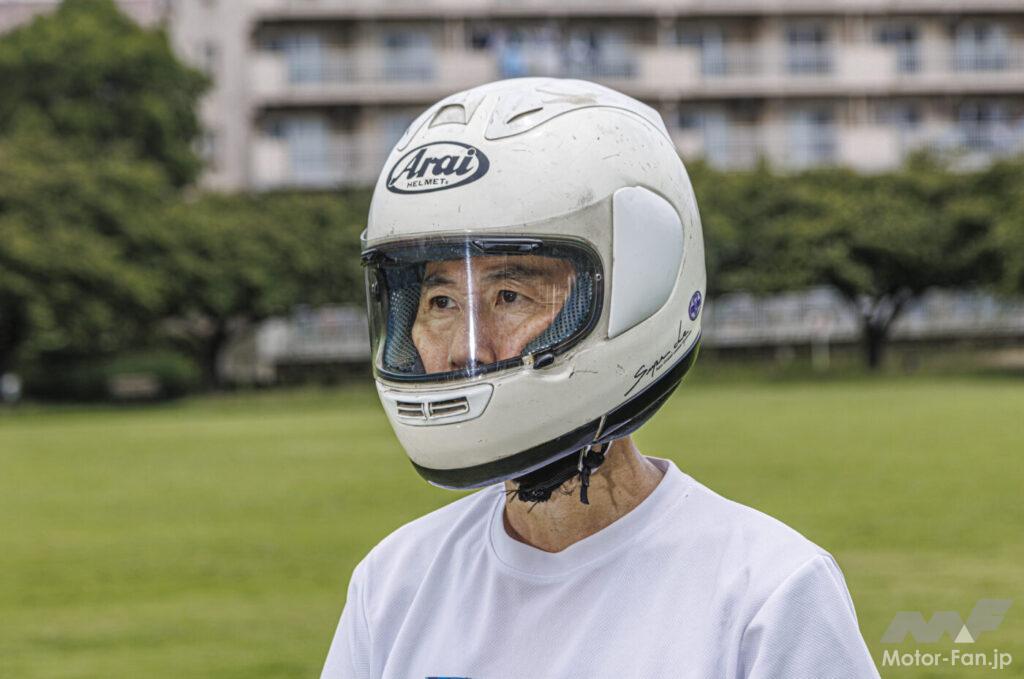
The Ice Head is placed on the head inside a full-face helmet and put on.
First, I used it on a half-cap helmet. Even when cooled, the Ice Head itself is about the thickness of a thin-crust pizza, so there’s no pressure on the head. The Ice Head cools the top of the head the moment you put the helmet on, providing excellent comfort on extremely hot days.
Next, I tested it with a full-face helmet. There was also no pressure on the head, and the coolness was pleasant. Compared to a half-cap helmet, a full-face helmet fits closer to the head, so the coldness is transmitted more directly.
The ice head used this time is medium size and weighs about 162g. It doesn’t feel heavy at all and puts very little strain on the neck.
Built-in ice head for driving on scorching hot days!
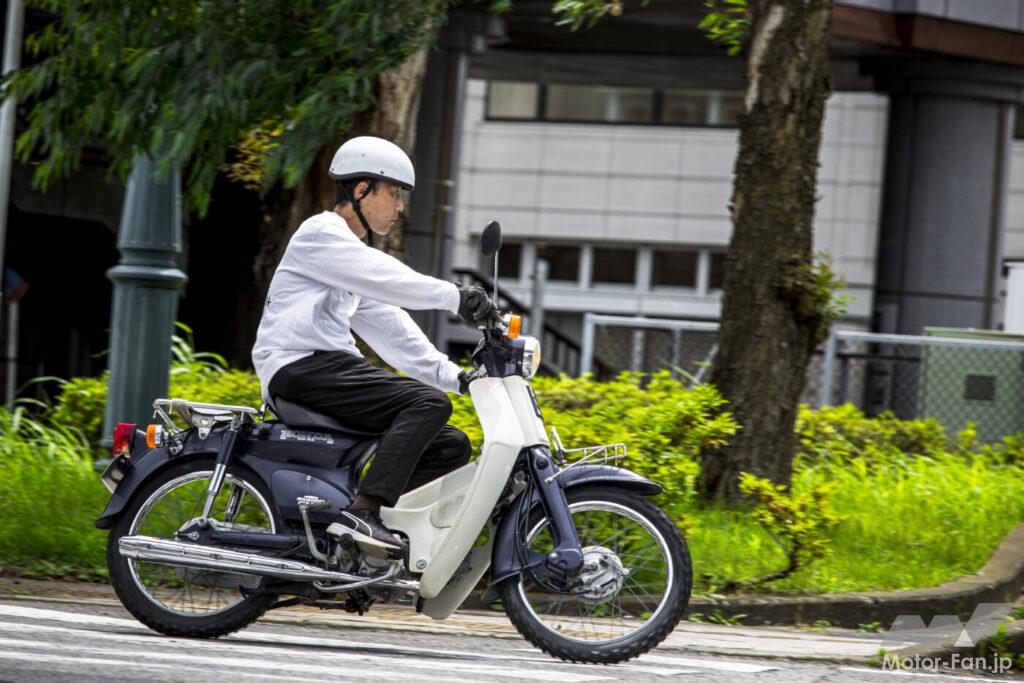
Riding with Ice Head set on the head inside a half-cap helmet.
The half cap, which allows the wind to hit your face directly while riding, effectively cools you down by combining the wind from the front with the coldness of the ice head. It would also be useful for bicycle helmets and work helmets.
On the other hand, with the full-face helmet, when the shield is closed, you can feel the coldness of your head. With the shield open, the wind from the front and the coldness of the ice on your head work well together, just like with the half-cap. Personally, I found it more comfortable with the shield open.
Both the half cap and full face helmets stay cool for about 30 minutes. The Ice Head helmet doesn’t drip inside the helmet and provides a refreshing feeling.
When I removed the Ice Head from the helmet after use, the interior of the helmet head was only slightly damp. After drying the helmet in the shade, the interior dried quickly.
In this test, the cooling effect of both the half cap and full face helmets was completed in about 30 minutes. This was during a 30-minute ride, such as commuting, riding around town, or a short ride. Also, if you have access to a refrigerator or cold water, I felt that the Ice Head would be a very useful item.
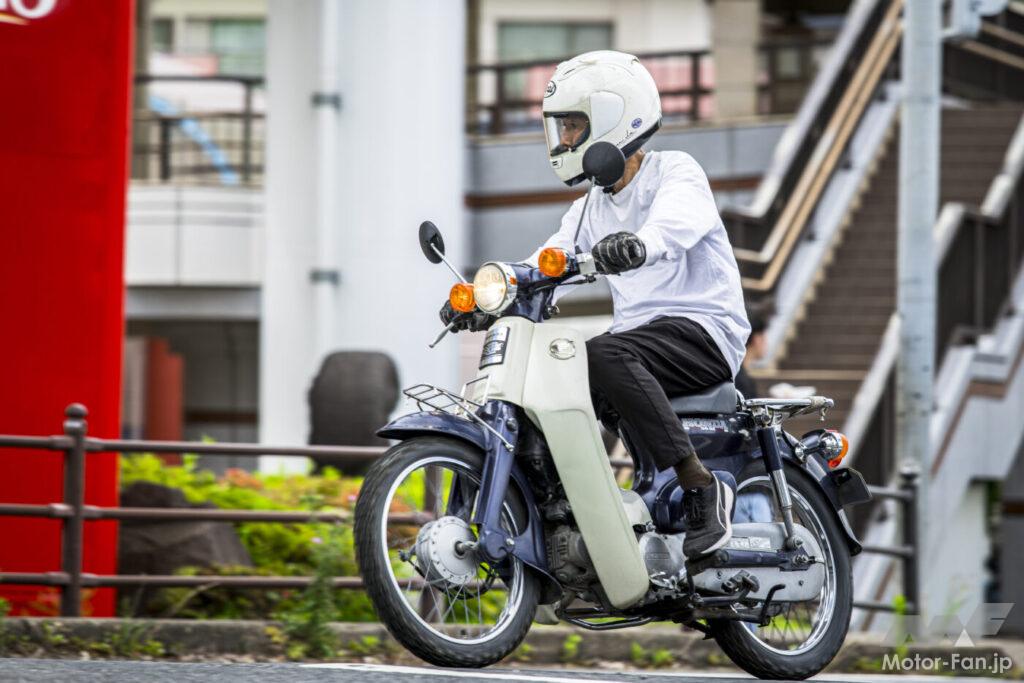
Riding with Ice Head set on the head inside a full-face helmet.
*Note: The above is merely the author’s opinion. Your experience may vary depending on your personal sense, constitution, health condition, weather conditions, etc.
 [Preventing heatstroke on motorcycles] Fan-equipped work clothes are a standard item at construction sites, but when used on a motorcycle…they don’t provide much cooling.
A scorching summer has arrived, with temperatures described as dangerously hot and even disaster-level. Temperatures have been hitting 35°C or higher every day, with some areas even reaching 40°C recently. Japanese summers are also characterized by high humidity and muggy conditions. For riders, the heat and humidity can be like a penance or austerity, as they ride in the hot, humid conditions while wearing helmets that turn the bike into a natural sauna. This article is an annual feature exploring “are there any items that can help riders cope with the heat?” For our fifth installment of 2024, we introduce “fan-equipped workwear,” a staple at construction sites. Perhaps using fan-equipped workwear while riding a motorcycle could make the heat a little more comfortable? With relentless sunshine and a clear, sweltering 36°C (according to the Japan Meteorological Agency), we set out to test the bike outdoors in the middle of summer, shivering with anticipation. PHOTO: YAMADA Shunsuke TESTER/REPORT: KITA Hideaki *Note: All data in this article is current as of June 2024.
ADVERTISEMENT
 [Preventing Heatstroke on Motorcycles] Seeking Unbeatable Coolness! How about Combining Three Items? [Beginner’s Guide (STEP 1)]
Motorfan BIKES has become an annual tradition of conducting experiments and test experiences in the scorching heat, exploring whether there are any items that can help riders avoid the heat even just a little when riding their bikes in the sweltering summer. In 2024, the editorial team once again introduced a selection of items that they thought were “just the thing!” Here, they pursued the ultimate in comfort by combining various items with the sole purpose of “surviving the scorching heat.” They completely ignored practical aspects such as the “hassle of combining several items” and the “durability of each item.” They focused solely on “momentary coolness and comfort,” and divided the items into beginner, intermediate, advanced, and ultimate levels. First, take a look at the beginner level! PHOTO: Yamada Shunsuke TESTER/REPORT: Kita Hideaki
 [Severe Heat and Motorcycles] Riding Helpful Items: The Ultimate Fan-Equipped Workwear with Mizuno Innerwear (STEP 4)
Motorfan.JP BIKES’ annual experiment and experience test project explores whether there are any items that can help riders avoid the heat even just a little while riding their bikes in the sweltering summer. For 2024, the editorial team once again introduced a selection of items that they considered “the perfect fit.” This section aims to provide riders who can avoid the heat, even for just a moment, by combining various items for ultimate comfort. Practical aspects such as the hassle of combining multiple items and the durability of each item are completely ignored. Focusing on “instantaneous coolness and comfort,” the section is divided into beginner, intermediate, advanced, and ultimate levels. Here, we introduce a top-of-the-line (or so we believe) combination that combines electric fan-equipped workwear with cooling innerwear from Mizuno, a major sportswear manufacturer. How effective is this cooling effect? PHOTO: YAMADA Shunsuke TESTER/REPORT: KITA Hideaki
 Is it true that it “cools in 3 seconds”? | I bought a neck cooler on Amazon. I tried the aluminum plate cooling type. [Intense heat and motorcycles]
Neck coolers are becoming popular in Japan as summer temperatures rise. Might using a neck cooler while riding a motorcycle make riding a little more comfortable? Last time, I used a neck fan that had received high reviews on Amazon, but unfortunately it failed miserably without providing any cooling effect. So this time, I once again used a neck cooler that had also received high reviews on Amazon, which “cools in specific areas rather than air-cooling,” in pursuit of greater comfort while riding a motorcycle. Just like the neck fan, on a July day when the sun was shining mercilessly, I was filled with even greater hopes and tried it outdoors in midsummer, with an outside temperature of 36°C (as reported by the Japan Meteorological Agency), shivering profusely. PHOTO: YAMADA Shunsuke REPORT: KITA Hideaki
 [Preventing heatstroke on motorcycles] We tried out three interesting “neck cooler” products on our motorcycles.
As summer temperatures rise, neck coolers that cool arteries and veins to prevent heatstroke have become popular in Japan. It has become common to see people using neck coolers on the streets and on trains. Might using a neck cooler while riding a motorcycle make for a more comfortable ride? We conducted an experiment using commercially available neck coolers and ice packs to see if they would be effective while riding a motorcycle. PHOTO: YAMADA Shunsuke REPORT: KITA Hideaki