

Pacific saury: Yamaha TZR250 (1989)
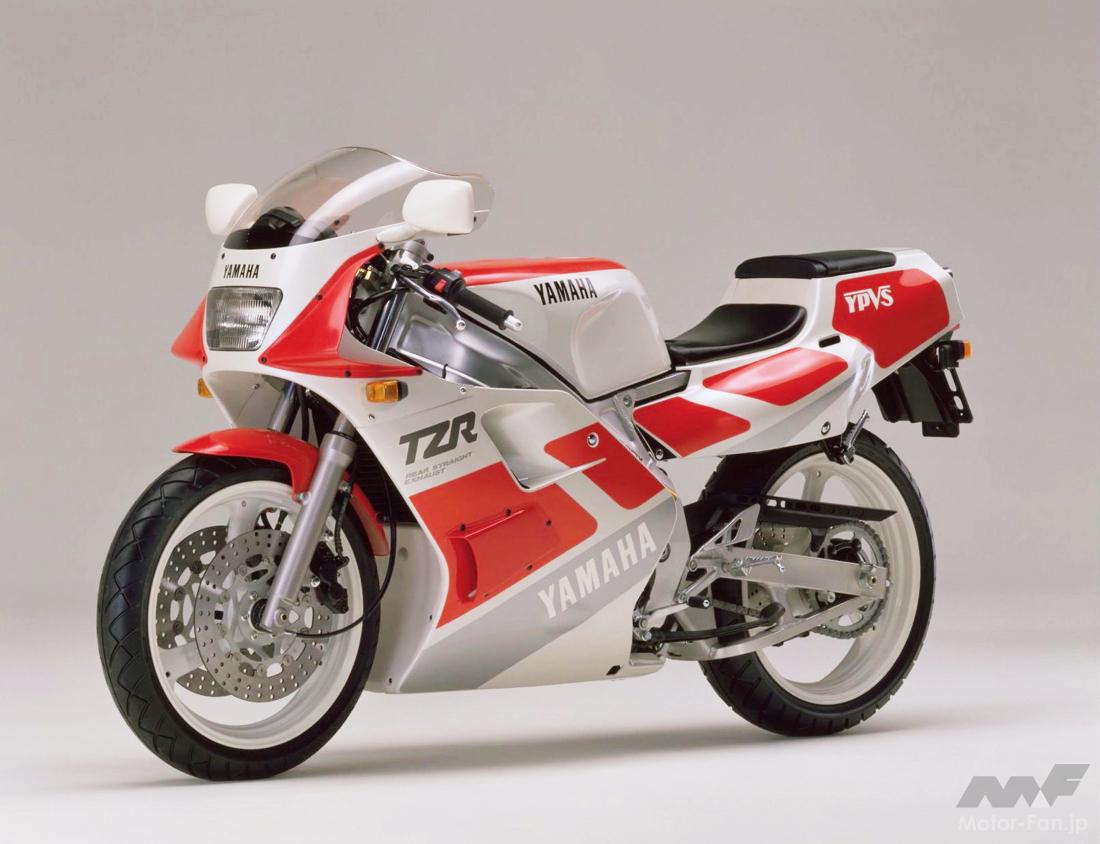
The 1980s were the heyday of racer replicas. As you know, these were commercial models that incorporated the form and technology of factory machines competing in the world’s top races, such as the WGP (Road Racing World Championship, now MotoGP), and this genre created many fans, especially among young people at the time. Among these racer replicas, the second-generation Yamaha TZR250 model, which was released in 1989, had the amusing nickname “Sanma” (Pacific saury).
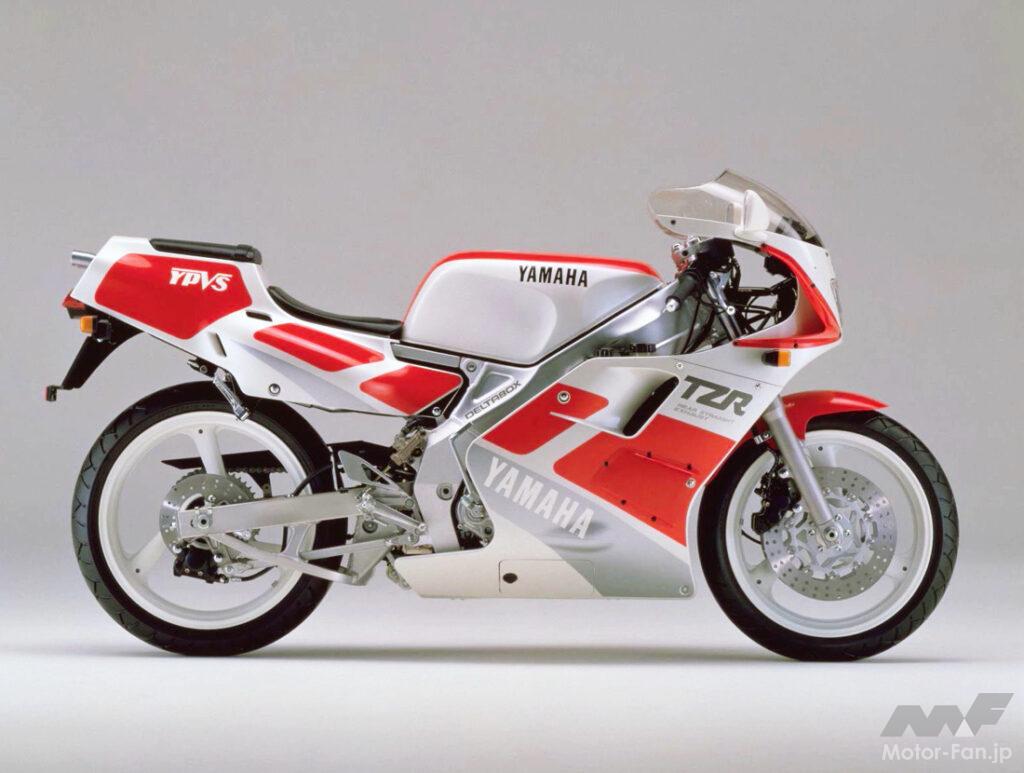
Yamaha TZR250 (1989)
The first model of the TZR250 was released in 1985. It was a production vehicle that incorporated technology from the YZR500, a factory machine that competed in the 500cc class of the WGP, the premier two-wheeled race at the time. It was a long-selling model that was sold until 1995, and the second generation in particular featured a water-cooled, two-stroke, in-line twin engine with a unique front intake/rear exhaust layout. It was notable for its mechanism, which aimed to improve fuel efficiency by straightening the flow of air entering the engine while riding.
Incidentally, this rear exhaust layout was often used on race cars and was rare for production cars at the time. Moreover, the second-generation TZR250 also featured a style in which two silencers extended from the rear of the seat cowl. With its sharp style reminiscent of the racing machines of the time, it is a machine that still has many fans today.
Why was the second-generation TZR250 nicknamed “Sanma” (Pacific saury)? The reason is because its model number was “3MA.” The generally accepted theory is that it was called “Sanma” because “3” means San and “MA” means Ma. The TZR250 had a history spanning roughly 10 years, and there were many variations, so fans probably tinkered with the model number to distinguish it from other years and specifications. This is proof that it is one of the great motorcycles with a large number of fans.
Hachi Hachi: Honda NSR250R (1988)
Along with Yamaha’s TZR250, the Honda NSR250R led the popularity of 2-stroke racer replicas. The first model (MC16) was released in 1986, but the 1988 model, which was a minor change to the second-generation MC18, was nicknamed “Hachi Hachi.”
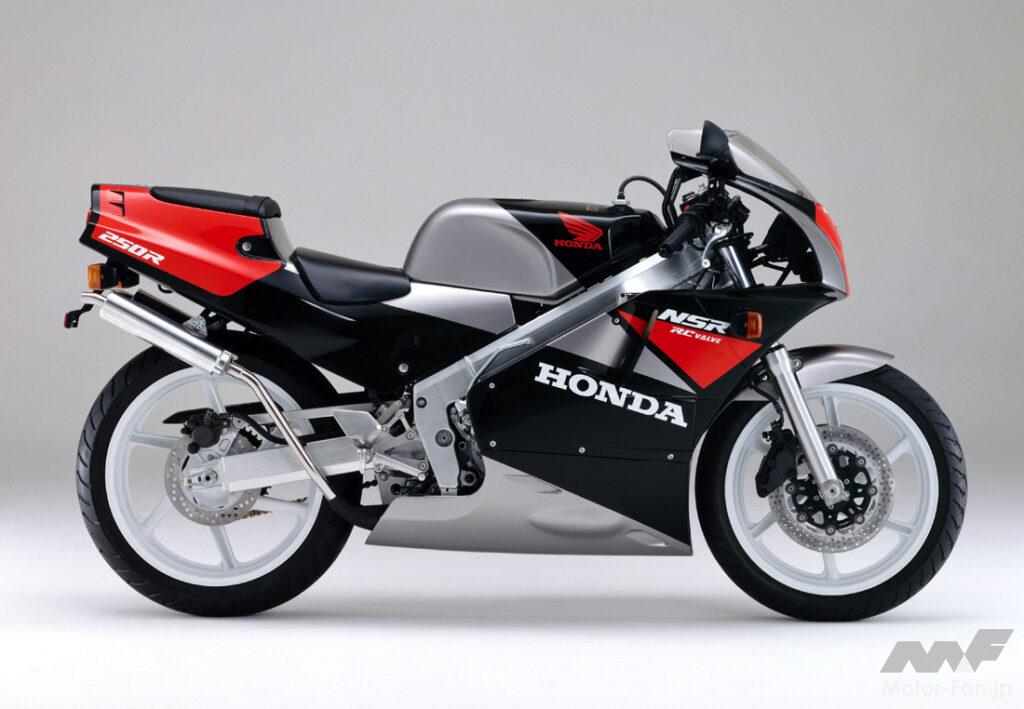
Honda NSR250R (1988)
The NSR250 is a factory machine that has been extremely successful in races both in Japan and overseas, winning numerous victories in the 250cc class of the world’s most prestigious race, the WGP. The NSR250R is its production version.
The minor change version of the second-generation model that appeared in 1988 first adopted a 249cc, water-cooled, two-stroke, 90-degree V-twin engine. Equipped with a PGM Carburetor II that provided precise air-fuel ratio control, it produced a maximum output of 45PS/9500rpm. The body also featured an aluminum twin-tube frame with irregular pentagonal cross-section material. The rear wheel was fitted with a wide 140/60-R18 tire, and it was also equipped with a low, long slant-nose full fairing. Its racing machine-like style was also an attractive feature.
Despite this being the second-generation NSR250R, there is an urban legend among some fans that the 1988 model was the strongest. In fact, the maximum output of the NSR250R was 45 PS up until the third-generation model (MC21) that came out in 1990. After that, the fourth-generation model (MC28) that appeared in 1993 voluntarily limited the power output to 40 PS, but the maximum output remained the same from the first to third generations.
However, as far as I can remember, there were rumors that the 1998 model was the fastest Honda racer replica at the time, not just the NSR250R, but also the 400cc 4-stroke CBR400RR. I’ve also heard that this year’s model was the most powerful, not just for Honda, but for other manufacturers’ racer replicas as well.
The reason for this is unclear, but there have been various speculations, such as “When the machines were actually put through bench tests, the 1988 model was closest to the catalog horsepower.”
In any case, the truth of the matter is unclear, but it is certain that the 1988 NSR250R was called “88 = Hachi Hachi” to distinguish it from other models. At the time, high-performance bikes were considered to be the best. This nickname was truly symbolic of the 1980s.
750 Killer: Yamaha RZ350 (1981)
The Yamaha RZ350, along with its sister model, the RZ250, was a pioneering model in the so-called “racer replica” boom. At the time, it was nicknamed the “750 killer” due to its overwhelming power performance that exceeded its class, and it became a huge hit.
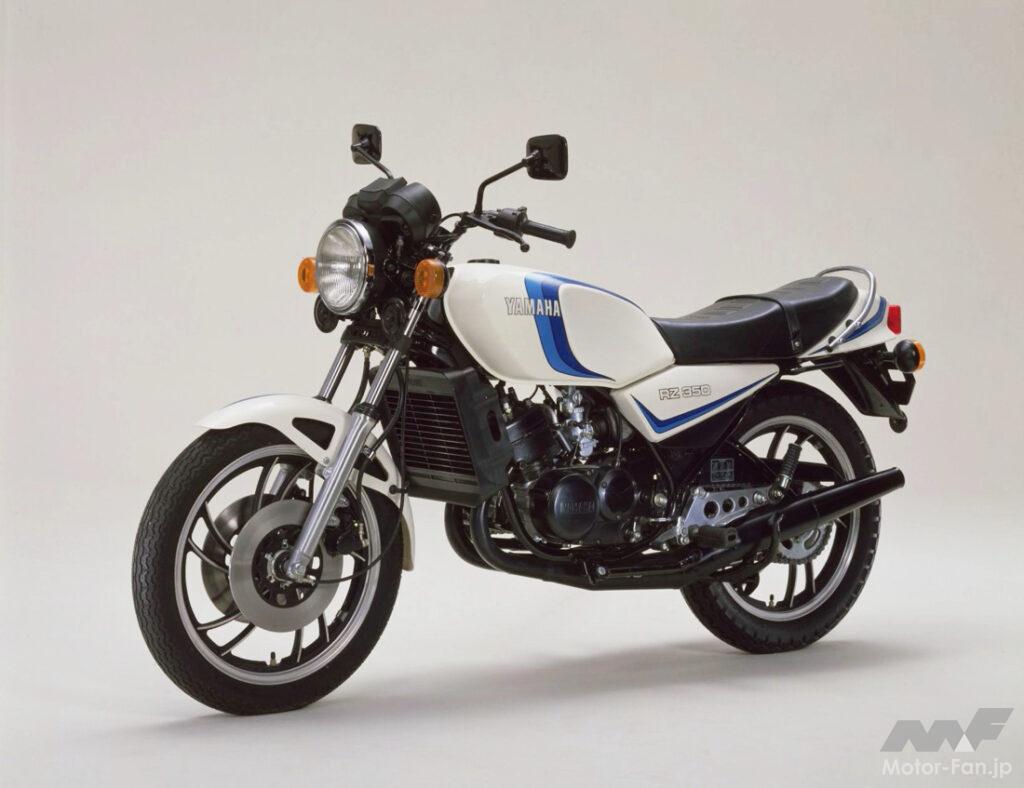
Yamaha RZ350 (1981)
Following the explosive success of the RZ250, which was released in 1980, this model was released in 1981. While it shared the same basic components as the RZ250, such as the chassis, the displacement of its water-cooled, two-stroke, two-cylinder engine was increased from 247cc to 347cc. Maximum output was also increased from the RZ250’s 35PS/8000rpm to 45PS/8500rpm, demonstrating considerable power performance for a 350cc model at the time.
What particularly overwhelmed other models was the sharp acceleration performance, combined with the lightweight body with a dry weight of 143 kg. At the time, the 750cc was synonymous with high-performance bikes, and the 750cc large-displacement bikes could be chased down on winding mountain roads, so it was nicknamed the 750cc Killer.
Incidentally, the RZ350 is also nicknamed “Sampan,” which was to distinguish it from its sibling, the RZ250. At the time, 250cc bikes such as the RZ250 were called “Niihan,” and the RZ350, with its 350cc displacement, was called Sampan.
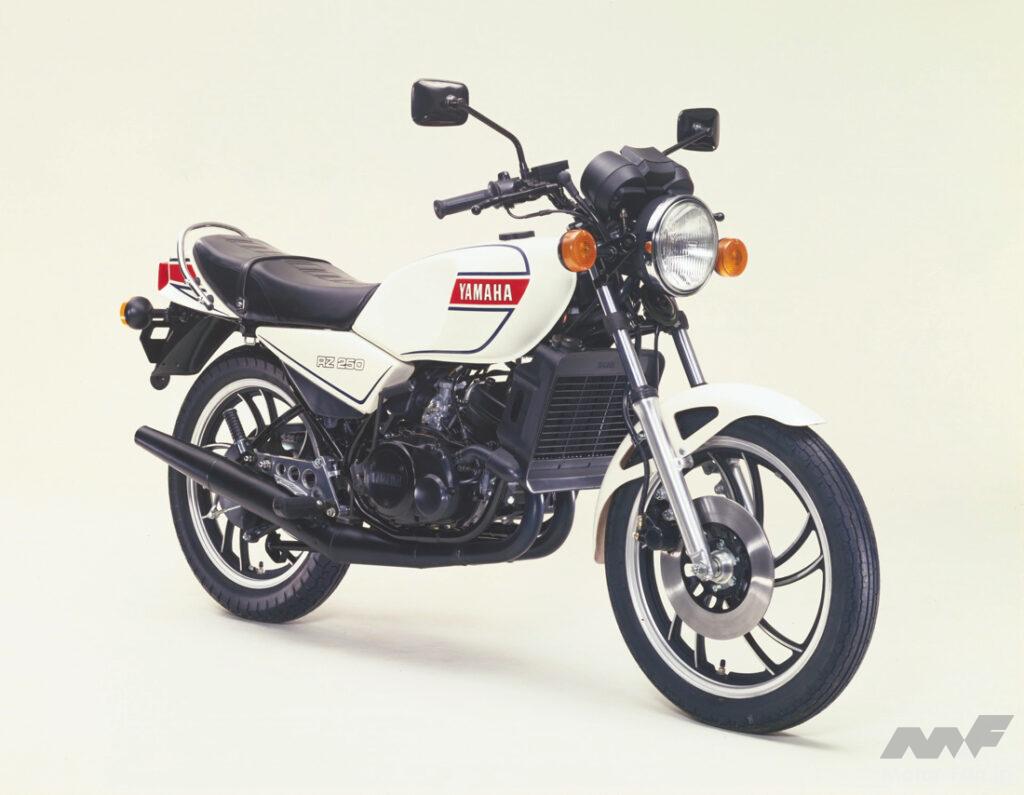
Yamaha RZ250 (1980)
In any case, the huge success of the RZ250 and ZR350 led Yamaha to release a 50cc version, the RZ50, in 1981 and a 125cc version, the RZ125, in 1982, forming a series. At the time, the trend was shifting from two-stroke to four-stroke models, but the RZ series can be said to have put a stop to that trend and brought back popularity for two-stroke bikes, making it a legendary model.
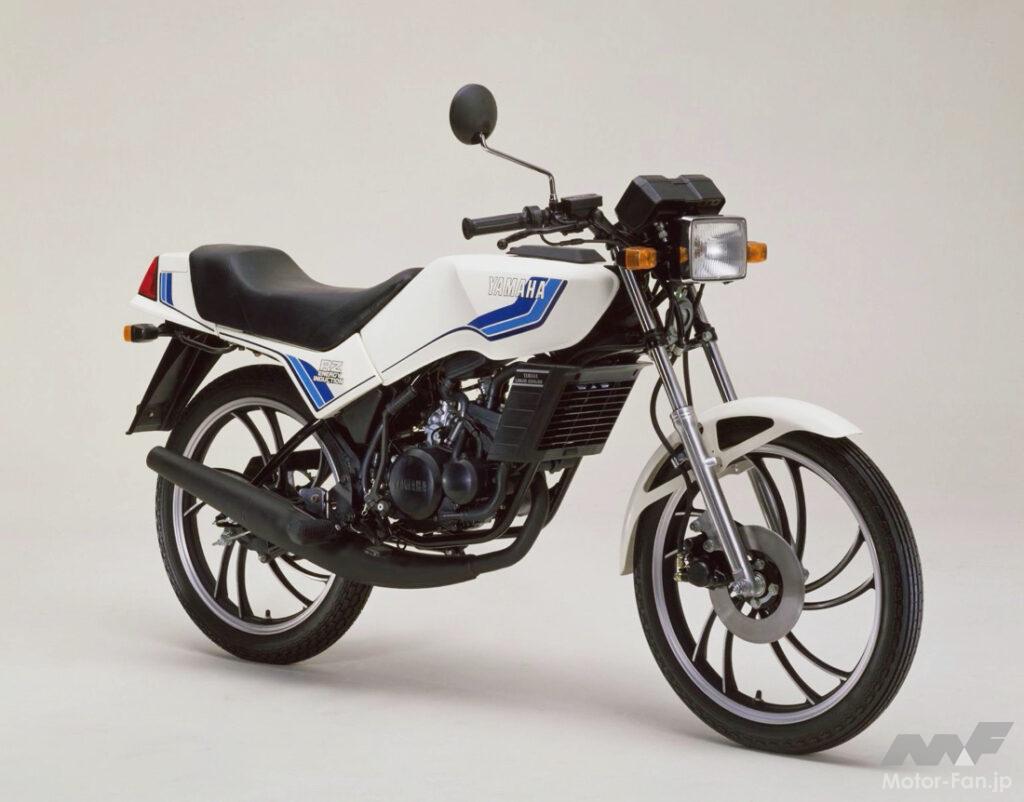
Yamaha RZ50 (1981)
ADVERTISEMENT
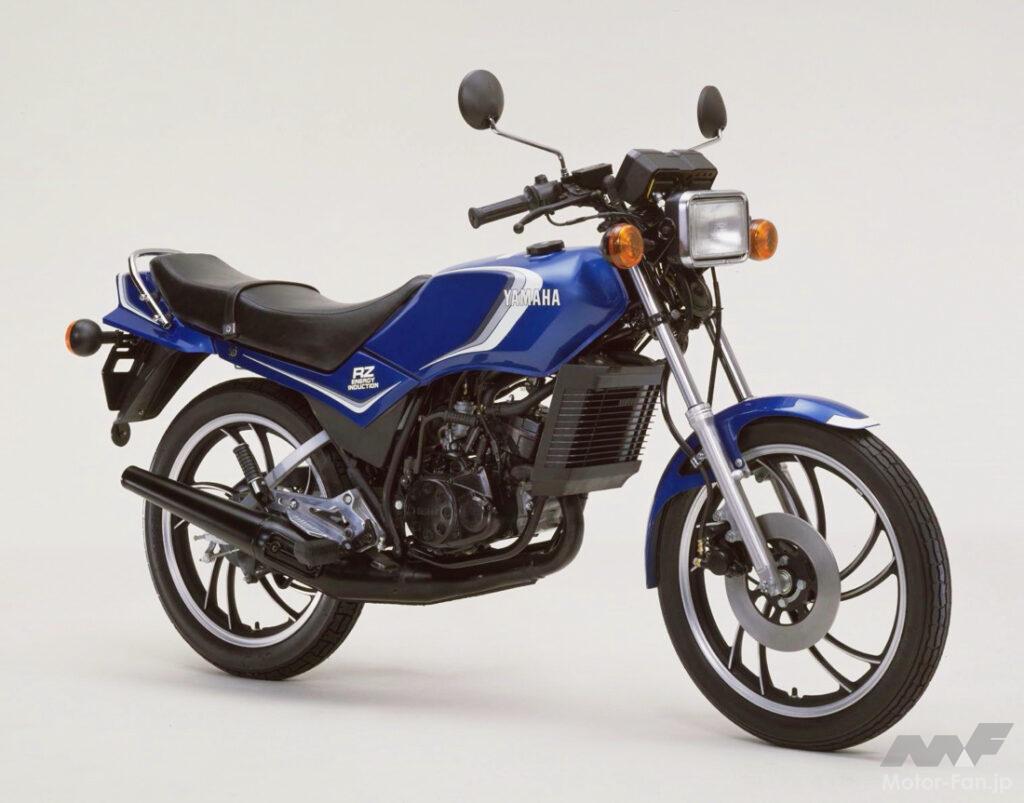
Yamaha RZ125 (1982)
The sales success of the RZ, coupled with the popularity of the WGP (World Road Racing Championship) at the time, led to a boom in 2-stroke racer replicas, including the aforementioned full-cowl model TZR250, as well as Honda’s NSR250, Suzuki’s RG250 Gamma, and Kawasaki’s KR250.
Unfortunately, two-stroke racer replicas have disappeared due to exhaust gas regulations, but they still have many fans today. And it was the RZ350 and RZ250 that gave birth to these models.
Goki: Suzuki GSX400E (1980)
The well-known “GSX” is a series of Suzuki sports and touring motorcycles. The first generation of the 400cc version of the GSX400 series, the “GSX400E” that appeared in 1980, was known to have been nicknamed “Goki” (Cockroach).
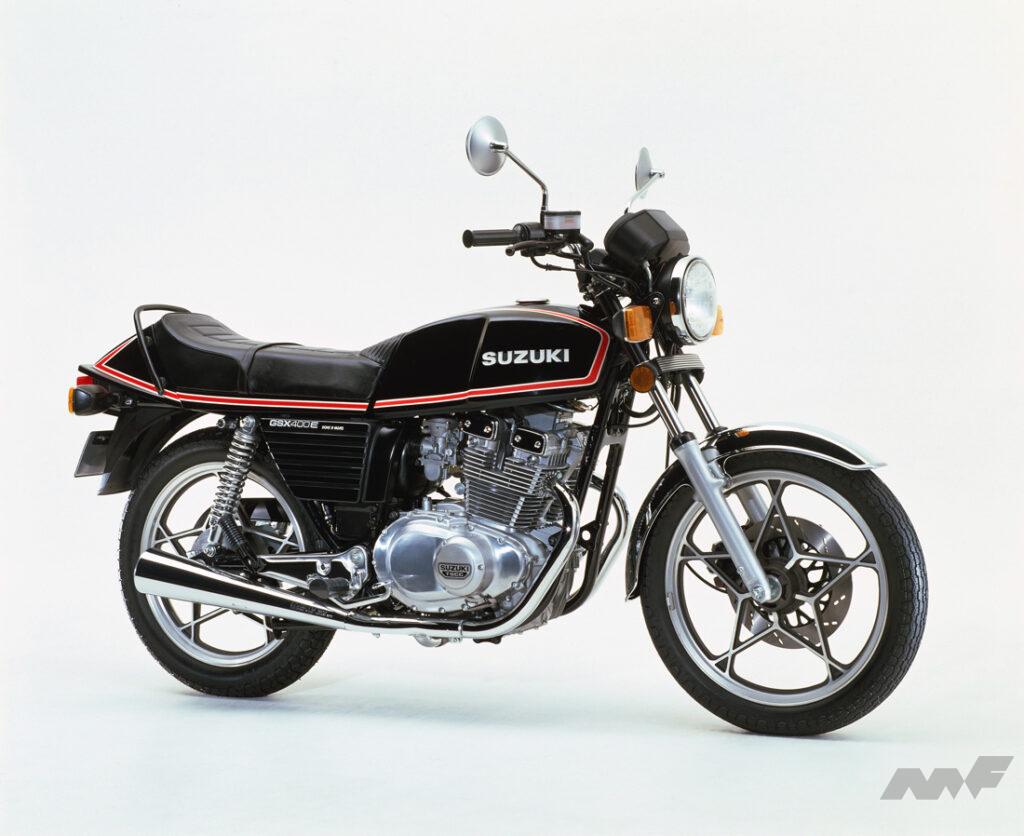
Suzuki GSX400E (1980)
The GSX series is characterized by its higher performance, four-valve-per-cylinder four-stroke engine, compared to the two-valve-per-cylinder four-stroke engine used in its predecessor, the GS series. The GSX400E, in particular, uses a 399cc, air-cooled, four-stroke, parallel-twin engine with a DOHC four-valve configuration. By providing two domes in the cylinder head, each with an intake and exhaust valve, and adopting the “TSCC” system, which improves combustion efficiency, it delivers a maximum output of 44 PS/9500 rpm and a maximum torque of 3.7 kgf-m/8000 rpm.
The front fork also featured the ANDF (Anti Nose Dive Fork), which utilized the know-how gained from the RGB500 WGP machine of the time. This fork with an anti-nose dive mechanism, which prevents the front from sinking during braking and improves the vehicle’s posture and handling stability, was the first in the world to be equipped with this mechanism, along with the 750cc version, the GSX750E, and was a hot topic at the time as it was equipped with a fairly innovative mechanism.
The GSX400E is known as such a great bike, but why did it get the nickname “Goki”? It seems that it didn’t have that nickname when it was first released, but it was given after a minor change in 1981.
The minor change version of the GSX400E adopted a more rounded form than the initial model. The body color was added with black and gold, and it seems that the color had something to do with it. One theory is that when you straddle the machine and look down at the fuel tank from directly above, it reminds you of the shiny black “cockroach.” Functionally, it was an advanced bike at the time, and is still highly regarded today.
Zari: Suzuki GSX250E (1980)
On the other hand, the 250cc version “GSX250E”, which was released in 1980 like the GSX400E, was a bike affectionately nicknamed “Zari”.
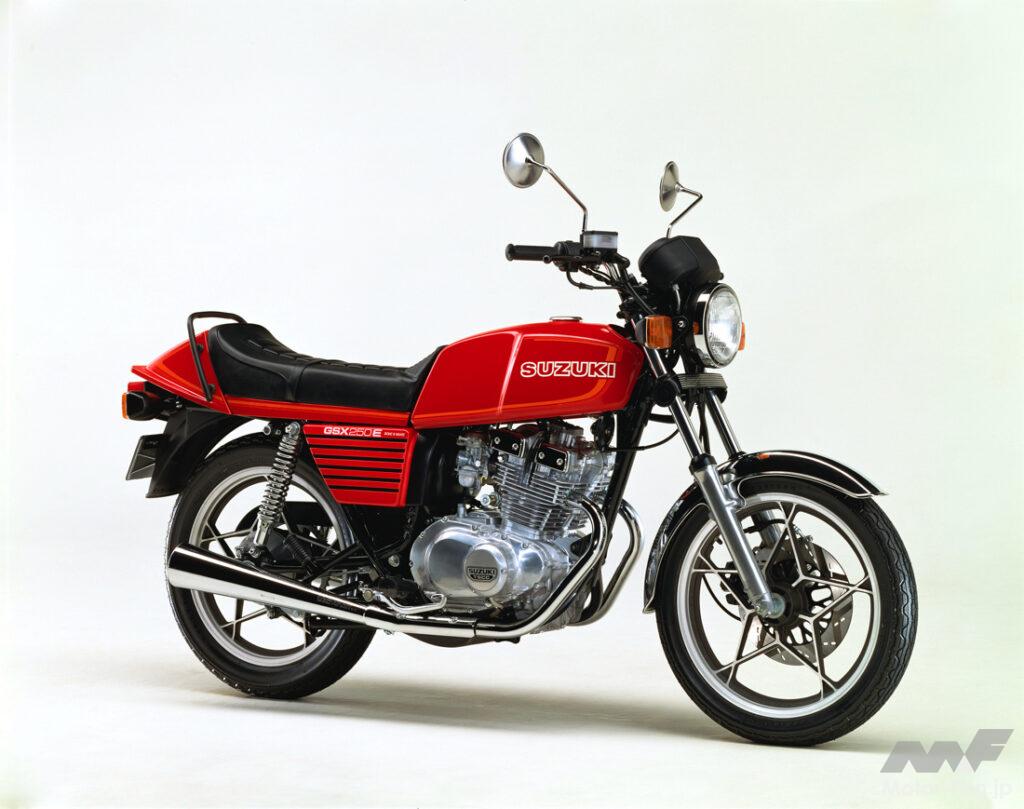
Suzuki GSX250E (1981 model pictured)
The GSX250E is equipped with a high-performance 249cc air-cooled 4-stroke parallel twin-cylinder engine with a DOHC 4-valve configuration. Like the GSX400E, it uses TSCC to improve combustion efficiency, delivering a maximum output of 29PS/10,000rpm and a maximum torque of 2.2kgf-m/8,000rpm. It also features a newly designed semi-double cradle frame for improved handling stability, and a perforated front disc brake that utilizes technology from the RGB500 WGP machine, making it a model that has earned a reputation for its nimble riding performance.
The GSX250E was nicknamed “Zari” because its bright red coloring and angular design reminded people of a crayfish. The GSX250E was available in both red and white body colors, but the red image must have been so strong. It seems that all models, regardless of their color, were nicknamed “Zari.”
As you can see, there are surprisingly many bikes with unique nicknames that you wouldn’t associate with the model name. In particular, in the 1980s, when motorcycles were at their peak, there were many popular models known as classic bikes, so I feel like there were more bikes with nicknames than there are now. If you find any other bikes with interesting nicknames, I’ll look into them and introduce them.