

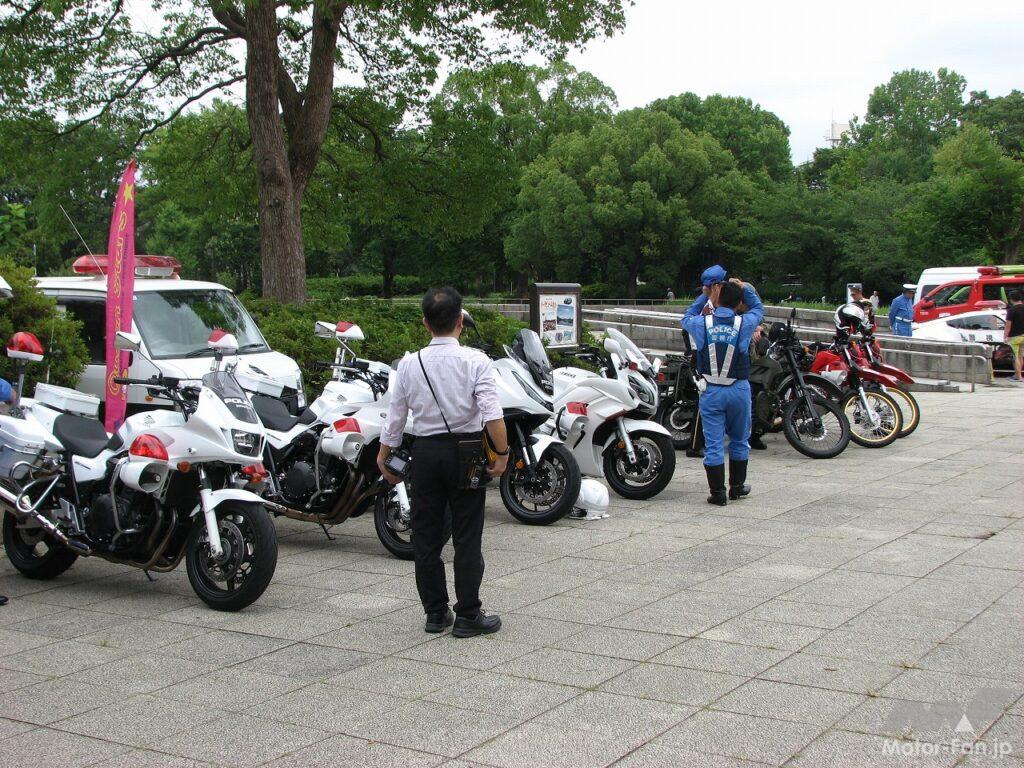
As part of a campaign to prevent traffic accidents, the Metropolitan Police Department held a "Working Bike Project" event on Saturday, July 12th, at a special venue in Ukima Park in Kita Ward, Tokyo. The venue was packed with 10 literally working bikes, including police motorcycles, red motorcycles from the Fire and Disaster Management Agency, advance team motorcycles from the Japan Ground Self-Defense Force, and yellow motorcycles from the Metropolitan Expressway Co., Ltd. Children who came to play in the park had a blast seeing these rare bikes.

Organized by: Metropolitan Police Department (Traffic General Affairs Division, Akabane Police Station)
Cooperation: Tokyo Fire Department, Metropolitan Expressway Co., Ltd., Japan Ground Self-Defense Force, Japan Motorcycle Promotion Association
Along with 40 public riders selected from the public, police motorcycles, red motorcycles, Self-Defense Force motorcycles, and Metropolitan Expressway motorcycles will be parading.
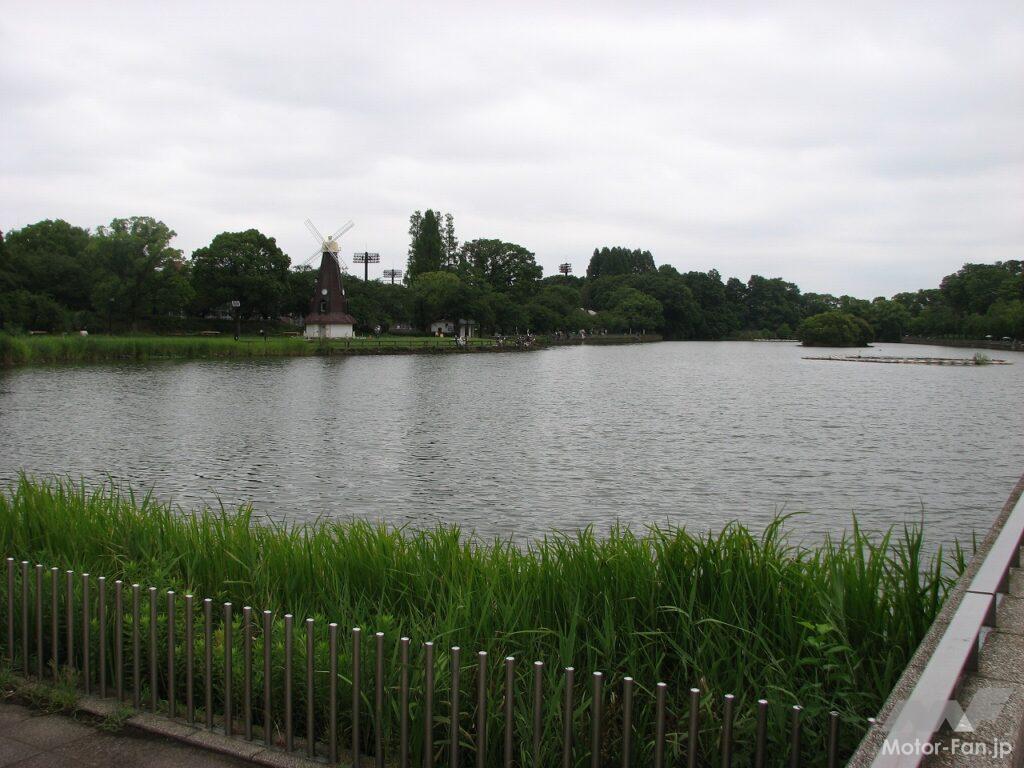
The event was held at Ukima Park, a place of relaxation for local residents.
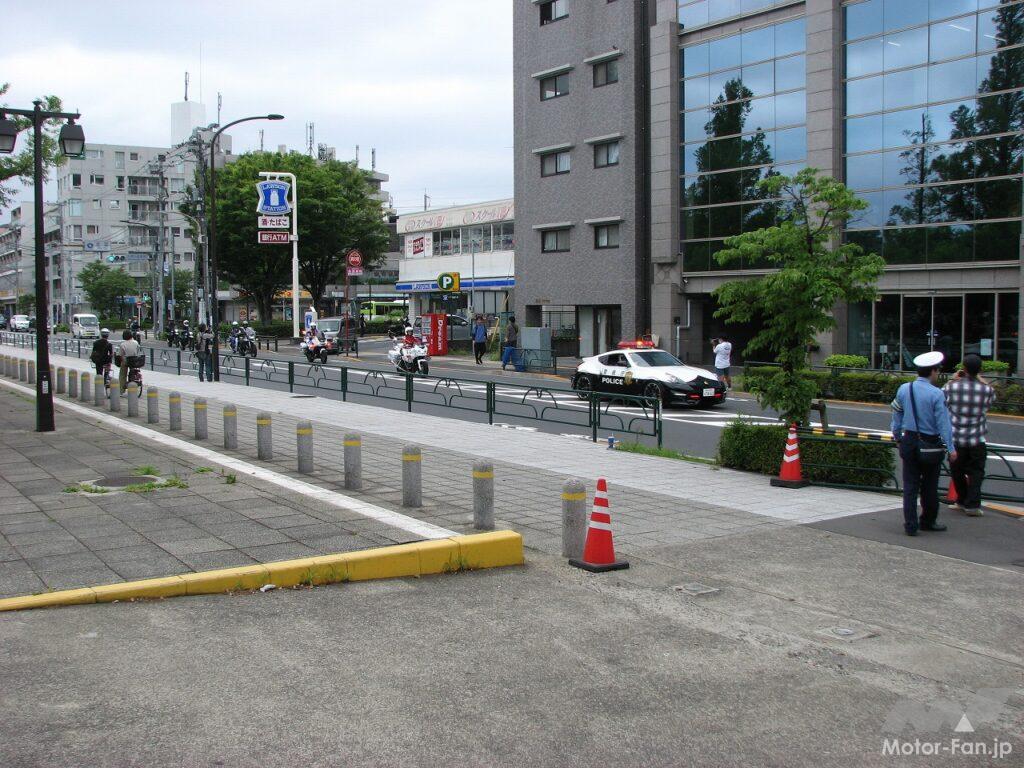
Led by police motorcycles, ordinary riders arrive at the venue one after another
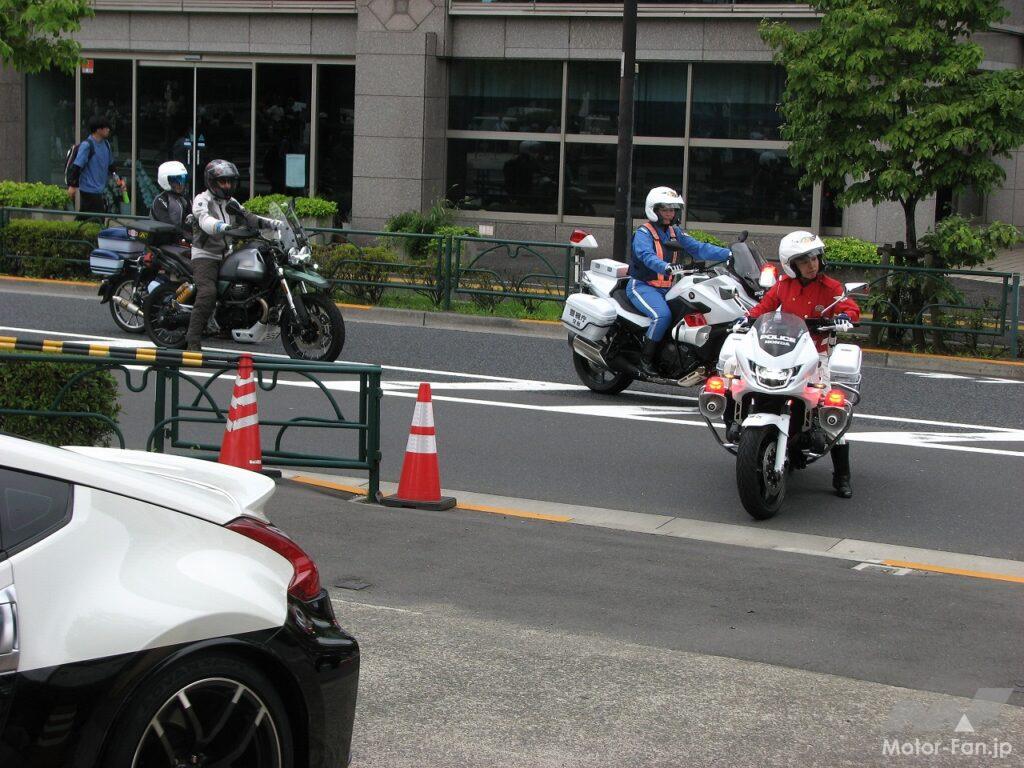
The parade ran in four groups from Akabane Police Station to the venue.
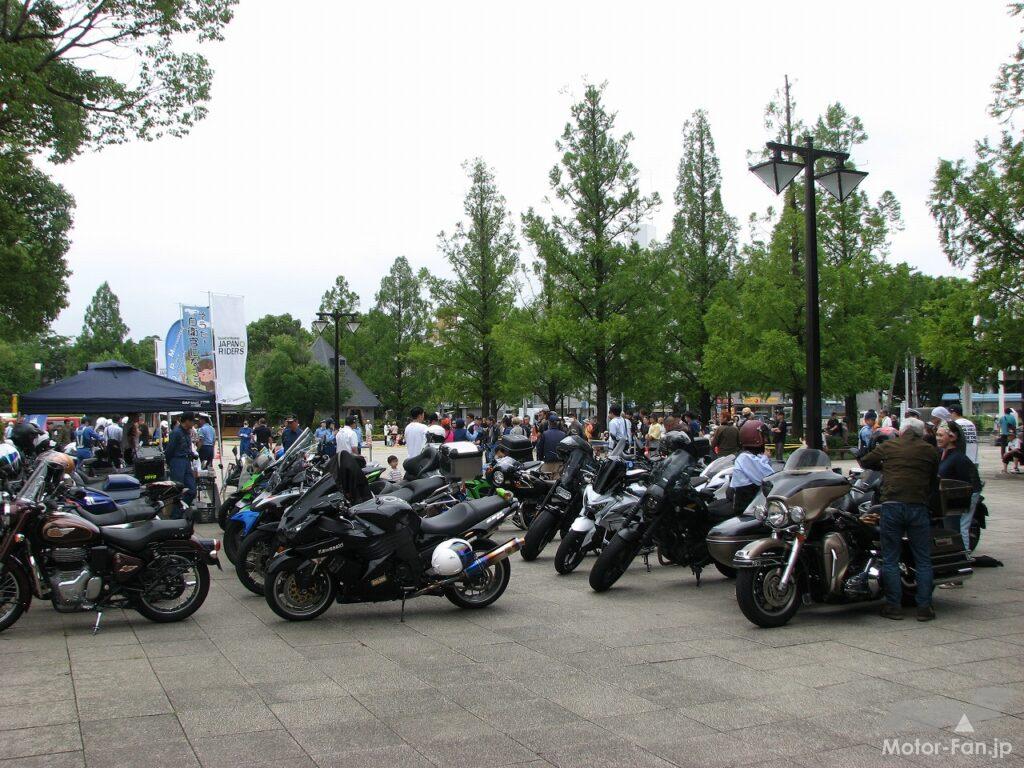
Approximately 40 ordinary riders participated in the parade on their bikes.
 Traffic accident prevention events tend to have a rather stuffy image. However, the "Working Bike Project," as its name suggests, brought together bikes used in a variety of different fields, and was the first attempt to raise awareness of traffic accident prevention and safe driving through the roles each bike plays, making it a very approachable event.
 40 members of the public were selected to participate in the event, and led by a police motorcycle from Akabane Police Station, they paraded into the venue along with red motorcycles from the Fire and Disaster Management Agency, motorcycles from the Japan Ground Self-Defense Force, and motorcycles from the Shuto Expressway. Everyone on the road watched.
Natsumi Hirajima, a talent who was appointed as the one-day campaign leader, also manned the police motorcycle.
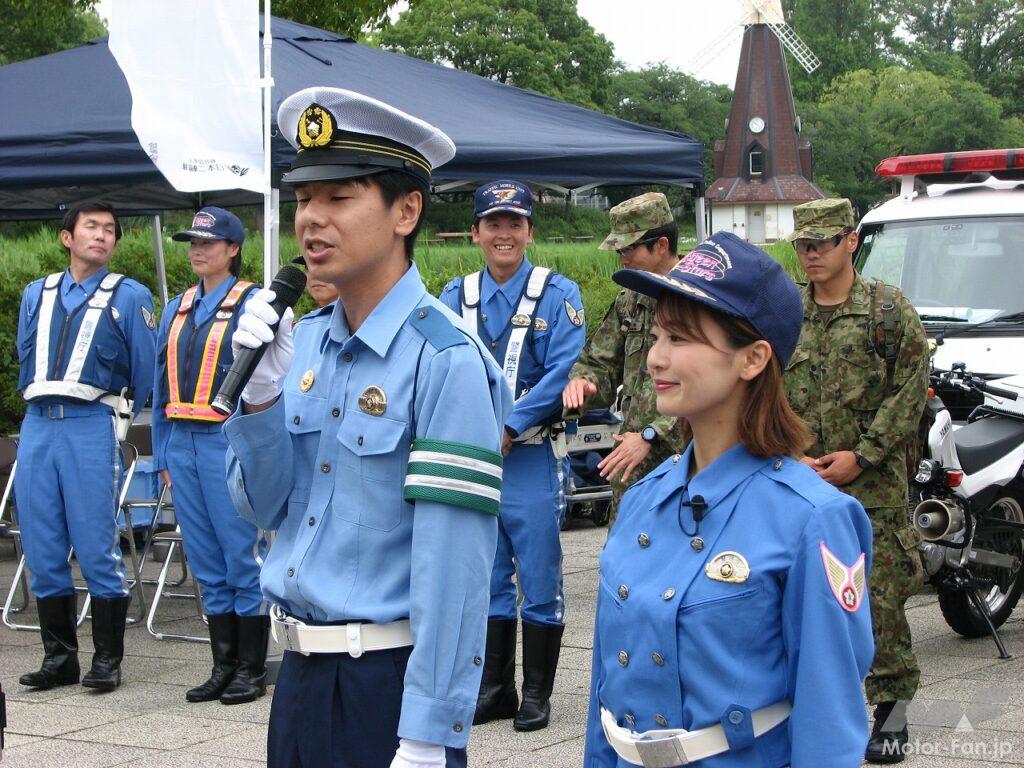
Akabane Police Chief Kawada also greeted the crowd, saying, “I was looking forward to this event.”
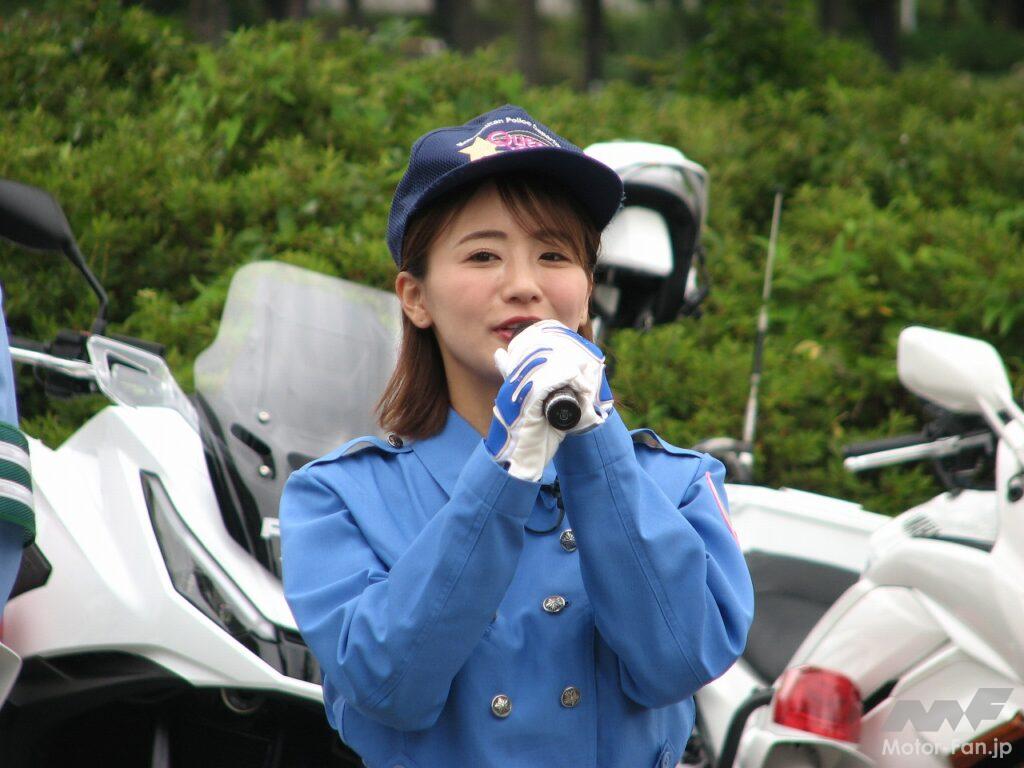
Talent Natsumi Hirajima appeared in a police motorcycle uniform as the one-day campaign leader.
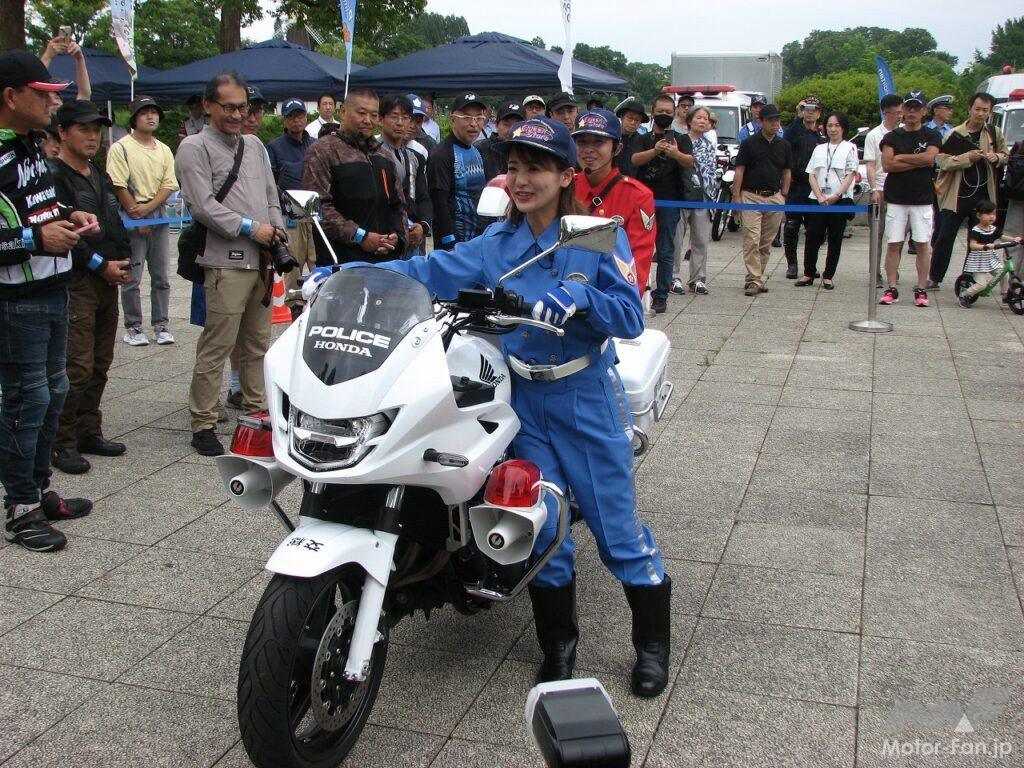
Hirajima Natsumi usually rides a 750cc motorbike, but was nervous about handling the 300kg police motorcycle. However, after being given the tips, she was relieved to find that the weight no longer bothered her.
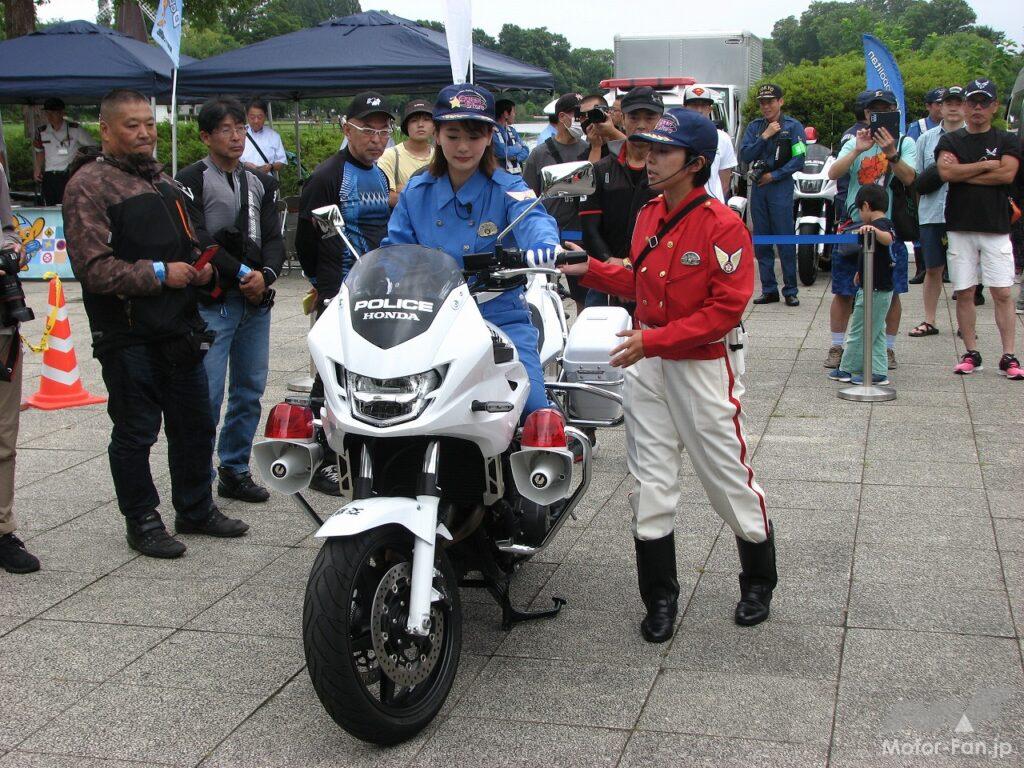
Hirajima Natsumi is being lectured on the correct riding posture. She learned the basics, such as riding in a position where the handlebars can be turned to the left and right, not putting too much pressure on the grips, and using a natural knee grip with your toes facing forward.
On behalf of the organizers, Akabane Police Station Chief Kawada gave a speech. Next, Hirajima Natsumi, the one-day campaign leader, dressed in a police motorcycle uniform, called for accident prevention, drawing on her own experiences. Afterwards, Hirajima Natsumi gave a lecture by the Metropolitan Police Department's Women's Police Motorcycle Unit, Queen Stars, demonstrating tips on how to handle a CB1300SF police motorcycle, which weighs over 300 kg, and the correct riding posture.
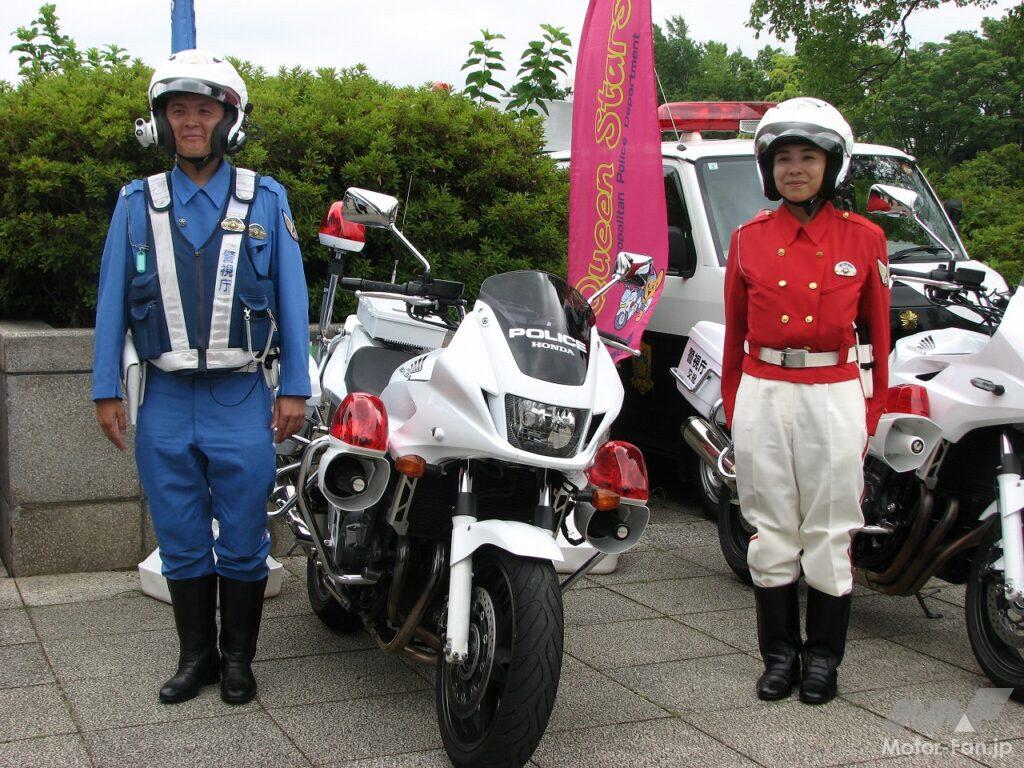
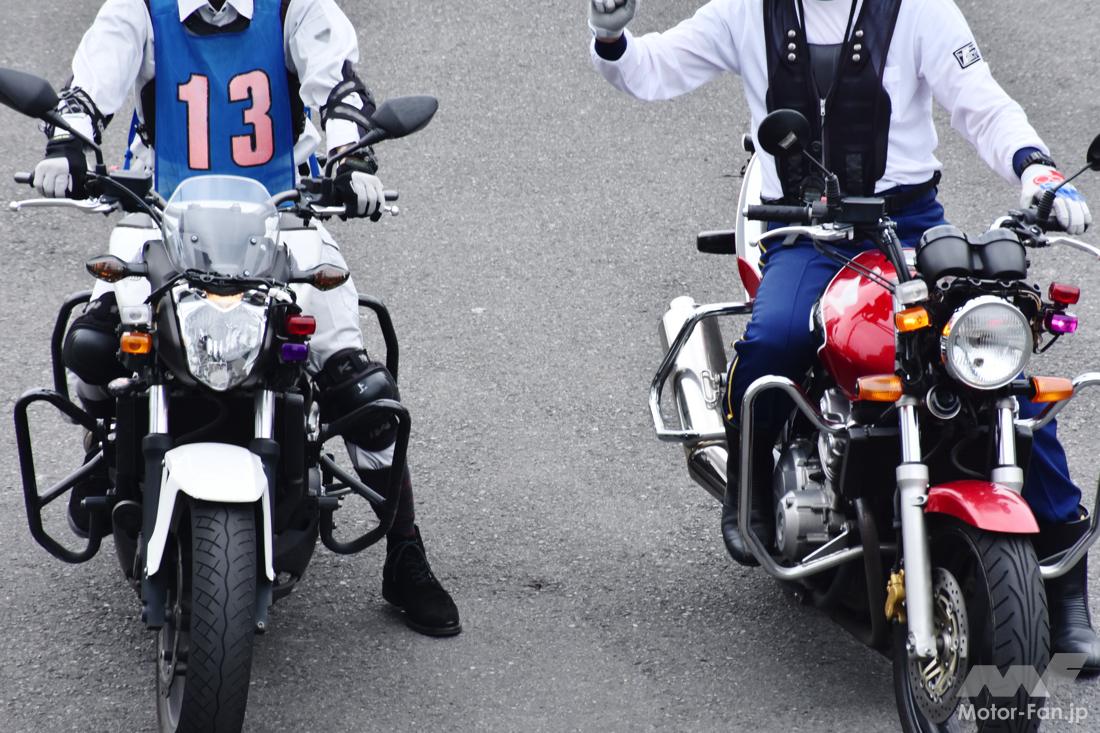
The participating police motorcycles were three CB1300SBs, one NT1100, one FJR1300, and one Serow 250.
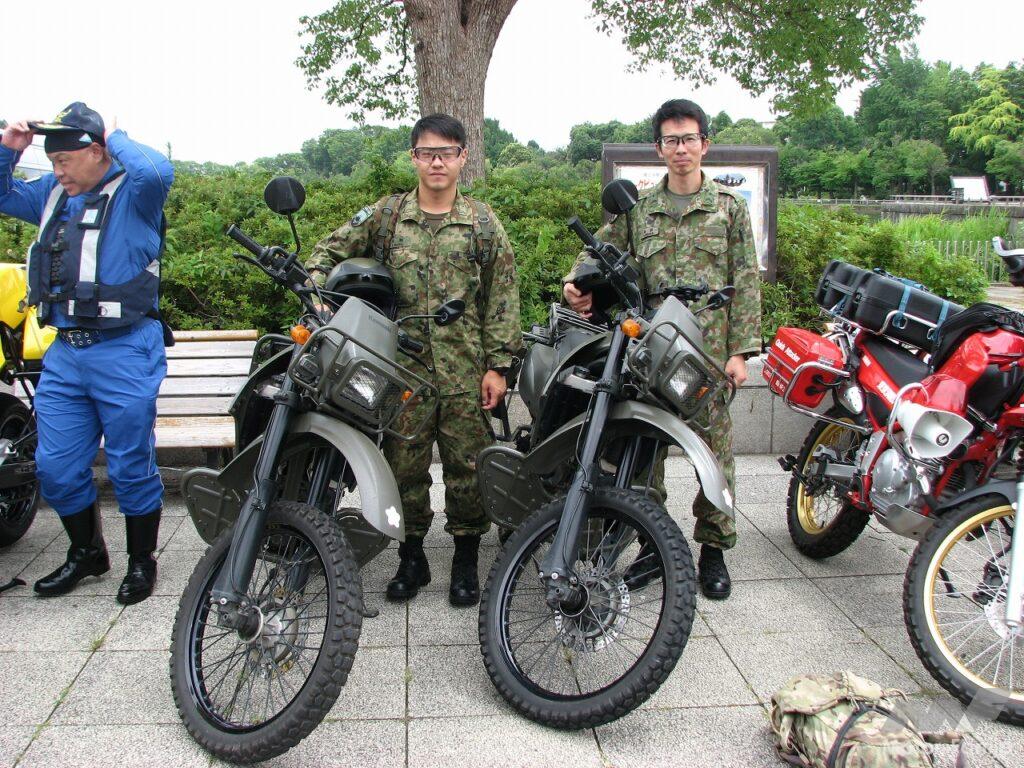
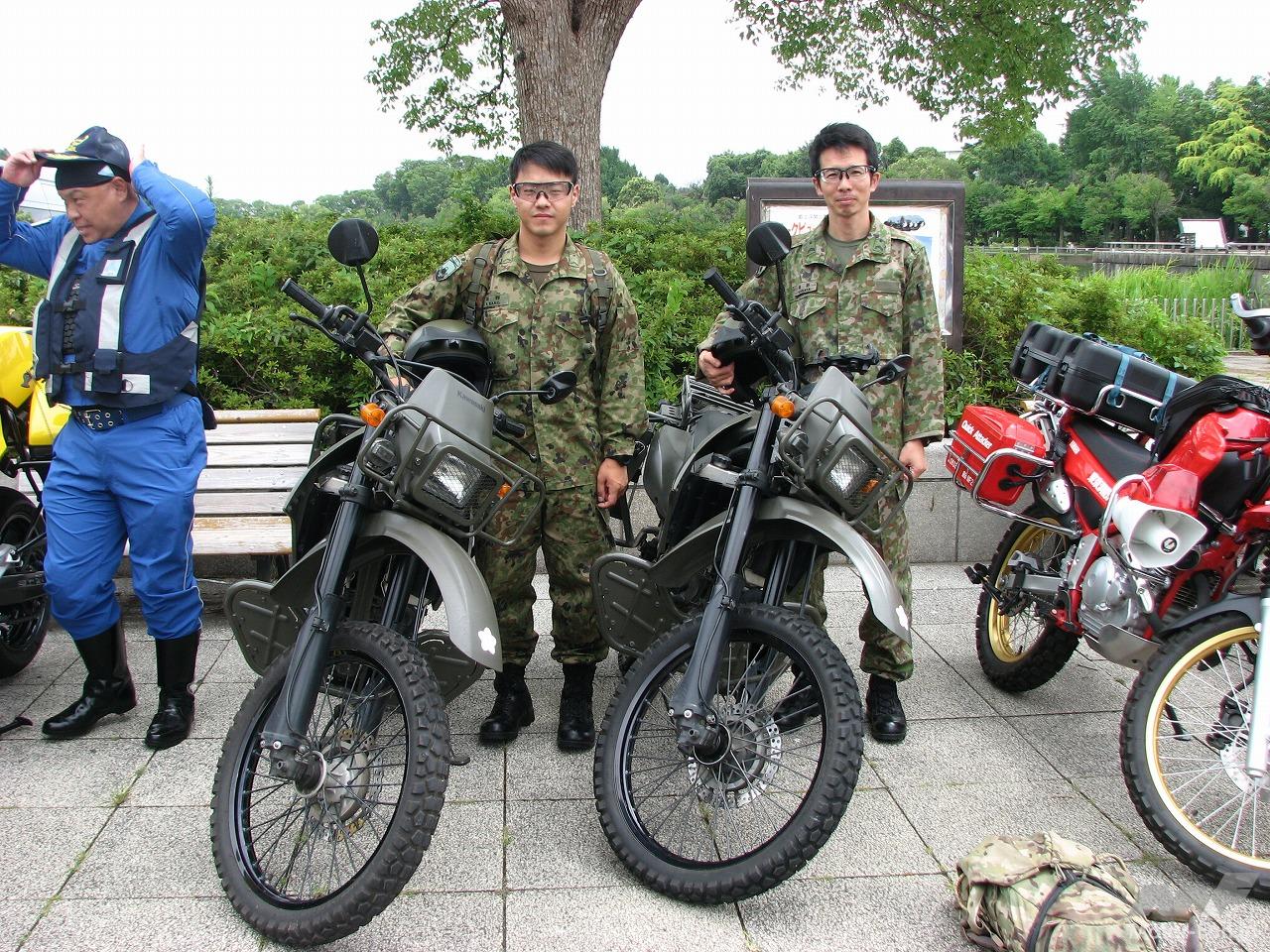
Two KLX250s will be used as reconnaissance bikes by the Japan Ground Self-Defense Force.
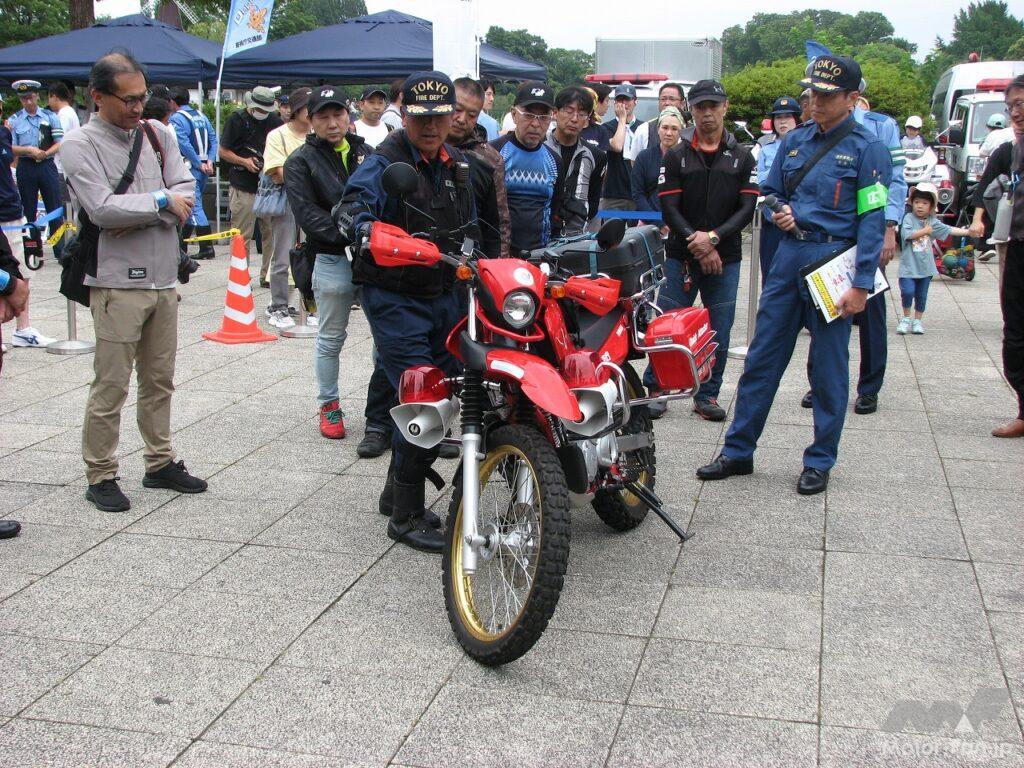
The Tokyo Fire Department’s emergency dispatch bike, known as the “Quick Attacker,” is a red Serow 250. Two bikes participated on this day. A side stand is also installed on the right side so that they can be parked on slopes.
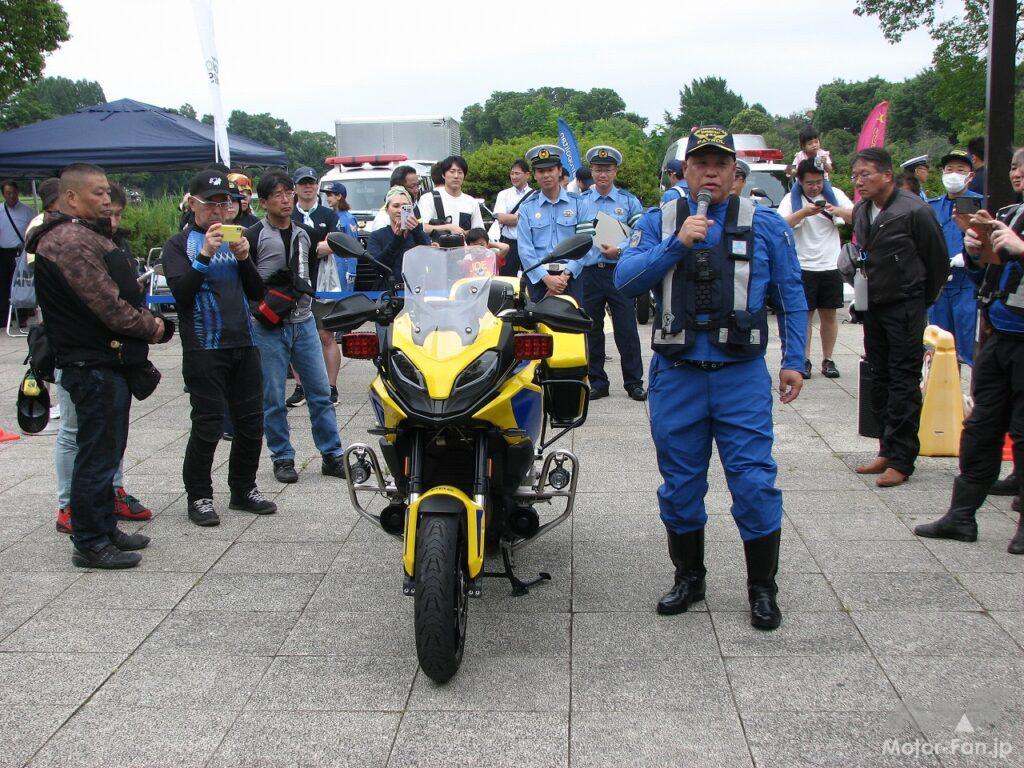
Yellow bikes have been active since the opening of the Yamate Tunnel on the Metropolitan Expressway. Their vehicles are BMW/F900XR police-spec vehicles. They respond to disasters within the Yamate Tunnel.
 Many in the crowd were captivated by the introduction of the work bikes participating in the event. First up was the Japan Ground Self-Defense Force's Kawasaki KLX250, painted in matte moss green. Its role is to scout the scene ahead of the main force during disasters and other emergencies. Apparently, it's an off-road bike chosen for its ability to enter difficult terrain.
 Next was the Tokyo Fire Department's bright red Serow 250, nicknamed the Quick Attacker. These bikes, commonly known as "red bikes," are deployed in Tokyo's mountainous regions, where they are used for rescue missions for hikers. In urban areas, they utilize their high maneuverability, even in traffic jams, to provide initial response to vehicle fires and traffic accidents on the Metropolitan Expressway. A total of 20 of these bikes are currently deployed to 10 fire stations across the city. Finally, there
 was the yellow bike of the Metropolitan Expressway Co., Ltd., sporting a yellow and blue design. These bikes have been deployed since the tunnel opened 18 years ago to allow for quick response to accidents and disasters inside the 8.2km Yamate Tunnel on the Metropolitan Expressway Central Circular Route. Initially, Honda CB400SFs were used, but following the end of production, they are now being gradually replaced with BMW F900XR police spec bikes. In addition to the three currently deployed, two more will be added by the end of the year, and four more next year.
 These working bikes, which are not often seen, attracted the interest of not only riders but also families visiting the park.
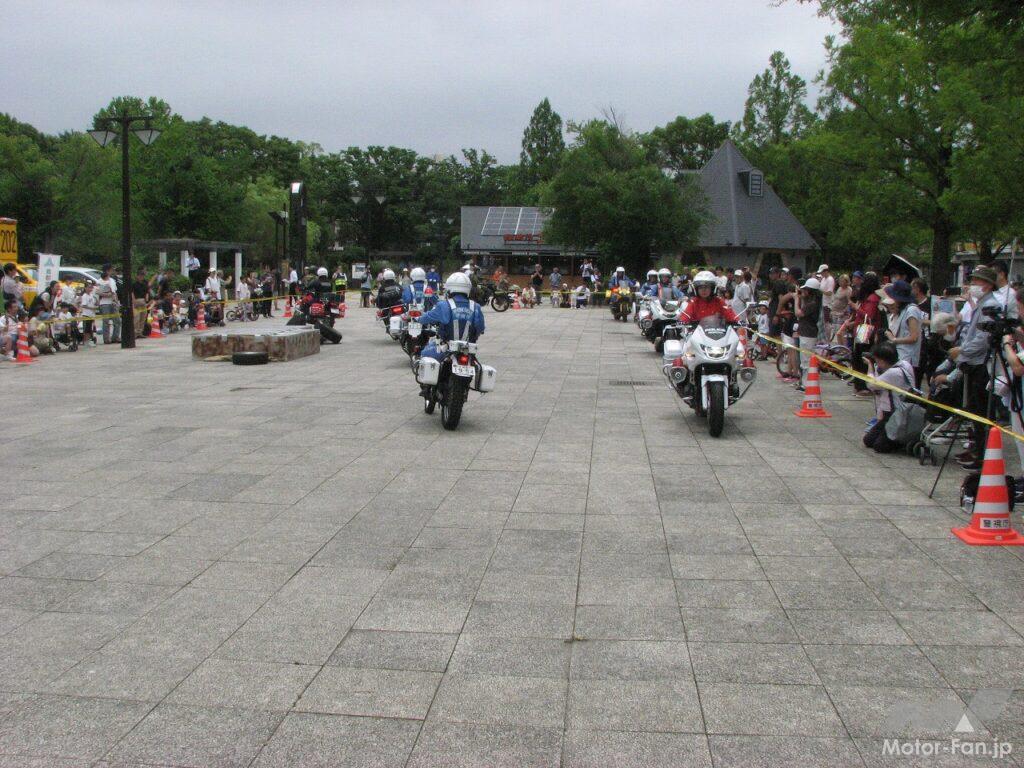
Eleven work bikes demonstrated their skillful driving skills all at once. The crowd was captivated by the bikes’ smooth movements, turning left and right.
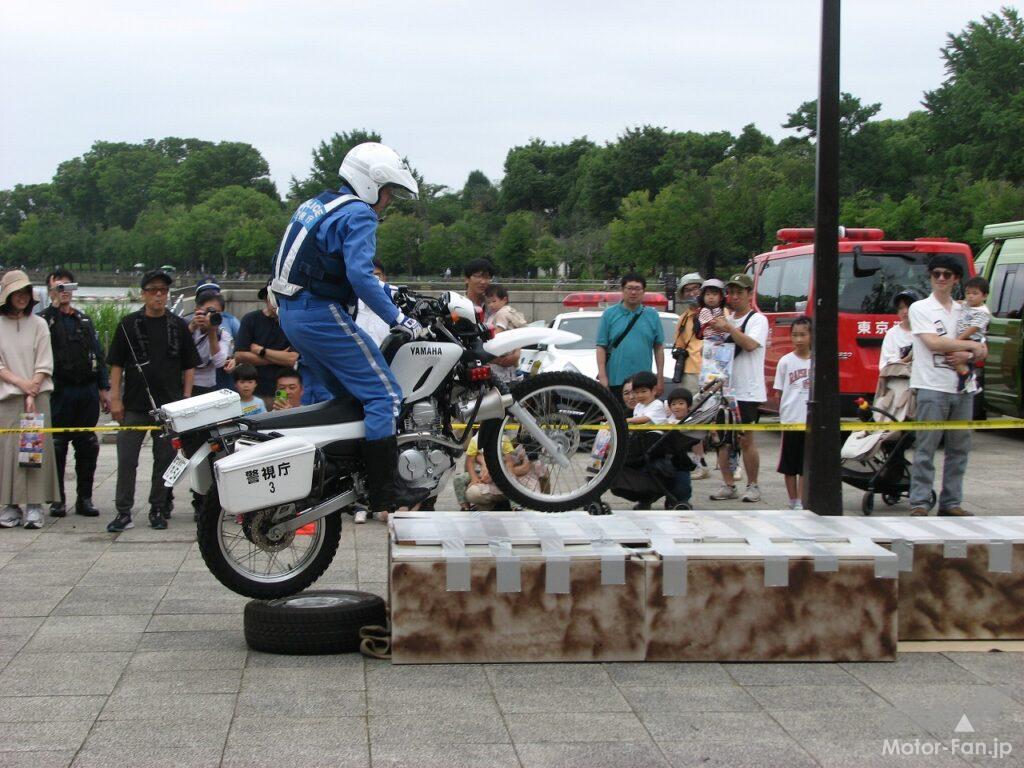
Unlike the police motorcycles used for traffic enforcement, the Serow 250 is used for disaster response because it is lightweight and can easily travel on uneven ground. A demonstration run was held in which this police motorcycle for disaster response cleared obstacles, drawing thunderous applause from the audience.
Finally, under the watchful eyes of a large crowd of onlookers, a total of 11 vehicles, including five police motorcycles, a disaster response police motorcycle, two Self-Defense Force motorcycles, two red motorcycles, and one yellow motorcycle, performed a perfect run. In addition, a disaster response police motorcycle, a Serow 250, demonstrated how to overcome obstacles, which drew thunderous applause.
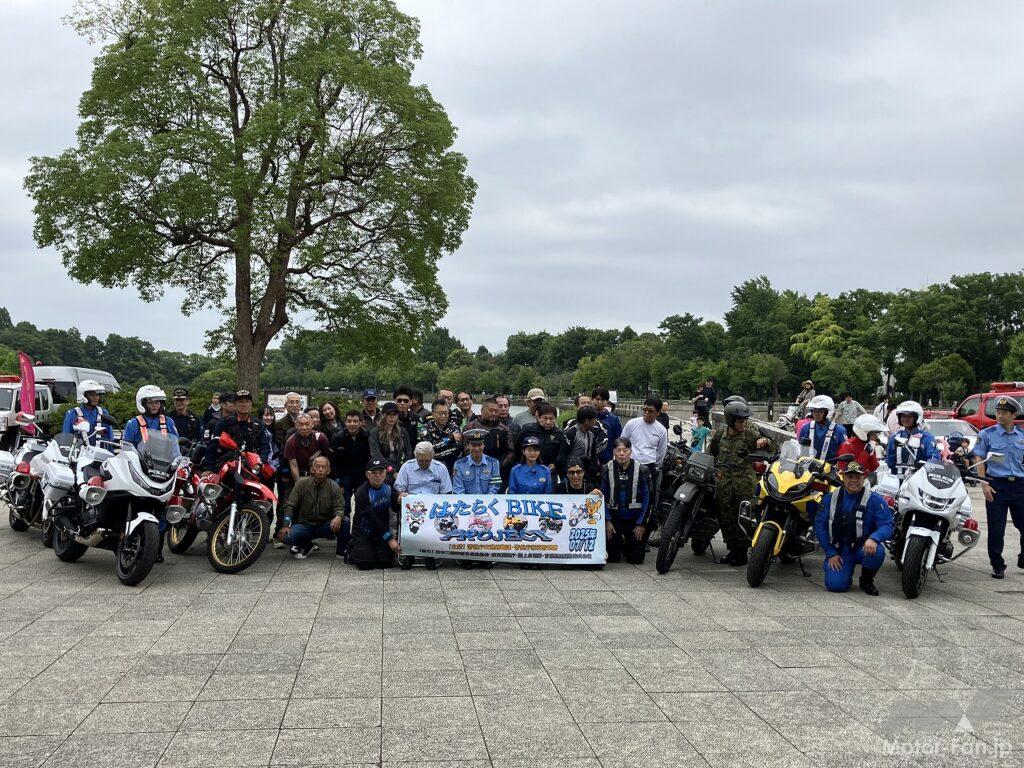
The first "Working Bike Project" event ended in great success, but what was striking was that many families continued to gather around the bikes afterwards, and young children happily sat on them.