

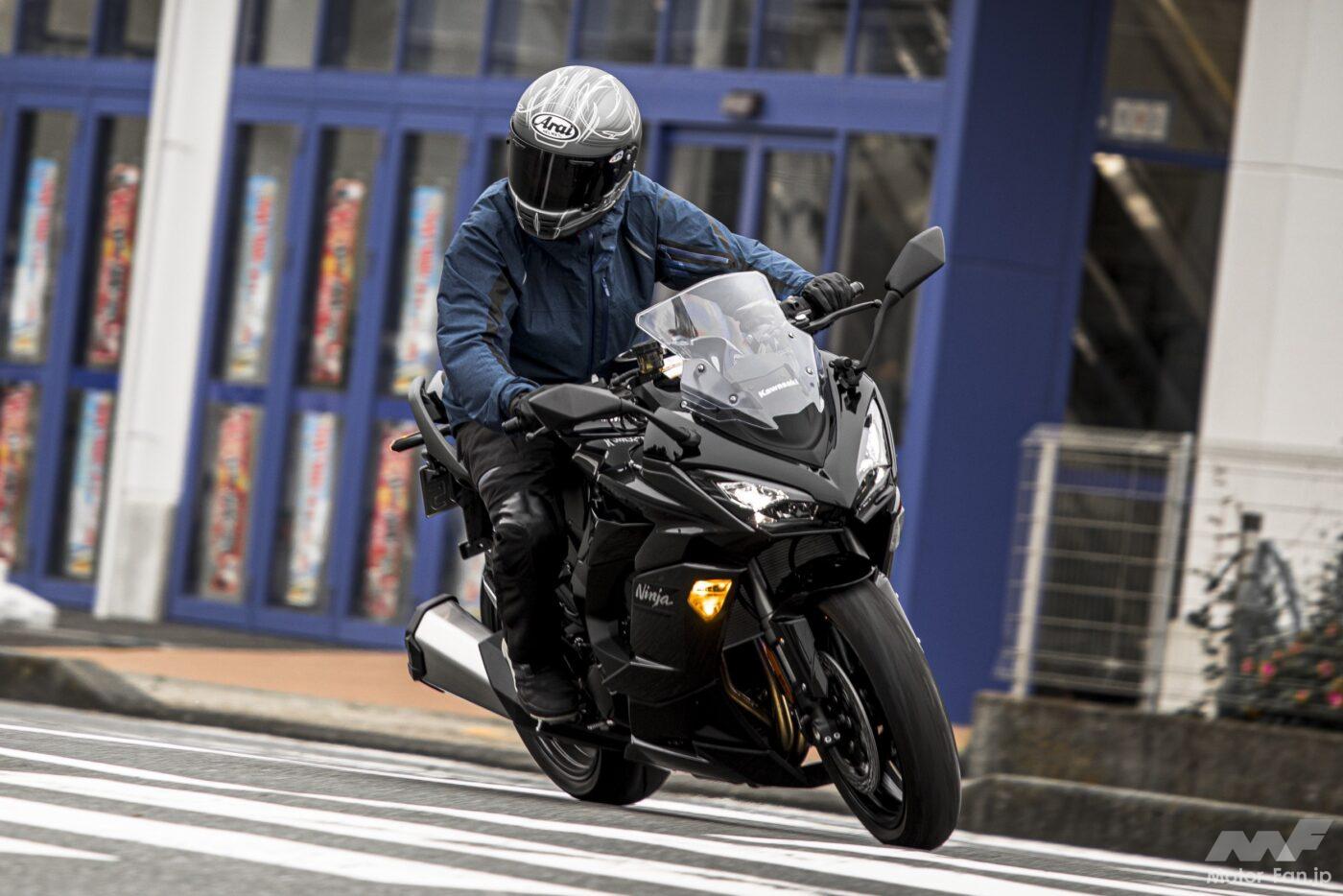
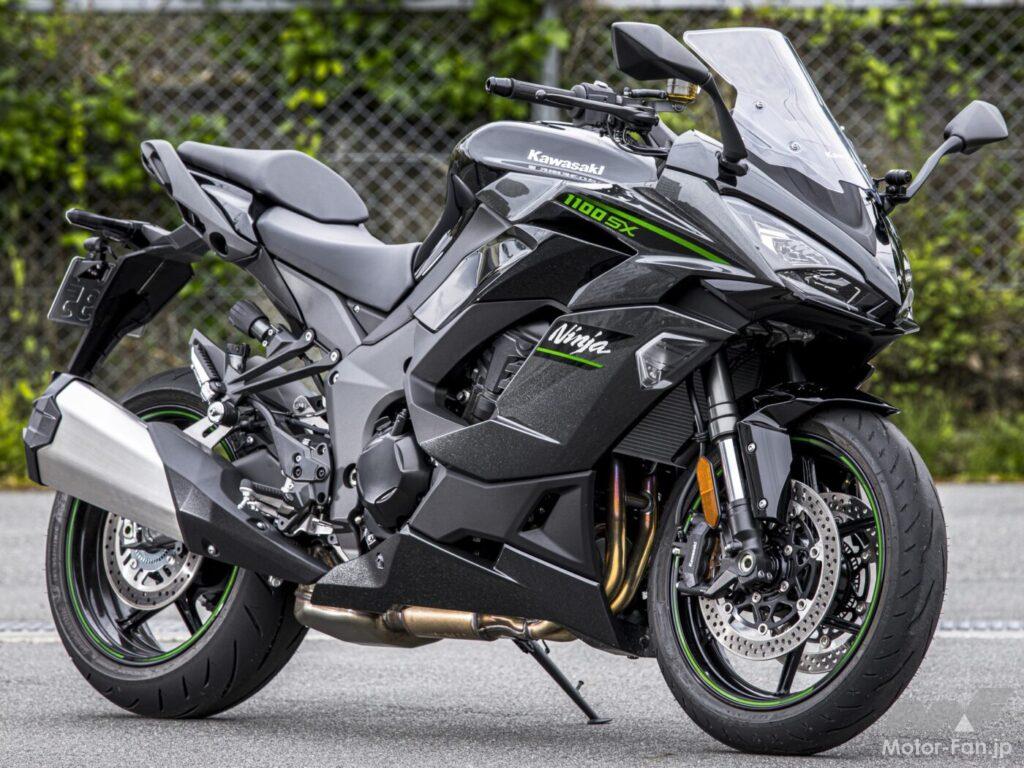
Kawasaki Ninja 1100SX… 1,771,000 yen
Kawasaki Care Model, released on March 29, 2025
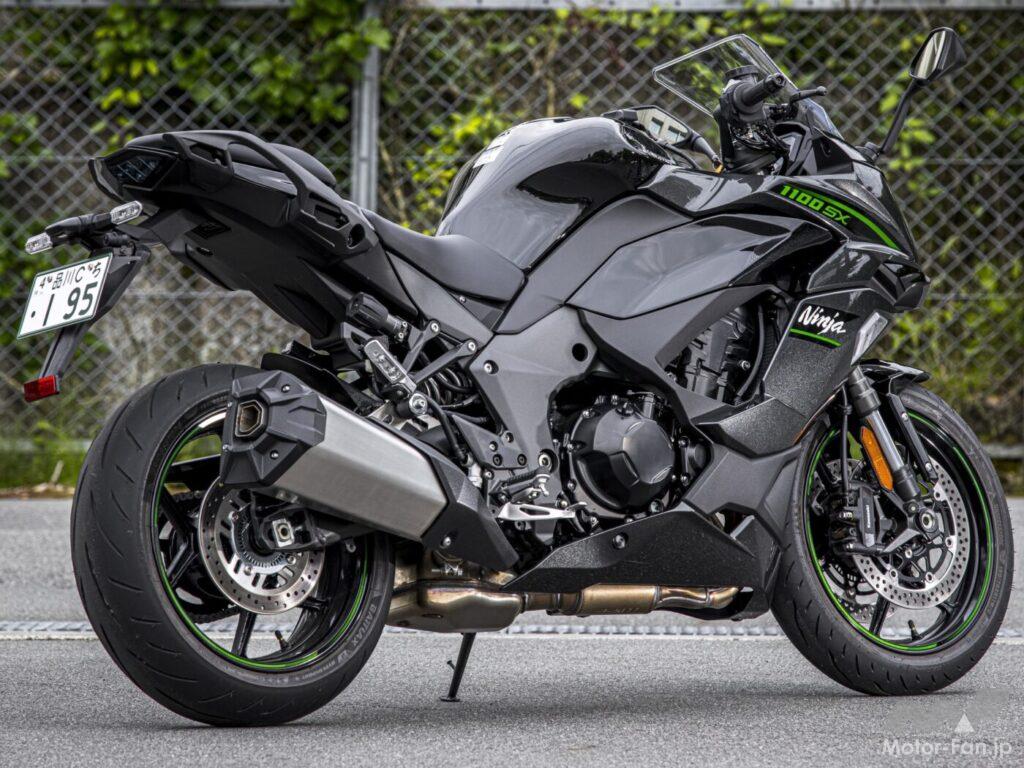
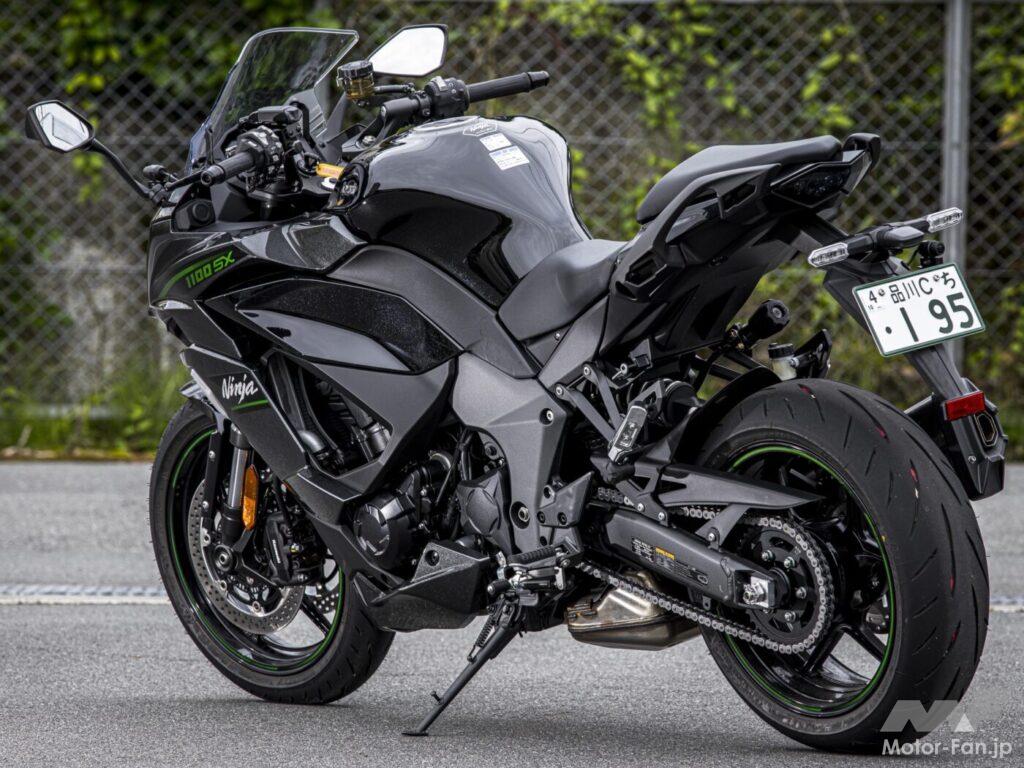
The first-generation Ninja 1000 was released in 2011. As you can see from its European name, Z1000SX, it shares a platform with the super naked Z1000. It joined the official Japanese lineup from the third-generation 2017 model, and was renamed “Ninja 1000SX” for the fourth-generation 2020 model. It was equipped with an electronic throttle, IMU, quick shifter, and the muffler was changed from left and right exhausts to a single right exhaust. And, as an extension of that, the “Ninja 1100SX” that was released this year.
ADVERTISEMENT
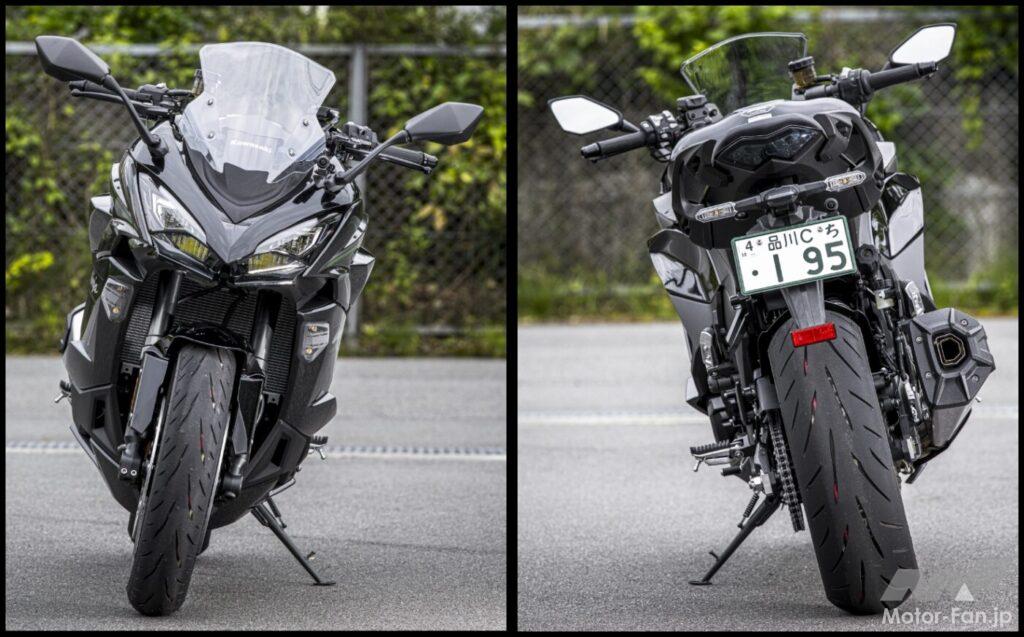
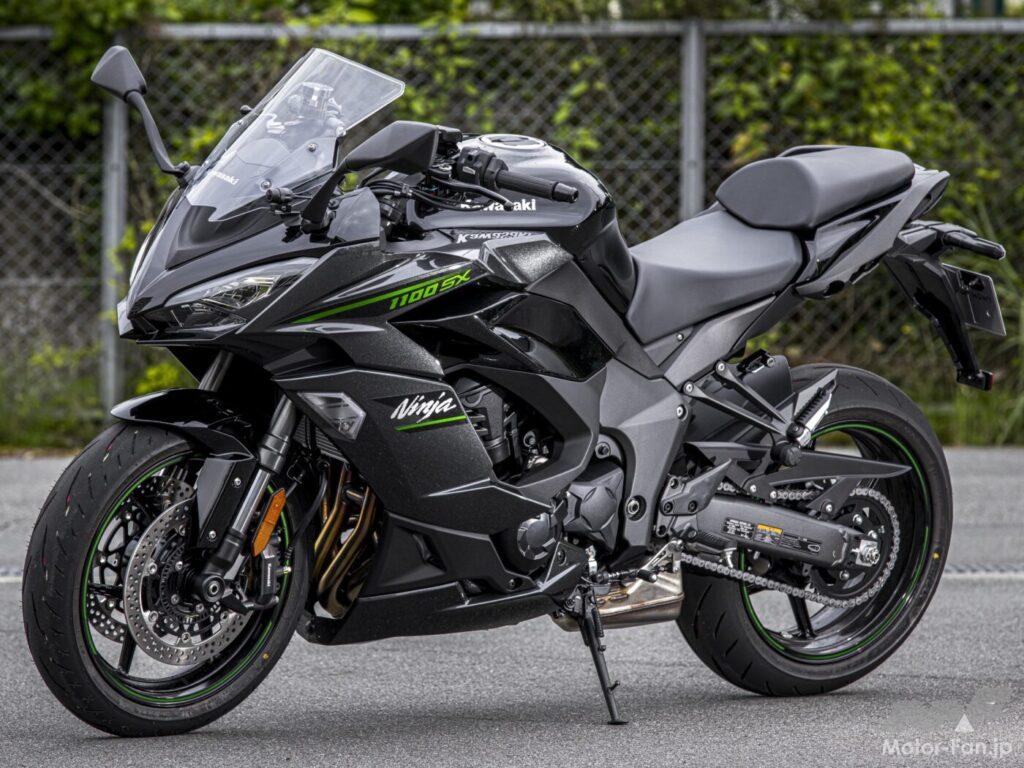
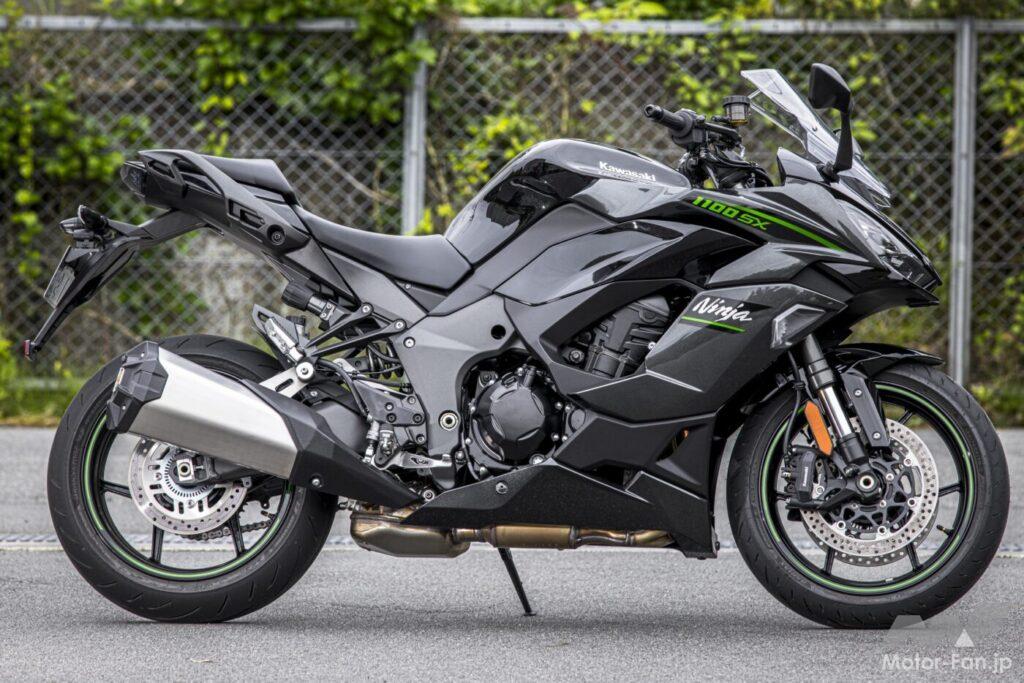
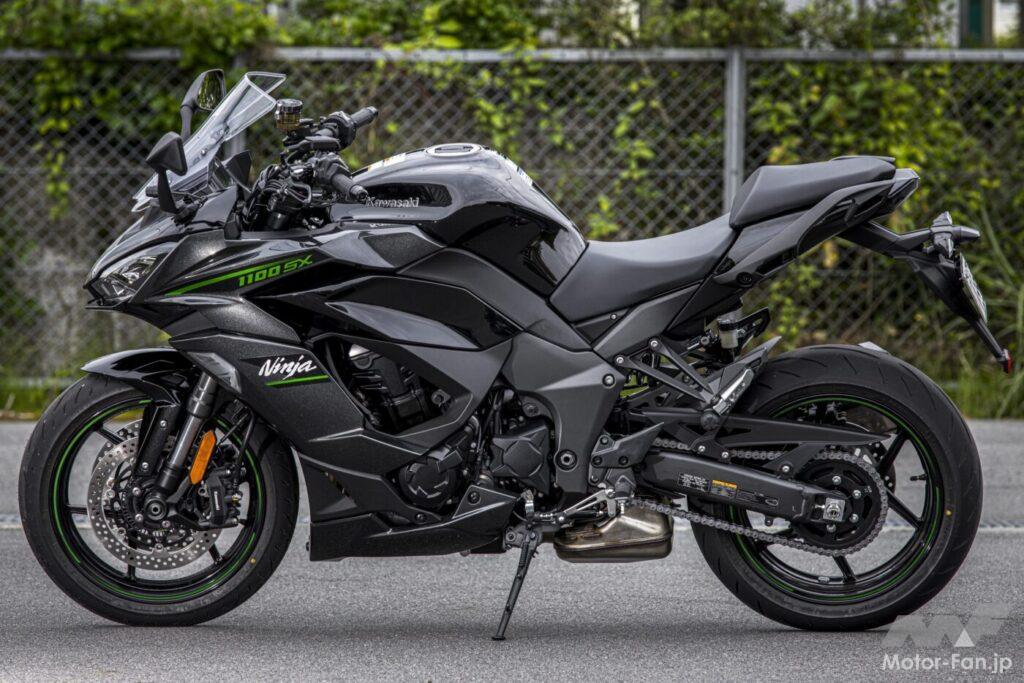
The body colors available are Metallic Carbon Gray x Metallic Diablo Black as shown in the photo, as well as Pearl Blizzard White x Pearl Meteor Gray. The top-spec Ninja 1100SX SE comes in a special color scheme of Emerald Blazed Green x Metallic Diablo Black.
5.3% increase in displacement provides richer torque feel in the low and mid-range
The official Japanese lineup for the Ninja 1000 began with the 2017 model, but in fact, it has been sold as a re-imported model through Bright since the first generation in 2011. By the way, the price at the time was 1,239,000 yen for the standard model and 1,302,000 yen for the ABS model. For me, who previously rode a GPz750R and a GPZ900R, the high level of perfection of the Ninja 1000 was so shocking that it was exactly the ideal form of customization I was aiming for back then. In fact, I even felt that no matter how much money I spent, it would be impossible to reach that level.
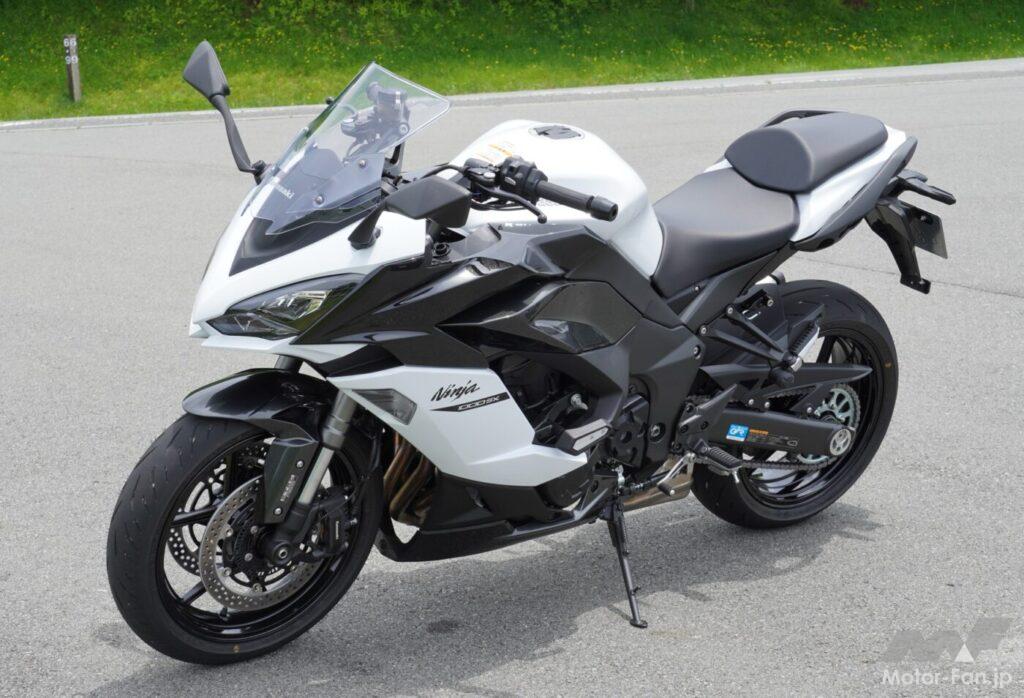
The Ninja 1000 that I most recently test rode was the 2020 model, renamed the “Ninja 1000SX.” The model pictured is in Pearl Blizzard White x Metallic Carbon Gray coloring, and was priced at 1,485,000 yen at the time.
This year marks the 15th anniversary of the model’s launch, and with the increase in engine displacement of 55cc, the model name has been changed to “Ninja 1100SX.” At the same time, the lineup has been expanded to include the higher-spec “Ninja 1100SX SE,” which is equipped with a Brembo brake set and an Ohlins rear shock absorber. The model test driven this time was the standard model, priced at 1,771,000 yen, an increase of approximately 11% from the 2024 model 1000SX. This increase can be largely attributed to the fact that the Mitsuba Sanko dashcam and heated grips have become standard equipment.
Let’s start with the engine. In response to requests from European users for lower rotation speeds when cruising in top 6th gear, the Ninja 1100SX has had its displacement increased by 55cc and the flywheel mass also increased. Generally, as the displacement increases, the vibrations that occur tend to increase, but as a countermeasure, the handlebar weight has been tweaked to achieve the same level of comfort as the 1000.
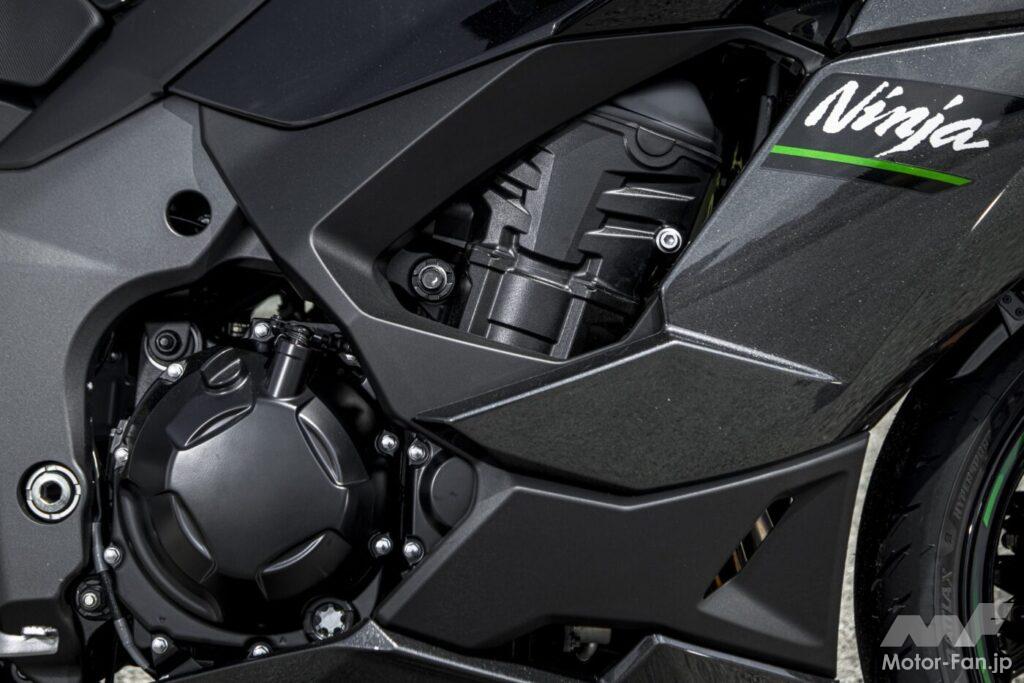
The engine is based on the water-cooled, four-stroke, in-line four-cylinder engine from the original (ZX10000G/H), but the stroke has been increased by 3mm from 56.0mm to 59.0mm, increasing displacement from 1043cc to 1098cc. The compression ratio remains the same at 11.8:1, and revised output characteristics have reduced maximum power from 141PS to 136PS. While this figure is lower than the 138PS of the original 1000, the engine’s real-world power output has been increased from 10,000rpm to 9,000rpm, and maximum torque has been increased from 111Nm to 113Nm, improving ease of use in the low and mid-range. It’s also worth noting that fuel economy in WMTC mode has improved by 6.3% thanks to changes to the primary and secondary reduction ratios and revised fifth and sixth-speed gear ratios.
This engine not only has the smooth rotational speed that is unique to an inline-four engine, but also has a very pleasant pulsating feeling that gives off a slight fluctuation. It gives off a sense of quality, but when you open the throttle slightly, it quietly asserts the large displacement. I remember that this tendency became stronger with the 2020 model, which adopted an electronically controlled throttle, but with the 1100cc engine, the flavor seems to have become even more intense.
The riding modes remain unchanged, with four options available: Sport, Road, Rain, and a rider mode that allows you to freely change the power and KTRC (traction control) settings. Due to the limited test ride time, we used Road mode a lot, but even so, if you open the throttle wide, the bike accelerates powerfully from the low rev range and becomes even more powerful around 6000 rpm. The degree of change can be described as the old-fashioned “riding a cam,” and riders who prefer a sporty feeling will find it very satisfying.
What impressed me most was the precise response of the electronically controlled throttle. In any mode, the response when opening the throttle from fully closed was smooth, and the engine braking when returning it was easy to control. I was even impressed that the electronic throttle had finally reached this level. As for the slight vibrations that the company says it has worked hard to prevent, they do appear above 6000 rpm when the bike becomes powerful, but since even in first gear the speed range exceeds 60 km/h, it is unlikely that many riders will regularly use that range.
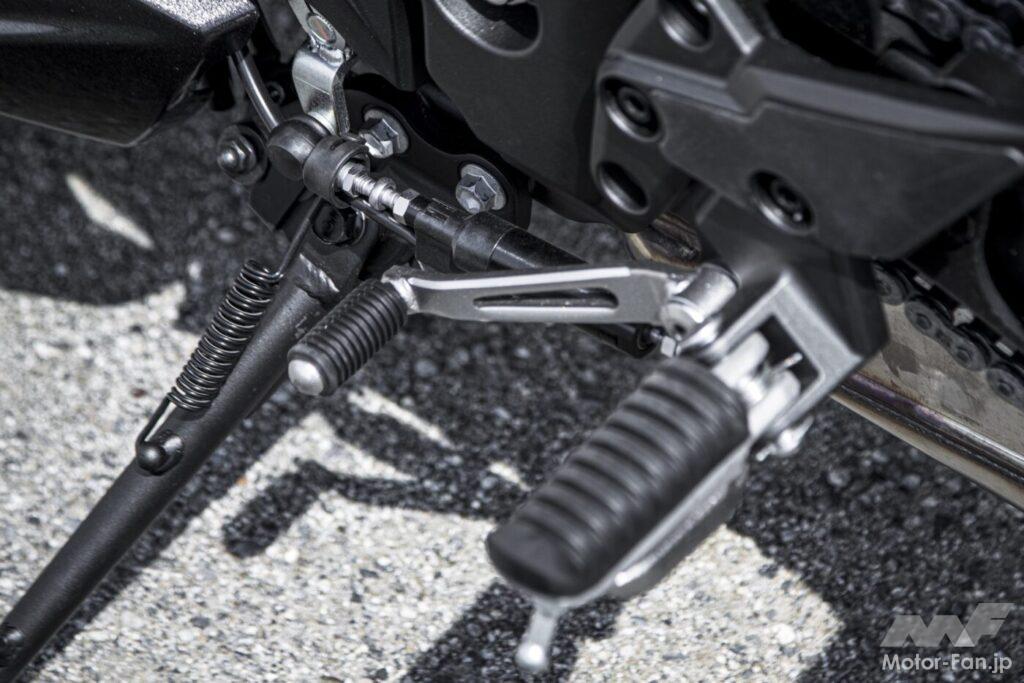
The bidirectional quickshifter, which has been standard since the 2020 model, has had its minimum usable speed reduced from 2500 rpm to 1500 rpm. Furthermore, it does not support upshifts with the throttle closed or downshifts with the throttle open, and the setting is canceled if you change gears while using cruise control.
The improved quick shifter still produces a strong shift shock in the powerful range above 6000 rpm, but it is very smooth below 4000 rpm, which is often used on public roads, and anyone can enjoy the benefit of not needing to operate the clutch lever while riding. In addition, the adoption of an assist and slipper clutch means that the lever operation force is as light as that of a mid-class bike, which can also be said to be an advantage.
Is the SE unnecessary? The front and rear suspensions work well even on the standard model.
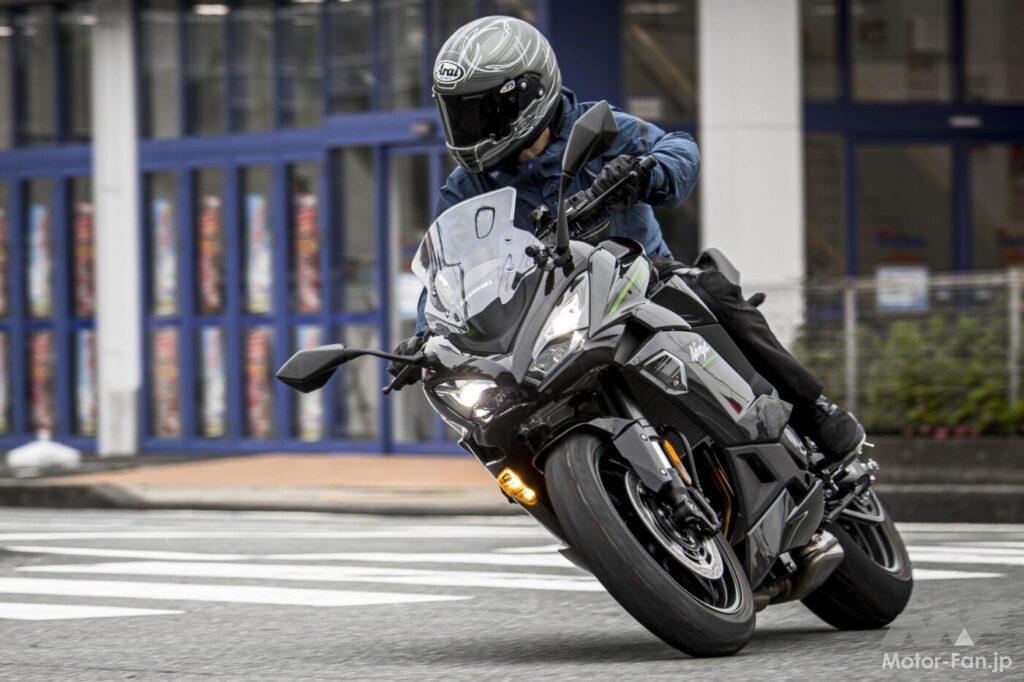
It is no exaggeration to say that the handling of the Ninja 1100SX is top class in terms of ease of use. The way the steering angle responds to the lean of the body is natural and easy to understand at any speed range, allowing you to enter corners with confidence. This tendency also applies to the Versys 1100 SE, which shares the same platform, but the Ninja 1100SX has a shorter wheelbase by 80 mm, giving it excellent turning ability, and it turns so easily that it’s hard to believe it’s a bike with an over-100cc engine, even on Japan’s tight mountain roads. Of course, there are times when you feel the weight of the 236kg, but even so, leaning into corners and turning back are at a level that can be described as “light and nimble.”

The frame, which is made up of five pieces of cast aluminum parts, is based on the Z1000 (ZR1000D), and the 1100 is basically unchanged.
The standard tires are Bridgestone S23s, which I think also contribute to the natural handling. What impressed me most was the excellent operability of the front and rear suspension. With the higher-spec SE model, which uses an Ohlins rear shock, on the horizon, I was overconfident that the STD model would be just fine. However, while its handling on rough mountain roads isn’t quite on the same level as the Versys 1100 SE, which has electronically controlled suspension, it’s no exaggeration to say that it comes close. In particular, the front fork’s inner tube diameter, which isn’t unnecessarily thick, seems to have been a positive factor.
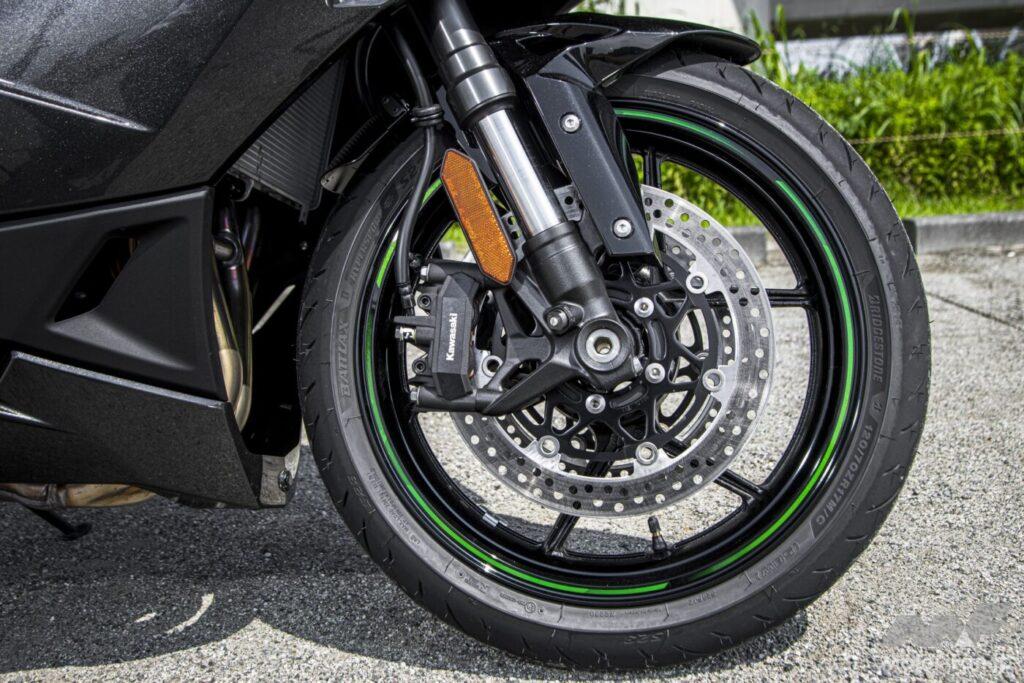
The standard tires have been upgraded from Bridgestone Battlax Hypersport S22 to S23. The front calipers are radially mounted, opposed 4-piston calipers, combined with φ300mm discs.
ADVERTISEMENT
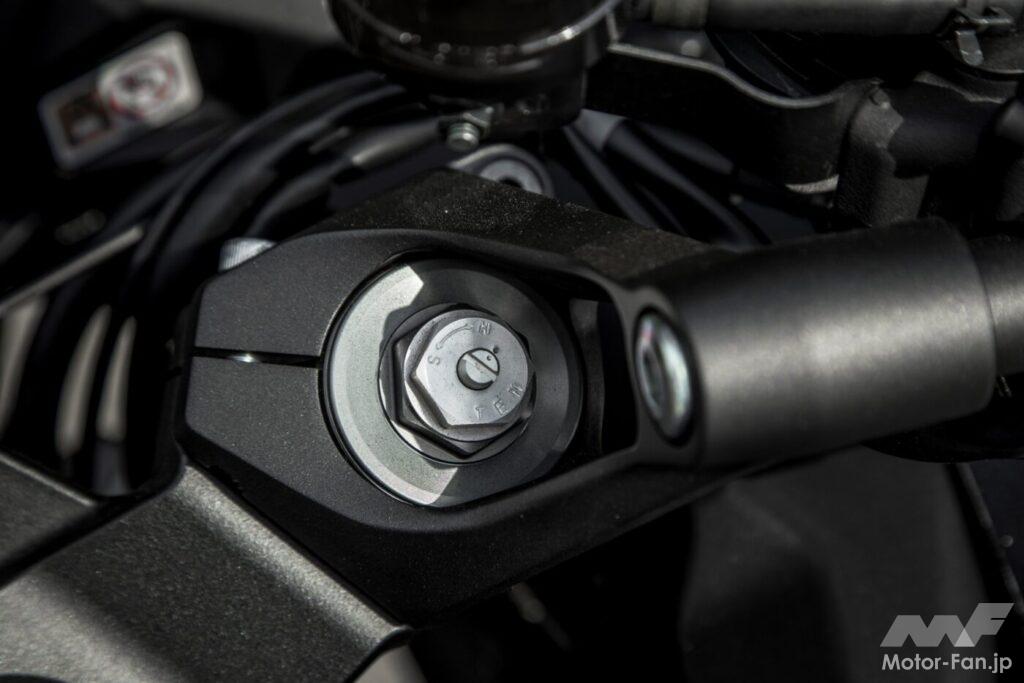
The inverted front forks are fully adjustable, with preload and rebound damping adjusters on the top caps on both sides, and compression damping adjusters on the bottom case on the right side. The inner tube diameter is 41mm (43mm for the Versys 1100 SE with electric suspension).
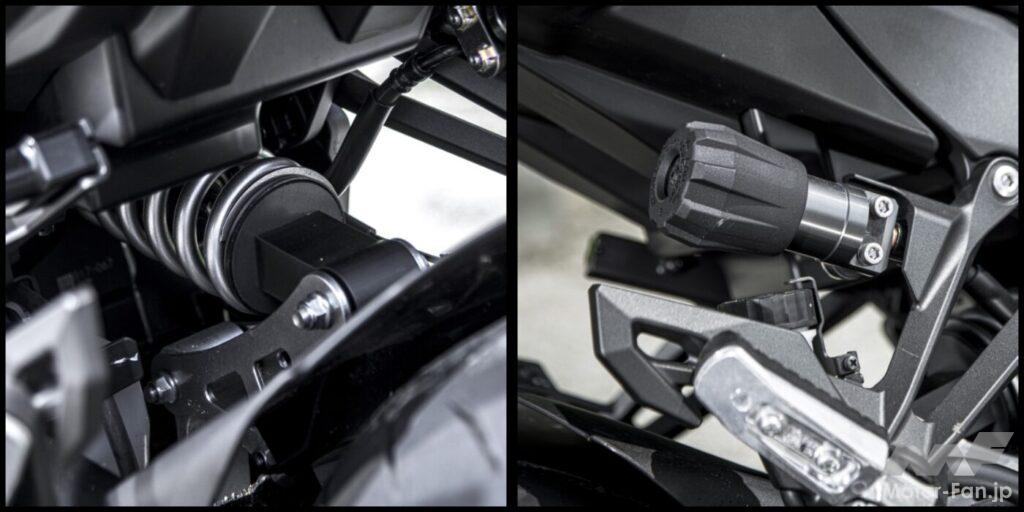
The rear suspension is a horizontal back link type, with rebound damping force and preload adjustable using a hydraulic controller.
As for the brakes, although there is an SE model that uses Brembo calipers and discs on the front, the standard model is more than effective and has a high level of controllability. During this test ride, it is unclear to what extent KCMF (Kawasaki Cornering Management Function), which includes KIBS (Kawasaki Intelligent Anti-lock Braking System), intervened, but I would like to state that I did not feel any particular discomfort in any situation.
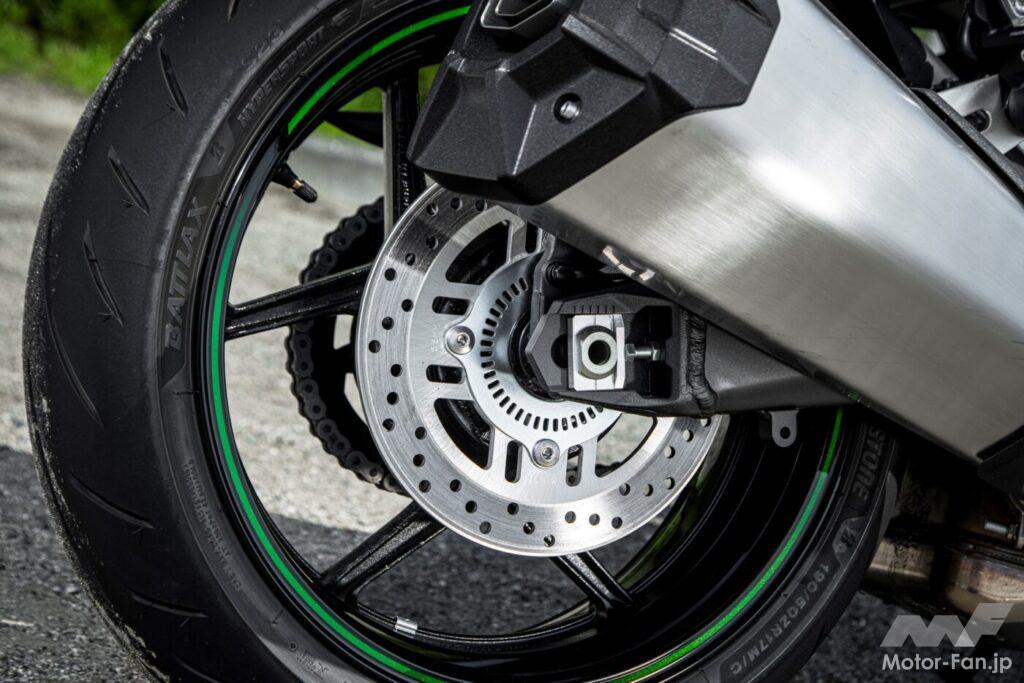
The diameter of the rear brake disc has increased from φ250mm to φ260mm. Also, the caliper layout has changed from the bottom of the swingarm to the top. Another notable change is that the chain adjuster has been changed from Kawasaki’s traditional eccentric type to a more conventional slider type.
The wind protection provided by the cowling, including the windshield that can be adjusted to four different angles, allows the rider to feel a moderate amount of wind while more than adequately reducing wind pressure that would otherwise lead to fatigue. In addition, the excellent electronic cruise control and heated grips, which are now standard equipment, will be useful when touring in cold temperatures.
Compared to its direct rival, the Suzuki GSX-S1000GT (1.65 million yen), the Ninja 1100SX has a disadvantage of 14 PS less maximum power, is 10 kg heavier, and cannot display a map on the meter. On the other hand, the Ninja 1100SX’s fuel economy in WMTC mode is about 15% better, so for touring riders, these factors will likely be a factor in choosing a model.

The Suzuki GSX-S1000GT was released in February 2022. It is equipped with a water-cooled, four-stroke, in-line four-cylinder engine based on the GSX-R1000 (K5) and mounted on an aluminum twin-spar frame. The front calipers are made by Brembo. There is no windshield angle adjustment mechanism.
The GPZ900R, which was released in 1984, continued in production for 16 years until 2003. Meanwhile, the Ninja 1000, which was released in 2011, has undergone repeated model changes, changing its name to the Ninja 1000SX and Ninja 1100SX, and is now in its 15th year. In terms of practical use, this model is the true successor to the GPZ900R, and will likely continue to live on as a pure sports tourer.
Riding position and foot reach (175cm/68kg)
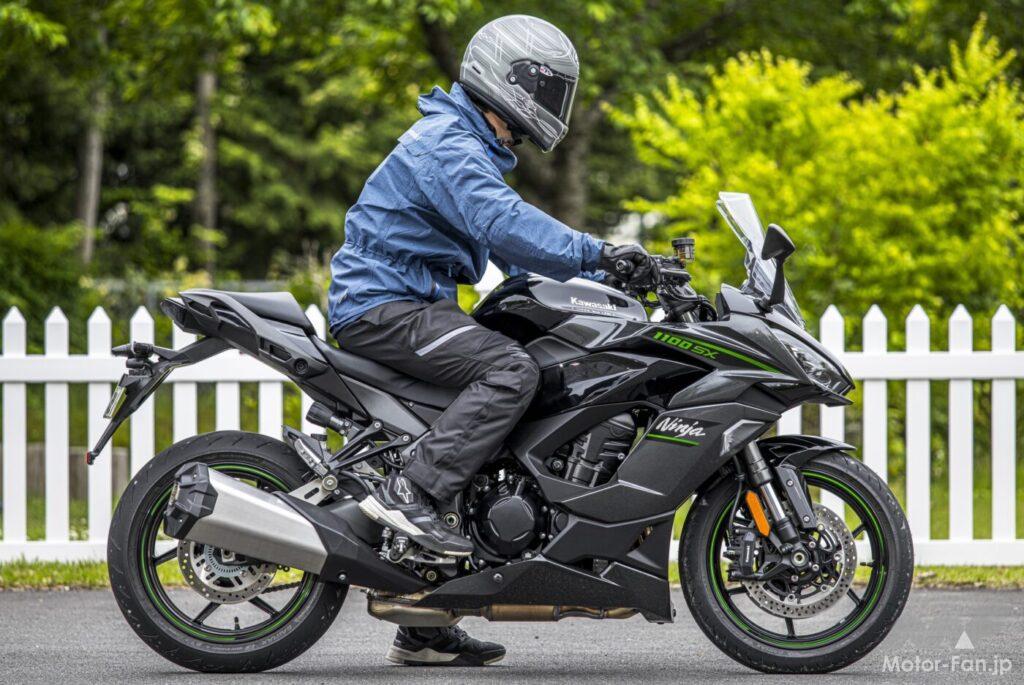
The riding position involves a slight forward lean of the upper body, and the unique frame layout makes the knee grip area relatively slim. Incidentally, the windshield in the photo is at its most upright angle.
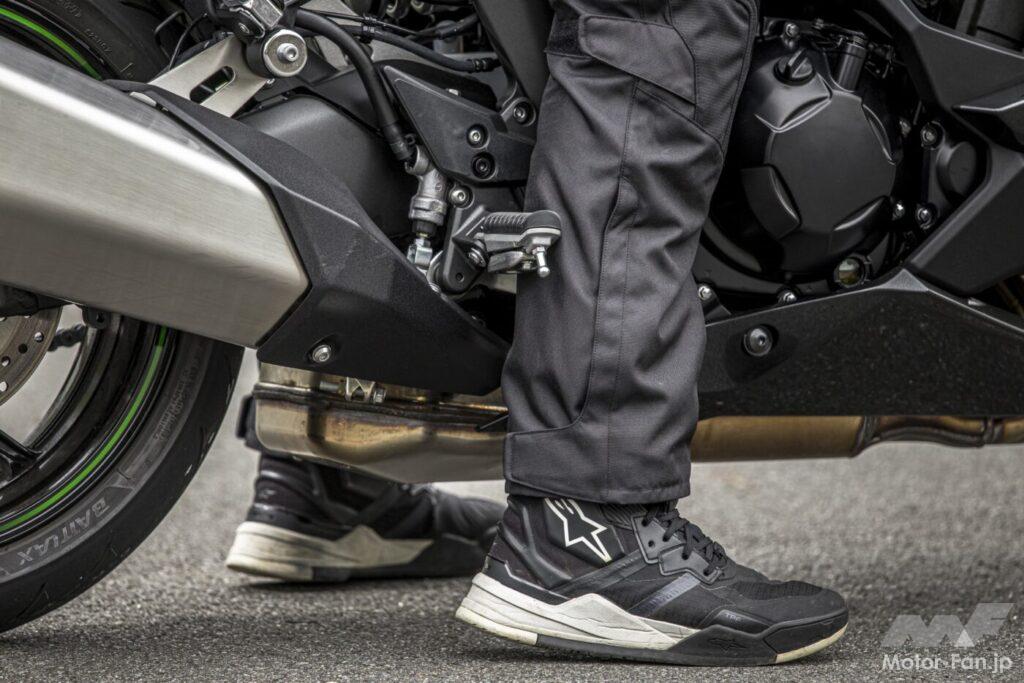
The seat height is 820mm, the same as the previous 1000SX, and as you can see, the foot reach is good. The seat is 16mm lower than the overseas model, but the cushioning is still thick enough to provide a comfortable ride.