
![The 2025 Rebel 250 is ready for long-distance riding | 1000km serious test ride [3/3]](https://motopeek.com/wp-content/uploads/2025/07/2225-1760835832349.jpg)
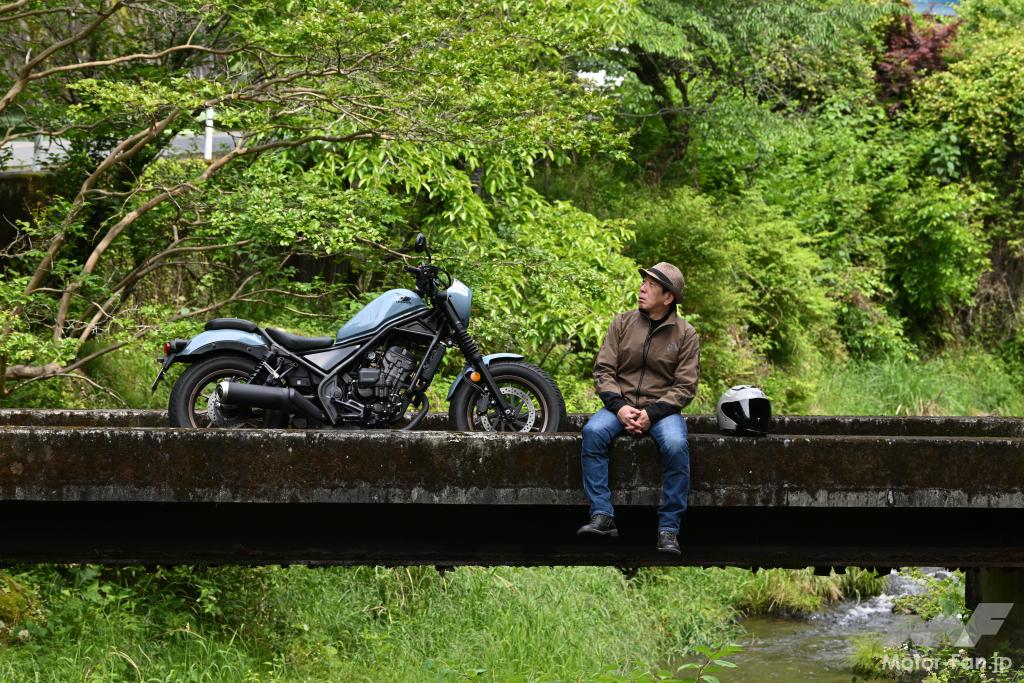
Honda Rebel 250 S Edition E-Clutch… 731,500 yen

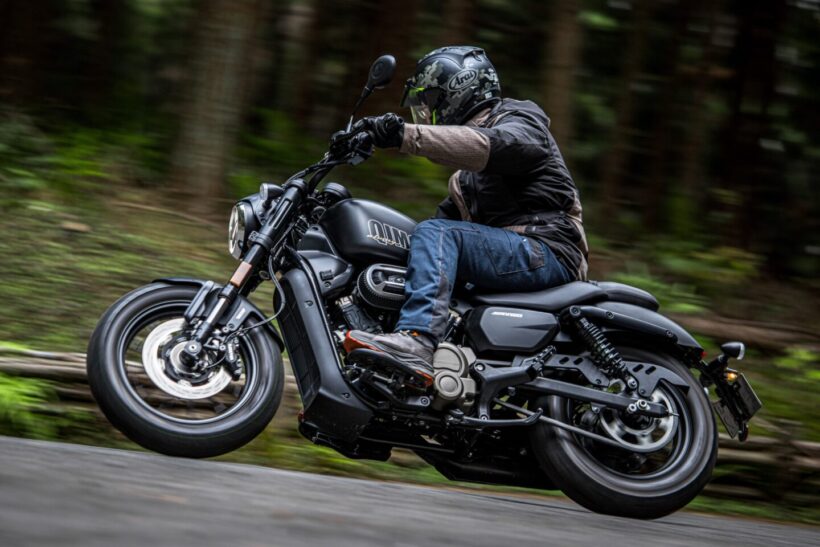
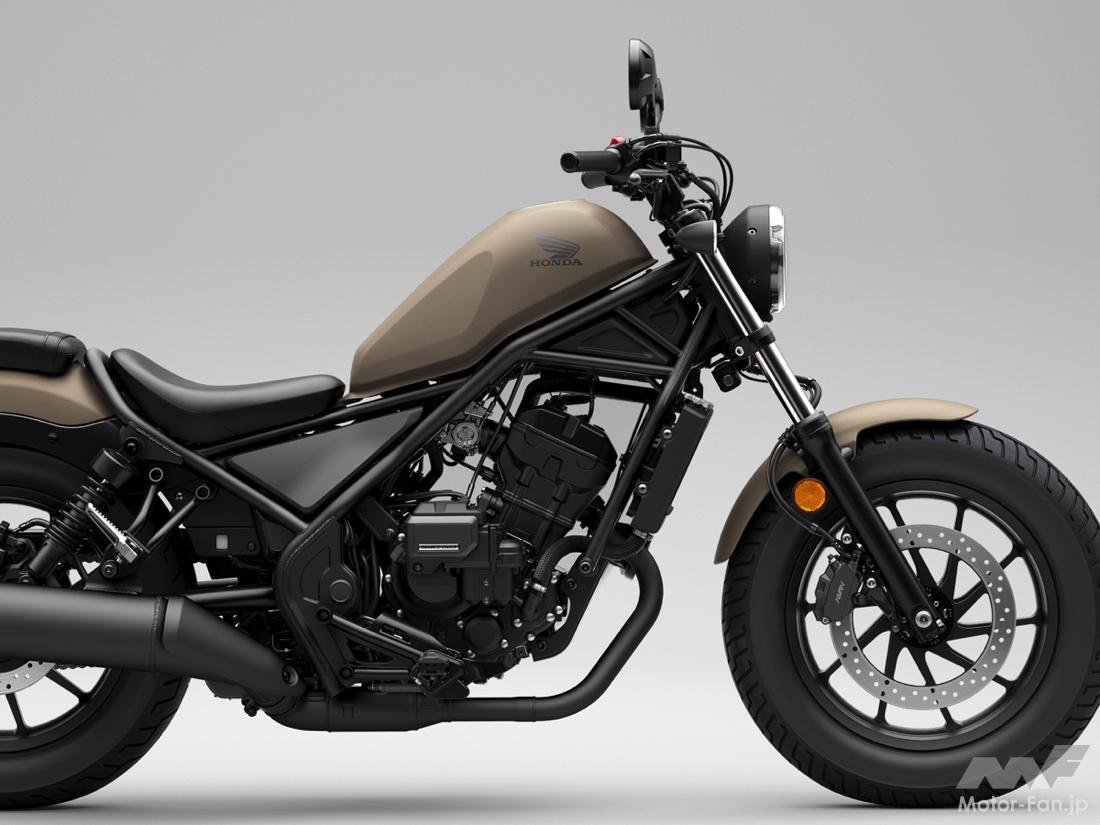
The Rebel series’ exterior is characterized by a narrow style achieved by a single line connecting the head pipe and rear wheel axle, a frame with a “waist” under the seat, and an original gas tank. However, the front and rear tires are deliberately fat and wide.
Riding position (height 182cm, weight 74kg) ★★★★☆

Vehicles with a low seating position that prioritizes easy foot reach often make a big guy like me feel cramped in the lower half of my body, but perhaps because of the good positioning of the handlebars and footpegs, I didn’t feel that way on the Rebel 250. On long runs with the previous model, I would have felt a lot of pain in my buttocks and lower back halfway through, but the 2025 model, with its redesigned seat and rear shock, has largely solved that problem. However, when riding aggressively on mountain roads, I personally felt like I wanted to sit a little further forward and higher.

The seat height is 690mm, the lowest in the current 250cc class, so it’s extremely easy to reach the ground with your feet. Even for a rider who is 150cm tall, about one-third of both feet will be able to touch the ground. Furthermore, smaller riders will also be pleased to know that the handlebar grips are now positioned closer to the rider.

Tandem riding ★★★☆☆

In the Rebel 500 featured in the 2021 Gachi 1000km, photographer Togashi (height 172cm, weight 52kg), who was sitting in the back seat, criticized the pillion riding performance. However, the 2025 Rebel 250 did not seem to be bad at all. “The ride has clearly improved. In addition, what I discovered during this pillion riding test ride was that the footpegs work surprisingly well. At first I thought it would be difficult because my knees would be pointing upwards, but I was able to somehow handle acceleration and deceleration. Personally, I would like to see the seating area expanded and a grab bar added, but if a petite woman rides close to the driver, the current state may be OK.”
Handling ★★★★☆

You might think that the large protruding footpegs on both sides would hinder foot movement, but they are actually quite easy to handle. However, by modern standards for 250cc sports naked bikes, the weight of 171kg (174kg for the E-clutch model, 175kg for the S Edition E-clutch model) is a little heavy, and the wheelbase of 1490mm is quite long. The handlebar turning angle is 35 degrees, which is roughly the average for modern 250cc sports naked bikes.
Steering wheel/meter area ★★★★☆

Compared to the previous model, the handlebars have a sharper angle (when viewed from the rider, the left and right grip positions are moved 6.5 mm forward and 5 mm upward) and are about 10 mm narrower, with a two-stage structure of 1 inch (≒ 25.4 mm) in the center and 22.2 mm on both sides (the previous model was a very ordinary 1-inch bar). In addition to the revamped handlebars, heated sports grips will be available as an original accessory from the 2025 model.
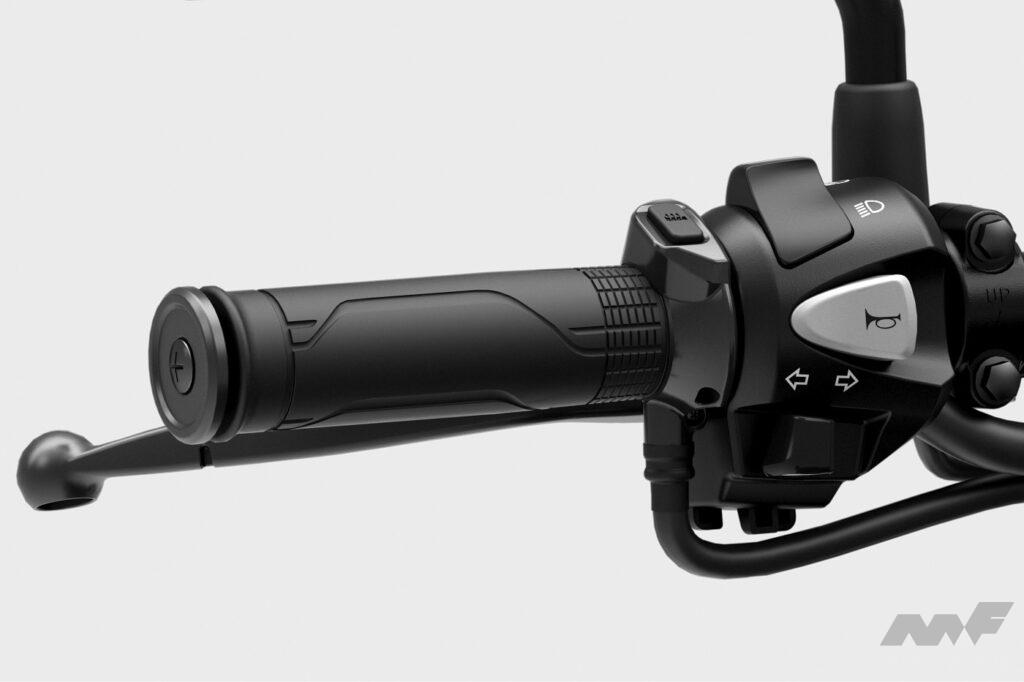
The Honda Genuine Accessory Sports Grip Heater can be adjusted to five different temperatures and costs 27,830 yen.
The φ100mm LCD meter mounted on the top bridge maintains the basic configuration of the conventional type, but adds a lamp for the E-clutch to the center of the upper row of indicators lined up below. Also, when riding in a gear higher than the ideal gear, a mark encouraging the rider to downshift is displayed to the left of the gear position indicator.

Left and right switch/lever ★★★★☆


The left and right switch boxes, which were thought to be exclusive to 1-inch bars on the previous model, have been changed to standard Honda parts in the 2025 model. The front brake master cylinder and clutch lever holder are also different from the previous model.
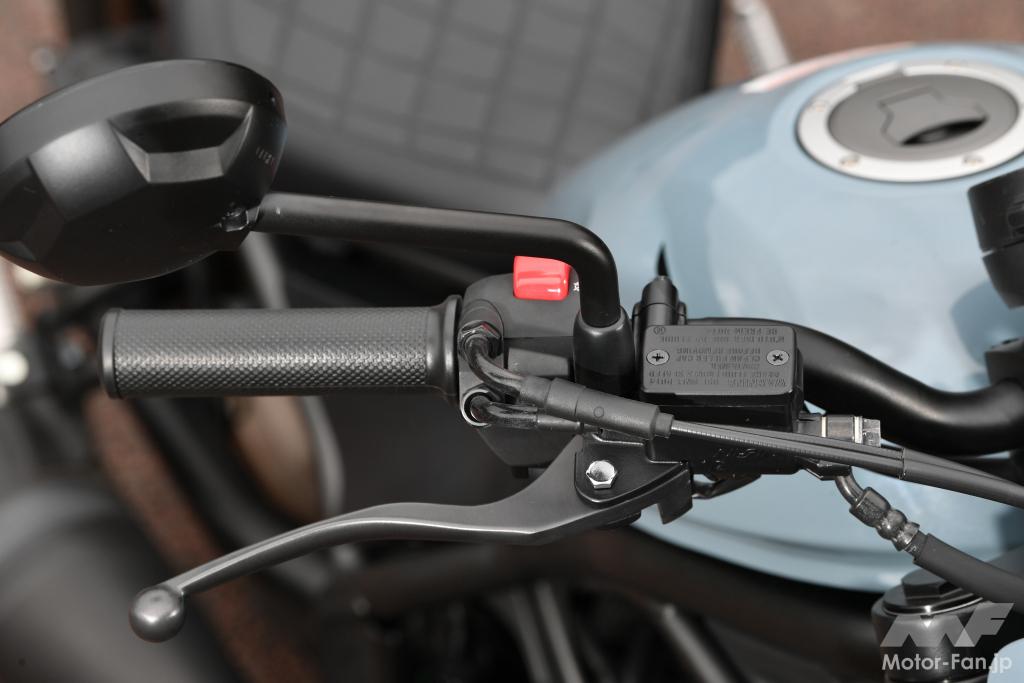

The grip rubber has the same feel as the previous model, but considering that the outer diameter of the handlebars has become thinner, it is likely that the thickness has increased. The rearview mirror has an extended stay. The brake/clutch levers have no adjustment mechanism.
Fuel tank/seat/step area ★★★★☆

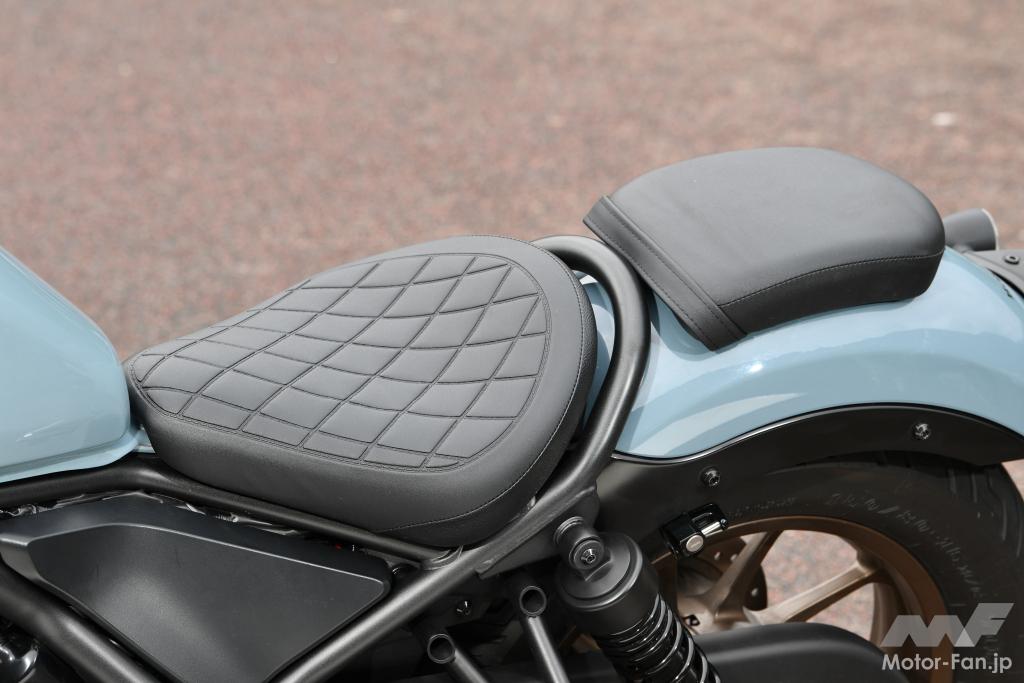
The 11L gasoline tank is extremely slim. The recessed corners that accent the side of the bike are not useful for knee grip on straight roads, even for someone 182cm tall, but pushing on these parts allowed me to corner comfortably on mountain roads. The urethane inside the saddle-type seat has been changed to a high-density type. The seat leather with diamond-stitched wadding is a part unique to the S Edition, but can be purchased as a genuine accessory. A helmet holder is installed behind the left rear shock.
For some reason, the left and right footpegs are trail bike style, and when the rubber is removed the bars become jagged. The footpeg position on the Rebel series is mid-control in cruiser terms, but it seems that some owners are changing it to forward controls in pursuit of a more traditional look.


Loading capacity ★★☆☆☆

As with the previous model, loading capacity is hopeless. There are no luggage hooks around the tail cowl, and to install a seat bag (pictured is the Tanax Mini Field Bag Heritage Edition), the bolted-on pillion seat must be removed, and there is no storage space under the seat whatsoever. In any case, riders with a touring orientation should consider purchasing carriers, bags, and luggage hook bolts from the aftermarket. The 2025 Rebel 250 will also be available with an ETC 2.0 onboard unit kit as its first genuine accessory.

ADVERTISEMENT
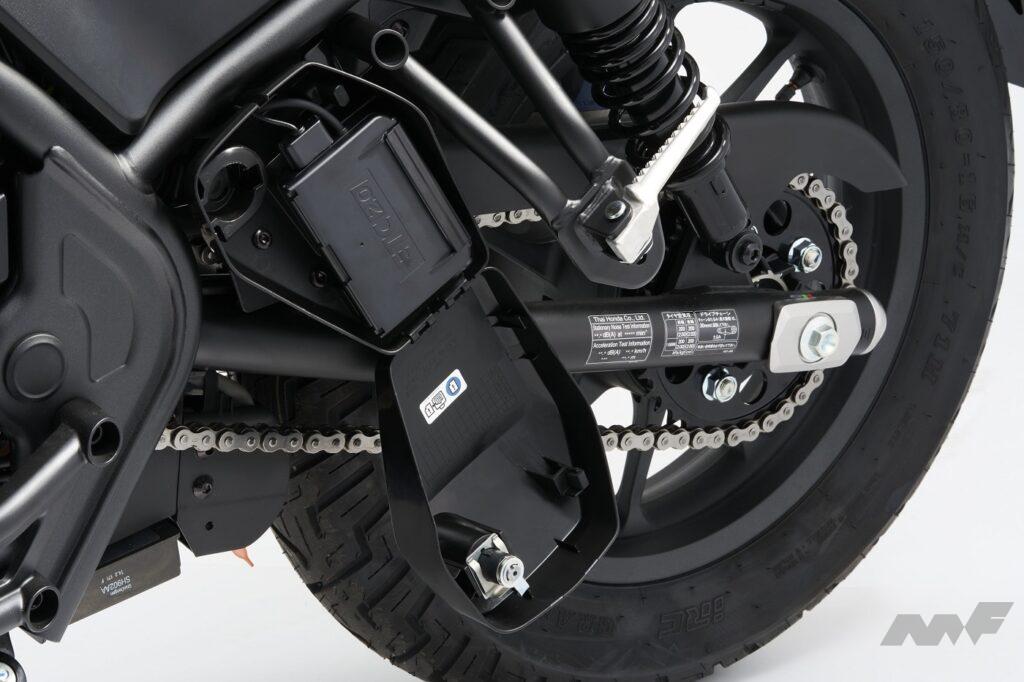
The ETC2.0 onboard unit kit, which will be available as an original accessory part for the Rebel 250 from the 2025 model, costs 47,960 yen, and the dedicated accessory box costs 11,374 yen.
Brakes ★★★☆☆
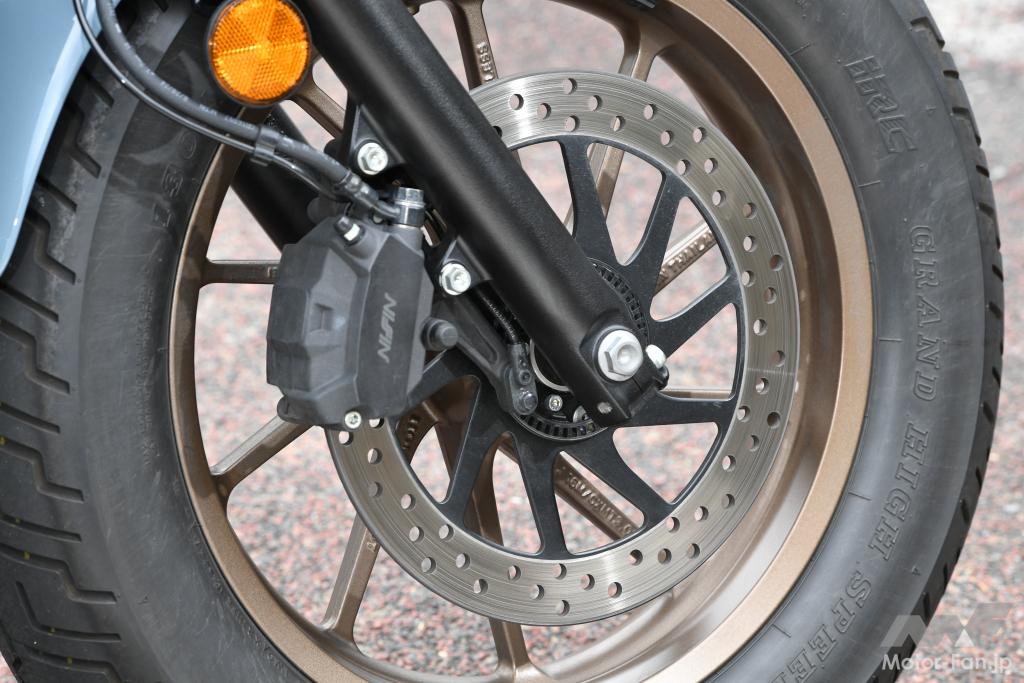
The brakes, a 296mm diameter disc + single-piston two-piston caliper in the front and a 240mm diameter disc + single-piston one-piston caliper in the rear, follow the conventional configuration. They’re not extremely high-performance, but they’re easy to handle in any situation. However, the ABS is a bit abrupt in its response.

Suspension ★★★☆☆

The front fork, which maintains the conventional configuration, is a φ41mm upright type, with a fairly wide span of 240mm, designed to ensure a powerful look and steering angle. On the other hand, the rear shock absorber has no changes to its overall length, spring rate, damper characteristics, etc., but the shape of the bumper rubber to prevent bottoming out has been revamped.

In-vehicle tools ★★★☆☆

The on-board tools provided under the main seat are a 5mm L-shaped hex wrench, a fuse puller, an interchangeable screwdriver, a hook wrench for adjusting the rear shock preload, and a 10x14mm wrench. As with the previous model, a 12x14mm wrench is listed in the parts list, but for some reason it was not found on the test vehicle.
Actual fuel consumption ★★★★☆
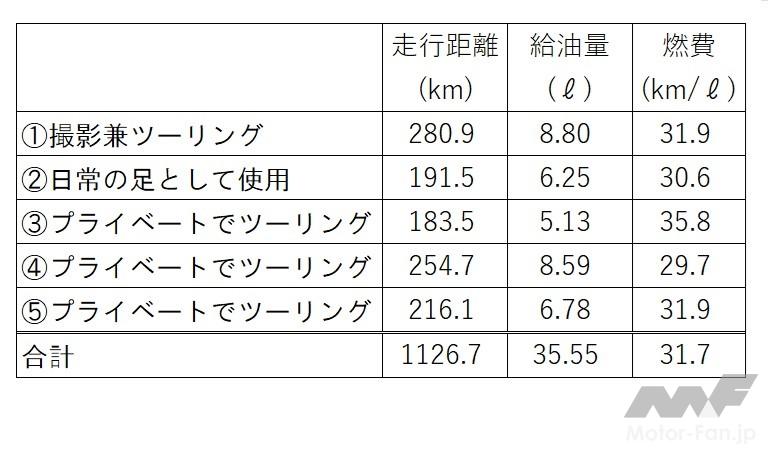
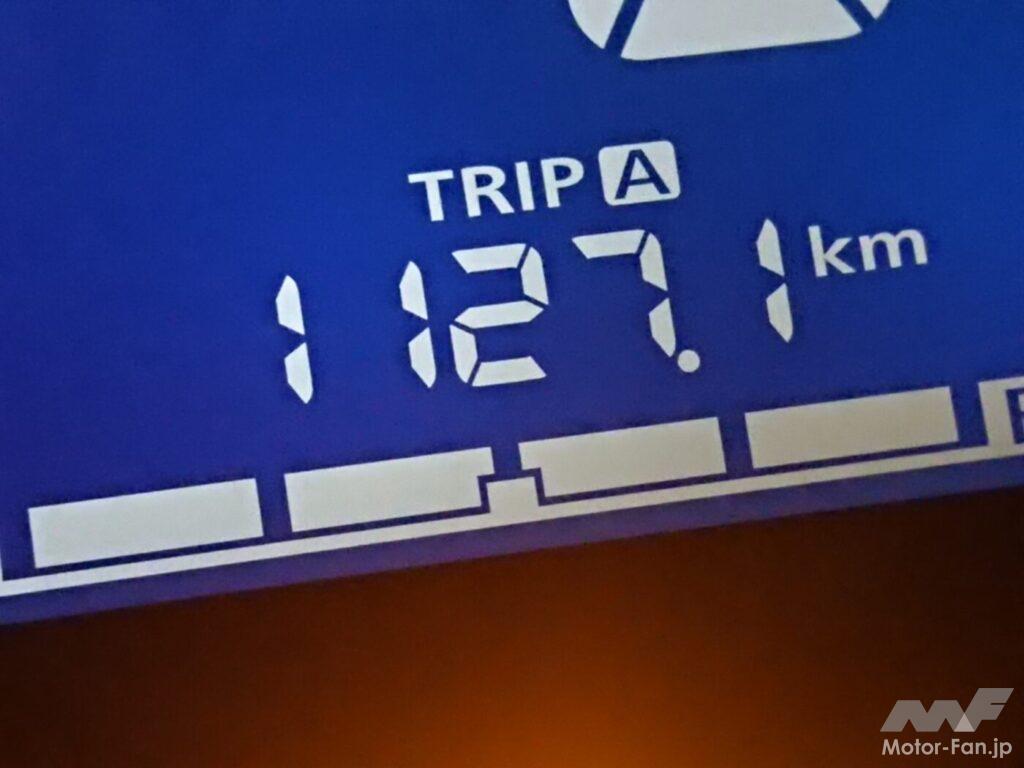
Perhaps because I was pleased with the responsiveness and flexibility of the E-clutch and applied the throttle more roughly than usual, the fuel economy wasn’t so great… Just to be clear, there are many riders online who publish figures of around 35km/L, the same as the WMTC mode figure, and the CRF250L with a similar engine that was featured in a previous Gachi 1000km project achieved 33.1km/L. The cruising range calculated from this average fuel economy is 31.7 x 11 = 348.7km.
ADVERTISEMENT

The wheel sizes are 3.00 x 16 and 3.50 x 16. The standard color is classic black, but the S Edition comes in a striking bronze.
Main specifications
Model: Rebel 250 S Edition E-Clutch
Model: 8BK-MC49
Length x Width x Height: 2205mm x 810mm x 1090mm
Wheelbase: 1490mm
Ground Clearance: 134mm
Seat Height: 690mm
Caster/Trail: 28°/110mm
Engine Type: Water-cooled 4-stroke single cylinder
Valve Type: DOHC 4-valve
Total Displacement: 249cc
Bore x Stroke: 76mm x 55mm
Compression Ratio: 10.7
Maximum Power: 19kW (26ps) / 9500rpm
Maximum Torque: 22N・m (2.2kgf・m) / 6500rpm
Starting Method: Self-starter
Ignition Method: Full Transistor Lubrication Method:
Wet Sump
Fuel Supply Method: Fuel Injection
Transmission Type: Constant Mesh 6-Speed Return
Clutch Type: Wet Multi-Disc Coil Spring
Gear Ratio
1st: 3.416
2nd: 2.250
3rd gear: 1.650
4th gear: 1.350
5th gear: 1.166
6th gear: 1.038
1st and 2nd reduction ratios: 2.807 and 2.571
Frame type: Diamond
Front suspension: Telescopic inverted type φ41mm
Rear suspension: Swing arm twin shock
Front tire size: 130/90-16
Rear tire size: 150/80-16
Front brake type: Hydraulic single disc
Rear brake type: Hydraulic single disc
Vehicle weight: 175kg
Fuel used: Unleaded regular gasoline
Fuel tank capacity: 11L
Passenger capacity: 2 people
Fuel consumption rate (Ministry of Land, Infrastructure, Transport and Tourism notification value): 47.0km/L (2 people)
Fuel consumption rate (WMTC mode value, class 2-2): 34.9km/L (1 person)