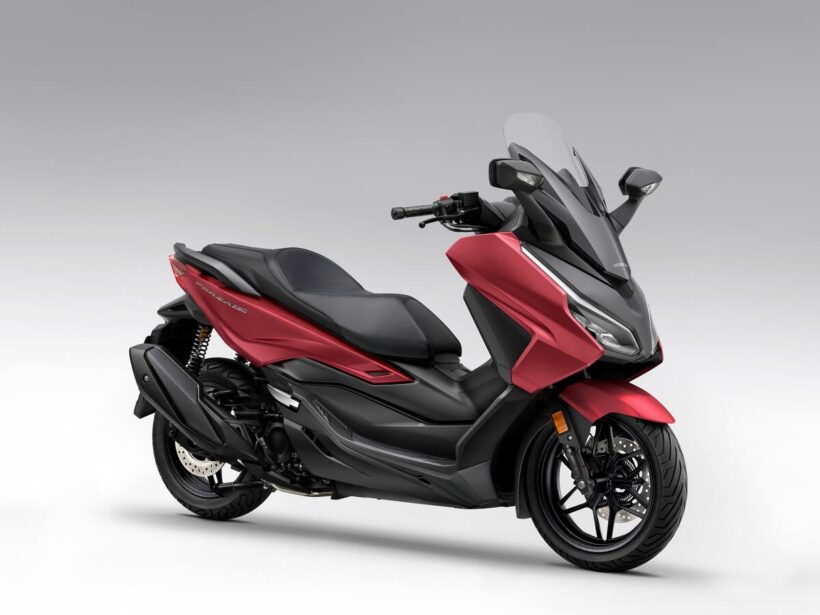



Having ridden over a dozen different models of motorcycle since the age of 16, the author finally settled on the CT125 in 2020. He was already approaching his mid-50s, and when he considered his lifestyle, he felt it would be nice to have a vehicle that could serve as a substitute for his old shoes. He had also longed for the CT110, and fell in love at first sight with the prototype model unveiled at a motor show.
The CT125 was indeed a very well-made bike, and I loved it even with its various “weaknesses.” Best of all, there were plenty of custom parts available, making it easy to modify yourself. When I was in my teens and twenties, I rode my bike every day and tinkered with it in some way, but once I entered the workforce, I gradually became lazy and ended up leaving all maintenance and customization to motorcycle shops.
The CT125 is a bike that took me back to my teenage years, and was the perfect model for an old man’s motorcycle hobby. Because it’s structured like an extension of a bicycle, it’s not that difficult to tinker with yourself. Recently, there have been many videos uploaded to YouTube that explain in detail how professional bikes are maintained, so if you watch them, you’ll have no trouble at all.
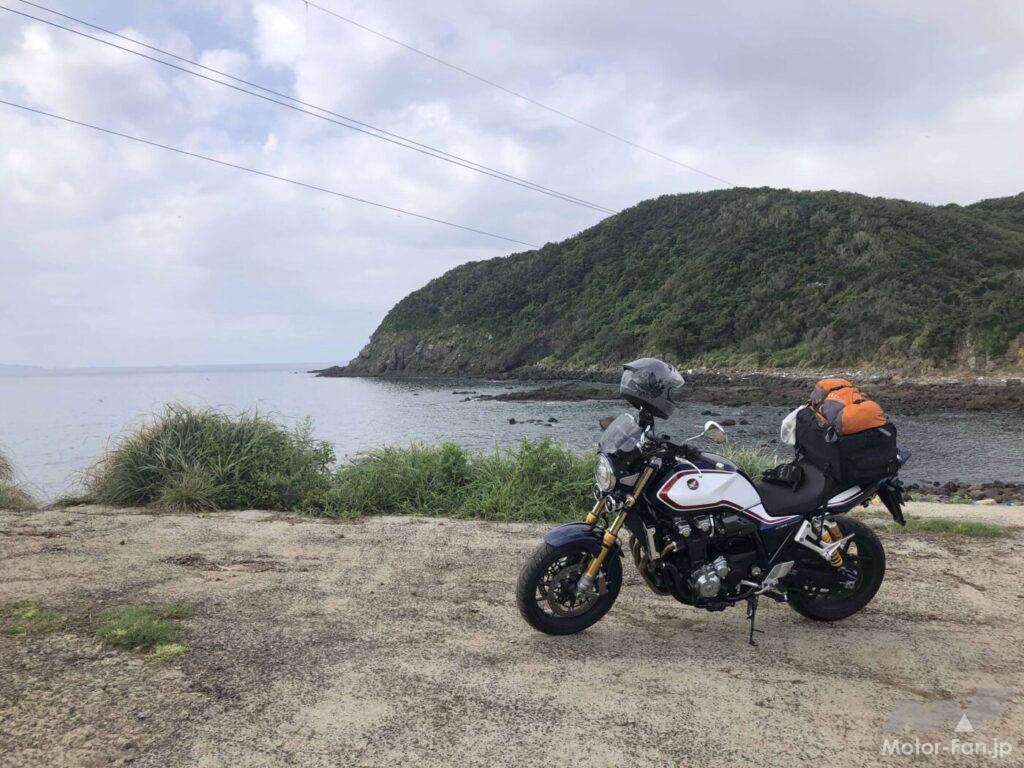
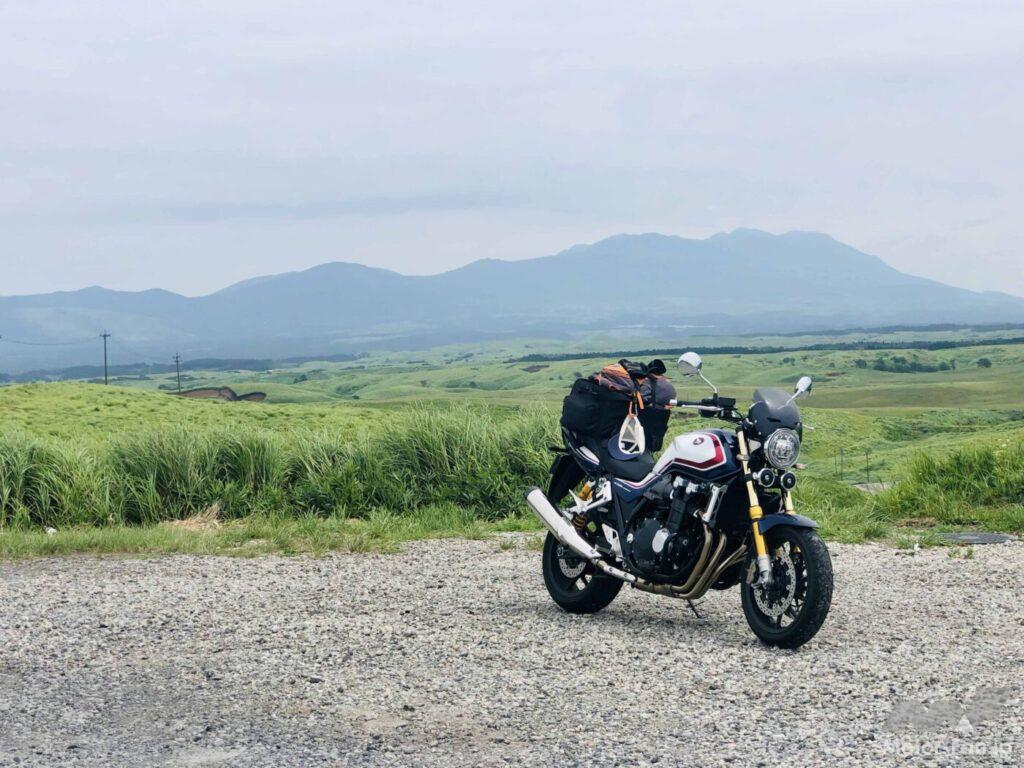
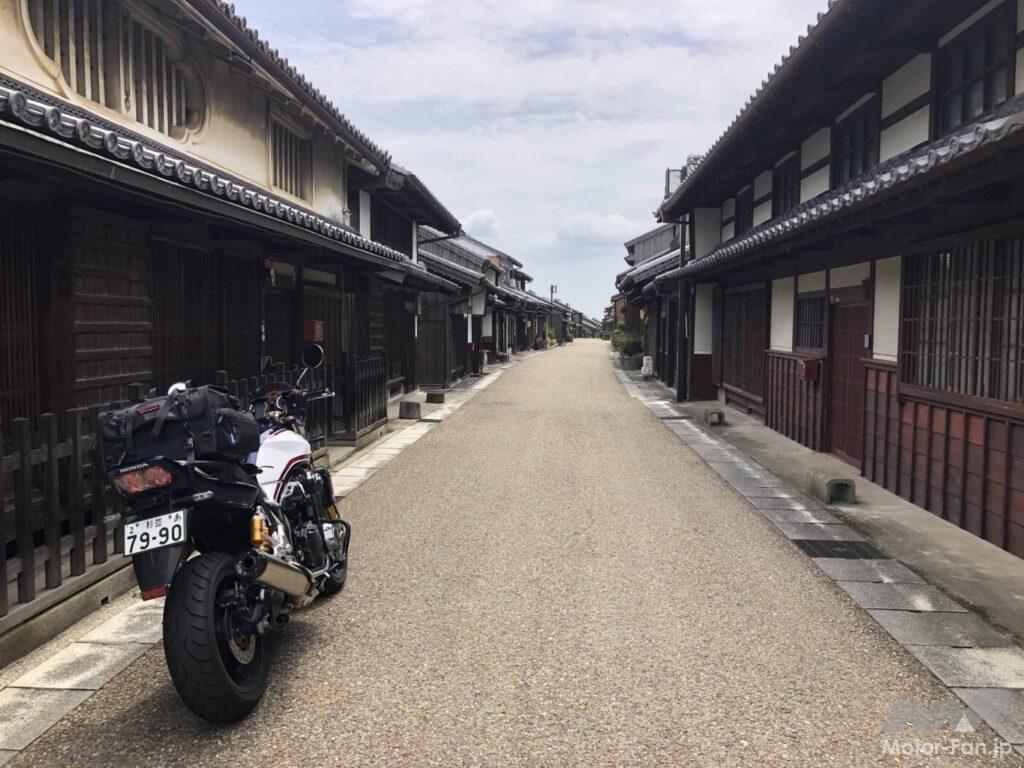
However, as I continued to enjoy my CT125 life, a forbidden desire to return to a big bike began to well up within me, and I couldn’t resist the urge and ended up purchasing a CB1300 Super Four.
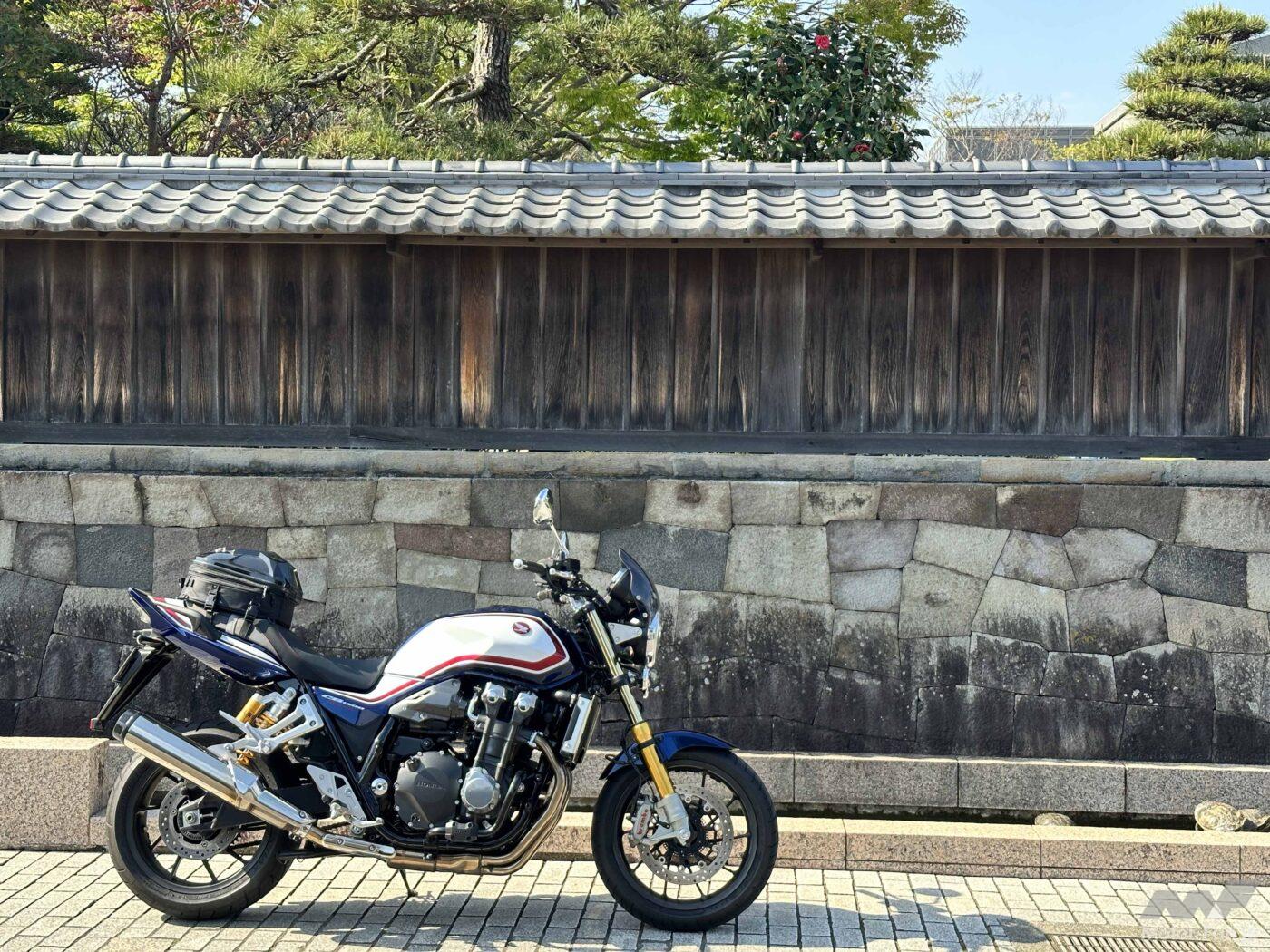
He purchased the car from Honda Dream, but when he took delivery he declared to the store manager, “I’ll do all the maintenance myself, except for major repairs.”
There are two schools of thought among motorbike riders. One is, “I’m worried about doing maintenance and repairs myself, and I want to make sure it’s done properly, so I leave it to a professional shop,” and the other is, “If I take care of it myself on a daily basis, I can keep track of the condition of my beloved bike.” With cars, electronic control and assembly have become more prevalent, and the number of parts you can tinker with yourself is decreasing, but in that respect, there is still a lot of room for tinkering with motorcycles. I thought that enjoying that room is part of the motorbike hobby.
Some of my coworkers are experts at disassembling and servicing the suspension and even adjusting the ignition timing, but unfortunately I don’t have the knowledge or tools to do that. As with the CT125, I decided to start with what I could do.
Of these, oil changes are the most frequent. While it’s fine to have a shop do a quick check, I think this actually reduces the frequency of changes. Motorcycle oil works not only on the engine but also on the transmission, so changing it is more important than in a car. If you continue to use deteriorated oil, the gears will not shift well, and if it deteriorates further, the clutch will start to slip.
The choice of oil is also important. The characteristics of the oil need to change depending on how you ride your bike, so it can be a real challenge to decide which brand and oil to use. I’m a touring guy who doesn’t ride on circuits. The only time I rev the engine is on winding roads.
The original oil specification is Honda’s “Ultra G3,” but it’s expensive for an original product. It costs about 2,200 yen per liter, and if you had it replaced at a shop, it would cost nearly 10,000 yen including labor. When I asked the shop staff, they said, “Even if you use a famous brand of 100% synthetic oil, the price won’t be that much different.”
After much deliberation, I decided on the Elf Moto4Tech. At first, I bought 4L cans. However, as the price kept rising, I realized it was more reasonable to buy a 20L pail. The cans are a bit of a hassle, but I don’t mind having leftovers, and since I can share them with my CT125, I don’t have to go through the trouble of buying more every time.
To change your own oil, you’ll need the following:
・Engine oil
・Oil tray
・Engine oil filter
・Filter wrench
・Oil tray
・Oil jug
・Drain bolt washer
・Torque wrench
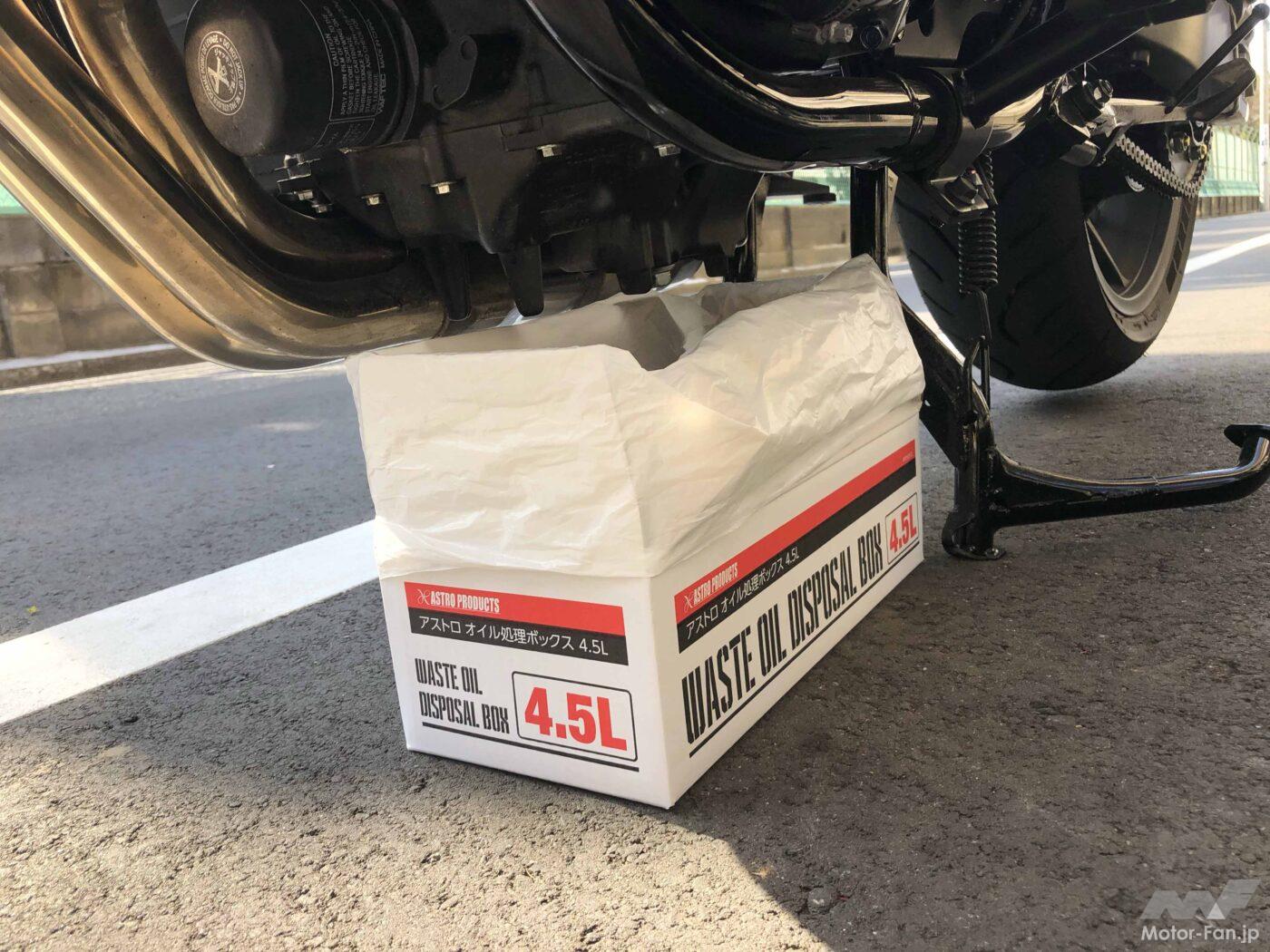
・Waste oil disposal box (bag)
・Parts cleaner
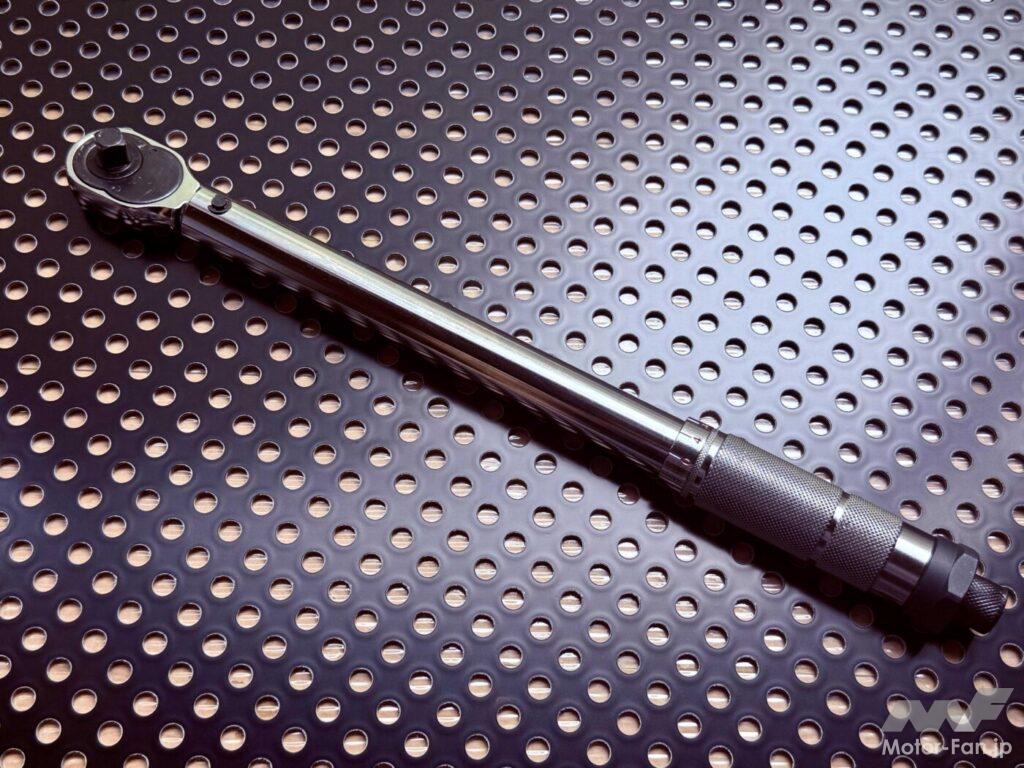
You can do without the waste oil disposal box and parts cleaner, but the rest are all essentials. By the way, I bought a torque wrench when I changed the oil in my CB, and it was the right decision. I thought that tightening bolts could be unavoidable even if you were a little “easy,” but there is a big difference in the sense of security when you maintain them with the specified tightening torque. This is especially true for important safety parts.
Except in the middle of summer, changing the oil is a convenient pastime to do in your spare time. When you see the used oil flowing out of the drain, you understand how important it is to manage your engine oil, and you also feel a sense of gratitude for the hard work your engine is doing.
By the way, I change my oil every 4000km or every three months. Sometimes I don’t drive that much, but oil naturally oxidizes and deteriorates, so I try to change it every season. If I don’t change it, it will have a significant impact on the feel of the engine and transmission.
In addition to oil changes, I also regularly tightened various parts, checked the chain tension, cleaned the spark plugs, disassembled and cleaned the brake pads and calipers, and cleaned the air cleaner as a leisure activity on my days off. I learned all of these work procedures and tips from videos. Compared to a few decades ago, we live in a truly convenient age.
By the way, if you ask a Honda Dream dealer to do these maintenance tasks, you will be charged the following labor fees ( https://honda-dream-japan.co.jp/wp-content/uploads/2024/09/motorcycle-maintenance-fee_2.pdf ). Also, shops are not very keen to do simple maintenance such as cleaning the spark plugs and air cleaner. Everyone has their own bike life so it’s hard to generalize, but I believe that doing your own maintenance is definitely a two-for-one deal: enjoying your hobby and saving on labor costs.
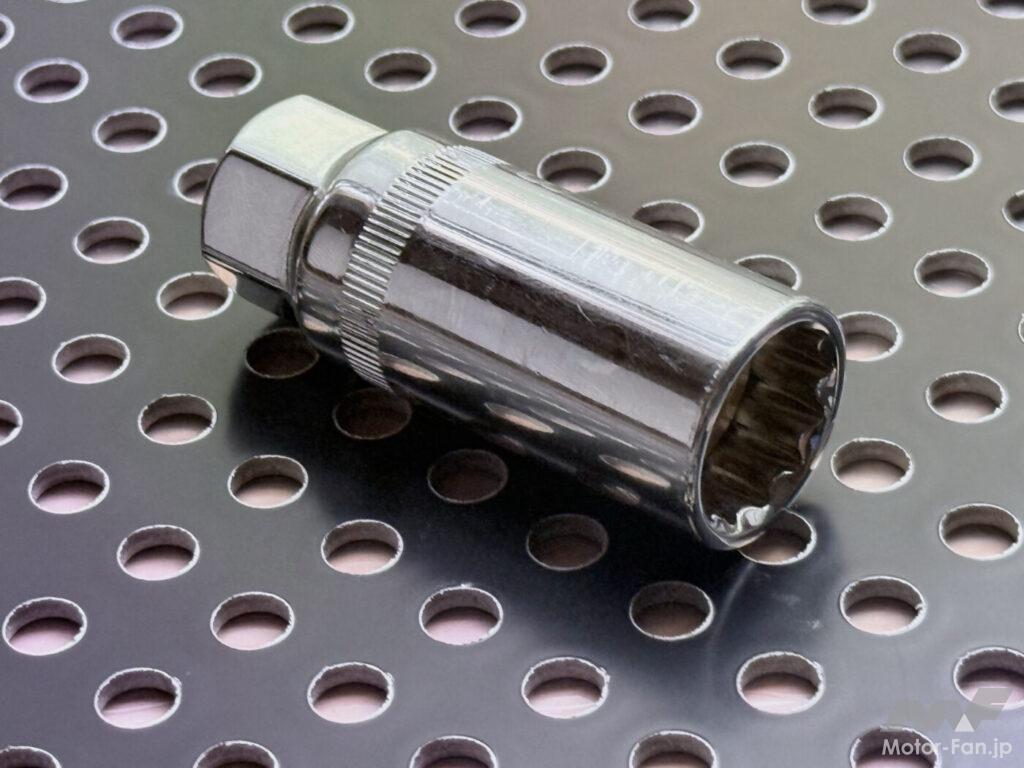
Additionally, as I began to do my own maintenance, my “tool hobby” also expanded. In addition to basic tools, I began to want specialized tools to make each maintenance task easier. As I bought one, then two, I found myself going to the hardware store even when I didn’t need to. Until a few years ago, I never would have imagined I’d become so obsessed with tools.
Well, while I was having fun, the year for my first vehicle inspection came around before I knew it. When it came to vehicle inspection, I chose to have it inspected by a third party without any hesitation. I think many riders are hesitant to have their vehicle inspected by a third party, but as long as the vehicle is in good condition and has not had any falls or accidents, I think a third party inspection is sufficient.
I’ve already had my car inspected by a user many times, so I don’t particularly mind, but I think there are some people who feel the same way. It’s natural to feel anxious about the maintenance and condition of your car. So, I’d like to explain that there are two types of user inspections.
First, you have the statutory inspection done at a motorcycle shop, and then you take the inspection at the Land Transport Bureau (Motor Vehicle Inspection and Registration Office) yourself. By the way, you can have the statutory inspection done either before or after your vehicle inspection. If you choose to have it done later, you can simply say “I’ll do the maintenance later” when submitting the paperwork at the Land Transport Bureau. If you’ve already had the maintenance done, just submit the “Inspection and Maintenance Record Book” you received from the shop along with your application documents.
With this method, you can leave any maintenance you’re worried about to the professionals and only have to apply and undergo the inspection yourself, giving you peace of mind. Incidentally, the legal inspection fee at Honda Dream stores is 26,000 yen for a CB1300SF. If you ask a shop to handle the inspection for you, it will cost an additional 25,300 yen. In addition to this, the following costs are required for the inspection (as of July 2025):
・Safety inspection fee: 8,800 yen
・Weight tax: 3,800 yen
・Compulsory automobile liability insurance: 8,760 yen
If a part needs to be replaced, the cost of the part and the labor required for replacement will be charged.
If you do all of your vehicle inspections yourself, you can cut costs considerably. There is a common misconception that the so-called mandatory inspections can be carried out by individuals, not by a qualified mechanic. Of course, there are a wide range of inspection items, and the condition of the vehicle after inspection is your own responsibility. However, you can download an inspection and maintenance record book from the internet and follow it to check your vehicle.
By the way, you can’t adjust the headlight beam axis without a special device, so you can have it done at a “preliminary inspection shop” near the Land Transport Bureau. This will cost about 3,000 yen.
When entering the inspection line, if you tell the inspector in advance that you are doing a user inspection and are unfamiliar with the process, they will kindly and carefully explain what to do. The inspection only takes about 15 minutes. If there are any problems, the vehicle will be re-inspected after maintenance, so it is best to take the inspection in the morning if possible.
I did everything myself, so the inspection cost was just under 25,000 yen. This means I saved more than 50,000 yen compared to having it done at a shop (inspection costs vary depending on the shop). I think that older cars and those undergoing inspections for the second time or later may require professional maintenance, but for a new car’s first inspection, as long as it’s a standard vehicle, there should be no problems unless there has been an accident.
When I had the car inspected, or rather, since it had been three years since I took delivery, I only replaced basic parts.
Spark plugs: NGK Iridium IX, 1,500 yen x 4
; Air cleaner: Genuine type, 1,800 yen
; Chain: CYC sealed chain, yellow, 9,300 yen
Replacing these parts would have saved me a lot of money on labor costs (at Honda Dream, labor costs were 14,300 yen/hour). At the same time, I was able to enjoy some quality time off.
In the case of older or imported cars, you may need the appropriate tools and equipment, but for modern motorcycles and compact cars, I recommend doing as much maintenance as you can yourself. A thorough wash is a good start. Keeping an eye on your motorcycle not only helps hedge against risk, but also increases your knowledge of how to respond in an emergency. And most importantly, it deepens your love for your beloved vehicle.
Finally, here are three things you should be careful of if you are doing maintenance yourself.
1. Never tighten screws too tightly.
2. Each part is designed to fit snugly.
3. Avoid using oil or chemicals on the drive unit.