
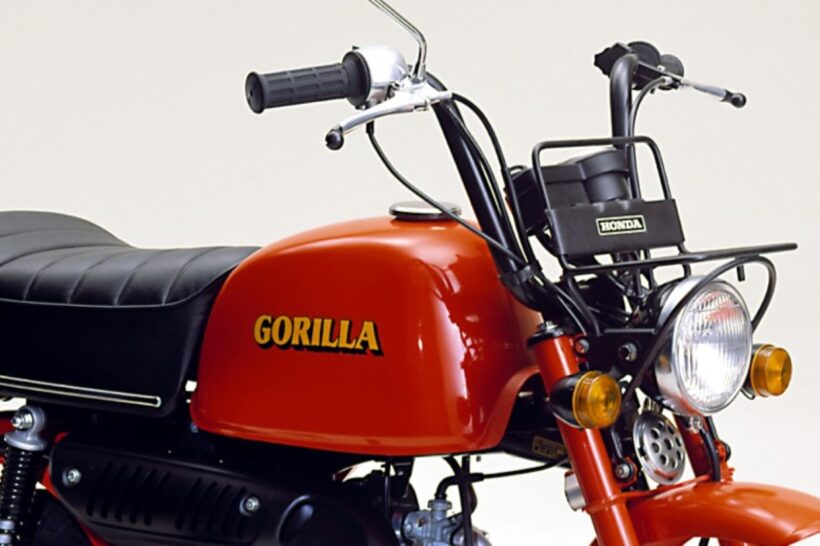

■ Gorilla characterized by its large fuel tank
On August 2, 1978, Honda announced the third model in its unique animal moped series, the Gorilla (released the following day). Starting with the cute and easy-to-handle Monkey and continuing with the second model, the Dax, the Gorilla was a tough mini bike with a wider range of uses than the Monkey, equipped with a large fuel tank for self-propelled travel to destinations and leisure activities.
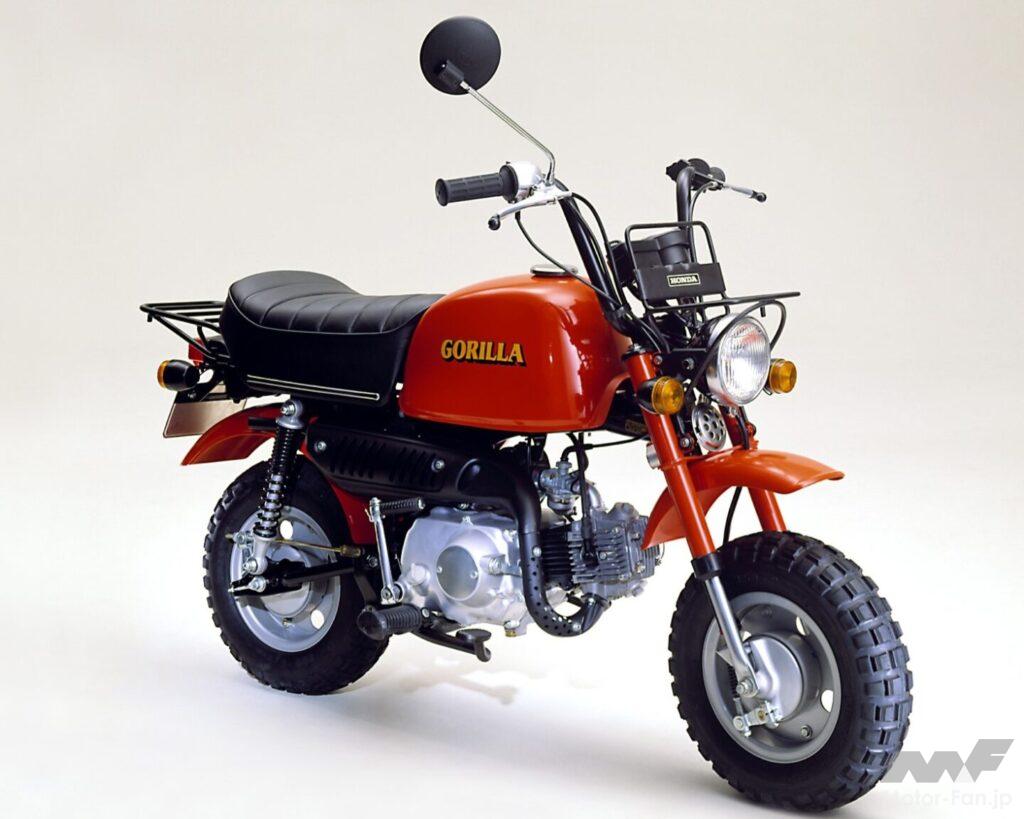
Honda’s mini scooter “Gorilla” debuted in 1978
The Monkey was the pioneer of mini bikes for leisure use
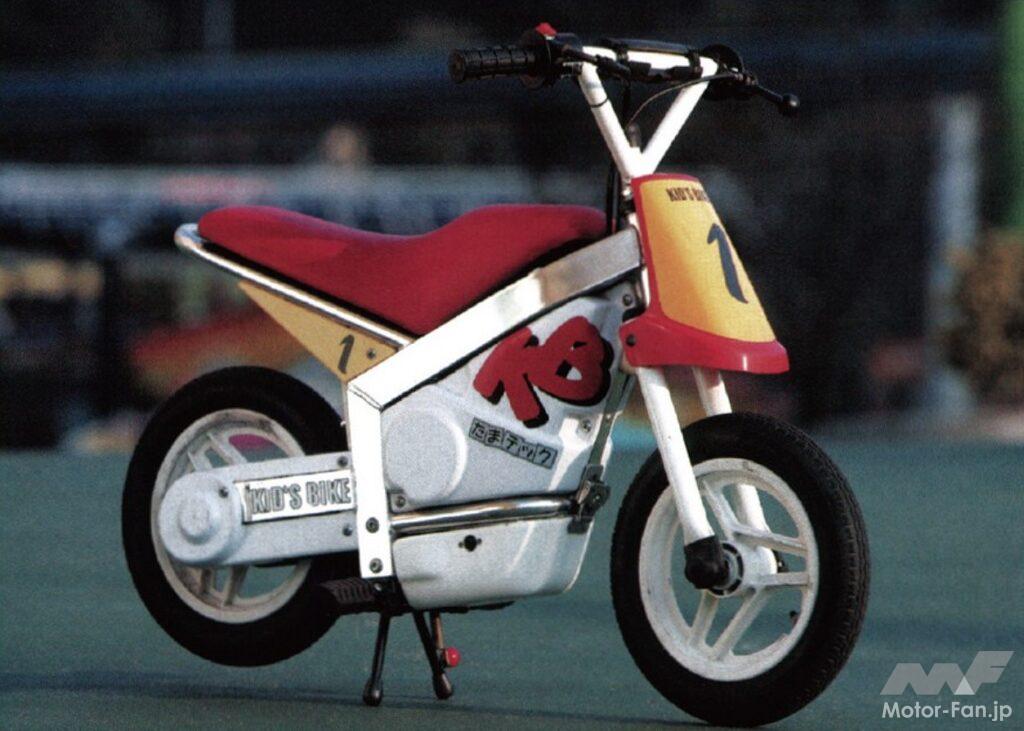
Tama Tech’s kids’ bike, this can be said to be the prototype of the Monkey, Dax, and Gorilla.
In the late 1960s, Honda, which was focusing on leisure bikes, first introduced the Monkey moped to the market, which still has many fans around the world today. The prototype was a cute little bike with 5-inch wheels that was developed as a playground equipment for Tama Tech, an amusement park run by Honda.
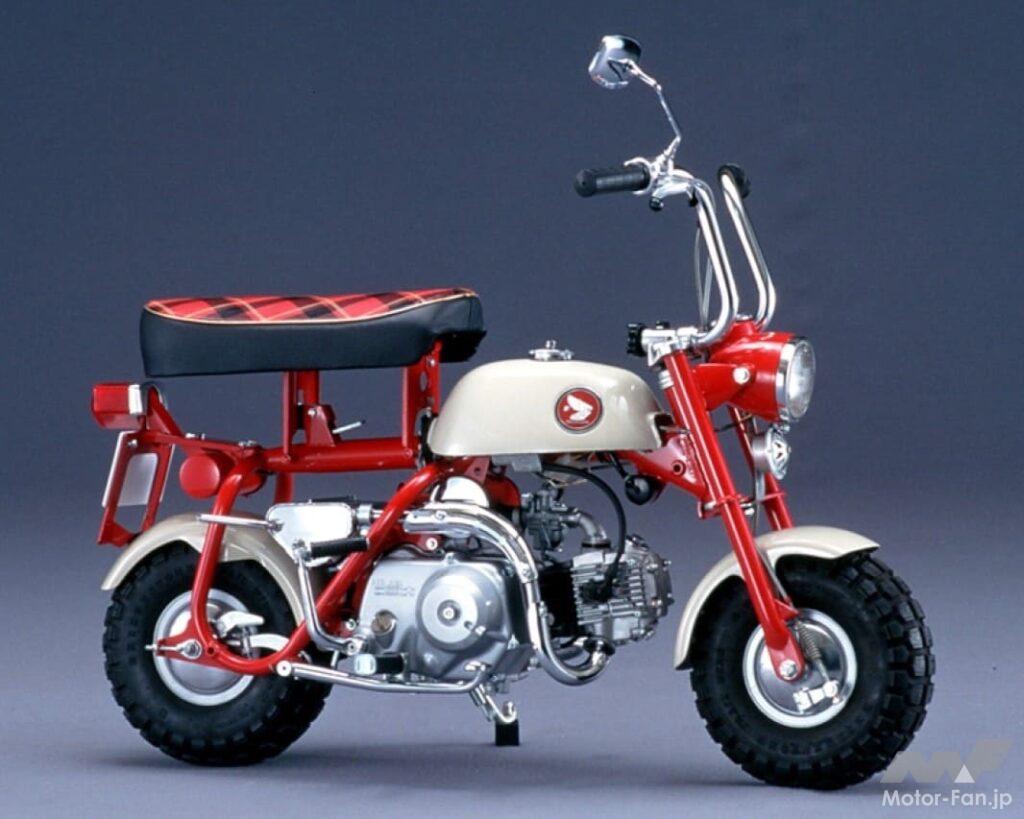
Honda “Monkey ZM50” debuted in 1967
Based on this, the CZ100 was released as an export model in 1963 as a small and fun leisure bike. Due to its popularity overseas, it began to be sold in Japan in 1967 under the name “Monkey (Z50M).”
The Monkey is a moped that features a simple structure, is ultra-compact and lightweight, and is easy to disassemble and assemble. The engine is a 49cc air-cooled single-cylinder OHV 4-stroke engine from the Super Cub series that produces a maximum output of 2.6ps and a maximum torque of 0.31kgm. The transmission is combined with a 3-speed manual transmission (automatic centrifugal clutch).
The price was 63,000 yen, which is equivalent to about 480,000 yen in today’s value, but it has since evolved and become a long-selling product worldwide.
The cute, long-bodied Dachshund, which follows the Monkey
The Dax moped minibike was born in 1969, following on from the Monkey. Initially, it was similar in concept to the Monkey, with the front section being removable so that it could be mounted on a vehicle, but what really determined its subsequent popularity was the adoption of a unique T-shaped pressed backbone frame.

Honda “Dax Honda (ST50 Export)” debuted in 1969
The engine was a 49cc air-cooled, single-cylinder, four-stroke OHC with 4.5ps/0.37kgm, and the transmission was a three-speed with an automatic centrifugal clutch. It was originally designed to be carried in the trunk of a car for leisure trips, and the handlebars were initially foldable and the front section was removable.
Its long-bodied form, which was quite different from that of ordinary mopeds, and its nickname derived from the Dachshund dog, captured the hearts of fans, and the Dachshund also became a global hit model following the Monkey. The price for the standard ST50 was set at 66,000 yen, which is equivalent to about 230,000 yen in today’s value.
Since then, Dachshund has developed into a popular, long-selling product with a wide variety of variations.
Monkey, Dax, and the third Gorilla appear
On this day in August 1978, the third minibike in the animal-named bike series was born: the Gorilla. Based on the Monkey in both engine and body, it was reborn as an off-road bike with an up-mounted muffler, block tires, and raised fenders.
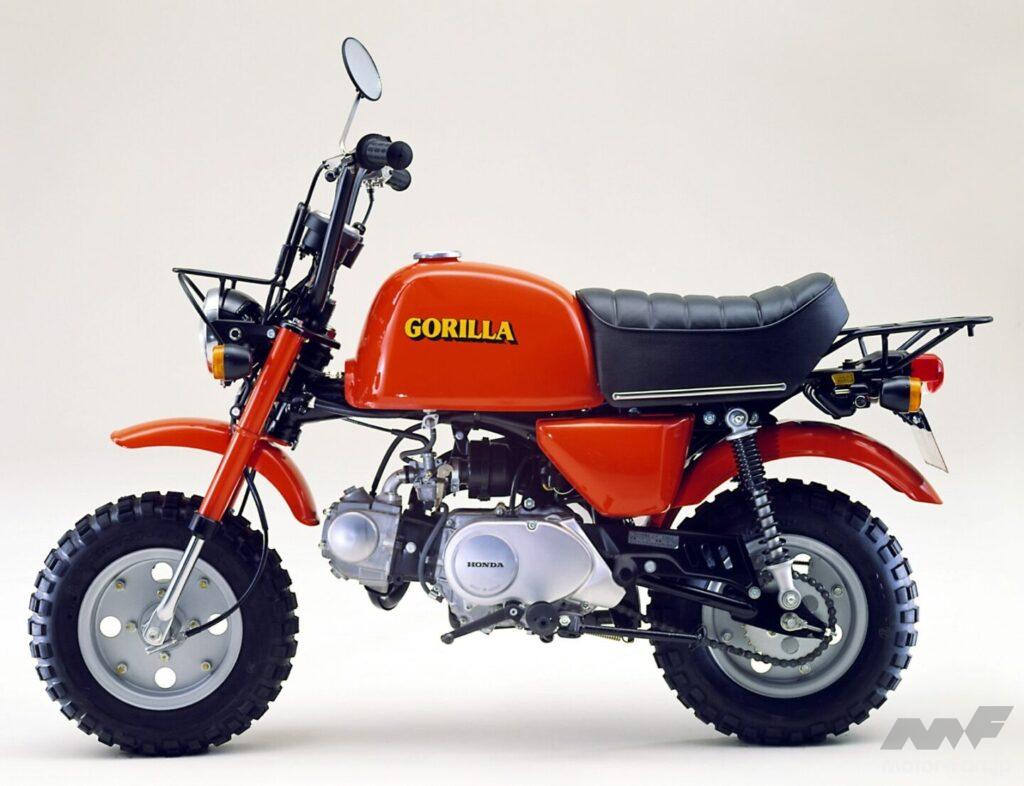
Honda’s mini scooter “Gorilla” debuted in 1978
The engine was a reliable 49cc air-cooled single-cylinder OHV four-stroke engine that produced 2.6ps/0.31kgm, the same as the Monkey’s Super Cub. While the Monkey had a three-speed automatic centrifugal clutch at the time, the Gorilla used a four-speed manual clutch transmission. Although it was a cute minibike, its functionality was similar to that of a full-fledged motorcycle.
Honda’s mini scooter “Gorilla” debuted in 1978
The Gorilla’s fuel tank capacity was increased to 9.0L compared to the Monkey’s 5.0L, making it possible to ride long distances. Furthermore, it was equipped with front and rear carriers, making it suitable for a wide range of uses, from daily commuting to school and touring, even for leisure, despite being a minibike.
The price was set at 108,000 yen (the Monkey from the same period was 100,000 yen), which is equivalent to about 240,000 yen in today’s value. The Gorilla, like the Monkey and Dax, became a popular bike and was sold for 10 years from 1978 to 1988. During that time, it continued to evolve.
Although domestic sales were temporarily suspended, it was revived in 1998, riding the wave of the outdoor boom. Although the front carrier was removed, the design was largely retained from the initial model to the final model in 2007.
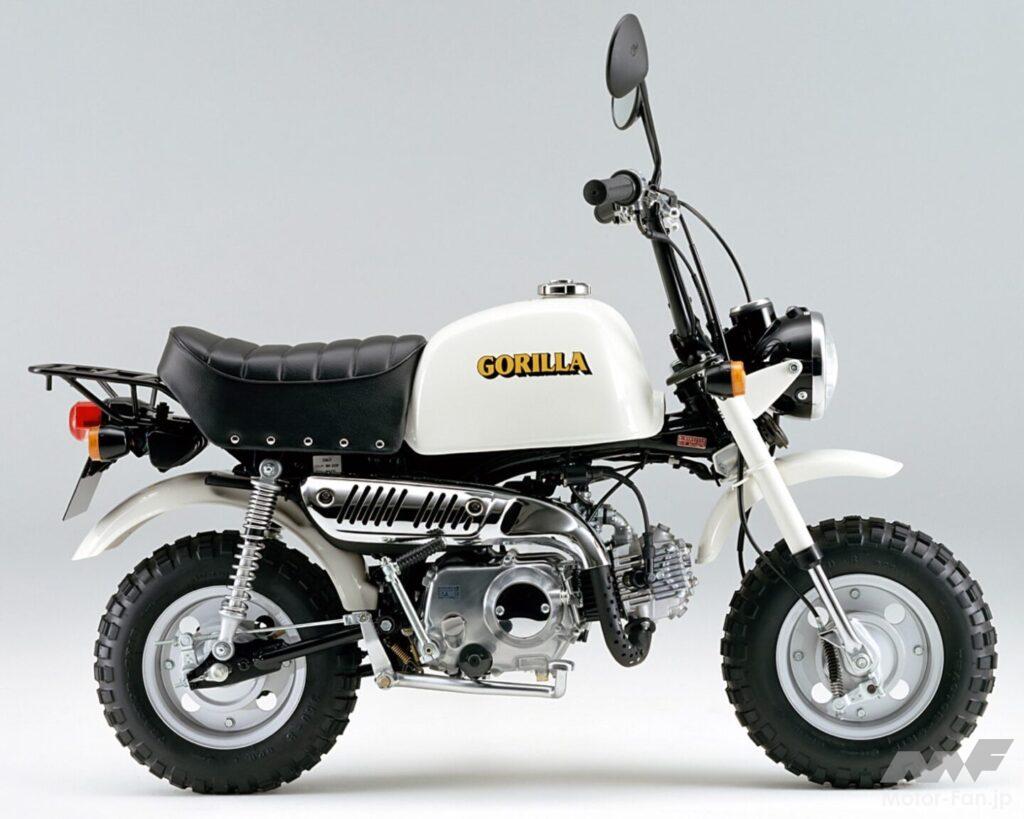
Gorilla, which was released in 2001 as a new color scheme
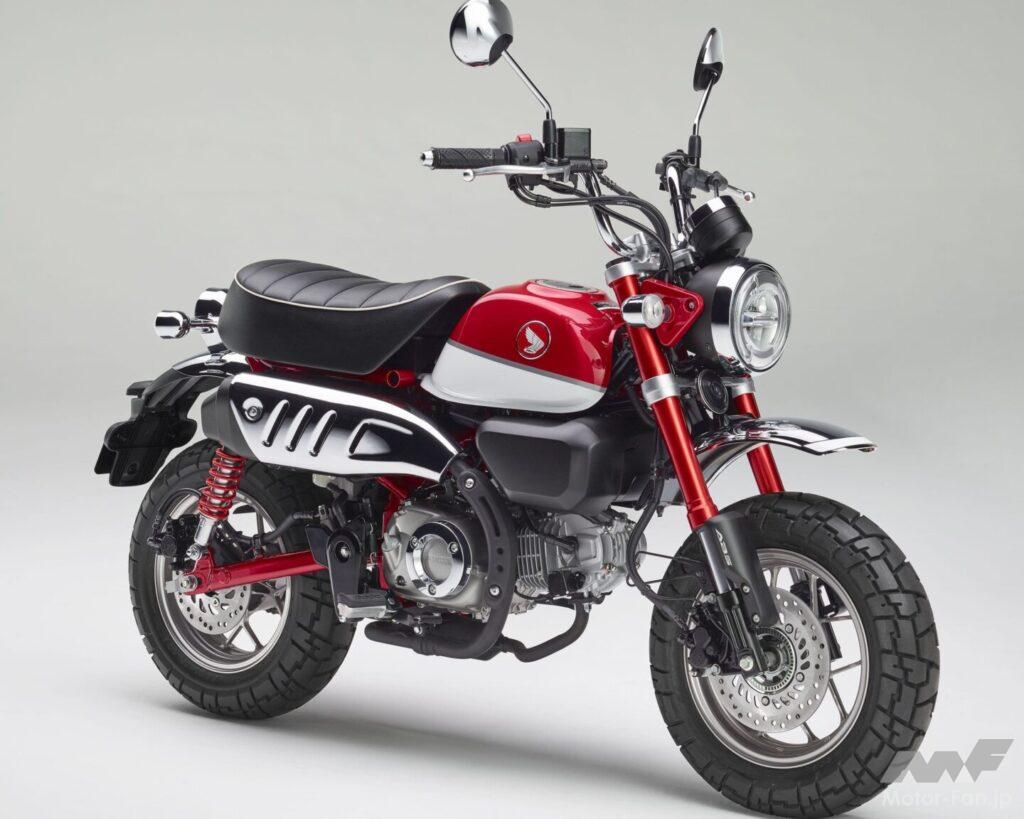
The Monkey 125, a two-wheeled vehicle that debuted in 2018
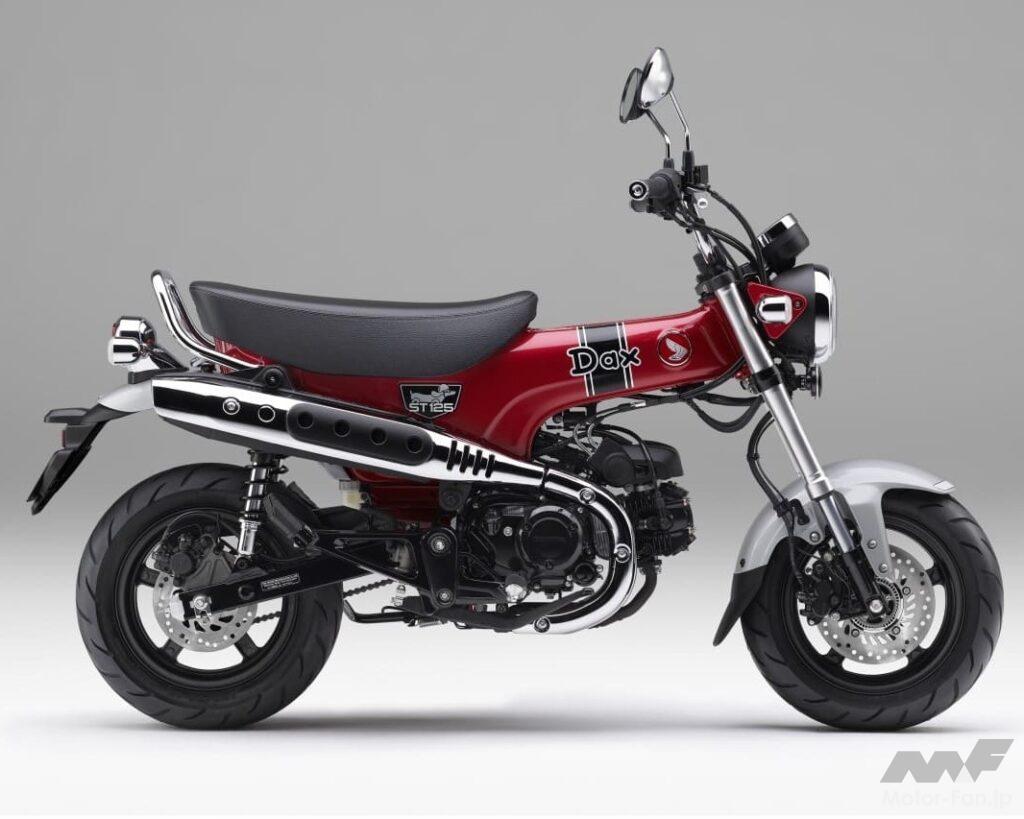
The 125cc Dax 125 debuted in 2022
…
Due to the recent stringent exhaust gas regulations for 50cc mopeds, domestic sales of the Monkey, Dax, and Gorilla models were temporarily suspended. However, the Monkey 125, which increased its displacement to 125cc and became a Class 2 moped, was revived in 2018, and the Dax 125 in 2022. There are rumors that the Gorilla 125 will be released soon, so many fans are probably waiting in anticipation.
Every day is a special day. Today could be a special day.