

What is the structure of an inboard disc?
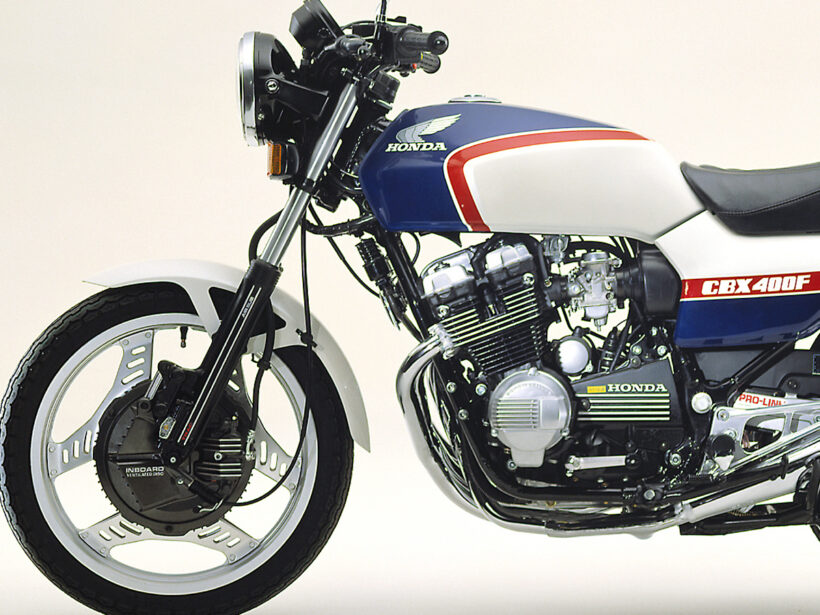
According to Honda’s materials, an inboard disc is a disc brake that has a structure in which “a disc plate is built inside the wheel hub and is clamped from its inner circumference by a brake caliper.”
This differs from a typical disc brake, which has a disc plate attached to the outside of the wheel hub and generates braking force by clamping it with a brake caliper from the outer periphery.
The outer periphery also features a disc cover. The cover is equipped with an air intake to take in the wind while driving and an air duct to exhaust it, effectively cooling the disc plate. Guard plates are also provided to prevent pebbles and other debris from getting into the wheel hub.
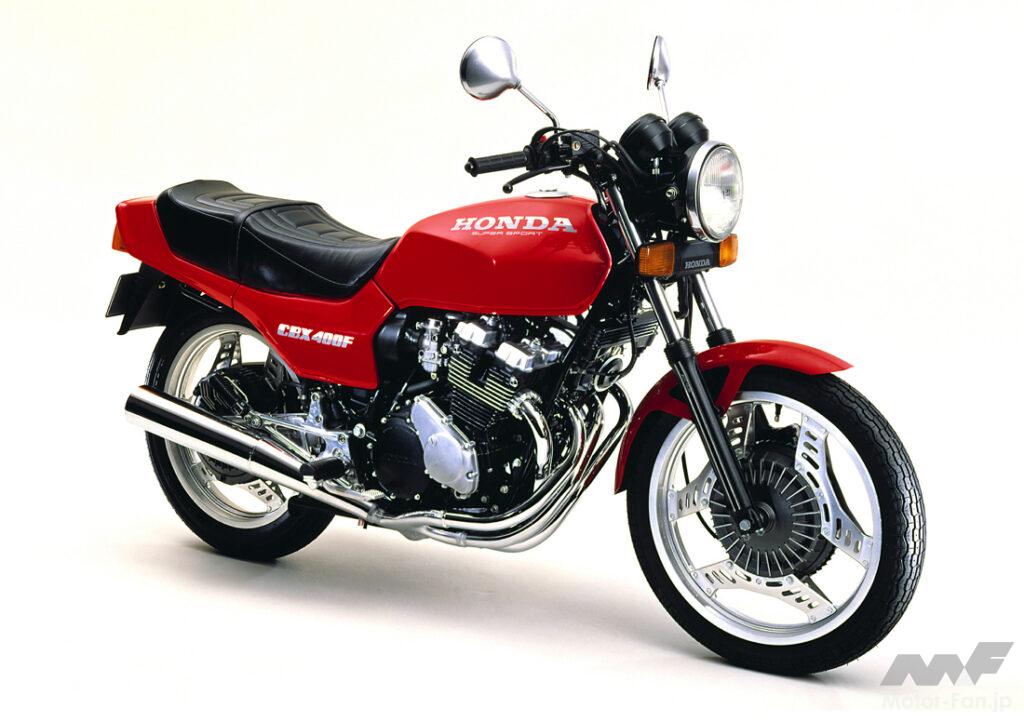
The Honda CBX400F (1981), the world’s first motorcycle to use inboard discs
The aim is to use cast iron disc plates
Furthermore, in the case of inboard discs, the disc plates are made of a different material than conventional disc brakes: cast iron.
The first mass-produced motorcycle to use hydraulic disc brakes was the Honda CB750 Four, which appeared in 1969. Hydraulic disc brakes then rapidly became more popular throughout the 1970s.
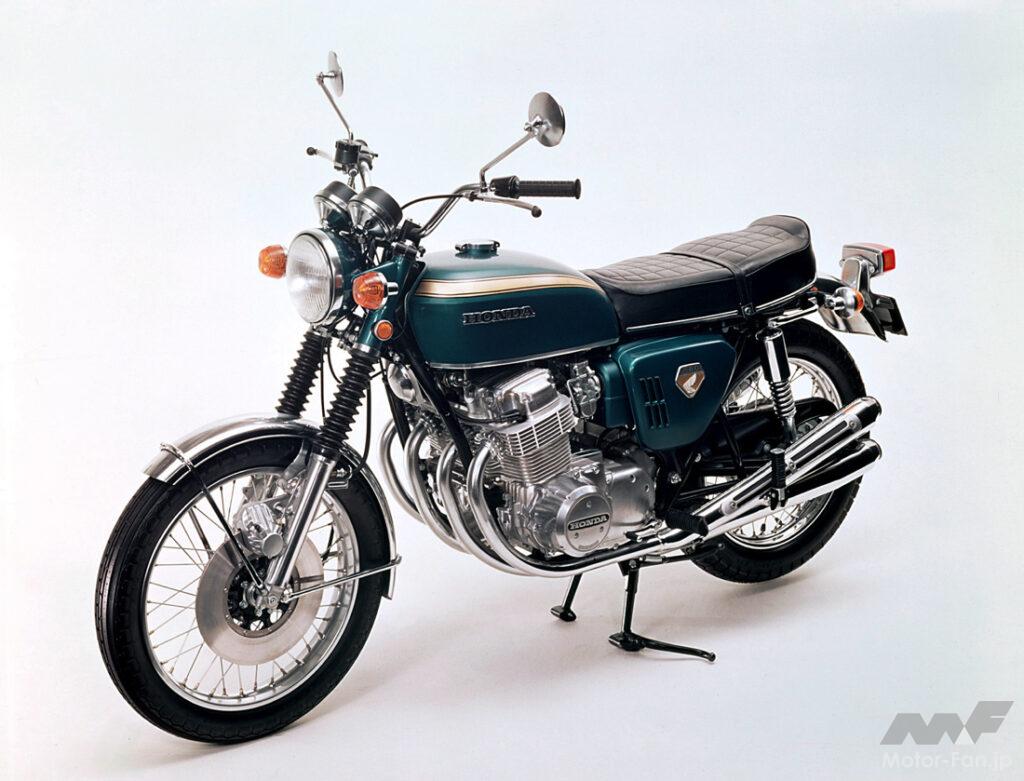
Honda CB750 Four (1969)
At the time, disc plates were mainly made of stainless steel, just like today. However, unlike today, they did not have slits or holes on the surface. This was probably because cutting techniques and other technologies were not yet advanced.
Perhaps because of this, when disc brakes first appeared, a film of water formed on the plate surface when it rained, reducing braking power.Furthermore, frequent braking caused the disc to heat up and warp, resulting in problems such as reduced performance and touch.
Honda then turned its attention to cast iron disc plates, which were said to have stronger braking power than stainless steel at the time. Cast iron disc plates were common in cars at the time, but because they were prone to rust, they were a material that was difficult to use on motorcycles, where brakes are also a part of the bike’s style. Honda responded by making them fully covered. It could be said that inboard discs combined high braking power with a cool look.
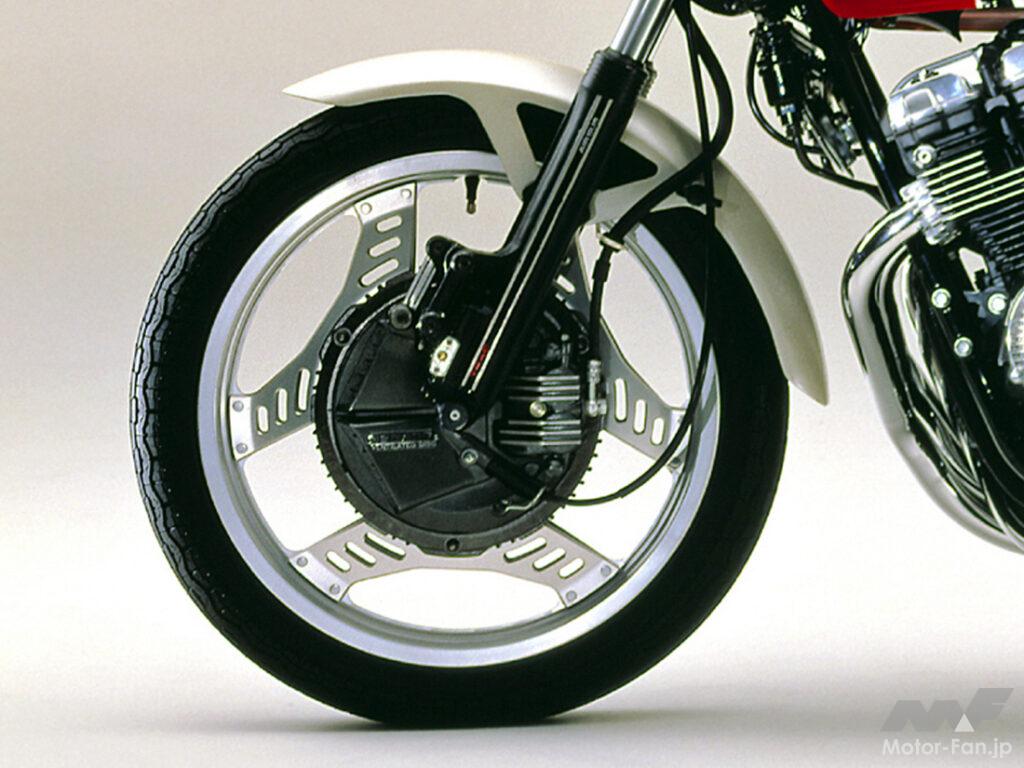
The inboard disc, which was first installed on the CBX400F, is a mechanism that combines braking power with good looks.
Installed in Honda cars one after another in the 1980s
Against this backdrop, inboard discs were first installed on the CBX400F, which appeared in 1981, and were subsequently adopted in a succession of new models.
In particular, 1982 saw the introduction of a large number of motorcycles equipped with inboard discs, including the CBX400F Integra, a full-cowl version of the CBX400F, the 550cc CBX550F Integra, the 4-stroke 250cc VT250F, and the 400cc V4 VF400F. Furthermore, in 1983, the 2-stroke 250cc MVX250F was also fitted with inboard discs, greatly expanding the range of models equipped with them.
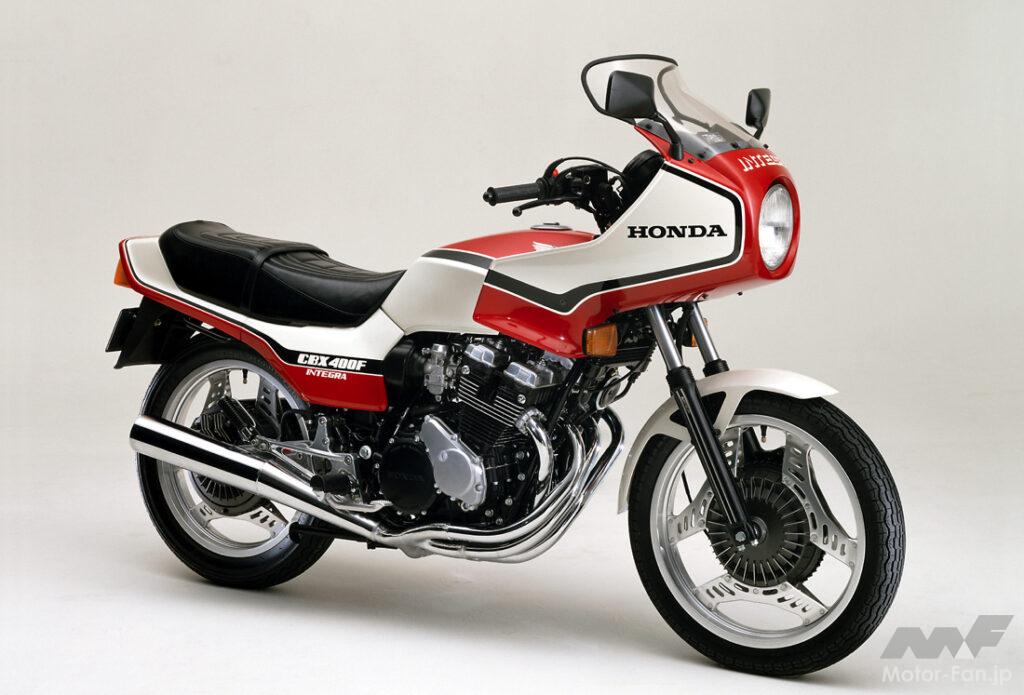
Honda CBX400F Integra (1982)
ADVERTISEMENT
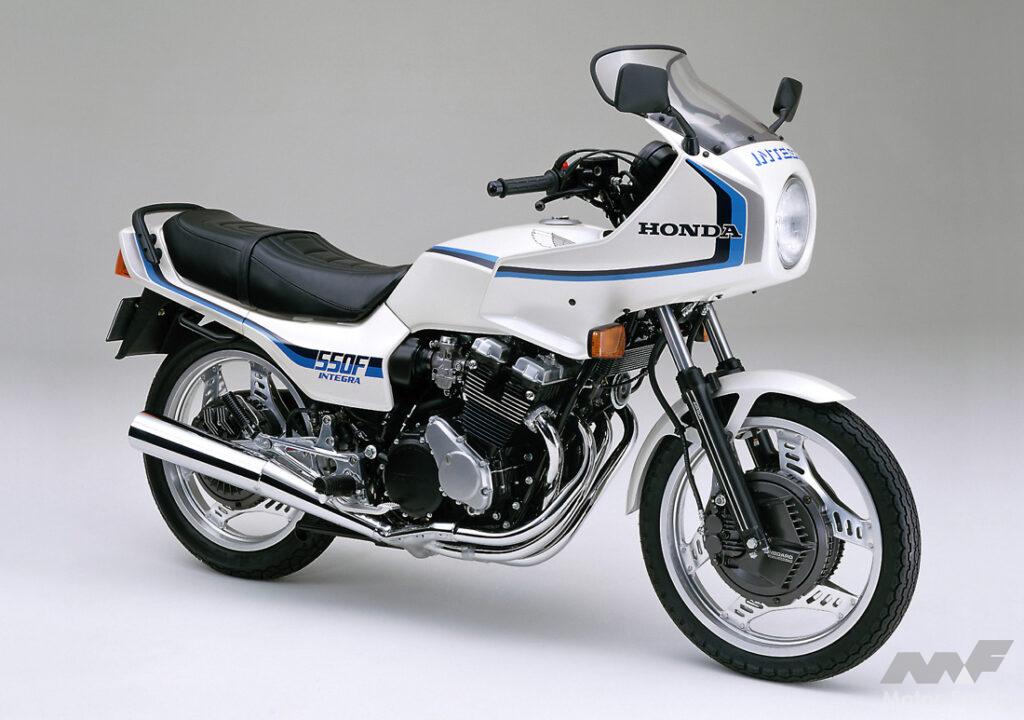
Honda CBX550F Integra (1982)
ADVERTISEMENT
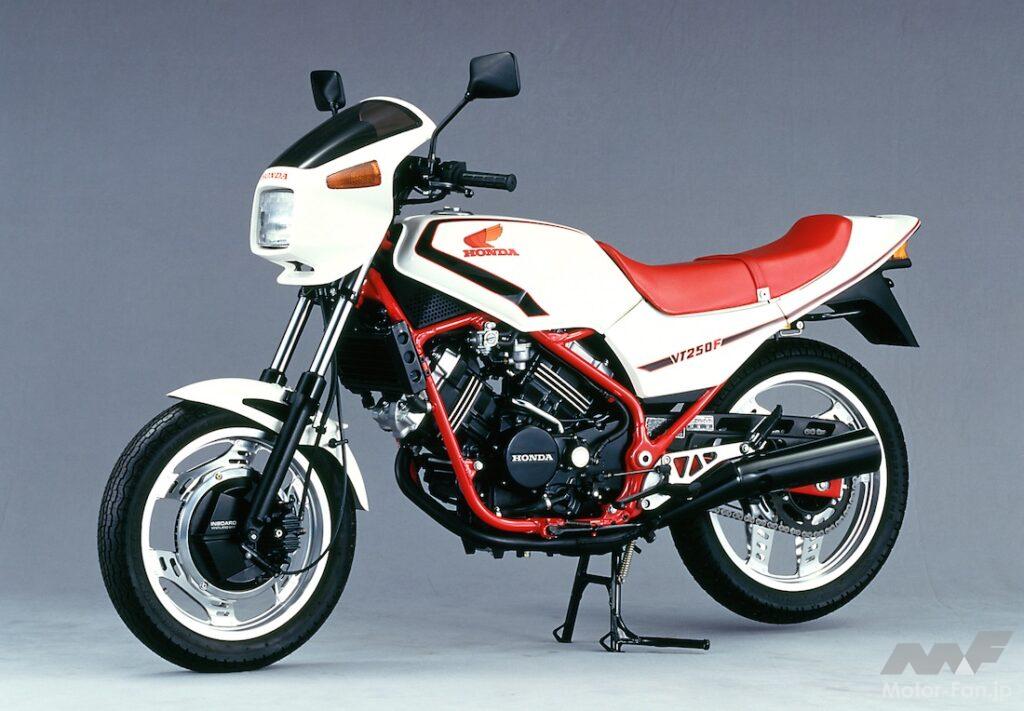
Honda VT250F (1982)
ADVERTISEMENT

Honda VF400F (1982)
ADVERTISEMENT
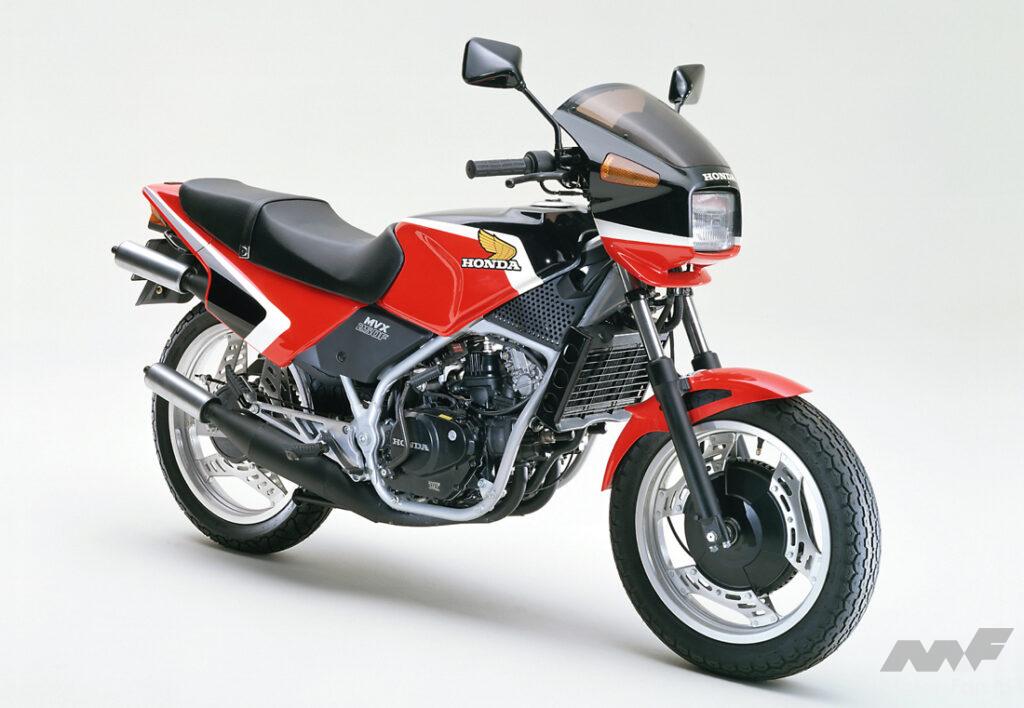
Honda MVX250F (1983)
These models also featured the “Boomerang-type Sports Comstar Wheel,” which was also newly adopted on the CBX400F. The combination of this wheel with an inboard disc became so representative that it could be called one of the signature features of Honda vehicles.
I felt the excellent effect on my beloved MVX250F.
In fact, I was one of the riders who owned an MVX250F when I was a university student and experienced inboard discs in real time.
The first motorcycle I ever owned was the MVX250F. Equipped with a 249cc, water-cooled, 90-degree V-3 engine, this model was released as a replica of the Honda WGP works machine “NS500,” which was ridden by popular racers such as Freddie Spencer at the time. It featured the same style as the VT250F, equipped with a mini cowl, and a 16-inch front wheel.
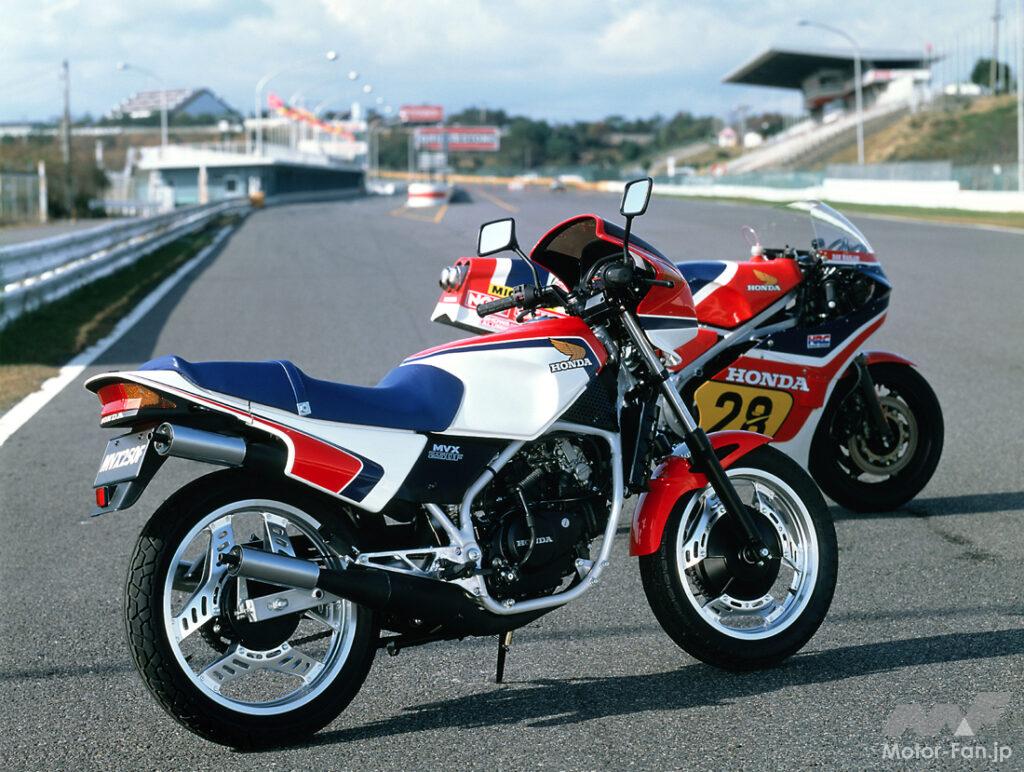
The MVX250F was released as a commercially available replica of the Honda WGP works machine “NS500”.
The MVX250F also used an inboard disc for its front wheel. Looking back at that time, I remember it gave the bike a very bulky look, which was one of my favorite features.
By the way, there was an urban legend back when 2-stroke machines were at their peak.
“When I ride behind a two-stroke bike, the oil in the exhaust gas (which is released at the rear of the bike) gets on my bike’s front disc brakes, and my brakes suddenly stop working.”
I’m not sure if this is true or not, but I remember feeling strangely relieved, thinking, “If I have a fully covered inboard disc, I shouldn’t have to worry about that.”
By the way, the performance of the front brake itself was quite normal. It had good braking power and controllability, and I don’t think there were any particular issues.
However, as a beginner at motorbikes, I had no desire to maintain fully covered disc brakes myself. In fact, I had heard that even replacing the brake pads on inboard discs required removing and installing the wheel, so it didn’t seem like a job I could do myself.
I rode the MVX250F on tours in Hokkaido and other places, and I think the total mileage was quite long. However, I ended up leaving most of the maintenance to a motorcycle shop. In particular, I think I never did any maintenance on the brakes myself before I sold it.
Why was it short-lived?
As mentioned above, the inboard disc brake system was actually short-lived. I think the last motorcycle to feature it was the third-generation VT250F, which appeared in 1986.
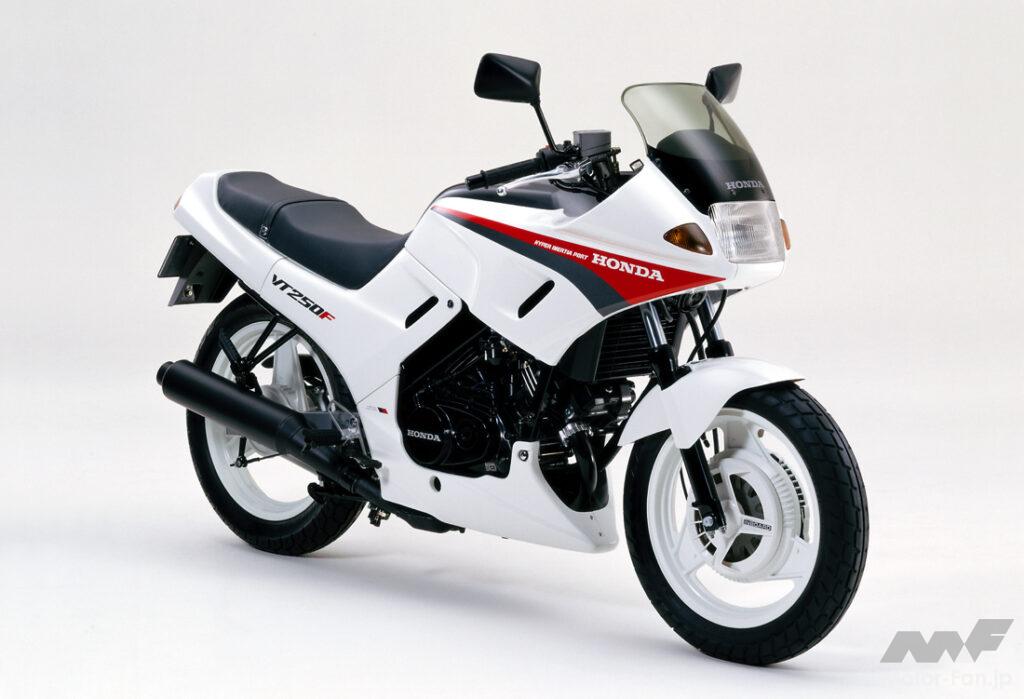
Third generation VT250F (1986)
Moreover, even the TV250F was offered with a standard exposed-disc double-disc brake model in 1987. Models with inboard discs were also sold for a time, but they gradually disappeared.
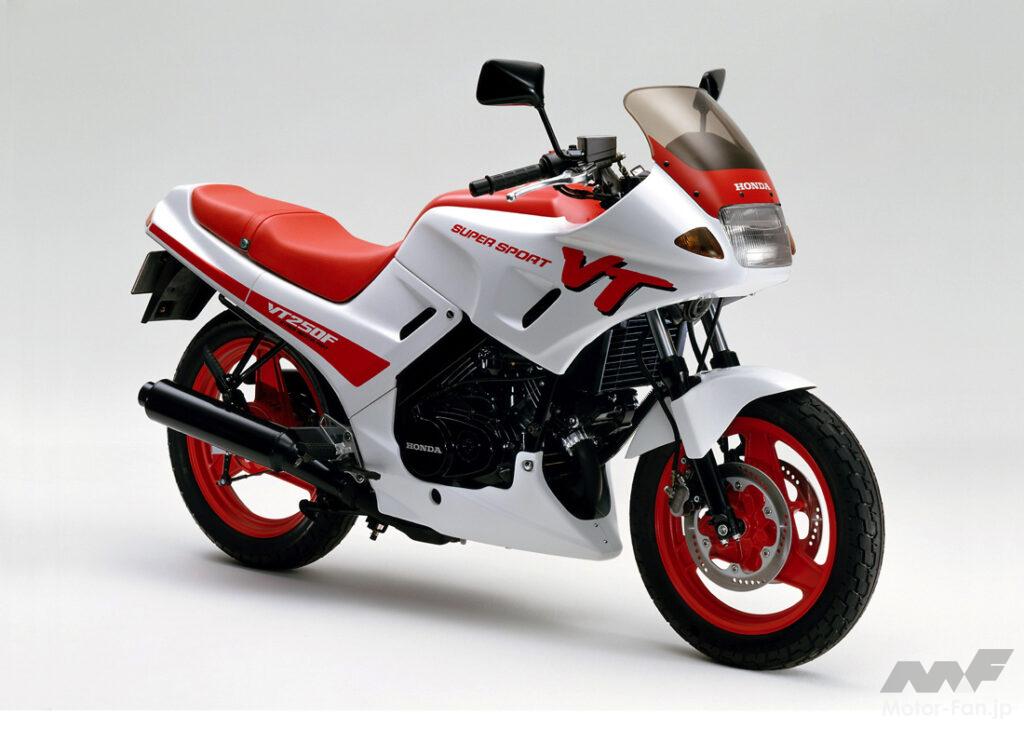
The VT250F with double disc brakes added in 1987
There are various theories as to why inboard discs fell out of fashion, but one of them is the poor maintenance that I have personally experienced. As mentioned above, with inboard discs, even replacing brake pads requires removing and installing the wheel, which can be considered quite a hassle.
Incidentally, I recently saw a CBX550F Integra being restored at my favorite shop, and the work looked quite difficult. That’s because the MVX250F and VT250F only have a single inboard disc on the front (the rear brake is a drum type). In contrast, the CBX550F Integra uses inboard discs on both the front and rear. What’s more, the front is a double inboard disc, which the shop said is significantly heavier than a typical double disc front wheel. Even just removing and installing it would be quite a challenge.
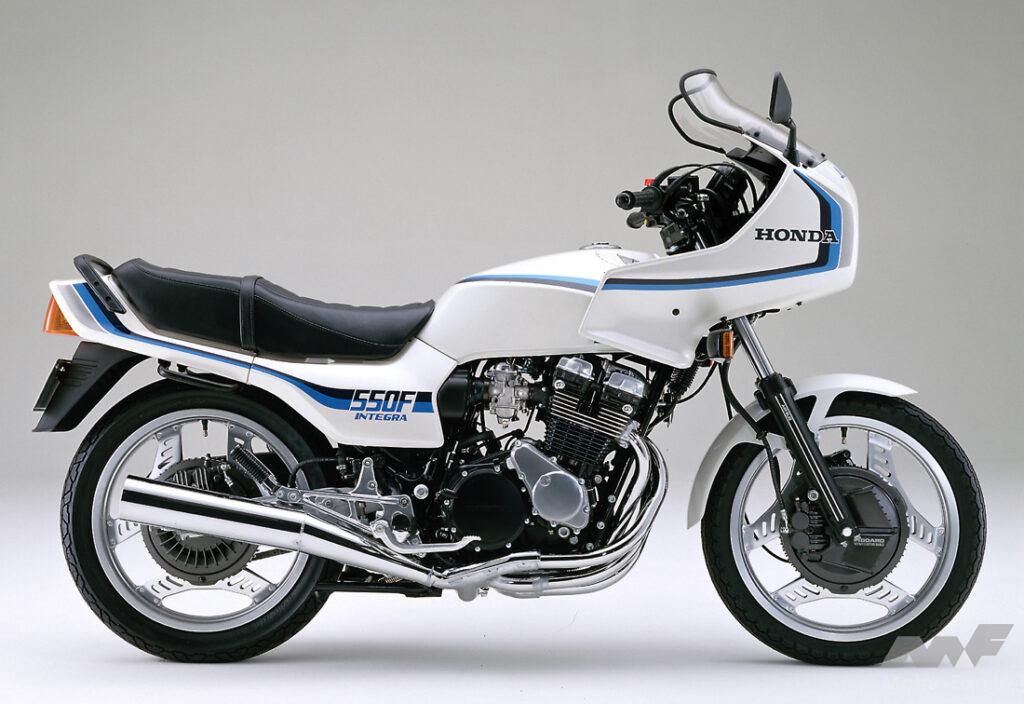
CBX550F Integra equipped with double inboard discs in the front and single in the rear
Unique mechanism for brake transition!
Another factor behind this is that conventional externally exposed stainless steel disc brakes have become equivalent to or even superior in performance to inboard discs that use cast iron discs.
Evolution has occurred in both materials, such as thinner discs, and technology, such as the ability to process slits and holes for heat dissipation. Furthermore, coupled with improvements in brake pad performance, the overall reason for this is that there are fewer benefits to using inboard discs, which are difficult to maintain and costly.
Inboard discs appeared during a transitional period for motorcycle brakes. Although they were short-lived, their uniqueness is still a feature that resonates with many people, including me, who were around at the time.
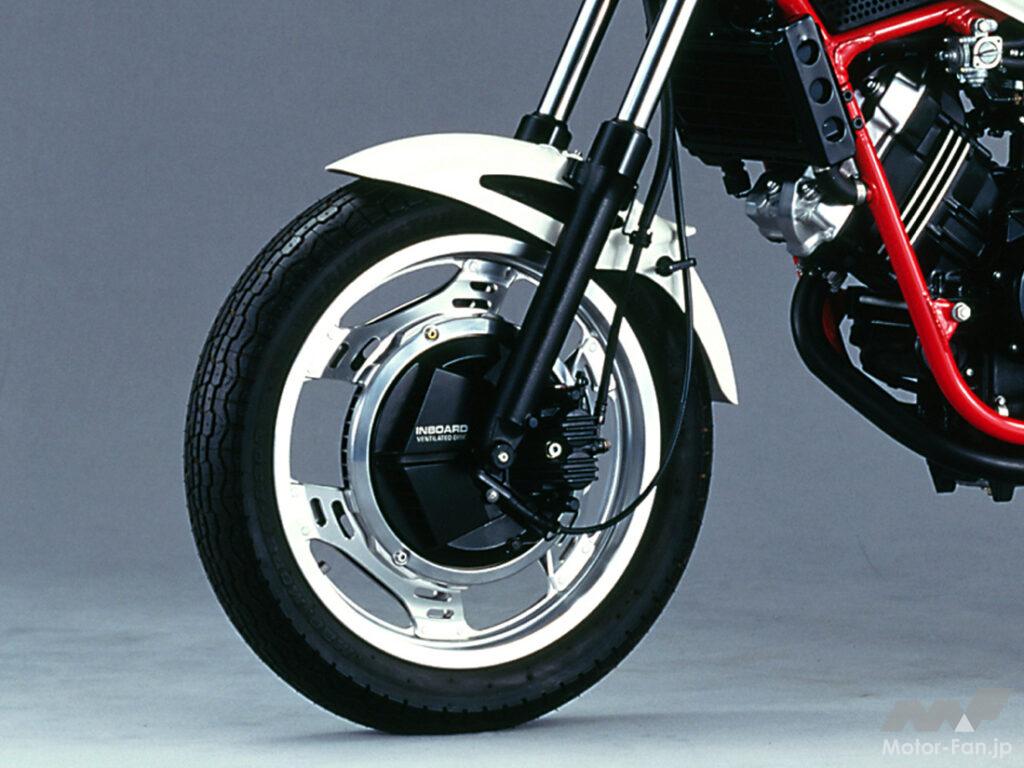
The inboard disc was short-lived but extremely unique (pictured is a 1982 VT250F).