
Honda Gold Wing 50th Anniversary…3,850,000 yen
Limited-time order model (The order period has ended. Please contact Honda Dream for stock availability.)
The first Gold Wing GL1000, released in 1975, was an ambitious model that combined comfortable cruising performance with high sportiness. It has since evolved into a full-fledged touring model, gaining many fans around the world.
Today, we’ll take a test drive of the Gold Wing 50th Anniversary, celebrating its 50th anniversary since its release, and explain its appeal.
Flagship equipped with the latest equipment
The Gold Wing is Honda’s flagship model, packed with the latest technology. It is designed with passenger comfort in mind, as well as the rider’s, and is also highly sporty.
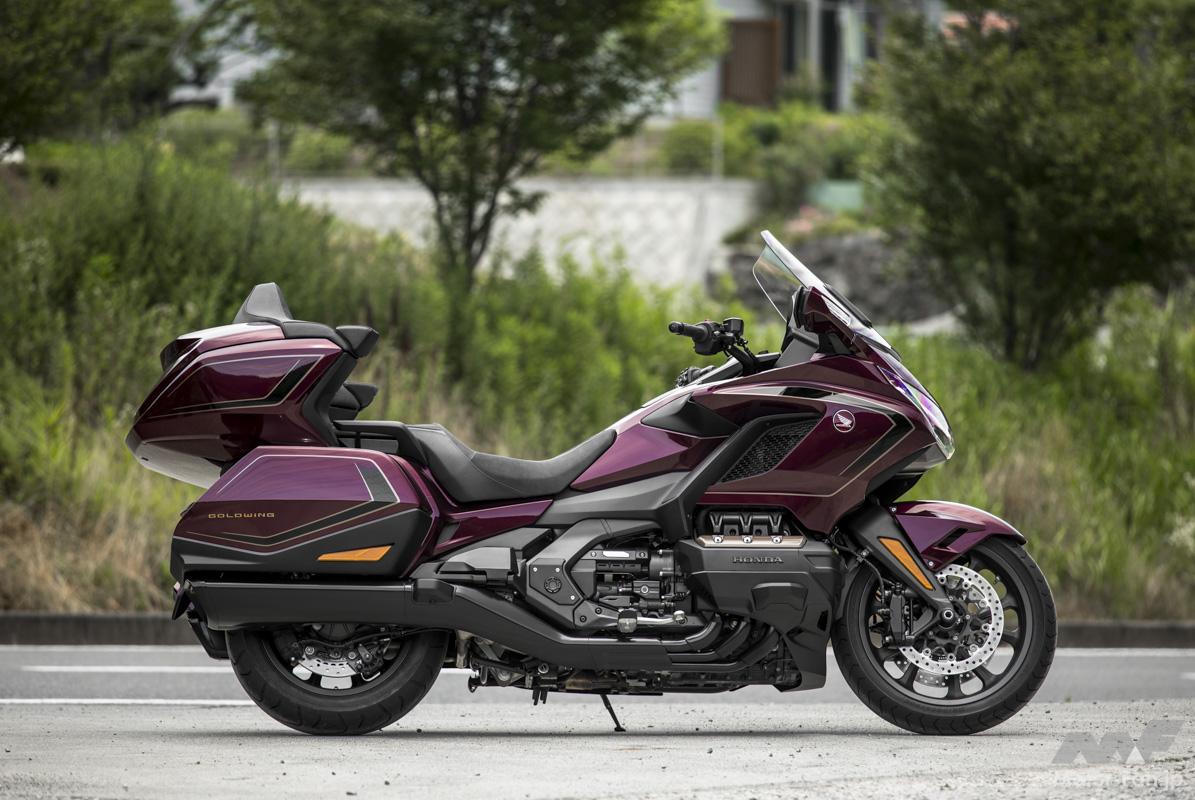
As a flagship, it has always been equipped with cutting-edge equipment, and has used a horizontally opposed 6-cylinder engine since 1988. In 2007, it attracted attention by becoming the world’s first mass-produced motorcycle to be equipped with an airbag.
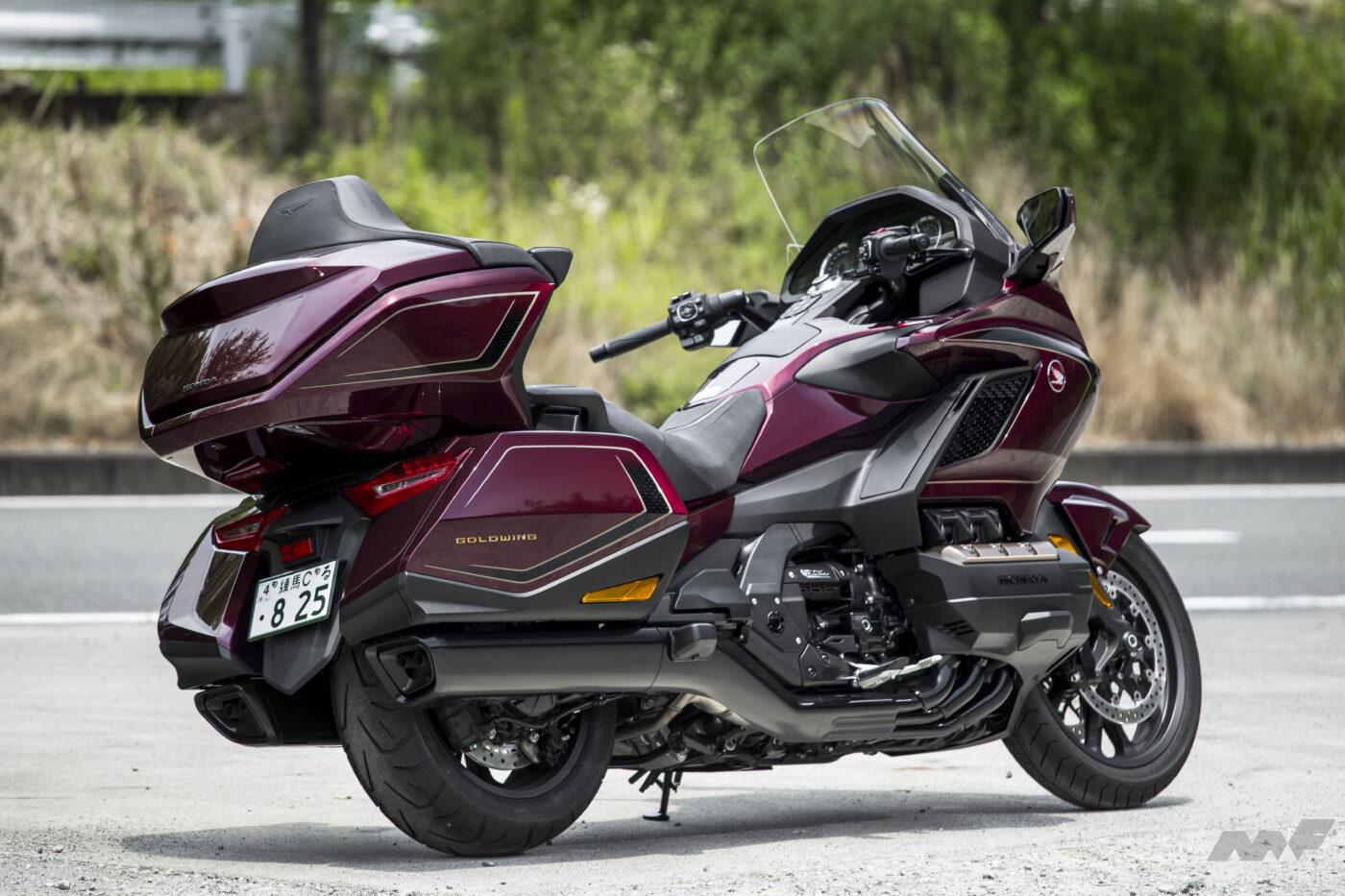
The front forks are double wishbone, a first for a motorcycle, and the transmission is a 7-speed DCT.
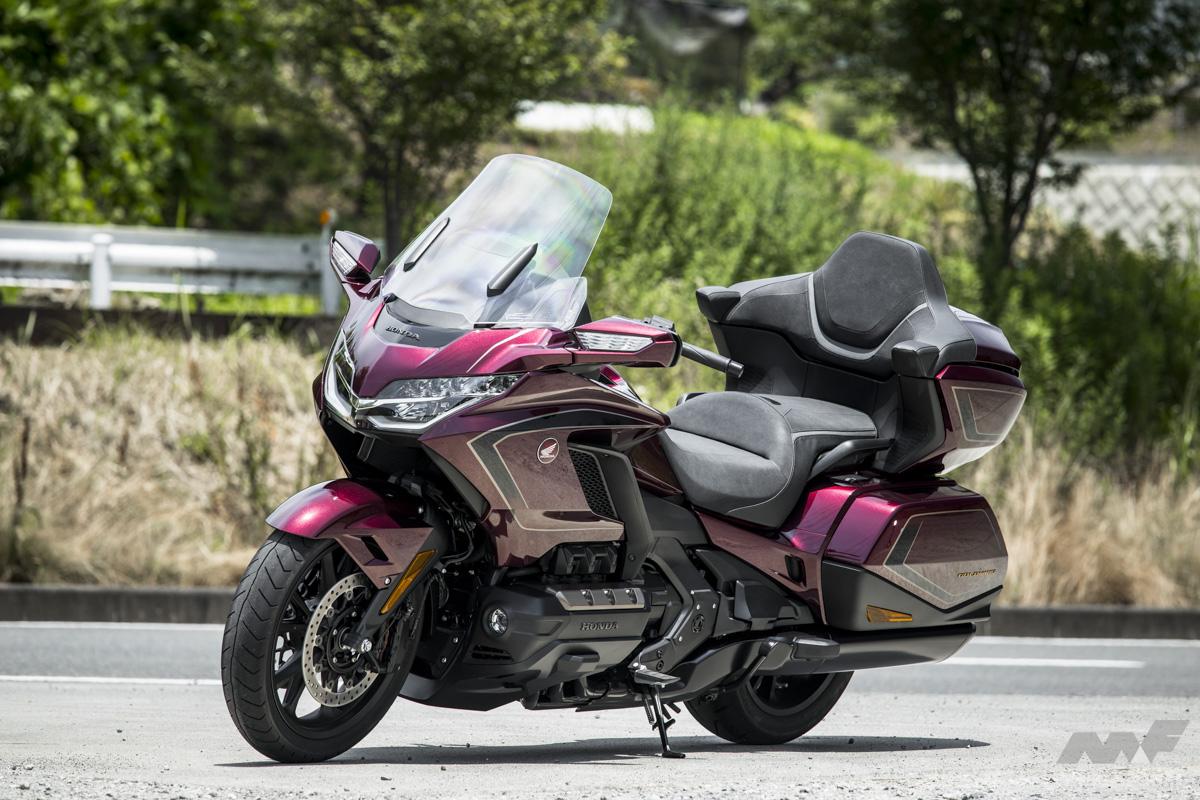
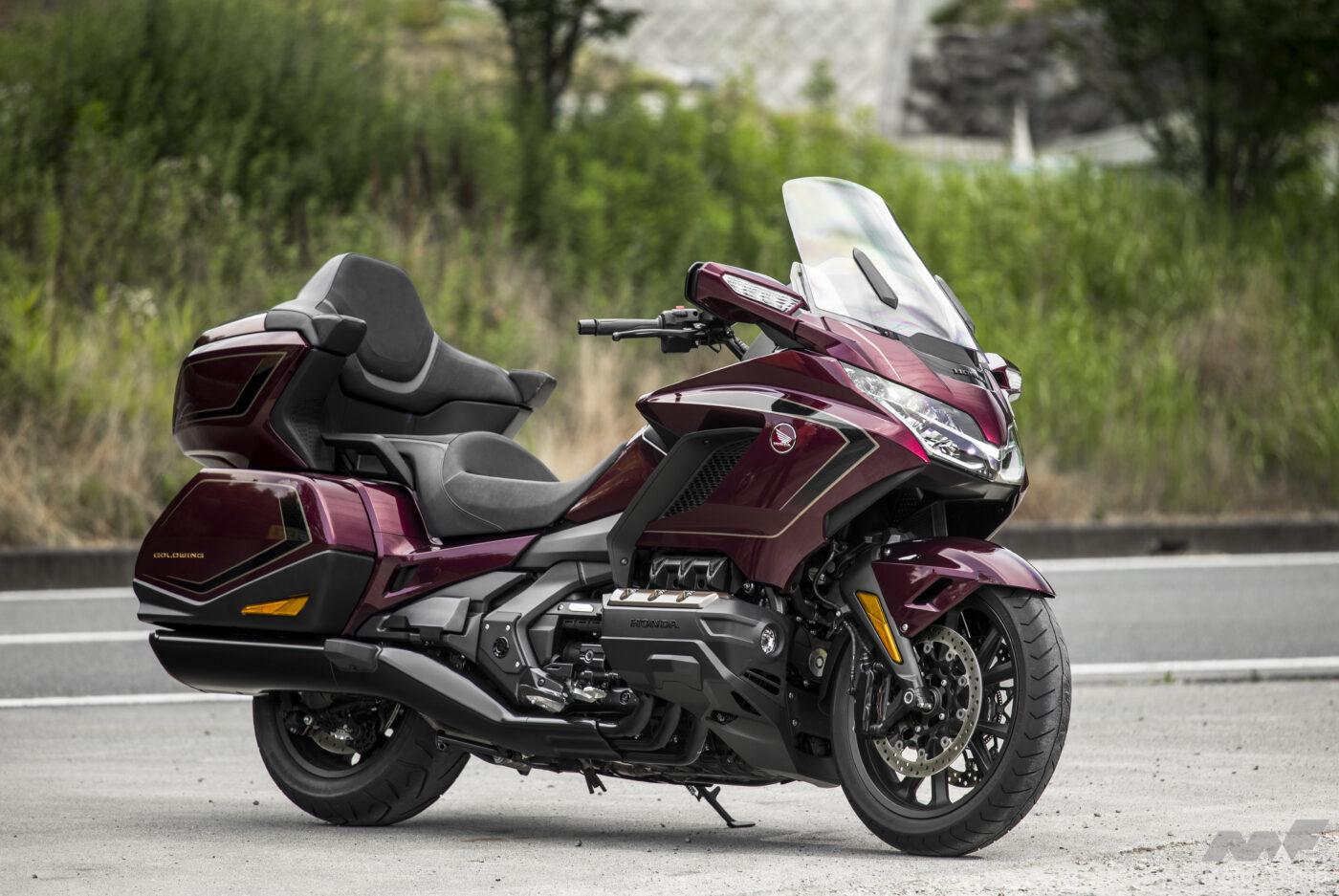
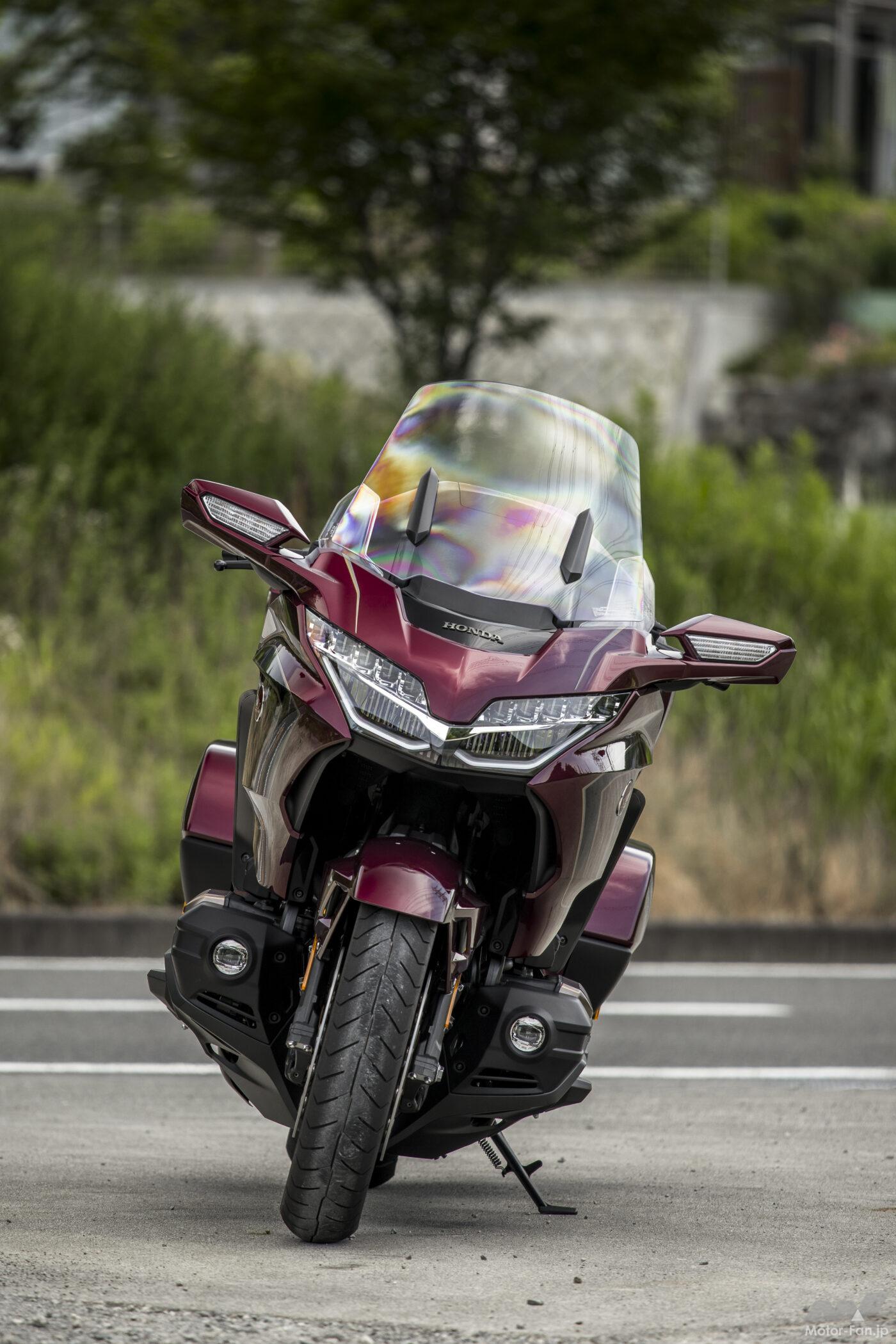
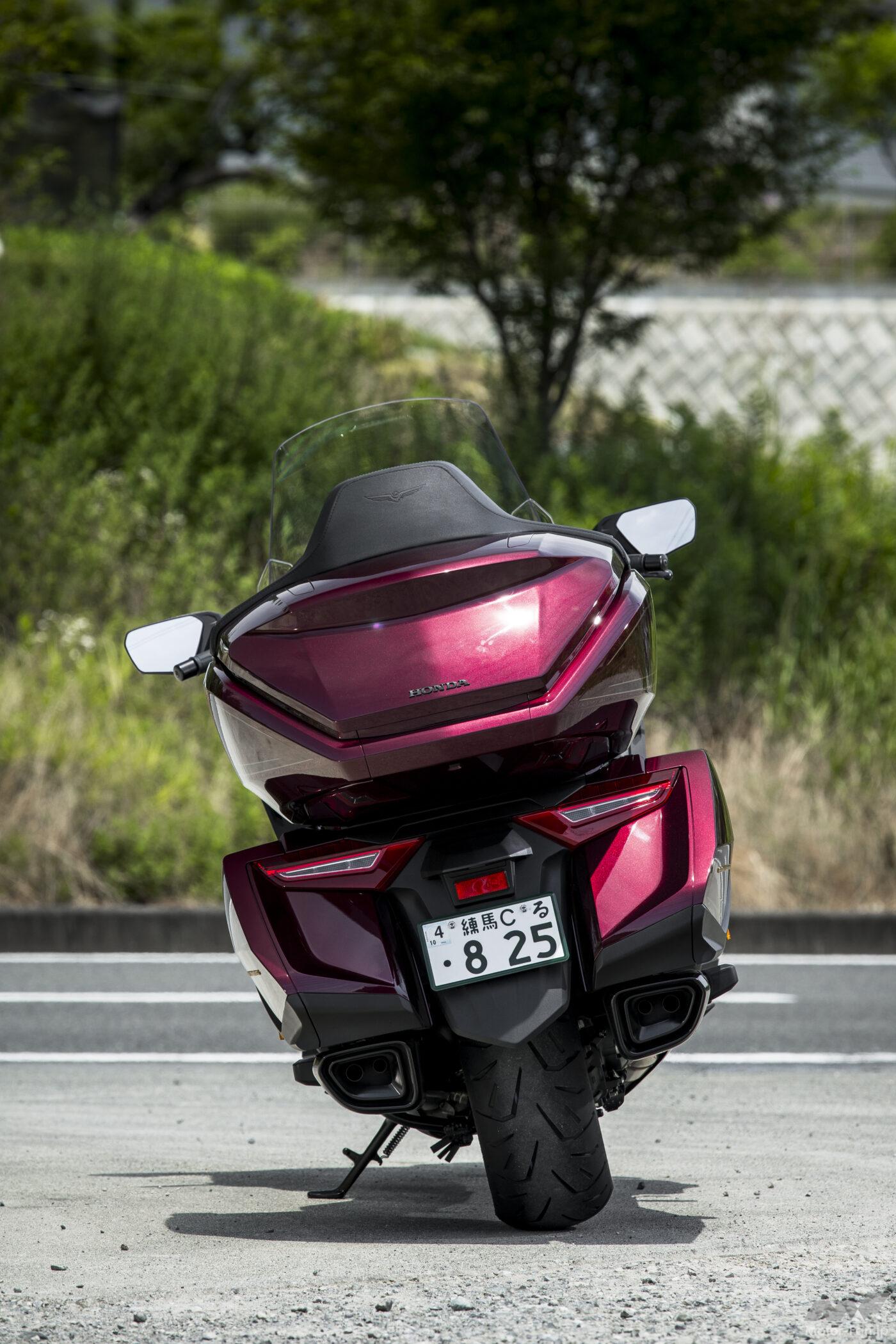
The Gold Wing Tour 50th Anniversary model introduced here is painted in a special Bordeaux Red Metallic color scheme. The saddlebag logo is gold, and the smart key features the 50th anniversary logo.
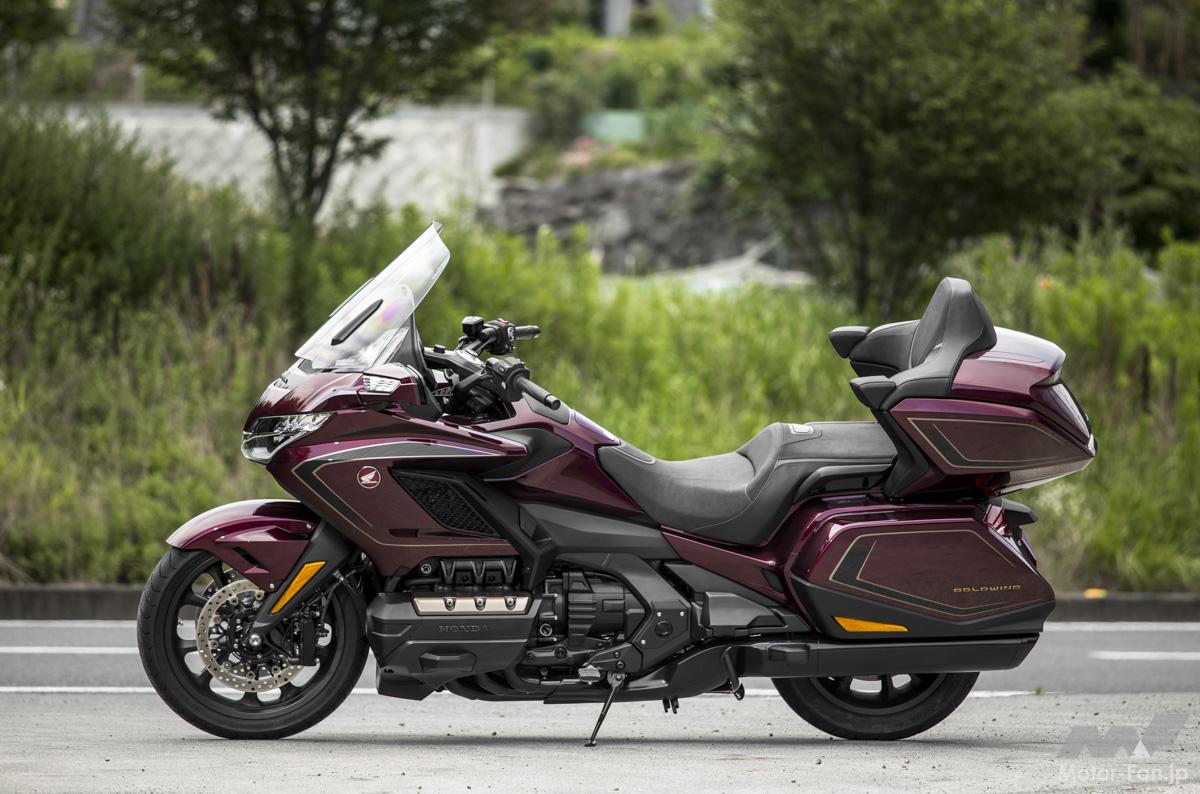
Weightless balance
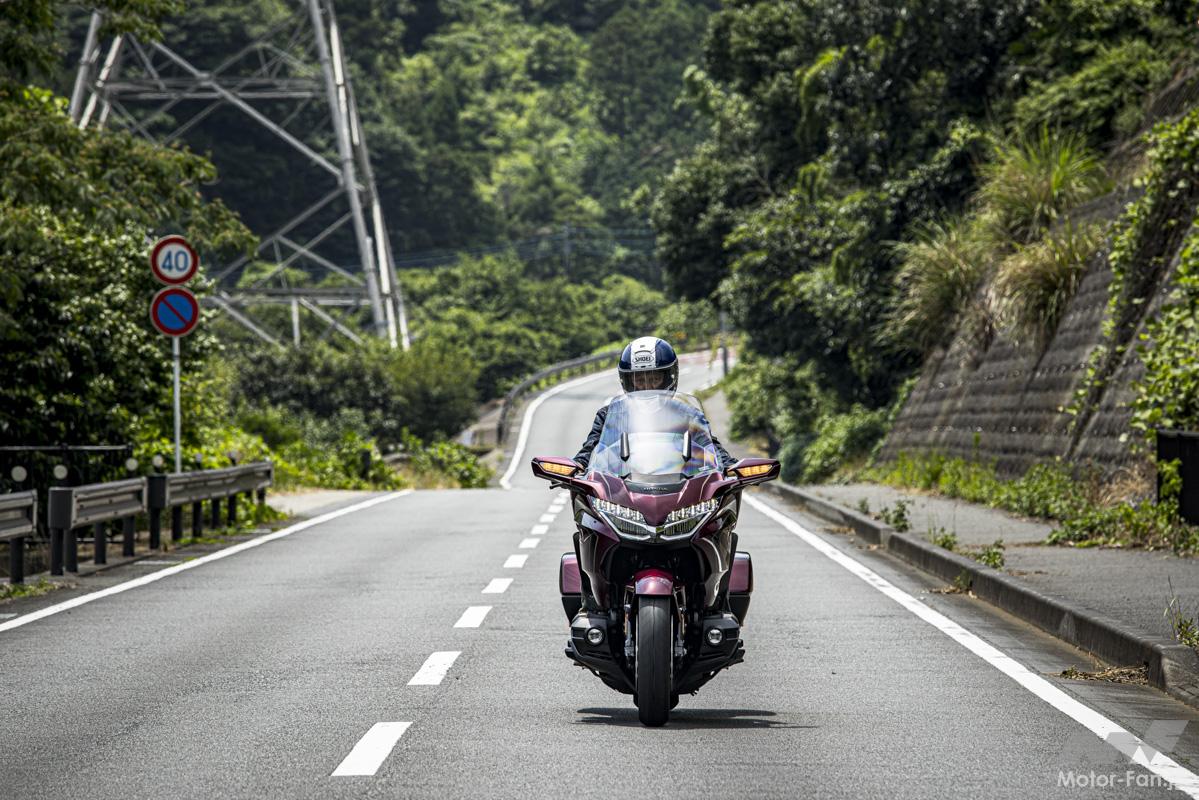
The Gold Wing is equipped with an 1800cc engine, the largest displacement of any mass-produced Honda motorcycle. It’s fully equipped with a large cowl and pannier cases, so riders unfamiliar with this type of bike might feel nervous the first time they ride it.
However, once you get on and lift the bike, it feels surprisingly light. This is because the low-mounted flat-six engine and other components achieve a low center of gravity. By making various parts, especially the engine, lighter and more compact, it’s possible to achieve an ideal balance.
The six-cylinder engine is gentle and smooth. It’s a level of smoothness that’s on another level from the four-cylinder. When you start driving, the large vehicle is pushed forward effortlessly with its thick low-speed torque. When cruising, it feels silky with almost no vibration, but when you open the throttle wide, it accelerates sharply with the powerful displacement unique to the horizontally opposed six-cylinder. When you increase the pace, it takes on a very sporty feel.
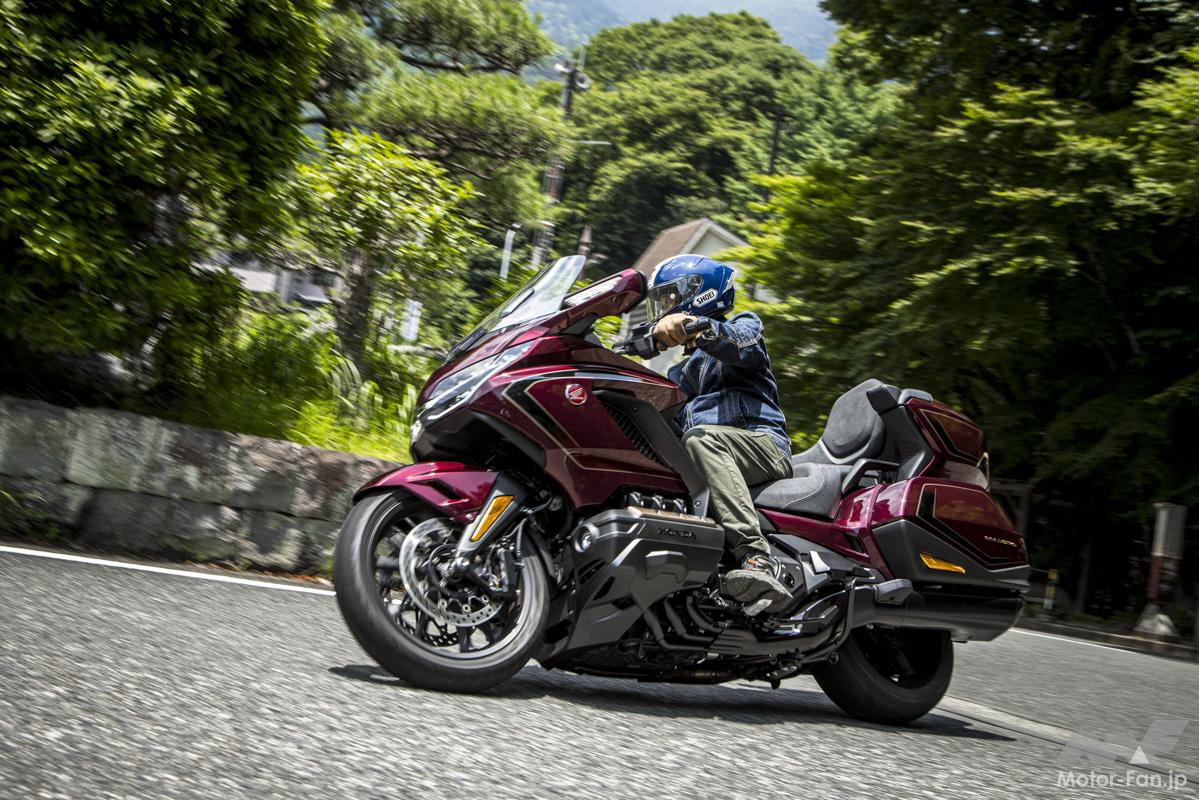
When I first started riding, I had the power mode set to Tour, and the response when I opened the throttle was surprisingly direct. At first, it felt a little too sharp, but I think this is what defines the Gold Wing.
Throttle work is important when trying to control a big bike freely. This is because you need to lean the bike and apply power at the right moment to stabilize the bike. The characteristics of Tour mode seem to have been designed to make the big bike ride briskly.
Switching to sport mode makes it even more lively. When you want to drive sportily on winding roads, sport mode is the only option. Driving while listening to the exhaust note of the 6-cylinder engine makes you feel like you’re driving a sports bike. It’s so much fun to ride that I think people who think that large cruisers are just vehicles to drive leisurely will be shocked.
In Eco mode, the response when the throttle is opened becomes much milder, and the suspension damping is also softer, so I mainly used Eco mode in situations with a lot of stop-and-go traffic, such as on congested roads. Rain mode is much gentler. The character changes considerably depending on the mode, and you can easily change modes even while driving, so the key to skillfully controlling the Gold Wing is to carefully select the mode depending on the situation while driving.
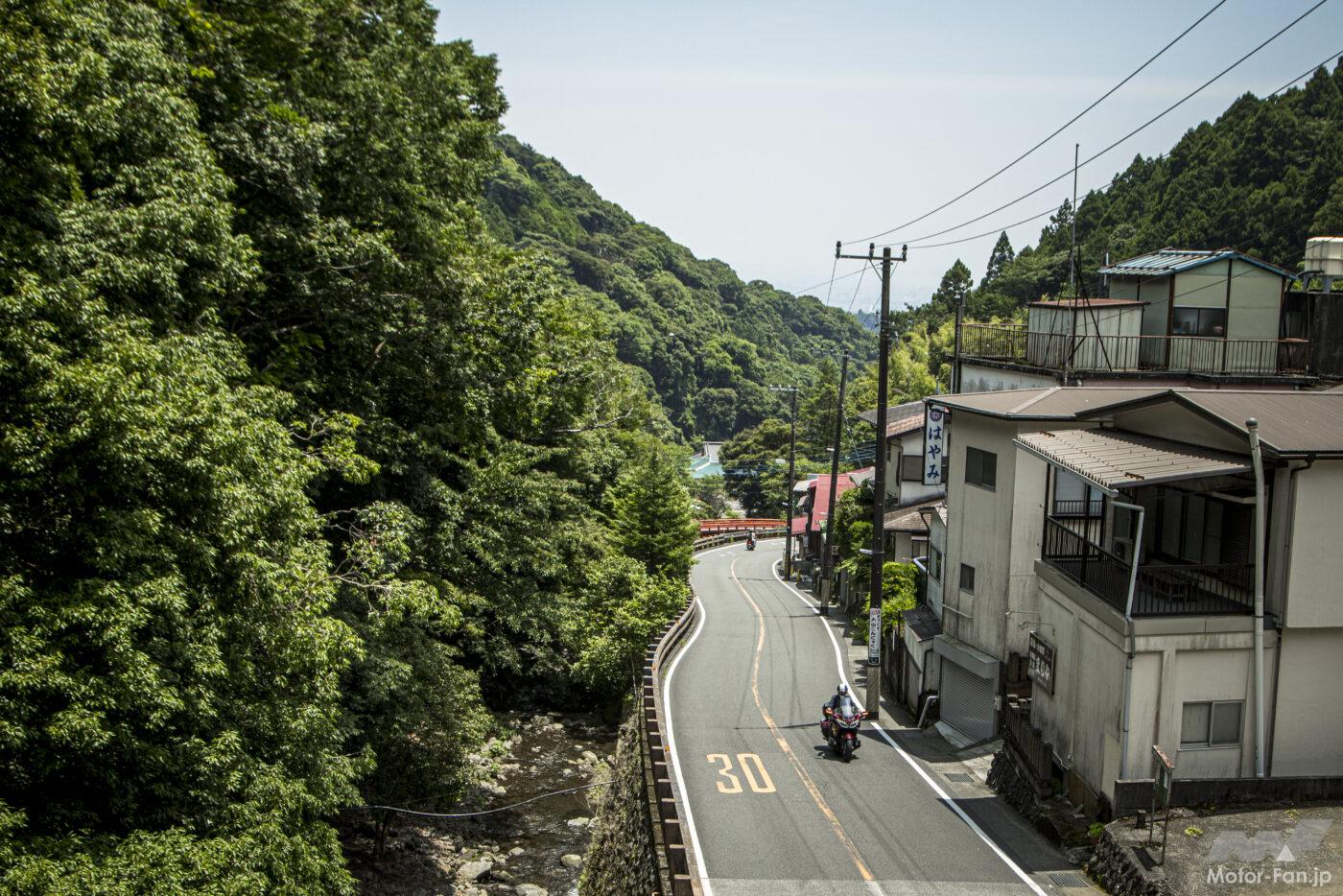
The 7-speed DCT is precisely controlled and operates smoothly. There is almost no shock when shifting gears. The timing of the DCT shifts also changes depending on the power mode, and the engine speed is maintained at an almost impeccable level, including the timing of the kickdown. When driving in automatic mode, you can shift up or down using the manual button if necessary, but I never touched the manual button during my entire day of riding. The engine braking effect also changes depending on the mode, but the change in engine braking is less than the change in power. Personally, I think that the driving would be more relaxed if the engine braking effect was a little weaker in eco mode.
When cruising at 100km/h on the highway, the top gear speed is 2000rpm, so there is no vibration. When overtaking, just opening the throttle allows for great acceleration. The windscreen is also very effective, so even when cruising, the wind barely hits you. On cruisers from a generation ago, a high windscreen would create negative pressure, making you feel like you were being pushed from behind, but this is not the case with the Gold Wing. The large cowl not only blocks the wind, but is also designed to allow a comfortable breeze to hit the rider.
The double wishbone design provides a great ride, and the seat is comfortable, so I didn’t feel tired after a whole day of riding. It was the first time I’d ever ridden a motorcycle so comfortably.
Flexible handling
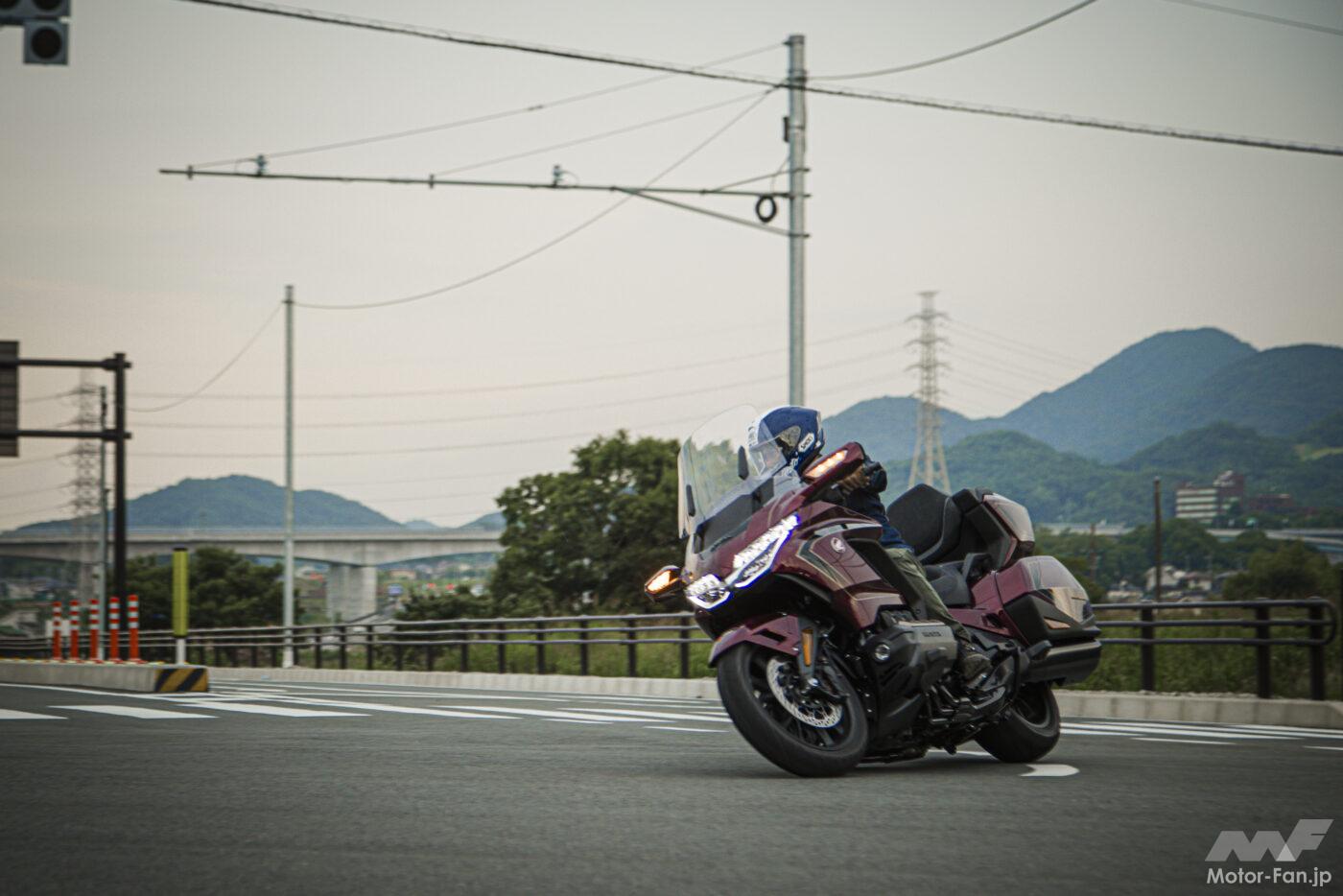
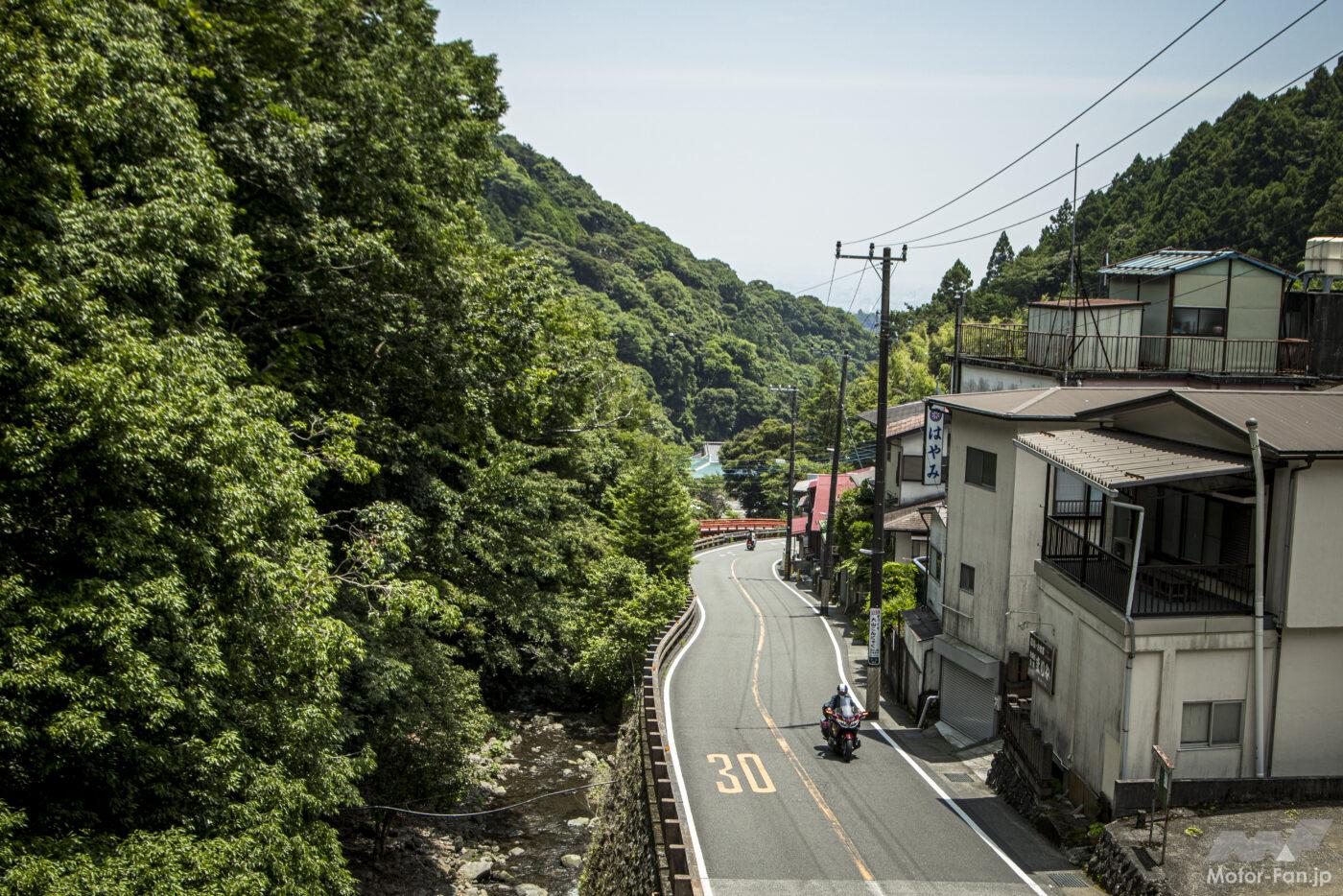
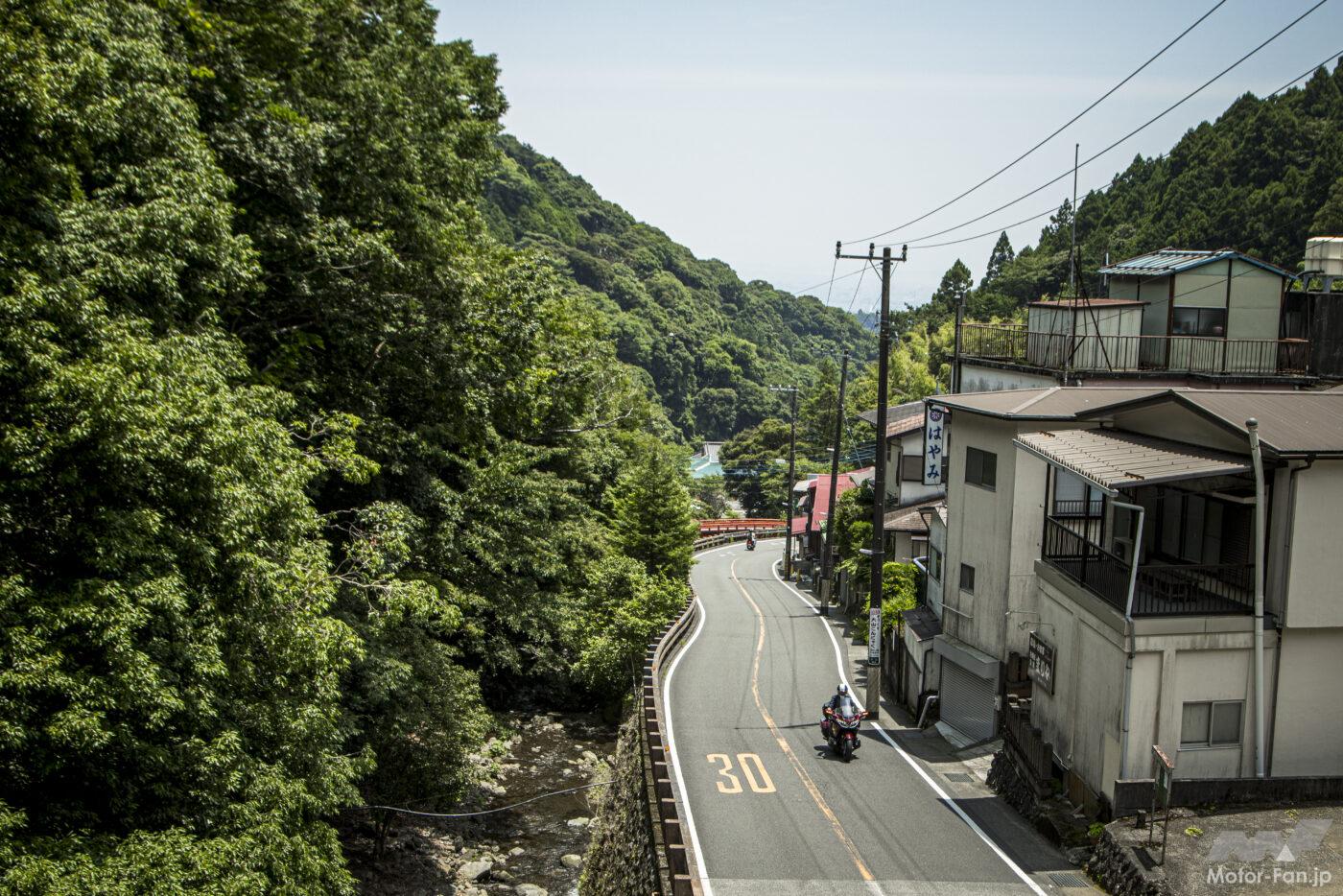
This may come as a surprise to those unfamiliar with Goldwin, but the cornering performance of this machine is outstanding. It leans easily into corners, and once the banking angle is set, the bike turns smoothly and stably. Once you’ve created the opening, it feels like you can just leave the rest to the bike to clear the corner. It’s different from the quickness of a sports bike, but it’s a completely different kind of fun.
Even in slow corners, the car feels light and nimble, but the weight is noticeable when turning quickly into tight corners. When driving in such a place, it’s important to use the throttle and steering to create an opening rather than trying to forcefully turn the car around.
Some people may think that U-turns are difficult with a DCT because it doesn’t have a clutch lever. However, U-turns are extremely easy to make with the Gold Wing. If you keep the throttle open a certain amount and apply the rear brake intermittently to control the bank angle, it’s easy to make a U-turn with the handlebars fully locked. We made many U-turns during filming, but never had any difficulty. However, if you can’t complete a turn and you use the front brake hard while banked, you may not be able to support the leaning body, so if you feel you can’t complete the turn, it’s important to quickly raise the body and bring it upright before stopping. Then you can use reverse gear to turn again.
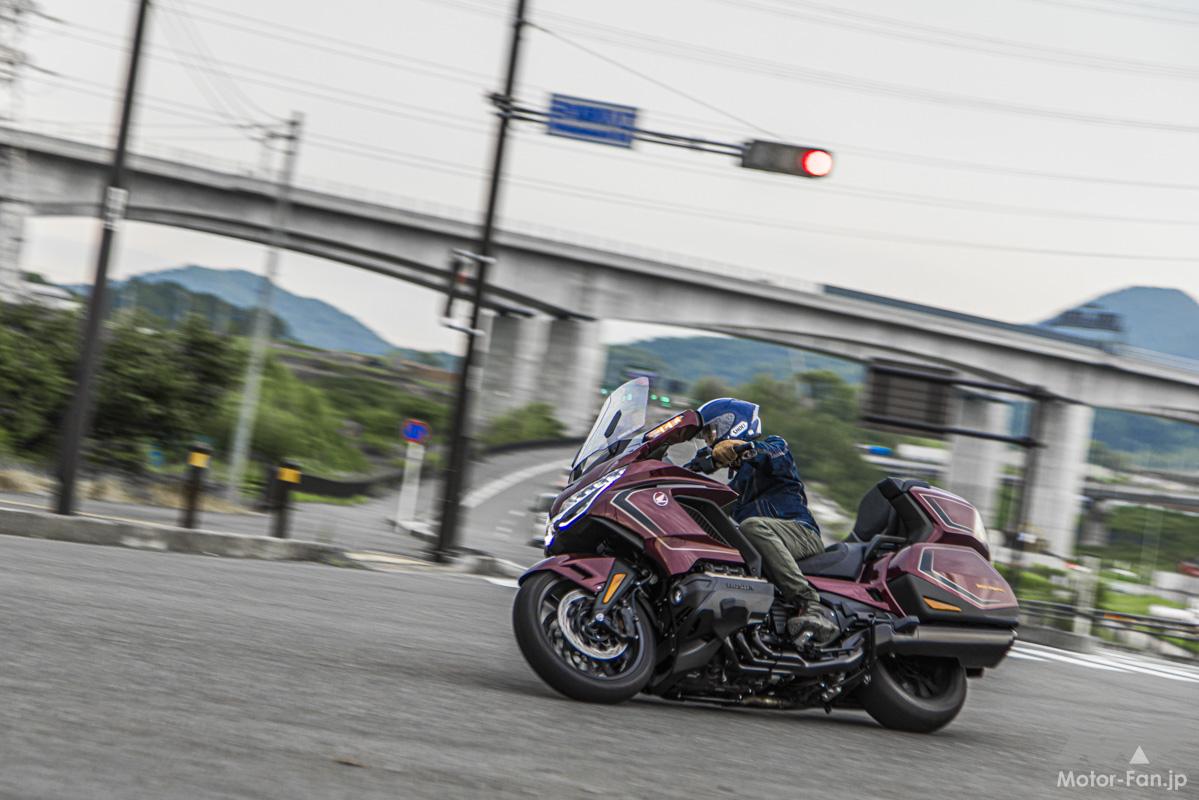
It feels solid and stable even when traveling at extremely slow speeds in a traffic jam. This sense of stability is unique. Because the bike doesn’t react too sensitively, you don’t have to try to make precise adjustments, but rather leave it up to the bike to a certain extent and only turn the steering wheel slightly when necessary. When traveling at extremely slow speeds, the key is to turn the wheel slightly and at an early timing, but this becomes even more important with the Gold Wing, which has a large body.
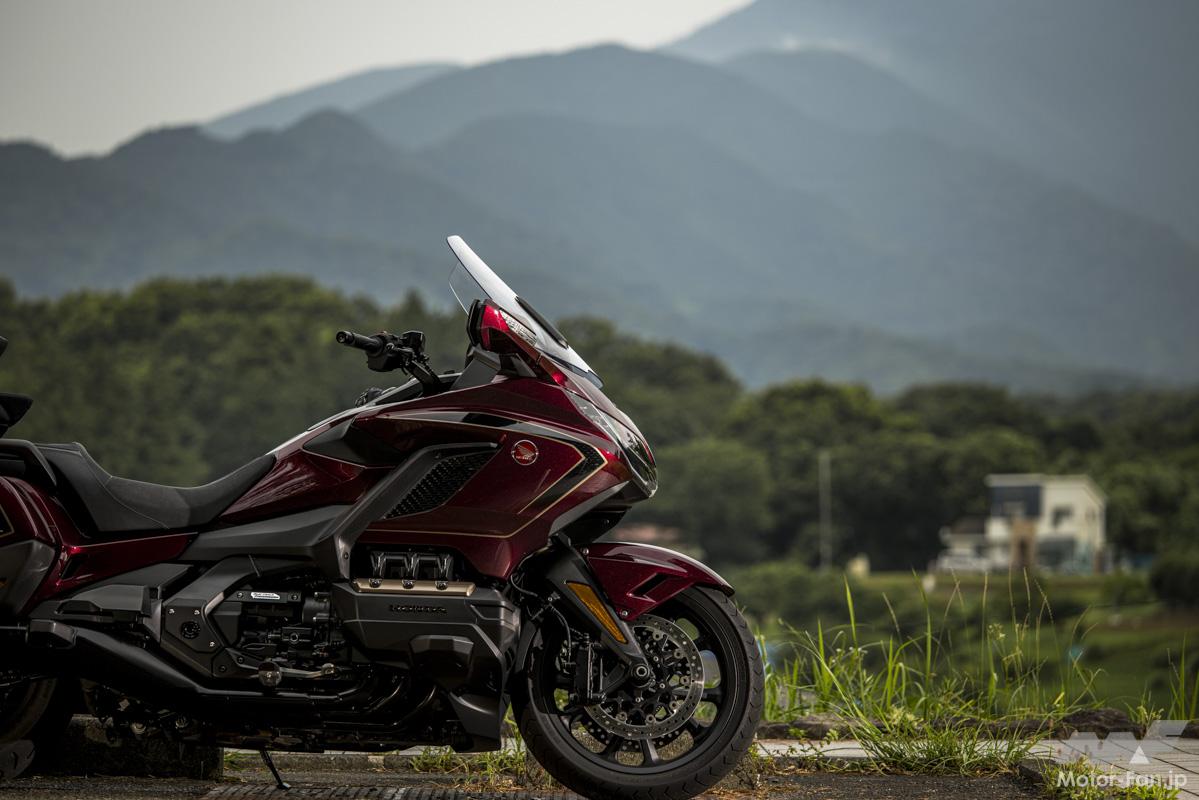
To be honest, the tester wasn’t a big fan of touring bikes. He felt that a model specialized for touring would limit his motorcycle life. However, the Gold Wing not only had the performance necessary for touring, but also had a high level of sportiness and was easy to use in everyday life. If he were to own just one bike, he thought this might be a good choice.
Position & foot grounding (height 178cm, weight 75kg)
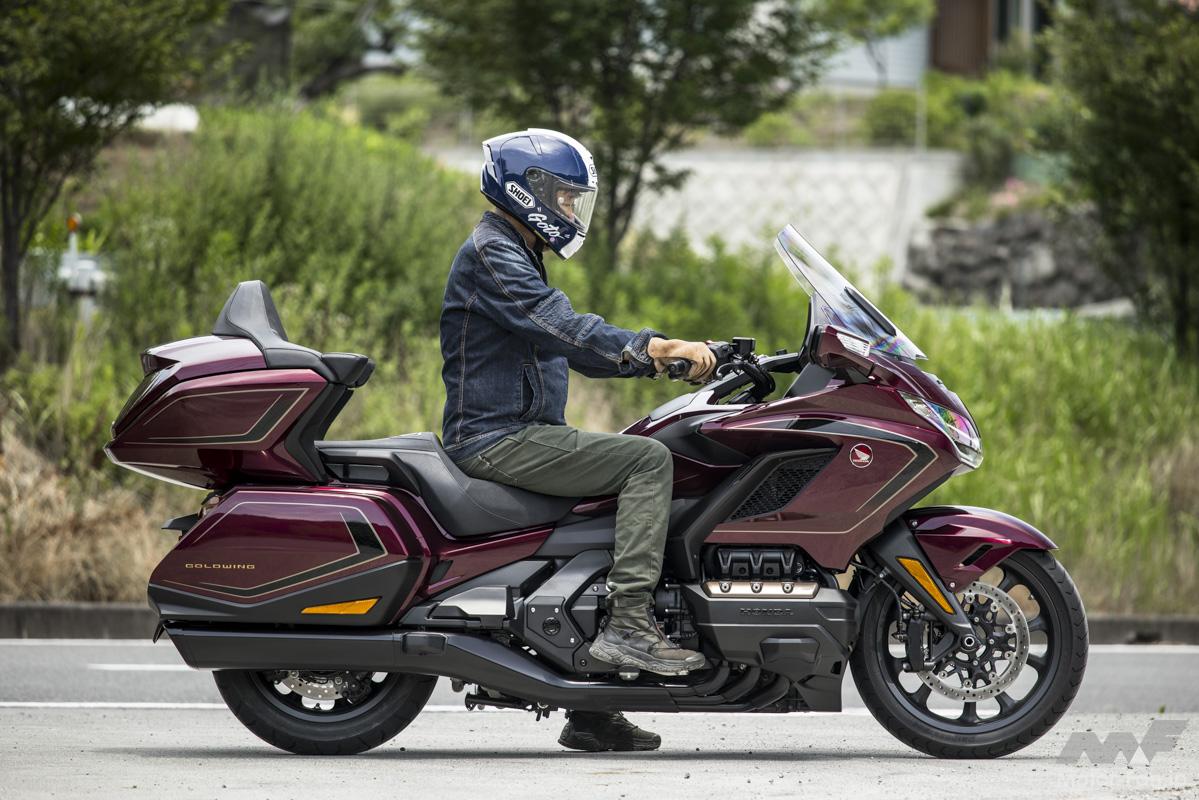
The riding position is relaxed and the legs are not bent too tightly. The seat is also very comfortable. You won’t feel any discomfort even after riding all day.

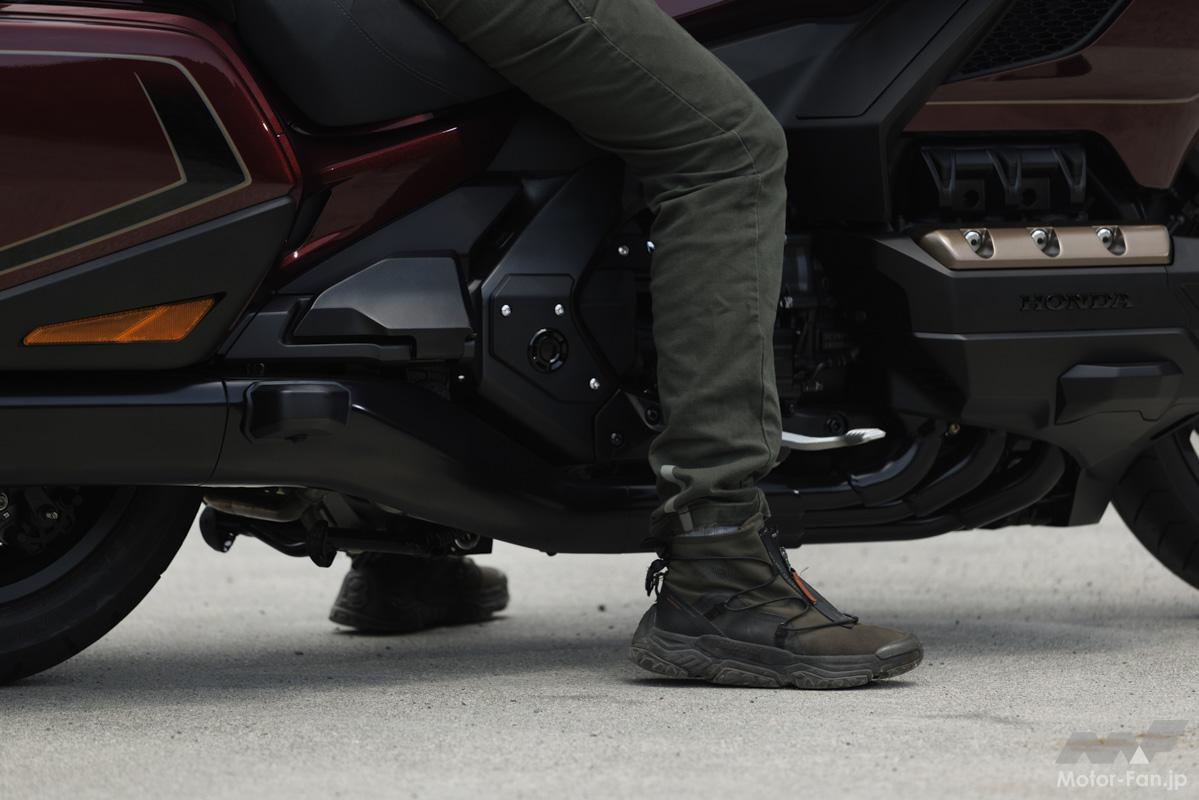
The seat height is 745mm. With both feet on the ground, your knees will bend quite a bit. The low center of gravity makes it surprisingly easy to support and maneuver the bike. However, when getting on and off, you need to be careful not to scrape your boots against the raised part at the rear of the seat.
Detailed explanation
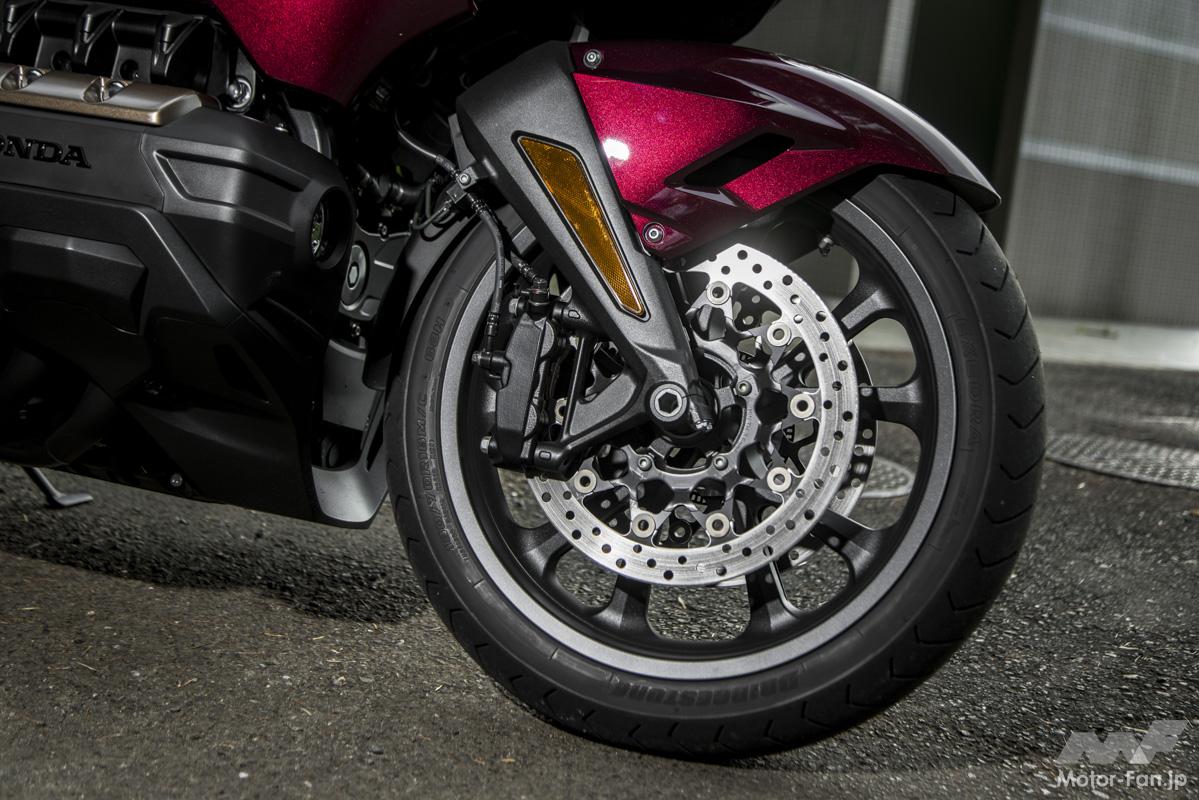
The front tire size is 130/70R18. The brakes are radially mounted double discs with opposed piston calipers.
ADVERTISEMENT
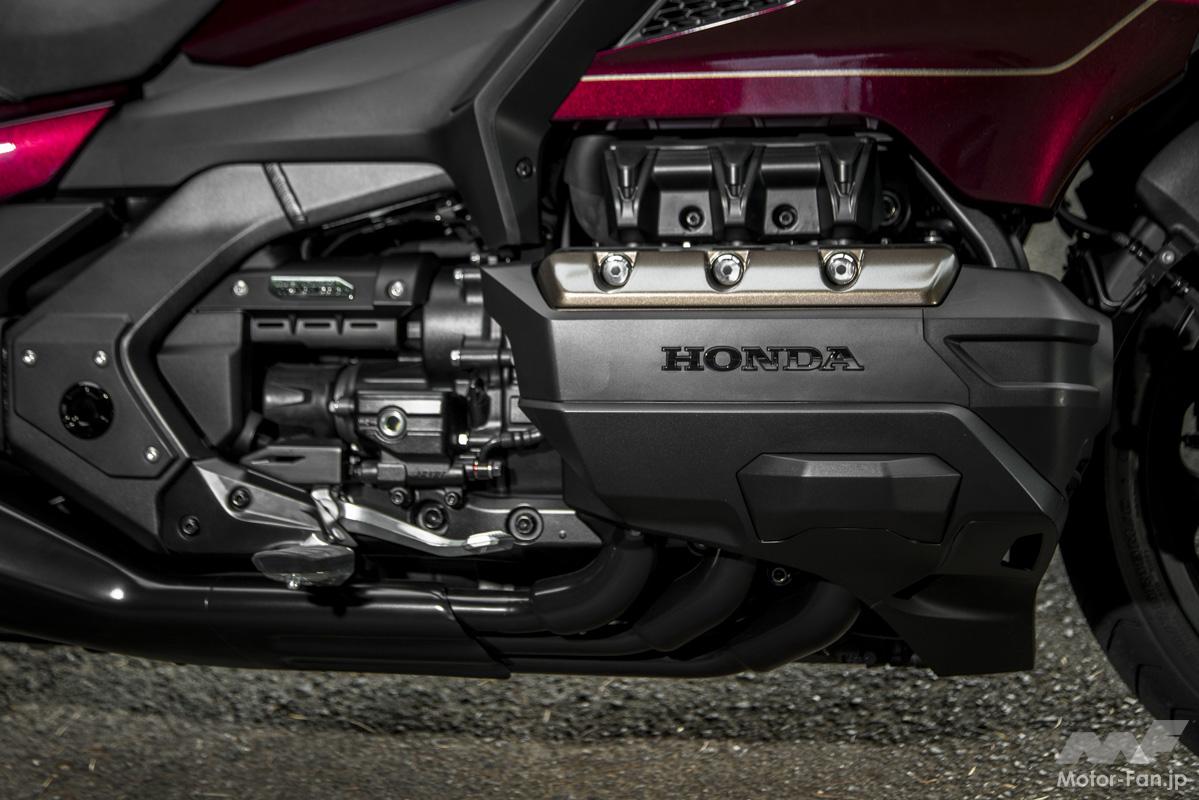
The Gold Wing Tour is only available with a 7-speed DCT transmission, which has a reverse mode.
ADVERTISEMENT
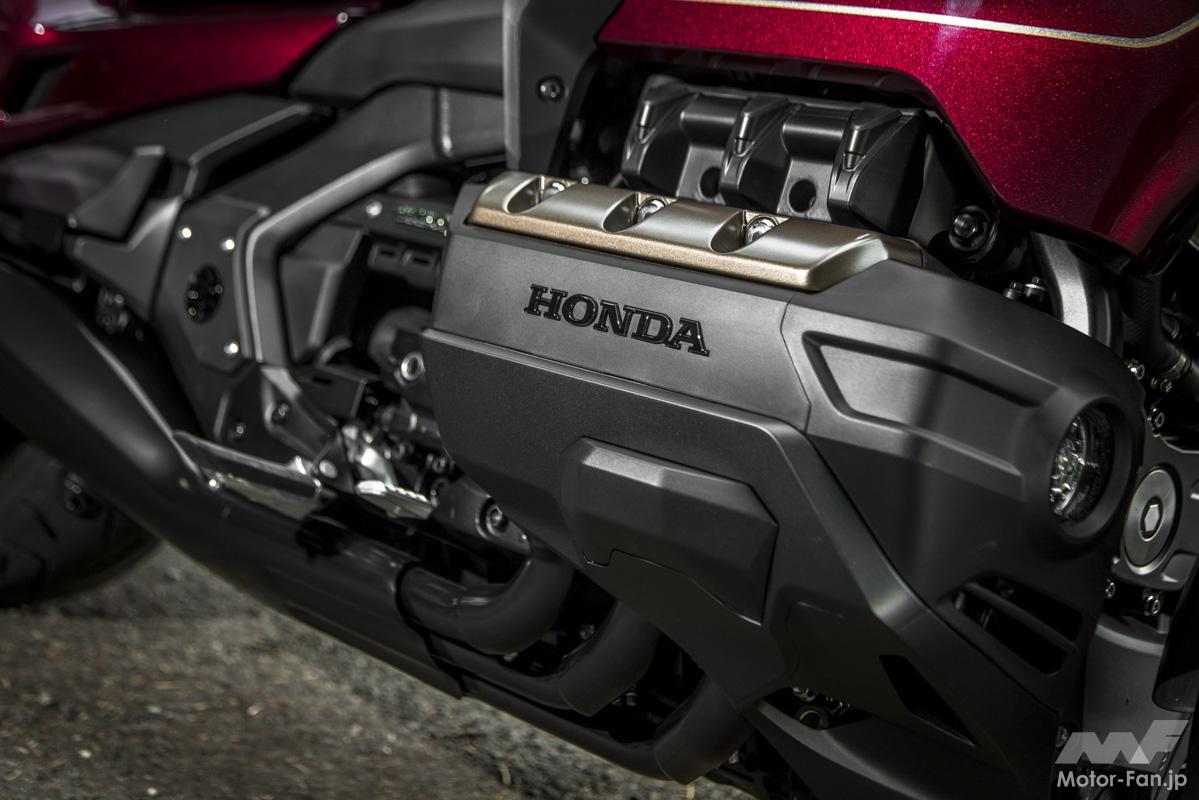
The engine is a water-cooled OHC horizontally opposed 6-cylinder. The valve drive has been changed to a Unicam train, making it significantly smaller and lighter than the previous model.
ADVERTISEMENT
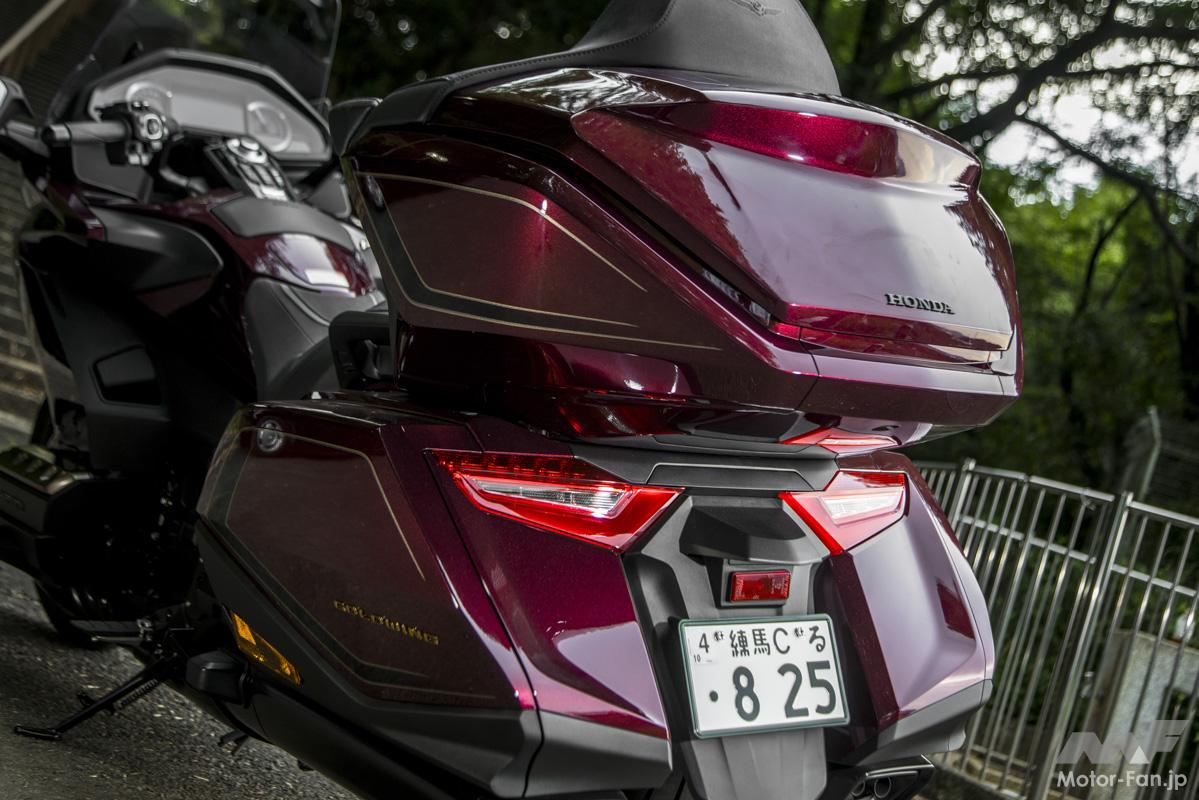
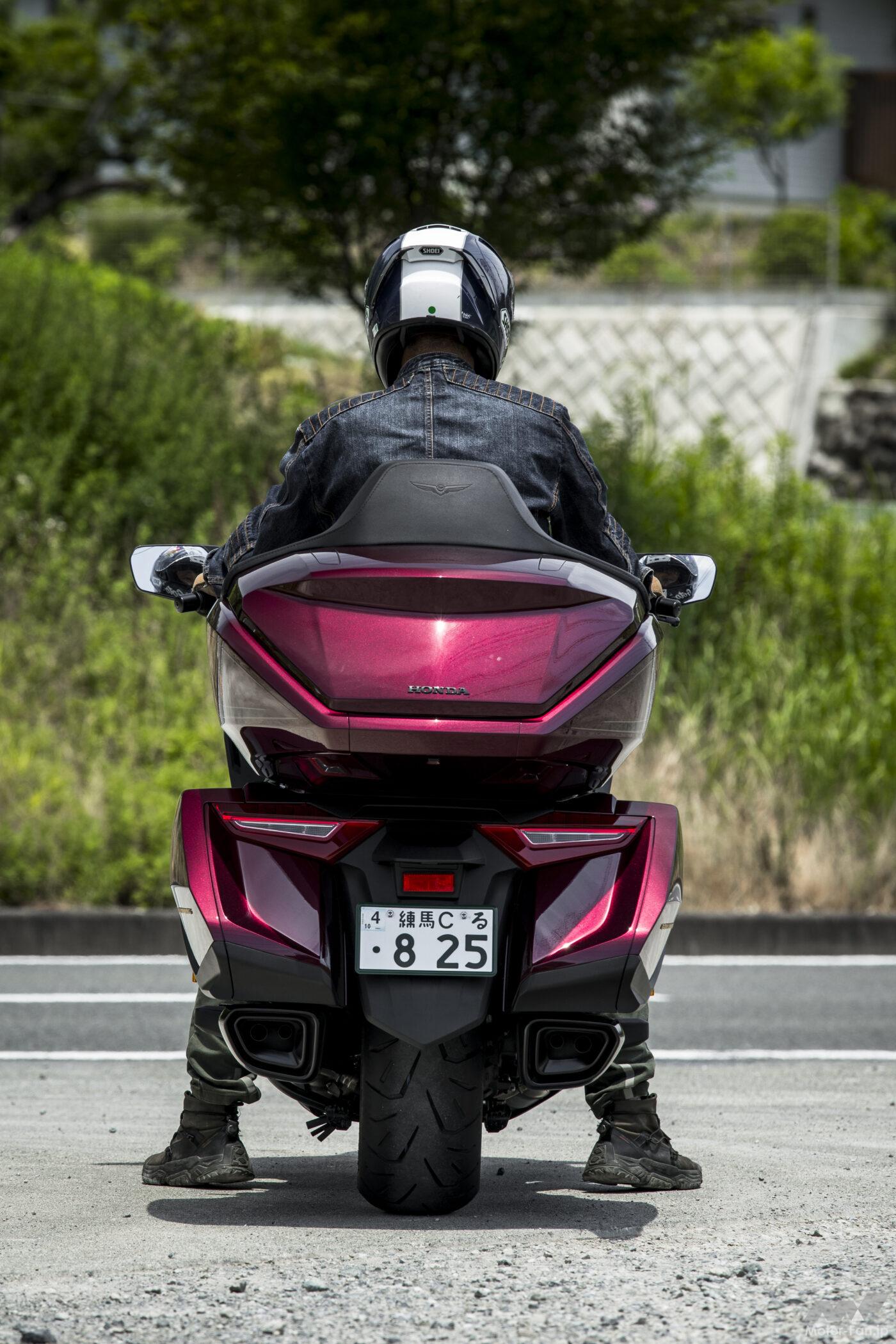
The rear view exudes a strong presence. The tail lamps are multi-eye LEDs.
ADVERTISEMENT
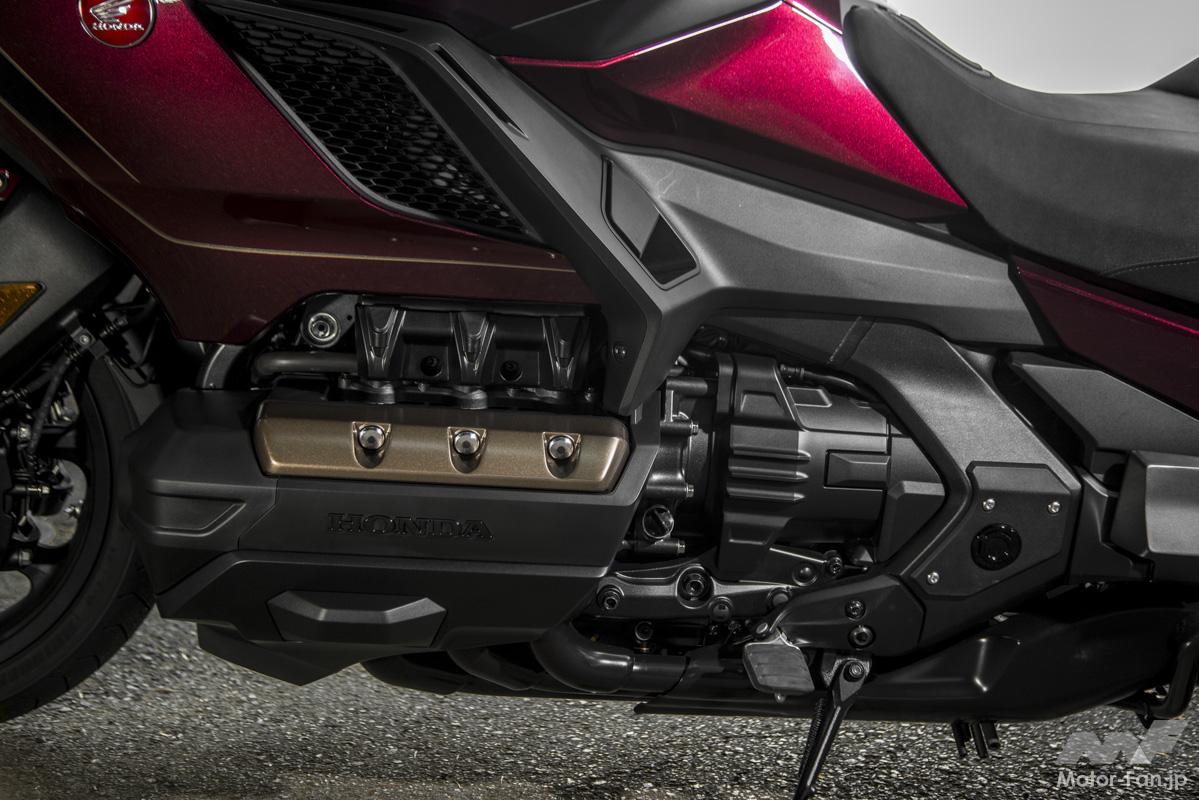
The frame is a high-strength, lightweight aluminum twin-spar type.
ADVERTISEMENT
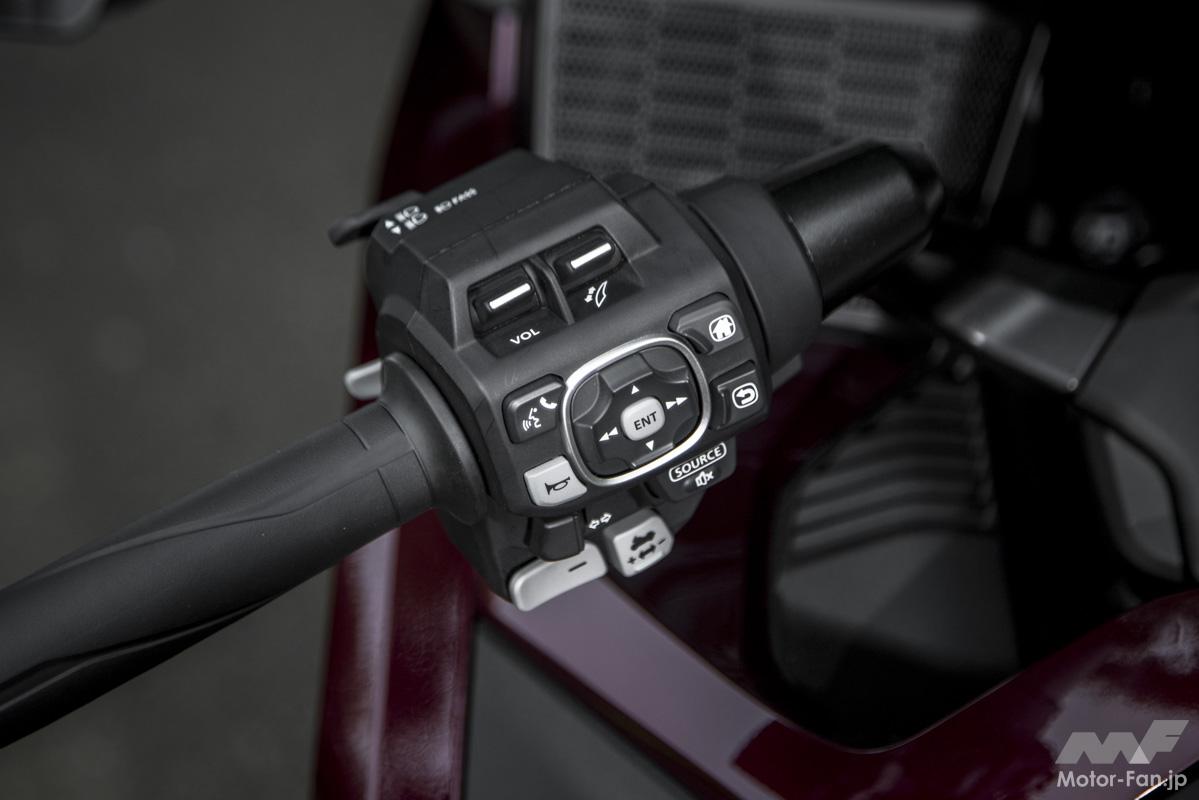
The multi-function switch is located in the left handlebar switch box. Although there are many buttons, they are all in easy-to-understand locations so you can operate them without getting lost.
ADVERTISEMENT
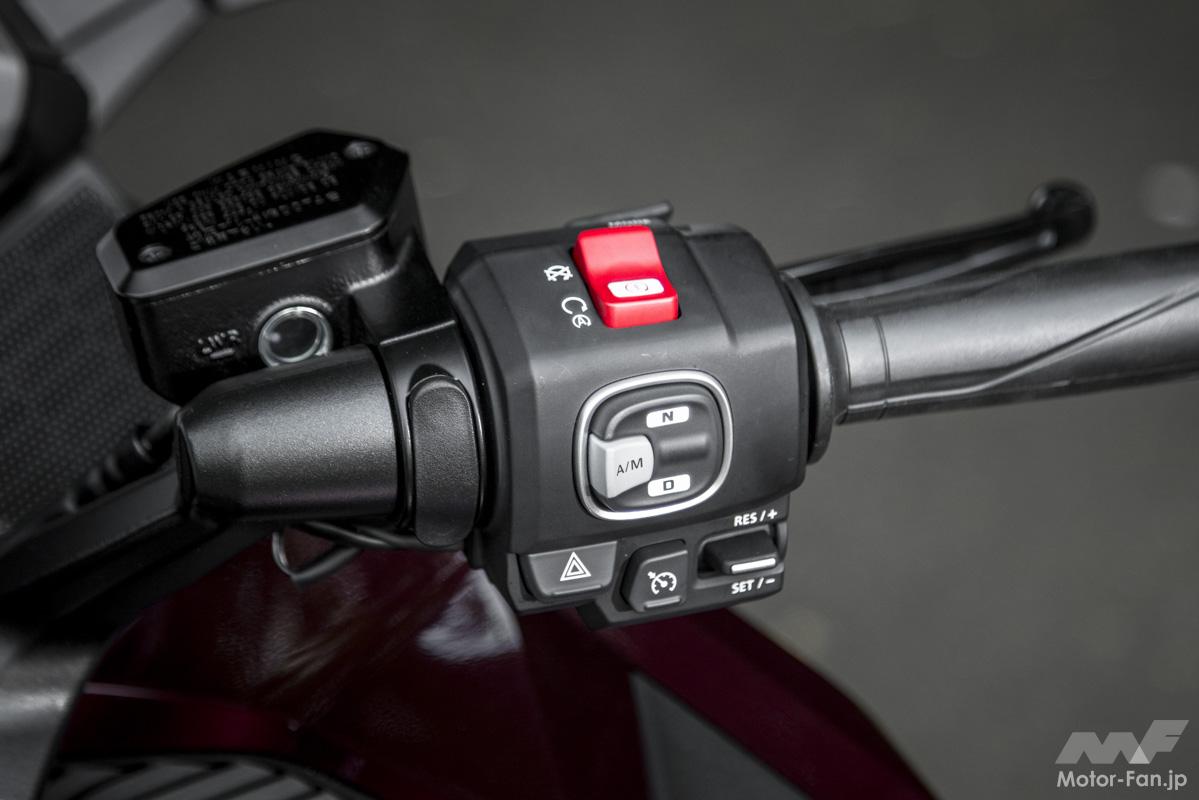
The right switch box houses the kill switch, starter, DCT mode switch and cruise control.
ADVERTISEMENT
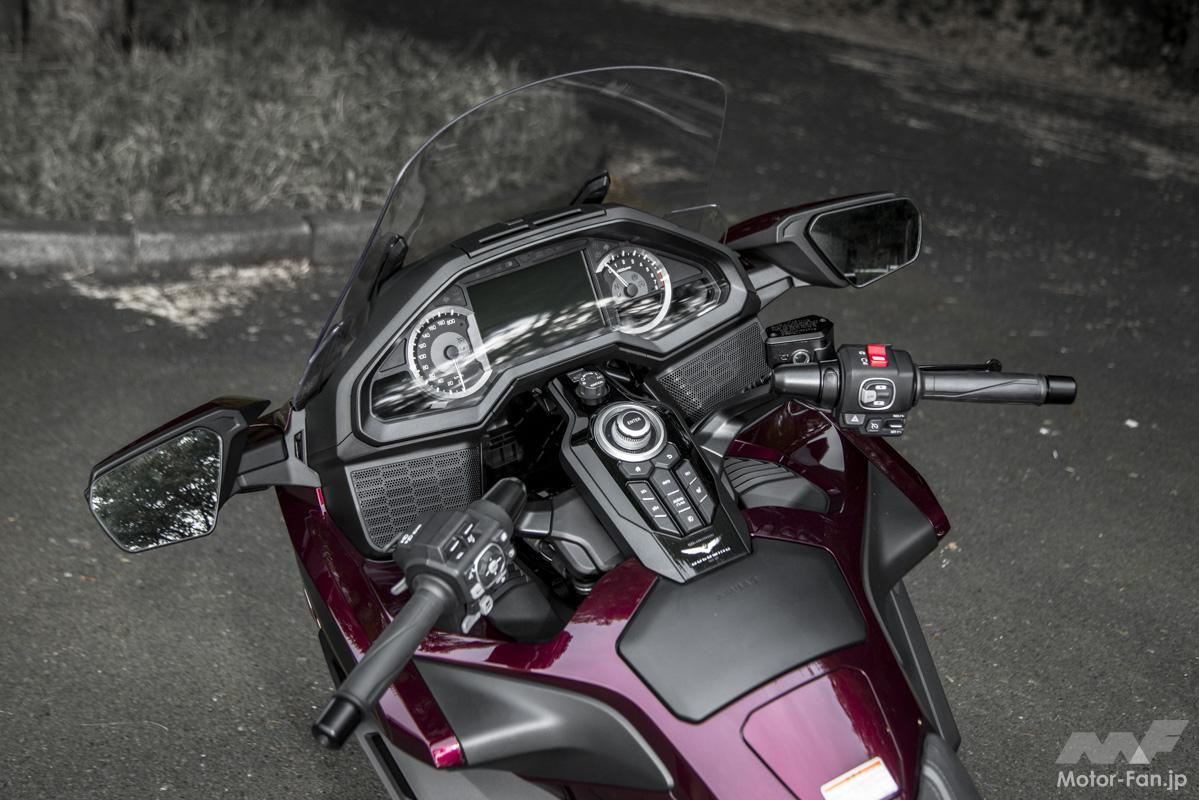
The control system on the center console allows intuitive operation of various functions.
ADVERTISEMENT
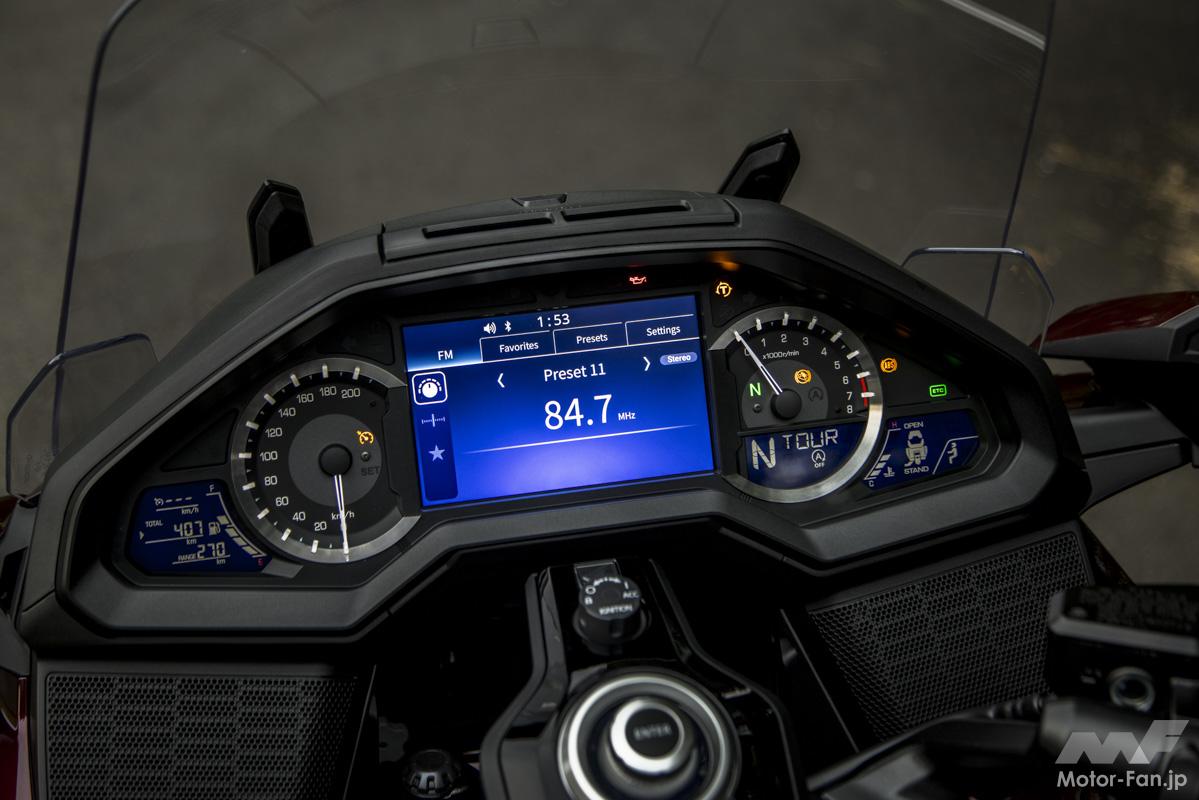
The speed and tachometer are displayed in analogue format, while the central 7-inch TFT LCD screen displays various information such as audio information, torque control and preload settings.
ADVERTISEMENT
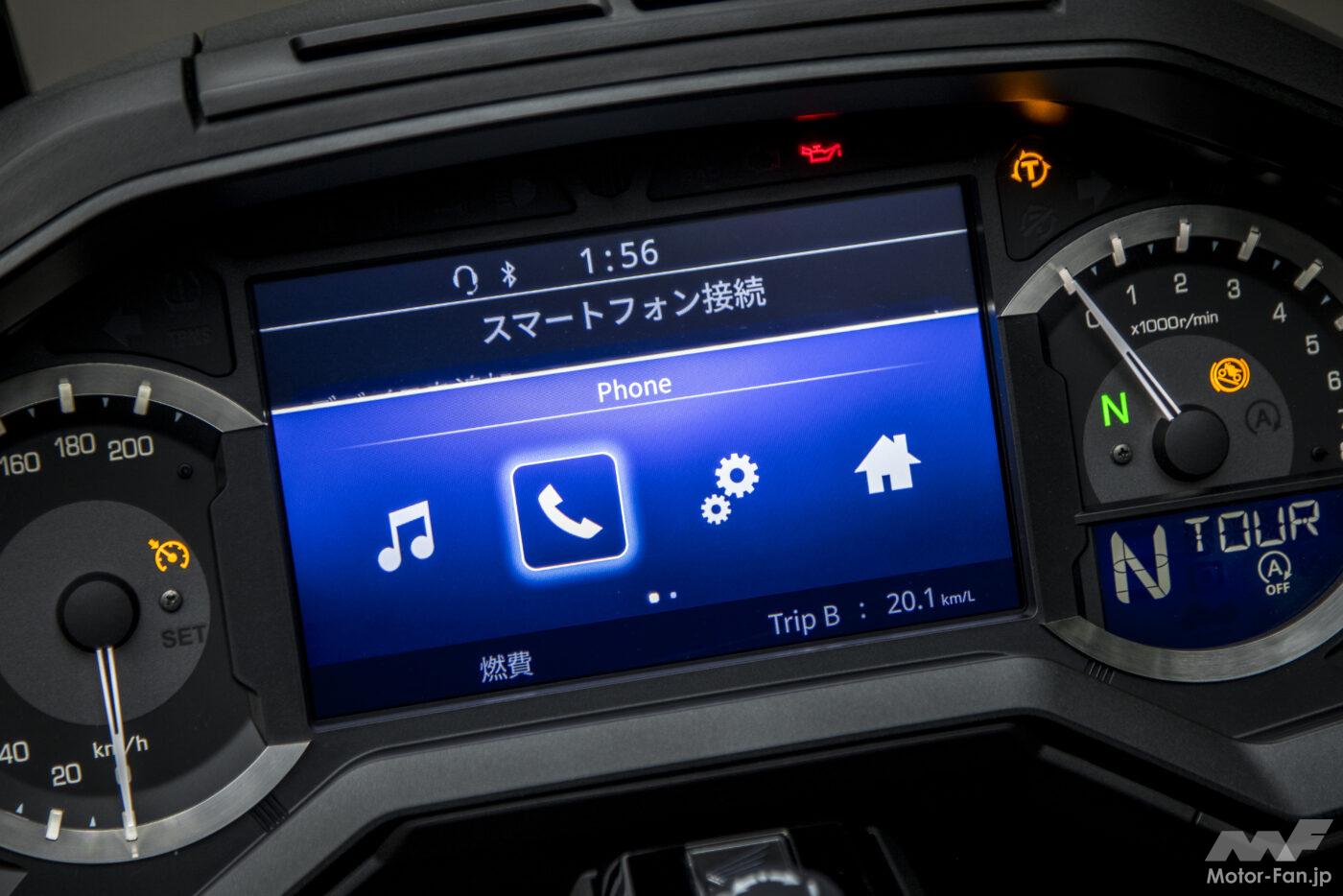
It comes equipped with Apple CarPlay, which connects to Wi-Fi and allows you to access your iPhone’s phone book, music, and applications. By connecting a headset via Bluetooth, you can make phone calls and talk with passengers.
ADVERTISEMENT
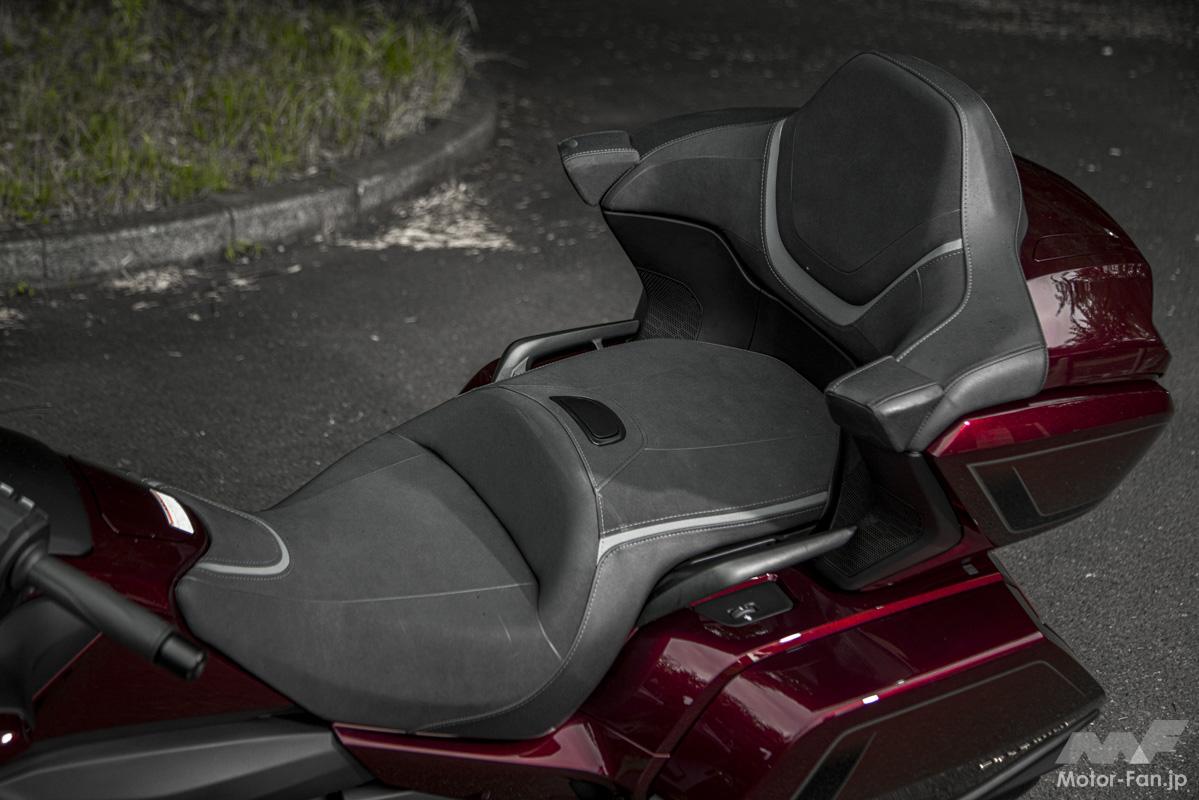
The seat is spacious so that the rider and passenger have separate spaces.
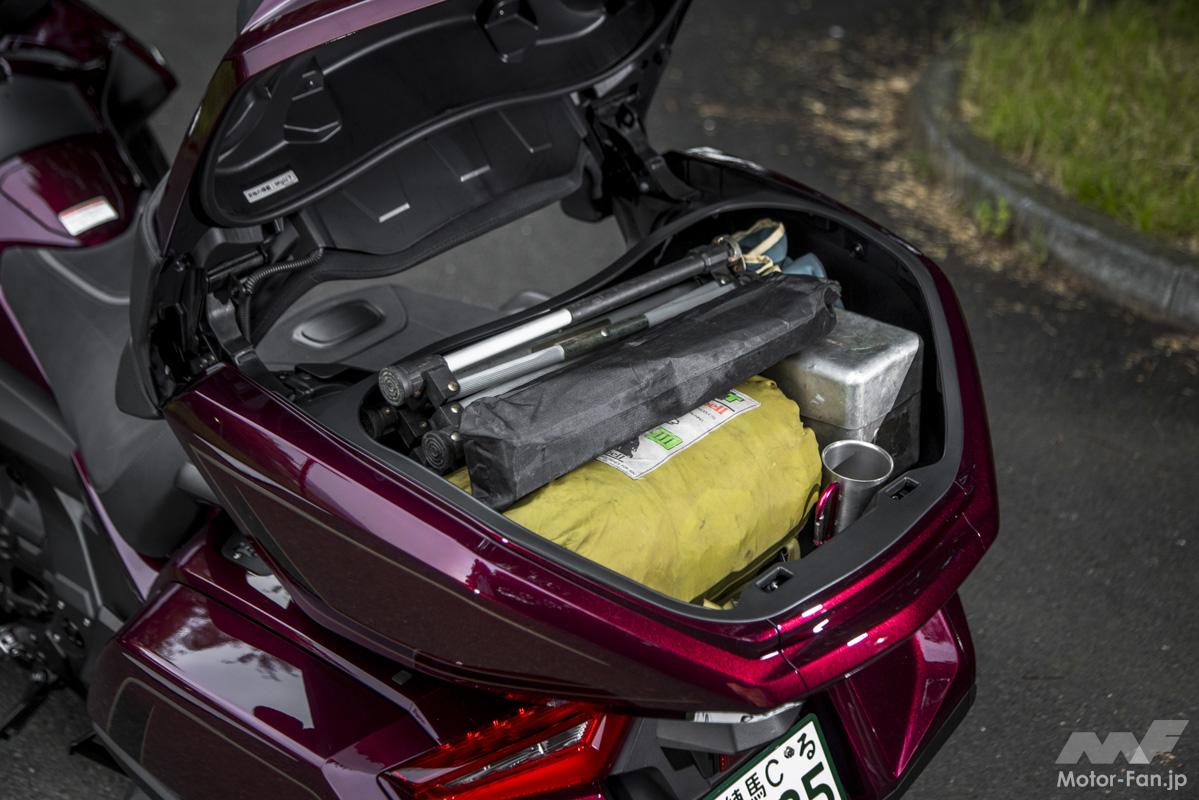
The trunk has a capacity of 61 liters. The left and right side boxes have a combined capacity of 121 liters, and it is designed to accommodate luggage for two people going on a three-night, four-day tour. If you are only going for solo camping, all of your luggage will fit in the trunk.
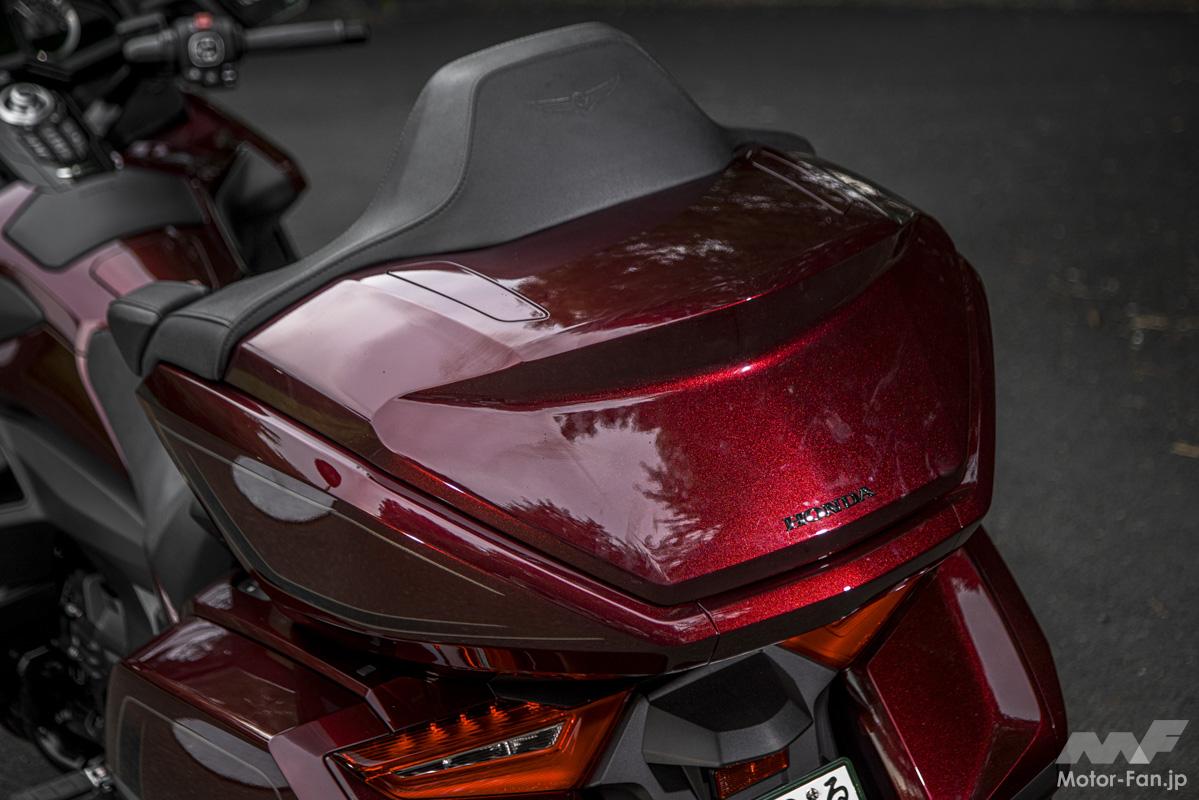
The trunk and side boxes can be opened and closed with a smart key. The trunk is extremely convenient and can store two full-face helmets.
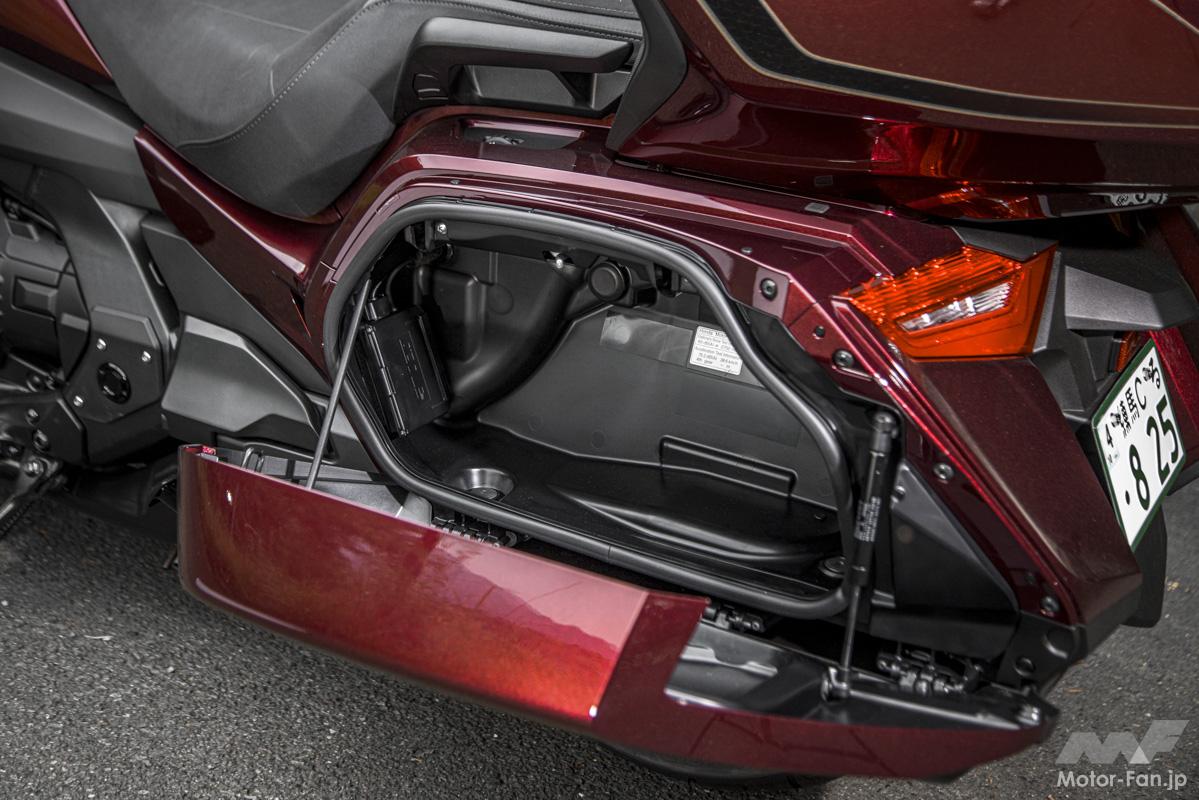
The capacity of each side bag is 30 liters. Damper mechanisms are used for smooth opening and closing.
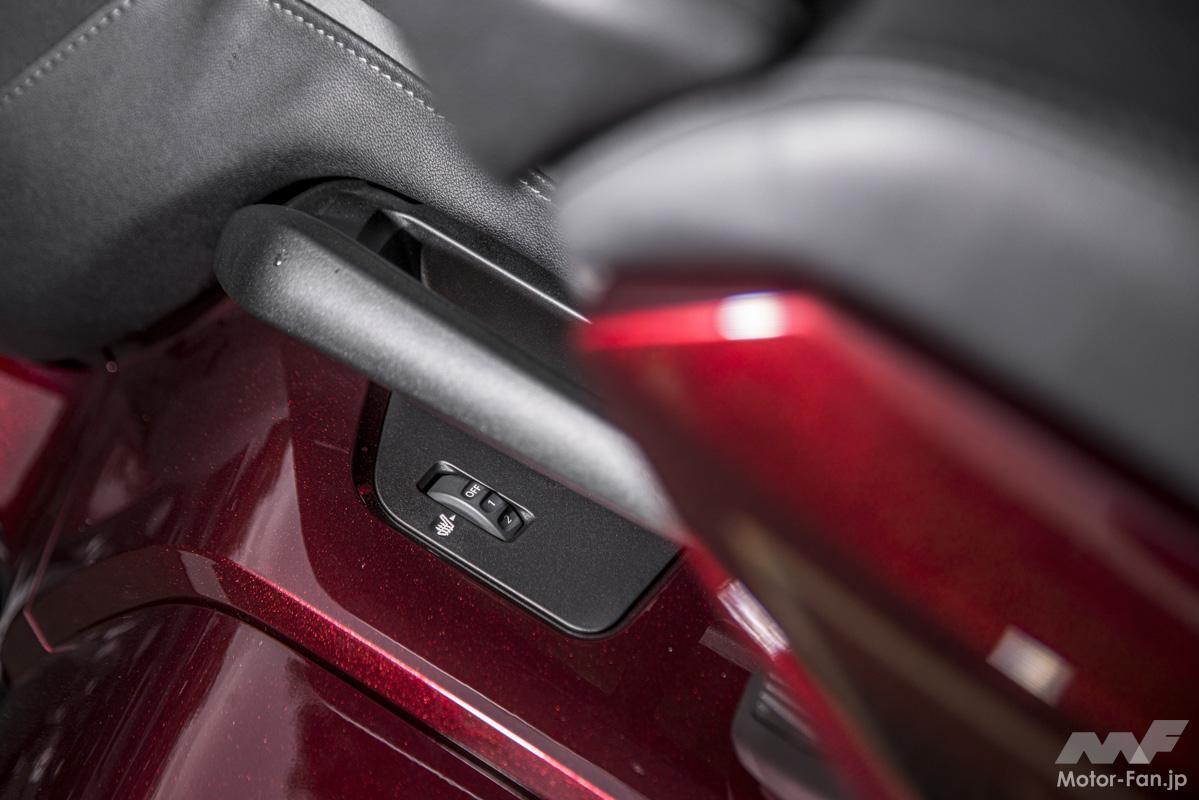
The passenger seat heater can be operated by the passenger.
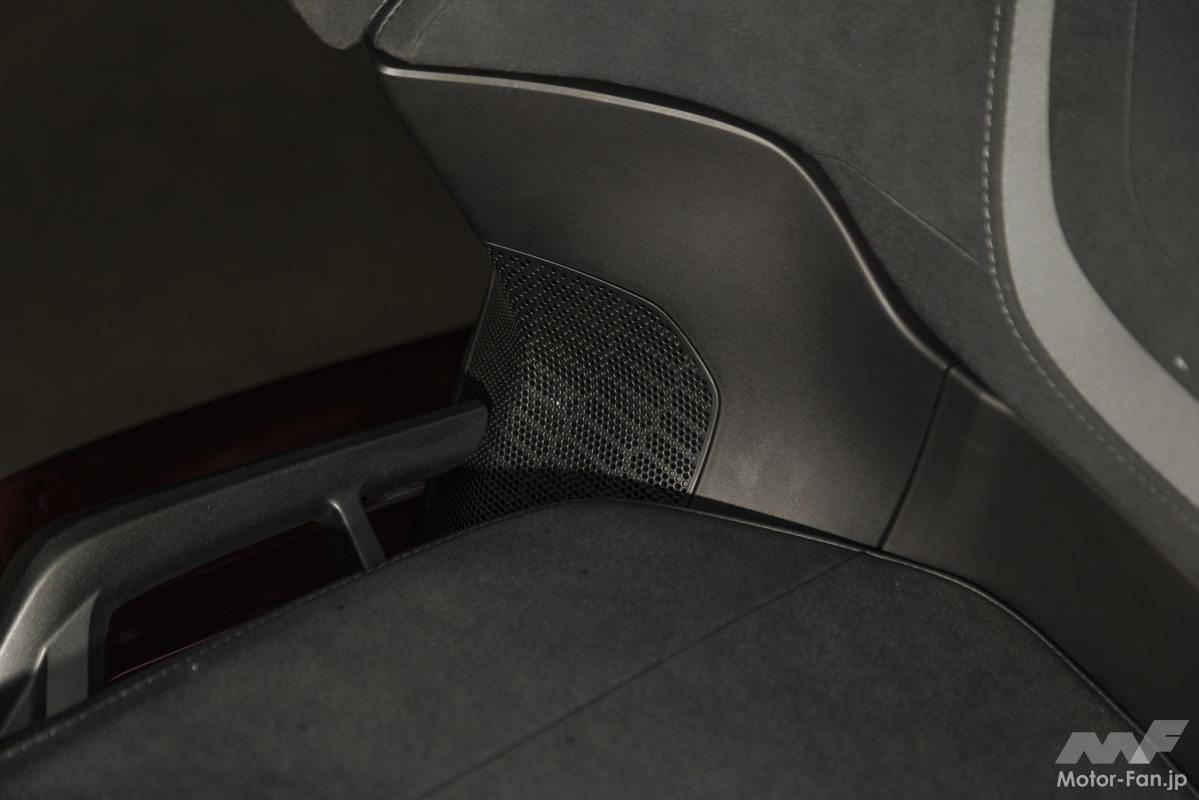
The car is equipped with an audio system that focuses on acoustics. By using options such as rear speakers and a passenger audio switch, passengers can enjoy the audio music just like the rider.

Gold Wing has traditionally been designed with passenger comfort in mind, with a soft seat and comfortable riding position to reduce fatigue even on long trips.
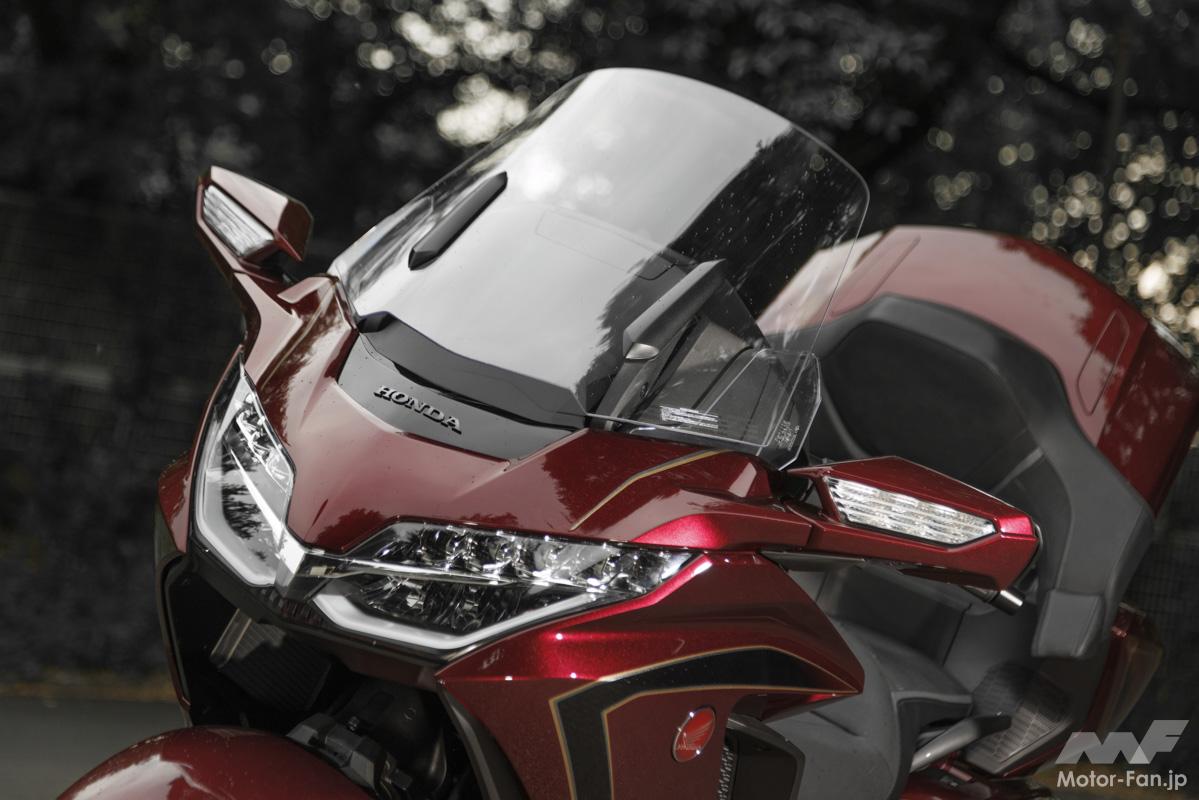
The cowl demonstrates high aerodynamic performance. It is designed to let in the wind while riding, creating a comfortable feeling of breeze. It is equipped with an electric windscreen.
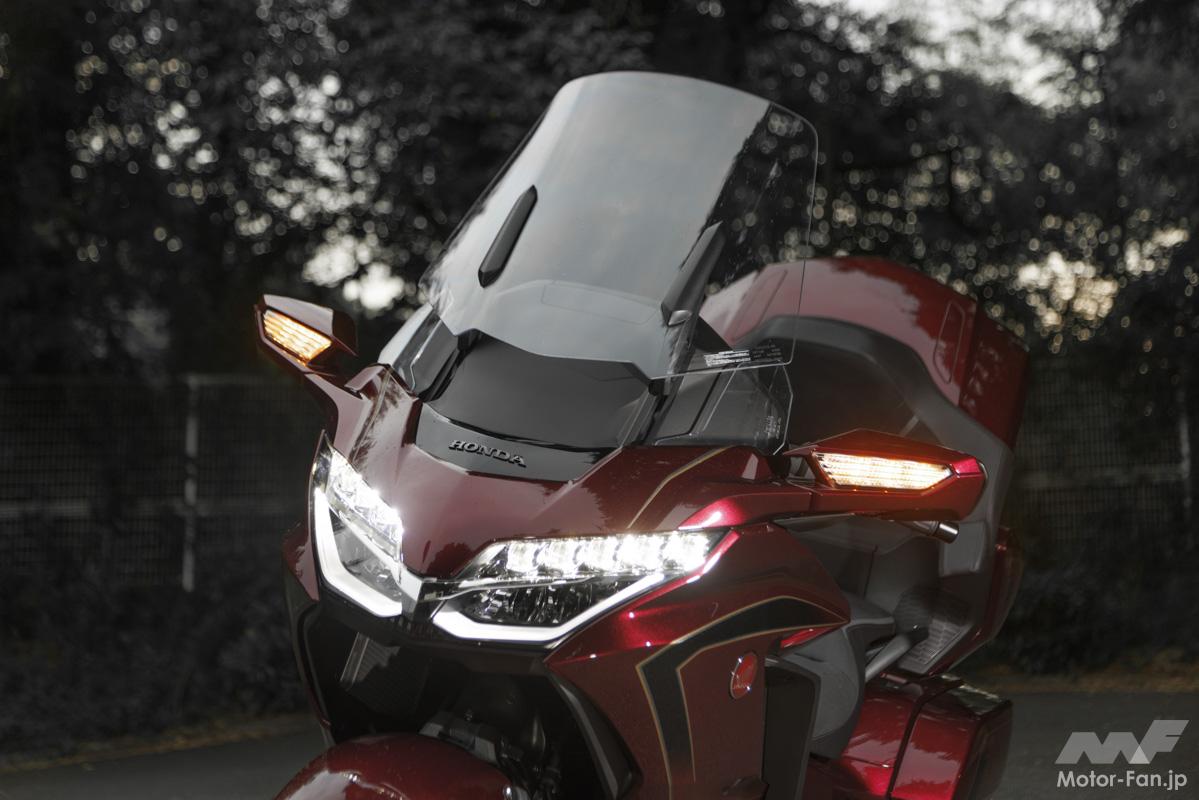
The high beam is located on the bottom. The signature lamp that combines high and low is located on the top. The low beam is a JLI LED light with five optical lenses on each side.
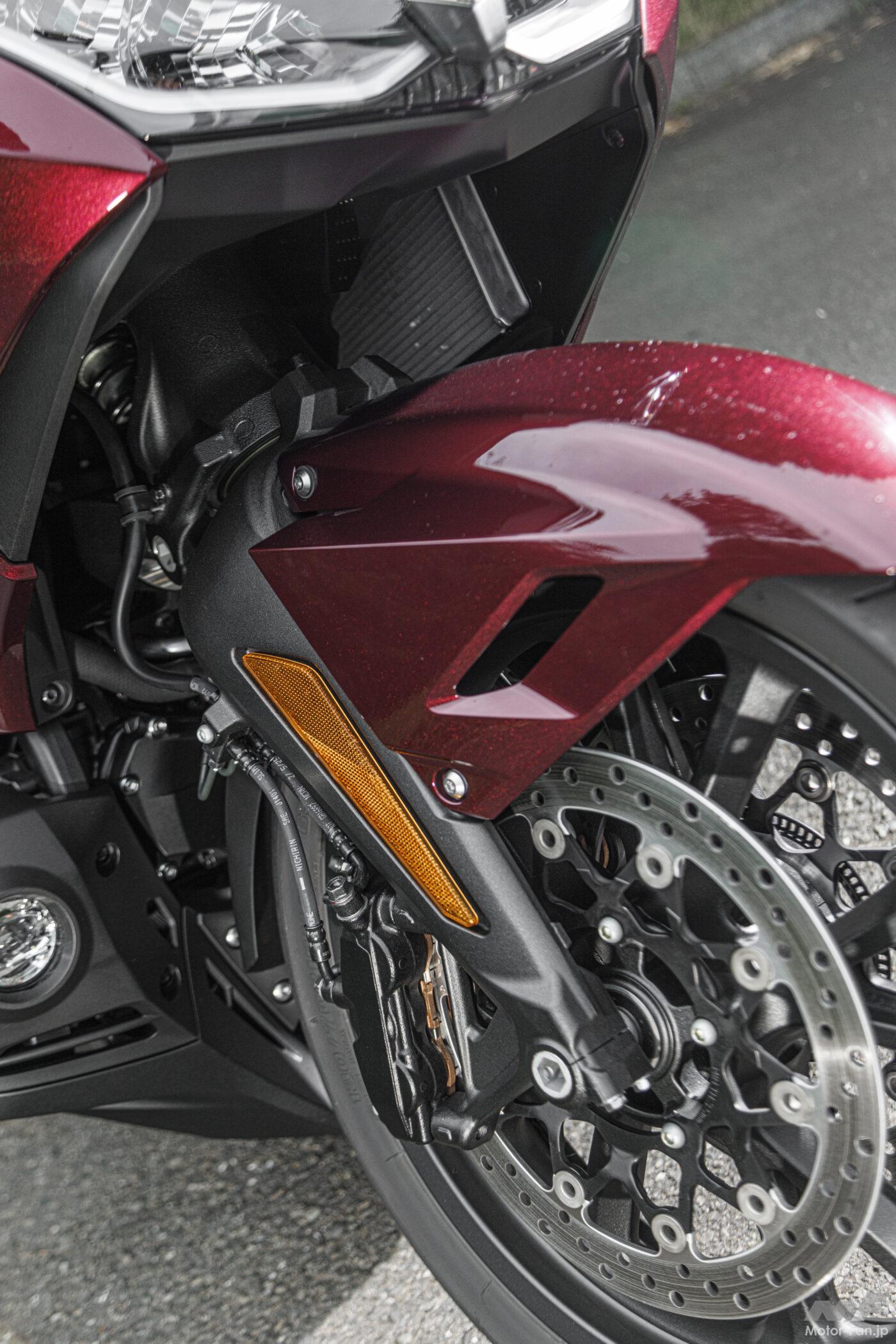
The front suspension uses Honda’s unique double wishbone suspension for motorcycles, which combines excellent ride comfort with nimble handling.
Main specifications
| Car name and model | Honda 8BL-SC79 | ||
|---|---|---|---|
| Total length (mm) | 2,615 | ||
| Overall width (mm) | 905 | ||
| Overall height (mm) | 1,430 (top of screen: 1,555) | ||
| Wheelbase (mm) | 1,695 | ||
| Minimum ground clearance (mm) ★ | 130 | ||
| Seat height (mm) ★ | 745 | ||
| Vehicle weight (kg) | 391 | ||
| Passenger capacity (people) | 2 | ||
| Fuel consumption rate *1 (km/L) | Ministry of Land, Infrastructure, Transport and Tourism notified value: Stationary fuel consumption value *2 (km/h) | 27.0 (60) (2 passengers) | |
| WMTC mode value ★ (class) *3 | 14.9 (Class 3-2) (with one passenger) *Idling stop function OFF | ||
| Minimum turning radius (m) | 3.4 | ||
| Engine model | SC79E | ||
| Engine type | Water-cooled 4-stroke OHC (Unicam) 4-valve horizontally opposed 6-cylinder | ||
| Total displacement (cm 3 ) | 1,833 | ||
| Inner diameter x stroke (mm) | 73.0×73.0 | ||
| Compression ratio ★ | 10.5 | ||
| Maximum output (kW [PS]/rpm) | 93 [126] / 5,500 | ||
| Maximum torque (N・m [kgf・m]/rpm) | 170 [17.3] / 4,500 | ||
| Fuel supply device type | Electronic type (Electronically controlled fuel injection system (PGM-FI)) | ||
| Starting method ★ | Self-service | ||
| Ignition system type ★ | Fully transistorized battery ignition | ||
| Lubrication method ★ | Combined pressure-fed droplet type | ||
| Fuel tank capacity (L) | twenty one | ||
| Clutch type ★ | Wet multi-plate coil spring type | ||
| Transmission type | Electronic 7-speed transmission (DCT) | ||
| gear ratio | 1st gear | 2.166 | |
| 2nd speed | 1.695 | ||
| 3rd speed | 1.304 | ||
| 4-speed | 1.038 | ||
| 5-speed | 0.827 | ||
| 6-speed | 0.666 | ||
| 7-speed | 0.521 | ||
| retreat | 4.373 | ||
| Reduction ratio (1st order /2nd order) | 1.795/0.972×2.615 | ||
| Caster angle (degrees) ★ | 30°30′ | ||
| Trail amount (mm) ★ | 109 | ||
| tire | before | 130/70R18M/C 63H | |
| rear | 200/55R16M/C 77H | ||
| Brake type | before | Hydraulic double disc | |
| rear | Hydraulic disc | ||
| Suspension method | before | Link type | |
| rear | Swing arm type (Pro Link, Pro Arm) | ||
| Frame Format | diamond | ||
- ■ Type designation application figures as per the Road Transport Vehicle Act (★ indicates Honda published specifications)
- ■ Manufacturer: Honda Motor Co., Ltd.
- *1 Fuel consumption rates are based on specified test conditions and may vary depending on various factors such as the customer’s operating environment (weather, traffic congestion, etc.), driving style, vehicle condition (equipment, specifications), and maintenance status.
- *2 Steady-state fuel consumption values are fuel consumption rates based on actual measurements taken while driving at a constant vehicle speed.
- *3 The WMTC mode value is a calculated value based on the results of exhaust gas tests measured in a driving mode that is an international standard and includes starting, accelerating, and stopping. Driving mode classes are classified according to engine displacement and maximum speed. For more information on the WMTC mode value, please also refer to the Japan Automobile Manufacturers Association website .
- * These specifications are subject to change without notice.
- * Gold Wing, Honda Smart Key System, PRO-LINK, and PGM-FI are registered trademarks of Honda Motor Co., Ltd.
- * These main specifications are current as of April 2025.