

Salzburg to Mattighofen
KTM Motohall is located in the Austrian city of Mattighofen. This time, I took the train from Salzburg, where I was staying. Normally, I would have been able to get to Mattighofen station without changing trains, but unfortunately, there was construction going on at the time, so I was dropped off at a station along the way and had to take a replacement bus from there.
The bus travels along narrow, winding roads toward the city. From the bus window, we can see grasslands with the occasional cornfield interspersed among them. And, far beyond, we can see mountains. The grasslands stretch on and on, and wherever we see tall grass, it’s usually corn.
There was also a house with several cows grazing on its grounds. The cows were leisurely grazing. Gradually, buildings came into view. It seemed that the KTM racing factory was located on the south side of town, and the bus passed right by it.
The Mattighofen station where I got off was very small. After walking a little, I saw a sign for “KTM Motohall.” There were many helpful signs, so I didn’t get lost. When I came out onto a larger street, I saw a row of street-side shops and cars parked on the side of the road. I guessed it was the center of the town. There I found the modest splendor of a modest town.

Signs showing the route to “KTM Motohall” found all over Mattighofen ©Eri Ito
ADVERTISEMENT

The main street of Mattighofen. This is probably the center of the city. ©Eri Ito
Mattighofen is now home to the KTM Motohall, as well as R&D, the main production plant, and logistics center. And just 5km away, there’s the racing factory we just passed through. KTM was born and grew up in this town.
KTM Motohall is an oval-shaped museum. Tickets cost 15 euros (approximately 2,600 yen). The audio guide costs 5 euros (approximately 865 yen). You can listen to the audio guide on your smartphone. There are English and German versions, as well as an English and German version for children. This is what I thought was really great.
In addition to the children’s guide, the museum also had many other devices that allowed children to have fun learning about motorcycles. By touching the screen, children could learn how the motorcycles worked.
The mechanics, history and motorsport achievements of the bikes are displayed
The museum is divided into three main floors. The floor immediately inside the entrance displays KTM’s previous designs (cowls) and engines. There is also an area where mockups of the design process, the inside of the engine, chassis, suspension, and other parts are explained in detail.

The first floor after entering the entrance. On the right is the cowl design, and in the back are rows of engines. ©Eri Ito
ADVERTISEMENT
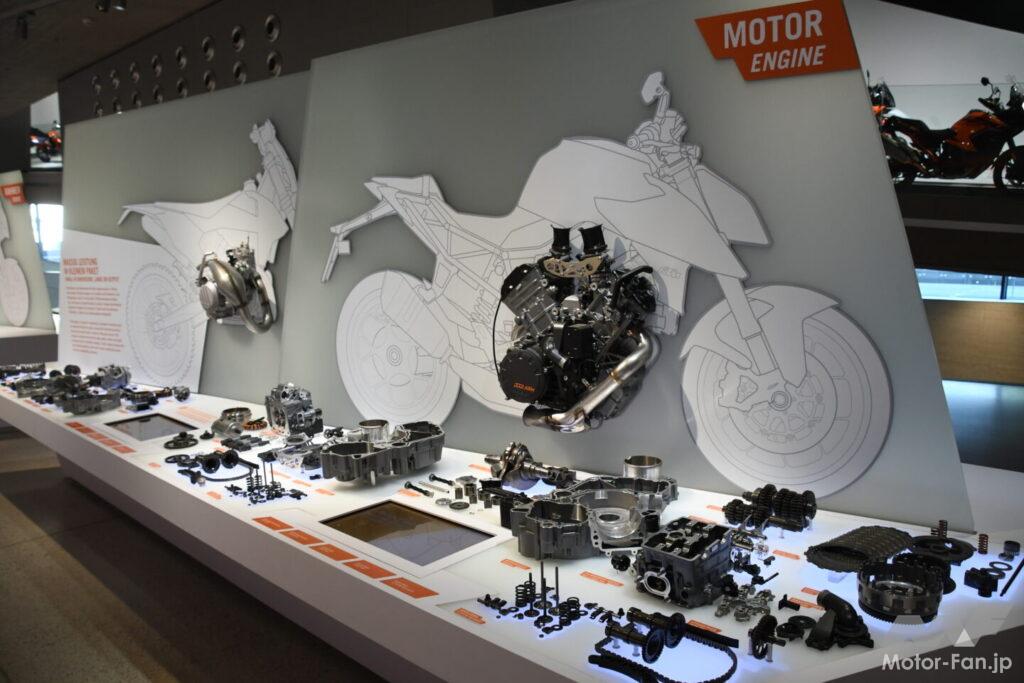
The inside of the engine is open to the public and explained. It’s a very detailed exhibit. ©Eri Ito
ADVERTISEMENT

This is a display of frames ©Eri Ito
Going further, you will come to a floor where you can trace the history of KTM. KTM’s successive models are exhibited with explanations, and you can learn about the past and present through photos and text. Since this museum is oval-shaped, you start by looking at the exhibits, starting with KTM’s first bike, the 1953 R 100, and finally returning to the original position with the current bikes of each category. It’s a very interesting presentation, as if the past and present are connected in a circle.
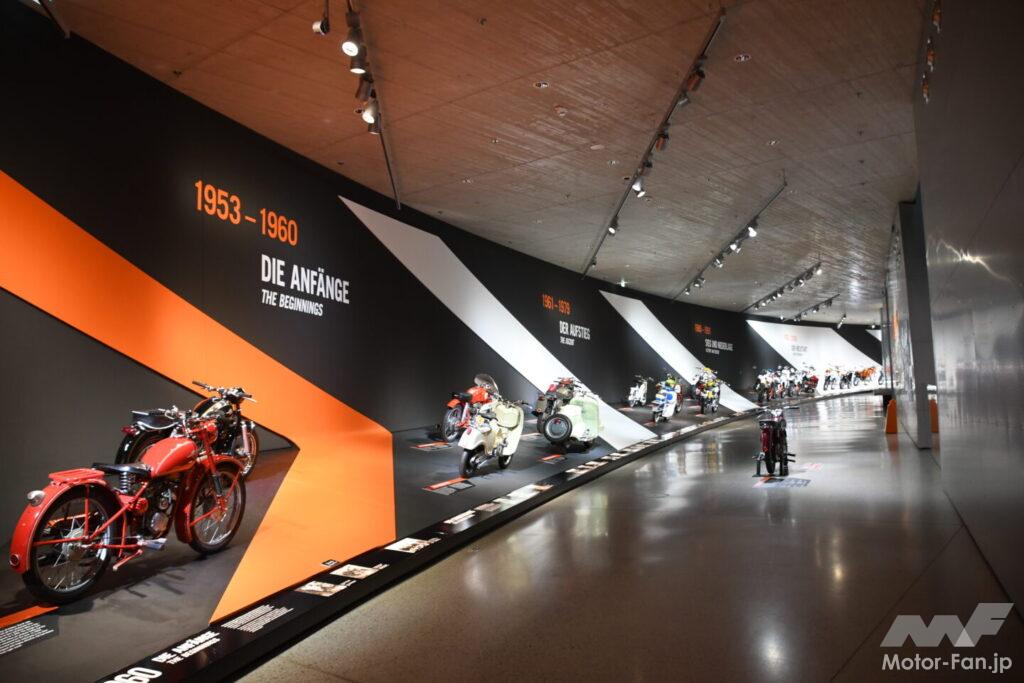
On this floor you can learn about KTM’s past models and history. ©Eri Ito
ADVERTISEMENT
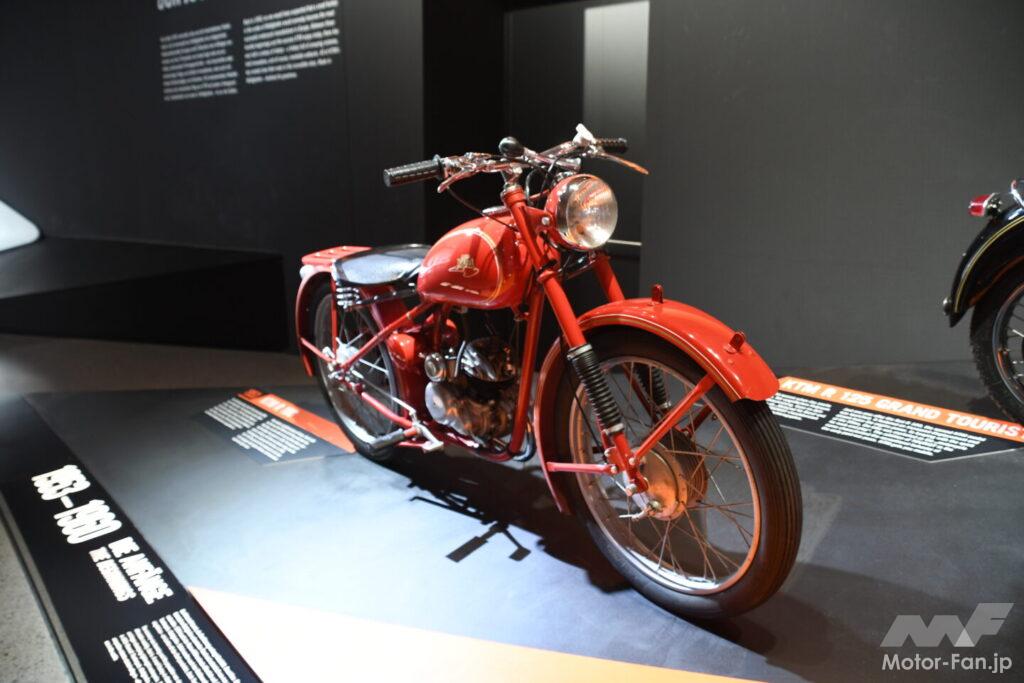
KTM’s first motorcycle, the R 100 (1953) ©Eri Ito
ADVERTISEMENT

After unraveling history, we move on to the present. KTM models are lined up by category. ©Eri Ito
On this floor, there are bikes that you can not only look at, but also actually ride. These are rare bikes, such as the “R-125 TOURIST” (1955) and the MotoGP machine “RC16.” However, actually experiencing them leaves a deeper impression than just looking, so it was a wonderful experience and I thought it was a great presentation.
By the way, the R-125 TOURIST’s meter only went up to 120km/h. The shape of the bike feels similar to modern bikes (of course, it has evolved in many ways since then, but this is the original), but the meter really made me realize that it was a bike from 70 years ago.

“R-125 TOURIST” (1955) – suitable for straddling. ©Eri Ito
ADVERTISEMENT
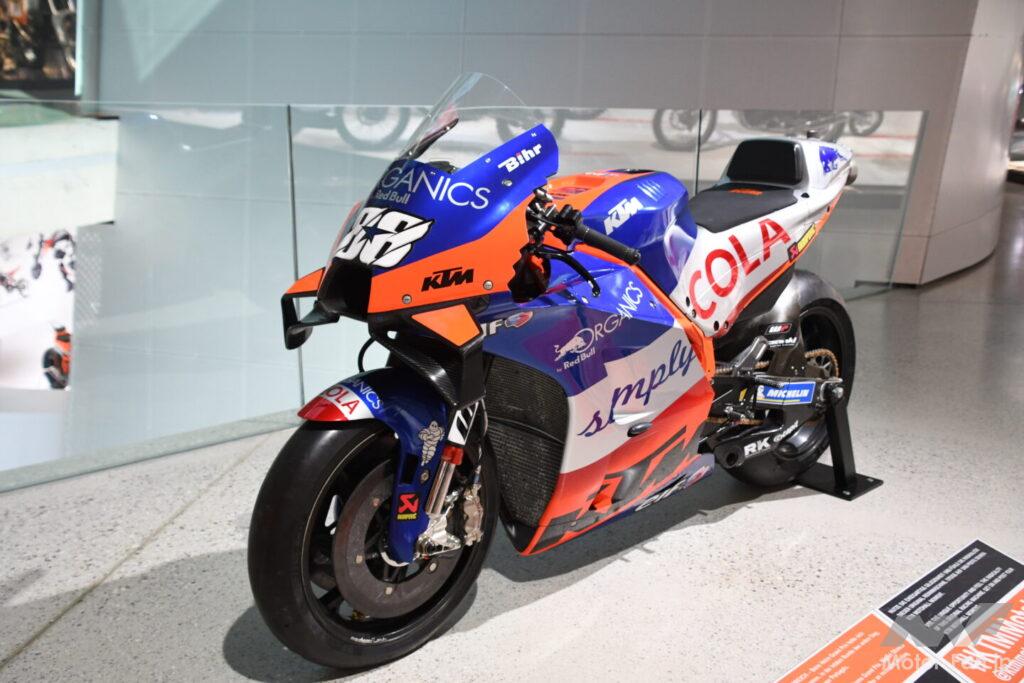
MotoGP machine RC16. It was OK to ride. ©Eri Ito
On the floor above, there is an exhibition of riders who have been active in the motorsports scene using KTM bikes, along with their bikes. There are quite a few of them, but not only the “bikes” that have won titles but also the “riders” are introduced together. This is very impressive. The many trophies that KTM has won are also lined up, making this an area where you can really feel the motto of “READY FOR RACE.”

KTM riders who have been active in motorsports. Behind the off-road riders are on-road riders. ©Eri Ito
Furthermore, in the basement there was a special exhibition called “30th Anniversary DUKE” and the Dakar Rally. Although it is not a very large exhibition, it gives you a glimpse into the harshness of the Dakar Rally and the riders and bikes that take on the challenge.

The Dakar Rally exhibit in the basement. Here, too, the bikes and the riders who raced them were introduced. You can get a glimpse of the harshness of the Dakar Rally. ©Eri Ito
ADVERTISEMENT
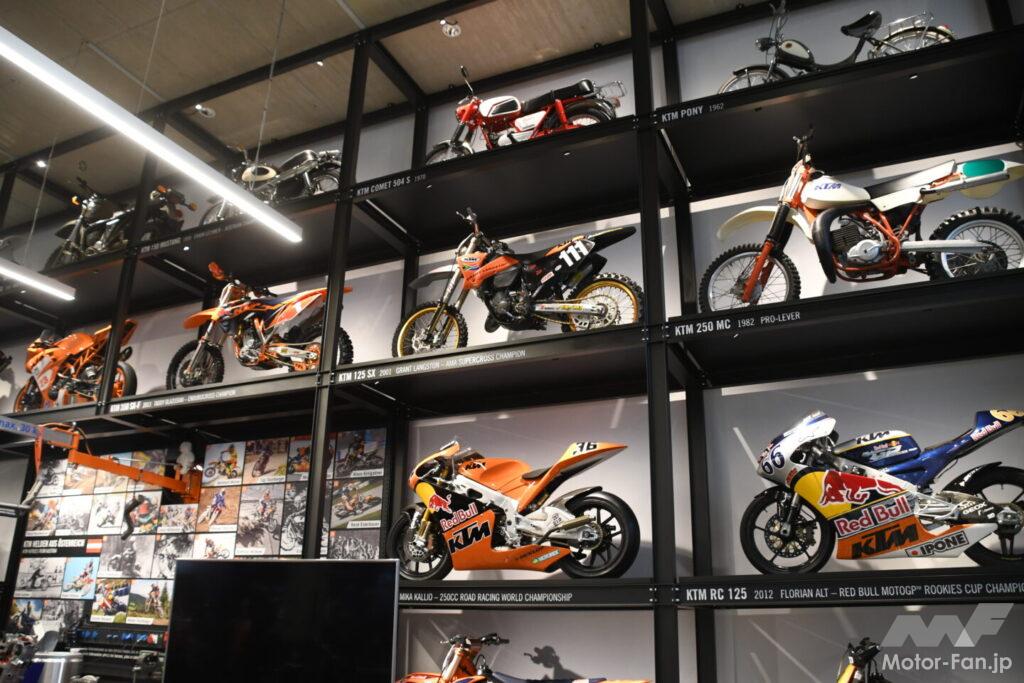
Bikes are displayed on the walls of the basement workshop. ©Eri Ito
Leaving KTM Motohall, the setting sun was dazzling. However, it was still early for sunset in Austria, which is at a higher latitude than Japan. As I walked slowly towards the station, the trailer of the Red Bull KTM Factory Racing MotoGP team came driving towards me. They were probably heading to the factory up ahead. On the transfer bus to the station, a man wearing a shirt with the KTM logo and carrying a backpack got on and was chatting enthusiastically with a man who appeared to be a colleague.

On the way home, I spotted the Red Bull KTM Factory Racing trailer on the main street. This is a sight you can only see in Mattighofen. ©Eri Ito
Outside the bus, we could see the same cornfields as on the way there. I wonder if this view was also prevalent 72 years ago when KTM’s first motorcycle, the R 100, was born.

A MotoGP machine was on display at the restaurant next to KTM Motohall ©Eri Ito
ADVERTISEMENT

MIRABELL 125 (1957). Design influenced by 1950s American culture. ©Eri Ito
ADVERTISEMENT
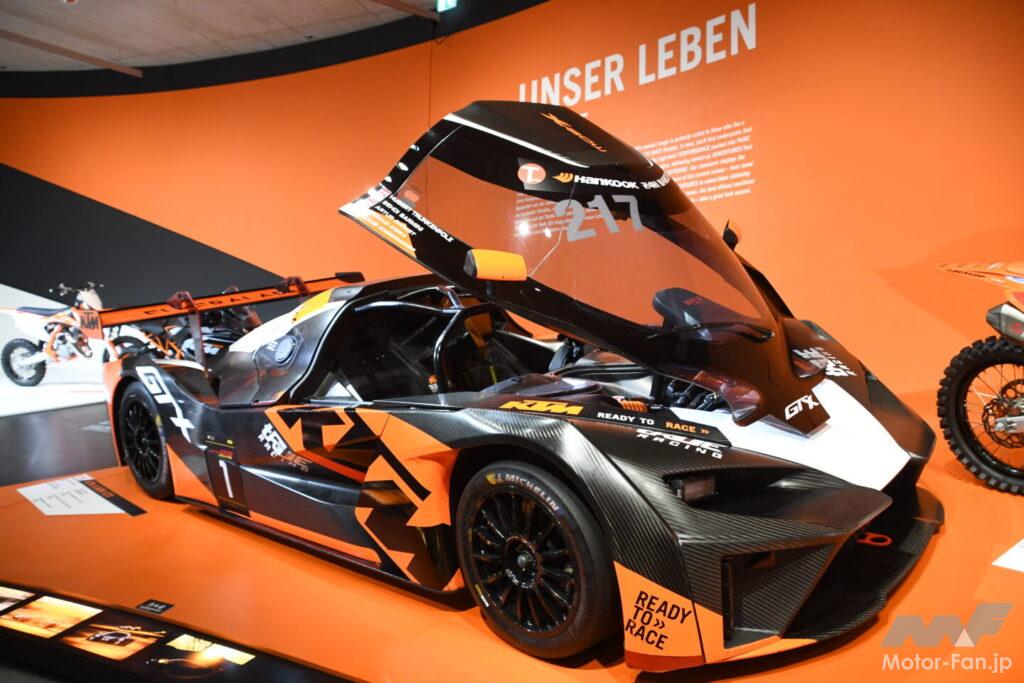
KTM sports car, X-BOW GTX (2020) ©Eri Ito
ADVERTISEMENT
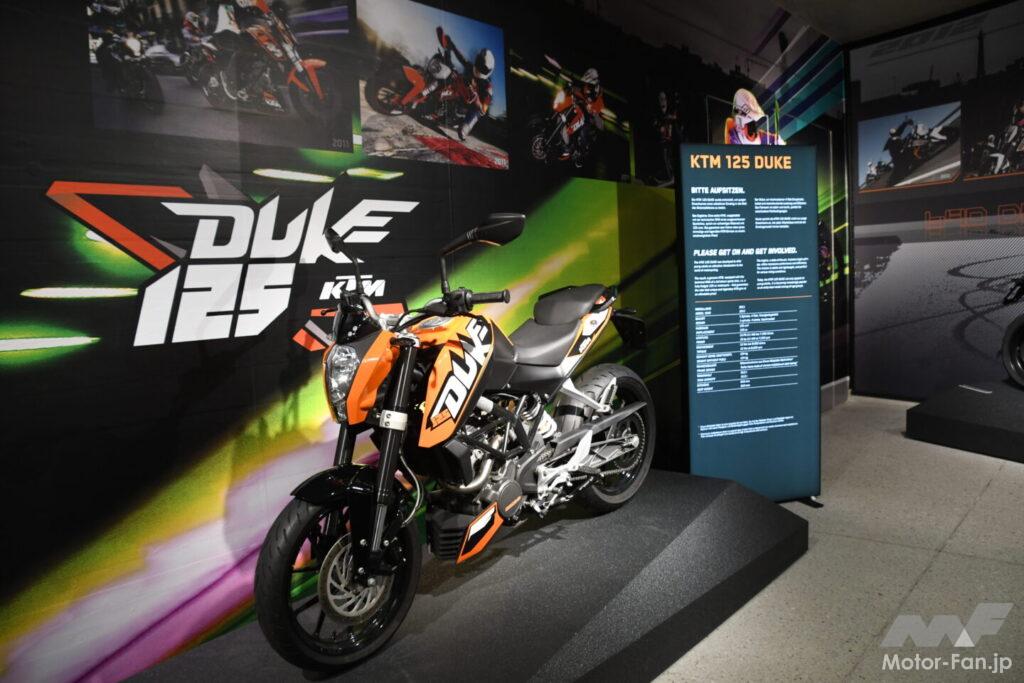
The special exhibition at this time was “DUKE’s 30th Anniversary” ©Eri Ito

A KTM bike was parked in a bicycle parking lot in the city. ©Eri Ito