
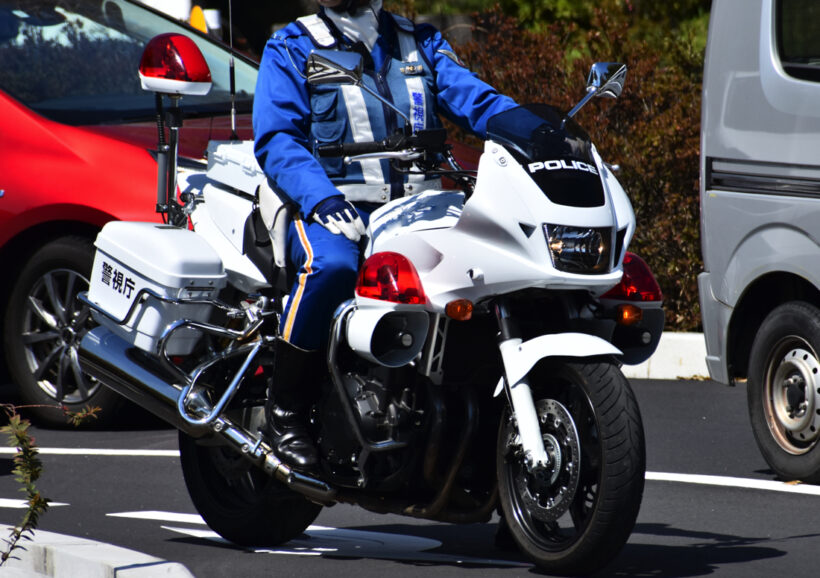

Suspension violation
The total number of violations of the Road Traffic Act (excluding violations related to point notifications) enforced in 2024 (Reiwa 6) for both two-wheeled and four-wheeled vehicles was 4,204,155. Of these, the most common violation, at 1,177,924, was stop sign violations.
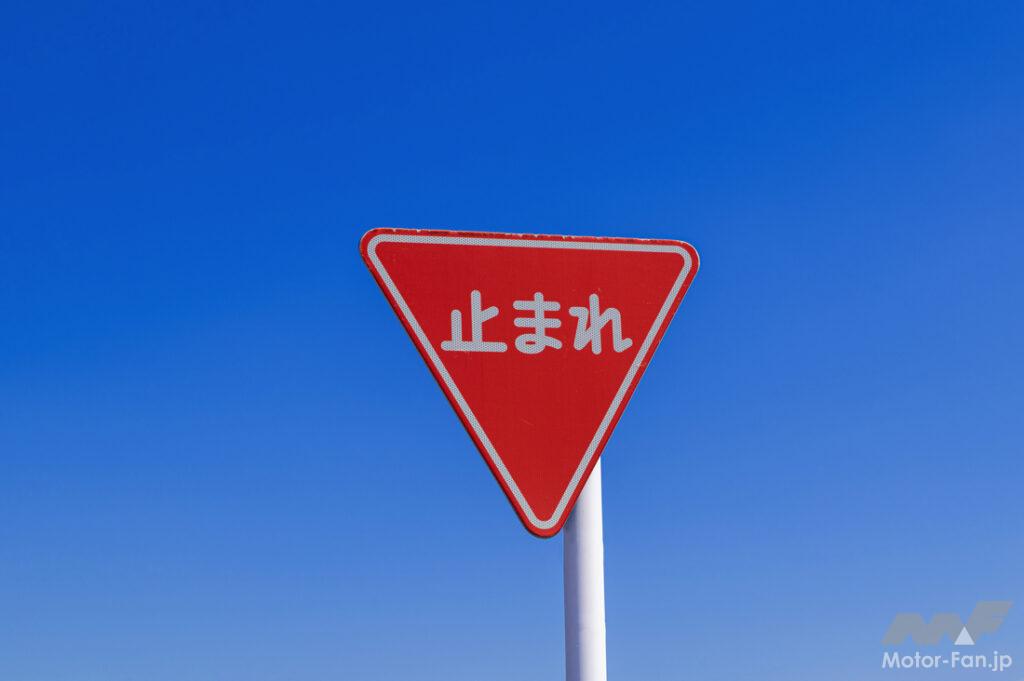
A stop sign violation is a violation of the law when a driver fails to stop at a place where they are required to stop, such as a stop sign, a stop line, or before a railroad crossing.
This is a violation of the traffic law when a vehicle fails to stop at a place where it is legally required to do so, such as at a stop sign or stop line at an intersection without traffic lights, or before a railroad crossing. In particular, in this case, a violation often occurs when a vehicle does not stop immediately before the stop line, but instead goes over it.
Also, if you’re riding a motorcycle, be careful not to put your feet firmly on the ground and come to a complete stop, as this can be a violation. I often see riders tapping their feet to the ground to stop at the stop line, but not coming to a complete stop. Also, some riders who are used to operating motorcycles try to stop just before the stop line without putting their feet down, instead using their balance, but this is a violation, so please be aware of this.
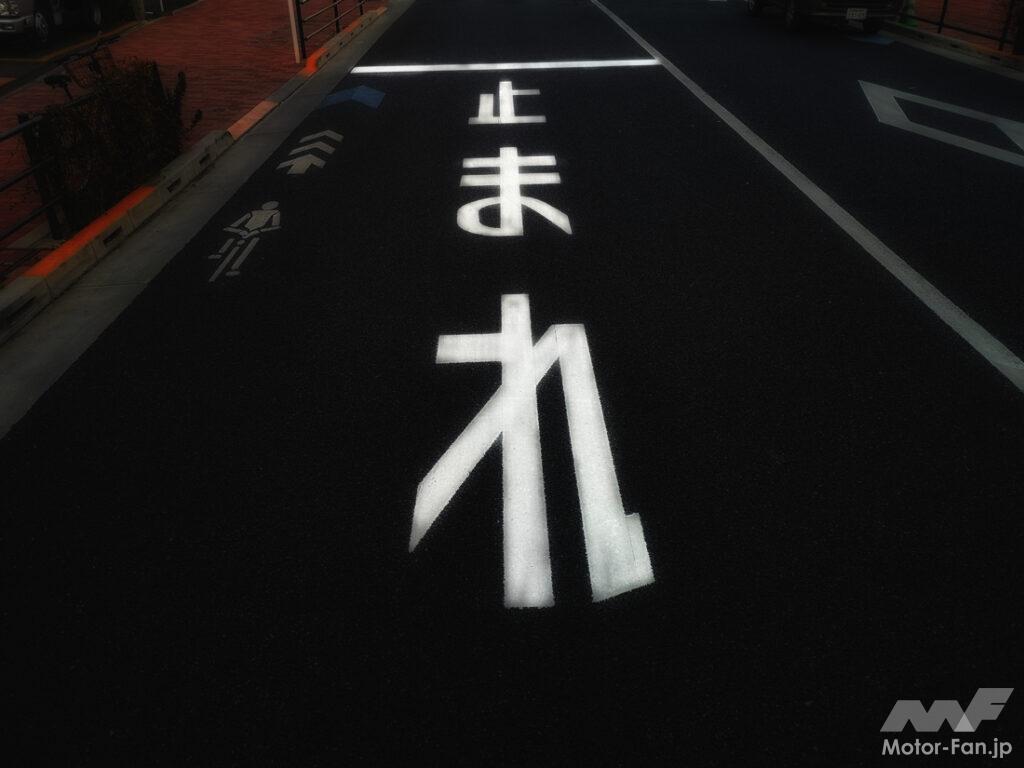
If you are riding a motorcycle, you may be in violation if you do not come to a complete stop with your feet firmly on the ground just before the stop line.
If you are caught violating a stop sign, you will be subject to the following penalties if you are on a motorcycle.
[Penalties for failure to stop temporarily at designated locations (for motorcycles)]
Penalty points: 2 points
Fine: 6,000 yen for motorcycles, 5,000 yen for mopeds
[Failing to stop at railroad crossings (motorcycles)]
Penalty points: 2 points
Fine: 7,000 yen for motorcycles, 6,000 yen for mopeds
Speeding
The second worst traffic violation in 2024 (Reiwa 6) was “speeding violations,” or so-called speeding violations, with 847,378 cases.
As you know, the maximum speed on public roads is 60km/h for ordinary roads (30km/h for mopeds) and 100km/h for expressways. However, please note that ordinary roads are often limited to 50km/h or less, except for major roads such as national highways. Also, even on expressways, while there are some sections with a speed limit of 120km/h, there are also places with a speed limit of 80km/h, 70km/h, or less than 100km/h, so please be careful here as well.
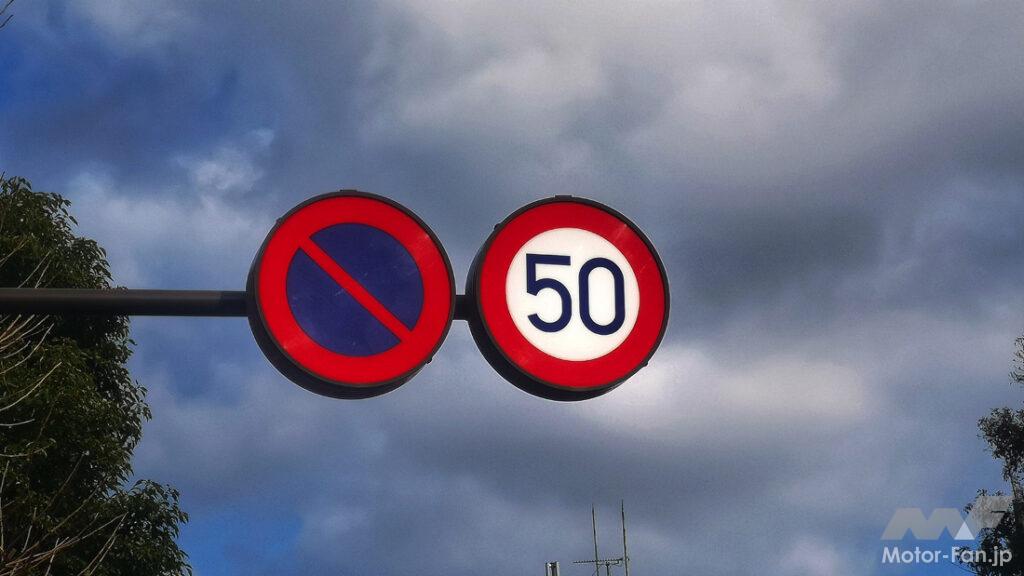
The maximum speed on public roads is generally 60km/h (30km/h for mopeds), but there are often signs limiting the speed to 50km/h or less.
If you are caught driving 30km over the speed limit on a regular road or 40km over the speed limit on an expressway, you will be issued a red ticket (subject to criminal penalties) and your license will be suspended or revoked. Furthermore, you will be subject to criminal penalties (imprisonment for up to six months or a fine of up to 100,000 yen) and will also have a criminal record, so be careful.
The penalties for speeding are as follows:
[Speeding Penalties (for Motorcycles)]
Speeding less than 15km → Fine: 7,000 yen for motorcycles / 6,000 yen for mopeds, 1 penalty point
Speeding between 15km and 20km → Fine: 9,000 yen for motorcycles / 7,000 yen for mopeds, 1 penalty point
Speeding between 20km and 25km → Fine: 12,000 yen for motorcycles / 10,000 yen for mopeds, 2 penalty points
Speeding between 25km and 30km → Fine: 15,000 yen for motorcycles / 12,000 yen for mopeds, 1 penalty point 3 penalty points
and speeding 30km or more (general roads) → red ticket for both motorcycles and mopeds (subject to criminal penalties), 12 penalty points
and speeding 30km to 35km (expressway) → fine of 20,000 yen, 3 penalty points (for motorcycles)
and speeding 35km to 40km (expressway) → fine: 30,000 yen, penalty points: 3 points (for motorcycles)
and speeding 40km or more (expressway) → red ticket (subject to criminal penalties), 12 penalty points (for motorcycles)
Furthermore, if even a single violation results in 6 or more points, your license will be immediately suspended (the validity of your license will be suspended). This is known as a “one-hit suspension.” For those with no previous convictions, if the accumulated violation points over the past three years are 6 to 8 points, it will result in a 30-day suspension, 9 to 11 points will result in a 60-day suspension, and 12 to 14 points will result in a 90-day suspension. If it exceeds this, your license will be revoked (the number of years of revocation will vary depending on the number of points), so please be aware of this.
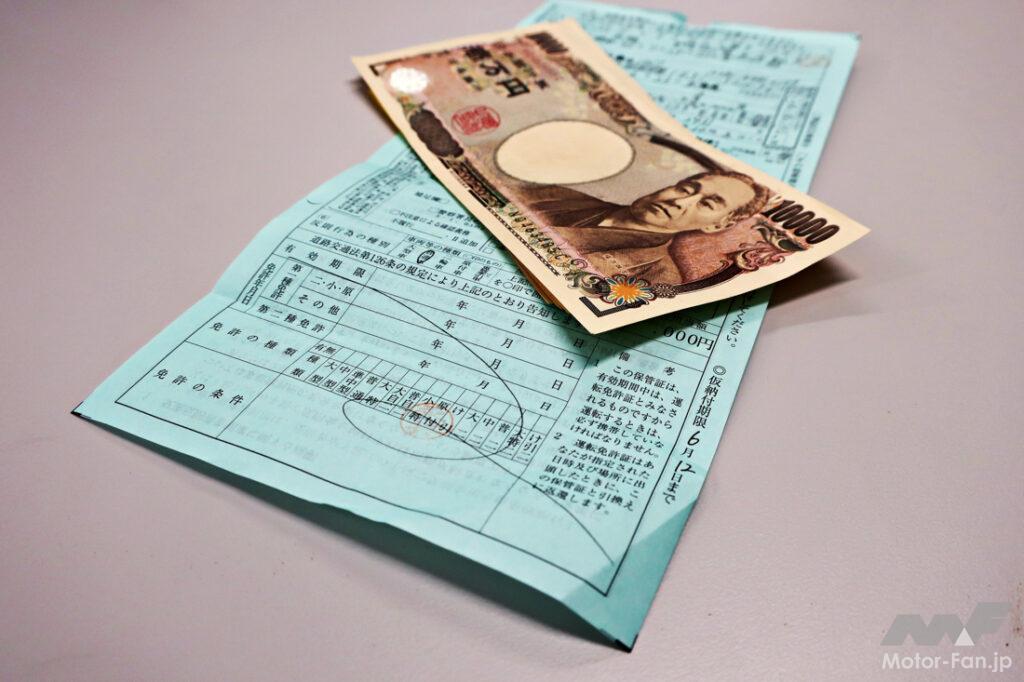
Speeding violations can result in large fines and penalty points, and if the speed is too high, you will receive a red ticket, be immediately suspended from driving, or be subject to criminal penalties.
Traffic ban violation
The third most common violation in 2024 was “no entry violations,” with 551,589 cases. Motorcycle riders should be especially careful of “no entry zones for motorcycles.”
There are many sections of roads in Japan where cars (four-wheeled vehicles) can pass but motorcycles (two-wheeled vehicles) cannot. Some people may have had the experience of going on a sightseeing tour and encountering roads, bridges, or tunnels where motorcycles are not allowed, forcing them to take a detour or preventing them from reaching their destination.
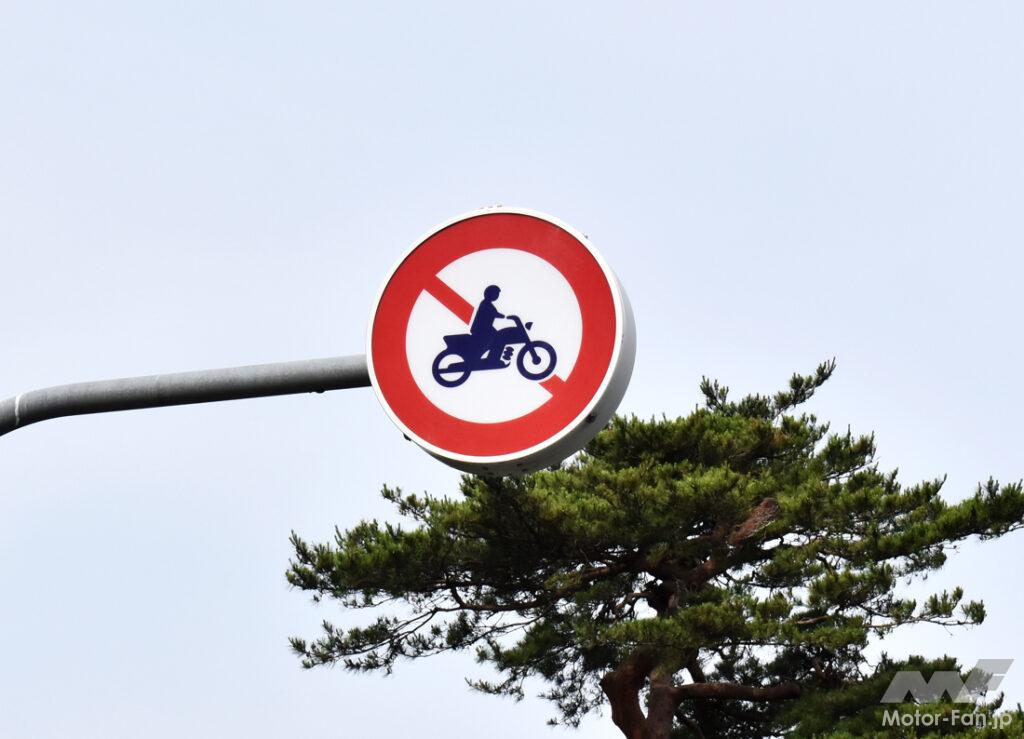
“No motorcycles allowed” sign
Usually, there is a “No Motorcycles Allowed” sign just before a section where the road is closed, but there are cases where motorists may overlook it or follow the car in front and enter the area without realizing it, which could result in them being arrested.
What makes it tricky is that each section has different restrictions on motorcycles. Some restrictions apply to mopeds only, others to 125cc or less, others to 250cc or less, and others to all engine sizes. This makes it difficult to grasp the trends, and there is a high risk of accidentally entering the wrong section.
In particular, be careful at overpasses, underpasses, and tourist spots in urban areas, as there are often sections on bridges and other roads where two-wheeled vehicles are prohibited.
If you are caught violating the no-entry rule, you will be subject to the following penalties:
[Penalties for violating road bans (for motorcycles)]
Penalty points: 2 points
Penalty fee: 6,000 yen for motorcycles, 5,000 yen for mopeds
Red light violation
The fourth most common traffic violation in 2024 was “red light violation,” with 404,034 cases. As you know, traffic lights have three colors: green (go), yellow (caution), and red (stop). Also, when the light is flashing, it has different meanings: “flashing red = stop and proceed,” and “flashing yellow = proceed with caution.”
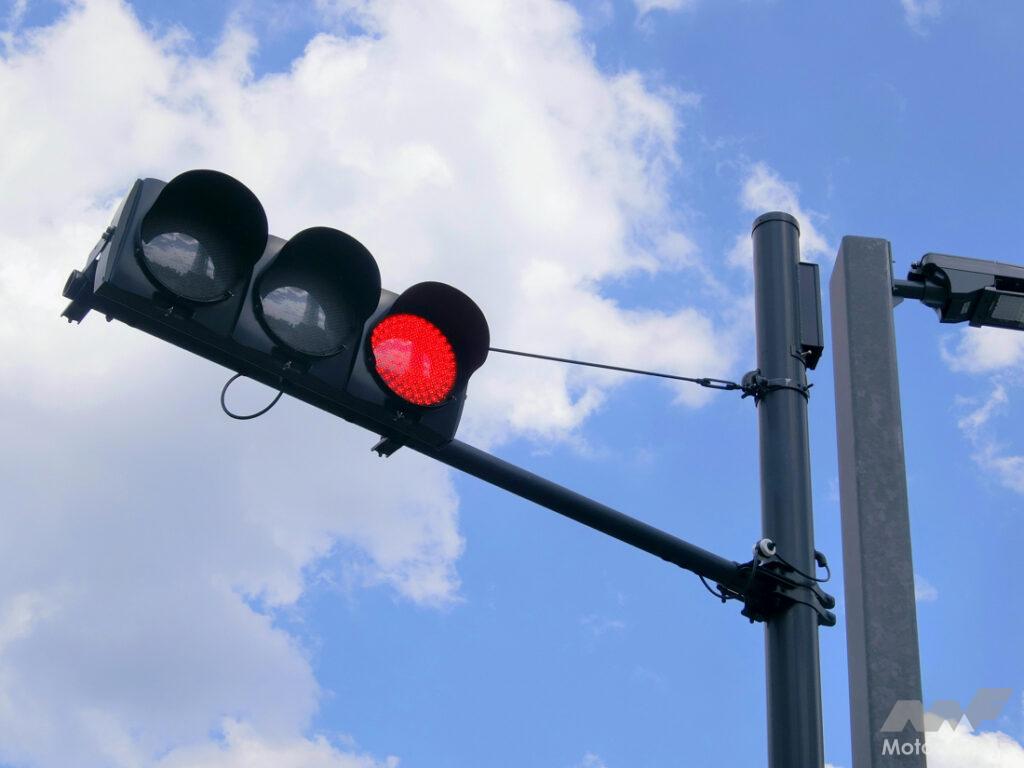
If you go over the stop line without stopping before it when the light is red, you are violating the traffic light rule.
The most typical violation of this rule is crossing the stop line when the light is red without stopping before it. However, when the light is yellow, the decision is divided. Generally, when the light is yellow, the correct thing to do is to start taking action to stop carefully in preparation for the next red light, but it is permissible to go through the intersection even when the light is yellow if you “cannot stop without braking suddenly” or “stopping would put you at risk of being hit from behind.”
When the traffic light is yellow, there is this gray area, so some drivers and riders accelerate when the light turns yellow, but this is a dangerous behavior and should never be tolerated. Intersections are particularly prone to accidents. You never know what might happen. Always drive with ample space to stop at any time.
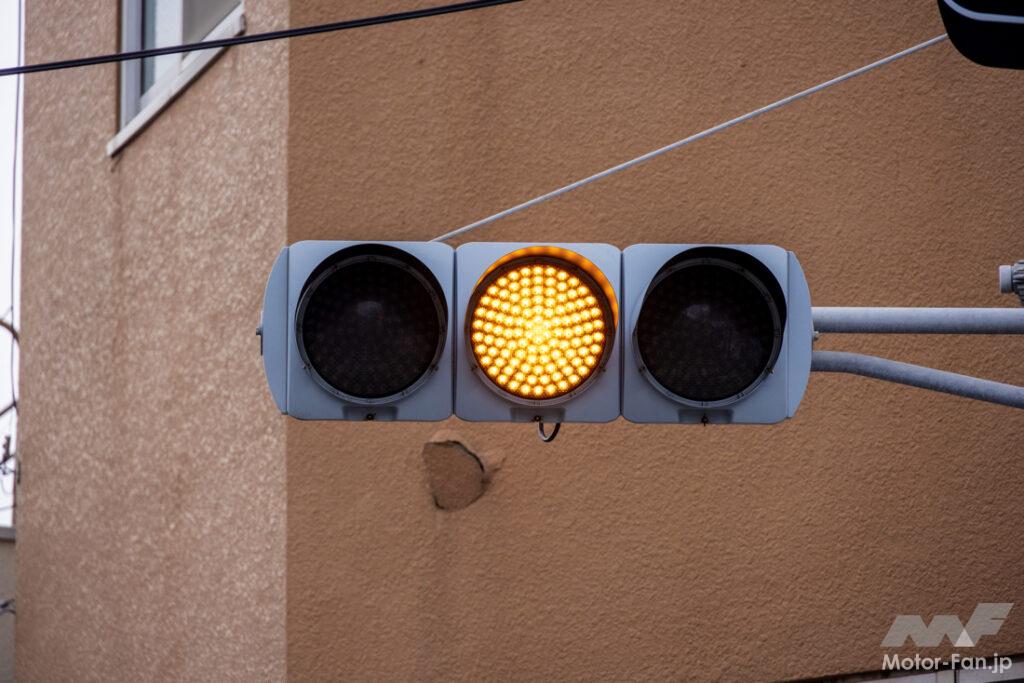
When the traffic light is yellow, you are only allowed to proceed if you cannot stop safely
[Penalties for ignoring traffic lights (for motorcycles)]
Penalty points: 2 points
Fine: (Red light, etc.) 7,000 yen for motorcycles, 6,000 yen for mopeds / (Flashing light) 6,000 yen for motorcycles, 5,000 yen for mopeds
Violation of mobile phone use
Among the violations with the most traffic enforcement cases in 2024, “use of mobile phones, etc.” was the fifth most common with 196,894 cases. Recently, there has been an increase in riders who attach smartphone holders to their motorcycles and use navigation apps while riding, but this act itself is not a violation.
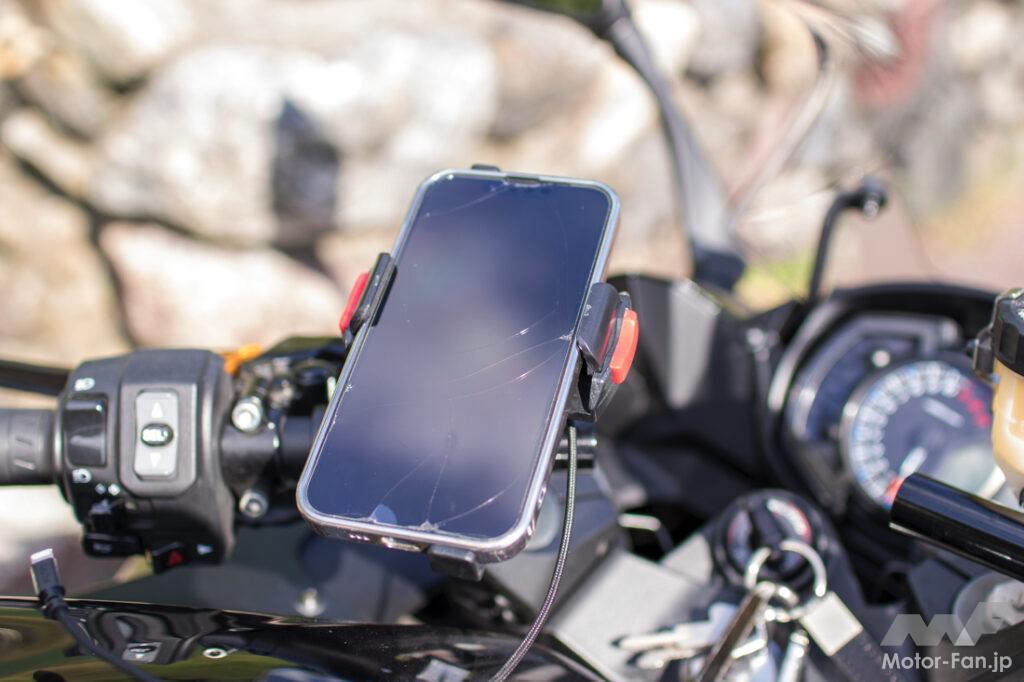
It is not a violation to attach a smartphone holder to a motorcycle and use a navigation app while riding.
However, it is also a violation to “talk on a smartphone while driving,” “stare at the smartphone screen,” or “operate the smartphone” by changing navigation settings or checking messages. In particular, please note that staring at a smartphone screen is a violation at the discretion of the police officer, regardless of the time.
Furthermore, “operating a smartphone while parked,” such as setting up a navigation app after parking the motorcycle, and “hands-free calling” using a Bluetooth headset or intercom are not subject to regulation and are therefore not considered violations. However, it can be dangerous if the smartphone falls out of the smartphone holder while riding, or if the holder itself comes off the motorcycle. Be sure to install it with care.
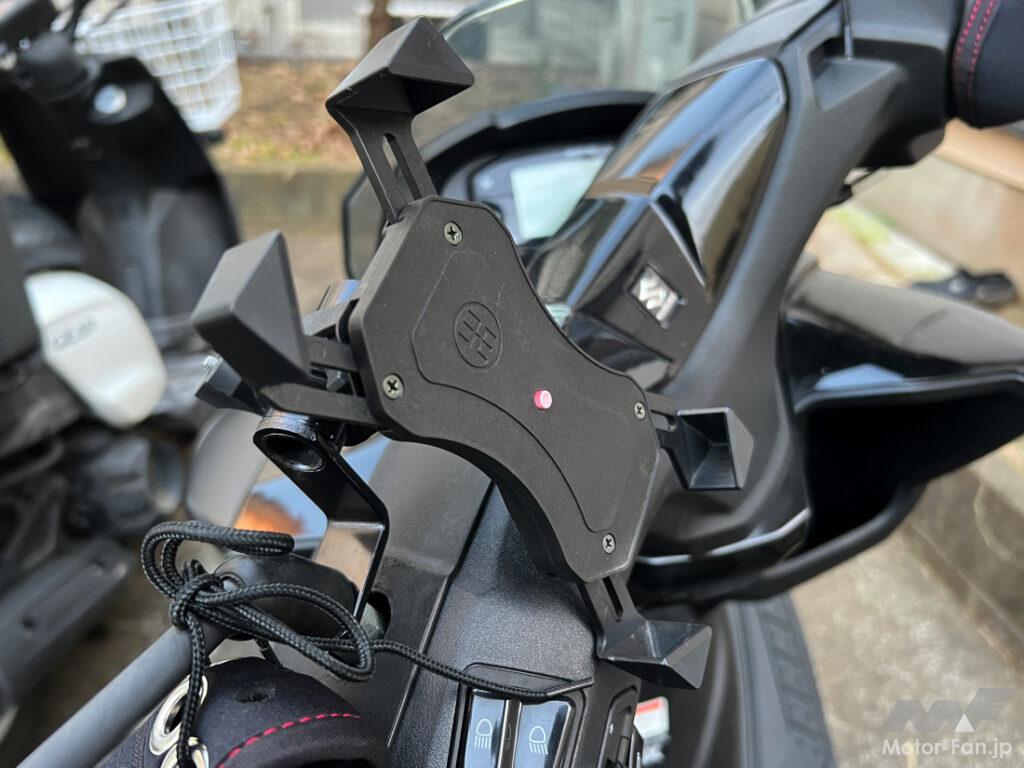
It is dangerous if the smartphone holder comes off the bike while riding. Be careful when attaching it.
In addition, holding a smartphone in your hand to talk on the phone or operate it, or staring at the screen while driving, is considered a “violation of the mobile phone use (holding) law” and will result in the following penalties.
[Penalties for using (holding) a mobile phone (for motorcycles)]
Penalty points: 3 points
Fine: 155,000 yen for motorcycles / 12,000 yen for mopeds
Furthermore, if using a smartphone while driving causes a traffic hazard, such as causing an accident or a dangerous situation, it will be considered a “Cell Phone Use, etc. (Traffic Hazard) Violation” and will be subject to criminal penalties. The violation will result in six points, and even if you have no previous convictions, your license will be immediately suspended. You may also be subject to imprisonment of up to one year or a fine of up to 300,000 yen .
[Related link]
Cabinet Office “2025 Traffic Safety White Paper” Part 1, Land Transport, Part 1, Road Transport
https://www8.cao.go.jp/koutu/taisaku/r07kou_haku/pdf/zenbun/1-1.pdf