

“W1” = “650-W1” (1966)
The 650-W1, released in 1966, was Kawasaki’s strategic model for the North American market at the time, and is still a beloved classic that is still referred to by its model name, “W1 (Double One).”
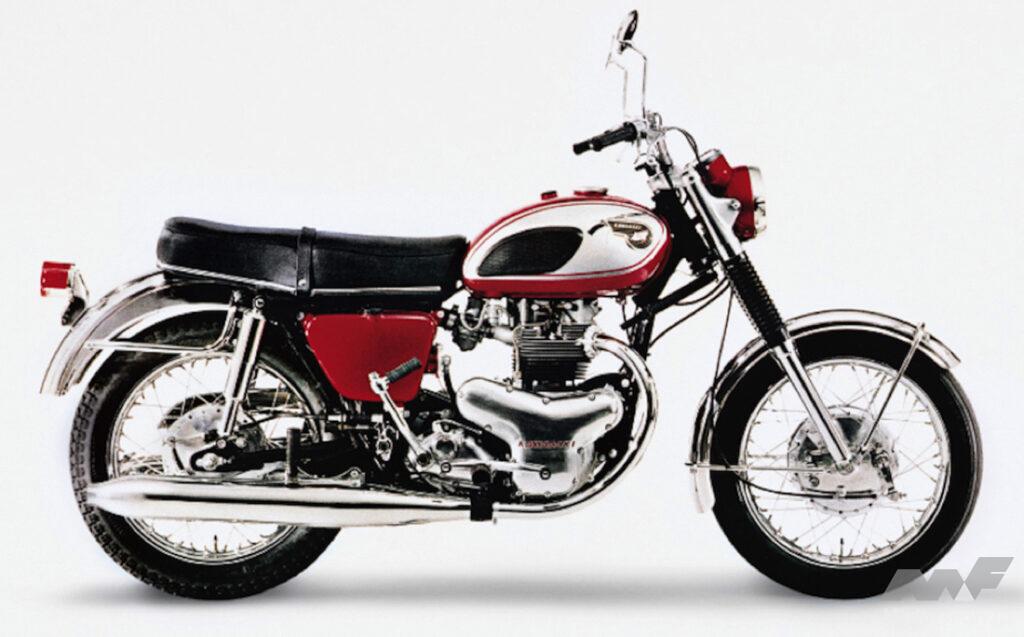
Kawasaki 650-W1 (commonly known as W1)
This model was equipped with a 624cc air-cooled parallel twin engine, commonly known as a vertical twin, which was the largest displacement at the time. Its high-performance driving performance attracted attention and it became a huge hit worldwide, especially in Japan and North America.
The style, as well as the traditional vertical twin, is still carried over to the neo-retro model “W800” equipped with a 773cc engine. Along with its sister model “Meguro K3”, it is supported by many fans.
Also, in 2024, the W brand will release a new model, the “W230,” equipped with a 232cc air-cooled single-cylinder engine. Along with its sister model, the “Meguro S1,” this model is a homage to Kawasaki’s classic models, and is popular with a wide range of users.

Kawasaki W800: inheriting the lineage of the W1
ADVERTISEMENT
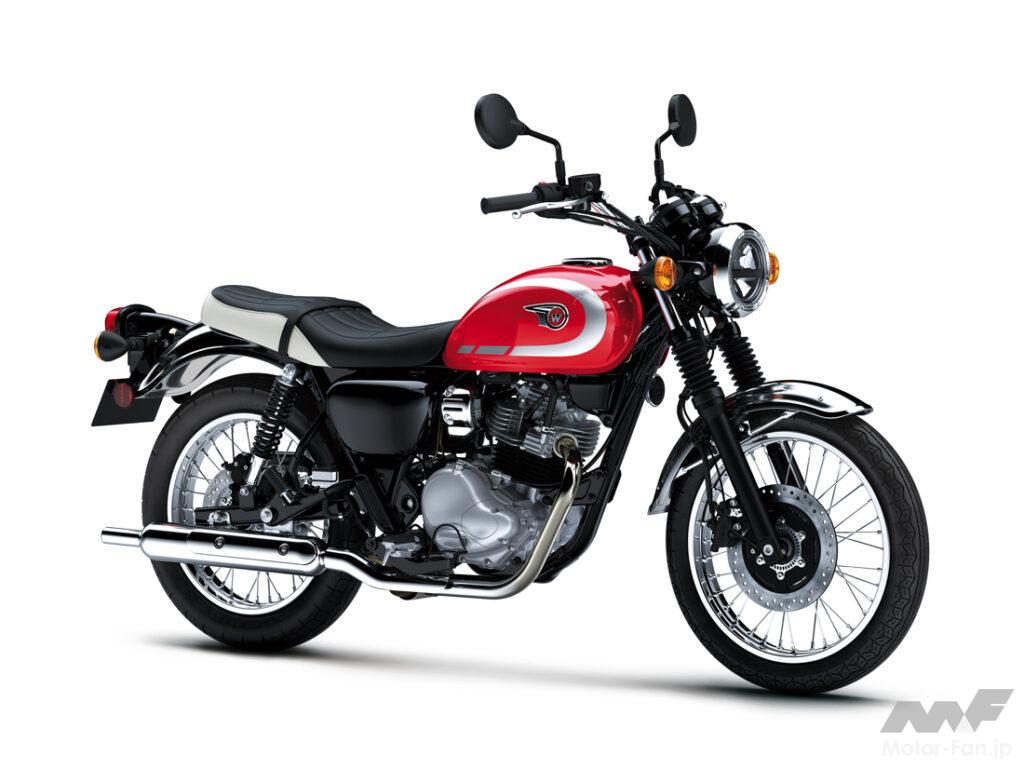
The W brand’s light motorcycle model is the Kawasaki W230
ADVERTISEMENT
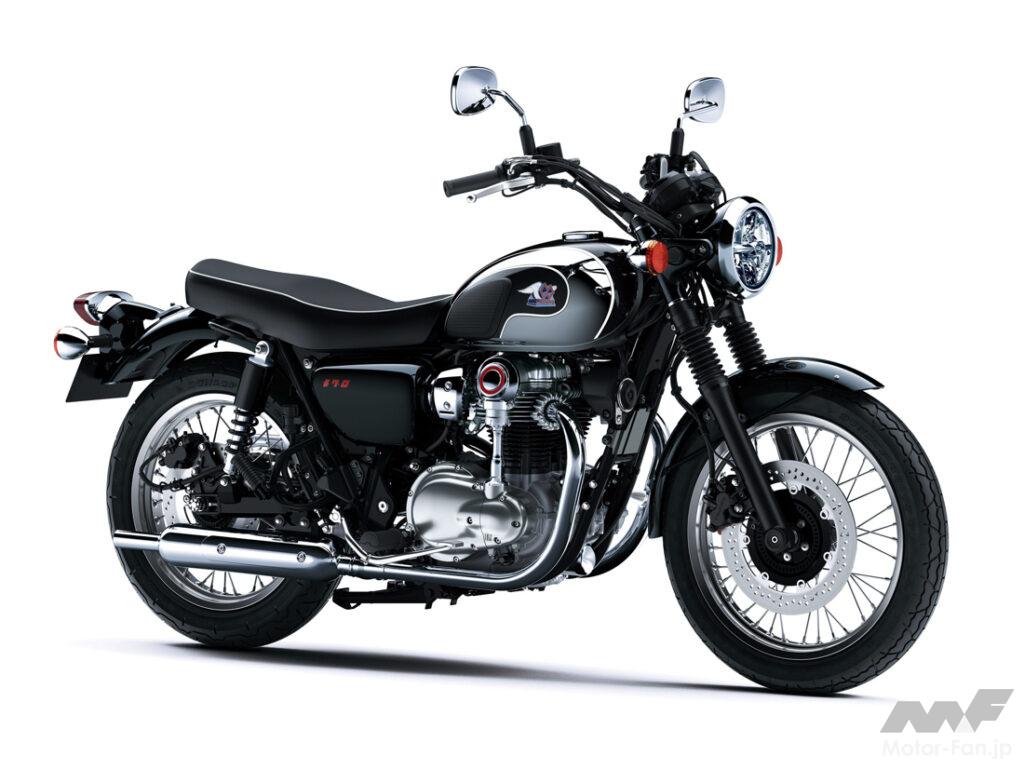
Meguro K3, a sister car of the W800
ADVERTISEMENT

Meguro S1, a sister car of the W230
“Z1” = “900 Super 4” (1972)
The 900 Super 4, which was released in 1972, is a famous motorcycle nicknamed “Z1 (Zet One).” Since its release in 2017, it has been the origin of the popular model “Z900RS,” which has been an exceptionally big hit for a large motorcycle, and is still a model that is supported by many fans.
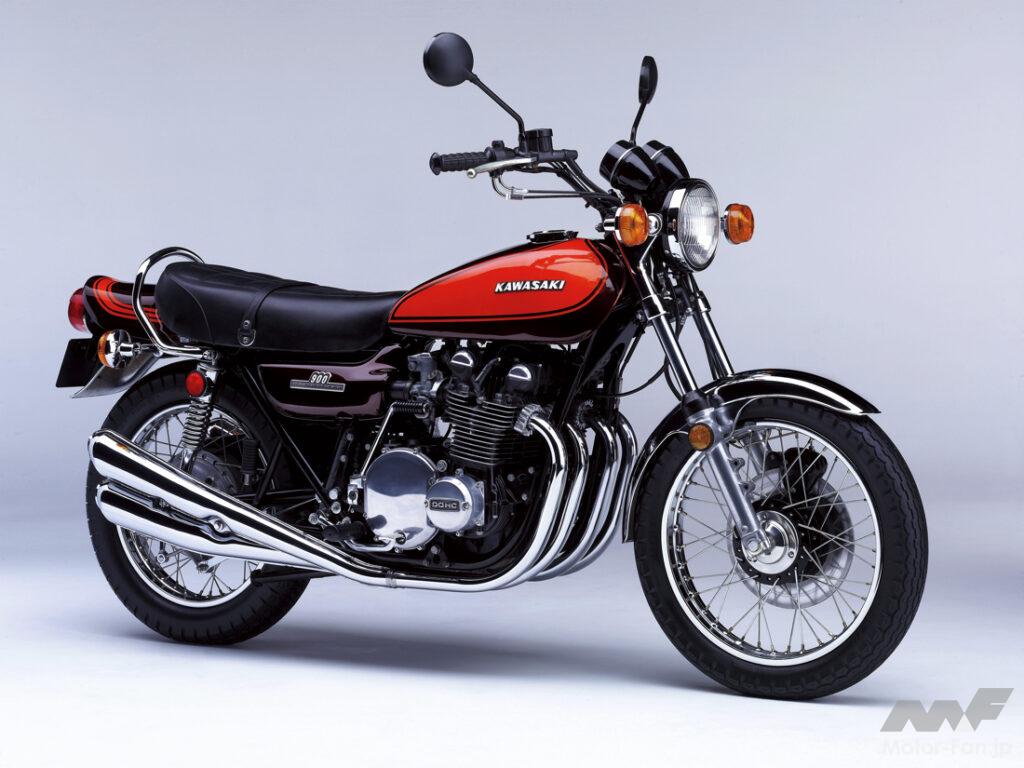
Kawasaki 900 Super 4 (commonly known as Z1)
When it was released, large-displacement, high-powered models were popular worldwide. In particular, the “Dream CB750 Four” released by Honda in 1969 was a huge hit, as it was the first commercially available motorcycle to feature an air-cooled in-line four-cylinder engine and demonstrated impressive performance.

Honda Dream CB750 Four
The Z1 was Kawasaki’s global strategic vehicle of the time. It was equipped with a 900cc, air-cooled, in-line 4-cylinder engine that produced a maximum output of 82 PS, which was quite powerful for the time. Its elegant form, with features such as a teardrop-shaped fuel tank, was also popular, and this style has been passed down to the current model, the Z900RS/SE.
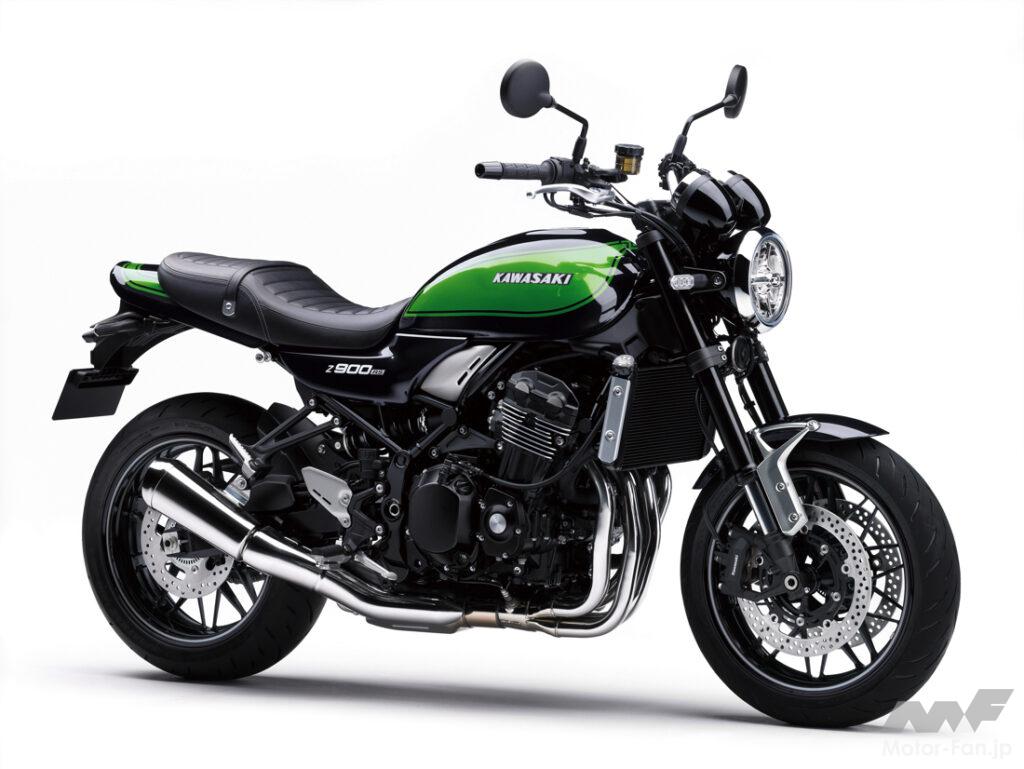
Kawasaki Z900RS
Even now, more than 50 years after its debut, its style and image have been passed down to the Z900RS, and it continues to shine brightly without fading. In that sense, the Z1 is truly worthy of being called “one of Kawasaki’s legends.”
“H1” = “500SS Mach III” (1969)
The model with the model name “H1” as its nickname is the “500SS Mach III” released in 1969.

Kawasaki 500SS Mach III (commonly known as H1)
This model was a sports model equipped with a 500cc air-cooled, two-stroke, three-cylinder engine, and was affectionately nicknamed “Wild Horse” due to its tremendous acceleration.
Due to the success of this model, Kawasaki subsequently released a series of models with various engine displacements, including 250cc, 350cc, and 750cc versions. Each of these models has created numerous legends and captivated riders around the world.
In particular, the 750cc version “750SS Mach IV” that appeared in 1971 was a popular model at the time, nicknamed “H2.” That name is still used today by the “H2” series, which is equipped with a 998cc, 4-cylinder supercharged engine. It continues to reign as the pinnacle of Kawasaki sports models, including the luxury tourer “Ninja H2 SX SE” and the streetfighter “Z H2/SE.”
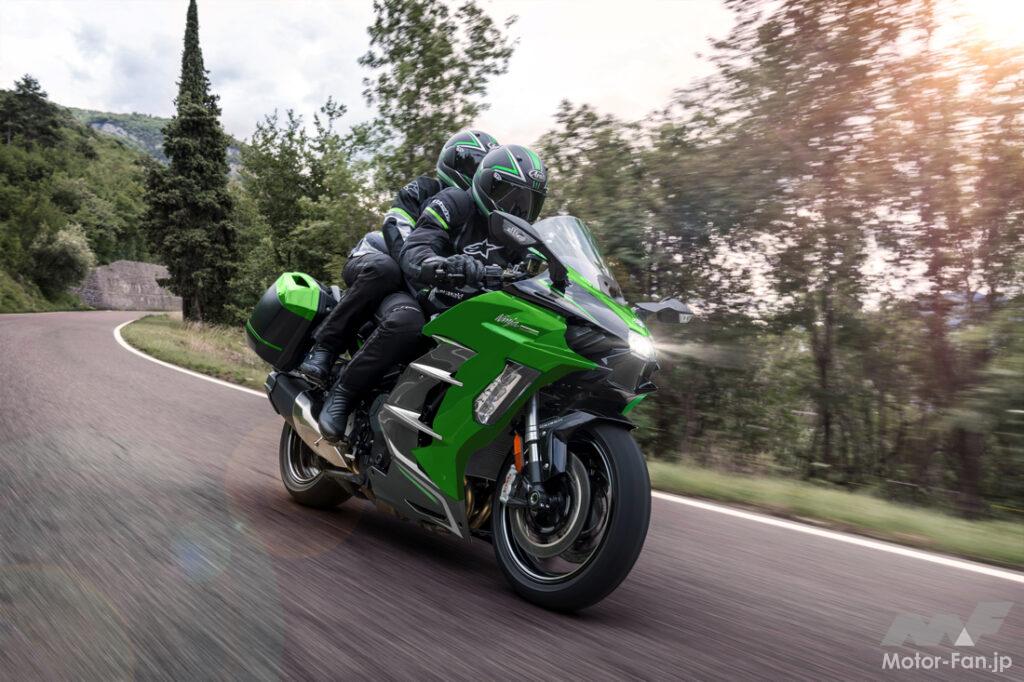
Kawasaki Ninja H2 SX SE
ADVERTISEMENT

Kawasaki Z H2 SE
“J1” = “85J1” (1964)
The 85J1, which was released in 1964, was a small model equipped with an 85cc two-stroke engine known as the J1.
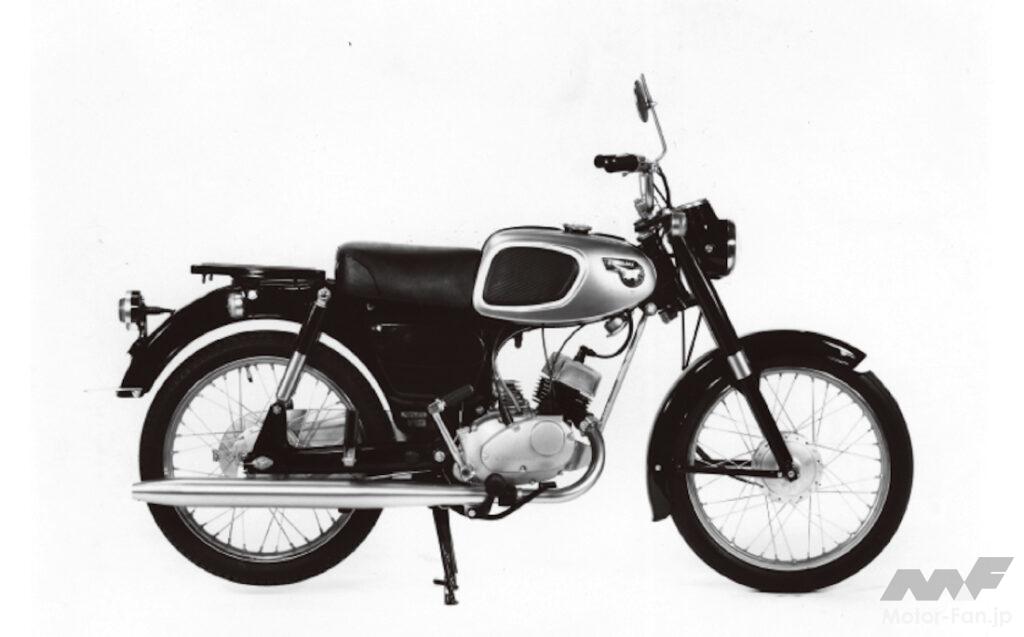
Kawasaki 85J1 (J1)
Sales were handled by Kawasaki Aircraft (now Kawasaki Heavy Industries Aerospace Systems Company) before it merged with Kawasaki Heavy Industries (now the parent company of Kawasaki Motors). This company also worked on fighter planes before the war, so it seems that the J1 also incorporated technology it had cultivated in aviation.
Its main feature was the use of a rotary disc valve intake system, which was cutting-edge technology at the time and was known for producing particularly excellent power output among light, high-power two-stroke engines.
At the time, Kawasaki did not have any models that could be called “high-performance machines,” so the introduction of this technology and its performance attracted a lot of attention. It was later adopted by many Kawasaki 2-stroke machines.
Unfortunately, two-stroke models are becoming extinct due to factors such as exhaust gas regulations, so there is currently no model that can be considered a successor to the J1. However, it can still be said to be one of the great bikes in the sense that it laid the foundation for subsequent Kawasaki two-stroke bikes, such as the H1 and H2 introduced earlier.










![Ninja 7 Hybrid achieves 37.1km/L in EV mode + Eco HV mode. 1000km serious test drive [3/3]](https://motopeek.com/wp-content/uploads/2025/10/1554-1761125544457.jpg)
![Ninja 7 Hybrid achieves 37.1km/L in EV mode + Eco HV mode. 1000km test drive [3/3]](https://motopeek.com/wp-content/uploads/2025/10/1607-1760788566523.jpg)