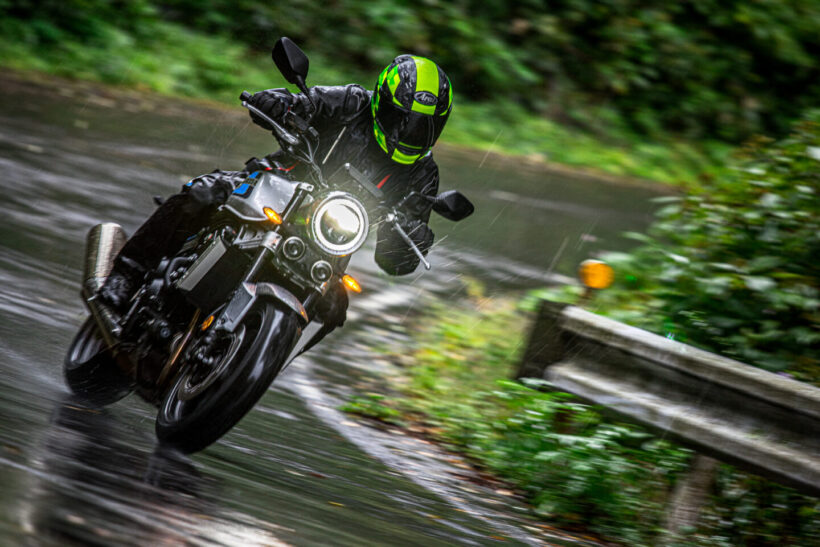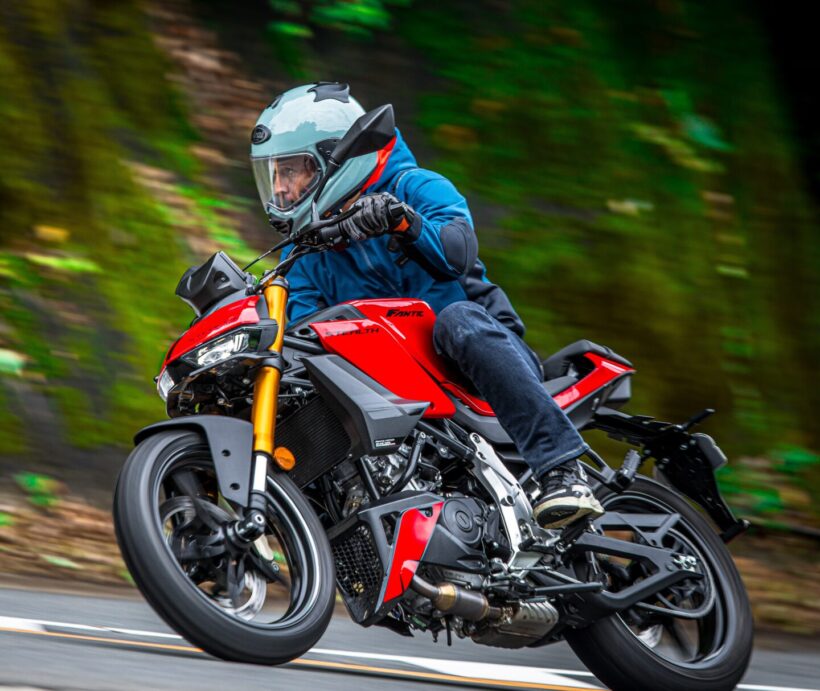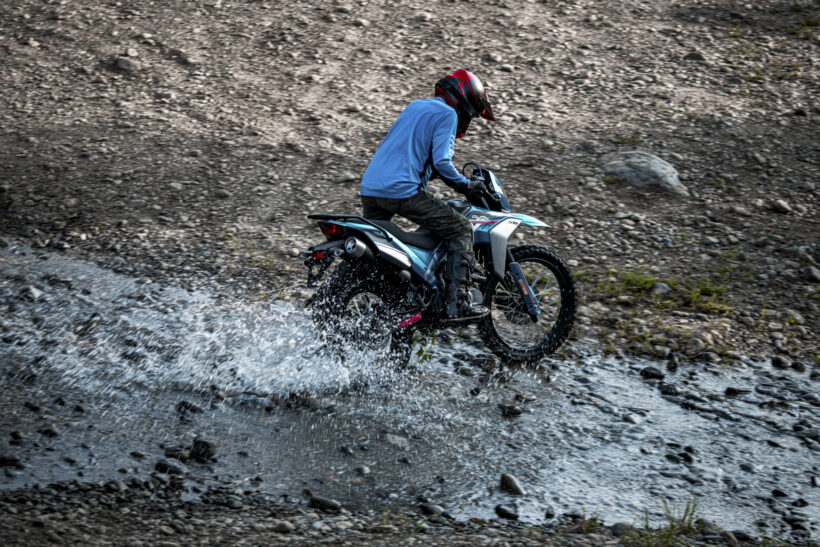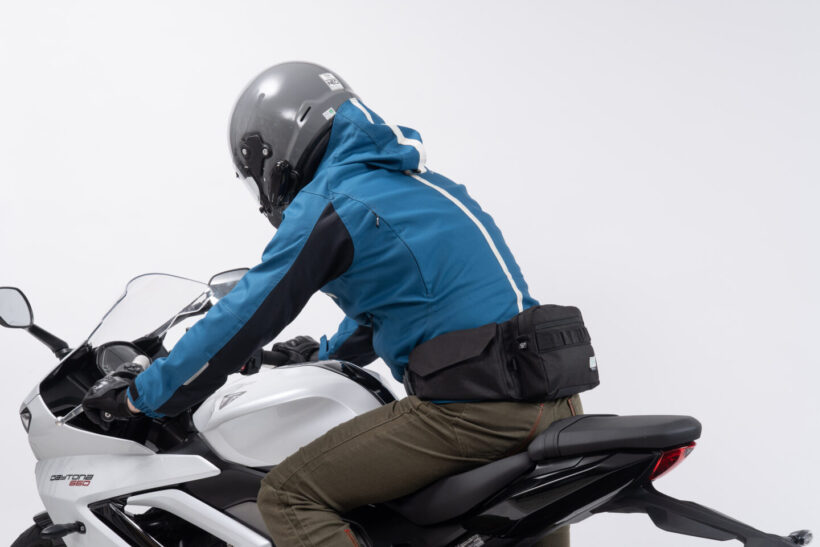

![[BMW Test Drive] The R12 G/S is the Heritage Series’ leading off-road leader. Its primitive driving style is its charm.](https://motopeek.com/wp-content/uploads/2025/10/1616-1761126096628.jpg)

BMW R 12 G/S…Starting from 2,451,000 yen (orders start May 21, 2025)

The R12 G/S comes in two variations: STD and GS Sport. The latter is equipped with the Enduro Package Pro, which includes an 18-inch rear wheel (the STD is 17-inch), an Enduro footrest system, off-road tires, handlebar risers, hand protectors, a large engine guard, and a long side stand. The model we test drove this time was the GS Sport, which is priced 94,000 yen more than the STD.


ADVERTISEMENT

In preparation for this test drive, the front and rear tires had been replaced with Michelin Anakee Wild, which are more suitable for off-road driving.
ADVERTISEMENT

Body colors available include the Light White shown in the photo (additional 42,000 yen), as well as Night Black Matte and Sand Rover Matte Style Option 719 (additional 223,000 yen).
The wild revving is the true joy of an air-oil cooled boxer twin engine.

This press test ride event was held at Motofield Haruna in late September. It was titled “BMW MOTORRAD ADVENTURE MODELS TEST RIDE,” and the lineup included the R12 G/S GS Sport. This new model only began accepting orders in May of this year, and as it belongs to the Heritage series, it is equipped with an 1170cc air-oil cooled boxer twin engine.

The engine is the same as the Heritage R 12 series, an 1170cc air-oil cooled DOHC 4-valve horizontally opposed 2-cylinder, which meets Euro 5+ regulations and produces a maximum output of 109 PS. It requires premium gasoline and has a 6-speed transmission. It also features traction control (DTC) that takes into account bank angle and acceleration information, and an engine brake torque regulator (MSR).
The R 12 G/S is a model that pays homage to the R 80 G/S that was released in 1980, and its styling is flawless. For me, who was seriously considering buying the air-cooled, two-valve R100GS at one point, this is a perfect fit.
Let’s start with the engine. Having test-ridden the latest R 1300 GS and the Adventure, I felt that the R 12 G/S’s revving felt quite wild. The difference with or without the balancer was particularly big, and I was able to really feel the difference between it and the R 1300 series, even though they are both boxer twins.
Due to rainfall the day before, the forest course that was supposed to be the main course could not be used, and we were only able to ride on the flat outer circuit, but even so, we were able to fully confirm the engine’s ease of handling from low RPMs and the natural intervention of the DTC (Dynamic Traction Control). When the DTC intervenes, the indicator flashes rapidly, but there is no sense of stalling. The exhaust sound is slightly muffled, but the car steadily moves forward.
The Shift Assistant Pro bidirectional quickshifter can sometimes cause a strong shock when upshifting depending on the conditions, but BMW recommends using the clutch lever to avoid this. On the other hand, downshifting is extremely smooth in all situations, and perhaps due to the synergistic effect with the MSR (Engine Brake Torque Regulator), I felt absolutely no anxiety even on dirt roads.
It looks like it would be great to swing around on flat dirt.

The wheel travel of the R 12 G/S is 210mm in the front and 200mm in the rear, which is the same for both the standard and GS Sport models. By the way, the R 1300 GS has 190mm/210mm (sports suspension OE equipment: 210mm/220mm), so although there are differences in whether the front suspension is a telescopic fork or telelever, and whether the front wheel diameter is 21 inches or 19 inches, it can be said that both models in the Heritage series have the same suspension.

The front wheel has a diameter of 21 inches, and both the front and rear are cross-spoke wheels compatible with tubeless tires. Integral ABS Pro (partially) works by linking the front and rear brakes when the brake lever is operated, while operating the pedal only activates the rear. The front-to-rear distribution differs depending on the riding mode. ABS Pro controls the bike taking into account the bank angle, making it less likely for the bike to rise unexpectedly. In Enduro Pro mode, the rear ABS control is deactivated. Dynamic Brake Control is activated when the front brake is applied forcefully and instantaneously, canceling throttle operation.
ADVERTISEMENT

The Marzocchi 45mm inverted front forks are fully adjustable. Regarding preload adjustment, the manual only lists rider weights starting from 95kg, which suggests that the spring rate itself is too high for a typical Japanese rider. For damping adjustment, the left side of the fork handles compression and the right side handles rebound. It was explained that this can be done with the tip of a physical key, but in reality it is difficult to turn properly as it interferes with the handlebars. Incidentally, with the GS Sport’s 18-inch rear wheel, the fork projection has been reduced from 15mm to 3mm to maintain chassis level.
ADVERTISEMENT

The rear suspension is a linkless monoshock, and the shock unit is made by Marzocchi, the same as the front. It has compression damping adjusters on the bottom and rebound damping adjusters on the top.
ADVERTISEMENT

The hydraulic preload controller for the rear shock is conveniently located so that it can be turned even while riding. However, just like the front shock, the standard rider weight is high, so even when the preload was adjusted to the weakest setting, the operation felt stiff.
The frame of the R12 G/S is based on the R12 series, with the steering head moved forward and upward. This allows for space to use longer front forks. The caster angle is 26.9° (26.8° for the GS Sport) and the trail is 120.8mm (121.3mm for the GS Sport).
When I started riding, I felt that the hurdles for riding on dirt roads were higher than for the R 1300 GS. In situations where I could pitch the bike properly, I could turn it around, but the front and rear suspension settings were a little stiff to make that possible. A skilled rider would be able to apply a lot of weight to the front when braking and turn it around while sliding the rear outwards, and it certainly felt like it would be able to handle such a ride. However, it was ironic that, for someone like me who is not used to riding on unpaved roads, experiencing the primitive riding style of the R 12 G/S was what made me impressed by the easy and gentle off-road performance of the R 1300 GS.
As for the brakes, the Partially Integral ABS Pro is excellent. Even on steep downhill slopes where tree roots make it slippery, I was able to descend steadily by operating only the brake lever. I wasn’t able to experience the front/rear braking distribution that changes depending on the riding mode, but it’s very reassuring to know that, along with DTC, the advanced safety technology can also handle some of the braking.
Even for someone like me who is 175cm tall, the grounding is quite difficult, but for expert riders who are in love with this styling and want to race on flat dirt with a boxer twin, this won’t be a negative factor in the slightest. The wildness of the previous generation air-oil cooled boxer twin and the high off-road performance thanks to the simple suspension. The combination of these elements gently supported by electronic devices is one of a kind, and it is undoubtedly a unique presence even within the Heritage series.
Riding position and foot reach (175cm/68kg)

The GS Sport uses risers to raise the handlebar position by 20 mm, and also features wide step bars that provide better grip for the soles of boots. These features create a riding position that is more suitable for off-road riding than the standard model.

The GS Sport’s seat height is officially 875mm, 15mm higher than the standard model. Ground clearance has also increased by 15mm, from 240mm to 255mm. As you can see, foot reach is poor, and even with the rear shock absorber preload fully removed, it’s impossible to get both toes on the ground at the same time.
Detailed explanation

The swingarm is single-sided and uses a Paralever to reduce the torque reaction of the shaft drive. The brake system incorporates Hill Start Control Pro, which can be activated by pulling the lever hard or by pressing the pedal hard. Tire pressure sensors are standard equipment.
ADVERTISEMENT

The GS Sport is 70mm wider and 10mm taller than the STD. It adopts keyless ride, but the steering lock and tank cap are unlocked with a physical key. The standard grip heater has three temperature settings: low, medium, and high.
ADVERTISEMENT

The round meter combines a needle-type speedometer with an LCD display. Riding Mode Pro can be selected from Rain, Road, Enduro, and Enduro Pro, which is suitable for riding on unpaved roads when off-road tires are installed, and each mode adjusts the ABS, DTC, engine braking, and throttle response. A 12V power socket is provided on the right side of the meter.
ADVERTISEMENT

The standard cruise control can be set between 30 and 180 km/h (depending on the selected gear).
ADVERTISEMENT

The seat is secured with bolts, and the Torx wrench required to remove it is hidden near the rear shock absorber preload adjuster. ETC2.0 onboard unit is standard equipment.
ADVERTISEMENT

All lighting is LED. The headlights incorporate daytime running lamps and also feature an automatic daytime running light function that automatically switches between low beam and daytime running lights.

Dynamic brake lights flash rapidly when the brakes are applied suddenly. Hazard lights turn on when the vehicle slows down to 15km/h and automatically turn off when the vehicle speed exceeds 20km/h.

The GS Sport is equipped with the Enduro Footrest System, and the Gear Shift Assistant Pro eliminates the need to operate the clutch lever for both upshifts and downshifts.
BMW・R 12 G/S main specifications
Engine:
Maximum power output: 80 kW (109 PS) / 7,000 rpm.
Emissions control: Closed-loop controlled, three-way catalytic converter
type, air/oil-cooled, 2-cylinder, 4-stroke boxer engine.
Bore x stroke: 101 mm x 73 mm.
Displacement: 1,169 cc.
Maximum torque: 115 Nm / 6,500 rpm.
Compression ratio: 12.0:1.
Ignition / injection control: Electronically controlled intake pipe injection, digital engine management system: BMS-O, throttle-by-wire.
Emission standard: EU 5+.
[Driving performance / fuel economy]
Top speed: 210 km/h
Fuel consumption rate per liter according to WMTC (with one occupant): 19.6 km/L
CO2 emissions according to WMTC: 119 g/km
Fuel type: Unleaded premium gasoline (high octane) (up to 15% ethanol, E15), 95 ROZ/RON, 90 AKI
[Electrical equipment]
Battery 12 V / 12 Ah, maintenance-free
[Power Transmission]
Clutch: Dry single-plate clutch, hydraulically operated
Transmission: Constant mesh 6-speed transmission, separate gearbox housing
Drive system: Cardan shaft
Suspension / Brakes:
Frame: Tubular space frame.
Front suspension: Inverted telescopic fork, 45mm diameter, spring preload adjustable, rebound and compression adjustable.
Rear suspension: Single swing arm cast aluminium.
Suspension stroke, front/rear: 210mm / 200mm.
Ground clearance: 240mm.
Wheelbase: 1,585mm.
Caster: 120.8mm.
Steering head angle: 63.1°.
Steering lock angle: 42°.
Wheels: Cross-spoke wheels. Front
rim: 2.15″ x 21″.
Rear rim: 4.00″ x 17″.
Front tires: 90/90 -21.
Rear tires: 150/70 R17.
Front brakes: Double disc brakes, 2-piston floating caliper
. Rear brakes: Single disc brake, 2-piston floating caliper
. ABS: BMW Motorrad Integral ABS Pro (partially integral).
[Dimensions / Weight]
Seat height, when empty: 860 mm (GS Sport: 875 mm)
Inner leg curve, when empty: 1,935 mm
Fuel tank capacity: Approximately 15.5 L
Reserve capacity: Approximately 4 L
Overall length: 2,285 mm
Overall height: 1,240 mm (excluding mirrors) *GS Sport: 1,250 mm (excluding mirrors)
Overall width: 900 mm *GS Sport: 970 mm (excluding mirrors)
Dry weight: 216 kg
Vehicle weight (German Industrial Standard DIN, when empty, in a drivable state, with 90% of the fuel tank full, without options): 229 kg
Allowable total weight: 430 kg
Maximum load capacity (with standard equipment): 201 kg
Vehicle weight (value reported to the Ministry of Land, Infrastructure, Transport and Tourism in Japan, with 100% fuel): 234 kg
Country of origin: Germany