
![[23] Do two-stroke scooters also need oil changes? We tried adding BioArmor additive. | Fun Aprio 23](https://motopeek.com/wp-content/uploads/2025/07/2180-1760835125629.jpg)
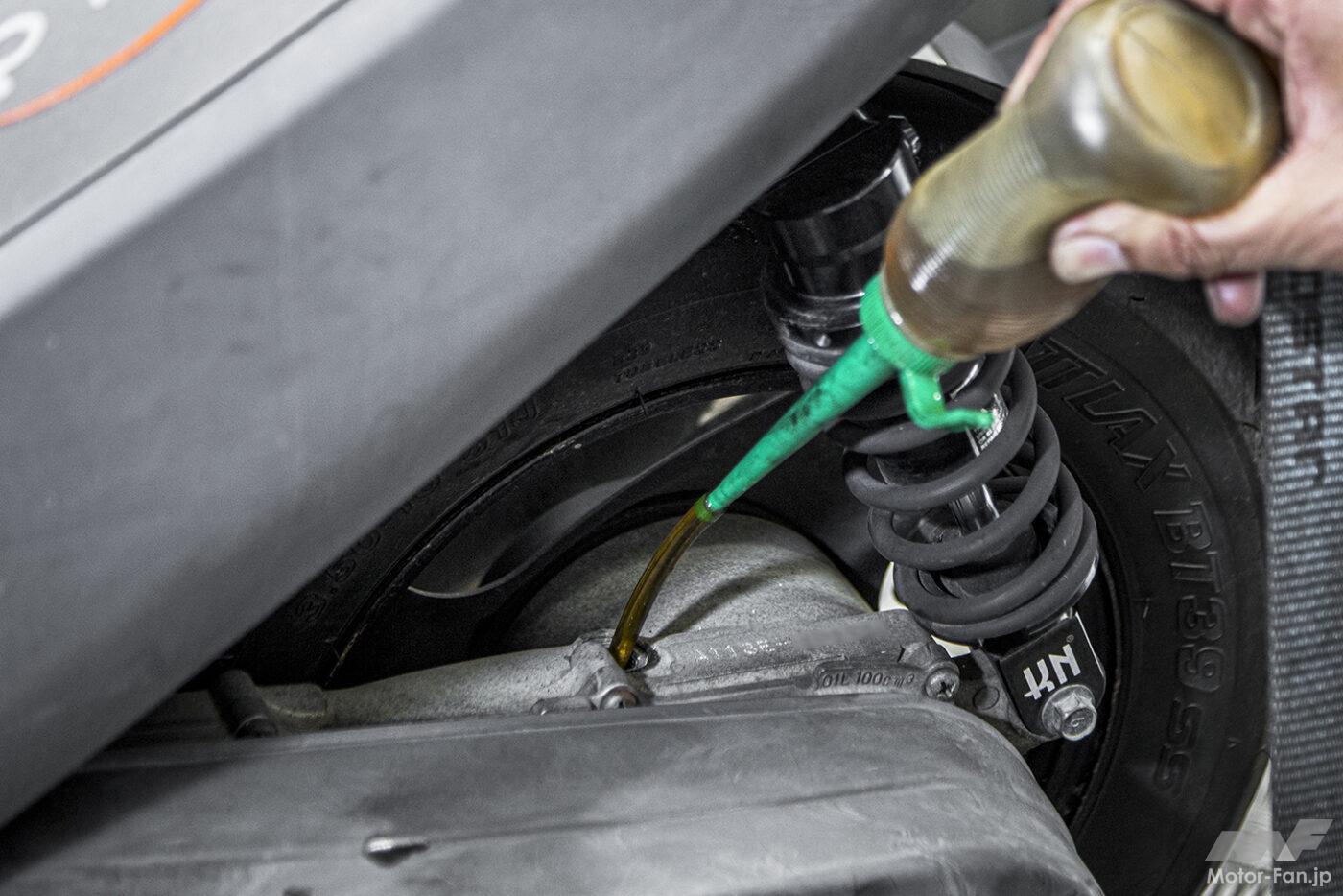
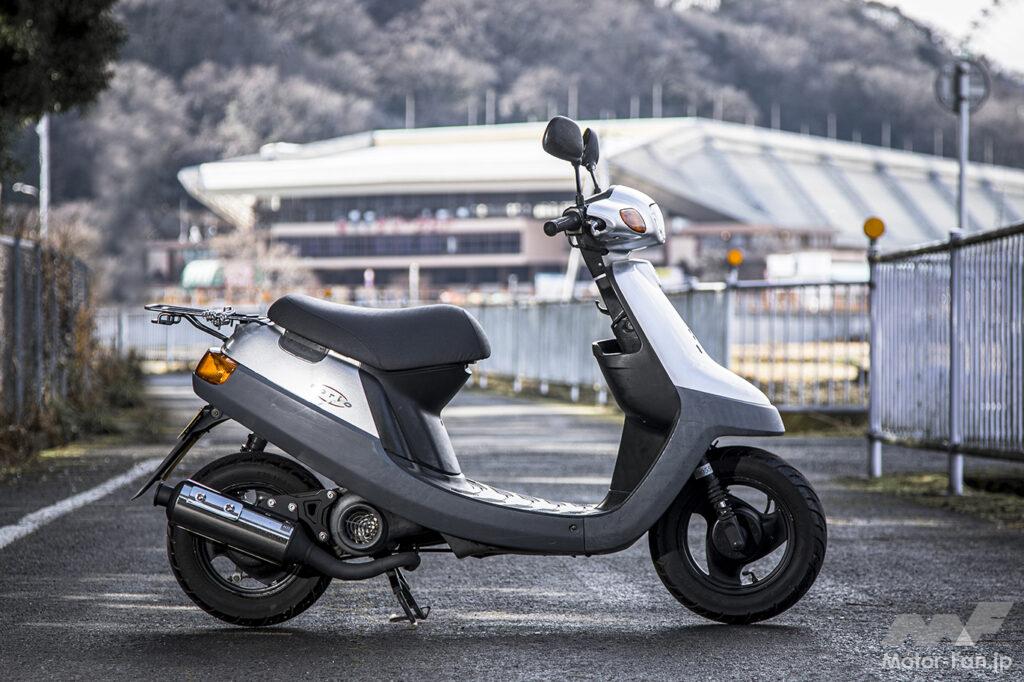
This Yamaha JOG Aprio has been upgraded to 68cc with a KN Kikaku bore-up kit. The muffler is a G03X, which is popular in the 2-stroke scooter world. It’s well-muffled, yet incredibly powerful, and I love it.
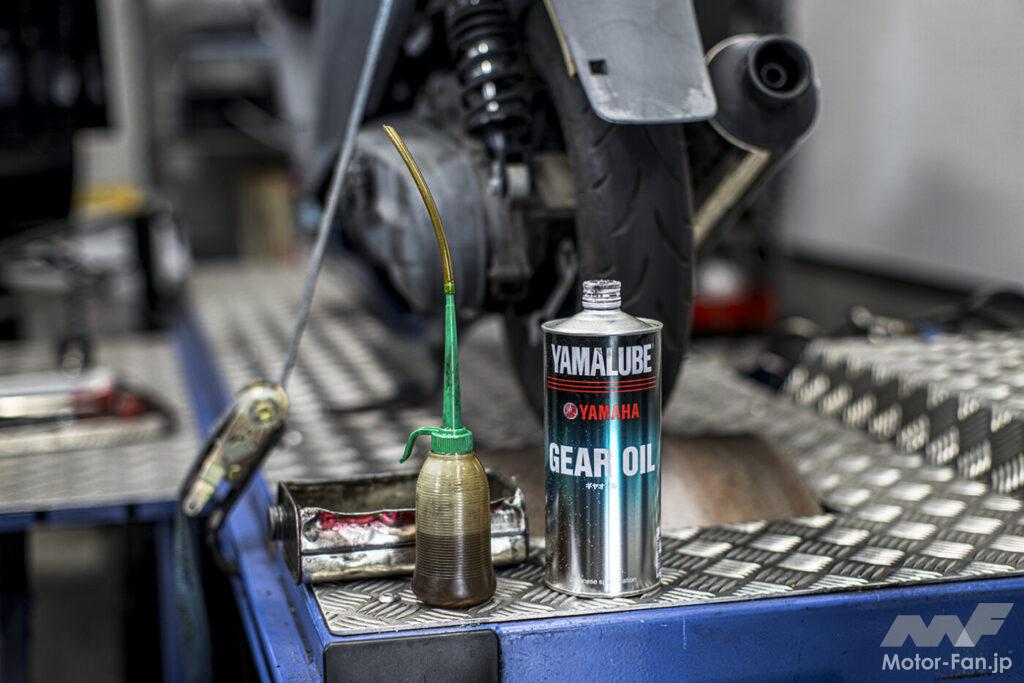
This time we’re not talking about engine oil. We’re talking about scooter gear oil. Some people may have never changed it, or may not even know it exists. We’ll be looking at this often-forgotten maintenance item.
The final gear is stored between the crankcase and the rear wheel and is immersed in gear oil.
The main role of gear oil
Lubrication and wear prevention: Gear oil reduces friction between gear teeth and prevents direct metal-to-metal contact, reducing the risk of wear and seizure.
Cooling effect: The gearbox that houses the final gear is sealed and does not have a cooling system, so the oil absorbs the heat generated by the gears and bearings and cools them.
The recommended replacement interval is approximately every 10,000 km (in the case of Yamaha), but the reality is that it is not widely recognized as a maintenance item.
However, be careful not to leave it for too long as it can cause problems. In rare cases, you may not notice that the oil is low, which can lead to gear seizure or damage, so it’s important not to be too optimistic.
This time, we visited M Factory, a motorcycle shop in Koshigaya City, Saitama Prefecture, to perform the gear oil change.
How to drain and add gear oil
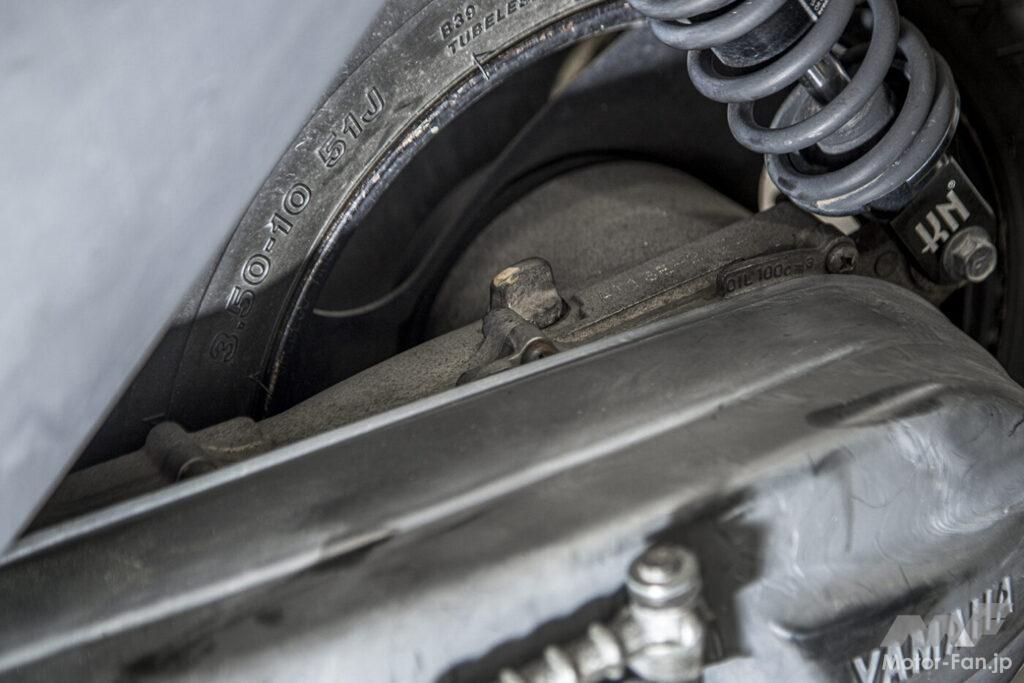
The recommended amount of gear oil for Aprio is 100cc, and it’s stamped on the crankcase, so you can rest assured. There’s a gear oil filler cap on the crankcase where the rear shock is attached. The drain is at the bottom of the case.
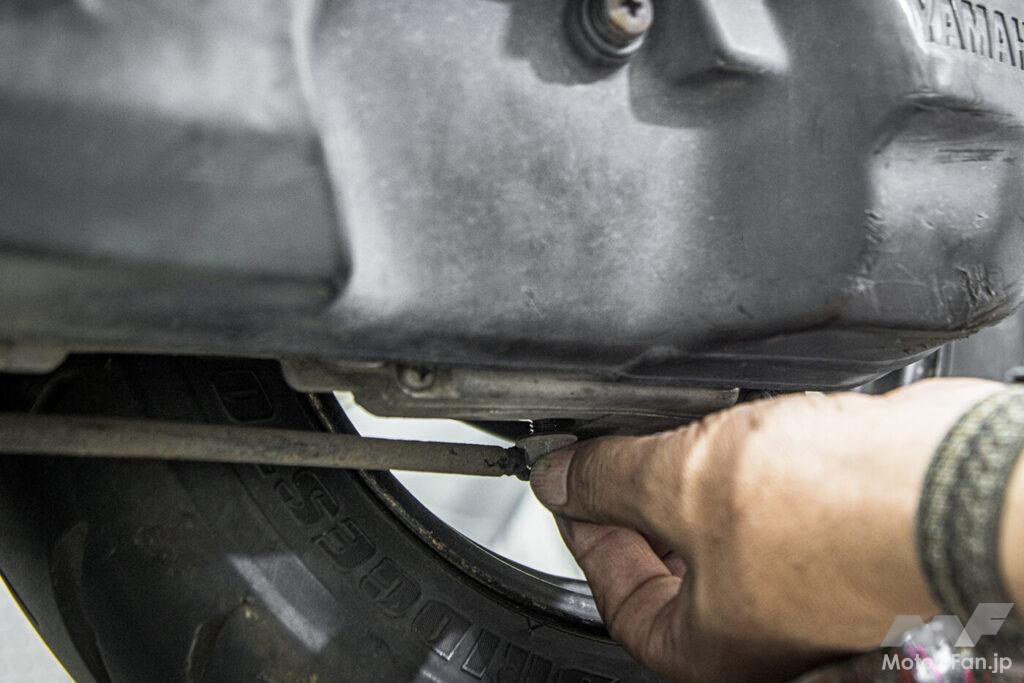
Place a tray under the crankcase, loosen the drain bolt and remove the drain.
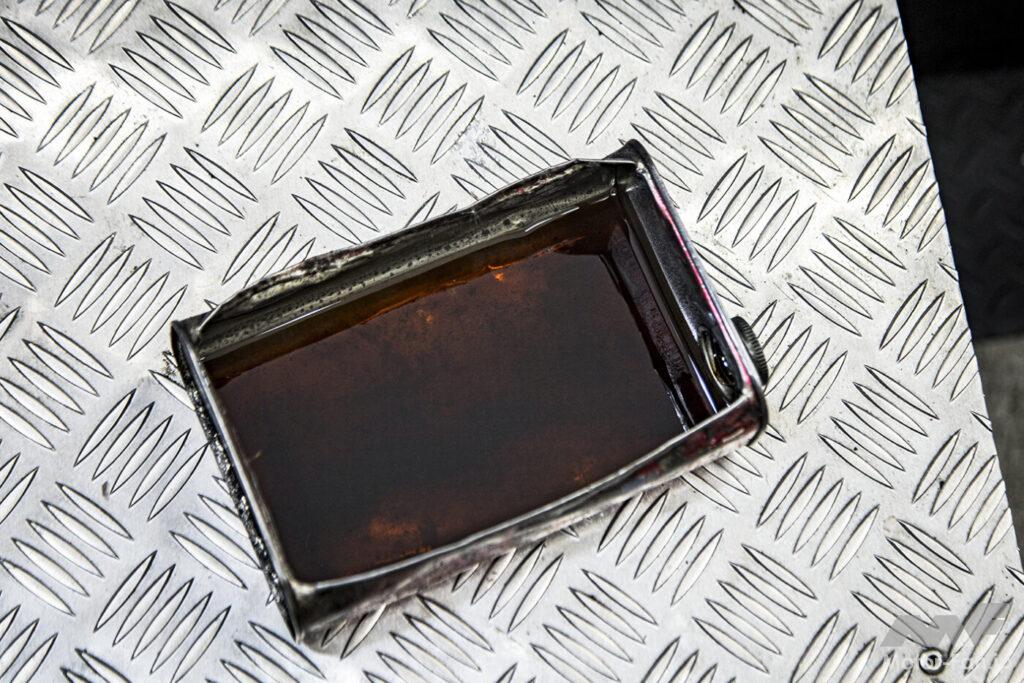
The oil drained from the Aprio was at the correct level, and there appeared to be no problems such as leaks. There were no iron particles to be found, and the condition seemed to be good.
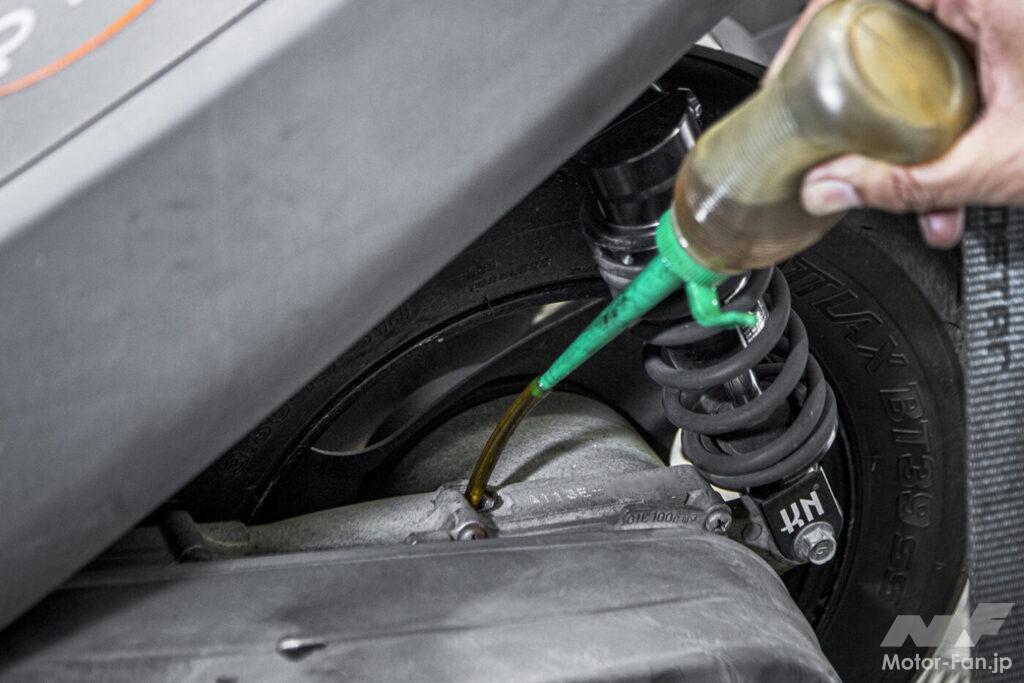
Once the drain bolt is installed, pour in new gear oil through the oil filler port. Then tighten the filler cap and the replacement process is complete. No special tools are required, so it’s easy!
I added BioArmor
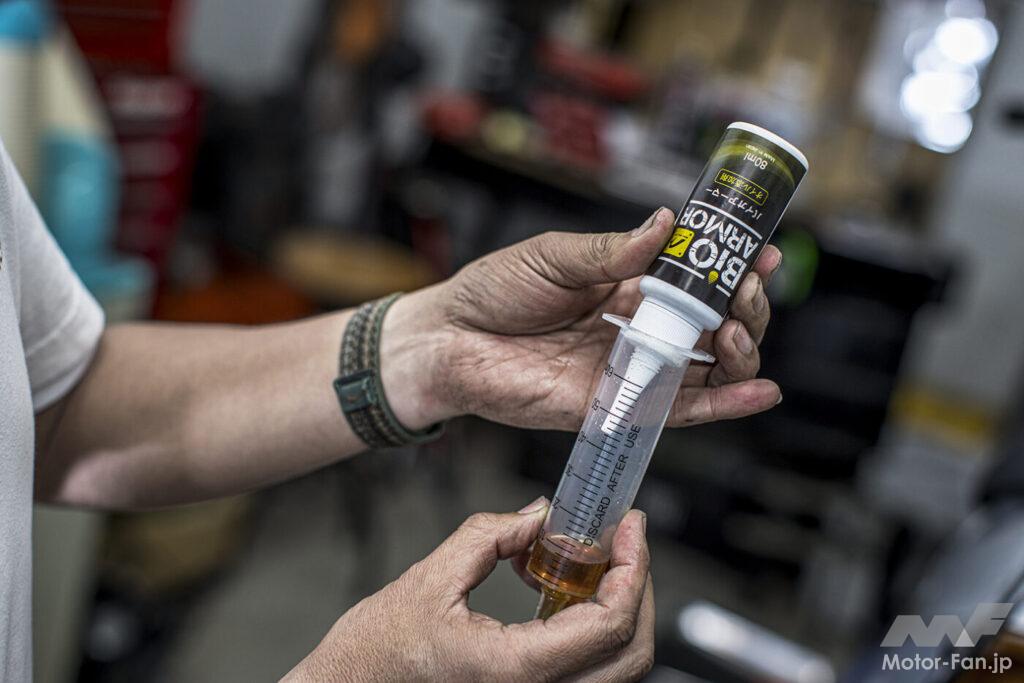
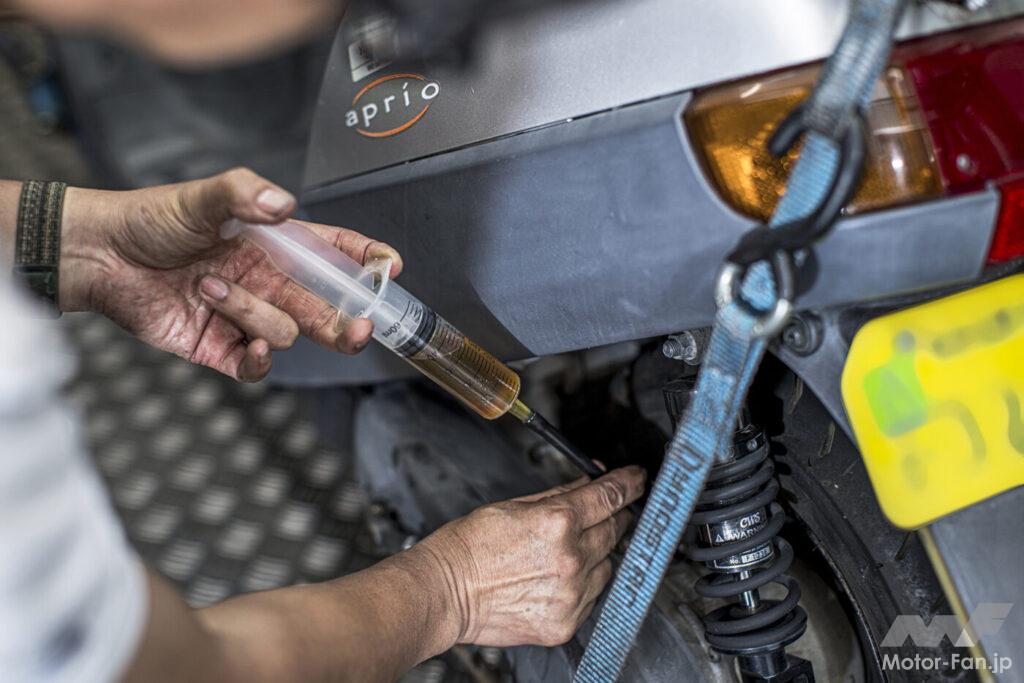
To protect the final gear and reduce friction, I decided to add BioArmor Oil Additive to the gear oil. The recommended amount is 10% of the total oil. So, I removed 10cc of gear oil and added 10cc of BioArmor.
Reducing gear friction means that the rear tire feels better and the noise around the gears is quieter. Although the Aprio’s performance is not great, it felt like there was a slight reduction in resistance when turning the tire by hand.
> Product introduction & caption
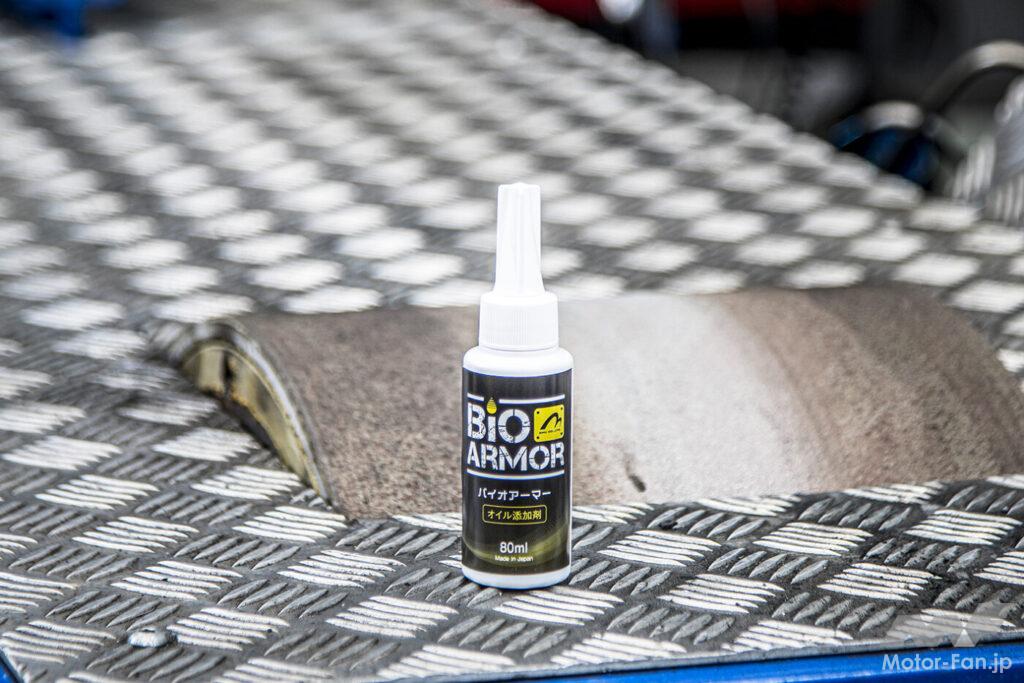
4,180 yen (80ml)
BioArmor Oil Additive
This metal protection additive was developed by M Factory. It is an environmentally friendly product that replaces ingredients that will be subject to regulation under the Stockholm Convention (regulations on persistent organic pollutants) with plant-derived ingredients that are not subject to regulation. It offers excellent metal protection and extreme pressure performance, and can be added to motorcycle and automobile engine oils (*) and gear oils.
*Cannot be used on vehicles with wet clutches or wet starter clutches.
Measure horsepower with a dynamometer
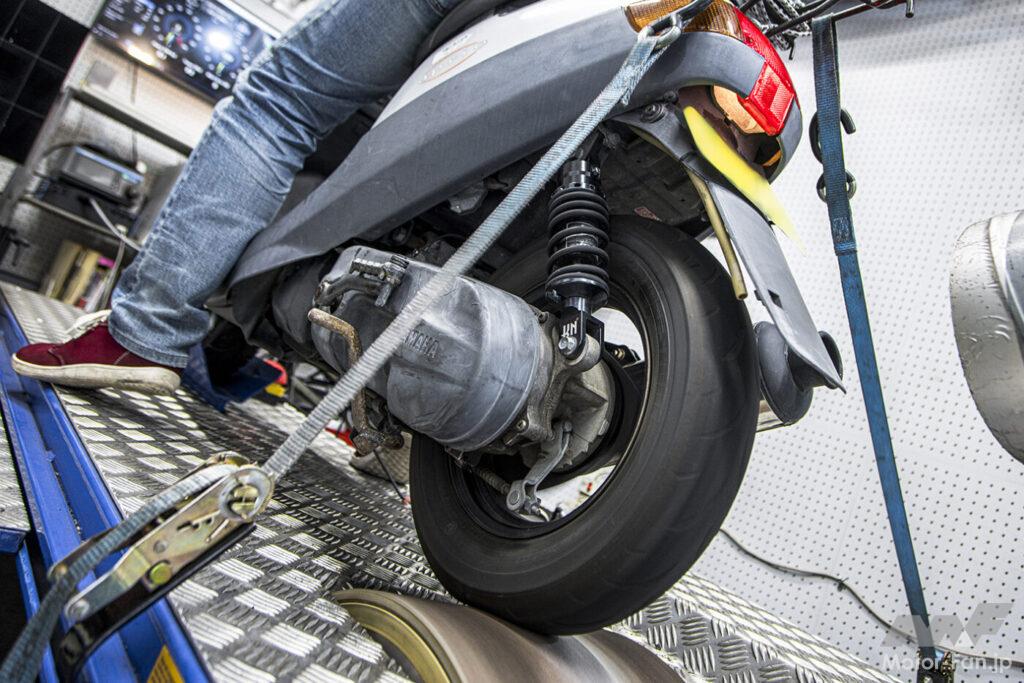
M Factory is also known as the importer and distributor of the engine chassis dynamometer “Dynostar.” Taking this opportunity, we measured the rear wheel power output before and after adding the additive.

Blue is before using the additive, red is after. Maximum output remains the same at 7.5 horsepower, but the friction reduction effect seems to be apparent at speeds above 55 km/h.