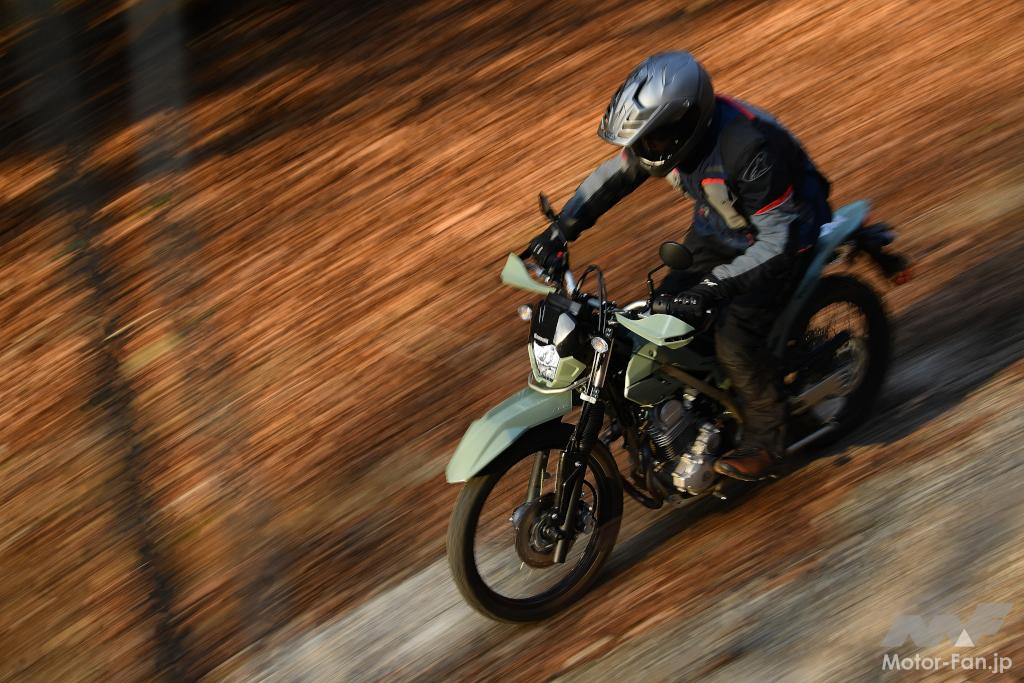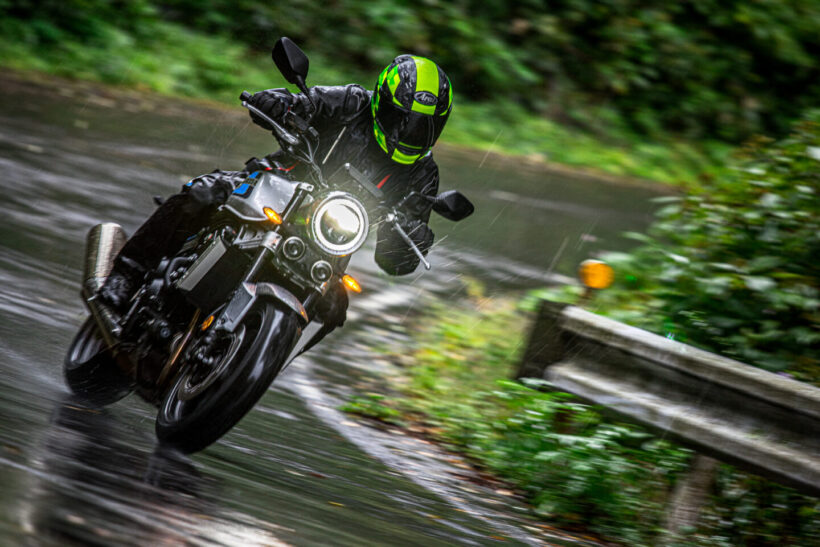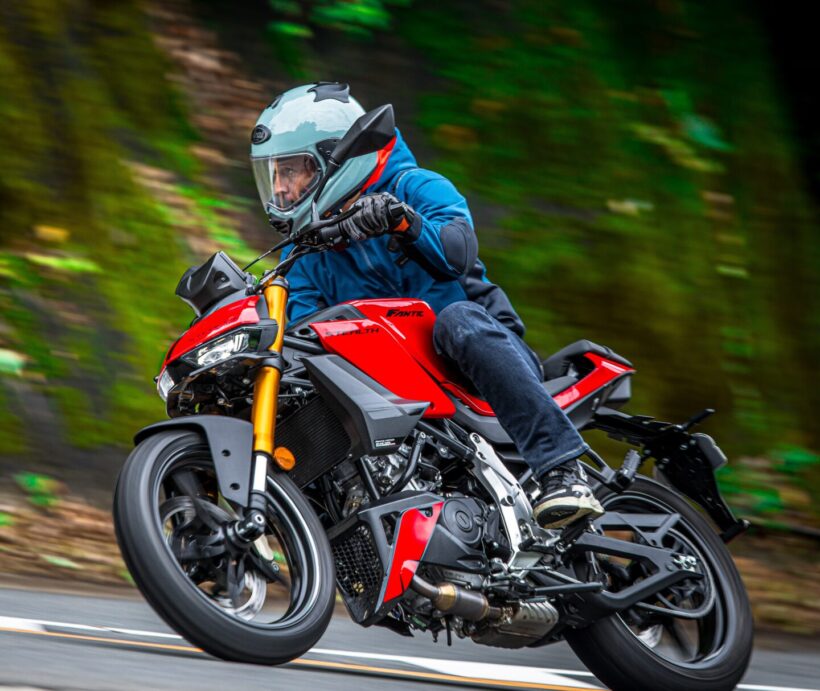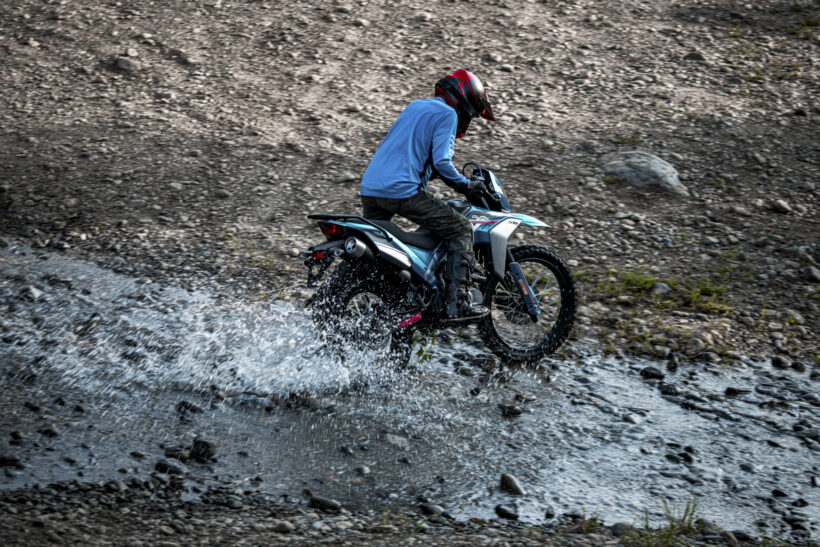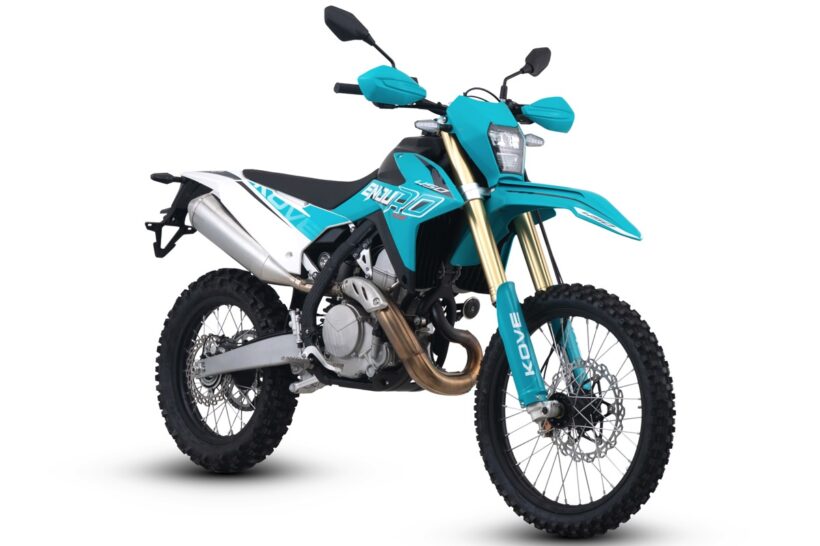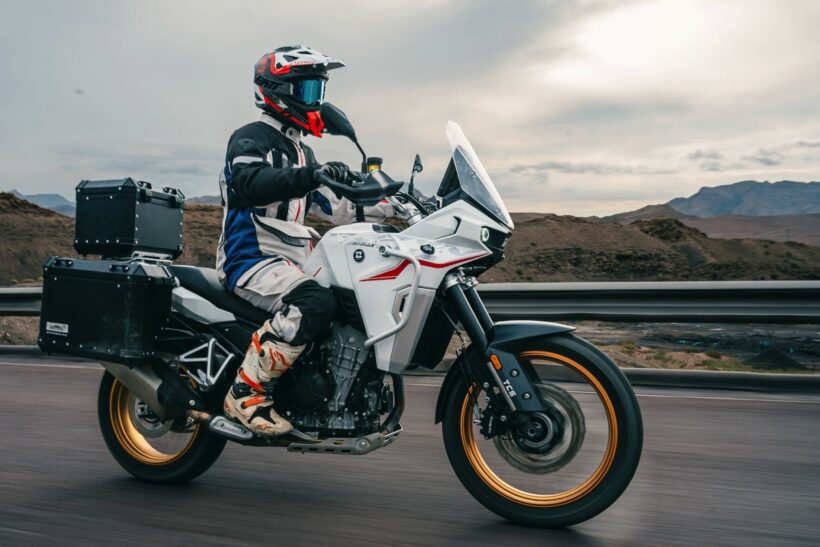

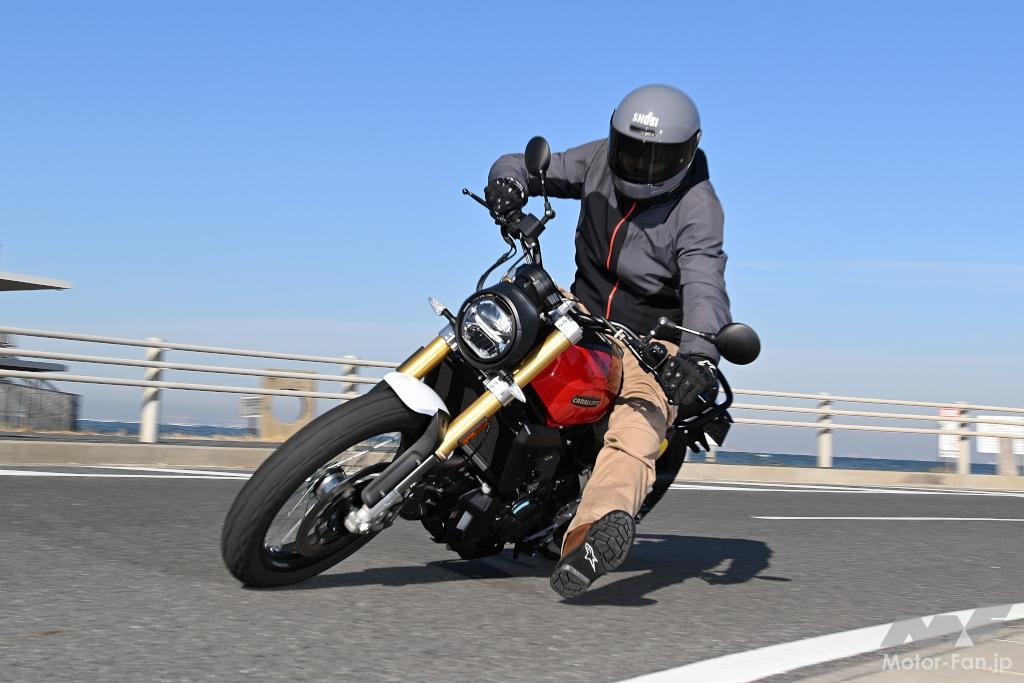
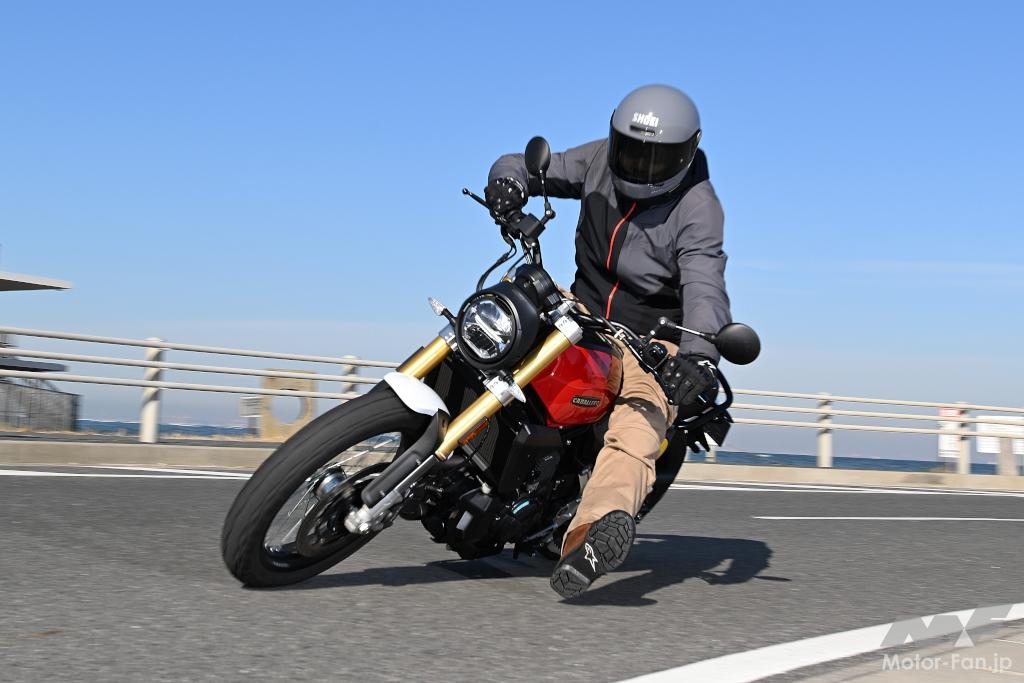
Fantic Caballero Scrambler 700…1,750,000 yen
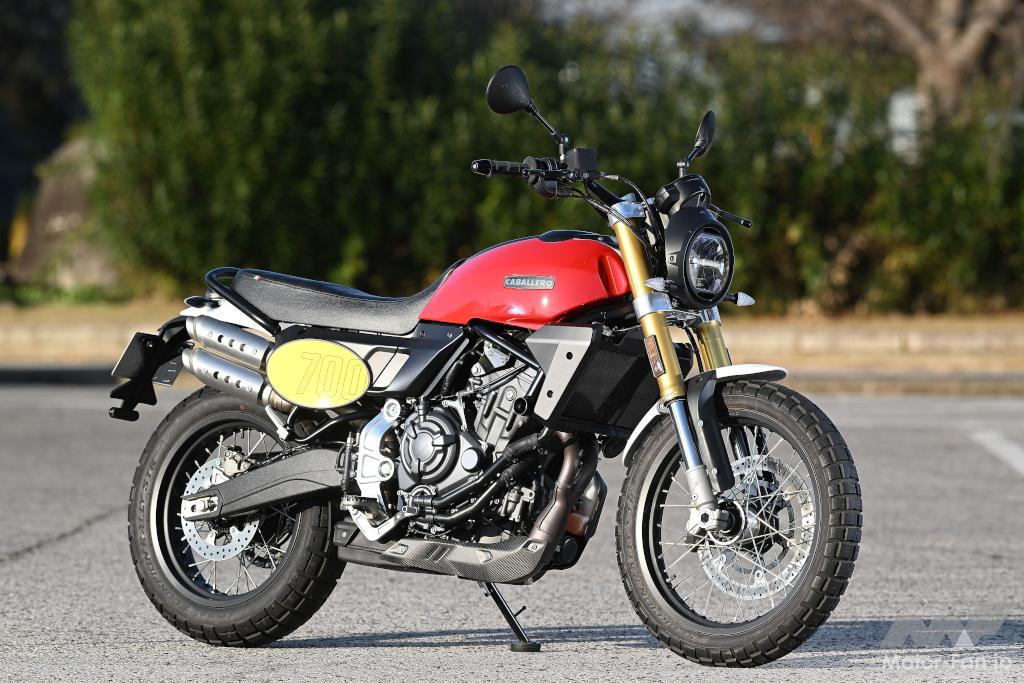
The Caballero Scrambler 700, which is equipped with a CP2 engine supplied by Yamaha, is (probably) Fantic’s first mid-range parallel twin vehicle, which has traditionally focused on single-cylinder vehicles.
Although it sounds intriguing, is it not suitable for this 1000km test drive report?
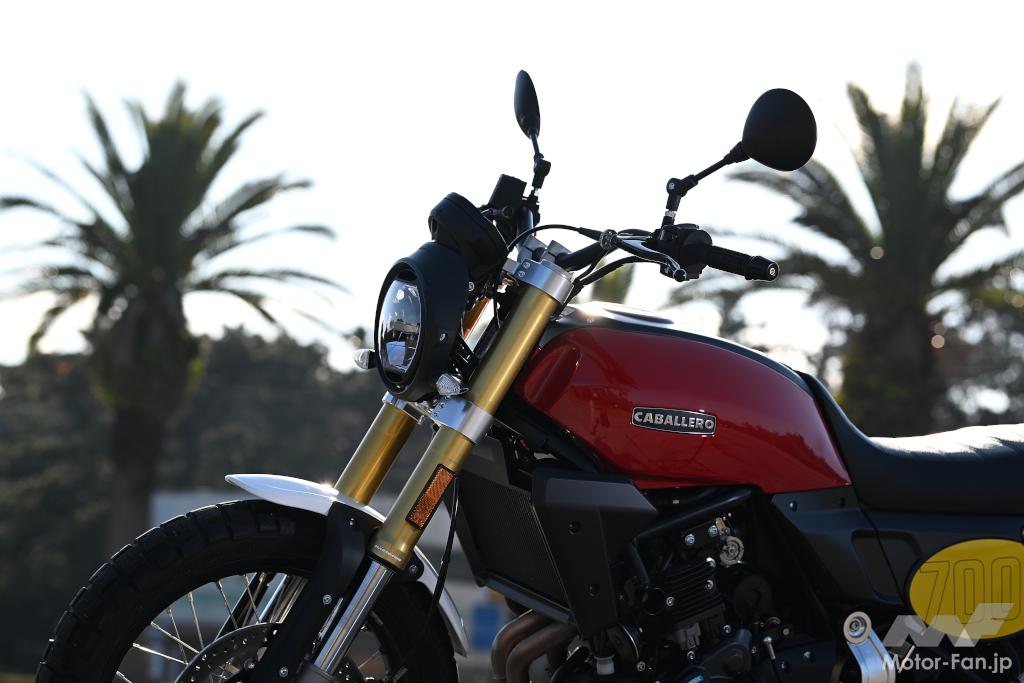
I really want to ride it, but maybe it’s best not to include it in a serious 1000km test ride…? That’s the impression I had of the Fantic Caballero Scrambler 700, which was unveiled at EICMA in the fall of 2022 and will begin being introduced in Japan in 2024. First, let me explain why I “really want to ride it.” I’ve always loved Yamaha’s CP2 series (though not all of them), and I’d been hoping for a 19-inch front scrambler to be added to this series. As for the Caballero Scrambler, I test rode the 125/500cc single-cylinder model a few years ago and had a very good impression of it.
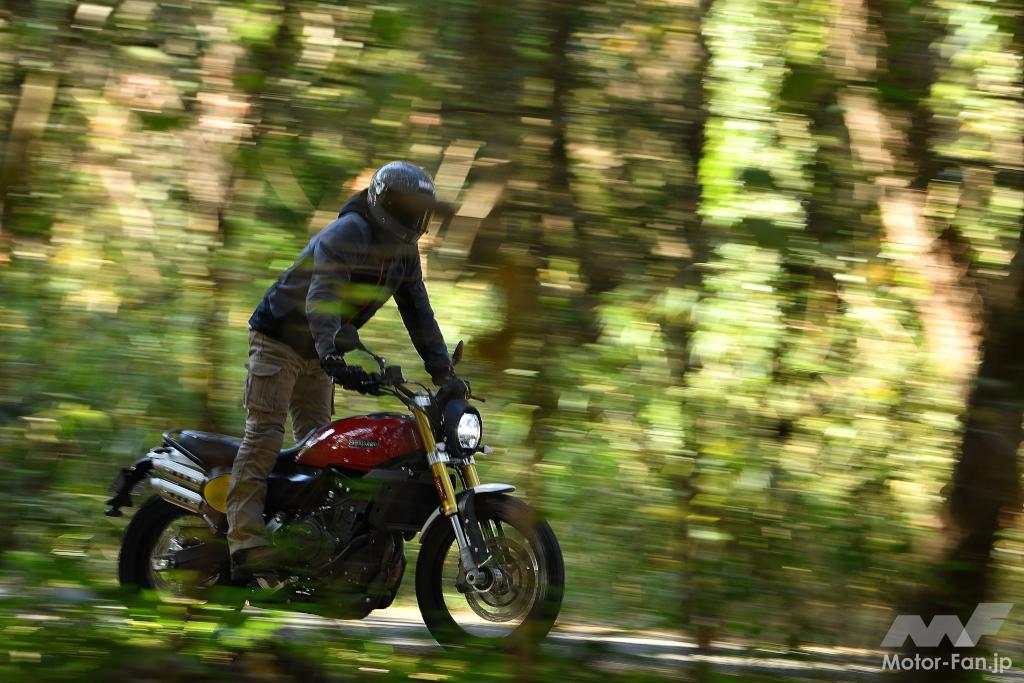
However, on the other hand, considering that this is Fantic’s first mid-parallel twin car, and that many of the European cars that I have experienced in the past that use Japanese power units have had a very specific and sharp character, I felt that, leaving aside my general impressions, it might not be suitable for this article, which assumes a long run.

However, the actual Caballero Scrambler 700 is a bike that can easily cover about 1000km, and at least for me,  it was exactly what I wanted. Of course, it’s not for everyone, and some people may have doubts about the price, which is significantly higher than the standards for mid-twin bikes these days, but right now I feel a sense of mission to share the unique appeal of this bike, its exhilarating and exciting ride, with as many people as possible.
Differences from the CP2 series sold by Yamaha
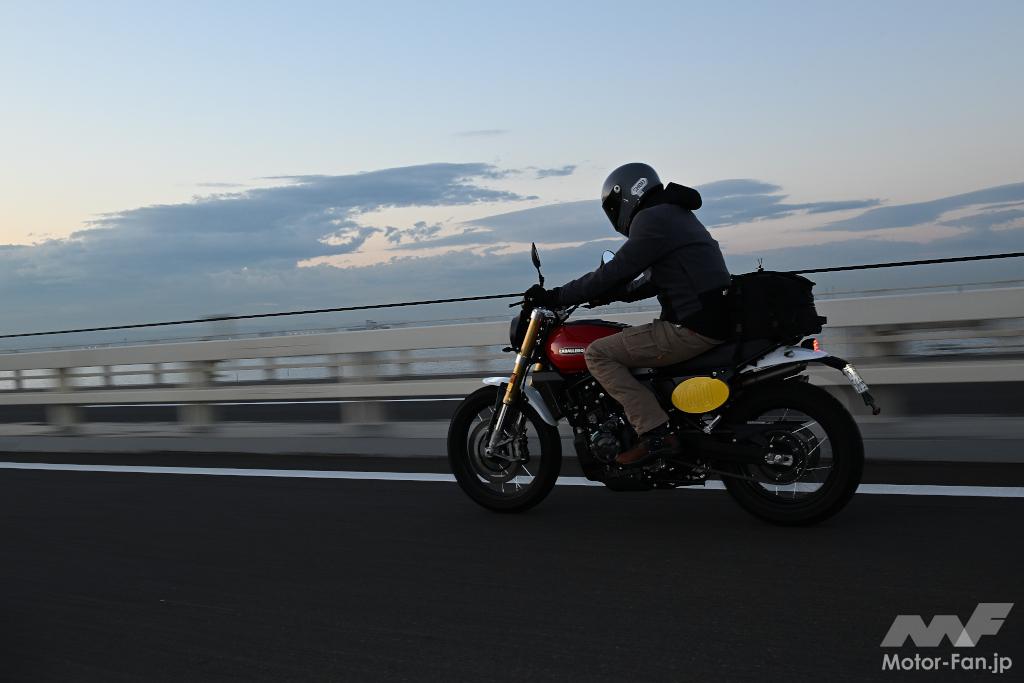
Before we get to the main topic, let me give you an overview. Aside from the CP2 engine and intake system parts supplied by Yamaha, and some of the electrical system, the Caballero Scrambler 700 is custom-designed, with almost no parts shared with the company’s existing 125/250/500cc single-cylinder models. And if you compare the front and rear tire size, front and rear wheel travel, wheelbase, seat height, and curb weight with those of Yamaha’s CP2 series, which seem to have some similarities, this model seems to have qualities somewhere between the Sport Heritage XSR700 and the adventure-oriented Ténéré 700… (The curb weight of the Scrambler 700 is calculated by adding a dry weight of 175kg to a fuel capacity of 13.5 liters (approximately 10.1kg).)
Scrambler 700…19/17 inch, 150/150mm, 1453mm, 830mm, 185.1kg
XSR700………………17/17 inch, 130/130mm, 1405mm, 835mm, 188kg
Ténéré 700……………21/18 inch, 210/200mm, 1595mm, 875mm, 205kg
ADVERTISEMENT
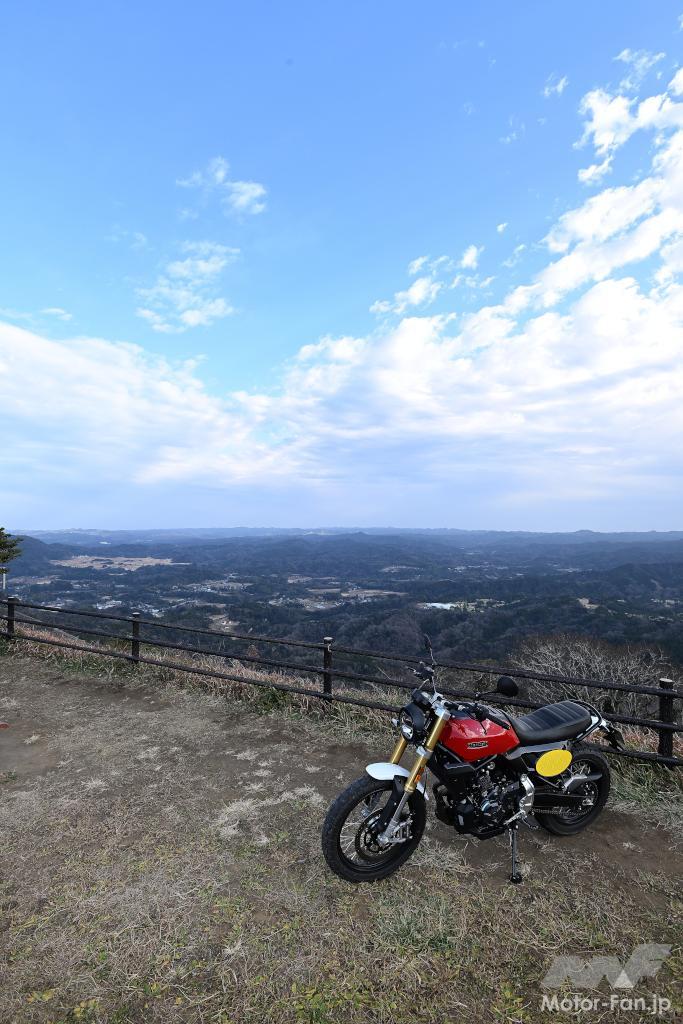
While there are some aspects of it that are similar, its character wasn’t necessarily somewhere between the two. Initially, I imagined it to have a character similar to the XSR700 with its larger front wheel, or the compact Ténéré 700, but after the test ride, when I considered the two Yamaha models using the Caballero Scrambler 700 as a reference point, the XSR700 was a completely on-road vehicle, while the Ténéré 700 was clearly an off-road vehicle. In any case, the Caballero Scrambler 700 embodied a world that was similar but not identical to the CP2 series.
I empathize with Fantic’s philosophy

Now, finally, onto my impressions. To be honest, my first impression of the Caballero Scrambler 700 wasn’t very good. The reasons for this were the fairly wide handlebars with a small angle of inclination, the high but slightly narrow seat, the front and rear shocks with a feeling that the rebound dampers were too strong (the only adjustment mechanism is the rear preload), and the aggressive engine characteristics that made the front end lift up very easily if I opened the throttle wide, all of which made me feel like I had to be careful when riding this bike.
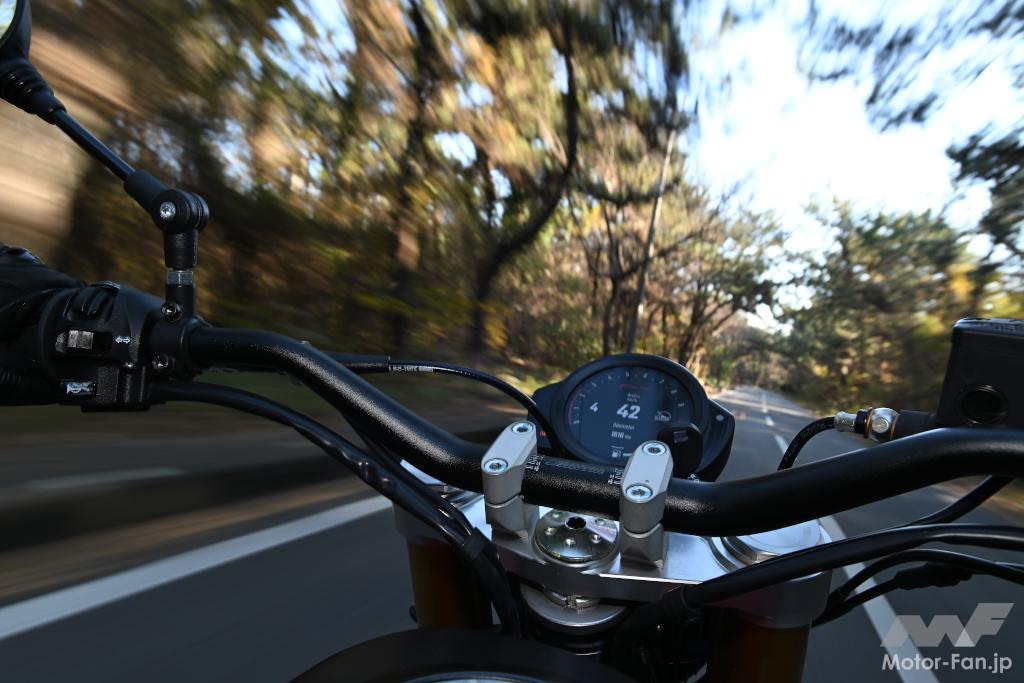
However, those anxieties naturally disappeared within about 10 minutes of starting the test ride. The handlebar and seat configuration seemed appropriate for a scrambler, and even though the rebound damper was strong, the movement of the front and rear shocks was completely natural. And as for the power unit, I realized that it simply responded honestly to the rider’s inputs, and was not a “wild horse” that behaved against the rider’s will. In any case, my concerns, as stated at the beginning, proved unfounded, and from then on I was able to approach the bike from a neutral perspective.
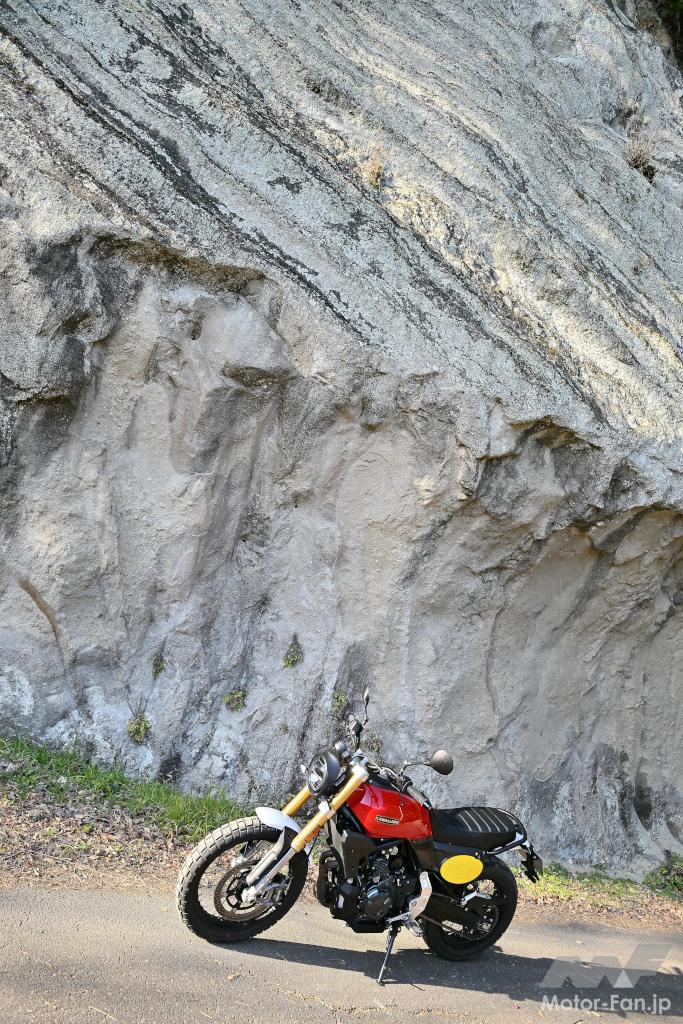
Having actually ridden the Caballero Scrambler 700 in various situations, what impressed me on multiple occasions was that it is a real scrambler. Well, I know that’s a bit of a stretch to put it this way, but other manufacturers’ mid-twin bikes of the same name/similar lineage, such as the Triumph Scrambler 900, Ducati Scrambler, and Honda CL500, may incorporate a moderate amount of scrambler flair, but they seem to be fundamentally on-road oriented bikes… whereas this model has a different stance from off-road vehicles and adventure tourers, and sincerely pursues the lightness, directness, and off-road capability that only a scrambler can offer (the Triumph Scrambler 1200X/XE also have similar qualities, but at 228/230kg, their equipped weight is more than 40kg heavier than the Caballero Scrambler 700).
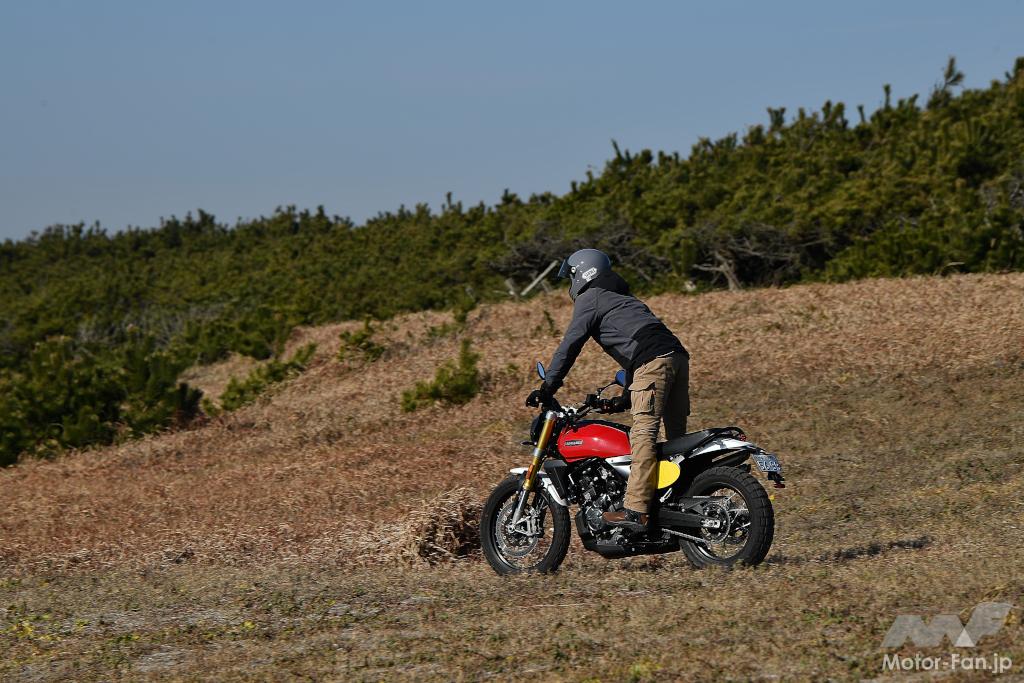
This feeling is similar to the single-cylinder Caballero Scrambler that I experienced in the past, and I think Fantic has a clear philosophy of what a Scrambler should be like. As someone who loves touring and sports riding, especially on rough roads, I was really drawn to the company’s philosophy.
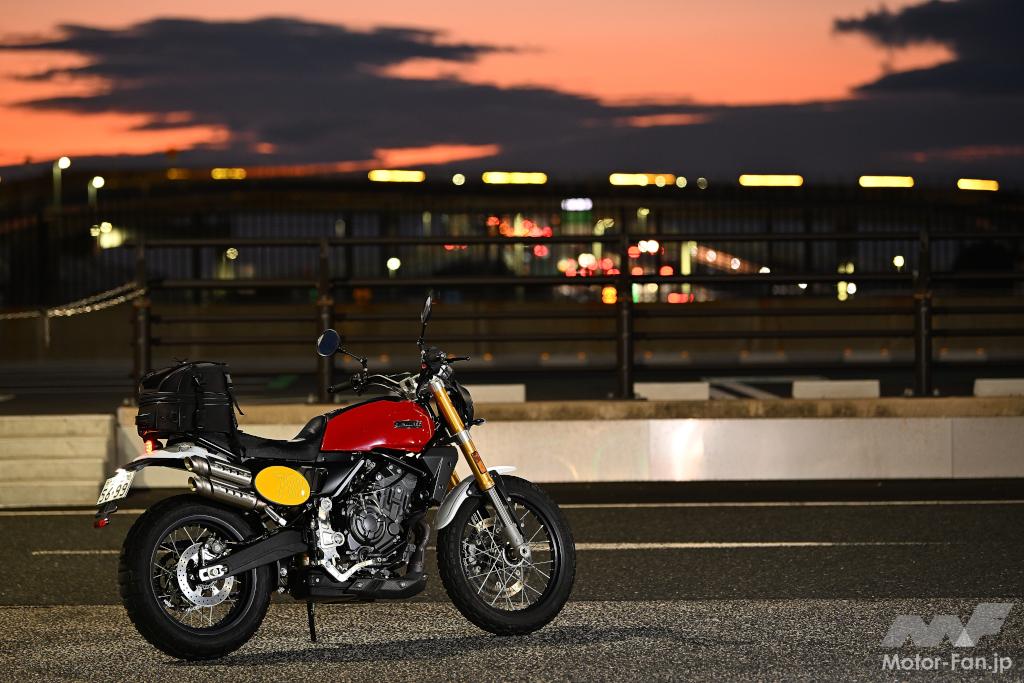
So, to be more specific, what it was about the Caballero Scrambler 700 that really appealed to me… I’ve already used up quite a lot of text this time, so I’ll go into more detail in the second part, which will be published soon.

Considering that Yamaha vehicles equipped with the same CP2 engine, the Tenere 700, are priced at 1,397,000 yen, and the XSR700 at 1,010,000 yen, the price of the Caballero Scrambler 700 is by no means cheap. However, once you experience the appeal of this bike, it’s hard to call it “expensive.”
Main specifications
Model: Caballero Scrambler 700
Length x width x height: 2164mm x 890mm x 1136mm
Wheelbase: 1453mm
Seat height: 830mm
Engine type: Water-cooled 4-stroke parallel twin
Valve type: DOHC 4-valve
Total displacement: 689cc
Bore x stroke: 80.0mm x 68.6mm
Compression ratio: 11.5
Maximum power: 54.4kW (74ps) / 9400rpm
Maximum torque: 70N・m (7.14kgf・m) / 6500rpm
Starting method: Self-starter
Lubrication method: Wet sump
Fuel supply method: Fuel injection
Transmission type: Constant mesh 6-speed return
Clutch type: Wet multi-plate coil spring
Gear ratios
1st gear: 2.846
, 2nd gear: 2.125,
3rd gear: 1.632,
4th gear: 1.300,
5th gear: 1.091
6-speed: 0.964
Primary and secondary reduction ratio: 1.925, 2.813
Frame type: Diamond
Front suspension: Telescopic inverted type φ41mm
Rear suspension: Bottom link mono shock
Front tire size: 110/80R19
Rear tire size: 150/70R17
Front brake type: Hydraulic single disc
Rear brake type: Hydraulic single disc
Dry weight: 175kg
Fuel used: Unleaded high-octane gasoline
Fuel tank capacity: 13.5L
Seats: 2